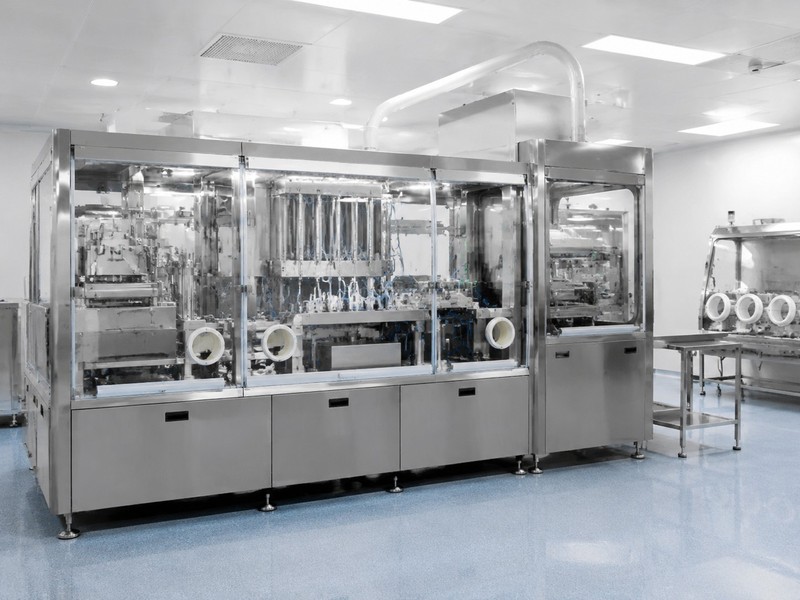
Blow Fill Seal Machines for Sterile Pharma in the USA
For sterile pharmaceutical production in the United States, a blow fill seal machine is widely preferred because it forms the container, fills the product, and seals the package in one enclosed aseptic cycle. This integrated approach helps reduce human intervention, lowers particulate and microbial contamination risk, improves production consistency, and supports high-volume output for products such as respiratory solutions, ophthalmics, saline, unit-dose liquids, and certain biologics. For manufacturers in hubs such as New Jersey, Boston, Chicago, Houston, and the Research Triangle, blow-fill-seal technology offers a practical route to stronger sterility assurance and lower total operating complexity compared with many conventional container filling lines.
Quick Answer: Why blow fill seal machines are favored for sterile production

In simple terms, a blow fill seal machine is attractive because it merges three critical steps into one continuous process: container formation from polymer resin, sterile filling of the liquid product, and immediate hermetic sealing. This reduces the need to transfer open containers between separate stations, which is one of the most important contamination-control benefits. In the U.S. sterile market, where FDA scrutiny, media fill expectations, environmental monitoring, and data integrity all matter, fewer open interventions usually translate into a stronger compliance position.
Manufacturers of inhalation solutions, eye drops, irrigation products, oral unit doses, and preservative-free formulations often view BFS equipment as a strategic asset rather than just a filling machine. It can help standardize operations, lower labor intensity, simplify changeover for certain formats, and support dependable output when demand rises. That is one reason blow-fill-seal systems are increasingly discussed by pharmaceutical investors, CDMOs, and plant engineering teams from Philadelphia to Los Angeles.
What blow fill seal technology is and how it works

Blow-fill-seal, often abbreviated BFS, is an advanced aseptic packaging process in which plastic containers are produced from thermoplastic granules, filled with sterile product, and sealed on the same machine in one automated cycle. The technology is commonly used for low- to medium-viscosity sterile liquids, especially where single-dose or multi-dose plastic packaging offers logistical or clinical advantages.
The basic process begins when polymer resin, usually polyethylene or polypropylene depending on the product and container design, is extruded into a hot parison. A mold closes around that parison and compressed sterile air forms it into the required bottle, vial-like container, ampoule, or strip pack. While the newly formed container remains within the protected zone, the machine fills it with precisely metered product through sterile nozzles. Immediately afterward, the top is sealed and the finished units are discharged for downstream inspection, leak testing, labeling, cartoning, and case packing.
From an engineering perspective, the value of the BFS method lies in process integration and enclosure control. Instead of receiving preformed containers, washing them, depyrogenating them, and transporting them to a filling and closing line, the system starts with raw polymer and creates the primary package on demand. This can shorten the packaging chain and remove several contamination-sensitive steps.
For U.S. plants working under cGMP, important design elements usually include cleanroom integration, HEPA-filtered zones, validated SIP/CIP strategies where applicable, recipe management, audit trails, 21 CFR Part 11 compatible controls, in-process monitoring, and robust container-closure integrity verification. When evaluating suppliers, engineering teams should ask not only how the machine runs, but how it is qualified, challenged, cleaned, maintained, and documented.
| Process Stage | What Happens | Main Benefit | Typical Risk Controlled | Key Validation Focus | Common U.S. Buyer Question |
|---|---|---|---|---|---|
| Polymer Extrusion | Resin is melted and extruded into a parison | Creates package from fresh material | Incoming container contamination | Material traceability | Is the resin compatible with my formulation? |
| Container Blowing | Mold forms the container shape | High dimensional consistency | Variable container geometry | Mold repeatability | Can the mold support our target SKU family? |
| Aseptic Filling | Sterile product is dosed into container | Low intervention filling | Microbial ingress during transfer | Filling accuracy and sterility assurance | What is the dosing tolerance at different volumes? |
| Sealing | Container head is sealed immediately | Fast closure integrity | Post-fill exposure | Seal integrity testing | How is container-closure integrity proven? |
| Discharge | Finished packs leave machine | Continuous automated output | Manual handling damage | Reject control | What is the acceptable reject rate? |
| Downstream Packaging | Inspection, labeling, cartoning | Commercial readiness | Mislabeled product | Serialization and vision systems | Can it integrate with our existing line? |
The table above shows why BFS is often described as both a packaging technology and an aseptic processing strategy. Each step is linked to a specific contamination-control advantage and a separate qualification requirement.
Why sterile drug manufacturers choose blow fill seal technology

Sterile drug manufacturers in the United States choose blow fill seal systems for several interconnected reasons: contamination control, operating efficiency, scalability, packaging flexibility, and long-term cost performance. While no technology fits every product, BFS is especially compelling for large-volume and high-repeat sterile liquid programs.
First, contamination control is the main driver. In traditional vial-based production, containers often move through multiple operations such as washing, depyrogenation, transfer, filling, stoppering, and capping. Every transfer step can create a risk point. BFS reduces these touchpoints by integrating package creation and closure on the same machine.
Second, BFS can improve throughput. A well-selected system may support rapid continuous output for unit-dose products widely used by hospitals, retail pharmacies, and outpatient clinics. This is particularly relevant in regional distribution corridors linked to the Port of New York and New Jersey, Savannah, Long Beach, and Chicago rail logistics, where supply continuity matters.
Third, the technology can lower total packaging complexity. There is no need to procure, store, wash, and depyrogenate large volumes of glass containers for many BFS applications. That can mean simpler material flow, reduced utility consumption in some layouts, and lower breakage risk.
Fourth, BFS packaging often supports patient convenience. Twist-off ampoules, respules, and unit-dose containers can be easier to use in home care, pediatric settings, and emergency medicine. This packaging format also aligns with rising demand for preservative-free single-use products.
Finally, U.S. investors increasingly appreciate the lifecycle argument. A machine with strong controls, durable stainless-steel construction, stable spare parts support, and validated software architecture may deliver value far beyond headline purchase price.
| Decision Factor | Why It Matters | BFS Advantage | Best-Fit Product Type | Possible Limitation | Mitigation Strategy |
|---|---|---|---|---|---|
| Sterility Assurance | Critical for FDA compliance | Enclosed integrated process | Ophthalmics | Complex validation | Strong media fill design |
| Production Speed | Supports commercial scale | Continuous operation | Saline and irrigation | Line stoppage impacts output | Preventive maintenance plan |
| Labor Efficiency | Reduces manual handling | Lower interventions | Unit-dose inhalation | Needs skilled automation staff | Operator training program |
| Package Convenience | Improves user acceptance | Easy-open plastic formats | Respiratory therapy | Limited for some premium glass markets | Segment packaging strategy |
| Supply Chain Simplicity | Fewer container handling steps | No incoming glass washing line | High-volume OTC sterile liquids | Polymer sourcing dependence | Dual-source resin strategy |
| Total Cost of Ownership | Affects ROI | Efficient integrated line | Long-run standardized SKUs | High upfront capital | Phased CAPEX planning |
This comparison helps purchasing teams separate strategic value from simple machine specifications. The best projects evaluate the whole operating model, not only speed.
Main models and application areas of blow fill seal machines
Not all blow fill seal machines are identical. Models differ by output range, container geometry, mold configuration, automation depth, cleanroom integration level, and product compatibility. Some systems are built for small unit-dose strips, while others are designed for larger infusion-related packs or specialty pharmaceutical containers.
In the U.S. market, common application areas include inhalation therapy solutions, eye drops, nasal products, oral liquids in unit doses, topical sterile liquids, irrigation fluids, veterinary sterile solutions, and some niche diagnostic or laboratory reagents. Product developers should still confirm formulation compatibility, oxygen and moisture barrier needs, extractables and leachables expectations, terminal sterilization strategy if relevant, and transport stability across American climate zones from Arizona heat to Northeast winter conditions.
For large organizations, the machine choice is often influenced by whether the project is for a single blockbuster product, a multi-SKU contract manufacturing business, or a new greenfield sterile facility. Flexible mold options and digital recipe management are particularly helpful for CDMOs serving multiple clients.
| Machine Type | Typical Output Profile | Container Format | Main Applications | Common Plant Location Fit | Buyer Priority |
|---|---|---|---|---|---|
| Small Unit-Dose BFS | High-speed, small volumes | Respules, mini ampoules | Inhalation and ophthalmic products | New Jersey and Boston pharma clusters | Precision filling |
| Medium Bottle BFS | Balanced speed and flexibility | Single bottles | Nasal, oral liquid, sterile topical | Midwest contract manufacturing sites | SKU versatility |
| Strip-Pack BFS | Multi-cavity continuous output | Connected dose strips | Single-use sterile liquids | High-volume consumer health plants | Packaging productivity |
| Large-Volume BFS | Moderate to high output | Larger bottles or specialty containers | Irrigation and hospital-use fluids | Texas and Southeast distribution networks | Container strength |
| Customized BFS Platform | Project-specific | Unique design | Biotech and specialty products | California and North Carolina innovation hubs | Engineering support |
| Pilot or Development BFS | Lower output for R&D | Prototype formats | Clinical and scale-up studies | University-linked development centers | Fast changeover |
The table shows that “best model” depends heavily on use case. A unit-dose respiratory manufacturer near Newark may not need the same configuration as a specialty biotech operation in San Diego.
blow fill seal machine vs traditional vial and ampoule filling lines
BFS and traditional vial or ampoule lines each have clear strengths. Conventional glass vial lines remain important for injectables, lyophilized products, highly sensitive biologics, and applications where glass is the preferred primary package. BFS, on the other hand, often excels in plastic-packaged sterile liquids and high-volume unit doses.
The most meaningful differences involve container preparation, line complexity, contamination exposure, packaging material, labor model, and format suitability. Traditional vial systems often require washers, tunnels, fillers, stoppering, capping, and substantial transfer control. BFS condenses much of that into one enclosed process. However, traditional lines may be more suitable when market requirements, formulation chemistry, or clinician preference strongly favor glass.
For U.S. procurement teams, this is not a debate about which technology is universally better. It is about which one fits the formulation, commercial channel, quality strategy, and reimbursement model.
| Criteria | Blow Fill Seal Machine | Traditional Vial Line | Traditional Ampoule Line | Who Often Prefers It | Selection Note |
|---|---|---|---|---|---|
| Container Source | Formed on machine | Preformed glass vial | Preformed glass ampoule | BFS users focused on integration | Fewer incoming container steps with BFS |
| Aseptic Exposure | Low due to integrated cycle | Higher because of multiple steps | Moderate to higher | High-volume sterile liquid makers | Review intervention map carefully |
| Material | Plastic polymer | Glass | Glass | Depends on product compatibility | Run E&L and stability studies |
| Format Flexibility | Strong for unit-dose plastic packs | Strong for injectable vials | Good for sealed ampoules | CDMOs compare by client mix | Commercial channel is decisive |
| Breakage Risk | Low | Moderate | Moderate | Hospital and retail logistics teams | Important for nationwide shipping |
| Upfront Equipment Mix | Integrated machine investment | Multiple linked systems | Multiple linked systems | Greenfield plants | Compare full line CAPEX, not one machine |
This table is useful because it highlights the real decision frame: product and process fit. A well-designed BFS project can outperform a fragmented line for the right applications, but it should not be forced onto products that need a different packaging philosophy.
Growing adoption of blow fill seal technology in sterile pharmaceutical production
The U.S. sterile pharmaceutical sector is seeing broader interest in blow-fill-seal technology due to supply resilience concerns, pressure to modernize aseptic operations, demand for unit-dose products, and tighter expectations around contamination control. Growth is not limited to big pharma. Contract manufacturers, specialty generic firms, hospital supply producers, and export-focused companies are also evaluating BFS lines.
Several market forces are shaping adoption. First is the expansion of respiratory and ophthalmic product demand. Second is the push for domestic or near-market manufacturing capacity, especially after supply disruptions in recent years. Third is the desire to reduce plant complexity and improve line efficiency in high-cost labor environments such as the United States. Fourth is the increasing role of automation, digital batch records, predictive maintenance, and energy monitoring.
By 2026, the strongest trend is likely to be smarter BFS equipment rather than simply bigger equipment. Buyers are asking for remote diagnostics, trend-based alarm analysis, faster recipe changeover, lower compressed air waste, better mold cooling efficiency, and more robust integration with MES and plantwide data systems.
The line chart above illustrates a realistic upward trend in U.S. BFS project activity. It reflects growing interest from both existing sterile plants and new facility investors.
The demand chart suggests why inhalation and ophthalmic segments remain two of the most attractive BFS categories in the United States.
The area chart highlights a key 2026 trend: digital capability is becoming a decisive purchasing factor, not an optional feature.
How to choose a reliable blow fill seal machine manufacturer or supplier
Choosing a supplier is one of the most important decisions in a BFS project. U.S. buyers should evaluate the manufacturer across technology, manufacturing strength, service support, compliance understanding, documentation quality, and long-term business stability. A machine that looks attractive on paper but lacks validation support or spare parts responsiveness can become a costly bottleneck after installation.
Start with the technology platform. Ask whether the supplier has proven aseptic design experience, stable control architecture, well-documented filling accuracy data, mold development capability, and successful references in comparable products. Then assess the manufacturing platform: Are critical components made in-house? How are weld quality, machining tolerance, FAT procedures, and material certificates controlled? Finally, examine service readiness in the United States. Time zones, English-language documentation, remote troubleshooting, on-site commissioning, and spare part availability matter greatly.
For buyers seeking a partner rather than a one-time vendor, it also helps to assess whether the company can support broader factory integration. Some projects require not just the BFS machine but water systems, logistics, packaging, clean utility interfaces, and facility engineering coordination.
One example is IVEN Pharmatech Engineering, a Shanghai-based international engineering company that serves pharmaceutical and medical device manufacturers with integrated project capabilities. From a technological perspective, the company is known for pharmaceutical filling and packaging engineering, water treatment systems, intelligent conveying, and related compliance-oriented solutions. From a manufacturing perspective, it operates specialized plants focused on different equipment categories, which can help with process consistency and project integration. From a service perspective, it supports customers across feasibility, design, equipment customization, installation, commissioning, validation, training, and after-sales support.
| Supplier Evaluation Area | What to Check | Why It Matters in the U.S. | Evidence to Request | Red Flag | Good Sign |
|---|---|---|---|---|---|
| Regulatory Understanding | FDA and cGMP familiarity | Supports inspection readiness | Validation document samples | Vague compliance claims | Structured documentation package |
| Technical Capability | Aseptic design and control systems | Protects sterility assurance | FAT protocols and case studies | Unclear filling repeatability | Demonstrated process data |
| Manufacturing Quality | Fabrication and component control | Affects machine life and uptime | Material certs and QA records | Outsourced critical parts without control | Traceable production system |
| Service Network | Installation and spare support | Reduces downtime risk | Response-time commitment | No U.S.-friendly support plan | Remote plus on-site service model |
| Customization Ability | Molds, formats, software options | Helps fit product portfolio | User requirement mapping | Rigid standard machine only | Flexible engineering approach |
| Financial and Project Stability | Delivery track record | Protects CAPEX schedule | Project references | Frequent schedule overruns | Documented global installations |
This supplier table can be used directly in vendor audits or request-for-proposal scoring. It helps teams look beyond headline price.
The comparison chart underscores that service, compliance, and engineering integration are often more valuable than the lowest quotation.
Investment cost, budget planning and ROI analysis for blow fill seal machines
A blow fill seal machine is a significant capital investment, but the true budget extends beyond the core equipment. U.S. buyers should plan for molds, utilities, HVAC interface work, cleanroom adaptation, water and steam connections where needed, automation integration, IQ/OQ support, factory acceptance testing, site acceptance testing, spare parts, operator training, and downstream packaging equipment.
The most realistic way to approach budgeting is to think in phases. Phase one covers feasibility and user requirement specification. Phase two includes engineering and supplier selection. Phase three addresses equipment manufacturing and FAT. Phase four covers installation and validation. Phase five includes ramp-up, performance tuning, and preventive maintenance planning.
ROI can be attractive when the machine is used for stable, repetitive, higher-volume products. Savings may come from reduced labor, fewer container-handling steps, lower breakage, better line integration, and stronger output per square foot of cleanroom space. Revenue upside can also come from faster market entry or the ability to win contract manufacturing business.
For a greenfield project, it is often wise to compare the total installed cost of a BFS-based production concept against a conventional vial or ampoule route. In some cases, the integrated nature of BFS reduces facility complexity enough to offset part of the higher machine cost. In other cases, the opposite is true if the product portfolio is not well aligned.
| Budget Item | Typical Cost Impact | Why Often Underestimated | Planning Tip | ROI Effect | Owner Question |
|---|---|---|---|---|---|
| Core BFS Machine | Very high | Focus stays on list price only | Include format scope early | Direct capacity driver | Can one platform cover future SKUs? |
| Molds and Change Parts | High | Extra formats add up quickly | Map 3-year SKU plan | Improves flexibility | How many molds are needed at launch? |
| Utilities and Installation | Medium to high | Site conditions vary widely | Do a utility gap study | Affects startup speed | Is our plant infrastructure ready? |
| Validation and Documentation | Medium | Often treated as secondary | Budget QA resources from day one | Reduces compliance delay | What is included in supplier scope? |
| Training and Ramp-Up | Medium | Learning curve ignored | Schedule supervised production runs | Boosts OEE faster | Who trains operators and maintenance staff? |
| Spare Parts and Service | Medium | Only considered after start-up | Build critical spare list upfront | Protects uptime | What is the lead time for key parts? |
This cost table is important because many BFS projects succeed or fail based on planning discipline rather than machine capability alone.
Key considerations and potential risks when investing in blow fill seal machines
Although BFS technology offers major benefits, it also comes with risks that should be managed early. Product compatibility is the first concern. Not every sterile formulation belongs in a plastic BFS container. Teams must study stability, light sensitivity, sorption, permeability, and extractables and leachables. Regulatory strategy is the second concern. The equipment may be technically sound, but the project can still stall if qualification packages, SOPs, and aseptic simulations are weak.
Third, organizations should assess operational maturity. BFS machines can be highly automated, but they still require disciplined maintenance, trained operators, alarm analysis, line clearance control, and change management. Fourth, projects must consider commercial fit. If the product mix changes frequently or batch sizes are too small, the economics may be less favorable. Fifth, supply chain planning matters. Resin, molds, and specialized parts need qualified sourcing and inventory strategy.
Sustainability is another growing factor for 2026 and beyond. U.S. buyers are increasingly reviewing machine energy use, compressed air efficiency, material yield, reject reduction, packaging weight optimization, and recyclability considerations. Environmental performance may not replace sterility assurance as the main driver, but it is becoming part of executive approval discussions.
Policy trends also matter. Domestic manufacturing incentives, reshoring interest, stricter supply resilience planning, and closer scrutiny of sterile medicine shortages could all support future BFS investment. Plants located near major manufacturing ecosystems such as New Jersey, Pennsylvania, North Carolina, Illinois, and Texas may benefit from better labor access, utility infrastructure, and freight connectivity.
A practical risk-reduction approach includes a formal URS, detailed DQ review, material compatibility program, supplier audit, FAT with acceptance criteria, installation readiness checklist, validation master planning, and a post-startup performance review at 3, 6, and 12 months.
FAQ
1. Is a blow fill seal machine suitable for injectable drugs?
It can be suitable for some sterile liquid products, but not all injectables. The formulation, container requirements, market expectations, and regulatory pathway determine whether BFS is appropriate.
2. What products are most commonly packaged on BFS lines in the United States?
Typical products include inhalation solutions, eye drops, saline, irrigation fluids, unit-dose oral liquids, and some sterile topical or veterinary solutions.
3. Does BFS always reduce contamination risk?
It generally reduces contamination opportunities because the container is formed, filled, and sealed in one controlled cycle. However, the benefit depends on good machine design, validation, maintenance, and operator discipline.
4. How should a U.S. buyer compare suppliers?
Compare compliance knowledge, engineering quality, documentation, service response, spare parts support, mold capability, and real project references. Do not compare price alone.
5. Can BFS lines be part of a turnkey sterile plant project?
Yes. Many investors prefer integrating the BFS machine into a broader factory plan that includes utilities, water systems, cleanroom interfaces, logistics, packaging, and validation. Companies offering turnkey pharmaceutical engineering solutions may simplify coordination.
6. What should be included in the initial inquiry?
Include product type, target fill volume, annual capacity, packaging format, cleanroom classification, utility availability, validation scope, preferred automation level, and target launch schedule. If you are comparing available options, reviewing a broader pharmaceutical equipment portfolio can also help define your project scope.
7. What makes a supplier valuable after installation?
Fast troubleshooting, training, spare parts support, software updates, documentation control, and process optimization support are essential. For high-value projects, it is wise to discuss lifecycle support before purchase and contact the supplier team about U.S. commissioning expectations.
8. Why do some pharmaceutical groups choose an engineering partner with broad manufacturing capabilities?
Because BFS projects often touch multiple systems, not only one machine. A company with strengths in packaging equipment, water treatment, plant engineering, and logistics can reduce coordination risk and improve schedule control.
9. How important is the manufacturer’s production base?
Very important. Suppliers with specialized manufacturing facilities and proven quality systems often provide better consistency, traceability, and long-term parts support. This matters for plants planning equipment life cycles of 15 to 20 years or more.
10. What is the best next step for a U.S. sterile manufacturer considering BFS?
Start with a feasibility review covering product compatibility, commercial demand, regulatory pathway, facility readiness, and total cost of ownership. Then narrow the supplier list to companies that can demonstrate both technical capability and long-term service commitment.
For the United States market, blow fill seal machine technology is no longer a niche consideration. It is becoming an increasingly practical option for sterile manufacturers seeking better contamination control, scalable production, and a modernized packaging process. The most successful projects are those that connect product strategy, facility design, supplier capability, validation discipline, and lifecycle service from the beginning. When evaluated with that broader view, BFS can be a strong foundation for future-ready sterile pharmaceutical manufacturing.

About the Author
We are IVEN Pharmatech Engineering, a team dedicated to delivering turnkey pharmaceutical and medical solutions worldwide. With decades of experience, we specialize in advanced machinery, integrated factory design, and full lifecycle support to help our clients achieve efficient, compliant, and high-quality production.
Share

Related Insights
-
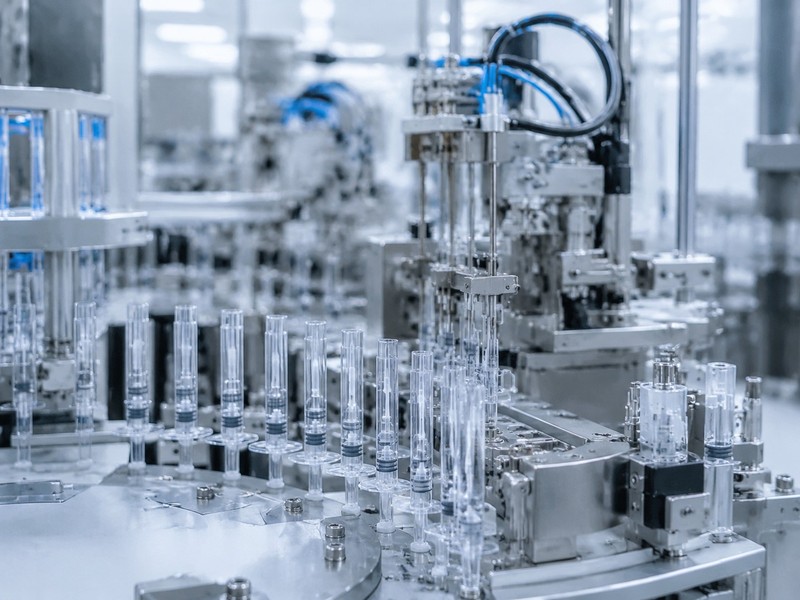
United States Guide to Disposable Syringe Machines
For manufacturers in the United States, a disposable syringe making machine is not just a production asset; it is a strategic investment tied to quality assurance, FDA readiness, automation, and long-term supply security. Large pharmaceutical and medical device companies evaluate these systems when expanding domestic capacity, replacing aging lines, or building integrated facilities for sterile and non-sterile medical consumables. In practical terms, the right syringe production line can improve output consistency, lower labor dependence, support traceability, and help producers meet demanding regulatory and customer requirements across markets such as New Jersey, California, Texas, Illinois, and North Carolina.
A disposable syringe making machine is a specialized manufacturing system used to produce single-use syringes at industrial scale. Depending on plant design, the complete line may cover barrel and plunger production, injection molding support, printing, assembly, lubrication, needle integration, inspection, packaging, and downstream handling. In the United States, these systems matter because hospital networks, contract manufacturers, vaccine supply chains, and medical consumables producers all require reliable volume, stable quality, and documentation that stands up to FDA cGMP expectations.
For many buyers, the real question is not whether a syringe manufacturing line is needed, but which level of automation, cleanroom integration, and validation support makes sense. A greenfield project near Boston, Houston, or Indianapolis will not have the same priorities as a modernization project at an existing medical device plant in New Jersey or a high-volume export-oriented site shipping through Los Angeles, Savannah, or the Port of New York and New Jersey.
Companies evaluating suppliers often compare total line architecture, molding compatibility, output range, utility consumption, changeover flexibility, automation software, and after-sales support. They also look for partners capable of engineering broader factory systems rather than only selling isolated equipment. That is especially relevant for firms planning integrated water systems, smart logistics, clean utilities, packaging, and validation in one project.
At-a-glance evaluation criteria for U.S. buyers Factor Why It Matters Typical Buyer Focus FDA-aligned design Reduces compliance risk and speeds qualification Documentation, traceability, alarms, audit trails Production capacity Must match forecast demand and OEE targets Syringes per hour, uptime, reject rate Automation level Affects labor cost and consistency Robotics, online inspection, auto packing Material compatibility Supports product mix and customer specifications PP, PE, elastomer, needle variants Service capability Critical for commissioning and maintenance Training, spare parts, remote support Total project integration Prevents layout and schedule issues Utilities, cleanroom, packaging, validationThe table above shows that machine selection is broader than unit price. U.S. buyers typically weigh lifecycle performance, quality risk, and project execution capability more heavily than initial quotation alone.
A disposable syringe making machine is an industrial production platform designed for manufacturing single-use syringes for medical, pharmaceutical, laboratory, and clinical applications. It is used to create components and assemble them into finished products that can be sterilized, packaged, and released for market. In pharmaceutical and medical device production, disposable syringes are essential for vaccine delivery, injectable drugs, insulin administration, irrigation, blood collection support procedures, and a wide range of diagnostic or therapeutic uses.
In a typical production environment, the process starts with medical-grade raw materials such as polypropylene and elastomeric parts. Syringe components are formed through injection molding or supplied from upstream molding systems, then transferred to printing, assembly, plunger insertion, gasket fitting, lubrication, graduation marking, leak testing, vision inspection, and packaging stages. More advanced lines integrate needle mounting, shield assembly, nest or blister packing, labeling, and serialization.
Within pharmaceutical manufacturing, syringe lines can support several production models:
For U.S. operations, machine use is strongly shaped by regulatory expectations. Equipment must support clean manufacturing, process validation, lot traceability, line clearance, contamination control, and stable repeatability. Plants near biotech clusters such as San Diego, Raleigh-Durham, and Philadelphia often emphasize data integrity, validation packages, and compatibility with digital manufacturing systems.
Main process stages in disposable syringe production Stage Function Key Quality Concern Raw material feeding Supplies medical-grade resin and parts Material identification and contamination control Component molding or input Forms barrel, plunger, and accessories Dimensional precision Printing and marking Adds volume graduation and branding Legibility and adhesion Automatic assembly Combines multiple parts into final syringe body Fit consistency and alignment Inspection and testing Checks leaks, defects, particles, and dimensions False accepts and false rejects Packaging and transfer Prepares finished goods for sterilization or shipment Package integrity and traceabilityThis process table helps buyers understand where machine architecture directly affects yield, compliance, and downstream efficiency.
Modern syringe production machinery supports a broad range of healthcare applications. In the United States, demand is driven by hospitals, outpatient care, vaccination campaigns, diagnostics, contract packaging, and rising domestic interest in resilient medical supply chains. Public and private buyers increasingly want dependable local or near-market production to reduce exposure to overseas disruptions.
Primary applications include standard hypodermic syringes, insulin syringes, irrigation syringes, safety syringes, and components for advanced injection systems. Some lines are also designed with future conversion in mind, allowing manufacturers to expand from standard disposable syringes into more sophisticated formats such as prefilled systems or specialized medical consumables.
The benefits of modern equipment are significant:
For example, a medical consumables manufacturer in the Midwest may prioritize output and labor reduction, while a pharmaceutical group in New Jersey may place greater emphasis on batch record support, packaging traceability, and compatibility with sterile supply chain requirements.
var ctxBar = document.getElementById(‘barDemandChart’).getContext(‘2d’);var chartBar = new Chart(ctxBar, { type: ‘bar’, data: { labels: [‘Hospitals’, ‘Pharma’, ‘Medical Device OEM’, ‘Contract Manufacturing’, ‘Diagnostics’, ‘Public Health’], datasets: [{ label: ‘Estimated U.S. demand index’, data: [92, 78, 85, 74, 63, 69], backgroundColor: [‘#4e79a7′,’#f28e2b’,’#e15759′,’#76b7b2′,’#59a14f’,’#edc948′] }] }, options: { responsive: true, maintainAspectRatio: false }});The demand chart illustrates how syringe manufacturing is supported by several end-user groups rather than a single industry segment. That diversity is one reason many investors see the category as strategically important.
Key benefits of advanced syringe production lines Benefit Operational Impact Typical U.S. Buyer Value Automated assembly Reduces manual errors Lower labor exposure Vision inspection Improves defect detection Higher outgoing quality Modular design Supports line upgrades Future scalability Data collection Enables performance analysis Better OEE management Integrated packaging Shortens transfer steps Space and labor savings Compliance-ready documentation Facilitates qualification Faster project launchThis table shows that the business case often extends beyond unit output. Quality and compliance improvements can be just as valuable as capacity increases.
Not all syringe production systems are built for the same market need. Buyers in the United States should first distinguish between a complete production line and a partial assembly line. A complete line may include material handling, molding interfaces, assembly, inspection, packaging, and utility integration. A partial line may focus only on downstream assembly or final packaging.
Common line types include:
Important technical options often include servo-driven motion control, cleanroom-compatible enclosures, machine vision systems, leak testing, online printing verification, robotic collection, automatic bagging or blistering, and MES or SCADA connectivity. For manufacturers shipping across the U.S. and internationally, serialization-ready downstream packaging may also be worth considering.
When evaluating models, buyers should ask how the machine handles changeover among 1 mL, 3 mL, 5 mL, 10 mL, and larger sizes. Flexibility matters for contract manufacturers and diversified medical consumables suppliers that need to respond to changing customer demand.
Common machine types and suitable use cases Machine Type Best For Typical Output Profile High-speed standard line Large-volume hospitals and distributor supply Very high output, stable SKU mix Multi-size flexible line Contract manufacturers Medium to high output, frequent changeover Insulin syringe line Precision diabetic care products High accuracy, smaller format Safety syringe line Occupational safety-focused buyers Complex assembly requirements Semi-automatic line Pilot plants and regional startups Lower output, lower upfront cost Integrated turnkey line Greenfield U.S. factories End-to-end production ecosystemThe comparison above helps buyers align machine architecture with product strategy rather than buying capacity they cannot fully utilize.
Some investors compare disposable syringe making machines with outsourcing, manual or semi-manual assembly, imported finished syringes, or alternative delivery-device production. The right choice depends on strategic goals, cost structure, and risk tolerance.
Outsourcing can reduce capital expenditure, but it may expose the buyer to supply disruption, longer lead times, and lower control over quality and schedules. Imported finished syringes may appear economical in the short term, especially through major trade channels like Long Beach, Newark, or Houston, but tariff changes, freight volatility, and geopolitical risk can alter economics quickly. Semi-automatic systems may fit smaller regional manufacturers, yet they often struggle when labor costs rise or customers require tighter documentation and consistency.
By contrast, a dedicated automated disposable syringe production line offers stronger control over process capability, batch traceability, customization, and domestic responsiveness. It is often the preferred route for established U.S. manufacturers that expect stable long-term demand.
var ctxComp = document.getElementById(‘comparisonChart’).getContext(‘2d’);var chartComp = new Chart(ctxComp, { type: ‘bar’, data: { labels: [‘Quality Control’, ‘Scalability’, ‘Labor Efficiency’, ‘Supply Security’, ‘Capex Efficiency’, ‘Compliance Support’], datasets: [ { label: ‘Automated syringe line’, data: [93, 91, 88, 90, 62, 89], backgroundColor: ‘#6f42c1’ }, { label: ‘Semi-automatic / outsourced mix’, data: [68, 59, 47, 52, 81, 57], backgroundColor: ‘#adb5bd’ } ] }, options: { responsive: true, maintainAspectRatio: false }});The comparison chart highlights a common tradeoff: lower upfront spend may come with weaker control and scalability. For regulated production, that tradeoff needs careful review.
Solution comparison for U.S. manufacturers Option Main Advantage Main Limitation Automated disposable syringe line High control and scale Higher capex Semi-automatic line Lower initial investment Higher labor dependence Outsourced manufacturing Fast market entry Lower direct quality control Imported finished syringes No production setup needed Supply chain and tariff risk Regional contract assembly Shared operational burden Limited customization Turnkey domestic plant Long-term resilience Project complexityFor many medium and large U.S. organizations, the best-fit solution is often an automated line supported by strong engineering and validation services.
The United States remains one of the most attractive markets for syringe production equipment because of its large healthcare system, strong medical device sector, domestic manufacturing incentives, and continuing focus on critical supply resilience. Investment is especially active in regions with established life sciences infrastructure such as New Jersey, Massachusetts, Pennsylvania, North Carolina, California, and Texas.
Three market drivers stand out. First, healthcare utilization remains high, with continuing demand from vaccination, injectable therapies, and chronic disease care. Second, buyers want more secure domestic or regional production after years of supply chain disruption. Third, manufacturers are under pressure to automate because labor, quality, and compliance costs continue to increase.
Looking toward 2026, future trends are likely to include smarter machine vision, wider use of robotics, predictive maintenance, digital batch traceability, and stronger integration between production lines and intelligent warehouse systems. Sustainability will also matter more. Buyers are asking about energy efficiency, compressed air optimization, lower scrap generation, recyclable packaging formats, and cleaner utility design. Policy trends may favor domestic investment, closer supplier qualification, and more visible quality-system accountability.
var ctxLine = document.getElementById(‘lineGrowthChart’).getContext(‘2d’);var chartLine = new Chart(ctxLine, { type: ‘line’, data: { labels: [‘2021’, ‘2022’, ‘2023’, ‘2024’, ‘2025’, ‘2026’], datasets: [{ label: ‘U.S. market growth index for syringe production equipment’, data: [100, 108, 117, 126, 138, 151], borderColor: ‘rgb(75, 192, 192)’, backgroundColor: ‘rgba(75, 192, 192, 0.15)’, fill: false, tension: 0.3 }] }, options: { responsive: true, maintainAspectRatio: false }});var ctxArea = document.getElementById(‘areaTrendChart’).getContext(‘2d’);var chartArea = new Chart(ctxArea, { type: ‘line’, data: { labels: [‘2021’, ‘2022’, ‘2023’, ‘2024’, ‘2025’, ‘2026’], datasets: [ { label: ‘Manual or semi-automatic share’, data: [42, 39, 35, 31, 27, 24], fill: true, backgroundColor: ‘rgba(220, 53, 69, 0.20)’, borderColor: ‘rgba(220, 53, 69, 0.9)’, tension: 0.3 }, { label: ‘Automated and smart line share’, data: [58, 61, 65, 69, 73, 76], fill: true, backgroundColor: ‘rgba(40, 167, 69, 0.20)’, borderColor: ‘rgba(40, 167, 69, 0.9)’, tension: 0.3 } ] }, options: { responsive: true, maintainAspectRatio: false }});The line chart shows a steady growth outlook for equipment demand, while the area chart reflects the ongoing shift from labor-intensive operations to automated, data-enabled production systems.
Another trend is supplier consolidation around full-solution providers. U.S. investors increasingly prefer partners that can support not only the syringe line itself but also utilities, layout planning, packaging, conveying, warehouse automation, and validation. This reduces coordination risk during multi-million-dollar projects.
Selecting a supplier is often more important than choosing a machine model. A reliable manufacturer should demonstrate regulatory understanding, engineering depth, stable manufacturing quality, and long-term service capability. The best suppliers are those that can show not only brochures but also real line performance, documented references, and successful project execution.
U.S. buyers should evaluate the following areas carefully:
Buyers should also ask whether the supplier can support broader facility needs. For example, some projects require not only syringe assembly equipment but also purified water systems, material conveying, smart warehousing, and packaging lines. Working with a partner that understands integrated pharmaceutical engineering can help avoid layout conflicts, schedule delays, and interface problems.
One example in the market is IVEN Pharmatech Engineering, which is known internationally for pharmaceutical and medical device engineering as well as integrated equipment solutions. Its technological capability is notable in areas such as automated production systems, intelligent logistics, pharmaceutical water treatment, and specialized medical consumables machinery. For buyers who need more than a single standalone machine, this kind of engineering background can be valuable.
Supplier selection checklist Evaluation Point What to Verify Why It Matters Regulatory knowledge FDA, cGMP, EU GMP familiarity Supports compliant design Technical patents or innovation Proprietary design strength Shows engineering maturity Factory capability Production plants, QC systems, machining quality Indicates build reliability Reference projects Installed lines and customer outcomes Reduces execution uncertainty Validation support Document package and testing protocol Essential for qualification After-sales response Training, spares, troubleshooting Protects uptimeThe best supplier choice usually comes from a structured scorecard rather than a simple price comparison. A lower-priced line without project support can become the more expensive option over time.
Investment cost varies widely based on output, automation, product type, packaging scope, cleanroom needs, and validation requirements. A semi-automatic or lower-output assembly system may suit a smaller startup budget, while a high-speed turnkey line for a U.S. medical device plant can involve a far larger capital program once utilities, facilities, inspection, sterilization interfaces, and warehouse handling are included.
Budget planning should separate direct equipment cost from total installed cost. Too many buyers underestimate costs for cleanroom adaptation, utility hookups, software integration, FAT and SAT travel, spare parts, validation, operator training, packaging equipment, and local compliance work. Freight to U.S. ports such as Los Angeles, Oakland, Houston, Charleston, or Newark also needs realistic planning, especially for large modular equipment.
ROI analysis usually depends on six levers: annual volume, labor reduction, scrap reduction, imported product substitution, selling price stability, and uptime. If a line replaces outsourced supply or high-cost imports, payback can be faster than expected. If utilization remains low, even an excellent line may struggle to meet target ROI.
Illustrative budget structure for a syringe production project Cost Category Typical Share of Budget Notes Core production equipment 35% to 45% Main assembly, inspection, and control systems Packaging and downstream handling 10% to 18% Bagging, blistering, cartoning, transfer Utilities and cleanroom interfaces 12% to 20% Air, power, HVAC, clean piping, water support Validation and documentation 5% to 10% IQ, OQ, PQ and quality files Installation and commissioning 8% to 15% Mechanical, electrical, software startup Training and spare parts 3% to 7% Early lifecycle supportThis budget table is useful because it highlights how machine purchase price alone can represent less than half of the full project investment.
For companies seeking broader project support, turnkey pharmaceutical engineering solutions may reduce hidden costs by coordinating layout, utilities, equipment interfaces, and documentation from the start. This is particularly helpful for greenfield projects in the United States where delays can be extremely expensive.
Every capital project has risks, and syringe production is no exception. The most common issues include poor product-market fit, underestimated validation time, weak utility planning, supplier communication gaps, and limited spare-parts readiness. In the U.S. market, regulatory documentation gaps can become especially costly if they slow qualification or force design changes after installation.
Another risk is choosing a line optimized for one syringe format when the business model really requires flexibility. If the factory needs to supply multiple customer types, rigid line architecture can reduce long-term value. Likewise, selecting equipment solely on the basis of speed may overlook maintenance complexity, software integration, and operator training needs.
Manufacturing capability should also be reviewed carefully. Some equipment suppliers have strong sales presentations but limited fabrication depth. In contrast, suppliers with multiple specialized production bases and established component manufacturing control generally offer more confidence for large projects. IVEN Pharmatech Engineering, for instance, is recognized for manufacturing across specialized facilities focused on pharmaceutical filling and packaging, water treatment, intelligent conveying, and vacuum blood collection tube equipment. For buyers, this suggests wider industrial capability rather than single-workshop assembly alone.
Service risk is equally important. A production line without reliable technical support can quickly become a bottleneck. Buyers should understand response times, multilingual communication, spare-parts stock policy, remote diagnostics, and on-site commissioning support. Strong lifecycle service, including feasibility consulting, installation, validation assistance, training, and production optimization, can materially reduce startup risk. Companies wanting tailored consultation can also contact an equipment engineering team early in the planning stage.
Major investment risks and mitigation steps Risk Possible Impact Mitigation Insufficient compliance documentation Qualification delays Review document list before PO Wrong capacity selection Low utilization or bottlenecks Base design on realistic demand forecast Poor layout integration Rework and schedule slip Use 3D engineering review early Weak service support Long downtime Confirm SLA, spare parts, training plan Limited flexibility Hard to add new SKUs Specify changeover scope in URS Underestimated total cost Budget overrun Include installation and validation in capex modelThe risk table demonstrates why a detailed URS, supplier audit, and phased project review are essential before contract signing.
What production capacity should a U.S. buyer target?That depends on annual forecast, SKU mix, and customer concentration. A hospital supply producer with stable standard syringes may choose a high-speed dedicated line, while a contract manufacturer may prefer a flexible line with moderate output and faster changeovers.
Does the machine need to comply with FDA requirements?The machine itself is not approved like a drug product, but its design, documentation, traceability features, and validation support should align with FDA cGMP expectations and the quality system used by the manufacturer.
Can one line produce multiple syringe sizes?Many lines can, but actual flexibility varies by model. Buyers should verify tooling change parts, changeover time, speed loss at each size, and whether packaging formats can also switch efficiently.
Is a turnkey project better than buying standalone equipment?For greenfield or major expansion projects, turnkey execution often reduces integration risk. It can also improve schedule control when utilities, packaging, logistics, and validation are handled in a coordinated way.
How long does a project usually take?Lead time depends on customization and scope. A full project may include engineering, fabrication, FAT, shipping, installation, SAT, and qualification. U.S. buyers should build in time for facility readiness and internal quality review.
What should be included in the supplier’s document package?Typical expectations include equipment drawings, manuals, component lists, certificates, FAT records, calibration details, software descriptions, and IQ/OQ support documents. Document completeness should be defined before contract award.
How important is automation for U.S. plants?Very important. Higher labor cost in the United States makes automation a strong economic driver. Automated inspection, assembly, and handling also help improve consistency and traceability.
What industries commonly buy disposable syringe making machines?Medical consumables manufacturers, pharmaceutical companies, OEM device makers, public health suppliers, contract manufacturers, and export-focused healthcare product firms are all active buyers.
Where can buyers review broader equipment options?Companies planning a wider production upgrade often review complete equipment portfolios through supplier product pages such as pharmaceutical and medical production equipment solutions to compare line compatibility and expansion paths.
What should buyers know about supplier service capability?The strongest partners support the full lifecycle: early consulting, design coordination, equipment customization, installation, commissioning, validation, staff training, and long-term optimization. This service depth is especially valuable when launching new production in complex U.S. regulatory environments.
In summary, the best disposable syringe making machine for the United States market is the one that matches product strategy, compliance expectations, labor economics, and long-term growth plans. Buyers should assess not only machine speed, but also supplier engineering strength, manufacturing depth, and lifecycle service support. When these factors are aligned, the investment can strengthen domestic production capability, improve quality consistency, and create a more resilient medical supply chain.
-
United States Guide to Aseptic Multi-Chamber IV Bags
For pharmaceutical manufacturers in the United States, aseptic processing for multi-chamber IV bags is no longer a niche capability. It is becoming a strategic production model for advanced infusion therapies, combination products, parenteral nutrition, emergency medicine, and hospital-ready drug delivery systems. By keeping sensitive ingredients separate until the point of activation or administration, multi-chamber infusion bags help improve stability, extend shelf life, reduce compounding steps, and support safer patient care.
Across major U.S. pharmaceutical and healthcare hubs such as New Jersey, Boston, Chicago, Houston, San Diego, and the Research Triangle, manufacturers are evaluating whether to build or upgrade aseptic filling lines for dual-chamber and multi-chamber IV solutions. In many cases, the business decision is driven by three factors: rising demand for ready-to-use sterile products, pressure to reduce hospital pharmacy workload, and tighter quality expectations under U.S. FDA cGMP requirements.
This guide explains the practical, technical, and commercial side of aseptic multi-chamber IV bag production for the United States market. It covers bag formats, film options, line configuration, investment planning, risk control, supplier selection, and future trends through 2026 and beyond.
An aseptic multi-chamber IV bag allows drug manufacturers to fill two or more sterile components into separate compartments within one infusion container, with a peel seal or frangible seal that is broken before administration. This design enables unstable ingredients, diluents, electrolytes, amino acids, trace elements, or drug concentrates to remain separated during storage and transport. When activated at the point of care, the components mix into a final infusion solution.
The main value of this sterile manufacturing approach is that it balances formulation complexity with patient safety. Compared with conventional single-chamber bags, aseptic multi-chamber systems can reduce degradation, simplify bedside preparation, limit manual compounding, and lower contamination risks in clinical settings. In the United States, this is especially important for health systems managing labor shortages, high medication volumes, and stricter sterility assurance expectations.
BenefitHow It WorksValue for U.S. ManufacturersValue for HospitalsIngredient separationActives and diluents stay in different chambersSupports difficult or unstable formulationsImproves usability at administration timeBetter stabilityReduces interaction during storageLonger commercial shelf life potentialLess waste from expired compounded dosesAseptic fillingProduct enters bag under controlled sterile conditionsSupports high-value injectablesEnhances confidence in sterilityFaster preparationMixing occurs by seal activationDifferentiated product offeringReduces pharmacy and nursing workloadDose standardizationPredefined chamber volumesBrand consistency across batchesLower risk of bedside errorTransport efficiencySingle unit for multiple componentsSimplifies packaging designEasier inventory controlThe table above shows why interest in aseptic multi-compartment infusion systems has expanded from specialized nutrition products to broader injectable applications. In the U.S. market, the most commercially attractive opportunities are often tied to ready-to-mix antibiotics, critical care products, perioperative solutions, and parenteral nutrition systems.
A multi-chamber IV bag is a sterile flexible container divided into separate compartments by peelable or breakable seals. The bag may have two, three, or sometimes more chambers depending on formulation requirements. The production line usually includes film handling, bag forming, chamber separation, sterile filling, seal integrity control, leak detection, visual inspection, overpouching if required, and final secondary packaging.
From an engineering perspective, aseptic processing means the sterile product and sterile packaging path are protected throughout filling and sealing, typically within isolators, restricted access barrier systems, or other validated contamination-control environments. Because many multi-chamber products contain heat-sensitive compounds, manufacturers frequently prefer aseptic filling over terminal sterilization, though final product strategy depends on formulation, packaging material, and regulatory pathway.
The biggest advantages include formulation flexibility, premium product differentiation, workflow simplification in hospitals, and stronger support for advanced therapies that cannot remain fully mixed over long storage periods. U.S. buyers also value the ability to create higher-margin products with more defensible technical barriers than commodity IV solutions.
FeatureSingle-Chamber BagDual-Chamber BagThree-Chamber BagStorage of incompatible componentsLimitedGoodExcellentFormulation complexityLowMediumHighPreparation steps before useOften external mixing requiredInternal activationInternal activation with staged mixingTypical clinical useStandard IV fluidsDrug + diluent systemsParenteral nutrition and complex therapiesManufacturing complexityLowerHigherHighestCommercial differentiationLow to mediumHighVery highFor U.S. investors comparing product strategies, this table highlights the central tradeoff: greater bag complexity usually brings stronger market differentiation but also higher validation burden, more precise equipment requirements, and more demanding container closure testing.
In American hospitals, sterile ready-to-activate infusion systems address operational pain points that are both clinical and financial. Health systems in cities like New York, Philadelphia, Los Angeles, and Dallas increasingly seek standardized products that lower manual admixture activity in pharmacies and reduce turnaround time in emergency care, oncology support, ICU treatment, and nutrition services.
Multi-chamber bags are especially useful where drug components are unstable when premixed, or where bedside simplicity is essential. In large integrated delivery networks, these products help reduce labor dependency and decrease variability between sites. This matters in the United States because hospital networks often manage multiple campuses with centralized procurement and strict medication safety policies.
Common applications include:
Clinical AreaUse CaseWhy Multi-Chamber HelpsHospital ImpactICURapid preparation of sterile admixturesReduces compounding timeFaster treatment initiationNutritionTwo- or three-component nutrient systemsProtects unstable componentsSupports standardized careEmergency departmentImmediate activation infusionsSimple bedside handlingLower delay riskOncology supportDiluent and adjunctive sterile systemsImproves handling consistencyLess workflow burdenHome infusionUser-friendly preparation for distributed carePre-engineered dosage formatBetter convenience and complianceMilitary and disaster responsePortable ready-to-activate productsStable transport formatUseful in decentralized settingsThe explanation behind this table is straightforward: clinical value rises when a product saves steps, reduces error opportunities, and preserves sterility in real-world use. For U.S. providers facing medication shortages and staffing pressures, these benefits can be decisive.
var ctxBar = document.getElementById(‘barDemandChart’).getContext(‘2d’);var chartBar = new Chart(ctxBar, { type: ‘bar’, data: { labels: [‘Parenteral Nutrition’, ‘Anti-Infectives’, ‘Critical Care’, ‘Home Infusion’, ‘Emergency Medicine’, ‘Perioperative Care’], datasets: [{ label: ‘Estimated U.S. Demand Index’, data: [92, 84, 79, 68, 75, 61], backgroundColor: [‘#4e79a7′,’#f28e2b’,’#e15759′,’#76b7b2′,’#59a14f’,’#edc948′] }] }, options: { responsive: true, maintainAspectRatio: false }});The bar chart reflects realistic demand intensity by application area in the United States. Nutrition, anti-infective products, and critical care remain the most attractive targets for new production capacity.
Not all multi-chamber bags are built for the same formulation. U.S. developers typically review chamber count, seal design, bag geometry, outlet configuration, and film barrier performance early in development because these choices affect sterility assurance, oxygen transmission, moisture protection, extractables, machinability, and regulatory documentation.
Common product formats include dual-chamber bags for drug-plus-diluent systems, three-chamber bags for nutrition products, and specialty designs with segregated trace components. Film choice is equally important. Non-PVC multilayer films, polypropylene-based structures, and advanced co-extruded films are often selected for compatibility, clarity, flexibility, seal strength, and sustainability positioning.
Bag TypeTypical Chamber CountCommon UseFilm ConsiderationDual-chamber peel-seal bag2Drug and diluent separationReliable controlled seal openingThree-chamber nutrition bag3Amino acids, lipids, glucoseBarrier and compatibility balancePowder-liquid sterile system2Reconstitution productsMoisture control is criticalElectrolyte buffered bag2 or 3Critical care formulationsChemical resistance neededBiologic support bag2Short compatibility window productsLow extractables focusCustom specialty bag2 to 4R&D and differentiated launchesNeeds custom validation packageFilm material selection must also fit manufacturing conditions. If a line is designed for high-speed sterile filling in a U.S. facility near logistics centers such as Newark, Savannah, or Long Beach, the film must hold dimensional stability, seal repeatability, and mechanical strength from forming through palletized shipment.
Manufacturers should ask film and bag suppliers for data on oxygen and water vapor transmission, tensile strength, puncture resistance, sterilization compatibility if applicable, and extractables or leachables support. Those data packages are essential during scale-up and regulatory filing.
Many U.S. buyers first compare multi-chamber systems with conventional single-chamber bags from a total-cost perspective. The unit cost of a multi-chamber product is usually higher, but that does not mean the total delivered value is lower. When hospital labor, medication error prevention, waste reduction, shelf-life protection, and brand differentiation are included, multi-chamber products often justify their premium.
Comparison PointMulti-Chamber IV BagSingle-Chamber IV BagStrategic MeaningFormulation stabilityHigher for incompatible ingredientsLower if premixedSupports complex productsLine complexityHigherLowerMore engineering requiredHospital preparationSimplified activationMay need external admixtureReduces labor pressureRegulatory documentationMore detailedMore established pathwayLonger development timeline possibleCommercial pricing powerStrongerMore commoditizedPotentially better marginSupply chain complexityMedium to highLowerRequires stronger planningThe explanation here is important for procurement and finance teams. Multi-chamber production is not simply “more expensive packaging.” It is a platform decision that can move a product from a commodity infusion category into a protected, value-added sterile delivery system.
var ctxComp = document.getElementById(‘comparisonChartUS’).getContext(‘2d’);var chartComp = new Chart(ctxComp, { type: ‘bar’, data: { labels: [‘Stability’, ‘Ease of Use’, ‘Manufacturing Complexity’, ‘Pricing Power’, ‘Clinical Flexibility’, ‘Setup Cost’], datasets: [ { label: ‘Multi-Chamber Bag’, data: [94, 88, 82, 85, 91, 80], backgroundColor: ‘#6f42c1’ }, { label: ‘Single-Chamber Bag’, data: [62, 65, 40, 48, 55, 45], backgroundColor: ‘#adb5bd’ } ] }, options: { responsive: true, maintainAspectRatio: false }});The comparison chart visually summarizes why many advanced sterile product portfolios are shifting toward multi-chamber designs despite higher initial investment.
Demand in the United States is supported by several structural trends: increased use of ready-to-use and ready-to-mix sterile products, aging demographics, growth in home infusion, pressure on hospital pharmacies, and supply chain resilience initiatives after recent shortages. Domestic manufacturing capacity is receiving more attention, particularly in regions with strong life science ecosystems and reliable access to ports, utilities, and specialized labor.
States with active sterile manufacturing investment discussions include New Jersey, North Carolina, Indiana, Texas, and California. Logistics also matter. Access to the Port of New York and New Jersey, the Port of Houston, the Port of Savannah, or West Coast routes through Los Angeles and Long Beach can influence imported equipment timing, spare parts availability, and material sourcing plans.
var ctxLine = document.getElementById(‘lineGrowthChart’).getContext(‘2d’);var chartLine = new Chart(ctxLine, { type: ‘line’, data: { labels: [‘2021’, ‘2022’, ‘2023’, ‘2024’, ‘2025’, ‘2026’], datasets: [{ label: ‘U.S. Market Demand Index’, data: [58, 63, 69, 76, 84, 93], borderColor: ‘#20c997’, backgroundColor: ‘rgba(32,201,151,0.15)’, fill: false, tension: 0.25 }] }, options: { responsive: true, maintainAspectRatio: false }});The line chart indicates a realistic growth pattern for U.S. demand. While not every segment will grow at the same rate, the overall direction remains positive as hospitals and pharmaceutical companies prioritize safer, more efficient infusion systems.
var ctxArea = document.getElementById(‘areaTrendChart’).getContext(‘2d’);var chartArea = new Chart(ctxArea, { type: ‘line’, data: { labels: [‘2021’, ‘2022’, ‘2023’, ‘2024’, ‘2025’, ‘2026’], datasets: [{ label: ‘Shift from Conventional to Advanced IV Systems’, data: [22, 27, 33, 40, 48, 57], borderColor: ‘#fd7e14’, backgroundColor: ‘rgba(253,126,20,0.25)’, fill: true, tension: 0.3 }] }, options: { responsive: true, maintainAspectRatio: false }});The area chart illustrates the trend shift from standard commodity bags toward advanced sterile delivery systems. Through 2026, digital line monitoring, enhanced barrier technologies, and sustainability-driven material innovation are likely to strengthen this shift.
Policy and technology trends for 2026 include increased use of isolator-based aseptic filling, more digital batch records, stronger container closure integrity testing, automated visual inspection, and sustainability pressure to reduce PVC dependency and improve packaging recyclability where feasible. U.S. buyers are also expected to prioritize supplier transparency, cybersecurity in line controls, and lifecycle support for validation-heavy systems.
Choosing the right partner in the United States market requires more than comparing price per line. Buyers should review regulatory understanding, installed base, bag-forming experience, sterility design, validation support, spare-parts strategy, service response time, and the supplier’s ability to integrate upstream and downstream systems.
A serious supplier should be able to explain how its system design aligns with U.S. FDA cGMP expectations, sterility assurance, process simulation, cleaning validation logic, environmental control, and data integrity. It should also provide evidence of consistent performance across real production projects rather than only lab or demo results.
When reviewing potential partners, many U.S. buyers request feasibility guidance before committing to factory layout decisions. This is where turnkey experience becomes valuable. A provider that can support concept design, utilities, aseptic area planning, bag-filling line selection, and later IQ/OQ/PQ preparation can reduce both timeline and execution risk.
For example, turnkey pharmaceutical engineering solutions are especially relevant for companies building a new sterile plant or converting an existing injectable facility for multi-chamber bag production. Similarly, companies researching supplier background often review a partner’s corporate experience and global project record before moving into detailed technical discussions.
Selection FactorWhat to CheckWhy It Matters in the U.S.Risk if IgnoredRegulatory competenceKnowledge of FDA cGMP and global GMPSupports approval readinessCostly remediation laterBag technology experienceActual multi-chamber referencesReduces scale-up surprisesUnstable line performanceValidation supportIQ/OQ/PQ and documentation packagesFaster qualification pathProject delaysAfter-sales serviceSpare parts, remote support, field teamProtects uptimeExtended outagesCustomization capabilityCan adapt to bag size, film, chamber designFits differentiated productsCompromised product strategyIntegration strengthUpstream prep and downstream packaging compatibilityImproves line efficiencyBottlenecks across plantThe logic of this table is practical: a low purchase price can become expensive if the line cannot be qualified smoothly or supported reliably after handover.
Capital planning for a U.S. aseptic multi-chamber bag facility depends on scope. A standalone line in an existing cleanroom has a different profile from a greenfield sterile plant with utilities, HVAC, water systems, isolators, inspection, warehousing, and serialization-ready secondary packaging. Budgeting should include not only core equipment but also process development, validation, operator training, engineering design, media fills, spare parts, and regulatory readiness work.
Typical cost categories include:
ROI usually improves when the project targets a high-value sterile portfolio rather than generic low-margin fluids. U.S. companies often model return based on premium pricing, reduced waste, labor savings at customer sites, domestic supply security, and product lifecycle extension.
Budget ItemLow Complexity ProjectMid-Range ProjectHigh Complexity ProjectCore filling line$2M-$4M$4M-$8M$8M-$15M+Aseptic barrier and controls$1M-$2M$2M-$5M$5M-$10M+Utilities and cleanrooms$1.5M-$3M$3M-$8M$8M-$20M+Inspection and packaging$0.8M-$1.5M$1.5M-$3M$3M-$6M+Validation and engineering$0.5M-$1M$1M-$2.5M$2.5M-$5M+Total indicative range$5.8M-$11.5M$11.5M-$26.5M$26.5M-$56M+This table is not a quotation, but it helps U.S. project teams frame early capital discussions. Greenfield facilities in regulated markets often land in the mid-to-high range once complete compliance, commissioning, and validation costs are included.
Manufacturers also need to budget time. Delays at ports, late user requirement changes, bag material requalification, and automation integration can all affect return timing. It is wise to maintain contingency reserves in both capital and schedule planning.
The main investment risks are not limited to equipment cost. They include underestimating formulation complexity, selecting the wrong film structure, weak seal performance, insufficient sterility strategy, inadequate operator training, and poor supply chain planning for critical components.
For U.S. projects, regulatory and documentation readiness is especially important. Sponsors must align development, engineering, quality, and operations teams early so that process design, environmental monitoring, media fill strategy, and container closure integrity plans do not diverge.
Technological capability should be examined carefully. Shanghai IVEN Pharmatech Engineering Co Ltd, often known as IVEN Pharmatech Engineering, is recognized in the industry for sterile processing engineering, integrated pharmaceutical line design, and equipment platforms that support compliance with EU GMP, U.S. FDA cGMP, WHO GMP, and PIC/S GMP expectations. For buyers assessing technical depth, the relevant question is not only whether a company can supply a machine, but whether it can coordinate sterile filling, water systems, material flow, and line-level automation into one validated concept.
Manufacturing capability matters just as much. A supplier with specialized production plants for filling and packaging machinery, water treatment systems, intelligent logistics, and related medical manufacturing equipment can often provide better consistency in line integration and long-term spare parts support. This becomes important for U.S. facilities where uptime expectations are high and qualification changes are expensive. Buyers comparing available equipment can also review broader pharmaceutical machinery portfolios to understand whether the supplier can support future capacity expansion beyond the initial bag line.
Service capability is the third pillar. Strong projects are supported by feasibility consulting, engineering design, customization, installation, commissioning, validation support, training, and post-startup optimization. In a U.S. context, these services can significantly reduce project execution risk, especially when a site is transitioning from standard injectables to more advanced multi-chamber sterile formats. Companies that want detailed project discussions can use a direct technical consultation channel early in the planning stage.
A practical case pattern seen in the market involves a manufacturer entering multi-chamber products through a dual-chamber launch first, validating operator competency and market uptake, then expanding to three-chamber nutrition or specialty applications later. This staged strategy reduces capex shock and lowers technical complexity during the first commercial cycle.
Another case pattern is brownfield conversion in established U.S. sterile manufacturing zones. Sites near Philadelphia, Indianapolis, or Raleigh can leverage existing labor pools, utilities, and distribution infrastructure, but they must carefully manage layout constraints and aseptic segregation during retrofits.
What is the biggest advantage of a multi-chamber IV bag?The key advantage is the ability to keep incompatible or unstable sterile components separate until use, which improves stability, simplifies preparation, and can enhance patient safety.
Are multi-chamber IV bags suitable for the United States market?Yes. They align well with U.S. demand for ready-to-use sterile products, hospital efficiency, medication safety, and advanced injectable delivery formats.
Which applications are most promising?Parenteral nutrition, anti-infective systems, emergency medicine, critical care, and home infusion are among the strongest growth areas.
Is aseptic filling always required?Not always, but it is common when formulations are heat sensitive or when product design makes terminal sterilization unsuitable. The final strategy depends on formulation, packaging, and regulatory considerations.
What should a U.S. buyer evaluate first?Start with formulation needs, chamber design, target throughput, sterility strategy, regulatory path, film compatibility, and long-term service support.
How long does a project usually take?Timelines vary widely, but a fully validated U.S. project can take well over a year depending on facility readiness, customization level, qualification scope, and supply chain timing.
What future trends should investors watch through 2026?Watch for isolator-based aseptic systems, greater digital monitoring, improved sustainable film options, stronger domestic supply planning, and more automated inspection and logistics integration.
Why do integrated suppliers have an advantage?They can coordinate equipment, utilities, facility logic, validation support, and lifecycle service more effectively, which often reduces the risk of delays and performance gaps.
For pharmaceutical companies targeting the United States, aseptic multi-chamber IV bag production offers a compelling path to higher-value sterile products. Success depends on matching clinical need, packaging design, aseptic engineering, validation rigor, and supplier capability. When these elements are aligned, the result is not just a new filling line, but a stronger and more differentiated infusion platform for the next generation of hospital and healthcare delivery.
-
PD Cleaning Validation Systems in the United States
Peritoneal dialysis fluid manufacturers in the United States rely on PD solution line cleaning validation to prove that process equipment, transfer lines, mixing systems, storage tanks, and filling sections can be cleaned consistently to a verified standard. In practical terms, this validation protects patients with chronic kidney disease by reducing cross-contamination risk, supporting sterility assurance, and helping production sites meet U.S. FDA cGMP expectations. For both home-based therapy and hospital dialysis supply, validated cleaning is not a paperwork formality; it is a core quality barrier that helps ensure every batch of peritoneal dialysis solution is safe, repeatable, and commercially releasable.
In the U.S. market, the topic matters even more because home dialysis programs are expanding, healthcare providers are prioritizing supply resilience, and manufacturers are being asked to deliver dependable output near major medical and logistics corridors such as New Jersey, Texas, Illinois, California, and the Southeast. Whether a company is building a new dialysis solution plant or upgrading an existing facility, cleaning validation affects line uptime, audit readiness, cost control, and long-term brand trust.
PD solution line cleaning validation is the documented process of demonstrating that a peritoneal dialysis solution production line can be cleaned effectively and repeatedly between batches or products. It typically covers contact surfaces in solution preparation vessels, hold tanks, pipelines, pumps, filters, heat exchangers, fillers, and packaging interfaces. The validation program defines residues of concern, acceptable limits, cleaning agents, sampling plans, analytical methods, recovery studies, and revalidation triggers.
For U.S. manufacturers, the main value is straightforward:
When buyers evaluate a production partner, they should not only ask whether a dialysis line can produce output, but whether its cleaning process has been engineered, validated, and documented in a way that stands up to inspection and expansion.
Validation ElementWhat It CoversWhy It MattersTypical U.S. ImpactResidue limitsChemical, microbial, and cleaning agent thresholdsPrevents carryover into the next batchSupports batch release confidenceSampling strategySwab, rinse, or combined methodsVerifies hard-to-clean surfacesImproves audit defensibilityCleaning cycle designTime, temperature, flow, conductivity, and detergent useEnsures repeatable cleaning performanceReduces operator variationAnalytical method validationTest methods for residues and bioburdenConfirms data reliabilityStrengthens quality systemsWorst-case selectionMost difficult product, surface, or campaign conditionCreates a robust validation basisLowers compliance riskRevalidation controlsTriggers after change, maintenance, or scale-upKeeps validation currentProtects long-term production continuityThe table above shows that cleaning validation is not limited to sanitation alone. It connects engineering, microbiology, chemistry, automation, and documentation into one release-ready quality framework.
Peritoneal dialysis is used to manage kidney failure by introducing a sterile solution into the peritoneal cavity, allowing waste removal and fluid balance control. Because the solution is administered repeatedly and often in a home setting, its purity profile is critical. Any avoidable residue, endotoxin issue, or microbial contamination can create serious patient risk.
This is why cleaning validation is directly linked to kidney care outcomes rather than being only an internal manufacturing task. Reliable dialysis fluid production supports treatment continuity for patients in cities such as Houston, Chicago, Philadelphia, Los Angeles, and Atlanta, where healthcare systems serve large chronic disease populations. In the United States, where supply interruptions can quickly affect distribution networks, validated cleaning also supports production reliability and inventory confidence.
The concept includes three layers:
For dialysis manufacturers, cleaning validation often interacts with water systems, clean steam, CIP skids, sterile filtration, environmental monitoring, and aseptic packaging. That means a weak cleaning design upstream can affect downstream quality performance. Facilities producing dialysis solutions for home care programs especially benefit from strong validation because product consistency becomes a key differentiator for provider trust.
Kidney Care RequirementConnection to Cleaning ValidationOperational ResultPatient-Level BenefitSterility assuranceControls bioburden and residue trapsCleaner process trainsLower contamination riskSolution consistencyPrevents carryover between formulationsStable batch qualityPredictable therapy performanceSupply continuityReduces cleaning-related deviationsHigher line availabilityFewer supply disruptionsRegulatory complianceProvides documented evidenceSmoother inspectionsMore reliable market accessScalable productionStandardizes line turnaroundFaster capacity ramp-upBroader treatment accessHome treatment growthStrengthens confidence in packaged fluid safetyBetter product acceptanceSupports home dialysis adoptionThe table makes clear that the effect of validation extends beyond the manufacturing floor and into therapy access, provider confidence, and treatment continuity.
In home dialysis, packaging reliability and product safety are essential because the patient or caregiver handles therapy outside a hospital environment. In hospital dialysis support, the emphasis may be broader, including procurement reliability, emergency stock, and standardized clinical supply. In both cases, validated cleaning contributes to safe production and dependable distribution.
Major benefits include shorter and more predictable changeover time, stronger contamination control, lower deviation rates, and improved readiness for quality audits. For facilities shipping across U.S. distribution hubs like Newark, Savannah, Long Beach, and Dallas-Fort Worth, robust validation can also reduce the risk of inventory shortages caused by line stoppages or batch investigation delays.
From a commercial viewpoint, a well-validated dialysis solution line often performs better in contract manufacturing evaluations, private label partnerships, and hospital group purchasing reviews. Buyers increasingly want documented evidence that process hygiene and cleanability have been engineered into the system, not added later as a corrective step.
For example, a modern turnkey approach may combine cleanable solution preparation systems, automated CIP/SIP logic, sanitary piping design, controlled filling technology, and a validation package covering IQ, OQ, and PQ. This integrated model can be particularly useful for U.S. investors looking to shorten time to compliance and reduce interface problems between multiple vendors.
Companies seeking broader project support can review turnkey pharmaceutical engineering solutions when planning a dialysis fluid plant or modernization program.
var ctxLine = document.getElementById(‘lineChartPD’).getContext(‘2d’);var lineChartPD = new Chart(ctxLine, {type: ‘line’,data: {labels: [‘2021’, ‘2022’, ‘2023’, ‘2024’, ‘2025’, ‘2026’],datasets: [{label: ‘U.S. demand index for validated PD production lines’,data: [68, 74, 81, 89, 97, 108],borderColor: ‘rgb(54, 162, 235)’,backgroundColor: ‘rgba(54, 162, 235, 0.15)’,fill: false,tension: 0.3}]},options: {responsive: true,maintainAspectRatio: false}});The line chart above illustrates a realistic growth pattern in demand for validated PD production capability in the United States, driven by home dialysis adoption, supply-chain localization, and more stringent quality expectations.
Not all PD solution lines require the same cleaning validation strategy. The right model depends on product portfolio, batch size, automation level, packaging format, facility design, and regulatory goals. In U.S. projects, buyers commonly compare dedicated lines with multiproduct lines, manual cleaning with automated CIP, and local skid integration with full plantwide automation.
Key technical options often include:
On the technology side, advanced suppliers increasingly offer sanitary design features that simplify validation from the beginning. These can include orbital weld documentation, dead-leg reduction, drainability optimization, smooth internal finishes, and control systems that record critical cleaning parameters automatically.
Shanghai IVEN Pharmatech Engineering has built a reputation in this area through pharmaceutical process engineering, dialysis solution line design, and integrated water and distribution systems. Its technological capabilities are particularly relevant for buyers who need a combination of automated production equipment, sanitary utility integration, and compliance-oriented project execution rather than stand-alone machinery only.
System TypeBest FitCleaning Validation ComplexityMain AdvantageDedicated PD lineSingle product family, high volumeLowerSimpler validation maintenanceMultiproduct liquid lineDiverse formulationsHigherGreater production flexibilityManual cleaning setupSmall capacity or pilot useHigh operator dependenceLower initial equipment costAutomated CIP lineCommercial-scale manufacturingModerate, more data-richRepeatable cleaning cyclesIntegrated CIP/SIP systemSterile and high-compliance facilitiesHigher during setup, efficient in operationStrong contamination controlTurnkey validated lineNew plants and expansionsManaged centrallyReduced vendor coordination riskThis comparison shows why many U.S. investors prefer automated and integrated solutions for medium to large-scale projects: validation becomes more standardized, data integrity improves, and scale-up is easier.
Some manufacturers explore alternatives such as partial disposable flow paths, outsourced filling, or separate small-batch modular systems to reduce cleaning burden. These options can work in selected applications, but they do not eliminate the need for a structured validation strategy. Instead, they shift where the critical controls sit.
For example, single-use components may reduce certain carryover risks but can increase consumable costs and supplier dependence. Contract manufacturing can shorten market entry for some brands, but it may reduce direct control over cleaning procedures, capacity priority, and documentation access. Small modular systems can support launch volumes, yet they may become inefficient when nationwide demand rises.
In the United States, the right choice often depends on production scale, ownership strategy, long-term margin goals, and regulatory posture. If a company expects rising demand from renal care networks, large distributors, or hospital groups, a validated in-house PD line may provide stronger cost and quality control over time.
var ctxComp = document.getElementById(‘comparisonChartPD’).getContext(‘2d’);var comparisonChartPD = new Chart(ctxComp, {type: ‘bar’,data: {labels: [‘Dedicated Line’, ‘Multiproduct Line’, ‘Single-Use Hybrid’, ‘Contract Manufacturing’, ‘Modular Pilot Setup’],datasets: [{label: ‘Overall suitability score for long-term U.S. PD supply’,data: [92, 84, 71, 69, 58],backgroundColor: [‘rgb(75, 192, 192)’,’rgb(54, 162, 235)’,’rgb(255, 206, 86)’,’rgb(255, 159, 64)’,’rgb(153, 102, 255)’]}]},options: {responsive: true,maintainAspectRatio: false}});The comparison chart highlights a common market reality: for long-term commercial supply in the United States, dedicated or well-controlled multiproduct lines generally offer stronger performance than stopgap alternatives.
OptionCapital NeedCleaning BurdenDocumentation ControlScalabilityDedicated in-house lineHighManaged by designExcellentHighMultiproduct in-house lineMedium to highHigher validation effortExcellentHighSingle-use hybrid processMediumReduced in some areasGoodMediumContract manufacturerLow initialExternalizedVariableMediumSmall modular skidMediumModerateGoodLow to mediumTurnkey expansion platformHighOptimized and standardizedExcellentVery highThis table helps buyers match technology paths with business strategy instead of focusing only on upfront price.
The U.S. dialysis manufacturing market is being shaped by several overlapping forces: growth in chronic kidney disease prevalence, continued interest in home-based care, pressure for domestic or regionally secure supply, and increased scrutiny around sterile production resilience. These drivers are creating new demand not only for dialysis solution filling capacity but also for validated cleaning infrastructure that can support frequent campaigns without compromising compliance.
States with strong pharmaceutical and medical manufacturing ecosystems such as New Jersey, North Carolina, California, Massachusetts, Pennsylvania, and Texas are especially relevant. Access to ports, interstate logistics, skilled labor, and quality consultants influences plant siting and expansion strategy. A facility near the Port of Houston, Port Newark-Elizabeth, or Los Angeles/Long Beach can also benefit from easier movement of stainless steel components, packaging materials, and utility equipment.
Manufacturing capability matters here. IVEN Pharmatech Engineering supports clients through specialized production resources in filling and packaging machinery, pharmaceutical water systems, intelligent logistics, and related process equipment. For U.S. investors, that combination can be useful when a PD project needs not just one machine but a connected production ecosystem with scalable output and long-life stainless steel construction.
var ctxBar = document.getElementById(‘barChartPD’).getContext(‘2d’);var barChartPD = new Chart(ctxBar, {type: ‘bar’,data: {labels: [‘Home Dialysis Programs’, ‘Hospital Supply’, ‘Contract Pharma’, ‘Regional Distributors’, ‘Emergency Reserve Supply’, ‘Export-Oriented U.S. Plants’],datasets: [{label: ‘Estimated 2026 demand share for validated PD capacity (%)’,data: [28, 24, 14, 12, 9, 13],backgroundColor: ‘rgb(255, 99, 132)’}]},options: {responsive: true,maintainAspectRatio: false}});The bar chart suggests that home dialysis programs and hospital supply remain the largest demand centers, but contract manufacturing and export-oriented U.S. plants are also becoming meaningful capacity users.
Another trend is digitalization. Cleaning validation is moving toward integrated sensors, batch historian systems, and review-by-exception workflows. By 2026, buyers are expected to place more emphasis on electronic records, data integrity, predictive maintenance, and utility efficiency. Sustainability is also rising in importance, especially regarding water consumption, detergent selection, heat recovery, and wastewater load.
var ctxArea = document.getElementById(‘areaChartPD’).getContext(‘2d’);var areaChartPD = new Chart(ctxArea, {type: ‘line’,data: {labels: [‘2021’, ‘2022’, ‘2023’, ‘2024’, ‘2025’, ‘2026’],datasets: [{label: ‘Shift toward automated validation-ready cleaning systems (%)’,data: [42, 48, 55, 63, 71, 79],borderColor: ‘rgb(46, 204, 113)’,backgroundColor: ‘rgba(46, 204, 113, 0.25)’,fill: true,tension: 0.3}]},options: {responsive: true,maintainAspectRatio: false}});The area chart shows a clear directional shift toward automated, validation-ready cleaning systems as facilities prepare for future compliance and efficiency demands.
Choosing the right supplier requires more than comparing machine dimensions or nominal output. The strongest partners can explain how their equipment design, utility integration, control philosophy, and documentation package support a successful cleaning validation lifecycle. This is especially important in the United States, where buyer due diligence is often rigorous and post-installation support can determine whether a project meets schedule.
Key evaluation points include sanitary design standards, project references, regulatory familiarity, software transparency, spare parts strategy, commissioning capability, and validation support. Buyers should also confirm whether the supplier can support FAT, SAT, IQ, OQ, and PQ, and whether they have experience with U.S. documentation expectations.
Service capability deserves special attention. IVEN Pharmatech Engineering is known for supporting projects across feasibility review, engineering design, customization, installation, commissioning, validation, training, and after-sales optimization. For U.S. customers, this matters because supplier coordination gaps are one of the most common causes of delays during factory startup.
Potential buyers can learn more about the company background at about IVEN Pharmatech Engineering, explore available equipment categories in the equipment portfolio, and discuss project-specific needs through the U.S. project contact page.
Supplier CheckpointWhat to AskGood SignRisk if WeakSanitary engineeringHow are dead legs, drainage, and surface finishes managed?Documented hygienic designHard-to-clean residue trapsValidation packageDo you support IQ/OQ/PQ and cleaning protocols?Structured deliverablesLonger startup delaysAutomation depthCan cleaning recipes and parameters be recorded automatically?Data-rich controlsManual data gapsU.S. compliance familiarityWhat experience do you have with FDA-oriented projects?Relevant project historyDocumentation mismatchManufacturing capacityCan you deliver multi-system projects on schedule?Specialized production resourcesSupply bottlenecksAfter-sales supportHow are training, spare parts, and troubleshooting handled?Lifecycle service planExtended downtime after launchThis checklist is useful because supplier quality affects validation success just as much as equipment quality does.
Investment for PD solution line cleaning validation should be viewed as a combined capital and operating strategy rather than a one-time qualification expense. Typical budget categories include line equipment, CIP systems, tanks and piping, utilities, automation, facility modifications, analytical method development, validation execution, training, and maintenance planning.
In the United States, overall project cost can vary significantly based on whether the buyer is installing a dedicated line in a greenfield facility, upgrading a brownfield site, or adding validation improvements to an existing dialysis fluid operation. Labor, utility design, cleanroom adaptation, and software integration can all influence the final figure.
The return on investment is usually realized through fewer rejected batches, lower contamination risk, shorter changeovers, easier inspections, better capacity utilization, and stronger customer confidence. For medium and large plants, even small reductions in downtime can produce meaningful annual savings.
Budget ItemLow Complexity ProjectMid Complexity ProjectHigh Complexity ProjectCleaning hardware upgradesLowMediumHighAutomated CIP integrationMediumHighHighControl and data systemsLow to mediumMediumHighAnalytical validation workMediumMediumHighDocumentation and qualificationMediumMedium to highHighTraining and lifecycle supportLowMediumMedium to highThe table above gives a planning view rather than fixed pricing. It helps budget owners understand where complexity usually enters the investment picture.
A simplified ROI model may include these variables:
For example, if a line produces commercial volumes for multiple U.S. regions and gains even 3% to 5% more annual uptime through automated and validated cleaning, the financial return can justify the added validation investment relatively quickly.
The biggest mistake in this area is treating cleaning validation as a late-stage document exercise instead of an engineering design requirement. If tanks are difficult to drain, spray devices provide weak coverage, instrumentation is incomplete, or pipe routing creates hidden dead zones, the validation burden becomes much harder and more expensive later.
Key risk areas include poor cleanability by design, underpowered CIP systems, weak residue limit rationale, inadequate sampling recovery, insufficient operator training, fragmented vendor responsibility, and delayed software integration. In U.S. projects, another common issue is underestimating how long review and approval cycles can take across quality, engineering, and management teams.
From a policy and future trend perspective, 2026 is expected to bring even stronger attention to digital evidence, sustainability metrics, and resilient domestic healthcare manufacturing. Investors should therefore plan not only for today’s validation requirement but also for tomorrow’s expectations around water efficiency, automated records, and auditable performance history.
Case experience across the pharmaceutical equipment sector shows that integrated project execution can reduce these risks. A supplier with combined capabilities in process equipment, water systems, logistics, and validation support can often help prevent the layout conflicts and interface failures that slow many capital projects.
RiskTypical CauseBusiness EffectMitigationValidation failureWeak cleaning cycle or poor sampling designDelayed commercial startUse worst-case studies and pilot trialsCross-contamination concernInadequate cleanabilityBatch rejection or reworkImprove sanitary design and CIP coverageData integrity gapManual record dependenceInspection observationsAutomate recording and alarm managementHigh utility consumptionInefficient cleaning recipeRising operating costOptimize cycle parameters and reuse logicSchedule overrunMultiple vendors, unclear responsibilityCapital delaySelect integrated project supportFuture capacity bottleneckShort-term design assumptionsEarly reinvestment needPlan scalable tanks, piping, and automationThis final risk table is useful for both financial teams and technical teams because it links engineering choices directly to commercial outcomes.
What does PD solution line cleaning validation include?It usually includes cleaning procedure development, residue limit setting, analytical method qualification or validation, sampling studies, execution of cleaning runs, deviation review, and revalidation criteria.
Is cleaning validation required for dedicated PD lines?Yes. Even dedicated lines need documented proof that cleaning is effective and reproducible, especially where sterility, patient safety, and regulatory compliance are involved.
Which sampling method is better: swab or rinse?Both can be useful. Swab sampling is often preferred for accessible surfaces, while rinse sampling helps assess large or enclosed areas. Many validated programs combine both methods.
How often should a PD line be revalidated?Revalidation is typically triggered by significant changes such as new products, equipment modifications, maintenance affecting product-contact surfaces, cleaning agent changes, or adverse trend data.
How does automated CIP help U.S. manufacturers?Automated CIP improves repeatability, captures critical process data, reduces operator variability, and helps large facilities manage frequent production schedules more efficiently.
What should a U.S. buyer ask a supplier first?Ask for sanitary design details, cleaning validation support scope, U.S. compliance experience, project references, automation features, and lifecycle service capability.
Can turnkey delivery reduce project risk?In many cases, yes. A turnkey or integrated approach can reduce handoff problems between equipment, utilities, controls, and validation teams, which is especially valuable for complex dialysis solution plants.
Why consider IVEN Pharmatech Engineering for this type of project?Because many dialysis and sterile liquid projects need more than a single machine. Buyers often look for a partner that can combine process equipment, water systems, intelligent logistics, customization, validation support, and long-term service within one coordinated project structure.
For manufacturers planning PD solution capacity in the United States, the best investment is not simply faster equipment. It is a line that can be cleaned, validated, documented, inspected, and scaled with confidence. That is what turns dialysis fluid production into a dependable healthcare supply asset.