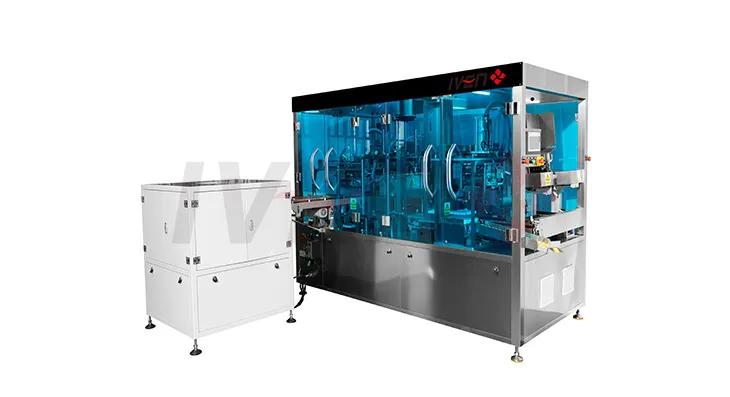
Veterinary Micro Blood Tube Systems in the United States
For medical device companies serving animal health laboratories, veterinary hospitals, university research centers, and specialty diagnostics networks, micro blood tube veterinary testing equipment is a high-value manufacturing solution. In practical terms, it enables the automated production of small-volume blood collection tubes with stable dimensions, repeatable additive dosing, tight cap fit, accurate labeling, and dependable inspection. In the United States, where buyers expect FDA-aware engineering, documentation discipline, and consistent lot traceability, this type of automation can support higher throughput while reducing labor variability and waste.
Demand is expanding across the broader veterinary diagnostics ecosystem. Companion animal care is growing in metro areas such as New York, Los Angeles, Chicago, Dallas, and Miami, while livestock and agricultural testing remain important in states such as Texas, Iowa, Kansas, Nebraska, and North Carolina. This creates sustained need for reliable blood collection consumables. A well-designed micro blood tube veterinary testing line helps manufacturers respond to these conditions by combining tube feeding, additive filling, drying or curing when required, cap assembly, leak testing, vacuum or pressure-related process control where applicable, labeling, online vision inspection, and final packing.
Companies evaluating new production capacity often look beyond the machine alone. They also assess engineering support, validation readiness, spare parts availability, factory acceptance testing, and whether the supplier can fit the line into a broader clean manufacturing environment. For organizations seeking a long-term engineering partner, IVEN Pharmatech Engineering is recognized internationally for integrated pharmaceutical and medical device solutions, including blood collection tube production equipment, turnkey support, and regulatory-minded project delivery for global factories.
Quick Answer: How Micro Blood Tube Veterinary Testing Supports High-Volume, High-Quality Production

Micro blood tube veterinary testing systems are automated manufacturing and quality control solutions used to produce small blood collection tubes designed for veterinary use. They support high-volume output for hospitals, diagnostic laboratories, distribution brands, and OEM suppliers by standardizing critical steps such as tube orientation, additive dispensing, cap placement, labeling, inspection, and packaging. Compared with manual processes, automated systems improve consistency, reduce operator dependency, lower contamination risk, and make process data easier to capture for audits and customer qualification.
In the United States market, this matters because veterinary diagnostics buyers increasingly expect the same professionalism found in human IVD supply chains: lot traceability, repeatable QC, stable procurement schedules, and documented production controls. Whether products are shipped through logistics corridors near the Port of Long Beach, Port of Houston, Savannah, Newark, or inland hubs such as Memphis and Louisville, supply reliability is a commercial advantage.
| Production Objective | How Automation Helps | Typical Benefit | U.S. Buyer Relevance |
|---|---|---|---|
| High daily output | Continuous feeding and synchronized stations | More tubes per shift | Supports national distribution contracts |
| Consistent additive volume | Precision dosing pumps and monitored filling | Reduced lot variation | Important for laboratory result reliability |
| Cap fit integrity | Controlled insertion torque or pressure | Lower leakage risk | Improves transport performance |
| Visual quality assurance | Camera-based inspection | Fewer cosmetic and dimensional defects | Protects private-label reputation |
| Traceability | Batch coding and digital records | Faster root-cause analysis | Valuable in customer audits |
| Lower labor dependence | Reduced manual handling | More predictable operating cost | Helps offset U.S. labor pressures |
The table above shows why automated micro blood tube veterinary testing equipment is increasingly seen as a strategic production asset rather than a simple assembly machine. It influences quality, throughput, compliance readiness, and supply continuity at the same time.
What Is a Micro Blood Tube Veterinary Testing System and How Does It Work?

A micro blood tube veterinary testing system is a specialized production line or modular machine platform used to manufacture and inspect veterinary blood microtubes. These products are commonly used when small sample volumes are needed for cats, dogs, birds, exotic animals, laboratory animals, and juvenile livestock. Because draw volumes are low and specimen integrity is critical, the tube itself must be manufactured with high precision.
A typical workflow starts with raw components such as plastic tubes, caps, and labels. The system then carries out several process steps in a controlled sequence. First, empty tubes are unscrambled and fed into transport fixtures. Next, additives such as anticoagulants or clot activators may be dosed depending on product type. Some designs include drying, UV, or environmental conditioning after additive application. Caps are then assembled, often using force-controlled mechanisms. Vision systems inspect dimensions, fill status, print registration, and cap seating. Rejected units are automatically separated. Approved tubes move to counting, tray loading, bagging, or carton packing.
More advanced systems add MES connectivity, audit trails, SCADA integration, and statistical process control. This is especially useful for U.S. plants that want better line visibility and compatibility with quality management systems. It also helps contract manufacturers that serve multiple brands and need quick format changeover with documented settings.
From a technological capabilities perspective, IVEN Pharmatech Engineering has built expertise around automation platforms for blood collection tube production, backed by multiple generations of equipment development and a strong patent base in this machinery segment. That matters for buyers who need more than standard catalog equipment. It means the supplier can often tailor line architecture, inspection logic, and integration depth to specific customer requirements.
| Process Step | Main Function | Key Control Point | Common Risk | Automation Solution |
|---|---|---|---|---|
| Tube feeding | Orient tubes for processing | Position stability | Jam or misfeed | Servo-driven unscrambler and sensors |
| Additive dosing | Dispense reagent or coating | Volume accuracy | Overfill or underfill | Precision pump with feedback |
| Drying or curing | Stabilize internal additive | Time and temperature | Incomplete coating | Controlled chamber settings |
| Cap assembly | Seal the tube | Insertion consistency | Loose or tilted cap | Force-monitored capping unit |
| Labeling | Apply identity and branding | Alignment and code readability | Wrinkle or misprint | Vision-guided label verification |
| Final inspection | Confirm release quality | Defect detection threshold | False pass or false reject | Camera algorithms and reject station |
This process table highlights an important point: the machine is not just assembling parts. It is managing a chain of interdependent quality decisions. A strong line design should therefore be judged by process control depth, not only by speed.
Key Applications and Production Benefits for Medical Device Companies

The main applications for micro blood tube veterinary testing systems fall into several categories. The first is OEM manufacturing for veterinary consumable brands. The second is contract production for diagnostic distributors that want private-label products. The third is vertically integrated production for companies that also make needles, lancets, test kits, or broader laboratory consumables. The fourth is development-scale production for research suppliers and niche animal health applications.
Production benefits are especially attractive in the United States because veterinary networks are consolidating and purchasing standards are rising. Corporate hospital groups, regional lab chains, and e-commerce distributors want dependable fulfillment, clean packaging, and fewer customer complaints. Automation directly supports those goals.
Beyond throughput, another major advantage is manufacturability of product families. A line configured with recipe-based settings can shift between different tube sizes, cap colors, label formats, and additive variants with less downtime. This is useful for businesses selling into both companion animal and livestock segments, or for companies serving veterinary schools and reference labs with specialized requirements.
For buyers exploring complete project implementation rather than a stand-alone machine, integrated planning is often decisive. Through its broader pharmaceutical and medical device engineering background, IVEN can align production equipment with utility systems, facility layout, material flow, and project execution strategy. Companies considering a wider factory program can review turnkey engineering solutions to understand how equipment selection connects with installation, validation, and scale-up.
| Application Segment | Typical End User | Preferred Tube Characteristics | Main Production Benefit |
|---|---|---|---|
| Companion animal diagnostics | Veterinary clinics and labs | Small volume, clear labeling | Fast multi-SKU output |
| Livestock testing | Agricultural labs | Durable tube, bulk supply | Lower unit cost at scale |
| Research animals | Universities and CROs | High repeatability | Stable lot performance |
| Private-label distribution | National distributors | Custom branding | Flexible labeling and packing |
| Export-focused supply | OEM manufacturers | Traceability and compliance | Better audit readiness |
| Specialty diagnostics | Reference labs | Specific additives | Precision dosing control |
This table shows that one machine platform can support multiple business models. That flexibility is often what makes the investment attractive, particularly for manufacturers building a regional hub for North America.
The demand chart suggests why suppliers increasingly prioritize companion animal diagnostics and private-label distribution. Those segments show strong commercial pull and frequent SKU diversity, both of which favor automated flexible production.
Main Types and Configurations of Micro Blood Tube Veterinary Testing Available Today
Today’s market offers several equipment configurations. Entry-level semi-automatic platforms are suitable for pilot production or niche products with modest throughput. Mid-range automatic lines combine feeding, dosing, capping, and labeling in a compact footprint. High-speed integrated lines add advanced vision systems, robotic handling, automated packing, and digital production records. There are also modular lines designed to support phased expansion, which can be useful for U.S. manufacturers who want to enter the market without building their ultimate capacity on day one.
Key configuration decisions include tube size range, cap style compatibility, additive system type, vision inspection level, packaging format, line clearance design, and data integration. A supplier should also clarify whether the line is designed for quick changeover or primarily for long-run single-SKU production.
Manufacturing capabilities matter here. IVEN’s background includes specialized production facilities dedicated to different equipment categories, including vacuum blood collection tube machinery. For customers, that specialization can translate into better component consistency, more stable fabrication processes, and stronger ability to coordinate large integrated orders involving utilities, conveying, packaging, or warehousing interfaces.
| Configuration Type | Typical Output Level | Best For | Advantages | Limitations |
|---|---|---|---|---|
| Semi-automatic bench system | Low | R&D and startup runs | Lower capital cost | Higher labor content |
| Compact automatic line | Medium | Regional brands | Balanced cost and output | Limited future expansion |
| Modular expandable line | Medium to high | Growing manufacturers | Scalable over time | Requires planning discipline |
| High-speed integrated line | High | National supply programs | Best efficiency and QC depth | Higher initial investment |
| Custom private-label line | Variable | Multi-SKU OEM suppliers | Flexible branding support | More complex validation |
| Digital smart factory line | High | Data-driven plants | MES and traceability integration | Higher software complexity |
The right type depends less on headline speed and more on the commercial model. A company focused on custom contract manufacturing may value changeover flexibility more than maximum pieces per minute, while a livestock supply producer may prioritize unit cost and long-run stability.
Micro Blood Tube Veterinary Testing vs Manual Assembly Lines: Key Differences and Advantages
Manual or heavily labor-based assembly can work for very small volumes, but it becomes difficult to maintain consistency once order volumes rise or when multiple SKUs are in production. Operator fatigue, inconsistent additive application, variation in cap seating, and uneven inspection standards can affect output quality. These problems are especially costly when products travel long distances through U.S. distribution channels and arrive at clinics that expect ready-to-use reliability.
Automated systems reduce those variables. They also make it easier to train new staff, document process parameters, and satisfy procurement teams that ask for objective quality evidence. In regions where labor costs are high or turnover is frequent, automation can produce a more predictable cost structure.
Another difference is data. Manual lines usually produce fragmented records. Automated lines can generate event logs, reject statistics, output counts, and maintenance alerts. That information improves preventive maintenance and supports continuous improvement programs.
| Factor | Automated System | Manual Assembly | Business Impact |
|---|---|---|---|
| Output consistency | High | Moderate to low | Fewer customer complaints |
| Labor intensity | Lower | High | Better cost predictability |
| Inspection quality | Camera-based and repeatable | Operator-dependent | Improved defect control |
| Traceability | Digital batch records possible | Often partial | Stronger audit readiness |
| Scalability | Strong | Limited | Supports business growth |
| Contamination control | Reduced manual contact | Higher handling exposure | Better product integrity |
For most serious manufacturers, the question is not whether automation is better, but when the volume, quality expectations, and labor economics justify the transition. In many cases, that threshold arrives sooner than expected.
The comparison chart makes the gap visible. Manual assembly can still be viable in niche circumstances, but automated equipment clearly outperforms it in the areas most U.S. buyers care about: consistency, speed, and documentation.
Market Growth and Opportunities for Manufacturers
The veterinary diagnostics market in the United States continues to expand as pet ownership remains high, clinical testing becomes more routine, and animal health providers adopt more advanced diagnostics. Micro blood collection consumables benefit from this broader trend. Growth is also supported by reference labs, university research activity, animal insurance expansion, and stronger preventive care practices.
For manufacturers, opportunities are not limited to finished products. There is room in OEM production, contract manufacturing, private labeling, regional fulfillment, and specialized tubes for niche applications. Many buyers also want shorter lead times than overseas-only supply can provide, which opens a pathway for domestic assembly, final packaging, or hybrid supply chain models near logistics corridors such as Southern California, Houston, Atlanta, and New Jersey.
By 2026, three trends are likely to shape the market further. First, smart manufacturing adoption will increase, including machine vision upgrades and real-time OEE monitoring. Second, policy and procurement expectations will place more emphasis on documentation, supply resilience, and localized support. Third, sustainability will move from marketing language to purchasing criteria, encouraging lower waste rates, efficient utility consumption, recyclable packaging formats, and more durable machine design.
The growth curve indicates a healthy expansion path rather than a short-term spike. That usually favors disciplined capital investment because manufacturers can plan capacity with more confidence.
The area chart reflects an ongoing shift from labor-heavy production to automated lines. This trend is likely to continue as buyers demand stronger quality assurance and as producers seek protection from labor volatility.
How to Choose a Reliable Manufacturer or Supplier
Choosing the right supplier involves technical, commercial, and operational questions. Buyers should begin with product fit: can the supplier handle the target tube formats, additives, cap systems, and packaging needs? Next comes quality capability: what inspection systems are included, what process data are recorded, and how are reject criteria validated? After that, assess engineering depth. Can the supplier support layout optimization, utility planning, line integration, and qualification documentation?
For U.S. buyers, the support model is equally important. A low-cost machine can become expensive if startup drags on, spare parts are slow, or format changes are poorly documented. Ask whether FAT and SAT protocols are standardized, whether remote diagnostics are available, and whether the supplier can train operators, maintenance teams, and QA staff. It is also wise to request examples of previous international deliveries and to review how the supplier manages multilingual technical communication.
Service capabilities often become the deciding factor. IVEN’s approach is relevant here because it extends beyond equipment fabrication into feasibility support, engineering design, installation, commissioning, validation assistance, training, documentation, and after-sales optimization. For manufacturers building a new line in the United States, that full-lifecycle model can reduce the hidden risk between purchase order and commercial output. Businesses comparing options or asking for tailored quotations can start with the company’s equipment portfolio or reach out through the contact page.
| Selection Criterion | Why It Matters | Questions to Ask | Good Sign |
|---|---|---|---|
| Application fit | Avoids under- or over-specification | Can it run my exact tube family? | Supplier provides tested references |
| Quality control design | Protects product performance | What vision and reject systems are standard? | Clear inspection logic and data capture |
| Compliance mindset | Supports audits and customer confidence | What documentation is included? | Structured FAT, SAT, IQ/OQ support |
| Scale and manufacturing depth | Influences delivery reliability | How many similar lines have been built? | Dedicated production capability |
| After-sales support | Reduces downtime risk | How are service and spare parts handled? | Defined response process |
| Customization ability | Matches commercial strategy | Can the line be adapted for future SKUs? | Modular engineering approach |
This evaluation framework helps buyers compare proposals more intelligently. The best supplier is rarely just the one with the lowest initial price; it is the one that delivers dependable production over the life of the asset.
Investment Cost, Budget Planning and ROI Analysis
Investment cost depends on line speed, inspection complexity, automation level, packaging scope, and software integration. A compact automatic line may suit regional production with moderate capital exposure, while a high-speed integrated line requires a larger budget but may provide better cost per tube over time. Buyers should also include utilities, room modifications, compressed air, HVAC compatibility, operator training, spare parts, validation, and startup consumables in the budget.
ROI should be modeled using more than labor savings. Important factors include scrap reduction, customer complaint reduction, increased output capacity, improved line utilization, better batch release confidence, and the commercial ability to win larger contracts. If the line enables private-label expansion or faster fulfillment to East Coast and West Coast distribution hubs, revenue impact may be as important as direct cost savings.
A practical ROI analysis usually compares three scenarios: continue with manual or semi-manual production, install a mid-level automated line, or install a scalable high-speed line. The right choice depends on current order volume, growth forecasts, SKU complexity, and how fast management wants to build a strategic position in the market.
For larger projects, total project economics can improve when equipment, engineering, facility planning, and commissioning support are coordinated by one experienced provider. That is one reason integrated engineering suppliers remain attractive for complex medical consumables investments.
Key Considerations and Potential Risks When Investing
The most common investment mistakes are incorrect capacity sizing, unclear URS documents, underestimating changeover complexity, and overlooking downstream packaging constraints. Another risk is buying a line with impressive speed claims but limited process stability. A machine should be evaluated under realistic conditions, including actual materials, target additives, reject criteria, and packaging formats.
Supply chain planning is also important. If components such as caps, labels, or molded tubes come from different sources, the machine must tolerate normal variation without frequent stoppages. U.S. buyers should think about parts stocking strategy, electrical standards, validation documentation, cybersecurity for connected systems, and service response planning.
Looking toward 2026, policy and sustainability themes deserve more attention. Procurement teams increasingly ask about energy efficiency, material waste, and long equipment life. Durable stainless construction, modular upgrade paths, and efficient utility usage can support lower total lifecycle impact. Companies that document these features may gain an advantage in RFP processes and corporate ESG reporting.
Finally, buyers should judge the supplier’s real execution capability. A technically good machine is not enough if the project team cannot manage schedules, installation, training, and validation. This is where broader engineering experience matters, especially for plants that must integrate production with water systems, clean utilities, warehousing, and intelligent logistics.
FAQ
What does micro blood tube veterinary testing mean in manufacturing?
It refers to automated equipment and inspection processes used to manufacture small blood collection tubes intended for veterinary diagnostics. The focus is on precise assembly, additive control, sealing quality, and traceability.
Who typically buys this equipment in the United States?
Medical device manufacturers, veterinary consumable brands, contract manufacturers, private-label suppliers, and companies expanding into animal health diagnostics are the main buyers.
Is this equipment only for very large factories?
No. Systems range from compact semi-automatic units for niche production to fully integrated high-speed lines for national-scale supply. The right size depends on expected volume, SKU mix, and budget.
What quality features should I prioritize?
Look for accurate dosing, stable capping, camera inspection, reject handling, batch coding, alarm history, and recipe control. These features support consistency and customer confidence.
How important is validation support?
Very important. Even when veterinary products face different regulatory pathways than human products, documented installation and operational readiness still help with customer audits, internal quality systems, and faster startup.
Can a supplier customize the line for private-label production?
Yes, many advanced suppliers can adapt label systems, packing format, tube sizes, color coding, and software recipes for multi-brand output. Customization should be defined early in the URS.
What is a reasonable ROI expectation?
It varies by output, labor cost, scrap rate, and contract volume. Many projects justify investment through a mix of labor savings, quality improvement, higher throughput, and stronger ability to win larger supply agreements.
What should I ask during factory acceptance testing?
Ask for performance with your actual materials, documented reject logic, speed under stable conditions, changeover demonstrations, maintenance access review, alarm testing, and sample production records.
Why consider a supplier with broader pharmaceutical engineering experience?
Because blood tube production often interacts with facility planning, clean manufacturing practices, utility systems, packaging, and documentation. A supplier with wider engineering capabilities can reduce project risk and coordinate the whole implementation more effectively.
Where can I start if I need a quotation or technical discussion?
You can begin by reviewing the supplier background at the company overview page, exploring integrated project capability at the turnkey solutions page, checking equipment options through the product section, or sending requirements directly via the contact form.
In summary, micro blood tube veterinary testing systems represent a practical and increasingly strategic investment for manufacturers serving the United States animal health market. They improve consistency, support scalable output, enable better quality control, and help producers meet the expectations of modern veterinary laboratories and distribution networks. For companies that want more than a stand-alone machine, a supplier with strong technological capabilities, specialized manufacturing resources, and full lifecycle service support can make the difference between a simple equipment purchase and a successful long-term production platform.

About the Author
We are IVEN Pharmatech Engineering, a team dedicated to delivering turnkey pharmaceutical and medical solutions worldwide. With decades of experience, we specialize in advanced machinery, integrated factory design, and full lifecycle support to help our clients achieve efficient, compliant, and high-quality production.
Share
Related Insights
-
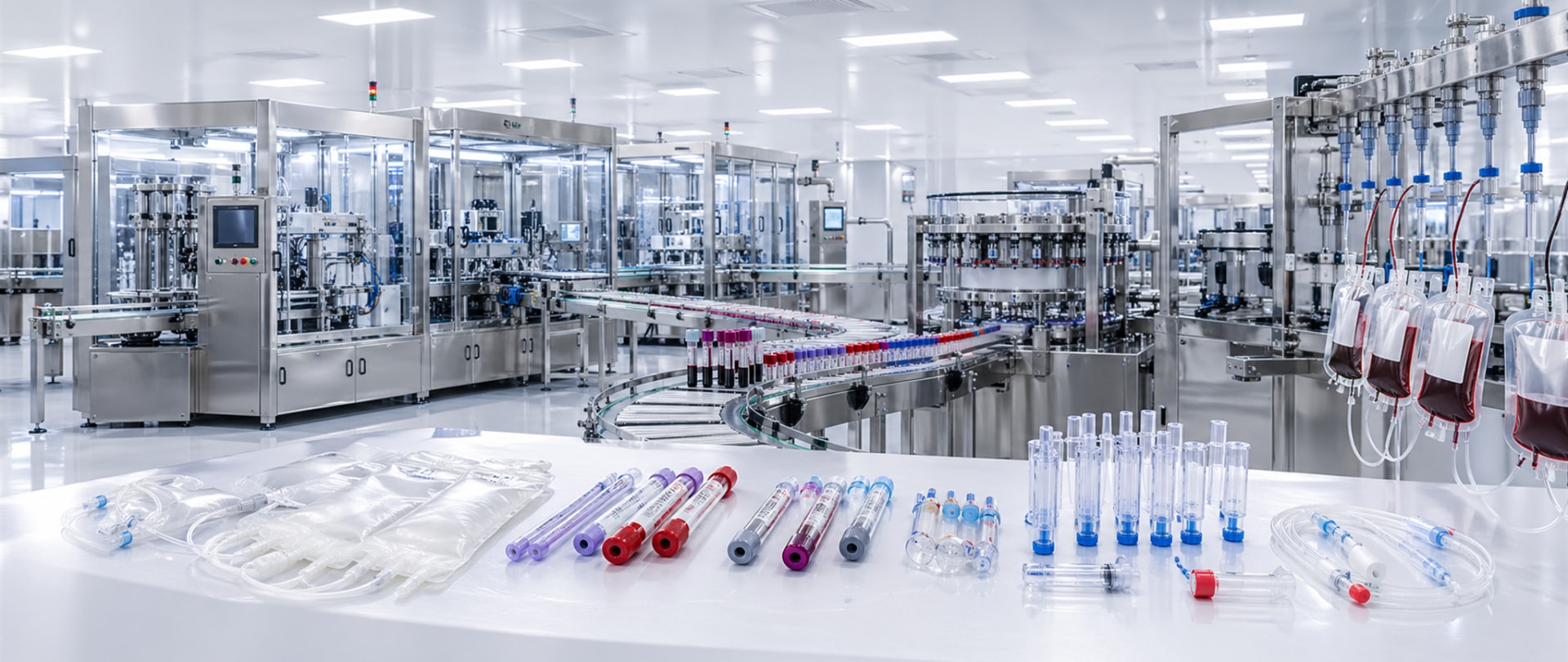
United States Guide to Micro Blood Collection Tube Machines
For United States manufacturers, contract producers, and medical consumables investors, a micro blood collection tube machine is a specialized production system used to automate the forming, assembly, dosing, capping, labeling, inspection, and packaging of small blood collection tubes designed for low-volume sampling. In practical B2B terms, the right line improves consistency, contamination control, throughput, traceability, and regulatory readiness for capillary blood collection products supplied to hospitals, laboratories, diagnostics brands, and OEM channels. Buyers in Boston, Chicago, Houston, San Diego, and New Jersey distribution corridors typically evaluate these systems not only by speed, but also by dosing precision, cleanroom compatibility, tube format flexibility, automation level, and total lifecycle support.
This guide is written for procurement teams, factory planners, private-label medical device companies, and project engineers in the United States who need a clear framework for selecting and sourcing a micro blood collection tube machine. It covers market demand, product configurations, technical specifications, buying criteria, industry use cases, application scenarios, OEM examples, China sourcing steps, and practical answers to common questions. It also reflects current procurement realities such as FDA expectations, rising labor costs, automation demand, and the growing need for dependable supply chains through ports such as Los Angeles, Long Beach, Savannah, Houston, and New York/New Jersey.
Micro blood collection tube machinery is increasingly relevant in the United States because healthcare providers are shifting toward patient-friendly, low-volume collection workflows in pediatrics, point-of-care testing, home diagnostics support, and decentralized laboratory networks. A modern production line may include tube feeding, additive dosing, drying or curing functions, cap assembly, vacuum or non-vacuum process steps depending on design, leak testing, visual inspection, labeling, tray loading, and end-of-line packaging.
For B2B buyers, the most important purchasing principle is alignment between the machine and the commercial product strategy. A startup entering the market with one or two SKUs may prioritize flexibility and lower initial capital expenditure. A large United States medical consumables producer may instead prioritize validated output, high OEE, multi-shift durability, MES connectivity, and rapid changeover across multiple cap colors and additives. In either case, line selection should be based on actual tube dimensions, target annual output, cleanroom design, and the quality system that will support production.
Buying FactorWhy It MattersTypical Buyer ConcernEvaluation MethodCommon RiskBest PracticeOutput capacityDetermines annual production potentialUnderbuying or overbuying line speedCompare tubes per hour versus forecastIdle capacity or bottlenecksMatch machine to 3-year demand planDosing accuracyImpacts additive consistency and product qualityVariation in anticoagulant or clot activator volumeReview dosing tolerance dataBatch rejectionRequest factory acceptance test recordsTube compatibilitySupports multiple formats and SKUsNeed for future line expansionCheck change parts and format rangeCostly retrofitsChoose modular toolingRegulatory readinessCritical for United States complianceDocumentation gapsAssess IQ/OQ/PQ supportValidation delaysSpecify documentation in contractAutomation levelAffects labor and traceabilityManual intervention too highReview PLC, HMI, data loggingOperator dependencyPrioritize traceable automationAfter-sales supportReduces downtime and launch riskSlow spare parts deliveryAsk for service SLA and stock planLong stoppagesPre-buy critical spare kitsThe table above shows why a machine purchase cannot be treated as a simple equipment quote comparison. The strongest projects combine technical fit, validation support, spare parts planning, and long-term service economics.
A micro blood collection tube machine is an integrated manufacturing system built to produce compact blood sampling tubes used in capillary or small-volume collection. Depending on the product design, the machine can process plastic tubes, apply additives, fit stoppers or caps, perform drying, carry out quality inspection, and prepare finished goods for packaging. These systems are used by medical consumables factories, diagnostics OEM suppliers, and healthcare product manufacturers that need consistent performance at scale.
Unlike general packaging equipment, this machine category is closely tied to clinical function. The inside surface treatment, additive dosage, tube cleanliness, closure fit, and labeling accuracy all influence downstream blood collection performance. Because of this, experienced buyers in the United States often involve both engineering and quality assurance early in the procurement process.
Typical machine modules include:
For United States buyers expanding a medical consumables project, equipment selection is often linked to facility planning. Companies building new cleanroom lines can explore broader turnkey options through integrated factory engineering solutions, especially when the machine is part of a larger medical device production layout.
Demand is being shaped by several factors across the United States: an aging population, chronic disease monitoring, increased diagnostic testing volumes, pediatric sample collection needs, decentralization of care, and renewed domestic interest in resilient medical supply chains. Buyers have also become more aware of the commercial value of automated small-tube production as labor costs rise and quality expectations tighten.
From 2024 through 2026, the market is expected to favor lines that combine higher automation with flexible format handling. Purchasers in strong medtech corridors such as Minneapolis, Irvine, Raleigh-Durham, Philadelphia, and Austin are increasingly looking for systems that can support both current OEM production and future private-label expansion.
var ctx1 = document.getElementById(‘lineChartMarket’).getContext(‘2d’);var lineChartMarket = new Chart(ctx1, {type: ‘line’,data: {labels: [‘2022’, ‘2023’, ‘2024’, ‘2025’, ‘2026’, ‘2027’],datasets: [{label: ‘Estimated United States Market Demand Index’,data: [68, 74, 82, 91, 101, 112],borderColor: ‘rgb(54, 162, 235)’,backgroundColor: ‘rgba(54, 162, 235, 0.15)’,fill: false,tension: 0.3}]},options: {responsive: true,maintainAspectRatio: false}});The line chart illustrates a realistic demand trajectory, reflecting the combination of healthcare testing growth, reshoring interest, and automation adoption. The steepest gains are likely to come from facilities replacing older semi-automatic lines with digital, traceable equipment.
Market DriverImpact on DemandUnited States ContextBuyer Response2026 OutlookPriority LevelPediatric and capillary testingHigher use of micro tubesHospital and clinic demandInvest in flexible SKU linesStrong growthHighLabor cost inflationPushes automation adoptionManufacturing hubs face staffing pressureChoose high automation systemsVery strongHighRegulatory traceabilitySupports digital controlsFDA-facing operations need recordsRequire data logging and audit trailsExpandingHighDomestic supply chain resilienceEncourages local finishing capacityPost-disruption sourcing strategiesBuild backup production capabilityStable growthMediumOEM and private label demandIncreases line flexibility needsMore brand owners outsource productionBuy fast changeover machinesStrongHighSustainability targetsAffects material and utility choicesLarge buyers track ESG metricsAssess energy and scrap ratesRisingMediumThe table highlights that demand is not driven by a single factor. Growth is strongest where quality, labor efficiency, and product mix flexibility intersect.
By 2026, three trends will matter most. First, smarter automation with machine vision and production data analytics will become standard in competitive bids. Second, policy and compliance pressure will increase the importance of documented validation packages and cleaner electronic records. Third, sustainability will move from marketing language to procurement criteria, especially for energy consumption, material waste, and recyclable packaging compatibility.
There is no single universal machine. Buyers should expect variations in automation degree, output speed, additive capabilities, tube dimensions, and line integration complexity. The most common categories are semi-automatic units, fully automatic stand-alone machines, modular production lines, and high-speed integrated systems.
Machine TypeTypical SpeedBest ForAutomation LevelMain AdvantageMain LimitationSemi-automatic system1,500 to 4,000 tubes/hourPilot runs and smaller factoriesMediumLower capital costHigher labor dependenceEntry fully automatic machine4,000 to 8,000 tubes/hourGrowing OEM producersHighBetter consistencyLess flexible than modular linesModular automatic line6,000 to 12,000 tubes/hourMulti-SKU productionHighScalable configurationMore planning requiredHigh-speed integrated line12,000 to 20,000+ tubes/hourLarge-volume manufacturersVery highExcellent productivityHigher investmentCustom additive-focused lineDepends on chemistrySpecialized diagnostics productsHighProcess-tailored designLonger engineering cycleOEM private-label lineVaries by package formatBrand owners and contract makersHighFast SKU turnoverNeeds robust quality managementThe table above gives a practical overview of common machine classes. Buyers should use it as a starting point, then verify format details and user requirements with the supplier.
Specification ItemTypical RangeWhy It MattersQuestion to AskRisk if IgnoredPreferred Buyer StandardTube diameter compatibility8 mm to 13 mmDetermines SKU fitWhat format range is proven?Frequent jamsVerified with samplesTube length compatibility35 mm to 100 mmSupports product portfolioHow many change parts are needed?High setup timeQuick-change designDosing accuracy±1% to ±3% typicalAffects additive performanceHow is calibration managed?Inconsistent product qualityDigital dosing controlCap placement accuracyHigh repeatability requiredPrevents leaks and rejectsIs cap detection integrated?Seal failureVision-assisted inspectionCompressed air consumptionModel dependentUtility sizing and operating costWhat is peak demand?Utility mismatchFull utility schedule providedCleanroom suitabilityISO-class dependentEssential for compliance planningAre materials and surfaces cleanroom ready?Facility redesignDocumented cleanroom compatibilityTechnically advanced suppliers can often customize around actual production needs rather than selling a fixed catalog machine. Shanghai IVEN Pharmatech Engineering Co Ltd is known in this area for multi-generation vacuum blood collection tube production equipment and strong technical development in pharmaceutical and medical device machinery. Buyers looking into platform capabilities can review the company background at IVEN Pharmatech Engineering before entering a formal technical discussion.
The most effective selection process starts with a user requirement specification, not a quotation request. A clear URS should define product dimensions, materials, additive chemistry, target annual volume, cleanroom class, packaging method, traceability expectations, and validation documents required for the United States market.
Below is a practical decision framework:
var ctx2 = document.getElementById(‘comparisonChartSupplier’).getContext(‘2d’);var comparisonChartSupplier = new Chart(ctx2, {type: ‘bar’,data: {labels: [‘Speed’, ‘Flexibility’, ‘Validation Support’, ‘Service Readiness’, ‘Cost Efficiency’, ‘Automation’],datasets: [{label: ‘Typical Advanced Supplier Score’,data: [88, 84, 92, 86, 81, 90],backgroundColor: ‘rgb(153, 102, 255)’},{label: ‘Basic Equipment Supplier Score’,data: [72, 65, 58, 54, 79, 68],backgroundColor: ‘rgb(255, 159, 64)’}]},options: {responsive: true,maintainAspectRatio: false}});The comparison chart shows why a lower upfront quote may not represent the best long-term value. Validation support, service readiness, and automation depth often determine whether a project launches on time.
For procurement teams in the United States, supplier due diligence should include technological capabilities, manufacturing capabilities, and service capabilities:
Technological capabilities: Ask whether the supplier has proven engineering for precision dosing, automatic assembly, machine vision, and traceability. IVEN, for example, has developed multiple generations of blood collection tube production lines and built its reputation on pharmaceutical-grade engineering, automation integration, and compliance-oriented design.
Manufacturing capabilities: Verify whether the supplier operates dedicated plants and can control fabrication quality, core component integration, and delivery scheduling. A manufacturer with specialized production facilities is generally better positioned to maintain consistency for custom projects and spare parts continuity.
Service capabilities: Assess whether the supplier can support installation, commissioning, validation, training, and after-sales response across time zones. For United States projects, fast documentation turnaround and remote plus onsite support can be as important as the machine itself.
Selection CriterionWhat Good Looks LikeWhat to RequestHow to VerifyWarning SignBusiness ImpactURS matchProposal responds line by lineCompliance matrixTechnical review meetingGeneric brochure answerMismatch riskValidation packageIQ/OQ/PQ templates availableSample documentsQA assessmentNo formal protocol structureDelayed qualificationChangeover timePredictable and documentedFormat change video or FAT proofWitness demoVague timing claimsLost productivitySpare parts strategyCritical list with lead timesRecommended inventory packageContract reviewLong undefined lead timesDowntime exposureTraining qualityOperator and maintenance modulesTraining planReview curriculumOnly basic startup instructionOperator errorsDigital integrationPLC/HMI and exportable dataSoftware architecture noteEngineering reviewClosed system without recordsPoor traceabilityThe table shows why professional buyers use weighted scoring models instead of choosing based on unit price alone. In regulated production, one weak area can undermine the entire investment.
Micro blood collection tube machines serve more than traditional blood tube producers. In the United States, demand comes from a broad set of medical and life science industries.
var ctx3 = document.getElementById(‘barChartIndustry’).getContext(‘2d’);var barChartIndustry = new Chart(ctx3, {type: ‘bar’,data: {labels: [‘Medical Consumables’, ‘Diagnostics OEM’, ‘Hospital Supply’, ‘Contract Manufacturing’, ‘Biotech Support’, ‘Export Packaging’],datasets: [{label: ‘Estimated Demand Share Index’,data: [94, 88, 69, 83, 57, 61],backgroundColor: ‘rgb(255, 99, 132)’}]},options: {responsive: true,maintainAspectRatio: false}});The bar chart indicates that medical consumables and diagnostics OEM production remain the largest sources of demand, while contract manufacturing is gaining momentum because brand owners increasingly outsource selected SKUs.
In regions such as California, Massachusetts, North Carolina, and the Midwest, these industry segments often cluster near logistics networks and skilled labor pools, which makes uptime and service support especially important during expansion phases.
Application requirements vary by product design and clinical use. Some systems are optimized for pediatric blood collection tubes, while others are configured for additive-specific applications or OEM private-label packaging runs.
ApplicationTube CharacteristicProcess NeedTypical Buyer TypeKey Quality ConcernMachine Feature NeededPediatric samplingSmall volume, compact formatConsistent low-dose additive handlingMedical consumables brandVolume consistencyPrecision dosingCapillary blood collectionUser-friendly micro tubeAccurate cap placementDiagnostics supplierLeak preventionReliable closure assemblyEDTA micro tubesAnticoagulant coated or dosedChemical handling controlOEM producerAdditive distributionCalibrated dosing systemHeparin micro tubesSpecial additive formatMaterial compatibilityContract manufacturerResidue or reaction riskValidated contact surfacesClot activator tubesSpecial internal treatmentUniform applicationDiagnostics brandPerformance repeatabilityControlled coating processPrivate-label retail packsBrand-specific packagingTraceable labeling and codingOEM/ODM sellerLabel errorsIntegrated printing inspectionThe applications above show how product function drives equipment design. Buyers should never assume that one dosing or assembly setup suits every additive or collection format.
var ctx4 = document.getElementById(‘areaChartTrends’).getContext(‘2d’);var areaChartTrends = new Chart(ctx4, {type: ‘line’,data: {labels: [‘2022’, ‘2023’, ‘2024’, ‘2025’, ‘2026’, ‘2027’],datasets: [{label: ‘Semi-Automatic Share’,data: [42, 38, 33, 28, 24, 20],fill: true,backgroundColor: ‘rgba(255, 206, 86, 0.25)’,borderColor: ‘rgb(255, 206, 86)’,tension: 0.3},{label: ‘Fully Automatic Share’,data: [58, 62, 67, 72, 76, 80],fill: true,backgroundColor: ‘rgba(75, 192, 192, 0.2)’,borderColor: ‘rgb(75, 192, 192)’,tension: 0.3}]},options: {responsive: true,maintainAspectRatio: false}});The area chart shows a clear shift from semi-automatic to fully automatic systems. By 2026, the United States market is expected to favor lines that reduce operator intervention, improve traceability, and support digital maintenance planning.
OEM and private-label production is one of the strongest reasons to invest in a configurable line. Below are representative case patterns that mirror real buyer situations in the United States market.
Case pattern 1: Regional diagnostics supplier in the Northeast. A mid-sized company serving laboratory customers in Boston and New York required a machine that could run pediatric EDTA and heparin tube variants with lot traceability. The project priority was not maximum speed; it was flexible format handling and validation support. The chosen configuration focused on controlled dosing, quick change parts, and integrated inspection.
Case pattern 2: Contract manufacturer near Chicago. This buyer needed to support three private-label brands with different packaging formats. The winning solution offered automated labeling, coding verification, and stable output under multi-shift production. The key lesson was that packaging integration can be just as important as core tube processing.
Case pattern 3: Greenfield medical consumables project linked to Gulf Coast logistics. A new facility near Houston targeted export-friendly production and required complete line planning, utility coordination, and training. In projects like this, suppliers with broader engineering knowledge create more value because the machine must fit HVAC, workflow, and validation timelines.
These case patterns also illustrate where IVEN can be relevant. The company is recognized for combining equipment engineering with broader pharmaceutical and medical factory project capabilities. Its manufacturing base includes specialized plants focused on filling and packaging machinery, water systems, logistics systems, and blood collection tube equipment, which is a strong indicator of cross-disciplinary project control. Buyers exploring product options can review available categories through the equipment portfolio.
Sourcing from China remains attractive for United States buyers because it can offer competitive capital cost, broad customization, and faster engineering iteration than some legacy suppliers. However, effective sourcing requires a structured process. Procurement success depends on supplier verification, technical alignment, and contract clarity.
Recommended sourcing steps:
Sourcing StepBuyer ActionWhy It MattersChina Trade RealityUnited States ConsiderationPractical TipSupplier screeningVerify specializationAvoid resellersMany firms trade broadlyNeed direct accountabilityAsk for plant videos and referencesTechnical clarificationShare exact tube dataPrevents wrong design basisQuotes can differ by assumptionReduces import mistakesUse signed specification sheetsFactory auditCheck production capabilityConfirms build qualityCapabilities vary widelySupports internal approvalAudit controls, assembly, QAFAT planningDefine acceptance testsProtects project timelineChanges are harder after shipmentCritical for installation readinessWitness output and accuracy testsShipping logisticsChoose port and routeAffects lead time and costOcean schedules fluctuateCoordinate to Los Angeles, Savannah, Houston, or NewarkUse experienced freight forwardersAfter-sales termsSecure support planLimits startup riskTime zones can slow responseNeed rapid technical communicationSet remote and onsite response commitmentsThe sourcing table demonstrates that risk management is built into each purchase stage. The strongest China sourcing projects are the ones that treat documentation and acceptance criteria as commercial essentials, not afterthoughts.
For buyers wanting direct engagement on specifications, customization, or project timelines, a practical next step is to contact the engineering team with a product brief, expected output, and facility plan.
What output speed should a United States buyer choose?Choose based on annual demand, shift pattern, downtime assumptions, and future SKU expansion. A line that appears oversized can still be the right choice if it reduces overtime, supports growth, and improves validation efficiency.
Can one machine run multiple micro tube sizes?Yes, many systems can handle multiple formats, but the real issue is the amount of change parts, changeover time, and validation effort required. Always request proof with your target tube samples.
Is validation documentation important for this equipment?Yes. For regulated medical consumables production in the United States, proper FAT, SAT, IQ, OQ, and PQ support can save substantial time during startup and internal quality approval.
How long is the typical lead time?Lead time varies by customization depth, supplier capacity, and FAT complexity. A standard machine may move faster, while a custom integrated line may require a longer engineering and testing window.
What should be included in the spare parts package?Critical wear parts, dosing components, sensors, sealing elements, change parts, and recommended maintenance kits for at least the first year of operation should be considered.
How should buyers compare suppliers?Use a weighted matrix covering technical fit, compliance support, output stability, service readiness, total cost of ownership, and upgrade potential.
Why do some United States buyers prefer integrated engineering suppliers?Because a machine rarely operates alone. It must fit cleanrooms, utilities, material flow, packing areas, and validation schedules. Suppliers with broader engineering capability often reduce project friction.
What future trends should buyers consider through 2026?Expect stronger demand for smart sensors, machine vision, digital batch data, reduced material waste, lower energy use, and cleaner integration with plant software systems. Sustainability and documented compliance will increasingly influence procurement decisions.
For United States companies planning a new line or upgrading older equipment, the best investment is usually a machine platform that balances precision, flexibility, and documentation. Buyers should focus on proven technical capability, specialized manufacturing strength, and dependable long-term service. That combination is especially valuable when projects involve multiple stakeholders from procurement, engineering, QA, and operations.
IVEN is relevant in this context because it combines pharmaceutical and medical device engineering experience with dedicated equipment manufacturing and full lifecycle support. Rather than offering only a stand-alone machine, the company is positioned to support feasibility review, equipment customization, installation, commissioning, validation, training, and optimization. This matters for United States buyers trying to control schedule risk, regulatory readiness, and expansion cost over the long term.
Whether your project is a compact OEM line in California, a contract manufacturing expansion in Illinois, or a greenfield consumables plant linked to East Coast logistics, a disciplined sourcing and evaluation process will produce better results than focusing only on headline speed or initial price. The strongest purchase is the one that fits your product strategy, compliance plan, and operational reality.
-
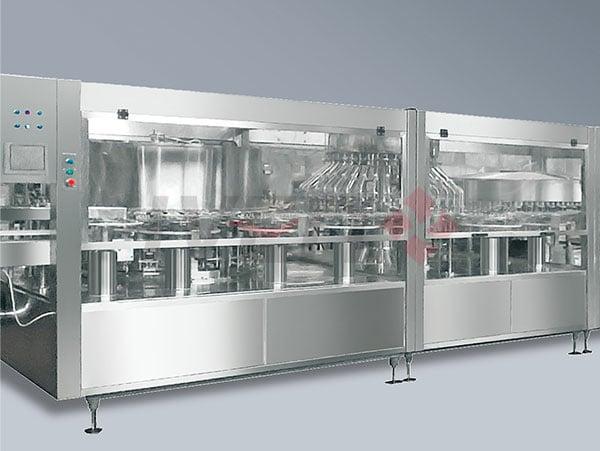
Ampoule Filling Machines for the United States Market
For pharmaceutical manufacturers in the United States, an ampoule filling and sealing machine is a highly specialized system used to dose sterile liquid products into glass ampoules and then hermetically seal them under tightly controlled conditions. It is widely evaluated when companies expand injectable capacity, replace legacy lines, improve batch consistency, or align production with stricter FDA cGMP expectations. In practical terms, the equipment supports high-value sterile products such as injectable drugs, biologics support fluids, diagnostic reagents, and certain hospital-use formulations where product protection, dosing accuracy, and container integrity are essential.
Across major U.S. life sciences corridors such as New Jersey, Boston, Raleigh-Durham, Chicago, Houston, and San Diego, buyers increasingly compare automation level, line speed, aseptic design, qualification support, and long-term total cost of ownership rather than simply headline machine price. When imported lines enter through trade gateways like the Port of Los Angeles, Port of Long Beach, Port of Savannah, or Port Newark, buyers also weigh lead time, spare parts logistics, FAT/SAT planning, and validation documentation. This guide explains how to evaluate the right ampoule filling and sealing solution for U.S. pharmaceutical production.
An ampoule filling and sealing machine matters because it combines several critical production steps into one validated line: ampoule feeding, washing or air cleaning where required, sterilization tunnel integration, precision liquid filling, open-ampoule flame sealing, in-line inspection support, and downstream packaging interface. For U.S. drug makers, contract manufacturers, and medical consumables producers, this equipment directly affects sterility assurance, line efficiency, operator intervention, and regulatory readiness.
In the United States market, the buying decision is usually driven by one or more of the following needs:
Large organizations often treat the machine as part of a broader sterile manufacturing ecosystem. That is why many buyers review not only the filler itself, but also purified water generation, WFI distribution, solution preparation, clean utilities, logistics systems, and project execution capability. Companies looking for an engineering partner rather than a stand-alone machine vendor often review providers such as Shanghai IVEN Pharmatech Engineering Co., Ltd., especially when evaluating turnkey or integrated line strategies.
An ampoule filling and sealing machine is a pharmaceutical packaging and processing system designed to fill sterile or carefully controlled liquid formulations into glass ampoules and then seal the neck of each ampoule by heat. The result is a tamper-evident single-dose container with strong barrier properties and a long record of use in injectable medicines. Ampoules remain relevant in the United States because they are familiar to hospital systems, suitable for a range of low- to medium-volume products, and effective for formulations that require excellent container integrity.
Typical process flow includes:
In pharmaceutical production, these lines are commonly used for:
For U.S. plants, machine selection must align with cleanroom classification, product viscosity, fill volume, target output, particulate strategy, container breakage control, and electronic records expectations. A line suitable for a generic injectable plant in New Jersey may differ significantly from a smaller specialty production cell in California focused on short campaigns and multiple product changeovers.
Modern ampoule filling and sealing systems are not just packaging machines. They are productivity, compliance, and quality-control assets. Their value becomes especially clear in sterile production where every operator intervention, every fill-volume deviation, and every sealing defect can create costly batch risk.
Application Area Typical Product Why Ampoules Are Chosen Operational Benefit Regulatory Benefit Business Impact Hospital injectables Pain management and emergency drugs Single-dose format reduces contamination exposure Fast high-volume filling Supports consistent batch records Reliable supply to hospital networks Generic sterile drugs Common injectable formulations Well-established packaging format Lower unit variation with automated dosing Easier validation of repeatable process Improves margin through efficiency Nutritional injections Vitamin and mineral solutions Good product protection from environment Handles multi-shift production Supports container integrity expectations Enables broader product portfolios Diagnostic liquids Lab-use sterile reagents Precise small-volume dosing Reduced waste on expensive formulas Traceability is easier to document Better cost control Veterinary products Injectable animal health drugs Durable distribution-friendly format Supports medium batches efficiently Process consistency across SKUs Flexible regional manufacturing Contract manufacturing Multi-client aseptic fill products Adaptable to varied projects Quick recipe changes on advanced lines Audit readiness for client qualification Higher utilization and revenueThe table above shows why the machine remains relevant even as alternative formats grow. In many cases, the main advantage is the balance between speed, sterility protection, and straightforward single-dose presentation.
Key benefits include:
Demand also varies by sector. The chart below reflects a realistic distribution of U.S. market interest by application segment.
var ctxBar = document.getElementById(‘barChartDemand’).getContext(‘2d’); var barChartDemand = new Chart(ctxBar, { type: ‘bar’, data: { labels: [‘Hospital Injectables’, ‘Generic Pharma’, ‘CMO/CDMO’, ‘Diagnostics’, ‘Veterinary’, ‘Specialty Pharma’], datasets: [{ label: ‘Estimated U.S. Demand Index’, data: [92, 88, 76, 54, 48, 69], backgroundColor: [‘#4e79a7′,’#59a14f’,’#f28e2b’,’#e15759′,’#76b7b2′,’#edc948′] }] }, options: { responsive: false, maintainAspectRatio: false, plugins: { legend: { display: true } }, scales: { y: { beginAtZero: true, max: 100 } } } });In practical buying terms, strong demand from hospital injectables and generic drug manufacturing means suppliers serving the United States must be prepared for both throughput and compliance-heavy discussions.
Not every ampoule line is built the same. Differences in output, sterility strategy, product characteristics, and automation level determine which machine architecture is appropriate. Buyers should define their URS before requesting quotations, because line configuration can vary substantially even within the same speed range.
Machine Type Typical Speed Best For Main Filling Method Advantages Limitations Semi-automatic line 1,500 to 6,000 ampoules/hour R&D, pilot, small specialty batches Peristaltic or piston Lower entry cost and flexibility Higher operator dependence Automatic intermittent line 6,000 to 12,000 ampoules/hour Mid-scale production Piston or ceramic pump Good balance of cost and control Less efficient at very high speed Automatic continuous rotary line 12,000 to 24,000 ampoules/hour Commercial generic injectables Time-pressure or piston High throughput and stable rhythm More complex maintenance High-speed integrated line 24,000 to 36,000+ ampoules/hour Large-volume production sites Multi-head precision filling Excellent capacity and automation High capital investment Isolator-ready system Varies by design High-value sterile products Peristaltic or servo-driven Enhanced contamination control Longer engineering timeline Multi-format flexible line 4,000 to 18,000 ampoules/hour CMOs and multi-SKU plants Recipe-based filling systems Fast changeover potential Requires robust validation planningThe technical options buyers most often review include:
From a technological capabilities perspective, advanced suppliers stand out when they can integrate filling machinery with purified water, WFI generation, solution preparation, clean transfer, and intelligent conveying. This is one reason some U.S. buyers explore pharmaceutical line portfolios rather than a single stand-alone machine. A supplier with cross-system engineering experience can often reduce interface risk between utilities, processing, and packaging.
Technical Option Why It Matters Best Use Case Cost Effect Validation Effect Operational Note Peristaltic filling Gentle handling and easy product path change High-value sterile liquids Moderate to high Strong for changeover hygiene Tubing management is important Piston filling Stable volumetric accuracy Standard aqueous products Moderate Well understood by industry Cleaning design must be reviewed Nitrogen flushing Reduces oxygen exposure Oxidation-sensitive formulas Additional utility cost Adds process parameter controls Useful for sensitive injectables Camera inspection Defect detection improvement High-volume commercial lines High initial, strong long-term value Supports objective quality review Requires recipe setup by format RABS compatibility Operator separation Sterile manufacturing upgrades Higher project scope Improves contamination control strategy Facility layout must match MES or SCADA integration Traceability and analytics Digital plants and CMOs Moderate to high Helps data integrity efforts IT validation is requiredThe second table clarifies that technical selection should not be based on speed alone. A slower line with better contamination control and digital integration may outperform a faster basic line when serving premium sterile products.
Although ampoules remain important, U.S. manufacturers also compare vials, prefilled syringes, blow-fill-seal systems, and ready-to-use nested formats. The best choice depends on product sensitivity, end-user preferences, fill volume, throughput goals, breakage tolerance, and commercial strategy.
Technology Primary Container Best For Key Strength Main Drawback Typical Decision Trigger Ampoule filling and sealing Glass ampoule Single-dose sterile liquids Excellent seal integrity and established use Glass opening step for end user Traditional injectables and cost balance Vial filling line Glass vial with stopper and cap Lyophilized or multi-dose products Flexible for broad product types More components and closure steps Need for reconstitution or larger fill range Prefilled syringe line Syringe High-value ready-to-administer drugs User convenience and dosing precision Higher packaging cost Premium injectable delivery model Blow-fill-seal Plastic formed container Large sterile liquid volumes Integrated form-fill-seal process Not ideal for every formulation High-volume cost efficiency Bottle filling line Glass or plastic bottle Oral liquids and larger fills Broad consumer use Not a substitute for small sterile ampoules Non-parenteral product strategy Ready-to-use nested formats Nest-based sterile containers Flexible small-batch aseptic production Reduced preparation workload Consumable cost can be high Fast product introduction and smaller campaignsThe comparison above shows that ampoules are especially attractive when a manufacturer wants dependable single-dose sterile packaging without moving into the higher complexity and cost of prefilled syringe production. However, if the product is premium, patient-facing, self-administered, or highly differentiated, syringes may offer stronger commercial value.
For U.S. buyers, the real question is not whether ampoules are universally better. It is whether the ampoule format aligns with market access, hospital workflow, process economics, and regulatory expectations. A CMO in Philadelphia running varied client projects may value flexible vial and ampoule capability. A large generic producer near Newark may prioritize high-output ampoule lines due to scale and buyer familiarity.
var ctxComp = document.getElementById(‘comparisonChartSupplier’).getContext(‘2d’); var comparisonChartSupplier = new Chart(ctxComp, { type: ‘bar’, data: { labels: [‘CapEx Efficiency’, ‘Sterility Control’, ‘Format Flexibility’, ‘Line Speed’, ‘Operator Ease’, ‘Hospital Acceptance’], datasets: [ { label: ‘Ampoule Line’, data: [82, 88, 71, 84, 69, 86], backgroundColor: ‘#7b61ff’ }, { label: ‘Vial Line’, data: [74, 85, 89, 79, 73, 81], backgroundColor: ‘#2dce89’ }, { label: ‘Prefilled Syringe Line’, data: [58, 91, 65, 67, 90, 88], backgroundColor: ‘#fb6340’ } ] }, options: { responsive: false, maintainAspectRatio: false, plugins: { legend: { display: true } }, scales: { y: { beginAtZero: true, max: 100 } } } });This comparison chart highlights a typical tradeoff: ampoule lines often score well on capex efficiency and speed, while syringes perform better on end-user convenience.
The United States remains one of the most important markets for sterile manufacturing equipment due to domestic drug demand, onshoring interest, biologics support infrastructure, and continuing investment in CDMO capacity. While not every new injectable project uses ampoules, the format maintains steady relevance in generic injectables, institutional products, emergency medicines, and specialized liquid-dose applications.
Several market forces are shaping demand:
The line chart below illustrates a realistic estimate of U.S. demand growth for new or upgraded ampoule filling and sealing machine projects from 2021 to 2028.
var ctxLine = document.getElementById(‘lineChartGrowth’).getContext(‘2d’); var lineChartGrowth = new Chart(ctxLine, { type: ‘line’, data: { labels: [‘2021’, ‘2022’, ‘2023’, ‘2024’, ‘2025’, ‘2026’, ‘2027’, ‘2028’], datasets: [{ label: ‘U.S. Project Demand Index’, data: [68, 72, 78, 83, 89, 95, 101, 108], borderColor: ‘rgb(75, 192, 192)’, backgroundColor: ‘rgba(75, 192, 192, 0.15)’, fill: false, tension: 0.25 }] }, options: { responsive: false, maintainAspectRatio: false, plugins: { legend: { display: true } }, scales: { y: { beginAtZero: false } } } });By 2026, buyers are expected to focus on three major trends:
Another major shift is the move from equipment-only procurement to integrated engineering. U.S. owners increasingly ask whether the supplier can support process design, utility matching, installation planning, and qualification package delivery. That trend favors firms with broader system competence rather than single-machine assembly capability alone.
var ctxArea = document.getElementById(‘areaChartTrend’).getContext(‘2d’); var areaChartTrend = new Chart(ctxArea, { type: ‘line’, data: { labels: [‘2023’, ‘2024’, ‘2025’, ‘2026’, ‘2027’, ‘2028’], datasets: [ { label: ‘Basic Stand-Alone Lines’, data: [61, 57, 52, 47, 43, 39], fill: true, backgroundColor: ‘rgba(225, 87, 89, 0.20)’, borderColor: ‘#e15759’, tension: 0.25 }, { label: ‘Integrated Smart Sterile Lines’, data: [39, 43, 48, 53, 57, 61], fill: true, backgroundColor: ‘rgba(78, 121, 167, 0.20)’, borderColor: ‘#4e79a7’, tension: 0.25 } ] }, options: { responsive: false, maintainAspectRatio: false, plugins: { legend: { display: true } }, scales: { y: { beginAtZero: true, max: 70 } } } });The area chart reflects the expected trend shift: basic lines still sell, but integrated smart sterile systems are gaining share as manufacturers aim to reduce lifecycle risk.
Within this market, suppliers with experience across injectable systems, pharmaceutical water treatment, conveying, logistics, and turnkey engineering may be better positioned for complex projects. For buyers studying broader factory expansion, integrated turnkey pharmaceutical solutions can be more valuable than sourcing separate vendors for each subsystem.
Supplier selection in the United States should go beyond brochure claims. Buyers should verify whether the manufacturer can support FDA-oriented documentation, FAT protocols, SAT execution, IQ/OQ assistance, spare parts responsiveness, and long-term service. This is especially important when sourcing internationally.
Evaluation Point What to Check Why It Matters Warning Sign Best Practice Buyer Question Regulatory understanding Experience with FDA cGMP and validation support Reduces compliance gaps Generic claims without documents Review sample IQ/OQ packages Can you show recent U.S.-ready documentation? Engineering depth Ability to coordinate utilities and line integration Prevents interface failures Machine sold without process context Ask for layout and URS response matrix How do you manage upstream and downstream interfaces? Manufacturing capability Factory scale, machining quality, QA controls Supports reliable build consistency Outsourced core fabrication with little oversight Conduct on-site or virtual audit Which components are produced in-house? Project references Comparable ampoule or injectable lines Shows real execution history No references in regulated sectors Request industry-specific examples What similar projects have you completed? After-sales support Training, spare parts, remote troubleshooting Limits downtime after start-up Support only during installation Clarify response SLA in contract How quickly can you support a line stoppage? Total lifecycle fit Utilities, maintenance, upgrades, digital support Improves ownership economics Low price but costly upkeep Calculate 5-year operating cost What are expected consumables and service intervals?The table above should be used as a screening framework before commercial negotiation. A low quotation is not a good deal if it creates prolonged qualification delays or repeated seal defects after installation.
From a manufacturing capabilities standpoint, buyers should prefer suppliers with specialized production facilities, documented QA control, and repeatable fabrication standards for stainless steel pharmaceutical equipment. Providers with dedicated plants for filling machinery, water systems, logistics, or related subsystems may offer stronger consistency and better interface management on large projects.
From a service capabilities standpoint, the strongest partners provide support across the full lifecycle: feasibility review, engineering design, customized equipment selection, installation, commissioning, IQ/OQ/PQ support, training, and optimization after launch. This is particularly valuable for U.S. projects with tight start-up schedules or first-time ampoule production teams.
Shanghai IVEN Pharmatech Engineering has built its reputation around this broader model rather than equipment alone. Its profile in pharmaceutical innovation, international compliance alignment, and integrated project execution makes it relevant for buyers who want more than a stand-alone machine. Organizations that want to begin technical discussions can use the company’s project contact page to request line specifications, layout support, or engineering consultation.
The cost of an ampoule filling and sealing machine in the United States can vary widely based on speed, automation level, sterility controls, digital integration, and whether the purchase is for a stand-alone unit or a complete line. Budgeting should include much more than equipment invoice price.
Cost Component Low Complexity Project Mid-Range Project High-End Project Why It Changes Budget Note Main machine and core line $180,000 to $450,000 $450,000 to $1.2M $1.2M to $3M+ Speed, controls, and integration level Largest direct capital item Washing and sterilization integration $80,000 to $200,000 $200,000 to $500,000 $500,000 to $1M+ Depyrogenation and transfer complexity Often essential for sterile workflow Inspection and reject systems $40,000 to $120,000 $120,000 to $300,000 $300,000 to $700,000 Camera sophistication and data capture Raises quality confidence Validation and documentation $20,000 to $60,000 $60,000 to $150,000 $150,000 to $350,000 Protocol depth and support hours Critical for regulated start-up Installation and commissioning $30,000 to $90,000 $90,000 to $220,000 $220,000 to $500,000 Travel, site work, integration effort Do not underestimate site readiness Training, spares, and first-year support $15,000 to $50,000 $50,000 to $120,000 $120,000 to $250,000 Operator depth and spare philosophy Important for fast stabilizationThe cost ranges above are directional and intended to improve planning discussions. Real pricing depends on scope, FDA documentation expectations, utility tie-ins, and format range.
ROI analysis should consider the following benefits:
ROI Driver Example Baseline After Upgrade Annual Effect How to Measure Decision Value Reject reduction 3.5% reject rate 1.4% reject rate Strong material savings Batch quality reports Often quick payback Labor efficiency 8 operators per shift 5 operators per shift Lower direct labor cost Shift manning review Important in high-cost U.S. regions Output increase 8,000 ampoules/hour 15,000 ampoules/hour Higher revenue potential OEE and line output Critical for growing demand Downtime reduction 14% downtime 7% downtime Improved schedule reliability Maintenance logs Supports customer service levels Deviation reduction Frequent manual interventions Controlled automated process Lower QA burden Deviation trend analysis High value in sterile plants Changeover improvement 6 hours 3.5 hours More productive campaign time Format switch records Useful for CMOs and multi-SKU sitesMany U.S. projects target payback within 2.5 to 5 years depending on utilization. High-speed lines used across multiple shifts in markets such as New Jersey or the Midwest often justify themselves faster than lightly used specialty lines. However, for a strategic product launch, ROI may also include less tangible value such as supply security, client confidence, and inspection readiness.
Investment risk usually comes from poor upfront definition rather than machine failure alone. The most common issue is buying a line that looks adequate on paper but does not fit the product, facility, or compliance strategy.
Key considerations include:
Potential risks to actively manage:
A practical way to reduce risk is to involve engineering, QA, production, maintenance, validation, and procurement from the beginning. For imported systems, schedule conservative buffers for shipping, customs clearance, and local utility hook-up. Plants receiving equipment through major U.S. logistics points such as Houston, Los Angeles, Savannah, or Newark should confirm crating dimensions, unloading requirements, and insurance conditions well before dispatch.
For organizations seeking a lower-risk path, it can be beneficial to work with a supplier that combines technology, manufacturing, and service under one coordinated project model. That approach can reduce handoff gaps between design, fabrication, installation, and qualification.
What fill volumes can an ampoule filling and sealing machine handle? Most machines can be configured for common pharmaceutical ampoule sizes such as 1 ml, 2 ml, 5 ml, 10 ml, and 20 ml. Actual suitability depends on product viscosity, dosing accuracy requirements, and machine format parts.
Is an ampoule line suitable for FDA-regulated production in the United States? Yes, provided the equipment design, documentation, validation package, controls, and operating procedures support FDA cGMP expectations. The supplier should demonstrate experience with regulated environments and qualification support.
How is an ampoule machine different from a vial filling line? An ampoule line fills and heat-seals glass ampoules, while a vial line usually fills vials and applies stoppers and caps. Vials are often more flexible for lyophilization and multi-dose products, but ampoules offer strong single-dose seal integrity.
What industries besides pharmaceuticals use this equipment? In addition to pharmaceutical manufacturing, related sectors include diagnostics, laboratory reagent production, selected biotech support applications, and some veterinary injectable manufacturing.
How long does a project usually take? A standard project may take several months from URS confirmation to FAT, shipping, installation, SAT, and qualification. Integrated projects involving sterile utilities, cleanroom interfaces, or turnkey work take longer.
What documents should buyers request? Request layout drawings, URS response, P&ID where relevant, component lists, FAT/SAT protocols, material certificates, software documents, manuals, spare parts lists, and sample IQ/OQ deliverables.
Can a supplier customize the line for U.S. factories? Yes. Reputable manufacturers can adapt voltage, controls architecture, data handling, cleanroom interfaces, and documentation depth to suit United States projects.
What should I ask during supplier evaluation? Ask about comparable project references, achievable speeds by ampoule size, filling accuracy, changeover time, breakage rate, gas and utility consumption, FAT scope, service response time, and spare parts support.
Why do some buyers choose an engineering partner instead of only a machine seller? Because sterile production lines affect utilities, layout, qualification, and downstream packaging. A broader engineering partner can reduce project risk and speed implementation.
Where can I learn more about an integrated supplier approach? You can review the engineering background, manufacturing solutions, and project support model of IVEN Pharmatech Engineering, explore broader factory integration through its turnkey solutions, browse available equipment via the product catalog, or request a tailored discussion through the contact team.
In summary, choosing the right ampoule filling and sealing machine for the United States market requires balancing container format strategy, regulatory expectations, plant layout, operating cost, and long-term support. Buyers who define their process clearly and select a supplier with strong technological, manufacturing, and service capabilities are more likely to achieve faster qualification, lower deviation risk, and better return on investment.
-

United States Guide to Pharmaceutical Turnkey Plants
A pharmaceutical turnkey plant is a fully integrated factory solution delivered by one engineering partner or a coordinated project team that takes responsibility for design, utilities, process systems, equipment supply, installation, commissioning, validation support, and operational handover. For pharmaceutical manufacturers in the United States, a turnkey model reduces interface risks between civil works, cleanroom systems, water systems, production lines, packaging, automation, and compliance documentation. Instead of buying disconnected machines and coordinating multiple contractors alone, the buyer receives a plant designed to operate as one controlled GMP environment.
In practical terms, turnkey delivery matters most when a company is building a new sterile injectable facility, upgrading an oral solid dosage plant, launching a biologics suite, adding a medical consumables line, or relocating manufacturing closer to U.S. demand centers such as New Jersey, North Carolina, Texas, Illinois, or California. The approach is also common in export-oriented projects near ports and logistics hubs like Los Angeles, Long Beach, Houston, Savannah, New York/New Jersey, and Charleston, where import timing, installation sequencing, and utility integration can directly affect launch schedules.
This guide explains what a pharmaceutical turnkey plant includes, how the project works step by step, what systems matter most, where market demand is moving, how to compare suppliers, and how to source from China without compromising U.S. regulatory expectations. It also shows why many international buyers prefer integrated engineering partners that can support plant design, production technology transfer, validation preparation, training, and lifecycle service rather than acting only as equipment traders.
From a B2B procurement perspective, a turnkey pharmaceutical plant is not simply a package of machines. It is a coordinated manufacturing ecosystem built around product type, target capacity, GMP classification, batch strategy, automation level, and local regulatory requirements. In the United States, this often means aligning facility planning with FDA cGMP expectations, data integrity controls, utility redundancy, environmental health and safety standards, and long-term maintenance planning.
Buyers usually evaluate turnkey plants based on six business questions: what products will be made, what annual output is needed, what level of aseptic or containment performance is required, how much of the process should be automated, what timeline is acceptable, and what documentation package is needed for qualification and audit readiness. A credible supplier should be able to answer those questions in engineering terms and convert them into layout drawings, URS support, equipment lists, piping and instrumentation concepts, HVAC zoning logic, water quality architecture, and commissioning sequences.
For U.S. companies, the strongest turnkey projects also balance capital expenditure with lifecycle operating costs. A plant that looks cheaper at purchase may become expensive if it consumes excess water, steam, compressed air, labor, cleanroom energy, or spare parts. Therefore, total cost of ownership matters as much as initial machine pricing.
Key B2B decision factors for a pharmaceutical turnkey plant Decision Factor Why It Matters Typical U.S. Buyer Concern Turnkey Response Product category Defines cleanliness, process flow, and utility needs Sterile versus non-sterile separation Customized plant zoning and equipment selection Capacity target Determines line size and warehouse scale Future expansion without rebuilding Modular design and reserved utility load Regulatory pathway Shapes documentation and qualification depth FDA inspection readiness Compliance-oriented engineering package Automation level Affects labor cost and data traceability Integration with MES or SCADA Centralized controls and data collection Project schedule Controls launch timing and validation planning Construction delays Single-point coordination across systems Lifecycle service Supports stable long-term operation Training and spare parts access After-sales, maintenance, and optimization supportThe table above shows why turnkey procurement is typically a strategic investment rather than a simple equipment purchase. It combines regulatory, engineering, operational, and commercial logic into one project framework.
A pharmaceutical turnkey plant is a ready-to-operate manufacturing facility provided under an integrated project scope. Depending on the contract model, the supplier may cover feasibility consulting, conceptual design, detailed engineering, cleanroom systems, pharmaceutical water systems, process equipment, filling and packaging lines, automation, installation, commissioning, validation support, training, and final handover. The buyer “turns the key” and starts qualification or production using a coordinated facility rather than assembling independent systems from many vendors.
Turnkey plants are especially valuable in sterile manufacturing because even small mismatches between room pressure cascades, water loops, transfer routes, filling lines, depyrogenation systems, and packaging areas can create serious compliance or productivity problems. A good turnkey concept starts with process understanding and extends through material flow, personnel flow, waste flow, and electronic batch data handling.
In the United States, turnkey plants are commonly requested for:
A turnkey factory does not remove the buyer’s responsibility for regulatory ownership, but it does reduce execution risk by placing engineering alignment under one accountable structure. Buyers that want a clearer picture of integrated project scope can review a general overview of pharmaceutical turnkey solutions as part of early benchmarking.
Demand for pharmaceutical turnkey plants in the United States is being shaped by several forces: domestic capacity expansion, reshoring and supply chain diversification, growth in sterile injectables, rising demand for biologics support infrastructure, pressure to modernize legacy facilities, and increased emphasis on automation and data integrity. CDMOs, hospital supply manufacturers, specialty pharma firms, and medical consumables producers are all investing in more flexible facilities.
Another major driver is resilience. After years of supply disruption, U.S. buyers increasingly want multi-product facilities, faster line changeovers, higher visual inspection reliability, and stronger local warehousing. Energy efficiency is also becoming a board-level issue because HVAC and purified utility systems are among the largest operating expenses in pharmaceutical plants.
By 2026, buyers are expected to place even more emphasis on digital commissioning, remote diagnostics, predictive maintenance, robotics in secondary packaging, warehouse automation, and sustainability metrics such as water recovery, heat recovery, and lower clean steam consumption. Policy direction in the United States is also favoring better domestic manufacturing readiness, especially in critical medicines and high-value sterile products.
var ctxLineMarket = document.getElementById(‘lineChartMarket’).getContext(‘2d’);var lineChartMarket = new Chart(ctxLineMarket, { type: ‘line’, data: { labels: [‘2021’, ‘2022’, ‘2023’, ‘2024’, ‘2025’, ‘2026’], datasets: [{ label: ‘U.S. Turnkey Pharma Project Demand Index’, data: [78, 84, 91, 103, 116, 128], borderColor: ‘rgb(54, 162, 235)’, backgroundColor: ‘rgba(54, 162, 235, 0.15)’, fill: false, tension: 0.3 }] }, options: { responsive: true, maintainAspectRatio: false }});The line chart illustrates a realistic growth pattern for U.S. turnkey project demand, with growth accelerating as manufacturers prioritize capacity security and compliant modernization.
Major demand drivers in the United States turnkey pharma market Driver Impact on Buyers Most Affected Segment Project Implication Reshoring and supply security Need for local or regional production Injectables and hospital products Faster greenfield and brownfield projects Sterile capacity expansion Higher fill-finish investment Vials, ampoules, syringes More isolators and higher-grade utilities Regulatory modernization Better documentation and traceability All dosage forms Automation and validation support increase Energy cost pressure Need to reduce OPEX Large cleanroom sites Efficient HVAC and utility system selection Flexible manufacturing Smaller batches and faster changeovers CDMOs and specialty pharma Modular layouts and scalable lines Supply chain digitalization Integrated production data and logistics Mid-to-large plants MES, SCADA, and warehouse connectivityThis table highlights that market demand is not driven by a single factor. Growth comes from the combined push for compliance, resilience, and operating efficiency.
Pharmaceutical turnkey plants vary by product form, but most projects are built around four layers: building and cleanroom infrastructure, pharmaceutical utilities, process production equipment, and packaging/logistics systems. The exact combination depends on the products to be manufactured and the expected GMP classification.
Typical core systems include HVAC with pressure zoning, purified water generation and distribution, water for injection generation and storage, pure steam generation, compressed air, clean process piping, solution preparation systems, CIP/SIP where needed, filling lines, inspection systems, labeling, cartoning, warehouse automation, and central control architecture. In more advanced U.S. projects, the plant may also include environmental monitoring integration, electronic batch records, and real-time production analytics.
Core systems in a turnkey pharmaceutical plant System Primary Function Common Application Buyer Checkpoint HVAC and cleanrooms Control particles, temperature, humidity, and pressure Sterile and solid dosage areas Air changes, classification, energy use Purified water system Generate and distribute pharmaceutical-grade water Non-sterile and support processes Sanitization method and loop design WFI and pure steam Provide high-purity media for sterile operations Injectables and aseptic lines Capacity, redundancy, validation readiness Solution preparation Mix, hold, and transfer product solutions IV fluids, oral liquids, dialysis solution Material compatibility and automation Filling and sealing lines Fill and close final containers Vials, ampoules, bottles, bags, syringes Accuracy, sterility, format flexibility Packaging and logistics Protect, identify, and move finished goods Secondary packing and warehousing Traceability and line integrationThe table above provides a simplified architecture of the plant. In real projects, each system has to be matched carefully to production volume, layout constraints, and validation strategy.
Buyers exploring configurable line options can also compare specific pharmaceutical equipment categories to understand how machine-level choices affect the broader plant design.
var ctxAreaShift = document.getElementById(‘areaChartShift’).getContext(‘2d’);var areaChartShift = new Chart(ctxAreaShift, { type: ‘line’, data: { labels: [‘2021’, ‘2022’, ‘2023’, ‘2024’, ‘2025’, ‘2026’], datasets: [{ label: ‘Shift Toward Automated and Integrated Plants (%)’, data: [42, 47, 53, 60, 68, 75], borderColor: ‘rgb(75, 192, 192)’, backgroundColor: ‘rgba(75, 192, 192, 0.25)’, fill: true, tension: 0.35 }] }, options: { responsive: true, maintainAspectRatio: false }});The area chart shows a realistic trend shift toward more automated and integrated facilities. This is highly relevant for U.S. buyers dealing with labor costs, documentation pressure, and the need for stable quality output.
A successful turnkey project follows a disciplined sequence. The process usually starts with feasibility and user requirement definition, then moves through conceptual engineering, detailed design, procurement, manufacturing, FAT, shipment, site installation, SAT, commissioning, qualification support, training, and production ramp-up. Problems appear when one of those stages is skipped or poorly coordinated.
For U.S. buyers, schedule control is particularly important because utility hookup, local permitting, construction management, and imported equipment customs timing must all align. Ports such as Los Angeles/Long Beach, Houston, Savannah, or Newark can influence delivery strategy and buffer stock planning for large skids, tanks, and production lines.
Step-by-step turnkey project workflow Project Stage Main Activities Key Deliverables Risk if Mismanaged Feasibility and URS Define products, output, compliance needs, utilities Project brief, URS, budget estimate Wrong scope from the start Conceptual design Layout planning, material flow, utility concept Block layout, process scheme Future bottlenecks and poor zoning Detailed engineering P&ID logic, cleanroom details, equipment interfaces Detailed drawings and specifications Site clashes and redesign delays Manufacturing and FAT Equipment fabrication and testing FAT records, approved machines Late defects discovered onsite Installation and SAT Mechanical, electrical, piping, and startup checks Installed system and SAT results Extended downtime and interface failures Commissioning and qualification support Utility balancing, trial runs, documentation, training Ready-for-validation plant Slow handover and unstable productionThe workflow table matters because most cost overruns occur not during fabrication but during interface management, late design changes, and unclear acceptance criteria. Buyers should insist on milestone-based review gates.
A robust turnkey partner should also plan IQ/OQ/PQ support logic early, even if final execution remains under the owner’s quality system. That reduces the common gap between engineering completion and operational readiness.
Turnkey pharmaceutical plants serve a broad range of product categories and adjacent life science industries. In the United States, applications extend beyond traditional drug manufacturing to include medical consumables, diagnostic products, and specialized treatment solutions. Buyers often invest in turnkey delivery when product quality is highly sensitive to environmental control and process consistency.
var ctxBarDemand = document.getElementById(‘barChartDemand’).getContext(‘2d’);var barChartDemand = new Chart(ctxBarDemand, { type: ‘bar’, data: { labels: [‘Sterile Injectables’, ‘Oral Liquids’, ‘Solid Dosage’, ‘Biopharma Support’, ‘Medical Consumables’, ‘Dialysis Solutions’], datasets: [{ label: ‘Projected U.S. Demand Index 2026’, data: [92, 64, 71, 79, 67, 58], backgroundColor: [ ‘rgb(255, 99, 132)’, ‘rgb(54, 162, 235)’, ‘rgb(255, 206, 86)’, ‘rgb(75, 192, 192)’, ‘rgb(153, 102, 255)’, ‘rgb(255, 159, 64)’ ] }] }, options: { responsive: true, maintainAspectRatio: false }});The bar chart shows where demand is strongest, with sterile injectables remaining the top driver of complex turnkey investment in the United States.
Industries and applications served by turnkey pharma plants Industry Segment Typical Products Common Plant Features Why Turnkey Helps Hospital pharmaceuticals IV solutions, injectables Aseptic filling, WFI, visual inspection Complex sterile integration Specialty pharma Small-batch sterile or oral products Flexible lines, modular cleanrooms Fast launch and changeover efficiency Generic drug manufacturers Tablets, capsules, oral liquids Efficient utilities and packaging blocks Lower cost per unit and scalable output Biopharma support facilities Buffer prep, fill-finish support High-purity utilities and controlled transfer Better interface between utility and process systems Dialysis and clinical solutions Dialysis fluids and therapeutic solutions Large-volume preparation and hygienic filling Stable quality at high volume Medical consumables Blood collection tubes and disposables Automated assembly and packaging Integrated high-speed productionThe broad application base is one reason turnkey engineering companies with multi-sector experience often add value. Cross-category knowledge can improve utility design, packaging strategy, and production logistics.
Choosing a supplier requires more than comparing quotations. U.S. buyers should look at engineering depth, regulatory familiarity, documentation quality, installed project references, manufacturing consistency, and service responsiveness. A supplier that only sells machines may not be able to resolve layout conflicts, utility sizing mistakes, or qualification gaps once the project reaches site.
Start with regulatory fit. The supplier should understand how to design for FDA cGMP expectations and be familiar with international GMP frameworks such as EU GMP, WHO GMP, and PIC/S GMP, especially if the U.S. plant may later support export or multinational quality systems. Next, evaluate whether the supplier can design entire process chains rather than isolated assets.
It is also wise to review technical patents, in-house fabrication capability, FAT discipline, and the ability to provide long-life stainless steel systems. Durable tanks, skids, and process contact components are essential when the buyer expects 15 to 20 years of operation with qualified maintenance records.
Supplier evaluation checklist for U.S. buyers Evaluation Area What to Verify Strong Supplier Signal Warning Sign Engineering capability Process, utility, layout, and automation integration Multi-disciplinary in-house team Depends heavily on subcontracted design Regulatory knowledge GMP and qualification familiarity Compliance-oriented documentation package Generic commercial brochures only Manufacturing strength Fabrication quality and testing methods Dedicated factories and FAT procedures No clear production controls Reference projects Installed lines and completed plants Verifiable case history in multiple countries Only small single-machine references Service support Commissioning, training, spare parts Lifecycle service commitment Limited post-shipment involvement Commercial transparency Scope boundaries and change control Clear exclusions and milestones Unclear pricing and vague delivery termsThe checklist above is useful because turnkey projects fail most often at the interfaces between engineering, fabrication, and service. A supplier must be credible in all three areas, not just one.
Sourcing from China can be commercially attractive for U.S. buyers when it is done with disciplined qualification. China offers scale, specialized manufacturing clusters, strong stainless steel fabrication capacity, and competitive integrated pricing, especially for water systems, filling lines, clean utility equipment, logistics systems, and packaging automation. However, low price should never be the primary selection criterion for a GMP-critical project.
A structured sourcing process should include supplier prequalification, technical alignment meetings, reference checks, plant audits, FAT planning, contract review, logistics strategy, installation planning, and spare parts mapping. U.S. importers should also consider Incoterms, customs classification, shipping route planning, power and code compatibility, and onsite technical support arrangements. Common shipping routes may involve Shanghai to Los Angeles, Oakland, Houston, or New York/New Jersey depending on line size, urgency, and inland destination.
When sourcing from China, the best results usually come from suppliers with international project experience, multilingual technical support, and documented success in FDA-oriented or high-standard GMP facilities. Buyers can begin supplier contact through a direct project inquiry channel rather than relying only on trading platforms.
var ctxComparisonSupplier = document.getElementById(‘comparisonChartSupplier’).getContext(‘2d’);var comparisonChartSupplier = new Chart(ctxComparisonSupplier, { type: ‘bar’, data: { labels: [‘Integration Depth’, ‘Compliance Support’, ‘Lifecycle Service’, ‘Cost Efficiency’, ‘Customization’, ‘Lead Time Control’], datasets: [{ label: ‘Integrated Engineering Supplier Score’, data: [92, 88, 90, 84, 91, 86], backgroundColor: ‘rgb(153, 102, 255)’ }, { label: ‘Machine-Only Vendor Score’, data: [55, 48, 42, 79, 50, 58], backgroundColor: ‘rgb(201, 203, 207)’ }] }, options: { responsive: true, maintainAspectRatio: false }});The comparison chart makes a common sourcing reality visible: a machine-only vendor may look competitive on unit price but often underperforms on integration, compliance support, and long-term service value.
U.S. buyers should also perform a total landed cost analysis. This includes not only machine price and freight, but also site adaptation, validation effort, spare parts availability, engineering revisions, and ramp-up time. The cheapest initial quotation can become the most expensive option after six months of rework.
For buyers seeking an integrated partner rather than a simple equipment seller, our manufacturing team is built around three strengths: technological capability, manufacturing capability, and service capability.
Technological capabilities: Our engineering approach is based on customized integrated solutions for pharmaceutical and medical device factories, including chemical injectables, solid dosage, biologics-related support systems, medical consumables, and comprehensive facility infrastructure. We support compliance-oriented project planning aligned with international GMP expectations, including EU GMP, U.S. FDA cGMP, WHO GMP, and PIC/S GMP principles. Our experience covers process lines such as IV solutions, ampoule and vial lines, oral liquid systems, dialysis solution projects, prefilled syringe lines, purified water systems, multi-effect distillers for WFI, pure steam generation, and preparation and distribution systems. This technical breadth helps reduce design gaps between utilities, production, and packaging.
Manufacturing capabilities: Shanghai IVEN Pharmatech Engineering Co Ltd, also known as IVEN Pharmatech Engineering, operates as an international engineering company headquartered in Shanghai with specialized manufacturing resources focused on pharmaceutical filling and packaging machinery, pharmaceutical water treatment, intelligent conveying and logistics systems, and vacuum blood collection tube equipment. The company has delivered a large installed base of production lines globally and completed multiple turnkey projects across more than 60 countries. This matters to U.S. buyers because real fabrication depth and repeatable manufacturing are essential for FAT reliability, spare parts continuity, and long equipment life. In categories such as soft bag IV solutions and glass bottle IV lines, the company has established a strong market position in China, supported by numerous technical patents.
Service capabilities: A turnkey project is only successful if service continues after shipment. Our team supports feasibility consultation, engineering design, equipment selection and customization, installation, commissioning, validation preparation, quality support, production technology transfer, document delivery, staff training, and after-sales response. We also help buyers address practical project risks such as unreasonable plant layouts, non-standard design packages, schedule slippage, uncertain equipment quality, and avoidable cost overruns. For companies evaluating engineering depth and project background, more information is available on the company overview page.
One reason U.S. buyers work with internationally experienced teams is confidence in execution. Building a modern pharmaceutical facility in the United States requires not only compliant equipment, but also disciplined project coordination, communication, and adaptation to local site conditions. A supplier that has already participated in advanced international projects is better positioned to support that standard.
1. What is included in a turnkey pharmaceutical plant proposal?A serious proposal usually includes process scope, layout concept, utility assumptions, main equipment list, automation concept, documentation scope, installation boundary, commissioning plan, and commercial exclusions.
2. How long does a turnkey project usually take?A smaller oral liquid or utility-centered project may take less than a year, while a large sterile injectable plant can take 12 to 24 months or more depending on civil works, utilities, import timing, and qualification readiness.
3. Can a turnkey plant be designed for future expansion?Yes. Many U.S. buyers request modular expansion in utility generation, warehouse automation, cleanroom zoning, and secondary packaging so that capacity can be added without major shutdowns.
4. How important is validation support from the supplier?It is very important. Even if final qualification ownership remains with the manufacturer, the supplier should provide a documentation structure that supports IQ/OQ/PQ planning and efficient handover.
5. Is sourcing from China suitable for FDA-oriented facilities?Yes, if the supplier has strong international compliance experience, solid fabrication controls, transparent FAT procedures, and the ability to support installation and startup professionally.
6. Which systems are most critical in sterile projects?HVAC, WFI, pure steam, aseptic transfer logic, filling and stoppering accuracy, sterilization interfaces, and environmental control are among the most critical systems.
7. How can a buyer reduce project risk?Use a detailed URS, verify supplier references, audit fabrication quality, define acceptance criteria early, align logistics with site readiness, and require milestone-based engineering reviews.
8. What trends should buyers watch through 2026?Higher automation, robotics in packaging, stronger data integrity systems, sustainability engineering, modular plants, predictive maintenance, and tighter integration between manufacturing and warehouse logistics.
9. Are turnkey plants only for large pharmaceutical companies?No. Mid-sized firms, specialty pharma companies, CDMOs, and medical consumables manufacturers often benefit the most because integrated delivery can compensate for limited internal project resources.
10. What is the first step before requesting a quotation?Prepare a product and capacity brief, site conditions, utility expectations, regulatory goals, and timeline assumptions. Then engage a qualified supplier for preliminary discussion and scope alignment.
In summary, a pharmaceutical turnkey plant is a strategic delivery model that combines engineering, equipment, utilities, compliance thinking, and execution discipline into one coordinated project. For United States manufacturers, the value lies in faster implementation, lower interface risk, stronger GMP alignment, and better lifecycle economics. Whether the goal is a sterile injectable facility, a water system-centered upgrade, an oral liquid block, a prefilled syringe line, or a medical consumables project, success depends on selecting a partner that can connect design intent to operational reality.
If your team is evaluating a new project, expanding production in the United States, or comparing sourcing options from China, the most effective next step is to define your process scope and engage an experienced engineering supplier early. That approach improves budgeting, reduces redesign, and creates a more reliable path from concept to qualified production.