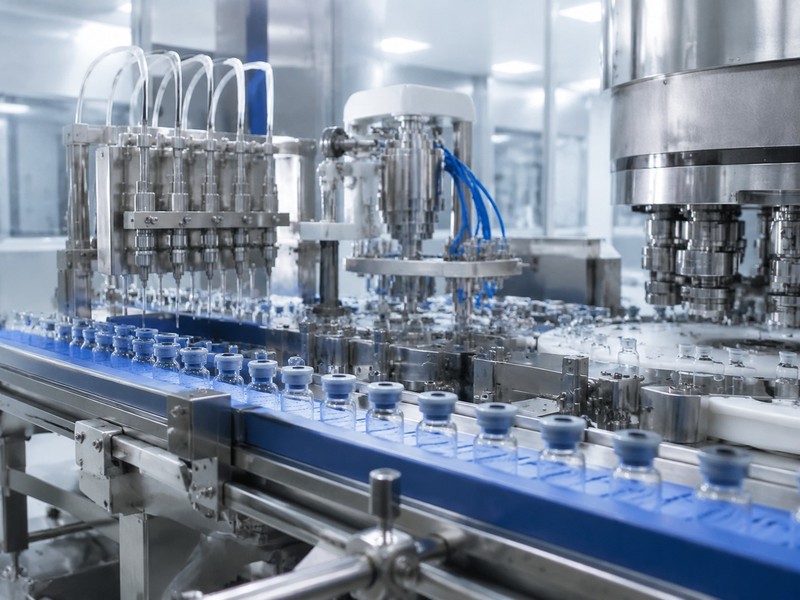
How Vial Filling Machines Work in the United States
In the United States, understanding how a vial filling machine works is essential for pharmaceutical manufacturers, CDMOs, biotech companies, and medical device firms planning capacity expansion, sterile modernization, or new facility investment. A vial filling machine is the core system used to dose liquid or powder products into sterile vials with high accuracy, then partially or fully stoppered and transferred for capping under tightly controlled conditions. In regulated U.S. production environments, these systems must align with FDA cGMP expectations, data integrity requirements, aseptic process control, and increasingly with Annex 1 style contamination control strategies adopted by global manufacturers. Whether a company is scaling an injectable line in New Jersey, upgrading a biotech suite in Boston, or developing a greenfield sterile project near Raleigh-Durham, the filling system often becomes the single most important equipment decision in the line.
Because vial filling equipment sits between upstream formulation and downstream capping, inspection, labeling, and packaging, its performance influences yield, sterility assurance, operator intervention risk, line speed, product loss, batch release efficiency, and total cost of ownership. Buyers in the United States are not simply purchasing a machine; they are evaluating a long-life manufacturing platform that must support validation, future product changes, and potentially multiple dosage forms. Companies that source from experienced engineering partners with integrated design, water systems knowledge, filling expertise, and documentation support typically reduce project risk significantly. For firms exploring turnkey sterile facilities, integrated pharmaceutical turnkey solutions can simplify layout planning, utility coordination, and line integration across the entire project.
Quick Answer: Why How a Vial Filling Machine Works Matters in Regulated U.S. Expansion

The quickest answer is this: a vial filling machine works by feeding sterile vials into an aseptic zone, accurately filling each vial with a preset volume or dose, inserting a stopper, and discharging the container for capping and further inspection. In U.S. pharmaceutical production, this sequence must happen with repeatable precision, validated controls, minimal contamination risk, and complete batch documentation. Large pharmaceutical companies evaluate these systems closely because filling accuracy, sterile barrier integrity, automation logic, and cleanroom compatibility directly affect compliance, throughput, and product quality.
In practice, the exact operating sequence depends on the product. A liquid injectable line may include vial infeed, air or water rinse, sterilization tunnel transfer, filling under laminar flow or isolator protection, nitrogen purging, half-stopper insertion, lyophilizer loading, and later capping. A powder line may use auger dosing or vacuum-pressure systems instead of liquid pumps. Highly potent products may require isolators and restricted access barrier systems, while multi-product facilities may prefer flexible modular designs.
For U.S. buyers, the most critical evaluation points usually include:
- Fill accuracy at target line speed
- Container range and changeover time
- Sterility assurance design
- Cleaning and CIP/SIP options
- 21 CFR Part 11 compatible data handling where applicable
- Integration with washers, depyrogenation tunnels, cappers, inspection, and serialization
- Factory acceptance testing and validation document support
- Service access across North America
The table below summarizes the core working stages of a typical sterile liquid vial filling process and why each stage matters in a U.S. GMP environment.
| Process Stage | Main Function | Typical Equipment | Key Quality Control Point | Common Risk | U.S. Buyer Focus |
|---|---|---|---|---|---|
| Vial Infeed | Delivers empty vials to the line | Unscrambler or infeed conveyor | Stable transfer without jams | Glass breakage | Line efficiency and gentle handling |
| Washing | Removes particles and residues | Linear or rotary vial washer | Validated cleaning sequence | Insufficient rinse quality | Repeatable cleaning validation |
| Depyrogenation | Sterilizes and removes endotoxins | Hot air tunnel | Temperature uniformity | Incomplete depyrogenation | Thermal mapping and documentation |
| Filling | Doses product into the vial | Peristaltic, piston, or time-pressure filler | Volume accuracy | Underfill or overfill | Accuracy at commercial speed |
| Stoppering | Places stopper before capping or lyophilization | Stopper feeder and insertion unit | Placement consistency | Misplaced stoppers | Intervention reduction |
| Capping/Discharge | Secures final closure and sends vials downstream | Capping machine and conveyors | Seal integrity | Loose caps or cosmetic defects | Reliable downstream integration |
This sequence may sound simple, but each step is deeply engineered. The most successful projects are usually the ones where the equipment supplier understands not only machine mechanics, but also facility flows, utility systems, validation protocols, and long-term lifecycle support.
What How a Vial Filling Machine Works Means and What It Is Used for in Pharmaceutical Production

A vial filling machine is specialized production equipment designed to place sterile drug product or diagnostic liquid into glass or polymer vials under controlled conditions. In pharmaceutical production, it is primarily used for injectables, biologics, vaccines, ophthalmic products, freeze-dried formulations, and selected diagnostic or laboratory liquids. It can also be adapted for high-value products where dosing precision and contamination control are critical.
In the United States, the equipment is commonly found in sterile manufacturing sites around major life sciences clusters such as New Jersey, Pennsylvania, Massachusetts, California, and North Carolina. It is also widely installed in CDMO facilities serving clinical and commercial programs. Companies developing hospital injectables, oncology products, peptide drugs, monoclonal antibodies, or emergency-use stockpiles often rely on vial lines because vials are durable, scalable, and compatible with both liquid and lyophilized formats.
The machine is not used in isolation. It usually works as part of an integrated sterile line that may include:
- Vial washing machine
- Depyrogenation tunnel
- Filling and stoppering machine
- Lyophilizer or freeze dryer
- Capping machine
- Visual inspection system
- Labeling and serialization
- Secondary packaging and logistics transfer
For buyers comparing system scope, it is useful to distinguish between stand-alone fillers and fully integrated filling lines. Stand-alone units may suit pilot or small commercial use, while integrated systems support higher throughput and lower manual handling. Companies considering future capacity often review broader equipment portfolios available through a supplier’s pharmaceutical equipment offerings to ensure compatibility beyond a single machine purchase.
The following table shows common products and why vial filling remains preferred for many U.S. manufacturers.
| Product Category | Typical Fill Format | Why Vials Are Used | Common Fill Requirement | Regulatory Sensitivity | Operational Note |
|---|---|---|---|---|---|
| Hospital Injectables | Liquid sterile dose | Fast commercial scalability | High output and low rejection | High | Often multi-shift production |
| Biologics | Low to medium volume sterile fill | Protection for sensitive products | Gentle handling and precision | Very high | Often run in isolators |
| Vaccines | Liquid or lyophilized | Global distribution compatibility | Batch traceability | Very high | Cold chain may apply |
| Lyophilized Drugs | Partial stoppered vials | Suitable for freeze drying | Accurate fill before lyophilization | Very high | Loader integration is important |
| Diagnostic Reagents | Small volume liquid | Flexible package sizes | Repeatable small fills | Medium to high | May require chemical compatibility |
| Clinical Trial Batches | Small batch sterile fill | Fast changeover and flexibility | Low loss during setup | High | Modular lines are common |
The table highlights that “how a vial filling machine works” is not just a technical question. It is really a packaging strategy, compliance issue, and production economics decision all at once.
Main Applications and Benefits of How a Vial Filling Machine Works in Modern Pharmaceutical Manufacturing

The main application of vial filling technology is sterile drug production, but its benefits reach much further. A well-designed line improves contamination control, output stability, operator safety, digital traceability, and batch-to-batch consistency. In modern U.S. facilities, this matters especially for companies facing labor constraints, rising quality expectations, and the need to launch multiple products without building entirely new suites.
Key applications include commercial injectables, biologics, generic sterile drugs, high-potency compounds, contract manufacturing, and export-oriented manufacturing. The strongest benefits typically include:
- Highly accurate dosing for expensive or potent products
- Lower contamination risk through closed or barrier-protected filling zones
- Compatibility with lyophilization workflows
- Faster throughput than many semi-automatic alternatives
- Improved documentation and recipe control
- Reduced labor dependence
- Scalable line architecture for future capacity increases
In manufacturing hubs such as Indianapolis, Chicago, Houston, and San Diego, project teams increasingly seek equipment that can support both efficiency and resilience. That means not just high speed, but fast parts availability, robust stainless-steel construction, and maintainable designs that can keep running for years under heavy production schedules.
One advantage of working with an experienced engineering company is access to broader process understanding. Shanghai IVEN Pharmatech Engineering, for example, is known in the market for combining filling and packaging equipment knowledge with water treatment, clean utility systems, and logistics integration. That kind of technological capability matters because sterile production performance depends on the whole process chain, not only the filler itself.
The table below compares operational benefits across different use cases.
| Application | Main Benefit | Production Impact | Quality Impact | Typical U.S. User | Investment Priority |
|---|---|---|---|---|---|
| Commercial Injectable Production | High throughput | More batches per week | Stable fill weights | Large pharma | Speed and reliability |
| Biotech Fill-Finish | Gentle product handling | Lower product loss | Better dose consistency | Biotech firms | Precision and isolator use |
| Lyophilized Products | Freeze-dryer compatibility | Smoother transfer | Reduced stopper defects | Specialty pharma | Loader and stoppering quality |
| CDMO Operations | Multi-product flexibility | Shorter changeovers | Validated recipe management | Contract manufacturers | Format flexibility |
| Clinical Production | Small batch efficiency | Lower setup waste | Batch control | R&D and pilot sites | Agility and containment |
| High-Potency Filling | Operator protection | Safer operations | Lower intervention risk | Oncology manufacturers | Barrier technology |
To illustrate the broader market environment, the next chart shows a realistic U.S. sterile fill-finish equipment growth trend.
Key Types, Models, and Technical Options for How a Vial Filling Machine Works
There is no single vial filler configuration that fits every production site. The right choice depends on product viscosity, target output, batch size, cleaning needs, level of automation, and contamination control strategy. In the U.S. market, the most commonly evaluated systems include linear fillers, rotary fillers, monoblock platforms, aseptic isolator fillers, RABS-based systems, and powder dosing machines.
From a technical standpoint, some of the most important options include:
- Peristaltic pump filling for gentle low-volume dosing
- Piston pump filling for repeatability in larger or more viscous fills
- Time-pressure filling for selected liquids
- Mass-flow or check-weigh feedback systems
- Nitrogen purging before or after fill
- No-vial-no-fill logic
- Automatic rejection systems
- In-line IPC and vision inspection
- RABS or isolator integration
- Recipe control and audit trail functionality
Manufacturers should also consider container range. Some fillers are optimized for 2 mL to 30 mL vials, while others can handle much larger formats. If a facility in Philadelphia or St. Louis plans to launch multiple SKUs, tooling changeover and format flexibility become major factors.
Below is a practical comparison of leading machine types.
| Machine Type | Best For | Typical Speed | Main Strength | Main Limitation | Recommended User |
|---|---|---|---|---|---|
| Semi-automatic filler | R&D or low volume | Low | Lower entry cost | Higher labor input | Labs and pilot plants |
| Linear automatic filler | Medium commercial output | Medium | Good flexibility | Larger footprint than some rotary systems | Growing manufacturers |
| Rotary filler | High-speed production | High | Compact high output | More complex changeover | Large pharma plants |
| Monoblock filling-capping system | Space-limited cleanrooms | Medium to high | Integrated footprint | Less modular in some designs | Retrofit projects |
| Isolator-based aseptic filler | High-value sterile products | Medium to high | Superior contamination control | Higher investment cost | Biotech and oncology sites |
| Powder vial filling machine | Dry sterile products | Medium | Accurate powder dosing | Different validation needs | Specialty sterile manufacturers |
Equipment model selection should also be tied to production strategy. A new entrant producing niche injectables may be better served by a medium-speed modular line, while a company supplying nationwide hospital demand may need a high-speed system with advanced reject handling and full downstream integration.
How a Vial Filling Machine Works vs Alternative Technologies: Which Solution Fits Your Needs?
When evaluating vial filling equipment, U.S. buyers rarely compare only one vial machine to another. They usually compare the vial platform itself with alternative technologies such as prefilled syringes, BFS, ampoules, cartridges, and occasionally flexible bags or ready-to-use nested containers. Each technology solves a different manufacturing and commercial problem.
Vials remain attractive because they offer broad product compatibility, support for both liquid and lyophilized formats, and relatively mature regulatory expectations. However, they may not always be the best option. Prefilled syringes can improve convenience and dosing readiness, while BFS offers an enclosed form-fill-seal process for specific products. Ampoules provide hermetic sealing, but their handling profile differs significantly from stoppered vials.
The following table helps frame that choice.
| Technology | Best Use Case | Advantages | Challenges | Capital Level | Typical U.S. Decision Driver |
|---|---|---|---|---|---|
| Vial Filling | Injectables and biologics | Flexible, validated, lyophilization friendly | Multiple line components needed | Medium to high | Versatility and market familiarity |
| Prefilled Syringes | Ready-to-administer drugs | User convenience and premium presentation | More complex components | High | Patient and provider convenience |
| BFS | Certain sterile liquids | Integrated forming and filling | Not ideal for all formulations | High | High-volume enclosed processing |
| Ampoule Filling | Single-dose sealed liquids | Hermetic glass seal | Glass opening issues and format limits | Medium | Legacy product continuity |
| Cartridge Filling | Pen and device systems | Device compatibility | More specialized market | High | Drug-device combination strategy |
| Ready-to-Use Nested Vials | Small batch sterile fill | Reduced preparation steps | Higher component cost | Medium to high | Fast launch and reduced setup |
For high-growth biotech companies in Cambridge or South San Francisco, nested formats and isolator systems may reduce operational complexity in early commercialization. For large generic injectable manufacturers in the Midwest, conventional bulk vial feeding with high-speed tunnels often offers the best economics. The right answer depends on product mix, facility design, and speed-to-market goals.
Market Overview and Future Trends for How a Vial Filling Machine Works in Pharmaceutical Manufacturing
The U.S. market for vial filling machines is supported by several structural trends: onshoring of pharmaceutical capacity, growth in biologics, resiliency planning for injectable supply, expansion of CDMO fill-finish services, and modernization of older sterile lines. Manufacturers in areas connected to strong logistics infrastructure such as the Port of New York and New Jersey, Port of Savannah, Port of Los Angeles, and major air cargo corridors around Chicago and Memphis often prioritize equipment with dependable installation timelines and global spare-parts support.
Looking toward 2026 and beyond, four trends stand out:
- Greater use of isolators and advanced barrier systems
- More digital batch data, predictive maintenance, and remote diagnostics
- Higher demand for flexible multi-format lines
- Stronger sustainability expectations around energy, compressed air, and material waste
Policy and quality trends are also important. U.S. manufacturers increasingly align internal standards with both FDA expectations and global sterile guidance to simplify exports and dual-market approvals. Buyers want less manual intervention, better environmental monitoring integration, and stronger contamination control design. Energy efficiency is becoming more visible as facilities face utility cost pressure, especially in states with expensive power and labor markets.
From a manufacturing capability standpoint, buyers often favor suppliers that can provide not just one machine but coordinated systems across filling, packaging, water treatment, and internal logistics. IVEN Pharmatech Engineering has built market recognition in this area through multiple specialized manufacturing plants focused on filling and packaging machinery, pharmaceutical water systems, intelligent conveying and logistics, and blood collection tube equipment. For companies planning larger sterile campuses, that breadth can reduce interface risk across the project.
The area chart below shows how technology preference is shifting in the U.S. market.
By 2026, many U.S. projects are expected to specify more automation by default. That will likely include robotic loading interfaces, electronic batch records integration, reduced hold-up volume designs, and stronger support for process analytical technologies. Sustainability will also matter more, with customers asking about utility consumption, reusable format parts where appropriate, and lifecycle service models that extend equipment life rather than force early replacement.
How to Choose a Reliable How a Vial Filling Machine Works Manufacturer or Supplier
Choosing a supplier is often more difficult than choosing the machine type itself. A reliable manufacturer must prove not only equipment performance, but also quality systems, documentation depth, engineering discipline, and long-term service capacity. In the U.S. market, buyers should expect detailed URS response capability, FAT support, SAT planning, validation package readiness, and a practical understanding of FDA-facing inspection environments.
When screening suppliers, ask the following questions:
- How many sterile filling lines have they delivered?
- Do they understand U.S. cGMP and global GMP harmonization?
- Can they integrate washers, tunnels, fillers, cappers, utilities, and logistics?
- What validation documents are included?
- How are spare parts stocked and delivered to North America?
- How quickly can technical service respond?
- Do they offer customization rather than only standard catalog models?
Service capability is especially important. Strong suppliers support feasibility review, engineering design, equipment selection, installation, commissioning, IQ/OQ/PQ assistance, training, and after-sales optimization. This is one reason many larger buyers prefer established engineering companies rather than isolated machine vendors. If you are preparing a capital project or comparing line concepts, a direct discussion through the supplier’s U.S.-focused contact channel can clarify delivery scope, compliance support, and customization options early.
The table below offers a practical supplier scorecard.
| Evaluation Factor | Why It Matters | Strong Supplier Sign | Warning Sign | Impact on Project | Buyer Priority Level |
|---|---|---|---|---|---|
| Regulatory Understanding | Supports compliant design | Clear GMP documentation experience | Generic answers only | Validation and inspection readiness | Very high |
| Engineering Depth | Reduces integration issues | Can coordinate full line and utilities | Limited to stand-alone machines | Layout and startup success | Very high |
| Customization Ability | Fits real product requirements | Tailored URS response | Only fixed standard models | Operational flexibility | High |
| Manufacturing Capacity | Affects schedule and consistency | Dedicated production facilities | Heavy outsourcing without control | Lead time reliability | High |
| Validation Support | Saves internal time | FAT, SAT, IQ/OQ documentation available | Minimal document package | Faster qualification | Very high |
| After-Sales Service | Maintains uptime | Training, parts, troubleshooting support | Slow post-install response | Long-term ROI | Very high |
For background on supplier positioning and engineering scope, buyers may also review a company’s pharmaceutical engineering profile to understand its manufacturing base, technical specialization, and international project history.
Investment Cost, Budget Planning, and ROI Analysis for How a Vial Filling Machine Works
The investment cost of a vial filling machine in the United States can vary widely depending on sterility level, automation scope, speed, format range, and whether the purchase is a stand-alone unit or a full integrated line. A smaller semi-automatic solution may be suitable for a low-capacity pilot suite, while a fully integrated aseptic line with washer, tunnel, filler, stoppering, capping, isolator, and digital controls can require a multimillion-dollar budget.
Budget planning should include more than equipment price. U.S. buyers frequently underestimate installation, cleanroom adaptation, qualification, shipping, customs, utilities, spare parts, and training. Projects routed through major logistics gateways such as Long Beach, Houston, Newark, or Savannah may still face inland delivery coordination and rigging costs, especially for heavy integrated systems.
The table below outlines common budget components and their effect on ROI.
| Cost Element | Typical Share of Budget | What It Covers | Often Overlooked? | Effect on ROI | Planning Advice |
|---|---|---|---|---|---|
| Core Filling Equipment | 35% to 50% | Filler, stoppering, capping functions | No | Direct output impact | Match speed to actual demand |
| Upstream/Downstream Integration | 15% to 25% | Washer, tunnel, conveyors, loaders | Yes | Major uptime effect | Plan as one system |
| Barrier Technology | 10% to 20% | RABS or isolator | Sometimes | Improves sterility assurance | Assess contamination strategy early |
| Validation and Documentation | 5% to 10% | FAT, SAT, IQ/OQ support | Yes | Reduces startup delays | Include documentation scope in contract |
| Installation and Commissioning | 8% to 15% | Setup, alignment, test runs | Yes | Critical for timeline | Coordinate site readiness carefully |
| Spare Parts and Training | 3% to 8% | Startup inventory and operator support | Yes | Improves first-year uptime | Budget from day one |
ROI is typically driven by higher output, lower rejects, fewer interventions, reduced product loss, and improved batch release confidence. For expensive biologics, even small gains in filling accuracy and residual product reduction can justify premium equipment. For large generic manufacturers, labor savings and output stability often dominate the business case.
A realistic ROI model should include:
- Annual batch volume
- Target OEE improvement
- Reduction in reject rate
- Labor savings from automation
- Avoided downtime from legacy equipment replacement
- Incremental revenue from added commercial capacity
Key Considerations and Potential Risks When Investing in How a Vial Filling Machine Works
The largest risks in vial filling projects usually do not come from the machine’s basic concept. They come from poor specification, weak integration, underestimated qualification work, and insufficient service planning. In the United States, where project timelines are expensive and production interruptions can affect national supply commitments, these risks deserve careful management.
Key considerations include product compatibility, sterility strategy, utility readiness, operator training, automation integration, and future scalability. A machine that fills one product well but struggles with other viscosities or container sizes may create long-term bottlenecks. Likewise, a low-cost line without adequate documentation or service support can become far more expensive over its lifecycle.
Common risks include:
- Choosing speed over process stability
- Underestimating changeover complexity
- Insufficient cleanroom layout planning
- Weak FAT criteria that fail to reflect actual products
- Long spare-part lead times
- Limited support for U.S. validation expectations
- Poor coordination between machine and utility vendors
This is where comprehensive service capability matters. A supplier that supports project feasibility, design review, installation, commissioning, validation assistance, documentation transfer, training, and post-startup optimization can prevent many of the most expensive mistakes. IVEN Pharmatech Engineering is often evaluated by buyers for this broader lifecycle support approach, especially where customers want one partner to help bridge engineering, equipment, and operational ramp-up instead of managing many fragmented vendors.
For larger capital programs, it is wise to run a structured risk workshop before purchase approval. Include QA, engineering, manufacturing, validation, procurement, and maintenance in the review.
FAQ
How does a vial filling machine work step by step?
A typical sterile vial filling machine feeds washed and depyrogenated vials into an aseptic zone, doses each vial with a defined volume, inserts a stopper, and transfers the vial to capping and inspection. Additional steps may include nitrogen purging, check weighing, reject handling, or lyophilizer loading.
What products are commonly filled with vial filling machines?
They are widely used for injectable drugs, biologics, vaccines, freeze-dried formulations, diagnostic liquids, and certain sterile specialty products.
What is the difference between a vial filling machine and a prefilled syringe line?
A vial filling machine is usually more flexible across product types and supports lyophilization more easily. Prefilled syringe lines offer user convenience and ready-to-administer presentation, but generally require more specialized components and can involve higher packaging complexity.
Which filling technology is best for sensitive biologics?
Peristaltic pump systems are often preferred for sensitive biologics because they can provide gentle product handling and reduce contact complexity, although the final choice depends on formulation characteristics, target accuracy, and process validation results.
How much does a vial filling machine cost in the United States?
Costs vary greatly based on speed, sterility barrier, automation, and integration scope. Pilot or lower-throughput systems may require a far smaller investment than full aseptic commercial lines with isolators, washers, tunnels, and complete validation packages.
What compliance standards should U.S. buyers consider?
At minimum, buyers should consider FDA cGMP expectations, aseptic processing principles, data integrity requirements, and any global GMP standards needed for export markets. Many manufacturers also align with broader international sterile design practices.
What should I ask a supplier before buying?
Ask about installed base, validation documentation, customization capability, FAT scope, spare-parts support in North America, service response time, utility requirements, and references for similar products or capacities.
Why do large manufacturers prefer integrated engineering suppliers?
Because the filler must work with water systems, clean utilities, room layout, conveyors, cappers, inspection, and packaging. Integrated engineering support reduces interface risk, shortens coordination time, and often improves startup success.
Can a supplier support long-term plant expansion?
The best suppliers can. Buyers should favor companies with broad technology platforms, solid manufacturing capacity, and lifecycle service support so future expansion does not require replacing the entire system architecture.
For U.S. manufacturers, the question is no longer only how a vial filling machine works, but how well that equipment will perform across validation, daily production, future expansion, and regulatory scrutiny. The best investment is usually the one that combines robust machine design, integrated engineering, practical service support, and a proven understanding of sterile pharmaceutical manufacturing realities.

About the Author
We are IVEN Pharmatech Engineering, a team dedicated to delivering turnkey pharmaceutical and medical solutions worldwide. With decades of experience, we specialize in advanced machinery, integrated factory design, and full lifecycle support to help our clients achieve efficient, compliant, and high-quality production.
Share

Related Insights
-
United States Guide to Blow Fill Seal Machine Cost
For many sterile pharmaceutical manufacturers, blow fill seal machine cost is justified by the technology’s ability to form containers, fill product, and seal packages in one enclosed aseptic cycle. In the United States, this integrated process is widely valued for lowering contamination risk, simplifying line design, reducing operator intervention, and supporting high-volume production of respiratory solutions, ophthalmics, injectables, and unit-dose products. While purchase price varies by output, container format, automation level, and validation scope, buyers usually evaluate total lifecycle value rather than equipment price alone.
Across U.S. pharmaceutical hubs such as New Jersey, Boston, Raleigh-Durham, Indianapolis, Houston, and California’s biotech corridor, more manufacturers are reassessing fill-finish strategies in light of regulatory pressure, labor constraints, and the need for more robust aseptic operations. As a result, interest in BFS systems continues to rise among CDMOs, generic drug producers, hospital supply manufacturers, and specialty sterile product companies.
In simple terms, blow fill seal machine cost is often preferred because the technology combines container extrusion, molding, filling, and sealing inside one continuous aseptic process. That design can reduce contamination points compared with conventional vial or ampoule lines that require multiple pieces of equipment, open container handling, component washing, depyrogenation, stopper feeding, capping, and more operator involvement.
For U.S. buyers, the real question is not only “What does a BFS machine cost?” but “What does it replace?” A modern BFS platform may replace several individual process steps, lower cleanroom burden, decrease labor demand, improve repeatability, and support long production campaigns with strong container integrity. In regulated markets, these factors can translate into measurable commercial value.
Cost DriverTypical Effect on BudgetWhy It MattersU.S. Buyer ImpactMachine output speedHigher speed raises capital costMore cavities and automation increase complexityUseful for high-volume OTC and Rx productsContainer size rangeWider range increases tooling and engineering costMulti-format flexibility adds valueHelps contract manufacturers serve more SKUsAseptic controlsAdvanced monitoring increases upfront spendSupports validation and risk reductionImportant for FDA-facing operationsAutomation and data systemsRaises initial price but lowers operating costImproves traceability and line efficiencySupports 21 CFR Part 11 readinessValidation documentationAdds project engineering costCritical for IQ/OQ/PQ and auditsSpeeds implementation in the United StatesAfter-sales service packageChanges total ownership costService availability affects uptimeKey for plants far from major portsThe table above shows why headline price alone can be misleading. A lower-cost machine without proper documentation, spare parts planning, and technical support may become more expensive over time than a fully engineered solution.
Blow fill seal technology is an advanced aseptic packaging method used to manufacture sterile liquid products in plastic containers. In one continuous sequence, polymer resin is extruded into a parison, the mold closes to form the container, sterile product is filled into the freshly formed package, and the container is hermetically sealed before leaving the protected zone.
The process usually includes the following stages:
Because the container is formed immediately before filling, there is no need to buy, store, wash, or depyrogenate pre-made glass containers. This is one reason BFS is attractive for sterile unit-dose products. Common applications include inhalation solutions, saline, ophthalmic drops, oral liquids, irrigation products, and selected injectables.
For U.S. operations, BFS also aligns with manufacturing trends focused on contamination control strategies, reduced interventions, and leaner fill-finish layouts. Plants near logistics centers such as Newark, Savannah, Los Angeles, and Chicago may also appreciate the supply chain benefit of sourcing resin and running in-house container formation rather than depending heavily on external container supply.
Process StepFunctionContamination Control BenefitMain Technical ConsiderationExtrusionCreates molten polymer tubeContainer starts inside the machineMaterial consistencyBlowingForms container shapeMinimizes pre-handled packaging componentsMold precisionFillingDispenses sterile liquidOccurs in enclosed process zoneDose accuracySealingCloses container immediatelyReduces exposure after fillingSeal integrityInspectionChecks visual and process parametersImproves release confidenceIntegration with reject systemsPackagingPrepares product for shipmentMaintains downstream quality flowLabeling and serialization needsThis workflow explains why BFS is often described as a highly integrated aseptic technology rather than simply a filling machine.
Sterile drug manufacturers in the United States choose BFS for a mix of technical, operational, and financial reasons. First, aseptic risk can be lower because the process limits container exposure and human intervention. Second, BFS can be highly efficient for large-volume runs, especially for unit-dose formats. Third, it may reduce line footprint compared with a traditional combination of washing, sterilizing, filling, stoppering, and capping equipment.
Another major factor is product-market fit. BFS is especially strong when manufacturers need plastic primary packaging, single-dose delivery, and reliable high-throughput output. This is common in respiratory therapy, eye care, hospital solutions, and selected biotech support products.
There is also a labor reality in the United States: skilled aseptic manufacturing personnel remain expensive and difficult to recruit in many regions. A well-automated BFS line can reduce dependence on intensive manual interventions while improving batch consistency.
var ctx1 = document.getElementById(‘lineChartBfsGrowth’).getContext(‘2d’);var chart1 = new Chart(ctx1, {type: ‘line’,data: {labels: [‘2021’, ‘2022’, ‘2023’, ‘2024’, ‘2025’, ‘2026’],datasets: [{label: ‘Estimated BFS adoption index in U.S. sterile manufacturing’,data: [68, 74, 81, 89, 98, 108],borderColor: ‘rgb(75, 192, 192)’,backgroundColor: ‘rgba(75, 192, 192, 0.15)’,fill: false,tension: 0.3}]},options: {responsive: true,maintainAspectRatio: false}});The line chart above illustrates a realistic growth pattern for BFS interest in U.S. sterile manufacturing, driven by resilience planning, modernization, and stronger contamination control expectations.
BFS systems are not one-size-fits-all. The best model depends on product viscosity, fill volume, target output, container geometry, and regulatory pathway. Some systems are optimized for small unit-dose ampoule-style containers, while others are built for larger bottles used in infusion, irrigation, or dialysis-related applications.
In the U.S. market, the most common selection criteria include product type, annual volume, flexibility requirements, and facility constraints. A CDMO in Philadelphia may prioritize rapid changeover across multiple SKUs, while a high-volume manufacturer near Dallas or Atlanta may prioritize output speed and low per-unit cost.
Machine TypeTypical Fill RangeCommon ProductsBest FitUnit-dose BFS0.2 mL to 20 mLEye drops, inhalation liquidsHigh-volume sterile single-dose productsMulti-dose BFS5 mL to 100 mLNasal sprays, oral liquidsConsumer and Rx packaged liquidsLarge-volume BFS100 mL to 1,000 mL+Irrigation, IV-related solutionsHospital supply and institutional useSpecial-shape BFSVariesCustomized medical packagingBrand differentiation and device integrationHigh-barrier BFSVariesSensitive formulationsProducts needing enhanced protectionFlexible tooling BFSVariesMultiple SKU portfoliosCDMOs and multi-product sitesThese models serve industries beyond classic pharma. Medical consumables, veterinary health, diagnostic reagents, and wellness products may also use BFS packaging when sterility, convenience, and dosage control are important.
var ctx2 = document.getElementById(‘barChartDemand’).getContext(‘2d’);var chart2 = new Chart(ctx2, {type: ‘bar’,data: {labels: [‘Ophthalmics’, ‘Respiratory’, ‘Hospital Solutions’, ‘Oral Liquids’, ‘Diagnostics’, ‘Veterinary’],datasets: [{label: ‘Relative U.S. demand for BFS applications’,data: [92, 88, 76, 64, 55, 49],backgroundColor: [‘rgb(255, 99, 132)’,’rgb(54, 162, 235)’,’rgb(255, 206, 86)’,’rgb(75, 192, 192)’,’rgb(153, 102, 255)’,’rgb(255, 159, 64)’]}]},options: {responsive: true,maintainAspectRatio: false}});The bar chart highlights where BFS demand is strongest today, with eye care and inhalation applications remaining particularly important in the U.S. market.
When comparing BFS with conventional vial and ampoule systems, buyers should evaluate the complete manufacturing ecosystem. Traditional lines remain highly suitable for products requiring glass packaging, lyophilization compatibility, or specific closure systems. However, they usually require more separate unit operations and components.
BFS lines can reduce complexity for products compatible with plastic primary packaging. They may lower utilities tied to container washing and depyrogenation, reduce handling of incoming containers, and improve line integration. On the other hand, BFS may not be ideal for every formulation, especially where glass compatibility, oxygen sensitivity, or certain market preferences dominate.
Comparison PointBFS LineTraditional Vial LineBuyer ConsiderationContainer sourceFormed in-linePurchased pre-madeBFS reduces container supply dependenceProcess integrationHighly integratedMultiple machinesBFS can simplify layoutHuman interventionGenerally lowerOften higherImportant for contamination controlPackaging materialMainly plasticMainly glassProduct compatibility is decisiveChangeover flexibilityDepends on tooling designOften familiar to many sitesSKU strategy mattersCapital structureHigh integrated investmentDistributed investment across line unitsTotal lifecycle cost must be comparedFor many American buyers, the right answer is portfolio-dependent. A plant may operate both technologies: BFS for unit-dose liquids and vial filling for injectables requiring glass and specialized closures.
Adoption of BFS is growing because manufacturers are under pressure to improve sterility assurance, optimize labor, and build more resilient supply chains. In the United States, this trend is reinforced by demand for respiratory therapies, ophthalmics, preservative-free single-dose products, and domestic production capacity.
Facilities in life-science clusters such as New Jersey and Massachusetts are investing in higher-containment, more digitalized fill-finish assets. At the same time, manufacturers in lower-cost operating regions like Texas, North Carolina, and the Midwest are using BFS to scale competitively without creating oversized manual aseptic teams.
var ctx3 = document.getElementById(‘areaChartTrend’).getContext(‘2d’);var chart3 = new Chart(ctx3, {type: ‘line’,data: {labels: [‘2021’, ‘2022’, ‘2023’, ‘2024’, ‘2025’, ‘2026’],datasets: [{label: ‘Shift from conventional fill-finish to integrated BFS’,data: [22, 26, 31, 37, 44, 52],borderColor: ‘rgb(75, 192, 192)’,backgroundColor: ‘rgba(75, 192, 192, 0.25)’,fill: true,tension: 0.3}]},options: {responsive: true,maintainAspectRatio: false}});The area chart reflects the ongoing shift toward more integrated fill-finish strategies. It does not imply BFS replaces all conventional lines, but it does show how the technology’s share of new project evaluation is expanding.
Looking ahead to 2026, three trends are especially important:
These trends mean buyers should think beyond current production needs and evaluate whether a new line will remain competitive over the next decade.
Choosing a supplier is one of the most important decisions in any BFS project. In the United States, buyers usually assess not just machine performance, but also regulatory understanding, factory acceptance testing quality, spare parts support, commissioning capability, and the supplier’s willingness to adapt to local compliance expectations.
A reliable manufacturer should provide strong technical capabilities, robust manufacturing capabilities, and dependable service capabilities.
From a technological standpoint, leading suppliers should understand aseptic process design, mold development, filling accuracy, SCADA or PLC integration, validation support, and compliance with EU GMP, U.S. FDA cGMP, WHO GMP, and PIC/S-oriented project expectations. Buyers should ask detailed questions about contamination control, alarm handling, recipe management, audit trails, and long-term upgrade options.
On the manufacturing side, it is important to review whether the supplier has specialized production plants, stable quality control systems, and experience producing core pharmaceutical equipment rather than relying excessively on outsourced fabrication. For example, Shanghai IVEN Pharmatech Engineering Co Ltd has developed specialized manufacturing resources across pharmaceutical filling and packaging machinery, pharmaceutical water treatment systems, intelligent conveying and logistics systems, and blood collection tube production equipment. That breadth can matter when a U.S. project needs an integrated plant-wide solution rather than a stand-alone machine.
Service capability is equally critical. Strong suppliers should support feasibility analysis, engineering design, customization, installation, commissioning, documentation, training, and lifecycle maintenance. For buyers seeking broader project support, turnkey experience can reduce risk, especially when plant layout, utilities, cleanroom coordination, and validation milestones must align. More detail about integrated project delivery can be found on the turnkey pharmaceutical engineering solutions page.
Supplier Evaluation FactorWhat to CheckWhy It MattersRisk if WeakRegulatory competenceFDA/GMP documentation approachSmoother qualification and audit readinessValidation delaysEngineering depthCustomization and utilities integrationBetter process fitPoor line performanceManufacturing qualityFactory controls and material standardsLong equipment lifeFrequent failuresReferencesInstalled projects and export experienceProof of execution abilityUncertain deliveryService networkTraining, spare parts, response speedHigher uptimeLong stoppagesTotal project supportDesign, FAT, SAT, IQ/OQ supportLower implementation riskFragmented responsibilityIf you want to review supplier background before making contact, the company overview page is a useful starting point. Buyers comparing equipment portfolios can also review available categories through the pharmaceutical equipment catalog.
In the United States, BFS project budgets commonly include much more than the machine itself. Buyers should plan for core equipment, molds, utilities integration, cleanroom adaptation, validation, shipping, customs, spare parts, staff training, and potentially downstream inspection and packaging upgrades.
A simplified cost framework may look like this:
Budget ItemTypical Share of Project BudgetPlanning NoteROI RelevanceCore BFS machine35% to 50%Main equipment scope varies widelyDetermines capacity and capabilityTooling and molds8% to 15%Depends on number of SKUsAffects flexibilityUtilities and installation10% to 18%Compressed air, HVAC, power, pipingImpacts startup timelineValidation and documentation5% to 10%Critical in regulated productionAccelerates commercial readinessInspection and packaging integration8% to 15%Often underestimatedImproves release flowTraining, spares, service5% to 12%Should be defined upfrontReduces downtime riskFor many projects, ROI depends on four variables: annual production volume, labor reduction, scrap reduction, and quality risk reduction. A high-speed line serving a stable demand profile may generate strong economics. A low-volume portfolio with many changeovers may require a more cautious justification.
Here is a practical ROI logic used by many buyers:
When evaluating budget planning, U.S. buyers should also account for freight route timing from major ports such as Shanghai to Long Beach, Houston, Savannah, or New York/New Jersey, plus inland delivery to states where the plant is located. These details can influence project schedule and contingency reserves.
var ctx4 = document.getElementById(‘comparisonChartSuppliers’).getContext(‘2d’);var chart4 = new Chart(ctx4, {type: ‘bar’,data: {labels: [‘Regulatory support’, ‘Customization’, ‘Lifecycle service’, ‘Integration ability’, ‘Cost efficiency’, ‘Delivery reliability’],datasets: [{label: ‘Key supplier comparison score’,data: [90, 88, 86, 91, 84, 87],backgroundColor: ‘rgb(153, 102, 255)’}]},options: {responsive: true,maintainAspectRatio: false}});The comparison chart illustrates the dimensions buyers should compare when screening suppliers. A lower equipment quote is not always the best-value option if service, integration, or compliance support is weak.
While BFS has many strengths, it also requires disciplined planning. One of the biggest mistakes is assuming that equipment purchase alone guarantees project success. In reality, product compatibility studies, packaging stability, validation strategy, and downstream handling all matter.
Key considerations include:
There are also commercial risks. Underutilized capacity can weaken ROI. Over-customized tooling can increase lead times. Inadequate SAT and qualification planning can delay launch. And if the supplier does not have enough export and compliance experience, documentation gaps may create expensive rework.
This is where strong service capability becomes decisive. Buyers benefit from partners that can support project feasibility, layout planning, equipment selection, installation, commissioning, IQ/OQ/PQ support, training, and post-startup optimization. IVEN is known in the global pharmaceutical engineering space for providing customized integrated solutions and turnkey execution rather than only selling stand-alone equipment, which can help reduce scope gaps in complex sterile projects. Companies wanting to start a project conversation can use the contact page for pharmaceutical engineering inquiries.
From a manufacturing capability perspective, durability should not be overlooked. BFS machines often operate in demanding production environments, so build quality, stainless steel execution, component sourcing, and machining precision affect the useful life of the asset. A well-built line can deliver value over many years, which changes the real meaning of blow fill seal machine cost.
What is the typical blow fill seal machine cost in the United States?There is no single market price because cost depends on output, container size, automation, molds, validation package, and downstream integration. Buyers should request a project-specific quotation based on product and capacity requirements.
Is BFS cheaper than a traditional vial filling line?Not always in terms of initial equipment price, but it can be more economical over the lifecycle for suitable products because it integrates multiple operations and may reduce labor, contamination risk, and container handling complexity.
Which products are best suited for BFS?Common candidates include ophthalmic solutions, inhalation liquids, saline, irrigation products, oral liquids, and other sterile or hygienic liquid formulations that work well in plastic containers.
Can BFS meet U.S. regulatory expectations?Yes, provided the equipment, process, documentation, validation, and operating controls are designed and qualified appropriately. Regulatory readiness depends on project execution, not on machine format alone.
What should U.S. buyers ask suppliers before purchasing?Ask about installed references, documentation standards, FAT/SAT scope, spare parts strategy, local support response time, changeover design, data integrity functions, and prior compliance experience with FDA-oriented projects.
How long does a BFS project usually take?It varies by customization level, but lead time typically includes engineering, manufacturing, FAT, shipping, installation, qualification, and training. Integrated plant projects take longer than stand-alone line replacements.
Can BFS be part of a full turnkey sterile plant?Yes. Many buyers integrate BFS with purified water systems, WFI generation, clean utilities, solution preparation, inspection, packaging, and warehouse logistics in a unified engineering scope.
Why do some global buyers consider IVEN for BFS-related projects?Because beyond equipment supply, the company is recognized for integrated pharmaceutical engineering, specialized manufacturing resources, and lifecycle services spanning design, customization, installation, commissioning, validation support, training, and optimization for regulated facilities.
In summary, blow fill seal machine cost should be evaluated through the lens of contamination control, total ownership cost, supply chain resilience, compliance readiness, and long-term production strategy. For U.S. manufacturers producing suitable sterile liquid products, BFS can offer a strong balance of aseptic security, throughput, and operational efficiency. The best investment decisions come from matching product portfolio, capacity plan, facility conditions, and supplier capability with a realistic budget and validation roadmap.
-
Prefilled Syringe Manufacturing in the United States
Prefilled syringe manufacturing is the controlled industrial process used to wash, sterilize, fill, stopper, inspect, label, and package ready-to-use syringes for injectable drugs. In the United States, it is a strategic production solution for pharmaceutical companies, biotech firms, CDMOs, and medical device manufacturers that need higher dosing accuracy, improved patient convenience, and strong compliance with US FDA cGMP requirements. Demand continues to rise in hubs such as New Jersey, Boston, Indianapolis, Raleigh-Durham, and San Diego, where biologics, vaccines, and specialty injectables are driving investment in modern aseptic filling lines.
As manufacturers expand domestic capacity or redesign existing facilities, they increasingly evaluate integrated equipment, automation, barrier technologies, data integrity systems, and validation support. Companies looking for an experienced engineering partner often review pharmaceutical equipment specialists with international compliance experience to reduce project risk and accelerate qualification.
In simple terms, prefilled syringe manufacturing combines sterile drug filling and medical device assembly into one tightly regulated process. The objective is to deliver a ready-to-inject product with precise fill volume, low contamination risk, stable container closure integrity, and reliable usability for hospitals, clinics, home care, and emergency care settings.
For the United States market, this technology matters because it supports several major industry goals at once: safer injectable drug delivery, reduced medication preparation time, lower dosing errors, and more efficient distribution across healthcare networks. It is especially important for high-value biologics, anticoagulants, vaccines, ophthalmics, and emergency therapeutics.
Unlike bulk vial filling followed by bedside withdrawal, prefilled syringes improve workflow efficiency in places such as New York hospital systems, Chicago outpatient centers, and West Coast specialty pharmacies. They also align with the growth of self-administration and at-home treatment models, which are expanding rapidly in chronic disease and specialty care.
Process StageMain FunctionTypical EquipmentQuality FocusUS RelevanceBusiness ImpactSyringe nest or tub loadingIntroduces sterile components into the lineAutomatic de-nester or manual assisted feedParticle controlSupports aseptic operationsReduces handling riskOptional washing or air treatmentRemoves particles where applicableAir rinsing or component preparation unitCleanliness verificationImportant for line design decisionsImproves product qualitySterile fillingAccurate drug dosing into syringe barrelPeristaltic or piston pump fillerFill accuracyCritical for FDA reviewPrevents overfill lossStoppering and plunger insertionSeals the syringe systemStopper insertion moduleContainer closure integrityKey to sterility assuranceImproves shelf life stabilityInspectionChecks particles, fill level, cosmeticsVision inspection machineDefect detectionSupports release qualityReduces recallsLabeling and packagingPrepares product for distributionLabeler, cartoner, serializerTraceability and readabilitySupports DSCSA readinessEnables market distributionThe table above shows why prefilled syringe manufacturing is not just a single machine purchase. It is a complete production and compliance system that affects formulation handling, sterile design, inspection strategy, packaging, serialization, and long-term operating cost.
Prefilled syringe manufacturing refers to the end-to-end production method for drug products that are delivered in premeasured syringes. It typically includes component preparation, aseptic filling, closure insertion, in-process controls, automated inspection, labeling, and secondary packaging. In advanced facilities, the line may also integrate isolators, restricted access barrier systems, robotic transfer, environmental monitoring, electronic batch records, and SCADA or MES connectivity.
Its use in pharmaceutical production is broad. Large pharmaceutical companies rely on it for blockbuster injectable therapies, while emerging biotech companies use it for specialty and high-value products where dose precision and patient convenience are essential. CDMOs in states like Pennsylvania, North Carolina, and California often install flexible lines capable of handling multiple syringe formats to serve different clients.
From a production perspective, the technology is used when companies need:
In the United States, regulatory expectations strongly shape how these lines are designed. US FDA cGMP, data integrity requirements, environmental monitoring, cleaning validation, material traceability, and media fill performance all influence equipment selection. As a result, buyers typically prefer suppliers that understand not only machinery, but also facility layout, utility integration, qualification, and documentation packages.
The strongest growth areas for prefilled syringe manufacturing are biologics, vaccines, anticoagulants, emergency drugs, fertility treatments, ophthalmics, and long-acting injectables. The format is also becoming more common in biosimilars and specialty generics because healthcare systems want easier administration and less drug waste.
For US pharmaceutical operations, benefits go beyond convenience. Prefilled syringes can shorten preparation steps in clinics, standardize administered doses, and reduce sharps handling complexity when paired with safety systems. For manufacturers, they also improve brand differentiation and create stronger lifecycle management opportunities.
Application SegmentTypical Product TypeWhy Prefilled Format Is UsedOperational BenefitPatient or Provider BenefitUS Market OutlookBiologicsMonoclonal antibodiesPrecise dose and premium presentationLower overfill costEasier self-administrationVery strongVaccinesSingle-dose injectionsReady-to-use speedFaster line throughputReduced prep timeSeasonal but growingAnticoagulantsHeparin and similar productsHigh dosing consistencyReliable batch uniformitySafer use in hospitalsStable demandEmergency medicineCritical care injectablesRapid deploymentSimplified packaging logisticsTime-saving in urgent careStrong institutional demandOphthalmicsSterile specialty injectablesControlled fill accuracyReduced contamination riskHigher treatment confidenceNiche but profitableHome careChronic disease therapyUser-friendly formatSupports device combinationsBetter adherenceFast growthThis table highlights that the same manufacturing platform can support very different therapeutic markets, which is why flexibility is now a major purchasing criterion. A line designed only for one product may be efficient initially, but a line built with adaptable tooling, recipe management, and scalable inspection tends to deliver better long-term value.
Key benefits include:
var ctxBar = document.getElementById(‘barDemandChart’).getContext(‘2d’);var barDemandChart = new Chart(ctxBar, { type: ‘bar’, data: { labels: [‘Biologics’, ‘Vaccines’, ‘Anticoagulants’, ‘Ophthalmics’, ‘Emergency Drugs’, ‘Home Care Injectables’], datasets: [{ label: ‘Estimated US Demand Index 2026’, data: [92, 76, 68, 51, 73, 88], backgroundColor: [‘#4e79a7′,’#f28e2b’,’#e15759′,’#76b7b2′,’#59a14f’,’#edc948′] }] }, options: { responsive: true, maintainAspectRatio: false }});The chart above reflects realistic relative demand patterns in the United States. Biologics and home-care injectables are leading growth drivers, while emergency medicines and vaccines remain strategically important due to public health and supply chain resilience concerns.
There is no single universal prefilled syringe line. Equipment selection depends on product viscosity, syringe material, batch size, speed target, sterility concept, and inspection requirements. Buyers in the United States often compare compact lines for specialty products against high-speed commercial lines for large-scale launch volumes.
The main line configurations include semi-automatic systems, automatic nested syringe filling lines, high-speed rotary lines, and fully integrated isolator-based platforms. Technical choices may include pump technology, stoppering design, no-touch transfer, in-process weight checks, vision systems, leak testing, and downstream packaging automation.
Line TypeTypical Output RangeBest FitTechnical OptionsAdvantagesLimitationsSemi-automatic lineLow volumeR&D and pilot batchesManual loading, basic fillingLower initial costLimited scalabilityAutomatic nested lineMedium volumeClinical and commercial specialty drugsRobotic tub handling, vision controlFlexibility and sterilityModerate capital costHigh-speed rotary lineHigh volumeLarge commercial launchesMulti-head filling, continuous operationExcellent throughputLess flexible for many formatsIsolator-based lineMedium to high volumeHigh-value aseptic productsVHP decontamination, robotic interventionsStrong contamination controlHigher validation complexityRABS-based lineMedium volumePlants upgrading existing cleanroomsRestricted access barriersBalanced cost and controlOperator dependency remainsIntegrated turnkey lineCustomNew facility projectsFilling, inspection, packaging, utilitiesSingle-source coordinationLonger planning phaseThe options in this table show why technical specification should always begin with a user requirement specification rather than a price request alone. Output speed means little if a line cannot handle your syringe format, formulation sensitivity, or qualification expectations.
When evaluating technical capability, US buyers often look for suppliers that can provide engineering depth beyond the filling machine itself. IVEN Pharmatech Engineering is known in the market for this broader technical approach, combining pharmaceutical filling and packaging know-how with water systems, logistics integration, and facility-oriented engineering. Its equipment portfolio and integrated design background are useful for companies that want one supplier to coordinate multiple interfaces instead of managing many disconnected vendors. Buyers who want to review available equipment categories can explore production line solutions for pharmaceutical manufacturing.
Important technical options to consider include:
Prefilled syringes are not automatically the best option for every injectable product. Manufacturers must compare them with vials, ampoules, cartridges, and auto-injector platforms based on economics, user need, stability profile, and commercialization strategy.
For example, vials may remain more practical for multi-dose hospital products or when market demand is uncertain. Ampoules can offer cost advantages for certain sterile liquids but are less convenient in use. Cartridges may be preferred when a product will be used in a pen system. Auto-injectors can enhance patient adherence, but they usually depend on prefilled syringe or cartridge integration and raise device complexity.
TechnologyPrimary Use CaseCapital Cost LevelUser ConvenienceDrug Waste ProfileStrategic FitPrefilled syringesReady-to-use injectablesMedium to highHighLowBest for premium injectable productsVialsFlexible hospital and clinical useMediumModerateHigher overfill possibleGood for broad product rangesAmpoulesCertain sterile liquidsMediumLow to moderateModerateCost-sensitive conventional productsCartridgesPen injector systemsHighHighLowChronic self-injection therapiesAuto-injectorsDevice-assisted deliveryHighVery highLowPremium patient-centric productsDual-chamber systemsReconstitution productsVery highHighLowComplex specialty therapiesThis comparison makes clear that prefilled syringe manufacturing is strongest when the product value, dosage control, and user convenience justify the added technical and packaging complexity. It is often the right choice for products transitioning toward self-administration or premium delivery formats in the US market.
var ctxComp = document.getElementById(‘comparisonChartUs’).getContext(‘2d’);var comparisonChartUs = new Chart(ctxComp, { type: ‘bar’, data: { labels: [‘Regulatory Readiness’, ‘Flexibility’, ‘Throughput’, ‘User Convenience’, ‘Scalability’, ‘Drug Waste Control’], datasets: [ { label: ‘Prefilled Syringe Lines’, data: [88, 79, 74, 93, 84, 91], backgroundColor: ‘#6f42c1’ }, { label: ‘Conventional Vial Lines’, data: [90, 87, 82, 55, 86, 61], backgroundColor: ‘#17a2b8’ } ] }, options: { responsive: true, maintainAspectRatio: false }});The comparison chart shows a practical tradeoff. Conventional vial lines can be more flexible across some products, but prefilled syringe lines outperform in user convenience and drug waste control, which are increasingly decisive factors for high-value injectable portfolios.
The United States remains one of the most attractive markets for prefilled syringe manufacturing investment. Growth is supported by biologics expansion, domestic reshoring, hospital efficiency goals, patient self-administration trends, and sustained investment in sterile manufacturing capacity. Regions such as New Jersey, Massachusetts, North Carolina, Indiana, Texas, and California continue to attract new injectable production projects because they combine talent access, transportation infrastructure, and proximity to major pharma clusters.
Supply chain design also matters. Imported components and machine modules often move through the Port of Los Angeles, Port of Long Beach, Port of Savannah, Port Newark, and air cargo hubs like Chicago O’Hare and Memphis. Buyers planning new lines should build in realistic lead times for FAT, shipping, customs, SAT, and validation.
var ctxLine = document.getElementById(‘lineGrowthChart’).getContext(‘2d’);var lineGrowthChart = new Chart(ctxLine, { type: ‘line’, data: { labels: [‘2022’, ‘2023’, ‘2024’, ‘2025’, ‘2026’, ‘2027’, ‘2028’, ‘2029’, ‘2030’], datasets: [{ label: ‘US Prefilled Syringe Manufacturing Market Index’, data: [100, 108, 117, 129, 142, 156, 170, 185, 201], borderColor: ‘#28a745’, backgroundColor: ‘rgba(40,167,69,0.12)’, fill: false, tension: 0.25 }] }, options: { responsive: true, maintainAspectRatio: false }});The line chart illustrates a realistic long-term market expansion pattern rather than a short-term spike. Growth is expected to remain durable through 2026 and beyond as more therapies move toward ready-to-administer formats.
var ctxArea = document.getElementById(‘areaTrendChart’).getContext(‘2d’);var areaTrendChart = new Chart(ctxArea, { type: ‘line’, data: { labels: [‘2022’, ‘2023’, ‘2024’, ‘2025’, ‘2026’, ‘2027’, ‘2028’], datasets: [{ label: ‘Share of Advanced Automated Aseptic Lines in New US Projects (%)’, data: [34, 39, 45, 52, 60, 67, 73], borderColor: ‘#fd7e14’, backgroundColor: ‘rgba(253,126,20,0.25)’, fill: true, tension: 0.3 }] }, options: { responsive: true, maintainAspectRatio: false }});The area chart points to a major shift: newer US projects are increasingly built around automation, isolators, robotics, and data-connected quality systems rather than traditional manual intervention models.
Key future trends for 2026 include:
Policy and sustainability are also becoming more visible in equipment purchasing decisions. Buyers increasingly ask about energy-efficient drives, reduced cleanroom footprint, optimized compressed air consumption, and designs that support lower reject rates. In parallel, regulatory scrutiny around data integrity and contamination control is pushing companies toward more intelligent, better-documented systems.
Choosing the right supplier is as important as choosing the right equipment. A lower-priced line can become expensive if it causes qualification delays, poor filling precision, hard-to-source spare parts, or weak documentation. In the United States, suppliers must be assessed not only for machine performance but also for compliance support, validation readiness, service responsiveness, and lifecycle reliability.
Start with a formal vendor qualification process. Review technical references, installed base, FAT standards, software architecture, documentation quality, and ability to adapt to your URS. If your facility is in a high-cost region such as Boston or New Jersey, poor startup support can become especially expensive because engineering delays quickly cascade into labor and schedule overruns.
Evaluation CriterionWhat to CheckWhy It MattersWarning SignRecommended EvidenceImpact on Project RiskRegulatory understandingFDA and cGMP familiaritySupports compliant designGeneric documentation onlyURS response and design reviewHighEngineering depthMechanical, electrical, software integrationReduces interface failuresOutsourced critical designP&ID, layout, control philosophyHighValidation supportDQ, IQ, OQ, SAT documentationSpeeds qualificationLimited protocol templatesSample validation packageHighInstalled referencesComparable syringe projectsShows proven performanceNo similar applicationsCustomer case examplesMedium to highAfter-sales serviceTraining, spare parts, remote supportProtects uptimeSlow response timesService SLA and parts planMediumCustomization abilityFormat, speed, layout adaptationMatches real facility needsRigid standard-only offer3D layout and proposal notesMediumThis supplier checklist should be used before final commercial negotiation. It helps separate equipment vendors from true project partners.
From a manufacturing capability perspective, IVEN Pharmatech Engineering stands out because it operates multiple specialized plants dedicated to pharmaceutical filling and packaging equipment, water treatment systems, intelligent conveying solutions, and medical consumable production equipment. That manufacturing breadth can be valuable for US projects requiring coordinated upstream and downstream interfaces rather than one isolated machine. For companies evaluating broader plant development, it is useful to review turnkey pharmaceutical project capabilities alongside individual line proposals.
Local support is another major buying factor. Even if a supplier is international, the practical question for US buyers is whether commissioning, spare parts, validation assistance, and troubleshooting can be delivered on schedule. This is particularly important for facilities located far from coastal entry points, such as manufacturing campuses in St. Louis, Columbus, or Salt Lake City.
The investment cost of prefilled syringe manufacturing varies widely based on speed, sterility concept, automation level, inspection scope, packaging integration, and facility readiness. A basic line for lower volumes may be manageable for a specialty product manufacturer, while a high-speed isolator-based commercial line can require a major capital program. Budget planning must therefore include much more than the machine quotation.
Total project cost often includes line equipment, isolator or RABS, cleanroom modifications, utilities, vision inspection, serialization, format parts, validation, installation, software integration, operator training, spare parts, and ramp-up losses. If the project involves imported systems, logistics through ports such as Savannah or Newark and inland transportation to the plant must also be considered.
Cost ElementTypical Share of BudgetWhy It Is NeededFrequently Underestimated?ROI InfluencePlanning NoteCore filling line25% to 40%Main production equipmentNoDirectSpecify output and formats clearlyBarrier system10% to 20%Aseptic contamination controlYesHighInclude VHP and validation scopeInspection and packaging10% to 18%Release quality and distributionYesHighDo not separate from line planningFacility and utilities10% to 25%HVAC, WFI, clean steam, powerYesIndirect but majorDepends on existing plant readinessValidation and documentation5% to 12%Qualification and complianceYesHighCritical for launch scheduleTraining, spares, service3% to 8%Operational continuityOftenMediumEssential for first-year stabilityThis budget view shows why ROI should be based on total installed cost, not equipment price alone.
ROI generally improves when one or more of the following are true:
A practical ROI model for a US manufacturer should compare prefilled syringes against the current presentation, estimate incremental gross margin, include launch timing benefits, and stress-test utilization assumptions. In some cases, a moderate-speed flexible line delivers better payback than a very high-speed line that remains underutilized for years.
Service capability can have a large effect on ROI as well. A supplier that can support feasibility review, engineering design, installation, commissioning, validation, staff training, and post-startup optimization can help shorten time to commercial output. IVEN Pharmatech Engineering is recognized for offering these lifecycle services as part of broader pharmaceutical projects, which can be attractive to buyers seeking reduced coordination burden and more predictable implementation schedules.
Investment decisions in prefilled syringe manufacturing should always consider technical, regulatory, financial, and operational risks. Even strong products can underperform if the line is overengineered, underspecified, or poorly integrated with the rest of the plant.
The most common risk areas include:
US manufacturers should also pay attention to project governance. Multi-vendor programs often fail because nobody owns interface management. A line may arrive on time while the cleanroom, WFI loop, or serialization software is not ready. That is why many buyers favor an engineering-led approach where layout, utilities, process flow, and validation milestones are coordinated early.
A useful case pattern can be seen in projects where companies initially buy a stand-alone filling machine, then later discover they also need component flow planning, inspection automation, packaging compatibility, and qualification documentation upgrades. In contrast, facilities that begin with a full-capacity roadmap generally achieve better startup performance.
For companies considering an international partner for the US market, it is wise to verify references, document packages, material standards, and communication speed. An experienced supplier with strong regulatory familiarity and a record of serving global pharmaceutical clients can reduce uncertainty substantially. Organizations planning an evaluation can use the project consultation contact page to request a discussion around line scope, facility constraints, and qualification expectations.
1. What does prefilled syringe manufacturing include?It usually includes component loading, aseptic filling, stoppering or plunger insertion, in-process checks, inspection, labeling, and packaging. In more advanced projects, it also includes barrier technology, digital controls, and validation support.
2. Why is prefilled syringe manufacturing growing in the United States?Growth is driven by biologics, home-care treatment, hospital efficiency needs, and the push for more convenient injectable presentations. Domestic capacity expansion and reshoring are also important factors.
3. Is a prefilled syringe line better than a vial line?Not always. It is usually better when dose precision, convenience, and drug value are high. Vials may remain the better choice for some multi-dose, broad-use, or lower-cost injectable products.
4. What output speed should a buyer choose?That depends on annual demand, number of SKUs, batch strategy, and available shifts. A flexible medium-speed line is often more economical than an oversized high-speed system with low utilization.
5. What regulations matter most in the US market?US FDA cGMP, aseptic processing expectations, data integrity controls, software audit trails, traceability, and validation documentation are all central considerations.
6. What are the biggest hidden costs?Commonly underestimated items include cleanroom upgrades, utilities, isolator validation, packaging integration, training, and spare parts. Delayed qualification can also become a major hidden cost.
7. Can one line handle multiple syringe formats?Yes, if the line is designed with appropriate tooling, recipe management, and changeover features. However, format flexibility should be specified early in the project.
8. How long does a typical project take?Lead time varies, but a full project from URS to commercial readiness can take many months depending on customization, FAT, shipping, installation, SAT, and qualification complexity.
9. What should buyers ask suppliers first?Ask about comparable installations, compliance documentation, filling accuracy, intervention strategy, service support, qualification deliverables, and spare parts availability.
10. What kind of partner is best for a new US facility?A supplier or engineering company with proven aseptic experience, strong documentation, multi-system integration capability, and lifecycle service support is usually the safest choice for complex projects.
For US pharmaceutical manufacturers, prefilled syringe manufacturing is no longer a niche investment. It is a strategic production platform that supports premium injectable products, stronger patient usability, and future-ready sterile operations. The most successful projects combine robust equipment selection with realistic capacity planning, regulatory discipline, and experienced engineering support.
-
Non-PVC IV Bags in the United States: Market and Uses
Non-PVC IV bags are flexible infusion containers made without polyvinyl chloride. They are increasingly important in the United States because they help reduce extractables and leachables, improve compatibility with sensitive formulations, and support safer, more advanced IV therapies. For pharmaceutical manufacturers, they also enable modern solutions such as dual-chamber and multi-chamber systems that keep active ingredients separated until administration, helping preserve stability, extend shelf life, and reduce medication preparation errors in hospitals.
Across the U.S. healthcare market, demand for non-PVC infusion packaging is rising in large hospital systems, outpatient infusion centers, compounding pharmacies, and pharmaceutical plants producing ready-to-use sterile products. From Boston and New Jersey to Houston, Chicago, Los Angeles, and Atlanta, buyers are looking for dependable manufacturing technology, regulatory compliance, and long-term supply resilience. That is why choosing the right equipment partner, film structure, and plant design has become a strategic decision rather than a simple packaging choice.
A non-PVC IV bag is a medical infusion bag produced from materials such as polypropylene-based films, multilayer co-extruded films, or other non-PVC polymer structures instead of traditional PVC. Its main purpose is to hold parenteral solutions more safely while reducing the risks associated with plasticizers and incompatibility issues. In practice, this matters most when drugs are sensitive to oxygen, moisture, adsorption, or migration from packaging materials.
For advanced sterile products, non-PVC IV bag systems can be designed as single-chamber, dual-chamber, or multi-chamber formats. In multi-chamber designs, amino acids, glucose, electrolytes, or other components can remain separated until use. This is especially valuable in total parenteral nutrition, specialty injectables, emergency care products, and reconstitution-based therapies. The result is improved product stability, easier hospital workflow, and a lower chance of bedside mixing mistakes.
In the United States, where hospital pharmacies face labor shortages and tighter patient safety expectations, ready-to-use and ready-to-mix infusion formats are gaining traction. Non-PVC containers fit that trend well because they support high-value formulations and can be integrated into automated sterile manufacturing lines with strong quality controls.
FactorTraditional PVC BagNon-PVC IV BagWhy U.S. Buyers CareMaterial basePVCPP or multilayer polyolefin filmBetter fit for sensitive formulationsPlasticizer concernsMay involve plasticizer migrationTypically lower concernSupports safety and compliance reviewsDrug compatibilityLimited for some drugsOften broader compatibilityImportant for specialty infusionsAdvanced chamber designLess flexible in many setupsWell suited for multi-chamber optionsUseful for ready-to-mix productsSterilization performanceEstablished but material dependentStrong in modern co-extruded filmsSupports high-volume sterile productionSustainability directionMore scrutinyOften favored in modernization plansMatches ESG and procurement trendsThe table above shows why the shift is no longer just technical. It is linked to U.S. procurement standards, pharmacy efficiency, regulatory expectations, and sustainability programs in major healthcare networks.
A non-PVC IV bag is a sterile solution container engineered for intravenous delivery without using PVC as the primary contact material. These bags may be used for saline, dextrose, irrigation fluids, dialysis solutions, amino acid products, and complex drug admixtures. The strongest advantages usually fall into four categories: formulation compatibility, patient safety, manufacturing flexibility, and supply chain modernization.
First, formulation compatibility is a major driver. Some active ingredients perform better in non-PVC contact materials due to reduced sorption or interaction. This is especially relevant for high-value injectables and nutrient preparations. Second, patient safety improves because the packaging system can help limit contamination risk, lower preparation steps, and support closed handling. Third, from a production perspective, non-PVC bag platforms are suitable for highly automated form-fill-seal systems and chambered bag technologies. Fourth, hospitals and manufacturers value them as part of a long-term modernization strategy.
For U.S. buyers evaluating new production assets, the question is not simply “Is the bag non-PVC?” It is also “Can the film, port design, filling process, and sterilization cycle work together under FDA-aligned validation standards?” That is why engineering depth matters as much as the packaging material itself.
Main AdvantageDescriptionBenefit to Pharma ProducersBenefit to HospitalsImproved compatibilitySuitable for sensitive drugs and nutrition productsSupports premium formulationsMore stable medicationsLower leachable concernReduced packaging interaction riskCleaner validation pathwayAdded confidence in product qualityMulti-chamber capabilityComponents stay separated until useEnables advanced product portfoliosLess bedside compoundingAutomation friendlyIntegrates with modern filling and sealing linesHigher output and consistencyBetter supply reliabilityBetter positioning for sustainabilitySupports modernization goalsStrengthens market competitivenessFits institutional procurement trendsReduced handling complexityReady-to-use or ready-to-mix formatsHigher commercial valueLower nursing and pharmacy workloadThese advantages are why non-PVC IV bag adoption is spreading beyond top-tier academic hospitals to regional health systems and contract sterile manufacturers across the United States.
In clinical settings, non-PVC IV bags contribute to both medication safety and operational efficiency. In intensive care units, oncology departments, neonatal care, and surgical recovery areas, staff need products that are stable, easy to handle, and fast to prepare. Ready-to-administer infusion formats reduce preparation steps and help standardize care.
Hospital pharmacies in cities such as New York, Philadelphia, Cleveland, Dallas, and San Diego increasingly prefer products that minimize last-minute compounding. Non-PVC bags are well suited for prefilled electrolyte solutions, nutrition formulations, antibiotic admixtures, and specialty hydration products. In outpatient infusion centers, the convenience of lightweight, flexible bags also supports workflow efficiency and easier transport within the clinic.
For manufacturers targeting the U.S. market, production capability must align with strict quality requirements. This includes cleanroom design, aseptic or terminal sterilization strategy, container closure integrity, extractables studies, line clearance, and electronic batch record support. Engineering providers with sterile manufacturing experience can shorten project timelines by integrating these elements at the design stage.
Clinical AreaCommon UseWhy Non-PVC HelpsOperational ImpactICUElectrolytes and maintenance fluidsReliable compatibility and handlingFaster administrationOncologySupportive infusion solutionsUseful for sensitive productsReduces preparation riskNeonatal careSpecialized low-volume infusionsImproved material profileSupports strict safety standardsParenteral nutritionMulti-component nutrition bagsMulti-chamber separationLess compounding effortEmergency medicineRapid hydration and reconstitutionEasy storage and useBetter response speedOutpatient infusionRoutine therapy administrationLightweight and practicalEfficient patient turnoverThis is also where turnkey production planning becomes important. A capable partner can align utility systems, sterile filling rooms, inspection, overpouching, logistics, and validation support so the entire plant functions as a coordinated unit rather than a collection of separate machines.
Not all non-PVC IV bags are the same. Their performance depends heavily on film composition, port design, sterilization method, and intended product. In the U.S. market, buyers often compare polyolefin-based structures, polypropylene blends, and multilayer co-extruded films. Material selection affects transparency, seal strength, steam resistance, oxygen transmission, flexibility, and cost.
Single-layer solutions may work for simpler products, but higher-value sterile applications often benefit from multilayer films engineered to balance processability with barrier performance. Port configuration also matters. A well-designed bag must support filling, additive access, administration, and robust sealing without compromising integrity after sterilization and transport.
In large logistics routes through the Port of Los Angeles, Port of Savannah, Houston, and Newark, packaged IV products may experience temperature changes, pallet pressure, and long handling cycles. Material choice therefore influences not only manufacturing yield but also downstream distribution reliability.
Type or MaterialTypical StructureStrengthsLimitationsPolyolefin filmNon-PVC multilayerGood compatibility and flexibilityMay cost more than basic materialsPP-based filmPolypropylene dominantHeat resistance and clarityNeeds precise process controlCo-extruded multilayer filmSeveral functional layersBalanced barrier and sealing performanceHigher technical complexitySingle-chamber bagOne fluid compartmentSimple production and lower costNo on-demand mixing featureDual-chamber bagTwo separated compartmentsMix before administrationMore advanced tooling neededMulti-chamber bagThree or more compartmentsSupports complex formulationsHighest validation and equipment demandsFor U.S. manufacturers planning product expansion, the smartest choice is often the one that balances current output needs with future flexibility. A bag format that supports only basic saline today may become a bottleneck when the business later wants to launch nutrition or specialty injectable products.
Single-chamber bags remain widely used because they are cost-effective, straightforward to validate, and suitable for standard fluids. However, multi-chamber non-PVC IV bags are increasingly attractive for products requiring separated components. This difference can shape the entire commercial strategy of a plant.
Single-chamber systems work well for high-volume standardized solutions such as sodium chloride or dextrose. They tend to have lower equipment complexity and simpler changeover procedures. Multi-chamber bags, by contrast, allow ingredients to remain isolated until activation, which can significantly improve shelf stability for formulations that degrade when mixed too early.
For U.S. hospitals facing pressure to reduce compounding risk, multi-chamber products offer a clear clinical advantage. They also create differentiation for pharmaceutical companies seeking higher-margin products. The trade-off is greater process sophistication, stricter sealing control, and more demanding validation protocols.
Comparison PointSingle-ChamberMulti-ChamberBusiness MeaningProduct complexityLowHighImpacts validation effortInitial equipment costLowerHigherAffects capital planningFormulation flexibilityLimitedBroadSupports premium portfolio growthHospital convenienceGoodExcellentLess manual mixing at point of careShelf-life optimizationModerateStrongUseful for unstable combinationsMarket differentiationStandardHighCan improve marginsA practical U.S. example is parenteral nutrition supply to major urban medical centers. Single-chamber bags may cover basic fluid demand, while multi-chamber systems better serve advanced nutrition and specialty care pathways. As reimbursement and labor pressures continue, products that simplify pharmacy operations are likely to see stronger adoption.
var ctxComp = document.getElementById(‘comparisonChart’).getContext(‘2d’);var comparisonChart = new Chart(ctxComp, {type: ‘bar’,data: {labels: [‘Capital Cost Score’, ‘Formulation Flexibility’, ‘Hospital Convenience’, ‘Shelf Stability Benefit’, ‘Portfolio Differentiation’, ‘Validation Complexity’],datasets: [{label: ‘Single-Chamber’,data: [85, 45, 70, 55, 40, 35],backgroundColor: ‘rgba(54, 162, 235, 0.7)’},{label: ‘Multi-Chamber’,data: [55, 92, 90, 88, 94, 82],backgroundColor: ‘rgba(153, 102, 255, 0.7)’}]},options: {responsive: true,maintainAspectRatio: false}});The U.S. market for non-PVC IV bags is being shaped by three forces: supply resilience, product upgrading, and healthcare efficiency. After years of hospital concern about shortages of essential sterile products, manufacturers are investing more in domestic or regionally reliable production. At the same time, providers want more ready-to-use solutions and more stable admixture formats. These trends favor modern non-PVC bag production lines.
Demand is especially strong in regions with dense pharmaceutical and healthcare activity, including New Jersey, North Carolina’s Research Triangle, Massachusetts, Illinois, Texas, and California. Contract manufacturing organizations, hospital suppliers, and established infusion companies are all expanding interest in flexible packaging lines that can support terminally sterilized products and specialized formulations.
From a logistics perspective, proximity to airports and ports matters. Memphis and Louisville support time-sensitive distribution; Newark and Savannah are important for imported materials; Houston and Los Angeles are major gateways for equipment and packaging supply chains. A successful production project should consider material sourcing, spare parts access, and outbound product distribution from the beginning.
var ctxLine = document.getElementById(‘lineChart’).getContext(‘2d’);var lineChart = new Chart(ctxLine, {type: ‘line’,data: {labels: [‘2021’, ‘2022’, ‘2023’, ‘2024’, ‘2025’, ‘2026’],datasets: [{label: ‘Estimated U.S. Non-PVC IV Bag Demand Index’,data: [100, 109, 121, 136, 151, 168],borderColor: ‘rgb(75, 192, 192)’,backgroundColor: ‘rgba(75, 192, 192, 0.15)’,fill: false,tension: 0.25}]},options: {responsive: true,maintainAspectRatio: false}});The line chart illustrates a realistic growth pattern driven by a shift toward advanced infusion packaging, stronger hospital demand for ready-to-use products, and ongoing modernization in sterile manufacturing. Looking into 2026, automation, digital batch review, and sustainability-driven procurement are likely to accelerate adoption further.
var ctxBar = document.getElementById(‘barChart’).getContext(‘2d’);var barChart = new Chart(ctxBar, {type: ‘bar’,data: {labels: [‘Hospitals’, ‘Outpatient Infusion’, ‘CMOs’, ‘Nutrition Products’, ‘Dialysis Solutions’, ‘Specialty Injectables’],datasets: [{label: ‘U.S. Demand Share Score’,data: [88, 62, 74, 71, 66, 83],backgroundColor: ‘rgba(255, 99, 132, 0.75)’}]},options: {responsive: true,maintainAspectRatio: false}});The bar chart shows where purchasing pressure is strongest. Hospitals and specialty injectables lead because they place the highest value on safety, convenience, and formulation performance.
var ctxArea = document.getElementById(‘areaChart’).getContext(‘2d’);var areaChart = new Chart(ctxArea, {type: ‘line’,data: {labels: [‘2021’, ‘2022’, ‘2023’, ‘2024’, ‘2025’, ‘2026’],datasets: [{label: ‘Traditional PVC Preference’,data: [62, 58, 53, 47, 42, 36],fill: true,backgroundColor: ‘rgba(255, 159, 64, 0.25)’,borderColor: ‘rgba(255, 159, 64, 1)’,tension: 0.25},{label: ‘Non-PVC Preference’,data: [38, 42, 47, 53, 58, 64],fill: true,backgroundColor: ‘rgba(54, 162, 235, 0.25)’,borderColor: ‘rgba(54, 162, 235, 1)’,tension: 0.25}]},options: {responsive: true,maintainAspectRatio: false}});This area chart highlights the ongoing transition in market preference. While PVC formats remain important, non-PVC products are steadily gaining share in applications where compatibility, safety, and differentiated product design matter most.
Choosing a supplier in the United States is not only about price. Buyers should evaluate regulatory readiness, equipment robustness, validation support, spare parts access, engineering experience, and the supplier’s ability to support a long project cycle. Many projects fail because the line supplier can deliver machines but cannot deliver a working production system.
A strong supplier should demonstrate experience with sterile liquids, clean utility integration, film handling, automatic bag forming and sealing, leak detection, sterilization coordination, and finished-product logistics. It should also understand U.S. expectations related to FDA-oriented documentation, FAT and SAT structure, IQ/OQ/PQ support, and change control.
When comparing partners, ask whether they can support not just the filling line but also water systems, solution preparation, intelligent conveying, packaging, and plant layout. Integrated capability often reduces risk significantly. Buyers can review an engineering provider’s background through its company overview, assess broader project capacity through its turnkey pharmaceutical engineering services, and examine available equipment categories through its production equipment portfolio.
Selection CriterionWhat to CheckWarning SignWhy It MattersRegulatory understandingFDA, cGMP, EU GMP familiarityGeneric documents onlyReduces compliance riskSterile process expertiseReal aseptic or terminal sterilization referencesNo completed sterile projectsCritical for product qualityMaterial handling know-howFilm, ports, sealing, leak testsLimited bag-format experiencePrevents yield lossTurnkey capabilityUtilities, layout, validation, trainingMachine-only scopeImproves project executionAfter-sales supportRemote and on-site service planSlow response structureProtects uptimeParts and lifecycle supportLong-term spare strategyUnclear parts availabilityEssential for U.S. operationsFor many American investors, the best result comes from selecting a partner that combines equipment manufacturing with engineering, training, and validation support rather than treating each scope as a separate purchase.
Investment cost depends on capacity, bag format, chamber design, automation level, utility scope, cleanroom standards, and whether the project is a line expansion or a greenfield facility. A basic single-chamber line may be significantly less expensive than a highly automated multi-chamber project with integrated compounding, sterilization, visual inspection, cartoning, and warehouse logistics.
In the United States, buyers should budget beyond machine price. Costs may include facility adaptation, HVAC, WFI or purified water systems where applicable, steam, compressed air, validation activities, staff training, spare parts, import logistics, and commissioning. Delays in qualification or changes to layout after installation can materially affect total cost of ownership.
ROI is often driven by four variables: production scale, product mix, yield, and sales value per bag. Standard fluid products typically depend on efficiency and volume. Advanced multi-chamber products usually depend on higher margin and clinical differentiation. A full business case should include labor savings in hospitals if the product is being designed for ready-to-use or ready-to-mix workflows.
Budget ItemLow Complexity LineMid-Range LineAdvanced Multi-Chamber ProjectCore filling and bag lineModerateHighVery highUtilities integrationBasicModerateHighCleanroom and layout workModerateHighHighValidation packageModerateHighVery highTraining and tech transferBasicModerateHighOperating flexibilityLowerModerateHighestAn ROI model should include expected annual output, line utilization, waste rate, maintenance downtime, and selling price by SKU. In many cases, higher capital investment becomes justified if the line allows the manufacturer to enter premium hospital categories or win long-term health system contracts.
For investors who want to move faster, working with an experienced engineering company can reduce hidden cost. Shanghai IVEN Pharmatech Engineering Co Ltd, commonly known as IVEN Pharmatech Engineering, is often considered by global buyers because it combines pharmaceutical process engineering with production equipment integration rather than offering isolated machinery alone.
The most common risks in a non-PVC IV bag project are not always obvious at the start. Material mismatch, underdeveloped sealing validation, inaccurate output assumptions, and poor utility planning can all undermine economics. U.S. investors should also watch for documentation gaps, sterilization bottlenecks, and weak supplier service coverage.
Another major risk is choosing a line that fits only one current product. If the market shifts toward ready-to-mix nutrition, specialty injectables, or hospital-specific dose formats, a rigid line may become obsolete too quickly. Future-ready design should therefore include format adaptability, digital monitoring capability, and data integrity support.
By 2026, policy and sustainability pressure are expected to become more visible in hospital procurement decisions. Buyers will increasingly examine waste reduction, energy efficiency, packaging modernization, and supply continuity. That means investment decisions should consider not just production cost but also resilience, compliance, and environmental positioning.
Technology trends are also evolving. More lines are moving toward intelligent inspection, automated conveying, recipe-based changeovers, and integrated manufacturing execution functions. Plants that cannot connect production data, maintenance records, and quality documentation may face a competitive disadvantage.
When evaluating technical capability, IVEN Pharmatech Engineering stands out for its experience in IV solution lines, pharmaceutical water systems, logistics integration, and sterile production project planning. From a manufacturing perspective, the company operates multiple specialized plants focused on filling and packaging systems, water treatment equipment, smart logistics systems, and blood collection tube machinery, which supports deeper control over quality and lead time. From a service perspective, it provides feasibility support, engineering design, customization, installation, commissioning, validation assistance, documentation, training, and lifecycle support. Buyers interested in discussing project scope can use the U.S. project contact page to begin a technical conversation.
var ctxSup = document.getElementById(‘supplierChart’).getContext(‘2d’);var supplierChart = new Chart(ctxSup, {type: ‘bar’,data: {labels: [‘Regulatory Support’, ‘Turnkey Scope’, ‘Sterile Line Experience’, ‘Lifecycle Service’, ‘Automation Depth’, ‘Cost Efficiency’],datasets: [{label: ‘Integrated Engineering Supplier Score’,data: [91, 94, 89, 92, 88, 84],backgroundColor: ‘rgba(46, 204, 113, 0.75)’},{label: ‘Machine-Only Supplier Score’,data: [58, 42, 61, 47, 55, 79],backgroundColor: ‘rgba(231, 76, 60, 0.75)’}]},options: {responsive: true,maintainAspectRatio: false}});The supplier comparison chart shows why some U.S. buyers prefer integrated engineering partners. While machine-only vendors may appear cheaper initially, the broader support model can reduce project risk and improve long-term performance.
What is the biggest reason U.S. hospitals prefer non-PVC IV bags?The biggest reason is the combination of safety, compatibility, and workflow efficiency. Non-PVC bags can support more stable formulations and reduce bedside preparation steps.
Are non-PVC IV bags only for premium products?No. They are used in both standard and advanced applications. However, they are particularly valuable for sensitive drugs, nutrition products, and multi-component therapies.
Is a multi-chamber bag always better than a single-chamber bag?Not always. Multi-chamber designs are better for unstable combinations and hospital convenience, but single-chamber bags remain highly practical for standard fluids and lower-cost production.
What should a U.S. manufacturer check before buying a line?Check regulatory documentation, material compatibility experience, production references, sterilization strategy, validation support, spare parts planning, and service responsiveness.
How long does a non-PVC IV bag project usually take?Timelines vary by scope. A line expansion may move faster, while a greenfield facility with utilities, cleanrooms, validation, and product development takes much longer. Early engineering planning reduces delays.
Can one supplier handle the full project?Yes, if the supplier has turnkey capability. This often includes process design, equipment, water systems, logistics, installation, commissioning, and qualification support.
Why does service capability matter so much?Sterile production lines need reliable uptime. Training, remote support, spare parts, and technical troubleshooting all affect output and compliance.
What future trends will shape this market in 2026?The main trends are smart automation, digital quality systems, greater use of multi-chamber products, more sustainability focus, and stronger demand for secure U.S.-aligned supply chains.
In summary, non-PVC IV bags are becoming a central part of sterile pharmaceutical strategy in the United States. They help manufacturers build higher-value infusion products, help hospitals simplify administration, and help healthcare systems move toward safer, more efficient care. For companies planning new capacity, the winning approach is to think beyond the bag itself and invest in materials, line design, validation, and service support as one integrated system.