United States Guide to Glass Bottle IV Line Systems
For pharmaceutical manufacturers in the United States, a glass bottle IV production line is a specialized integrated system used to wash, sterilize, fill, seal, inspect, and package intravenous infusion products in glass containers under highly controlled GMP conditions. It is most relevant for companies producing large-volume parenterals, infusion fluids, specialty sterile solutions, and hospital-use injectable products where container integrity, chemical compatibility, and long-term stability are critical. In U.S. projects, buyers usually evaluate not only equipment speed and automation, but also FDA cGMP alignment, data integrity, aseptic risk control, validation readiness, utility efficiency, and long-term service support.
Demand for these systems remains strong in major U.S. pharmaceutical clusters such as New Jersey, Boston, North Carolina’s Research Triangle, California, Texas, and the Midwest, where manufacturers are upgrading legacy lines or building new sterile plants. In import and project logistics terms, ports such as Los Angeles, Long Beach, Houston, Savannah, and New York/New Jersey often play a practical role when complete line equipment or large stainless-steel modules are shipped into the United States for installation.
Quick Answer: Why glass bottle IV production lines matter in regulated expansion projects

A glass bottle IV production line is not a single machine. It is a coordinated production solution that typically includes bottle infeed, internal and external washing, depyrogenation or sterilization preparation steps, filling, stopper or cap handling, sealing, leak detection, visual inspection, labeling, cartoning, and end-of-line packaging. In advanced installations, it also connects with water-for-injection systems, clean utilities, solution preparation tanks, CIP/SIP modules, environmental monitoring, and manufacturing execution systems.
For U.S. manufacturers, this line matters because intravenous products are among the most regulation-sensitive dosage forms. Any weakness in filling accuracy, sterility assurance, particulate control, container closure integrity, or batch traceability can lead to rejected lots, warning letters, or costly remediation. That is why decision-makers often assess complete project capability rather than machine price alone.
When planning a new facility or line expansion, buyers usually compare greenfield and brownfield options, production capacities, bottle sizes, automation levels, cleanroom classifications, and future flexibility for product mix changes. A line that looks cheaper at purchase may become more expensive if it causes validation delays, high utility consumption, unstable yields, or poor after-sales support.
| Decision Factor | Why It Matters | Typical U.S. Buyer Priority |
|---|---|---|
| Sterility assurance | Directly affects patient safety and product release | Very high |
| FDA cGMP readiness | Supports inspection preparedness and quality systems | Very high |
| Validation documentation | Shortens IQ/OQ/PQ timelines | High |
| Container compatibility | Prevents interactions and stability issues | High |
| Automation level | Improves output consistency and labor efficiency | Medium to high |
| Lifecycle service | Reduces downtime and project risk | High |
The table above shows why buyers in the United States often treat a glass bottle IV line as a strategic capital project rather than a standard packaging purchase.
What is a glass bottle IV production line and what is it used for in pharmaceutical production?

In pharmaceutical production, a glass bottle IV line is used to manufacture sterile infusion products such as sodium chloride, dextrose, compound electrolyte solutions, irrigation fluids, and selected specialty hospital formulations. Depending on the product and plant design, the line may process bottles from 50 mL to 500 mL, 1000 mL, or other custom volumes.
Glass remains important in certain applications because it offers strong barrier properties, broad chemical resistance, and familiarity in many regulated markets. Although flexible bags and polymer bottles have gained share in some segments, glass containers still fit products requiring robust compatibility and a traditional presentation format.
A typical process flow includes:
- Empty bottle unscrambling or manual/automatic loading
- Air and water bottle washing
- Transfer under controlled conditions
- Filling with prepared sterile solution
- Stoppering or cap application
- Sealing and integrity checks
- Light inspection and reject management
- Labeling and secondary packaging
The line usually interfaces with upstream pharmaceutical water systems and solution preparation/distribution modules. For companies evaluating full sterile plant projects, turnkey engineering capability becomes important. Buyers exploring integrated factory support can review turnkey pharmaceutical project solutions as part of broader expansion planning.
| Common Product | Typical Use | Why Glass May Be Selected |
|---|---|---|
| 0.9% Sodium Chloride | Hydration and dilution | Stable, familiar hospital format |
| 5% Dextrose | Energy support and fluid replacement | Good compatibility profile |
| Compound Electrolytes | Balanced infusion therapy | Strong chemical resistance |
| Irrigation Solutions | Surgical and procedural use | Reliable container integrity |
| Specialty Hospital Fluids | Institutional clinical use | Regulatory and stability considerations |
| Customized Sterile Solutions | Niche medical applications | Supports high-quality sterile presentation |
This application mix explains why glass bottle lines are still considered in U.S. hospital supply chains, contract sterile manufacturing, and export-oriented pharmaceutical plants.
Main applications and benefits of glass bottle IV production lines in modern pharmaceutical manufacturing

Modern pharmaceutical manufacturers use these lines not only for standard IV fluids, but also for portfolio diversification, dual-format production strategies, and compliance-driven modernization of older sterile operations. A company replacing an aging line in Chicago or Philadelphia may have very different goals from a new build facility in Texas or North Carolina, yet both will care about yield, cleanliness, and documentation.
Main benefits include:
- Consistent sterile processing with validated controls
- Reduced operator intervention through automation
- Improved fill-volume accuracy
- Better batch traceability and audit readiness
- Scalability for higher throughput
- Compatibility with integrated packaging and logistics systems
From an operational viewpoint, glass bottle IV production lines also support standardized production across multiple SKUs, which is useful for U.S. manufacturers serving group purchasing organizations, regional hospital networks, federal contracts, or export customers.
The chart highlights how replacement projects and core hospital fluid demand remain major drivers, while contract manufacturing and specialty sterile production continue to create opportunities.
| Benefit Area | Operational Result | Business Impact |
|---|---|---|
| Automated washing and filling | Lower contamination risk | Fewer deviations |
| Integrated inspection | Better defect removal | Higher release confidence |
| Precise dosing systems | Stable fill accuracy | Reduced giveaway |
| Data collection | Improved traceability | Easier audits and investigations |
| Utility integration | More efficient plant operation | Lower operating cost |
| Modular expansion options | Capacity growth support | Longer asset usefulness |
These benefits should always be judged against the product mix, plant layout, labor model, and quality maturity of the buyer.
Key types, models, and technical options for glass bottle IV production lines
There is no universal model that fits every U.S. facility. Buyers usually select among semi-automatic, automatic, and high-speed integrated lines. Configuration decisions depend on output expectations, bottle dimensions, closure format, cleanroom layout, utility capacity, and level of digital integration.
Common technical options include peristaltic or time-pressure filling methods, laminar airflow protection, automatic reject systems, online weighing, vision inspection, servo-driven transport, SCADA interfaces, batch reporting, and 21 CFR Part 11-friendly data handling features.
On the supplier side, the strongest manufacturers differentiate themselves by three capabilities:
- Technological capabilities: integrated sterile processing design, automation, clean utility compatibility, and compliance-focused control architecture
- Manufacturing capabilities: in-house fabrication of key machines and stainless systems for quality consistency
- Service capabilities: installation, commissioning, validation support, training, and lifecycle maintenance
For example, Shanghai IVEN Pharmatech Engineering has built its market position around complete IV solution equipment, pharmaceutical water systems, intelligent conveying, and integrated project execution for regulated facilities. Buyers who want to understand supplier background in more detail can review the company’s pharmaceutical engineering profile.
| Line Type | Typical Output Range | Best For |
|---|---|---|
| Semi-automatic line | Low volume | Pilot plants and niche production |
| Standard automatic line | Medium volume | Regional supply and flexible manufacturing |
| High-speed integrated line | High volume | Large hospital fluid demand |
| Multi-size line | Medium to high volume | Plants with mixed bottle formats |
| Turnkey sterile line | Project dependent | New factory builds |
| Customized compliance-focused line | Project dependent | FDA and export-oriented production |
The table shows why model selection should follow process strategy, not just speed targets. A plant producing six SKUs in moderate runs may benefit more from changeover flexibility than from maximum theoretical output.
Glass bottle IV production line vs alternative technologies: which solution fits your needs?
U.S. manufacturers often compare glass bottle systems with non-PVC soft bag lines and PP bottle lines. Each format has strong use cases. The right choice depends on product chemistry, customer preferences, logistics, environmental targets, breakage risk, capital budget, and line utilization strategy.
Glass bottles may offer strong compatibility and premium perception in certain segments, but they also involve higher handling sensitivity and weight. Soft bags can improve transportation efficiency and reduce breakage concerns. PP bottles may balance rigidity with lighter weight. Therefore, the answer is rarely about one format being universally better.
| Format | Strengths | Limitations |
|---|---|---|
| Glass bottle | Chemical resistance, barrier performance, established use | Higher weight, breakage risk |
| Non-PVC soft bag | Lightweight, transport efficiency, lower breakage | Different equipment ecosystem |
| PP bottle | Lighter rigid container, good handling | May not suit every formulation strategy |
| Outsourced fill-finish | Lower initial capex | Less control, long-term dependency |
| Refurbished legacy line | Lower purchase cost | Compliance and reliability concerns |
| Hybrid multi-format strategy | Portfolio flexibility | Higher planning complexity |
The comparison becomes clearer when considering a buyer’s business model. A contract manufacturer near Atlanta may prioritize flexibility. A large-volume producer serving hospital networks from a Midwest facility may emphasize line uptime and stable output. A coastal exporter shipping through Houston or Savannah may care more about transport weight and destination market preferences.
This comparison chart should not be treated as a universal ranking. It is a planning tool to help buyers align format choice with commercial and technical priorities.
Market overview and future trends for glass bottle IV production lines in pharmaceutical manufacturing
The U.S. market for sterile manufacturing equipment remains shaped by three forces: domestic supply resilience, stricter quality expectations, and modernization of aging facilities. IV fluid shortages in the broader healthcare system have also increased attention on dependable domestic production capacity. As a result, equipment investments are increasingly evaluated through a risk-reduction lens rather than simply output expansion.
From 2024 to 2026, several trends are especially relevant:
- More automation to reduce manual aseptic risk
- Greater integration of inspection and electronic batch records
- Energy and water efficiency improvements tied to sustainability targets
- Faster changeovers for smaller, more diversified runs
- Stronger supplier demand for validation-ready documentation
- Policy interest in domestic pharmaceutical manufacturing resilience
The line chart reflects increasing investment interest driven by supply chain security, stricter compliance expectations, and strategic reshoring of pharmaceutical capacity.
The area chart illustrates the shift from legacy operations toward automated integrated lines, which is expected to continue into 2026 as digital compliance and labor efficiency become more important.
Sustainability will also matter more. U.S. buyers increasingly ask about water consumption, clean steam optimization, heat recovery possibilities, durable stainless construction, and lower reject rates. Suppliers that can combine engineering quality with resource efficiency are likely to perform better in future tenders.
How to choose a reliable glass bottle IV production line manufacturer or supplier
Choosing a supplier requires more than comparing quotations. The strongest buying teams in the United States use a structured scorecard covering compliance, engineering depth, manufacturing control, service response, project references, and total cost of ownership.
Good questions to ask include:
- Has the supplier delivered sterile IV projects with documentation suitable for regulated audits?
- Which key machines are made in-house versus outsourced?
- Can the line be customized for bottle sizes, utilities, and local facility constraints?
- What FAT, SAT, IQ, OQ, and PQ support is included?
- How quickly can spare parts reach U.S. sites?
- Does the supplier understand FDA cGMP expectations and data integrity requirements?
Shanghai IVEN Pharmatech Engineering is often evaluated by buyers seeking an integrated approach because its profile combines equipment manufacturing, pharmaceutical engineering, utility systems, and lifecycle project services. Its technological capabilities are especially relevant in complete IV solution lines and clean utility integration. Its manufacturing capabilities are supported by specialized plants focused on filling and packaging, pharmaceutical water treatment, intelligent conveying, and blood collection tube equipment. Its service capabilities include feasibility support, engineering design, installation, commissioning, validation assistance, training, and post-startup optimization. Buyers looking for current product categories can visit the equipment portfolio while developing shortlists.
| Supplier Evaluation Point | What Good Looks Like | Warning Sign |
|---|---|---|
| Regulatory understanding | Clear GMP and validation language | Vague compliance claims |
| Engineering customization | Layout and utility adaptation | Only fixed standard models |
| Manufacturing control | In-house fabrication of critical systems | Heavy dependence on unknown subcontractors |
| Reference projects | Relevant sterile installations | No comparable cases |
| Documentation package | Supports FAT/SAT/IQ/OQ/PQ | Minimal paperwork |
| After-sales support | Responsive parts and service plan | Unclear support channels |
This type of supplier assessment is particularly important for U.S. projects with tight launch timelines or inspection-sensitive product launches.
Investment cost, budget planning, and ROI analysis for glass bottle IV production lines
Capital cost varies significantly depending on speed, automation, bottle format range, isolator or RABS requirements, inspection scope, packaging depth, and whether the project includes upstream utilities and engineering. A stand-alone machine quote rarely reflects the real project budget.
Typical budget categories include equipment, shipping, customs handling, installation, cleanroom adaptation, utilities, validation, training, spare parts, and ramp-up losses. Buyers importing systems through ports like Long Beach, Houston, or Newark also need to account for inland logistics and rigging.
| Budget Category | What It Covers | Planning Note |
|---|---|---|
| Core line equipment | Washing, filling, sealing, inspection | Main capex item |
| Utilities integration | WFI, steam, compressed air, HVAC interfaces | Often underestimated |
| Facility modification | Room layout, floors, drains, cleanroom adaptation | Critical in brownfield projects |
| Validation and documentation | Protocols, reports, testing support | Essential for go-live timing |
| Training and commissioning | Operator and maintenance readiness | Improves ramp-up speed |
| Spare parts and service reserve | Wear items and first-year support | Reduces early downtime risk |
ROI analysis should account for labor savings, scrap reduction, lower deviation rates, higher uptime, improved batch release confidence, and the strategic value of in-house sterile capacity. In many cases, the largest return comes not from faster headline speed but from fewer rejected batches and more predictable output.
A simplified ROI framework may include:
- Annual production volume increase
- Reduction in unit manufacturing cost
- Improved product availability for customers
- Avoided outsourcing expense
- Reduced compliance remediation risk
For companies preparing RFQs, it is wise to request multi-year operating assumptions, preventive maintenance plans, and utility consumption estimates before approving a final budget.
Key considerations and potential risks when investing in glass bottle IV production lines
The most common investment mistakes are under-scoping utilities, overlooking validation timelines, choosing a supplier without strong sterile references, and assuming that line installation alone guarantees production readiness. Real success depends on the interaction of equipment, facility, process, people, and documentation.
Key risks include:
- Mismatch between line design and actual product portfolio
- Insufficient cleanroom or utility capacity
- Slow changeovers reducing planned output
- Weak spare parts planning
- Data integration gaps with plant systems
- Delays in IQ/OQ/PQ completion
One practical way to reduce these risks is to work with a partner that can support full lifecycle execution rather than equipment shipment only. This is where service capability becomes decisive. Suppliers with strong project management and post-installation support can help avoid schedule slips, poor layouts, and documentation gaps. U.S. buyers who want to discuss application fit, project timing, or site requirements can use the contact channel for engineering consultation.
| Risk | Possible Consequence | Mitigation |
|---|---|---|
| Wrong capacity sizing | Underused or bottlenecked line | Use realistic demand modeling |
| Weak supplier documentation | Validation delays | Review document list before PO |
| Poor layout planning | Operator inefficiency and contamination risk | Conduct detailed layout review |
| Utility shortfalls | Unstable operation | Audit plant utilities early |
| Limited local support | Long downtime during faults | Secure service and spare parts plan |
| Inadequate training | Higher deviation rate | Formal operator qualification program |
The explanation above shows that risk planning should begin before purchase, not after shipment. For regulated sterile projects, prevention is cheaper than correction.
FAQ
Is a glass bottle IV production line still relevant in the United States?
Yes. Although soft bags and polymer bottles are important alternatives, glass remains relevant for selected sterile solutions, legacy product portfolios, and manufacturers prioritizing specific compatibility or market requirements.
What production capacity should a buyer choose?
It depends on annual demand, batch size strategy, SKU count, and changeover frequency. A line with moderate speed but high reliability may outperform a faster line with frequent stoppages.
Can one supplier provide both the line and supporting utility systems?
Yes. Some suppliers provide integrated scope including IV line equipment, pharmaceutical water systems, solution preparation systems, logistics, and engineering support. This can simplify coordination and reduce interface risk.
How important is FDA compliance knowledge?
It is essential for any project serving the U.S. market. Buyers should confirm that the supplier understands cGMP principles, validation expectations, traceability, and documentation quality.
What are the biggest hidden costs?
Utilities, facility modifications, validation work, spare parts, and startup inefficiencies are often underestimated. Total project budgeting should include all of them.
How long does implementation usually take?
Timing varies widely based on customization, site readiness, and validation scope. Planning should include manufacturing lead time, FAT, shipping, installation, SAT, and qualification.
Should buyers choose a turnkey partner?
For greenfield sites or complex brownfield upgrades, a turnkey or integrated engineering partner can reduce coordination problems and improve project accountability.
What makes a supplier credible?
Relevant sterile references, strong in-house manufacturing, complete documentation, practical validation support, and dependable after-sales service are usually the best indicators.
For U.S. pharmaceutical companies evaluating sterile manufacturing expansion, the best glass bottle IV production line is the one that aligns with product requirements, regulatory strategy, utility reality, and long-term operating goals. A disciplined procurement process, supported by experienced engineering and validation partners, will usually deliver far better results than simply selecting the lowest initial quote.

About the Author
We are IVEN Pharmatech Engineering, a team dedicated to delivering turnkey pharmaceutical and medical solutions worldwide. With decades of experience, we specialize in advanced machinery, integrated factory design, and full lifecycle support to help our clients achieve efficient, compliant, and high-quality production.
Share
Related Insights
-
Disposable Syringe Manufacturing in the United States
Disposable syringe manufacturing is not a single machine purchase; it is a tightly controlled production system that combines polymer processing, precision molding, needle assembly, cleanroom operations, sterilization, automated inspection, and regulatory documentation. In the United States, large pharmaceutical and medical device companies evaluate these production capabilities when expanding capacity, relocating supply chains, or modernizing plants to meet FDA expectations, lower contamination risk, and improve output consistency. For buyers, understanding how disposable syringes are manufactured step by step helps connect equipment choices with line efficiency, product quality, validation workload, and long-term return on investment.
For U.S. manufacturers, the topic matters across multiple sectors: standard hypodermic syringes, safety syringes, insulin syringes, irrigation syringes, and prefilled delivery systems. Production decisions are shaped by local labor economics, utility costs, cleanroom classification, resin sourcing, and logistics through major hubs such as Newark, Chicago, Houston, Savannah, and the Port of Los Angeles. A successful project typically combines process engineering, automation, quality systems, and lifecycle support rather than simply buying standalone machinery.
In practical terms, disposable syringes are manufactured through a sequence of material preparation, injection molding of barrel and plunger components, elastomer or gasket integration, needle cannula fabrication and bonding, automated assembly, siliconization or lubrication when required, printing and graduation marking, online inspection, sterile packaging, and final sterilization. The exact route changes depending on whether the product is a conventional syringe, a safety syringe, or part of a prefilled system.
In pharmaceutical production, this manufacturing knowledge is used to evaluate line architecture, quality risk, output scalability, and compliance readiness. A buyer is not only asking “how are syringes made?” but also “what technology stack is needed to make them repeatedly, cleanly, and profitably under cGMP conditions?” That is why production planners in New Jersey, Pennsylvania, Massachusetts, and California often review raw material compatibility, cavity counts, automation rates, environmental monitoring strategy, and validation documentation before approving a capital project.
Manufacturing StageMain EquipmentPrimary ObjectiveCritical Quality PointTypical U.S. Buyer ConcernOperational ImpactResin preparationDrying and feeding systemStable polymer inputMoisture controlMaterial traceabilityReduces molding defectsBarrel moldingInjection molding machineForm transparent barrelDimensional accuracyCavity productivityDefines line throughputPlunger moldingPrecision molding cellCreate plunger geometryFit toleranceConsistency across lotsImproves assembly yieldNeedle assemblyCannula processing and bonding unitSecure needle placementBond integrityNeedlestick safety designAffects user safetyAssembly and inspectionAutomatic assembly line with visionCombine componentsPart presence and alignmentLabor reductionRaises OEESterile packagingPackaging and sterilization systemProtect final productSeal integrityValidation burdenSupports market releaseThe table above shows why syringe production is assessed as a full process ecosystem. Each stage influences scrap, contamination control, and regulatory confidence.
Disposable syringe manufacturing refers to the industrial process and equipment used to produce single-use syringes designed to deliver or withdraw fluids safely. In pharmaceutical production, these syringes support drug administration, vaccine delivery, diagnostics, blood collection workflows, and packaging of injectable therapies. Even when a plant is focused on finished drug manufacturing rather than device conversion, understanding syringe production is important because the container-delivery system can directly affect product compatibility, sterility assurance, and patient safety.
Modern disposable syringes are typically made from medical-grade polypropylene for the barrel and plunger body, with elastomeric sealing elements and stainless-steel needles where applicable. Production environments generally include classified cleanrooms, high-speed automation, and traceability software capable of supporting batch records, deviation management, and validation evidence. In the United States, manufacturers often align projects with FDA cGMP expectations while also planning for audits from hospital groups, distribution partners, and private-label customers.
The use cases stretch beyond hospitals. Contract manufacturers around Atlanta, Minneapolis, and Dallas may produce syringes for veterinary medicine, clinical trial kits, biotech sampling, or combination products. Buyers in these markets care not only about line speed but also about flexibility, fast format changeover, and documentation depth.
Companies seeking larger integrated projects often prefer suppliers that can support both process equipment and utility systems. For example, buyers evaluating a new medical consumables plant may also need purified water, clean utility integration, logistics automation, and packaging flow design. This is where an engineering partner with broader project experience becomes useful. Shanghai IVEN Pharmatech Engineering has built its international reputation around integrated pharmaceutical and medical device engineering, and its turnkey project capabilities are relevant to investors who want coordinated planning rather than piecemeal procurement.
The main applications of disposable syringe manufacturing include standard injection devices for hospitals and clinics, insulin therapy products, vaccination programs, sterile sampling tools, irrigation devices, and advanced syringe formats used with biologics or specialty injectables. In pharmaceutical manufacturing, the benefits come from precision, scalability, contamination control, and supply security.
One major advantage is process repeatability. Automated molding and assembly reduce human intervention, which helps lower variability and particulate risk. Another is compliance readiness: when the line includes vision inspection, electronic data capture, and validated packaging controls, quality teams can manage investigations more efficiently. U.S. buyers also value domestic or near-market supply resilience after years of transportation disruption across Pacific and Atlantic routes.
There are also commercial benefits. A reliable syringe line can support OEM production, private-label contracts, government procurement, and export opportunities. Plants near logistics corridors such as New Jersey’s port network or the Memphis air cargo hub can distribute sterile products with shorter lead times.
ApplicationTypical ProductProduction PriorityKey BenefitCompliance FocusBusiness ValueHospital injectionStandard hypodermic syringeHigh volumeLow unit costSterility assuranceBroad market demandVaccinationSingle-use syringeFast outputScalable supplyPackaging integrityPublic health contractsDiabetes careInsulin syringeDose accuracyPatient reliabilityGraduation precisionRecurring consumptionBiotech supportSterile sampling syringeClean handlingReduced contaminationMaterial compatibilityPremium marginVeterinary useGeneral-use syringeFormat flexibilityMulti-segment demandLot traceabilityDiversified revenueSafety programsSafety syringeMechanism reliabilityNeedlestick reductionDevice performance testingHigher value productThis benefit profile explains why U.S. manufacturers increasingly assess syringe lines as strategic assets instead of commodity equipment. The right process can improve market access, customer confidence, and labor productivity at the same time.
var ctxBar = document.getElementById(‘barDemandChart’).getContext(‘2d’);var barDemandChart = new Chart(ctxBar, { type: ‘bar’, data: { labels: [‘Hospitals’, ‘Vaccines’, ‘Diabetes Care’, ‘Biotech’, ‘Veterinary’, ‘Government Supply’], datasets: [{ label: ‘Estimated U.S. Demand Index’, data: [92, 88, 79, 61, 47, 73], backgroundColor: [‘#4e79a7′,’#f28e2b’,’#e15759′,’#76b7b2′,’#59a14f’,’#edc948′] }] }, options: { responsive: true, maintainAspectRatio: false }});There is no single best syringe production line. The correct model depends on product design, speed target, cleanroom concept, and downstream packaging format. For most U.S. projects, buyers compare complete lines across five dimensions: product range, automation level, inspection depth, clean utility integration, and validation package quality.
Common equipment categories include high-speed injection molding systems for barrels and plungers, needle tube preparation lines, automatic assembly machines, blister or pouch packaging systems, EO or radiation sterilization compatibility packages, and online camera inspection units. Advanced plants may also add robotic material transfer, MES connectivity, and predictive maintenance features.
Line TypeTypical OutputBest ForTechnical OptionStrengthLimitationManual-assisted lineLowSmall batchesBasic inspectionLower capexHigher labor dependencySemi-automatic lineMediumRegional suppliersPartial robot handlingBalanced investmentModerate variability riskFully automatic lineHighLarge-scale productionIntegrated vision systemBest consistencyHigher validation scopeSafety syringe lineMedium to highPremium device makersSafety shield assemblyHigher product valueComplex toolingPrefilled-compatible lineSpecializedCombination productsStricter particle controlSupports advanced therapiesMost demanding designFlexible multi-size lineVariableContract manufacturingQuick change toolingBroader SKU coverageMay reduce max speedSome U.S. buyers prioritize fast output; others prioritize flexibility across 1 mL, 3 mL, 5 mL, 10 mL, and larger irrigation formats. Facilities serving multiple customers often accept slightly lower speed if changeover time is reduced. Plants dedicated to one high-volume SKU usually invest in highly optimized automation and larger mold cavitation.
Technology capability matters as much as the machine list. IVEN’s engineering background is relevant here because the company is known in the pharmaceutical and medical device sector for integrating automation, water systems, filling and packaging technologies, and intelligent logistics. Rather than treating device production as isolated equipment islands, that engineering approach supports line harmonization, utility coordination, and documentation flow. Buyers can review broader equipment portfolios through the product catalog when comparing plant-wide solutions.
When investors evaluate how disposable syringes are manufactured, they often compare the option against other delivery or packaging solutions. The right answer depends on your end market. For example, a general-purpose syringe line may compete internally with prefilled syringe outsourcing, auto-injector partnerships, needle-free systems, or even alternative drug formats that reduce syringe demand.
Disposable syringes remain attractive because they are familiar to clinicians, cost-efficient at scale, and compatible with broad healthcare workflows. However, they are not always the best answer for every product. Safety syringes add compliance and occupational health benefits. Prefilled systems reduce fill-finish handling steps for certain injectables but increase component sensitivity and validation complexity. Needle-free technologies can improve patient experience but usually require a different commercial model.
TechnologyCapital IntensityOperating ComplexityUnit EconomicsRegulatory LoadBest FitStandard disposable syringe lineMediumModerateStrong at scaleEstablishedHigh-volume general demandSafety syringe lineMedium to highHighHigher selling pricePerformance-focusedHospitals and safety-led tendersPrefilled syringe outsourcingLow internal capexLower plant burdenHigher external service costSupplier dependentFast market entryIn-house prefilled platformHighVery highPremium value potentialStringentSpecialty pharmaNeedle-free deliveryHighSpecializedNiche dependentDesign-intensiveSelective innovation programsAlternative dosage formsVariableVariableProduct-specificProduct-specificNon-injectable strategyFor most buyers in the United States, a standard or safety syringe line remains the most practical solution when the goal is resilient, high-throughput, broad-market medical consumables production. Prefilled or specialty platforms become more attractive when the business case centers on differentiated drug delivery rather than device volume alone.
var ctxComp = document.getElementById(‘comparisonChartUs’).getContext(‘2d’);var comparisonChartUs = new Chart(ctxComp, { type: ‘bar’, data: { labels: [‘Capex Efficiency’, ‘Scalability’, ‘Flexibility’, ‘Regulatory Simplicity’, ‘Labor Savings’, ‘Market Reach’], datasets: [{ label: ‘Disposable Syringe Line Score’, data: [82, 90, 74, 83, 88, 91], backgroundColor: ‘#9c6ade’ },{ label: ‘Alternative Platform Score’, data: [61, 68, 77, 65, 71, 72], backgroundColor: ‘#5ac8a8’ }] }, options: { responsive: true, maintainAspectRatio: false }});The U.S. market for disposable syringe manufacturing is supported by hospital demand, vaccination readiness, chronic disease care, and domestic supply chain resilience strategies. Demand remains strongest in regions with dense healthcare and life science ecosystems, including the Northeast corridor, the Midwest medtech belt, California, and Texas. Procurement teams increasingly favor scalable automation, dual-sourcing strategies, and suppliers that can support regulatory documentation in English without delay.
Three trends are shaping 2026 planning. First, automation is moving from optional to expected. Buyers want more in-line inspection, robotics, reject management, and digital production records. Second, sustainability is becoming a real purchasing criterion. While syringes are single-use devices, manufacturers are under pressure to lower resin waste, improve energy efficiency, reduce compressed air consumption, and optimize packaging materials. Third, policy and quality expectations are converging around traceability, supplier transparency, and manufacturing risk controls.
Many U.S. projects now assess not only equipment speed but also spare parts strategy, cybersecurity for line controls, validation deliverables, and the ability to expand later without redesigning the entire cleanroom. Ports and freight routes also influence decisions. Importers receiving machinery through Long Beach, Los Angeles, Houston, or Newark frequently compare lead time exposure against domestic installation milestones.
var ctxLine = document.getElementById(‘lineMarketChart’).getContext(‘2d’);var lineMarketChart = new Chart(ctxLine, { type: ‘line’, data: { labels: [‘2021′,’2022′,’2023′,’2024′,’2025′,’2026’], datasets: [{ label: ‘U.S. Market Growth Index’, data: [100, 108, 117, 126, 138, 151], borderColor: ‘#3b82f6’, backgroundColor: ‘rgba(59,130,246,0.12)’, fill: false, tension: 0.3 }] }, options: { responsive: true, maintainAspectRatio: false }});var ctxArea = document.getElementById(‘areaTrendChart’).getContext(‘2d’);var areaTrendChart = new Chart(ctxArea, { type: ‘line’, data: { labels: [‘2021′,’2022′,’2023′,’2024′,’2025′,’2026’], datasets: [{ label: ‘Share of Automated and Data-Integrated Lines’, data: [34, 39, 46, 54, 63, 71], borderColor: ‘#10b981’, backgroundColor: ‘rgba(16,185,129,0.25)’, fill: true, tension: 0.35 }] }, options: { responsive: true, maintainAspectRatio: false }});Looking ahead to 2026, leading projects are expected to emphasize machine vision, serialization-friendly data architecture, lower-emission utility design, recyclable secondary packaging, and stronger supplier qualification programs. For U.S. investors, the future winner is likely to be the line that balances compliance depth with practical maintainability.
Choosing a supplier requires more than comparing quotations. The best manufacturer or integrator should demonstrate proven process knowledge, regulatory familiarity, stable fabrication quality, and after-sales responsiveness. In the United States, supplier credibility is often tested through factory acceptance protocols, document review, reference projects, and the supplier’s willingness to align with FDA-oriented validation expectations.
A strong supplier should answer practical questions clearly: What is the real output at validated speed? How are cavity wear and tooling maintenance handled? What reject rates are typical after stabilization? What languages are available for manuals and controls? How quickly can spare parts reach Chicago, Boston, Miami, or Seattle? Can the supplier support IQ/OQ/PQ and training on site?
Manufacturing depth also matters. Buyers generally prefer partners with actual fabrication resources rather than pure trading models. IVEN has developed multiple specialized manufacturing bases in Shanghai and is recognized for integrated pharmaceutical and medical device equipment capabilities. That manufacturing capacity is valuable because it allows better coordination among process systems, packaging, water treatment, and logistics interfaces. Buyers seeking to understand the company background can review the company overview as part of supplier due diligence.
Evaluation FactorWhat to CheckWhy It MattersGood SignWarning SignBuyer ActionRegulatory understandingValidation documents and cGMP familiaritySpeeds approvalStructured IQ/OQ/PQ packageGeneric paperwork onlyRequest sample documentsReal manufacturing basePlant and machining capabilityControls quality and lead timeIn-house productionHeavy outsourcingConduct factory auditReference projectsInstalled lines in similar sectorsReduces execution riskVerifiable casesNo comparable examplesInterview reference usersService responseSpare parts and technical supportLimits downtimeDefined SLA and trainingUnclear support pathReview service contractCustomization abilityAdaptation to SKU and layoutImproves fit to projectEngineering flexibilityRigid standard-only offerCompare URS responseTotal integrationUtilities, packaging, logistics interfaceAvoids coordination gapsTurnkey mindsetEquipment island approachCheck scope matrixThe table above shows that supplier selection is really risk management. The most attractive quote is not always the lowest number; it is the offer with the most reliable performance, documents, and service continuity.
Investment cost depends on product type, throughput, automation level, cleanroom scope, utility infrastructure, and whether sterilization is handled in-house or externally. A small semi-automatic project may only require core molding, assembly, and packaging equipment plus a modest classified environment. A large fully integrated plant with robotics, vision, warehouse automation, and utilities can require a much larger capital package.
For U.S. planning, buyers should separate budget into equipment, molds and tooling, cleanroom and HVAC, utilities, qualification and validation, training, spare parts, and working capital. Freight, customs handling, inland transportation, and installation labor also deserve their own line items, especially when machinery arrives through major ports such as Los Angeles or Savannah and must be moved inland to sites in Ohio, Indiana, or North Carolina.
Budget CategoryLow Automation ProjectMid-Range ProjectHigh Automation ProjectROI DriverTypical RiskCore machineryLowerMediumHighOutput capacityUnder-specificationMolds and toolingMediumMedium to highHighPart qualityWear and maintenanceCleanroom and HVACMediumHighHighCompliance stabilityUtility overspendInspection and automationLowMediumHighLabor savingsComplex commissioningValidation and documentationMediumMediumHighFaster releaseSchedule delaysSpare parts and trainingLowMediumMediumUptime protectionSupport gapsROI usually comes from five sources: higher output, lower labor cost, lower defect rate, stronger market access, and improved customer confidence. A project with higher automation can look expensive at first, but in labor-constrained U.S. regions it may pay back faster than a cheaper line that depends heavily on operators. Similarly, a line with better inspection may reduce complaints, recalls, and packaging waste enough to justify its additional cost.
A useful budgeting method is to model three scenarios: conservative, expected, and high-utilization. Include ramp-up time, validation duration, maintenance intervals, and resin cost volatility. Buyers should also estimate the cost of quality events, because even a few high-profile deviations can outweigh savings from choosing a lower-grade solution.
The biggest mistake in syringe line investment is treating the project as a commodity purchase. In reality, the line sits at the intersection of medtech manufacturing, sterile assurance logic, clean utilities, packaging science, and compliance documentation. Risks emerge when one of those pillars is weak.
Key considerations include product design maturity, mold life, material qualification, cleanroom zoning, inspection strategy, operator training, and spare parts availability. U.S. buyers must also assess cybersecurity of PLC systems, supplier communication speed, and how quickly engineering changes can be documented. If your plant is located in a highly regulated cluster such as New Jersey or Massachusetts, local quality teams may expect very detailed change control and validation support.
Risk AreaDescriptionPotential ImpactLikelihood if UnmanagedMitigation MeasurePriorityTooling mismatchMold design not aligned with SKU goalsLow yield and reworkHighRun DFM and sampling reviewHighDocumentation gapsWeak validation packageDelayed qualificationMedium to highDefine document list in contractHighInsufficient inspectionDefects escape detectionComplaints or recallsMediumAdd vision and leak testingHighService delaysSlow response or spare parts issuesExtended downtimeMediumStock critical spares locallyMediumUtility instabilityAir, power, HVAC inconsistencyOutput interruptionMediumEngineer utility redundancyMediumRegulatory misalignmentDesign does not meet buyer standardsRework and extra costMediumPerform URS and compliance reviewHighA practical case study pattern seen in the U.S. market is that line performance problems rarely come from one dramatic failure. More often, they come from a series of small mismatches: tooling wear was underestimated, the reject system was too basic, the HVAC design was undersized, the supplier’s English documents were incomplete, or the FAT did not reflect actual production conditions. Strong project governance prevents these issues.
Service capability is therefore essential. IVEN’s value proposition in international projects includes lifecycle support such as feasibility consulting, engineering design, equipment customization, installation, commissioning, validation assistance, training, and optimization. For U.S. buyers, that matters because success depends not just on shipping a line, but on stabilizing it quickly after delivery. Companies that need direct discussion on project fit can use the contact channel to evaluate response speed and technical depth early in the selection process.
1. What materials are most commonly used to make disposable syringes?Medical-grade polypropylene is commonly used for barrels and plungers, with elastomeric sealing components and stainless-steel needles where needed. Material selection must support biocompatibility, dimensional stability, and sterilization compatibility.
2. Is injection molding the core technology in disposable syringe production?Yes. Injection molding is the foundation for making barrels and plungers at scale. However, a complete syringe production system also includes assembly, needle integration, inspection, packaging, and sterilization steps.
3. How important is cleanroom design?Very important. Poor cleanroom zoning or air handling can create contamination risk, operator inefficiency, and qualification delays. Cleanroom design should be integrated with material flow and machine layout from the start.
4. What level of automation is best for the United States market?For many U.S. plants, fully automatic or high semi-automatic systems offer the best balance because labor costs are relatively high and quality expectations are strict. The exact choice depends on SKU variety and production volume.
5. Should sterilization be done in-house or outsourced?It depends on volume, product mix, local regulations, and available capital. Outsourcing can reduce initial investment, while in-house capability may improve scheduling control for high-volume operations.
6. What documents should buyers request from suppliers?At minimum, request URS response, layout drawings, utility list, FAT/SAT plans, material certificates, critical component list, validation support documents, and sample operation and maintenance manuals.
7. How long does it usually take to launch a new syringe manufacturing line?Timing varies, but a full project can require several months for engineering and fabrication, followed by installation, commissioning, qualification, and performance stabilization. More complex automated projects need longer schedules.
8. What is the biggest hidden cost in these projects?Buyers often underestimate validation workload, mold maintenance, local installation requirements, and the cost of delayed ramp-up. Total cost of ownership is more important than purchase price alone.
9. Why do integrated engineering suppliers have an advantage?Because syringe manufacturing depends on clean utilities, automation, logistics, packaging, and compliance documents working together. An integrated supplier can reduce interface risks between disciplines.
10. How can a buyer compare suppliers fairly?Use a weighted scorecard covering compliance, throughput, customization, documentation, service, total cost, and reference performance. Do not compare only machine price or nameplate speed.
For U.S. pharmaceutical and medical device investors, understanding how disposable syringes are manufactured step by step leads to better capital decisions. The strongest projects are not defined by the lowest upfront cost, but by stable output, clear compliance pathways, scalable automation, and dependable support over the equipment lifecycle.
-
United States Guide to Vial Filling Stoppering Machines
For pharmaceutical and medical device manufacturers in the United States, a vial filling and stoppering machine is a core aseptic processing asset used to dose liquid or powder products into sterile vials and apply stoppers under tightly controlled conditions. It is commonly evaluated when companies expand injectable capacity, upgrade aging lines, improve compliance with FDA cGMP expectations, or prepare facilities for higher-value biologics, vaccines, and specialty drugs. In markets such as Boston, New Jersey, North Carolina, Texas, and California, where sterile manufacturing capacity remains strategically important, this equipment plays a direct role in product quality, batch integrity, line efficiency, and long-term regulatory readiness.
Buyer decisions in the United States increasingly go beyond speed alone. Teams often compare contamination control strategy, isolator or RABS integration, cleanroom footprint, changeover time, compatibility with lyophilization workflows, digital batch records, CIP/SIP capability, and validation support. For companies planning a new line or plant modernization, supplier depth also matters. Organizations looking for integrated engineering support often review partners with proven compliance knowledge, turnkey delivery capability, and experience across filling, water systems, logistics, and validation. In that context, IVEN Pharmatech Engineering is often considered by buyers seeking an engineering-focused partner for sterile production projects.
A vial filling and stoppering machine is used in sterile pharmaceutical production to accurately fill pre-cleaned sterile vials with liquid formulations, suspensions, or powders and then place rubber stoppers before capping or transfer to lyophilization. In the United States, it is especially important for injectable drugs, biologics, vaccines, diagnostic reagents, and high-value hospital products because regulators and end users expect precise dosing, repeatable aseptic control, and complete documentation. For manufacturers scaling up in hubs like Philadelphia, Indianapolis, Raleigh-Durham, and San Diego, the right system can improve yield, lower contamination risk, reduce operator intervention, and support faster product commercialization.
Modern systems may include automatic infeed, no-vial-no-fill logic, checkweighing, nitrogen purging, stopper feeding, reject stations, vision inspection interfaces, and downstream crimp capping. Some are designed for small clinical batches, while others serve large commercial production with integrated washers, depyrogenation tunnels, filling modules, stoppering stations, and robotic transfer to lyophilizers. The best-fit solution depends on product sensitivity, fill volume range, target output, container closure requirements, and facility design strategy.
A vial filling and stoppering machine is specialized sterile manufacturing equipment that transfers a measured amount of product into a vial and places a stopper in a controlled sequence. The equipment may be part of a complete aseptic line that also includes vial washing, sterilization or depyrogenation, capping, inspection, and labeling. In many injectable plants, the stoppering step is either partial stoppering before lyophilization or full stoppering for liquid products.
Its primary uses include:
In U.S. operations, these machines must support compliance with FDA expectations, data integrity controls, and process reproducibility. Manufacturers often require installation qualification, operational qualification, performance qualification, FAT, SAT, and documentation packages that fit internal quality systems. When companies expand capacity near logistics corridors such as the Port of New York and New Jersey, the Port of Houston, or air cargo routes through Chicago and Atlanta, production flexibility and reliable commissioning support become critical because speed to market affects product launch timelines.
FunctionRole in ProductionTypical U.S. Use CaseQuality ImpactOperational PriorityNotesVial infeedFeeds sterile vials into lineHigh-speed injectable linesReduces handling errorsHighOften synchronized with washer and tunnelFilling stationDispenses exact product volumeBiologics and generic injectablesDirect impact on dose accuracyCriticalPeristaltic or piston options commonNitrogen purgingReduces oxygen exposureOxidation-sensitive drugsImproves product stabilityMedium to highImportant for selected formulationsStoppering unitPlaces stopper after fillingLiquid and lyo productsProtects sterilityCriticalCan be full or partial stopperingReject systemRemoves nonconforming containersFDA-audited facilitiesSupports batch integrityHighLinked to sensors and vision systemsControls and recordsTracks process parameters21 CFR Part 11 environmentsSupports traceabilityCriticalOften integrated with MES or SCADAThe table above shows why the machine is not a simple filling device but a regulated process platform. Each module affects quality assurance, throughput, and audit readiness.
Demand in the United States is strongest in sterile injectables, CDMO facilities, hospital supply manufacturing, biotech scale-up, and vaccine infrastructure. Facilities in Massachusetts and California often prioritize high-value, low-volume biologics, while large generic injectable producers in the Midwest and Southeast may focus on speed, uptime, and cost per vial. In both cases, the equipment supports consistent and documentable aseptic processing.
Main benefits include:
A further benefit is reduced operator dependency. As labor shortages continue to affect technical manufacturing roles in the United States, automated filling and stoppering systems help maintain consistent output with fewer interventions. This is especially valuable in regions with aggressive competition for experienced sterile manufacturing staff, including New Jersey and the Bay Area.
ApplicationTypical ProductPreferred Machine FeaturesWhy It MattersCommon U.S. Buyer TypeBenefit LevelGeneric sterile injectablesAntibiotics, saline, analgesicsHigh-speed filling, robust change partsSupports volume productionLarge pharma manufacturersVery highBiologicsAntibodies, proteinsLow shear pumps, isolator integrationProtects sensitive productsBiotech firmsVery highVaccinesSingle-dose vialsTraceability, sterile barriersReduces compliance riskPublic health and contract producersHighLyophilized drugsFreeze-dried oncology drugsPartial stoppering, lyo interfaceEnables freeze-drying workflowSpecialty pharmaVery highClinical batchesEarly-phase injectablesSmall-batch flexibilitySpeeds developmentCDMOs and R&D sitesHighDiagnostic reagentsSterile assay liquidsPrecision fill and compact designSupports niche productionMedical device firmsMedium to highThe table highlights how use cases differ by product category. A buyer producing oncology products for East Coast hospital networks will likely value containment and lyophilization compatibility, while a high-volume injectable producer near Dallas or Chicago may favor throughput and maintenance simplicity.
var ctxBar = document.getElementById(‘barDemandChart’).getContext(‘2d’);var barDemandChart = new Chart(ctxBar, {type: ‘bar’,data: {labels: [‘Generic Injectables’, ‘Biologics’, ‘Vaccines’, ‘Lyophilized Drugs’, ‘Clinical CDMO’, ‘Diagnostics’],datasets: [{label: ‘Estimated U.S. Demand Index 2026’,data: [88, 79, 61, 72, 67, 49],backgroundColor: [‘#4e79a7′,’#f28e2b’,’#e15759′,’#76b7b2′,’#59a14f’,’#edc948′]}]},options: {responsive: true,maintainAspectRatio: false,plugins: { legend: { display: true } },scales: { y: { beginAtZero: true, max: 100 } }}});There is no single best machine type for every plant. U.S. buyers usually segment options by sterility strategy, output range, product format, and integration depth. The first major decision is whether the line should be semi-automatic, fully automatic, or part of an integrated turnkey aseptic line. The second is whether the machine should operate in open cleanroom environments, restricted access barrier systems, or isolators.
Common technical configurations include:
Technical options increasingly requested in the United States include recipe management, audit trails, servo-driven motion, automatic format adjustment, vision verification, environmental monitoring interfaces, and remote diagnostics. Plants with advanced digital strategies often request connection to MES and electronic batch recording systems.
Machine TypeOutput RangeBest ForAdvantagesLimitationsTypical BuyerSemi-automatic500 to 3,000 vials/hourClinical and lab-scaleFlexible and lower initial costHigher operator involvementR&D centersLinear automatic3,000 to 12,000 vials/hourMulti-format productionGood flexibilityModerate footprintMid-size pharmaRotary automatic10,000 to 36,000 vials/hourHigh-volume commercial linesHigh speed and repeatabilityLess ideal for many changeoversLarge injectables plantsMonoblock system2,000 to 18,000 vials/hourSpace-limited cleanroomsCompact and integratedCustomization may be neededModern retrofit projectsIsolator-based filler1,500 to 20,000 vials/hourHigh-containment aseptic fillingExcellent contamination controlHigher capital costBiologics manufacturersLyo-compatible line2,000 to 24,000 vials/hourFreeze-dried productsSupports partial stopperingRequires lyo integration planningOncology and specialty pharmaThis table shows the trade-off between flexibility, output, contamination control, and investment level. For example, a Boston biotech launching a sterile biologic may choose a lower-speed isolator-based line, while a generic injectables plant near Columbus may prefer a high-speed rotary system.
Companies do not always need a traditional vial filling and stoppering line. In some cases, prefilled syringes, blow-fill-seal systems, ampoule lines, or ready-to-use nested vial systems may be better suited to product and market strategy. The comparison should focus on product requirements, target patients, distribution channels, and total lifecycle cost.
For instance, prefilled syringes are attractive for convenience and unit dosing but require different packaging and often higher component costs. Blow-fill-seal can deliver excellent contamination control for selected products, yet it is not suitable for every formulation or presentation. Ampoules remain relevant for some injectables but have different breakage and user-handling considerations.
TechnologyBest Use CaseStrengthsWeaknessesRegulatory ConsiderationsFit for U.S. MarketVial filling and stopperingSterile liquids and lyo drugsVersatile and widely acceptedRequires stopper and capping workflowStrong FDA familiarityExcellentPrefilled syringe lineReady-to-administer drugsUser convenienceHigher component costComplex closure validationHighAmpoule filling lineSelected sterile liquidsNo rubber stopper neededGlass opening risksWell established but narrower useModerateBlow-fill-sealHigh-volume sterile liquidsIntegrated container formationLimited fit for some productsSpecialized process validationModerate to highReady-to-use nested vialsSmall batches, high-value drugsLower upstream handlingComponent cost premiumStrong for flexible aseptic setupsHighManual or bench fillingVery small development workLow capital spendNot scalableLimited commercial suitabilityLowFor most commercial injectable operations in the United States, vial filling and stoppering remains the most practical middle ground between flexibility, scalability, and established regulatory acceptance.
var ctxComp = document.getElementById(‘comparisonChart’).getContext(‘2d’);var comparisonChart = new Chart(ctxComp, {type: ‘bar’,data: {labels: [‘Flexibility’, ‘Scalability’, ‘Aseptic Control’, ‘Component Cost Efficiency’, ‘Market Acceptance’, ‘Lyo Compatibility’],datasets: [{label: ‘Vial Filling & Stoppering’,data: [92, 88, 90, 81, 95, 94],backgroundColor: ‘#7b61ff’},{label: ‘Prefilled Syringe’,data: [74, 76, 89, 62, 85, 30],backgroundColor: ‘#ff9f40’},{label: ‘Blow-Fill-Seal’,data: [58, 91, 87, 84, 72, 22],backgroundColor: ‘#36a2eb’}]},options: {responsive: true,maintainAspectRatio: false,plugins: { legend: { display: true } },scales: { y: { beginAtZero: true, max: 100 } }}});The United States remains one of the most important global markets for sterile filling equipment due to strong pharmaceutical demand, biologics growth, domestic supply security concerns, and ongoing modernization of aging injectable plants. Recent reshoring initiatives, public health preparedness, and capacity diversification by CDMOs are increasing attention on flexible, validated aseptic lines.
Key market drivers include:
Future trends through 2026 and beyond include increased use of robotics, real-time process monitoring, automated environmental control, recipe-driven changeovers, and sustainability measures such as reduced compressed air use, lower cleanroom energy demand, and efficient CIP/SIP design. Policy trends may also favor domestic production capacity in strategic therapeutic categories, especially for emergency preparedness and hospital shortages.
var ctxLine = document.getElementById(‘lineMarketChart’).getContext(‘2d’);var lineMarketChart = new Chart(ctxLine, {type: ‘line’,data: {labels: [‘2022’, ‘2023’, ‘2024’, ‘2025’, ‘2026’, ‘2027’, ‘2028’],datasets: [{label: ‘Estimated U.S. Market Index for Vial Filling Lines’,data: [100, 108, 117, 129, 142, 155, 169],borderColor: ‘#00a676’,backgroundColor: ‘rgba(0,166,118,0.15)’,fill: false,tension: 0.25}]},options: {responsive: true,maintainAspectRatio: false,plugins: { legend: { display: true } },scales: { y: { beginAtZero: false } }}});var ctxArea = document.getElementById(‘areaTrendChart’).getContext(‘2d’);var areaTrendChart = new Chart(ctxArea, {type: ‘line’,data: {labels: [‘2022’, ‘2023’, ‘2024’, ‘2025’, ‘2026’, ‘2027’],datasets: [{label: ‘Traditional Open RABS Share’,data: [52, 49, 45, 40, 36, 31],fill: true,backgroundColor: ‘rgba(255,99,132,0.18)’,borderColor: ‘#ff6384’,tension: 0.25},{label: ‘Isolator and Advanced Barrier Share’,data: [28, 32, 37, 43, 49, 55],fill: true,backgroundColor: ‘rgba(54,162,235,0.18)’,borderColor: ‘#36a2eb’,tension: 0.25},{label: ‘Flexible Small-Batch Platforms’,data: [20, 19, 18, 17, 15, 14],fill: true,backgroundColor: ‘rgba(75,192,192,0.18)’,borderColor: ‘#4bc0c0’,tension: 0.25}]},options: {responsive: true,maintainAspectRatio: false,plugins: { legend: { display: true } },scales: { y: { beginAtZero: true, max: 60 } }}});The charts above illustrate two important patterns: overall market growth and a shift toward advanced barrier technologies. In practical terms, U.S. buyers are asking not just how fast a machine runs, but how well it supports future compliance expectations and facility resilience.
Choosing a supplier requires technical, regulatory, and commercial evaluation. Buyers in the United States should examine the supplier’s knowledge of FDA cGMP expectations, aseptic design principles, document control, FAT/SAT approach, validation support, spare parts strategy, and long-term service capability. A low purchase price alone can lead to expensive delays if the machine lacks robust documentation, stable controls, or local support responsiveness.
Recommended evaluation criteria include:
On the technology side, IVEN Pharmatech Engineering is known for integrated pharmaceutical machinery and engineering solutions that align with international GMP standards, including projects designed for EU, U.S., WHO, and PIC/S expectations. On the manufacturing side, the company operates multiple specialized production bases in Shanghai covering filling and packaging equipment, pharmaceutical water treatment systems, intelligent conveying and logistics, and blood collection tube equipment. On the service side, it supports feasibility review, engineering design, customization, installation, commissioning, validation assistance, training, and after-sales support. Buyers interested in broader project execution can review its turnkey pharmaceutical engineering capabilities or browse relevant equipment through the product portfolio.
Supplier Evaluation FactorWhy It MattersQuestions to AskRisk if WeakPriority LevelBuyer TipCompliance expertiseSupports audit readinessCan you provide validation documents?Approval delaysCriticalReview sample documentation earlyEngineering customizationMatches line to facilityCan layout adapt to our cleanroom?Retrofit issuesHighRequest 3D layout reviewManufacturing qualityAffects durability and performanceWhat are your fabrication standards?Downtime and defectsCriticalInspect welds and finishes during FATAutomation and controlsNeeded for traceabilityHow do you manage recipes and audit trails?Data integrity gapsHighInvolve QA and IT teamsAfter-sales serviceReduces operational disruptionWhat is your spare parts lead time?Long outagesHighNegotiate critical spares listProject delivery capabilityImportant for schedule controlHave you completed integrated sterile projects?Commissioning delaysHighCheck references and milestonesThe table makes clear that supplier quality is broader than the machine itself. In the U.S. market, project success often depends on documentation quality, engineering transparency, and reliable post-installation support.
Capital investment varies widely depending on output range, barrier technology, filling accuracy requirements, cleanroom integration, and whether the purchase includes a full aseptic line or only the filling-stoppering module. A basic semi-automatic system may fit a modest development budget, while a fully integrated commercial aseptic line with isolator, washer, tunnel, capping, and digital controls can represent a multimillion-dollar investment.
Typical cost drivers include:
U.S. budget planning should also account for cleanroom modifications, HVAC balancing, utility connections, environmental monitoring, warehouse inventory for stoppers and vials, spare parts, preventive maintenance, and operator qualification. Import logistics through Los Angeles, Long Beach, New York, Savannah, or Houston may affect lead time and landed cost, especially for large skids and custom modules.
Cost ElementLow RangeMid RangeHigh RangeWhat Influences CostPlanning NoteMachine base price$180,000$850,000$3,500,000+Speed, automation, aseptic designRequest detailed scope breakdownBarrier technology$0$250,000$1,200,000+RABS vs isolatorEvaluate lifecycle contamination savingsValidation package$15,000$60,000$180,000+Documentation depthInclude QA review timeInstallation and SAT$20,000$90,000$300,000+Site complexityBudget for cleanroom coordinationSpare parts and tooling$10,000$45,000$150,000+Formats and critical inventoryDo not underfund startup sparesTraining and qualification$5,000$25,000$80,000+Team size and validation levelCross-train maintenance and QAROI often comes from four areas: reduced batch rejects, increased throughput, lower labor dependency, and faster regulatory or launch readiness. If a line reduces manual interventions and contamination events, the savings can be significant, especially for biologics or shortage-sensitive injectables. Many U.S. buyers model payback over three to seven years depending on utilization rate and gross margin per vial.
The largest investment risks are usually not mechanical failure alone but planning errors. Common examples include selecting a speed level that does not match actual market demand, underestimating line clearance complexity, overlooking stopper and vial supply chain requirements, or choosing a supplier without strong documentation discipline.
Critical considerations include:
Another practical issue in the United States is project scheduling. If a new machine is tied to a facility expansion in regions such as Research Triangle Park, the New Jersey pharma corridor, or suburban Chicago, delays in one package can affect HVAC qualification, media fills, line validation, and launch commitments. Therefore, buyers should choose partners that can support coordinated engineering execution and transparent milestone control. Organizations ready to discuss specification development or project planning can use the contact page to begin a technical conversation.
From a sustainability perspective, 2026 investment decisions are also shifting toward energy efficiency, compressed air optimization, lower waste generation, and better cleanroom operating economics. These factors matter not only for ESG goals but also for total cost of ownership over a 10- to 20-year equipment life.
What fill volume range can a vial filling and stoppering machine handle?It depends on the model and dosing technology. Many systems handle small volumes under 1 mL up to 100 mL or more with change parts and recipe adjustments. Buyers should define their full commercial and pipeline range before selection.
Is isolator technology always necessary in the United States?Not always, but isolators are increasingly preferred for high-value aseptic products and advanced contamination control strategies. The best choice depends on product risk, facility design, and internal quality policy.
Can one machine handle both liquid filling and lyophilized products?Yes, if designed for partial stoppering and integration with lyophilizer transfer. However, the workflow, validation approach, and line controls must be planned from the beginning.
How long does a typical project take?For a custom sterile line, timelines may range from several months to well over a year depending on scope, FAT, import logistics, site readiness, commissioning, and validation. Integrated projects generally require longer planning.
What documentation should a U.S. buyer request?At minimum, ask for URS response, design documents, material certificates where relevant, FAT protocols, SAT support, calibration records, software descriptions, manuals, spare parts lists, and IQ/OQ support documentation.
What industries beyond pharmaceuticals use this equipment?Medical device reagent filling, diagnostics, biotech research supply, veterinary injectables, and selected specialty chemical applications may also use vial filling and stoppering platforms when sterile handling is required.
How important is turnkey capability?It can be very important when the project involves water systems, clean utilities, logistics, packaging, validation, and facility coordination. An integrated engineering partner can reduce interface risk between vendors.
Why do some buyers consider IVEN Pharmatech Engineering?Because it combines pharmaceutical machinery, engineering integration, customization, and lifecycle services. Buyers looking for support beyond standalone equipment often value suppliers with experience in full plant and production line execution, especially when compliance and delivery coordination are major priorities.
In summary, a vial filling and stoppering machine remains one of the most strategically important investments for sterile manufacturing in the United States. The right solution should align with product risk, plant scale, validation expectations, digital integration, and long-term operating economics. Whether the goal is to launch a biologic in Cambridge, expand injectable capacity in New Jersey, or modernize a sterile plant in the Midwest, careful supplier evaluation and strong project planning are the keys to a successful purchase.
-
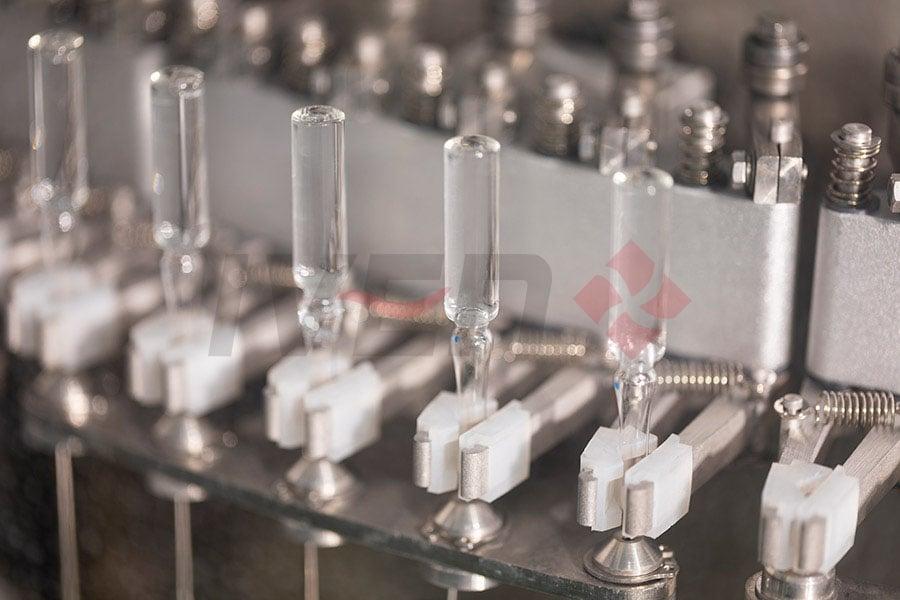
Automatic Ampoule Filling Lines in the United States
For pharmaceutical manufacturers in the United States, an automatic ampoule filling line is a critical production asset for sterile liquid products that require accurate dosing, reliable sealing, high throughput, and compliance with FDA cGMP expectations. Large drug makers, contract manufacturers, and medical technology companies typically evaluate this equipment when they expand injectable capacity, modernize legacy facilities, improve contamination control, or prepare for new product launches. In practical terms, the system integrates ampoule feeding, washing, sterilization, filling, sealing, and inspection into a validated process designed for consistent quality and efficient commercial output.
Demand in the U.S. market is being shaped by rising injectable drug volumes, reshoring initiatives, stricter data integrity expectations, labor cost pressures, and the need for flexible production lines that can serve both commercial and small-batch products. Facilities around New Jersey, Boston, Chicago, Houston, San Diego, and North Carolina increasingly compare advanced ampoule lines against vial, BFS, and prefilled syringe platforms when planning new sterile manufacturing capacity.
An automatic ampoule filling line matters because it combines sterile process control, repeatable output, and lower manual intervention for liquid injectable products packaged in glass ampoules. In the United States, buyers usually focus on four decision criteria: regulatory fit, production efficiency, fill accuracy, and long-term serviceability. If a company needs to manufacture injectable solutions for hospital use, emergency medicines, vitamins, anesthetics, diagnostic agents, or specialty pharmaceuticals, an automated ampoule line can be a highly effective solution.
Compared with semi-automatic production, a modern automatic line offers synchronized material flow, programmable recipe management, integrated alarms, batch traceability, online particle control options, and compatibility with upstream water systems and downstream packing equipment. For larger operations, this helps reduce operator dependence and improve line clearance discipline. For smaller companies or CDMOs, it enables faster changeovers and scalable growth.
Evaluation FactorWhy It MattersTypical U.S. Buyer PriorityFDA cGMP alignmentSupports inspection readiness and validationVery highFill accuracyControls dose consistency and wasteVery highSterility assuranceReduces contamination riskVery highThroughputSupports commercial demand and labor efficiencyHighChangeover flexibilityUseful for multi-product or CDMO operationsHighService supportMinimizes downtime and spare part delaysVery highThe table above shows why U.S. pharmaceutical engineering teams do not evaluate ampoule machinery on speed alone. Validation capability, aseptic process reliability, and support responsiveness often outweigh a marginal difference in headline output.
An automatic ampoule filling line is an integrated system used to process sterile glass ampoules from container preparation through liquid filling and flame sealing. Depending on the line design, the process may include ampoule unscrambling, internal and external washing, tunnel sterilization and depyrogenation, aseptic filling, nitrogen flushing, preheating, tip sealing, coding, visual inspection, leak testing, labeling, and final cartoning.
In pharmaceutical production, ampoules are commonly selected for single-dose sterile liquids where strong container integrity and tamper evidence are needed. They are often used for injectable drugs distributed to hospitals, emergency departments, ambulatory surgery centers, and government health programs. Glass ampoules also remain relevant in export markets where specific dosage forms are standardized around this packaging format.
Applications in the United States include:
The line is usually part of a broader sterile manufacturing ecosystem that includes purified water, water for injection, solution preparation vessels, cleanroom HVAC, environmental monitoring, packaging, and electronic batch documentation. Companies planning a new plant or expansion often review complete project integration rather than buying isolated machines. For that reason, many manufacturers explore turnkey pharmaceutical engineering solutions alongside individual filling equipment.
The main application of an automatic ampoule filling line is the high-volume or medium-volume production of sterile liquid pharmaceuticals. However, the broader value lies in process consistency, product protection, and operational efficiency. In U.S. facilities where labor costs are high and deviation management is intensive, automation can significantly improve batch economics.
Key benefits include reduced manual handling, more stable dosing, improved process synchronization, stronger in-process controls, and easier integration with electronic records. A well-designed line also supports recipe-based operation, helping plants in cities such as Philadelphia and Indianapolis run multiple SKUs with less setup risk.
Application AreaCommon Product TypeOperational BenefitHospital injectablesSterile single-dose liquidsReliable high-volume outputEmergency medicineFast-response drug formatsSecure sealing and traceabilityNutraceutical injectablesVitamin and mineral solutionsAccurate filling and neat presentationExport manufacturingRegional ampoule formatsSupports global packaging standardsCDMO manufacturingMulti-client sterile productsFlexible changeover managementGovernment supplyStockpile or public health productsScalable and consistent productionThe table highlights where the technology delivers measurable value. For example, a contract manufacturer serving clients across the East Coast may prioritize multi-size compatibility, while a large generic producer shipping through the Port of New York and New Jersey may emphasize maximum speed and serialized packaging integration.
Another major advantage is line integration. When solution preparation, sterile transfer, filling, sealing, and final packaging are engineered as one validated process, troubleshooting becomes easier and quality risk is more manageable. This is especially important for manufacturers undergoing site modernization or FDA pre-approval inspection preparation.
var ctx1 = document.getElementById(‘lineChartMarket’).getContext(‘2d’);var chart1 = new Chart(ctx1, {type: ‘line’,data: {labels: [‘2021’, ‘2022’, ‘2023’, ‘2024’, ‘2025’, ‘2026’],datasets: [{label: ‘U.S. demand index for ampoule filling lines’,data: [62, 67, 74, 81, 89, 98],borderColor: ‘rgb(54, 162, 235)’,backgroundColor: ‘rgba(54, 162, 235, 0.15)’,fill: false,tension: 0.3}]},options: {responsive: true,maintainAspectRatio: false}});The line chart illustrates a realistic upward demand trend as U.S. manufacturers invest in sterile capacity, modernization, and supply-chain resilience.
Not all automatic ampoule filling lines are the same. Selection depends on container size, target output, product characteristics, cleanroom layout, and validation strategy. Some systems are optimized for small-volume ampoules at very high speed, while others focus on flexibility for multiple formats or frequent recipe changeovers.
Core technical options usually include inline or rotary design, servo dosing, peristaltic or piston filling technology, nitrogen flushing, open or RABS-compatible layouts, camera inspection, weight checking, and digital batch data capture. Tunnel sterilization specifications, machine guarding, and software architecture also affect suitability for the U.S. market.
Line TypeBest ForTypical Speed RangeCompact automatic lineSmall batches and development-scale production3,000-6,000 ampoules/hourMid-speed integrated lineGeneral commercial production6,000-12,000 ampoules/hourHigh-speed lineLarge generic or hospital supply demand12,000-24,000 ampoules/hourMulti-format flexible lineCDMO and mixed product portfolios4,000-10,000 ampoules/hourRABS-compatible lineEnhanced contamination controlProject-specificTurnkey integrated lineNew facility construction or major expansionProject-specificThis comparison helps clarify that the “best” model depends on business goals. A greenfield site near Raleigh may prefer a turnkey integrated line linked to water systems and logistics automation, while an existing Chicago plant may only need a mid-speed retrofit for one therapeutic segment.
Technical buyers should also review format range, liquid viscosity tolerance, acceptable ampoule breakage rate, online rejection logic, CIP/SIP compatibility where relevant, and data connectivity with site MES or SCADA systems. For teams comparing available equipment configurations, a broader look at pharmaceutical production equipment options can help align the ampoule line with the rest of the facility.
In many projects, the question is not whether to automate, but which packaging technology is the right strategic fit. Ampoules compete with vials, blow-fill-seal systems, and prefilled syringes depending on the product, administration route, and market channel.
Ampoules provide strong hermetic sealing and are often cost-effective for specific sterile liquids. Vials offer easier reconstitution and broader use for biologics. BFS can be efficient for certain high-volume sterile liquids, while prefilled syringes support convenience and premium presentation.
TechnologyMain StrengthMain LimitationAmpoule filling lineStrong seal, proven format, efficient for many sterile liquidsGlass opening step at point of useVial filling lineVery versatile and widely acceptedMore components such as stoppers and capsBlow-fill-sealIntegrated container formation and fillingNot ideal for every product or market expectationPrefilled syringe lineUser convenience and premium deliveryHigher packaging complexity and costSemi-automatic ampoule setupLower entry costLower throughput and more manual handlingOutsourced contract fill-finishReduces upfront capital needLess direct control over scheduling and capacityThe best solution depends on formulation sensitivity, target customer, shelf-life strategy, and forecast volume. For example, a U.S. hospital generic product moving in large lots through distribution hubs in Memphis or Dallas may fit ampoules well. A specialty injectable for self-administration may not.
var ctx2 = document.getElementById(‘barChartDemand’).getContext(‘2d’);var chart2 = new Chart(ctx2, {type: ‘bar’,data: {labels: [‘Hospital Generics’, ‘CDMO Projects’, ‘Emergency Drugs’, ‘Diagnostic Liquids’, ‘Export Products’, ‘Nutrient Injectables’],datasets: [{label: ‘Relative U.S. demand by application’,data: [88, 71, 79, 58, 52, 64],backgroundColor: ‘rgb(255, 99, 132)’}]},options: {responsive: true,maintainAspectRatio: false}});The bar chart shows where buyer interest is strongest across practical application categories in the current U.S. market.
The U.S. market for automatic ampoule filling line technology is influenced by sterile injectable shortages, domestic production incentives, quality remediation projects, and the expansion of flexible manufacturing capacity. Buyers are no longer evaluating machinery only by mechanical reliability; they also want digital traceability, reduced energy consumption, and layouts that fit upgraded cleanroom concepts.
By 2026, three trends are expected to shape purchase decisions. First, automation will continue to deepen through servo motion control, electronic batch records, predictive maintenance, and machine vision. Second, policy and procurement pressures will favor resilient domestic or near-shore supply chains, with more interest in validated equipment that can be commissioned faster in U.S. projects. Third, sustainability will gain visibility through lower utility consumption, heat recovery, cleaner combustion control for sealing systems, and more efficient cleanroom integration.
Local market activity is especially visible in pharmaceutical corridors such as New Jersey, Massachusetts, California, North Carolina, and Indiana. Ports including Los Angeles, Long Beach, Savannah, and Houston also matter because imported machinery, stainless components, and spare parts often move through these gateways.
var ctx3 = document.getElementById(‘areaChartTrends’).getContext(‘2d’);var chart3 = new Chart(ctx3, {type: ‘line’,data: {labels: [‘2021’, ‘2022’, ‘2023’, ‘2024’, ‘2025’, ‘2026’],datasets: [{label: ‘Shift toward smart and compliant line upgrades’,data: [35, 42, 51, 61, 72, 84],fill: true,backgroundColor: ‘rgba(75, 192, 192, 0.25)’,borderColor: ‘rgb(75, 192, 192)’,tension: 0.3}]},options: {responsive: true,maintainAspectRatio: false}});The area chart reflects the growing share of projects driven by smart manufacturing, modernization, and compliance upgrades rather than simple replacement purchases.
Choosing a supplier requires more than requesting quotations. A reliable manufacturer should demonstrate regulatory understanding, engineering depth, installed references, stable quality systems, and after-sales responsiveness. U.S. buyers often ask whether the supplier can support FAT, SAT, documentation review, IQ/OQ/PQ readiness, and spare parts availability without long delays.
One effective method is to score suppliers on technical, commercial, and service criteria rather than focusing solely on initial purchase price. This is particularly important for companies building strategic sterile lines in states with high compliance scrutiny and costly downtime.
Supplier Selection CriterionWhat to VerifyWhy It Reduces RiskRegulatory competenceExperience with FDA, EU GMP, WHO GMP, PIC/S conceptsImproves documentation and validation qualityEngineering capabilityCustomization, layout design, utility matchingAvoids integration problemsManufacturing qualityMaterial control, machining precision, FAT standardsSupports long equipment lifeService networkRemote support, site visits, training, spare partsShortens downtimeProject managementSchedule control and documentation disciplinePrevents delays and scope confusionReference projectsComparable sterile filling installationsConfirms real-world performanceAt the technology level, some international suppliers stand out because they combine filling machinery with water treatment, solution preparation, packaging, and plant engineering. Shanghai IVEN Pharmatech Engineering, for example, is known in the industry for integrating pharmaceutical filling and packaging machinery with water systems, intelligent conveying, and other plant-wide solutions. More about the company’s background can be reviewed on its company profile page.
From a manufacturing capability perspective, buyers often prefer suppliers with specialized production plants rather than trading-only operations. This matters for consistency in stainless fabrication, machine assembly, software standardization, and factory acceptance testing. In projects serving the United States, durable construction, clear documentation, and repeatable manufacturing processes are critical because the cost of nonconformance after installation is far higher than the cost of careful supplier qualification up front.
Service capability is equally important. A supplier should support feasibility discussions, engineering design input, commissioning, staff training, qualification documentation, troubleshooting, and long-term optimization. When comparing candidates, ask who will answer when the line stops on a Friday night in New Jersey or when a validation question appears before a customer audit in California.
var ctx4 = document.getElementById(‘comparisonChartSuppliers’).getContext(‘2d’);var chart4 = new Chart(ctx4, {type: ‘bar’,data: {labels: [‘Compliance Support’, ‘Customization’, ‘Integrated Engineering’, ‘Lifecycle Service’, ‘Manufacturing Depth’, ‘Cost Efficiency’],datasets: [{label: ‘Importance score in U.S. buying decisions’,data: [95, 84, 88, 92, 86, 78],backgroundColor: ‘rgb(153, 102, 255)’}]},options: {responsive: true,maintainAspectRatio: false}});This comparison chart shows the relative importance of supplier capabilities in real purchasing decisions, with compliance and service usually carrying the most weight.
The investment cost of an automatic ampoule filling line in the United States varies widely based on speed, sterility architecture, automation level, utility scope, and project complexity. A compact line for limited production may cost far less than a high-speed integrated system with washing, sterilization tunnel, filling, sealing, inspection, and downstream packaging. In addition, buyers must budget for cleanroom modifications, utilities, validation, shipping, customs handling, installation, and training.
Budget planning should distinguish between capital expense and total cost of ownership. A lower initial quote may result in higher lifetime cost if spare parts are slow, changeovers are inefficient, utility consumption is high, or validation support is weak.
Cost ComponentBudget ImpactCommon U.S. Planning NoteMain line equipmentHighest direct capital itemCompare like-for-like scope carefullyUtilities and cleanroom integrationOften underestimatedHVAC, gases, power, exhaust, WFI links matterShipping and import handlingModeratePort routing and inland freight affect timingInstallation and commissioningSignificantPlan around site readiness and labor accessValidation and documentationEssential project costNeeded for IQ/OQ/PQ and internal QA approvalSpare parts and trainingSmall upfront, big long-term valueImportant for uptime and maintenance independenceROI usually comes from higher output, lower labor cost per unit, reduced deviation risk, less product loss, and stronger batch consistency. For a manufacturer replacing a labor-heavy line, payback can be attractive even when the capital investment is substantial. The strongest ROI cases are often found in plants with stable demand, recurring hospital contracts, and high operator cost bases.
To estimate return properly, include:
Companies that want project-specific planning often engage suppliers early for feasibility, line balancing, and engineering review instead of treating equipment selection as a simple procurement exercise.
The biggest mistake in ampoule line investment is thinking only about the machine, not the process ecosystem. Sterile filling performance depends on room classification, personnel flow, utility stability, formulation behavior, operator training, and qualification discipline. A technically excellent line can still underperform if the site design is weak or the project scope is incomplete.
Important risks include poor URS definition, underestimating FDA documentation expectations, selecting the wrong speed for actual demand, weak spare parts planning, and choosing a supplier that lacks real sterile project experience. Import timing, customs clearance, and site readiness also create practical risks for U.S. projects.
Risk AreaTypical ProblemMitigation ActionURS and scope definitionEquipment does not match process needsCreate detailed user requirements earlyValidation readinessMissing protocols or incomplete documentationConfirm documentation package before POSite integrationUtility mismatch or layout conflictsRun engineering review with utilities and flowOperator trainingErrors during startup and changeoverPlan formal training and SOP developmentSupply chain delaysLate delivery of parts or modulesUse milestone tracking and buffer planningService responseLong downtime after faultsSecure support terms and spare kit upfrontThis risk table shows that successful investment is a project management issue as much as a machinery issue. Buyers in the United States should involve engineering, QA, validation, operations, procurement, and maintenance from the beginning.
For companies seeking a partner approach instead of a standalone sale, strong service capability can make a major difference. IVEN is known for supporting project stages from feasibility and engineering design through installation, commissioning, qualification support, training, and production optimization. That broader support model helps reduce common problems such as poor layouts, schedule delays, uncertain equipment quality, and cost overruns. Companies evaluating project fit can contact the team for project discussion based on their production goals.
What products are best suited for an automatic ampoule filling line?Sterile liquid pharmaceuticals such as injectable solutions, vitamins, emergency medicines, and some diagnostic support products are common candidates. Suitability depends on formulation, volume, and market requirements.
How fast can an automatic ampoule filling line run?Commercial lines may range from roughly 3,000 to 24,000 ampoules per hour, depending on machine configuration, ampoule size, product behavior, and inspection requirements.
Is ampoule packaging still relevant in the United States?Yes. While vials and syringes are widely used, ampoules remain relevant for specific sterile liquid applications, hospital products, export-oriented manufacturing, and cost-sensitive dosage forms.
What compliance standards should U.S. buyers prioritize?FDA cGMP alignment is the first priority, along with robust documentation, data integrity support, and qualification readiness. Many buyers also value suppliers familiar with EU GMP and PIC/S expectations for global operations.
What is included in a typical ampoule line?A complete line may include ampoule feeding, washing, sterilization tunnel, filling, nitrogen flushing, sealing, inspection, coding, labeling, and cartoning, depending on the project scope.
How much does an automatic ampoule filling line cost?There is no single number. Cost depends on speed, automation, contamination control design, utility interfaces, and validation scope. Total project budgeting should include installation, shipping, qualification, and training.
How long does implementation usually take?Lead time varies by customization and project complexity. Buyers should consider manufacturing time, FAT, shipping, customs clearance, installation, SAT, and IQ/OQ/PQ activities when planning launch dates.
What should I ask a supplier before buying?Ask about similar installations, FAT protocols, software architecture, spare parts strategy, documentation package, U.S. support capability, line flexibility, and expected OEE after commissioning.
Why do some companies prefer integrated suppliers?Because sterile production projects often require more than one machine. Integrated suppliers can align water systems, preparation systems, filling lines, packaging, logistics, and engineering design under one project structure.
What should buyers in the United States watch for in 2026?Expect stronger demand for digital traceability, predictive maintenance, energy-efficient designs, resilient supply chains, and flexible lines that support both commercial and smaller specialized batches.
In summary, an automatic ampoule filling line is not simply a speed upgrade. It is a strategic investment in sterile manufacturing performance, regulatory confidence, and long-term operational efficiency. For U.S. pharmaceutical companies, CDMOs, and medical product manufacturers, the right line should fit the formulation, capacity plan, validation strategy, and service model of the business. The best results come from combining equipment selection with strong engineering review, realistic ROI analysis, and dependable lifecycle support.