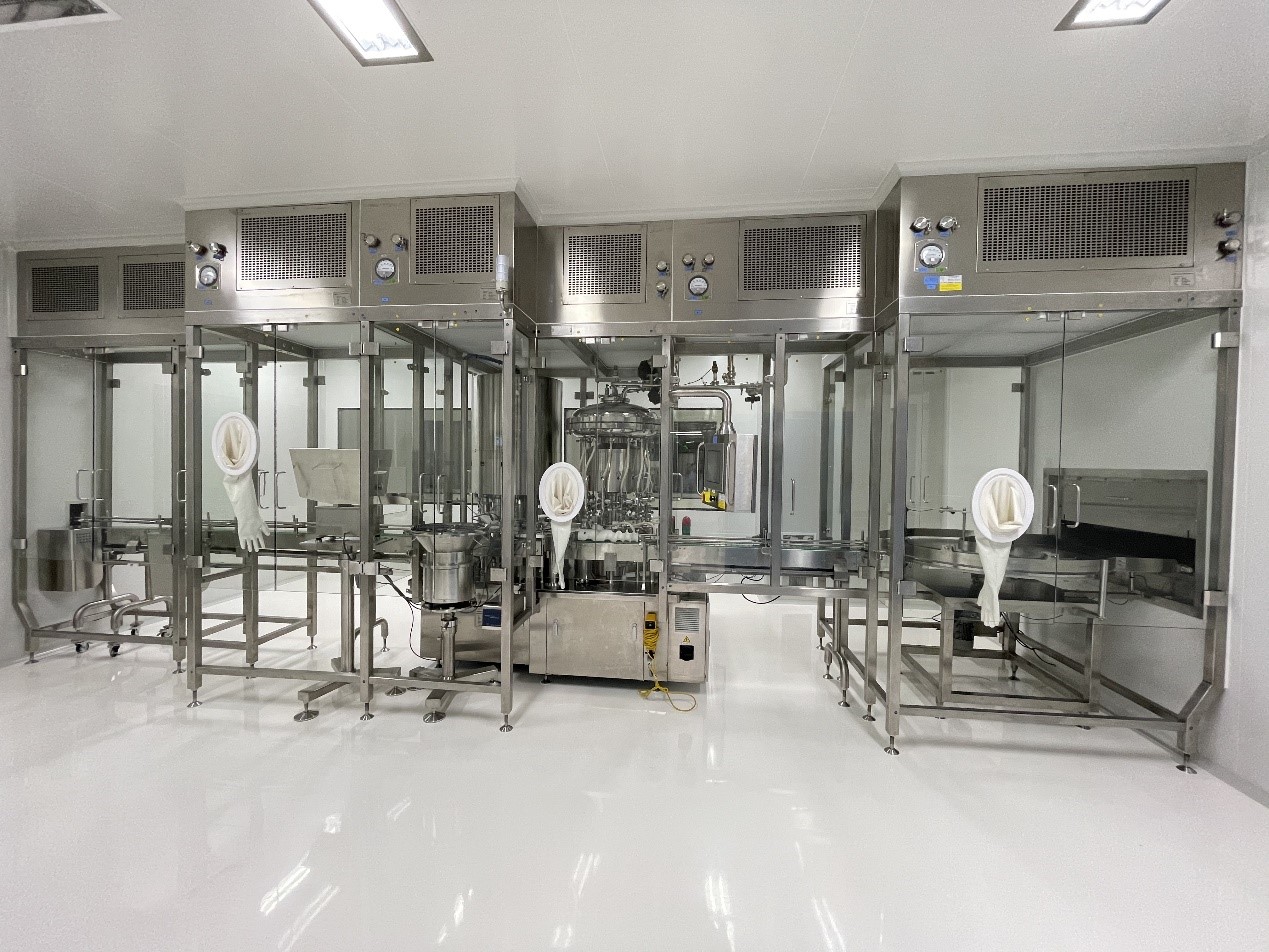
Glass Bottle IV Production Lines in the United States
For pharmaceutical manufacturers in the United States, a glass bottle IV solution line is a complete sterile production system used to wash bottles, prepare solutions, fill precise volumes, apply closures, sterilize when required, inspect containers, and package finished intravenous infusion products under tightly controlled GMP conditions. It is most often selected by large-volume parenteral manufacturers, hospital solution suppliers, and companies upgrading older aseptic facilities in markets such as New Jersey, Boston, North Carolina, Texas, and California. Because U.S. projects must align with FDA expectations, data integrity requirements, clean utility standards, and validation protocols, this type of line is not just packaging equipment; it is a core manufacturing platform that affects product quality, batch release speed, labor efficiency, and long-term compliance risk.
Quick Answer: Why a Glass Bottle IV Solution Line Matters for Regulated Expansion

A glass bottle IV solution production line is a high-value pharmaceutical manufacturing system designed for sterile infusion products such as sodium chloride injection, dextrose injection, compound electrolyte solutions, and selected specialty hospital preparations. In the United States, it is commonly evaluated when a company is building a new parenteral plant, replacing legacy equipment, or expanding capacity to serve regional hospital networks and contract manufacturing demand.
Unlike a single filling machine, a full line typically integrates bottle infeed, internal and external washing, depyrogenation or sterilization steps based on process design, solution preparation and transfer, aseptic or controlled-environment filling, capping or sealing, leak detection, visual inspection, labeling, and secondary packaging. The line may also connect with purified water systems, water for injection systems, clean steam, solution distribution skids, and automated material handling.
For U.S. buyers, the strategic value comes from three areas: compliance, throughput, and consistency. A properly designed line can support documented process control, improve batch reproducibility, reduce operator intervention, and simplify validation planning. These benefits are especially important in manufacturing hubs near Philadelphia, Indianapolis, Raleigh-Durham, and Chicago, where pharmaceutical producers face high regulatory expectations and competitive pressure to scale quickly.
What Is a Glass Bottle IV Solution Line and What Is It Used For in Pharmaceutical Production?

A glass bottle IV line is a coordinated production system used to manufacture sterile intravenous infusion drugs in rigid glass containers. These products are intended for direct administration into the bloodstream, so every process stage must be engineered for sterility assurance, particulate control, accurate fill volume, and closure integrity.
In practical terms, the line is used for large-volume parenteral products supplied to hospitals, clinics, emergency care providers, and specialized treatment centers. Typical products include saline, glucose solutions, balanced electrolyte infusions, nutritional support solutions, dialysis-related formulations, and some compounded hospital-use preparations. Glass remains important where chemical compatibility, barrier performance, heat resistance, and premium product positioning are critical.
The line usually operates as part of a wider sterile manufacturing ecosystem. That means buyers in the United States should assess not only the core filling line, but also upstream utility systems, cleanroom layout, formulation tanks, CIP/SIP capability, environmental monitoring integration, and downstream serialization or case packing requirements.
When reviewing line architecture, decision-makers should examine whether the supplier understands U.S. cGMP manufacturing logic. A line that performs well mechanically but lacks proper documentation, electronic records support, validation structure, and traceable material control can create expensive delays during qualification and pre-approval inspection.
| Line Stage | Main Function | Why It Matters | Typical U.S. Validation Focus |
|---|---|---|---|
| Bottle loading and unscrambling | Feeds empty glass bottles into the line in a controlled orientation | Prevents damage, stoppages, and contamination from poor handling | Material traceability and line clearance |
| Bottle washing | Removes particulates and residues using purified water or WFI-based sequences | Essential for particulate and bioburden control | Cleaning performance and rinse verification |
| Drying or depyrogenation support | Prepares containers for filling according to process needs | Supports sterility assurance and stable filling conditions | Temperature mapping and cycle reproducibility |
| Solution filling | Dispenses precise infusion volume into each bottle | Directly affects dosage, yield, and compliance | Fill accuracy and in-process control |
| Sealing or capping | Applies closure to maintain container integrity | Critical for sterility maintenance and transport stability | Container closure integrity testing |
| Inspection and packaging | Detects defects and prepares products for distribution | Reduces recalls and supports release quality | Visual inspection challenge studies and reconciliation |
The table above shows that a glass bottle IV line should be evaluated as a process chain rather than as standalone equipment. Weakness in one stage often undermines the entire sterile manufacturing strategy.
Main Applications and Benefits of Glass Bottle IV Solution Lines in Modern Pharmaceutical Manufacturing

Glass bottle lines continue to serve an important role in modern pharmaceutical production, especially where long shelf life, strong barrier properties, and thermal resistance are priorities. In the United States, they are often used by established infusion manufacturers, specialized hospital supply producers, and facilities with product portfolios that already depend on rigid containers.
Major applications include standard infusion drugs for inpatient care, emergency fluid replacement, perioperative use, renal support settings, and selected nutrition or electrolyte management therapies. Some companies also use glass bottle systems for export-oriented production, especially when serving markets where glass packaging remains preferred or specified by procurement systems.
The benefits are not only technical. From an operations standpoint, a well-designed line can reduce manual intervention, improve changeover repeatability, and support better OEE. From a commercial standpoint, it can give a manufacturer greater confidence when bidding for long-term supply contracts with group purchasing organizations and hospital distributors across the United States.
In cities with strong healthcare procurement networks such as New York, Atlanta, Houston, and Los Angeles, reliable sterile fluid supply remains strategically important. Manufacturers that can document line robustness, batch consistency, and secure packaging performance often gain an advantage in both domestic and cross-border distribution.
| Application Area | Typical Product | Why Glass Is Chosen | Operational Benefit |
|---|---|---|---|
| General hospital infusion | 0.9% sodium chloride injection | Excellent chemical stability and broad acceptance | Reliable large-batch production |
| Energy support therapy | 5% dextrose injection | Good compatibility and visual clarity | Consistent fill and appearance control |
| Electrolyte balance therapy | Compound electrolyte solutions | Strong barrier against gas and vapor exchange | Longer shelf-life confidence |
| Critical care support | Balanced infusion formulations | Premium presentation and heat resistance | Stable sterilization compatibility |
| Export supply programs | Standard IV fluids for overseas tenders | Recognized package format in many markets | Portfolio flexibility for global sales |
| Specialty institutional products | Selected compounded infusion solutions | Compatibility with sensitive formulations | Supports niche, higher-value manufacturing |
These applications illustrate why glass bottle lines remain relevant even as packaging formats diversify. In many cases, the best container decision depends on formulation, sterilization strategy, target channel, and total supply chain economics.
Key Types, Models and Technical Options for Glass Bottle IV Solution Lines
Glass bottle IV lines are not one-size-fits-all. Their final configuration depends on bottle size range, annual output, product portfolio, sterilization philosophy, closure style, automation target, and the documentation depth required by the end user. A small specialty facility in the Research Triangle may need a flexible medium-speed line, while a high-output plant near New Jersey’s pharma corridor may prioritize fully integrated automation and reduced labor touchpoints.
Common model differentiation includes container volume range, filling head count, sterilization mode, inspection level, and packaging automation. Some lines are designed for conventional infusion products, while others are optimized for multi-product operation with recipe management and rapid changeover features.
From a technology perspective, advanced suppliers may offer servo-controlled filling, automated CIP/SIP interfaces, particle-minimizing conveyance, digital batch data collection, reject tracking, and linkage with warehouse or intelligent logistics systems. These features matter more as U.S. facilities push toward operational excellence, electronic records, and more transparent quality oversight.
In this area, IVEN Pharmatech Engineering is often relevant for buyers comparing integrated engineering partners. The company has built a broad portfolio around IV solution manufacturing and related utility systems, and its technology base includes numerous patents in IV production equipment. For U.S. investors, the practical takeaway is not just the machine count, but the ability to combine filling, water systems, solution preparation, and automation logic into a coordinated pharmaceutical project.
| Line Type | Typical Output Profile | Best Fit | Technical Notes |
|---|---|---|---|
| Compact semi-automatic line | Low to moderate volume | Pilot plants and specialty products | More operator involvement, lower capital entry |
| Automatic standard line | Mid-volume commercial production | Regional hospital supply manufacturers | Balanced cost, throughput, and compliance capability |
| High-speed automatic line | Large-volume output | Major infusion manufacturers | Higher OEE targets and stronger packaging integration |
| Multi-size flexible line | Mixed portfolio operation | CMOs and product-diverse plants | Faster changeover and recipe management |
| Turnkey integrated line | Plant-wide solution | New factories or full modernization projects | Includes utilities, cleanroom, and validation support |
| Smart digital line | Data-driven manufacturing | Advanced GMP facilities | Supports MES, SCADA, and traceability expansion |
Technically, buyers should ask whether the line can handle bottle format changes, stopper and cap variations, upstream tank integration, automatic rejection logic, and future data system upgrades. Those details affect the real cost of ownership far more than the base equipment price alone.
Glass Bottle IV Solution Lines vs Alternative Technologies: Which Solution Fits Your Needs?
Choosing between glass bottle lines and alternatives such as PP bottle lines or non-PVC soft bag lines depends on product strategy, clinical channel, sustainability targets, logistics, and market expectations. In the United States, this is often a board-level decision because it influences plant layout, warehouse footprint, freight efficiency, and long-term product positioning.
Glass bottles offer high chemical resistance, excellent transparency, and robust heat performance. However, they are heavier than polymer containers and may increase freight, breakage management, and storage considerations. PP bottles provide rigid-container convenience with reduced weight, while non-PVC soft bags can improve logistics efficiency and often support high-volume hospital distribution models.
A manufacturer serving academic medical centers in Boston or major hospital systems in Dallas may compare packaging not just on material science, but on line speed, case pack density, and downstream handling costs. Similarly, a company shipping through the Port of Savannah, the Port of Houston, or Los Angeles/Long Beach may care deeply about container utilization and export shipping economics.
| Criteria | Glass Bottle Line | PP Bottle Line | Non-PVC Soft Bag Line |
|---|---|---|---|
| Barrier performance | Excellent | Very good | Good to very good |
| Container weight | High | Medium | Low |
| Breakage risk | Higher | Low | Very low |
| Heat resistance | Excellent | Good | Depends on film system |
| Logistics efficiency | Lower | Moderate | High |
| Premium / traditional acceptance | Strong | Moderate | Strong in many modern hospital channels |
| Best use case | Compatibility-focused or legacy-format products | Rigid lightweight portfolios | High-volume hospital distribution |
The table shows there is no universal winner. A glass bottle line is often the right answer when product compatibility, thermal processing confidence, and established market acceptance are more important than shipping weight. For companies still comparing formats, reviewing an integrated supplier’s broader portfolio can help. For example, IVEN’s sterile manufacturing range includes glass bottle, PP bottle, and non-PVC soft bag IV solution systems, which can be useful when a U.S. investor wants one engineering partner to compare multiple paths objectively within a larger plant design.
Market Overview and Future Trends for Glass Bottle IV Solution Lines in Pharmaceutical Manufacturing
The United States market for sterile manufacturing investment remains active due to supply chain resilience concerns, domestic production initiatives, hospital purchasing needs, and modernization of aging pharmaceutical infrastructure. While some new projects favor lightweight packaging, glass bottle IV systems continue to attract attention in specialized infusion segments, replacement projects, and facilities with export or legacy product portfolios.
Several forces shape the market. First, healthcare providers want more secure supply after past shortages in injectable and infusion products. Second, manufacturers are reassessing whether older lines can meet current efficiency and data expectations. Third, regulators continue to focus on contamination control, process understanding, and lifecycle validation. These factors create demand not only for machines, but for complete engineering solutions.
Looking toward 2026 and beyond, key trends include stronger digitalization, wider adoption of intelligent material handling, more integrated utility skids, lower-energy equipment design, and better project documentation packages to accelerate qualification. Sustainability is also becoming a board-level topic. Buyers now examine water use, clean steam efficiency, bottle handling losses, packaging waste, and energy consumption during procurement. Policy shifts around domestic manufacturing and resilient pharmaceutical supply chains may further support U.S. capital spending.
Another major trend is turnkey preference. Many companies now prefer suppliers that can coordinate engineering, utilities, core process equipment, cleanroom interfaces, and validation support instead of managing many disconnected vendors. This reduces schedule risk, which is especially valuable in expensive labor markets such as the Northeast corridor and Southern biotech clusters.
The charts above reflect a realistic market direction: steady growth in investment, stronger demand from hospital supply and contract manufacturing, and a clear shift from isolated equipment purchases toward integrated projects with digital and compliance support built in from the start.
How to Choose a Reliable Glass Bottle IV Solution Line Manufacturer or Supplier
Selecting a supplier for the United States market requires more than checking machine speed. Buyers should evaluate regulatory understanding, project execution history, documentation quality, utility integration capability, after-sales support, spare parts security, and willingness to customize for local code and validation expectations.
A reliable supplier should be able to explain how the line fits FDA-oriented cGMP operations, what FAT and SAT documentation will be supplied, how IQ/OQ/PQ support is structured, and how data integrity or audit trail functions are addressed if digital controls are included. It should also discuss line layout in relation to cleanroom zoning, personnel flow, material flow, and maintenance access.
Manufacturing capability is equally important. Buyers should confirm where the line is built, how many dedicated production plants support the equipment family, whether core components are standardized, and how quality is controlled across fabrication, assembly, testing, and shipment. IVEN Pharmatech Engineering is notable here because it operates multiple specialized manufacturing plants in Shanghai covering filling and packaging machinery, pharmaceutical water treatment systems, intelligent logistics systems, and blood collection tube equipment. For a U.S. buyer, that kind of specialization can reduce coordination risk on larger sterile projects.
Service capability often becomes the deciding factor after installation. Engineering support for feasibility review, layout design, commissioning, training, validation documents, and lifecycle maintenance can significantly affect startup time. U.S. pharmaceutical owners usually benefit from suppliers that can stay engaged from design through commercial production rather than exiting after delivery. IVEN’s positioning as an engineering partner, rather than only a machine seller, aligns with this expectation, especially for companies evaluating turnkey pharmaceutical project support alongside core process equipment.
| Supplier Evaluation Point | What to Ask | Why It Matters | Warning Sign |
|---|---|---|---|
| Regulatory familiarity | Can you support EU GMP, FDA cGMP, WHO GMP, and PIC/S-aligned documentation? | Reduces approval and audit risk | Vague answers or generic templates |
| Project references | Have you supplied sterile lines to regulated markets? | Shows practical execution ability | No verifiable sterile project history |
| Utility integration | Can the line connect with WFI, purified steam, and solution prep systems? | Avoids interface failures | Supplier only handles filling machine scope |
| Documentation package | What FAT, manuals, drawings, and qualification documents are included? | Supports faster validation | Incomplete turnover package |
| After-sales support | How are training, spare parts, and remote troubleshooting handled? | Improves uptime after startup | No lifecycle service structure |
| Customization ability | Can you adapt to local codes and product-specific process needs? | Supports long-term plant fit | Only standard catalog proposals |
In the supplier search stage, buyers often begin with a broad review of sterile manufacturing equipment options and then narrow down to partners with stronger engineering depth. It is also wise to schedule cross-functional reviews involving quality, production, engineering, validation, procurement, and finance, since each team will identify different risks.
Investment Cost, Budget Planning and ROI Analysis for a Glass Bottle IV Solution Line
The cost of a glass bottle IV solution line in the United States can vary widely depending on output speed, automation level, utility scope, cleanroom interfaces, and validation package depth. A simple line upgrade may involve a moderate equipment budget, while a full turnkey project with solution preparation, WFI generation, clean utilities, intelligent logistics, and qualification support can reach a much larger capital range.
Buyers should separate budget planning into five layers: core process equipment, upstream utility systems, facility and cleanroom modifications, validation and compliance documentation, and operating ramp-up costs. Focusing only on the quoted machine price often leads to overruns later, particularly when the line must be integrated into existing buildings with space or airflow constraints.
Return on investment is usually driven by higher throughput, labor reduction, lower defect rates, faster release readiness, better line uptime, and stronger ability to win supply contracts. In areas where contract manufacturing is growing, such as the Mid-Atlantic and Southeast U.S., improved flexibility can also create incremental revenue through multi-client production opportunities.
| Budget Item | Typical Share of Total Project Cost | What It Includes | ROI Impact |
|---|---|---|---|
| Core line equipment | 25%–40% | Washer, filler, capper, inspection, packaging | Main driver of throughput and quality |
| Utility systems | 15%–25% | WFI, purified water, steam, tanks, distribution | Critical for reliable sterile operation |
| Facility adaptation | 10%–20% | Cleanroom updates, HVAC, floor layout, drains | Determines install feasibility and compliance |
| Automation and digital controls | 5%–15% | SCADA, data collection, recipe systems, interfaces | Improves traceability and labor efficiency |
| Validation and documentation | 5%–10% | FAT, SAT, IQ/OQ/PQ support, protocols | Reduces startup delay risk |
| Training and ramp-up | 3%–8% | Operator training, spare parts, trial batches | Shortens time to stable production |
As a practical example, if a manufacturer can reduce rejection rates, improve line utilization, and secure one or two new regional supply contracts, the payback period may become much shorter than expected. However, that only happens when the system is correctly specified from the beginning and supported by strong commissioning and training.
Key Considerations and Potential Risks When Investing in a Glass Bottle IV Solution Line
The biggest investment risk is assuming that sterile filling success depends only on equipment quality. In reality, project outcomes are shaped by facility layout, utility quality, formulation process control, operator training, environmental monitoring, preventive maintenance, and document discipline.
Common risks include underestimating changeover complexity, selecting a line that does not match future bottle sizes, insufficiently defining user requirement specifications, weak integration between filling and utility packages, and inadequate allowance for validation timelines. U.S. projects also face schedule risk when imported equipment is not planned around customs timing, port handling, and inland delivery. Companies bringing lines through Long Beach, Newark, Savannah, or Houston should coordinate logistics early to avoid installation delays.
Another concern is lifecycle support. Even robust stainless-steel pharmaceutical equipment can become a burden if spare parts, software updates, or troubleshooting support are slow. This is why many buyers prioritize suppliers with full-service capability. A partner able to assist with feasibility, engineering design, equipment selection, installation, commissioning, validation, training, and optimization typically reduces long-run operational risk.
This service model is a major reason some global investors look at IVEN. Beyond machine manufacturing, the company supports pharmaceutical project planning, installation, qualification assistance, technology transfer, staff training, and post-startup optimization. For U.S. firms wanting to speak with a project team rather than only a sales desk, that broader model can be useful, especially when timelines are tight. Companies exploring project fit can review the firm’s background at its company overview page or request a discussion through the contact page.
| Risk Area | How It Appears | Likely Consequence | Mitigation Strategy |
|---|---|---|---|
| Wrong capacity sizing | Line too slow or too large for real demand | Poor ROI or expansion bottlenecks | Use realistic forecast scenarios |
| Weak URS definition | Critical features omitted during procurement | Change orders and delays | Create cross-functional URS early |
| Poor utility integration | WFI, steam, or air systems not matched to line needs | Unstable startup performance | Review full process and utility map |
| Insufficient validation planning | Documentation gaps discovered late | Delayed qualification and launch | Align FAT/SAT/IQ/OQ/PQ responsibilities upfront |
| Operator skill gap | High intervention or repeated alarms | Lower OEE and quality deviations | Invest in thorough training and SOPs |
| After-sales weakness | Slow spare parts or technical response | Long downtime during issues | Select suppliers with lifecycle support |
One useful approach is to run a formal risk review before purchase, including quality, engineering, EH&S, operations, and finance. That review should cover not just the equipment itself, but also utilities, room classification, maintenance access, software change control, and long-term product strategy.
FAQ
What products can be made on a glass bottle IV solution line?
Typical products include saline, dextrose, compound electrolyte solutions, and other sterile infusion fluids used in hospitals and clinical care settings.
Why would a U.S. manufacturer choose glass over soft bags?
Glass may be preferred for compatibility, heat tolerance, traditional market acceptance, or specific institutional requirements, even though soft bags often offer logistics advantages.
Is a glass bottle IV line only for very large pharmaceutical companies?
No. Large companies are major users, but regional manufacturers, CMOs, and specialized sterile facilities may also invest in these lines depending on product mix and capacity goals.
What should be included in the supplier’s documentation package?
At minimum, buyers should expect drawings, manuals, FAT records, material certificates where applicable, software information, calibration details, and qualification support documents.
How important is turnkey capability?
It is highly important when the project includes utilities, cleanroom adaptation, solution preparation, logistics automation, or complex validation requirements. A turnkey-capable supplier can reduce interface risk.
How long can pharmaceutical-grade equipment last?
Well-built stainless-steel systems can operate for many years with proper maintenance. Buyers often focus on long service life, upgrade options, and spare parts availability when assessing total value.
Does the line need to comply with FDA requirements?
Yes. For the United States market, the equipment and the manufacturing process must support cGMP expectations, validation requirements, and reliable quality documentation.
What future trends should buyers watch in 2026?
Key trends include digital batch records, smarter inspection systems, energy-efficient utilities, increased automation, sustainability tracking, and stronger demand for domestic or resilient sterile supply capacity.
In summary, a glass bottle IV solution line remains a strategically important investment for U.S. pharmaceutical production when product compatibility, sterile process control, and long-term compliance are central priorities. The strongest purchasing outcomes usually come from selecting not only a capable machine builder, but also an engineering partner with proven technology, organized manufacturing capability, and lifecycle service support.

About the Author
We are IVEN Pharmatech Engineering, a team dedicated to delivering turnkey pharmaceutical and medical solutions worldwide. With decades of experience, we specialize in advanced machinery, integrated factory design, and full lifecycle support to help our clients achieve efficient, compliant, and high-quality production.
Share

Related Insights
-
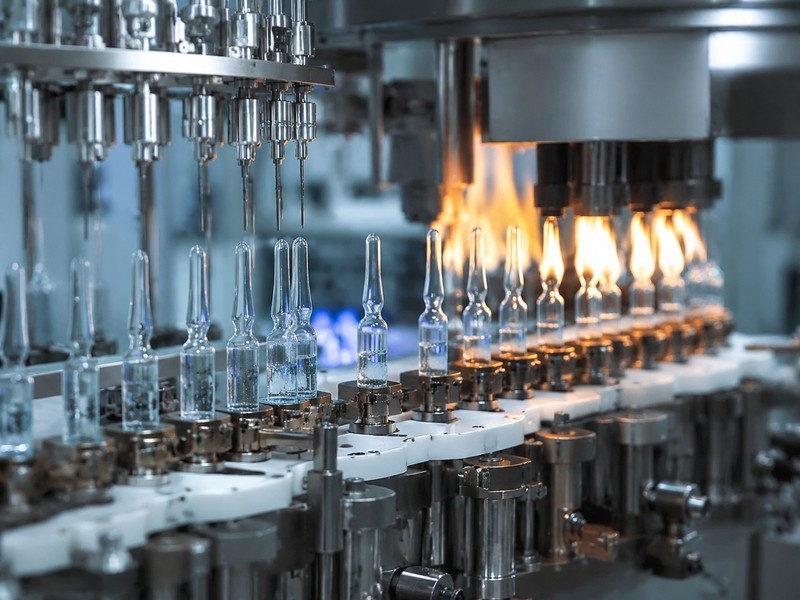
United States Guide to Ampoule Filling Machine Specs
For pharmaceutical manufacturers in the United States, ampoule filling machine specifications are not just a technical checklist. They directly affect sterility assurance, line efficiency, FDA compliance, operator safety, maintenance workload, and long-term return on investment. Whether a company is building a new injectable plant in New Jersey, upgrading a sterile suite in Boston, or expanding export-oriented production near Chicago or Houston, the right machine specification can determine whether the project meets validation targets and market deadlines.
In practice, buyers do not evaluate ampoule filling equipment by speed alone. They review filling accuracy, container size range, breakage rate, washing and depyrogenation compatibility, nitrogen protection, sealing integrity, cleanroom integration, automation level, recipe management, electronic records, and support for IQ/OQ/PQ. Large drug manufacturers, CDMOs, biotech companies, and specialty injectable producers across the United States increasingly compare ampoule filling lines as part of broader modernization programs tied to Annex 1 expectations, FDA cGMP standards, and sustainability goals.
This guide explains how ampoule filling machine specifications should be assessed for the United States market, what technical options matter most, how they compare with other aseptic packaging solutions, and how buyers can identify dependable suppliers. It also reflects the needs of regulated facilities shipping through major trade routes such as the Port of Los Angeles, Port Newark, Savannah, and air cargo hubs serving Philadelphia and the Research Triangle.
Ampoule filling machine specifications define how a sterile liquid product is dosed, protected, sealed, inspected, and transferred through a pharmaceutical production line. In the United States, these specifications matter because injectable manufacturing is highly regulated and deviations can lead to batch rejection, warning letters, lost throughput, or costly retrofit work.
The most important specifications usually include output speed, ampoule size compatibility, filling volume range, dosing accuracy, sealing method, nitrogen purging capability, container transport stability, material of construction, cleanability, data integrity features, and validation readiness. For United States projects, buyers also pay close attention to integration with isolators or RABS, CFR Part 11-compatible controls, alarm traceability, and documentation that supports FDA inspections and internal quality reviews.
If a short answer is needed, the best ampoule filling machine specifications are those that align product characteristics, compliance goals, and total lifecycle cost. A machine that runs 18,000 ampoules per hour but causes high breakage or difficult changeovers may be less valuable than a flexible line with strong sterility control and predictable uptime.
Specification Area What It Covers Why It Matters Typical U.S. Buyer Concern Output Capacity Ampoules per hour Determines production scale and labor efficiency Can the line support demand growth without overtime? Fill Accuracy Volume deviation tolerance Protects dosage consistency and yield Will it pass strict batch release criteria? Container Range 1 ml to 20 ml or more Supports multiple SKUs and future products How much change-part investment is needed? Sterility Controls Nitrogen purge, laminar flow, aseptic path Reduces oxidation and contamination risk Can it fit current cleanroom strategy? Sealing Performance Open flame or alternative sealing stability Prevents leakage and cosmetic defects What is the reject rate at full speed? Automation and Data HMI, audit trail, recipes, alarms Improves control and compliance Does it support electronic quality records? Validation Package DQ/IQ/OQ/PQ support documents Accelerates startup and qualification Will engineering and QA receive complete documentation?The table above shows why specification review should begin early, before URS finalization or plant layout freeze. A small oversight, such as inadequate ampoule neck handling or poor recipe repeatability, can become a major bottleneck during SAT and commercial ramp-up.
Ampoule filling machine specifications refer to the performance, design, process, and compliance parameters of equipment used to fill liquid medicines into glass ampoules and then hermetically seal them. In pharmaceutical production, these machines are used for sterile injectables such as analgesics, antibiotics, vitamins, emergency medicines, anesthetics, and specialty biotech formulations that require single-dose packaging.
The production sequence usually includes ampoule infeed, washing, depyrogenation tunnel transfer, filling, optional nitrogen flushing, flame sealing, cooling, visual inspection, labeling, and secondary packaging. In many United States facilities, the ampoule filling section is part of a larger sterile injectable platform connected to water systems, clean utilities, environmental monitoring, and batch record systems.
Machine specifications matter at each step. For example, transport star wheels and infeed design affect glass stability. The filling system, whether time-pressure, peristaltic, piston, or ceramic pump based, affects accuracy and product compatibility. Flame sealing design affects cosmetic appearance and seal integrity. Rejection handling affects line cleanliness and overall equipment effectiveness.
When specifying a machine, manufacturers also account for product sensitivity. Oxygen-sensitive formulations may require nitrogen protection. Viscous products may need special pump selection. Heat-sensitive molecules may require refined thermal management around the sealing zone. A contract manufacturer in Philadelphia handling multiple customer products may prioritize fast changeovers, while a high-volume generic manufacturer in New Jersey may focus on line speed and low unit cost.
For companies seeking integrated sterile production planning, it is common to evaluate not only the ampoule filling machine itself but also how it fits within a broader engineering solution. Companies exploring complete factory design, process flow, and utility coordination often review turnkey pharmaceutical engineering solutions alongside individual line equipment decisions.
The main application of ampoule filling equipment is the aseptic packaging of injectable drugs into sealed glass containers that protect the medicine until the moment of use. In modern pharmaceutical manufacturing, however, the benefits go far beyond filling. The right specifications improve quality assurance, labor utilization, line clearance efficiency, process repeatability, and readiness for multi-market registration.
In the United States, ampoule lines are commonly used by generic injectable manufacturers, hospital dose suppliers, biotech support manufacturers, and contract development and manufacturing organizations. They are especially relevant where unit-dose security, tamper resistance, and product stability are priorities. Some producers choose ampoules for legacy products with well-established market acceptance, while others use them for niche sterile liquids where economical batch sizes and long shelf life are important.
Application Area Typical Product Why Ampoules Are Used Benefit of Strong Specifications Hospital Injectables Analgesics and emergency drugs Single-dose sterility and portability Consistent filling and low reject rate Generic Sterile Drugs Antibiotics and supportive care products Cost-effective packaging format Higher throughput and predictable OEE Biotech Support Products Buffers and specialty liquids Controlled small-volume packaging Better accuracy for valuable formulations Export Manufacturing WHO and regional market injectables Widely recognized format Compliance-ready documentation Contract Manufacturing Multiple customer SKUs Flexible batch handling Faster changeover and recipe recall Government Supply Programs Essential medicines Reliable shelf-life performance Reduced downtime and maintenance surprisesThe explanation behind this table is simple: when specifications are matched to real application needs, manufacturers gain control over both quality and economics. A fast line is useful, but a properly matched line is more valuable.
Another benefit is compatibility with plant modernization. Facilities around Boston and the Research Triangle are increasingly revisiting older sterile operations to improve digital control, reduce manual intervention, and align with current contamination control expectations. In these projects, equipment specifications are often tied to automation, line visibility, and maintenance analytics.
var ctxBar = document.getElementById(‘barDemandChart’).getContext(‘2d’);var barDemandChart = new Chart(ctxBar, { type: ‘bar’, data: { labels: [‘Generic Injectables’, ‘CDMOs’, ‘Biotech Support’, ‘Hospital Supply’, ‘Export Producers’, ‘Specialty Pharma’], datasets: [{ label: ‘Estimated U.S. Demand Index’, data: [92, 84, 61, 76, 58, 69], backgroundColor: [‘#4e79a7′,’#f28e2b’,’#e15759′,’#76b7b2′,’#59a14f’,’#edc948′] }] }, options: { responsive: true, maintainAspectRatio: false, plugins: { legend: { display: true } }, scales: { y: { beginAtZero: true, max: 100 } } }});The demand pattern shown in the chart reflects realistic market priorities in the United States. Generic injectables and CDMOs typically drive the strongest demand because they balance volume requirements with the need for validated, repeatable sterile processing.
There is no single best ampoule filling machine. The correct model depends on production goals, product properties, utility conditions, and plant layout. Buyers in the United States generally compare semi-automatic units, fully automatic in-line systems, high-speed rotary platforms, integrated washing-filling-sealing lines, and advanced systems designed for RABS or isolator integration.
Technical capabilities should be reviewed from three angles: product-contact design, line architecture, and control system sophistication. This is also where a supplier’s technological depth matters. Established engineering-led manufacturers often provide not just standalone machines but broader process know-how in sterile filling, water systems, and packaging integration. Buyers reviewing specialized solutions can assess available platforms through a supplier’s pharmaceutical equipment portfolio to compare line families, automation options, and process fit.
Machine Type Typical Capacity Best Use Case Main Advantage Semi-Automatic Filler 1,000 to 4,000 ampoules/hour R&D, pilot, small specialty batches Lower entry cost and easier setup Automatic Compact Line 4,000 to 8,000 ampoules/hour Small commercial production Good balance of speed and footprint Integrated Washing-Filling-Sealing Line 8,000 to 18,000 ampoules/hour Mainstream sterile injectable plants Continuous process and fewer transfers High-Speed Rotary Line 18,000 to 36,000 ampoules/hour Large-volume generic production Low unit cost at scale Isolator-Compatible System Project dependent Advanced aseptic strategy Reduced operator intervention Multi-Format Flexible Line 5,000 to 15,000 ampoules/hour CDMOs with many SKUs Fast changeover and format versatilityImportant technical options include servo-controlled dosing, mass flow verification, online IPC, non-contact sensors, no-ampoule-no-fill logic, broken container rejection, flame intensity monitoring, SCADA connectivity, MES interfaces, and predictive maintenance modules. United States buyers often prefer platforms with clear electronic documentation and multilingual HMI support for quality, engineering, and operations teams.
From a manufacturing capability perspective, suppliers with dedicated production plants for filling and packaging machinery usually offer stronger consistency in machining, assembly, and factory testing. One reason some international buyers consider companies such as Shanghai IVEN Pharmatech Engineering is the ability to combine specialized manufacturing resources across filling equipment, water treatment, intelligent conveying, and supporting plant systems rather than offering isolated hardware only.
Ampoule filling is only one option in sterile packaging. United States manufacturers frequently compare ampoules with vial filling, prefilled syringes, blow-fill-seal, and in some cases IV container systems. The best choice depends on product presentation, target market, administration route, speed requirements, breakage tolerance, and packaging strategy.
Ampoules remain attractive for certain injectable drugs because they provide a fully sealed glass container with strong barrier performance and a familiar format for many products. However, vials may offer easier reconstitution and broader clinical handling, while prefilled syringes provide greater convenience and reduce dosing steps at the point of care. Blow-fill-seal can be highly efficient for specific sterile products but is not a universal substitute for all ampoule applications.
Technology Strengths Limitations Best Fit Ampoules Excellent barrier, tamper-evident, compact Glass breakage and opening concerns Single-dose sterile liquids Vials Flexible closures, reconstitution friendly More closure components Lyophilized and multi-use products Prefilled Syringes High convenience, reduced administration steps Higher packaging cost High-value and ready-to-administer drugs Blow-Fill-Seal Integrated form-fill-seal efficiency Material and format limitations Certain sterile liquids at scale PP Bottle Filling Good for specific infusion products Not ideal for all small-dose injectables Larger volume sterile solutions Soft Bag Filling Lightweight and logistics friendly Different application segment IV solutions and fluid therapyThe comparison table shows that ampoule filling should be selected because it fits the product and business model, not because it is traditional. If your pipeline includes injectable drugs with stable formulations, established market acceptance, and a need for economical unit-dose packaging, ampoules remain highly relevant. If convenience, reconstitution flexibility, or premium presentation is more important, alternatives may be stronger.
var ctxComp = document.getElementById(‘comparisonChartUS’).getContext(‘2d’);var comparisonChartUS = new Chart(ctxComp, { type: ‘bar’, data: { labels: [‘Initial Cost’, ‘Sterility Security’, ‘Format Flexibility’, ‘User Convenience’, ‘Speed Potential’, ‘Breakage Risk Control’], datasets: [ { label: ‘Ampoule Filling’, data: [78, 90, 68, 55, 82, 64], backgroundColor: ‘#4e79a7’ }, { label: ‘Vial Filling’, data: [72, 86, 84, 70, 80, 88], backgroundColor: ‘#f28e2b’ }, { label: ‘Prefilled Syringe’, data: [55, 88, 60, 95, 66, 92], backgroundColor: ‘#59a14f’ } ] }, options: { responsive: true, maintainAspectRatio: false, scales: { y: { beginAtZero: true, max: 100 } } }});The chart highlights a practical point: ampoules score very well in sterility security and speed potential, but product strategy must still account for convenience and format flexibility.
The United States market for sterile fill-finish equipment remains active due to domestic drug security initiatives, generic injectable demand, biotech outsourcing, and replacement of aging lines. Demand is especially visible in regions with concentrated pharma activity such as New Jersey, Massachusetts, North Carolina, Pennsylvania, Indiana, and California. Facilities close to logistics centers like Port Newark, Los Angeles/Long Beach, Savannah, and Memphis air cargo routes often place added value on uptime and spare parts planning because production interruptions can affect both domestic and export commitments.
Several market themes are shaping ampoule filling machine specifications through 2026. First, contamination control is becoming more system-driven, leading buyers to favor designs that reduce manual intervention and support barrier technologies. Second, digitalization is accelerating, with more requests for recipe control, audit trails, SCADA integration, and maintenance analytics. Third, sustainability is influencing decisions related to energy use, compressed air optimization, and efficient burner control. Fourth, labor pressures in the United States are making automation and simplified maintenance more valuable.
var ctxLine = document.getElementById(‘lineGrowthChart’).getContext(‘2d’);var lineGrowthChart = new Chart(ctxLine, { type: ‘line’, data: { labels: [‘2022’, ‘2023’, ‘2024’, ‘2025’, ‘2026’, ‘2027’], datasets: [{ label: ‘U.S. Sterile Fill-Finish Equipment Demand Index’, data: [100, 108, 117, 128, 139, 149], borderColor: ‘#e15759’, backgroundColor: ‘rgba(225,87,89,0.12)’, fill: false, tension: 0.3 }] }, options: { responsive: true, maintainAspectRatio: false, scales: { y: { beginAtZero: false } } }});The line chart reflects a realistic growth path driven by expansion, replacement, and reshoring activity. Ampoule lines are not the only beneficiaries, but they remain relevant where product mix and cost structure support the format.
var ctxArea = document.getElementById(‘areaTrendChart’).getContext(‘2d’);var areaTrendChart = new Chart(ctxArea, { type: ‘line’, data: { labels: [‘2022’, ‘2023’, ‘2024’, ‘2025’, ‘2026’, ‘2027’], datasets: [ { label: ‘Manual Intervention Reliance’, data: [72, 66, 58, 49, 41, 34], borderColor: ‘#f28e2b’, backgroundColor: ‘rgba(242,142,43,0.18)’, fill: true, tension: 0.3 }, { label: ‘Automation and Digital Control’, data: [48, 56, 65, 74, 82, 89], borderColor: ‘#76b7b2’, backgroundColor: ‘rgba(118,183,178,0.18)’, fill: true, tension: 0.3 } ] }, options: { responsive: true, maintainAspectRatio: false, scales: { y: { beginAtZero: true, max: 100 } } }});The area chart shows a clear trend shift. By 2026, buyers are expected to place more weight on digital controls, reduced intervention, and structured data, particularly in larger United States facilities undergoing modernization.
Policy and regulatory expectations are also influencing the market. Buyers increasingly request documentation proving alignment with FDA cGMP, robust material traceability, FAT transparency, and support for formal qualification. Sustainable engineering is another trend, with more projects asking for reduced utility consumption, optimized HVAC interaction, lower reject waste, and durable stainless steel construction that can support long service life.
Choosing a supplier requires more than comparing quotations. In the United States, reliable suppliers are evaluated on compliance literacy, technical depth, factory quality, project communication, referenceability, and after-sales capability. A low initial price often becomes expensive when documentation is incomplete, change parts are inconsistent, or commissioning support is weak.
Start with regulatory fit. Ask whether the supplier understands FDA expectations, data integrity principles, and aseptic processing requirements. Review sample documentation, not just marketing claims. Then assess engineering capability. Does the supplier customize based on URS details, product characteristics, and cleanroom layout? Can it support integration with washing machines, depyrogenation tunnels, utilities, inspection systems, and packaging lines?
Manufacturing capability is equally important. Suppliers with multiple specialized production plants can often provide better process control, stronger component standardization, and more reliable lead-time management. Shanghai IVEN Pharmatech Engineering, for example, is often noted by international buyers for combining expertise across filling and packaging machinery, pharmaceutical water treatment, intelligent logistics systems, and medical consumables equipment. That kind of manufacturing breadth can be useful for buyers who prefer coordinated sourcing rather than fragmented procurement.
Supplier Checkpoint What to Verify Why It Matters Risk If Missing Regulatory Experience FDA, EU GMP, WHO GMP familiarity Smoother documentation and design review Validation delays and compliance gaps Reference Projects Installed lines in regulated markets Confirms real-world capability Unproven performance claims Factory Testing Structured FAT with protocols Finds issues before shipment Site surprises during SAT Documentation Package Drawings, manuals, certificates, protocols Essential for qualification QA and engineering bottlenecks Spare Parts Strategy Critical spares, lead time, local stock Protects uptime Long outages Service Response Remote and on-site support availability Reduces startup and maintenance risk Slow troubleshooting Customization Skill Layout, automation, and format flexibility Better project fit Costly retrofits after deliveryThe table is a practical supplier audit framework. If a vendor is weak in more than one of these areas, buyers should expect higher project risk.
Service capability should be reviewed carefully as well. For United States facilities, the strongest partners provide lifecycle support that extends from feasibility and design through installation, commissioning, qualification support, training, troubleshooting, and later optimization. Buyers who want to review supplier background and engineering positioning can explore company information and technical experience before requesting detailed proposals.
Ampoule filling line investment in the United States varies widely depending on speed, automation, sterility concept, line scope, and validation expectations. A compact automatic unit may require a moderate capital budget, while a high-speed integrated line with washing, depyrogenation, filling, sealing, inspection, and automation interfaces can represent a major project. The true cost includes not only the machine purchase price but also cleanroom adaptation, utilities, installation, FAT/SAT travel, qualification work, spare parts, operator training, and long-term maintenance.
Budget planning should begin with total cost of ownership. A cheaper machine with lower accuracy or unstable transport may create hidden losses through rejected ampoules, extra labor, downtime, flame sealing defects, and repeated engineering interventions. In contrast, a robustly specified line may cost more upfront but reduce cost per accepted unit over 10 to 15 years.
Cost Component Low-Complexity Line Mid-Range Line High-Spec Line Core Equipment Moderate High Very High Format Parts Low Moderate High for multi-SKU setups Automation Integration Basic HMI SCADA-ready Full data and MES interfaces Validation Support Limited Structured Comprehensive documentation Installation and Commissioning Moderate High High to Very High Utilities and Facility Adaptation Moderate High Very High Annual Maintenance Low to Moderate Moderate Moderate to HighThis table helps explain why budget discussions should not focus on equipment price alone. The more regulated and automated the operation, the more the surrounding project costs matter.
ROI analysis typically includes labor savings, throughput increase, scrap reduction, faster batch release, reduced unplanned downtime, and opportunity value from adding new SKUs. For example, a plant in Indiana replacing an older semi-manual ampoule line may achieve return through lower rejects and better staffing efficiency, even if total volume stays stable. A CDMO in North Carolina may justify investment through quicker product onboarding and more flexible scheduling.
ROI Driver Operational Impact Financial Effect Typical Time Horizon Higher Throughput More saleable units per shift Revenue growth Short to medium term Lower Reject Rate Less glass and product loss Yield improvement Immediate to short term Reduced Labor Dependence Fewer manual interventions Operating cost reduction Short term Faster Changeover More production availability Asset utilization gain Short to medium term Improved Compliance Less deviation and rework risk Risk cost reduction Medium term Longer Equipment Life Stable performance over years Better capital efficiency Long termSuppliers with strong service infrastructure can improve ROI by supporting efficient startup, operator training, and optimization after handover. If you need project-specific budget discussion, technical consultation, or proposal review, a direct inquiry through the contact page is often the fastest next step.
The biggest investment risks are rarely obvious during the quotation stage. Many problems appear later, when the line is installed, validated, or pushed toward commercial output. That is why risk review should be formalized during URS and supplier selection.
Common risks include underestimating product sensitivity, selecting the wrong dosing technology, overlooking ampoule dimensional variation, overestimating practical speed, and failing to account for maintenance accessibility inside the cleanroom. Another frequent issue is incomplete documentation for qualification, which can delay commercial release even when the machine runs mechanically well.
For United States facilities, buyers should also assess import timing, packaging for ocean and inland transport, spare parts coverage, and technician availability. If a line is shipped through Long Beach, Newark, or Savannah, scheduling buffers and customs coordination matter. Projects tied to aggressive launch dates should not assume ideal transit or installation conditions.
Risk Area Typical Problem Operational Consequence Mitigation Incorrect Capacity Planning Line too small or oversized Poor ROI or future bottleneck Use realistic demand scenarios Product-Machine Mismatch Viscosity or oxygen sensitivity ignored Fill variation or product degradation Perform application trials Weak Documentation Incomplete qualification package Startup delays Define documentation in contract Poor Changeover Design Too many manual adjustments Lost production time Review format conversion procedure Insufficient Service Support Slow troubleshooting response Extended downtime Set service SLAs and spares plan Facility Integration Gaps Utilities or layout incompatibility Retrofit cost escalation Coordinate early with engineering team Regulatory Assumption Errors Design not aligned with site quality standards Deviation and rework exposure Involve QA from project startThe explanation here is straightforward: most high-cost failures are preventable if buyers define critical specifications early and validate supplier capability before purchase order release.
One way to reduce risk is to work with a partner able to support more than equipment shipment. Engineering-led suppliers that can help with feasibility, layout logic, utility coordination, commissioning, and qualification support often reduce interface risk. This service-oriented approach is part of why some international buyers select providers with turnkey backgrounds rather than pure machine traders.
What are the most important ampoule filling machine specifications to check first?Start with capacity, filling accuracy, ampoule size range, sterility design, sealing method, automation level, changeover time, and validation documentation. These affect both compliance and economics.
What capacity is common for United States pharmaceutical projects?Many commercial lines fall between 6,000 and 18,000 ampoules per hour, though specialty and pilot applications may be lower and large generic operations may require much higher speeds.
Are ampoule filling machines still relevant compared with vials and prefilled syringes?Yes. Ampoules remain relevant for many single-dose sterile liquids, especially where strong barrier protection and economical packaging are priorities. They are not ideal for every product, but they are far from obsolete.
Which industries in the United States most often buy this equipment?Generic injectable manufacturers, CDMOs, hospital supply producers, specialty pharma companies, and some biotech-related manufacturers are the main buyers.
What compliance standards should the supplier understand?For the United States market, FDA cGMP expectations are essential. Many buyers also want suppliers familiar with EU GMP, WHO GMP, PIC/S practices, and data integrity requirements because products may be exported or inspected under multiple frameworks.
How long should a quality ampoule filling line last?With proper design, stainless steel construction, maintenance discipline, and parts support, core line equipment can remain productive for many years, often well beyond a decade and in some cases 20 years or more.
What documents should be included in the purchase scope?Typical expectations include mechanical and electrical drawings, material certificates, manuals, FAT/SAT protocols, calibration records, spare parts lists, software documentation, and qualification support packages.
Should buyers in the United States prefer a turnkey partner?If the project involves new sterile areas, utility systems, line integration, or aggressive schedules, a turnkey-capable partner can reduce coordination complexity and help control risk across design, procurement, installation, and startup.
How can buyers compare suppliers fairly?Use a weighted matrix covering technical compliance, documentation, references, FAT depth, service response, lead time, spare parts, training, and total cost of ownership rather than comparing price alone.
What makes IVEN relevant for United States buyers?IVEN is recognized by many international buyers as an engineering-focused pharmaceutical partner with experience in integrated solutions, specialized manufacturing resources, and lifecycle support. Its background in filling lines, water systems, logistics, and regulated project execution can be especially useful for companies planning expansion or modernization.
In summary, evaluating ampoule filling machine specifications in the United States requires a balanced view of compliance, production reality, lifecycle cost, and supplier capability. The best purchasing decisions are made when engineering, QA, operations, and procurement work from the same specification logic and choose a partner able to support the line long after delivery.
-

Syringe Production Lines in the United States Market
For large pharmaceutical and medical device manufacturers, a syringe production line for medical use is a strategic investment used to expand output, improve sterility assurance, automate traceability, and meet strict regulatory expectations in the United States. It is not just a machine set; it is a complete manufacturing system that supports molding, assembly, needle integration, printing, siliconization, inspection, packaging, and validated quality control under cGMP-driven operations.
In the U.S. market, this type of production line is increasingly evaluated by companies operating in injectable drugs, contract manufacturing, vaccination programs, hospital supply chains, and disposable medical consumables. Buyers in Boston, New Jersey, Chicago, Houston, San Diego, and the broader life sciences corridors often compare throughput, cleanroom compatibility, automation level, data integrity, and long-term service support before making a purchasing decision.
When planning a new plant or modernization project, manufacturers also look beyond single equipment performance. They assess line integration, utility consumption, changeover flexibility, validation readiness, supplier credibility, and how the line fits future demand for safety syringes, prefillable systems, and smart manufacturing. Companies that need broader project support often prefer suppliers capable of integrated engineering and turnkey execution. For example, IVEN Pharmatech Engineering presents itself as a pharmaceutical and medical device engineering partner with experience in complete production lines and factory-wide solutions. Buyers researching full-project support can review its company background and broader engineering approach as part of supplier comparison.
A syringe production line for medical use is a specialized manufacturing system designed to produce sterile or non-sterile disposable syringes and related components at industrial scale. In pharmaceutical production and medical device manufacturing, it helps companies maintain consistent product quality, reduce manual handling, increase throughput, and strengthen compliance with FDA expectations, ISO standards, and audit requirements.
In practical terms, these lines are used to produce insulin syringes, standard disposable syringes, safety syringes, irrigation syringes, and prefilled syringe components. Depending on the project scope, a line may include injection molding interfaces, barrel and plunger assembly, gasket insertion, needle attachment, lubrication or siliconization, automatic visual inspection, leak testing, blister packing, carton packing, serialization, and warehouse logistics connectivity.
In the United States, demand is shaped by hospital procurement pressure, public health preparedness, domestic supply chain resilience, and the need for high-precision drug delivery systems. As a result, many manufacturers prefer production lines that can support 21 CFR Part 11-compliant records, electronic batch traceability, vision inspection, and modular expansion.
Production AreaMain FunctionTypical EquipmentCompliance FocusBusiness ValueComponent FeedingAutomatic supply of barrels, plungers, gaskets, and needlesHoppers, bowl feeders, conveyorsMaterial identificationReduces manual errorsAssemblyCombines syringe parts in correct sequenceAssembly stations, servo modulesProcess consistencyImproves output uniformityNeedle IntegrationAttaches fixed or detachable needlesNeedle mounting modulesDimensional accuracyEnsures patient safetyLubricationApplies silicone where neededMicro-dosing unitsValidated dosing controlSupports smooth plunger movementInspectionChecks defects, leakage, print qualityVision systems, leak testersData integrityLowers rejection riskPackagingProtects and identifies final productBlister packers, cartonersLabeling accuracySupports distribution readinessThe table above shows why buyers should see the line as a complete process chain rather than isolated machines. A weak inspection or packaging stage can undermine the value of a high-speed assembly section.
A syringe production line for medical use is a coordinated set of machines and controls used to manufacture disposable syringes or prefillable syringe-related products under regulated conditions. It may serve pharmaceutical companies, device manufacturers, or contract manufacturers producing products for hospitals, clinics, diagnostics firms, and vaccination networks.
Its uses in pharmaceutical production depend on the product type. Some lines are focused on empty sterile syringes for later filling. Others are part of a prefilled syringe platform, where the syringe becomes a primary drug container for biologics, vaccines, anticoagulants, or emergency injectables. In this case, dimensional precision, low particulate generation, and packaging integrity become especially important.
In the United States, applications often align with regional industry strengths. New Jersey and Pennsylvania support major injectable and packaging operations. Massachusetts and California drive innovation in biotech delivery formats. Texas and the Midwest provide logistics advantages and growing domestic manufacturing footprints. Ports such as Los Angeles, Long Beach, Savannah, and New York/New Jersey also influence how imported equipment is installed and serviced across national supply chains.
For companies planning expansion, the line is commonly linked with clean utilities, compressed air, purified water systems, HVAC, cleanroom design, and digital manufacturing software. Suppliers with cross-disciplinary engineering capability can simplify this integration. IVEN, for instance, is known not only for product-line equipment but also for water treatment, distribution systems, filling and packaging technologies, and intelligent logistics. That matters when a syringe line must connect to broader factory systems rather than operate as a stand-alone asset.
Use CaseEnd ProductTypical BuyerKey RequirementRisk if Under-SpecifiedDisposable syringe productionStandard sterile syringesMedical consumables factoryHigh-speed assemblyLow throughputSafety syringe productionNeedlestick protection devicesHospital supply manufacturerPrecise mechanism assemblySafety failureInsulin syringe productionFine-dose syringesDiabetes device companyDimensional precisionDosing inconsistencyPrefillable componentsDrug-ready syringe bodiesPharma packaging supplierParticle controlContainer closure issuesIrrigation syringesLarger-volume devicesProcedure supply firmFormat flexibilityFrequent changeover lossesOEM contract productionPrivate-label syringesCDMO or OEMTraceability and fast changeoverAudit exposureThis breakdown helps U.S. buyers define whether they need a line optimized for volume, versatility, sterility, or premium device performance.
The primary applications of a syringe production line for medical use include large-scale output of disposable syringes, support for pharmaceutical packaging platforms, and secure production of medical consumables used in hospital and public health systems. The benefits, however, go beyond production speed.
First, automation improves consistency. A validated line minimizes variation in assembly force, needle position, gasket fit, and lubrication quantity. Second, it improves compliance readiness through automatic counting, alarm history, recipe management, and digital records. Third, it reduces labor dependence, which is important in U.S. regions facing skilled operator shortages. Fourth, integrated vision inspection can identify cosmetic and functional defects earlier, reducing downstream waste.
There is also a strategic supply-chain benefit. Since 2020, many U.S. manufacturers and healthcare buyers have prioritized resilient local production over sole dependence on imported consumables. A domestic syringe manufacturing line can support federal contracting opportunities, state emergency stockpiles, and long-term agreements with group purchasing organizations.
From a technical capability perspective, advanced suppliers stand out by offering automation integration, process customization, and regulatory-oriented design. IVEN’s engineering positioning is relevant here: it has experience in pharmaceutical filling, packaging, water treatment, logistics systems, and medical consumables equipment, which suggests a broader ability to support plant-level coordination rather than only machine shipment. For firms comparing technology depth, that wider engineering scope is often a deciding factor.
BenefitOperational ImpactQuality ImpactFinancial ImpactBest Fit ScenarioHigher automationLess manual interventionLower human errorReduced labor cost per unitHigh-volume productionIntegrated inspectionInline defect detectionBetter release confidenceLess scrap and complaint costFDA-regulated productsRecipe-based controlFaster format switchingRepeatable settingsMore uptimeMulti-SKU factoriesTraceabilityBatch and lot trackingAudit supportLower compliance riskOEM and export supplyCleanroom compatibilityStable environmental controlLess contamination riskAvoids costly reworkSterile componentsScalable architectureFuture module additionsConsistent expansion pathProtects capital investmentGrowing U.S. demandThe most successful projects align these benefits with actual business goals: market entry, contract wins, cost reduction, or compliance upgrades.
var ctx1 = document.getElementById(‘lineChartMarket’).getContext(‘2d’);var chart1 = new Chart(ctx1, {type: ‘line’,data: {labels: [‘2021’, ‘2022’, ‘2023’, ‘2024’, ‘2025’, ‘2026’],datasets: [{label: ‘Estimated U.S. Market Demand Index’,data: [82, 88, 96, 104, 113, 123],borderColor: ‘rgb(54, 162, 235)’,backgroundColor: ‘rgba(54, 162, 235, 0.15)’,fill: false,tension: 0.3}]},options: {responsive: true,maintainAspectRatio: false}});The line chart illustrates a realistic upward trend in U.S. demand, driven by vaccination infrastructure, biologics packaging, and domestic manufacturing initiatives.
Not all syringe production lines are built the same. The right model depends on product design, speed expectations, cleanliness class, automation needs, and packaging method. Buyers should first define whether they need a line for conventional disposable syringes, safety syringes, insulin syringes, or prefillable systems.
Entry-level lines may focus on semi-automatic or lower-speed assembly for niche production. Mid-range lines typically combine automated feeding, assembly, and basic inspection. High-end lines integrate servo motion control, advanced vision systems, robotic handling, leak testing, cleanroom enclosure design, and MES or ERP connectivity.
Important technical options include:
Line TypeTypical SpeedMain ProductsAutomation LevelIdeal BuyerBasic disposable syringe line6,000-10,000 pcs/hour2 ml to 10 ml syringesMediumRegional medical consumables producerHigh-speed syringe line12,000-24,000 pcs/hourMass-market standard syringesHighLarge-scale U.S. supplierSafety syringe line5,000-12,000 pcs/hourRetractable or shielded designsHighHospital-focused manufacturerInsulin syringe line8,000-15,000 pcs/hourFine graduation syringesHigh precisionDiabetes device producerPrefillable syringe component line4,000-10,000 pcs/hourDrug container systemsVery highPharma packaging partnerCustom multi-format lineProject-specificMixed sizes and mechanismsConfigurableOEM or CDMOThis table shows why technical fit matters more than headline speed. A lower-speed line with stronger inspection and changeover capability may outperform a faster but less flexible system in multi-SKU U.S. operations.
var ctx2 = document.getElementById(‘barChartDemand’).getContext(‘2d’);var chart2 = new Chart(ctx2, {type: ‘bar’,data: {labels: [‘Hospitals’, ‘Vaccines’, ‘Biologics’, ‘Diagnostics’, ‘OEM Devices’, ‘Emergency Stockpiles’],datasets: [{label: ‘2025 U.S. Demand Share Index’,data: [92, 78, 84, 65, 71, 88],backgroundColor: [‘rgba(255, 99, 132, 0.7)’,’rgba(54, 162, 235, 0.7)’,’rgba(255, 206, 86, 0.7)’,’rgba(75, 192, 192, 0.7)’,’rgba(153, 102, 255, 0.7)’,’rgba(255, 159, 64, 0.7)’]}]},options: {responsive: true,maintainAspectRatio: false}});The bar chart highlights where end-user demand is strongest, helping manufacturers decide whether to prioritize standard hospital syringes, biologics-compatible formats, or government preparedness volumes.
Some manufacturers hesitate between building a dedicated syringe production line, outsourcing to a contract producer, purchasing semi-automatic equipment, or adapting a broader medical consumables line. The best solution depends on strategic control, compliance risk, and expected demand stability.
A dedicated line is usually best for companies with medium-to-high volume forecasts, strict quality ownership, and long-term domestic supply commitments. Contract manufacturing is more flexible for market testing, but it can create dependency on third-party scheduling and quality systems. Semi-automatic solutions may lower upfront cost, yet they often lead to higher labor costs, slower output, and weaker repeatability. Multi-purpose consumables lines are useful for diverse portfolios but may compromise optimization for syringe-specific tolerances.
OptionCapital CostScalabilityQuality ControlSpeedBest Use CaseDedicated syringe production lineHighExcellentStrongHighLong-term U.S. manufacturingContract manufacturingLow initialMediumShared with partnerVariableMarket entry or overflowSemi-automatic lineMediumLimitedModerateLow to mediumSmaller batch needsMulti-purpose consumables lineMedium to highGoodModerateMediumDiverse product portfolioImported finished syringes onlyLow initialLow controlSupplier-dependentNot applicableShort-term supply onlyHybrid build-and-outsource modelBalancedGoodImproving over timeBalancedPhased scale-up strategyFor many U.S. firms, the hybrid model works well: outsource first, then invest in a domestic production line once customer contracts and demand visibility improve.
The U.S. market for syringe manufacturing equipment is supported by several forces: growth in injectable therapies, public health inventory planning, biologics expansion, and policy interest in resilient domestic healthcare manufacturing. Demand is no longer tied only to traditional hospitals. It is increasingly influenced by specialty pharmacies, self-injection therapies, biosimilars, and vaccine infrastructure.
From a 2026 outlook, three trend areas stand out. First is technology: smart vision inspection, robotics, predictive maintenance, and digital twin simulation are becoming more relevant for buyers seeking uptime and electronic compliance records. Second is policy: U.S. procurement and industrial policy continue to favor secure, auditable, and geographically diverse supply chains. Third is sustainability: energy-efficient drives, reduced compressed air use, recyclable packaging formats, and lower scrap generation are increasingly considered in capital approval decisions.
Buyers should also watch the shift toward modular line design. Instead of installing one oversized system, many manufacturers now prefer scalable modules that can expand in phases as orders grow. This approach is especially useful in industrial zones around Atlanta, Raleigh-Durham, Minneapolis, and Phoenix, where facility growth can happen in stages.
var ctx3 = document.getElementById(‘areaChartTrend’).getContext(‘2d’);var chart3 = new Chart(ctx3, {type: ‘line’,data: {labels: [‘2021’, ‘2022’, ‘2023’, ‘2024’, ‘2025’, ‘2026’],datasets: [{label: ‘Shift Toward Smart and Modular Lines’,data: [28, 36, 45, 57, 68, 79],borderColor: ‘rgb(75, 192, 192)’,backgroundColor: ‘rgba(75, 192, 192, 0.25)’,fill: true,tension: 0.35}]},options: {responsive: true,maintainAspectRatio: false}});The area chart shows how rapidly smart and modular equipment preferences are rising, especially among manufacturers planning expansion in high-compliance sectors.
Another future trend is closer integration between equipment suppliers and full-factory engineering partners. Instead of buying isolated machines, U.S. investors increasingly ask for support with layouts, clean utilities, validation, training, and startup. This is where service capability matters. IVEN’s market positioning includes not only equipment supply but also feasibility support, design coordination, installation, commissioning, validation assistance, staff training, and lifecycle optimization. For buyers seeking broader project execution rather than a single machine transaction, that service structure can reduce schedule and integration risk. Companies exploring complete project models can examine its turnkey solution capabilities as part of due diligence.
Choosing a supplier in the United States market requires more than checking a price sheet. A reliable manufacturer or supplier should demonstrate strong design competence, quality system maturity, regulatory understanding, and after-sales responsiveness. Buyers should ask for user references, FAT protocols, validation documents, spare parts plans, and proof of past high-compliance installations.
Start with technical compatibility. Can the supplier meet your syringe size range, speed target, packaging format, and cleanliness class? Then review manufacturing capability. Does the supplier actually build critical modules in-house or mainly assemble sourced parts? In complex projects, in-house manufacturing often improves consistency and service accountability.
Manufacturing capability is especially important when evaluating international suppliers. IVEN, for example, emphasizes specialized manufacturing plants covering filling and packaging machinery, water treatment systems, intelligent conveying and logistics, and blood collection tube equipment. That indicates a stronger industrial base than a pure trading company. In the U.S. market, where spare parts access and technical reliability matter, this distinction can be significant.
Evaluation FactorWhat to VerifyWhy It MattersWarning SignRecommended ActionRegulatory knowledgeFDA, cGMP, ISO familiaritySupports complianceGeneric answers onlyRequest documentation samplesEngineering depthLine layout and integration skillReduces project riskNo utility interface detailReview P&ID and line conceptManufacturing baseOwn plants and machining abilityImproves consistencyMostly outsourced core modulesAsk for factory auditValidation supportIQ/OQ/PQ document readinessSpeeds qualificationNo structured protocol packageInclude in contract scopeService networkResponse time and training planProtects uptimeUnclear support contactsDefine SLA before purchaseReference projectsSimilar installed linesShows proven capabilityOnly prototype or demo claimsSpeak with actual usersFor practical sourcing, buyers often compare U.S.-based integrators, European specialists, and established Asian manufacturers. Supplier selection should balance compliance confidence, total project scope, and long-term support rather than origin alone. If you want to review available product categories and equipment families, browsing a supplier’s equipment portfolio can provide a helpful starting point.
var ctx4 = document.getElementById(‘comparisonChartSupplier’).getContext(‘2d’);var chart4 = new Chart(ctx4, {type: ‘bar’,data: {labels: [‘Regulatory Fit’, ‘Customization’, ‘Throughput’, ‘Service Scope’, ‘Turnkey Ability’, ‘Cost Efficiency’],datasets: [{label: ‘Typical Buyer Priority Score’,data: [95, 86, 88, 90, 84, 80],backgroundColor: ‘rgba(153, 102, 255, 0.75)’}]},options: {responsive: true,maintainAspectRatio: false}});This comparison chart reflects what many U.S. buyers prioritize when selecting a production line supplier: compliance and service are nearly as important as raw throughput.
The investment cost for a syringe production line for medical use can vary widely depending on speed, product complexity, cleanroom requirements, inspection level, packaging scope, and utility integration. A basic line may fit a smaller capital budget, while a high-speed automated line with full inspection and serialization can require a substantially larger investment.
Budget planning should include far more than equipment purchase price. U.S. buyers must consider facility preparation, utility systems, installation, validation, operator training, spare parts, customs logistics, and inventory buildup. Port entry planning is also relevant for imported systems, especially through Los Angeles/Long Beach, Houston, or Newark, where timing and inland transport can affect startup schedules.
Cost ElementTypical Share of BudgetWhy It Is IncludedOften Overlooked?ROI ImpactMain equipment line35%-50%Core production assetNoDirect throughput driverInspection systems8%-15%Quality assuranceSometimesReduces defect costsPackaging modules8%-12%Saleable final formatYesImproves market readinessFacility and cleanroom work10%-20%Installation environmentOftenAffects compliance approvalValidation and documentation3%-8%Qualification supportYesSpeeds commercial launchTraining, spares, and service5%-10%Operational continuityOftenProtects uptimeROI usually depends on unit cost reduction, contract wins, import substitution, and improved output reliability. In a high-demand U.S. market, companies may justify investment if the line reduces lead time, captures hospital or government business, or replaces expensive outsourced production. Projects often become more attractive when one supplier can cover engineering, installation, and commissioning instead of leaving the buyer to coordinate multiple contractors.
Service capability plays a major role in ROI realization. Even a technically strong line underperforms if startup is delayed or training is weak. IVEN’s service approach is notable because it emphasizes lifecycle support from feasibility and design through commissioning, validation, documentation, training, and optimization. For investors, that can mean faster ramp-up and fewer hidden coordination costs.
The biggest mistake in this market is underestimating project complexity. A syringe production line is not only a machine purchase; it is a regulated manufacturing project. Risks can appear in design mismatches, insufficient utility planning, contamination control gaps, poor packaging integration, or weak validation support.
One common risk is buying based on speed claims alone. If the line cannot maintain stable output under your actual product specification, uptime will suffer. Another risk is failing to define the user requirement specification in enough detail. Small differences in needle type, barrel dimensions, print requirements, or package style can dramatically affect line design.
Supply-chain and service risks also matter. Buyers should review spare parts strategy, remote support capability, on-site technician availability, and commissioning lead times. This is especially important for equipment crossing international shipping lanes and customs processes before installation in the United States.
Risk AreaDescriptionPotential ConsequenceMitigation MethodPriority LevelURS not detailed enoughRequirements are unclearWrong line configurationBuild a full technical URSHighWeak validation packageIncomplete IQ/OQ/PQ supportDelayed releaseContract documentation scope earlyHighUtility mismatchPlant utilities do not alignStartup delaysPerform utility auditHighLimited spare parts planningCritical items unavailableExtended downtimeStock key components locallyMediumOperator skill gapInsufficient trainingLow OEE and more rejectsSchedule phased trainingMediumRegulatory under-preparationAudit readiness is weakCompliance findingsUse experienced compliance advisorsHighA useful way to reduce these risks is to choose a supplier with strong regulatory awareness, documentation discipline, and enough project experience to anticipate pitfalls before FAT and SAT. If you need to discuss a specific U.S. expansion or modernization project, requesting direct technical consultation through a supplier’s contact channel is often the fastest route to a realistic proposal.
1. What output speed should a U.S. manufacturer target?That depends on contract volume, SKU count, and labor strategy. Many medium-to-large buyers look for lines between 8,000 and 24,000 pieces per hour, but precision, inspection depth, and uptime matter as much as headline speed.
2. Can one line produce multiple syringe sizes?Yes, many modern lines support multiple formats, but change parts, recipe management, and changeover time should be reviewed carefully before purchase.
3. Is a syringe production line different from a prefilled syringe filling line?Yes. A syringe production line makes the syringe or its components, while a prefilled syringe filling line washes, fills, stopples, and packages drug product into compatible syringes.
4. What regulations matter in the United States?FDA cGMP expectations, quality system requirements, ISO-related standards, documentation control, traceability, and packaging integrity are all highly relevant depending on product classification.
5. How long does installation and qualification usually take?It varies by scope, but full projects can take several months from delivery to commercial readiness, especially when facility work, FAT, SAT, and IQ/OQ/PQ are involved.
6. Should buyers choose a local or international supplier?Either can work if the supplier provides strong compliance support, fast service response, spare parts access, and proven project execution. Total capability matters more than geography alone.
7. What is the biggest hidden cost?Many buyers underestimate facility adaptation, packaging integration, validation effort, and startup training. These can materially affect total investment and launch timing.
8. Are sustainability features becoming important?Yes. By 2026, energy efficiency, reduced waste, smart diagnostics, and scalable modular design are expected to become more important in capital approval decisions across the U.S. market.
9. How can a buyer compare suppliers effectively?Use a structured matrix covering throughput, compliance documentation, validation support, customization, service network, spare parts availability, and total lifecycle cost.
10. Why consider a supplier with broader pharmaceutical engineering expertise?Because syringe manufacturing often connects with utilities, packaging, logistics, and cleanroom systems. Suppliers with wider engineering capability can reduce integration risk and simplify project delivery.
For U.S. manufacturers, the right syringe production line for medical use can support long-term compliance, stronger domestic supply resilience, and better cost control. The most successful investments are usually made by companies that define their product and regulatory needs clearly, compare suppliers on full lifecycle value, and choose a line that fits both current contracts and future 2026 market trends.
-
Pharma Cartridge Filling Systems in the United States
Cartridge filling in pharmaceutical production refers to the sterile dosing and closing of drug product into cylindrical cartridges, most commonly glass cartridges used in pen injectors, autoinjectors, and other combination drug-device formats. In the United States, it is a strategic manufacturing technology because it affects dose accuracy, aseptic assurance, line efficiency, container closure integrity, and readiness for FDA inspection. Companies expanding capacity in Boston, New Jersey, San Diego, Chicago, Houston, and North Carolina’s Research Triangle often evaluate cartridge filling lines when launching biologics, insulin products, hormone therapies, emergency injectables, and high-value specialty medicines.
Unlike simple liquid packaging, cartridge filling is a tightly controlled sterile process that usually includes washing or ready-to-use handling, depyrogenation when applicable, filling, stoppering, capping, in-process check weighing or vision inspection, and integration with downstream labeling and final packaging. It sits at the intersection of pharmaceutical engineering and medical device assembly because the finished cartridge often becomes part of a delivery platform. For this reason, buyers in the United States usually assess not only filling speed, but also changeover validation, particle control, 21 CFR compliance, data integrity, and compatibility with future automation goals.
For manufacturers seeking a scalable project approach, companies such as IVEN Pharmatech Engineering are often evaluated for integrated pharmaceutical engineering support, especially when a project requires more than a stand-alone machine and instead needs process utilities, cleanroom coordination, packaging interfaces, and compliance-oriented documentation.
In practical terms, cartridge filling in pharma is the process and equipment set used to aseptically fill medicinal solutions or suspensions into cartridges that will later be used directly by patients or assembled into injection devices. It matters because it reduces manual handling, supports unit-dose or multi-dose precision, and helps pharmaceutical companies commercialize patient-friendly drug delivery systems.
In the United States market, cartridge filling is especially important for three reasons. First, drug-device combination products continue to grow, particularly in diabetes care, fertility treatment, oncology supportive care, and self-administered biologics. Second, pharmaceutical manufacturers want flexible lines that can shift between batch sizes without sacrificing sterile control. Third, regulatory expectations remain strict, so investing in a well-designed cartridge filling line can reduce long-term compliance risk.
For buyers, the technology is not just a machine purchase. It is a production strategy decision involving filling accuracy, product loss, batch traceability, operator intervention levels, line clearance, and future expansion. A modern cartridge line can support ready-to-use components, restricted access barrier systems, isolators, recipe-driven automation, and electronic batch records. That combination is why cartridge filling is often reviewed during capacity upgrades, facility modernization, and greenfield sterile plant planning in the United States.
Pharmaceutical cartridge filling is used to place sterile drug product into cartridges under controlled aseptic conditions. The container may be a 1.5 mL, 3 mL, or custom-format glass cartridge, though the exact size depends on the therapy and delivery device. After filling, the cartridge is closed with plungers or stoppers and secured for downstream assembly or final packaging.
Common uses in U.S. pharmaceutical production include insulin cartridges for pen systems, anesthetic cartridges for dental applications, emergency medication cartridges, contrast media formats, and biologic products that benefit from precise delivery. Cartridge systems are also used when patient convenience and dose reproducibility are key market drivers.
The process usually includes the following stages: component infeed, washing or handling of nested ready-to-use parts, sterilization or depyrogenation where required, sterile filling, stoppering, capping or sealing, in-process control, visual inspection, labeling, and cartoning. In advanced installations, these steps are digitally connected to manufacturing execution systems for stronger audit trails.
Process StageMain FunctionTypical Control PointWhy It MattersCommon U.S. Buyer ConcernOperational ImpactComponent preparationReceives cartridges, plungers, caps, nests, or tubsParticulate cleanlinessPrevents contamination at line startSupplier quality consistencyReduces reject ratesWashing or RTU handlingCleans bulk components or manages ready-to-use partsBioburden and endotoxin controlSupports aseptic assuranceLine flexibility between formatsImproves changeover planningFillingDispenses precise drug volumeDose accuracyProtects product quality and label claimYield loss on high-value biologicsDirect effect on cost per batchStoppering/plunger insertionCloses the cartridgePlacement consistencyMaintains sterility and functionalityContainer closure integrityMinimizes leakage riskInspectionChecks fill level, particles, defects, and presenceVision system sensitivitySupports release qualityFalse rejects vs true detectionImproves acceptable yieldPackaging interfaceTransfers to labeling, cartoning, and device assemblyTraceability codingSupports serialization and distributionIntegration complexitySpeeds market releaseThis workflow shows why cartridge filling is more than volumetric dosing alone. Each stage influences both product quality and line economics. U.S. facilities that ship through trade corridors such as the Port of New York and New Jersey, Port of Savannah, Port of Los Angeles, and Memphis air cargo network often prioritize packaging robustness and supply continuity because cartridge products may move through temperature-controlled distribution networks after filling.
Modern pharmaceutical manufacturing increasingly favors delivery formats that are easier for patients to use, simpler for healthcare providers to administer, and more compatible with home care models. Cartridge filling supports these goals by enabling compact, precise, and device-ready dosage formats.
The main applications include endocrine therapies, biologics, vaccines in selected device concepts, reproductive medicine, dental anesthetics, and specialty hospital products. A cartridge line can also support contract development and manufacturing organizations that need to serve multiple clients with different batch sizes.
Benefits usually include strong dose repeatability, reduced manual transfer steps, lower contamination exposure versus open handling approaches, and good compatibility with pen systems and other injection devices. For manufacturers, there are also operational advantages such as reduced labor intensity, more structured in-process controls, and easier scale-up into commercial production.
Application AreaTypical Product TypeWhy Cartridge Format Is ChosenKey Manufacturing BenefitPatient or Market BenefitGrowth Outlook in the U.S.Diabetes careInsulin and analogsCompatible with pen injectorsStable repeatable fillingConvenient self-administrationHighBiologicsSpecialty injectable therapiesSupports combination productsHigh-value product protectionImproved adherenceHighFertility medicineHormone injectionsMulti-dose and device-friendly usePrecise batch controlEase of use at homeModerate to highDental applicationsAnesthetic cartridgesEstablished clinical formatEfficient high-speed outputReliable chairside handlingStableEmergency therapiesRapid-use injectablesFast device integrationReliable closure controlReadiness in critical situationsModerateCDMO servicesMulti-client sterile fillsFlexible commercial offeringShorter product onboarding timeFaster access to outsourced capacityHighThe table highlights that the cartridge format is selected for both technical and commercial reasons. In cities such as Boston and San Diego, where biologics innovation is concentrated, device-compatible sterile filling is often viewed as a route to differentiated product delivery rather than just a packaging choice.
var ctxBar = document.getElementById(‘barChartDemand’).getContext(‘2d’);var barChartDemand = new Chart(ctxBar, {type: ‘bar’,data: {labels: [‘Diabetes’, ‘Biologics’, ‘Fertility’, ‘Dental’, ‘Emergency Care’, ‘CDMO Projects’],datasets: [{label: ‘Estimated U.S. Demand Index 2026’,data: [92, 88, 63, 54, 58, 79],backgroundColor: [‘#4e79a7′,’#f28e2b’,’#e15759′,’#76b7b2′,’#59a14f’,’#edc948′]}]},options: {responsive: true,maintainAspectRatio: false,scales: {y: { beginAtZero: true, max: 100 }}}});The bar chart reflects a realistic demand pattern: diabetes and biologics remain the strongest cartridge-driven segments, while CDMO demand continues rising as U.S. manufacturers seek flexible outsourcing and dual-source risk reduction.
Cartridge filling systems vary by throughput, sterility architecture, component presentation, filling technology, and level of automation. The right model depends on product sensitivity, target output, and facility strategy.
Entry-level or pilot lines may suit clinical batches and product development. Mid-speed lines often meet regional commercial needs. High-speed integrated lines are selected by large pharmaceutical companies when launching widely distributed products across the United States. Technically, buyers often choose between peristaltic pumps, rotary piston systems, or time-pressure filling depending on viscosity, accuracy requirements, and cleaning strategy.
Another major decision is whether to run bulk components or ready-to-use nested cartridges. Ready-to-use formats can simplify sterile preparation and reduce upstream handling, while bulk processing may support lower component cost at larger volumes. Barrier systems are equally important: open RABS, closed RABS, and isolator-based solutions offer different balances of accessibility, aseptic risk reduction, and capital cost.
On the technology side, integrated suppliers are attractive because cartridge filling rarely stands alone. A successful project may also require purified water systems, clean utilities, conveying, packaging, and warehouse automation. IVEN’s technical positioning is strongest in this integrated engineering area, where sterile filling lines can be coordinated with utility systems and plant-wide process design through a broader turnkey pharmaceutical project approach.
System TypeTypical ThroughputBest ForMain Technical OptionAdvantageTrade-OffLab or pilot fillerLowR&D and clinical lotsSmall-batch peristaltic fillFast development flexibilityLimited commercial outputSemi-automatic lineLow to mediumNiche productsManual-assisted loadingLower upfront costHigher operator dependenceAutomatic monoblockMediumCommercial productionIntegrated fill and closeCompact layoutLess modular expansionHigh-speed lineHighLarge-scale launchesMultiple filling stationsHigh output and lower unit costHigher validation complexityNested RTU systemLow to mediumSensitive biologicsTub or nest handlingReduced component preparation burdenHigher component costIsolator-based lineMedium to highHigh sterility assuranceClosed aseptic barrierReduced intervention riskHigher capital and maintenance costThese choices should be evaluated together, not separately. A high-speed line may look attractive on paper, but if the product portfolio is diverse and batch sizes vary widely, a more flexible mid-speed system may produce a better return. Likewise, nested components can improve sterility handling but may increase long-term consumable expense.
For manufacturing capability, experienced suppliers with dedicated production plants often provide more confidence than machine brokers. IVEN, for example, presents itself as a multi-plant manufacturer covering filling and packaging machinery, pharmaceutical water treatment, intelligent conveying, logistics systems, and blood collection tube equipment. That wider manufacturing base matters when buyers want interface control across multiple systems rather than managing separate vendors for every utility and transfer step.
Cartridge filling should be compared with vials, prefilled syringes, ampoules, and blow-fill-seal depending on the intended therapy, delivery method, and commercialization model. No format is universally best. The right choice depends on product sensitivity, patient use, distribution model, and reimbursement strategy.
Vials remain highly flexible and familiar, especially for hospital administration. Prefilled syringes offer direct injection readiness and are strong in single-dose markets. Ampoules are cost-effective in some conventional applications but less aligned with modern device platforms. Blow-fill-seal is highly efficient for selected sterile liquid formats, though it is usually aimed at different packaging concepts than cartridge-device assemblies.
FormatBest Use CaseStrengthLimitationDevice CompatibilityTypical Buyer ProfileCartridgesPen injectors and device-based dosingPrecise repeated use and compact formatMore complex assembly interfaceExcellentCombination product manufacturersVialsHospital and flexible fill volumesBroad industry acceptanceExtra preparation before administrationLimitedSterile injectable plantsPrefilled syringesReady-to-inject therapiesHigh convenienceDifferent device pathway and cost profileVery goodSpecialty injectable brandsAmpoulesTraditional small-volume liquidsSimple sealed glass formatLower convenience and break riskPoorLegacy productsBFS containersHigh-volume sterile liquidsIntegrated forming and fillingNot ideal for pen systemsPoorLarge commodity producersDual-chamber systemsReconstitution needsAdvanced product presentationHigher complexity and costGoodPremium specialty therapiesIf the product strategy revolves around self-administration, adherence, and device-enabled differentiation, cartridge filling is often the stronger choice. If the focus is hospital versatility or broad generic manufacturing, vials may remain more practical. Many U.S. companies in New Jersey and the Midwest evaluate both cartridges and prefilled syringes at the same time because they compete for overlapping therapy categories.
var ctxComp = document.getElementById(‘comparisonChartOptions’).getContext(‘2d’);var comparisonChartOptions = new Chart(ctxComp, {type: ‘bar’,data: {labels: [‘Dose Precision’, ‘Device Fit’, ‘Speed to Patient Use’, ‘Format Flexibility’, ‘CapEx Efficiency’, ‘Commercial Differentiation’],datasets: [{label: ‘Cartridge Filling’,data: [90, 96, 82, 68, 70, 92],backgroundColor: ‘#7b61ff’},{label: ‘Vial Filling’,data: [86, 32, 55, 94, 78, 58],backgroundColor: ‘#2ca02c’},{label: ‘Prefilled Syringe Filling’,data: [92, 84, 95, 60, 66, 88],backgroundColor: ‘#ff9d00’}]},options: {responsive: true,maintainAspectRatio: false,scales: {y: { beginAtZero: true, max: 100 }}}});The comparison chart shows why cartridge lines are typically selected when device compatibility and brand differentiation are strategic priorities, even if another format might appear simpler from a legacy manufacturing perspective.
The U.S. market for cartridge filling is supported by ongoing biologics growth, expansion of self-injection platforms, and investment in domestic sterile capacity. New plant activity around Greater Boston, Philadelphia, Indianapolis, Raleigh-Durham, and California continues to shape demand for modern aseptic processing equipment.
Several market forces are driving demand. Pharmaceutical companies want more resilient domestic production footprints. CDMOs want flexible lines to attract small and mid-size innovators. Established manufacturers are replacing older equipment to improve data integrity and reduce intervention risk. Meanwhile, procurement teams are under pressure to balance compliance, speed, and total cost of ownership.
Looking toward 2026 and beyond, the strongest trends include isolator adoption, robot-assisted handling, real-time digital monitoring, predictive maintenance, and energy-conscious facility design. Sustainability is becoming more visible as U.S. manufacturers assess water use, compressed air efficiency, line cleaning burden, and packaging waste. Policy expectations are also evolving around quality systems maturity, cybersecurity for connected equipment, and tighter documentation discipline.
var ctxLine = document.getElementById(‘lineChartGrowth’).getContext(‘2d’);var lineChartGrowth = new Chart(ctxLine, {type: ‘line’,data: {labels: [‘2022’, ‘2023’, ‘2024’, ‘2025’, ‘2026’, ‘2027’, ‘2028’],datasets: [{label: ‘Estimated U.S. Market Index for Cartridge Filling Equipment’,data: [100, 108, 118, 131, 146, 161, 177],borderColor: ‘#1f77b4’,backgroundColor: ‘rgba(31,119,180,0.15)’,fill: false,tension: 0.25}]},options: {responsive: true,maintainAspectRatio: false,scales: {y: { beginAtZero: false }}}});var ctxArea = document.getElementById(‘areaChartShift’).getContext(‘2d’);var areaChartShift = new Chart(ctxArea, {type: ‘line’,data: {labels: [‘2022’, ‘2023’, ‘2024’, ‘2025’, ‘2026’, ‘2027’, ‘2028’],datasets: [{label: ‘Automated/Isolator-Based Share’,data: [34, 39, 45, 52, 59, 66, 72],borderColor: ‘#d62728’,backgroundColor: ‘rgba(214,39,40,0.22)’,fill: true,tension: 0.25},{label: ‘Conventional Open Handling Share’,data: [66, 61, 55, 48, 41, 34, 28],borderColor: ‘#8c8c8c’,backgroundColor: ‘rgba(140,140,140,0.12)’,fill: true,tension: 0.25}]},options: {responsive: true,maintainAspectRatio: false,scales: {y: { beginAtZero: true, max: 100 }}}});The charts illustrate two realistic developments: overall market expansion and a clear shift toward more closed, automated aseptic processing. This is especially relevant in the United States, where labor costs, audit readiness, and business continuity planning increasingly support higher automation levels.
Another trend involves supply chain strategy. Buyers now look beyond machine shipment price. They ask where critical components are sourced, how quickly spare parts can reach U.S. sites through Los Angeles, Long Beach, Houston, Savannah, or Newark, and whether remote diagnostics can reduce downtime. In short, future competitiveness depends on the full support ecosystem around the line.
Choosing a supplier requires evaluating technical fit, compliance depth, manufacturing consistency, and service strength. A low purchase price is rarely the decisive factor for sterile filling projects because downtime, failed FAT/SAT performance, or poor documentation can cost far more than the original discount.
Start by defining your user requirement specification. Include product viscosity, target throughput, acceptable fill tolerance, component format, sterility architecture, automation level, inspection needs, and digital connectivity. Then review supplier experience with similar products and container formats. Ask for examples of installations that passed demanding qualification processes.
Selection CriterionWhat to CheckWhy It MattersWarning SignStrong Supplier IndicatorBuyer ActionRegulatory understandingFDA, cGMP, data integrity familiarityReduces compliance riskGeneric answers without examplesStructured validation document setReview sample documentsApplication experienceCartridge and sterile line referencesImproves project predictabilityNo comparable case historyRelevant multi-project recordRequest reference scenariosEngineering integrationUtilities, packaging, logistics interfacesAvoids layout conflictsScope gaps between vendorsSingle-point coordination abilityConduct interface workshopsManufacturing qualityFactory controls and component traceabilityAffects reliability and lifespanHeavy outsourcing without controlDedicated production plantsAudit the manufacturing siteService responseInstallation, training, spare parts, remote supportShortens downtimeSlow or unclear support structureLifecycle support planDefine SLA termsCustomization abilityAdaptation to product and facility needsImproves fit and ROIOne-size-fits-all proposalFlexible engineering optionsChallenge the supplier with a real URSThis evaluation process is where service capabilities become critical. IVEN’s value proposition is usually strongest when buyers need more than equipment delivery, including consulting, engineering design, installation, commissioning, validation support, training, and after-sales continuity. That broader capability is relevant to U.S. buyers managing compressed schedules, especially those launching new sterile lines under investor or commercial pressure. Companies comparing sources can review available systems through the supplier’s equipment portfolio and move quickly to technical discussion via the contact channel.
It is also wise to examine how the supplier organizes spare parts and field support for the United States. A machine that is affordable to buy but difficult to maintain can become expensive during the first major unplanned shutdown. Ask about commissioning engineers, remote troubleshooting, control system backups, critical wear parts, and training for local maintenance teams.
Capital investment in cartridge filling varies widely depending on throughput, sterility barrier type, component presentation, digital controls, and downstream integration. A simple semi-automatic setup may fit a smaller budget, while a high-speed isolator-based line with integrated inspection and packaging can require a major multi-million-dollar program.
Budget planning should include far more than the base machine. U.S. buyers should account for factory acceptance testing, shipping, customs, installation, cleanroom adaptation, utilities, software validation, IQ/OQ/PQ support, training, spare parts, and line integration. Import logistics through ports such as Newark, Savannah, Houston, or Los Angeles can influence timing and landed cost, especially for oversized equipment skids.
Cost ElementLow Complexity ProjectMid Complexity ProjectHigh Complexity ProjectBudget Risk LevelPlanning NoteCore filling equipmentModerateHighVery highMediumDepends on automation and speedBarrier technologyLowModerateHighHighIsolators significantly change capexInspection systemsBasicModerateAdvancedMediumVision capability affects yieldFacility modificationsLowModerateHighHighLayout and HVAC may require reworkValidation/documentationModerateModerateHighMediumMust align with internal QA expectationsLifecycle service and sparesLowModerateModerateLow to mediumEssential for uptime protectionROI should be measured across at least five dimensions: labor reduction, lower reject rate, better yield on expensive drug product, faster release cycles, and increased commercial flexibility. For high-value biologics, even modest improvements in fill accuracy and product loss can significantly change the economics. For contract manufacturers, the return may come from faster onboarding of new customer projects and the ability to attract higher-margin device-related work.
In many cases, the best ROI comes not from buying the fastest line, but from buying the line that matches the forecasted product mix. Overcapacity can create unnecessary depreciation and validation burden. Undercapacity can choke growth and force expensive outsourcing. A credible supplier should help model both scenarios rather than pushing only the highest-ticket configuration.
The main risks in cartridge filling projects are usually not hidden in the brochure. They emerge during integration, qualification, scale-up, and routine operation. Buyers in the United States should review these areas carefully before issuing a purchase order.
First, product compatibility risk: the same machine may behave differently depending on viscosity, foaming tendency, shear sensitivity, silicone interaction, or oxygen sensitivity. Second, component quality risk: cartridge dimensional variability can affect feeding and stoppering. Third, sterility assurance risk: every intervention point should be challenged during design review. Fourth, data and control risk: recipe management, alarm history, and user access must support cGMP expectations. Fifth, schedule risk: utility readiness and room completion often delay line startup more than the equipment itself.
Risk AreaTypical ProblemOperational ConsequenceSeverityMitigation StrategyOwnerProduct behaviorFoaming or inaccurate fillsYield loss and batch deviationHighRun early filling trialsProcess developmentComponent variabilityFeeding jams or stopper mismatchDowntime and rejectsHighQualify component suppliersProcurement and QAAseptic interventionsToo much operator accessContamination riskVery highUse barrier design and intervention studiesEngineering and QASoftware/data integrityWeak audit trailsCompliance findingsHighValidate controls architectureAutomation and QAProject coordinationFacility and line mismatchStartup delayMedium to highIntegrated project planningProject managementService continuitySlow spare parts supportExtended downtimeMediumStock critical parts and train local staffMaintenanceThese risks explain why many large buyers prefer suppliers that can support project planning from concept through validation. A broader engineering partner can often reduce conflicts between clean utilities, line layout, material flow, and packaging logic. This is particularly important for greenfield or major retrofit projects where the filling line is only one part of a wider sterile manufacturing ecosystem.
Another consideration is sustainability. By 2026, more U.S. projects will evaluate not only throughput and sterility, but also energy load, compressed air use, material waste, and cleaning efficiency. Buyers should ask for utility consumption data, expected wear parts, and maintenance intervals. Sustainable operation increasingly supports both ESG reporting and cost control.
What is the difference between cartridge filling and vial filling?Cartridge filling prepares drug product for use in cartridges that typically integrate with injection devices, while vial filling produces more general-purpose sterile containers often used in hospitals or for reconstitution.
Which industries use pharmaceutical cartridge filling systems?Biopharma, diabetes care, fertility medicine, dental anesthetics, hospital injectable producers, and CDMOs are the main users.
Are cartridge filling lines suitable for biologics?Yes, especially when designed with gentle product handling, low hold-up volume, barrier protection, and robust in-process controls.
What throughput is considered commercial scale?That depends on the product and market, but commercial lines generally range from moderate to very high output, with configuration chosen according to annual demand and batch strategy.
Should a U.S. buyer choose RTU nested components or bulk cartridges?RTU formats are often preferred for sensitive products and lower contamination exposure, while bulk formats may offer lower component cost for large stable-volume programs.
What documents should be requested from a supplier?Typical requests include URS response, DQ support, FAT protocol, material certificates, software documentation, manuals, spare parts list, and IQ/OQ support packages.
How long does implementation usually take?For a new project, timelines can range from several months to well over a year depending on customization, facility readiness, qualification scope, and shipping logistics.
Can one supplier handle more than the filling line?Yes. Many buyers prefer suppliers that can support utilities, packaging, logistics, and validation coordination alongside the core equipment, especially for turnkey or expansion projects.
Why do large companies evaluate integrated engineering suppliers?Because sterile manufacturing performance depends on layout, utilities, controls, and documentation as much as on the filling machine itself. Integrated engineering can reduce interface risk.
How should a buyer begin?Start with a clear process and business requirement, compare technical options, validate supplier experience, and schedule a detailed discussion with shortlisted partners. If your project involves broader sterile plant planning, a conversation with an integrated provider such as IVEN Pharmatech Engineering can help define the right scope before procurement advances.
In summary, cartridge filling in pharma is a high-value aseptic manufacturing solution that supports the United States market’s shift toward patient-friendly drug delivery, stronger domestic sterile capacity, and more automated compliant production. The right investment depends on product profile, device strategy, validation expectations, and supplier support model. When those elements are aligned, cartridge filling can deliver both operational resilience and long-term commercial advantage.