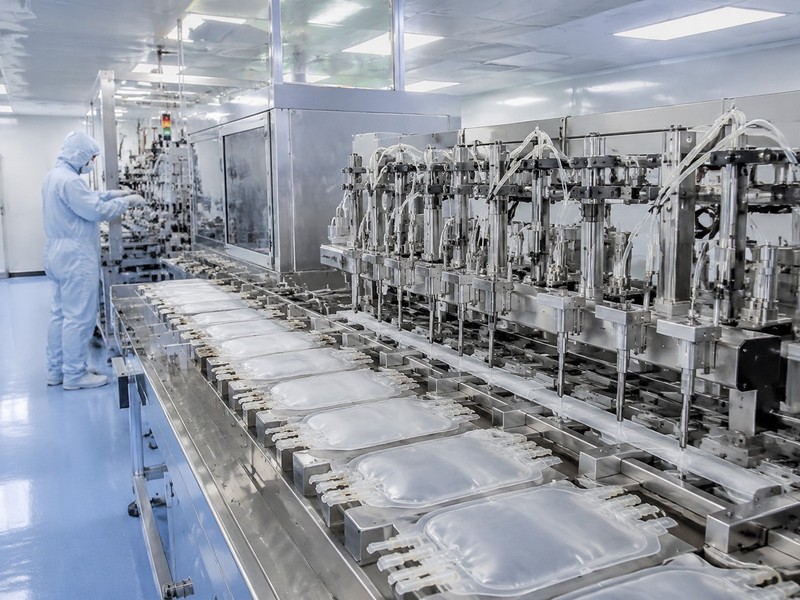
Blood Collection Tube Lines in the United States
For medical device companies serving hospitals, laboratory chains, and diagnostic networks, a blood collection tube line diagnostic centers solution is a high-value manufacturing system that automates tube feeding, chemical dosing, drying, stopper insertion, vacuuming, capping, labeling, inspection, and packing. In the United States, where buyers in cities such as Boston, Houston, Chicago, San Diego, and Atlanta demand traceability and consistent product quality, automated production lines help reduce contamination risk, improve throughput, and support regulatory compliance. Whether the buyer is building a new consumables factory near the Port of Los Angeles or upgrading an existing facility in New Jersey or North Carolina, the right line can significantly improve operating efficiency and long-term profitability.
Demand is supported by routine venous blood collection in hospitals, independent reference laboratories, physician office labs, urgent care centers, academic medical centers, and public health systems. As testing volumes grow and supply chain resilience becomes a strategic issue in the United States, more manufacturers are evaluating automated blood collection tube production lines instead of labor-intensive manual assembly. Companies also want lines that can support multiple tube formats, additive types, smart inspection, and data recording for audits. This makes equipment selection a strategic decision rather than a simple machinery purchase.
When evaluating suppliers, U.S. buyers often focus on three issues: regulatory alignment, production stability, and lifecycle support. These priorities are especially important for products intended for clinical environments where tube integrity, vacuum retention, and additive accuracy directly affect specimen quality. A well-designed line can help manufacturers produce serum tubes, EDTA tubes, heparin tubes, glucose tubes, coagulation tubes, and ESR tubes in a repeatable and scalable way.
Quick Answer: What a blood collection tube line diagnostic centers solution delivers

A blood collection tube line diagnostic centers system enables medical device companies to manufacture large volumes of blood collection tubes with reliable automation, process consistency, and integrated quality control. Instead of depending on manual handling at each stage, the line synchronizes tube loading, additive filling, drying, stoppering, vacuum generation, cap assembly, labeling, leak testing, and final packing in one coordinated process. For the United States market, this matters because healthcare providers expect uninterrupted tube availability, stable product performance, and documentation that supports FDA-focused quality systems.
The strongest business case is usually found in medium- to high-volume operations supplying regional hospital groups, national distributors, laboratory chains, and OEM medical brands. Automated lines improve unit economics by lowering labor dependency, reducing reject rates, and supporting more predictable output planning. They also help standardize quality between shifts, which is difficult to achieve in manual environments.
| Production Goal | Manual Method | Automated Line Result | Why It Matters in the United States |
|---|---|---|---|
| Higher output | Limited by labor speed | Continuous multi-station operation | Supports national distribution and contract supply |
| Additive accuracy | Operator-dependent dosing | Metered and repeatable filling | Improves test reliability and lot consistency |
| Vacuum stability | Variable process control | Controlled vacuuming and sealing | Critical for collection performance in clinics |
| Visual quality | Higher handling marks and mix-ups | Automated transfer and inspection | Reduces returns from hospitals and labs |
| Traceability | Mostly paper records | Digital process tracking options | Useful for audits and CAPA management |
| Scalability | Requires more operators quickly | Expands with modules and line balancing | Supports growth across states and channels |
The table above shows why many U.S. manufacturers move from fragmented assembly to integrated production. The line is not only about speed; it is about building a stable and auditable production platform.
What Is a blood collection tube line diagnostic centers system and How Does It Work?

This type of line is a specialized production system for vacuum blood collection tubes used in clinical diagnostics. It combines mechanical transport, liquid dosing, drying, assembly, vacuum control, visual inspection, coding, and packaging into one workflow. Depending on factory scale, the system may be semi-automatic, fully automatic, or part of a turnkey medical consumables plant.
A standard process begins with tube unscrambling or feeding. Empty PET or glass tubes are loaded and oriented. The line then moves them to additive dosing stations where anticoagulants, clot activators, gels, or other reagents are applied. If drying is required, tubes pass through controlled heating or drying sections. After that, stoppers and caps are assembled, and the tube is vacuumed to the specified draw volume. Inspection modules check fill condition, cap placement, visual defects, and often barcode or label quality. Accepted tubes move to labeling, tray loading, carton packing, and case packing.
In advanced systems, the line includes PLC control, HMI recipe management, data logging, vision inspection, rejection devices, and interfaces for cleanroom or logistics systems. For manufacturers serving U.S. healthcare distributors through hubs near Memphis, Dallas, Miami, or Newark, these digital features help improve planning and lot traceability.
| Line Stage | Main Function | Typical Control Point | Quality Risk Managed |
|---|---|---|---|
| Tube feeding | Orient and transfer empty tubes | Tube alignment sensor | Jam, damage, incorrect orientation |
| Additive dosing | Dispense reagent into tube | Volume calibration | Incorrect additive amount |
| Drying or curing | Stabilize coated additives | Temperature and time control | Residual moisture or poor adhesion |
| Stoppering and capping | Seal tube with correct closure | Insertion force and position | Leakage, cap tilt, poor seal |
| Vacuum generation | Create required negative pressure | Pressure setpoint verification | Underfill or failed collection draw |
| Inspection and packing | Reject defects and prepare shipment | Vision check and count accuracy | Customer complaints and recalls |
The workflow above explains how each module contributes to specimen collection performance. Even small deviations in additive loading or vacuum level can affect the end user, so equipment stability is central to product quality.
Key Applications and Production Benefits of blood collection tube line diagnostic centers for Medical Device Companies

The main application is the production of disposable vacuum blood collection tubes for healthcare and laboratory use. However, the commercial value extends beyond basic tube supply. Medical device companies use these lines to build branded consumables portfolios, support OEM/ODM programs, localize supply for U.S. customers, and create higher-margin product categories tied to diagnostics growth.
Core customer groups include hospital procurement teams, integrated delivery networks, laboratory distributors, pathology service providers, blood collection product brands, and medical wholesalers. A manufacturer with a well-configured line can also serve niche demand such as pediatric formats, specialty additives, or private-label regional supply programs.
Production benefits include reduced labor reliance, cleaner processing, lower breakage or contamination, faster changeovers, and more stable tube performance. In the United States, where labor costs are high and healthcare buyers increasingly audit supply continuity, these advantages can materially affect market competitiveness. For buyers considering market entry or expansion, automated lines also make it easier to scale in phases.
The bar chart highlights where the strongest downstream pull typically comes from. Hospitals and reference labs remain major demand drivers, but diagnostic center networks and OEM brands are also important channels for growth.
| Application Segment | Tube Types Commonly Needed | Main Buyer Priority | Benefit of Automation |
|---|---|---|---|
| Hospital systems | Serum, EDTA, heparin | Reliable supply and consistency | Large-batch repeatability |
| Independent labs | Glucose, coagulation, serum | Specimen integrity | Accurate additive control |
| Urgent care networks | Routine collection tubes | Fast replenishment | Higher available inventory |
| OEM medical brands | Customized lines and colors | Branding and quality stability | Flexible labeling and cap handling |
| Public health programs | High-volume standard tubes | Budget and continuity | Lower unit cost at scale |
| Export-oriented suppliers | Mixed product portfolio | Compliance documentation | Traceability and controlled process records |
The table clarifies how production benefits align with different customer segments. A line that is ideal for contract OEM production may need stronger flexibility than one designed for a narrow, high-volume hospital supply program.
Main Types and Configurations of blood collection tube line diagnostic centers Available Today
There is no single standard configuration suitable for every factory. The right setup depends on output target, tube material, additive portfolio, cleanroom plan, available utilities, and automation strategy. Broadly, buyers can choose among semi-automatic lines, fully automatic integrated lines, and turnkey plant solutions that include utilities and material handling.
Semi-automatic systems are often selected by smaller manufacturers, pilot programs, or new entrants that want lower initial capital exposure. Fully automatic lines are better for companies targeting large-scale U.S. contracts. Turnkey solutions are common when a buyer needs not just the machinery, but also purified water, layout planning, logistics, packaging integration, validation support, and regulatory documentation preparation.
Tube material also matters. PET-based lines are favored in many applications due to durability and high-speed compatibility, while glass lines may still be chosen for some product strategies. Configuration choices also include single-additive versus multi-additive capability, integrated gel filling, visual inspection level, packaging automation, and data interface options.
| Line Type | Typical Output Level | Best For | Main Advantage |
|---|---|---|---|
| Semi-automatic line | Low to medium | New entrants and pilot production | Lower initial investment |
| Fully automatic standard line | Medium to high | Established manufacturers | Balanced speed and quality control |
| High-speed integrated line | High volume | National or export supply | Lower unit cost at scale |
| Multi-product flexible line | Medium to high | OEM and mixed tube portfolios | Faster changeover across SKUs |
| Turnkey factory package | Project-dependent | Greenfield plants | Integrated utilities and engineering |
| Customized validation-focused line | Medium to high | Compliance-sensitive buyers | Better documentation and qualification support |
When reviewing configurations, buyers should match actual demand rather than simply choosing the fastest machine. Overcapacity can create financial strain, while undercapacity can limit market access.
blood collection tube line diagnostic centers vs Manual Assembly Lines: Key Differences and Advantages
The difference between automated and manual production is not just output. It affects product consistency, contamination control, labor planning, process reproducibility, and scalability. Manual assembly may work in very small operations or temporary setups, but it becomes less efficient as U.S. labor expenses rise and buyer expectations tighten.
Automated systems are designed to reduce operator intervention in critical steps. That helps lower the risk of mix-ups, uneven dosing, handling damage, and non-uniform vacuum performance. It also supports better line clearance and batch discipline. Manual systems, by contrast, often rely on individual operator skill, which can create variable results across shifts.
The comparison chart shows why most medium- to high-volume factories move toward automation. The largest gains are usually seen in output, reject control, and scalability.
| Factor | Automated Line | Manual Line | Business Impact |
|---|---|---|---|
| Daily output | Stable and high | Variable and lower | Direct effect on contract fulfillment |
| Labor requirement | Reduced per unit | High operator dependence | Important in high-cost U.S. labor markets |
| Batch consistency | Program-controlled | Operator-driven | Affects customer trust and complaints |
| Documentation | Easier digital capture | More manual records | Useful for audits and investigations |
| Defect rejection | Integrated inspection options | Late or inconsistent detection | Reduces waste and recall risk |
| Expansion readiness | Modular upgrades possible | Harder to scale cleanly | Supports long-term business growth |
For many buyers, the real advantage of automation is predictability. Predictable output and quality make it easier to negotiate supply contracts and manage inventory across multiple U.S. states.
Market Growth and Opportunities for blood collection tube line diagnostic centers Manufacturers
The market outlook in the United States remains favorable due to routine diagnostic testing, aging demographics, chronic disease monitoring, expansion of outpatient care, and stronger emphasis on domestic and regional supply resilience. Buyers increasingly want dependable access to blood collection consumables without excessive dependence on a single geography. This trend creates opportunities for equipment suppliers, local contract manufacturers, and vertically integrated medical device producers.
Growth is also supported by broader investment in diagnostics infrastructure around metro areas such as New York, Philadelphia, Minneapolis, Raleigh-Durham, and the greater Houston medical ecosystem. Distribution advantages matter too. Plants located near ports like Long Beach, Savannah, and New York/New Jersey, or near inland logistics hubs like Chicago and Memphis, can improve inventory flow and shorten lead times for customers.
The line chart reflects a realistic expansion path driven by healthcare demand and manufacturing localization. Even if pricing pressure persists, equipment investment is likely to remain attractive where volumes are strong and quality expectations are high.
By 2026, three trends are likely to shape procurement decisions. First, smart manufacturing features such as machine vision, remote diagnostics, and MES connectivity will become more common. Second, policy and compliance attention will remain focused on data integrity, quality documentation, and resilient medical supply chains. Third, sustainability will influence both plant design and supplier evaluation, including energy efficiency, material utilization, waste reduction, and cleaner utility systems.
How to Choose a Reliable blood collection tube line diagnostic centers Manufacturer or Supplier
Choosing a supplier should begin with evidence, not brochures. U.S. buyers should assess whether the manufacturer can demonstrate stable references, technical depth, documentation quality, and practical support after installation. A reliable supplier will discuss URS development, line layout, product mix, validation approach, spare parts planning, SAT/FAT protocols, and operator training in detail.
One important point is whether the supplier can adapt the line to the buyer’s specific tube sizes, additive formulations, cap styles, and packaging requirements. Another is whether the supplier understands global compliance expectations relevant to medical device production. This does not mean every supplier must be based in the United States, but they should be able to support projects for U.S. standards and customer expectations.
For companies exploring integrated project support, it is useful to review engineering and turnkey capability. Buyers can examine examples of turnkey pharmaceutical and medical factory solutions to see whether the supplier can support broader plant execution, not only machine delivery. It is also wise to review the supplier background through pages such as company information and experience before moving to technical negotiation.
| Selection Criterion | What to Ask | Strong Supplier Sign | Potential Warning Sign |
|---|---|---|---|
| Technical fit | Can the line handle our product mix? | Detailed URS response and layout proposal | Generic answer with no process detail |
| Compliance awareness | What documentation is included? | FAT, SAT, IQ/OQ support available | Unclear on qualification expectations |
| Manufacturing depth | Who builds the key modules? | Dedicated factories and quality control | Heavy outsourcing with little transparency |
| Customization ability | Can changeovers be optimized? | Flexible design and application engineering | Only fixed standard model offered |
| After-sales support | How are service and spare parts handled? | Training, remote support, spare parts plan | Service terms are vague |
| Reference strength | Do you have similar projects? | Documented installations and case examples | No verifiable project history |
The table highlights practical decision points. The best supplier is rarely the one with the lowest initial quote; it is usually the one with the best fit for compliance, uptime, and long-term support.
Investment Cost, Budget Planning and ROI Analysis for blood collection tube line diagnostic centers
Investment varies widely depending on speed, automation level, product range, inspection depth, and packaging scope. Buyers should evaluate total project cost, not only machine price. A realistic budget may include core production line, utility systems, cleanroom adaptation, commissioning, training, validation support, spare parts, molds or change parts, and early production optimization.
In the United States, project economics are strongly influenced by labor savings, throughput improvement, reject reduction, and the ability to secure higher-value supply agreements. If the line supports multiple tube types and stable lot quality, it may also improve customer retention and private-label opportunities. ROI can be attractive when the equipment replaces fragmented manual operations or supports domestic supply strategies.
The area chart illustrates a broader trend: a growing share of new projects are expected to prioritize automation over manual methods. This is especially likely in regions with tight labor markets and strong healthcare demand.
| Cost Element | Typical Budget Role | ROI Effect | Planning Note |
|---|---|---|---|
| Core machinery | Largest capital item | Drives throughput and quality | Match capacity to demand forecast |
| Tooling and change parts | Supports product variety | Improves flexibility | Important for OEM and mixed SKU programs |
| Utilities integration | Required for stable operation | Protects uptime | Include air, power, cleanroom compatibility |
| Validation and documentation | Compliance-related expense | Reduces launch delay risk | Do not treat as optional |
| Training and service | Startup support item | Shortens ramp-up period | Include operator and maintenance training |
| Spare parts inventory | Ongoing support budget | Reduces downtime losses | Set first-year spare strategy early |
The table shows why budget planning must be holistic. A lower machine price can become a higher project cost if startup support, spare parts, and qualification needs are underestimated.
Key Considerations and Potential Risks When Investing in blood collection tube line diagnostic centers
The biggest risks are usually poor requirement definition, inaccurate output assumptions, weak validation planning, and inadequate service arrangements. Some buyers purchase a line that looks impressive in theory but is not well matched to actual tube specifications, packaging goals, or factory layout. Others underestimate the importance of additive chemistry behavior, vacuum retention testing, and changeover complexity.
Another risk is choosing a supplier without broad engineering depth. A blood collection tube project often intersects with utilities, cleanroom flow, logistics, quality systems, and future expansion. That is why many buyers prefer partners that can support technology, manufacturing, and service in a coordinated way. In technological capability, IVEN Pharmatech Engineering is known for specialized development in pharmaceutical and medical device equipment, including multiple generations of vacuum blood collection tube lines and a patent-backed engineering base. In manufacturing capability, the company operates specialized production plants in Shanghai and has long experience delivering integrated equipment for pharmaceutical filling, water systems, intelligent logistics, and blood collection tube production. In service capability, it supports feasibility review, engineering design, customization, installation, commissioning, validation assistance, training, and after-sales support for international customers.
For buyers wanting to compare broader equipment portfolios, it is useful to review available production equipment categories and then discuss project details directly through technical consultation and contact channels. This helps clarify whether the supplier can support a single line purchase or a more comprehensive factory program.
| Risk Area | Common Problem | Possible Consequence | Prevention Method |
|---|---|---|---|
| Capacity planning | Over- or under-sizing the line | Poor ROI or missed demand | Use realistic 3-5 year volume forecast |
| Product compatibility | Mismatch with tube and cap specs | Frequent stoppages and rejects | Confirm samples and trials early |
| Validation readiness | Late documentation planning | Startup delays | Define FAT/SAT/IQ/OQ scope up front |
| Service response | Weak spare parts and support structure | Long downtime | Negotiate service terms before purchase |
| Utility integration | Insufficient plant preparation | Unstable operation | Review layout and utility loads carefully |
| Operator capability | Limited training | Slow ramp-up and higher errors | Include formal training and SOP transfer |
The best investment outcomes usually come from strong planning before purchase. A clear URS, proper sample review, and realistic implementation schedule can eliminate many avoidable problems.
FAQ
What output level should a U.S. manufacturer target?
That depends on channel strategy. Regional suppliers may begin with medium output, while national distributors and OEM programs often need high-volume automated capacity. Start with a realistic forecast rather than a maximum theoretical speed.
Can one line produce multiple tube types?
Yes, many lines can be configured for multiple additives, tube sizes, and cap types. However, flexibility depends on tooling, change parts, recipe management, and validation discipline.
Is full automation always better than semi-automation?
Not always. Full automation is usually better for high volumes and long-term labor savings, but semi-automatic systems may suit pilot programs or lower-budget market entry.
What should be included in supplier documentation?
Typical expectations include equipment manuals, drawings, component lists, FAT records, calibration-related documents where applicable, and support for SAT and qualification activities based on project scope.
How long does ROI usually take?
It varies by volume, labor cost, reject rates, and sales price. Many projects see the strongest ROI when replacing labor-intensive production or supporting new large contracts.
What 2026 trends matter most?
Smart inspection, digital data capture, sustainability-focused utility design, predictive maintenance, and tighter supply-chain localization strategies are likely to shape buying decisions.
Why do turnkey capabilities matter?
Because production success often depends on more than the line itself. Layout, purified water, utilities, logistics, packaging, qualification, and training all affect launch speed and operating stability.
For U.S. manufacturers and investors, the blood collection tube line diagnostic centers market offers a clear opportunity: combine reliable automation with compliance-focused engineering and service support to build a competitive consumables business. The most successful projects are those that align equipment choice with customer demand, regulatory expectations, local logistics, and long-term scalability.

About the Author
We are IVEN Pharmatech Engineering, a team dedicated to delivering turnkey pharmaceutical and medical solutions worldwide. With decades of experience, we specialize in advanced machinery, integrated factory design, and full lifecycle support to help our clients achieve efficient, compliant, and high-quality production.
Share

Related Insights
-
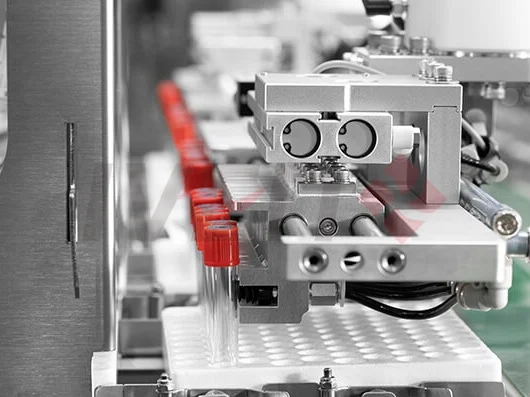
United States Guide to Vacuum Blood Tube Line Buying
For buyers in the United States, a vacuum blood collection tube manufacturing line is not just a piece of equipment. It is a complete production solution that combines tube forming or feeding, chemical dosing, drying, stopper loading, vacuuming, capping, labeling, inspection, packing, and validation support into one controlled process. Whether the buyer is building a new medical consumables plant in Texas, expanding a diagnostic supply facility in New Jersey, or evaluating import alternatives for a distribution hub near Los Angeles or Chicago, the decision usually centers on regulatory readiness, automation level, throughput stability, and long-term operating cost.
In practical B2B terms, the right line should help manufacturers reduce contamination risk, control additive accuracy, achieve stable vacuum retention, improve lot traceability, and support fast scale-up. It should also align with United States expectations for quality systems, cleanroom design, documentation, and production consistency. Buyers that compare lines only on upfront price often overlook hidden factors such as rejected tube rate, consumable compatibility, spare parts logistics, installation support, validation effort, and downstream packaging efficiency.
This guide is written for importers, plant investors, diagnostic consumables manufacturers, and pharmaceutical engineering teams that need a clear framework for evaluating vacuum blood collection tube production lines. It covers market demand, equipment types, key specifications, application scenarios, supplier comparison points, sourcing from China, and common order questions. Readers who are also planning broader regulated-factory investment can review turnkey pharmaceutical and medical factory solutions to understand how line integration, utilities, and compliance planning fit together.
A vacuum blood collection tube line is a multi-station production system designed to manufacture medical blood collection tubes used in laboratories, hospitals, and diagnostic networks. Depending on product scope, the line may process PET or glass tubes and support plain tubes, serum separator tubes, EDTA tubes, heparin tubes, sodium citrate tubes, glucose tubes, and ESR tubes. Advanced lines also integrate automatic loading, online dosing control, visual inspection, leak detection, tray loading, and packing interfaces.
United States buyers typically evaluate these lines in the context of several operating pressures: rising demand from clinical laboratories, the need to localize critical medical supply chains, FDA-oriented documentation expectations, labor cost reduction through automation, and product mix flexibility. A mid-sized line may be suitable for regional private-label production, while a high-speed line serves large healthcare distribution contracts or OEM supply to diagnostic brands.
Key sourcing decisions usually include:
For buyers comparing integrated suppliers, it is useful to look at engineering depth rather than machine count alone. Shanghai IVEN Pharmatech Engineering, for example, is known in the sector for combining equipment supply with broader engineering capabilities in regulated manufacturing projects. Its background across filling and packaging machinery, pharmaceutical water systems, intelligent logistics, and blood collection tube equipment can be relevant for buyers who want one partner for a larger factory scope. More background is available on the company’s corporate profile page.
Buying FactorWhy It MattersTypical United States ConcernLow-Risk ChoiceTube CompatibilityDetermines usable raw materials and downstream qualityPET supply consistency and closure fitProven compatibility matrix with samplesAdditive AccuracyDirectly affects clinical performanceLot-to-lot repeatabilityServo or precision metering with recordsVacuum StabilityCore product function for blood draw volumeShelf-life retentionOnline vacuum monitoring and leak controlAutomation LevelImpacts labor, output, and contamination controlLabor shortages and shift costAutomatic feeding, capping, inspectionCompliance SupportReduces qualification and audit riskDocumentation for validationIQ/OQ/PQ templates and FAT recordsAfter-Sales ReachLimits downtime after installationParts and technical response speedRemote diagnostics plus on-site support planThe table above shows why a line should be assessed as a manufacturing system, not a single machine. In the United States market, reliable process control and documented support often create more value than the lowest quoted unit price.
A manufacturer solution means the supplier offers more than hardware. It includes process engineering, line layout, machine customization, utility matching, quality documentation, installation, commissioning, and operator training. For B2B buyers, this distinction is important because the line’s real performance depends on how well the entire process chain is designed.
A typical manufacturer solution for vacuum blood collection tubes may include tube loading, tube orientation, dosing of anticoagulants or clot activators, drying, rubber stopper assembly, vacuum generation, cap fitting, labeling, online camera inspection, lot coding, tray or rack output, and integration with packaging equipment. Strong suppliers also provide recommendations for cleanroom zoning, compressed air quality, purified water interfaces where needed, and warehouse-to-line material flow.
For regulated buyers in the United States, the most valuable manufacturer solutions also address documentation discipline. That can include design drawings, machine manuals, component lists, electrical schematics, calibration plans, FAT protocols, SAT support, and qualification documents. If the project is part of a larger medical consumables plant, buyers often prefer a supplier that understands facility compliance and can coordinate with architects, MEP teams, and local contractors from early design through startup.
On the technology side, IVEN’s value proposition is best understood in three dimensions. First, its technological capabilities include multiple generations of vacuum blood collection tube equipment, patent-backed process know-how, and experience in automation for regulated manufacturing. Second, its manufacturing capabilities are supported by specialized factories in Shanghai focused on different equipment categories, which can help with integrated supply and quality consistency. Third, its service capabilities extend from feasibility and engineering design to installation, validation, training, and post-startup optimization, which is especially useful for United States buyers working across time zones and complex compliance milestones.
Solution ElementIncluded in Basic Machine SaleIncluded in Full Manufacturer SolutionBenefit to United States BuyerStandalone equipmentYesYesCore production capabilityProcess layout designRarelyYesBetter cleanroom and workflow planningUtility matchingLimitedYesFewer startup issues on siteValidation documentationBasic manuals onlyExpanded packageShorter qualification pathOperator trainingOften minimalStructuredFaster ramp-up and fewer mistakesLifecycle supportReactivePlanned service modelLower downtime riskThis comparison highlights why a “solution supplier” is different from a machine trader. If your project involves FDA-oriented controls, distribution into multiple states, or private-label manufacturing contracts, the broader solution approach usually lowers total execution risk.
The market for vacuum blood collection tube manufacturing lines is supported by a stable demand base from hospital networks, diagnostic laboratory chains, blood testing service providers, and OEM medical consumables brands. In the United States, demand is influenced by aging demographics, chronic disease screening, preventive health testing, outpatient laboratory expansion, and the push for resilient domestic or near-domestic supply chains following global logistics disruptions.
Growth is also linked to procurement diversification. Many buyers no longer want to rely on a single offshore consumables source. Instead, they are evaluating greenfield or brownfield manufacturing projects in states with strong life science infrastructure such as Massachusetts, North Carolina, California, Texas, Indiana, and Pennsylvania. Ports such as Los Angeles/Long Beach, Savannah, Houston, and New York/New Jersey remain important for importing machinery and parts, while inland hubs like Chicago, Memphis, and Dallas support regional distribution.
Looking toward 2026, several industry trends stand out:
var ctx1 = document.getElementById(‘lineChartMarket’).getContext(‘2d’);var chart1 = new Chart(ctx1, {type: ‘line’,data: {labels: [‘2021’, ‘2022’, ‘2023’, ‘2024’, ‘2025’, ‘2026’],datasets: [{label: ‘Estimated North America Demand Index’,data: [78, 84, 91, 99, 108, 118],borderColor: ‘rgb(54, 162, 235)’,backgroundColor: ‘rgba(54, 162, 235, 0.12)’,fill: false,tension: 0.3}]},options: {responsive: true,maintainAspectRatio: false}});The line chart above illustrates a realistic upward demand trajectory driven by medical testing volume, replacement of older equipment, and strategic inventory planning. Growth is not explosive, but it is durable, which makes the sector attractive for industrial investors and OEM producers.
var ctx2 = document.getElementById(‘barChartDemand’).getContext(‘2d’);var chart2 = new Chart(ctx2, {type: ‘bar’,data: {labels: [‘Hospital Labs’, ‘Reference Labs’, ‘OEM Brands’, ‘Regional Distributors’, ‘Government Supply’, ‘Export Producers’],datasets: [{label: ‘Share of Equipment Inquiry Volume’,data: [26, 24, 18, 12, 8, 12],backgroundColor: [‘rgb(255, 99, 132)’,’rgb(255, 159, 64)’,’rgb(255, 205, 86)’,’rgb(75, 192, 192)’,’rgb(54, 162, 235)’,’rgb(153, 102, 255)’]}]},options: {responsive: true,maintainAspectRatio: false}});This bar chart shows that the highest inquiry volume typically comes from hospital-linked lab networks and large reference laboratory systems, followed by OEM producers serving brand owners. These segments tend to prioritize validated automation and stable output over entry-level pricing.
Vacuum blood collection tube lines can be categorized by tube material, automation level, line speed, and finished product type. Entry-level lines may focus on a narrow product range with semi-automatic stations, while advanced systems support continuous high-speed output with integrated inspection and packing.
In the United States market, the most requested specifications generally include:
Line TypeTypical OutputBest ForAdvantagesSemi-automatic pilot line2,000-4,000 tubes/hourR&D and niche productionLower entry cost, flexible setupCompact automatic line6,000-8,000 tubes/hourRegional private-label supplyBalanced investment and labor savingsMid-speed integrated line8,000-12,000 tubes/hourMulti-state distributionGood SKU mix and stable automationHigh-speed industrial line12,000-18,000 tubes/hourLarge OEM and export contractsLowest unit cost at scalePET-focused lineVariesMainstream disposable tube productionLightweight and efficient handlingGlass-focused lineVariesSpecific premium or legacy marketsMaterial familiarity in certain segmentsThe table above helps match line type to business model. A buyer supplying hospital systems across the Midwest may prioritize high uptime and automated inspection, while a contract manufacturer in Florida may need more flexible batch changeovers across several additive types.
Core Equipment ModuleMain FunctionCritical Quality PointTypical Upgrade OptionTube feederOrganizes and feeds tubesOrientation accuracyHigh-capacity automatic hopperChemical dosing unitFills additivesVolume precisionServo metering with feedbackDrying systemStabilizes coated interior where neededTemperature uniformityEnergy-saving airflow controlStopper loading unitApplies rubber closuresFit consistencyAuto rejection of misfeedsVacuuming stationCreates target negative pressureVacuum retentionOnline pressure loggingLabeling/inspection unitAdds label and verifies qualityTraceability and defect detectionVision system with data archiveFor advanced buyers, the most important modules are usually the dosing system, vacuum station, and inspection module, because these have the greatest influence on product consistency and market acceptance.
Choosing a line starts with defining the commercial model. If the goal is to replace imports for a single regional brand, a compact automatic line may be enough. If the project is intended to supply national contracts or multiple branded SKUs, a more robust integrated line is usually the better choice. In the United States, buyers should compare not only capital expenditure but also validation workload, labor savings, maintenance intervals, and expected reject rates.
Pricing varies based on output speed, tube material, additive count, inspection depth, and degree of customization. A line designed for one standard PET tube format with limited online inspection will cost less than a high-speed system supporting multiple tube sizes, barcode management, camera inspection, and automated tray handling.
Evaluation ItemEntry LevelMid-RangeAdvanced LineApproximate investment levelLowerModerateHigherMOQ for equipment order1 set1 set1 setLead time3-5 months4-6 months6-9 monthsChangeover flexibilityBasicGoodHighValidation packageLimitedExpandedComprehensiveBest fitNew entrantsGrowing regional producersLarge OEM projectsThis table is useful because MOQ in machinery purchases is usually one line, but practical project scale depends on ancillary equipment, spare parts packages, and packaging integration. Buyers should also ask whether the quote includes FAT, tooling sets, startup support, recipe development assistance, and recommended critical spare parts for the first 12 to 24 months.
When negotiating lead time, United States importers should consider shipping routes and customs timing. Shipments moving through Shanghai to Los Angeles/Long Beach may follow a different timeline than shipments planned for Houston, Savannah, or New York/New Jersey. If the line is part of a new plant build, installation scheduling should be linked to cleanroom readiness, power availability, compressed air qualification, and material staging areas.
A practical buying checklist includes:
These production lines serve more than one customer category. Their buyers include direct medical consumables manufacturers, diagnostic product OEMs, hospital supply contractors, laboratory equipment groups, and investment firms establishing healthcare manufacturing platforms. In the United States, the strongest demand often comes from organizations that need secure domestic inventory or want to shorten replenishment cycles to major healthcare centers.
Common industries and buyer groups include:
var ctx3 = document.getElementById(‘areaChartTrend’).getContext(‘2d’);var chart3 = new Chart(ctx3, {type: ‘line’,data: {labels: [‘2021’, ‘2022’, ‘2023’, ‘2024’, ‘2025’, ‘2026’],datasets: [{label: ‘Shift Toward Automated and Localized Production’,data: [22, 29, 38, 49, 61, 74],borderColor: ‘rgb(75, 192, 192)’,backgroundColor: ‘rgba(75, 192, 192, 0.25)’,fill: true,tension: 0.35}]},options: {responsive: true,maintainAspectRatio: false}});The area chart indicates a steady move toward more automated and localized production. For buyers serving demanding healthcare systems in cities such as Boston, Philadelphia, Atlanta, and San Diego, local quality assurance and shorter response times are becoming stronger strategic advantages than before.
Industry SegmentMain Purchase DriverPreferred Line FeatureTypical Order StyleHospital supply manufacturersReliable daily volumeStable automationLong-term capacity buildDiagnostic OEMsBrand quality consistencyPrecise dosing and inspectionCustomized specificationContract manufacturersMulti-SKU flexibilityFast changeoverMixed product programsGovernment suppliersSupply securityValidation and traceabilityCompliance-heavy projectsRegional distributorsPrivate-label marginCompact automatic linePhased expansionExport-oriented producersCompetitive unit costHigh-speed outputLarge volume contractsThe explanation here is simple: each industry segment values a different mix of automation, flexibility, and documentation. Matching the line to the buyer’s business model prevents overbuying or underbuying capacity.
The primary application of these lines is the production of evacuated blood collection tubes used in routine and specialized diagnostic testing. However, from a manufacturing perspective, the applications extend to several product families with different additive and process requirements.
Typical production applications include:
Each application changes the process parameters. For example, citrate tubes may require tighter control over fill ratio accuracy because clinical test results depend on additive-to-blood volume relationships. EDTA and heparin products need consistent internal coating or dosing. Serum separator products may have additional material and performance considerations tied to the separator formulation and product design.
Manufacturers supplying broad hospital laboratory menus in the United States often prefer lines that can support several common tube categories with validated changeover procedures. This reduces dependence on multiple small machines and simplifies workforce training.
OEM customization is a major factor in line selection because not all buyers produce the same tube configuration or pack format. Common customization points include tube dimensions, cap colors, additive recipes, label formats, coding systems, tray layout, packaging interfaces, and required documentation depth. Buyers serving United States healthcare channels often need customization related to barcode management, lot traceability, bilingual packaging support for selected markets, and carton standards for distributor warehouses.
Bulk order projects usually follow one of three models: a single high-speed line for centralized production, two parallel mid-speed lines for redundancy and SKU flexibility, or a phased installation where the customer starts with one line and expands after market validation. The right model depends on contract volume, staffing, plant space, and risk tolerance.
Case study pattern one involves a regional medical consumables producer that wanted to enter private-label blood collection tube supply for East Coast hospital distributors. Instead of purchasing the cheapest line, the company selected a mid-speed integrated configuration with automated inspection and a structured validation package. This reduced startup errors and helped the customer scale more confidently across New York, New Jersey, and Pennsylvania distribution channels.
Case study pattern two involves an export-focused manufacturer targeting both North American and Latin American markets through Gulf Coast logistics. The project favored higher output and stronger packing integration because the business model depended on container efficiency and stable lot quality. In this type of project, ports such as Houston and Savannah become important planning points for machinery delivery and later product shipment.
Case study pattern three involves a buyer building a larger regulated consumables site and needing equipment that aligns with broader plant engineering. Here, suppliers with combined equipment and project expertise offer an advantage. IVEN is often evaluated in this context because its manufacturing capabilities are backed by specialized production facilities and its project experience covers integrated engineering for pharmaceutical and medical device factories. Buyers that need multi-system coordination can also review the available equipment portfolio to understand adjacent process capabilities.
var ctx4 = document.getElementById(‘comparisonChartSupplier’).getContext(‘2d’);var chart4 = new Chart(ctx4, {type: ‘bar’,data: {labels: [‘Automation’, ‘Customization’, ‘Validation Support’, ‘Integrated Engineering’, ‘Lifecycle Service’, ‘Scalability’],datasets: [{label: ‘Importance Score for B2B Buyers’,data: [92, 86, 90, 84, 88, 85],backgroundColor: [‘rgb(153, 102, 255)’,’rgb(201, 203, 207)’,’rgb(255, 99, 132)’,’rgb(54, 162, 235)’,’rgb(255, 159, 64)’,’rgb(75, 192, 192)’]}]},options: {responsive: true,maintainAspectRatio: false}});This comparison chart reflects how buyers often rank supplier selection factors. Pure machine speed matters, but support for customization, validation, and long-term service usually determines whether a project reaches stable commercial output.
Sourcing from a China factory can be highly effective when the buyer follows a disciplined process. China remains one of the most important global manufacturing bases for pharmaceutical and medical production equipment, with strengths in industrial scale, supply chain depth, and customization capacity. For United States buyers, the key is not whether to source from China, but how to qualify the right partner and structure the project to manage technical and execution risk.
A recommended sourcing process includes:
When sourcing from China, buyers should inspect whether the supplier is a true manufacturer or an intermediary. A real factory can usually provide workshop visibility, engineering drawings, bill of materials clarity, customization discussion with technical staff, and better control over delivery scheduling. In IVEN’s case, its manufacturing capabilities are tied to specialized production plants and a long track record in pharmaceutical and medical equipment. That structure can be attractive for buyers who prefer direct technical communication rather than relying on a trading layer.
Service planning is just as important as factory selection. A strong China supplier should be able to support remote troubleshooting, commissioning guidance, onsite assistance when required, spare parts planning, and documentation handover. IVEN’s service capabilities are relevant here because the company positions itself around full lifecycle support, from early feasibility and engineering design to validation, training, and post-installation optimization. For a United States project, that can reduce the coordination burden between the line supplier, plant owner, and local contractors.
Before issuing a purchase order, buyers should request:
To start a technical discussion or request a project-specific quotation, buyers can use the contact page for direct consultation. This is especially useful when the inquiry involves a broader plant build, multiple production lines, or customized FDA-oriented documentation needs for the United States.
What output should a mid-sized United States buyer choose?A practical starting point is often an automatic line in the 6,000 to 12,000 tubes per hour range, depending on annual sales forecasts, product mix, and shift structure. Higher speed is not always better if your SKU mix is wide and changeovers are frequent.
Can one line produce multiple tube types?Yes, many lines can be configured for multiple products, but change parts, recipes, validation scope, and additive handling must be considered. The more product families you want, the more important the changeover design becomes.
How important is vacuum accuracy?It is one of the most critical performance factors because it influences blood draw volume and product consistency. Buyers should ask how the supplier measures, logs, and verifies vacuum performance during FAT and production.
What documents should be included?At minimum, expect manuals, drawings, component lists, electrical schematics, and maintenance instructions. For regulated projects, buyers often need FAT records, calibration references, and qualification support such as IQ/OQ/PQ templates.
How long does delivery usually take?Lead time commonly ranges from 3 to 9 months depending on complexity, customization, and factory schedule. Installation and qualification will add additional time after arrival in the United States.
Is China sourcing suitable for high-compliance projects?Yes, if the supplier has genuine engineering depth, quality control, and documentation discipline. Buyers should verify reference projects, factory capability, and service response before purchase.
What trends should buyers plan for through 2026?Expect more demand for digital traceability, lower energy use, flexible automation, recyclable or optimized packaging approaches, and stronger policy attention to medical supply resilience. Sustainability and data visibility are becoming part of procurement decisions, not just optional extras.
How should buyers compare suppliers?Compare total project fit, not just price: machine design, additive precision, inspection quality, documentation, installation support, spare parts planning, and the supplier’s ability to scale with your future factory roadmap all matter.
For United States buyers, the best vacuum blood collection tube manufacturing line is the one that fits your compliance path, product strategy, labor model, and growth horizon. A well-chosen line can support reliable domestic production, stronger OEM relationships, and more resilient medical supply operations for years to come.
-

Micro Blood Tube Manufacturing Lines in the United States
A micro blood collection tube line is an automated manufacturing system used to produce small-volume blood collection tubes for hospitals, clinics, and diagnostic laboratories. In the United States, these lines help medical device companies meet strict quality expectations, increase output, reduce manual error, and support traceable production under regulated manufacturing conditions. For buyers serving large healthcare networks from Boston to Houston and from Los Angeles to Chicago, a reliable line is no longer just a production asset; it is a strategic investment tied to compliance, delivery speed, and product consistency.
Demand for capillary and micro sample collection products continues to rise across neonatal testing, point-of-care diagnostics, home sampling, and decentralized laboratory services. This makes the micro blood collection tube line a critical technology for manufacturers that need stable throughput, flexible tube formats, and validated process control. Companies evaluating new capacity in the United States also need to consider shipping routes, utility standards, local validation expectations, and after-sales support responsiveness.
For firms looking for a long-term engineering partner, IVEN Pharmatech Engineering is known in the pharmaceutical and medical device field for integrated project delivery, manufacturing equipment specialization, and compliance-oriented engineering support across international markets, including projects aligned with U.S. requirements.
A micro blood collection tube line enables medical device companies to produce large volumes of high-quality blood collection tubes through automated tube feeding, component assembly, additive dosing, stopper or cap placement, drying or curing where needed, inspection, labeling, tray loading, and packaging. Compared with manual assembly, an automated line offers better dimensional consistency, lower contamination risk, tighter process repeatability, and more reliable quality control documentation.
In the United States, this matters because hospitals and diagnostic laboratories expect dependable supply, standardized performance, and manufacturing records that support audits, customer qualification, and internal quality review. Whether the end customers are regional laboratory groups in New Jersey, children’s hospitals in Philadelphia, or large procurement centers near Dallas and Atlanta, buyers usually prioritize three outcomes: stable output, validated quality, and predictable operating cost.
The best systems are designed for continuous production while maintaining control over key parameters such as tube cleanliness, additive volume, drying conditions, cap fit, vacuum or closure integrity where applicable, and final cosmetic inspection. For manufacturers supplying both domestic and export markets through gateways like the Port of Los Angeles, Port of Long Beach, Port of Savannah, or Port of Houston, automation also improves packaging standardization and reduces shipment-related complaints.
Core Function Purpose Benefit to U.S. Manufacturers Typical Quality Impact Tube feeding Aligns and transfers empty tubes Supports high-speed continuous operation Reduces handling damage Additive dosing Dispenses anticoagulant or treatment reagent Improves dosage precision Enhances test consistency Drying or curing Stabilizes coating or additive layer Allows controlled process conditions Limits variability between batches Cap or closure assembly Places stopper or cap securely Increases assembly speed Improves sealing reliability Inspection Checks defects, fill accuracy, and fit Supports batch release confidence Reduces customer complaints Labeling and packaging Prepares product for shipment Improves traceability and logistics Stronger lot controlThe table above shows why the line is more than a simple assembly tool. Each module contributes directly to output quality, compliance readiness, and supply reliability.
A micro blood collection tube line is a dedicated production system engineered for the manufacturing of small blood sampling tubes, often used for capillary collection. Depending on product design, the line may produce plastic or glass-based tube assemblies with color-coded closures, additives, labels, and secondary packaging. The system can be configured as semi-automatic or fully automatic, but in modern U.S.-oriented production, the trend strongly favors full automation with integrated inspection.
The typical workflow begins with raw material loading. Tubes enter the line through vibratory or mechanical feeding units. They are oriented, transferred, and cleaned if required. The next steps depend on product design. For additive tubes, the line dispenses measured quantities of anticoagulant, clot activator, or specialty chemistry. A drying tunnel or controlled station may follow if the additive must be stabilized. Closures are then assembled, and the tubes proceed to visual or camera-based inspection, counting, tray arrangement, labeling, and packaging.
Advanced systems may also include barcode serialization, reject tracking, in-line sampling, MES integration, and electronic batch records. These features are especially relevant for U.S. manufacturers supplying large integrated delivery networks and reference laboratories that increasingly expect traceability from production floor to warehouse distribution.
From a technical capabilities perspective, IVEN Pharmatech Engineering has built its reputation around specialized production equipment for pharmaceutical and medical consumable applications, including multiple generations of blood collection tube machinery. That background matters because micro blood collection tube manufacturing requires not only mechanical assembly but also stable process engineering, repeatability, and compatibility with regulated production environments.
Production Step Main Equipment Module Control Point Why It Matters Tube loading Automatic feeder Orientation accuracy Prevents jams and misfeeds Cleaning Air rinse or dust removal unit Particle control Improves internal cleanliness Additive filling Precision dosing unit Volume tolerance Critical for diagnostic performance Drying Temperature-controlled tunnel Time and temperature Supports coating uniformity Closure assembly Cap placing and pressing station Fit force Ensures secure closure Inspection Vision system Defect detection threshold Protects outgoing quality Packaging Tray and carton module Count accuracy Improves shipping efficiencyThis workflow table highlights how process control is built into the line itself. Buyers should evaluate not only machine speed, but also how each module preserves consistency at scale.
Micro blood collection tube lines serve a broad set of applications in the medical device and diagnostics space. Their most common use is producing capillary blood collection products for infants, pediatric testing, finger-stick collection, and low-volume diagnostic sampling. However, their relevance is expanding into home care, remote patient testing, retail clinic diagnostics, mobile health units, and decentralized laboratory collection models.
For U.S. device companies, the production benefits are practical and measurable. Automated lines increase hourly throughput, reduce labor dependence, improve uniformity across shifts, and support standardized documentation. These benefits are particularly important in labor-constrained regions where manual staffing is costly or unstable. States with high manufacturing wages and strong competition for technical labor, such as California, Massachusetts, and Illinois, often see a clearer payback from automation.
Micro collection tube production lines also help companies launch multi-SKU portfolios more effectively. A single manufacturer may need tubes for EDTA, heparin, serum, clot activation, or specialty research use. Configurable lines allow format adjustments without redesigning the whole plant. This flexibility supports contract manufacturing, private label production, and multi-channel supply to hospitals, physician office labs, university research centers, and distributors.
var ctxBar = document.getElementById(‘barChartDemand’).getContext(‘2d’);var chartBar = new Chart(ctxBar, { type: ‘bar’, data: { labels: [‘Hospitals’, ‘Diagnostic Labs’, ‘Pediatric Care’, ‘Home Testing’, ‘Research Centers’, ‘Retail Clinics’], datasets: [{ label: ‘Estimated U.S. Demand Index’, data: [88, 95, 76, 68, 54, 61], backgroundColor: [‘#4e79a7′,’#59a14f’,’#f28e2b’,’#e15759′,’#76b7b2′,’#edc948′] }] }, options: { responsive: true, maintainAspectRatio: false, scales: { y: { beginAtZero: true, max: 100 } } }});The bar chart above illustrates where demand is strongest. Diagnostic laboratories and hospitals remain the biggest buyers, but emerging demand from home testing and retail clinics is accelerating design requirements for compact, user-friendly formats.
Application Area Typical End User Why Micro Tubes Are Used Production Advantage of Automation Neonatal testing Children’s hospitals Low blood volume collection Improved consistency in tube performance Pediatric diagnostics Hospital labs Patient comfort and small sample size High-volume supply stability Point-of-care testing Clinics and urgent care centers Fast turnaround collection Flexible SKU production Home sampling Consumer health programs Convenient remote diagnostics Scalable packaging formats Research use Universities and biotechs Specialty assay preparation Precise additive control Retail health Pharmacy clinics Quick low-volume collection Supports distributed supply chainsThis application table shows how one production line can support several end markets, making the investment more versatile for manufacturers with mixed customer portfolios.
There is no single universal micro blood collection tube line. The right configuration depends on throughput targets, tube material, additive type, cleanroom strategy, packaging format, and regulatory expectations. In the United States market, buyers usually evaluate equipment according to four dimensions: automation level, product compatibility, inspection technology, and line integration.
Semi-automatic lines can work for pilot production or smaller contract manufacturers, but fully automatic lines are preferred for large-scale commercial supply. Some systems are optimized for plastic micro tubes, while others can support multiple formats through change parts. Additive dosing modules may be designed for liquid anticoagulants, spray systems, or specialty chemistries. Inspection can range from basic sensor checks to camera-based vision with data logging.
Manufacturing capabilities are another major selection factor. IVEN Pharmatech Engineering operates specialized manufacturing plants focused on pharmaceutical filling and packaging equipment, water systems, logistics systems, and blood collection tube production equipment. That kind of manufacturing specialization tends to improve consistency in machining, assembly, and long-term spare parts support, which buyers value when planning lines with a service life of 10 to 20 years or more.
Line Type Best For Automation Level Main Advantage Semi-automatic line Small batches and development work Medium Lower upfront cost Fully automatic standard line Mainstream commercial production High High throughput and repeatability Multi-format line Manufacturers with diverse SKUs High Greater flexibility Vision-integrated line Premium regulated supply High Improved defect detection Compact modular line Space-limited facilities Medium to high Easier layout adaptation Turnkey integrated line New factory projects High Coordinated utilities and validation supportThis table can help buyers narrow the shortlist quickly. The best configuration is usually the one that aligns with the future product roadmap, not only the first SKU.
Manual assembly can still be found in niche or low-volume settings, but for serious U.S. market participation, automated micro blood collection tube lines provide stronger economics and better quality assurance. The difference is not simply labor savings. It includes process repeatability, contamination control, lot traceability, reject handling, speed, training burden, and production scalability.
Manual lines often depend on operator skill and consistency. That creates variability across shifts and raises the risk of assembly defects, additive inconsistency, and incomplete inspection. Automated lines replace these risks with programmed sequence control, sensor-based verification, and in many cases camera inspection. The result is more stable output for hospitals and labs that cannot afford supply disruptions or product inconsistencies.
In distribution-heavy states and logistics corridors such as Southern California, Memphis, Chicago, and northern New Jersey, automation also supports order predictability. Buyers supplying national accounts need reliable fill rates and repeatable carton configurations. Automated packaging modules make that easier than labor-intensive final packing areas.
var ctxComp = document.getElementById(‘comparisonChart’).getContext(‘2d’);var chartComp = new Chart(ctxComp, { type: ‘bar’, data: { labels: [‘Output’, ‘Consistency’, ‘Traceability’, ‘Labor Efficiency’, ‘Inspection Depth’, ‘Scalability’], datasets: [{ label: ‘Automated Line Score’, data: [92, 95, 90, 88, 93, 96], backgroundColor: ‘#6f4ef2’ },{ label: ‘Manual Assembly Score’, data: [42, 51, 38, 35, 44, 40], backgroundColor: ‘#c9b8ff’ }] }, options: { responsive: true, maintainAspectRatio: false, scales: { y: { beginAtZero: true, max: 100 } } }}); Comparison Factor Automated Line Manual Line Practical Effect Hourly output High and predictable Limited by operator pace Automation supports growth Quality consistency Programmed and repeatable Operator dependent Lower batch variation Traceability Strong digital records Often paper-based or partial Better audit readiness Labor requirement Lower direct labor Higher staffing need Reduced labor risk Inspection capability Sensor and vision supported Visual human checks Higher defect capture rate Scale-up potential Excellent Poor to moderate Easier expansion planningThe comparison table makes the buying case clear. Even when capital cost is higher, automated lines usually outperform manual assembly on every critical manufacturing metric.
The U.S. market outlook for micro blood collection tube manufacturing equipment remains positive. Several drivers are pushing demand upward: greater diagnostic testing volume, expansion of pediatric and outpatient services, growth in home collection models, and the modernization of domestic medical device manufacturing. In addition, buyers want more resilient supply chains after recent disruptions in healthcare logistics and imported consumables.
Opportunity is also supported by policy and procurement trends. Many U.S. healthcare buyers increasingly evaluate supply continuity and quality systems alongside price. That creates space for equipment suppliers and turnkey engineering providers that can help domestic or near-market manufacturers scale compliant production capacity.
By 2026, three market forces are likely to have the biggest impact. First, smart manufacturing will move from optional to expected, including data capture, remote diagnostics, and predictive maintenance. Second, sustainability pressure will increase interest in efficient utility design, waste reduction, and optimized packaging. Third, policy and customer scrutiny around manufacturing transparency will favor lines with stronger digital quality records.
var ctxLine = document.getElementById(‘lineChartGrowth’).getContext(‘2d’);var chartLine = new Chart(ctxLine, { type: ‘line’, data: { labels: [‘2021’, ‘2022’, ‘2023’, ‘2024’, ‘2025’, ‘2026’], datasets: [{ label: ‘Estimated U.S. Market Demand Index’, data: [58, 64, 71, 79, 87, 96], borderColor: ‘rgb(75, 192, 192)’, backgroundColor: ‘rgba(75, 192, 192, 0.15)’, fill: false, tension: 0.3 }] }, options: { responsive: true, maintainAspectRatio: false, scales: { y: { beginAtZero: true, max: 100 } } }});The line chart above reflects a realistic growth pattern driven by diagnostics expansion, healthcare decentralization, and renewed investment in medical consumables manufacturing.
For companies exploring expansion or a new turnkey project, integrated engineering and turnkey support can reduce coordination risk between equipment procurement, utility systems, layout planning, and validation scheduling.
Choosing a supplier is not just about comparing machine speed or asking for a quotation. U.S. buyers should evaluate engineering depth, process understanding, regulatory familiarity, manufacturing discipline, validation support, and service responsiveness. A supplier that can only ship equipment but cannot support installation, qualification, and process stabilization may create hidden cost later.
Start with the technical fit. Can the supplier handle your target tube sizes, additives, caps, and packaging formats? Next, evaluate manufacturing quality. Ask about core fabrication standards, material selection, component brands, documentation packages, and FAT procedures. Then assess service capabilities. Installation guidance, commissioning support, IQ/OQ/PQ readiness, training, spare parts management, and remote troubleshooting are all important.
Service capabilities are where many projects succeed or fail. IVEN Pharmatech Engineering is known for a lifecycle approach that can include feasibility consulting, engineering design, customization, installation, commissioning, validation support, documentation, training, and after-sales service. For U.S. buyers, that broader service model can be valuable because it reduces the handoff gaps that often appear when separate vendors manage equipment, utilities, and process startup.
Selection Criterion What to Check Why It Matters Buyer Tip Product compatibility Tube sizes, additives, closures Prevents redesign after purchase Request sample validation runs Compliance readiness Documentation and quality controls Supports U.S. audits and qualification Review standard document list early Manufacturing quality Materials, machining, assembly discipline Affects reliability and life span Ask for FAT and factory tour data Automation level Inspection, records, integration options Shapes future scalability Plan for 2026 digital needs Service network Commissioning and spare parts support Reduces downtime risk Confirm response times in writing Project experience Medical device and pharma references Improves execution confidence Prioritize similar applicationsBuyers should also compare the supplier’s ability to support local operating realities in the United States, including voltage standards, facility layouts, shipping lead times, customs planning, and communication during startup. If you are sourcing equipment for a site near New York, Miami, Seattle, or Long Beach, transport planning and installation timing may affect total project cost more than the machine price itself.
For current equipment options and broader production systems, buyers can also review available categories through the product and equipment portfolio before requesting a customized solution.
The investment cost of a micro blood collection tube line varies widely based on automation level, line speed, number of SKUs, inspection sophistication, cleanroom needs, and packaging scope. Budget planning should include far more than the machine purchase price. U.S. manufacturers should also budget for freight, insurance, import handling, installation, utilities, validation, training, spare parts, and initial process development.
In ROI terms, automated lines are usually justified by a mix of labor savings, higher yield, fewer rejects, improved customer retention, and the ability to win larger contracts. For companies serving high-throughput labs or hospital purchasing groups, improved reliability can translate directly into recurring revenue and lower complaint costs.
A realistic ROI model should include both direct and indirect effects. Direct effects include labor reduction and output increase. Indirect effects include stronger audit readiness, better lot traceability, and lower quality risk. These indirect benefits are often the deciding factor in the medical device sector, where one quality issue can erase years of savings.
var ctxArea = document.getElementById(‘areaChartTrend’).getContext(‘2d’);var chartArea = new Chart(ctxArea, { type: ‘line’, data: { labels: [‘2021’, ‘2022’, ‘2023’, ‘2024’, ‘2025’, ‘2026’], datasets: [{ label: ‘Shift Toward Full Automation’, data: [34, 41, 49, 58, 68, 79], fill: true, backgroundColor: ‘rgba(75, 192, 192, 0.25)’, borderColor: ‘rgba(75, 192, 192, 1)’, tension: 0.3 }] }, options: { responsive: true, maintainAspectRatio: false, scales: { y: { beginAtZero: true, max: 100 } } }}); Budget Item Included in Many Quotes? Often Overlooked? Impact on ROI Core production line Yes No Main capital expense Freight and import handling Sometimes Yes Affects landed cost Installation and commissioning Sometimes Yes Drives startup timing Validation support Sometimes Yes Critical for regulated production Spare parts package Optional Yes Reduces downtime risk Operator and maintenance training Varies Yes Improves ramp-up speed Utility modifications Usually no Yes Can be significant in existing plantsThe table above shows why budget planning must be comprehensive. Many projects appear affordable until hidden startup and compliance costs are added.
A simple ROI example: if an automated line reduces labor by 8 to 12 operators across shifts, improves yield by 2% to 4%, and increases saleable output by 30% or more, the payback can become attractive even in a higher-interest environment. For plants near high-cost labor markets such as San Diego, San Francisco, or the Northeast corridor, payback is often faster than expected.
Every equipment investment carries risk, and micro blood collection tube lines are no exception. The biggest risks usually come from specification mismatch, weak validation planning, underestimating utilities, poor operator training, and insufficient spare parts preparation. Another common risk is choosing a supplier based only on price without checking whether the equipment can support U.S. quality expectations over the long term.
One of the most important considerations is line-to-product compatibility. If your future plan includes new additive formulations, private-label formats, or different cap colors and packaging counts, the line should be designed with enough flexibility to handle those changes. Another issue is data integration. By 2026, more buyers will expect digital production records and better process visibility, so selecting a machine with upgrade potential is wise.
Sustainability is also becoming more relevant. Energy-efficient drives, reduced compressed air waste, optimized oven or drying control, and packaging material efficiency all contribute to lower operating cost and better ESG positioning. U.S. manufacturers supplying major health systems may increasingly face procurement questions about environmental performance.
Risk Area Typical Problem Operational Impact Prevention Strategy Specification mismatch Line cannot handle target SKU range Retrofit cost and delays Define user requirement specification clearly Validation gaps Incomplete IQ/OQ/PQ preparation Late commercial release Plan validation from project start Utility shortfall Insufficient power, air, HVAC, or layout Startup interruption Conduct facility assessment early Training weakness Operators misuse settings Rejects and downtime Schedule structured training and SOPs Spare parts shortage Long lead times for critical parts Extended downtime Buy first-year spare kit Supplier support delay Slow troubleshooting response Production loss Confirm service terms before purchaseThis risk table gives practical guidance for project teams. Most failures in equipment projects come from planning gaps, not from the machine concept itself.
For companies that want to discuss project fit, layout planning, validation support, or customized equipment scope, a direct conversation through the contact channel is often the fastest way to evaluate feasibility and response capability.
What is the difference between a micro blood collection tube line and a standard blood collection tube line?A micro blood collection tube line is designed for small-volume tubes used in capillary or low-volume sampling, while standard lines usually focus on larger venous collection tubes. The feeding, dosing, closure, and packaging modules may differ significantly.
Is a fully automatic line necessary for the United States market?Not always, but for medium- to large-scale production, a fully automatic line is usually the most practical choice. It better supports consistency, traceability, labor efficiency, and future expansion.
What industries use micro blood collection tubes most heavily?Hospitals, diagnostic laboratories, pediatric care providers, home testing companies, retail clinics, research institutions, and medical device contract manufacturers are the main users.
How long does it usually take to implement a new line?Project timing depends on customization level, documentation scope, shipping, site readiness, and qualification needs. A complete project can take several months from order to validated production.
What should buyers in the United States ask suppliers first?Start with product compatibility, throughput, inspection method, validation documentation, utility requirements, and after-sales service response. These points reveal whether a supplier is prepared for a regulated commercial environment.
Can one line produce multiple tube types?Yes, many modern systems can be configured for multiple SKUs, but this depends on change parts, software settings, additive systems, and packaging requirements. Buyers should verify format flexibility early.
What are the most important quality control features?Precision dosing, stable closure assembly, visual inspection, reject separation, traceable batch records, and process parameter monitoring are among the most important features.
What 2026 trends should investors watch?The most important trends are digital quality management, higher automation, predictive maintenance, sustainable utility design, packaging optimization, and stronger policy focus on domestic supply resilience.
In summary, a micro blood collection tube line is a strategic production platform for manufacturers serving the modern U.S. diagnostics and healthcare market. The right line can improve quality, expand capacity, lower labor dependence, and strengthen supply reliability. The wrong choice can create years of avoidable inefficiency. That is why buyers should evaluate technology, manufacturing depth, and service capability together rather than focusing on headline machine speed alone.
-
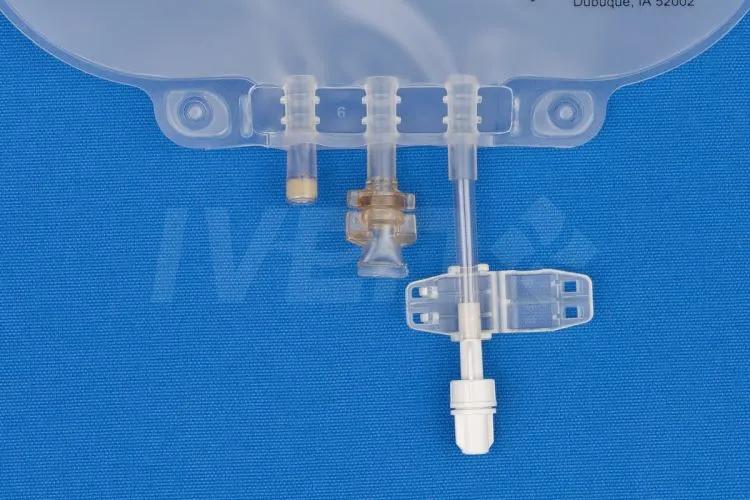
United States Guide to Multi-Chamber IV Bag Selection
For pharmaceutical manufacturers, contract packagers, and hospital supply teams in the United States, the comparison of multi-chamber vs single-chamber IV bag formats is no longer a narrow packaging topic. It now affects drug stability, sterile manufacturing design, cold-chain strategy, nursing workflow, waste reduction, and long-term return on capital investment. In simple terms, a multi-chamber IV bag keeps two or more components physically separated until activation, while a single-chamber IV bag stores one ready-to-use solution in one compartment. That structural difference creates major downstream effects in formulation flexibility, shelf-life protection, bedside preparation, and patient safety.
Across the U.S. market, especially in major healthcare and logistics corridors such as New Jersey, Boston, Chicago, Houston, Dallas, Atlanta, and the Los Angeles–Long Beach port region, demand is growing for advanced infusion packaging that supports higher-value therapies and more efficient hospital operations. Buyers are also evaluating whether production lines can comply with U.S. FDA cGMP expectations, data integrity requirements, validation standards, and increasingly strict sustainability goals.
This guide explains the practical differences between these two bag formats, where each is most useful, what materials are commonly used, how hospitals and drug manufacturers evaluate them, and how investors can assess production capacity, budget, and supplier risk. It also highlights what a global engineering partner should bring to a U.S.-focused project, from design and validation to scale-up and after-sales support.
The shortest answer is this: multi-chamber IV bags allow manufacturers to keep incompatible or unstable ingredients separate until the point of use, while single-chamber IV bags remain the simpler choice for stable, ready-to-infuse formulations. In the United States, multi-chamber systems are increasingly favored for parenteral nutrition, dual-component reconstitution, electrolyte combinations, and selected high-value hospital preparations because they improve stability and reduce bedside compounding steps. Single-chamber bags still dominate large-volume, standard IV solution categories because they are easier to produce, easier to fill, and often lower in cost.
For buyers, the comparison should be based on five core questions: What formulation is being filled? How long must it remain stable? What level of nurse preparation should be eliminated? What is the expected production scale? And what regulatory evidence will be required for approval or commercial release? A product that performs well in one-chamber format for normal saline or dextrose may require a multi-chamber design when vitamins, amino acids, lipid-sensitive components, or reactive additives are involved.
In market terms, the multi-chamber vs single-chamber IV bag decision is not about which is universally better. It is about choosing the right format for the therapeutic profile, the operational model, and the reimbursement reality of the U.S. healthcare system.
Decision FactorMulti-Chamber IV BagSingle-Chamber IV BagWhy It MattersComponent separationYesNoSupports unstable or incompatible ingredientsBedside activationRequired before useUsually not requiredAffects nursing workflow and trainingFormulation flexibilityHighModerateImportant for complex therapiesManufacturing complexityHigherLowerInfluences CAPEX and validation effortTypical unit costHigherLowerRelevant for procurement budgetingTypical U.S. use casePN, dual-component admixtures, specialty infusionSaline, dextrose, standard IV solutionsDetermines market demand patternThe table above shows the core trade-off: multi-chamber bags add value when the formulation or workflow justifies complexity; single-chamber bags win when simplicity and volume are the main priorities.
A single-chamber IV bag is the traditional flexible infusion container with one internal cavity. It is filled with a single sterile liquid formulation, terminally sterilized or aseptically processed depending on product design, and shipped ready for use. This format is ideal for products that remain chemically and physically stable throughout shelf life.
A multi-chamber IV bag includes two or more sealed compartments separated by peelable or frangible seals. The drug or nutrient components remain apart during storage. Before administration, the user breaks or activates the seal and mixes the contents. This architecture is especially useful when one component degrades another, when pH compatibility is limited, or when water-sensitive substances must remain isolated.
The main advantage of multi-chamber systems is stability management. Many advanced formulations fail not because the active ingredients are ineffective, but because they cannot coexist in one solution for long enough under normal distribution conditions. A multi-chamber design extends commercial feasibility by delaying contact until just before infusion. A second major advantage is risk reduction in hospital compounding. If more of the preparation can be industrialized under controlled GMP conditions, fewer manipulations are needed in the pharmacy cleanroom or on the ward.
Single-chamber systems, however, offer advantages that should not be underestimated. They require fewer converting steps, fewer seal integrity challenges, simpler automation logic, and faster scale-up. They are generally more economical for high-volume products such as sodium chloride, dextrose, irrigation fluids, and other stable solutions. In U.S. tenders, especially for integrated delivery networks and group purchasing organizations, that cost efficiency remains highly attractive.
From a technical capability perspective, this is where engineering quality matters. A competent line supplier must understand film handling, chamber-forming accuracy, leak testing, clean utility integration, sterile transfer, automation, and validation protocols. Companies that specialize in IV solution engineering rather than generic packaging often deliver better outcomes because they can align bag design, formulation behavior, and plant layout from the beginning. Buyers looking for an engineering overview can review a provider’s background on its pharmaceutical engineering profile before moving into formal qualification.
FeatureSingle-Chamber BagMulti-Chamber BagOperational ImpactStructureOne compartmentTwo or more compartmentsDefines filling and sealing processSeal designStandard perimeter sealsPerimeter plus internal breakable sealsRaises validation requirementsMixing stepNot neededNeeded before administrationRequires usability testingStability supportLimited to already compatible solutionsStrong for unstable combinationsEnables broader product portfolioProduction throughputTypically higherTypically lowerAffects annual output planningRegulatory documentation burdenModerateHigherMore design verification and testingThe practical lesson from this comparison is that multi-chamber bags create clinical and formulation advantages, but only when manufacturers are ready for the added engineering and compliance burden.
In U.S. hospitals, the clinical value of multi-chamber bags is closely tied to reducing manual preparation and improving consistency. Large academic centers in Boston, Philadelphia, and San Francisco often operate complex sterile compounding programs, but even these institutions are under pressure to reduce labor intensity, contamination risk, and medication error exposure. Multi-chamber formats can move part of that work upstream into industrial GMP production.
One of the best-known hospital applications is parenteral nutrition. Amino acids, dextrose, lipids, electrolytes, trace elements, and vitamins may have different stability windows, making compartmentalized storage useful. Another major application involves antibiotic or adjunct therapies where reconstitution is needed close to administration. Emergency settings, oncology support, renal care, and critical care can also benefit from ready-to-activate systems that reduce preparation time.
Clinical benefits commonly cited by hospital purchasers include:
Single-chamber bags remain important in nearly every facility. They are still the backbone of routine hydration, dilution, lavage, and maintenance infusions. Hospitals in high-throughput systems, including community hospitals across the Midwest and southern states, often prefer single-chamber products where clinical complexity does not justify the premium of compartmentalized bags.
For manufacturers planning to serve both hospital and commercial outsourcing customers, production capability should be aligned with application mix. A line optimized only for simple large-volume fluids may not meet the process control expectations needed for dual-chamber or three-chamber systems.
Clinical AreaPreferred Bag TypeReasonTypical U.S. SettingParenteral nutritionMulti-chamberSeparate unstable nutrients until useTertiary hospitals, NICU, ICUStandard hydrationSingle-chamberStable and cost-efficientAll hospital typesElectrolyte combinationsMulti-chamber or single-chamberDepends on compatibility and shelf lifeAcute care centersDialysis-related solutionsSingle-chamber or specialized multi-chamberProduct-specific formulation needsRenal clinics and hospital unitsEmergency reconstitution productsMulti-chamberFaster activation, fewer manual stepsER and ambulance support stockRoutine dextrose or salineSingle-chamberHighest volume, lowest complexityNational bulk procurementThe table highlights that multi-chamber technology is strongest in specialized, high-value, or labor-sensitive clinical scenarios, while single-chamber bags continue to dominate standardized volume therapy.
Not all multi-chamber bags are the same. The market includes two-chamber, three-chamber, and less commonly custom multi-compartment structures. The exact design depends on the number of ingredients that must remain separate, the activation method, container volume, sterilization route, oxygen sensitivity, and intended use.
Two-chamber bags are the most common entry point because they balance clinical function with manageable manufacturing complexity. Three-chamber bags are common in advanced nutrition applications where lipids, amino acids, and glucose-based components may need separate storage. Some developers also explore customized specialty bags for investigational products or niche hospital therapies.
Film material selection is equally important. In the U.S. market, non-PVC soft bag formats are increasingly preferred in many applications because of plasticizer concerns, sustainability goals, and product compatibility requirements. Polyolefin-based films, multilayer coextruded films, and specialty barrier films are widely discussed. Material selection should consider transparency, sealability, sterilization resistance, extractables and leachables profile, oxygen and moisture barrier performance, and mechanical durability during filling, overpouching, palletization, and transport.
Ports and fitments also matter. Administration ports, additive ports, and chamber-opening features must support safe use and robust line efficiency. A weak film or inconsistent seal interface can turn a promising concept into a costly deviation source during commercial validation.
Bag TypeTypical Chamber CountCommon UseFilm PreferenceStandard infusion bag1Saline, dextrose, routine fluidsSingle-layer or multilayer non-PVC/PVC alternativesDual-chamber bag2Drug + diluent, sensitive combinationsMultilayer coextruded filmThree-chamber bag3Parenteral nutritionHigh-performance multilayer barrier filmLight-sensitive specialty bag1 or 2Selected biologic or vitamin-sensitive productsBarrier film with protective overwrapHigh-temperature sterilization bag1 or 2Terminally sterilized solutionsHeat-resistant polyolefin structuresCustom developmental bag2 or morePilot or niche therapiesApplication-specific film stackThis table shows that bag architecture and material choice are inseparable. Selecting the wrong film can compromise seal performance, sterilization tolerance, or product stability even if the chamber concept is clinically sound.
When U.S. buyers conduct a structured comparison, they should go beyond product appearance and examine total lifecycle performance. The right question is not simply whether the bag has one chamber or more; it is whether the entire manufacturing and clinical system benefits from that design.
From the manufacturing angle, single-chamber lines usually require less complicated web handling, fewer critical seal parameters, and simpler inspection logic. They often achieve higher throughput and lower cost per bag. By contrast, multi-chamber production involves more sophisticated forming and sealing, more control points for chamber integrity, and more extensive functional testing to verify activation performance.
From the formulation angle, multi-chamber bags are clearly superior where component interaction threatens potency, pH balance, emulsion stability, or shelf life. From the hospital angle, they reduce preparation steps but introduce a mixing/activation step that must be intuitive and validated for safe use.
From the supply chain angle, the choice depends on volume profile. Nationally distributed commodity fluids moving through hubs such as Memphis, Louisville, Newark, and Savannah favor efficient single-chamber output. Higher-margin specialized therapies shipped in lower volumes may justify multi-chamber economics.
Comparison PointMulti-ChamberSingle-ChamberBest FitDrug stability managementExcellentLimitedMulti-chamber for unstable combinationsUnit manufacturing costHigherLowerSingle-chamber for commodity fluidsLine complexityHighModerateSingle-chamber for faster scale-upNursing convenienceHigh after activation trainingHigh for direct useDepends on product workflowPortfolio expansion potentialHighModerateMulti-chamber for advanced pipelineCommercial flexibilityStrong for specialized SKUsStrong for bulk SKUsUse both where neededThe comparison indicates that many successful manufacturers do not treat this as an either-or decision. Instead, they build a product portfolio in which single-chamber lines cover core volume demand and multi-chamber capability supports strategic, higher-value formulations.
var ctxComp = document.getElementById(‘comparisonChart’).getContext(‘2d’);var comparisonChart = new Chart(ctxComp, {type: ‘bar’,data: {labels: [‘Stability Support’, ‘Line Simplicity’, ‘Unit Cost Efficiency’, ‘Portfolio Flexibility’, ‘Hospital Preparation Reduction’, ‘Scale Throughput’],datasets: [{label: ‘Multi-Chamber IV Bag’,data: [95, 55, 60, 92, 88, 68],backgroundColor: ‘rgba(153, 102, 255, 0.7)’},{label: ‘Single-Chamber IV Bag’,data: [60, 90, 92, 70, 72, 94],backgroundColor: ‘rgba(54, 162, 235, 0.7)’}]},options: {responsive: true,maintainAspectRatio: false,plugins: {legend: {position: ‘top’}},scales: {y: {beginAtZero: true, max: 100}}}});The comparison chart makes the strategic pattern visible: multi-chamber bags lead on stability and formulation flexibility, while single-chamber bags remain stronger in throughput and cost efficiency.
The U.S. market is showing steady interest in advanced IV packaging capacity, driven by several converging factors: more complex hospital therapies, pressure to reduce compounding risk, resilience planning after supply disruptions, and renewed investment in domestic or near-market pharmaceutical manufacturing. Buyers are also assessing whether production lines can support long-term conversion from conventional flexible containers to higher-specification non-PVC and compartmentalized systems.
Demand is not uniform. The strongest multi-chamber opportunity tends to cluster around high-acuity providers, specialized nutrition programs, complex injectable pipelines, and manufacturers seeking lifecycle extensions for sensitive formulations. Single-chamber demand remains larger overall because commodity IV fluids still represent massive hospital consumption volumes.
Ports and logistics matter in capacity planning. Importers and project developers often think in terms of East Coast and Gulf Coast access through Newark, Charleston, Savannah, and Houston, while West Coast projects may consider Long Beach and Los Angeles for inbound equipment or materials. Inland distribution to major clinical markets such as Chicago, Dallas, Phoenix, and Atlanta can significantly influence spare-parts strategy, field service planning, and warehousing of consumables.
By 2026, three trends are likely to shape the market even more strongly:
var ctxLine = document.getElementById(‘lineChart’).getContext(‘2d’);var lineChart = new Chart(ctxLine, {type: ‘line’,data: {labels: [‘2021’, ‘2022’, ‘2023’, ‘2024’, ‘2025’, ‘2026’],datasets: [{label: ‘Estimated U.S. Demand Index for Multi-Chamber Capacity’,data: [100, 109, 121, 134, 148, 165],borderColor: ‘rgb(75, 192, 192)’,backgroundColor: ‘rgba(75, 192, 192, 0.15)’,fill: false,tension: 0.3}]},options: {responsive: true,maintainAspectRatio: false,plugins: {legend: {position: ‘top’}},scales: {y: {beginAtZero: false}}}});var ctxBar = document.getElementById(‘barChart’).getContext(‘2d’);var barChart = new Chart(ctxBar, {type: ‘bar’,data: {labels: [‘Parenteral Nutrition’, ‘Standard Fluids’, ‘Critical Care’, ‘Oncology Support’, ‘Renal Care’, ‘Emergency Preparedness’],datasets: [{label: ‘2025 U.S. Demand Score’,data: [88, 96, 75, 69, 72, 81],backgroundColor: ‘rgba(255, 99, 132, 0.7)’}]},options: {responsive: true,maintainAspectRatio: false,plugins: {legend: {position: ‘top’}},scales: {y: {beginAtZero: true, max: 100}}}});The line chart indicates an upward demand trajectory for multi-chamber production capacity, while the bar chart shows that standard fluids still dominate overall volume, even as nutrition and emergency applications strengthen the case for compartmentalized systems.
Choosing a supplier for IV bag manufacturing equipment, turnkey engineering, or bag product sourcing requires more than checking price and lead time. In the United States, serious buyers evaluate regulatory readiness, actual installed base, validation support, spare-parts access, automation architecture, and long-term service competence.
A reliable supplier should demonstrate three categories of strength. First is technological capability: chamber design know-how, aseptic or terminal sterilization process understanding, leak detection, film handling, automation, and data collection. Second is manufacturing capability: stable fabrication quality, repeatable assembly, FAT discipline, and capacity to deliver complete lines rather than isolated machines. Third is service capability: installation, commissioning, documentation, IQ/OQ/PQ support, operator training, preventive maintenance, and remote troubleshooting.
For U.S. projects, buyers should also confirm the supplier’s familiarity with FDA-facing documentation expectations and utility design practices common in American pharmaceutical plants. A good partner should be able to discuss cleanroom zoning, water systems, validation package structure, and change-control discipline without hesitation.
Shanghai IVEN Pharmatech Engineering is one example of a company positioned around integrated pharmaceutical engineering rather than stand-alone equipment sales. Its strengths are most relevant when a customer needs a broader solution that includes IV container processing lines, water systems, solution preparation, logistics integration, and project support from design through qualification. Companies exploring whole-factory planning can review its turnkey pharmaceutical project capabilities and then compare them against internal project requirements.
Supplier Evaluation ItemWhat to CheckWhy It MattersBuyer ActionRegulatory knowledgeFDA cGMP, EU GMP, WHO GMP familiarityReduces compliance gapsRequest sample qualification documentsInstalled referencesOperational IV projects in multiple marketsShows practical experienceAsk for similar line case studiesFilm and bag expertiseSeal design, compatibility, leak controlCritical for multi-chamber successReview validation test scopeManufacturing depthIn-house fabrication and system integrationImproves schedule controlInspect factory if possibleAfter-sales serviceTraining, spare parts, remote supportProtects uptimeDefine SLA in contractProject delivery modelEquipment only or full turnkeyDetermines interface riskClarify responsibility matrix earlyThis evaluation table is useful because most failures in capital equipment purchasing come from overlooked interfaces, not from the nameplate function of the machine itself.
Investment in multi-chamber IV bag production generally exceeds single-chamber capacity because of more advanced forming, sealing, inspection, and process control requirements. However, the ROI can still be attractive when the product mix includes higher-margin specialty infusions, hospital-preferred ready-to-activate formats, or formulations that cannot be marketed efficiently in a one-chamber bag.
Budget planning should include much more than the line price. U.S. project teams should model cleanroom adaptation, HVAC load, clean utilities, water for injection distribution if required, compressed gases, automation integration, mold and format parts, validation batches, operator training, warehouse expansion, and consumable inventory. They should also estimate the cost of quality events if seal performance, activation reliability, or film supply stability are not well controlled.
Typical ROI drivers include premium selling price, reduced product loss from instability, lower hospital compounding burden, stronger contract manufacturing appeal, and portfolio differentiation. Risks to ROI include underutilization, slow regulatory approval, film qualification delays, overestimated demand, and insufficient service response.
Cost CategorySingle-Chamber ProjectMulti-Chamber ProjectBudget ImpactCore equipmentLowerHigherPrimary CAPEX differenceTooling and format partsModerateHigherMore complexity for chamber designsValidation effortModerateHighMore tests and protocolsOperator trainingStandardAdvancedNeeded for activation-critical productsFilm qualificationModerateHighBarrier and seal properties are criticalRevenue potential per unitLower to mediumMedium to highSupports premium strategyThis cost table shows why multi-chamber projects need a more disciplined business case. The CAPEX is higher, but so is the opportunity to enter higher-value infusion segments.
var ctxArea = document.getElementById(‘areaChart’).getContext(‘2d’);var areaChart = new Chart(ctxArea, {type: ‘line’,data: {labels: [‘2021’, ‘2022’, ‘2023’, ‘2024’, ‘2025’, ‘2026’],datasets: [{label: ‘Shift Toward Advanced IV Packaging in the U.S.’,data: [18, 23, 29, 36, 44, 53],fill: true,backgroundColor: ‘rgba(75, 192, 192, 0.25)’,borderColor: ‘rgb(75, 192, 192)’,tension: 0.3}]},options: {responsive: true,maintainAspectRatio: false,plugins: {legend: {position: ‘top’}},scales: {y: {beginAtZero: true}}}});The area chart illustrates the expected shift toward more advanced IV packaging formats through 2026, reflecting greater interest in stability-driven and workflow-saving products.
The biggest strategic mistake is assuming that a multi-chamber project is merely a bag-conversion upgrade. In reality, it is a formulation, engineering, quality, and commercialization project at the same time. If one of those pillars is weak, the entire investment can underperform.
The first risk is formulation mismatch. Some products do not generate enough clinical or commercial advantage from compartmentalization to justify the higher cost. The second risk is film or seal failure. Internal seals are the heart of multi-chamber functionality, and weak robustness can create leakage, incomplete activation, or sterility concerns. The third is regulatory under-preparation. Human factors, mixing validation, extractables and leachables, transportation simulation, and shelf-life evidence all require careful planning.
The fourth risk is supply-chain concentration. If a project depends on one specialized film source or one fitment provider, resilience becomes a concern. The fifth is service response lag. For U.S. operators running commercial schedules, downtime is expensive, so parts availability and qualified technical support matter. This is where service capability becomes just as important as equipment design. A strong partner should provide documentation, commissioning, training, and post-startup optimization. Buyers wanting a direct discussion on project risk and support scope can use the supplier’s contact channel for pharmaceutical engineering projects.
Another important factor is sustainability. By 2026, more investors will require clear energy, waste, and material-efficiency metrics. Non-PVC preferences, lighter packaging designs, optimized sterilization cycles, and smarter utility usage will increasingly influence sourcing decisions in the United States. States with strong environmental procurement signals may accelerate this shift even faster.
Case-study thinking is helpful here. A manufacturer serving commodity saline into broad U.S. distribution may achieve the best ROI by expanding single-chamber throughput near a logistics hub such as Memphis or Columbus. A manufacturer targeting hospital nutrition and specialty infusions may benefit more from a multi-chamber line integrated with advanced inspection and validation support, even at lower throughput. The correct answer depends on market positioning, not technology fashion.
On the manufacturing side, buyers should favor suppliers with proven production depth, not just design brochures. An engineering company with multiple specialized plants, long equipment life, and demonstrated large-scale line delivery can reduce interface risk. On the service side, lifecycle support should include feasibility consulting, engineering design, installation, commissioning, validation, training, and ongoing optimization rather than a simple shipment-and-handover model.
1. Are multi-chamber IV bags always better than single-chamber bags?No. They are better when ingredients must remain separate for stability, compatibility, or workflow reasons. Single-chamber bags are often better for stable, high-volume, lower-cost solutions.
2. Which U.S. market segments are most likely to adopt multi-chamber bags?Parenteral nutrition, specialty hospital infusions, emergency-ready products, and formulations that benefit from reduced compounding steps are the strongest segments.
3. What materials are commonly used for these bags?Many manufacturers prefer non-PVC multilayer films or polyolefin-based structures for compatibility, seal performance, and sustainability goals. Final selection depends on formulation, sterilization, and barrier needs.
4. Is the investment cost much higher for multi-chamber production?Usually yes. Equipment, validation, film qualification, and process control requirements are more demanding. However, higher-margin products can offset that extra CAPEX.
5. What should a U.S. buyer ask a supplier first?Ask for installed references, validation document examples, film and seal performance data, after-sales support scope, and experience with FDA-oriented projects.
6. Can one supplier provide both equipment and integrated plant support?Yes. Some engineering companies provide broader support that includes IV production lines, water systems, utilities, logistics, validation, and turnkey plant services. Buyers comparing options can review available pharmaceutical equipment and system offerings to see whether a supplier covers the full process chain.
7. How important is local logistics planning in the United States?Very important. Spare parts, technical response time, customs routing, and inbound material flow through hubs such as Houston, Newark, and Long Beach can affect startup and uptime.
8. What trends should investors watch through 2026?Expect stronger adoption of data-driven manufacturing, sustainability-linked material decisions, more ready-to-use or ready-to-activate clinical formats, and continued pressure for resilient domestic or near-market supply capacity.
9. What kind of partner is best for a new IV bag factory project?A partner with regulatory understanding, robust equipment manufacturing, and end-to-end services. The best projects typically involve suppliers who can support feasibility, line customization, installation, qualification, and operational optimization in one coordinated program.
10. Where does IVEN Pharmatech Engineering fit in this market?For U.S.-oriented investors and manufacturers, IVEN Pharmatech Engineering is relevant when the need goes beyond a single machine. Its positioning is strongest in integrated pharmaceutical engineering, with experience in IV solution lines, water systems, solution preparation, intelligent logistics, and full lifecycle project support. That combination can be valuable for companies planning a new facility, expanding advanced IV formats, or reducing risk across design, manufacturing, and validation phases.
In conclusion, the multi-chamber vs single-chamber IV bag decision in the United States should be made with a clear view of formulation science, hospital workflow, manufacturing economics, and long-term market direction. Single-chamber bags will remain essential for routine high-volume fluids. Multi-chamber bags will continue to gain importance where stability, readiness, and premium clinical value matter most. The winners in this market will be the companies that combine the right container choice with disciplined engineering, validated manufacturing, resilient supply planning, and reliable service support.