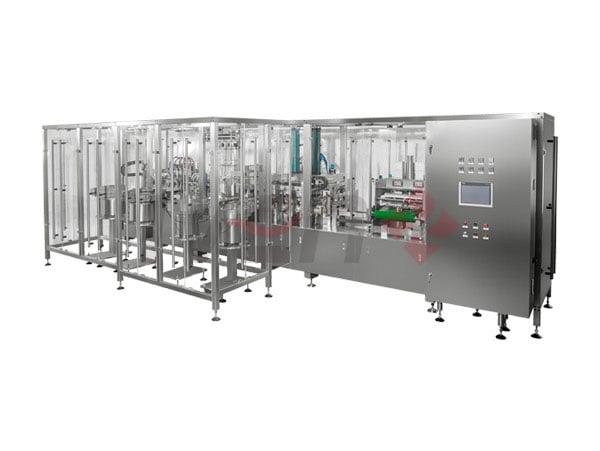
PD Solution vs Hemodialysis Equipment in United States
For pharmaceutical and medical device manufacturers in the United States, the comparison between PD solution production systems and hemodialysis equipment is not simply a clinical discussion. It is a manufacturing, compliance, and capital planning decision. PD solution lines are designed to prepare, mix, sterilize, fill, and package peritoneal dialysis fluids for large-scale sterile production. Hemodialysis equipment, by contrast, usually refers either to clinical dialysis machines used in treatment centers or to the upstream manufacturing systems used to produce hemodialysis concentrates, cartridges, and related consumables. In practical terms, companies expanding in regions such as New Jersey, North Carolina, Texas, California, and the Chicago corridor evaluate these technologies based on product portfolio, FDA cGMP requirements, sterility assurance, automation level, and long-term return on investment.
Quick Answer: Why PD Solution Systems and Hemodialysis Equipment Matter in Regulated U.S. Manufacturing

PD solution production systems and hemodialysis-related manufacturing equipment are both important in the renal care supply chain, but they serve different industrial purposes. A PD solution line is generally the right choice when a manufacturer needs to produce sterile dialysis fluids in flexible bags, bottles, or other infusion-style containers with strict control of mixing, filtration, sterilization, filling, sealing, leak testing, and packaging. Hemodialysis equipment manufacturing, on the other hand, often focuses on dialysate concentrates, bicarbonate cartridges, tubing sets, filters, water systems, and device assembly for use in dialysis clinics and hospitals.
In the United States, demand is influenced by aging demographics, rising chronic kidney disease rates, reshoring initiatives, and resilience planning after supply chain disruptions affecting imports through Los Angeles, Long Beach, Savannah, Houston, and Newark. Large buyers now want validated lines that can support FDA inspections, data integrity expectations, and increasingly automated batch documentation. They also want flexible systems that can scale from pilot production to commercial volumes.
When evaluating options, decision-makers usually focus on five questions:
- Are they producing a sterile pharmaceutical solution or a device-centered dialysis product?
- Will the line support U.S. FDA cGMP, validation, and audit readiness?
- What container format is required: non-PVC soft bag, PP bottle, glass bottle, cartridge, or drum?
- How much automation is needed to reduce labor and contamination risk?
- Can the supplier provide engineering, commissioning, training, and lifecycle service inside the United States?
| Evaluation Point | PD Solution Production System | Hemodialysis Equipment / Related Production | Why It Matters |
|---|---|---|---|
| Primary output | Sterile peritoneal dialysis solution | Dialysis machines, concentrates, consumables, accessories | Defines plant design and validation pathway |
| Main regulation focus | Sterile pharma manufacturing cGMP | Medical device and/or concentrate manufacturing controls | Changes documentation and quality systems |
| Container format | Soft bags, PP bottles, glass bottles | Cartridges, canisters, devices, sets, drums | Impacts line architecture |
| Core process | Compounding, sterilization, aseptic or terminal filling | Assembly, concentrate mixing, testing, packaging | Drives equipment selection |
| Facility utilities | WFI, purified water, clean steam, cleanrooms | Purified water, assembly environment, testing systems | Influences CAPEX and building scope |
| Typical buyer | Infusion solution and renal therapy manufacturers | Device firms, clinic supply manufacturers, OEMs | Aligns technology with business model |
The table above shows the practical distinction: one technology is mainly fluid-pharma centered, while the other may be device centered or concentrate centered. A mismatch here can lead to expensive redesigns later.
What Are PD Solution Systems and Hemodialysis Equipment Used for in Pharmaceutical Production?

PD solution systems are used to manufacture sterile fluids introduced into the peritoneal cavity for dialysis therapy. That means the production environment must meet the same high expectations applied to other large-volume parenterals. Equipment normally includes solution preparation tanks, transfer systems, filtration skids, sterilization modules, filling and sealing machines, automatic inspection systems, overwrapping, cartoning, and end-of-line logistics.
Hemodialysis equipment has a broader meaning in manufacturing. In some projects it refers to machines that produce hemodialysis concentrate solutions or powders. In others, it refers to assembly and testing lines for dialysis machines, tubing sets, blood lines, dialyzers, and related accessories. Because of this, procurement teams in Boston, Minneapolis, Philadelphia, and San Diego should define the exact intended product before requesting quotations.
For U.S. pharmaceutical production, PD solution systems are most relevant when the manufacturer is entering renal therapy fluids or expanding an existing sterile solutions portfolio. Hemodialysis-related manufacturing equipment becomes relevant when the company wants to supply clinics, hospitals, or OEM device brands with equipment or consumables rather than only packaged sterile solutions.
| Manufacturing Use Case | PD Solution System Role | Hemodialysis Equipment Role | Typical U.S. Buyer |
|---|---|---|---|
| Commercial dialysis fluid production | Directly produces sterile PD fluid | Limited unless making concentrates | Renal therapy pharma companies |
| Hospital supply manufacturing | Produces ready-to-use solution containers | Produces machine-related consumables | Integrated healthcare suppliers |
| OEM contract manufacturing | Supports private-label fluid filling | Supports device and set assembly | CDMOs and OEMs |
| Pilot and clinical batches | Flexible for development lots | Useful for prototype devices or small concentrate lots | R&D centers |
| Export-focused production | Fits sterile fluid exports via major ports | Fits device and consumable exports | Multinational suppliers |
| Integrated renal therapy campus | One part of complete sterile utilities | Complements device assembly and testing | Large diversified manufacturers |
This distinction is especially relevant in the United States, where reimbursement pressure, domestic manufacturing incentives, and the need for emergency supply continuity have encouraged some companies to bring multiple renal-care product categories under one roof.
Main Applications and Benefits in Modern Pharmaceutical Manufacturing

PD solution systems offer clear benefits for high-compliance sterile production: better batch consistency, improved traceability, reduced contamination risk, and compatibility with automated inspection and packaging. Modern lines can integrate recipe control, CIP/SIP functions, SCADA or MES connectivity, and container-specific handling for non-PVC soft bags, PP bottles, or glass formats.
Hemodialysis-related manufacturing equipment offers different benefits depending on the product type. For concentrates, automated mixing and filling reduce dosing errors and support better shelf-life stability. For device assembly and consumables, automation improves throughput, repeatability, and final product testing. Companies serving large dialysis networks across the United States often prioritize uptime, spare-part availability, and validation support as much as output speed.
For facilities near logistics hubs such as Newark, Atlanta, Dallas-Fort Worth, Memphis, and Southern California, advanced automation also reduces the labor volatility that can affect manual operations. In higher-cost labor markets, integrated robotic case packing and warehouse interfaces can materially improve total cost of ownership.
| Benefit Area | PD Solution Lines | Hemodialysis-Related Production | Operational Impact |
|---|---|---|---|
| Sterility assurance | High priority with validated fluid pathways | Moderate to high depending on product | Supports quality and patient safety |
| Batch consistency | Excellent with automated mixing and filling | Strong for concentrates and assembly QC | Reduces deviations |
| Automation potential | Very high across full line | High for assembly, filling, and testing | Lowers labor dependency |
| Scalability | From pilot to large-volume commercial output | From bench assembly to large OEM production | Supports expansion plans |
| Regulatory readiness | Strong alignment with sterile cGMP | Depends on device and product scope | Improves inspection preparedness |
| Supply chain resilience | Enables domestic fluid production | Enables domestic device and consumable output | Reduces import dependency |
The biggest application trend is convergence. Rather than building single-purpose sites, many investors now design flexible campuses with water treatment, clean utilities, material handling, and digital controls that can support more than one therapy line. This reduces long-term expansion risk.
The line chart illustrates a realistic upward investment trend in U.S. renal-care manufacturing equipment as companies expand domestic capacity and modernize aging lines.
Key Types, Models, and Technical Options
When buyers compare PD solution systems and hemodialysis-related equipment, they should break the decision into process modules rather than only comparing brand names. Technical architecture matters more than catalog labels. The right solution depends on output volume, package format, cleanroom strategy, sterilization method, and whether the buyer needs a standalone machine or a full turnkey project.
For PD solution production, common configurations include non-PVC soft bag lines, PP bottle lines, and glass bottle lines. Each has different advantages in material compatibility, shipping efficiency, user preference, and downstream packaging. For hemodialysis-related production, common options include concentrate preparation systems, liquid concentrate filling lines, powder dosing systems, tubing and set assembly cells, dialyzer assembly equipment, and machine testing stations.
Technological capability is where experienced engineering companies stand out. Manufacturers with deep expertise in solution preparation, water treatment, automatic filling, intelligent logistics, and plant-wide integration can reduce interface risk between utilities, process equipment, and packaging systems. This matters in U.S. projects, where delays in factory acceptance, site acceptance, or validation can significantly affect launch timelines.
| Equipment Type | Main Technical Option | Best For | Key Decision Factor |
|---|---|---|---|
| PD soft bag line | Non-PVC bag forming, filling, sealing, sterilization | High-volume flexible packaging | Material performance and shipping efficiency |
| PD PP bottle line | Blow-fill-seal or bottle filling systems | Rigid container portfolios | Container integrity and line speed |
| PD glass bottle line | Washing, filling, sealing, sterilization | Traditional bottle formats | Breakage control and handling |
| Hemodialysis concentrate line | Mixing, filtration, filling, capping | Liquid concentrate production | Chemical compatibility and dosing accuracy |
| Powder or bicarbonate system | Precision dosing and packaging | Dry concentrate products | Dust control and weight accuracy |
| Consumable assembly line | Tubing, set, cartridge, or dialyzer assembly | Medical device output | Automation and in-line testing |
Manufacturing capability is equally important. Buyers should verify whether a supplier has specialized plants for core subsystems such as filling and packaging machinery, pharmaceutical water treatment, intelligent conveying, and medical consumables equipment. A supplier that controls these disciplines internally can often deliver better system integration than a purely trading-based vendor.
PD Solution Systems vs Alternative Technologies: Which Fits Your Needs?
The most common mistake in procurement is comparing unlike technologies. A PD solution line should not be judged only against a dialysis machine assembly project, because the process logic, facility requirements, and regulatory obligations differ. The right comparison is product specific.
If your business model is sterile solution manufacturing, alternatives may include contract manufacturing, importing finished bags or bottles, or using a multi-purpose infusion line adapted for PD fluids. If your business model is clinic-focused device supply, alternatives may include outsourcing machine assembly, importing finished hemodialysis systems, or buying semi-automatic assembly cells.
Companies in the United States often favor domestic production when freight costs, lead time volatility, and public procurement expectations are considered. Products moving through Long Beach, Oakland, Norfolk, or Miami can face delays, while locally produced goods may improve responsiveness to hospital systems and dialysis chains.
| Option | Advantages | Limitations | Best Fit |
|---|---|---|---|
| Dedicated PD solution line | High sterility control, validated output, scalability | Higher CAPEX | Commercial sterile fluid manufacturers |
| Adapted IV solution line | Lower entry barrier if existing assets are available | May need modifications and revalidation | Plants expanding from infusion products |
| Contract PD manufacturing | Lower initial investment | Less control, margin pressure, scheduling risk | Market entry or short-run supply |
| Concentrate production line | Good for hemodialysis fluid support products | Not a substitute for sterile PD filling | Hemodialysis consumable suppliers |
| Device assembly line | Supports machine and consumable output | Different business model from fluid pharma | Medical device manufacturers |
| Import finished products | No plant buildout | Supply chain risk, tariffs, longer lead times | Short-term portfolio gaps |
Service capability should also guide the choice. A supplier able to support feasibility consulting, layout design, equipment customization, installation, commissioning, validation documentation, training, and after-sales optimization can reduce execution risk. For U.S. buyers, this is often more valuable than a low upfront quotation.
The bar chart shows that sterile PD fluids and pharmaceutical water systems often command especially strong demand because they are central to compliance and product continuity.
Market Overview and Future Trends in U.S. Pharmaceutical Manufacturing
The United States market for renal-care manufacturing technology is moving toward more resilient, more digital, and more sustainable production. Several factors are shaping investment decisions:
- Growth in chronic kidney disease and home-based treatment models
- Pressure for domestic or nearshore production of critical healthcare supplies
- FDA expectations for data integrity, quality risk management, and traceability
- Rising energy and labor costs that favor automation
- Stronger sustainability targets for water, steam, packaging, and waste reduction
Through 2026, buyers are expected to prioritize modular clean utility systems, MES-connected production lines, remote diagnostics, predictive maintenance, and reduced-footprint layouts. Sustainability will also influence purchases. For example, efficient purified water generation, lower steam consumption, optimized CIP cycles, and recyclable packaging components are becoming more important in investment committees.
Policy trends matter too. U.S. manufacturers are increasingly evaluating whether a project can strengthen supply security for government, VA, and large integrated health systems. Facilities in pharmaceutical clusters such as New Jersey, Indiana, North Carolina, and the greater Houston area may benefit from existing skilled labor pools and supplier ecosystems.
The area chart highlights the shift from basic standalone equipment toward integrated digital production systems. This trend is expected to continue in 2026 as buyers seek lower deviation rates and faster batch release.
A practical case pattern in the U.S. market is the modernization of legacy sterile solution plants that were originally designed for simpler infusion products. These facilities often need upgraded water systems, redesigned material flow, more robust environmental monitoring, and container-specific filling technology before they can reliably support dialysis-related fluids.
How to Choose a Reliable Manufacturer or Supplier
In the United States, a reliable supplier is not just a machine builder. It is a compliance-aware engineering partner. Buyers should examine technical depth, manufacturing quality, project execution, and service responsiveness. One useful approach is to divide supplier evaluation into technology, manufacturing, and service capability.
On the technology side, look for experience in sterile filling, pharmaceutical water treatment, solution preparation, intelligent logistics, and validation-friendly control systems. On the manufacturing side, verify whether the supplier has specialized production plants and a track record of large project delivery. On the service side, check whether the team can support FAT, SAT, IQ, OQ, PQ, training, document packages, and post-startup optimization.
Companies such as IVEN Pharmatech Engineering are often evaluated by U.S. buyers because they combine engineering design, equipment manufacturing, and turnkey execution across multiple pharmaceutical and medical device segments. For investors seeking a more integrated path, it is useful to review a supplier’s turnkey project capabilities rather than only reviewing standalone machines.
| Supplier Selection Criterion | What to Check | Why It Matters in the United States | Warning Sign |
|---|---|---|---|
| Regulatory understanding | FDA cGMP, validation, audit support | Essential for approval and inspection readiness | Generic claims without documentation |
| Engineering depth | Utilities, cleanrooms, filling, automation integration | Reduces interface failures | Only sells single machines |
| Manufacturing capability | Dedicated plants, QA process, machining quality | Impacts durability and consistency | Heavy outsourcing with limited control |
| Reference projects | Comparable dialysis or sterile solution lines | Proves real execution ability | No verifiable case history |
| After-sales support | Spare parts, remote support, field service | Downtime in U.S. plants is costly | Slow response model |
| Documentation package | DQ, manuals, certificates, FAT records, validation docs | Speeds qualification and launch | Incomplete or nonstandard files |
A strong supplier shortlist usually includes both domestic and international options. U.S. buyers commonly compare regional integrators in the Midwest or East Coast with global engineering companies that offer broader platform knowledge and cost advantages. The best choice often depends on whether the project is a brownfield upgrade, greenfield plant, or multi-line campus.
For teams needing a broader view of equipment categories, a curated equipment portfolio can help align process scope before issuing technical specifications.
Investment Cost, Budget Planning, and ROI Analysis
Capital cost varies widely because scope varies widely. A compact PD development line is not comparable to a high-speed commercial soft bag facility with water treatment, sterilization, packaging, warehousing, and digital integration. Likewise, a concentrate mixing skid is not comparable to a full hemodialysis consumables assembly plant.
U.S. investors should build budgets in layers: core process equipment, utilities, cleanroom and facility works, automation, validation, training, spare parts, and contingency. Freight, customs, installation labor, and site adaptation can significantly affect the final budget, especially for projects in high-cost states.
| Cost Element | PD Solution Project Share | Hemodialysis-Related Project Share | Budget Note |
|---|---|---|---|
| Core processing equipment | High | Medium to high | Main line architecture drives CAPEX |
| Water and clean utilities | Very high | Medium | Critical in sterile fluid projects |
| Cleanroom construction | High | Medium | Depends on product sterility needs |
| Automation and software | Medium to high | Medium to high | Important for labor savings and traceability |
| Validation and documentation | High | Medium to high | Often underestimated |
| Training and lifecycle service | Medium | Medium | Protects startup performance |
Return on investment in the U.S. market is usually driven by six levers:
- Replacement of imported finished products
- Higher line efficiency and lower scrap
- Reduced labor needs through automation
- Faster lot release through digital batch records
- Broader product mix from a flexible platform
- Reduced supply disruption risk for key customers
As a broad planning rule, high-utilization commercial lines tend to justify larger automation packages, while pilot or early-entry projects may require more modular investment. A supplier that can phase expansion helps preserve cash flow.
The comparison chart illustrates why total value often favors integrated suppliers over low-price standalone options, especially when utilities, validation, and expansion are considered.
Key Considerations and Potential Risks When Investing
Investment risk usually comes less from the machine itself and more from poor project definition. If the user requirement specification is weak, the selected technology may not match the intended product, output, or regulatory pathway. In the United States, this can lead to validation delays, missed launch windows, and excess remediation costs.
Another common risk is underestimating utility demands. PD solution production needs robust purified water or WFI systems, distribution loops, clean steam, and reliable environmental controls. Brownfield facilities in older industrial corridors may require far more infrastructure upgrades than originally planned.
| Risk Area | Typical Problem | Consequence | Mitigation |
|---|---|---|---|
| Scope mismatch | Buying device-oriented equipment for fluid production | Redesign and requalification | Define product and process clearly |
| Utility underdesign | Insufficient water, steam, HVAC, or power | Capacity bottlenecks and deviations | Front-load utility studies |
| Validation gaps | Weak documentation or test protocols | Delayed startup | Specify validation deliverables early |
| Service delays | No local or timely technical support | Extended downtime | Check support model and spare parts plan |
| Layout inefficiency | Poor material and personnel flow | Higher contamination risk and low productivity | Use experienced engineering design |
| Budget overruns | Missed hidden costs in installation and qualification | ROI erosion | Add contingency and phased budgeting |
For this reason, many U.S. manufacturers prefer suppliers that can provide end-to-end project support, from feasibility studies and engineering design through commissioning, qualification, staff training, and ongoing optimization. If you are planning a greenfield or expansion project, the safest path is often to start with a detailed technical discussion through a direct project consultation.
A practical case-study pattern seen in the market is a company initially planning to import finished dialysis-related products, then switching to local production after calculating freight volatility, lead time risk, and customer service needs. Another common case is a legacy IV plant adding a dedicated dialysis-solution module to leverage existing utilities while avoiding disruption to current commercial lines.
Frequently Asked Questions
- Is PD solution production equipment the same as hemodialysis equipment?
- No. PD solution production systems are designed mainly for sterile peritoneal dialysis fluid manufacturing, while hemodialysis equipment may refer to clinical machines or manufacturing systems for concentrates, consumables, and related devices.
- Which option is better for a pharmaceutical company in the United States?
- If your core product is sterile dialysis fluid, a dedicated PD solution line is usually the better fit. If your main business is dialysis machines, tubing sets, or concentrates, hemodialysis-related production equipment may be more appropriate.
- What regulations matter most?
- For U.S. projects, FDA cGMP, validation requirements, data integrity expectations, and relevant device quality system obligations all matter. The exact combination depends on the final product category.
- Can an IV solution plant be adapted for PD solution production?
- Sometimes yes, but only after careful engineering review. Container format, sterilization method, fluid pathway design, and validation scope must all be checked before adaptation.
- What should I ask a supplier before buying?
- Ask about reference projects, automation architecture, utility requirements, validation documents, FAT and SAT scope, spare parts planning, training, and expected response time for after-sales service in the United States.
- How important is water treatment in these projects?
- It is critical, especially for sterile PD solution manufacturing. Water quality, loop design, sanitization strategy, and monitoring can directly affect product safety and compliance.
- Do integrated turnkey suppliers offer an advantage?
- Yes, often they do. Integrated suppliers can align process equipment, water systems, utilities, logistics, and validation documentation, which reduces interface risk and simplifies project management.
- What future trend should buyers watch most closely in 2026?
- Digitalization combined with sustainability. Buyers increasingly want automated lines with better batch traceability, lower water and energy consumption, remote support capability, and layouts that support future product changes.
In summary, the best choice between PD solution systems and hemodialysis equipment depends on the exact product you plan to manufacture, the regulatory pathway you must satisfy, and the level of integration you expect from your supplier. In the United States, where compliance, supply resilience, and lifecycle cost matter as much as initial price, careful specification and experienced project execution make the difference between a line that merely runs and a line that performs reliably for years.

About the Author
We are IVEN Pharmatech Engineering, a team dedicated to delivering turnkey pharmaceutical and medical solutions worldwide. With decades of experience, we specialize in advanced machinery, integrated factory design, and full lifecycle support to help our clients achieve efficient, compliant, and high-quality production.
Share
Related Insights
-
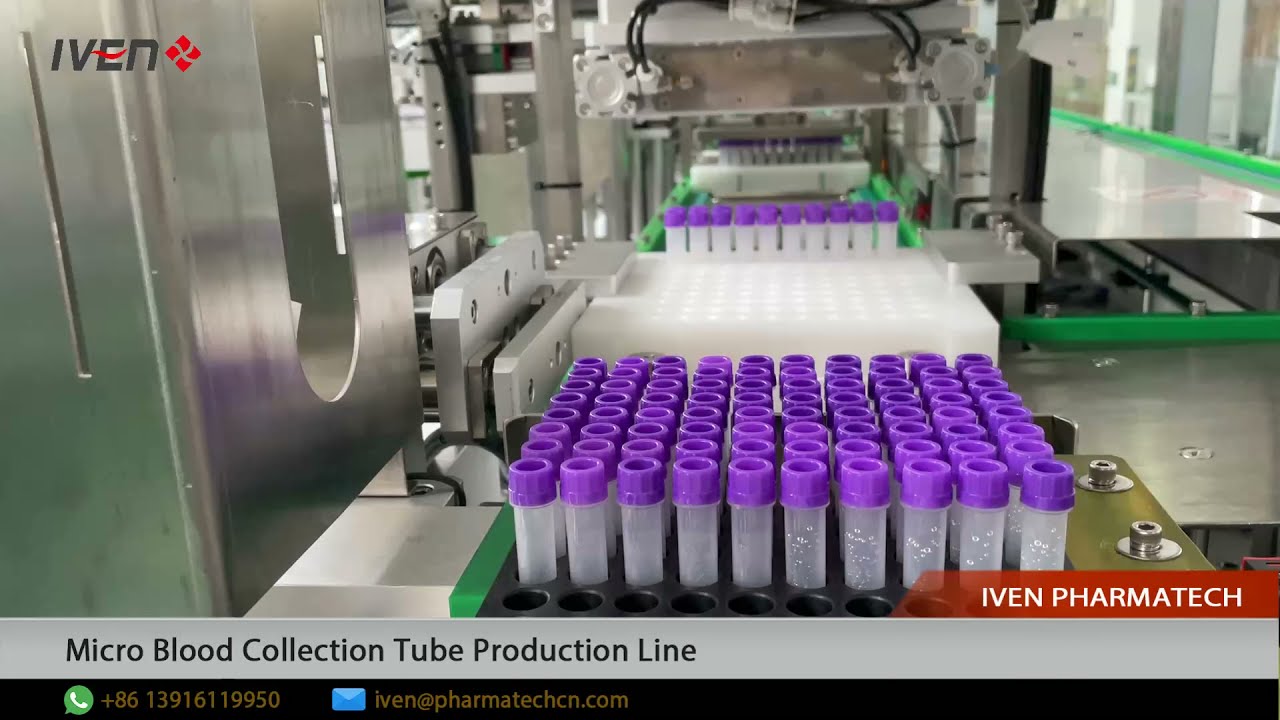
Glass vs Plastic Blood Tube Production in the United States
For medical device companies in the United States, glass vs plastic blood collection tube production is a strategic decision that directly affects quality consistency, line speed, breakage risk, transport safety, automation level, and long-term manufacturing cost. Modern automated tube production systems make it possible to supply hospitals, blood centers, and diagnostic laboratories at large scale while maintaining strict dimensional control, additive dosing accuracy, vacuum stability, and traceable quality assurance. In practice, the best choice depends on end use, regulatory expectations, shipping conditions, procurement targets, and the manufacturing model a company wants to build.
Across the U.S. market, demand continues to rise from hospital systems in New York, Chicago, Houston, Los Angeles, Boston, and Atlanta, along with independent lab networks, regional distributors, and OEM manufacturers serving North America through ports such as Los Angeles, Long Beach, Savannah, Houston, and Newark. Buyers are no longer asking only whether glass or plastic is better. They are asking which production platform delivers the best balance of product performance, validated output, labor efficiency, and lifecycle return.
This is where integrated engineering matters. Companies that combine equipment design, compliance knowledge, and plant implementation support can reduce project risk significantly. Shanghai IVEN Pharmatech Engineering Co Ltd, known internationally as IVEN Pharmatech Engineering, is one example of a supplier that has built capabilities not only in vacuum blood collection tube equipment, but also in broader pharmaceutical and medical device factory engineering. Its experience in turnkey planning, validation support, and international compliance is relevant for U.S. investors evaluating scalable blood tube manufacturing projects.
The quick answer is simple: an automated glass vs plastic blood collection tube production line enables medical device companies to produce large volumes of standardized tubes with repeatable quality, lower labor dependence, better process control, and cleaner documentation than manual or semi-manual assembly methods. Whether a company chooses glass or plastic tubes, the production system usually integrates tube forming or feeding, cleaning, drying, additive filling, stopper insertion, vacuuming, capping, labeling, inspection, packing, and data recording.
Glass blood collection tubes are valued for chemical stability, excellent barrier properties, and a long-established history in laboratory use. Plastic blood collection tubes are favored for lower breakage risk, lighter shipping weight, and broader compatibility with modern automated handling and transport systems. In the United States, plastic formats have gained share in many routine applications because they help reduce sharps and breakage concerns, especially in large hospital networks and high-throughput labs.
However, product choice should never be separated from production realities. A manufacturer must assess resin or glass sourcing, additive compatibility, sterilization approach, line speed, vacuum retention targets, cleanroom classification, and downstream carton logistics. High-performing production lines typically include vision inspection, precision dosing, servo control, and validation-ready batch data systems. These features support compliance expectations and lower reject rates.
Decision AreaGlass TubesPlastic TubesProduction ImpactTypical U.S. Buyer PriorityCommentBreakage resistanceLowerHigherPlastic reduces line and shipping lossesVery highImportant for large hospital networksBarrier performanceExcellentGood to excellent, depends on resinAffects vacuum retention and shelf lifeHighMaterial selection is criticalWeightHeavierLighterPlastic lowers freight costMedium to highRelevant for national distributionChemical inertnessVery strongApplication dependentMust match additives and testsHighValidation required in all casesSafety in handlingLowerHigherPlastic supports safer routine handlingVery highSupports workplace safety goalsAutomation compatibilityStrongVery strongBoth work well with advanced linesHighSystem design matters more than material aloneThe table above shows why U.S. buyers often compare the full manufacturing system rather than the tube alone. The material choice affects logistics, safety, and validation, but the production platform determines whether those benefits can be delivered consistently at scale.
A glass vs plastic blood collection tube production system is a specialized automated manufacturing line designed to produce vacuum blood collection tubes used for venous blood sampling. The line may be configured for glass tubes, PET or other plastic tubes, or mixed production depending on tooling, material handling, and process modules. Its purpose is to convert raw tube components and closures into finished, labeled, inspected, and packed sterile or clean blood collection products ready for distribution.
The process begins with tube supply. In some plants, tubes are sourced as preformed components and loaded into the line. In others, upstream manufacturing can be integrated or closely coordinated with the assembly area. Tubes pass through cleaning and drying sections to remove particulates. Next, additives such as clot activator, EDTA, sodium citrate, heparin, or gel may be dosed with high precision. The line then handles drying or curing where required, stopper insertion, vacuum generation, cap assembly, leak testing, labeling, and automated visual inspection.
Modern U.S.-oriented systems often include electronic records, alarm tracking, reject segregation, and recipe management for multiple SKUs. These functions help support FDA-aligned quality practices, line clearance, and customer audits. For a company launching a new blood collection consumables plant, integration with HVAC, purified water, clean utilities, and material logistics is just as important as the machine itself.
On the technological capability side, IVEN Pharmatech Engineering has built a reputation around integrated line design, intelligent automation, and specialized vacuum blood collection tube equipment generations developed over years of industry work. That matters because the success of a blood tube project depends on how well motion control, dosing accuracy, cleanliness, and inspection systems are engineered together rather than treated as separate purchases.
Production StepMain FunctionCritical Quality PointGlass Line FocusPlastic Line FocusAutomation BenefitTube feedingOrient and transfer tubesNo scratches, stable indexingCareful anti-breakage handlingStatic control and orientationHigher throughputCleaningRemove dust and particlesLow particulate levelSurface cleanlinessSurface and electrostatic cleanlinessReduced contamination riskAdditive dosingFill anticoagulants or reagentsVolume precisionChemical compatibilityResin-additive interaction controlRepeatable test performanceDrying/curingStabilize additive layerUniformityThermal balanceMaterial-safe temperature windowConsistent coating qualityVacuuming and stopperingSet draw volumeVacuum retentionSeal integritySeal plus wall stabilityReliable collection volumeInspection and packingVerify and carton productsDefect detectionCrack detectionShape and cosmetic inspectionLower reject escape riskThe table clarifies that the same overall line logic applies to both materials, but the engineering focus differs. Glass requires stronger breakage management and crack inspection, while plastic needs tighter control of resin behavior, dimensional consistency, and compatibility with additives and shelf-life requirements.
Blood collection tubes serve a broad range of healthcare settings in the United States. These include acute care hospitals, physician office laboratories, reference labs, outpatient networks, emergency medicine providers, public health agencies, veterinary diagnostics, and contract manufacturing organizations. Demand is especially high in metro corridors with dense hospital activity such as the Northeast, Southern California, Texas, Florida, and the Midwest.
The production benefits of automated systems are substantial. First, they improve output consistency. A well-designed line controls additive volume, stopper fit, and vacuum level more accurately than manual operations. Second, they improve labor productivity. Instead of relying on large teams for repetitive handling, a company can deploy smaller trained crews focused on monitoring, quality checks, maintenance, and documentation. Third, they support multi-SKU flexibility. Manufacturers can switch between serum, plasma, coagulation, and specialty tubes with recipe-based settings.
For OEMs and private-label suppliers, these systems also support brand growth. Reliable automation helps companies meet distributor expectations for on-time delivery and uniform product appearance. In a competitive U.S. procurement environment, that consistency can matter as much as price. Hospitals and GPO-linked buyers frequently evaluate defect trends, carton reliability, barcode readability, and complaint rates over time.
From a manufacturing capability perspective, IVEN Pharmatech Engineering stands out because it is not limited to a single machine category. Its broader factory background in pharmaceutical filling, packaging, water treatment, intelligent logistics, and medical consumables means it can understand how tube production fits into the larger plant environment. For an investor, that is valuable when planning utilities, cleanroom flows, warehouse links, and packaging integration.
Application SegmentTypical Tube NeedPreferred Material TrendMain Production RequirementBusiness OpportunityWhy It MattersHospital laboratoriesHigh daily routine volumePlastic risingFast and stable outputLarge recurring contractsContinuous consumptionReference labsStandardized mass testingPlastic strongExcellent vacuum and label qualityNational account supplyHigh automation compatibilitySpecialty diagnosticsSpecific additive chemistryMixedPrecise dosing validationHigher-margin SKUsPerformance-driven purchasingBlood centersCollection workflow supportMixedSafety and reliabilityRegional contractsOperational continuityPhysician office labsConvenient small packsPlastic commonPackaging flexibilityDistributor expansionBroad geographic spreadVeterinary diagnosticsDiverse draw formatsMixedSKU versatilityNiche growthLess crowded segmentThe explanation here is that demand is not uniform. High-volume routine testing favors scalable plastic production, while certain specialty chemistries or customer preferences can still support glass or mixed portfolios. A capable manufacturer often benefits from building product flexibility into the original investment.
Today’s market offers several line configurations. Entry-level systems are often semi-automatic, suitable for smaller regional producers or pilot production. Mid-range automatic lines combine tube feeding, dosing, stoppering, and inspection with moderate throughput. High-speed fully automatic platforms integrate multiple stations, robotic transfer, online monitoring, and large-scale packaging. Some suppliers also provide modular architecture so the buyer can add gel filling, cap assembly variants, leak testing, or smart warehousing later.
Material-specific design is important. Glass lines need careful transport mechanics, cushioned handling, and crack-sensitive inspection. Plastic lines need static control, dimensional tolerance management, and thermal constraints that protect the tube body during processing. Cap and stopper compatibility also varies by product family, especially for color-coded tube series used in routine phlebotomy workflows.
Buyers in the United States should also compare validation documentation packages, spare parts strategy, and software design. A line that looks economical on paper can become expensive if recipe changes are cumbersome, change parts are slow to replace, or the controls architecture is hard to service locally.
Line TypeAutomation LevelTypical OutputBest ForKey LimitationRecommended Buyer ProfileSemi-automatic assembly lineLow to mediumSmall batchesStartup or pilot runsHigh labor dependenceNew entrants testing market demandAutomatic compact lineMediumModerate volumeRegional supplyLimited expansion roomGrowing medical consumables firmsHigh-speed integrated lineHighLarge volumeNational supply programsHigher upfront investmentEstablished U.S. manufacturersModular multi-SKU platformHighVariableDiverse tube portfolioComplex planningOEM and private-label suppliersGlass-specialized lineMedium to highApplication dependentLegacy or specialty demandBreakage managementNiche performance-focused producersPlastic-specialized lineHighHigh routine volumeMainstream diagnosticsResin validation neededHospital and lab-focused suppliersThe key takeaway is that “best” depends on the commercial plan. A national distributor strategy usually requires a high-speed automatic plastic-focused line, while a specialized diagnostics brand may choose a modular system capable of both plastic and glass products.
Manual assembly lines can still appear attractive to small investors because they reduce initial capital spending. But in the U.S. medical device environment, manual operations create higher long-term risk. Labor cost is the most obvious issue, especially in states with rising wages and strong competition for manufacturing staff. Less obvious problems include variable additive fill, inconsistent vacuum performance, more documentation gaps, and greater challenge during customer audits.
Automated lines deliver stronger repeatability. They also simplify process validation because machine parameters can be controlled and recorded. Reject handling is more systematic, and vision systems can detect defects not easily seen by operators. This matters when supplying organized health systems, national lab chains, or government-related tenders where complaint control and traceability are closely monitored.
From a service capability standpoint, IVEN Pharmatech Engineering’s model is relevant here. Beyond equipment supply, the company is known for broader project support such as feasibility review, engineering design, equipment customization, installation, commissioning, validation assistance, training, and after-sales coordination. For U.S. buyers, this can lower execution risk compared with buying isolated machinery from multiple vendors without integration support. Companies considering a larger project can review turnkey pharmaceutical and medical device solutions to understand how integrated implementation can work.
FactorManual AssemblyAutomated Production LineCommercial ImpactQuality ImpactU.S. RelevanceLabor requirementHighLowerHigher operating cost manuallyMore human variabilityCritical in high-wage regionsOutput consistencyModerate to lowHighBetter contract reliabilityMore stable product performanceImportant for hospital procurementTraceabilityLimitedStrongAudit readiness improvesEasier deviation reviewUseful for FDA-facing systemsScalabilityDifficultStrongSupports market expansionLess disruption in growthImportant for national supplyDefect detectionOperator dependentVision-enabledLower field complaintsHigher release confidenceSupports brand reputationUnit cost at scaleHigherLowerImproves marginAllows reinvestmentKey for competitive biddingThe explanation is straightforward: manual lines can produce product, but automated systems build a business. Once volumes rise and customers expect consistent quality records, automation becomes less of an option and more of a requirement.
The U.S. blood collection tube market remains attractive because demand is tied to routine diagnostics, chronic disease monitoring, emergency care, oncology, preventive screening, and aging demographics. Consolidation among laboratories has increased the need for dependable volume supply, while domestic manufacturing resilience has become a stronger theme since supply chain disruptions affected healthcare sourcing decisions.
Plastic tube demand is growing faster in many mainstream applications due to safety and logistics advantages. Glass still retains importance in selected use cases and for buyers with specific performance preferences. The market opportunity is therefore not simply replacing one material with another, but building responsive production capacity that can address multiple customer segments.
Potential opportunities include U.S.-based contract manufacturing for private labels, nearshoring supply for North America, replacement of aging domestic equipment, and export-oriented production through trade corridors. Manufacturers near ports such as Houston or Savannah may benefit from inbound material efficiency and outbound shipment flexibility. Those in New Jersey, Pennsylvania, Illinois, or Texas may gain from proximity to large healthcare and distribution networks.
var ctx1 = document.getElementById(‘lineChartMarket’).getContext(‘2d’);var chart1 = new Chart(ctx1, {type: ‘line’,data: {labels: [‘2021′,’2022′,’2023′,’2024′,’2025′,’2026’],datasets: [{label: ‘U.S. blood collection tube market growth index’,data: [100,108,117,127,138,151],borderColor: ‘rgb(54, 162, 235)’,backgroundColor: ‘rgba(54, 162, 235, 0.15)’,fill: false,tension: 0.25}]},options: {responsive: true,maintainAspectRatio: false}});The line chart above illustrates a realistic growth index trend for the U.S. market, showing steady expansion rather than short-term spikes. This favors investors who build for sustainable output and quality rather than only for low initial cost.
var ctx2 = document.getElementById(‘barChartDemand’).getContext(‘2d’);var chart2 = new Chart(ctx2, {type: ‘bar’,data: {labels: [‘Hospitals’,’Reference Labs’,’Physician Offices’,’Blood Centers’,’Veterinary Labs’,’CMOs/OEMs’],datasets: [{label: ‘Estimated demand share by segment (%)’,data: [34,26,14,10,6,10],backgroundColor: [‘#4e79a7′,’#59a14f’,’#f28e2b’,’#e15759′,’#76b7b2′,’#af7aa1′]}]},options: {responsive: true,maintainAspectRatio: false}});This bar chart shows why hospital systems and reference labs remain the main demand drivers. Manufacturers targeting those segments should prioritize reliability, barcode quality, and national distribution capability.
Choosing a supplier is not only about machine price. U.S. buyers should evaluate technical depth, compliance understanding, installed base, customization ability, spare parts planning, service response, and the supplier’s willingness to align the line with the customer’s actual product portfolio. A blood collection tube project often fails because the buyer purchases generic machinery without fully mapping tube dimensions, additive families, cap types, and packaging expectations.
Start with process fit. Ask whether the line has proven performance with serum, EDTA, citrate, heparin, and gel tube formats. Then evaluate inspection capability, software language, electronic records, changeover time, and reject data. Site layout support is also important because room classification, people flow, and material movement influence contamination control and operating efficiency.
When assessing supplier credibility, review not only sales claims but also engineering maturity. A company with experience across pharmaceutical utilities, packaging, and clean manufacturing can often foresee integration issues earlier. Buyers interested in supplier background can explore the company overview and engineering experience and compare it with narrower machine-only vendors.
For U.S. projects, it is wise to ask direct questions about validation document packages, FAT and SAT structure, operator training plans, and remote troubleshooting readiness. A strong supplier should also discuss consumable parts life, maintenance intervals, and how the line can be expanded later.
var ctx3 = document.getElementById(‘areaChartTrend’).getContext(‘2d’);var chart3 = new Chart(ctx3, {type: ‘line’,data: {labels: [‘2021′,’2022′,’2023′,’2024′,’2025′,’2026’],datasets: [{label: ‘Shift toward automated plastic tube capacity (%)’,data: [52,57,61,66,71,76],borderColor: ‘rgb(75, 192, 192)’,backgroundColor: ‘rgba(75, 192, 192, 0.25)’,fill: true,tension: 0.25}]},options: {responsive: true,maintainAspectRatio: false}});The area chart reflects a broader industry trend: more capacity is moving toward automated plastic tube production, especially where transport safety, output scale, and line integration are top priorities.
Investment planning should include far more than line purchase price. The true project budget must cover machine cost, mold or change parts, cleanroom construction, HVAC, compressed air, purified water where required, utilities distribution, installation, commissioning, validation, staff training, initial raw materials, spare parts, and working capital. For larger U.S. projects, facility adaptation and compliance documentation can account for a significant share of total investment.
Plastic-focused high-speed lines often require stronger upstream control of resin-based components and closure consistency, while glass-focused operations may carry higher packaging protection and breakage management costs. On the other hand, the final ROI depends heavily on output utilization. An excellent line running at 40% capacity may deliver weaker returns than a well-matched mid-scale line operating steadily under long-term contracts.
Typical ROI drivers include labor savings, lower defect rates, reduced complaint cost, lower freight loss, better order fulfillment, and the ability to enter higher-volume accounts. Many investors also overlook the strategic value of localized U.S. production, which can shorten lead times and improve resilience against international shipping disruptions.
Budget CategoryLow-Scale ProjectMid-Scale ProjectHigh-Scale ProjectCost SensitivityROI EffectMain equipmentModerateHighVery highHighDefines output potentialCleanroom and HVACModerateHighVery highHighEssential for complianceUtilities and support systemsLow to moderateModerateHighMediumInfluences uptimeValidation and documentationModerateModerateHighMediumSupports customer approvalTraining and serviceLowModerateModerateMediumReduces startup lossWorking capital and materialsModerateHighVery highHighDetermines launch stabilityThe table highlights that budgeting is multidimensional. The equipment may be the visible investment, but cleanroom readiness, utilities, and validation are equally important to project success.
var ctx4 = document.getElementById(‘comparisonChartSupplier’).getContext(‘2d’);var chart4 = new Chart(ctx4, {type: ‘bar’,data: {labels: [‘Automation Depth’,’Validation Support’,’Multi-SKU Flexibility’,’Lifecycle Service’,’Integration Ability’,’Scalability’],datasets: [{label: ‘Integrated engineering supplier score’,data: [92,90,88,94,95,91],backgroundColor: ‘rgb(153, 102, 255)’},{label: ‘Basic machine-only supplier score’,data: [68,55,60,50,45,63],backgroundColor: ‘rgb(255, 159, 64)’}]},options: {responsive: true,maintainAspectRatio: false}});This comparison chart demonstrates why an integrated supplier model often creates better long-term value than a low-price machine-only purchase. Better integration can shorten commissioning time and reduce hidden startup costs.
Every investment in blood collection tube production carries technical and commercial risk. One major risk is product-market mismatch. A company may invest in a glass-oriented platform while the target customer base is shifting toward plastic for safety and shipping reasons. Another risk is underestimating regulatory and validation work. Even when a production line is technically sound, insufficient documentation or process mapping can delay commercial launch.
Material compatibility is another critical issue. Tube body, stopper, additive, and label system must all work together over the intended shelf life. Vacuum stability must be maintained under warehouse and transport conditions, including hot summers in Texas or Arizona and cold-chain-adjacent distribution environments in the Midwest and Northeast. Packaging design also matters, especially when products move through national parcel networks or multi-state distributor warehouses.
Supply chain concentration can create trouble as well. Buyers should avoid dependence on a single stopper source, additive supplier, or imported component without contingency planning. Preventive maintenance planning is equally important; a high-speed line with weak spare parts coverage can quickly become a bottleneck.
As the industry moves toward 2026, future trends will shape investment choices. Automation will become more data-driven, with stronger use of vision analytics, recipe management, and remote diagnostics. Sustainability pressure will increase, especially around packaging waste, material efficiency, and energy use. Policy expectations in the U.S. may continue favoring supply resilience, quality traceability, and stronger domestic or regional production footprints. Plastic tube systems may evolve further through improved resins, recyclable packaging concepts, and leaner process design, while glass lines may remain relevant in niche segments requiring specific barrier or chemistry performance.
For buyers evaluating risks at project level, direct technical discussion is essential. Companies can review available equipment portfolios through product and machinery listings and then move into specification-level conversations. For project-specific planning, layout review, or quotation requests, using a direct contact channel for engineering consultation is often the fastest path.
Is plastic replacing glass blood collection tubes in the United States?Plastic has gained strong market share in many routine applications because it lowers breakage risk, improves shipping safety, and fits modern automated workflows. However, glass still has value in selected use cases and customer preferences, so both materials remain commercially relevant.
Which material is better for high-volume automated production?Plastic is often preferred for large-scale routine production because of lower breakage and lighter logistics. That said, a properly designed automated line can manufacture both glass and plastic tubes effectively if process controls are matched to the material.
What is the most important machine feature to compare?There is no single feature, but the most important group includes dosing accuracy, vacuum stability, inspection capability, software traceability, changeover efficiency, and after-sales support. These factors have a greater effect on long-term performance than headline speed alone.
How long does a new blood collection tube project usually take?Timing depends on scope. A standalone equipment installation is faster than a full greenfield plant. In most cases, buyers should plan for engineering, procurement, site preparation, FAT, installation, commissioning, training, and validation before commercial release.
What should a U.S. buyer ask a supplier before ordering?Ask for line references, compatible tube types, validation document scope, spare parts recommendations, expected OEE, utility requirements, software language, inspection details, and service response model. Also ask whether the supplier can support layout optimization and future expansion.
Why consider an integrated engineering company instead of only a machine vendor?Because tube production depends on utilities, cleanroom flow, logistics, documentation, and packaging as much as on the machine itself. An integrated engineering company can reduce coordination gaps, shorten implementation time, and improve project reliability.
What role can IVEN Pharmatech Engineering play for U.S. projects?IVEN Pharmatech Engineering can be relevant for investors seeking more than a stand-alone machine. Its background in pharmaceutical and medical device engineering, multiple manufacturing specialties, vacuum blood collection tube equipment development, and lifecycle project support can help companies structure a more complete and lower-risk production solution for the U.S. market.
In summary, the choice between glass and plastic blood collection tube production in the United States should be made through a full business lens: customer demand, safety, validation, logistics, automation depth, and project execution capability. Companies that align material strategy with scalable equipment, sound engineering, and dependable service are best positioned to build sustainable growth in this market.
-
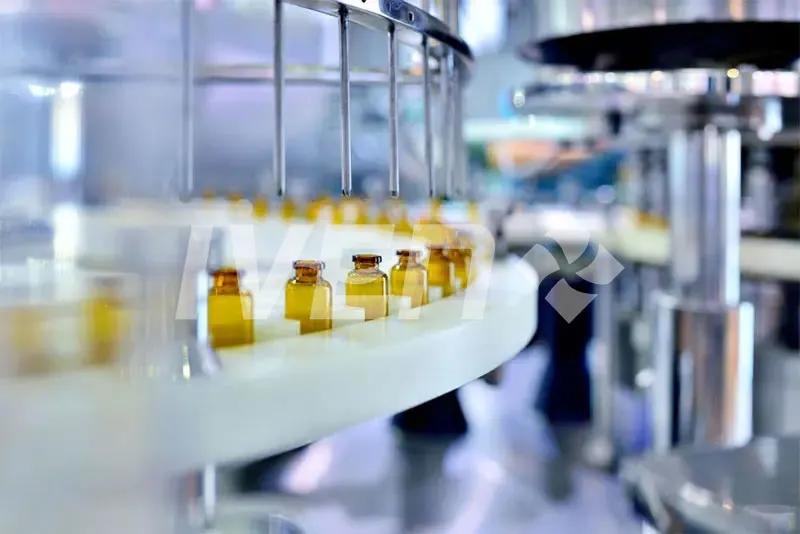
Herbal Syrup Filling Machines in the United States
For pharmaceutical manufacturers in the United States, a herbal syrup filling machine is a specialized production system designed to dose, fill, cap, and sometimes label oral liquid products with high accuracy under regulated conditions. It is commonly used for herbal cough syrups, botanical tonics, pediatric oral liquids, nutraceutical syrups, and over-the-counter medicinal formulations. Large drug makers, contract manufacturers, and growing wellness brands evaluate this equipment when they need stronger throughput, better filling consistency, cleaner changeovers, electronic batch traceability, and compliance with U.S. FDA cGMP requirements. In practical terms, the right machine helps reduce waste, stabilize product quality, and prepare a facility for long-term expansion in demanding markets such as New Jersey, California, Texas, Illinois, and Pennsylvania.
A herbal syrup filling machine is not just a bottle filler. In modern pharmaceutical production, it is part of a validated packaging process that directly affects dosage accuracy, microbiological control, line efficiency, operator safety, and product release reliability. In the United States, companies planning a new line in hubs such as Newark, Chicago, Houston, Los Angeles, or Philadelphia often compare filling systems based on three priorities: regulatory compliance, production flexibility, and total lifecycle cost.
Herbal formulations introduce added complexity because they may contain suspended particles, higher viscosity liquids, sugar-based or sugar-free carriers, natural extracts, essential oils, and ingredients that can foam during filling. A machine selected for conventional oral liquids may not perform equally well for viscous botanical syrup. That is why buyers frequently request special nozzles, anti-drip designs, CIP or SIP capability, servo-controlled pistons, explosion-proof features for alcohol-containing products, and material compatibility with stainless steel contact parts.
For expansion projects, manufacturers also look at data integrity, recipe management, line integration, and support for validation protocols. A modern system can connect bottle unscrambling, washing, filling, capping, induction sealing, labeling, cartoning, and warehouse logistics into one controlled line. This reduces manual handling and helps maintain batch consistency from bulk solution preparation through final packaging.
A herbal syrup filling machine is a packaging machine engineered to transfer a measured quantity of liquid herbal medicine into bottles or similar containers. In pharmaceutical settings, it is typically used after solution preparation, filtration, holding, and quality approval. The equipment may operate as a standalone unit or as part of a complete oral liquid production line.
Its core functions usually include bottle infeed, container positioning, volumetric or mass-based filling, foaming control, cap placement, cap tightening, rejection of nonconforming units, and production data logging. Depending on the line design, it may also include bottle rinsing, nitrogen flushing, tamper-evident sealing, and integration with inspection systems.
Typical U.S. applications include:
In pharmaceutical production, this machine is used to protect product integrity while increasing line speed. Manual filling may work in early-stage batches, but once a business needs repeatability, batch records, and commercial volumes, automated filling becomes essential. U.S. companies supplying retail chains or e-commerce distribution centers through ports and logistics corridors such as Long Beach, Savannah, Newark, and Houston especially benefit from stable output and predictable packaging quality.
Production NeedHow the Machine HelpsWhy It Matters in the United StatesPrecise dose controlServo piston or flowmeter systems maintain stable fill volumeSupports label claim accuracy and batch release confidenceHandling viscous herbal syrupSpecial nozzles and controlled filling speed reduce dripping and foamingImportant for botanical extracts and dense oral liquidsRegulatory documentationElectronic batch records and alarm logging improve traceabilityUseful for FDA inspections and internal QA reviewHigher outputMulti-head filling and automatic capping reduce bottlenecksHelps meet national distribution demandHygienic productionCIP-ready design and stainless steel product contact parts improve sanitationSupports cGMP and cleaning validation expectationsFlexible packagingChange parts allow multiple bottle sizes and cap typesUseful for contract packagers serving many SKUsThe table above shows why the machine is treated as a strategic packaging asset rather than a simple utility purchase. It influences both quality performance and business scalability.
The main application is the controlled filling of oral liquid products, but the broader value comes from production discipline. For modern U.S. pharmaceutical manufacturing, the benefits extend into compliance, labor planning, market responsiveness, and brand protection.
One major benefit is dosage consistency. Herbal medicine products often compete on trust, especially when sold through pharmacies, health chains, or practitioner channels. Underfilled bottles create compliance and customer issues, while overfilled bottles increase cost per unit. Automated systems improve repeatability from the first bottle to the final bottle in the batch.
Another benefit is reduced contamination risk. Semi-automatic or manual workflows expose the product to more operator interaction and open-room time. Enclosed transfer, sanitary piping, and integrated capping improve process control. This is particularly valuable for companies producing in FDA-regulated environments or exporting from the United States to Canada, Latin America, or the Middle East.
Machines also improve labor efficiency. In high-cost labor markets such as Boston, San Diego, Seattle, and the New York metro area, automation can significantly lower the number of operators needed per shift while also decreasing repetitive handling errors.
Additional operational benefits include faster changeovers, recipe storage, improved cap torque consistency, rejection of missing caps or fill anomalies, and easier production scheduling. Contract development and manufacturing organizations often prioritize these features because they frequently switch between product sizes, bottle shapes, and formulas.
Application AreaTypical ProductRecommended Filling ApproachKey BenefitPharmaceutical OTCHerbal cough syrupServo piston fillingHigh accuracy with viscous liquidNutraceuticalBotanical wellness tonicFlowmeter fillingFlexible for multiple bottle sizesPediatric medicineLow-volume oral syrupPrecision small-dose piston systemReliable dosing at low fill volumesAlcohol-based extractPlant tincture syrup blendExplosion-protected compatible systemSafer filling environmentContract manufacturingPrivate-label herbal productsQuick-change automatic lineFaster SKU switchingExport-oriented productionMultilingual packaged syrupIntegrated filling and labeling lineBetter traceability and logistics flowThis table highlights how different commercial segments require different technical priorities. The “best” machine depends on the product profile, batch size, and packaging strategy.
var ctx1 = document.getElementById(‘lineChartMarket’).getContext(‘2d’);var chart1 = new Chart(ctx1, { type: ‘line’, data: { labels: [‘2021’, ‘2022’, ‘2023’, ‘2024’, ‘2025’, ‘2026’], datasets: [{ label: ‘U.S. demand index for herbal syrup filling equipment’, data: [72, 79, 88, 97, 109, 123], borderColor: ‘rgb(75, 192, 192)’, backgroundColor: ‘rgba(75, 192, 192, 0.15)’, fill: false, tension: 0.25 }] }, options: { responsive: true, maintainAspectRatio: false }});The line chart reflects a realistic upward demand pattern driven by wellness product growth, pharmaceutical modernization, and replacement of older semi-automatic lines.
In the U.S. market, herbal syrup filling systems are typically grouped by automation level, filling principle, output range, and line configuration. Buyers should understand these differences before requesting quotations.
Semi-automatic models are used for pilot production, R&D, and small-scale specialty batches. They cost less upfront but depend heavily on labor and are usually not ideal for sustained commercial production.
Fully automatic linear fillers are common for mid-volume pharmaceutical and nutraceutical operations. Rotary monoblock systems are preferred when high throughput and compact layout are important. Monoblock designs can combine bottle feeding, filling, and capping in one integrated frame.
From a technical perspective, the filling principle matters. Piston fillers work well with viscous syrup and suspended formulations. Peristaltic pumps are strong for gentle transfer and sterile-sensitive smaller batches. Flowmeter systems offer flexibility and digital control for multiple formats. Vacuum and gravity systems are less common in regulated herbal pharmaceutical use unless the product properties are suitable.
Important options include laminar flow protection, anti-foam nozzles, diving nozzles, CIP or SIP modules, automatic cap sorting, torque monitoring, vision inspection, in-process weight checking, serialization support, and 21 CFR Part 11-compatible data management features.
Machine TypeBest ForOutput RangeMain StrengthMain LimitationSemi-automatic piston fillerR&D and small batches500 to 1,500 bottles per hourLow capital costHigh labor dependenceAutomatic linear fillerMid-size commercial production2,000 to 8,000 bottles per hourFlexible bottle handlingLarger footprint than compact rotary systemsRotary monoblock filler-capperHigh-volume lines6,000 to 18,000 bottles per hourHigh speed and integrationHigher investmentPeristaltic filling systemSensitive or small-dose liquids1,000 to 5,000 bottles per hourGentle product pathTube replacement adds consumable costFlowmeter-based fillerMulti-format production2,500 to 10,000 bottles per hourFast electronic adjustmentNeeds stable fluid behaviorCustom integrated oral liquid lineRegulated pharmaceutical expansionProject-specificTurnkey efficiency and validation readinessLonger planning cycleThe table shows that there is no single universal model. Selection should match product rheology, batch variability, and facility goals.
U.S. buyers often compare a dedicated herbal syrup filling line with manual filling, general-purpose liquid fillers, sachet packaging equipment, stick pack machines, or outsourcing to a contract manufacturer. Each alternative has a place, but not all are equal for regulated oral liquid production.
Manual and bench-top solutions can support development work but become risky when higher volumes require documentation, repeatability, and operator-independent performance. General-purpose fillers may appear cost-effective, yet they may not provide the cleanability, materials compliance, capping precision, or validation support expected in pharmaceutical environments.
Sachet or stick packaging can be appropriate for single-dose formats, but if your brand strategy centers on bottled syrup sold through pharmacies, e-commerce, or practitioner networks, bottle filling remains the more practical route. Outsourcing can reduce capital spending, though it may limit scheduling control, margin, and proprietary process ownership.
OptionCapital CostCompliance ReadinessScalabilityBest Use CaseManual fillingVery lowLowVery limitedLab or startup trial batchesSemi-automatic fillerLow to moderateModerateLimitedEarly commercial stageAutomatic herbal syrup fillerModerate to highHighHighPharma and nutraceutical growth linesGeneral liquid packaging machineModerateVariableModerateNoncritical or less regulated liquidsSachet or stick pack lineModerate to highHighHighSingle-dose oral liquid formatContract manufacturingLow initial, higher long-term unit costDepends on partnerModerateBrand owners without own plantFor companies seeking long-term U.S. production control, the dedicated automatic solution typically offers the best balance of quality, flexibility, and margin protection.
var ctx2 = document.getElementById(‘barChartDemand’).getContext(‘2d’);var chart2 = new Chart(ctx2, { type: ‘bar’, data: { labels: [‘OTC Pharma’, ‘Nutraceutical’, ‘Contract Mfg’, ‘Pediatric’, ‘Export’, ‘Private Label’], datasets: [{ label: ‘Estimated U.S. equipment demand score’, data: [92, 88, 81, 74, 69, 77], backgroundColor: [‘rgb(255, 99, 132)’,’rgb(54, 162, 235)’,’rgb(255, 206, 86)’,’rgb(75, 192, 192)’,’rgb(153, 102, 255)’,’rgb(255, 159, 64)’] }] }, options: { responsive: true, maintainAspectRatio: false }});The bar chart indicates that OTC pharmaceutical and nutraceutical segments currently drive the strongest equipment demand in the United States.
The U.S. market for herbal syrup filling equipment is shaped by several overlapping forces: growth in preventive wellness products, modernization of aging packaging lines, reshoring interest, demand for traceable OTC manufacturing, and rising expectations around sustainability. Regions with strong pharmaceutical and health-product activity, including New Jersey, North Carolina, California, Texas, and the Midwest, continue to invest in packaging automation.
Another factor is logistics resilience. Companies shipping through the Port of Los Angeles, Port of Long Beach, Port of Houston, Port Newark, and Savannah are more focused than before on inventory planning and packaging efficiency. A reliable filler helps reduce delays caused by rework, bottle leakage, and cap inconsistency.
Looking ahead to 2026, future trends are clear:
Policy trends also matter. As buyers respond to stricter documentation expectations and stronger quality system discipline, the market will reward suppliers that can support factory acceptance testing, site acceptance, qualification documentation, and change control.
var ctx3 = document.getElementById(‘areaChartTrend’).getContext(‘2d’);var chart3 = new Chart(ctx3, { type: ‘line’, data: { labels: [‘2021’, ‘2022’, ‘2023’, ‘2024’, ‘2025’, ‘2026’], datasets: [{ label: ‘Shift from semi-automatic to fully automatic lines (%)’, data: [34, 39, 45, 53, 61, 69], fill: true, backgroundColor: ‘rgba(75, 192, 192, 0.25)’, borderColor: ‘rgb(75, 192, 192)’, tension: 0.25 }] }, options: { responsive: true, maintainAspectRatio: false }});This area chart shows the practical migration from lower-automation setups toward fully automatic lines, a trend expected to accelerate by 2026 as quality and labor pressures continue.
Choosing a supplier is often more important than choosing the headline speed of the machine. In the United States, reliable suppliers stand out not only by equipment design but also by documentation, communication, and after-sales support.
Start by evaluating regulatory understanding. A supplier should be able to discuss hygienic design, material certificates, FAT and SAT protocols, calibration strategy, spare parts management, and support for IQ, OQ, and PQ. If the conversation stays limited to price and speed, that is usually a warning sign.
Next, examine engineering depth. Good manufacturers ask about viscosity range, bottle geometry, cap design, foaming behavior, alcohol content, cleaning process, expected output, and utility conditions. They do not sell a generic liquid filler without first reviewing your product characteristics.
Production capability also matters. A supplier with specialized manufacturing facilities for filling and packaging machinery, water systems, logistics integration, and validation-oriented design can usually support more complex projects than a trader. For buyers seeking a complete line, not just a stand-alone unit, this becomes essential.
Service capability is equally important for U.S. projects. Installation planning, commissioning, training, troubleshooting, and documentation control all affect launch timing. When a line is delayed in a market such as Atlanta, Dallas, or Cleveland, the cost of waiting can exceed the initial equipment discount.
One reason buyers review the company background and engineering experience of a supplier is to understand whether the partner can support compliance-heavy pharmaceutical projects rather than only commodity packaging. For line-wide projects, many manufacturers also look for turnkey engineering capability so that filling equipment, purified water systems, logistics, and validation can be aligned from the start.
Evaluation FactorWhat to CheckWhy It Reduces RiskRegulatory knowledgeExperience with FDA cGMP, EU GMP, WHO GMP, and validation documentsImproves inspection readinessTechnical customizationAbility to adapt nozzle design, tank systems, cap handling, and controlsEnsures fit for your actual syrupManufacturing depthIn-house production facilities and engineering teamsBetter quality consistency and project controlInstalled baseReference lines in multiple countries or regulated marketsConfirms proven executionService networkCommissioning, training, spare parts, remote supportMinimizes downtimeProject integrationAbility to connect filling with utilities, logistics, and packagingSupports future expansionThe table above can be used as a practical supplier scorecard during procurement. It helps teams compare proposals beyond price.
Capital cost varies widely based on speed, automation, bottle range, control platform, validation package, and whether the system is a stand-alone machine or a complete oral liquid line. In the U.S. market, small semi-automatic systems may fit modest budgets, while validated automatic monoblock lines with upstream and downstream integration represent a much larger investment.
Budget planning should include more than the equipment purchase price. Many projects underestimate freight, import handling, factory acceptance travel, installation, utilities, line clearance area modifications, HVAC interactions, change parts, spare parts, software features, and qualification support. For a realistic ROI analysis, buyers should compare current labor cost, expected output gain, yield improvement, cap leakage reduction, and waste reduction.
For example, a company producing 4 million bottles annually may recover investment faster if the new line lowers overfill, reduces rejects, and allows one fewer shift during nonpeak months. ROI can also improve if a line supports additional SKUs without a second purchase.
Cost ElementLow Automation ProjectMid-Level Automatic ProjectHigh-Speed Integrated ProjectMain equipment$25,000–$80,000$120,000–$350,000$400,000–$1,200,000+Change parts and format sets$3,000–$8,000$10,000–$30,000$25,000–$80,000Installation and commissioning$5,000–$15,000$20,000–$60,000$50,000–$150,000Validation supportLimited$10,000–$40,000$30,000–$100,000Utilities and facility adaptation$5,000–$20,000$20,000–$75,000$50,000–$200,000Annual spare parts and maintenance$2,000–$5,000$8,000–$20,000$20,000–$50,000These ranges are illustrative and will vary by specification. Still, they help procurement teams build realistic internal approval models.
When reviewing vendors, U.S. buyers often ask whether the supplier can provide a broader line package rather than a single isolated machine. Companies exploring available equipment options may review product portfolios for filling, utilities, and packaging systems before requesting a formal quotation. This is useful when planning future expansion in stages.
var ctx4 = document.getElementById(‘comparisonChartSuppliers’).getContext(‘2d’);var chart4 = new Chart(ctx4, { type: ‘bar’, data: { labels: [‘Compliance Support’, ‘Customization’, ‘Lifecycle Service’, ‘Integration Depth’, ‘Output Flexibility’, ‘Cost Efficiency’], datasets: [{ label: ‘Typical priorities when comparing suppliers’, data: [95, 89, 91, 86, 84, 80], backgroundColor: ‘rgb(153, 102, 255)’ }] }, options: { responsive: true, maintainAspectRatio: false }});The comparison chart reflects what procurement teams usually value most: not only equipment performance, but documentation, integration, and service over the machine lifecycle.
The biggest risk is buying a machine based on nominal speed instead of process fit. Herbal syrup can behave differently depending on temperature, sugar content, extract load, and suspended solids. A machine that runs well during a water test may not perform well with real product.
Another common risk is weak validation planning. Even a mechanically strong machine can create launch delays if material certificates, wiring drawings, software backups, instrument calibration records, and qualification protocols are incomplete. U.S. plants under strict QA governance should make documentation a purchase requirement, not an afterthought.
Facility fit is also critical. Buyers must confirm room layout, operator flow, maintenance access, bottle accumulation space, clean utility connections, and compatibility with existing labeling or cartoning equipment. Projects in older facilities around industrial corridors in New Jersey, St. Louis, or Baltimore often need layout rework before installation.
Supply chain risk should also be considered. Long lead motors, PLC components, sensors, and specialty caps can affect project timing. Ask the supplier about component sourcing, substitute control, and spare parts planning. In addition, ensure cybersecurity and access control policies are addressed when modern PLC or data systems are connected to the plant network.
From a sustainability perspective, future buyers should assess water consumption in cleaning, compressed air usage, and packaging waste. By 2026, sustainability metrics will increasingly influence supplier preference and capital approval decisions.
A strong engineering partner can reduce these risks significantly. For example, IVEN Pharmatech Engineering has built its reputation by combining pharmaceutical filling know-how with broader plant engineering. Its technological capabilities include integrated line design, customized automation, and support for regulated production standards aligned with FDA cGMP and international GMP frameworks. On the manufacturing side, the company operates multiple specialized production bases focused on filling and packaging equipment, water treatment systems, intelligent logistics, and related pharmaceutical machinery, which helps buyers seeking coordinated line execution rather than fragmented sourcing. From a service perspective, support typically extends through consulting, equipment selection, installation, commissioning, qualification assistance, training, and optimization, which is especially valuable for U.S. projects where time-to-market is expensive.
For companies planning a new project or modernization program, it can be helpful to discuss application details with an engineering team before freezing a specification. Early conversations often prevent expensive mismatches later in procurement.
1. What bottle sizes can a herbal syrup filling machine handle?Most machines can be configured for common pharmaceutical bottle sizes such as 30 ml, 60 ml, 100 ml, 120 ml, 150 ml, and 250 ml. The actual range depends on bottle shape, neck finish, and line configuration.
2. Is a piston filler better than a flowmeter filler for herbal syrup?For viscous herbal syrups, piston systems are often preferred because they provide strong volumetric consistency. Flowmeter systems can be excellent for flexible multi-SKU production, but suitability depends on liquid behavior and accuracy requirements.
3. Can one machine fill both pharmaceutical syrup and nutraceutical syrup?Yes, if the machine is designed for the product range and cleaning validation requirements. However, facilities should still evaluate cross-contamination risk, line clearance procedures, and documentation needs.
4. What compliance features should U.S. buyers request?Common requests include stainless steel contact parts, sanitary design, alarm history, recipe control, batch reporting, calibration support, FAT documentation, and IQ/OQ documentation assistance. If needed, buyers may also request software features compatible with electronic records practices.
5. How long does installation usually take?A stand-alone system may be installed in days, while a complete integrated line may take several weeks depending on utilities, facility readiness, FAT closure, and qualification scope.
6. What is the expected lifespan of a quality machine?With proper maintenance, stainless steel pharmaceutical filling equipment can remain in operation for many years. Well-built machines with robust components and spare parts support often deliver long service life and lower cost per bottle over time.
7. Should small U.S. brands buy equipment or outsource first?If demand is uncertain, outsourcing may be practical at the beginning. If the company needs stronger margin control, confidential formulations, stable scheduling, or rapid product launches, owning equipment may offer better long-term value.
8. What should be included in a request for quotation?Include syrup viscosity, bottle sizes, cap type, target speed, fill volume range, cleaning method, utility conditions, room layout, compliance needs, and whether the system must connect to upstream preparation or downstream packaging.
9. Are herbal syrup filling machines relevant only to large pharmaceutical companies?No. They are also relevant to mid-size nutraceutical manufacturers, contract packagers, and fast-growing wellness brands. The key is matching the machine scale to the business stage.
10. What makes a supplier suitable for complex U.S. projects?Strong engineering communication, proven regulated-market experience, customized design, manufacturing control, validation support, and dependable after-sales service are usually the deciding factors.
In summary, herbal syrup filling machines play an increasingly important role in United States pharmaceutical and health-product manufacturing. The best investment is not simply the fastest machine, but the system that aligns product behavior, compliance expectations, facility realities, expansion plans, and lifecycle support. Buyers who evaluate equipment through that broader lens are far more likely to achieve reliable production, predictable ROI, and long-term operational resilience.
-
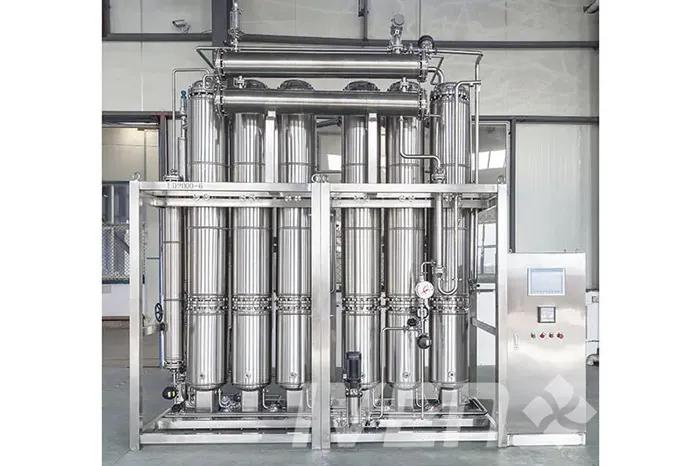
RO vs EDI Pharmaceutical Water Systems in the United States
Pharmaceutical water is one of the most critical utilities in modern drug manufacturing. In the United States, facilities producing injectables, vaccines, biologics, oral liquids, dialysis solutions, and medical consumables depend on highly controlled water systems to meet USP, FDA cGMP, and internal quality standards. When engineering teams compare reverse osmosis and electrodeionization, the real question is not simply which technology is newer or cheaper. The practical question is which configuration will consistently deliver the required water quality, microbial control, operating efficiency, and long-term validation performance for a specific plant.
For U.S. manufacturers in hubs such as New Jersey, Boston, Philadelphia, Raleigh-Durham, Houston, and the San Francisco Bay Area, the choice between RO and EDI affects capital planning, utility load, documentation, maintenance, sanitization strategy, and inspection readiness. In many projects, the best answer is not RO alone or EDI alone, but a properly designed chain such as pretreatment + double-pass RO + EDI + UV + ultrafiltration + loop distribution, or RO combined with distillation when Water for Injection is required.
RO vs EDI pharmaceutical water systems are essential infrastructure for pharmaceutical manufacturers because they provide repeatable production of high-purity process water under GMP conditions. In the United States, these systems support compliance for Purified Water and, depending on the process design, can also act as a pretreatment stage for Water for Injection generation. Reverse osmosis removes dissolved salts, particulates, organics, and many microorganisms through semi-permeable membranes. EDI then polishes the RO permeate by continuously removing ionized species without the chemical regeneration associated with traditional mixed-bed ion exchange.
For most U.S. pharmaceutical facilities, RO is the workhorse for bulk demineralization, while EDI is the high-efficiency finishing step used when stable low conductivity and reduced chemical handling are priorities. Plants manufacturing sterile injectables, vaccines, biologics, and high-value formulations typically favor integrated systems because they improve quality consistency, support continuous operation, and reduce human intervention. The importance of the decision rises further in GMP environments where each utility excursion can affect batch release timelines, deviation management, and production scheduling.
In short, if a facility needs reliable high-purity water, low operating variability, easier automation, and strong validation support, an RO + EDI configuration is often preferred for Purified Water systems. If the plant also needs Water for Injection, distillation or membrane-based WFI strategies may be incorporated depending on user requirement specifications, local expectations, and corporate quality policy.
An RO vs EDI pharmaceutical water system refers to the engineering comparison and selection of reverse osmosis and electrodeionization technologies within a pharmaceutical water treatment train. This is not a standalone marketing phrase. It is a real design decision that influences the entire utility architecture of a GMP facility, from feed water pretreatment to storage tank design, hot or ambient loop distribution, sanitary piping slope, online monitoring, and computerized alarm management.
Pharma manufacturers need these systems because municipal water, well water, and standard industrial treatment methods are not adequate for validated pharmaceutical production. Even in regions with relatively stable city water, such as many parts of the Northeast United States, source water quality can fluctuate with season, rainfall, infrastructure aging, or upstream industrial load. Conductivity, hardness, TOC, chlorine, chloramines, endotoxin risk, and microbial burden can all vary enough to threaten finished product quality.
In a compliant pharmaceutical plant, water is used not only as an ingredient but also as a cleaning medium, equipment rinse medium, solution preparation utility, and support utility for sterile processes. That means the water system must be designed as a critical GMP system rather than a generic utility skid. User requirements often include continuous recirculation, dead-leg control, hygienic valves, 316L stainless steel contact surfaces, automated sanitization, data logging, and support for IQ, OQ, and PQ.
RO addresses the major removal burden. EDI then helps achieve low conductivity and stable ionic purity without frequent regeneration chemicals. The result is a cleaner, more automated, and often more sustainable system than older deionization methods. For many U.S. projects, especially new greenfield facilities near logistics centers like Newark, Savannah-linked distribution corridors, Chicago, or Los Angeles, this combination aligns well with both performance and lifecycle cost goals.
Core Functions of Pharmaceutical Water Technologies Technology Primary Function Typical Position in System Main Contaminants Removed Strength Limitation Pretreatment Protect downstream units Front end Suspended solids, chlorine, hardness Extends membrane life Does not create pharma-grade water alone Single-pass RO Bulk desalination Main purification stage Dissolved salts, organics, microbes High rejection, proven technology May need polishing for tighter specs Double-pass RO Higher purity polishing After first RO stage Residual ions and contaminants Lower conductivity Higher capital and footprint EDI Continuous deionization After RO Ionized species No chemical regeneration Needs stable RO feed quality Distillation WFI production Final high-purity generation Ions, endotoxins, microbes Excellent for WFI Higher energy demand UF/UV/Ozone Microbial and TOC control support Polishing or loop control Bioburden, endotoxins, organics Improves sanitization strategy Must be integrated correctlyThe table above shows why no single technology solves every requirement. In practice, successful pharmaceutical water design depends on matching the process objective to the right technology chain, not selecting one piece of equipment in isolation.
RO and EDI systems are used across a wide range of pharmaceutical operations in the United States. The most common application is Purified Water generation for non-parenteral manufacturing and as pretreatment for more demanding systems. In many plants, Purified Water supports formulation, buffer preparation, CIP final rinsing, vessel cleaning, component washing, and environmental support processes. Where Water for Injection is required, RO and EDI often remain highly relevant as the front-end purification stages before distillation or membrane WFI production.
The benefits are operational as much as chemical. A well-designed RO + EDI system can reduce conductivity variation, lower chemical exposure, minimize manual resin handling, improve automation, and simplify trend-based preventive maintenance. This is particularly valuable in multi-product GMP sites where changeover speed and quality consistency are closely linked.
Facilities producing sterile injectables in New Jersey or biologics in Massachusetts often prioritize microbial control and documentation quality. Manufacturers in Texas or California may place additional focus on water recovery and energy efficiency due to utility pricing and sustainability goals. Across all of these regions, the common benefits are consistency, compliance, and lower risk of unplanned downtime.
Main Applications of Pharmaceutical Water in GMP Facilities Application Area Typical Water Type Why RO Helps Why EDI Helps Operational Benefit Risk If Underspecified Oral liquid formulation Purified Water Removes dissolved solids and microbes Improves conductivity consistency Stable batch quality Off-spec product chemistry Biologic buffer prep Purified Water / high-purity utility Reduces ionic contamination Tight ionic polishing Process reproducibility Sensitive process variability CIP final rinse Purified Water Removes feed impurities Supports low residue carryover Cleaning validation support Residue or conductivity failures Component washing Purified Water / WFI pretreatment High rejection of impurities Improved finishing quality Reduced contamination risk Packaging contamination issues Injectable preparation WFI support train Efficient pretreatment High-purity feed to final generation Protects distiller or membrane WFI system Increased endotoxin or compliance risk Lab and QC support Purified Water Reliable baseline purification Steady analytical-grade feed Better instrument reliability Testing inconsistency Medical consumables production Purified Water Controls inorganic load Reduces ionic residues Improves final cleanliness Product complaint exposureThe applications above show that pharmaceutical water is not confined to one workshop. It touches manufacturing, cleaning, quality control, maintenance, and sterile assurance. This is why experienced buyers evaluate the water system as part of the plant-wide GMP strategy rather than as a commodity utility purchase.
For companies planning broader facility development, it is useful to review integrated engineering and facility execution approaches alongside utility decisions. A turnkey perspective can reduce interface risk between water generation, distribution, cleanroom layout, and production equipment. More detail on this type of integrated project delivery can be found at pharmaceutical turnkey project solutions.
There are four common design categories in the U.S. pharmaceutical market. The first is RO-only, usually used in less demanding industrial settings or as an intermediate purification step, but it is rarely the best long-term answer for a full GMP pharmaceutical water system on its own. The second is RO + EDI, the most common modern arrangement for Purified Water where low conductivity, automation, and lower chemical dependency are priorities. The third is distillation-based systems, especially multi-effect distillation, which remain a benchmark solution for Water for Injection. The fourth is the hybrid model, where RO, EDI, UV, ultrafiltration, and distillation are combined in a tailored sequence.
Hybrid systems are increasingly common because they reflect real production complexity. A sterile injectable plant in the United States may need Purified Water for general process use, highly controlled feed water to a multi-effect distiller for WFI generation, and purified steam for sterilization support. In such cases, the water treatment architecture must be designed as an interconnected GMP utility network.
Comparison of Main Pharmaceutical Water System Types System Type Best Use Case Typical Purity Level Capital Cost Operating Cost Common U.S. Buyer Profile Single-pass RO Basic pretreatment or non-critical utility support Moderate Low Moderate Small support processes or pre-stage utility users Double-pass RO Improved Purified Water production High Moderate Moderate Mid-size GMP plants RO + EDI Modern Purified Water systems High to very high Moderate to high Low to moderate FDA-focused plants seeking automation Distillation WFI production Very high High High Sterile injectable and vaccine facilities RO + EDI + Distillation Large integrated sterile plants Very high High Moderate to high Complex multi-product sites Hybrid membrane + UF + UV Sustainability-focused advanced systems High to very high High Moderate New greenfield biotech campusesThe table indicates that technology selection is not merely a technical issue. It is also linked to product mix, expansion plans, corporate environmental goals, and internal validation expectations. Buyers in the United States should therefore align the water system choice with both current GMP needs and a 5- to 10-year growth plan.
Traditional water treatment in pharmaceutical-adjacent sectors often relied heavily on softeners, activated carbon, and chemically regenerated ion exchange resin. While these technologies remain useful as pretreatment tools, they are generally less attractive as primary high-purity solutions for modern GMP pharmaceutical production. The reasons are straightforward: more chemical handling, greater operator dependence, higher excursion risk, and weaker integration with automated monitoring and continuous control strategies.
RO provides broad-spectrum contaminant reduction and predictable performance when supported by proper pretreatment. EDI improves on this by removing the need for frequent chemical regeneration, which reduces operational complexity and waste streams. Compared with traditional mixed-bed systems, EDI is often cleaner, more consistent, and easier to integrate into electronic batch-adjacent utility oversight.
Which one should you choose? If your facility only needs pretreated process water for a non-critical industrial application, traditional methods may still be acceptable. If your facility is a GMP pharmaceutical site in the United States with FDA expectations, frequent audits, and strong traceability requirements, RO + EDI will usually be the more future-ready solution for Purified Water generation. For WFI, distillation or an accepted membrane-based configuration remains the better route.
RO + EDI vs Traditional Water Treatment Methods Decision Factor Traditional Ion Exchange RO Only RO + EDI Distillation Best Choice Scenario Chemical consumption High Low Very low Low chemical, high energy RO + EDI for lower chemical dependence Automation level Moderate High High High RO + EDI or distillation Microbial control support Weaker Good Good Excellent Distillation for WFI, RO + EDI for PW Operating consistency Variable Good Very good Very good RO + EDI for steady PW quality Validation friendliness Moderate Good Very good Very good RO + EDI or distillation Lifecycle cost Moderate to high Moderate Often favorable High RO + EDI for many PW systems Use for WFI No No As pretreatment only Yes Distillation or validated membrane WFIFor U.S. buyers making this decision, a useful approach is to create a URS that clearly separates water quality requirements, distribution loop expectations, sanitization strategy, alarm philosophy, sampling plan, and documentation deliverables. Once those are defined, the technology choice becomes much easier and more defensible during project approval.
The U.S. market for pharmaceutical water systems is growing steadily due to expansion in biologics, sterile injectables, cell and gene therapy support facilities, and domestic manufacturing resilience initiatives. Investment is particularly visible around Boston-Cambridge, New Jersey, North Carolina’s Research Triangle, Indiana, and parts of Texas where new life science campuses and contract manufacturing sites continue to expand.
Several trends are shaping the market through 2026 and beyond. First, sustainability is no longer optional. Buyers increasingly ask for lower reject water ratios, energy optimization, heat recovery, and reduced use of regeneration chemicals. Second, digitalization is becoming standard. Online conductivity, TOC, flow, pressure, temperature, and trending dashboards are now expected, not premium extras. Third, modular skids are gaining popularity because they shorten on-site installation time and reduce construction coordination challenges. Fourth, regulatory scrutiny remains intense, so suppliers able to support documentation, FAT, SAT, IQ/OQ, and data integrity expectations have a clear advantage.
Policy and supply chain trends also matter. U.S. efforts to strengthen domestic pharmaceutical manufacturing encourage investment in new facilities and upgrades to legacy plants. At the same time, rising utility costs in certain states make efficient RO + EDI and hybrid designs more attractive than older high-consumption systems.
var ctx1 = document.getElementById(‘lineChartMarket’).getContext(‘2d’);var chart1 = new Chart(ctx1, { type: ‘line’, data: { labels: [‘2022’, ‘2023’, ‘2024’, ‘2025’, ‘2026’, ‘2027’, ‘2028’, ‘2029’], datasets: [{ label: ‘U.S. Pharmaceutical Water System Market Index’, data: [100, 108, 117, 128, 140, 154, 169, 185], borderColor: ‘rgb(54, 162, 235)’, backgroundColor: ‘rgba(54, 162, 235, 0.15)’, fill: false, tension: 0.25 }] }, options: { responsive: true, maintainAspectRatio: false }});The line chart above illustrates a realistic growth trajectory for the U.S. pharmaceutical water systems market. The direction reflects strong investment in high-purity utilities and modernization across both established and emerging pharma clusters.
var ctx2 = document.getElementById(‘barChartDemand’).getContext(‘2d’);var chart2 = new Chart(ctx2, { type: ‘bar’, data: { labels: [‘Sterile Injectables’, ‘Biologics’, ‘Vaccines’, ‘Oral Liquids’, ‘CDMO Facilities’, ‘Medical Consumables’], datasets: [{ label: ‘Estimated 2026 U.S. Demand Score’, data: [92, 88, 81, 67, 85, 63], backgroundColor: [ ‘rgb(255, 99, 132)’, ‘rgb(75, 192, 192)’, ‘rgb(255, 205, 86)’, ‘rgb(153, 102, 255)’, ‘rgb(54, 162, 235)’, ‘rgb(201, 203, 207)’ ] }] }, options: { responsive: true, maintainAspectRatio: false }});The bar chart highlights where demand is strongest. Sterile and biologic facilities are leading the market because they have the strictest water quality needs and the highest cost of utility-related production interruptions.
var ctx3 = document.getElementById(‘areaChartTrend’).getContext(‘2d’);var chart3 = new Chart(ctx3, { type: ‘line’, data: { labels: [‘2022’, ‘2023’, ‘2024’, ‘2025’, ‘2026’, ‘2027’], datasets: [{ label: ‘Share of New Projects Using Hybrid or RO+EDI Designs’, data: [46, 52, 59, 66, 72, 78], fill: true, backgroundColor: ‘rgba(75, 192, 192, 0.25)’, borderColor: ‘rgb(75, 192, 192)’, tension: 0.25 }] }, options: { responsive: true, maintainAspectRatio: false }});This area chart shows the market shift toward RO + EDI and hybrid systems. The trend is driven by sustainability targets, automation, and the need for scalable, validation-friendly designs.
In the United States, the most reliable supplier is not necessarily the one with the lowest quote or the biggest brochure. A dependable pharmaceutical water partner should understand GMP utility design, sanitary engineering, documentation, validation support, and long-term service expectations. Buyers should review not just the skid but the full delivery capability behind it.
There are three practical dimensions to assess. First is technological capability. Can the supplier design RO, EDI, distillation, storage, and distribution as one coherent system? Can it support online monitoring, automation logic, alarm hierarchy, and data recording suitable for GMP use? Second is manufacturing capability. Does the supplier have controlled fabrication capacity, material traceability, and proven experience with sanitary stainless steel construction? Third is service capability. Can it support FAT, SAT, commissioning, validation documentation, training, troubleshooting, and lifecycle optimization?
Some international suppliers are attractive because they combine engineering depth with broad equipment portfolios, allowing better utility-to-process integration. Shanghai IVEN Pharmatech Engineering, for example, has built its reputation around integrated pharmaceutical engineering with dedicated manufacturing in pharmaceutical water treatment, filling and packaging machinery, logistics systems, and related production technologies. This matters when a U.S. buyer wants to reduce interface gaps between the utility system and the wider plant.
From a technology standpoint, experienced engineering companies add value when they can tailor RO units, EDI modules, multi-effect water distillers, purified steam generators, and distribution systems to the project rather than forcing a standard package onto a complex GMP process. From a manufacturing standpoint, durable stainless steel construction, repeatable skid fabrication, and long equipment service life are major indicators of supplier maturity. From a service standpoint, the ability to support documentation, qualification, staff training, installation, and optimization after startup often determines whether the project succeeds smoothly.
Supplier Evaluation Checklist for U.S. Pharmaceutical Water Projects Evaluation Item Why It Matters Low-Risk Indicator Warning Sign Questions to Ask Weight GMP knowledge Supports compliance and validation USP/FDA-aware documentation set Industrial-only references How do you structure IQ/OQ support? High Technology range Avoids poor system matching RO, EDI, distillation, loops Only one core product Can you supply hybrid architectures? High Fabrication quality Impacts reliability and hygiene Sanitary stainless standards Weak weld and finish control What are your material and weld controls? High Validation deliverables Speeds project acceptance FAT/SAT/IQ/OQ packages Minimal documents Which protocols are included? High Service responsiveness Reduces downtime risk Training and remote support Sales only, weak after-sales What is your support model in North America? Medium Project integration ability Prevents interface failures Turnkey or cross-discipline coordination Skid-only mindset Can you coordinate with process and cleanroom teams? High Track record Provides execution confidence International references Unverified claims Can you share similar project cases? MediumAs part of due diligence, buyers should ask for a sample document package, P&ID approach, material specifications, automation narrative, and reference projects. A broader view of an engineering partner’s background is available through the company overview and engineering profile. For direct quotation, project discussion, or technical consultation, U.S. teams can also use the project contact page.
var ctx4 = document.getElementById(‘comparisonChartSupplier’).getContext(‘2d’);var chart4 = new Chart(ctx4, { type: ‘bar’, data: { labels: [‘Compliance Support’, ‘Technology Breadth’, ‘Customization’, ‘Lifecycle Service’, ‘Manufacturing Depth’, ‘Cost Efficiency’], datasets: [{ label: ‘Integrated Pharma Engineering Supplier Score’, data: [91, 89, 93, 88, 90, 84], backgroundColor: ‘rgb(153, 102, 255)’ },{ label: ‘Generic Industrial Supplier Score’, data: [62, 54, 49, 51, 66, 79], backgroundColor: ‘rgb(255, 159, 64)’ }] }, options: { responsive: true, maintainAspectRatio: false }});The comparison chart reinforces an important buying lesson: in pharmaceutical water, a low initial equipment price often hides higher lifecycle risk if the supplier lacks GMP engineering depth, validation support, or integration capability.
Budget planning for pharmaceutical water systems in the United States should include far more than skid price. Serious buyers evaluate total installed cost, commissioning, qualification, utility consumption, maintenance labor, spare parts, membrane replacement, loop sanitization strategy, and the financial impact of downtime. For a GMP facility, even one lost production day can outweigh a large portion of the utility system cost difference between a basic design and an optimized design.
RO-only systems generally have lower initial capital cost, but they may require additional polishing or tighter operational control to maintain long-term specification confidence. RO + EDI systems often cost more upfront, yet they can deliver savings through lower chemical use, reduced manual intervention, and more stable quality. Distillation adds significant capital and energy costs but remains the preferred path where WFI generation is necessary.
ROI in this sector is usually achieved through reduced deviation risk, faster release confidence, lower utility waste, less chemical handling, and stronger uptime. For a U.S. CDMO or sterile plant, the return can be especially strong because water excursions can delay high-value production campaigns.
Typical Budget Elements for Pharmaceutical Water Projects Cost Element RO Only RO + EDI RO + EDI + Distillation Budget Note ROI Impact Equipment skid Lower Moderate High Main package price Direct capex Pretreatment Required Required Required Never underbudget this item Protects lifecycle cost Storage and distribution loop Moderate Moderate High Often underestimated Major quality impact Automation and monitoring Moderate Moderate to high High Critical for GMP visibility Improves control and audit readiness Qualification and documentation Moderate Moderate High Should be planned early Speeds acceptance Operating utilities Moderate Low to moderate High Depends on local water and energy cost Major OPEX driver Maintenance and consumables Moderate Low to moderate Moderate to high Membranes, lamps, sensors, gaskets Lifecycle planning itemA practical ROI model should consider three scenarios: baseline operation, moderate excursion reduction, and full optimization after digital trending and preventive maintenance. This provides a more realistic investment case for plant management than a simple equipment payback estimate.
The most common risk is underdefining the requirement. If the URS is vague, suppliers may quote systems that look similar on paper but differ significantly in sanitary design, automation level, and qualification support. Another major risk is ignoring feed water variability. A design that works well in one location may struggle in another if local hardness, chloramines, or seasonal organics are different. This is highly relevant across the United States, where source water conditions can vary from the Great Lakes region to the Gulf Coast and from the Mid-Atlantic to the Southwest.
Microbial control is another frequent challenge. Buyers sometimes focus heavily on conductivity while underestimating loop design, tank vent filtration, spray coverage, dead-leg control, and sanitization frequency. In reality, water distribution often creates more long-term trouble than generation.
Project delivery risk also matters. Late design changes, poor documentation coordination, weak FAT discipline, and unclear responsibility between utility supplier and EPC team can delay qualification. This is why many buyers prefer suppliers with integrated engineering capability rather than equipment-only vendors.
Key Risks and Mitigation Measures Risk How It Appears Business Impact Technical Cause Mitigation Priority Feed water mismatch Frequent alarms or poor output quality Downtime and rework Weak pretreatment design Detailed source water study High Microbial excursion Bioburden trend increases Batch delay and investigation Loop design or sanitization gaps Sanitary distribution design and routine trending High Underqualified supplier Incomplete documents, poor FAT Project delay Lack of GMP experience Audit supplier capability before award High Undersized capacity Peak demand shortfalls Production bottlenecks Poor future planning Design for peak and expansion margins Medium High OPEX Unexpected utility bills Reduced ROI Low recovery or energy inefficiency Model lifecycle cost, not just capex Medium Validation delay Late startup approval Lost launch time Poor document alignment Plan DQ/FAT/SAT/IQ/OQ early High Spare parts and service gap Slow recovery after failure Extended downtime Weak support model Confirm service plan and critical spares MediumIn real projects, risk reduction often comes from stronger cross-functional planning rather than from buying the most expensive system. Engineering, QA, production, validation, and maintenance should all participate in specification review.
Buyers comparing system providers can also review available product categories at pharmaceutical equipment and utility solutions to understand how utility systems fit into wider plant investment.
Is RO better than EDI for pharmaceutical water?They do different jobs. RO is usually the main purification stage, while EDI is the polishing stage after RO. In many GMP Purified Water systems, the best solution is RO + EDI rather than one or the other alone.
Can EDI replace RO?No. EDI requires stable, low-conductivity feed water and is typically installed downstream of RO. Without RO pretreatment, EDI performance and reliability can suffer.
Is RO + EDI enough for Water for Injection?Usually RO + EDI serves as excellent pretreatment, but WFI generation typically requires distillation or a validated membrane-based WFI process depending on facility standards and regulatory strategy.
What industries use pharmaceutical water systems in the United States?Sterile injectable manufacturing, biologics, vaccines, oral liquid drugs, dialysis solution production, medical device and consumables production, and CDMO facilities all rely on high-purity pharmaceutical water systems.
How long does a project usually take?It depends on complexity, but a pharmaceutical water generation and distribution project may require several months for design, fabrication, FAT, installation, commissioning, and qualification. Integrated planning reduces delays.
What should U.S. buyers ask for in a supplier proposal?Ask for water quality assumptions, P&ID, component list, automation scope, hygienic design details, material certificates, FAT plan, qualification support, spare parts list, service model, and lifecycle cost estimate.
What makes an engineering partner valuable beyond equipment price?Technological capability, manufacturing quality, and service depth. A partner that can support compliance, customization, and long-term operational success usually creates lower total project risk than a low-cost generic vendor.
Why do integrated engineering companies stand out?Because they can align pharmaceutical water with process equipment, facility layout, and validation schedules. Companies with dedicated manufacturing and turnkey execution experience often reduce interface problems and accelerate startup.
For U.S. pharmaceutical manufacturers evaluating new builds, line expansions, or legacy system upgrades, the most practical conclusion is clear: choose a pharmaceutical water system based on product risk, compliance needs, source water reality, and long-term operating strategy. In many cases, RO + EDI is the strongest answer for Purified Water, while hybrid systems including distillation remain essential for higher-purity sterile applications. The best outcomes usually come from working with a supplier that combines technology depth, disciplined manufacturing, and full lifecycle service.