United States Guide to Pediatric Multi-Chamber IV Bags
For pharmaceutical manufacturers and hospital supply planners in the United States, multi-chamber IV bag pediatric nutrition systems offer a practical way to prepare advanced parenteral nutrition products while keeping incompatible or unstable ingredients separated until activation. This design supports better shelf stability, lower contamination risk, improved dosing workflow, and safer administration for neonatal and pediatric patients. In a market shaped by strict FDA expectations, hospital quality standards, and growing demand for customized nutrition support, production capacity for these bags has become strategically important.
Across the United States, demand is strongest in children’s hospitals, NICUs, tertiary care centers, compounding-focused health systems, and contract manufacturing environments serving regional distribution networks through hubs such as Los Angeles, Houston, New York, Savannah, and Chicago. Buyers are no longer looking only at filling speed; they are also evaluating film compatibility, chamber integrity, sterile assurance, automation, validation readiness, and long-term lifecycle service.
This guide explains the technology, product types, investment logic, and supplier evaluation criteria behind multi-chamber IV bag pediatric nutrition production, with special attention to the operational realities of the U.S. market.
Quick Answer: Why Multi-Chamber IV Bags for Pediatric Nutrition Matter

A multi-chamber IV bag for pediatric nutrition is a sterile container divided into two or more compartments that separately hold amino acids, dextrose, lipids, electrolytes, trace elements, or other formulation components until the point of activation. Once the seals are broken, the contents are mixed for infusion. For pediatric use, this approach is especially valuable because patient tolerance, dose precision, and product stability are more sensitive than in standard adult applications.
The main value for U.S. pharmaceutical companies is that multi-chamber technology supports the manufacture of higher-value IV nutrition products with stronger stability profiles and better logistics efficiency than many pre-mixed alternatives. It can reduce waste, extend usable storage windows, simplify hospital preparation steps, and improve the consistency of commercially produced pediatric nutrition solutions.
In practical terms, manufacturers choose this format when they want to:
- Separate ingredients that degrade when stored together
- Reduce compounding complexity in hospital pharmacies
- Support emergency or decentralized care settings
- Improve packaging convenience for neonatal and pediatric formulations
- Meet rising quality and traceability expectations in the United States
- Expand premium sterile product portfolios
For buyers assessing equipment partners, strong process engineering matters as much as the bag design itself. Companies seeking an integrated route often review partners with sterile filling, water systems, solution preparation, packaging automation, and compliance capabilities under one roof. IVEN Pharmatech Engineering presents this integrated model through its company background, combining pharmaceutical engineering and equipment specialization for advanced infusion manufacturing projects.
What a Multi-Chamber IV Bag for Pediatric Nutrition Is and Its Main Advantages

In pediatric nutrition, every formulation decision has outsized importance because the end users may be premature infants, neonates, or children with limited metabolic reserves. Multi-chamber IV bag systems are therefore designed not simply as packaging, but as a stability and safety platform.
A typical pediatric nutrition bag may contain separate chambers for amino acid solution, glucose solution, and lipid emulsion, with optional pathways for vitamins or trace elements at a later stage. The internal peelable seals or frangible valves remain intact through storage and transportation. At the bedside or during final preparation, activation blends the contents into a ready-to-administer parenteral nutrition mixture.
Main advantages include:
- Enhanced stability: Separating reactive ingredients minimizes oxidation, precipitation, and emulsion instability.
- Improved safety: Fewer manual compounding steps may reduce handling errors and contamination exposure.
- Operational efficiency: Hospitals can save cleanroom time and reduce urgent preparation burdens.
- Distribution flexibility: Products can be shipped through national cold-chain or controlled logistics channels with more predictable handling.
- Standardization: Manufacturers can offer validated formula families suitable for different pediatric weight categories.
- Inventory optimization: A single platform can support multiple formulations with modular production logic.
The advantages are especially relevant for U.S. hospital systems facing pharmacist labor shortages, tighter sterile compounding oversight, and pressure to maintain uninterrupted supply during seasonal surges. In states with large pediatric referral centers such as Texas, California, Florida, and Massachusetts, procurement teams increasingly compare bag design with total clinical workflow impact rather than unit cost alone.
| Feature | Two-Chamber Bag | Three-Chamber Bag | Pediatric Relevance | Manufacturing Impact | Hospital Benefit |
|---|---|---|---|---|---|
| Ingredient separation | Basic | Advanced | Supports more precise compatibility management | Requires stronger seal design | Lower preparation complexity |
| Formula flexibility | Moderate | High | Better for variable nutrition needs | More filling stations needed | More treatment options |
| Shelf stability potential | Good | Very good | Critical for sensitive pediatric components | Higher validation depth | Reduced waste |
| Activation workflow | Simpler | Slightly more complex | Still manageable in hospital settings | More testing points | Controlled bedside preparation |
| Bag design cost | Lower | Higher | Depends on therapeutic value | Higher tooling and automation needs | May be offset by lower labor burden |
| Use case | Standardized PN combinations | Higher-complexity nutrition products | Useful for NICU and tertiary care | Supports product line expansion | Supports specialized care programs |
The table shows that the best design is not always the simplest one. In the U.S. pediatric setting, product flexibility and stability often justify the more advanced three-chamber format when clinical value is clear.
Clinical Benefits and Hospital Applications of Pediatric Multi-Chamber IV Bag Production

Clinical demand in the United States is driven by NICUs, PICUs, pediatric oncology units, GI surgery centers, and home infusion programs for long-term nutrition support. In all of these settings, multi-chamber IV bag pediatric nutrition products can provide a safer bridge between pharmaceutical manufacturing and patient care delivery.
Key clinical benefits include reduced delay in therapy initiation, more standardized nutrient delivery, and lower dependence on urgent onsite compounding. This is important when hospitals are operating under USP expectations, internal pharmacy sterility protocols, and supply continuity goals. Major pediatric institutions in cities like Boston, Philadelphia, Cincinnati, and Seattle increasingly prefer products that simplify workflow without compromising formulation integrity.
Applications commonly include:
- Neonatal parenteral nutrition for premature infants
- Post-operative pediatric nutrition support
- Short bowel syndrome management
- Critical care nutrition in PICU settings
- Oncology-related nutrition support
- Backup supply for compounding disruptions
The production side must align with these applications. Bags must be designed for reliable seal break, homogeneous mixing, low extractables risk, robust sterilization strategy, and traceable batch control. That is why buyers often prefer solution providers capable of linking formulation preparation, sterile filling, inspection, overpouching, and logistics integration. For companies exploring broader factory planning, turnkey pharmaceutical engineering resources such as integrated turnkey solutions can be relevant when evaluating expansion beyond a single line purchase.
| Hospital Application | Typical Patient Group | Why Multi-Chamber Helps | Workflow Benefit | Risk Reduction Area | Priority in U.S. Market |
|---|---|---|---|---|---|
| NICU nutrition | Premature infants | Protects unstable ingredients until use | Faster readiness | Less compounding exposure | Very high |
| PICU support | Critically ill children | Enables standardized emergency stock | Rapid deployment | Reduced bedside error risk | High |
| Pediatric surgery recovery | Short-term PN patients | Supports consistent nutrient delivery | Simplified pharmacy planning | Lower preparation variability | High |
| Oncology care | Immunocompromised children | Reduces handling steps | Cleaner administration pathway | Supports infection control goals | High |
| Home infusion transition | Long-term support patients | More practical storage and transport | Better caregiver usability | Lower misuse likelihood | Moderate |
| Compounding shortage backup | Health systems | Provides ready-to-activate alternatives | Business continuity | Less service disruption | Very high |
The table highlights why the format has moved beyond a niche product category. It increasingly functions as a resilience tool for U.S. pediatric care networks.
Common Types of Pediatric Multi-Chamber IV Bags and Film Material Options
Not all multi-chamber bags are the same. The ideal structure depends on formulation sensitivity, sterilization method, target shelf life, filling speed, and downstream distribution conditions. In the United States, material selection also intersects with hospital preferences for DEHP-free, latex-free, non-PVC, and environmentally improved packaging options.
Common pediatric nutrition bag types include:
- Two-chamber bags for simpler amino acid and dextrose systems
- Three-chamber bags for amino acid, glucose, and lipid separation
- Customized chamber geometry bags for low-volume pediatric dosing
- Light-protective overwrapped bags for photosensitive ingredients
- Ready-to-mix platforms designed for extended institutional storage
Film options usually include multilayer non-PVC coextruded structures, polypropylene-based systems, and specialized high-barrier films. Material choice influences oxygen transmission, moisture resistance, flex-crack tolerance, sterilization performance, and port weld strength.
| Film Material | Typical Properties | Advantages | Limitations | Best Fit Use | U.S. Buyer Focus |
|---|---|---|---|---|---|
| Non-PVC multilayer film | Flexible, clear, DEHP-free | Widely accepted for infusion bags | Requires strong supplier consistency | Mainstream pediatric nutrition | High |
| PP-based film structure | Heat resistant, chemically stable | Good sterilization compatibility | Can be less flexible than some films | Robust process environments | High |
| EVA-containing structures | Soft and impact tolerant | Good low-temperature handling | Barrier performance varies | Cold-chain sensitive logistics | Moderate |
| High-barrier coextruded film | Lower oxygen transmission | Supports sensitive formulations | Higher material cost | Longer shelf-life products | Very high |
| Light-protective layered film | Enhanced UV/light shielding | Protects photosensitive additives | Can reduce visual inspection clarity | Vitamin-sensitive formulas | Moderate |
| Recyclability-improved mono-material concepts | Sustainability-oriented | Supports 2026 ESG goals | Still emerging for sterile use | Future product development | Growing |
For U.S. buyers, material qualification should include extractables and leachables assessment, seal robustness studies, transportation simulation, and compatibility with terminal sterilization or aseptic processing strategy. Ports, tubing interfaces, and overpouch materials also matter.
Manufacturers comparing equipment platforms often review whether the supplier can support multiple bag formats on one line. This matters for product portfolio flexibility and future launches. Equipment portfolios available through a specialized pharmaceutical machinery catalog may help buyers understand the breadth of configuration options before requesting a custom proposal.
Multi-Chamber Pediatric Nutrition IV Bags vs Single-Chamber IV Bags: Detailed Comparison
Single-chamber bags remain useful for many standard IV solutions, but they are less suitable when pediatric nutrition formulations contain ingredients with different stability profiles. The comparison is not simply technical; it affects commercial positioning, hospital acceptance, and regulatory documentation strategy.
Single-chamber products are often easier to fill and validate, and they may cost less per unit. However, they may require shorter shelf lives, more conservative formulations, or additional onsite compounding to complete the nutrition recipe. Multi-chamber systems, by contrast, create more manufacturing complexity but often deliver stronger clinical and commercial value.
| Comparison Point | Multi-Chamber Bag | Single-Chamber Bag | Benefit for Pediatric Use | Operational Effect | Commercial Impact |
|---|---|---|---|---|---|
| Ingredient stability | Higher due to separation | Limited for reactive components | Major advantage | Longer usable inventory | Premium positioning |
| Manufacturing complexity | Higher | Lower | Acceptable if value is proven | More validation steps | Higher capex |
| Hospital preparation burden | Lower | Higher in many cases | Important for NICUs | Less pharmacy labor | Strong buyer appeal |
| Contamination exposure | Reduced handling | More manual additions possible | Important in vulnerable patients | Supports sterility goals | Supports quality claims |
| Formula customization | Good within platform design | Often requires external compounding | Useful for hospital systems | Better standardized offering | Portfolio expansion |
| Unit cost | Usually higher | Usually lower | Offset by clinical savings | Requires ROI review | Depends on reimbursement and demand |
This comparison explains why the U.S. market increasingly evaluates total cost of care rather than packaging cost alone. The value of reduced waste, faster treatment readiness, and lower pharmacy workload often changes the decision framework.
Current Market Trends and Demand for Pediatric Multi-Chamber IV Bag Production Capacity
In the United States, market demand is being shaped by three converging pressures: pediatric care specialization, sterile compounding scrutiny, and supply chain resilience planning. Health systems want products that are clinically safer and operationally easier to deploy, while manufacturers want differentiated products with stronger margins and longer product life cycles.
Demand growth is particularly visible around major healthcare and logistics corridors. The Northeast benefits from dense hospital networks and biopharma concentration around New Jersey, Boston, and Philadelphia. The Southeast is supported by port access through Savannah and Miami. The Gulf region, especially Houston, supports strong medical distribution and industrial capability. The West Coast, led by Los Angeles and the Bay Area, adds import efficiency and medtech purchasing power.
Current trends include:
- Growth in standardized pediatric PN products
- Shift from hospital-only compounding toward manufacturer-prepared solutions
- Increased interest in non-PVC and sustainability-improved materials
- Higher demand for automated visual inspection and digital batch traceability
- Expansion of domestic or nearshore supply security strategies
- More attention to 2026-ready compliance and environmental performance
For 2026, buyers are expected to prioritize smart production lines with recipe control, electronic batch records, machine vision, lower material waste, and energy-efficient sterilization support. Policy and procurement trends may increasingly reward resilient sourcing and environmental reporting, especially for large hospital groups and public procurement channels.
These trend lines reflect a realistic directional shift rather than a fixed industry consensus, but they closely match the strategic discussions now happening in the U.S. infusion and hospital supply market.
How to Choose a Reliable Pediatric Multi-Chamber IV Bag Manufacturer or Supplier
Supplier selection should start with fit-for-purpose capability, not brochure claims. In the U.S. market, buyers usually need a supplier that can satisfy process engineering, regulatory documentation, validation support, and lifecycle service expectations. The best partner is often one that understands not only machinery, but also sterile manufacturing flow, utility systems, container handling, and future scale-up requirements.
Evaluation should cover three dimensions: technological capabilities, manufacturing capabilities, and service capabilities.
Technological capabilities: A strong supplier should demonstrate expertise in sterile filling systems, chamber-forming and seal-control technology, solution preparation, automated inspection, and data-ready production control. IVEN Pharmatech Engineering is notable here because it has built deep specialization in IV solution equipment, pharmaceutical water systems, and integrated processing infrastructure, backed by a substantial patent base in infusion-related machinery. This matters when a buyer needs not just a line, but a stable process ecosystem.
Manufacturing capabilities: Buyers should ask whether the supplier operates dedicated production facilities, maintains quality control over key fabrication stages, and has proven line references. IVEN’s manufacturing structure spans specialized plants focused on pharmaceutical filling and packaging machinery, water treatment systems, intelligent logistics, and related medical production equipment. For U.S. buyers, this breadth can reduce interface risk across a multi-system project.
Service capabilities: Installation, commissioning, IQ/OQ/PQ support, training, documentation, and after-sales responsiveness are essential. IVEN positions itself as an integrated engineering partner that can support feasibility studies, equipment customization, compliance-oriented documentation, staff training, and post-startup optimization. In export projects serving demanding markets, that service layer often determines whether a project launches on time.
| Supplier Checkpoint | Why It Matters | What to Ask | Red Flag | Best Practice | U.S. Priority Level |
|---|---|---|---|---|---|
| Regulatory familiarity | Supports FDA-aligned implementation | Can you support cGMP documentation? | Generic answers only | Project-specific compliance mapping | Very high |
| Bag process expertise | Critical for seal integrity and fill quality | What chamber formats have you built? | No pediatric examples | Validated format references | Very high |
| Utility integration | Affects sterile reliability | Do you supply water and steam systems? | Third-party dependence with no coordination | Integrated engineering capability | High |
| Factory acceptance testing | Reduces startup surprises | What FAT protocols are available? | Minimal testing scope | Detailed FAT with documentation | High |
| After-sales support | Protects uptime | How fast is spare parts support? | Unclear response times | Defined service SLA and training | Very high |
| Scalability | Supports future product growth | Can the line handle format expansion? | Rigid one-product design | Modular upgrade pathway | High |
U.S. buyers should also request references relevant to the North American regulatory mindset, not only line throughput numbers. If you are preparing an equipment shortlist or want to discuss a project in confidence, a direct consultation with an engineering team is usually the fastest way to determine fit.
Investment Cost, Budget Planning, and ROI Analysis for Pediatric Multi-Chamber IV Bag Projects
Investment cost depends on whether the buyer needs a standalone bag-forming and filling line or a broader sterile manufacturing platform including water generation, solution preparation, cleanroom integration, sterilization support, inspection, secondary packaging, and warehouse automation.
For the United States, budget planning should consider land and building adaptation, utilities, environmental controls, line integration, validation, operator training, spare parts, and working capital for packaging materials. Imported equipment may also require planning around shipping to ports such as Long Beach, Newark, or Houston, inland transportation, customs handling, and local installation scheduling.
Core cost categories typically include:
- Primary production line and molds
- Solution preparation and storage systems
- RO/PW/WFI and clean utility systems
- Inspection, leak testing, and packaging automation
- Cleanroom and HVAC modifications
- Validation and documentation package
- Training, spare parts, and maintenance setup
| Budget Item | Low Complexity Project | Medium Complexity Project | High Complexity Project | Why Cost Changes | ROI Influence |
|---|---|---|---|---|---|
| Core filling line | $1.8M | $3.2M | $5.5M+ | Automation level and chamber design | High |
| Solution prep systems | $0.4M | $0.9M | $1.8M | Number of recipes and tanks | Medium |
| Water and steam utilities | $0.6M | $1.4M | $2.6M | Capacity and compliance level | High |
| Inspection and packaging | $0.5M | $1.0M | $2.0M | Vision systems and end-of-line automation | Medium |
| Validation and documentation | $0.2M | $0.5M | $1.0M | Regulatory depth and site expectations | High |
| Training and startup support | $0.1M | $0.25M | $0.5M | Project size and timeline | Medium |
These ranges are directional and will vary by capacity, scope, utility requirements, and local labor. However, they provide a practical planning baseline for feasibility discussions.
ROI is typically driven by a combination of product margin, contract manufacturing volume, hospital demand density, reduced product waste, and strategic positioning. A project may deliver value through direct commercial sales, improved domestic supply security, or replacement of outsourced production.
| ROI Driver | Low Impact Scenario | Moderate Impact Scenario | High Impact Scenario | Measurement Method | Management Action |
|---|---|---|---|---|---|
| Annual unit volume | Below forecast | Near forecast | Above forecast | Sales pipeline conversion | Secure anchor customers early |
| Average product margin | Compressed pricing | Stable pricing | Premium pricing | Contribution analysis | Differentiate clinically |
| Yield and scrap rate | High scrap | Controlled scrap | Optimized process | Batch loss tracking | Invest in process control |
| Utilization rate | Under 50% | 60% to 75% | Over 80% | OEE and schedule planning | Phased capacity ramp-up |
| Validation speed | Delayed launch | On-time launch | Accelerated launch | Project milestone tracking | Choose experienced partner |
| Service uptime | Frequent stoppages | Acceptable uptime | High uptime | Maintenance KPI review | Build spare parts strategy |
In many U.S. business cases, the strongest ROI comes not from maximum speed alone, but from high compliance confidence, reliable uptime, and the ability to sell stable pediatric formulations into quality-sensitive hospital networks.
Key Considerations and Potential Risks When Investing in Pediatric Multi-Chamber IV Bag Production
Even strong opportunities carry risk. Multi-chamber pediatric nutrition projects are technically demanding and should not be treated as generic IV bag investments. Several risk categories deserve early attention.
Regulatory risk: Documentation gaps, weak validation planning, or material qualification issues can delay launch. U.S. buyers should confirm that process design, change control, and qualification packages are aligned from the beginning.
Material risk: Film inconsistency, seal performance problems, or component compatibility issues can affect stability and leak rates. Dual-source planning may be necessary.
Commercial risk: Demand can vary by region, reimbursement dynamics, and hospital purchasing structure. A strong pre-launch sales strategy is essential.
Technical risk: Activation reliability, chamber separation integrity, and homogenization performance must be thoroughly tested under real distribution conditions.
Supply chain risk: Imported parts, port delays, or customs disruptions can affect installation and maintenance if not planned well. Entry through Long Beach, Seattle, or Newark should be matched with realistic inland logistics scheduling.
Sustainability and 2026 trend risk: Buyers that ignore material efficiency, energy use, and future ESG reporting may face competitive disadvantage as procurement expectations evolve.
A prudent approach is to phase the project: feasibility study, pilot validation, commercial launch, and capacity expansion. This is where engineering-led partners can provide value beyond equipment supply by helping structure layout, utilities, documentation flow, and future expansion logic.
FAQ
1. What is the main advantage of a multi-chamber IV bag for pediatric nutrition?
The main advantage is that it keeps sensitive ingredients separate until use, which improves stability, reduces handling steps, and supports safer administration for pediatric patients.
2. Are multi-chamber IV bags better than single-chamber bags for pediatric use?
In many pediatric nutrition applications, yes. They are often better when ingredients are unstable or incompatible during long-term storage. Single-chamber bags may still suit simpler formulations.
3. What chamber format is most common for pediatric nutrition?
Two-chamber and three-chamber designs are the most common. Three-chamber bags are often preferred when amino acids, glucose, and lipids need to remain separated before activation.
4. Which film materials are commonly used?
Non-PVC multilayer films, PP-based structures, and high-barrier coextruded films are common choices. Selection depends on formulation chemistry, sterilization strategy, and shelf-life goals.
5. What should U.S. buyers check in a supplier?
Check regulatory knowledge, sterile process experience, bag-format references, quality documentation, service support, scalability, and the ability to integrate utilities and packaging systems.
6. Is this technology suitable only for large pharmaceutical companies?
No. It can also fit CDMOs, regional sterile manufacturers, and specialized hospital-linked production projects, provided the business case and compliance plan are strong.
7. How long does a project usually take?
Timeline depends on scope. A standalone line may move faster than a full turnkey facility. Utility integration, validation, and local site readiness often define the final schedule.
8. What are the biggest investment risks?
The main risks are regulatory delays, material qualification problems, lower-than-expected demand, and insufficient service support after installation.
9. How does sustainability affect future purchasing decisions?
By 2026, sustainability will matter more in hospital procurement and internal ESG reporting. Lower material waste, improved energy efficiency, and future-ready packaging materials can strengthen competitiveness.
10. Why consider an engineering-focused partner?
Because pediatric multi-chamber IV bag production is not just a machine purchase. It involves sterile process design, utilities, validation, logistics, and ongoing optimization. An engineering-focused partner can reduce project risk across the full lifecycle.
In summary, multi-chamber IV bag pediatric nutrition production is becoming a strategically important category in the United States because it aligns clinical needs with manufacturing value. The strongest projects are built on the right combination of bag design, material science, regulatory readiness, automation, and lifecycle service. For companies planning new capacity, upgrading an existing IV line, or evaluating a full sterile manufacturing platform, the decision should be made with long-term product strategy in mind rather than short-term equipment price alone.
That is why many buyers now look for partners that can combine equipment customization, utility systems, plant engineering, validation support, and post-installation service in one coordinated model. Done correctly, this investment can support better pediatric care, stronger product differentiation, and more resilient U.S. supply capacity for years ahead.

About the Author
We are IVEN Pharmatech Engineering, a team dedicated to delivering turnkey pharmaceutical and medical solutions worldwide. With decades of experience, we specialize in advanced machinery, integrated factory design, and full lifecycle support to help our clients achieve efficient, compliant, and high-quality production.
Share
Related Insights
-
Pharmaceutical Turnkey Plant Risks in United States
For companies building or upgrading regulated production capacity, pharmaceutical turnkey plant implementation challenges are not just engineering issues. In the United States, they affect FDA readiness, project timelines, validation success, labor planning, utility reliability, and long-term operating cost. A turnkey plant can accelerate expansion when the design, equipment package, automation strategy, and compliance documentation are aligned from the start. However, when layouts are rushed, user requirements are unclear, or suppliers lack cGMP experience, the same project can face expensive delays.
Large pharmaceutical manufacturers, CDMOs, biotech firms, and medical device companies across New Jersey, Massachusetts, Pennsylvania, North Carolina, Texas, California, and the Midwest often evaluate turnkey projects when they need faster market entry, site modernization, sterile capacity, or utility upgrades. In cities such as Boston, Philadelphia, Raleigh-Durham, Houston, Chicago, and San Diego, the pressure is especially high because labor costs, validation expectations, and construction lead times keep rising. That is why understanding the challenges of a pharmaceutical turnkey plant before procurement is essential.
A pharmaceutical turnkey plant is an integrated factory solution in which one engineering partner coordinates design, equipment, utilities, installation, commissioning, and often validation support. In the United States, this model is used to reduce interface risk between multiple contractors and to speed up compliance-driven projects. The challenge is that the turnkey scope must still fit local code requirements, user process needs, data integrity expectations, and FDA cGMP practices. The most common risks include unclear project scope, underestimating utility demand, poor cleanroom zoning, late change orders, weak documentation packages, and choosing equipment that cannot scale.
When implemented correctly, a turnkey plant can shorten project delivery, improve line integration, and simplify accountability. When implemented poorly, it can create bottlenecks across filling, water systems, HVAC, warehousing, and electronic batch records. For U.S. buyers, the best approach is to define process requirements early, evaluate suppliers by compliance record rather than price alone, and budget for commissioning, qualification, training, and spare parts from day one.
Implementation ChallengeHow It Appears in U.S. ProjectsOperational ImpactTypical MitigationUnclear URSProcess needs are not fully translated into engineering scopeRework, change orders, delayed FAT/SATDevelop a detailed user requirement specification before design freezeRegulatory misalignmentSupplier designs to generic GMP but misses U.S. cGMP expectationsQualification gaps and audit findingsReview design against FDA, ISPE, and data integrity requirementsUtility undersizingWater, steam, HVAC, compressed air, and chilled water loads are underestimatedCapacity limits and unstable productionUse peak-demand modeling and future expansion allowancesLayout inefficiencyMaterial and personnel flows cross in clean zonesHigher contamination risk and lower throughputSimulate logistics before finalizing architectureDocumentation weaknessIQ/OQ packages, material certificates, and traceability records are incompleteValidation delay and compliance exposureInclude document deliverables in the contract and milestone checksSchedule compressionLeadership expects rapid startup without realistic procurement windowsLate handover and cost escalationBuild contingency around long-lead items and U.S. site approvalsTraining gapsOperators inherit complex automation with limited handoverHigh deviation rate during ramp-upProvide SOP-linked operator and maintenance trainingThe table above shows why turnkey implementation is a strategic management topic rather than a simple equipment purchase. Most project failures are not caused by one machine; they come from weak integration between process design, utilities, automation, qualification, and site execution.
A pharmaceutical turnkey plant is a bundled project delivery model that combines engineering design, process equipment, clean utilities, cleanroom systems, automation, installation, and startup into one coordinated scope. It is used when a company wants to build a new production facility, expand an existing line, or modernize a regulated manufacturing area without managing dozens of disconnected suppliers.
In practical terms, turnkey plants are used for injectable manufacturing, oral liquid production, solid dosage facilities, biologics support systems, medical consumables, and high-purity utility systems such as purified water, water for injection, and clean steam. For U.S. manufacturers near major logistics corridors like the Port of New York and New Jersey, the Port of Savannah, Los Angeles/Long Beach, and Houston, turnkey delivery can also simplify imported equipment coordination, on-site assembly, and validation sequencing.
Typical plant modules include solution preparation, washing, filling, stoppering, sealing, inspection, secondary packaging, warehousing, purified water generation, distribution loops, HVAC zoning, and digital control. The biggest advantage is accountability: one lead partner is responsible for how those systems fit together. The biggest challenge is ensuring that the partner truly understands both process performance and U.S. compliance expectations.
Plant ModuleMain UseTypical U.S. BuyerKey Compliance FocusInjectable filling lineVials, ampoules, prefilled syringesPharma, CDMO, hospital supply manufacturerAseptic assurance and media fill readinessOral liquid systemSyrups, suspensions, solutionsOTC and prescription manufacturersCleaning validation and dosing accuracySolid dosage lineTablets, capsules, granulation supportGeneric and branded drug plantsCross-contamination controlWater treatment systemPW, WFI, purified steamSterile and biotech sitesMicrobial control and loop qualificationPackaging and cartoningSerialization and final packAll finished dose manufacturersTrack-and-trace and line clearanceLogistics automationMaterial movement and warehouse integrationLarge-volume plants and campusesData connectivity and segregation controlMedical consumables lineItems such as blood collection tubesMedical device and diagnostics firmsProcess validation and quality traceabilityThis is why a turnkey plant is used not only to add equipment, but to establish a complete GMP operating environment. The project scope may include civil coordination, process flow design, utility balancing, qualification protocols, and staff training, all of which influence commercial readiness.
In modern U.S. manufacturing, turnkey plants are most valuable when complexity is high. Sterile injectable projects in New Jersey or Indiana, biotech support facilities near Cambridge, and oral dose expansions in the Southeast all benefit from integrated delivery because process, cleanroom, and utility systems must work together from the first engineering review.
Main applications include greenfield facilities, brownfield retrofits, line expansions, replacement of obsolete water systems, centralized preparation and distribution systems, and digital logistics upgrades. A plant may support commercial production, clinical manufacturing, export-compliant production, or dual-market supply for the United States and overseas regulators.
The benefits are substantial. Buyers can gain a single point of accountability, faster design coordination, more predictable interfaces, reduced procurement burden, and better alignment between process equipment and utilities. Yet these benefits only become real when the supplier can demonstrate engineering depth, manufacturing quality, and service discipline.
From a technological capability perspective, IVEN Pharmatech Engineering is often evaluated by buyers that need integrated systems rather than standalone machines. Its portfolio spans filling and packaging machinery, water treatment systems, intelligent conveying and logistics, and vacuum blood collection tube production equipment. That breadth matters because implementation challenges usually occur where systems meet, not where they stand alone.
Application AreaWhy Turnkey Is PreferredMain BenefitCommon ChallengeSterile injectablesHigh integration between utilities, cleanrooms, and fillingFaster coordinated startupAseptic qualification complexityIV solutionsLarge-volume lines require stable upstream and downstream flowHigher throughput consistencyContainer-specific changeover planningOral liquidsProcess and packaging can be bundledReduced interface managementCleaning validation for multiple formulasSolid dosage supportUtilities and handling systems can be standardizedBetter material flowDust and segregation controlBiological support utilitiesWater, steam, and distribution loops are criticalImproved purity controlLoop sanitization strategyMedical consumablesAutomation and packaging integration are centralLower labor dependencyProcess validation documentationWarehouse automationLinks production with storage and dispatchInventory accuracy and speedERP and MES integrationThe benefits in the table should be read together with the challenges. Turnkey plants create value because they compress complexity into a coordinated package, but that same compression means errors can spread across multiple systems if the design basis is weak.
var ctx1 = document.getElementById(‘lineChartMarket’).getContext(‘2d’);new Chart(ctx1, {type: ‘line’,data: {labels: [‘2021′,’2022′,’2023′,’2024′,’2025′,’2026’],datasets: [{label: ‘U.S. turnkey pharma project spending (USD billions)’,data: [4.8, 5.3, 6.1, 7.0, 8.0, 9.2],borderColor: ‘rgb(54, 162, 235)’,backgroundColor: ‘rgba(54, 162, 235, 0.15)’,fill: false,tension: 0.25}]},options: {responsive: true, maintainAspectRatio: false}});The line chart reflects a realistic growth pattern in U.S. spending on integrated pharmaceutical manufacturing projects. Growth is driven by domestic supply security, sterile capacity expansion, biologics support demand, and modernization of legacy plants.
Not all turnkey plants are the same. In the United States, buyers normally compare projects by dosage form, sterility level, container format, automation depth, and validation package. A sterile injectable plant has very different design priorities from an oral liquid facility or a medical consumables line.
Key types include IV solution plants, ampoule and vial filling lines, prefilled syringe facilities, oral liquid production plants, purified water and WFI systems, secondary packaging halls, and automated intralogistics modules. Technical options often include isolators or RABS, CIP/SIP, recipe management, electronic batch records integration, vision inspection, robotic cartoning, environmental monitoring interfaces, and warehouse automation.
Manufacturing capability also matters here. IVEN operates specialized manufacturing plants in Shanghai focused on filling and packaging, pharmaceutical water systems, intelligent logistics, and blood collection tube equipment. For U.S. buyers, this matters because a turnkey supplier with dedicated manufacturing depth is usually better able to control consistency, spare parts compatibility, and pre-shipment testing quality.
Turnkey Plant TypeTypical OutputBest FitImportant Technical OptionsNon-PVC soft bag IV lineLarge-volume parenteralsHigh-volume infusion manufacturingBag forming, filling, sealing, leak test, automated pack-outPP bottle IV lineInfusion solutions in plastic bottlesPlants needing robust container handlingBlow-fill-seal or bottle filling integrationGlass bottle IV lineTraditional infusion packagingMarkets requiring glass compatibilityWashing, depyrogenation, filling, cappingAmpoule and vial lineSterile injectable unitsInjectable pharma and CDMOsWashing, sterilizing tunnel, filling, stoppering, cappingPrefilled syringe lineReady-to-use syringesBiologics and specialty drugsNest handling, plunger insertion, in-process inspectionOral liquid lineBottled liquidsOTC and prescription productsPreparation tank skids, filling, capping, labelingPW/WFI and clean steam systemHigh-purity utilitiesAll regulated sterile sitesRO, distillation, distribution loops, monitoringSelection should be based on process fit, not just headline capacity. For example, a buyer in North Carolina may need modular expansion potential for a clinical-to-commercial pathway, while a mature plant in New Jersey may prioritize retrofit compatibility with legacy utilities and limited floor space.
Some U.S. companies still compare turnkey delivery with self-managed EPC coordination, phased equipment purchases, or modular skids from multiple vendors. Each model has merits. The right choice depends on internal engineering capacity, compliance maturity, and schedule urgency.
A self-managed multi-vendor approach can lower initial purchase price and give more control over each package. However, it increases interface risk, especially when HVAC, water systems, process skids, filling machines, and digital systems come from different providers. A modular approach can reduce construction time, but not every process adapts well to standard modules. Turnkey delivery is usually strongest when buyers need one accountable partner across process, utility, and validation interfaces.
var ctx2 = document.getElementById(‘comparisonChartSupplier’).getContext(‘2d’);new Chart(ctx2, {type: ‘bar’,data: {labels: [‘Interface control’,’Schedule predictability’,’Upfront flexibility’,’Validation support’,’Lifecycle service’,’Total risk reduction’],datasets: [{label: ‘Turnkey project score’,data: [92, 88, 70, 90, 87, 91],backgroundColor: ‘rgb(153, 102, 255)’},{label: ‘Multi-vendor project score’,data: [58, 60, 84, 63, 55, 52],backgroundColor: ‘rgb(255, 159, 64)’}]},options: {responsive: true, maintainAspectRatio: false}});The comparison chart illustrates why large regulated manufacturers often pay more attention to total project risk than to initial equipment price alone. In U.S. projects, one missed validation milestone can cost more than the apparent savings from a fragmented procurement strategy.
Delivery ModelMain AdvantageMain LimitationBest ForFull turnkeySingle point of accountabilityNeeds strong supplier trustComplex regulated projectsMulti-vendor managed by ownerHigher specification controlHeavy interface burdenOwners with large engineering teamsEPC plus separate process vendorsBalanced civil and process managementSplit accountabilityLarge campuses with internal validation staffModular plant skidsFast deploymentLimited customization in some processesUtilities and repeatable unit operationsBrownfield retrofit packageLower capital intensityLegacy constraints remainMature U.S. sites with space limitationsContract manufacturing instead of buildingNo direct capexLess process ownershipEarly-stage or low-volume productsHybrid turnkey plus local integratorCombines global equipment with local executionRequires tight project governanceInternational sourcing with U.S. site build-outThis comparison is especially relevant in the United States, where project owners must also coordinate local building codes, union or non-union labor realities, cybersecurity expectations, and supply-chain timing through ports and inland freight hubs.
The U.S. market for pharmaceutical turnkey plants is expanding because manufacturers want resilient domestic capacity, shorter commercialization windows, and stronger compliance visibility. Growth is strongest in injectables, high-purity utilities, advanced packaging, medical consumables, and warehouse automation. New demand is concentrated in clusters such as New Jersey, Boston-Cambridge, Philadelphia, the Research Triangle, Indianapolis, St. Louis, Austin, and the greater Houston area.
By 2026, three forces will shape the market. First, automation will shift from isolated machine control to plantwide digital coordination, including MES interfaces, recipe management, and maintenance analytics. Second, policy pressure will continue to favor supply chain security, local production depth, and better traceability for essential medicines and medical products. Third, sustainability will move from a marketing topic to a measurable procurement criterion covering water recovery, energy-efficient HVAC, heat integration, and lower-waste packaging systems.
Another trend is the preference for suppliers that can demonstrate regulatory fluency across multiple jurisdictions. U.S. manufacturers increasingly want turnkey partners who understand not only FDA cGMP, but also how to design platforms suitable for dual compliance with EU GMP, WHO GMP, and PIC/S expectations for global supply strategies.
var ctx3 = document.getElementById(‘areaChartTrend’).getContext(‘2d’);new Chart(ctx3, {type: ‘line’,data: {labels: [‘2021′,’2022′,’2023′,’2024′,’2025′,’2026’],datasets: [{label: ‘Traditional labor-intensive share (%)’,data: [62, 58, 53, 48, 42, 36],borderColor: ‘rgb(255, 99, 132)’,backgroundColor: ‘rgba(255, 99, 132, 0.20)’,fill: true,tension: 0.25},{label: ‘Automated integrated turnkey share (%)’,data: [38, 42, 47, 52, 58, 64],borderColor: ‘rgb(75, 192, 192)’,backgroundColor: ‘rgba(75, 192, 192, 0.20)’,fill: true,tension: 0.25}]},options: {responsive: true, maintainAspectRatio: false}});The area chart shows the realistic shift from labor-heavy site builds toward more automated, integrated turnkey models. This shift is especially visible where labor scarcity and deviation reduction are strategic concerns.
var ctx4 = document.getElementById(‘barChartDemand’).getContext(‘2d’);new Chart(ctx4, {type: ‘bar’,data: {labels: [‘Sterile injectables’,’Water/WFI systems’,’Oral liquids’,’Medical consumables’,’Packaging automation’,’Warehouse logistics’],datasets: [{label: ‘Estimated U.S. project demand index 2026’,data: [94, 88, 72, 69, 81, 77],backgroundColor: [‘rgb(54, 162, 235)’,’rgb(75, 192, 192)’,’rgb(255, 206, 86)’,’rgb(255, 99, 132)’,’rgb(153, 102, 255)’,’rgb(255, 159, 64)’]}]},options: {responsive: true, maintainAspectRatio: false}});Industry demand is strongest in sterile and utility-driven categories because they combine high regulatory sensitivity with a clear need for integrated engineering. This is where a turnkey plant can deliver the greatest value if implemented by a qualified partner.
Choosing a supplier in the United States market should begin with evidence, not brochures. Buyers should review completed projects, FAT quality, validation documentation, installed base relevance, response speed, spare-parts strategy, and ability to adapt to U.S. standards. It is also important to ask whether the supplier can support a site after commissioning, not just ship equipment.
Service capability is often the deciding factor. A reliable partner should offer feasibility support, engineering design, equipment customization, installation, commissioning, IQ/OQ/PQ assistance, documentation control, staff training, and post-startup optimization. These services help solve the exact issues that create most pharmaceutical turnkey plant implementation challenges.
For buyers wanting to review a partner’s background before technical meetings, it is practical to examine the company profile at the IVEN company overview. Companies comparing full-factory scope can also review turnkey pharmaceutical engineering solutions to understand how integrated design and equipment packages are structured.
Evaluation CriterionWhat to AskWhy It MattersStrong SignalCompliance expertiseCan the supplier support U.S. cGMP documentation and validation?Reduces audit and startup riskStructured IQ/OQ/PQ packages and traceable materialsRelevant referencesHave they delivered similar dosage-form projects?Shows practical fitCompleted sterile, water, or packaging projects matching your scopeManufacturing depthDo they build critical systems in-house?Improves quality consistencyDedicated factories for core product linesEngineering integrationCan they coordinate utilities, process, and logistics?Prevents interface failuresSingle engineering team managing cross-system designAfter-sales supportWhat is the response model after startup?Protects uptimeRemote support, spares, training, on-site service optionsCustomization abilityCan the line be adapted to local site constraints?Avoids retrofit issuesDocumented customization historyCommercial transparencyAre exclusions, lead times, and deliverables clear?Prevents hidden costDetailed scope matrix and milestone planThe best U.S. procurement teams score suppliers across these factors and conduct cross-functional reviews involving engineering, quality, operations, procurement, validation, and maintenance. Price should be one factor, not the only factor.
Investment cost varies widely depending on process complexity, sterility level, utility infrastructure, automation depth, and whether the project is greenfield or brownfield. In the United States, the largest budget swings often come from building fit-out, HVAC classification, WFI generation, automation integration, and validation labor rather than from the core process equipment alone.
A robust budget should include process equipment, clean utilities, building services interfaces, software, FAT and SAT, shipping and customs handling, on-site installation, commissioning, qualification, training, spare parts, and contingency. Companies importing systems through ports such as New York/New Jersey, Savannah, Houston, or Long Beach should also budget for inland freight, rigging, and schedule buffers tied to customs clearance and port congestion risk.
Cost CategoryTypical Share of Project BudgetCost RiskBudget AdviceProcess equipment20% to 30%Specification creepFreeze key process parameters earlyClean utilities12% to 22%Capacity underestimationModel peak and future demandHVAC and cleanrooms18% to 28%Classification changesConfirm zoning with quality before procurementAutomation and software8% to 15%Integration complexityDefine interfaces with MES/ERP at design stageInstallation and commissioning10% to 18%Site readiness delaysUse milestone-based readiness reviewsQualification and validation6% to 12%Document gapsContract validation deliverables in detailTraining, spares, contingency5% to 10%Underbudgeting ramp-upProtect startup with critical spare inventoryROI should be measured beyond simple labor savings. U.S. project owners typically evaluate faster market launch, lower batch failure risk, reduced deviation frequency, improved yield, lower water and energy consumption, and better documentation control. A turnkey plant with a higher upfront price may still offer a better payback if it reaches validated commercial production several months earlier.
Buyers who are still comparing equipment options can explore available pharmaceutical equipment categories to estimate how line architecture and supporting utilities influence total capital planning.
The biggest investment mistake is treating a turnkey project like a simple catalog purchase. In reality, a pharmaceutical turnkey plant is an operating system for regulated production. Key considerations include product mix, batch size, future expansion, clean utility demand, local labor capability, digital architecture, maintenance access, environmental targets, and readiness for changing regulations through 2026 and beyond.
Potential risks include selecting equipment that meets current output but not future container formats, underinvesting in data integration, using layouts that complicate material segregation, and accepting incomplete document turnover. Sustainability risk is growing too. U.S. plants increasingly face pressure to reduce water losses, optimize steam consumption, and improve HVAC energy performance. A poor design can lock in unnecessary operating cost for decades.
A practical case pattern seen across the market is the brownfield retrofit challenge. A plant in the Northeast may try to add a new injectable line into a constrained existing building. Without early 3D coordination, the project may discover late conflicts with utility headers, personnel airlocks, maintenance access, or floor loading. By contrast, projects that begin with realistic process mapping and phased qualification strategy usually control schedule better.
Another critical point is supplier communication. International sourcing can work very well, but only when technical reviews, document approvals, and site support are disciplined. IVEN has built its reputation in part by addressing common project pain points such as unreasonable layouts, non-standard design, uncertain equipment quality, and cost overruns through integrated engineering and lifecycle support. For U.S. buyers, that model is valuable because it reduces fragmentation across design, build, and startup.
Companies ready to discuss project-specific risks, whether for a sterile filling line, a water system, or a full factory expansion, can use direct project consultation contact for technical and commercial review.
Risk AreaEarly Warning SignLikely ConsequenceRecommended ControlScope ambiguityFrequent revision of basic requirementsBudget growth and delayed deliverySigned URS and responsibility matrixValidation delayLate protocol developmentMissed startup targetPlan qualification strategy during designUtility mismatchLoad assumptions based on averages onlyInsufficient capacity during peak runsDynamic utility demand analysisSupply-chain disruptionLong-lead items without alternativesSchedule slippageApproved alternates and milestone trackingDigital integration failureUndefined data handoff between systemsManual workarounds and traceability gapsInterface specification and FAT testingTraining weaknessOperators only trained at handoverRamp-up deviations and downtimeRole-based training before SAT completionSustainability underperformanceNo KPI targets for water or energy useHigh lifecycle costSet measurable efficiency goals before procurementThis risk table is useful for capital committees because it links technical decisions to financial and compliance outcomes. Strong projects handle these topics before purchase orders are released.
What is the most common challenge in pharmaceutical turnkey plant implementation?In the United States, the most common issue is unclear definition of scope at the beginning. When user requirements, validation expectations, and utility needs are not detailed early, projects face redesign, cost increase, and delayed qualification.
Is a turnkey plant better than buying equipment from several suppliers?It is often better for complex GMP projects where process equipment, water systems, HVAC, packaging, and automation must operate as one system. Multi-vendor purchasing can work, but it requires a very strong internal engineering and validation team.
How long does a turnkey pharmaceutical project usually take?Small utility or line projects may take less than a year, while full facilities can take 18 to 36 months depending on scope, sterility level, local construction conditions, and validation requirements. In U.S. markets with labor pressure or heavy permitting, schedules may extend further.
What should U.S. buyers ask a supplier before signing?Ask for detailed scope boundaries, design assumptions, utility loads, reference projects, FAT procedures, documentation lists, software interface descriptions, validation support deliverables, startup training plan, spare-parts list, and service response model.
Can an overseas supplier support a U.S. pharmaceutical project effectively?Yes, if the supplier has proven regulatory understanding, structured documentation, strong project management, and responsive service. The key is not geography alone, but whether the supplier can support U.S. cGMP expectations from design through qualification and after-sales service.
What trends will matter most by 2026?Automation integration, data integrity, domestic supply resilience, energy and water efficiency, and flexible manufacturing design will be the biggest trends. Buyers will also place more value on suppliers who can align global compliance standards with local U.S. operational needs.
What makes IVEN relevant for U.S. turnkey buyers?IVEN is often considered when buyers want integrated pharmaceutical engineering rather than isolated equipment. Its experience across filling, packaging, water treatment, logistics, and medical consumables supports coordinated project delivery, while its broader compliance orientation helps companies planning for strict regulated production.
In summary, pharmaceutical turnkey plant implementation challenges in the United States are manageable when buyers select a partner with real engineering depth, manufacturing capability, and full-lifecycle service. The decision should be based on compliance readiness, integration strength, documentation quality, and long-term plant performance, not only on initial purchase price.
-
United States Guide to Oral Dosage Pharma Water Systems
In the United States pharmaceutical market, a well-designed water system oral dosage form plants solution is not a utility add-on; it is a core GMP asset that supports safe, repeatable, and audit-ready production. Oral solid and oral liquid manufacturers rely on purified water for granulation, coating, syrup preparation, equipment cleaning, container rinsing, and utility support. While oral dosage facilities do not always require the same water quality profile as sterile injectable plants, they still need a validated, traceable, and microbiologically controlled system that aligns with USP, FDA cGMP, and modern risk-management expectations. For manufacturers operating in major hubs such as New Jersey, Pennsylvania, North Carolina, California, Texas, and the Midwest, water quality consistency directly affects batch yield, product stability, and compliance performance.
Pharmaceutical water systems are especially important in U.S. facilities supplying tablets, capsules, powders, suspensions, oral solutions, nutraceuticals, and OTC products to large retail and institutional channels. A facility near ports such as Los Angeles, Long Beach, Savannah, Houston, or New York/New Jersey may source raw water with seasonal variability, making robust pretreatment and control logic even more critical. In practice, the right system combines feed-water assessment, pretreatment, reverse osmosis, electrodeionization or storage-loop distribution, sanitization strategy, online monitoring, and complete validation documentation.
For companies planning new projects or upgrades, turnkey pharmaceutical engineering solutions can reduce design gaps between utilities and production. This matters when a plant must synchronize water generation with granulation suites, oral liquid mixing rooms, CIP stations, and packaging areas. Below is a practical United States-focused guide to water system oral dosage form plants, including applications, technology options, market trends, supplier selection, cost planning, risk control, and what to expect heading into 2026.
The short answer is simple: water system oral dosage form plants are essential because they provide controlled, pharmacopeia-compliant water for manufacturing, cleaning, and support operations. In oral dosage production, even small fluctuations in conductivity, microbial load, total organic carbon, or hardness can influence process reliability. Tablet granulation may suffer from poor blend uniformity, oral liquids may show stability issues, and cleaning validation may become harder to defend during FDA inspection.
In the United States, pharma manufacturers need these systems to achieve five business goals at once: regulatory compliance, product quality, operational efficiency, lifecycle cost control, and future scalability. A properly engineered system can reduce batch deviations, improve equipment uptime, simplify preventive maintenance, and support expansion from one product family to another. It also creates a data trail for quality units, which is increasingly important as regulators expect digital records and risk-based utility management.
ReasonWhy It Matters in Oral Dosage ManufacturingTypical U.S. ImpactConsistent water qualitySupports repeatable mixing, granulation, and cleaning performanceLower batch-to-batch variabilityRegulatory alignmentHelps meet USP and FDA cGMP expectationsSmoother inspections and auditsMicrobial controlReduces contamination risk in storage and distribution loopsFewer investigations and holdsValidated operationProvides IQ/OQ/PQ and monitoring recordsBetter QA release confidenceEfficient cleaning supportImproves wash effectiveness for process equipment and tanksReduced cleaning failuresScalabilityAllows future capacity growth and new product additionsBetter long-term capital valueThe table above shows that the value of a pharmaceutical water system is broader than purity alone. In many U.S. oral dosage sites, utility reliability has become part of overall manufacturing strategy, especially where production schedules are tight and contract commitments are strict.
A water system for oral dosage form plants is an engineered utility system that treats incoming source water and converts it into pharmaceutical-grade water suitable for oral solid and oral liquid manufacturing. Depending on the facility, it can include raw water pretreatment, softening, activated carbon, depth filtration, reverse osmosis, electrodeionization, ultraviolet treatment, storage tanks, sanitary pumps, heat exchangers, loop distribution piping, online sensors, and control software.
For U.S. manufacturers, the need is driven by both science and compliance. Municipal or well water quality can vary by geography. Facilities near Chicago may face different hardness and conductivity patterns than those in Phoenix, Tampa, or Boston. Seasonal storms, industrial runoff, and municipal treatment changes can all alter feed-water conditions. A pharmaceutical-grade system stabilizes these inputs and creates a predictable process utility.
Manufacturers also need these systems because oral dosage production uses water in several process-critical points. Purified water may be used in binder solutions for wet granulation, sugar or flavor syrups, film coating preparations, fermentation support in certain products, and final rinses after cleaning. Even if the end product is not sterile, the process must still be tightly controlled to avoid microbial proliferation and chemical contamination.
When reviewing project scope, many buyers also look at integrated facility planning. Companies exploring complete plants often evaluate suppliers with expertise beyond utilities, such as processing, filling, packaging, logistics, and compliance. More information about broad project experience can be found at the company overview page, especially for buyers comparing engineering depth across international suppliers.
System ElementMain FunctionWhy It Is NeededPretreatmentRemoves suspended solids, chlorine, hardnessProtects downstream membranes and resinsReverse osmosisReduces dissolved salts and contaminantsForms the core purification stepEDI or polishingImproves ionic purity without frequent chemicalsSupports stable purified water qualityUV and filtrationControls microbes and TOCMaintains loop hygieneStorage and distributionDelivers water to points of useEnsures continuous manufacturing supplyAutomation and monitoringTracks conductivity, flow, temperature, alarmsSupports compliance and troubleshootingIn simple terms, oral dosage manufacturers need these systems because untreated water is too variable, too risky, and too difficult to defend under GMP. The system turns water from a commodity into a validated process input.
In GMP pharmaceutical facilities, water systems for oral dosage plants support a wide range of operations. The most visible applications are product-contact related, but the biggest operational value often comes from cleaning, utility integration, and quality consistency. Oral solid dose plants in New Jersey or Indiana may use purified water heavily in wet granulation and coating, while oral liquid plants in Florida or California may rely on it for syrup compounding, preservative solutions, and flavor premixes.
The benefits can be grouped into quality, compliance, efficiency, and lifecycle performance. Quality benefits include stable product properties and reduced contamination events. Compliance benefits include validated performance and easier response during FDA, customer, or internal audits. Efficiency benefits include lower downtime and more predictable maintenance. Lifecycle benefits include lower chemical use, lower membrane stress through proper pretreatment, and better support for future line expansions.
ApplicationTypical Use in Oral Dosage PlantsPrimary BenefitWet granulationBinder solution preparationImproved granule consistencyFilm coatingCoating solution make-upBetter coating uniformityOral liquid productionSyrups, suspensions, flavor blendingStable formulation qualityEquipment cleaningWash of mixers, tanks, transfer linesStronger cleaning validation supportContainer rinsingBottles, utensils, small componentsReduced residual contamination riskLab and QC supportTesting and sample preparationMore reliable analytical resultsU.S. manufacturers increasingly want utility systems that connect with plantwide digital controls. This allows operators to see trends in conductivity, pressure, recovery rate, and sanitization cycles from a central interface. In modern facilities, the water system becomes part of overall operational excellence rather than an isolated utility skid.
var ctxBarDemand = document.getElementById(‘barDemandChart’).getContext(‘2d’);var barDemandChart = new Chart(ctxBarDemand, { type: ‘bar’, data: { labels: [‘Tablets’, ‘Capsules’, ‘Oral Liquids’, ‘OTC Products’, ‘Nutraceuticals’, ‘Contract Manufacturing’], datasets: [{ label: ‘Estimated U.S. Demand for GMP Water Systems (%)’, data: [82, 68, 91, 74, 57, 88], backgroundColor: [‘#4e79a7′,’#f28e2b’,’#e15759′,’#76b7b2′,’#59a14f’,’#edc948′] }] }, options: { responsive: true, maintainAspectRatio: false, scales: { y: { beginAtZero: true, max: 100 } } }});The bar chart highlights where water system investment is strongest in the U.S. market. Oral liquids and contract manufacturing organizations typically show especially high demand because they need flexible cleaning cycles and frequent product changeovers.
There is no single best design for every oral dosage facility. The right choice depends on feed-water variability, required water grade, plant size, operating hours, energy costs, local maintenance skills, and expansion plans. In the United States, the most common choice for oral dosage plants is a purified water system built around reverse osmosis, often combined with EDI and sanitary distribution.
RO systems are popular because they offer strong salt rejection, good operational economics, and broad adaptability. EDI is often added when buyers want more stable ionic purity with less chemical regeneration. Distillation is more common for water for injection or facilities with sterile requirements, but some integrated campuses use distillation when they want utility harmonization across oral and parenteral areas. Hybrid systems combine several technologies to manage difficult feed water or multi-grade water needs.
System TypeBest Use CaseAdvantagesLimitationsSingle-pass ROSmaller oral solid plants with stable feed waterLower upfront cost, simple operationLess redundancy and lower purity marginDouble-pass ROMedium to large facilities needing stronger controlHigher purity and better consistencyHigher energy and capital costRO + EDIHigh-performance purified water systemsStable conductivity, reduced chemical handlingRequires good pretreatment and monitoringMulti-effect distillationSites with sterile and non-sterile integrationVery high purity and robust compliance imageHigh energy and capital cost for oral-only useVapor compression distillationSpecial applications with strong purity demandsEfficient steam use in some settingsMore specialized maintenanceHybrid systemComplex campuses or challenging feed waterFlexible, resilient, multi-grade capabilityRequires careful engineering integrationFor many U.S. oral dosage plants, RO plus EDI offers the best balance of compliance, performance, and operating cost. However, the decision should be made after a feed-water analysis and usage profile review. A plant near Houston with heavy mineral content may need a different pretreatment strategy than a site in Seattle with softer municipal water.
Technology suppliers with broad pharmaceutical utility experience can also help buyers align purification with downstream equipment. For example, companies that build water treatment systems together with preparation, filling, packaging, and plant logistics can often improve interface design and reduce handoff risk. Buyers evaluating equipment portfolios can review available systems through the product catalog.
Traditional industrial water treatment methods are designed for general manufacturing, cooling, boiler feed, or municipal service. They may reduce hardness and suspended solids effectively, but they usually do not deliver the microbiological control, sanitary distribution, online monitoring, documentation, or validation framework required by pharmaceutical GMP.
This is the key difference: traditional systems treat water for utility consumption, while pharmaceutical water systems treat water as a controlled process ingredient. In oral dosage manufacturing, the difference affects not just purity numbers but also piping dead legs, drainability, sanitization routines, instrument calibration, alarm management, and batch record traceability.
CriteriaPharmaceutical Water SystemTraditional Treatment SystemDesign basisGMP and pharmacopeia drivenGeneral industrial utility drivenPipingSanitary, sloped, documented loop designStandard utility pipingMonitoringContinuous online quality instrumentsOften periodic or limitedValidationIQ/OQ/PQ with SOP supportUsually not validation-centeredMicrobial controlStrong focus on sanitization and loop hygieneLower priority in most casesInspection readinessBuilt for audits and quality reviewMay leave documentation gapsIf a U.S. buyer is making commercial oral dosage products under FDA oversight, a true pharmaceutical water system is usually the correct choice. Traditional methods may appear cheaper at first, but they often create hidden costs through deviations, failed investigations, operator intervention, and retrofit work. For facilities planning to serve national retail chains or export markets, the compliance margin matters as much as the utility itself.
The United States remains one of the most attractive markets for pharmaceutical water systems because it combines a large installed manufacturing base with steady reinvestment in modernization. Demand comes from branded pharma, generics, CDMOs, OTC manufacturers, nutraceutical producers operating at pharmaceutical quality levels, and companies reshoring parts of their supply chain. Regions with strong activity include the Northeast corridor, the Mid-Atlantic, the Research Triangle, the Great Lakes manufacturing belt, and selected Southwest and West Coast hubs.
Several forces are driving investment. First, FDA inspection expectations continue to favor documented control over utilities. Second, many U.S. plants are replacing legacy systems installed more than 15 years ago. Third, ESG goals are pushing buyers toward lower water consumption, better recovery rates, reduced chemical dependence, and heat-efficient sanitization. Fourth, digitalization is changing maintenance practices through alarms, trend analysis, and remote diagnostics.
var ctxLineMarket = document.getElementById(‘lineMarketChart’).getContext(‘2d’);var lineMarketChart = new Chart(ctxLineMarket, { type: ‘line’, data: { labels: [‘2021’, ‘2022’, ‘2023’, ‘2024’, ‘2025’, ‘2026’], datasets: [{ label: ‘Estimated U.S. Market Value for Pharma Water Systems (USD Million)’, data: [420, 448, 479, 515, 556, 603], borderColor: ‘#2a9d8f’, backgroundColor: ‘rgba(42,157,143,0.15)’, fill: false, tension: 0.25 }] }, options: { responsive: true, maintainAspectRatio: false }});The line chart suggests a realistic growth pattern driven by modernization, lifecycle replacement, and capacity upgrades. This growth is particularly visible in multi-product oral facilities that require reliable changeover support and utility redundancy.
var ctxAreaTrend = document.getElementById(‘areaTrendChart’).getContext(‘2d’);var areaTrendChart = new Chart(ctxAreaTrend, { type: ‘line’, data: { labels: [‘2021’, ‘2022’, ‘2023’, ‘2024’, ‘2025’, ‘2026’], datasets: [{ label: ‘Share of Smart, Sustainable Water Systems in New U.S. Projects (%)’, data: [28, 34, 41, 49, 58, 67], borderColor: ‘#264653’, backgroundColor: ‘rgba(38,70,83,0.25)’, fill: true, tension: 0.3 }] }, options: { responsive: true, maintainAspectRatio: false, scales: { y: { beginAtZero: true, max: 100 } } }});Looking toward 2026, the strongest trends are clear:
Policy and sustainability trends are also shaping the market. States with tighter water use scrutiny, such as California and Arizona, are encouraging more efficient system design. Facilities pursuing ESG reporting are now asking suppliers to quantify recovery rates, membrane replacement cycles, and operational footprint.
Selecting the right supplier is as important as selecting the right technology. In the U.S. market, buyers should evaluate not only equipment specifications but also GMP understanding, documentation quality, validation support, installation experience, and long-term service readiness. A system that performs well on paper may still fail in real operation if distribution loop design, commissioning discipline, or user training are weak.
The best approach is to score suppliers across technical, manufacturing, and service criteria. Technical capability includes process design, sanitary engineering, automation, and regulatory familiarity. Manufacturing capability includes fabrication quality, component traceability, FAT discipline, and production capacity. Service capability includes installation support, SAT, validation package preparation, training, spare parts, and remote troubleshooting.
Evaluation FactorWhat to CheckWhy It MattersRegulatory knowledgeUSP, FDA cGMP, WHO GMP, PIC/S familiarityReduces compliance riskDesign engineeringP&ID quality, loop design, sanitization logicImproves reliability and hygieneFabrication qualityStainless steel finish, weld records, FAT controlSupports long lifecycle performanceAutomation depthSCADA, alarms, data logging, remote accessBetter control and troubleshootingValidation supportDQ, IQ, OQ, PQ documentation assistanceSpeeds qualificationAfter-sales serviceSpare parts, training, service response timeProtects uptime after startupvar ctxComparisonSupplier = document.getElementById(‘comparisonSupplierChart’).getContext(‘2d’);var comparisonSupplierChart = new Chart(ctxComparisonSupplier, { type: ‘bar’, data: { labels: [‘Regulatory Fit’, ‘Engineering Depth’, ‘Customization’, ‘Documentation’, ‘After-Sales’, ‘Cost Efficiency’], datasets: [{ label: ‘High-Value Pharma-Oriented Supplier Score’, data: [92, 89, 87, 94, 85, 81], backgroundColor: ‘#8d5a97’ }] }, options: { responsive: true, maintainAspectRatio: false, scales: { y: { beginAtZero: true, max: 100 } } }});For buyers comparing global and local suppliers, the ideal partner usually combines international GMP knowledge with practical factory execution. This is where integrated engineering companies can stand out. In terms of technological capabilities, IVEN Pharmatech Engineering has developed pharmaceutical water treatment systems together with broader process equipment platforms, allowing utility solutions to align with production realities rather than remain isolated packages. In terms of manufacturing capabilities, the company operates specialized manufacturing plants focused on pharmaceutical machinery and water treatment-related systems, which supports customization and production consistency. In terms of service capabilities, it offers lifecycle support from planning and equipment selection to commissioning, validation assistance, training, and optimization.
These strengths are especially relevant for U.S. buyers seeking one accountable partner instead of multiple fragmented contractors. Companies interested in discussing application fit or project scope can use the contact channel to start a technical conversation.
The investment cost for a water system oral dosage form plants project in the United States varies widely based on capacity, water grade, redundancy, distribution loop length, automation level, and validation scope. A compact purified water skid for a smaller oral solids facility may cost far less than a full-scale, redundant RO + EDI system with heated loop distribution for a multi-product campus.
As a broad planning guide, buyers should separate capital expense into equipment, installation, piping and utilities, controls integration, validation, and ongoing operating cost. Many budget overruns happen because companies price the skid only and underestimate site work, passivation, commissioning, and quality documentation.
Cost ComponentTypical Budget SharePlanning NoteCore treatment equipment30% to 40%Includes pretreatment, RO, EDI, UV, tanks, pumpsDistribution loop15% to 25%Depends on plant layout and point-of-use countAutomation and controls8% to 15%Higher for data-rich facilitiesInstallation and utilities tie-in12% to 20%Varies by site readiness and labor ratesValidation and documentation5% to 10%Often underestimated in budgetingContingency8% to 12%Needed for piping, schedule, and change control riskROI is usually driven by avoidance of hidden costs rather than direct revenue alone. A better water system reduces deviation investigations, minimizes product rejects, lowers cleaning failures, and improves uptime. In high-throughput facilities, these benefits can justify premium design choices quickly.
ROI DriverOperational EffectFinancial BenefitLower batch lossFewer water-related quality issuesHigher saleable outputReduced maintenance disruptionPlanned servicing instead of emergency repairLess downtime costImproved cleaning successFewer repeat washes and delaysLabor and utility savingsFaster investigationsBetter trending and alarm recordsReduced QA overheadLower consumable wasteOptimized membranes and pretreatment cyclesReduced operating expenseExpansion readinessLess retrofit during growthBetter long-term capital efficiencyFor U.S. projects, a realistic budgeting process should include local contractor rates, utility availability, water/sewer charges, and commissioning schedule risk. Plants in Boston, San Diego, and the New York metro area may see higher installation costs than facilities in lower-cost regions. Port access and logistics can also affect import timing for specialized components.
The biggest mistake in a pharmaceutical water project is treating it as a commodity purchase. Water systems interact with facility design, product portfolio, cleaning philosophy, automation, quality systems, and long-term maintenance. If one of these areas is weak, the whole system can underperform.
Key considerations begin with feed-water characterization. A detailed analysis should review conductivity, hardness, silica, chlorine or chloramines, TOC, microbiological burden, and seasonal fluctuations. The next issue is right-sizing. Oversized systems may suffer from low turnover and microbial risk, while undersized systems create pressure drops and production interruptions.
Another major risk is poor loop design. Dead legs, inadequate slope, oversized storage, or inconsistent sanitization temperatures can lead to microbial control issues. Documentation is another frequent gap. U.S. buyers should ensure the supplier can provide manuals, calibration lists, material certificates, FAT records, and qualification support in a format usable by QA and validation teams.
Risk AreaTypical ProblemMitigation StrategyFeed-water variabilityMembrane fouling or unstable outputRun full source-water study and pretreatment reviewIncorrect sizingLow turnover or supply shortageUse demand mapping by process and shiftPoor sanitary designMicrobial growth in loop or tankApply hygienic piping and sanitization designWeak automationLimited alarms or poor traceabilitySpecify data logging and critical instrument coverageInadequate validationDelayed startup or audit issuesPlan qualification deliverables earlyLimited service supportLong recovery after faultsChoose supplier with lifecycle service capabilityFrom a strategic perspective, 2026-ready projects should also consider sustainability and resilience. Water recovery optimization, reject reuse where appropriate, energy-efficient sanitization, smart maintenance alerts, and modular expansion all improve long-term competitiveness. Plants facing stricter environmental scrutiny will increasingly need suppliers that can connect compliance, efficiency, and carbon-aware engineering in one project package.
For example, in a hypothetical U.S. case, a Midwest tablet manufacturer replacing an aging single-pass system with an RO + EDI skid and improved loop achieved better conductivity stability, fewer unplanned shutdowns, and more efficient sanitization scheduling. A Southern oral liquid producer with variable municipal feed water benefited from upgraded pretreatment and remote monitoring, reducing operator intervention during peak summer demand. These are the kinds of operational outcomes that justify investment beyond the basic equipment cost.
What water grade is usually needed for oral dosage plants in the United States?Most oral dosage facilities use purified water for product-contact applications and cleaning support, depending on process design and internal quality standards. The final requirement should be defined by product risk assessment and applicable pharmacopeia expectations.
Is RO enough for an oral dosage water system?In some smaller applications, RO may be sufficient when paired with proper pretreatment and distribution control. However, many U.S. buyers prefer RO + EDI for more stable performance and lower long-term quality risk.
Do oral dosage plants need distillation?Not always. Distillation is more common when a site also requires water for injection or wants utility harmonization across sterile and non-sterile production areas. For oral-only plants, RO-based systems are often more economical.
How long does a project usually take?Depending on size and complexity, a new pharmaceutical water system project may take several months from design through commissioning and qualification. Lead time is influenced by customization, site readiness, and local installation scheduling.
What documents should the supplier provide?Typical deliverables include P&IDs, equipment manuals, component lists, certificates, FAT records, calibration details, SOP recommendations, and qualification support packages for IQ, OQ, and PQ activities.
How often should the system be sanitized?That depends on system design, usage pattern, temperature control, and microbial monitoring results. Sanitization strategy should be defined by validation and routine trending.
Can a global supplier support U.S. compliance needs?Yes, if the supplier has strong knowledge of FDA cGMP, USP, validation practice, and project documentation expectations. Buyers should verify this through project references, FAT standards, and service commitments.
Why consider an integrated engineering partner?Integrated partners can reduce coordination issues between the water system, production process, facility layout, packaging, and quality documentation. This often lowers total project risk compared with managing many separate vendors.
What makes IVEN Pharmatech Engineering relevant to this market?For U.S. buyers, the company is relevant because it combines pharmaceutical utility engineering with wider plant expertise. Its technological capabilities include pharmaceutical water treatment and integrated production solutions. Its manufacturing capabilities are supported by specialized plants and long-term equipment durability. Its service capabilities span consulting, installation, commissioning, validation support, training, and optimization, which is valuable for companies seeking a coordinated project path.
Where should a buyer start?Start with feed-water analysis, process demand mapping, and a clear GMP utility user requirement specification. Then compare qualified suppliers based on engineering depth, documentation, service, and total lifecycle value rather than initial price alone.
For pharmaceutical manufacturers in the United States, the best water system oral dosage form plants strategy is one that aligns water quality, GMP compliance, plant efficiency, and future growth. The right design will protect product quality today while preparing the facility for digital, sustainable, and inspection-ready manufacturing in 2026 and beyond.
-
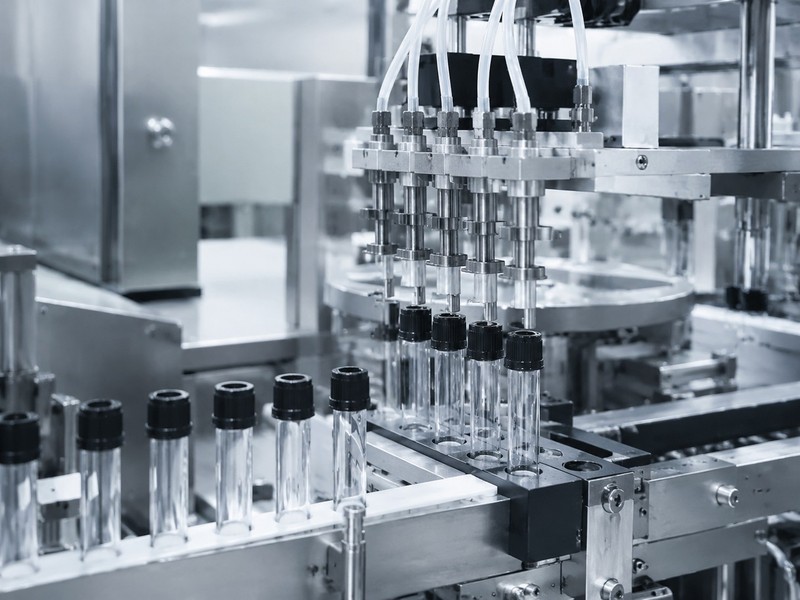
U.S. GMP Micro Blood Tube Production Guide 2026
For medical device companies in the United States, a GMP-compliant micro blood collection tube production system is the fastest path to high-volume, stable, and traceable manufacturing for hospitals, physician office labs, blood centers, and diagnostic laboratories. Instead of relying on labor-heavy manual assembly, these automated lines integrate tube feeding, additive dosing, cap assembly, drying, vacuuming or pressure control, labeling, vision inspection, packaging, and batch data recording in one validated process. The result is better dimensional consistency, lower contamination risk, easier documentation, and stronger readiness for audits aligned with U.S. FDA cGMP expectations and international GMP practices.
Demand is expanding across the United States as decentralized testing, pediatric sampling, home collection programs, and point-of-care diagnostics continue to grow. In markets such as New York, Houston, Chicago, Los Angeles, Atlanta, and Boston, buyers increasingly look for production lines that can support cleanroom workflows, serialized quality control, rapid changeover, and scalable output. For manufacturers planning a new facility or upgrading an existing medical consumables plant, the strategic question is no longer whether automation is needed, but which GMP-compliant micro blood collection tube solution can deliver the right balance of regulatory assurance, throughput, and long-term return.
A GMP-compliant micro blood collection tube production line is an automated or semi-automated manufacturing system designed to produce capillary and micro-sample blood tubes under documented, validated, and controlled conditions. It helps U.S. medical device companies make large quantities of high-quality tubes with repeatable dimensions, accurate additive filling, secure closures, and full process traceability. This is especially important for pediatric diagnostics, low-volume blood collection, and laboratory workflows that require dependable sample integrity.
In practical terms, GMP compliance means the equipment and the manufacturing process are structured to support controlled production, standard operating procedures, cleaning validation, material traceability, line clearance, in-process quality checks, and batch records. A well-designed system can reduce operator intervention, improve consistency between lots, and lower the risk of defects such as poor cap fit, additive variation, particulate contamination, labeling errors, or insufficient sealing performance.
For U.S. buyers, the value goes beyond equipment speed. A qualified line can support facility planning, IQ/OQ/PQ activities, documentation packages, and integration with local compliance expectations. Companies supplying hospitals and diagnostic laboratory networks often prioritize production systems that allow reliable output during periods of demand surges, whether serving major healthcare clusters near Newark, Memphis, Seattle, Miami, or the Port of Long Beach distribution corridor.
Production GoalManual MethodGMP-Compliant Automated LineOperational BenefitQuality ImpactU.S. Market RelevanceTube feedingOperator loadedAutomatic unscrambling and feedingHigher speedLess handling contaminationUseful for large contract manufacturingAdditive fillingVariable hand dosingMetered precision fillingLower wasteImproved dose accuracyImportant for regulated lab productsCap assemblyManual pressingServo-controlled insertionConsistent forceBetter seal integrityCritical for pediatric collection tubesInspectionVisual spot checks100% camera inspectionFewer escapesHigher defect detectionSupports supplier qualificationBatch recordsPaper heavyDigital data captureFaster reviewTraceability by lotHelpful for audit readinessScale-upLabor dependentModule-based expansionPredictable capacity growthStable process repeatabilityFits expanding U.S. diagnostic demandThe table above shows why automated GMP-focused production has become attractive for U.S. medical consumables manufacturers. The key advantage is not only labor reduction, but the ability to build a documented and repeatable quality system around every production step.
A micro blood collection tube is a small-volume sample container used for capillary blood or low-volume venous samples. These tubes are common in neonatal, pediatric, geriatric, home-care, and specialty testing settings where reduced blood draw is preferred. A GMP-compliant production line for these tubes typically includes raw material preparation, tube loading, additive handling, drying or coating, assembly, sealing, vacuum or pressure calibration where needed, labeling, leak testing, visual inspection, and final packaging.
The process begins with plastic or glass tube components entering the line through an automatic feeder. Depending on the product design, the machine may then apply anticoagulants, clot activators, separation agents, or specialty additives. Precision at this stage is essential because even small dose variation can affect downstream laboratory results. After additive application, drying or curing may occur under controlled conditions. Caps or closures are then inserted with precise torque or pressing force to ensure secure performance during shipping and use.
Next comes quality control. Advanced systems use sensors and vision inspection to verify fill quantity, tube orientation, cap color, label placement, print legibility, dimensions, and defect presence. Some configurations also include leak checks and package integrity tests. The final products are then grouped, packed, and coded for traceability. In a mature GMP environment, each of these steps is tied to standard procedures, qualification records, and retained batch data.
For U.S. manufacturers, equipment selection should align with facility layout, cleanroom classification, utility availability, and validation expectations. This is where engineering expertise matters. On the company background page, buyers can see how an international engineering partner with deep pharmaceutical and medical device experience can support more than machinery supply alone. In micro blood collection tube projects, process understanding and compliance planning often determine whether a line performs reliably after installation.
Production StepMain Equipment FunctionTypical Control PointCommon Defect PreventedValidation FocusBusiness ValueTube unscramblingFeeds components in orderOrientation sensorJam or wrong directionMechanical repeatabilityStable line efficiencyAdditive dosingApplies reagent volumeDosing accuracy checkOverfill or underfillCalibration recordsReduced complaint riskDrying or curingStabilizes additivesTime and temperatureResidual moistureProcess consistencyLonger shelf reliabilityCap placementInstalls closureInsertion forceLoose capAssembly integritySafer transport performanceLabelingApplies product labelPosition verificationMislabelingPrint and placement checksTraceable supply chainFinal inspectionConfirms product conformityVision acceptance criteriaMixed defectsInspection challenge testsLower return rateThe workflow above shows that GMP compliance is built into both machine design and manufacturing execution. Companies that underestimate the need for integrated controls often encounter rework, complaint investigations, and audit gaps later.
Micro blood collection tubes serve a wide range of clinical and diagnostic applications in the United States. Pediatric hospitals in cities like Philadelphia and Cincinnati rely on small-volume collection devices to reduce patient burden. Oncology clinics, outpatient diagnostic chains, home-health programs, and decentralized testing providers also use these tubes where smaller sample sizes are practical. As telehealth expands and specimen logistics become more sophisticated, the market for compact and reliable blood collection consumables is growing.
For medical device companies, the production benefits are equally important. First, automated lines support consistent tube quality across multiple shifts. Second, they reduce direct labor intensity, which matters in high-cost labor markets such as California, Massachusetts, and New Jersey. Third, integrated inspection systems reduce the likelihood of shipping defective product to hospital networks or national laboratory groups. Fourth, scalable machine architecture allows a manufacturer to begin with a mid-range line and later add modules for packaging, labeling, or secondary inspection.
Another major benefit is customer confidence. Procurement teams at U.S. health systems increasingly evaluate supplier stability, traceability, and regulatory preparedness. A manufacturer that can document controlled production, validated processes, and clear service support usually has an advantage over low-automation competitors. This is especially relevant for private-label suppliers and OEM manufacturers seeking contracts with major distributors operating through logistics hubs such as Dallas-Fort Worth, Newark, Savannah, and Los Angeles.
var ctxBar = document.getElementById(‘barDemandChart’).getContext(‘2d’);var barDemandChart = new Chart(ctxBar, { type: ‘bar’, data: { labels: [‘Pediatric Care’, ‘Diagnostic Labs’, ‘Home Collection’, ‘Oncology Clinics’, ‘Blood Centers’, ‘POC Testing’], datasets: [{ label: ‘Estimated U.S. Demand Index 2026’, data: [88, 96, 72, 64, 58, 81], backgroundColor: [‘#4e79a7’, ‘#f28e2b’, ‘#e15759’, ‘#76b7b2’, ‘#59a14f’, ‘#edc948’] }] }, options: { responsive: true, maintainAspectRatio: false }});The bar chart highlights demand intensity across major end-use sectors. Diagnostic laboratories and pediatric care remain especially strong drivers, but home collection and point-of-care testing are gaining momentum as new care delivery models emerge.
Not every micro blood collection tube line is built the same. U.S. buyers usually choose among manual-assist, semi-automatic, fully automatic, and integrated turnkey configurations. The right choice depends on annual capacity targets, product mix, cleanroom strategy, labor availability, additive complexity, packaging requirements, and future expansion plans.
Semi-automatic systems are often used by smaller manufacturers, pilot plants, or companies entering the category for the first time. These systems reduce initial investment but still require notable operator involvement. Fully automatic lines are more suitable for medium to large production volumes and for manufacturers serving nationwide distribution. High-end configurations may include online vision systems, reject stations, robotic handling, MES connectivity, and automated cartoning.
There are also differences in product architecture. Some machines are optimized for capillary tubes, while others handle broader blood collection tube families. Buyers should evaluate changeover time, component compatibility, additive flexibility, and whether the platform supports future variants such as EDTA, heparin, clot activator, or gel-based designs.
Line TypeTypical OutputOperator RequirementBest ForMain AdvantagePotential LimitationManual-assist unitLowHighR&D or pilot useLow startup costLimited consistency at scaleSemi-automatic lineLow to mediumMediumEmerging manufacturersBalanced investmentMore labor dependencyFully automatic lineMedium to highLowEstablished U.S. suppliersHigh throughputHigher capital expenseIntegrated turnkey lineHighLowNew plants or expansion projectsEnd-to-end consistencyLonger planning cycleModular flexible lineMedium to highLow to mediumMixed SKU productionEasy future upgradesConfiguration complexityCustom specialty lineVariableLow to mediumNiche diagnostic productsTailored process fitLonger engineering lead timeThis table is useful during budget planning because it shows how production scale and flexibility affect equipment choice. Companies expecting product portfolio growth often prefer modular systems rather than the cheapest single-format option.
The comparison between a GMP-compliant automated line and a manual assembly line is not only about speed. It is about process capability, document control, operator dependence, and commercial risk. Manual assembly can still work for very low output or early-stage prototyping, but it becomes increasingly difficult to maintain consistency when output rises, staffing fluctuates, or audit expectations tighten.
Automated lines improve reproducibility by standardizing the key variables that matter most: dosing volume, assembly force, inspection criteria, and packaging sequence. They also create a stronger basis for CAPA investigations because process data are easier to retrieve and analyze. When a buyer must demonstrate control to customers or regulators, machine-collected records are generally more reliable than handwritten logs.
In the United States, where labor availability and wage pressures remain significant, automation also supports long-term competitiveness. For plants in industrial corridors such as Ohio, North Carolina, Texas, and Arizona, reducing repetitive manual steps can improve retention and shift stability. The final advantage is commercial credibility. Many hospitals and lab procurement teams prefer suppliers that can prove controlled, repeatable manufacturing.
var ctxComp = document.getElementById(‘comparisonChart’).getContext(‘2d’);var comparisonChart = new Chart(ctxComp, { type: ‘bar’, data: { labels: [‘Throughput’, ‘Traceability’, ‘Dose Accuracy’, ‘Labor Efficiency’, ‘Audit Readiness’, ‘Defect Control’], datasets: [ { label: ‘Manual Assembly’, data: [35, 40, 52, 30, 45, 48], backgroundColor: ‘#e15759’ }, { label: ‘GMP Automated Line’, data: [92, 94, 96, 90, 95, 93], backgroundColor: ‘#4e79a7’ } ] }, options: { responsive: true, maintainAspectRatio: false }});The comparison chart shows the performance gap in categories that matter most to scaling medical device production. Even when initial capital is higher, the operational and quality gains are substantial.
The U.S. market for blood collection consumables remains attractive because it is supported by large testing volumes, broad hospital networks, specialty laboratories, and strong innovation in decentralized diagnostics. Micro blood collection tubes benefit from several demand drivers at once: pediatric and neonatal care, at-home specimen collection, low-volume testing, biopharma studies, and preventive care programs.
From a manufacturing standpoint, opportunities are strongest for suppliers that can combine quality assurance, responsive service, and flexible production. Buyers increasingly expect validated processes, dependable delivery, and documentation that aligns with both domestic and export needs. This creates room for advanced equipment providers and for manufacturers willing to invest in better lines rather than compete only on price.
2026 trends further strengthen the outlook. Sustainability is becoming a real purchasing factor, with attention on packaging reduction, energy-efficient drives, lower reject rates, and improved material utilization. Policy pressure may also increase around domestic supply resilience, prompting more U.S.-based or U.S.-serving manufacturers to localize production. At the same time, smart-factory technologies such as predictive maintenance, digital batch history, and remote diagnostics are moving from optional features to practical requirements.
var ctxLine = document.getElementById(‘lineGrowthChart’).getContext(‘2d’);var lineGrowthChart = new Chart(ctxLine, { type: ‘line’, data: { labels: [‘2021’, ‘2022’, ‘2023’, ‘2024’, ‘2025’, ‘2026’], datasets: [{ label: ‘Estimated U.S. Market Growth Index’, data: [100, 108, 117, 128, 139, 153], borderColor: ‘#59a14f’, backgroundColor: ‘rgba(89,161,79,0.15)’, fill: false, tension: 0.3 }] }, options: { responsive: true, maintainAspectRatio: false }});The line chart illustrates a realistic upward growth pattern based on expanding testing channels and supply chain modernization. For equipment manufacturers and tube producers alike, the U.S. remains one of the most important strategic markets.
Opportunity AreaU.S. DriverCustomer TypeWhy It MattersEquipment RequirementRevenue PotentialPediatric diagnosticsHigh neonatal and child care usageChildren’s hospitalsLow-volume sampling demandPrecise micro tube handlingHighReference laboratoriesLarge national test volumesLab networksReliable supply contractsHigh-speed validated outputVery highHome collectionRemote care growthConsumer health firmsCompact sampling solutionsFlexible packaging formatsMedium to highClinical trialsBiopharma expansionCROs and sponsorsSpecialized sample kitsChangeover flexibilityMediumPrivate label supplyDistributor margin strategyMedical distributorsBrand-ready productsLabeling and coding precisionHighExport from U.S.Regional trade routesOEM manufacturersCross-border salesCompliance documentationMedium to highThe table confirms that market opportunity is not limited to one buyer segment. Manufacturers that build flexible, compliant capacity can serve several channels at once.
Selecting a reliable GMP-compliant micro blood collection tube equipment supplier requires more than reviewing brochures. U.S. buyers should assess five areas carefully: regulatory understanding, engineering depth, manufacturing quality, validation support, and after-sales responsiveness. If any one of these is weak, project risk rises sharply.
First, ask whether the supplier understands U.S. FDA cGMP expectations and how these intersect with broader international GMP standards. Second, review the supplier’s process engineering ability. Can they help with layout, utilities, cleanroom workflow, and material movement? Third, inspect manufacturing capability. A serious supplier should have stable fabrication, quality control, and component management. Fourth, examine the service package. IQ, OQ, PQ support, documentation, training, and remote troubleshooting often matter as much as machine hardware. Fifth, request evidence of successful installations and references in regulated industries.
This is where an engineering-driven company can stand out. A partner such as IVEN Pharmatech Engineering’s turnkey team is relevant not simply because of equipment supply, but because complete project execution can reduce layout errors, documentation gaps, and startup delays. In technology capability terms, advanced suppliers should offer automation expertise, intelligent conveying integration, and blood collection tube machinery know-how developed over multiple equipment generations. In manufacturing capability terms, buyers should look for specialized plants, durable stainless-steel construction, and the capacity to customize complete lines. In service capability terms, what matters most is lifecycle support: feasibility review, installation, commissioning, validation, training, and long-term optimization.
For U.S. importers and project owners near ports such as Houston, Savannah, Oakland, and the Port of New York and New Jersey, logistics coordination is another selection factor. The best supplier is often the one that can manage shipping, installation sequencing, spare parts planning, and response times without leaving the customer to coordinate everything alone.
Evaluation FactorWhat to AskStrong Supplier SignalWarning SignImpact on ProjectDecision WeightRegulatory knowledgeCan they support cGMP documentation?Structured validation packageGeneric answers onlyAudit readinessVery highEngineering supportDo they review layout and utilities?Detailed pre-project planningMachine-only sellingStartup efficiencyHighManufacturing qualityHow are key parts controlled?Documented QC processUnclear fabrication standardsReliability and uptimeVery highCustomization abilityCan they adapt to product variants?Modular design approachRigid standard model onlyFuture product flexibilityHighService networkWhat happens after installation?Training and remote supportLimited post-sale serviceDowntime riskVery highProject track recordDo they have proven references?Global regulated installationsNo clear examplesConfidence in deliveryHighThis table works as a practical supplier scorecard. It is especially useful during RFQ comparison, where decision-makers need objective criteria beyond purchase price.
The investment cost for a GMP-compliant micro blood collection tube line in the United States varies widely depending on automation level, output target, additive system complexity, cleanroom integration, inspection technology, and packaging scope. A small semi-automatic setup may fit a modest entry budget, while a fully integrated turnkey line with vision systems, data capture, and downstream packaging can represent a major capital project.
Budget planning should include more than machine price. Buyers should also calculate facility adaptation, clean utilities, HVAC impact, operator training, spare parts, validation support, freight, customs, installation, SAT, and performance ramp-up. Many projects go over budget not because the machine was too expensive, but because hidden implementation costs were ignored during early planning.
ROI is typically driven by a combination of labor savings, lower scrap, reduced quality failures, higher sales capacity, and better contract eligibility. A manufacturer supplying U.S. hospitals or diagnostic chains may also gain strategic value from having a stronger compliance story, shorter lead times, and less dependence on outsourced assembly.
var ctxArea = document.getElementById(‘areaTrendChart’).getContext(‘2d’);var areaTrendChart = new Chart(ctxArea, { type: ‘line’, data: { labels: [‘2021’, ‘2022’, ‘2023’, ‘2024’, ‘2025’, ‘2026’], datasets: [{ label: ‘Shift from Manual to Automated Production (%)’, data: [32, 38, 45, 53, 61, 69], borderColor: ‘#f28e2b’, backgroundColor: ‘rgba(242,142,43,0.30)’, fill: true, tension: 0.3 }] }, options: { responsive: true, maintainAspectRatio: false }});The area chart shows a clear trend shift toward automation. As labor costs rise and compliance expectations tighten, more manufacturers are moving away from manual-heavy production models.
Cost ElementLow Automation ProjectHigh Automation ProjectWhy It ChangesBudget RiskROI EffectBase equipmentLowerHigherMore modules and controlsMediumHigher long-term gainInspection systemsBasicAdvanced vision100% automated checksMediumLower defect costFacility modificationModerateModerate to highLayout and utility needsHighIndirect but importantValidation packageLimitedComprehensiveDocumentation depthMediumSupports customer qualificationLabor cost per unitHigherLowerAutomation reduces handlingLowStrong recurring benefitScrap and reworkHigherLowerProcess consistency improvesLowFast payback contributorIn many U.S. cases, ROI for a well-utilized automated line becomes attractive when the manufacturer has stable sales demand, multiple shifts, or a private-label strategy that rewards quality and speed. Companies can also explore broader equipment portfolios through the product catalog when benchmarking integrated line options.
Investing in a GMP-compliant micro blood collection tube line can create strong strategic value, but the risks are real if the project is poorly planned. The first risk is underestimating product definition. If tube design, cap fit, additive chemistry, and packaging format are not fixed early, machine specification can drift and cause delay. The second risk is weak facility alignment. Utility loads, room classifications, material flows, and operator access must match the chosen equipment.
The third risk is selecting a supplier based on lowest price alone. A low-cost machine with weak validation documents or poor service can become far more expensive after startup. The fourth risk is inadequate training. Even advanced lines need skilled operators, maintenance teams, and quality personnel. The fifth risk is failure to plan spare parts, preventive maintenance, and response protocols for downtime.
2026 will bring additional pressure from digitalization and sustainability expectations. Buyers should ask whether the line can support production data collection, predictive maintenance, energy-efficient operation, and waste reduction. Future-proofing matters. The line purchased today should still support changing customer expectations, possible new labeling rules, and greater demand for low-footprint, compliant manufacturing.
Case experience across regulated industries shows that integrated project support can reduce these risks substantially. Suppliers with strong service capability typically help with feasibility, engineering design, commissioning, and qualification rather than stopping at machine delivery. For companies building or expanding in the United States, that support can be the difference between a smooth launch and months of corrective work.
If you are comparing options for a new facility, line upgrade, or private-label manufacturing strategy, it is wise to engage early with a supplier that can combine technology, manufacturing depth, and service. Buyers looking for direct project discussion can use the contact channel to request technical consultation, layout review, or turnkey planning support.
What does GMP compliance mean for micro blood collection tube production?It means the manufacturing line and process are designed to support controlled, documented, traceable, and validated production. This includes standard procedures, equipment qualification, cleaning control, in-process checks, and batch record integrity.
Are GMP-compliant lines only for large manufacturers?No. Smaller U.S. manufacturers can start with semi-automatic or modular systems and still implement GMP-oriented controls. The key is choosing a line that fits current volume while allowing future expansion.
How important is vision inspection?Very important. Vision systems help detect cap defects, orientation problems, label errors, missing parts, and cosmetic defects. For high-volume production, 100% inspection significantly reduces market complaints and rework.
Can one production line handle different tube types?Many modern lines can support multiple formats, but the degree of flexibility depends on machine design. Buyers should confirm change parts, changeover time, additive compatibility, and validation requirements before purchase.
What is the biggest cost mistake in these projects?Ignoring total project cost. Freight, facility adaptation, validation, training, spare parts, and startup support can materially affect the final investment.
How long does ROI usually take?It depends on volume, labor cost, scrap reduction, and sales demand. Manufacturers with steady hospital or laboratory contracts often see stronger payback because the line improves both output and commercial credibility.
Why are U.S. buyers focusing more on automation in 2026?Because labor cost pressure, traceability expectations, sustainability targets, and decentralized testing growth are pushing the market toward smarter, more controlled production systems.
What should a strong supplier provide beyond the machine?A strong supplier should offer engineering review, customization, documentation, installation, commissioning, IQ/OQ/PQ support, training, after-sales service, and long-term optimization guidance.
In summary, GMP-compliant micro blood collection tube production is becoming a core capability for medical device companies serving the United States. The winning approach is to view the project not as a simple machinery purchase, but as a full manufacturing system investment shaped by compliance, quality, service, and market growth potential.