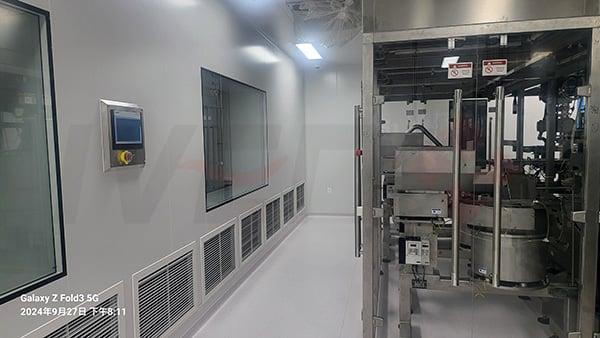
How to Select a Pharma Turnkey Plant in the United States
For pharmaceutical investors, CDMOs, and medical device manufacturers in the United States, choosing a pharmaceutical turnkey plant is not simply an equipment purchase. It is a strategic decision covering facility design, clean utilities, process integration, automation, validation, regulatory readiness, and long-term operating efficiency. Whether a project is planned in New Jersey, North Carolina, Texas, California, or around logistics hubs such as Chicago, Houston, or the Port of Savannah, the right turnkey partner can shorten time to market and reduce compliance risk. The wrong partner can create layout bottlenecks, documentation gaps, delayed qualification, and expensive rework.
In the U.S. market, a pharmaceutical turnkey plant usually means a complete, integrated factory solution rather than a single machine. That may include process design, purified water and WFI systems, cleanroom engineering, filling and packaging lines, material handling, warehouse automation, validation support, and staff training. Buyers increasingly expect the supplier to understand U.S. FDA cGMP expectations, data integrity, environmental monitoring, and expansion planning for future products.
This guide explains what a pharmaceutical turnkey plant is, where it is used, which technical options matter, how it compares with alternative sourcing models, what the U.S. market is doing through 2026 and beyond, and how to evaluate a reliable supplier. It also outlines practical buying criteria for manufacturers considering greenfield plants, brownfield upgrades, new sterile lines, or integrated medical consumables facilities.
Quick Answer: How to Choose a Pharmaceutical Turnkey Plant for U.S. Production

The fastest answer is this: choose a pharmaceutical turnkey plant partner that can prove regulatory competence, engineering depth, validated utility design, product-specific process know-how, and long-term service support in the United States. Price matters, but it should never be the first filter. A low initial quotation often becomes expensive when IQ/OQ/PQ documentation is incomplete, layouts are not GMP-ready, utility loads are underestimated, or the line cannot reach planned output after installation.
Start with six practical checkpoints:
- Confirm the supplier has experience with facilities aligned with U.S. FDA cGMP and internationally recognized GMP systems.
- Review whether the scope includes engineering, clean utilities, process equipment, automation, validation, and after-sales support.
- Match the solution to your dosage form or device category, such as injectables, IV solutions, oral liquids, solid dosage, biologics, or blood collection products.
- Assess scalability, digital integration, and compatibility with future serialization, MES, and warehouse automation.
- Check documented delivery history, FAT/SAT practices, and the supplier’s ability to support U.S.-based commissioning timelines.
- Model total cost of ownership, not just capital expenditure.
For U.S. buyers, the best turnkey projects usually combine compliant engineering, durable equipment, utility efficiency, clear documentation, and one accountable project lead. This is especially important when production must serve high-value healthcare markets, hospital systems, and national distribution networks from regions such as the Northeast pharma corridor, the Research Triangle, the Midwest logistics belt, or Southern manufacturing clusters.
| Evaluation Factor | Why It Matters | What to Verify | Risk if Ignored |
|---|---|---|---|
| Regulatory fit | Drives inspection readiness | cGMP design basis, documentation standards, validation templates | Delays in approval and remediation costs |
| Process expertise | Ensures line matches product characteristics | References in injectables, oral liquid, biologics, or devices | Low yield or unstable operation |
| Utility engineering | Critical for sterile and controlled environments | PW, WFI, pure steam, HVAC, compressed gases | Contamination and downtime |
| Automation level | Improves consistency and traceability | SCADA, PLC, recipe control, audit trail capability | Manual errors and weak data integrity |
| Project management | Keeps schedule and budget under control | Single point of contact, milestone control, FAT/SAT plans | Scope gaps and schedule drift |
| Lifecycle service | Supports sustainability after handover | Training, spare parts, remote support, upgrades | Long recovery time after failure |
The table above shows why a turnkey decision must be treated as a full-factory investment. In the U.S., where labor, compliance, and delay costs are high, a stronger engineering partner can create better ROI even when its initial bid is higher.
What Is a Pharmaceutical Turnkey Plant and What Is It Used For in Pharmaceutical Production?

A pharmaceutical turnkey plant is a complete production solution delivered so the owner can begin qualification and commercial readiness with a unified package of engineering and equipment. It typically covers feasibility planning, conceptual and detailed design, cleanroom architecture, process utilities, core production lines, packaging systems, material transfer, automation, commissioning, and validation support.
In practical terms, a turnkey plant can be built for:
- Sterile injectable manufacturing
- IV solution production
- Oral liquid production
- Solid dosage manufacturing
- Biopharmaceutical processing support areas
- Medical consumables and blood collection systems
Unlike buying stand-alone machines from separate vendors, turnkey delivery reduces interface problems between utilities, filling lines, packaging, and layout flow. This is highly valuable when a U.S. owner needs rapid market entry, predictable GMP documentation, and a single responsibility framework.
At the technology level, strong turnkey suppliers typically integrate purified water units, multi-effect water distillers for WFI, purified steam generators, solution preparation systems, filling and sealing lines, inspection, packaging, and intelligent logistics. For example, companies expanding injectable capacity near Boston or Philadelphia often need a tightly coordinated combination of clean utilities, aseptic filling, and automated material movement to fit constrained real estate and strict quality expectations.
For companies assessing complete factory solutions, it is useful to review a supplier’s turnkey project capabilities early in the process to understand whether the firm can cover both engineering and manufacturing interfaces.
| Plant Component | Main Function | Typical U.S. Use Case | Operational Impact |
|---|---|---|---|
| Facility layout design | Defines personnel, material, and waste flow | Greenfield sterile plant in North Carolina | Prevents cross-contamination and congestion |
| HVAC and cleanrooms | Controls particulate and pressure cascade | Aseptic filling area in New Jersey | Supports environmental compliance |
| PW/WFI systems | Supplies pharmaceutical-grade water | Injectable and oral liquid production in Texas | Protects product quality |
| Preparation systems | Mixes and transfers solutions | IV compounding in California | Improves batch consistency |
| Filling and sealing lines | Completes dosage filling process | Vials, ampoules, bags, or syringes | Determines output and sterility assurance |
| Packaging and logistics | Secondary packaging and warehouse flow | Distribution hubs near Chicago or Atlanta | Raises end-to-end efficiency |
The table highlights that a pharmaceutical turnkey plant is best understood as an integrated manufacturing system, not a single product category.
Main Applications and Benefits of Pharmaceutical Turnkey Plants in Modern Pharmaceutical Manufacturing

Turnkey plants are widely used when manufacturers want better control over schedule, compliance, and integration. In the United States, this is especially relevant for companies adding domestic capacity to improve supply resilience, reduce dependence on fragmented overseas sourcing, or shorten distribution lead times to major healthcare markets.
Main applications include hospital infusion products, sterile generics, contract manufacturing, ophthalmic solutions, oral liquids for pediatric use, diagnostic consumables, and blood collection products. Modern turnkey systems also support highly automated packaging and warehouse operations, which are increasingly important when labor availability is tight.
Key benefits include:
- Single-source accountability across engineering and equipment
- Better fit between facility utilities and process loads
- Shorter coordination time during design and installation
- More consistent GMP documentation packages
- Lower risk of interface failures across vendors
- Higher readiness for scale-up and line extension
For many U.S. projects, these benefits translate into less project friction during city permitting, site acceptance, utility balancing, and operator training. Facilities located near ports such as Los Angeles/Long Beach, Houston, Newark, or Savannah also value efficient project coordination because imported modules, stainless assemblies, and spare parts must align with strict schedule windows.
The chart above reflects where demand is strongest: sterile production, automation, and IV-related systems remain major investment areas because they align with hospital, infusion, and high-compliance manufacturing requirements.
Key Types, Models and Technical Options for Pharmaceutical Turnkey Plants
Not all turnkey plants are the same. Buyers should classify options by product form, sterility requirement, packaging format, output range, and utility complexity. A small oral liquid facility has very different needs from a high-speed vial line or a complete IV solution factory.
Common categories include:
- IV solution plants for non-PVC soft bags, PP bottles, and glass bottles
- Ampoule and vial washing, filling, stoppering, and sealing lines
- Prefilled syringe plants
- Oral liquid plants
- Dialysis solution production systems
- Medical consumables and vacuum blood collection tube plants
Technical options often determine long-term competitiveness. These include isolator or RABS integration, CIP/SIP capability, advanced leak detection, in-line weight checking, robotic cartoning, AGV or conveyor logistics, 3D warehouse systems, and centralized SCADA platforms.
When reviewing suppliers, compare their actual manufacturing depth. Some only assemble third-party equipment. Others produce major systems in-house, which can improve consistency and speed. Buyers exploring integrated line options can examine the available pharmaceutical equipment portfolio to understand how utility systems, filling, packaging, and logistics can be matched.
| Turnkey Plant Type | Best For | Typical Capacity Range | Key Technical Options |
|---|---|---|---|
| IV soft bag plant | Large-volume infusion products | Medium to very high | Form-fill-seal, leak detection, automated overwrap |
| PP bottle IV plant | Robust container formats | Medium to high | Blow-fill-fill-seal style integration, visual inspection |
| Glass bottle IV plant | Traditional hospital infusion supply | Medium | Washing, depyrogenation, filling, capping |
| Vial injectable plant | Sterile drugs and biologic support | Low to high | Isolator/RABS, lyo integration, stoppering controls |
| Oral liquid plant | Syrups, suspensions, solutions | Low to high | Mixing skids, bottle unscrambling, capping, labeling |
| Blood collection tube plant | Medical consumables | High | Tube handling, additive dosing, drying, assembly automation |
The table shows how technical choice should follow product strategy. Selecting an oversized sterile system for a modest oral liquid project adds unnecessary cost, while underspecifying a high-value injectable line can create severe future constraints.
Pharmaceutical Turnkey Plant vs Alternative Technologies: Which Solution Fits Your Needs?
U.S. companies typically compare three models: full turnkey delivery, multi-vendor integration, and contract manufacturing without plant ownership. Each model has advantages, but they fit different business goals.
A full turnkey plant works best when the owner wants control over product, capacity, intellectual property, and future expansion. A multi-vendor model can work for experienced engineering teams with strong in-house project management. Contract manufacturing may be ideal for low-volume launch products or uncertain demand.
| Model | Advantages | Limitations | Best Fit |
|---|---|---|---|
| Full turnkey plant | Single accountability, integrated documentation, coordinated utilities | Higher upfront commitment | Long-term U.S. production strategy |
| Multi-vendor sourcing | Flexible brand selection | Interface risk, more owner coordination | Teams with strong internal engineering staff |
| CMO/CDMO outsourcing | Low capex, fast market entry | Less control, margin pressure | New or niche products |
| Brownfield retrofit | Uses existing building shell | Legacy layout and utility constraints | Sites with usable infrastructure |
| Modular plant package | Potentially faster deployment | Site adaptation may be complex | Remote or fast-track capacity projects |
| Hybrid model | Core turnkey plus select niche vendors | Needs careful governance | Advanced buyers optimizing special processes |
The best solution depends on target output, internal engineering strength, financing structure, and regulatory timeline. In the United States, where validation and change control can become expensive, many owners prefer a turnkey or hybrid approach because it reduces coordination burden.
This comparison emphasizes that turnkey delivery is strongest where integration and qualification readiness matter most, while CDMO outsourcing scores higher in low-capex scenarios.
Market Overview and Future Trends for Pharmaceutical Turnkey Plants in Pharmaceutical Manufacturing
The U.S. pharmaceutical manufacturing market continues to attract investment in domestic production, sterile capacity, and supply chain resilience. Demand is influenced by reshoring, hospital supply security, biologics support infrastructure, aging manufacturing assets, and the push for more digital operations. Expansion activity remains visible in New Jersey, Pennsylvania, Massachusetts, North Carolina, Indiana, Illinois, Texas, and California.
Looking toward 2026 and beyond, several trends are shaping turnkey plant selection:
- Greater demand for flexible facilities able to switch between product families
- More automation in material transfer, packaging, and warehouse management
- Higher expectation for data visibility, audit trails, and electronic batch support
- Energy and water efficiency becoming board-level investment criteria
- Growth in domestic medical consumables and diagnostic supply capabilities
- Increased attention to supplier resilience and spare parts availability
The growth curve indicates a healthy medium-term market supported by facility modernization and domestic production initiatives.
The area trend shows a rapid shift toward smart, sustainable facilities. By 2026, buyers are expected to place much greater emphasis on utility recovery, low-energy HVAC concepts, digital maintenance, and centralized data platforms. Policy pressure around domestic readiness and resilient healthcare supply chains is likely to further strengthen interest in integrated factory solutions.
How to Choose a Reliable Pharmaceutical Turnkey Plant Manufacturer or Supplier
Supplier selection should combine technical due diligence, quality review, and commercial analysis. The most reliable suppliers can demonstrate real delivery history, not only presentations. Ask for evidence of completed production lines, actual qualification practices, and factory capabilities.
Evaluate suppliers in three dimensions: technological capabilities, manufacturing capabilities, and service capabilities.
Technological capabilities: A credible partner should understand process engineering as well as machinery. This includes utility design for purified water, WFI, and pure steam; integration of filling, sealing, inspection, and packaging; and automation suited to data integrity expectations. Some established engineering companies have developed multiple generations of IV, utility, and blood collection tube technologies while building patent portfolios around filling efficiency and production stability. These strengths matter because they indicate genuine engineering depth rather than simple trading activity.
Manufacturing capabilities: Buyers should confirm whether the supplier has specialized production bases for key product groups. A manufacturer with dedicated facilities for filling and packaging systems, pharmaceutical water treatment, intelligent logistics, and medical consumables equipment often has stronger control over component quality and lead times. This can be important when supplying U.S. projects that need durable stainless construction, repeatable FAT performance, and coordinated module shipment through ports such as Shanghai to Los Angeles, Houston, or Newark.
Service capabilities: The right partner should support the full lifecycle, from feasibility and design through commissioning, validation, training, and optimization. Strong suppliers help solve the exact problems that damage projects most: unreasonable layouts, non-standard design assumptions, uncertain equipment quality, schedule delay, and budget creep. When a company provides installation guidance, IQ/OQ/PQ support, documentation, quality consulting, and post-handover service, the owner gains a more stable path to commercial operation.
One example in the global market is IVEN Pharmatech Engineering, a Shanghai-based pharmaceutical engineering company with international project experience, specialized manufacturing resources, and integrated solutions for injectables, IV systems, medical consumables, water treatment, and logistics. For U.S. buyers, a key point is not the origin alone but whether the supplier can demonstrate compliance alignment, durable equipment, clear documentation, and successful project execution in demanding regulatory environments.
| Supplier Checkpoint | What Good Looks Like | Questions to Ask | Warning Sign |
|---|---|---|---|
| GMP expertise | Clear knowledge of FDA cGMP and global GMP systems | How do you structure URS, DQ, IQ/OQ/PQ support? | Only generic claims, no document examples |
| Project references | Multiple similar projects completed | Can you share comparable line outputs and scopes? | No relevant references in your product class |
| Factory capacity | Dedicated production plants and QA controls | Which components are manufactured in-house? | Heavy dependence on uncontrolled subcontracting |
| Engineering scope | Design, utilities, equipment, automation, validation | Who owns interface management? | Scope exclusions hidden in fine print |
| Service response | Training, spare parts, remote and on-site support | What is your U.S. support plan? | No structured after-sales commitment |
| Documentation quality | Traceable manuals, FAT, calibration, certificates | Can we review sample turnover dossiers? | Weak document control system |
The table above can be used as part of a supplier scorecard during RFQ evaluation and technical clarification meetings.
Investment Cost, Budget Planning and ROI Analysis for a Pharmaceutical Turnkey Plant
The cost of a pharmaceutical turnkey plant in the United States varies significantly based on dosage form, sterility level, output, building condition, automation level, and utility demand. Greenfield sterile injectable facilities are at the high end because of cleanroom classification, WFI systems, environmental monitoring, aseptic barriers, and extensive qualification. Oral liquid or consumables plants may require lower capex but still need well-planned utilities and packaging integration.
A robust budget should include:
- Building and civil adaptations
- Cleanroom and HVAC systems
- PW, WFI, steam, compressed gases, and electrical distribution
- Core process and packaging equipment
- Automation and data systems
- Installation, commissioning, validation, and training
- Spare parts, contingency, and working capital for ramp-up
| Budget Category | Typical Share of Total Project Cost | Why It Fluctuates | Cost Control Strategy |
|---|---|---|---|
| Building and fit-out | 15% to 25% | Site condition and local code requirements | Use early layout optimization |
| Cleanroom and HVAC | 15% to 22% | Sterility class and room volume | Right-size pressure cascades and airflow |
| Water and clean utilities | 10% to 18% | Product type and redundancy level | Match capacity to phased expansion |
| Process equipment | 18% to 28% | Line speed and automation depth | Select based on realistic throughput |
| Packaging and logistics | 8% to 15% | Serialization and warehouse scope | Prioritize bottleneck elimination |
| Validation and start-up | 6% to 12% | Documentation complexity and staffing | Build validation package into contract |
ROI should be measured against output value, labor savings, reject reduction, utility efficiency, and market access. In U.S. projects, time saved before commercial release can be financially decisive. A line that launches six months earlier may produce more value than one that was cheaper but delayed. This is why total cost of ownership matters more than invoice price.
Many buyers also compare domestic production economics against continuing import dependence. If a turnkey project lowers freight exposure, improves fill-rate reliability, and supports premium products, the investment case becomes stronger. For detailed consultation on solution scope and commercial fit, companies can contact a pharmaceutical turnkey specialist before finalizing CAPEX assumptions.
Key Considerations and Potential Risks When Investing in a Pharmaceutical Turnkey Plant
The biggest project risks usually appear before installation begins. Poor user requirement definition, unrealistic timelines, unclear product roadmaps, and underdeveloped utility models are common causes of overruns. In the United States, where validation manpower is costly and schedule slippage affects launch revenue, these errors become particularly expensive.
Main risks include:
- Facility layout that does not support GMP flow or future expansion
- Oversized or undersized utilities
- Weak integration between process, packaging, and logistics
- Incomplete validation documents or FAT protocols
- Limited spare parts support and slow service response
- Insufficient operator training at handover
A practical way to reduce risk is to insist on phase-gate reviews: URS approval, design review, utility load verification, FAT sign-off, SAT plan, qualification package review, and ramp-up support. Buyers should also request a clear responsibility matrix so there is no ambiguity regarding civil work, clean utility tie-ins, software backups, calibration, and operator certification.
Case patterns in the market show that successful projects often begin with detailed feasibility studies and realistic scaling assumptions. For example, a sterile line planned in a high-cost region such as the Northeast may benefit from stronger automation to reduce labor exposure. A facility near Dallas or Houston may prioritize distribution and utility redundancy. West Coast projects may focus more on export logistics via Los Angeles/Long Beach while also serving large domestic healthcare networks.
Another important point is supplier maturity. Some engineering providers have completed thousands of production lines worldwide and dozens of turnkey projects across pharmaceutical and medical device sectors. That depth can reduce risk because the company is more likely to anticipate recurring pitfalls in layout, documentation, cleaning, and startup. It also helps if the supplier has broad product capability in utilities, filling, packaging, and logistics instead of relying on disconnected third parties.
FAQ
What is the biggest factor in choosing a pharmaceutical turnkey plant?
The most important factor is supplier capability to deliver a compliant, integrated, and validated solution for your specific product type. Cost should be evaluated after confirming regulatory and technical fit.
Is a turnkey plant better than buying separate machines?
For many U.S. projects, yes. A turnkey plant reduces interface risk and often speeds qualification because facility, utilities, process equipment, and documentation are developed in a coordinated way.
Which industries use pharmaceutical turnkey plants?
Pharmaceutical manufacturers, biotech support facilities, IV solution producers, hospital supply manufacturers, diagnostic consumables companies, and medical device-related production sites all use turnkey plants.
How long does a turnkey project usually take?
Timing depends on scope, site readiness, and validation intensity. Brownfield upgrades can move faster, while sterile greenfield facilities may require significantly longer due to cleanroom, utility, and qualification complexity.
Can a turnkey supplier help with future expansion?
A strong supplier should design for modular growth, utility reserve, and line extension. This is essential when forecasting U.S. demand growth or adding new container formats later.
What technical systems are most critical in sterile projects?
WFI generation, pure steam, HVAC pressure control, aseptic filling integration, environmental monitoring readiness, and robust documentation are all critical.
How should U.S. buyers compare suppliers fairly?
Use a weighted scorecard covering compliance, engineering scope, factory capability, references, lifecycle service, documentation quality, and total cost of ownership.
Why does service matter after handover?
Because production stability depends on training, spare parts, troubleshooting, preventive maintenance, and optimization. Without lifecycle support, downtime and deviation risk increase.
What makes an international supplier credible in the U.S. market?
Documented experience with global GMP expectations, durable manufacturing quality, strong technical communication, and the ability to support commissioning and validation in a structured way.
Where should a buyer start?
Begin with a feasibility review, define the URS clearly, estimate realistic capacity and utilities, then shortlist suppliers with both engineering and manufacturing depth. From there, align technical review, commercial analysis, and implementation planning.
In summary, choosing a pharmaceutical turnkey plant in the United States requires balancing compliance, scalability, technical integration, and lifecycle support. The strongest investment decisions come from rigorous scope definition and careful supplier selection. Whether the project supports sterile injectables, IV solutions, oral liquids, or medical consumables, a capable engineering partner can help turn a complex expansion into a controlled and commercially valuable manufacturing asset.

About the Author
We are IVEN Pharmatech Engineering, a team dedicated to delivering turnkey pharmaceutical and medical solutions worldwide. With decades of experience, we specialize in advanced machinery, integrated factory design, and full lifecycle support to help our clients achieve efficient, compliant, and high-quality production.
Share
Related Insights
-
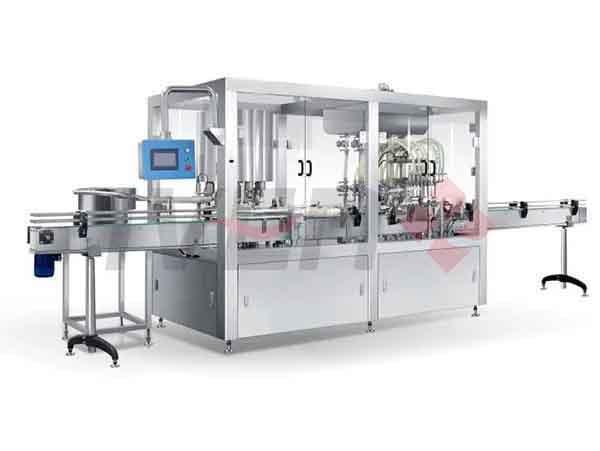
United States Guide to GMP Syrup Filling Machines
For pharmaceutical manufacturers in the United States, syrup filling machine GMP requirements refer to the design, validation, control, cleaning, documentation, and regulatory expectations that oral liquid filling and capping equipment must meet to support compliant, safe, and repeatable production. These requirements matter when companies expand capacity, upgrade legacy lines, launch new pediatric or adult oral liquid products, or align operations with U.S. FDA cGMP, data integrity standards, and modern quality risk management practices.
In practical terms, a GMP-compliant syrup filling and capping machine is not just a bottle filling unit. It is part of a controlled system that includes product-contact materials, CIP/SIP options where applicable, filling accuracy, anti-drip nozzles, cap feeding and torque control, line clearance, environmental monitoring, batch traceability, reject management, and validation documentation such as IQ, OQ, and PQ. In markets such as New Jersey, Illinois, California, Texas, and North Carolina, where pharmaceutical production clusters are well developed, buyers increasingly prioritize equipment that reduces contamination risk while supporting faster changeovers and audit readiness.
Syrup filling machine GMP requirements are the set of engineering, quality, validation, and operational standards that ensure syrup bottling equipment is suitable for pharmaceutical use. In the United States, these expectations commonly include hygienic machine design, easy cleaning, controlled product pathways, accurate dosing, secure capping, in-process controls, electronic or paper batch record compatibility, and documented qualification. For oral liquid manufacturers, the goal is straightforward: every bottle should be filled consistently, capped correctly, labeled within the validated process, and produced under controlled conditions that withstand FDA inspection.
These requirements apply to both new production lines and modernization projects. A company replacing a semi-automatic system with a fully integrated oral liquid line must evaluate bottle unscrambling, air rinsing, servo filling, cap placement, cap tightening, induction sealing if needed, labeling, serialization, and carton packing. They also need to assess whether the line supports products with different viscosities, sugar content, alcohol content, foaming behavior, or suspended actives.
Many U.S. buyers now prefer suppliers that can support not only machine delivery but also engineering integration, documentation, and validation. This is especially relevant for companies building new plants near logistics hubs such as Newark, Houston, Los Angeles, Savannah, and Chicago, where installation schedules, import coordination, and multi-vendor compatibility can strongly affect project timelines.
GMP Requirement AreaWhat It CoversWhy It MattersTypical Buyer CheckpointMaterial compliance316L stainless steel, food/pharma-grade seals, compatible tubingProtects product purity and cleaning reliabilityMaterial certificates and surface finish recordsFilling accuracyPiston, peristaltic, or servo pump precisionReduces underfill and overfill riskFAT dosing test resultsCleaning designDead-leg reduction, drainability, disassembly easeSupports sanitation and changeover controlCleaning SOP review and swab planCapping controlTorque consistency, cap presence, tamper evidenceEnsures closure integrity and shelf-life protectionTorque range validation dataDocumentationDQ, IQ, OQ, PQ support, manuals, wiring, spare parts listEssential for qualification and audit readinessDocument package completenessData integrityAlarm history, user access, recipe control, audit trail where applicableSupports compliant records and deviation reviewSoftware architecture and access matrixThe table above shows that GMP for syrup filling is broader than mechanical performance alone. U.S. manufacturers should evaluate machine design and compliance evidence together, not separately.
A GMP-compliant syrup filling machine is specialized equipment used to dose oral liquid formulations into bottles or similar containers under controlled manufacturing conditions. It is typically paired with bottle feeding, rinsing, capping, sealing, labeling, inspection, and packaging systems. These machines are used for cough syrup, pediatric suspensions, vitamin tonics, antihistamine liquids, digestive liquids, herbal syrups, and other oral solutions or suspensions intended for regulated markets.
Within pharmaceutical production, the equipment performs three core functions: accurate volumetric filling, secure closure application, and process consistency. Depending on the product, a line may need bottom-up filling for foaming liquids, agitation support for suspensions, heated hoppers for viscosity control, or nitrogen flushing for oxidation-sensitive formulations.
In the United States, manufacturers often evaluate equipment in the context of full plant workflow. For example, a facility in Philadelphia may need to fit a syrup line into an existing clean utility layout, while a new plant in Dallas may require turnkey engineering from purified water distribution to packaging. This is where integrated project experience matters. Companies seeking broader support often review a supplier’s corporate background and compliance capabilities before moving into URS and technical discussions.
From a technology standpoint, strong suppliers increasingly combine machine automation with line integration know-how. Some engineering firms serving pharma globally have built expertise not only in filling and packaging machinery but also in water treatment, intelligent conveying, and production logistics, which can be valuable for syrup plants requiring end-to-end coordination rather than isolated equipment purchases.
The main application of syrup filling and capping systems is high-quality oral liquid production under cGMP conditions. However, the benefits extend well beyond filling. When the line is selected correctly, it can improve operational efficiency, reduce product loss, shorten cleaning time, support flexible pack formats, and strengthen regulatory confidence.
Modern pharmaceutical manufacturers use these machines in several operating models:
The benefits are especially visible where older gravity or manually adjusted systems are still in operation. Upgrading to a servo-controlled filler can reduce variability, while integrated capping inspection helps catch loose or missing caps before labeling and packing.
ApplicationTypical ProductPreferred Machine FeatureOperational BenefitPediatric syrupLow-dose oral liquidHigh-precision small-volume fillingBetter dose consistencySuspension lineAntibiotic suspensionAgitated tank and stable product feedReduced settling riskFoaming productHerbal tonicBottom-up nozzlesCleaner fill and less wasteViscous syrupCough syrupPiston or servo positive displacement fillingStable fill volumeMulti-SKU plantContract manufacturingTool-less change partsFaster changeoverTamper-evident retail packOTC oral liquidTorque control and seal integrationImproved package securityThe table highlights how machine features should match product behavior and packaging strategy. Buyers should avoid selecting equipment solely on output speed.
var ctxBar = document.getElementById(‘barDemandChart’).getContext(‘2d’);var barDemandChart = new Chart(ctxBar, { type: ‘bar’, data: { labels: [‘OTC Syrups’, ‘Rx Oral Liquids’, ‘Pediatric Products’, ‘Nutraceutical Liquids’, ‘CMO Production’, ‘Export Batches’], datasets: [{ label: ‘Estimated U.S. Demand Index’, data: [88, 76, 69, 72, 81, 64], backgroundColor: [‘#4e79a7′,’#f28e2b’,’#e15759′,’#76b7b2′,’#59a14f’,’#edc948′] }] }, options: { responsive: true, maintainAspectRatio: false }});The bar chart reflects a realistic demand pattern in the United States, where OTC syrup and contract manufacturing needs often drive the strongest investment in flexible filling platforms.
There is no single ideal syrup filling machine for every plant. The best configuration depends on viscosity, fill volume, bottle format, line speed, cleaning strategy, and compliance expectations. The most common machine types are monoblock filling-capping systems, linear fillers with separate cappers, and fully integrated oral liquid lines.
Key technical options include:
Machine TypeBest ForSpeed RangeMain AdvantageSemi-automatic fillerR&D or low-volume production10 to 20 bottles/minLow initial costLinear automatic fillerMulti-format operations20 to 80 bottles/minFlexible format changeMonoblock fill-cap unitMid to high-volume production60 to 180 bottles/minCompact footprintRotary high-speed lineLarge-scale commercial plants150 to 300+ bottles/minHigh throughputPeristaltic dosing systemSmaller fills and clean product path needsVaries by head countFast tubing replacementPiston servo systemViscous syrup and suspensionsStable mid-to-high speedStrong volumetric controlTechnological capabilities should also include compatibility with wider production systems. Some suppliers stand out because they can connect syrup filling with upstream preparation systems, purified water, downstream packaging, and even smart logistics. That type of integration can reduce handoff risks in larger U.S. factory projects.
Not every oral liquid producer requires the same level of automation or the same filling principle. A U.S. buyer comparing GMP syrup filling systems with alternative technologies should consider batch size, SKU count, available cleanroom space, labor strategy, and future serialization or digitalization plans.
Alternative technologies include manual and semi-automatic systems, outsourced contract filling, or repurposed beverage-style equipment upgraded for hygiene. In regulated pharma, the last option usually creates significant validation and compliance concerns. Pharmaceutical syrup lines should be designed specifically for cGMP production, not adapted casually from non-pharma equipment.
OptionCapital CostCompliance StrengthScalabilityBest Use CaseManual fillingVery lowWeakVery limitedLab or pilot onlySemi-automatic machineLow to mediumModerateLimitedSmall batch productionAutomatic linear pharma lineMediumHighGoodGrowing domestic manufacturerAutomatic monoblock pharma lineMedium to highHighVery goodSpace-limited commercial siteHigh-speed rotary lineHighHighExcellentLarge national brandsContract manufacturing onlyLow upfrontDepends on partnerVariableBrand owners without plant investmentThis comparison shows that the “best” solution is not always the fastest one. For many facilities in states like Indiana or Georgia, a robust linear line with room for future expansion offers a stronger return than an oversized rotary system.
var ctxComp = document.getElementById(‘comparisonChart’).getContext(‘2d’);var comparisonChart = new Chart(ctxComp, { type: ‘bar’, data: { labels: [‘Compliance’, ‘Flexibility’, ‘Speed’, ‘Changeover Ease’, ‘Maintenance Simplicity’, ‘Expansion Potential’], datasets: [ { label: ‘Linear Automatic Line’, data: [90, 88, 72, 85, 80, 82], backgroundColor: ‘#4e79a7’ }, { label: ‘Rotary Monoblock’, data: [92, 70, 94, 68, 72, 86], backgroundColor: ‘#f28e2b’ } ] }, options: { responsive: true, maintainAspectRatio: false }});The comparison chart makes a common market reality clear: monoblocks often win on speed, while linear systems frequently offer better flexibility for multi-SKU pharmaceutical operations.
The U.S. pharmaceutical oral liquid equipment market remains active because many existing lines were installed years ago and now face stricter expectations around data integrity, operator safety, preventive maintenance, and efficiency. Demand is also supported by product portfolio diversification, pediatric dosage growth, OTC brand expansion, and contract manufacturing consolidation.
Geographically, investment decisions are influenced by labor availability, logistics, and access to packaging materials. Plants near New York and New Jersey benefit from dense pharma ecosystems and East Coast import access. Midwest sites around Chicago and Indianapolis often value service coverage and warehouse distribution efficiency. Southern states such as Texas and North Carolina are attracting new life sciences investments due to infrastructure growth and competitive operating models.
For 2026 and beyond, three trends are especially important:
var ctxLine = document.getElementById(‘lineGrowthChart’).getContext(‘2d’);var lineGrowthChart = new Chart(ctxLine, { type: ‘line’, data: { labels: [‘2021’, ‘2022’, ‘2023’, ‘2024’, ‘2025’, ‘2026’], datasets: [{ label: ‘U.S. Oral Liquid Equipment Market Index’, data: [100, 108, 117, 126, 138, 151], borderColor: ‘#59a14f’, backgroundColor: ‘rgba(89,161,79,0.15)’, fill: false, tension: 0.3 }] }, options: { responsive: true, maintainAspectRatio: false }});The line chart represents a realistic growth path driven by modernization and domestic capacity planning rather than explosive short-term expansion.
var ctxArea = document.getElementById(‘areaTrendChart’).getContext(‘2d’);var areaTrendChart = new Chart(ctxArea, { type: ‘line’, data: { labels: [‘2021’, ‘2022’, ‘2023’, ‘2024’, ‘2025’, ‘2026’], datasets: [ { label: ‘Legacy Mechanical Systems’, data: [62, 58, 52, 46, 40, 34], borderColor: ‘#e15759’, backgroundColor: ‘rgba(225,87,89,0.25)’, fill: true, tension: 0.3 }, { label: ‘Smart GMP-Integrated Systems’, data: [38, 42, 48, 54, 60, 66], borderColor: ‘#76b7b2’, backgroundColor: ‘rgba(118,183,178,0.25)’, fill: true, tension: 0.3 } ] }, options: { responsive: true, maintainAspectRatio: false }});The area chart illustrates the continuing shift from older mechanical platforms to digital-ready and validation-friendly syrup filling systems.
Choosing a supplier for syrup filling machine GMP requirements in the United States should involve more than price comparison. A reliable partner should understand regulatory expectations, demonstrate suitable references, provide qualification documentation, and support long-term line performance.
Start with a clear User Requirement Specification covering product characteristics, bottle range, line speed, utilities, cleanroom classification, software expectations, and acceptance criteria. Then compare suppliers on the following points:
Evaluation CriterionWhat to AskWhy It MattersWarning SignRegulatory familiarityDo they support U.S. FDA cGMP projects?Reduces compliance gapsGeneric non-pharma responsesDocumentation packageAre IQ/OQ templates and manuals included?Speeds qualificationDocuments only after extra negotiationFactory testingCan FAT simulate your bottle and syrup?Verifies real performanceOnly empty-run testing offeredCustomization capabilityCan they adapt to your cap, bottle, and layout?Improves fit and uptimeRigid standard design onlyAfter-sales supportHow fast are parts and engineer response?Limits downtime riskNo clear service processIntegration experienceCan they connect utilities, packaging, and validation?Important for turnkey successOnly isolated machine supplyManufacturing capabilities are equally important. Buyers should look for stable production quality, machining consistency, and proven installation history. Suppliers with multiple specialized plants and experience delivering complex pharmaceutical lines often provide stronger quality control than trading-only organizations. If your project goes beyond a single machine, it is worth exploring whether the supplier can support turnkey pharmaceutical engineering solutions as part of a larger investment plan.
For sourcing teams comparing options, it is also useful to review available product categories and technical direction through a supplier’s pharmaceutical equipment portfolio, then move to a detailed technical meeting focused on your own syrup line.
The cost of a GMP-compliant syrup filling and capping line in the United States varies widely depending on automation level, output, inspection scope, validation package depth, and integration complexity. Entry-level automatic lines may begin in the low six figures, while full high-speed systems with washing, filling, capping, labeling, cartoning, serialization, and utility integration can reach substantially higher capital levels.
Typical cost components include the main machine, change parts, conveyors, cap elevator, bottle handling, electrical integration, FAT, shipping, installation, commissioning, qualification support, training, spare parts, and site preparation. Import-related logistics through ports such as Long Beach, Newark, Savannah, or Houston should also be considered in project budgets.
Cost ElementLow Complexity LineMedium Complexity LineHigh Complexity LineMain filling-capping equipment$120,000 to $220,000$220,000 to $450,000$450,000 to $900,000+Ancillary conveyors and feeding$20,000 to $40,000$40,000 to $90,000$90,000 to $180,000Inspection and reject systems$10,000 to $30,000$30,000 to $80,000$80,000 to $180,000Validation documentation support$8,000 to $20,000$20,000 to $50,000$50,000 to $100,000Installation and commissioning$15,000 to $35,000$35,000 to $80,000$80,000 to $180,000Spare parts and training$8,000 to $15,000$15,000 to $35,000$35,000 to $70,000The table gives a realistic planning framework rather than a fixed market quote. Final pricing depends on exact URS, line speed, and site conditions.
ROI usually comes from a mix of labor reduction, yield improvement, lower rejects, faster changeovers, increased line availability, and reduced compliance risk. A mid-size oral liquid manufacturer may justify investment if the new line supports one to two additional shifts, reduces giveaway, and avoids recurring deviations tied to legacy equipment.
Service capabilities should be part of the financial model. A supplier that offers installation, commissioning, validation support, training, and lifecycle optimization can shorten start-up time and reduce hidden costs. Companies with experience in feasibility consulting, process transfer, and ongoing production improvement often create better long-term value than low-price suppliers with limited post-sale support.
The biggest investment mistake is buying a machine before defining the process. Syrup viscosity, bottle geometry, cap style, cleaning frequency, and line integration all affect the final design. Another common issue is underestimating qualification work. Even an excellent machine can become a delayed asset if documentation, utility readiness, and protocol planning are weak.
Key considerations include:
Risks are often highest in projects with compressed timelines, unclear responsibility splits, or multi-vendor interfaces. For example, if the filler supplier, labeling supplier, and serialization integrator each assume the others will handle communication logic, commissioning delays are likely. Early interface mapping is essential.
For major U.S. projects, especially those involving new plant construction or significant modernization, buyers should favor suppliers capable of integrated engineering and clear accountability. Firms with a record of delivering pharmaceutical lines globally, including regulated-market projects, can often manage these risks more effectively. When a project requires tailored support, companies may choose to contact an engineering and equipment team early to align layout, utilities, and compliance strategy before procurement is finalized.
Consider three common U.S. buying scenarios. First, a contract manufacturer in New Jersey needs a flexible linear filler for frequent bottle changes across private-label OTC syrups. Here, quick format change, recipe storage, and easy cleaning are more valuable than maximum speed. Second, a large Texas producer launching a national cough syrup brand may prefer a monoblock or rotary system with higher throughput and robust cap handling. Third, a West Coast nutraceutical liquid producer in California may prioritize gentle product handling, cleanability, and future export documentation.
Local supply context also matters. Some U.S. buyers prefer domestic assembly or service presence, while others source globally but require strong validation packages and English-language documentation. Equipment imported through Los Angeles or Newark may be cost-effective if the supplier has disciplined project management and spare parts support. In contrast, plants in remote regions may give greater weight to local technician access and remote diagnostics.
Industry fit goes beyond pharmaceuticals alone. The same GMP-minded syrup technologies may also serve OTC healthcare, nutraceuticals, veterinary oral liquids, and certain medical consumable liquid applications when configured appropriately. Still, true pharmaceutical deployment requires the stricter design, documentation, and quality controls discussed throughout this guide.
For buyers evaluating global partners, Shanghai IVEN Pharmatech Engineering offers a profile that aligns with complex pharmaceutical investment needs. On the technology side, the company is known for integrated pharmaceutical engineering capabilities that span filling and packaging equipment, water treatment, conveying, and supporting systems relevant to compliant production. This is useful for U.S. manufacturers that want more than a stand-alone syrup machine and need coordinated production architecture.
On the manufacturing side, IVEN operates specialized production facilities focused on pharmaceutical machinery and related systems, enabling tighter control over product quality and customization. For syrup filling projects, that kind of manufacturing depth can help when a client needs machine adaptation for bottle ranges, cap styles, plant utilities, or future expansion plans. Buyers often value suppliers that can combine equipment durability with a long service life, especially for facilities expecting years of continuous production.
On the service side, IVEN’s project model is relevant to U.S. customers planning validation-heavy installations. Support may include early consulting, engineering design, equipment customization, installation, commissioning, qualification assistance, training, and optimization after start-up. For plants balancing budget discipline with compliance expectations, this lifecycle approach can reduce risk compared with fragmented sourcing. It is also relevant for companies considering broader oral liquid or injectable expansion rather than a single isolated equipment purchase.
What are the most important GMP design features for a syrup filling machine?The most important features are hygienic product-contact surfaces, accurate and repeatable filling, easy cleaning, controlled capping, reject management, suitable documentation, and safe operator access. The machine should also support validation and line clearance procedures.
Does every syrup line need CIP or SIP?Not always. The need depends on product type, cleaning strategy, and plant design. Many oral liquid lines use manual or semi-automated cleaning with validated procedures, while higher-throughput or more complex facilities may prefer CIP-oriented design features.
Which filling technology is best for viscous cough syrup?Piston or servo positive displacement systems are often preferred for viscous syrups because they deliver stable volumetric control. Final selection should be based on real product trials and viscosity range.
How important is torque control in capping?It is critical. Inadequate torque can lead to leakage, tamper-evidence failure, or shelf-life problems. Excessive torque may damage caps or create opening issues for consumers.
What validation documents should a supplier provide?A strong supplier typically provides manuals, drawings, component lists, certificates, FAT protocols and records, and support for IQ/OQ documentation. Some also assist with PQ planning based on the client’s site process.
How long does installation and qualification usually take in the United States?For a standard automatic line, installation and initial commissioning may take several weeks, while full qualification timing depends on site readiness, documentation review, utility completion, and batch scheduling.
Can one line handle multiple bottle sizes?Yes, if the line is designed with suitable change parts, adjustable guides, recipe-driven settings, and validated format ranges. Multi-SKU manufacturers should prioritize this from the start.
Should U.S. buyers choose domestic or international suppliers?Either can work. The right choice depends on technical fit, compliance support, service responsiveness, total project cost, and the supplier’s ability to manage validation and integration requirements.
What is the biggest hidden cost in syrup line projects?Delayed integration is a common hidden cost. Poor coordination between filler, capper, labeling, utilities, software, and validation teams can cause downtime, rework, and launch delays.
What should be included in a purchase decision beyond machine price?Consider uptime, spare parts, changeover time, cleaning labor, documentation quality, FAT quality, service coverage, software reliability, and future expansion potential. These often matter more than initial purchase price alone.
-
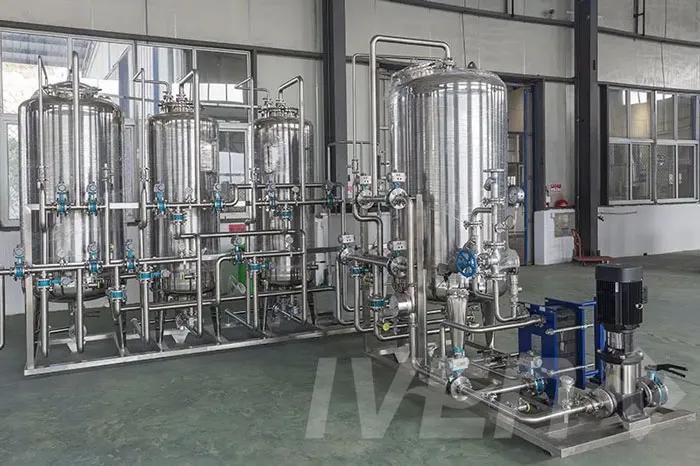
United States Guide to WFI and Purified Water Systems
Pharmaceutical water is not a utility that can be treated as a background service. In the United States, it is a validated process medium, a compliance issue, and often a direct product-contact ingredient. For manufacturers of injectables, vaccines, biologics, ophthalmics, and sterile products, the comparison of WFI and purified water in pharmaceutical process systems affects plant design, risk control, operating cost, and regulatory readiness. Companies building or upgrading facilities in New Jersey, Massachusetts, North Carolina, Texas, California, and other major life-science hubs must choose the right water quality level, generation technology, storage philosophy, and distribution loop strategy from the start.
WFI and purified water pharmaceutical systems are essential infrastructure for pharmaceutical manufacturers because they provide controlled, reproducible, and documented high-purity water for production, cleaning, formulation, and support processes. In U.S. GMP facilities, purified water is commonly used for non-parenteral processes, equipment cleaning, and certain formulation steps, while Water for Injection, or WFI, is required for injectable products and other high-risk sterile applications where endotoxin control is critical.
The practical difference is simple: purified water focuses on tight chemical and microbiological quality, while WFI adds a higher level of microbial and bacterial endotoxin control suitable for parenteral use. That distinction influences everything from user requirement specifications and piping materials to sanitization temperature, validation protocols, and lifecycle cost. If a company chooses the wrong grade or builds a system without future expansion in mind, it can face redesign, production bottlenecks, delayed approvals, and expensive remediation.
For U.S. manufacturers facing FDA scrutiny, tight project schedules, and pressure to scale quickly, a properly engineered pharmaceutical water system supports quality, uptime, and speed to market. This is especially relevant in established clusters such as Boston-Cambridge, Princeton, Philadelphia, Chicago, and the Raleigh-Durham corridor, where sterile manufacturing and biologics capacity continue to expand.
Topic Purified Water WFI Main purpose General pharmaceutical processing and cleaning High-risk sterile and injectable applications Endotoxin control Not the primary defining attribute Strictly controlled for parenteral use Typical usage Oral liquids, equipment washing, utility feed Injectables, sterile compounding, final rinsing for critical systems Generation methods Usually RO, EDI, UV, filtration combinations Distillation or membrane-based systems depending on pharmacopeia acceptance and design strategy Distribution approach Ambient or hot loop depending risk profile Usually hot recirculation or highly controlled ambient loop Capital and operating cost Lower than WFI systems Higher due to equipment complexity and compliance demandsThe table above gives the fast operational view. In real projects, the correct choice depends on product type, cleaning validation strategy, batch size, process risk, and the company’s long-term manufacturing plan.
A pharmaceutical water system is an engineered combination of pretreatment, purification, storage, distribution, monitoring, and sanitization units that convert incoming municipal or well water into a pharmaceutical-grade utility. In the United States, the system must be designed to meet relevant pharmacopeial expectations, support GMP documentation, and remain in a state of control throughout operation.
Purified water systems often begin with softened or conditioned feedwater, followed by reverse osmosis, electrodeionization, UV treatment, and final filtration. Their purpose is to reduce dissolved solids, organics, microbes, and other contaminants that could affect process quality. WFI systems build on the same control philosophy but apply stricter design standards and operational discipline because the water is intended for highly sensitive uses tied to patient safety.
Manufacturers need these systems for five core reasons. First, product quality: inconsistent water can alter formulation chemistry, pH balance, conductivity, and stability. Second, microbiological control: water is one of the most common vectors for contamination. Third, regulatory compliance: FDA inspections routinely examine utility validation, trend data, SOPs, excursions, and change control. Fourth, efficiency: centralized and well-designed systems reduce manual intervention and cleaning failures. Fifth, scalability: a correctly sized loop can support future capacity without repeated construction work.
In the U.S. market, water system expectations are especially high for facilities manufacturing aseptic injectables, high-potency drugs, biologics, cell and gene therapy support materials, and vaccines. Plants near logistics hubs such as Newark, Houston, and Los Angeles often prioritize robust systems because product release timing is linked to cold chain and distribution schedules. Delays caused by utility failures can ripple through warehousing, release testing, and shipment planning.
When companies evaluate integrated providers, they often look beyond the skid itself. They want engineering support, documentation, FAT and SAT coordination, validation protocols, and practical experience with U.S. compliance. This is where experienced partners such as IVEN Pharmatech Engineering become relevant, especially for manufacturers seeking coordinated process utility planning rather than isolated equipment purchasing.
WFI and purified water are used across nearly every area of a GMP plant, but not in the same way. The selection must match intended use, contamination risk, and regulatory expectation. A purified water loop can be ideal for oral solid dosage support, equipment washing, solution preparation for lower-risk products, and laboratory needs. WFI is used where endotoxins and microbiological risk become critical, including injectables, sterile formulations, and specific final rinse applications.
The benefits go far beyond having clean water. A validated pharmaceutical water system improves batch consistency, shortens cleaning turnaround, supports automated production, reduces deviation rates, and creates traceable data for audits. Modern systems also help reduce utility consumption through heat recovery, optimized recirculation, and intelligent sanitization cycles.
Facility Area Typical Water Grade Example Use Main Benefit Injectable production WFI Formulation of sterile parenterals High endotoxin and microbial control Vial and ampoule washing WFI or purified water depending stage Final rinse before filling Reduced contamination risk Equipment CIP/SIP support Purified water or WFI Tank and line cleaning Repeatable cleaning validation Oral liquid manufacturing Purified water Bulk solution preparation Consistent product composition Laboratory and QC areas Purified water Reagent preparation and rinsing Reliable analytical results Bioprocess support WFI or high-grade purified water Media prep and critical cleaning Lower process variability Medical consumables Purified water Component cleaning Improved surface cleanlinessFor U.S. operators, the choice of water grade often intersects with plant workflow. A large sterile facility in New Jersey may need separate loops for purified water and WFI to prevent unnecessary operating cost. A smaller CDMO in Texas may use a modular strategy to start with purified water and add WFI capacity later. In both cases, benefits come from system fit, not from buying the most complex option by default.
var ctxBar = document.getElementById(‘barIndustryDemand’).getContext(‘2d’);var barIndustryDemand = new Chart(ctxBar, { type: ‘bar’, data: { labels: [‘Injectables’, ‘Biologics’, ‘Vaccines’, ‘Oral Liquids’, ‘Medical Devices’, ‘CDMOs’], datasets: [{ label: ‘Estimated U.S. demand index for pharmaceutical water systems’, data: [96, 89, 84, 62, 55, 78], backgroundColor: [‘#4e79a7′,’#f28e2b’,’#e15759′,’#76b7b2′,’#59a14f’,’#edc948′] }] }, options: { responsive: true, maintainAspectRatio: false, scales: { y: { beginAtZero: true, max: 100 } } }});The demand profile shown above reflects the strongest pull from injectable and biologics manufacturing, which is consistent with current U.S. capital investment patterns.
Pharmaceutical manufacturers in the United States generally consider four broad technical routes: RO-based purified water systems, RO plus EDI systems, distillation-based WFI systems, and hybrid configurations that combine membrane and thermal technologies. The right choice depends on feedwater quality, required capacity, plant utilities, sanitization philosophy, and compliance preferences.
RO systems remove a large percentage of dissolved salts, organics, and particulates and are often the foundation of purified water generation. EDI further polishes the water without the constant use of chemical regenerants, which supports cleaner operation and lower manual intervention. Distillation, especially multi-effect distillation, remains a well-established route for WFI production and is valued for strong separation performance and long-term acceptance in high-risk applications. Hybrid systems combine these approaches to improve energy efficiency, flexibility, and resilience.
Technology selection also depends on future plant evolution. A company launching oral liquids today may later enter sterile filling, making expandability a major advantage. Experienced engineering firms can design this roadmap from the beginning, integrating water generation with filling lines, solution preparation, and distribution systems. Companies exploring such combined planning can review broader turnkey pharmaceutical project capabilities when comparing suppliers.
System Type Typical Use Strengths Limitations Single-pass RO Basic pretreatment or lower-risk purified water applications Lower capital cost, compact footprint Usually insufficient alone for robust pharma performance Double-pass RO Purified water generation Better conductivity control, strong rejection performance Needs careful pretreatment and monitoring RO + EDI High-quality purified water Stable performance, reduced chemical regeneration needs Requires qualified feed quality and maintenance discipline Multi-effect distillation WFI generation Established technology, strong microbial and endotoxin control Higher energy demand and capital cost Vapor compression distillation WFI with energy optimization priorities Efficient for certain capacities, strong robustness Can involve higher mechanical complexity Hybrid membrane + thermal Facilities balancing sustainability and compliance Flexible design, lower utility burden in some cases Needs strong integration and control strategy Skid-mounted modular systems Fast expansion and CDMO projects Shorter installation timelines, easier transport May need later expansion work for large plantsFrom a technological capability perspective, some suppliers stand out because they understand not only one water technology but also how the utility integrates with filling, preparation, and logistics. IVEN, for example, is known for customized pharmaceutical water treatment systems including RO purified water units, multi-effect water distillers, purified steam generators, and complete preparation and distribution systems. That broader systems view helps reduce interface risk between utility equipment and production operations.
Traditional industrial water treatment methods are designed to improve general water usability, not to satisfy pharmaceutical GMP expectations. Standard softening, sand filtration, activated carbon treatment, or demineralization may improve feedwater quality, but they do not create a pharmaceutical-grade system on their own. They lack the validated control strategy, sanitary design, continuous recirculation philosophy, online monitoring, and microbiological discipline required in regulated drug manufacturing.
Choosing between a true pharmaceutical water system and a conventional industrial setup should not be a difficult decision for any company making regulated products. The real decision is where on the spectrum of pharmaceutical-grade design to invest. For example, does the site need a hot WFI loop or a tightly controlled ambient membrane-based design? Does purified water need to support only cleaning, or also formulation? Is the plant designed for one shift today but three shifts within two years?
Traditional methods may still play an important role as pretreatment stages before pharma purification, especially in areas where incoming water quality varies seasonally. This can be relevant in U.S. regions with changing municipal source profiles or hard water conditions. Facilities near the Gulf Coast or inland manufacturing belts often must engineer around feedwater fluctuation and utility reliability.
Decision Factor Traditional Treatment Only Pharmaceutical Water System Regulatory suitability Not adequate for GMP product contact use Designed for pharmacopeial and GMP compliance Sanitary construction Often limited High-purity piping, drainability, hygienic components Microbial control Inconsistent Engineered through loop design, sanitization, and monitoring Validation readiness Low Supports IQ, OQ, PQ and lifecycle documentation Data integrity Usually basic instrumentation Trendable online parameters and alarm management Best use Pretreatment and general utilities Product-contact and critical cleaning applicationsThe explanation is straightforward: traditional treatment can reduce burden on the main system, but it should not be mistaken for the final compliant solution when pharmaceutical-grade water is required.
The United States remains one of the most active markets for pharmaceutical process utilities because it combines mature GMP expectations with ongoing investment in injectables, biologics, and advanced therapies. Existing facilities are upgrading legacy systems, while new greenfield and brownfield projects continue in major clusters such as Boston, Philadelphia, New Jersey, Indianapolis, Raleigh-Durham, and San Diego. Contract manufacturers are also adding flexible capacity to support smaller clinical and commercial batches.
Several factors are driving demand. First, sterile manufacturing expansion continues because injectable products remain central to oncology, immunology, hospital care, and specialty pharmaceuticals. Second, biologics and vaccine infrastructure require strong utility control. Third, FDA expectations around data, validation, and contamination control continue to pressure sites with outdated loops. Fourth, energy and water conservation goals are pushing facilities to reconsider older high-consumption configurations.
From a manufacturing capability standpoint, buyers increasingly prefer suppliers that can support both standalone equipment and integrated facility packages. Companies with dedicated manufacturing plants for water systems, filling lines, intelligent conveying, and packaging can often reduce coordination gaps. This matters to U.S. owners managing compressed schedules tied to financing, launch commitments, and contractor availability around ports and inland transport routes from Long Beach, Savannah, and Newark.
var ctxLine = document.getElementById(‘lineMarketGrowth’).getContext(‘2d’);var lineMarketGrowth = new Chart(ctxLine, { type: ‘line’, data: { labels: [‘2021’, ‘2022’, ‘2023’, ‘2024’, ‘2025’, ‘2026’, ‘2027’], datasets: [{ label: ‘Estimated U.S. pharmaceutical water system market index’, data: [100, 108, 117, 128, 139, 151, 165], borderColor: ‘#2a9d8f’, backgroundColor: ‘rgba(42,157,143,0.15)’, fill: false, tension: 0.25 }] }, options: { responsive: true, maintainAspectRatio: false, scales: { y: { beginAtZero: false } } }});The line trend reflects a realistic pattern of expansion driven by sterile capacity, modernization, and sustainability upgrades.
var ctxArea = document.getElementById(‘areaTrendShift’).getContext(‘2d’);var areaTrendShift = new Chart(ctxArea, { type: ‘line’, data: { labels: [‘2021’, ‘2022’, ‘2023’, ‘2024’, ‘2025’, ‘2026’], datasets: [{ label: ‘Share of projects favoring hybrid and efficient system designs’, data: [18, 24, 31, 39, 48, 57], borderColor: ‘#264653’, backgroundColor: ‘rgba(38,70,83,0.25)’, fill: true, tension: 0.3 }] }, options: { responsive: true, maintainAspectRatio: false, scales: { y: { beginAtZero: true, max: 70 } } }});Looking ahead to 2026 and beyond, three future trends are especially important. The first is technology: more projects will adopt hybrid systems, smarter automation, continuous trending, remote diagnostics, and modular skids that shorten startup timelines. The second is policy and compliance: contamination control strategies, electronic records scrutiny, and lifecycle validation discipline will continue to shape procurement criteria. The third is sustainability: owners increasingly ask for lower water rejection, heat recovery, optimized recirculation rates, and systems that reduce total cost of ownership without weakening compliance.
For this reason, buyers are not simply asking for a still or an RO skid. They are asking how the complete solution performs over ten to fifteen years, how quickly parts can be supplied, and whether the system can support expansion from pilot to commercial scale.
Choosing a supplier should begin with project risk, not with price alone. In the United States, a water system supplier must demonstrate competence in hygienic design, documentation, automation, validation support, and practical GMP execution. Many equipment providers can assemble a skid. Far fewer can support a regulated utility from design qualification through startup and long-term performance trending.
Start with five questions. Does the supplier understand your product category and intended water uses? Can it provide sanitary engineering and material traceability? Does it have proven manufacturing resources and quality control? Can it support FAT, SAT, IQ, OQ, and PQ? Does it offer responsive after-sales service, spare parts, training, and troubleshooting?
It is also wise to look at supplier structure. A company that manufactures related process systems may bring stronger coordination, especially if your project includes water generation, solution preparation, filling, packaging, and logistics. Reviewing the supplier’s pharmaceutical equipment portfolio can help determine whether it understands line integration, not just isolated hardware.
Evaluation Item What to Check Why It Matters Regulatory knowledge Familiarity with FDA cGMP, USP, and global GMP frameworks Reduces design and documentation gaps Engineering depth P&IDs, layout support, loop design, sanitary details Prevents hidden installation and performance issues Manufacturing quality Material control, welding quality, FAT standards Improves reliability and validation outcomes Validation support IQ/OQ/PQ documentation and test protocols Accelerates qualification and audit readiness Service responsiveness Commissioning, training, troubleshooting, spare parts Limits downtime after handover Project references Relevant sterile, biologic, or oral dosage case experience Shows real execution capability Scalability Ability to expand capacity or add new loops later Protects future capital planningService capability is often the deciding factor after technical review. The best suppliers stay involved from feasibility and design through installation, commissioning, validation, training, and post-startup optimization. IVEN’s model is notable here because it emphasizes full-lifecycle support, including engineering design, customization, installation, commissioning, validation assistance, documentation, training, and after-sales service. For U.S. buyers managing time-sensitive projects, that integrated support can materially reduce schedule risk.
var ctxComp = document.getElementById(‘comparisonSupplierChart’).getContext(‘2d’);var comparisonSupplierChart = new Chart(ctxComp, { type: ‘bar’, data: { labels: [‘Compliance Support’, ‘Customization’, ‘Manufacturing Integration’, ‘Validation Support’, ‘Lifecycle Service’, ‘Cost Efficiency’], datasets: [{ label: ‘Ideal supplier performance score’, data: [95, 90, 88, 94, 92, 85], backgroundColor: ‘#8d5a97’ }] }, options: { responsive: true, maintainAspectRatio: false, scales: { y: { beginAtZero: true, max: 100 } } }});The comparison above does not rank individual companies. It highlights the attributes sophisticated U.S. buyers usually prioritize when making a final selection.
Investment cost varies widely based on capacity, automation level, water grade, loop length, sanitization strategy, pretreatment burden, and qualification scope. A compact purified water skid for a smaller oral liquid plant may be relatively modest, while a full WFI generation and hot distribution system for a sterile injectable facility can be a major capital package with building utility implications.
Budgeting should include much more than the main equipment purchase. Owners frequently underestimate piping installation, clean utility instrumentation, insulation, point-of-use hardware, commissioning, validation, spare parts, and operator training. In U.S. projects, labor cost and contractor coordination can represent a significant share of total installed cost, especially in high-demand pharmaceutical construction markets.
Budget Item Typical Cost Impact Planning Note Pretreatment system Moderate Depends on local feedwater variability Main generation skid High Cost rises sharply for WFI and advanced automation Storage tank and distribution loop High Loop length, material grade, and recirculation design matter Instrumentation and controls Moderate to high Critical for data trending, alarms, and compliance Installation and piping High U.S. site labor can exceed equipment cost assumptions Validation and documentation Moderate Required for timely release to production Spare parts and training Low to moderate Important for stable startup and first-year operationROI should be analyzed in both direct and indirect terms. Direct returns include reduced water loss, less chemical consumption, lower labor, fewer maintenance interventions, and lower batch failure risk. Indirect returns include smoother audits, faster startup, easier expansion, and stronger customer confidence for CDMOs and exporters.
A simple ROI example: if an upgraded purified water or WFI system reduces deviation-related downtime, cuts sanitization utility use, and prevents one major contamination incident over several years, the payback can be much faster than expected. For sterile plants, avoiding one quality event may justify the investment by itself.
Companies considering phased investment often request a roadmap: phase one for purified water, phase two for WFI, and phase three for expanded distribution. This approach can be effective if the original design reserves space, utilities, automation capacity, and piping tie-ins.
The most common mistake is treating the system as a catalog item rather than a site-specific utility. Water quality, production schedule, building layout, and process profile all affect the correct design. Under-sizing leads to pressure drops, poor recovery, and production conflicts. Over-sizing increases residence time and microbial risk if the system is not managed carefully.
Another major risk is poor loop design. Dead legs, low recirculation velocity, improper slope, unsuitable valve selection, and badly placed points of use can undermine an otherwise high-quality skid. Similarly, weak sanitization planning often causes chronic microbial issues later. A compliant design must consider normal production, weekend idle periods, maintenance access, and expansion scenarios.
Documentation gaps are also expensive. If FAT protocols, weld records, calibration records, material certificates, and software documents are incomplete, qualification becomes slower and more contentious. U.S. companies working on accelerated launch schedules should insist on documentation structure early in procurement.
Supply chain timing matters as well. Imported systems can perform very well, but buyers should examine lead time, spare parts planning, and logistics routing through ports such as Los Angeles, Long Beach, Savannah, or Newark. Customs delays, installation sequencing, and local site readiness must all be managed. This is one reason many buyers prefer suppliers with organized project management and coordinated documentation packages.
Risk Typical Cause Mitigation Strategy Microbial excursions Poor loop design or weak sanitization Optimize recirculation, temperature, and hygienic details Capacity shortfall Incorrect demand estimation Model peak loads and future expansion Qualification delays Incomplete documentation Define document package and approval matrix early High operating cost Inefficient design or utility integration Review lifecycle energy and water balance Installation conflict Late coordination with MEP and process teams Use coordinated layout and clash review Supplier support gaps Limited after-sales resources Confirm service scope, training, and spare parts plan Regulatory observations Weak monitoring or uncontrolled changes Maintain trend review, SOP discipline, and change controlFor companies seeking a practical partner, the best path is usually an early engineering discussion rather than a narrow bid comparison. Project teams can contact IVEN Pharmatech Engineering to review process objectives, utility loads, layout constraints, validation expectations, and expansion plans before finalizing procurement.
As an international engineering company with long experience in pharmaceutical and medical device projects, IVEN is relevant to U.S. buyers not just because of equipment supply, but because it combines technological depth, specialized manufacturing resources, and service support in a coordinated delivery model. That makes it especially useful for owners who want to reduce interface risk across water systems, filling lines, packaging, and plantwide execution.
What is the main difference between WFI and purified water in pharmaceutical manufacturing?Purified water is used for many general pharmaceutical processes and cleaning tasks, while WFI is intended for higher-risk sterile and injectable applications where endotoxin control is essential.
Can purified water be used instead of WFI for injectables?No. For injectable drug manufacturing and other critical sterile uses, WFI is generally required because purified water does not meet the same intended level of endotoxin control for those applications.
Is distillation still necessary for WFI in the United States?Distillation remains a widely used and trusted method, especially for conservative compliance strategies. However, system selection should be based on current pharmacopeial acceptance, intended use, engineering design, and site preferences.
Which industries in the United States need these systems most?Sterile injectables, biologics, vaccines, CDMOs, ophthalmics, dialysis solution manufacturing, and some medical device and consumables plants are among the strongest users.
How long does a pharmaceutical water system project usually take?It depends on capacity, customization, factory testing, shipping, installation, and qualification. Smaller modular purified water systems may move relatively quickly, while full WFI and loop projects for sterile plants can require a much longer schedule.
What should be included in supplier scope besides equipment?Engineering documents, FAT support, installation guidance, commissioning, IQ/OQ support, training, spare parts planning, and after-sales service should all be considered.
How can a buyer improve ROI?By matching system capacity to true demand, selecting efficient technology, reducing water and energy waste, preventing contamination events, and choosing a supplier that supports rapid qualification and stable operation.
Why do many U.S. buyers prefer integrated project partners?Because integration reduces coordination problems between utilities, process equipment, automation, and validation. This is particularly useful for new plants and expansion projects on tight schedules.
Where can I learn more about an experienced supplier’s background?You can review the company overview at the IVEN company page to understand its engineering focus, manufacturing scope, and international project experience.
What is the best first step before buying?Define product types, water usage points, peak demand, sanitization strategy, compliance expectations, and expansion plans. Then compare suppliers based on lifecycle value rather than equipment price alone.
-
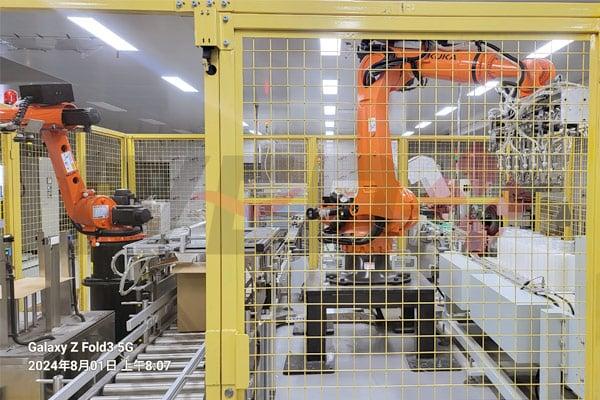
Turnkey Nutraceutical Plant Solutions in the United States
For manufacturers in the United States, turnkey nutraceutical production is no longer just a convenient procurement model. It is a strategic approach to building, expanding, or modernizing compliant production capacity for vitamins, minerals, botanical extracts, protein powders, gummies, capsules, tablets, oral liquids, and other health products. In a market shaped by FDA expectations, cGMP requirements, rapid product launches, and rising consumer demand, a turnkey plant combines engineering, process design, utilities, equipment, automation, validation, and training into one coordinated project.
In practical terms, this model helps companies reduce interface risk between multiple vendors, improve project scheduling, control contamination hazards, and accelerate commercial readiness. For buyers in major U.S. life science hubs such as New Jersey, Boston, Chicago, Dallas, Los Angeles, Salt Lake City, and the Research Triangle, turnkey solutions are especially relevant when timelines are tight and regulatory documentation must be audit-ready from day one.
A turnkey nutraceutical production plant is an integrated factory solution delivered as a complete package, usually covering layout planning, clean utilities, production equipment, filling or packaging lines, control systems, qualification support, and startup services. In the United States, this model is used by supplement brands, contract manufacturers, pharmaceutical groups entering wellness categories, and investors launching GMP-compliant facilities.
The main reason buyers choose turnkey delivery is that nutraceutical production involves far more than buying a blender or encapsulator. A successful facility must align material flow, personnel flow, HVAC zoning, purified water where needed, dust control, line clearance, batch traceability, packaging integrity, and quality systems. When one engineering partner coordinates the plant from concept to validation, the result is usually faster execution and fewer commissioning surprises.
Companies evaluating this route typically focus on five outcomes: regulatory alignment, capacity scalability, utility efficiency, product flexibility, and total cost of ownership. U.S. buyers also look closely at domestic installation support, spare parts planning, and the supplier’s ability to document compliance for inspections and customer audits.
Why U.S. buyers consider a turnkey nutraceutical plant Decision Factor Why It Matters Typical U.S. Buyer Concern Regulatory compliance Supports GMP-ready operation and documentation FDA inspections and customer audits Single-point coordination Reduces interface issues between vendors Schedule delays from fragmented sourcing Faster startup Improves time to commercial production Lost revenue from late launches Scalable design Allows phased expansion Need to add new SKUs quickly Process consistency Standardizes output quality Batch variability and rework risk Lifecycle support Helps with maintenance and optimization Downtime and training gapsThe table above shows why the turnkey model is often selected for mid-size and large nutraceutical projects. It addresses both commercial and compliance goals rather than equipment supply alone.
Turnkey nutraceutical production refers to the delivery of a complete manufacturing system ready for installation, qualification, and operation. Although nutraceuticals are distinct from prescription pharmaceuticals, many U.S. manufacturers borrow pharmaceutical production standards to raise product quality, improve market credibility, and support retailer or private-label requirements.
These turnkey plants are used to manufacture products such as hard capsules, softgels through specialized partners, compressed tablets, effervescent tablets, sachets, stick packs, oral liquids, powders, gummies, and functional beverage concentrates. In some projects, the scope also includes raw material handling, extraction or solution preparation, clean storage, serialization-ready packaging, laboratory support rooms, and warehouse automation.
From an engineering perspective, the plant normally includes process equipment, purified water or utility systems where applicable, dust extraction, weighing booths, granulation systems, blending lines, encapsulation or compression equipment, coating systems, bottle filling, blister packing, cartoning, case packing, and logistics integration. For advanced operations in places like New Jersey and Pennsylvania, projects may also require electronic batch records, SCADA interfaces, and MES connectivity.
For buyers comparing solution providers, it is important to understand whether the supplier is merely an equipment trader or a real project integrator. A capable engineering partner will address user requirement specifications, facility zoning, utility load calculations, FAT and SAT planning, installation supervision, validation protocols, and training. Readers who want to review an integrated project approach can see how a full project model is presented on the turnkey project solutions page.
In the U.S. market, turnkey nutraceutical plants are commonly used by:
The strongest applications are in facilities where product quality, batch traceability, and packaging efficiency have direct commercial value. In nutraceutical production, the margin impact of line uptime and yield can be substantial. That is why many operators prioritize integrated engineering over piecemeal equipment purchases.
Typical applications include capsule filling lines for probiotics and herbal formulations, tablet lines for multivitamins and minerals, oral liquid systems for syrups and immune support products, gummy production for consumer-friendly delivery formats, and powder packaging systems for sports and functional nutrition. Turnkey facilities can also support highly specific requirements, such as low-humidity rooms for hygroscopic products or segregated handling for allergen-sensitive formulations.
The benefits are not only technical. They also affect supply chain resilience. U.S. producers importing ingredients through Long Beach, Newark, Houston, or Savannah need material flows that minimize waiting time, preserve quality, and support FIFO inventory control. A well-designed turnkey plant aligns warehouse receiving, sampling, quarantine, dispensing, production, packing, and release more efficiently than a plant assembled from unrelated systems.
Main applications and operational benefits Application Typical Output Main Benefit Capsule production Herbal, probiotic, vitamin capsules High flexibility for formula changes Tablet production Multivitamins, chewables, effervescents Strong throughput and low unit cost Powder and sachet lines Protein, electrolyte, collagen blends Fast packaging with accurate dosing Oral liquid systems Syrups, tonic liquids, shot products Controlled mixing and filling precision Gummy production Functional gummies and nutrigels Consumer-friendly dosage format Integrated packaging Bottles, blisters, cartons, shippers Improved traceability and retail readinessThis table illustrates how the same turnkey concept can serve multiple product categories while preserving operational consistency. For U.S. manufacturers serving Amazon, Costco, pharmacy chains, or DTC brands, packaging readiness is often as important as the process itself.
One important advantage is technology integration. Some engineering groups active in international pharmaceutical projects bring experience from aseptic, oral liquid, water treatment, logistics, and packaging systems rather than from a single machine category. That multidisciplinary capability can be useful when nutraceutical projects include purified water generation, automated conveying, or warehouse interfaces. More background on integrated engineering expertise can be found on the company overview page.
var ctxBar = document.getElementById(‘barChartDemand’).getContext(‘2d’);var barChartDemand = new Chart(ctxBar, { type: ‘bar’, data: { labels: [‘Capsules’, ‘Tablets’, ‘Powders’, ‘Oral Liquids’, ‘Gummies’, ‘Blister/Bottle Packaging’], datasets: [{ label: ‘Estimated U.S. project demand score’, data: [88, 84, 79, 63, 76, 91], backgroundColor: [‘#4e79a7′,’#f28e2b’,’#e15759′,’#76b7b2′,’#59a14f’,’#edc948′] }] }, options: { responsive: true, maintainAspectRatio: false, plugins: { legend: { display: true } }, scales: { y: { beginAtZero: true, max: 100 } } }});There is no single standard plant configuration. The correct model depends on dosage form, annual volume, batch size, utility profile, level of automation, and quality positioning. In the United States, most projects fall into one of four broad categories: capsule and tablet plants, powder and sachet plants, liquid nutraceutical plants, and multi-format facilities designed for contract manufacturing.
Capsule and tablet plants usually include dispensing rooms, sifting, blending, wet or dry granulation as needed, tablet compression, dedusting, metal detection, capsule filling, polishing, bottle or blister packaging, and secondary packing. Powder lines emphasize dust containment, accurate weighing, blending uniformity, auger or multihead filling, and moisture control. Liquid plants focus on solution preparation, holding tanks, filtration, transfer systems, bottle filling, capping, labeling, and CIP or SIP where required by process design.
Technical options that buyers often compare include isolated dispensing booths, bin blending versus fixed mixing, semi-automatic versus fully automatic feeding, vision inspection, in-line checkweighing, desiccant insertion, serialization capability, HVAC pressure cascade control, and digital batch records. For U.S. facilities with broad SKU portfolios, modular equipment layout is especially valuable because it supports future product changes.
Common plant models and technical options Plant Type Best For Core Equipment Capsule-focused plant Herbal and probiotic capsules Blenders, capsule fillers, polishers, bottle lines Tablet-focused plant Multivitamins and mineral products Granulation, presses, coaters, blister or bottle packaging Powder and sachet plant Sports nutrition and drink mixes Dust-controlled dispensing, blending, sachet or can filling Oral liquid plant Syrups, shots, tonics Preparation tanks, transfer systems, fillers, cappers Multi-format contract plant CMOs with varied customer portfolios Shared utilities and flexible packaging modules Expansion module Existing factory upgrades Add-on rooms, automation, packaging, utility upgradesThe explanation behind these categories is simple: choosing the wrong plant architecture can raise operating costs for years. A high-mix contract manufacturer in Illinois or California may need flexibility more than pure speed, while a private-label vitamin producer in Florida may prioritize throughput and bottle packaging automation.
Not every project needs a full turnkey plant. Some companies can succeed with line-by-line expansion, contract manufacturing, or hybrid outsourcing. However, the more complex the product portfolio and the higher the compliance expectations, the stronger the case for integrated delivery.
A piecemeal approach can appear cheaper at the quotation stage, but it often shifts design coordination to the buyer. That means the owner must manage multiple suppliers for equipment dimensions, utility connections, software interfaces, installation sequencing, FAT timing, and validation documentation. In a fast-moving U.S. market, that hidden management burden can become expensive.
Turnkey plants compared with alternative approaches Option Upfront Cost Coordination Burden Speed to Startup Full turnkey plant Medium to high Low for the owner Fast when managed well Separate equipment sourcing Low to medium Very high Often slower Contract manufacturing Low capex Low Fast market entry Brownfield upgrade Medium Medium to high Moderate Modular plant build Medium Medium Fast for standard formats Hybrid model Medium Medium BalancedThe comparison shows that turnkey delivery is strongest when the owner wants control, long-term manufacturing value, and lower integration risk. Alternatives can work for short product cycles or low capital budgets, but they may limit brand control and future margin improvement.
A useful way to decide is to ask three questions. First, do you need internal manufacturing know-how as a competitive advantage? Second, do your retailers or private-label customers require tighter audit readiness? Third, will your product range expand enough to justify a scalable facility? If the answer is yes to at least two, a turnkey project usually deserves serious consideration.
var ctxComp = document.getElementById(‘comparisonChartSupplier’).getContext(‘2d’);var comparisonChartSupplier = new Chart(ctxComp, { type: ‘bar’, data: { labels: [‘Compliance Support’, ‘Integration Depth’, ‘Scalability’, ‘Documentation’, ‘Startup Speed’, ‘Lifecycle Service’], datasets: [ { label: ‘Turnkey Plant’, data: [92, 95, 89, 93, 86, 90], backgroundColor: ‘#6f42c1’ }, { label: ‘Separate Vendor Model’, data: [63, 48, 67, 55, 58, 49], backgroundColor: ‘#adb5bd’ } ] }, options: { responsive: true, maintainAspectRatio: false, plugins: { legend: { display: true } }, scales: { y: { beginAtZero: true, max: 100 } } }});The U.S. nutraceutical manufacturing market remains one of the largest and most competitive in the world. Demand is driven by preventive health, aging demographics, sports performance, immunity, gut health, beauty-from-within products, and personalized wellness programs. This encourages investment not only in packaging speed but also in process reliability and flexible batch manufacturing.
Several regional patterns are worth noting. New Jersey and Pennsylvania continue to benefit from pharmaceutical talent pools and East Coast port access. California remains strong in branded supplements, gummies, and innovation partnerships. Texas is growing as a manufacturing and distribution base due to land availability and central logistics. Utah and Arizona are attractive for scale manufacturing and western distribution. Chicago and the Midwest offer transportation advantages for nationwide fulfillment.
Looking toward 2026, three trends are shaping purchasing decisions. The first is digitalization: more buyers want data-rich equipment with OEE monitoring, recipe control, and easier audit trails. The second is sustainability: lower energy consumption, reduced material waste, recyclable packaging compatibility, and water-efficient utilities are becoming board-level topics. The third is policy and quality alignment: while nutraceuticals are regulated differently from prescription drugs, many major retailers and corporate buyers increasingly favor plants designed to higher GMP expectations.
Advanced engineering providers are also seeing stronger interest in integrated logistics, including automated conveying, pallet movement, and warehouse interfaces. For larger facilities handling many SKUs, internal material flow can be as important as production speed itself.
var ctxLine = document.getElementById(‘lineChartGrowth’).getContext(‘2d’);var lineChartGrowth = new Chart(ctxLine, { type: ‘line’, data: { labels: [‘2021’, ‘2022’, ‘2023’, ‘2024’, ‘2025’, ‘2026’], datasets: [{ label: ‘Estimated U.S. turnkey nutraceutical project index’, data: [100, 108, 117, 129, 141, 156], borderColor: ‘#20c997’, backgroundColor: ‘rgba(32,201,151,0.15)’, fill: false, tension: 0.3 }] }, options: { responsive: true, maintainAspectRatio: false, plugins: { legend: { display: true } }, scales: { y: { beginAtZero: false } } }}); var ctxArea = document.getElementById(‘areaChartTrend’).getContext(‘2d’);var areaChartTrend = new Chart(ctxArea, { type: ‘line’, data: { labels: [‘2021’, ‘2022’, ‘2023’, ‘2024’, ‘2025’, ‘2026’], datasets: [{ label: ‘Shift toward automated and data-connected plants (%)’, data: [34, 39, 45, 53, 61, 69], borderColor: ‘#fd7e14’, backgroundColor: ‘rgba(253,126,20,0.25)’, fill: true, tension: 0.25 }] }, options: { responsive: true, maintainAspectRatio: false, plugins: { legend: { display: true } }, scales: { y: { beginAtZero: true, max: 100 } } }});These charts represent realistic market direction rather than official forecasts. They highlight the steady growth of integrated projects and the shift from stand-alone machines to connected, validation-friendly production systems.
Supplier selection is where many successful projects are won or lost. In the United States, a reliable provider should demonstrate more than equipment brochures. Buyers should ask for proof of engineering capability, documentation quality, project management structure, validation support, reference installations, after-sales responsiveness, and clear responsibility boundaries.
From a technological capability standpoint, the supplier should understand not only processing machines but also purified water systems where needed, process distribution, intelligent conveying, packaging, and automation. This is especially important when nutraceutical plants share design principles with pharmaceutical facilities. A supplier with broad technical depth can reduce handoff problems during installation and startup.
From a manufacturing capability perspective, buyers should verify whether the company controls production quality through its own specialized plants or relies heavily on subcontractors. Multi-factory manufacturing can be an advantage if it is organized by system category, such as filling and packaging, water treatment, logistics automation, and specialty production equipment. This usually improves product consistency and spare parts planning.
From a service capability perspective, the most reliable partners provide feasibility support, layout advice, equipment customization, installation, commissioning, IQ/OQ/PQ guidance, operator training, and ongoing optimization. In the U.S. market, access to English documentation, remote troubleshooting, and timely support during FAT, SAT, and ramp-up is essential. Companies wanting to start a discussion about application fit or project scope can use the contact page for project consultation.
Supplier evaluation checklist for U.S. buyers Evaluation Point What to Ask Positive Sign Regulatory knowledge Can they support GMP-oriented design and documentation? Clear examples of compliant project delivery Engineering depth Do they integrate utilities, process, packaging, and automation? Single engineering team with coordinated drawings Manufacturing control Are key systems built in-house? Specialized production plants and quality controls Project references Have they delivered in regulated international markets? Verifiable projects and long-term customers Validation support Can they assist with FAT, SAT, IQ, OQ, and PQ? Structured protocol templates and experienced teams After-sales service How fast are spare parts and remote support? Documented service process and training planThe checklist above helps buyers compare suppliers on measurable project value rather than price alone. A lower quotation can become more expensive if the provider lacks documentation discipline or startup support.
For U.S. import projects, also review logistics capability. Packaging machinery arriving through Newark, Houston, or Los Angeles needs proper preservation, customs coordination, staged installation planning, and clear as-built documentation. These practical details have a major effect on project timing.
If you want to review available equipment categories before moving to a full project discussion, a practical starting point is the equipment catalog and solution portfolio.
Investment levels vary widely based on product format, facility size, utility scope, cleanroom classification, packaging automation, and local construction cost. In the United States, budgets are also influenced by labor rates, permit timelines, utility tie-ins, and the cost of meeting customer audit standards. A capsule or tablet line added to an existing building may require a few million dollars, while a greenfield multi-format facility with warehouse automation can require much larger capital expenditure.
Budget planning should separate at least eight cost blocks: civil works, HVAC and utilities, production equipment, packaging lines, automation and software, validation and documentation, freight and installation, and contingency. Many buyers underestimate commissioning, format parts, spare parts, and operator training, even though these affect early performance.
Typical budget categories in a turnkey nutraceutical project Cost Category Share of Budget Range Planning Note Facility construction or retrofit 18% to 28% Depends on shell condition and local building code HVAC and utilities 12% to 20% Critical for humidity, dust, and pressure control Process equipment 20% to 30% Varies by dosage form and batch size Packaging and end-of-line 10% to 18% Often drives labor savings and retail readiness Automation and digital systems 5% to 10% Supports traceability and efficiency Validation, training, startup 4% to 8% Essential for reliable launchThe table shows that buyers should view the plant as a system rather than a machine list. Utility and startup costs are often underweighted despite their influence on quality and uptime.
ROI typically comes from four areas: lower unit manufacturing cost, stronger gross margin compared with outsourcing, reduced quality deviations, and faster product launch. For high-volume capsule, tablet, or powder products, payback can be attractive if the line runs at healthy utilization. For low-volume or rapidly changing products, flexibility and packaging speed may be the larger value drivers.
A realistic U.S. ROI model should include labor, scrap, yield loss, testing cost, warehouse travel time, line changeover time, and the margin retained by moving away from third-party manufacturing. It should also account for freight savings if production is located closer to distribution centers in Memphis, Chicago, Dallas, or Atlanta.
The biggest risk is not buying too much machine capacity. It is designing the wrong process around the wrong business model. A plant optimized for long campaigns may struggle with frequent SKU changes. A facility designed without dust and allergen strategy can face expensive rework. A low-cost line with weak documentation may delay validation and customer approval.
U.S. buyers should pay particular attention to regulatory positioning, especially if the plant may later support adjacent pharmaceutical, OTC, or medical nutrition activities. Even when not legally required to meet the same standards as sterile drug production, many owners choose higher documentation and engineering discipline from the beginning because future upgrades become easier.
Other major risks include inaccurate utility sizing, poor material flow, underestimated change parts, lack of operator training, weak FAT standards, and spare parts delays. Importing complex systems without local coordination can also cause installation bottlenecks. If a project is being built near busy corridors such as Southern California or the Northeast, construction and delivery schedules should allow for labor and logistics variability.
A strong mitigation plan includes a detailed URS, realistic throughput assumptions, staged design review, supplier design freeze, FAT witness acceptance criteria, SAT plan, validation roadmap, training matrix, and post-startup support agreement. This is where an experienced integrated engineering partner becomes valuable.
As an example of service capability, some international project providers support the full cycle from feasibility and layout development to installation, qualification support, training, documentation, and later optimization. That service continuity can reduce risk significantly for U.S. investors entering nutraceutical production for the first time.
When assessing long-term value, it is also worth considering the supplier’s history in highly regulated industries. A company with substantial experience in pharmaceutical filling, water treatment, intelligent logistics, and medical consumables equipment may bring process discipline that translates well into nutraceutical manufacturing. In global project delivery, this broader background often matters more than a low initial quotation.
What does a turnkey nutraceutical plant usually include?It typically includes process design, facility layout, utilities, equipment supply, automation, packaging systems, installation supervision, commissioning, documentation, and training. Depending on scope, it may also include validation support and warehouse integration.
Is a turnkey nutraceutical plant suitable for the United States?Yes. It is especially suitable for U.S. companies that need GMP-oriented design, faster startup, reliable documentation, and scalable production for multiple supplement formats.
How long does a typical project take?A retrofit project may take several months, while a larger greenfield plant can take 12 to 24 months depending on engineering scope, civil works, permitting, and equipment lead times.
Can one plant produce capsules, tablets, powders, and liquids?Yes, but the design must support material segregation, scheduling efficiency, utility demand, and cleaning validation. Multi-format plants are common for contract manufacturers.
What regulations matter most in the U.S. market?FDA expectations, cGMP principles, labeling compliance, quality documentation, and customer audit standards are all important. Many buyers also design to international GMP logic for stronger long-term flexibility.
How do I compare suppliers beyond price?Review their engineering depth, manufacturing control, documentation quality, validation support, reference projects, spare parts planning, and post-installation service response.
What is the biggest cost mistake buyers make?Underestimating utilities, validation, packaging integration, and startup support. The lowest equipment quote rarely reflects the true total project cost.
Can a project be customized for U.S. operating conditions?Yes. Good suppliers adapt layouts, electrical standards, documentation, safety requirements, and automation interfaces for local expectations and audit needs.
Why do some buyers prefer an engineering partner with pharmaceutical experience?Because pharmaceutical-grade project discipline often improves documentation, process control, clean utility design, and overall reliability in nutraceutical manufacturing as well.
Where can I learn more about integrated project delivery?You can explore turnkey engineering solutions, review the company background, browse the equipment range, or request project support through the contact channel.
For U.S. manufacturers evaluating the next phase of growth, turnkey nutraceutical production offers a practical path to better compliance, stronger manufacturing control, and scalable commercial performance. The right choice depends on product mix, volume, regulatory posture, and execution partner quality, but for many investors and operators, an integrated plant is the most dependable route to long-term competitiveness.