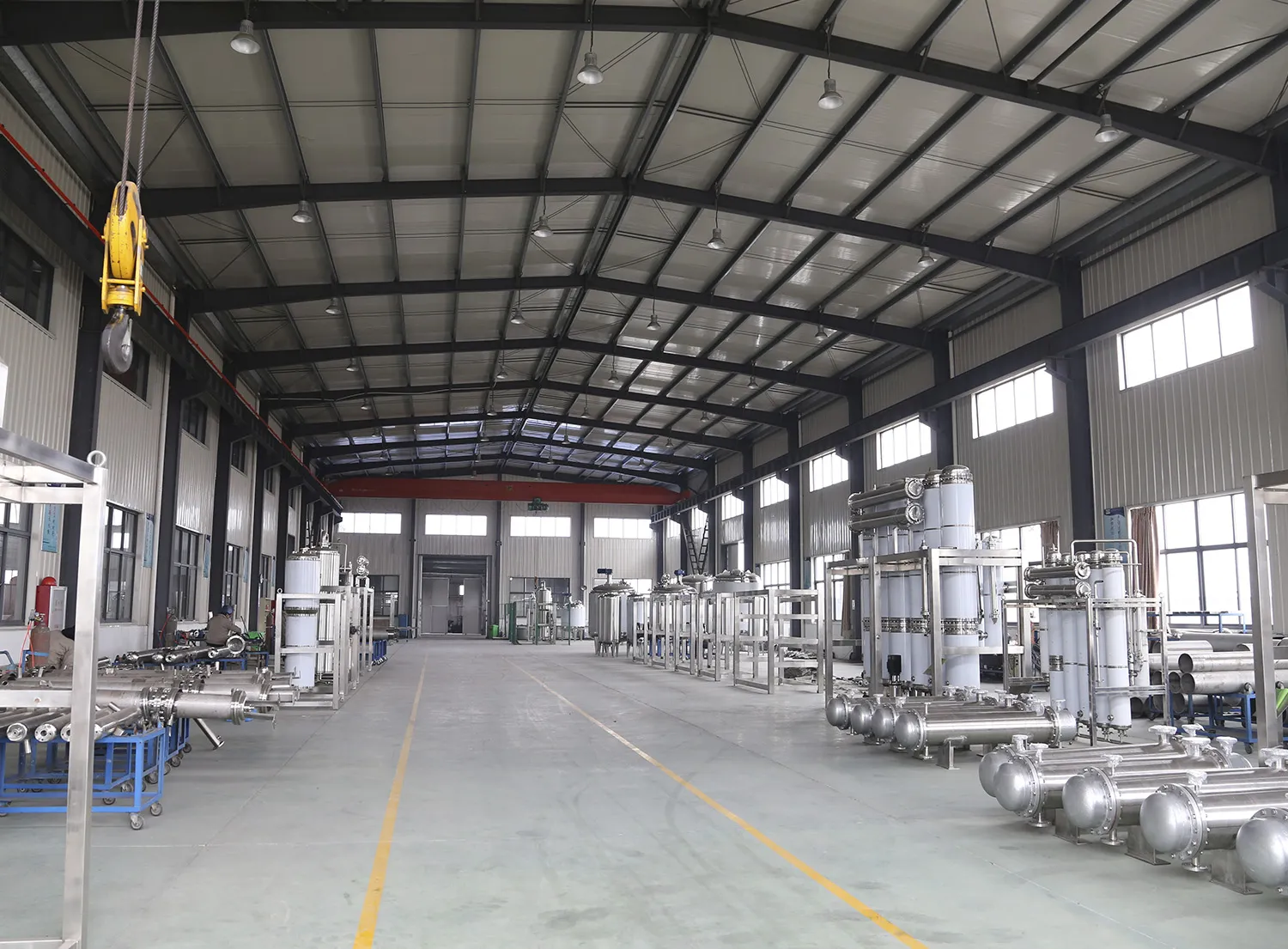
Pharmaceutical Water System Cost Guide for the United States
For pharmaceutical manufacturers in the United States, pharmaceutical water system cost is not just an equipment expense. It is a strategic investment tied to product quality, regulatory compliance, uptime, and long-term operating efficiency. High-purity water supports injectable drugs, vaccines, biologics, oral liquids, clean utilities, and laboratory operations. In GMP facilities across Boston, New Jersey, Raleigh-Durham, Houston, and San Diego, the right purified water or WFI system helps manufacturers meet USP, FDA cGMP, and internal validation standards while reducing contamination risk and production interruptions.
In practical terms, a pharmaceutical water treatment project in the U.S. market may range from a compact purified water skid for a small development plant to a multi-loop, fully validated system with reverse osmosis, EDI, distillation, storage, distribution, and automation for commercial sterile manufacturing. Final cost depends on capacity, feedwater quality, redundancy, sanitization method, materials of construction, automation level, validation scope, and local installation requirements.
Quick Answer: Why Pharmaceutical Water Systems Matter in U.S. Pharma

The quick answer is simple: a pharmaceutical water system is essential infrastructure for pharmaceutical manufacturers because it delivers reliable, consistent, high-purity water that meets pharmacopeia and GMP requirements for critical products. In the United States, this is especially important for facilities producing injectables, vaccines, ophthalmics, dialysis solutions, and biotechnology products where microbial control, conductivity, TOC, endotoxin limits, and full documentation matter every day.
Typical U.S. project budgets vary widely. A basic GMP purified water generation unit for a smaller plant may start in the low six figures, while a large integrated purified water and water for injection package with hot loops, automation, validation, and distribution can reach well into seven figures. The true pharmaceutical water system cost should always be evaluated as total life-cycle cost rather than purchase price alone. Energy, membrane replacement, sanitization, preventive maintenance, downtime risk, and validation support can significantly change the real economics.
| System Scope | Typical Capacity | Typical U.S. Use | Indicative Cost Range | Complexity | Lead Time |
|---|---|---|---|---|---|
| Lab or pilot purified water unit | 200-500 L/h | R&D, formulation labs | $80,000-$180,000 | Low | 8-14 weeks |
| Small GMP purified water skid | 500-1,000 L/h | Oral liquid, topical, support utility | $150,000-$350,000 | Moderate | 12-20 weeks |
| Mid-size PW system with loop | 1,000-3,000 L/h | Commercial production | $300,000-$750,000 | Moderate to high | 16-28 weeks |
| WFI generation with storage and distribution | 500-2,000 L/h | Sterile injectables, biologics | $600,000-$1,500,000 | High | 20-36 weeks |
| Integrated PW + WFI multi-user system | 2,000-6,000 L/h | Large sterile plant | $1,200,000-$3,500,000 | Very high | 28-52 weeks |
| Turnkey multi-loop utility package | Custom | New pharmaceutical factory | $2,500,000+ | Very high | 6-12 months+ |
The table above gives a practical planning view for U.S. buyers. It includes equipment and basic system scope, but full project cost can rise further when civil works, piping, cleanroom interface, electrical integration, FAT/SAT, IQ/OQ, and local commissioning are added.
What Is a Pharmaceutical Water System and Why Do Pharma Manufacturers Need It?

A pharmaceutical water system is a validated utility system designed to purify, store, circulate, and deliver water that meets pharmaceutical specifications such as Purified Water, Water for Injection, or Pure Steam support conditions. It typically includes pretreatment, reverse osmosis, EDI or deionization, ultraviolet treatment, ultrafiltration, distillation where needed, sanitary storage tanks, hygienic pumps, instrumentation, and a distribution loop.
U.S. pharmaceutical manufacturers need these systems because municipal water alone is not suitable for regulated production. City water quality can vary by region, season, and source. A plant in Phoenix may face different hardness and mineral loading than a plant in New Jersey or Minneapolis. Gulf Coast locations such as Houston may also plan for storm-related feedwater variation. For a GMP facility, that variability must be controlled and documented.
The need becomes even more obvious in sterile manufacturing. Water is often a direct ingredient, a cleaning medium, or a utility supporting vessels, CIP skids, formulation areas, and component washing. If the water system performs poorly, the impact can spread across an entire site: batch delays, cleaning failures, out-of-spec analytical results, microbial excursions, and costly investigations.
From an E-E-A-T perspective, buyers should think beyond purity claims. Good pharmaceutical water engineering means sanitary design, dead-leg control, drainability, weld quality, passivation, proper loop velocity, instrumentation accuracy, and a complete documentation package. It also means planning for FDA inspections and audit readiness.
Main Applications and Benefits of Pharmaceutical Water Systems in GMP Pharmaceutical Facilities

Pharmaceutical water is used in far more places than many first-time buyers expect. In U.S. GMP plants, purified water and WFI support formulation, compounding, final rinse, equipment washing, clean steam support processes, and utilities for biologics and medical consumables.
| Application Area | Water Grade Commonly Used | Main Requirement | Benefit to Facility | Risk if Inadequate | Common U.S. User Segment |
|---|---|---|---|---|---|
| Injectable formulation | WFI | Low endotoxin, microbial control | Product safety and compliance | Batch rejection | Sterile pharma |
| Vaccine production | WFI / high-purity process water | Consistency and traceability | Stable process performance | Contamination event | Biopharma |
| Oral liquid manufacturing | Purified Water | Controlled conductivity and TOC | Reliable product quality | Flavor or stability issues | Generic drug makers |
| Equipment washing | Purified Water / WFI final rinse | Residue removal and cleanliness | Faster cleaning validation | Cross-contamination | CDMOs and CMOs |
| Laboratory use | Purified Water | Repeatable analytical support | Accurate testing | False data trends | QC/QA labs |
| Medical consumables | Purified Water | Stable utility supply | Lower defect rate | Cleaning failure | Device and consumable plants |
The biggest benefits are consistency, compliance, lower contamination risk, easier validation, and stronger production continuity. In competitive U.S. clusters such as New Jersey, Boston-Cambridge, and the Research Triangle, these benefits translate directly into lower operating risk and faster commercial execution.
There is also a logistics benefit. A robust on-site water system reduces dependence on external water treatment services and allows better production scheduling. This matters for facilities near major distribution corridors such as Chicago, Memphis, and the Port of Savannah, where manufacturers need dependable utility systems to support rapid release and shipment cycles.
Different Types of Pharmaceutical Water Systems: RO, EDI, Distillation and Hybrid Systems
Choosing the right technology architecture is one of the biggest cost drivers. The most common options in the U.S. market are RO-based purified water systems, RO + EDI systems, distillation-based WFI systems, and hybrid configurations.
| Technology | Best For | Advantages | Limitations | CAPEX Level | OPEX Profile |
|---|---|---|---|---|---|
| RO | Basic purified water needs | Efficient salt removal, compact | May need polishing | Low to medium | Low to moderate |
| RO + EDI | GMP purified water | High purity, no chemical regeneration | Sensitive to pretreatment quality | Medium | Moderate |
| Multi-effect distillation | WFI generation | Excellent microbial and endotoxin control | Higher energy use and cost | High | High |
| Vapor compression distillation | Medium-large WFI demand | Efficient steam usage in some cases | Higher mechanical complexity | High | Moderate to high |
| RO + EDI + UF hybrid | Advanced PW with strong control | Flexible and efficient | More instrumentation and validation | Medium to high | Moderate |
| Integrated PW + WFI platform | Full sterile facilities | Centralized compliance strategy | Largest project scope | Very high | Moderate to high |
RO systems are widely used for purified water generation, especially when paired with softening, carbon filtration, UV, and EDI. They are attractive because they offer a good balance of cost and performance. Distillation is still a strong choice for WFI and remains common in high-risk sterile facilities.
Hybrid systems are increasingly popular in 2026 planning because they support energy optimization, remote monitoring, and better adaptation to local feedwater conditions. For example, a site near Los Angeles may prioritize water recovery due to utility costs and sustainability goals, while a North Carolina biologics plant may focus more on microbial robustness and expansion flexibility.
Pharmaceutical Water Systems vs Traditional Water Treatment Methods: Which One to Choose?
Traditional industrial water treatment methods can produce clean water, but they are usually not enough for regulated pharmaceutical use. Many general industrial systems are built for boilers, cooling towers, or process water where sanitary design, validation, and traceable data are not the main priorities. In contrast, a pharmaceutical water system is designed around GMP control and audit readiness.
| Comparison Factor | Pharmaceutical Water System | Traditional Industrial Treatment | Impact on U.S. Pharma Plant | Best Choice for GMP? | Comment |
|---|---|---|---|---|---|
| Sanitary design | Hygienic piping and tanks | Often utility grade | Reduces contamination risk | Yes | Critical for product contact use |
| Validation package | IQ/OQ/PQ support | Usually limited | Helps inspections | Yes | Needed for regulated plants |
| Instrumentation | Pharma-grade monitoring | Basic process control | Better data integrity | Yes | Supports deviation review |
| Distribution loop design | Continuous circulation | Not always sanitary | Improves microbial control | Yes | Especially important for WFI |
| Documentation | Comprehensive GMP records | General manuals | Supports QA | Yes | Often overlooked in budgeting |
| Long-term compliance | Designed for pharmacopeia use | Not intended for pharma release | Lowers regulatory risk | Yes | Best for commercial manufacturing |
For U.S. manufacturers, the decision is usually clear. If the water enters the product, touches product-contact equipment, or supports validated cleaning and sterile operations, the pharmaceutical-grade path is the right choice. Lower-cost industrial alternatives may look attractive at purchase stage, but their hidden costs often appear later through rework, redesign, and compliance gaps.
Market Overview and Future Trends for Pharmaceutical Water Systems in Pharmaceutical Manufacturing
The U.S. market for pharmaceutical water treatment systems remains active due to several converging factors: expansion of biologics and injectable capacity, domestic manufacturing initiatives, modernization of older facilities, and stronger sustainability targets. More projects now include digital controls, remote diagnostics, water recovery, and predictive maintenance functions.
Regional investment patterns are important. New Jersey and Pennsylvania continue to support large established drug manufacturing sites. Boston and Cambridge drive biotech and advanced therapy demand. Raleigh-Durham and Indianapolis remain strong for biologics and sterile production. Texas is gaining attention due to industrial scale, available land, and logistics access through Houston. West Coast projects around San Diego and the Bay Area often prioritize modular deployment and utility efficiency.
By 2026, the strongest trends are likely to include:
- Greater adoption of skid-mounted modular water systems for faster deployment.
- More use of automation platforms with audit trails and remote alarms.
- Higher demand for energy-efficient WFI generation and heat recovery.
- Broader use of hybrid RO-EDI-UF designs for purified water optimization.
- Increased focus on sustainability reporting, water reuse, and reduced chemical consumption.
- Closer alignment between utility engineering and data integrity expectations.
Policy trends also matter. U.S. manufacturers are watching domestic supply chain resilience, FDA inspection preparedness, and utility reliability planning. Weather resilience is becoming a practical consideration as well, particularly for sites vulnerable to freeze events, hurricanes, or drought-driven municipal variability.
How to Choose a Reliable Pharmaceutical Water System Manufacturer or Supplier
Choosing a supplier should never be based on equipment price alone. In the United States, the best supplier is the one that can support compliance, technical fit, and dependable execution. Ask whether the company understands USP water grades, FDA expectations, weld documentation, passivation, FAT protocols, and validation deliverables. Review their installed base, not just brochures.
Good buyers compare suppliers across technology, manufacturing capability, and service capability. This is especially important for projects serving sterile operations or multi-product plants where system failure can affect several departments at once.
| Evaluation Criteria | What to Ask | Why It Matters | Strong Supplier Sign | Risk Sign | Buyer Priority |
|---|---|---|---|---|---|
| Regulatory understanding | Do they design for GMP and U.S. expectations? | Compliance fit | Clear validation package | Generic answers | Very high |
| Engineering depth | Can they customize based on feedwater and load? | System performance | Detailed P&ID and URS support | One-size-fits-all offer | Very high |
| Manufacturing quality | How are skids built and tested? | Reliability | Documented FAT and materials traceability | Weak records | High |
| Automation | Can data integrate with plant systems? | Audit and operations | Alarm, trend, recipe, audit trail support | Minimal controls | High |
| After-sales service | Do they support commissioning and troubleshooting? | Uptime | Training and rapid support | Sales-only model | High |
| Reference projects | Can they show similar installations? | Execution confidence | Comparable pharma cases | No relevant references | High |
When reviewing international suppliers, U.S. buyers should also examine communication quality, document turnaround time, spare parts planning, and familiarity with local contractor coordination. Port access and inland logistics matter more than many assume. Equipment landing through the Port of Los Angeles, Port of Houston, Port Newark, or Savannah can affect schedule planning for factory acceptance, customs timing, and installation windows.
For buyers seeking a broader project partner rather than a component seller, it helps to work with a company that can support turnkey pharmaceutical engineering solutions, coordinate utility interfaces, and stay involved through commissioning and validation.
Investment Cost, Budget Planning and ROI Analysis for Pharmaceutical Water Systems
Budget planning should separate the visible purchase price from the total installed and validated cost. Many first budgets miss piping loop design, clean utility tie-ins, insulation, heat exchangers, software functionality, spare parts, FAT travel, commissioning, and documentation review hours. For larger U.S. projects, local labor can be a major line item.
| Cost Element | Typical Share of Total Project | What It Includes | Cost Risk Level | Can It Be Optimized? | Notes |
|---|---|---|---|---|---|
| Core generation equipment | 25%-40% | RO, EDI, distiller, tanks, pumps | Medium | Yes | Main supplier package |
| Pretreatment | 8%-15% | Filters, softeners, carbon, dosing | Medium | Yes | Depends on feedwater |
| Distribution loop | 10%-20% | Sanitary piping, valves, heat tracing | High | Partly | Layout-sensitive |
| Automation and instrumentation | 8%-15% | PLC, HMI, sensors, trending | Medium | Yes | Important for compliance |
| Installation and commissioning | 10%-18% | Mechanical/electrical/site work | High | Partly | U.S. labor impacts total |
| Validation and documentation | 6%-12% | FAT/SAT, IQ/OQ, protocols | Medium | Yes | Do not cut this line |
ROI usually comes from reduced batch risk, lower downtime, easier cleaning validation, more predictable utility costs, and better expansion readiness. If a new system prevents only a small number of batch failures per year in a high-value sterile plant, payback can be much faster than expected. This is particularly true for CDMOs and injectable manufacturers, where one delayed campaign can carry a large revenue impact.
Buyers should also compare hot and ambient loop strategies, recovery rates, membrane life, and sanitization methods because these choices affect ongoing operating expenses. In areas with high utility rates such as California or the Northeast, these details can materially change annual cost of ownership.
Key Considerations and Potential Risks When Investing in Pharmaceutical Water Systems
The main risk is under-specifying the system at the beginning and then paying for redesign later. Water quality demand often grows as a site expands, adds another production suite, or shifts from oral solids support to sterile fill-finish. A system that looks sufficient on day one may become a bottleneck in two years.
Key technical considerations include feedwater profile, microbial risk, target water grade, peak and average demand, redundancy philosophy, material selection, loop temperature, automation integration, and maintenance access. Documentation needs should be defined early in the URS so there is no mismatch during FAT or qualification.
Operational risks include poor sanitization strategy, insufficient instrument calibration planning, weak spare parts inventory, and lack of operator training. Financial risks include currency exposure for imported packages, schedule delays due to long-lead components, and hidden field installation costs.
A practical safeguard is to build the supplier selection around lifecycle support. Buyers should ask who will provide start-up assistance, who owns deviations during SAT, how alarm trending is handled, and whether the vendor can support expansions. Early engagement through a project consultation process can reduce these risks before procurement begins.
Case Studies, Local Buying Context, and Supplier Landscape in the United States
In the U.S. market, buying decisions often reflect the plant’s sector and region. A sterile injectable site in New Jersey may prioritize WFI robustness, hot recirculation, and documentation depth. A biotech campus in Boston may emphasize expansion flexibility and data integration. A vaccine or biologics facility in North Carolina may focus on reliable uptime, redundancy, and utility segregation. A device or consumables plant in Texas may prioritize cost-effective purified water with room for future validation upgrades.
Local supplier landscapes vary as well. Some buyers prefer domestic integrators for field service access. Others combine U.S. engineering consultants with global equipment manufacturers to balance technical performance and capital efficiency. For imported equipment, port routing and inland delivery matter. Plants receiving skids through Newark, Houston, Los Angeles, or Savannah should build schedule buffer for customs clearance and local rigging coordination.
It is also common for U.S. buyers to assess whether the supplier can support other related systems over time. A partner with experience in filling lines, solution preparation, clean utilities, logistics, and broader pharmaceutical factory planning may reduce interface risk across the whole project. Buyers exploring broader equipment portfolios can review available pharmaceutical equipment offerings during early budget planning.
About Our Company: Technology, Manufacturing, and Service Capabilities
For U.S. customers evaluating international project partners, IVEN Pharmatech Engineering has built its reputation around integrated pharmaceutical engineering and practical compliance support. Rather than acting only as an equipment seller, the company supports pharmaceutical and medical device projects with customized solutions designed for regulated production environments.
Technological capabilities: IVEN has extensive experience in pharmaceutical water treatment, injectable production systems, solution preparation, and clean utility integration. Its engineering approach focuses on customized design, sanitary construction, automation, and full project matching to applicable GMP expectations. This matters when a purified water or WFI system must connect seamlessly with formulation, washing, filling, and packaging areas. More background on the company can be found on its corporate introduction page.
Manufacturing capabilities: The company operates specialized manufacturing resources dedicated to pharmaceutical equipment, including water treatment systems and related utility solutions. This supports stronger control over fabrication quality, equipment matching, and delivery coordination. For buyers in the United States, centralized manufacturing capability can be valuable when a project includes multiple integrated systems rather than a standalone skid.
Service capabilities: Beyond equipment supply, IVEN supports feasibility review, engineering design, equipment customization, installation, commissioning, validation assistance, training, and after-sales coordination. This lifecycle support is especially relevant for U.S. projects where documentation completeness, startup reliability, and schedule control are essential. For teams planning a new facility or utility expansion, direct discussion through the contact channel is often the fastest way to clarify project scope and timeline.
For American buyers, a notable advantage is working with a partner familiar with international standards and complex integrated projects. That can help reduce the gap between concept design, procurement, qualification, and commercial operation.
FAQ
1. How much does a pharmaceutical water system cost in the United States?
Small purified water systems may start around $80,000 to $180,000, while larger GMP systems with storage, distribution, automation, and validation can range from several hundred thousand dollars to over $3 million for integrated sterile utility packages.
2. What has the biggest effect on cost?
Capacity, required water grade, feedwater quality, redundancy, loop design, materials of construction, automation level, and validation scope have the biggest effect on total project cost.
3. Is RO enough for pharmaceutical production?
RO alone may be enough for some early-stage or less critical uses, but most GMP applications need a broader architecture such as RO plus EDI, UV, filtration, sanitary storage, and recirculation. Sterile applications may require WFI generation.
4. Should I choose distillation or membrane-based technology?
It depends on the target water grade, product risk, utility costs, and site standards. Distillation remains strong for WFI. Membrane-based and hybrid systems can offer attractive lifecycle economics for purified water and some modern high-purity applications.
5. How long does a project usually take?
A smaller skid may be delivered in 2 to 4 months, while a larger integrated project with loop installation and validation may take 6 to 12 months or longer depending on complexity.
6. What documentation should I expect?
You should expect design documents, P&IDs, component lists, certificates, FAT records, manuals, calibration information, and IQ/OQ support documents at minimum. Documentation quality is a key supplier selection factor.
7. What industries besides pharma use these systems?
Biotechnology, vaccines, medical consumables, laboratory services, and some regulated healthcare manufacturing sectors also rely on high-purity water systems.
8. How can I reduce total cost without increasing risk?
Start with a clear URS, size the system based on realistic load, evaluate lifecycle cost instead of lowest bid, and work with an experienced supplier that can coordinate design, qualification, and service.
In summary, pharmaceutical water system cost in the United States should be viewed as a business-critical utility investment rather than a commodity purchase. The right system protects product quality, supports GMP compliance, and creates measurable long-term value through reliability, efficiency, and expansion readiness.

About the Author
We are IVEN Pharmatech Engineering, a team dedicated to delivering turnkey pharmaceutical and medical solutions worldwide. With decades of experience, we specialize in advanced machinery, integrated factory design, and full lifecycle support to help our clients achieve efficient, compliant, and high-quality production.
Share
Related Insights
-

Syrup Filling and Capping Systems in the United States
For pharmaceutical manufacturers in the United States, understanding how a syrup filling capping machine works is essential when scaling oral liquid production, improving compliance, and reducing product loss. In practical terms, this equipment automates bottle infeed, container orientation, filling, cap placement, torque-controlled sealing, inspection, and discharge in one integrated process. It is widely used for prescription syrups, pediatric formulations, nutraceutical liquids, cough medicines, and other oral solutions that require repeatable dosing accuracy under strict cGMP conditions. Whether a plant is located near major pharmaceutical clusters in New Jersey, Boston, North Carolina’s Research Triangle, Chicago, Houston, or California, the same priorities apply: validated performance, sanitary design, line integration, and long-term production reliability.
In the U.S. market, buyers do not evaluate syrup packaging machinery only by speed. They also look at FDA-focused documentation, 21 CFR Part 11 compatibility, electronic batch records, cleaning validation support, OEE improvement, container format flexibility, and service response time. Companies expanding domestic production or reshoring critical drug manufacturing often compare monoblock designs, linear systems, rotary systems, servo-driven fillers, and integrated turnkey lines before final investment. A well-selected system can reduce labor dependency, improve fill consistency, minimize contamination risk, and support faster product changeovers.
A syrup filling and capping machine is a core packaging asset for pharmaceutical and healthcare manufacturers because it converts prepared liquid product into accurately filled, securely sealed, labeled-ready bottles at validated throughput. In the United States, this matters especially for plants facing rising demand, stricter audit expectations, serialization-ready packaging strategies, and pressure to improve domestic supply resilience. The machine typically receives empty bottles from an unscrambler or conveyor, positions them under filling nozzles, dispenses a preset volume of syrup using piston, peristaltic, time-pressure, or flowmeter technology, places caps through an automatic feeder, and applies the correct tightening force through capping heads. Many lines then add induction sealing, visual inspection, rejection, and downstream cartoning.
The reason large pharmaceutical groups evaluate this equipment during expansion is simple: oral liquid products often have sticky, viscous, sugar-based, alcohol-based, or suspension-type characteristics that create challenges in hygiene, foaming, drips, neck contamination, and cap integrity. A properly engineered machine solves those issues while supporting U.S. regulatory expectations. It also helps companies maintain batch-to-batch consistency across multiple sites, whether serving retail pharmacy chains, hospital systems, or contract manufacturing customers.
For organizations looking at broader facility upgrades, integrated planning is often as important as the machine itself. Buyers that need factory-level coordination can explore turnkey pharmaceutical engineering solutions when the filling and capping line is part of a larger oral liquid production project involving purified water, syrup preparation, cleanrooms, material flow, and packaging rooms.
Evaluation FactorWhy It Matters in the United StatesOperational ImpactFilling accuracySupports label claim consistency and audit readinessReduces overfill, underfill, and product giveawayCap torque controlImportant for child-resistant and tamper-evident packagingPrevents leaks and customer complaintsSanitary designNeeded for cGMP cleaning and contamination preventionShorter cleaning time and lower microbiological riskValidation packageUseful for IQ, OQ, and PQ documentationSpeeds qualification and startupFormat flexibilityU.S. brands often run multiple bottle sizes and SKUsImproves line utilizationDigital controlsSupports data integrity and recipe managementBetter traceability and faster changeoverService supportCritical for minimizing downtime across statesImproves production continuityThe table above shows why buying decisions in the United States go beyond basic speed. Most manufacturers want a system that fits their product portfolio, quality requirements, and long-term automation roadmap, not just a machine that fills bottles.
A syrup filling and capping machine is an automated or semi-automated packaging system designed for dosing liquid medicines into containers and closing them immediately after filling. In pharmaceutical production, it is commonly used for oral syrups, suspensions, elixirs, herbal liquids, OTC cough formulations, vitamin liquids, and in some cases veterinary medicines. The machine may operate as a standalone unit or as part of a complete line with bottle washing or air rinsing, unscrambling, labeling, induction sealing, carton packing, case packing, and palletizing.
The working principle is straightforward but highly engineered. First, bottles are loaded and spaced through a conveyor or star wheel. Sensors confirm bottle presence and position. The filling station dispenses the programmed volume while accounting for viscosity, foam tendency, and nozzle anti-drip performance. After filling, caps are fed automatically through a vibratory bowl or elevator and placed onto the bottle neck. A capping head then applies controlled torque. Depending on product requirements, the line may include plug insertion, ROPP capping, screw capping, CRC capping, or pilfer-proof closures. Finally, the bottles move to inspection and rejection systems before release to downstream packaging.
In U.S. pharmaceutical settings, buyers usually ask additional questions: Can the machine support syrup densities that vary between products? Can it handle amber PET, HDPE, or glass bottles? Can it integrate with upstream mixing tanks and downstream vision inspection? Can it produce electronic reports for deviation investigations? These are practical questions because a machine that works well in theory must also perform under real production schedules in facilities from Philadelphia to San Diego.
Companies that want to review available pharmaceutical machinery categories can also browse pharmaceutical production and packaging equipment to compare line components used in oral liquid manufacturing projects.
Machine StageCore FunctionCommon U.S. Buyer ConcernBottle infeedTransfers and spaces containersStable handling of multiple bottle formatsContainer sensingDetects bottle presence and positionPrevents no-bottle-no-fill errorsLiquid fillingDispenses set syrup volumeAccuracy across viscosity rangesCap feedingSupplies caps automaticallyReduced jams and misfeedsCap placementPlaces closure on bottle neckAlignment for tamper-evident finishesCappingApplies torque to secure closureLeak prevention and repeatabilityInspection/rejectionRemoves defective unitsSupports quality assuranceThis sequence explains how the machine turns bulk syrup into a retail-ready pharmaceutical package while controlling the most common risk points: fill variation, contamination, leaks, and cap defects.
The main applications of syrup filling and capping machines cover both branded and contract production. Prescription oral liquids remain a major use case, especially in pediatric and geriatric care where liquid dosing is preferred. OTC products such as cough syrups, expectorants, antihistamine liquids, iron tonics, and multivitamin formulations also rely on this equipment. Nutraceutical producers, compounding groups with scaled packaging rooms, and veterinary pharmaceutical manufacturers increasingly adopt similar platforms as they move toward more regulated operations.
The benefits are substantial. First is dosing consistency. A modern servo-controlled filler can maintain tighter fill tolerances than manual or low-automation methods, which directly reduces product waste. Second is hygiene. Contact parts made from pharmaceutical-grade stainless steel, smooth welds, CIP or SIP compatibility, and enclosed product paths support more reliable cleaning. Third is productivity. A machine can process far more bottles per minute than manual operators while maintaining a more stable output across shifts. Fourth is packaging integrity. Automatic cap placement and torque monitoring reduce the risk of leakage during warehousing and transport, a particularly important issue when shipping through U.S. distribution networks from ports such as Newark, Savannah, Los Angeles, and Houston.
Another key advantage is line integration. U.S. plants increasingly want a connected system rather than isolated machines. This includes recipe recall on the HMI, MES connectivity, barcode verification, track-and-trace readiness, and integration with warehouse logistics. That shift is especially visible among larger manufacturers modernizing facilities around New Jersey, Indianapolis, and the Southeast. For buyers evaluating engineering depth and global project experience, the company background and technical profile can provide context on whether a supplier can support full pharmaceutical line execution rather than single-machine sales only.
ApplicationTypical Product ExamplesPrimary BenefitPrescription oral liquidsAntibiotic syrups, analgesic syrupsValidated dose accuracyOTC cough productsCough suppressants, expectorantsHigher packaging speedPediatric formulationsFever reducers, vitamin syrupsGentle, reliable bottle handlingNutraceutical liquidsHerbal tonics, mineral liquidsFlexible SKU managementSuspensionsAntacid and re-dispersible productsAdaptation to viscosity variationVeterinary oral liquidsAnimal care syrups and drenchesDurable multi-format capabilityContract packagingMulti-brand outsourced productsFast changeover and better uptimeThe table highlights that the same machine family can serve several product categories, but the best technical configuration depends on formula properties, bottle style, and production volume.
var ctxBar = document.getElementById(‘barDemandChart’).getContext(‘2d’);var barDemandChart = new Chart(ctxBar, { type: ‘bar’, data: { labels: [‘Prescription Syrups’, ‘OTC Cough Products’, ‘Pediatric Liquids’, ‘Nutraceutical Liquids’, ‘Veterinary Liquids’, ‘CMO Packaging’], datasets: [{ label: ‘Estimated U.S. Demand Index’, data: [88, 95, 76, 69, 52, 81], backgroundColor: [‘#4e79a7′,’#f28e2b’,’#e15759′,’#76b7b2′,’#59a14f’,’#edc948′] }] }, options: { responsive: true, maintainAspectRatio: false, scales: { y: { beginAtZero: true, max: 100 } } }});The bar chart illustrates why OTC and prescription oral liquids often drive investment decisions first, while contract packaging and pediatric applications continue to expand as portfolio complexity grows.
Not all syrup lines are built the same. U.S. buyers usually compare machines by automation level, filling principle, line layout, bottle range, closure style, and cleaning method. Entry-level systems may be semi-automatic for pilot production or small-batch specialty products. At the industrial level, most pharmaceutical facilities choose automatic linear or rotary machines with integrated cap feeding and torque control.
Linear machines are often favored for flexibility and simpler changeovers. They are practical for medium-speed operations or plants producing many bottle sizes. Rotary monoblock systems are commonly selected for higher throughput and compact footprint, making them attractive where floor space is expensive or utilities are tightly planned. As for filling technologies, piston fillers work well for many viscous syrups, while peristaltic or servo pump systems may be preferred for high-accuracy low-volume applications or products requiring easier product path change. Mass flow and magnetic flowmeter systems can also offer strong control when product characteristics and validation needs align.
Technical options can significantly affect total value. These include laminar airflow protection, nitrogen flushing, anti-foam diving nozzles, drip trays, bottle neck cleaning, cap presence detection, torque monitoring, CIP/SIP capability, in-process weighing, vision inspection, and 21 CFR Part 11-ready software. Plants in major U.S. centers such as Raleigh-Durham or Minneapolis often prioritize data connectivity and maintenance diagnostics as much as mechanics.
Machine TypeBest Use CaseTypical AdvantageSemi-automatic filler/capperR&D, pilot, specialty batchesLower initial investmentAutomatic linear systemMulti-SKU oral liquid productionEasy format adjustmentRotary monoblock systemHigh-volume continuous outputCompact high-speed designPiston filling modelMedium to high viscosity syrupsStrong volumetric controlPeristaltic pump modelSmall volume or sensitive productsReduced cross-contact riskFlowmeter-based modelAdvanced digital control environmentsRecipe-driven precisionIntegrated line with inspectionRegulated large-scale productionHigher quality assurance coverageThe best choice depends on whether your plant values speed, flexibility, validation simplicity, or future expansion. Many projects in the United States start with a machine purchase but succeed only when upstream syrup preparation and downstream packaging are designed together.
Manufacturers frequently compare syrup filling and capping machines with alternative packaging approaches such as manual filling benches, standalone fillers plus separate cappers, sachet or stick-pack lines, blow-fill-seal for selected liquid formats, or outsourced contract packaging. Each option has tradeoffs.
Manual or low-automation systems may look inexpensive initially, but they can introduce higher labor costs, fill inconsistency, contamination exposure, and limited traceability. Separate filler and capper setups may work for smaller plants, yet they often require more floor space, more operator intervention, and more synchronization effort. Sachets and stick packs are useful for unit-dose liquid formats but do not replace bottle-based syrup packaging for most prescription and OTC categories. Contract packaging can support launch speed, but many U.S. brand owners eventually internalize production to protect supply continuity, improve margins, and control quality.
For companies building or modernizing a plant, a dedicated bottle syrup line usually offers the best balance of compliance, output, product presentation, and long-term operating economics. This is especially true for firms selling through national pharmacy networks or hospital channels that expect consistent packaging integrity. When comparing suppliers, request side-by-side data on actual fill accuracy, changeover time, cap defect rate, cleaning time, and documented line efficiency.
SolutionStrengthLimitationManual filling and cappingLowest upfront costWeak consistency and limited scaleStandalone filler + standalone capperModular purchase pathMore integration complexityAutomatic syrup monoblockBalanced speed and controlHigher initial capital costSachet or stick-pack lineConvenient unit-dose formatNot ideal for standard syrup bottlesContract packagingFast market entryLower direct production controlBlow-fill-seal alternativeClosed-system benefits for some liquidsNot a standard fit for most syrup bottlesHybrid semi-auto approachUseful for niche productsLimited long-term scalabilityvar ctxComp = document.getElementById(‘comparisonChart’).getContext(‘2d’);var comparisonChart = new Chart(ctxComp, { type: ‘bar’, data: { labels: [‘Automation’, ‘Compliance Support’, ‘Scalability’, ‘Labor Efficiency’, ‘Changeover’, ‘Cost Efficiency Over Time’], datasets: [ { label: ‘Automatic Syrup Line’, data: [95, 92, 94, 90, 82, 88], backgroundColor: ‘#5b8ff9’ }, { label: ‘Manual/Semi-Manual Alternative’, data: [35, 48, 30, 28, 60, 42], backgroundColor: ‘#61dDAa’ } ] }, options: { responsive: true, maintainAspectRatio: false, scales: { y: { beginAtZero: true, max: 100 } } }});This comparison makes the long-term case for automation clearer: higher compliance support and scalability often outweigh the higher initial purchase price.
The United States remains one of the world’s most attractive markets for pharmaceutical packaging machinery because of its strong demand for regulated medicines, continual line upgrades, high labor costs, and growing focus on domestic manufacturing resilience. Oral liquid production is supported by steady demand in pediatric care, OTC seasonal products, nutritional health, and specialized prescription therapies. At the same time, manufacturers are under pressure to shorten lead times, modernize aging facilities, and improve digital manufacturing visibility.
Several trends are shaping purchases through 2026 and beyond. First is automation depth. Buyers increasingly prefer servo-driven dosing, smart torque monitoring, auto-adjust recipe management, and predictive maintenance sensors. Second is regulatory digitization. More U.S. plants want audit-friendly data capture, alarm history, user access control, and integration with site-level MES or ERP systems. Third is sustainability. Machine designs are being evaluated for reduced compressed air consumption, lower product loss, washdown efficiency, and compatibility with lighter bottle formats or recyclable packaging materials. Fourth is flexibility. As product portfolios fragment into more SKUs and smaller commercial batches, rapid changeover becomes a board-level economic issue, not only an engineering preference.
Policy and supply-chain shifts also matter. Federal and state-level interest in domestic pharmaceutical capacity can favor investments in robust packaging lines. Manufacturers located near logistics corridors such as Newark, Memphis, Atlanta, Dallas-Fort Worth, and the Port of Long Beach benefit from stronger component and distribution networks, but they also face greater pressure to maintain uptime.
var ctxLine = document.getElementById(‘lineMarketChart’).getContext(‘2d’);var lineMarketChart = new Chart(ctxLine, { type: ‘line’, data: { labels: [‘2021’, ‘2022’, ‘2023’, ‘2024’, ‘2025’, ‘2026’, ‘2027’], datasets: [{ label: ‘U.S. Market Index for Syrup Filling and Capping Equipment’, data: [100, 108, 117, 127, 139, 152, 166], borderColor: ‘#ff7f0e’, backgroundColor: ‘rgba(255,127,14,0.15)’, fill: false, tension: 0.25 }] }, options: { responsive: true, maintainAspectRatio: false, scales: { y: { beginAtZero: false } } }});var ctxArea = document.getElementById(‘areaTrendChart’).getContext(‘2d’);var areaTrendChart = new Chart(ctxArea, { type: ‘line’, data: { labels: [‘2022’, ‘2023’, ‘2024’, ‘2025’, ‘2026’, ‘2027’], datasets: [{ label: ‘Share of Demand for Smart, Data-Integrated Systems’, data: [38, 45, 53, 61, 69, 76], borderColor: ‘#2ca02c’, backgroundColor: ‘rgba(44,160,44,0.25)’, fill: true, tension: 0.3 }] }, options: { responsive: true, maintainAspectRatio: false, scales: { y: { beginAtZero: true, max: 100 } } }});The line chart shows realistic market expansion driven by modernization and compliance needs, while the area chart reflects the shift toward connected, data-rich equipment. By 2026, technology, policy, and sustainability will increasingly shape supplier selection.
Choosing the right supplier is often more important than choosing the fastest machine. In the United States, procurement teams typically evaluate technical fit, regulatory understanding, documentation quality, service responsiveness, and total project risk. A reliable manufacturer should be able to explain not only how syrup filling capping machine works, but how its design will perform with your specific formulation, bottle family, cleaning regime, and validation plan.
Start with engineering credibility. Ask whether the supplier has experience in pharmaceutical rather than only food or cosmetic liquid packaging. Request examples involving oral liquid lines, clean utility integration, and validation support. Next, review manufacturing capability. Can the supplier maintain stable machining quality, component traceability, and standardized assembly practices? Third, check service capability. You need spare parts planning, remote troubleshooting, commissioning support, and training that match U.S. production realities.
Shanghai IVEN Pharmatech Engineering is one example of a supplier that positions itself around integrated pharmaceutical engineering rather than isolated machine export. Its technological capabilities include long-term specialization in filling and packaging machinery, water treatment systems, intelligent logistics, and production line customization aligned with global GMP expectations. On the manufacturing side, it operates multiple specialized plants in Shanghai and has delivered a large number of production lines across many countries, which matters when buyers want evidence of process maturity and scalable execution. On the service side, its support model covers engineering design, equipment selection, installation, commissioning, validation assistance, training, and lifecycle optimization, which is particularly relevant for U.S. buyers seeking reduced project coordination risk. Companies that want direct procurement discussions can use the contact channel for project consultation.
Supplier CheckpointQuestions to AskWhy It Reduces RiskRegulatory understandingCan you support cGMP documentation and qualification?Improves audit readinessApplication experienceHave you handled viscous syrup products before?Confirms real process knowledgeFactory capabilityHow are core components manufactured and tested?Indicates build consistencyCustomization levelCan the line match our bottles, caps, and room layout?Prevents late-stage redesignService networkHow do you handle U.S. support and spare parts?Reduces downtime exposureProject referencesCan you share similar installations?Validates execution historyLifecycle supportDo you assist with training and optimization?Improves long-term ROIThe best suppliers combine machine design, pharmaceutical process knowledge, and project discipline. A low-price offer without these elements can become expensive very quickly after FAT, SAT, and production startup.
Budget planning for a syrup filling and capping machine in the United States should include much more than machine purchase price. Total investment can vary widely based on output speed, automation level, number of filling heads, cap type, data system requirements, cleanroom classification, validation scope, and upstream/downstream integration. A basic semi-automatic system may suit small specialty production, while a high-speed pharmaceutical monoblock with inspection and serialization-ready integration represents a much larger capital project.
Common cost categories include the machine itself, shipping and customs, installation, site preparation, utility connections, FAT and SAT, IQ/OQ/PQ support, operator training, spare parts, and annual preventive maintenance. If your line is part of a new oral liquid suite, budget must also account for purified water systems, syrup preparation vessels, cleanroom modifications, conveyors, labeling, cartoning, and warehouse interfaces. Plants in high-cost metro areas such as Boston, San Francisco, and New York-New Jersey may also face higher construction and commissioning expenses.
ROI usually comes from five areas: reduced labor, lower overfill loss, fewer rejects, improved uptime, and faster SKU changeovers. In many U.S. facilities, product giveaway reduction alone can be financially meaningful when working with high-value formulations. Faster cleaning and validated recipe recall further strengthen returns. A disciplined buyer should model payback using real batch sizes, changeover frequency, target OEE, and expected maintenance cost rather than relying only on nominal bottles-per-minute figures.
Cost ElementTypical Budget ImpactPlanning NoteMachine purchaseHighVaries by speed, filling principle, and automationInstallation and commissioningMedium to highDepends on site readiness and scheduleValidation supportMediumImportant for regulated U.S. startupUtilities and room preparationMediumOften underestimated in retrofitsSpare parts inventoryLow to mediumEssential for downtime reductionTrainingLowImproves operational stabilityDowntime risk reserveMediumUseful during early ramp-up phaseROI DriverHow Savings Are CreatedPotential ImpactLabor reductionFewer manual handling stepsLower recurring operating costOverfill controlTighter dosing accuracyReduced product giveawayReject reductionBetter cap application and inspectionLess scrap and reworkHigher uptimeMore stable automated productionIncreased output capacityFaster changeoversRecipe-driven settings and tooling designMore productive shift timeCompliance efficiencyCleaner documentation and traceabilityLower investigation burdenMarket responsivenessScalable domestic productionImproved supply continuityThese tables show why ROI should be judged as a full operating model. The right machine often saves money in ways that are not obvious from the quotation sheet alone.
The biggest investment risks usually come from mismatch rather than machine failure. A machine may be technically well built yet still underperform if it is poorly matched to syrup viscosity, bottle geometry, closure tolerances, or required output. U.S. manufacturers should therefore validate product samples, cap samples, and bottle drawings early in the project. Another common risk is insufficient attention to cleaning and changeover. A line that is fast in theory but slow to sanitize or reconfigure may reduce actual plant efficiency.
Regulatory and documentation gaps are also serious concerns. Missing material certificates, incomplete FAT records, limited software access control, or weak qualification support can delay launch timelines. For imported machinery, logistics planning matters as well. Lead times, spare parts availability, customs scheduling, and installation coordination can all affect project success, particularly for plants operating on narrow commercial windows. Facilities near major ports may benefit from easier transport flows, but inland plants from Ohio to Arizona still need careful planning for startup support.
Another overlooked issue is organizational readiness. New automation changes operator roles, maintenance requirements, and quality workflows. Companies should plan training, SOP revision, and preventive maintenance structure before installation. A strong supplier will help with this transition rather than leaving the site to solve it alone after SAT.
As a practical case example, a mid-sized oral liquid manufacturer expanding capacity in the U.S. could compare a manual-plus-standalone setup against an integrated linear automatic line. The integrated option would likely cost more upfront, but if the plant runs several pediatric and OTC SKUs, the gains in throughput, cap integrity, and changeover control could shorten payback significantly. Another case is a greenfield facility choosing a supplier with broader engineering capability. Here, the value is not just the machine, but better coordination among water systems, room layout, material movement, and packaging flow.
How does a syrup filling and capping machine work step by step?It typically feeds empty bottles onto a conveyor, verifies bottle presence, fills each container with a preset volume of syrup, places caps automatically, applies controlled torque, inspects the finished pack, and rejects nonconforming bottles.
What products can this machine handle?It is commonly used for oral syrups, suspensions, cough medicines, pediatric liquids, herbal liquids, nutraceutical formulations, and some veterinary oral products.
Which filling technology is best for viscous syrups?Piston filling is often a strong choice for viscous products, but the best option depends on foam behavior, cleaning needs, fill volume, and the required accuracy level.
Can one machine run PET and glass bottles?Yes, many systems can handle both, but bottle stability, gripping method, and change parts must be reviewed during design and FAT.
What U.S. compliance points should buyers consider?Key points include FDA cGMP expectations, documentation quality, validation support, traceability, software access control, and compatibility with site data integrity practices.
How much space is needed?The footprint depends on speed and configuration. A compact monoblock needs less space than a modular line, but room must also be planned for operator access, maintenance clearance, and downstream packaging.
How long does changeover usually take?It varies by bottle and cap differences, but well-designed pharmaceutical lines with recipe storage and quick-change tooling can reduce changeover time significantly.
What is the difference between a linear machine and a rotary machine?Linear machines are often more flexible for multiple formats, while rotary machines typically support higher speed in a smaller footprint.
Is a turnkey project better than buying a single machine?If your project involves a new oral liquid suite or major expansion, integrated engineering can reduce coordination problems between utilities, layout, cleanroom design, and packaging equipment.
How can buyers start a supplier discussion?The best approach is to prepare product details, target speeds, bottle and cap drawings, compliance requirements, and project timeline before contacting a supplier for a technical proposal.
For U.S. pharmaceutical producers, understanding how syrup filling capping machine works is only the starting point. The real value comes from selecting a system that matches product behavior, quality expectations, regulatory demands, and future business growth. When engineering depth, manufacturing capability, and lifecycle service are aligned, the machine becomes more than packaging equipment; it becomes a dependable production asset that supports domestic expansion, better compliance, and stronger long-term ROI.
-
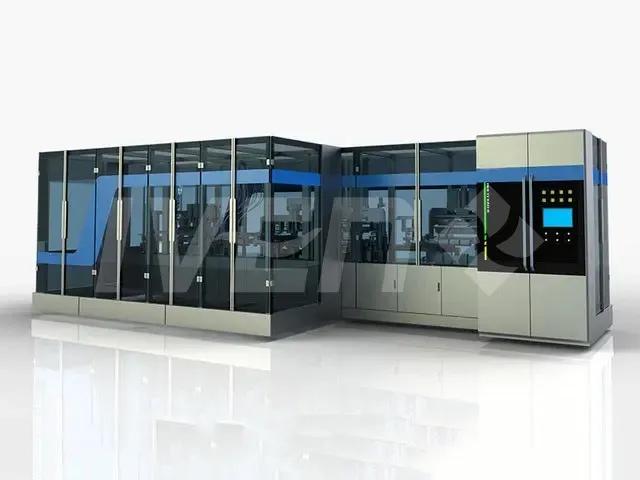
United States Guide to Multi-Chamber IV Bag Lines
For pharmaceutical manufacturers, contract development and manufacturing organizations, hospital solution suppliers, and medical consumables investors in the United States, selecting a multi-chamber IV bag production line is a strategic capital decision rather than a simple machinery purchase. The right line affects product compatibility, sterile assurance, FDA readiness, automation performance, labor efficiency, total cost of ownership, and future line expansion. A well-chosen system supports stable production of dual-chamber and multi-compartment infusion bags used for parenteral nutrition, unstable drug combinations, emergency medicine, and specialty admixture products. A poorly matched system can create validation delays, seal failures, low yield, high consumable cost, and long service interruptions.
This guide provides a practical sourcing, technical, and procurement roadmap for buyers in the United States. It covers market trends, machine types, engineering specifications, supplier screening, China sourcing strategy, application sectors, and key procurement questions. It also addresses practical issues relevant to U.S. projects, including cGMP documentation, FAT and SAT planning, spare parts strategy, validation support, shipping through Los Angeles, Long Beach, Houston, Savannah, New York/New Jersey, and inland installation at pharma hubs such as New Jersey, North Carolina, Illinois, Texas, and California.
A multi-chamber IV bag production line should be evaluated as a complete manufacturing system that links film handling, bag forming, port insertion, chamber separation, filling, sealing, leak inspection, visual inspection, overpouching if required, sterilization interface, labeling, and end-of-line packing. U.S. buyers often begin with throughput targets, but line selection should start earlier with product definition.
Before requesting quotations, define the following:
Procurement teams in the United States should also align engineering, QA, validation, finance, operations, and maintenance at the RFQ stage. This prevents the common gap where purchasing compares suppliers only on equipment price while QA later requires expanded documentation, software access controls, material traceability, and alarm history functions that were not included in the initial scope.
Decision AreaWhat U.S. Buyers Should DefineWhy It MattersRisk If IgnoredProduct ConfigurationNumber of chambers, volume per chamber, breakable seal designDetermines machine architecture and toolingLine cannot run target SKU setRegulatory ScopeFDA cGMP, 21 CFR Part 11 expectations, validation package depthImpacts controls, software, and documentationExtended qualification timelineOutput CapacityBags per hour, OEE target, shift patternSets speed class and buffering needsBottlenecks and underutilized capitalPackaging MaterialFilm type, thickness, port material compatibilityAffects sealing window and rejection rateLeaks, weak seals, scrap increaseFacility FitCleanroom grade, utilities, floor loading, line lengthEnsures installation feasibilityCostly building modificationsLifecycle SupportRemote service, spare parts, SAT, IQ/OQ supportReduces downtime after startupSlow recovery from faultsThe table above shows why a sourcing roadmap must cover technical scope, compliance scope, and ownership cost together. For most U.S. projects, the winning supplier is not the one with the lowest base price, but the one with the best fit between product design, quality system, engineering support, and after-sales responsiveness.
A multi-chamber IV bag production line manufacturer is a specialized industrial equipment company that designs, builds, integrates, tests, and supports machinery used to produce infusion bags with two or more separated sterile chambers. These chambers keep ingredients apart until point of use, which is critical when drugs or nutrients have limited stability after mixing. The manufacturer usually provides stand-alone machines or complete lines that may include film unwinding, pouch forming, chamber welding, port feeding, liquid dosing, sealing, automated inspection, conveying, and packaging.
Not all machinery builders in the sterile packaging sector qualify as true multi-chamber line manufacturers. A capable supplier should understand both flexible medical packaging mechanics and pharmaceutical process requirements. In the United States, buyers should verify whether the manufacturer can support FAT protocols, material certificates, calibration traceability, control system architecture, recipe management, data integrity expectations, and validation deliverables.
There are generally three categories of suppliers:
The third category is often the best fit for U.S. greenfield and expansion projects because the equipment supplier can align the line with water systems, clean utilities, logistics, and plant compliance requirements. Buyers that need a broader facility solution can review turnkey pharmaceutical engineering capabilities when comparing project partners.
Supplier TypeTypical StrengthTypical WeaknessBest Use CaseGeneral Packaging BuilderLower entry priceLimited sterile pharma knowledgeNon-critical pilot conceptsSingle-Machine SpecialistStrong expertise in one moduleWeak line integrationReplacement of one process stepIV Solution Equipment ManufacturerBetter filling and sealing know-howMay have narrower project servicesBrownfield IV line upgradesIntegrated Pharma Engineering SupplierLine plus utilities and validation supportLonger technical review processNew U.S. plant or major expansionOEM Plus Local IntegratorLocal communication advantagesShared responsibility riskCustom retrofitsDistributor OnlyEasy commercial contactLimited technical authoritySmall consumables or spare ordersThe explanation behind this comparison is simple: the more complex the product, the more important direct technical control becomes. Multi-chamber IV systems are not commodity bag-making lines. They require accurate liquid control, seal consistency, sterile contact material integrity, and reproducible process validation.
Demand for multi-chamber infusion systems continues to grow because hospitals and pharmaceutical producers want safer, more convenient ready-to-activate products. In the United States, demand is supported by hospital pharmacy efficiency goals, growth in parenteral nutrition, emergency drug preparedness, home infusion services, and interest in reducing on-site compounding steps. Global supply chain pressure after recent healthcare disruptions has also encouraged domestic and near-market manufacturing investments.
Another important trend is the shift from simple fluid containers toward higher-value drug-device combination packaging. This increases demand for lines that can handle more sophisticated chamber layouts, higher in-process control, and digital batch traceability. Between now and 2026, buyers should expect stronger emphasis on automation, machine vision inspection, predictive maintenance, low-energy sealing technology, recyclable or reduced-footprint packaging approaches, and data-ready production architecture.
var ctxLineMarket = document.getElementById(‘lineChartMarket’).getContext(‘2d’);var chartLineMarket = new Chart(ctxLineMarket, {type: ‘line’,data: {labels: [‘2021′,’2022′,’2023′,’2024′,’2025′,’2026’],datasets: [{label: ‘Estimated Global Demand Index’,data: [72, 78, 86, 95, 106, 118],borderColor: ‘rgb(54, 162, 235)’,backgroundColor: ‘rgba(54, 162, 235, 0.15)’,fill: false,tension: 0.3}]},options: {responsive: true,maintainAspectRatio: false}});The line chart illustrates a realistic upward demand trend driven by clinical convenience, sterile assurance, and product differentiation. While exact volumes vary by therapy class, the direction is clear: the market is moving toward more specialized flexible infusion packaging and away from purely basic commodity containers.
var ctxBarIndustry = document.getElementById(‘barChartIndustryDemand’).getContext(‘2d’);var chartBarIndustry = new Chart(ctxBarIndustry, {type: ‘bar’,data: {labels: [‘Parenteral Nutrition’,’Emergency Medicine’,’Hospital IV Solutions’,’Dialysis Related’,’Contract Manufacturing’,’Home Infusion’],datasets: [{label: ‘United States Demand Potential Score’,data: [92, 74, 81, 63, 77, 69],backgroundColor: [‘rgb(255, 99, 132)’,’rgb(255, 159, 64)’,’rgb(255, 205, 86)’,’rgb(75, 192, 192)’,’rgb(54, 162, 235)’,’rgb(153, 102, 255)’]}]},options: {responsive: true,maintainAspectRatio: false}});The bar chart highlights where buyer demand is strongest. For U.S. investors, parenteral nutrition and hospital-ready admixture formats remain especially important because dual- and triple-chamber containers reduce preparation time and improve logistics from manufacturing site to patient use.
Multi-chamber IV bag lines are usually classified by chamber count, line speed, package format, filling method, and automation level. Basic lines may focus on dual-chamber bags for moderate output. Advanced lines support triple-chamber nutrition bags, multiple bag sizes, automated recipe switching, in-line weight checking, vision-based defect rejection, and connection to MES or warehouse systems.
Key specifications U.S. buyers should review include:
Line TypeTypical Chamber FormatOutput RangeBest ForEntry-Level Semi-AutomaticDual chamber500 to 1,200 bags/hourR&D, pilot, small specialty batchesStandard AutomaticDual chamber1,500 to 3,000 bags/hourCommercial pharma productionHigh-Speed AutomaticDual or triple chamber3,500 to 6,000 bags/hourLarge volume U.S. supply programsFlexible Multi-SKU LineDual, triple, custom variants2,000 to 4,500 bags/hourFrequent changeovers and contract manufacturingAseptic-Focused SystemDual or triple chamberDepends on filling designSensitive formulationsIntegrated Turnkey LineCustomizedProject basedNew facility buildoutsThe table above is useful because it links speed class to business model. A U.S. buyer serving one high-volume nutrition product may prefer a high-speed dedicated line, while a CDMO in New Jersey or North Carolina may value a flexible line with shorter changeover and better batch traceability.
Specification ItemPreferred Range or FeatureBuyer Review PointOperational EffectFilling AccuracyHigh-precision metering with chamber-level controlConfirm test protocol during FATReduces dosage variationSeal MonitoringTemperature, pressure, dwell time controlAsk for real-time data loggingImproves seal consistencyMaterial CompatibilityNon-PVC and multilayer filmsRequest sample run with your filmPrevents sealing defectsAutomation PlatformMainstream PLC and HMI componentsCheck U.S. spare part availabilityFaster maintenance responseVision InspectionLeak, cosmetic, print, and seal inspectionReview false reject rateBalances quality and yieldRecipe ManagementSecure recipe storage and change controlVerify audit trail functionalitySupports cGMP disciplineIn practical terms, specifications should be verified using your actual bag drawings, film samples, port samples, and representative formulation conditions. Lab data alone is not enough. Serious suppliers will run feasibility tests and document the process window.
The best selection method for United States buyers is a weighted technical-commercial evaluation. Price matters, but it should not outweigh quality risk, compliance support, and long-term uptime. Ask suppliers to quote against a detailed URS rather than a generic inquiry email. A strong URS should cover product dimensions, chamber layout, utilities, controls, material specifications, FAT, SAT, deliverables, spare parts, warranty, and validation expectations.
Use the following criteria to compare suppliers:
Evaluation FactorWeight ExampleQuestions to AskWhy It MattersTechnical Fit25%Can the line run our bag design and material set?Determines core feasibilityCompliance Support20%What IQ/OQ documents, certificates, and software records are provided?Shortens validation timelineSupplier Experience15%How many IV or sterile packaging lines are installed globally?Reduces execution riskTotal Cost of Ownership15%What are consumables, energy, labor, and spare part costs?Protects long-term marginService Response10%What is the remote and on-site support model for the U.S.?Limits downtimeDelivery and Project Control10%Who manages layout, FAT, shipping, SAT, and training?Keeps schedule on trackCommercial Terms5%What are payment milestones and warranty coverage?Improves purchasing clarityThis evaluation method helps purchasing teams avoid choosing a supplier solely because of lower CAPEX. If one line costs 10 percent less but creates a six-month validation delay or a 4 percent higher reject rate, it will often be more expensive over time.
It is also wise to conduct a factory audit. During the visit, review machining quality, electrical assembly practices, software documentation, parts identification, test records, and evidence of previous exports to regulated markets. Ask to inspect a running machine if possible. Buyers can also learn more about supplier background through the company overview page at our pharmaceutical engineering profile.
Multi-chamber IV bag systems serve more than traditional infusion solution manufacturers. Their flexible format and chamber separation capability make them attractive across multiple healthcare and life science sectors.
var ctxAreaShift = document.getElementById(‘areaChartTrendShift’).getContext(‘2d’);var chartAreaShift = new Chart(ctxAreaShift, {type: ‘line’,data: {labels: [‘2021′,’2022′,’2023′,’2024′,’2025′,’2026’],datasets: [{label: ‘Shift Toward High-Value Multi-Chamber Formats’,data: [18, 24, 31, 39, 47, 56],borderColor: ‘rgb(75, 192, 192)’,backgroundColor: ‘rgba(75, 192, 192, 0.25)’,fill: true,tension: 0.3}]},options: {responsive: true,maintainAspectRatio: false}});The area chart shows a realistic trend shift from standard fluid packaging toward higher-value segmented bag formats. This shift is especially relevant for U.S. manufacturers trying to build defensible product portfolios rather than competing only on high-volume low-margin fluids.
IndustryHow It Uses Multi-Chamber BagsTypical PriorityUnited States OpportunityPharmaceutical ManufacturingReady-to-use infusion drugs and nutrient combinationsCompliance and scaleHighHospital Supply ChainsPreconfigured therapy packsConvenience and safetyHighCDMOsContract filling for multiple product ownersFlexibility and changeoverHighClinical NutritionDual and triple chamber nutrition productsFormula stabilityVery HighDialysis and Specialty SolutionsSeparated reactive componentsChemical compatibilityModerateEmergency and Defense Medical SupplyField-ready stable packaged therapiesShelf life and transport resilienceGrowingThe explanation is that each industry values a different benefit. Hospital networks care about ease of use and reduced compounding burden. CDMOs prioritize quick changeover and broad bag compatibility. Nutrition product makers care most about separating unstable components until activation.
The most common applications include parenteral nutrition, antibiotics with diluent separation, unstable drug combinations, emergency care solutions, specialty renal therapies, and hospital-prepared admixture alternatives. The technology is useful whenever ingredients should be stored separately but combined before administration.
Real-world U.S. examples include hospital systems in cities such as Boston, Chicago, Houston, Philadelphia, and Los Angeles seeking more reliable ready-to-use supply formats, as well as manufacturers serving regional distribution centers near major freight corridors. The logistics advantage of shipping a stable pre-segmented product can be significant, especially for health systems trying to reduce in-house pharmacy complexity.
Case-study style scenarios help illustrate line selection:
In every case, the machine is only one part of the result. Product development, film choice, chamber rupture force design, sterilization behavior, and packaging qualification all influence commercial success.
China is an important sourcing base for pharmaceutical equipment because it offers broad manufacturing depth, strong customization capability, and competitive cost structures. For U.S. buyers, however, successful China sourcing depends on disciplined supplier qualification and clear documentation. The goal is not to buy the cheapest line from overseas. The goal is to secure the best technical and compliance value with manageable project risk.
A practical sourcing process from China includes the following steps:
Many United States buyers route imported machinery through the ports of Los Angeles, Long Beach, Houston, Savannah, or New York/New Jersey depending on final installation site. Inland coordination matters because oversized skids, cleanroom-compatible unpacking, and utility hookup sequencing can affect project timelines.
When sourcing from China, buyers should pay close attention to component brands, English-language documentation quality, electrical standard compatibility, and service responsiveness across time zones. It is also wise to request a recommended critical spare parts package for the first 12 to 24 months of operation.
var ctxCompare = document.getElementById(‘comparisonChartSuppliers’).getContext(‘2d’);var chartCompare = new Chart(ctxCompare, {type: ‘bar’,data: {labels: [‘Technical Fit’,’Documentation’,’Customization’,’Cost Efficiency’,’Lead Time’,’Service Support’],datasets: [{label: ‘Qualified China Manufacturer’,data: [92, 86, 94, 90, 78, 82],backgroundColor: ‘rgb(153, 102, 255)’},{label: ‘Low-Cost Generic Supplier’,data: [61, 48, 58, 95, 84, 43],backgroundColor: ‘rgb(201, 203, 207)’}]},options: {responsive: true,maintainAspectRatio: false}});The comparison chart shows a common reality in sourcing: the best-value Chinese manufacturer is usually not the absolute lowest-cost bidder. A qualified supplier typically delivers stronger technical fit, broader documentation, and more reliable customization, which matters more for regulated pharmaceutical production.
For buyers in the United States, supplier choice should depend on engineering depth, manufacturing consistency, and lifecycle service. Our factory approach is built around those three pillars.
Shanghai IVEN Pharmatech Engineering Co Ltd has developed extensive expertise in pharmaceutical and medical device equipment with a strong focus on IV solution systems and related sterile manufacturing technologies. The company has accumulated dozens of technical patents in IV solution equipment and has long experience aligning projects with EU GMP, U.S. FDA cGMP, WHO GMP, and PIC/S-oriented expectations. For multi-chamber IV bag production lines, this matters because product success depends on more than mechanical output. It requires stable forming and sealing, process control logic, reliable dosing, and integration with solution preparation, water systems, and downstream packaging.
Our engineering teams can support complete line planning, from concept layout through automation architecture and validation-oriented documentation. This is valuable for U.S. clients that need a partner able to discuss not only machine speed but also cleaning strategy, process flow, operator movement, and future plant expansion. Buyers seeking a broader view of available equipment can explore pharmaceutical production systems and line solutions as part of early benchmarking.
Our manufacturing strength comes from four specialized production plants in Shanghai dedicated to pharmaceutical filling and packaging machinery, pharmaceutical water treatment systems, intelligent conveying and logistics systems, and vacuum blood collection tube production equipment. This structure supports better control over critical fabrication steps and helps coordinate upstream and downstream line elements for complex projects. For U.S. buyers, it means one supplier can support not only the core bag line but also utility interfaces, logistics automation, and complementary packaging modules when needed.
The company has delivered more than 2,500 production lines globally and completed dozens of turnkey projects across more than 60 countries. Equipment is designed for long service life, with robust stainless steel construction and practical maintenance access. That durability matters to purchasers comparing total ownership cost over 10 to 20 years rather than only the first-year purchase price.
Our service model extends beyond equipment shipment. We support feasibility consulting, engineering design, equipment customization, installation, commissioning, IQ/OQ/PQ-oriented validation assistance, quality documentation support, production technology transfer, training, after-sales service, and production optimization. For American customers, this reduces the project fragmentation that often occurs when engineering, machinery, qualification, and startup are split across multiple vendors.
We understand the practical challenges U.S. projects face: layout revisions, schedule pressure, uncertain equipment quality, documentation gaps, and startup delays. Our goal is to reduce those risks through integrated project control, multilingual communication, and clear technical accountability. A notable milestone for our organization has been participation in a modern pharmaceutical plant project in the United States, which strengthened our understanding of local execution expectations. Buyers that want to discuss a project directly can use our contact page for U.S.-focused equipment inquiries.
In summary, customers choose us when they need a partner that combines line engineering, regulated pharma experience, manufacturing depth, and long-term support rather than a machine seller focused only on initial delivery.
1. What output should a U.S. buyer choose?Choose output based on annual demand, shift pattern, validation downtime, and future SKU expansion. Many commercial projects target enough installed capacity to cover 120 to 150 percent of initial demand so the plant can absorb maintenance windows and growth.
2. Are dual-chamber and triple-chamber bags produced on the same line?Some advanced lines can support both with tooling changes and validated recipes, but not every platform can. Buyers should confirm this early and request sample compatibility data.
3. Is non-PVC film compatibility standard?Not always. Many lines can be configured for non-PVC structures, but sealing performance depends on film chemistry, thickness, and port interface. Trial runs with your actual material are strongly recommended.
4. What documents should be included in the purchase package?At minimum: GA drawings, P&ID or utility list, component manuals, material certificates for product-contact parts, FAT protocol and report, calibration records, electrical drawings, software backup, spare parts list, and validation support documents as agreed.
5. How long does a typical project take?Depending on customization level, 6 to 12 months is common for manufacturing and pre-shipment testing, followed by shipping, installation, SAT, and qualification. Greenfield projects can take longer if utilities and cleanroom readiness are still in progress.
6. Should U.S. buyers require FAT?Yes. A detailed FAT is essential. It should verify mechanical performance, alarms, recipes, critical process parameters, output, and, when possible, sample runs using representative materials.
7. What are the biggest hidden costs?Common hidden costs include change parts, engineering revisions, extra software functions, validation documents, spare parts, travel for SAT, and building modifications due to underestimated line footprint or utility demand.
8. How important is local service?Very important, but local service can be delivered in different ways: resident U.S. partners, fly-in engineers, remote diagnostics, or regional spare parts stock. What matters most is response time and technical authority.
9. Can a multi-chamber line be integrated into a turnkey facility?Yes. This is often the best route for new projects because utility systems, solution preparation, logistics, packaging, and documentation can be coordinated from the start.
10. What trends should buyers watch through 2026?Look for higher automation, vision-guided inspection, digital maintenance tools, stronger data integrity controls, energy-efficient sealing technology, lower waste design, and growing policy attention to supply resilience and sustainable manufacturing.
11. Is China a reliable source for this equipment category?Yes, if the supplier has real pharmaceutical experience, proven exports, strong documentation, and a transparent project process. Structured audits and detailed contracts are essential.
12. What is the best first step before asking for a quote?Prepare a clear URS with product details, regulatory requirements, utility assumptions, and expected deliverables. Better inputs produce better proposals.
For United States buyers, the final decision should balance technical fit, compliance readiness, project execution capability, and service support. A multi-chamber IV bag production line is a long-life strategic asset. When sourced correctly, it can support differentiated products, stronger quality outcomes, and scalable pharmaceutical manufacturing for many years.
-
Pharma vs Industrial Water Treatment in the United States
In the United States, the choice between pharmaceutical water treatment and industrial water treatment is not a matter of scale alone. It is primarily a matter of risk, regulation, validation, water quality consistency, and end-use sensitivity. Pharmaceutical systems are designed to produce tightly controlled water grades such as Purified Water, Water for Injection, and clean steam utilities for regulated production environments. Industrial systems, by contrast, are built to support manufacturing efficiency, equipment protection, wastewater control, cooling, boilers, process reuse, or general plant operations where compliance demands are different.
For U.S. buyers in New Jersey, Boston, Philadelphia, Chicago, Houston, San Diego, and the Research Triangle in North Carolina, understanding this distinction affects capital planning, vendor qualification, audit readiness, and lifecycle operating cost. A sterile injectable plant cannot buy water treatment equipment using the same specification logic as a food factory, textile mill, electronics plant, or chemical processing site. Conductivity limits, microbial control, sanitary design, surface finish, dead-leg control, documentation packages, and qualification protocols all change the sourcing strategy.
This guide explains the key differences between pharma and industrial water treatment for B2B buyers in the United States, with a practical focus on system types, standards, market trends, sourcing from China, and supplier evaluation. It also explains how a specialized engineering manufacturer such as IVEN Pharmatech Engineering fits into regulated project delivery for pharmaceutical and medical device plants.
At a high level, both pharma and industrial water treatment use many of the same core technologies: pretreatment, softening, activated carbon, reverse osmosis, electrodeionization, ultraviolet sterilization, membrane filtration, distillation, and distribution loops. The difference lies in how those technologies are selected, configured, monitored, documented, and maintained.
For pharmaceutical use, the treated water often becomes a direct ingredient, formulation medium, equipment rinse utility, or critical cleaning medium. Because the water may directly affect patient safety, product stability, or sterility assurance, systems must comply with strict standards such as USP, FDA cGMP expectations, EU GMP alignment for global exporters, and validation protocols including IQ, OQ, and PQ.
Industrial water treatment usually serves productivity, cost control, corrosion reduction, scaling prevention, wastewater discharge compliance, or process optimization. The design objective is often practical performance rather than validated pharmaceutical-grade purity. U.S. industrial buyers may prioritize throughput, resilience, chemical compatibility, automation, membrane recovery, energy cost, and serviceability over full GMP documentation.
For sourcing teams, this means the RFQ structure must be different. A pharmaceutical RFQ should define water grade, microbial limits, TOC expectations, loop temperature, sanitization strategy, control philosophy, material traceability, weld records, FAT and SAT scope, and validation deliverables. An industrial RFQ should focus more on feedwater profile, recovery rate, rejection rate, operating pressure, wastewater load, utility consumption, and cost-per-gallon treatment.
Decision AreaPharma Water TreatmentIndustrial Water TreatmentBuyer Impact in the United StatesPrimary objectivePatient-safe, regulated water qualityProcess efficiency and utility protectionChanges technical specification depth and approval routeRegulatory pressureVery highModerate to industry-specificDrives qualification and audit needsTypical standardsUSP, FDA cGMP, GMP expectationsASME, local utility, EPA discharge, plant specsAffects documentation package and inspection readinessDesign materialsSanitary stainless steel, polished surfacesFRP, carbon steel, stainless, PVC, duplex, mixed materialsChanges capex and maintenance planningValidation requirementIQ/OQ/PQ typically requiredCommissioning and performance testing usually sufficientImpacts project duration and staffingMonitoring intensityContinuous quality and microbial controlOperational and process protection metricsAffects automation and instrumentation budgetThe comparison above matters because many procurement mistakes happen when buyers compare equipment only by membrane brand or price. In reality, the real cost driver is the compliance envelope around the system.
The most important difference is the quality endpoint. Pharmaceutical water systems are designed backward from final use. If the water will be used in formulation, final rinse, or aseptic production support, the system must reliably meet a validated specification every day. Distribution loops may require hot circulation, ozone sanitization, UV, sanitary pumps, slope control, orbital welding, and strict dead-leg management. Sampling points must be placed for trending and investigation.
Industrial water systems are usually designed from feedwater challenges and process economics. A boiler feed package in Houston may be optimized for silica control and energy savings. A food plant near Chicago may prioritize hardness reduction and membrane recovery. An electronics facility in Arizona may need very high purity but not the same GMP documentation as a pharmaceutical manufacturer.
Another major difference is change control. In a pharmaceutical setting, replacing a component, adjusting a sanitization cycle, changing piping slope, or revising control logic may trigger formal quality review and requalification. In industrial settings, modifications are often faster and approved through engineering or maintenance procedures.
Microbial control also separates the two. Pharmaceutical systems treat bacteria, biofilm risk, endotoxin control, and loop hygiene as core design parameters. In industrial projects, microbial concerns may matter in food, beverage, cosmetics, and some microelectronics processes, but generally not at the same validation level.
ParameterPharma System RequirementIndustrial System RequirementWhy It MattersWater gradesPW, WFI, pure steam supportProcess water, boiler feed, cooling water, rinse waterDetermines system architectureMicrobial controlCriticalApplication dependentChanges piping, sanitization, and monitoringEndotoxin riskOften critical, especially sterile manufacturingUsually not applicableDirects membrane and distillation decisionsDocumentationDQ support, FAT, SAT, IQ/OQ/PQ, material certsGeneral manuals, test reports, operating dataInfluences project schedule and QA workloadSurface finishSanitary finish with controlled weld qualityFunctional finish based on process needImpacts contamination and cleanabilityDistribution loopOften mandatory for critical water useSometimes simple storage and point-of-use pipingChanges footprint and energy profileFailure consequenceBatch rejection or regulatory deviationDowntime, scaling, product loss, utility inefficiencyAlters redundancy and alarm philosophyFor U.S. buyers, the practical takeaway is simple: if the water touches a drug product, drug-contact surface, or validated cleaning process, buy like a regulated manufacturer, not like a general utility manager.
The U.S. market is seeing expansion in both categories, but for different reasons. Pharmaceutical water treatment demand is rising due to sterile injectable expansion, biologics, advanced therapies, reshoring of strategic production, and modernization of older facilities in states such as New Jersey, Indiana, California, and Massachusetts. Industrial water treatment is being driven by water scarcity, discharge regulation, energy optimization, semiconductor growth, food processing expansion, and wastewater reuse initiatives.
Another trend is convergence in digital monitoring. Pharma still leads in audit trails and controlled automation, but industrial plants are catching up through remote diagnostics, predictive maintenance, and membrane performance analytics. By 2026, buyers in the United States will increasingly expect supplier support for data integration, alarm trending, and utility KPI dashboards.
Sustainability is also shifting selection criteria. U.S. owners are asking how much reject water can be recovered, how much steam demand a WFI system creates, whether pretreatment chemicals can be reduced, and how CIP or hot sanitization cycles affect energy intensity. Carbon and water-use reporting are becoming procurement factors even when not formally mandated.
var ctx1 = document.getElementById(‘lineChartMarket’).getContext(‘2d’);var chart1 = new Chart(ctx1, {type: ‘line’,data: {labels: [‘2021’, ‘2022’, ‘2023’, ‘2024’, ‘2025’, ‘2026’],datasets: [{label: ‘U.S. Pharma Water Treatment Market Index’,data: [100, 108, 117, 128, 139, 151],borderColor: ‘rgb(54, 162, 235)’,backgroundColor: ‘rgba(54, 162, 235, 0.15)’,fill: false,tension: 0.25},{label: ‘U.S. Industrial Water Treatment Market Index’,data: [100, 105, 111, 118, 126, 135],borderColor: ‘rgb(255, 159, 64)’,backgroundColor: ‘rgba(255, 159, 64, 0.15)’,fill: false,tension: 0.25}]},options: {responsive: true,maintainAspectRatio: false}});The line chart shows a realistic growth pattern: pharmaceutical systems are growing faster because compliance-driven replacement and greenfield investment create higher-value projects, while industrial water treatment grows across a wider but more price-sensitive base.
var ctx2 = document.getElementById(‘areaChartTrend’).getContext(‘2d’);var chart2 = new Chart(ctx2, {type: ‘line’,data: {labels: [‘2021’, ‘2022’, ‘2023’, ‘2024’, ‘2025’, ‘2026’],datasets: [{label: ‘Conventional Utility-Focused Systems’,data: [68, 65, 61, 57, 53, 49],borderColor: ‘rgb(201, 203, 207)’,backgroundColor: ‘rgba(201, 203, 207, 0.35)’,fill: true,tension: 0.25},{label: ‘Smart, Sustainable, High-Validation Systems’,data: [32, 35, 39, 43, 47, 51],borderColor: ‘rgb(75, 192, 192)’,backgroundColor: ‘rgba(75, 192, 192, 0.25)’,fill: true,tension: 0.25}]},options: {responsive: true,maintainAspectRatio: false}});The area chart illustrates the shift toward smarter, more sustainable systems. This trend is especially visible in new projects moving through ports and trade corridors such as Los Angeles/Long Beach, Savannah, Houston, and Newark, where imported equipment is increasingly expected to arrive with stronger automation and documentation support.
Pharmaceutical water treatment commonly starts with raw water pretreatment, then passes through reverse osmosis, electrodeionization or mixed-bed polishing, UV, final filtration, storage, and a sanitary distribution loop. For higher-grade needs, multi-effect distillation or vapor compression may be used for Water for Injection, with purified steam generators included where sterilization support is required.
Industrial systems vary more widely. A project may require only softening and carbon filtration, or it may need a complex train involving clarification, ultrafiltration, RO, deionization, degasification, and wastewater recovery. The spec depends on whether the plant makes chemicals, food ingredients, batteries, textiles, electronics, pulp and paper, or heavy industrial goods.
System TypeCommon in PharmaCommon in IndustrialTypical U.S. Buyer ConcernPretreatment skidYesYesFeedwater variability by regionSingle-pass ROSometimesVery commonCapex versus final qualityDouble-pass ROVery commonSelective usePurity, conductivity, stable performanceEDI polishingCommon for PW systemsCommon in high-purity industryChemical-free polishing and operating costMulti-effect distillerCommon for WFIRareRegulatory confidence and steam demandPurified steam generatorOften requiredRareSterility support and validationHot distribution loopCommonRareMicrobial control and energy useTechnically, specification quality matters as much as equipment type. A pharmaceutical buyer should define stainless grade, internal surface finish, gasket material, instrument calibration requirements, PLC and HMI architecture, 21 CFR Part 11-ready data practices where needed, drainability, sample valve design, and passivation scope. These details are often more important than the headline technology.
On the technology side, our manufacturing team emphasizes three capabilities especially relevant to regulated buyers. First, it designs pharmaceutical water systems with compliance-oriented engineering, including RO units, purified water units, multi-effect water distillers, and purified steam generators aligned with global GMP expectations. Second, it supports integrated utility thinking, so water treatment is not isolated from solution preparation, distribution, packaging, or broader factory utilities. Third, it offers tailored configurations rather than forcing standard catalog layouts, which is important when fitting a new system into an existing U.S. brownfield plant.
Both system categories begin with understanding raw water. Municipal feed in Boston differs from groundwater in Texas or mixed-source supply in California. Pretreatment protects downstream assets by reducing suspended solids, hardness, chlorine, organics, and fouling potential.
In a pharmaceutical system, water then moves through high-purity stages such as RO and EDI, followed by sanitization-ready storage and circulation. The loop keeps water moving to reduce stagnation. UV units may control microbial count and TOC. Final filters provide barrier protection. If WFI is required, distillation provides additional assurance for highly regulated applications. Control systems track pressure, conductivity, temperature, flow, and alarms, while sampling programs verify quality over time.
In an industrial system, the process path is determined by use. Boiler feed systems prioritize dissolved solids removal and oxygen control. Cooling tower makeup systems focus on scaling and corrosion control. Process rinse systems target consistent mineral reduction. Wastewater reuse trains add ultrafiltration and advanced RO for recovery.
Process StepFunction in PharmaFunction in IndustrialRisk if Poorly DesignedRaw water tankBuffers feed variationBuffers utility demandInconsistent operationMultimedia filtrationRemoves particulatesRemoves particulatesFouling downstream membranesActivated carbonReduces chlorine and organicsReduces chlorine and odor compoundsMembrane damageSoftening or antiscalantProtects ROProtects RO and boilersScale buildupRO/EDI or DICreates high-purity waterCreates process-grade waterQuality failure or excess operating costStorage and distributionMaintains validated qualityDelivers water where neededBiofilm, pressure loss, contaminationSanitizationRoutine microbial controlApplication dependentQuality drift and downtimeU.S. buyers should ask every supplier to explain not just the process flow diagram, but also the control strategy for start-up, shutdown, alarm escalation, sanitization, and out-of-spec investigation. This is where true engineering depth shows.
Pharmaceutical water treatment serves sterile injectables, oral liquids, biologics, vaccines, laboratory utilities, medical consumables, and cleaning systems in FDA-regulated environments. Industrial water treatment serves a wider field: food and beverage, power, chemicals, electronics, metals, textiles, automotive, and packaging.
In the United States, buyer profiles differ by region. New Jersey and Pennsylvania often focus on pharma, biotech, and medical manufacturing. North Carolina and Massachusetts add biologics and life science growth. Texas and Louisiana show stronger industrial utility and chemical demand. Illinois and Ohio frequently combine food processing, heavy industry, and specialty manufacturing. California mixes biotech, medtech, and electronics, often with stronger sustainability pressure.
var ctx3 = document.getElementById(‘barChartDemand’).getContext(‘2d’);var chart3 = new Chart(ctx3, {type: ‘bar’,data: {labels: [‘Sterile Pharma’, ‘Biologics’, ‘Food & Beverage’, ‘Chemicals’, ‘Electronics’, ‘Power/Utilities’],datasets: [{label: ‘Estimated 2025 U.S. Demand Index’,data: [92, 84, 76, 69, 73, 66],backgroundColor: [‘#4e79a7′,’#59a14f’,’#f28e2b’,’#e15759′,’#76b7b2′,’#edc948′]}]},options: {responsive: true,maintainAspectRatio: false}});The bar chart shows why vendor specialization matters. A supplier strong in generic industrial skids may not be the right choice for sterile water loops, while a pharma-focused supplier may be over-specified and overpriced for a simple cooling or boiler application.
Buyer IndustryTypical Water NeedLikely System TypeMain Purchasing DriverSterile injectablesPW, WFI, clean utility supportRO + EDI + distillation + loopCompliance and batch safetyOral liquid pharmaPurified process waterRO + EDI + sanitary storageConsistent formulation qualityBiotechHigh-purity utility waterPW loop with advanced monitoringValidation and contamination controlFood and beverageProcess and rinse waterFiltration + RO + UVTaste, hygiene, operating costChemicalsBoiler and process waterSoftening + RO + deionizationEquipment protection and uptimeElectronicsHigh-purity rinse waterRO + EDI + polishingLow ionic contaminationPower/utilitiesBoiler feed and reuseClarification + RO + polishingEfficiency and scale reductionFor buyers exploring full factory projects, integrated engineering can be valuable. A supplier with experience beyond one isolated skid can better coordinate water, process equipment, logistics, and validation planning. This is particularly relevant when evaluating turnkey pharmaceutical engineering solutions for new or expanding U.S.-oriented facilities.
The first question is not budget. It is end use. Ask whether the water directly contacts product, product-contact equipment, or validated cleaning surfaces. If yes, start with pharmaceutical design logic. If no, map the process consequences of water failure: scaling, product defect, corrosion, reject volume, or downtime.
Second, determine the required water grade and risk class. Many U.S. projects overspend because they specify a pharma-style system for noncritical utility use. Others underspend and later face deviations, contamination, or redesign.
Third, review lifecycle cost instead of acquisition price alone. Membrane replacement, chemical use, sanitization energy, utility consumption, automation maintenance, spare parts lead time, and documentation burden can change total cost dramatically over ten years.
Fourth, check supplier depth. Can the vendor support FAT, SAT, installation, commissioning, validation, training, spare parts, and remote troubleshooting? Can it provide stable weld quality, material records, and clean P&IDs? These points matter more than brochure claims.
From a manufacturing capability perspective, buyers should pay attention to whether the supplier has dedicated production resources and repeatable quality systems. Our team operates specialized manufacturing plants focused on pharmaceutical equipment categories, including water treatment, and uses this specialization to improve consistency, material control, and long-service equipment design. That matters for U.S. owners who want systems built for twenty-year operating life rather than short-cycle replacement.
Selection QuestionIf Answer Is YesBest FitWhyDoes water contact drug product?YesPharma systemRegulated risk profileIs microbial control critical?YesPharma or hygienic high-purity systemNeeds sanitary designIs main goal boiler or cooling performance?YesIndustrial systemUtility-focused specificationIs IQ/OQ/PQ required?YesPharma systemValidation package neededIs capex the dominant concern?YesOften industrial systemAvoid over-specificationWill FDA or client audits review the system?YesPharma systemDocumentation and traceability are essentialWhen in doubt, conduct a user requirement specification review before issuing the RFQ. That single step can save months of redesign and approval delay.
Sourcing from China can be highly competitive for U.S. buyers, but the sourcing method must reflect project risk. For industrial systems, buyers often compare multiple suppliers on throughput, operating cost, delivery speed, and component brands. For pharmaceutical systems, vendor qualification should be more rigorous, with attention to GMP understanding, documentation capability, FAT discipline, and English-language technical support.
Practical U.S. sourcing routes often run through major ports such as Los Angeles/Long Beach, Houston, Savannah, Seattle, and Newark. Lead time planning should include ocean freight, inland transport, customs review, electrical conformity checks, and site readiness. Brownfield sites in the United States should also confirm skid dimensions, rigging path, floor loading, and utility tie-in conditions before shipment.
When sourcing from China, ask for the following: detailed P&ID, instrument list, material list, weld and finish standards, spare parts proposal, control architecture, FAT protocol, documentation index, recommended commissioning steps, and reference projects. If the supplier cannot provide these cleanly, the project risk is high.
Buyers may also browse available equipment categories through the supplier’s product portfolio, but regulated projects should move quickly from catalog review to engineering discussion.
var ctx4 = document.getElementById(‘comparisonChartSupplier’).getContext(‘2d’);var chart4 = new Chart(ctx4, {type: ‘bar’,data: {labels: [‘Compliance Depth’, ‘Customization’, ‘Price Competitiveness’, ‘Validation Support’, ‘Lead Time Control’, ‘After-Sales Response’],datasets: [{label: ‘Specialized Pharma Supplier’,data: [92, 88, 76, 91, 82, 85],backgroundColor: ‘rgba(54, 162, 235, 0.8)’},{label: ‘Generic Industrial Supplier’,data: [55, 62, 84, 43, 74, 58],backgroundColor: ‘rgba(255, 99, 132, 0.8)’}]},options: {responsive: true,maintainAspectRatio: false}});This supplier comparison chart reflects a common sourcing reality: generic suppliers may offer attractive pricing, but regulated pharmaceutical support often depends on deeper engineering and documentation capability.
For first-time buyers, the safest path is to engage early with a supplier that can discuss design, manufacturing, compliance, and service as one package. If you need project consultation or quotation support, you can contact the engineering team during the specification stage rather than after the layout is frozen.
For U.S. pharmaceutical and medical device buyers, supplier choice is often about execution risk more than catalog breadth. Our team’s value is strongest where compliance, customization, and lifecycle support must work together.
On technological capabilities, the team has long experience in pharmaceutical and medical device engineering and develops systems built around regulated utility expectations. Its water treatment portfolio includes RO purified water units, multi-effect water distillers, purified steam generators, and associated preparation and distribution systems. This is useful for buyers who need utility design that fits broader GMP production logic rather than stand-alone industrial treatment alone.
On manufacturing capabilities, the company operates specialized plants in Shanghai dedicated to core equipment categories, including pharmaceutical water treatment systems. That specialization supports production consistency, controlled fabrication, and the ability to tailor equipment to project-specific layouts and throughput. For B2B buyers in the United States, this matters when evaluating whether a vendor can support durable stainless systems, stable assembly quality, and coordinated delivery for larger facility projects.
On service capabilities, the strength lies in full lifecycle support: feasibility input, engineering design, equipment customization, installation guidance, commissioning, validation support, documentation, training, and after-sales service. This reduces risk for projects that need more than equipment supply. It is especially relevant for U.S. companies adding a new purified water loop, expanding injectable capacity, or launching a greenfield facility where water treatment must align with broader factory systems and qualification milestones.
Another reason buyers consider this team is its international project exposure. Having served customers across dozens of countries and completed complex pharmaceutical projects, it understands how to bridge cost-effective manufacturing with global regulatory expectations. That blend is often difficult to find when comparing low-cost industrial skids against audit-ready pharmaceutical systems.
In practical terms, the best fit is a buyer that wants a partner for engineered delivery, not just a low-price machine seller.
What is the biggest difference between pharmaceutical and industrial water treatment?The biggest difference is risk and compliance. Pharmaceutical systems support regulated manufacturing and require sanitary design, validation, and tighter quality control. Industrial systems usually focus on operational performance, cost, and process protection.
Can an industrial RO system be used in a pharmaceutical plant?Not by default. Some core technologies may be similar, but a pharmaceutical application requires suitable materials, sanitary design, monitoring, documentation, and qualification. A generic industrial RO skid is rarely enough for critical GMP use.
When is Water for Injection necessary?It depends on the product and process. Sterile and high-risk applications often require WFI or equivalent validated quality according to current regulatory expectations and internal quality standards.
What should U.S. buyers include in an RFQ?Include feedwater analysis, required water grade, capacity, temperature, loop details, sanitization method, material requirements, instrumentation, automation preferences, documentation scope, FAT expectations, and validation deliverables.
Is sourcing from China a good option for U.S. buyers?Yes, if the supplier has strong engineering depth, export experience, compliance understanding, and responsive support. The lowest quote is not always the lowest project cost.
How long does a pharma water treatment project usually take?It varies by complexity. A standard purified water unit may move faster than a full WFI and clean steam package with distribution loop, FAT, site installation, and IQ/OQ support. Brownfield tie-ins in U.S. facilities usually add coordination time.
What 2026 trends should buyers watch?Expect stronger demand for digital monitoring, predictive maintenance, lower energy distillation, higher reject-water recovery, more sustainable sanitization strategies, tighter integration with plant data systems, and procurement scrutiny around total water footprint. Policy pressure around water reuse and discharge, especially in drought-sensitive states, will also influence industrial system design. In pharma, quality data integrity and lifecycle validation discipline will remain central.
How can buyers compare suppliers fairly?Use a weighted scorecard covering compliance capability, system design, documentation, service support, lead time, spare parts, energy use, and total lifecycle cost. Do not compare only on purchase price.
Are turnkey services useful for water treatment projects?Yes, especially for facilities where water systems connect to process skids, clean utilities, packaging lines, logistics, or validation milestones. Turnkey coordination can reduce interface failures and startup delays.
What is the best first step?Start with a clear user requirement specification and a realistic site utility review. Then engage qualified suppliers early to avoid over-design or under-design.
For United States buyers, the right choice between pharma and industrial water treatment comes down to matching system design to process risk, regulatory exposure, and long-term operating goals. When product quality, microbial control, and audit readiness are central, pharmaceutical engineering discipline is essential. When the application is utility-focused, industrial optimization may offer better value. The strongest sourcing outcome is achieved when technical need, compliance expectation, and supplier capability are aligned from the start.