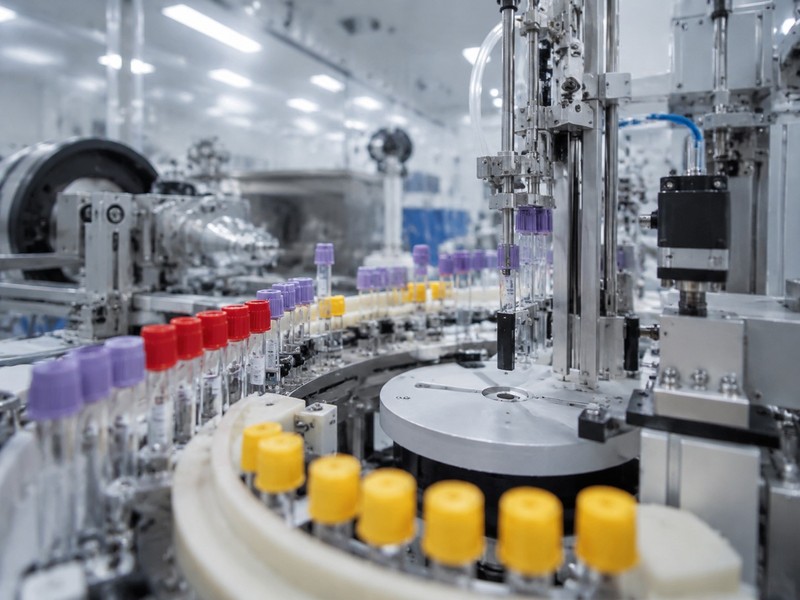
Blood Collection Tube Lines for the United States Market
For medical device companies serving hospitals, diagnostic laboratories, and public health systems, a blood collection tube production line is the core manufacturing system used to produce large volumes of consistent, sterile, and regulation-ready tubes. In the United States, where buyers expect reliable throughput, FDA-aligned documentation, and traceable quality control, automated tube production equipment offers clear advantages over labor-intensive assembly. Whether a company is supplying labs in Boston, Chicago, Houston, Atlanta, or Los Angeles, the right line can improve product uniformity, reduce waste, shorten delivery times, and support long-term growth in the clinical diagnostics market.
Quick Answer: What a Blood Collection Tube Production Line Delivers

A blood collection tube production line is an integrated manufacturing system that forms, doses, assembles, tests, labels, packs, and inspects blood collection tubes at industrial scale. It is used by medical consumable manufacturers that need dependable output for vacuum blood collection tubes, serum tubes, EDTA tubes, heparin tubes, citrate tubes, and related specimen collection products. For the United States market, the strongest value of automation is not only speed, but also repeatability, process validation, data traceability, and reduced risk of human error.
In practical terms, these lines help manufacturers produce tubes with controlled dimensions, precise additive volumes, stable vacuum performance, reliable cap fit, and standardized packaging. That matters when products are shipped through major logistics corridors such as the Port of Los Angeles, Port of Long Beach, Port Newark, Savannah, or inland distribution hubs near Dallas, Columbus, and Memphis. Large healthcare networks want uninterrupted supply, and a well-designed automated line supports that demand.
Companies evaluating this equipment often look for three outcomes: higher throughput, stronger compliance readiness, and lower total cost per tube over time. When those goals are paired with proper qualification, operator training, and maintenance planning, a modern line becomes a strategic production asset rather than just a machine purchase.
What Is a Blood Collection Tube Production Line and How Does It Work?

A blood collection tube production line is a connected series of machines and process stations designed to manufacture blood sampling tubes from raw materials to finished packed products. The exact layout varies by tube type, but most lines follow a similar logic: tube feeding or forming, cleaning, additive dosing, drying or curing if needed, stopper or cap assembly, vacuuming, leakage testing, labeling, visual inspection, tray loading, carton packing, and final case packing.
For vacuum blood collection products, maintaining controlled vacuum levels is one of the most important technical tasks. If vacuum consistency drifts, the draw volume in clinical use can become unreliable. Automated systems solve this by controlling pressure, sealing conditions, line speed, and inspection parameters across the full process.
Most advanced systems also include sensors, servo controls, machine vision, rejection stations, and batch data capture. This is especially relevant for U.S. buyers that require documented process consistency and often prefer equipment that can be aligned with IQ, OQ, and PQ activities during installation and validation.
| Production Stage | Main Function | Typical Equipment | Critical Control Point | Output Impact | Why It Matters in the U.S. |
|---|---|---|---|---|---|
| Tube feeding or forming | Supplies tube bodies into the line | Automatic feeder or molding interface | Tube orientation and dimensional consistency | Stable downstream handling | Reduces jams and supports high-volume runs |
| Tube cleaning | Removes particles before filling | Air cleaning or washing module | Particulate control | Cleaner internal surface | Supports laboratory quality expectations |
| Additive dosing | Dispenses anticoagulant or clot activator | Precision liquid dosing system | Volume accuracy | Correct specimen performance | Important for clinical reliability |
| Drying or curing | Stabilizes internal additives | Oven or controlled drying system | Temperature and time | Uniform coating or residue | Improves shelf stability |
| Stopper or cap assembly | Applies closure securely | Cap insertion and pressing station | Seal fit and force control | Leak prevention | Reduces complaints and returns |
| Vacuuming and sealing | Creates intended draw volume | Vacuum station | Pressure stability and sealing integrity | Consistent tube performance | Essential for vacuum blood collection products |
| Inspection and rejection | Checks defects automatically | Vision system and reject unit | Defect detection sensitivity | Better finished quality | Supports traceability and QA records |
| Labeling and packing | Prepares product for shipment | Labeler, tray loader, cartoner | Code accuracy and pack count | Distribution readiness | Fits large U.S. supply chain requirements |
The production sequence above shows why a blood collection tube production line is best viewed as a system, not a single standalone machine. A weak point in one module can affect vacuum quality, additive uniformity, or final packaging efficiency. For buyers in the United States, integration quality is often more important than maximum theoretical speed.
Key Applications and Production Benefits of Blood Collection Tube Production Line for Medical Device Companies

These lines support a wide range of medical consumable manufacturing programs. The primary application is blood collection tube production for hospitals, independent labs, physician office labs, emergency departments, research facilities, and public health systems. They are also relevant to companies that supply OEM or private-label diagnostic consumables to distributors across North America.
Production benefits are both operational and commercial. On the operational side, manufacturers gain higher daily output, reduced labor dependency, better line balance, improved quality control, and lower batch variability. On the commercial side, they gain the ability to bid on larger tenders, offer consistent delivery schedules, and expand into specialized tube categories.
Demand in the United States remains broad because specimen collection is a recurring need across healthcare. Large metropolitan regions such as New York City, Philadelphia, Miami, Phoenix, Seattle, and San Diego require dependable logistics and replenishment cycles. Automated production makes it easier to meet these recurring volume needs.
| Application Sector | Typical Buyer | Tube Types Commonly Needed | Production Priority | Business Benefit | Operational Challenge Solved |
|---|---|---|---|---|---|
| Hospital laboratories | Integrated health systems | Serum, EDTA, heparin, citrate | High consistency | Long-term contract supply | Frequent replenishment cycles |
| Independent diagnostics labs | National and regional lab networks | Vacuum tubes with color-coded caps | Volume throughput | Scalable private-label supply | Demand fluctuations |
| Physician office labs | Clinic groups | Routine blood draw tubes | Reliable packaging | Broader product range | Smaller mixed orders |
| Public health programs | State procurement agencies | General and specialty tubes | Traceability | Tender qualification | Documentation requirements |
| Research institutions | Universities and biotech labs | Special additives and custom tubes | Precision dosing | Higher-margin products | Complex specifications |
| OEM supply | Medical brand owners | Customized branded tubes | Flexible changeover | Private-label growth | Multi-SKU production planning |
The key production benefit is repeatability. A manual process can make products, but it struggles to maintain the same level of additive dosing, cap insertion force, vacuum accuracy, and labeling consistency across long production runs. For U.S. buyers focused on quality complaints, audit readiness, and inventory planning, automation creates measurable value.
The chart above reflects how demand is typically concentrated in high-volume healthcare channels, while research and specialty supply remain smaller but often more profitable.
Main Types and Configurations of Blood Collection Tube Production Line Available Today
There is no single universal production line. The right configuration depends on target output, product mix, automation level, factory layout, and regulatory expectations. In the United States, buyers generally compare semi-automatic systems, fully automatic lines, modular expansion lines, and turnkey integrated projects that include utilities, cleanroom coordination, validation support, and packaging integration.
Tube material, cap style, additive chemistry, vacuum requirements, and labeling format all influence line selection. Some manufacturers focus on standard high-volume products, while others prefer flexible lines that support more SKUs and faster changeover.
| Line Type | Best For | Automation Level | Typical Strength | Possible Limitation | U.S. Buyer Fit |
|---|---|---|---|---|---|
| Semi-automatic line | Entry-level manufacturers | Medium | Lower initial investment | Higher labor dependence | Smaller regional suppliers |
| Fully automatic line | Large-scale production | High | Stable throughput and quality | Higher capital cost | Best for established medical device plants |
| Modular line | Growing product portfolios | Medium to high | Easy expansion | Needs careful integration planning | Good for phased investment |
| Multi-specification line | Manufacturers with many SKUs | High | Flexible changeover | More complex setup | Ideal for mixed hospital and OEM supply |
| Turnkey integrated line | Greenfield projects | High | Utilities, layout, and validation alignment | Longer project timeline | Strong option for full plant buildout |
| Specialty additive line | Niche diagnostics products | High | Precise dosing control | Lower overall volume | Useful for premium market segments |
Beyond line categories, configuration details matter. Manufacturers should review output per hour, supported tube sizes, additive dosing accuracy, cap feeding reliability, vacuum integrity controls, vision inspection capability, and compatibility with downstream cartoning. A line that looks fast on paper may not be the best fit if it does not support the exact tube formats required by U.S. customers.
For buyers considering global sourcing, equipment partners with broader engineering capacity can offer an advantage. IVEN Pharmatech Engineering, headquartered in Shanghai, is one example of a supplier that has built expertise in vacuum blood collection tube equipment alongside pharmaceutical machinery. Its technical development across multiple generations of tube production systems is relevant for customers that want more than basic equipment supply.
Blood Collection Tube Production Line vs Manual Assembly Lines: Key Differences and Advantages
Manual assembly methods still exist in smaller operations, but their limitations become clear when output, compliance, and consistency expectations increase. Automated production lines are not just faster; they are also more controlled. In a manual environment, operators may introduce variability in dosing, cap insertion, labeling, or inspection. This can be difficult to manage across multiple shifts.
Automated systems improve standardization by using fixed process settings, validated motion control, and continuous inspection. They also reduce dependence on hard-to-staff repetitive labor roles, which is an important issue in many U.S. manufacturing markets.
| Comparison Factor | Automated Production Line | Manual Assembly Line | Business Impact | Quality Impact | Best Use Case |
|---|---|---|---|---|---|
| Output speed | High and consistent | Low to medium | Supports major contracts | Stable lot volumes | High-demand supply programs |
| Labor requirement | Lower direct labor per unit | Higher labor intensity | Lower unit cost at scale | Fewer handling variations | Plants facing labor shortages |
| Additive accuracy | Controlled by dosing systems | Operator dependent | Less waste and rework | Better tube performance | Clinical-grade products |
| Vacuum consistency | High process control | Difficult to maintain | Reduced customer complaints | Improved draw reliability | Vacuum tube production |
| Traceability | Easier digital recording | More manual records | Audit readiness | Stronger batch review | FDA-oriented operations |
| Scalability | Expandable with modules | Limited by staffing | Supports growth plans | More predictable quality | Mid-size to large manufacturers |
| Changeover control | Structured setup procedures | Skill dependent | Faster product switching | Lower mismatch risk | Multi-SKU plants |
In the United States, the decision is increasingly shaped by total cost of ownership rather than simple purchase price. While automation requires more up-front spending, it often reduces labor cost, product loss, downtime, and complaint-related expense over the life of the line.
This comparison reflects why most growth-stage manufacturers move toward higher automation when targeting larger healthcare and laboratory customers.
Market Growth and Opportunities for Blood Collection Tube Production Line Manufacturers
The U.S. market continues to offer attractive opportunities for blood collection tube production equipment because specimen collection is a core part of routine care, chronic disease management, diagnostics, surgery, emergency medicine, and research. Growth is supported by aging populations, rising outpatient testing volumes, expansion of lab networks, and the ongoing need for secure domestic and near-market supply chains.
Another growth factor is supply resilience. Many healthcare buyers now evaluate whether manufacturers can deliver stable output despite disruptions in shipping, labor, or upstream material sourcing. This creates demand for automated, high-efficiency lines that can support regionalized manufacturing strategies in the United States.
Policy and compliance trends also matter. U.S. buyers increasingly expect suppliers to align with quality management systems, documented validation, and better process control. Equipment manufacturers that can support these expectations are more likely to win complex projects.
The line chart highlights a steady upward direction in demand, especially as more manufacturers modernize their plants or add capacity for supply security.
By 2026, several trends are expected to shape the market:
- More use of servo-driven, data-enabled automation for better process control.
- Higher interest in machine vision and automated reject analytics.
- Stronger focus on energy efficiency and reduced compressed air consumption.
- Greater demand for flexible lines that can switch across tube types without long downtime.
- More scrutiny on documentation, validation, and audit support.
- Growing attention to recyclable packaging and cleaner manufacturing practices.
The area chart illustrates the ongoing shift from labor-heavy production toward smarter, more digitally controlled manufacturing systems.
How to Choose a Reliable Blood Collection Tube Production Line Manufacturer or Supplier
Choosing a supplier is not just about machine price. The right manufacturer should be able to demonstrate process understanding, engineering depth, compliance awareness, installation experience, and long-term service support. For the United States market, buyers should focus on suppliers that understand regulated production and can provide clear technical documentation.
Ask whether the supplier can support factory layout planning, clean utility interface requirements, FAT and SAT execution, qualification protocols, spare parts planning, and operator training. It is also useful to review references from projects with similar output targets or similar product types.
| Selection Criterion | What to Check | Why It Matters | Risk if Weak | Recommended Buyer Action | Priority Level |
|---|---|---|---|---|---|
| Engineering capability | Customization, integration, line balance | Fit with product and plant needs | Frequent downtime | Review technical proposals in detail | High |
| Regulatory understanding | Documentation, validation support | Supports compliance readiness | Audit gaps | Request sample protocols and records | High |
| Manufacturing strength | Factory scale, quality controls, component standards | Machine durability | Shorter equipment life | Evaluate manufacturing background | High |
| After-sales service | Response time, remote support, spare parts | Minimizes production stoppage | Long outages | Define SLA expectations in contract | High |
| Project experience | Installed lines and case history | Reduces execution risk | Unexpected commissioning issues | Ask for project references | Medium to high |
| Training support | Operator and maintenance training | Faster ramp-up | Low utilization rate | Include training milestones | Medium |
| Localization readiness | Support for U.S. standards and supply chain needs | Better implementation | Delayed startup | Confirm documentation and communication process | Medium |
Technology should be judged in context. Some suppliers can provide only isolated machines, while others can support broader project planning. For companies that prefer integrated execution, turnkey pharmaceutical and medical device engineering support can reduce coordination risk between equipment, utilities, cleanroom layout, and validation.
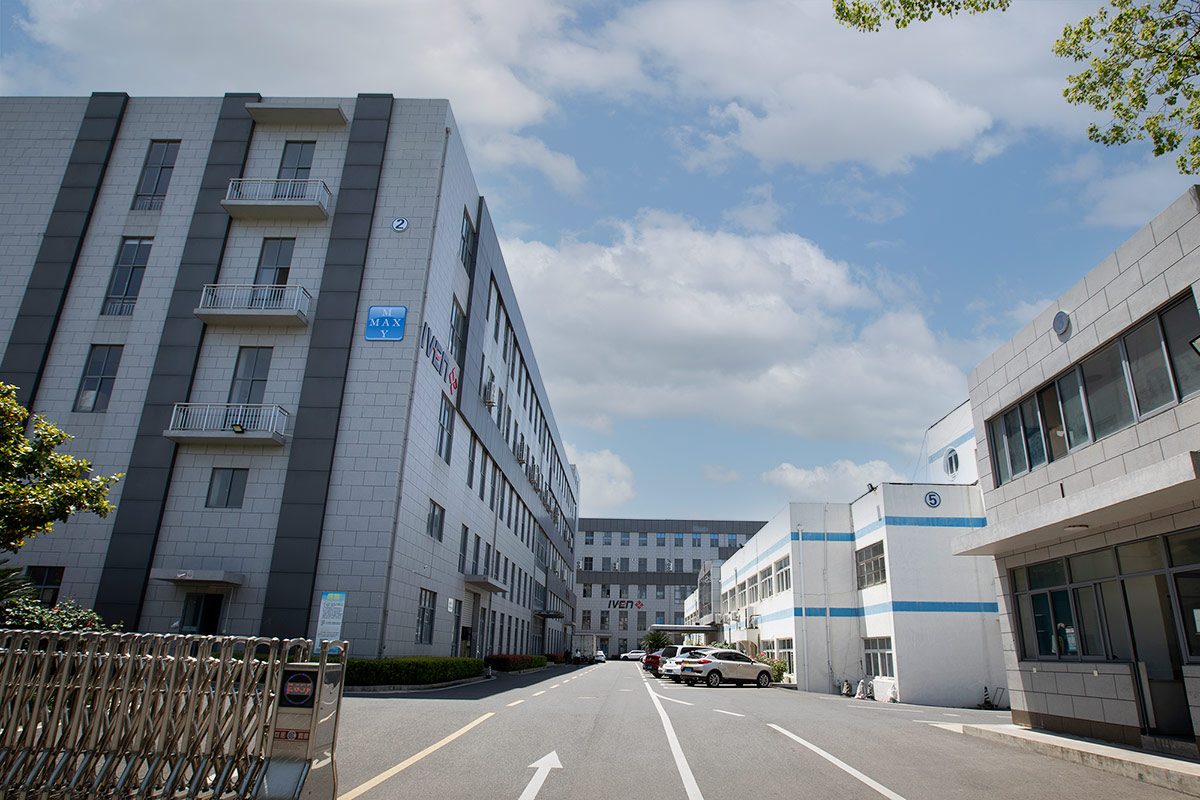
From a technological capability standpoint, IVEN Pharmatech Engineering is relevant because it combines vacuum blood collection tube equipment know-how with broader pharmaceutical process engineering experience. That matters for buyers who want process coordination, not just standalone machinery. From a manufacturing capability standpoint, the company operates multiple specialized plants focused on equipment categories including tube production systems, which suggests stronger control over fabrication and integration. From a service capability standpoint, buyers often value support that spans feasibility review, engineering design, installation, commissioning, qualification assistance, training, and lifecycle optimization.
Investment Cost, Budget Planning and ROI Analysis for Blood Collection Tube Production Line
Investment cost depends on output capacity, automation level, number of SKUs, inspection sophistication, cleanroom requirements, packaging integration, and the extent of validation support. A semi-automatic line can fit a modest entry strategy, while a high-speed fully automatic line with integrated labeling and cartoning requires a larger capital budget.
In the United States, budget planning should include more than the equipment invoice. Buyers need to account for freight, insurance, customs, utilities, facility modification, cleanroom coordination, installation, SAT, qualification, staff training, spare parts, preventive maintenance, and potential temporary production overlap during startup. Ports such as Long Beach, Houston, and Newark may affect import timing and inland logistics cost depending on the final plant location.
| Cost Element | What It Covers | Share of Budget | Can It Be Reduced? | Main Watchout | Planning Tip |
|---|---|---|---|---|---|
| Core equipment | Main production modules | Largest share | Partly through configuration choice | Under-specifying capacity | Match output to 3-5 year demand |
| Tooling and format parts | Tube sizes and cap formats | Moderate | Yes, with standardization | Too many early SKUs | Prioritize core products first |
| Utilities and facility prep | Power, air, layout changes | Moderate | Limited | Hidden retrofit costs | Conduct site assessment early |
| Installation and commissioning | Setup and startup support | Moderate | Sometimes | Compressed schedule | Build realistic startup buffer |
| Validation and documentation | IQ, OQ, PQ-related support | Moderate | Not much | Missing required records | Define deliverables in contract |
| Training and spare parts | Operator readiness and continuity | Smaller share | No, should not be cut too hard | Weak ramp-up | Fund first-year spare stock |
| Maintenance and service | Annual upkeep | Ongoing | Through preventive planning | Reactive maintenance costs | Use service schedule from day one |
Return on investment usually comes from five sources: higher output, lower labor cost per unit, lower rejection rates, better market access, and improved delivery reliability. A faster line is not automatically the best line; the best ROI often comes from the line that stays stable over long runs with low waste and manageable maintenance.
| ROI Driver | How It Creates Value | Typical Financial Effect | Time Horizon | Who Benefits | Notes |
|---|---|---|---|---|---|
| Higher throughput | More tubes per shift | Revenue growth | Short to medium term | Sales and operations | Best when demand already exists |
| Lower labor intensity | Fewer operators per unit output | Cost savings | Medium term | Finance and HR | Important in high-wage regions |
| Reduced rejects | Better process control | Material savings | Short term | Quality and production | Often overlooked in early budgeting |
| Improved compliance readiness | Better records and validation | Fewer delays or nonconformities | Medium to long term | QA and management | Harder to quantify but valuable |
| Expanded product mix | Supports more tube variants | Margin growth | Medium term | Commercial teams | Requires disciplined changeover |
| Supply reliability | Fewer line stoppages | Customer retention | Long term | Entire business | Critical for contract accounts |
A realistic ROI model for a U.S. manufacturer often targets payback through a combination of stable hospital contracts, lower rework, better labor productivity, and improved service levels. Companies can also review available product options through a supplier’s equipment portfolio before narrowing technical scope.
Key Considerations and Potential Risks When Investing in Blood Collection Tube Production Line
The most common investment mistake is buying a line based on speed claims alone. A production system must fit the actual product, the factory environment, and the business plan. If a plant needs flexible changeover and multiple tube types, a simpler high-speed line may not deliver the best result.
There are also project execution risks: long lead times, unclear user requirement specifications, insufficient utility planning, inadequate FAT testing, and poor training. In some cases, the line itself performs well, but the surrounding production ecosystem is not ready. This includes material flow, warehousing, packaging supply, label control, and spare parts planning.
| Risk Area | Common Issue | Potential Consequence | Probability | Mitigation Method | Owner |
|---|---|---|---|---|---|
| Capacity mismatch | Buying too small or too large | Poor ROI or bottlenecks | Medium | Use demand-based sizing model | Management |
| Compliance gap | Weak documentation package | Delayed qualification | Medium | Define document scope early | QA |
| Utility underestimation | Insufficient air or power | Startup delays | Medium | Complete site engineering survey | Engineering |
| Training shortfall | Operators not fully prepared | Lower yield and more downtime | High | Stage training before and after SAT | Production |
| Spare parts delay | No first-year inventory plan | Extended stoppages | Medium | Order critical parts upfront | Maintenance |
| Integration failure | Poor fit with downstream packing | Blocked output | Medium | Check line interface points carefully | Project team |
| Supplier communication issues | Unclear responsibilities | Schedule slippage | Medium | Use milestone-based project control | Procurement |
Sustainability is becoming another decision factor. By 2026, more U.S. medical device manufacturers are expected to review energy use, packaging reduction, equipment life cycle, and preventive maintenance strategies as part of procurement decisions. Durable stainless steel construction, efficient utilities, and lower waste rates can improve both cost performance and ESG positioning.
For buyers that want to reduce these risks, it is useful to work with suppliers that can support the full project cycle rather than only shipment of equipment. If you are evaluating a project or want technical discussion for a U.S. installation, you can contact the engineering team to discuss line configuration, validation support, and implementation planning.
FAQ
What output capacity should a U.S. manufacturer target?
It depends on the intended customer base. Regional suppliers may start with moderate output, while national hospital and diagnostic accounts generally require higher, more stable throughput. Capacity planning should reflect at least three years of expected demand.
Can one line produce multiple blood collection tube types?
Yes, many modern systems can handle multiple tube specifications, but flexibility depends on tooling, changeover design, additive dosing configuration, and labeling integration. Buyers should define their core SKU mix early.
Is a turnkey project better than buying individual machines?
For greenfield or large expansion projects, turnkey delivery often reduces coordination risk. It can align layout, utilities, equipment selection, installation, and qualification support more effectively than managing many separate vendors.
What standards matter most for the United States market?
Buyers generally look for equipment and documentation that support FDA-oriented manufacturing expectations, cGMP thinking, quality management discipline, and validation readiness. Exact requirements depend on the plant and product classification.
How long does implementation usually take?
Lead times vary by customization and scope. A straightforward project may move faster, while a highly customized integrated line with packaging and qualification support will take longer. Site readiness often determines whether the overall schedule succeeds.
What should be included in the supplier contract?
The contract should define technical scope, capacity, accepted product formats, FAT/SAT criteria, documentation package, training scope, spare parts list, commissioning support, and service response expectations.
Are imported production lines practical for U.S. factories?
Yes, provided the supplier offers strong technical communication, documentation, service planning, and commissioning support. Logistics planning through major ports and inland transport routes should be included in the budget and schedule.
How important is machine vision inspection?
It is increasingly important. Vision inspection can help detect defects, cap issues, label problems, and dimensional irregularities earlier, reducing rework and improving traceability.
What makes a supplier stand out in this field?
The best suppliers combine technological capability, manufacturing depth, and service support. That means they understand the process, build robust equipment, and stay involved through installation, qualification, and production ramp-up.
In summary, a blood collection tube production line is a strategic investment for manufacturers serving the United States healthcare and diagnostics market. The right system improves quality, supports compliance, strengthens supply reliability, and creates a clearer path to scalable growth. Buyers that evaluate technology fit, total cost, supplier capability, and long-term service support will make better decisions and reduce project risk.

About the Author
We are IVEN Pharmatech Engineering, a team dedicated to delivering turnkey pharmaceutical and medical solutions worldwide. With decades of experience, we specialize in advanced machinery, integrated factory design, and full lifecycle support to help our clients achieve efficient, compliant, and high-quality production.
Share
Related Insights
-
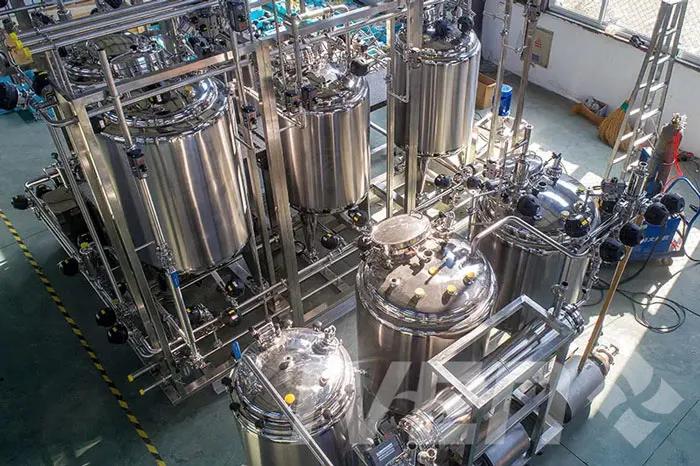
U.S. Pharma GMP Purified Water System Buying Guide
For pharmaceutical manufacturers in the United States, a purified water system for pharma GMP operations is not just a utility skid in the mechanical room. It is a critical quality system that supports compliant production, process consistency, and patient safety. Whether a facility produces sterile injectables, vaccines, oral liquids, biologics, or medical consumables, purified water must be generated, stored, circulated, and monitored in a way that meets pharmacopeial expectations and current GMP standards. In practical terms, this means validated design, robust pretreatment, reliable membrane or thermal purification, sanitary distribution, documented control, and lifecycle support.
Across major U.S. pharmaceutical hubs such as New Jersey, Boston, Raleigh-Durham, Philadelphia, Houston, San Diego, and Indianapolis, manufacturers are investing in water systems that reduce contamination risk while improving operating efficiency. Rising production of injectables, cell and gene therapy materials, and high-value biologics is increasing the need for more reliable water generation and loop distribution systems. Companies evaluating new facilities, expansions, or retrofits often compare reverse osmosis, EDI, distillation, and hybrid solutions to match local feedwater conditions, product risk, energy targets, and regulatory expectations.
As a global engineering partner serving regulated pharmaceutical projects, IVEN Pharmatech Engineering supports manufacturers with integrated water treatment, process utility, and turnkey factory solutions. The company’s experience in projects designed around EU GMP, U.S. FDA cGMP, WHO GMP, and PIC/S expectations makes it relevant for U.S. owners seeking technically sound and commercially practical solutions.
A purified water system for pharma GMP use is essential infrastructure because it consistently produces high-purity water used in manufacturing, cleaning, formulation support, and equipment operation. In U.S. pharmaceutical facilities, the system must be engineered to control conductivity, TOC, microbiological load, endotoxin risk where relevant, and loop sanitization performance. The goal is not only to make purified water, but to maintain it at point of use under validated operating conditions.
For injectable drugs and vaccines, purified water often supports upstream operations, component washing, equipment cleaning, buffer preparation, and feed to further systems such as water for injection generation, depending on the process design. In oral solid dose and oral liquid facilities, it is frequently used for granulation, solution preparation, cleaning-in-place, and laboratory support. In every case, the business case is straightforward: stable water quality protects product quality, reduces batch risk, improves audit readiness, and supports long-term GMP compliance.
Key Requirement Why It Matters Operational Impact Consistent water quality Prevents process variability and contamination Supports repeatable batch performance GMP-compliant design Reduces regulatory observations Improves audit confidence Validated monitoring Provides traceability and alarm control Speeds investigations and release decisions Sanitary distribution loop Limits microbial proliferation after generation Maintains quality at points of use Reliable sanitization strategy Controls biofilm and long-term contamination Reduces downtime and excursion risk Lifecycle service support Ensures maintenance, calibration, and documentation Lowers total cost of ownershipThe table above shows that performance is determined by the entire system lifecycle, not just by the purification module. A poorly designed storage tank vent filter, dead leg, loop velocity issue, or weak preventive maintenance program can undermine an otherwise advanced system.
A pharma GMP purified water system is a complete engineered platform that converts raw municipal or pretreated source water into purified water that complies with recognized pharmaceutical standards and remains controlled through storage and distribution. It typically includes pretreatment, softening or dechlorination where needed, reverse osmosis, electrodeionization or polishing, UV treatment, ozone or heat sanitization options, storage tanks, pumps, instrumentation, and a continuously recirculating loop.
U.S. manufacturers need it because municipal water quality varies significantly by location. Feedwater in Newark differs from that in Phoenix, Seattle, or Miami due to hardness, chloramines, seasonal variation, organic content, silica, and local treatment chemistry. A standardized industrial water unit is rarely enough for a regulated pharma plant. Facilities need a system designed around local source water analysis, production demand profile, redundancy philosophy, validation requirements, and future expansion plans.
Another reason is regulatory discipline. FDA inspections focus on whether firms understand and control critical utilities. Water systems are expected to be scientifically justified, appropriately qualified, well monitored, and maintained in a state of control. For manufacturers supplying hospitals, government contracts, or export markets, the documentation burden is even higher.
From an engineering perspective, the most successful projects begin with a holistic utility strategy rather than buying a stand-alone skid. Owners should review pretreatment, purified water generation, storage, loop design, heat exchangers, drainability, sampling plans, instrument integration, alarm management, and quality documentation at the concept phase. Companies planning greenfield or expansion projects can review broader turnkey pharmaceutical engineering solutions to align water systems with cleanrooms, process equipment, and validation schedules.
Facility Type Main Water Use Typical Risk Level System Priority Sterile injectables Component washing, cleaning, formulation support Very high Maximum reliability and traceability Vaccines Process support, cleaning, media/buffer preparation Very high Microbial control and validation Biologics Buffer prep, CIP, upstream/downstream support High Stable quality and sanitization robustness Oral liquids Product formulation and equipment cleaning Medium to high Consistent chemistry and low bioburden Solid dosage Granulation, coating support, cleaning Medium Efficiency and documentation Medical consumables Cleaning and support processes Medium Cost-effective complianceThis comparison shows why system specification depends strongly on end use. The same U.S. site may need multiple quality grades of water with separate generation pathways or carefully justified integration.
Purified water is used in more places than many buyers initially expect. In a GMP facility, it may support product-contact cleaning, solution preparation, equipment rinsing, autoclave feed pretreatment, humidification support in specialized processes, lab testing, and transfer line flushing. In vaccine and biologics facilities, water quality stability can affect downstream cleaning reproducibility and buffer preparation consistency. In oral formulations, it directly influences product composition and shelf-life stability.
The main benefit is quality protection, but several secondary benefits matter in the U.S. market. First, validated automation and online monitoring reduce operator dependence. Second, optimized membrane and recovery design can cut water waste and utility cost, which is especially relevant in states with rising industrial water rates such as California and Texas. Third, strong system documentation helps accelerate qualification and supports a cleaner path through customer audits and FDA reviews.
There are also business continuity benefits. A water excursion can stop an entire plant, delay releases, create CAPAs, and increase the cost of quality. By contrast, a well-designed purified water system with proper pretreatment and redundancy improves plant uptime and supports predictable scheduling.
Application Typical Department Benefit Example Outcome Equipment cleaning Production Lower residue and contamination risk More reliable cleaning validation Solution preparation Manufacturing Stable product chemistry Reduced batch variability Component rinsing Sterile operations Improved surface cleanliness Better aseptic readiness CIP systems Utilities/Engineering Consistent cleaning performance Less rework and downtime Laboratory support QC/QA Reliable analytical preparation Fewer invalid test events Feed to further purification Utilities Better downstream performance Longer equipment service lifeThe table highlights a key point: purified water creates measurable value far beyond the utility room. It influences production efficiency, compliance, and batch economics across the facility.
var ctxBar = document.getElementById(‘barDemandChart’).getContext(‘2d’); var barDemandChart = new Chart(ctxBar, { type: ‘bar’, data: { labels: [‘Sterile Injectables’, ‘Biologics’, ‘Vaccines’, ‘Oral Liquids’, ‘Solid Dosage’, ‘Medical Consumables’], datasets: [{ label: ‘Estimated U.S. Demand Intensity for GMP Purified Water Systems’, data: [95, 88, 84, 72, 65, 58], backgroundColor: [‘#2f6fed’,’#4f86f7′,’#6c9ef8′,’#8ab4fa’,’#a6c8fb’,’#c3dafc’] }] }, options: { responsive: true, maintainAspectRatio: false, scales: { y: { beginAtZero: true, max: 100 } } } });The most common purified water technologies in the U.S. pharmaceutical sector are reverse osmosis, electrodeionization, thermal distillation, and hybrid combinations. Selection depends on feedwater quality, product portfolio, microbiological strategy, sustainability goals, and CAPEX/OPEX balance.
Reverse osmosis (RO) is widely used because it provides strong ionic and organic reduction with relatively favorable energy consumption. Two-pass RO designs are common where tighter quality margins or difficult source water conditions exist. RO performance depends heavily on pretreatment, membrane care, sanitization strategy, and recovery rate optimization.
EDI is often paired with RO to further polish ionic impurities and reduce the need for chemical regeneration associated with older ion exchange systems. For many U.S. sites, RO plus EDI is an attractive balance of automation, water quality stability, and labor reduction.
Distillation remains important, especially where thermal robustness, low endotoxin carryover, or integration with WFI-related strategies is beneficial. Distillation generally requires higher energy input, but it offers strong contamination control advantages in certain high-risk environments.
Hybrid systems combine technologies such as softening, activated carbon, RO, EDI, UV, ultrafiltration, and hot-loop distribution. Hybrid platforms are especially useful when owners want both operational efficiency and high control margins.
System Type Main Strength Main Limitation Best Fit Single-pass RO Cost-effective purification Less control margin for difficult feedwater Lower-risk, stable feedwater sites Double-pass RO Higher purity and redundancy Higher capital cost Regulated plants with variable source water RO + EDI Strong ionic polishing and automation Needs good upstream pretreatment Modern GMP plants seeking efficiency Distillation Robust thermal purification Higher utility consumption High-risk sterile or integrated systems RO + EDI + UF Good chemistry and microbial control support More complex integration Biologics and advanced process facilities Hybrid hot-sanitizable system Strong biofilm control potential Higher engineering complexity Large 24/7 operationsThis table simplifies the technology decision, but actual selection should be based on a detailed user requirement specification, source water study, and lifecycle cost model.
Traditional industrial water treatment methods such as basic softening, sand filtration, standard deionization, or non-sanitary storage may work well in commercial buildings, food plants, or general manufacturing, but they are usually insufficient for pharmaceutical GMP operations. The main difference is not only output purity; it is the level of control over system design, sanitization, documentation, traceability, and distribution integrity.
A traditional system may produce acceptable water at generation, but if it lacks sanitary piping, continuous recirculation, validated instrumentation, and a documented maintenance program, the quality at point of use may become unstable. GMP systems are therefore built with a quality-by-design mindset, focusing on both chemical purity and microbial control across the full distribution loop.
In the United States, this distinction matters during inspections, customer qualification visits, and internal quality reviews. A lower-cost conventional system can become more expensive over time if it creates deviations, investigations, and production interruptions.
Criteria GMP Purified Water System Traditional Water Treatment Design basis Pharma compliance and validation General utility performance Distribution loop Sanitary, recirculating, monitored Often static or limited control Documentation IQ/OQ/PQ ready with traceability Basic manuals and service records Microbial control Built-in sanitization strategy Often reactive only Instrumentation Online conductivity, TOC, alarms, trends Limited or manual monitoring Long-term suitability High for regulated manufacturing Low to moderate for GMP useFor most U.S. pharmaceutical manufacturers, the correct choice is a genuine pharma GMP purified water system rather than an adapted industrial unit. The cost difference at purchase is usually outweighed by the value of compliance and operating reliability.
var ctxComp = document.getElementById(‘comparisonChartUS’).getContext(‘2d’); var comparisonChartUS = new Chart(ctxComp, { type: ‘bar’, data: { labels: [‘Compliance Readiness’, ‘Water Quality Stability’, ‘Microbial Control’, ‘Documentation’, ‘Automation’, ‘Lifecycle ROI’], datasets: [ { label: ‘Pharma GMP System’, data: [96, 93, 92, 95, 90, 88], backgroundColor: ‘#5b7cfa’ }, { label: ‘Traditional Treatment’, data: [55, 62, 48, 50, 58, 60], backgroundColor: ‘#b6c2ff’ } ] }, options: { responsive: true, maintainAspectRatio: false, scales: { y: { beginAtZero: true, max: 100 } } } });The United States remains one of the most important markets for GMP purified water systems because of its high concentration of pharmaceutical manufacturing, biologics investment, CDMO expansion, and ongoing facility modernization. Clusters in New Jersey, Massachusetts, Pennsylvania, North Carolina, California, Illinois, and Texas continue to generate demand for both greenfield installations and replacement projects.
Several market drivers stand out. First is sterile manufacturing growth, including injectables and vaccine-related capacity. Second is the expansion of biologics and advanced therapy facilities, which often require more sophisticated utility integration. Third is retrofit demand from older plants built with less digital instrumentation or outdated pretreatment architecture. Fourth is the push toward sustainability, especially in water-stressed regions and high-energy cost markets.
For 2026 and beyond, buyers are increasingly asking for higher automation, remote diagnostics, predictive maintenance, lower reject water, better heat recovery, and digital batch-linked utility records. Policy and customer expectations are also influencing specification. More companies want systems aligned not only with cGMP, but also with ESG objectives, resilience planning, and cybersecurity-ready control architecture.
var ctxLine = document.getElementById(‘lineGrowthChart’).getContext(‘2d’); var lineGrowthChart = new Chart(ctxLine, { type: ‘line’, data: { labels: [‘2022’, ‘2023’, ‘2024’, ‘2025’, ‘2026’, ‘2027’, ‘2028’], datasets: [{ label: ‘Estimated U.S. GMP Purified Water System Market Index’, data: [100, 108, 117, 127, 139, 151, 164], borderColor: ‘#1f9d8b’, backgroundColor: ‘rgba(31,157,139,0.12)’, fill: false, tension: 0.25 }] }, options: { responsive: true, maintainAspectRatio: false, scales: { y: { beginAtZero: false } } } });Regional logistics also matter. Projects serving East Coast markets may benefit from easier access to ports such as Newark, Savannah, and Philadelphia for imported skids and stainless assemblies, while Midwest and South-Central plants often prioritize domestic service reach and spare parts availability. West Coast sites may focus more strongly on water recovery efficiency because of local environmental pressures.
Another trend is the preference for integrated engineering partners rather than isolated equipment vendors. Owners increasingly want suppliers that can support layout review, utility coordination, FAT/SAT planning, documentation, and qualification. This is one reason international firms with broader turnkey experience have become more relevant in the U.S. market.
var ctxArea = document.getElementById(‘areaTrendChart’).getContext(‘2d’); var areaTrendChart = new Chart(ctxArea, { type: ‘line’, data: { labels: [‘2022’, ‘2023’, ‘2024’, ‘2025’, ‘2026’, ‘2027’, ‘2028’], datasets: [ { label: ‘Conventional Low-Automation Systems’, data: [52, 48, 44, 39, 34, 30, 26], borderColor: ‘#9aa5b1’, backgroundColor: ‘rgba(154,165,177,0.25)’, fill: true, tension: 0.25 }, { label: ‘Smart GMP Hybrid Systems’, data: [48, 52, 56, 61, 66, 70, 74], borderColor: ‘#ff8a00’, backgroundColor: ‘rgba(255,138,0,0.20)’, fill: true, tension: 0.25 } ] }, options: { responsive: true, maintainAspectRatio: false, scales: { y: { beginAtZero: true, max: 100 } } } });Choosing a supplier should begin with technical fit, not price alone. A qualified manufacturer must understand U.S. regulatory expectations, local utility realities, validation documentation, and the practical challenges of start-up under production deadlines. Buyers should review design standards, material specifications, welding quality, instrument brands, software logic, loop design methodology, and service reach.
Look for a supplier that can provide a full document package, including P&IDs, component traceability, calibration plans, FAT protocols, commissioning support, and qualification assistance. It is also important to confirm that the supplier can adapt the system to your actual feedwater profile rather than offering a generic configuration.
In terms of technological capabilities, IVEN Pharmatech Engineering brings experience in pharmaceutical water treatment and related process systems for regulated facilities. Its portfolio includes RO purified water units, multi-effect distillation equipment, purified steam systems, solution preparation and distribution systems, and integrated automation for pharmaceutical projects. This matters because water systems often interact with wider process and utility architecture.
In manufacturing capabilities, the company operates specialized manufacturing plants in Shanghai covering pharmaceutical water treatment equipment, filling and packaging machinery, intelligent conveying systems, and medical consumable production equipment. For U.S. buyers, this broader manufacturing base can be useful when a project requires coordinated delivery of utilities and production lines rather than a single stand-alone utility package. Buyers looking at equipment options can review available categories through the product platform as part of early benchmarking.
In service capabilities, IVEN supports projects from feasibility and engineering design through installation, commissioning, validation support, documentation, staff training, and after-sales service. For regulated projects, this lifecycle approach often reduces interface risk between the utility supplier, EPC team, and end user. Companies with active U.S. projects or expansion plans can start technical discussions through the U.S. project inquiry channel.
Supplier Evaluation Factor What to Ask Why It Matters Regulatory understanding Do they support cGMP documentation and validation? Reduces compliance gaps Engineering depth Can they customize around source water and load profile? Improves real-world fit Manufacturing quality What are the material, welding, and testing standards? Supports system durability Automation package What alarms, trending, and integration options are included? Improves control and traceability Service capability Can they support FAT, SAT, IQ/OQ/PQ and training? Speeds qualification Reference projects Do they have pharma projects in regulated markets? Validates execution abilityThe strongest suppliers are those that can connect compliance, engineering, manufacturing quality, and long-term support into one accountable package.
The cost of a purified water system for pharma GMP use in the United States varies widely based on capacity, automation, source water conditions, distribution loop length, material selection, redundancy, and qualification scope. Small systems for oral dose facilities can be far less expensive than high-capacity hybrid systems serving sterile or biologics operations. Budgeting should include not only the generation skid, but pretreatment, storage, loop piping, instrumentation, installation, commissioning, qualification, spare parts, and operator training.
Owners should also model lifecycle costs. Energy use, membrane replacement, sanitization frequency, chemical consumption, labor, calibration, downtime risk, and water reject volume can materially change total cost of ownership. For facilities in states with high utility rates or strict water discharge expectations, sustainability features may improve ROI faster than expected.
Cost Element Budget Impact Common Oversight ROI Relevance Pretreatment package Medium Underestimating feedwater variability Protects downstream equipment life Purification skid High Choosing by price instead of fit Core quality and efficiency driver Storage and loop High Ignoring sanitary distribution complexity Critical for point-of-use control Automation and monitoring Medium Minimal data integration Reduces deviation risk Qualification package Medium Late planning Speeds release to operation Service and spares Medium No lifecycle agreement Improves uptime and cost predictabilityA practical ROI model should consider avoided losses, not only utility savings. If a robust system prevents one major production shutdown, one contamination investigation, or one delayed batch release, the financial return can be substantial. CDMOs, in particular, often benefit from premium utility reliability because customer confidence and schedule adherence directly affect revenue.
For example, a mid-sized sterile manufacturer in the Mid-Atlantic region may invest more upfront in a double-pass RO plus EDI system with better online monitoring and a hot-sanitizable loop. The added capital can often be justified by reduced microbial excursions, lower labor intervention, and smoother qualification. By contrast, a lower-spec system may appear cheaper initially but create ongoing operating drag.
The first major consideration is source water variability. A system designed without accurate feedwater data may suffer membrane fouling, unstable performance, and frequent sanitization or maintenance events. Seasonal changes, municipal treatment changes, and local contaminants must be considered in the design basis.
The second is scale. Some companies size only for current demand and overlook future lines, additional points of use, or second-shift expansion. Undersized systems become bottlenecks; oversized systems can create low-flow conditions and microbial control issues if not engineered correctly.
The third is distribution design. Dead legs, poor drainability, inadequate loop velocity, weak insulation, and poorly placed sampling points are common hidden risks. In many cases, the loop creates more long-term quality challenges than the generation skid.
The fourth is validation and documentation. Even a technically sound system can delay project launch if FAT protocols, material certificates, calibration records, software documentation, and qualification support are incomplete. Buyers should align documentation expectations at the contract stage.
The fifth is supplier support. Imported or specialized systems require dependable communication, spare parts planning, and remote or on-site troubleshooting. U.S. owners should verify response models early, especially for facilities operating around the clock.
Case experience across the market shows that successful projects typically involve early multidisciplinary input from engineering, production, QA, validation, maintenance, and procurement. For example, an injectable plant near Philadelphia may prioritize hot-loop sanitization and high traceability, while a biologics expansion in Boston may focus on automation integration and flexible future load capacity. A vaccine support plant near Houston may put extra emphasis on redundancy and rapid service response because production interruptions carry a higher operational penalty.
var ctxSup = document.getElementById(‘supplierProductChart’).getContext(‘2d’); var supplierProductChart = new Chart(ctxSup, { type: ‘bar’, data: { labels: [‘Tech Capability’, ‘Customization’, ‘Documentation’, ‘Manufacturing Depth’, ‘Lifecycle Service’, ‘Cost Efficiency’], datasets: [{ label: ‘Integrated Engineering Supplier Score’, data: [92, 89, 94, 90, 91, 86], backgroundColor: ‘#7b61ff’ }] }, options: { responsive: true, maintainAspectRatio: false, scales: { y: { beginAtZero: true, max: 100 } } } });What is the difference between purified water and water for injection? Purified water is a high-purity pharmaceutical utility used in many manufacturing and cleaning processes. Water for injection has tighter expectations for specific uses, especially where injectable product-related applications require it. The exact choice depends on the process and applicable quality standards.
Can a standard industrial RO system be used in a GMP pharma plant? Usually not as-is. A GMP application needs sanitary design, validated control, compliant documentation, and a managed distribution loop. A standard industrial system may not provide adequate microbial control or traceability.
Which system is better for U.S. facilities: RO plus EDI or distillation? There is no single answer. RO plus EDI is often favored for efficiency and automation, while distillation can be preferred in high-risk or thermally oriented utility strategies. The right selection depends on feedwater, application, quality risk, and utility economics.
How long does implementation usually take? For a new pharmaceutical facility, the timeline can range from several months to over a year depending on design complexity, fabrication, factory acceptance testing, installation, qualification, and site readiness. Retrofit projects may be faster or slower depending on shutdown constraints.
What documents should a supplier provide? Common expectations include P&IDs, GA drawings, electrical documents, component lists, calibration records, certificates of materials, FAT/SAT protocols, operation manuals, maintenance plans, software documentation, and qualification support packages.
How often should the system be sanitized? That depends on design, operating temperature, bioburden trends, and site procedures. Some systems use hot water sanitization, some use ozone, and some use chemical methods. The schedule should be justified by validation and ongoing monitoring data.
What are the most common mistakes during procurement? The most common issues are underestimating distribution loop complexity, buying on price only, failing to analyze local feedwater, and leaving validation documentation until late in the project.
Is local U.S. support important when buying from an international supplier? Yes. Even when equipment is fabricated internationally, project success improves when the supplier has a clear support model for communication, commissioning, training, spare parts, and troubleshooting relevant to U.S. operations.
In summary, a purified water system for pharma GMP operations is a strategic utility investment for U.S. pharmaceutical manufacturers. The right design protects product quality, supports compliance, lowers operational risk, and strengthens long-term plant performance. Buyers that combine local feedwater analysis, strong engineering review, lifecycle budgeting, and careful supplier qualification are best positioned to build a reliable system that performs under real GMP conditions.
-

Pharma Turnkey Projects for the United States Market
For pharmaceutical manufacturers in the United States, a turnkey project is more than a machinery purchase. It is a structured factory-delivery model that combines process design, clean utilities, production equipment, validation support, compliance planning, installation, training, and launch readiness under one accountable supplier or consortium. In practical B2B terms, a pharma turnkey project reduces handoff risk between designers, builders, utility vendors, automation teams, and production-line suppliers.
In the U.S. market, where FDA expectations, data integrity, documentation depth, and startup timelines are all demanding, turnkey delivery can help investors, CDMOs, hospital-supply manufacturers, infusion producers, and sterile-drug developers reach commercial readiness faster. Buyers in hubs such as New Jersey, Boston, Raleigh-Durham, Houston, Chicago, Los Angeles, and the San Francisco Bay Area are increasingly evaluating integrated project partners that can align engineering, equipment, and compliance from the first URS to final PQ.
This guide explains how to define scope, compare suppliers, evaluate technical specifications, and source internationally with lower execution risk. It also shows how an experienced engineering partner can support U.S. projects from concept through commissioning. Readers who want a broader introduction to the supplier can review the company overview, while procurement teams comparing integrated solutions may explore these turnkey engineering solutions and related equipment options before requesting a project discussion through the contact page.
A practical turnkey strategy begins with the business case. U.S. buyers usually start by defining product category, annual capacity, batch size, target launch date, regulatory path, and internal ownership. From there, the project moves into user requirement specification, facility layout, utility balancing, equipment selection, automation architecture, FAT and SAT planning, validation mapping, and procurement sequencing.
The biggest advantage of turnkey delivery is systems integration. In a fragmented sourcing model, one vendor supplies formulation tanks, another provides water systems, another handles HVAC, and yet another installs packaging lines. Each package may be technically acceptable on its own, but startup delays often happen at the interfaces: piping elevations, CIP routing, SCADA communication, pass-through design, compressed air loading, and room pressure cascades. A turnkey partner reduces these friction points by engineering the whole plant around process flow and compliance logic.
For U.S. projects, planning should consider local factors such as state permitting, utility cost variations, labor availability, seismic or hurricane exposure, and inbound logistics from ports such as Los Angeles/Long Beach, Houston, Savannah, New York/New Jersey, and Norfolk. A West Coast sterile facility may prioritize shorter import routes from Asia, while an East Coast buyer may optimize for trans-Atlantic supplier mixes or final assembly near New Jersey and Pennsylvania packaging clusters.
Project StageMain ObjectiveKey DeliverablesTypical U.S. Buyer ConcernSupplier RoleRisk if Poorly ManagedFeasibilityConfirm technical and financial fitCapacity model, budget range, timelineROI and launch certaintyConcept engineering and benchmarkingOversized or undersized plantURS DevelopmentDefine performance expectationsURS, compliance criteria, product matrixFuture product flexibilityTranslate process needs into specsScope gaps and change ordersBasic DesignSet process and layout logicPFD, block layout, utility conceptWorkflow and contamination controlCross-discipline design coordinationRework during detailed engineeringDetailed EngineeringPrepare for build and procurementP&ID, room data, equipment listDocumentation completenessFinalize technical packageProcurement and installation delaysExecutionManufacture, install, integrateFAT, shipment, installation recordsSchedule adherenceProject management and interface controlCost overruns and startup slipsValidation and HandoverAchieve operational readinessIQ/OQ/PQ support, SOPs, trainingAudit readinessDocumentation and qualification supportDelayed commercial productionThe table above shows why turnkey planning must be treated as a business system, not just a machine purchase. The earlier a buyer aligns scope, compliance expectations, and supplier accountability, the lower the chance of budget escalation later.
From a supplier perspective, a pharma turnkey project is a complete delivery commitment built around output, compliance, and operability. Rather than shipping standalone machines, the supplier assumes responsibility for integrating upstream and downstream systems so the plant can produce to specification. That means coordinating process design, cleanroom concepts, purified water and WFI utilities, sterilization interfaces, filling and packaging lines, material flow, automation logic, and validation documents.
A strong supplier does not simply ask what machine speed the buyer wants. It asks what dosage form is being produced, how many SKUs are planned, what container formats are needed, which markets will be supplied, whether future line expansion is likely, and what level of serialization, electronic batch record support, or SCADA visibility is required. The supplier perspective is therefore performance-oriented and lifecycle-oriented.
For example, IVEN Pharmatech Engineering has built its market position around integrated engineering for pharmaceutical and medical device plants, with customized solutions that span injectable drugs, solid dosage, biologics-related utilities, medical consumables, and associated facilities. Its technological capabilities are especially relevant in projects where production equipment must work seamlessly with purified water generation, WFI distribution, solution preparation, automated logistics, and final packaging. This matters in the U.S. because auditability and consistency depend on the entire system behaving as one controlled environment.
Supplier-side responsibility also includes anticipating what the buyer may miss. That can include line clearance access, spare parts standardization, clean utility loop redundancy, nonconformance workflows, documentation formatting for U.S. QA review, and training depth for operators and maintenance teams. In other words, the value of a turnkey supplier lies not only in what it provides, but in what it prevents from going wrong.
Demand for turnkey pharmaceutical facilities is growing across the United States because manufacturers are balancing reshoring, capacity expansion, sterile production needs, and supply-chain resilience. Since the pandemic period, U.S. buyers have become more focused on dual sourcing, domestic final packaging, and faster deployment of critical medicine lines. At the same time, capital discipline remains tight, pushing buyers toward integrated packages that shorten time to qualification.
Several trends are shaping the market through 2026 and beyond. First, sterile products continue to attract investment, especially in injectables, infusion therapies, dialysis-related fluids, ophthalmics, and high-value hospital products. Second, automation and digitalization are moving from optional upgrades to baseline expectations. Buyers increasingly ask for SCADA visibility, recipe management, alarm history, electronic audit trails, OEE monitoring, and data structures that support compliance reviews. Third, sustainability is now a board-level issue. Water recovery, heat optimization, clean steam efficiency, lower chemical use, and smarter HVAC zoning are gaining weight in project decisions.
Policy and procurement trends also matter. U.S. healthcare systems, federal procurement programs, and strategic stockpile considerations are all encouraging more robust manufacturing readiness. CDMOs are expanding flexible facilities to capture contract business, while regional investors in Texas, North Carolina, and the Midwest are looking at new-build and retrofit opportunities. International suppliers with strong documentation and validation support are increasingly considered if they can prove regulatory discipline and provide reliable after-sales service.
var ctxLine = document.getElementById(‘lineChartMarket’).getContext(‘2d’);var lineChartMarket = new Chart(ctxLine, {type: ‘line’,data: {labels: [‘2021’, ‘2022’, ‘2023’, ‘2024’, ‘2025’, ‘2026’],datasets: [{label: ‘Estimated U.S. Turnkey Pharma Project Demand Index’,data: [78, 84, 92, 103, 115, 128],borderColor: ‘rgb(54, 162, 235)’,backgroundColor: ‘rgba(54, 162, 235, 0.15)’,fill: false,tension: 0.25}]},options: {responsive: true,maintainAspectRatio: false}});The line chart illustrates a realistic upward demand trend for integrated pharmaceutical factory projects in the United States. Growth is driven by sterile capacity, supply-chain diversification, and pressure to launch compliant production assets faster.
TrendWhy It MattersImpact on Project ScopeU.S. Market Relevance2026 OutlookBuyer PrioritySterile manufacturing expansionHigher demand for injectable supplyMore isolators, CIP/SIP, WFI systemsVery highStrong growthCriticalDigital factory controlImproves traceability and uptimeSCADA, MES-ready interfaces, data logsHighMainstream baselineHighFlexible multi-product designSupports changing portfoliosModular rooms and quick changeoverHighGrowingHighSustainability engineeringReduces operating cost and ESG riskEnergy recovery and water optimizationMedium to highAcceleratingHighReshoring and resilienceLess dependence on single regionsRegional plants and backup capacityVery highStrong policy supportCriticalSupplier consolidationReduces interface riskMore integrated turnkey packagesHighContinuingHighThis trend table helps buyers connect market changes to concrete design and procurement decisions. A trend only matters if it changes scope, timeline, or total cost of ownership.
The scope of a pharma turnkey project can range from a single production line with supporting utilities to a complete greenfield facility. In the United States, common packages include injectable plants, IV solution factories, oral liquid lines, vial and ampoule filling suites, prefilled syringe projects, medical consumables production, and utility blocks serving multiple dosage forms.
Core systems typically include process equipment, clean utilities, black utilities, cleanroom and HVAC, building management interfaces, automation and electrical distribution, quality-control support areas, and packaging systems. For sterile operations, the technical detail gets deeper: water quality, endotoxin control, loop circulation design, sterilization philosophy, environmental classification, differential pressure control, and intervention minimization all become central to compliance.
IVEN’s technological capabilities are notable in precisely these multi-system environments. The company is known for engineering combinations of pharmaceutical water treatment systems, multi-effect distillers for WFI, purified steam generators, solution preparation and distribution systems, filling and sealing lines, intelligent conveying, and automated end-of-line logistics. For U.S. buyers, the benefit is not only access to equipment but also integrated process logic that helps maintain flow, sterility assurance, and documentation continuity.
SystemMain FunctionTypical Specification FocusCompliance ConsiderationIntegration NeedCommon Buyer QuestionPurified Water SystemSupply process-grade waterConductivity, microbial control, loop velocitycGMP utility qualityFeeds prep, wash, and cleaningHow is sanitization managed?WFI Generation and StorageSupport sterile productionDistillation capacity, loop temperature, materialsFDA and pharmacopeia alignmentCritical for injectablesWhat redundancy is built in?Solution PreparationMix and hold product solutionTank finish, agitation, recipe controlBatch consistency and traceabilityUpstream to filling linesCan future products be added?Filling and Sealing LineDose product into containersAccuracy, speed, aseptic controlsContainer closure integrityLinked to wash/sterilize/packWhat formats can run?HVAC and CleanroomControl environmentAir changes, pressure cascade, temperatureClean classification complianceSupports all production spacesHow are cross-contamination risks reduced?Automation and SCADAMonitor and control plant systemsAudit trail, alarms, recipe managementData integrity expectationsConnects utilities and processCan it integrate with site systems?The table clarifies why technical evaluation must go beyond throughput. A line can meet target speed and still fail to meet the plant’s sanitation, integration, or data needs.
var ctxArea = document.getElementById(‘areaChartTrend’).getContext(‘2d’);var areaChartTrend = new Chart(ctxArea, {type: ‘line’,data: {labels: [‘2021’, ‘2022’, ‘2023’, ‘2024’, ‘2025’, ‘2026’],datasets: [{label: ‘Share of Projects Prioritizing Automation and Sustainability’,data: [32, 39, 47, 56, 64, 73],borderColor: ‘rgb(75, 192, 192)’,backgroundColor: ‘rgba(75, 192, 192, 0.25)’,fill: true,tension: 0.3}]},options: {responsive: true,maintainAspectRatio: false}});The area chart shows the shift from basic capacity-driven procurement to digitally managed and sustainability-focused project design. That shift is especially visible in new U.S. facilities where long-term operating cost and audit readiness shape investment decisions.
Turnkey solutions are not uniform. They should be designed around the actual production scenario. A hospital-infusion manufacturer has different needs from a CDMO filling multiple vial sizes. A dialysis solution producer values high-volume liquid handling and reliable packaging, while a medical consumables plant may emphasize logistics automation, stable utility service, and high OEE.
Common application scenarios in the U.S. include non-PVC soft bag IV lines, PP bottle lines, glass bottle infusion lines, automatic ampoule and vial washing-filling-sealing lines, oral liquid lines, prefilled syringe projects, and vacuum blood collection tube production. In retrofit projects, turnkey scope often focuses on replacing the bottleneck while preserving utility infrastructure. In greenfield projects, the focus is on site master planning and future expansion corridors.
Production ScenarioTypical ProductsBest-Fit Turnkey ElementsMain Engineering PriorityOperational ChallengeExpansion PotentialLarge-volume infusion plantIV fluids, electrolyte solutionsWater systems, prep tanks, bag or bottle linesHigh-volume sterility controlUtility continuityHighSterile vial filling suiteInjectables, antibiotics, lyo-ready productsWash, depyrogenation, filling, stoppering, cappingAseptic integrationFormat changesMedium to highAmpoule lineSmall-volume injectablesAmpoule wash/fill/seal and inspectionPrecision filling and seal qualityGlass handlingMediumOral liquid facilitySyrups, suspensions, pediatric productsPrep, storage, filling, capping, labelingCleaning validationViscosity variationHighPrefilled syringe projectBiologic or specialty injectable formatsNesting, filling, stoppering, inspectionParticle and intervention controlHigh-value product loss preventionMediumBlood collection tube plantVacuum blood tubesTube forming, dosing, assembly, packagingHigh-speed automationYield consistencyHighThis application view helps procurement teams avoid overgeneralization. The correct solution starts with the manufacturing scenario, not the supplier’s standard brochure.
The buyer base for turnkey projects in the United States is broader than traditional pharmaceutical companies. It includes generic manufacturers, sterile injectables specialists, CDMOs, hospital-supply producers, medical device and consumables manufacturers, biotechnology firms scaling fill-finish capacity, veterinary pharmaceutical companies, and public-health-oriented producers focused on strategic product availability.
CDMOs are one of the strongest demand segments because they need adaptable infrastructure. They often require modular solutions that can run multiple clients’ products with careful segregation, strong documentation, and rapid changeovers. Hospital and infusion suppliers are another major buyer group because they value line reliability, high-volume operation, and stable utility performance. Medical consumables producers, including blood collection tube manufacturers, often seek fully automated production with integrated logistics and packaging.
var ctxBar = document.getElementById(‘barChartDemand’).getContext(‘2d’);var barChartDemand = new Chart(ctxBar, {type: ‘bar’,data: {labels: [‘CDMOs’, ‘Sterile Injectables’, ‘Infusion Products’, ‘Medical Consumables’, ‘Oral Liquids’, ‘Biotech Fill-Finish’],datasets: [{label: ‘Estimated U.S. Demand by Buyer Segment’,data: [88, 94, 79, 68, 55, 83],backgroundColor: [‘rgb(255, 99, 132)’,’rgb(54, 162, 235)’,’rgb(255, 206, 86)’,’rgb(75, 192, 192)’,’rgb(153, 102, 255)’,’rgb(255, 159, 64)’]}]},options: {responsive: true,maintainAspectRatio: false}});The bar chart gives a practical view of where demand concentration is highest. Buyers in sterile and outsourced manufacturing generally have the strongest incentive to use integrated project delivery because compliance and speed have direct revenue impact.
Choosing the right project partner is ultimately about reducing execution risk. Price matters, but the lowest capital quote can become the most expensive outcome if qualification slips, interfaces fail, or the supplier cannot support documentation reviews. U.S. buyers should use a structured scorecard that examines technical fit, compliance knowledge, manufacturing depth, project management, after-sales response, and reference quality.
Manufacturing capability matters because a turnkey supplier must control critical production quality, not only outsource everything. IVEN’s manufacturing capabilities are relevant here: it operates specialized factories in Shanghai focused on filling and packaging machinery, pharmaceutical water systems, intelligent conveying and logistics systems, and vacuum blood collection tube equipment. This multi-plant structure is important because it supports tighter control over the consistency of interconnected systems instead of relying on loosely coordinated third parties.
Technical capability should be verified by asking for similar project references, not generic brochures. Buyers should request FAT protocols, sample IQ/OQ templates, P&IDs, material specifications, automation architecture examples, and lists of installed projects. It is also wise to review patent activity or proprietary design strengths in the supplier’s core segments, since real engineering depth often shows up in durable mechanical design, utility efficiency, and integration detail.
Evaluation CriterionWhat to CheckWhy It MattersWarning SignGood EvidenceScore WeightRegulatory understandingFDA-facing documentation approachSupports qualification and auditsGeneric or incomplete templatesSample validation package20%Engineering integrationUtility-process-automation coordinationReduces interface failuresSiloed subcontractingIntegrated P&IDs and layouts20%Manufacturing controlOwn factories and QA systemsImproves delivery consistencyOverdependence on resellersFactory audit results15%Project managementSchedule control and reporting cadenceProtects launch timelineUnclear milestone ownershipDetailed Gantt and RACI15%Service capabilityCommissioning, training, spare partsSupports startup and uptimeWeak local response planService SOP and parts list15%Total lifecycle valueEnergy, maintenance, flexibilityLowers long-term costFocus only on purchase priceTCO comparison model15%The explanation is simple: a supplier should be chosen as an operating partner, not merely as an equipment shipper. If the scorecard is disciplined, procurement decisions become more resilient and easier to defend internally.
var ctxComp = document.getElementById(‘comparisonChartSupplier’).getContext(‘2d’);var comparisonChartSupplier = new Chart(ctxComp, {type: ‘bar’,data: {labels: [‘Regulatory Support’, ‘System Integration’, ‘Manufacturing Control’, ‘Validation Readiness’, ‘After-Sales Service’, ‘Cost Efficiency’],datasets: [{label: ‘Integrated Turnkey Partner Score’,data: [92, 95, 88, 90, 86, 89],backgroundColor: ‘rgb(153, 102, 255)’},{label: ‘Fragmented Multi-Vendor Model Score’,data: [70, 58, 62, 65, 60, 72],backgroundColor: ‘rgb(201, 203, 207)’}]},options: {responsive: true,maintainAspectRatio: false}});The comparison chart highlights a familiar market reality: an integrated turnkey partner usually scores better on coordination and validation readiness, even if the initial bid appears more comprehensive and therefore more expensive on paper.
Real project value appears in custom engineering. Consider a U.S. buyer planning an infusion facility in Texas near the Port of Houston. The product mix includes electrolyte solutions in multiple container formats, future expansion into specialty nutrition fluids, and a requirement for robust utility redundancy due to climate and grid concerns. In this case, the right turnkey design would not simply size the main line. It would plan future tank capacity, optimize WFI and purified water loops, design room zoning for scalable expansion, and prepare automation layers that can accept later modules without a major shutdown.
Another case could involve a contract sterile manufacturer in New Jersey serving hospitals and biotech customers along the Northeast corridor. Here, the project might prioritize rapid format change, high documentation rigor, and compact layout efficiency because land and labor costs are high. The engineering solution could emphasize flexible vial handling, stronger line clearance logic, higher operator visibility, and packaging integration to reduce intra-plant movement.
Service capability becomes decisive during these projects. IVEN’s service model includes feasibility consulting, engineering design, equipment customization, installation, commissioning, validation support, documentation, staff training, technology transfer, and after-sales assistance. For U.S. buyers, that lifecycle support is critical because many project failures occur after equipment arrives: utilities are not balanced, SOPs are not aligned, FAT observations are not fully closed, or operators are not trained at the right depth. A supplier that stays engaged through IQ/OQ/PQ support helps move the project from installed to productive.
Custom engineering is especially valuable in brownfield environments. A manufacturer in Chicago or Philadelphia may need to replace legacy water systems, introduce a new aseptic line, and preserve existing warehouse access. That calls for detailed survey work, phased shutdown planning, prefabrication strategy, and documentation management around existing site standards. Turnkey suppliers that understand retrofits can often prevent the expensive redesign cycles that happen when new equipment meets old buildings.
Sourcing a pharma turnkey project from China is now a mainstream option for many B2B buyers, but it requires a disciplined sourcing model. The right approach is not to look for the lowest quote. It is to identify suppliers with proven compliance awareness, stable manufacturing control, durable equipment design, and transparent communication in English for technical and quality documentation.
U.S. import planning should account for ocean freight routes, port congestion patterns, inland transport to final site, customs classification, crating protection, insurance, and installation sequencing. Projects shipping to California may move efficiently through Los Angeles/Long Beach or Oakland, while Gulf Coast projects may favor Houston. East Coast destinations such as New Jersey, Georgia, or the Carolinas may benefit from Savannah, Charleston, or New York/New Jersey depending on cargo profile and project schedule.
When evaluating Chinese suppliers, buyers should confirm documentation quality, material traceability, electrical standard compatibility, spare parts planning, and service response structure. It is also important to verify whether the supplier has actual project execution history outside China. An international engineering company with dozens of countries served and completed turnkey references typically understands the practical differences between shipping machines and delivering validated systems.
Sourcing StepBuyer ActionWhy It Is ImportantCommon MistakeBest PracticeOutcomePrequalificationCheck references and certificationsFilters weak suppliers earlyComparing only price listsAudit capability and past projectsShortlist with lower riskTechnical AlignmentIssue detailed URSEnables accurate proposal scopeVague product requirementsDefine formats, utilities, compliance needsBetter offer comparabilityFactory ReviewAssess manufacturing and QA controlShows real production depthRelying on sales claimsConduct virtual or onsite auditMore reliable supplier selectionCommercial StructuringClarify milestones and change-order rulesProtects budget and scheduleWeak contract definitionsUse detailed acceptance matrixFewer disputesLogistics PlanningMatch shipping to installation sequenceAvoids warehouse and damage issuesImporting everything at onceStage deliveries by construction readinessSmoother site executionStartup SupportPlan FAT, SAT, training, and partsImproves ramp-up speedNo post-arrival support planLock service scope before shipmentFaster qualificationThe sourcing table shows that international procurement success depends on preparation and governance. For many U.S. buyers, Chinese sourcing works best when the partner combines cost efficiency with mature engineering and post-sale accountability.
Below are the questions U.S. buyers ask most often when comparing pharma turnkey project partners.
QuestionShort AnswerWhat Buyers Should VerifyTypical RiskBest TimingPractical TipDoes turnkey mean one company does everything?Not always, but one party should manage integration accountability.Contract scope and interface ownershipScope gaps between vendorsBefore bid awardAsk for a responsibility matrix.Can a turnkey project meet U.S. compliance expectations?Yes, if documentation and validation support are strong.IQ/OQ templates, material records, FAT qualityAudit readiness delaysDuring technical reviewReview sample documents early.How long does delivery usually take?It depends on scope, but integrated planning shortens overall execution.Critical path, long-lead items, site readinessLate utility or building completionAt project kickoffTrack interdependencies weekly.What is the biggest cost mistake?Buying low-price equipment without lifecycle planning.Energy, maintenance, spare parts, change-order termsHigher total ownership costDuring commercial comparisonUse TCO, not just capex.Should buyers prefer local U.S. suppliers only?Not necessarily; international partners can be competitive and capable.Service model, response times, installed baseSupport gaps after startupSupplier shortlisting stageCheck reference projects in similar markets.What matters most at handover?Validated operability, trained staff, and complete documents.SAT closure, punch list, SOPs, spare parts stockInstalled but nonproductive assetsBefore acceptanceDefine handover criteria in the contract.These FAQs reinforce a central point: successful turnkey delivery is measured by reliable production readiness, not by shipment completion alone.
For buyers in the United States, the strongest project outcomes usually come from early scope definition, rigorous supplier evaluation, and realistic planning for utilities, automation, compliance, and training. Whether the project is a new infusion plant in Houston, a sterile suite in New Jersey, a medical consumables line in the Midwest, or a flexible CDMO expansion in North Carolina, the same principle applies: integration quality determines startup quality.
As the market moves into 2026, the best pharma turnkey projects will be defined by three things: digital transparency, regulatory readiness, and sustainability performance. Suppliers that can combine process expertise, manufacturing control, and lifecycle service will be in the strongest position to support U.S. pharmaceutical investors and operators. Buyers looking for a partner with international engineering experience, specialized manufacturing resources, and end-to-end support can start by reviewing the background of IVEN Pharmatech Engineering, exploring integrated turnkey project capabilities, checking the product portfolio, and using the contact channel to discuss a U.S.-focused project scope.
-
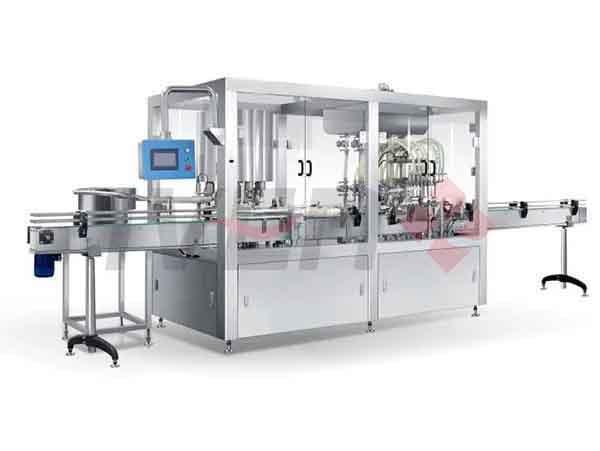
United States Guide to Syrup Filling Machine Buying
For buyers in the United States, a syrup filling and capping machine is not just a piece of packaging equipment. It is a production asset that affects dosing accuracy, product safety, line speed, labor efficiency, validation workload, and long-term operating cost. Whether you produce pharmaceutical syrups, pediatric oral liquids, nutraceutical tonics, herbal formulations, veterinary liquids, or flavored food syrups, the right line must match viscosity, bottle format, closure type, sanitation standard, and regulatory expectations.
The best buying decision usually comes from looking at the full supplier solution rather than only the standalone filler. A complete system may include bottle unscrambling, air cleaning, washing, filling, cap feeding, capping, induction sealing, labeling, cartoning, vision inspection, serialization, and integrated documentation support. In the United States, manufacturers in New Jersey, Illinois, Texas, California, Pennsylvania, and North Carolina often prioritize reliability, validation readiness, spare parts planning, and conformance with FDA-oriented documentation practices.
This guide is designed for B2B buyers comparing syrup filling and capping machine suppliers, especially companies evaluating imports, turnkey lines, OEM customization, and sourcing from China through ports such as Los Angeles, Long Beach, Savannah, Houston, Newark, and Seattle. It covers the market, machine types, applications, industries served, supplier evaluation criteria, and practical sourcing questions.
Direct answer first: the right syrup filling and capping machine for a United States buyer depends on six core factors: product viscosity, output target, bottle and cap format, sanitation class, compliance expectations, and future expansion plans. Low-volume contract manufacturers may need a servo-driven monoblock with quick change parts. Mid-size pharmaceutical plants may prefer a linear line with robust cleaning access and electronic batch control. High-volume producers often choose rotary systems for speed and reduced container handling variability.
From a sourcing perspective, machine selection should begin with the packaged product, not the equipment catalog. Buyers should define fill range, bottle sizes, neck finish, cap torque range, product foam tendency, suspended particles, cleanroom requirements, and target OEE. They should also specify whether the machine must support child-resistant caps, tamper-evident closures, aluminum ROPP caps, screw caps, measuring cup caps, or plug-plus-cap combinations.
In the United States market, buyers are also increasingly looking at line digitalization, recipe management, audit trail capability, and compatibility with plant MES or ERP systems. This matters especially for pharmaceutical, nutraceutical, and medical liquid manufacturers that need batch integrity and easier review during audits.
Buying FactorWhy It MattersTypical U.S. Buyer PriorityRisk if IgnoredViscosity rangeDetermines piston, pump, or flowmeter filling choiceHighUnderfill, overflow, unstable accuracyContainer formatAffects guides, star wheels, and change partsHighJams and slow changeoversClosure typeImpacts capping head design and torque controlHighLeaks and failed seal integrityValidation documentsSupports regulated manufacturingVery highLong commissioning delaysLine speed targetShapes machine architecture and budgetingHighCapacity bottlenecksService supportInfluences uptime and spare parts responseVery highExtended downtimeThe table above shows why buyers should rank requirements before requesting quotations. A lower purchase price can quickly become expensive if format changeovers are difficult, torque consistency is weak, or documents do not satisfy internal QA.
A supplier solution is broader than a single filling and capping unit. For industrial buyers, it usually includes engineering consultation, process evaluation, layout planning, equipment customization, FAT, installation, commissioning, training, validation support, and after-sales service. In other words, the value lies in how well the machine integrates into your production environment and quality system.
For example, a pharmaceutical syrup line may include a bottle feeding table, bottle washing or air rinsing unit, volumetric filling station, cap sorting elevator, cap placement, capping, induction sealing, labeling, cartoning, and coding. Some projects also require cleanroom-compatible enclosures, laminar protection, reject stations, checkweighing, and SCADA-based production monitoring.
Strong supplier solutions also include engineering depth. Companies that understand pharmaceutical and medical packaging can better support line balancing, CIP/SIP strategy where needed, documentation structure, and compliance expectations. Buyers seeking a broader project scope often review turnkey pharmaceutical engineering capabilities rather than only individual machine brochures.
For United States facilities, a good solution should also address practical local operating realities: 480V/60Hz power standards, OSHA-conscious guarding, bilingual documentation where needed, remote troubleshooting availability across time zones, and spare part stocking plans that reduce lead time risks after ocean freight arrives through ports like Newark or Houston.
Solution ElementIncluded ScopeBuyer BenefitCommon Gap in Low-End OffersProcess assessmentProduct behavior, foaming, viscosity, dosing methodBetter fit-to-processCatalog-only recommendationLayout engineeringLine integration and utility planningSmoother installationNo plant-specific designCustomizationBottle, cap, and recipe adaptationFaster start-upLimited format flexibilityValidation packageDQ, FAT, SAT, IQ, OQ supportAudit readinessMinimal documentationTrainingOperators, maintenance, QA usersStable line performanceBasic handover onlyAfter-sales supportRemote support, parts, field serviceLower downtimeSlow response structureThe difference between a machine vendor and a solution partner often appears after shipment. Installation, debugging, recipe setup, and operator training are where many projects either gain momentum or lose months.
Demand in the United States continues to be driven by pharmaceutical oral liquid growth, nutraceutical expansion, contract packaging, shorter product runs, and stronger traceability expectations. Buyers are also replacing older pneumatic platforms with servo-controlled systems to improve repeatability, data collection, and maintenance performance.
Another major trend is format diversity. Producers increasingly need one line to handle multiple bottle sizes, seasonal SKUs, promotional runs, and private-label contracts. This favors modular machine designs, tool-less changeovers, digital recipe storage, and quick-adjust cap handling systems.
By 2026, three market shifts are likely to intensify. First, more buyers will require production data integration for batch reporting and predictive maintenance. Second, sustainability expectations will push machine designs that minimize product loss, compressed air consumption, and material waste. Third, policy and compliance pressure will support demand for better documentation, electronic records support, and tamper-evidence verification.
var ctx1 = document.getElementById(‘lineChartMarket’).getContext(‘2d’);var chart1 = new Chart(ctx1, {type: ‘line’,data: {labels: [‘2021’, ‘2022’, ‘2023’, ‘2024’, ‘2025’, ‘2026’],datasets: [{label: ‘U.S. syrup line demand index’,data: [82, 88, 95, 104, 113, 123],borderColor: ‘rgb(54, 162, 235)’,backgroundColor: ‘rgba(54, 162, 235, 0.15)’,fill: false,tension: 0.3}]},options: {responsive: true,maintainAspectRatio: false}});The line chart above illustrates a realistic growth pattern in demand for syrup filling and capping equipment in the United States, reflecting stronger investment from regulated oral liquid manufacturers and diversified consumer health brands.
var ctx2 = document.getElementById(‘barChartIndustry’).getContext(‘2d’);var chart2 = new Chart(ctx2, {type: ‘bar’,data: {labels: [‘Pharma’, ‘Nutraceutical’, ‘Food Syrup’, ‘Veterinary’, ‘Contract Pack’, ‘Herbal’],datasets: [{label: ‘Estimated 2025 demand share (%)’,data: [32, 21, 18, 11, 10, 8],backgroundColor: [‘rgb(255, 99, 132)’,’rgb(255, 159, 64)’,’rgb(255, 205, 86)’,’rgb(75, 192, 192)’,’rgb(54, 162, 235)’,’rgb(153, 102, 255)’]}]},options: {responsive: true,maintainAspectRatio: false}});This bar chart shows how demand is distributed by sector. Pharmaceutical and nutraceutical segments remain the strongest demand centers, especially in manufacturing clusters around New Jersey, Pennsylvania, Indiana, and California.
var ctx3 = document.getElementById(‘areaChartTrend’).getContext(‘2d’);var chart3 = new Chart(ctx3, {type: ‘line’,data: {labels: [‘2021’, ‘2022’, ‘2023’, ‘2024’, ‘2025’, ‘2026’],datasets: [{label: ‘Manual or semi-auto preference’,data: [38, 34, 29, 24, 20, 17],borderColor: ‘rgb(201, 203, 207)’,backgroundColor: ‘rgba(201, 203, 207, 0.25)’,fill: true,tension: 0.3},{label: ‘Automated servo line preference’,data: [42, 47, 53, 60, 67, 73],borderColor: ‘rgb(75, 192, 192)’,backgroundColor: ‘rgba(75, 192, 192, 0.2)’,fill: true,tension: 0.3}]},options: {responsive: true,maintainAspectRatio: false}});The area chart highlights the shift from manual and semi-automatic setups toward automated servo-based lines. This trend is especially strong in labor-constrained regions and among companies with growing validation and traceability obligations.
Machine type should always be selected based on syrup characteristics and operational targets. The most common equipment categories include semi-automatic fillers, linear automatic fillers, monoblock filling-capping units, and rotary high-speed systems. Filling technology may rely on piston dosing, peristaltic pumps, magnetic pumps, lobe pumps, gear pumps, or mass-flow systems depending on product rheology and cleanability demands.
For viscous and sugar-rich syrups, piston filling remains popular because of its stable volumetric dosing and broad compatibility. For sensitive pharmaceutical oral liquids requiring easier cleaning and reduced cross-contamination risk, peristaltic or servo pump solutions may be preferred. Rotary systems are favored when throughput is high and bottle geometry is standardized.
Machine TypeTypical OutputBest ForAdvantagesLimitationsSemi-automatic filler and capper10-30 bottles/minLab, pilot, start-up runsLow investment, flexibleHigher labor dependencyLinear automatic line30-120 bottles/minMulti-SKU productionEasy changeover, accessibleLarger footprintMonoblock filling-capping unit40-150 bottles/minCompact regulated productionReduced handling, compact designFormat limits if poorly designedRotary filler-capper120-300+ bottles/minHigh-volume plantsHigh efficiency, consistent flowHigher capexPeristaltic dosing systemLow to medium speedHigh cleanliness productsMinimal product contact pathTubing wearPiston dosing systemMedium to high speedViscous syrup productsStrong filling precision for thick liquidsMore cleaning effortThis table helps buyers connect output needs with machine architecture. It is common for United States buyers to choose a linear or monoblock solution first, then step into rotary technology once SKU diversity narrows and annual volume increases.
Specification ItemCommon RangeSelection ImpactNotesFill volume30 ml to 1000 mlDetermines dosing hardwareConfirm min and max with accuracy dataAccuracy±0.5% to ±1%Critical for compliance and cost controlTest with actual product viscosityBottle materialsPET, HDPE, glassAffects gripping and transportGlass often needs gentler handlingCap typeScrew, CRC, ROPP, flip-topChanges capping head designTorque verification recommendedChangeover time15-90 minutesImpacts uptime in multi-SKU plantsTool-less design preferredControl systemPLC + HMI + servoAffects usability and repeatabilityRecipe storage is highly usefulWhen reviewing specifications, buyers should insist on performance evidence with products close to their own syrup profile. Water testing alone is not enough if the liquid is viscous, sugary, foamy, or particle-bearing.
Syrup filling and capping lines are used wherever liquid products must be dispensed accurately into bottles and securely sealed for transport, storage, and end-user dosing. The most common applications include oral cough syrups, pediatric formulations, vitamin tonics, digestive syrups, iron supplements, herbal extracts, and veterinary solutions.
Application details matter because product behavior changes equipment needs. A sugar-heavy cough syrup may require heated holding, anti-drip nozzles, and stronger cleanability planning. A nutraceutical liquid with botanical sediment may need agitation upstream and nozzle design that handles suspended solids. A child-resistant cap format introduces a separate torque profile and cap feeding challenge.
ApplicationProduct CharacteristicsTypical Bottle SizeSpecial Line RequirementCough syrupViscous, often sweetened60-200 mlAnti-drip filling and CRC cappingPediatric oral liquidAccuracy-critical30-120 mlHigh precision dosing and documentationVitamin tonicMedium viscosity100-500 mlFlexible multi-size changeoverHerbal syrupPossible sediment100-250 mlAgitation and wider nozzle pathVeterinary oral liquidWide dosage range100-1000 mlBroad fill range capabilityFood flavor syrupHigh throughput demand250-1000 mlFast rotary line optionThe table above shows how applications drive mechanical and control choices. Buyers should share actual product samples during FAT planning so nozzle behavior, bubble control, and closure consistency can be verified under realistic conditions.
Although “syrup” often suggests pharmaceuticals first, suppliers typically serve multiple industries. In the United States, many machine manufacturers and import buyers operate across pharma, nutraceutical, food and beverage, veterinary, cosmetic liquid, and contract packaging segments. The challenge is that each industry uses different language for sanitation, quality, and performance.
Pharmaceutical users generally need stronger documentation, repeatability, and validation support. Nutraceutical and OTC liquid brands often prioritize flexibility and fast launches. Food syrup producers usually focus on throughput, washdown resilience, and bottle format variety. Contract packers need the broadest adaptability because one line may process different brands weekly.
var ctx4 = document.getElementById(‘comparisonChartSupplier’).getContext(‘2d’);var chart4 = new Chart(ctx4, {type: ‘bar’,data: {labels: [‘Compliance’, ‘Customization’, ‘Throughput’, ‘Documentation’, ‘Lifecycle Service’, ‘Format Flexibility’],datasets: [{label: ‘High-value supplier solution score’,data: [95, 90, 88, 93, 91, 87],backgroundColor: ‘rgb(153, 102, 255)’},{label: ‘Basic equipment-only offer score’,data: [62, 55, 70, 48, 45, 58],backgroundColor: ‘rgb(255, 159, 64)’}]},options: {responsive: true,maintainAspectRatio: false}});This comparison chart illustrates why many United States buyers increasingly prefer solution-oriented suppliers over low-cost equipment-only providers. The difference becomes significant in documentation, service continuity, and changeover flexibility.
In trade hubs like Chicago, Atlanta, Dallas, and Philadelphia, buyers often compare domestic integrators with overseas OEMs. Domestic suppliers may offer shorter visit times, while experienced international manufacturers can provide stronger cost-performance ratios and deeper customization if project management is handled well.
The best selection process is structured and evidence-based. Start by writing a user requirement specification covering product type, viscosity, target accuracy, bottle dimensions, cap formats, output goals, cleaning method, line layout constraints, utility standards, and documentation needs. Then compare suppliers using the same requirement set.
Buyers should evaluate at least five dimensions: technical fit, compliance fit, manufacturing quality, service depth, and total cost of ownership. Capital price alone is a weak decision metric. A machine with better servo control, stronger stainless fabrication, and faster parts availability may deliver lower cost over five to ten years.
When assessing supplier technology, pay attention to dosing consistency, HMI usability, recipe management, sensor quality, reject logic, cap feed stability, and accessibility for cleaning and maintenance. During quotation review, ask whether the supplier can support line integration, validation documents, remote diagnostics, and commissioning schedules aligned with your project milestones.
Buyers interested in exploring available systems can review a broader equipment range through the supplier product portfolio and compare line concepts before final URS release.
Evaluation CriterionQuestions to AskStrong Supplier SignWarning SignTechnical fitHas the machine run similar syrup products?Provides tested references and dataOnly generic claimsCompliance fitCan documents support FDA-oriented projects?Structured FAT/IQ/OQ supportManuals onlyBuild qualityWhat materials and component brands are used?Stable sourcing and traceabilityUnclear component listCustomizationCan it support our bottle and cap range?Detailed change-part designStandard-only approachService supportHow are parts and remote support handled?Defined response processNo support timelineTotal ownership costWhat is the expected maintenance burden?Transparent lifecycle estimatePrice-only proposalThe checklist above is especially useful for procurement teams, engineering managers, and QA leaders reviewing proposals together. It helps prevent costly misalignment between purchasing goals and production realities.
OEM customization is often the difference between a workable line and a highly efficient line. In practice, customization may include bottle guides, nozzles, cap sorters, torque head design, drip management, HMI language, recipe structure, reject handling, vision inspection, and integration with upstream preparation or downstream cartoning systems.
Case Example 1: A United States contract packer handling OTC syrups and vitamin liquids needed one line for 60 ml, 120 ml, and 240 ml PET bottles with both standard screw caps and child-resistant closures. The supplier designed a servo-driven monoblock with quick-change star wheels, dual capping modules, and recipe-based torque control. Result: reduced changeover time, lower operator adjustment error, and improved daily scheduling flexibility.
Case Example 2: A pharmaceutical manufacturer needed a line for sugar-rich pediatric syrup in amber glass bottles. The project required gentle handling, precise fill control, and validation-oriented documentation. Custom anti-drip nozzles, star wheel handling, and a structured FAT package helped the plant reduce qualification delays and avoid bottle breakage during ramp-up.
Case Example 3: A nutraceutical exporter serving the East Coast wanted a compact line that could fit into an existing room with low headroom while still supporting future serialization. The supplier customized frame dimensions, reserved communication ports, and phased the project so the base filling-capping line could be installed first and upgraded later.
These cases show that customization does not always mean radical redesign. Often it means thoughtful adaptation of proven machine modules to specific production, space, or regulatory constraints.
Sourcing from China can be cost-effective and technically successful when managed with proper supplier qualification. The key is to treat the process as an engineering and project management task, not only a purchasing exercise. Buyers should shortlist manufacturers with proven export experience, regulated-industry references, clear documentation capability, and stable manufacturing infrastructure.
Step one is supplier screening. Review company background, installed base, export markets, technical specialization, and project examples. Step two is technical alignment using your URS. Step three is drawing review, component confirmation, FAT planning, and contract definition for documents, acceptance criteria, and spare parts. Step four is logistics planning, including crating, marine insurance, customs classification, and inland transport after arrival at ports such as Los Angeles, Long Beach, Oakland, Houston, Savannah, or Newark.
For many United States buyers, a Chinese source is attractive when the supplier offers integrated engineering depth rather than only fabrication. Shanghai IVEN Pharmatech Engineering, for example, is known in the pharmaceutical equipment field for combining filling and packaging knowledge with water systems, logistics, and broader factory engineering capabilities. Its technology strengths include experience in regulated production environments, multiple technical patents, and integrated line design thinking shaped by pharmaceutical applications. Buyers who want to understand this background can review the company’s corporate profile and engineering focus.
Manufacturing capability also matters when sourcing internationally. A supplier with specialized production plants, standardized fabrication methods, and experience delivering large numbers of lines is generally better positioned to control quality and schedule. This becomes important when United States buyers need custom bottle handling, documentation discipline, and durable stainless construction suitable for long service life.
Service capability is the third pillar. International sourcing works best when the supplier can provide remote technical support, installation guidance, training, commissioning assistance, and lifecycle service planning. Buyers should ask who handles SAT, how quickly remote troubleshooting is available, and what spare parts strategy is recommended for the first 12 to 24 months. A direct conversation through the supplier’s United States project inquiry channel can clarify response paths and project communication methods.
Sourcing StepBuyer ActionKey DocumentMain Risk to ControlSupplier screeningVerify background and referencesVendor qualification formInexperienced exporterURS alignmentDefine product and line needsUser requirement specificationWrong machine architectureTechnical proposal reviewConfirm scope and exclusionsTechnical quotationHidden cost gapsFAT planningSet test criteria and samplesFAT protocolUnclear acceptance standardLogistics and customsPlan shipment and entryPacking list and HS codeDelivery delayInstallation and SATCoordinate utilities and trainingSAT/IQ documentsSlow start-upThe sourcing framework above reduces risk at every stage. Buyers should also plan for voltage compatibility, PLC language settings, UL-sensitive components when applicable, and spare wear parts for the first year of operation.
What filling method is best for viscous syrup?Piston filling is commonly preferred for viscous syrup because it handles thicker products well and provides stable volume control. However, servo pump solutions may be better when flexibility and cleaning efficiency are top priorities.
Can one machine run multiple bottle sizes?Yes. Many modern lines are designed for multiple formats using change parts and recipe-based settings. Buyers should verify changeover time, operator steps, and whether tools are required.
How accurate are syrup filling machines?Accuracy often ranges from about ±0.5% to ±1%, depending on volume, product consistency, and dosing technology. Always request test data using a product close to your own formulation.
What cap types can be handled?Most systems can be configured for screw caps, child-resistant caps, tamper-evident caps, measuring cup caps, and some specialty closures. The capping head and cap feeder must be matched carefully to the closure design.
Do United States buyers need validation documentation?For pharmaceutical and many nutraceutical projects, yes. FAT records, manuals, electrical drawings, parts lists, and IQ/OQ support can significantly shorten commissioning and internal approval timelines.
How long does sourcing from China usually take?Lead time depends on customization level, but many projects require several months for engineering, fabrication, FAT, shipping, customs clearance, and installation. Planning should include port congestion risk and domestic trucking time.
Is a turnkey line better than buying separate machines?Usually yes, especially when integration, controls consistency, and project accountability matter. A single-source approach can reduce interface problems between filling, capping, labeling, and packaging stages.
What should be included in a spare parts package?Recommended start-up packages often include seals, nozzles, sensors, belts, wear tubing where relevant, torque elements, and critical electrical components. Ask for a list ranked by urgency and lead time.
What future trends should buyers prepare for in 2026?Expect stronger demand for digital batch data, predictive maintenance tools, sustainable utility consumption, easier cleaning validation, and more adaptable lines for smaller and more frequent SKU changes.
How do I start supplier discussions efficiently?Prepare a brief with product type, bottle drawings, cap samples, target speed, fill range, compliance expectations, and layout limits. This allows suppliers to provide meaningful technical proposals instead of generic quotes.
For buyers building or upgrading syrup packaging capacity in the United States, the most reliable path is to select a partner that can combine sound equipment design with manufacturing depth and lifecycle support. That means evaluating technical capabilities, production quality, and service response as a complete package rather than treating the purchase as a single machine transaction.
If your team is comparing machine concepts, discussing a new syrup line, or planning a broader oral liquid facility upgrade, suppliers with integrated engineering experience can often reduce risk across layout, utilities, equipment selection, qualification, and start-up. For broader project consultation, line selection, or custom solution discussions, buyers can explore the supplier’s engineering resources, turnkey capabilities, and direct contact channels through the links provided above.