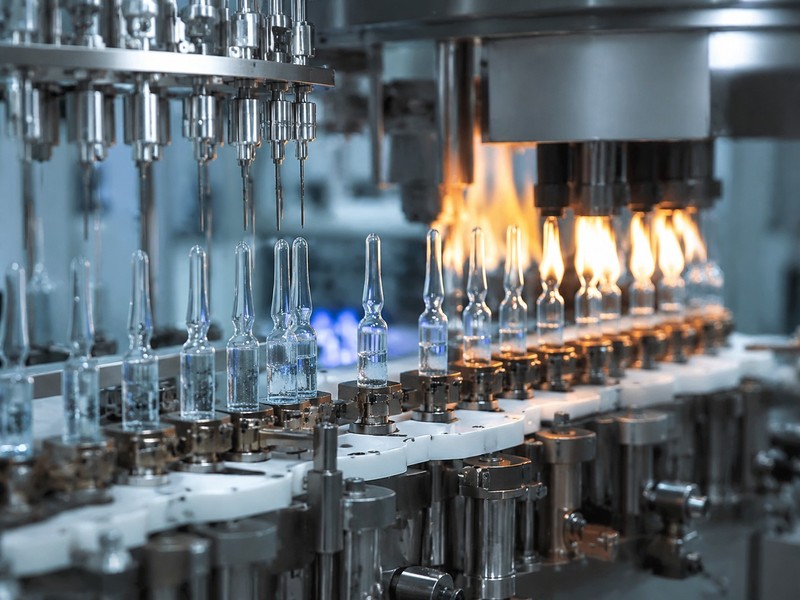
Ampoule Filling Machines for the United States Market
In the United States, an ampoule filling machine is a critical sterile manufacturing system used to fill and seal liquid medicines into glass ampoules with high accuracy, repeatability, and regulatory control. Large pharmaceutical companies, CDMOs, hospital supply manufacturers, and specialty injectable producers typically evaluate this equipment when adding new aseptic capacity, replacing aging lines, or upgrading facilities to meet current FDA expectations, data integrity standards, and long-term production efficiency goals.
Because sterile injectables remain one of the most tightly regulated product categories in the U.S., the choice of ampoule filling technology affects far more than speed alone. It influences particulate control, operator intervention, cleanroom design, container closure integrity, batch traceability, media fill performance, line clearance, maintenance strategy, and total cost of ownership. For plants operating in major pharmaceutical hubs such as New Jersey, Boston, Raleigh-Durham, San Diego, Houston, and the Chicago area, the right solution can support both domestic supply security and export readiness through logistics gateways like the Port of Los Angeles, Port of Long Beach, Port of New York and New Jersey, and Savannah.
This guide explains what ampoule filling machines do, where they fit in modern pharmaceutical production, which types are available, how they compare with alternative sterile packaging technologies, what the U.S. market is doing through 2026 and beyond, and how to evaluate manufacturers and suppliers with a practical investment lens.
Quick Answer: Why ampoule filling machines matter in U.S. pharmaceutical expansion

The short answer is simple: an ampoule filling machine is one of the most important assets a sterile pharmaceutical plant can buy when it needs reliable small-volume liquid filling under strict compliance conditions. In the United States, these systems are used for injectable drugs, diagnostic reagents, specialty hospital products, and other sterile liquids that require precise dosage and flame-sealed glass packaging. They are evaluated not only by large pharmaceutical companies, but also by contract manufacturers, biotech firms scaling commercial output, and medical product companies building resilient domestic capacity.
Compared with manual or semi-automatic approaches, a modern automatic ampoule filling line integrates washing, depyrogenation, filling, nitrogen purging where required, and sealing into a validated process chain. That integration improves throughput, reduces human error, and supports reproducible batch documentation. For U.S. buyers, the discussion usually centers on FDA cGMP alignment, aseptic design, 21 CFR Part 11-ready data systems, line flexibility, spare parts availability, and lifecycle support.
For companies seeking broader sterile manufacturing support, it is also common to assess the machine supplier’s engineering background, turnkey capabilities, and long-term validation support. Buyers often prefer partners that can support process flow, utilities, documentation, and project execution rather than selling a stand-alone machine only. A good example is an international pharmaceutical engineering company with extensive sterile processing experience that supports equipment selection within a broader compliance and plant planning framework.
What Is ampoule filling machine and What Is It Used For in Pharmaceutical Production?

An ampoule filling machine is a sterile packaging system designed to dose liquid products into preformed glass ampoules and then hermetically seal them, usually by flame. Ampoules are widely used for injectable solutions because they offer excellent barrier protection, visible integrity, and single-dose convenience. The machine can be configured for small laboratory-scale batches, medium commercial production, or high-speed industrial lines depending on capacity requirements.
In a typical pharmaceutical process, empty ampoules move through several stages: container feeding, washing, sterilization or depyrogenation tunnel transfer, precision filling, optional inert gas purging, neck preheating, flame sealing, cooling, visual inspection integration, and downstream labeling or cartoning. Advanced systems can include non-contact sensors, no-ampoule-no-fill logic, rejected container collection, HMI recipe management, batch recording, and integration with MES or SCADA platforms.
In U.S. pharmaceutical production, ampoule filling lines are commonly used for:
- Sterile injectable drugs for hospital and clinic use
- Pain management and emergency medicines
- Local anesthetics and specialty formulations
- Diagnostic solutions and laboratory reagents
- Biologically derived liquids that remain stable in ampoules
- Products intended for domestic distribution and export
Ampoules remain relevant because certain formulations benefit from glass compatibility, oxygen protection, and tamper-evident single-dose presentation. Although vials and prefilled syringes receive more attention in some therapeutic areas, ampoules continue to serve cost-sensitive and high-stability applications where sterile integrity and product visibility are important.
| Production Stage | What the Machine Does | Why It Matters | Typical U.S. Concern |
|---|---|---|---|
| Ampoule Feeding | Orients and transfers empty containers into the line | Stable handling reduces breakage and stoppages | Line efficiency and operator safety |
| Washing | Cleans internal and external surfaces | Removes particles and residues before sterilization | Contamination control |
| Depyrogenation | Uses a tunnel to sterilize and depyrogenate ampoules | Critical for aseptic fill readiness | Validation and thermal mapping |
| Filling | Dispenses precise liquid volumes | Ensures dose accuracy and reduces product loss | In-process control and yield |
| Nitrogen Purging | Displaces oxygen when required | Protects oxidation-sensitive formulations | Product stability |
| Flame Sealing | Melts and seals the ampoule neck | Provides final closure integrity | CCIT performance and visual quality |
| Inspection Interface | Links to visual or automated inspection systems | Supports rejection of defects | Quality release and serialization flow |
The table above shows why the ampoule filling machine is not just a filler. It is a process-critical system tied directly to sterility assurance, yield, and market release reliability.
Main Applications and Benefits of ampoule filling machine in Modern Pharmaceutical Manufacturing

The primary application of an ampoule filling machine is sterile liquid packaging, but the equipment creates value in several operational areas that matter to U.S. manufacturers. It improves batch consistency, reduces manual touchpoints, supports facility modernization, and helps plants scale output without redesigning the entire cleanroom around labor-intensive workflows.
In modern pharmaceutical manufacturing, the strongest benefits are usually seen in six categories: compliance, accuracy, throughput, flexibility, labor efficiency, and product protection. For companies serving hospitals, government procurement programs, or multinational distribution channels, these factors can directly influence supply reliability and contract competitiveness.
| Application Area | Example Product | Benefit of Ampoule Format | Benefit of Automated Filling |
|---|---|---|---|
| Hospital Injectables | Analgesics, emergency drugs | Single-dose, tamper-evident packaging | Higher output and traceable batches |
| Specialty Pharma | Niche sterile formulations | Good stability in glass | Accurate low-volume filling |
| Diagnostic Reagents | Lab and testing liquids | Controlled unit presentation | Reduced variation between containers |
| Export Manufacturing | International supply products | Widely accepted packaging standard | Documentation-ready production data |
| Government or Tender Supply | High-volume essential medicines | Cost-effective primary packaging | Scalable and efficient production |
| Contract Manufacturing | Multi-client sterile fills | Format flexibility for various SKUs | Fast recipe changeovers and controls |
| Emergency Capacity Expansion | Shortage-response products | Rapid deployment for standard doses | Shorter ramp-up with automation |
U.S. facilities also value the ability to configure lines around market-specific needs. A New Jersey CDMO may prioritize rapid batch turnover and digital records. A Texas injectable manufacturer may focus on robustness, utilities efficiency, and easier maintenance staffing. A California biotech commercializing a specialized liquid may place greater weight on gentle product handling, small-batch precision, and future expansion options.
From an operational standpoint, automated ampoule lines can reduce rejected fills, improve flame-seal consistency, and support continuous monitoring of machine parameters. When coupled with isolators or restricted access barrier systems, they may also reduce operator exposure and contamination risk. This becomes especially important for potent compounds or aseptic environments with limited allowable interventions.
The chart highlights where buyer demand is strongest in the U.S. market. Hospital injectables and CDMO sterile fill operations remain the largest decision drivers for ampoule line investments, while diagnostics and specialty pharma continue to create meaningful niche demand.
Key Types, Models and Technical Options for ampoule filling machine
Ampoule filling machines are not one-size-fits-all. The right configuration depends on container size, product viscosity, line speed, sterility strategy, facility layout, utility availability, and the level of automation expected by the plant. U.S. buyers generally compare compact monoblock units, modular integrated lines, and high-speed industrial systems, each with distinct strengths.
The most common classifications include:
- Semi-automatic ampoule filling machines for development or small-batch production
- Automatic rotary or linear ampoule filling and sealing machines
- Integrated washing, sterilizing, filling, and sealing lines
- High-speed sterile lines for large-volume commercial production
- Special configurations for oxidation-sensitive, light-sensitive, or viscous products
| Machine Type | Typical Capacity | Best Use Case | Main Advantage |
|---|---|---|---|
| Semi-automatic | Low | R&D, pilot, hospital compounding support | Lower upfront cost and flexibility |
| Compact automatic | Low to medium | Smaller commercial plants | Space-saving and easier installation |
| Integrated sterile line | Medium | Validated pharmaceutical production | Balanced compliance and throughput |
| High-speed line | High | Large pharma and large CDMOs | Maximum throughput and efficiency |
| Isolator-compatible line | Medium to high | Advanced aseptic environments | Lower intervention risk |
| Nitrogen-assisted line | Medium | Oxygen-sensitive formulations | Improved product stability |
| Multi-format line | Medium | Manufacturers with varied SKUs | Greater flexibility across ampoule sizes |
Technical options that matter most in the United States include:
- Ceramic piston pumps, peristaltic pumps, or time-pressure filling systems
- Open RABS or closed isolator compatibility
- Recipe storage and audit trail functionality
- Automated reject systems and in-line check weighing
- Vision inspection for ampoule neck and seal quality
- Tooling for multiple ampoule sizes such as 1 ml, 2 ml, 5 ml, and 10 ml
- CIP/SIP readiness where relevant to the process design
Technological capability matters here. Sophisticated suppliers stand out through aseptic engineering know-how, filling accuracy control, digital monitoring, and compliance-oriented design. IVEN Pharmatech Engineering, for example, is recognized in the industry for its experience in pharmaceutical filling systems, water treatment integration, and intelligent logistics. Its technology background includes multiple patents in pharmaceutical equipment and practical familiarity with GMP-oriented project execution, which can be important when a U.S. buyer wants equipment that fits into a larger sterile plant strategy rather than a stand-alone purchase.
| Technical Option | When to Choose It | Operational Impact | Buyer Note |
|---|---|---|---|
| Peristaltic Pump Filling | Frequent product changes | Easy tubing replacement, less cross-contact | Often preferred for flexibility |
| Piston Pump Filling | High accuracy and stable formulations | Excellent repeatability | May require more cleaning attention |
| Isolator Integration | High-containment or high-aseptic assurance | Reduced intervention exposure | Higher CAPEX but strong compliance value |
| RABS Integration | Controlled aseptic production | Improved operator separation | Common step between open and isolator setups |
| Multi-size Tooling | Several ampoule formats | Broader SKU coverage | Check changeover time carefully |
| SCADA/MES Connectivity | Digital batch management | Better traceability and reporting | Important for larger U.S. plants |
| Vision Inspection | Higher cosmetic quality requirements | Improved defect detection | Useful for premium or export products |
The table above shows that the technical “best” option depends on the production model. A highly flexible CDMO may prefer modularity and fast format change, while a dedicated hospital injectable line may prioritize speed and repeatability above all else.
ampoule filling machine vs Alternative Technologies: Which Solution Fits Your Needs?
Many U.S. buyers compare ampoule filling machines with vial filling lines, blow-fill-seal systems, and prefilled syringe platforms. Each has a valid place in sterile manufacturing. The right answer depends on formulation characteristics, target market, user convenience, capital budget, and downstream distribution requirements.
Ampoules offer strong barrier properties and a familiar format for many injectable products, but they are not ideal for every modern therapeutic category. Vials may be more suitable for multi-dose or reconstitution scenarios. Prefilled syringes improve point-of-care convenience but often require higher investment and more specialized components. Blow-fill-seal can offer excellent automation and contamination control for certain products, although format flexibility and product positioning may differ.
| Technology | Primary Strength | Potential Limitation | Best Fit |
|---|---|---|---|
| Ampoule Filling | Single-dose glass integrity and cost efficiency | Glass opening required at use | Standard sterile liquid injectables |
| Vial Filling | Flexible closure and broader product range | More components and closure complexity | Lyophilized or multi-dose products |
| Prefilled Syringe Filling | High user convenience and dosing accuracy | Higher packaging cost | Biologics and self-administration products |
| Blow-Fill-Seal | Integrated forming, filling, sealing | Not ideal for all premium injectable categories | Respiratory, ophthalmic, selected sterile liquids |
| Cartridge Filling | Device compatibility | Narrower use case | Pen injector systems |
| Manual/Semi-manual Fill | Low initial cost | Low throughput and more intervention risk | Very small-scale or development work |
| Contract Outsourcing | No immediate line purchase | Less direct capacity control | Early commercialization or overflow demand |
For U.S. plants deciding between these options, a few practical questions help:
- Does the product require glass ampoule compatibility for stability or market acceptance?
- Will the line serve a single high-volume product or many smaller SKUs?
- Is point-of-care convenience more important than packaging cost?
- Do you need quick internal capacity, or can a CDMO handle launch volumes first?
- How much cleanroom and utility infrastructure already exists?
The comparison chart makes the tradeoff clear. Ampoule lines remain strong where cost-per-unit, sterile control, and straightforward scale matter most. Prefilled syringes dominate convenience, while vials lead on versatility.
Market Overview and Future Trends for ampoule filling machine in Pharmaceutical Manufacturing
The U.S. market for ampoule filling machines is shaped by three overlapping forces: ongoing sterile injectable demand, supply chain localization, and modernization of aging pharmaceutical assets. Over the last several years, many manufacturers have reviewed domestic capacity resilience after shortages and logistics disruptions. That has led to fresh interest in upgrading packaging lines, adding redundant fill-finish capability, and selecting equipment suppliers that can support fast qualification and long equipment life.
Demand is strongest among established injectable producers, hospital supply manufacturers, CDMOs, and companies launching niche or generic sterile liquids. Buyers in the United States also tend to look beyond machine speed toward total project risk: qualification timelines, spare parts response, documentation quality, and FAT/SAT execution matter as much as nominal output.
The line chart above illustrates a realistic growth pattern for U.S. investment interest in ampoule filling capacity. Growth is not explosive, but it is steady, supported by replacement projects, domestic resiliency programs, and demand for efficient sterile fill-finish systems.
Looking toward 2026 and beyond, several trends stand out:
- More digital integration, including electronic batch records, predictive maintenance, and remote diagnostics
- Stronger use of isolators and advanced barrier technologies in aseptic zones
- Greater emphasis on energy efficiency, burner optimization, and utility reduction
- Expansion of multi-format lines to support flexible production schedules
- Increased scrutiny on supplier validation packages and data integrity readiness
- Sustainability-driven interest in efficient HVAC interaction and lower waste rates
- Policy support for resilient domestic pharmaceutical manufacturing
This area chart shows how quickly market expectations are shifting toward automation and digital control. For U.S. buyers, a machine that cannot support modern reporting, alarm handling, recipe management, and audit-ready records may become obsolete well before its mechanical life ends.
Manufacturing capability also plays into future trends. Suppliers with multiple dedicated production bases, stronger fabrication control, and experience across filling, packaging, water systems, and logistics can often support more integrated projects. IVEN Pharmatech Engineering is notable here because it operates several specialized manufacturing plants and supports a broad product range spanning filling lines, pharmaceutical water systems, intelligent conveying, and related sterile infrastructure. That breadth can be valuable when a U.S. project team wants compatibility across multiple utility and packaging systems.
How to Choose a Reliable ampoule filling machine Manufacturer or Supplier
Choosing the right manufacturer is often harder than choosing the machine format. In the United States, the best supplier is rarely the cheapest quote on paper. A reliable partner provides suitable equipment, compliance-ready documentation, realistic schedules, engineering depth, qualification support, and responsive after-sales service.
When evaluating suppliers, U.S. buyers generally look at six categories: regulatory credibility, technical fit, manufacturing quality, project management, service coverage, and lifecycle economics. Factory acceptance tests, reference projects, welding and material standards, software architecture, spare part lead times, and the quality of IQ/OQ support all deserve close review.
| Evaluation Factor | What to Check | Why It Matters | Red Flag |
|---|---|---|---|
| Regulatory Alignment | FDA-oriented documentation, GMP design, traceability | Supports qualification and audit readiness | Generic or incomplete validation package |
| Equipment Design | Materials, aseptic layout, access points, cleaning logic | Impacts product quality and maintenance | Poorly designed intervention zones |
| Manufacturing Quality | Fabrication standards, component sourcing, FAT depth | Determines durability and consistency | Unclear origin of critical components |
| Project Delivery | Lead time realism, installation plan, SAT support | Reduces startup risk | Vague milestone schedule |
| Service Capability | Training, parts, troubleshooting, remote support | Protects uptime after handover | No local or responsive support structure |
| References | Similar sterile projects and customer cases | Confirms practical experience | No relevant pharmaceutical examples |
| Total Cost of Ownership | Utilities, consumables, maintenance, efficiency | Better long-term budgeting | Low purchase price but high operating burden |
Service capability is especially important. Strong suppliers do more than ship equipment. They assist with feasibility analysis, line configuration, documentation, commissioning, operator training, and qualification planning. This is an area where turnkey pharmaceutical engineering support can reduce project friction, particularly when the machine must align with purified water, WFI, clean utilities, or downstream packaging systems.
For U.S. buyers comparing international and domestic suppliers, it is wise to ask how service will be delivered in practice. Will FAT be done at the manufacturing site or with remote witness capability? Who handles on-site commissioning in the United States? How are spare parts stocked? What is the escalation path for software or controls issues? Reliable answers to these questions matter as much as brochure specifications.
Another practical point is supplier transparency. Good manufacturers will openly discuss achievable speed ranges, changeover times, reject rates, and utility requirements. They will also help define user requirement specifications rather than forcing a standard model onto every project. Buyers can review available pharmaceutical equipment categories to understand whether a supplier truly covers the broader sterile processing environment or only a narrow segment.
Investment Cost, Budget Planning and ROI Analysis for ampoule filling machine
Investment cost varies widely depending on throughput, automation level, sterility architecture, and project scope. In the U.S. market, a buyer should budget not only for the machine itself, but also for validation, facility adaptation, utilities, cleanroom integration, spare parts, training, and startup losses during commissioning.
A small or mid-capacity automatic ampoule filling machine may fit into a relatively modest equipment budget, but a fully integrated sterile line with washing, depyrogenation, filling, sealing, barrier systems, and digital connectivity will require a substantially larger capital plan. The economic case should therefore be built around total project return, not equipment price alone.
| Cost Category | Typical Budget Weight | What It Includes | Planning Note |
|---|---|---|---|
| Core Equipment | High | Washer, tunnel, filler, sealer, controls | Main CAPEX line item |
| Barrier/Aseptic Upgrades | Medium to High | RABS, isolator, air handling interfaces | Often essential for risk reduction |
| Utilities and Installation | Medium | Piping, power, gas, exhaust, integration | Can surprise under-budgeted projects |
| Validation and Documentation | Medium | DQ, IQ, OQ, protocols, FAT/SAT records | Important for release readiness |
| Training and Ramp-Up | Low to Medium | Operator training, engineering training, trial batches | Improves launch reliability |
| Spare Parts and Consumables | Low to Medium | Critical wear parts, burners, sensors, tubing | Protects early uptime |
| Downtime Contingency | Low | Startup inefficiency and schedule buffer | Should be planned, not ignored |
ROI is usually driven by one or more of the following:
- Replacing outsourced sterile filling with in-house production
- Increasing output without expanding labor at the same rate
- Reducing rejects, overfill, and glass breakage
- Winning hospital, government, or export contracts with more secure capacity
- Shortening lead times for customers and improving supply reliability
A reasonable ROI model should compare current cost per filled unit versus projected automated cost per unit, while also assigning value to reduced compliance risk and better customer service levels. For some U.S. companies, the machine pays back through direct volume growth. For others, the value lies in margin protection, supply assurance, and audit resilience.
Service capability influences ROI as well. Equipment that is cheaper to purchase but difficult to validate or maintain can become more expensive over time. IVEN Pharmatech Engineering emphasizes lifecycle support, including engineering consultation, installation, commissioning, validation assistance, staff training, and post-handover optimization. For a U.S. buyer, that type of service structure can help compress startup time and reduce hidden implementation costs.
Key Considerations and Potential Risks When Investing in ampoule filling machine
Even a technically strong ampoule filling machine can underperform if the project is poorly scoped. The biggest risks in the U.S. market usually involve mismatch between equipment and product strategy, underestimated validation effort, inadequate cleanroom utility planning, or overreliance on headline speed claims that do not reflect real production conditions.
Common investment risks include:
- Buying too much capacity for actual SKU demand
- Buying too little flexibility for a multi-product future
- Ignoring operator access and maintenance ergonomics
- Underestimating facility modifications and HVAC interactions
- Weak documentation packages that delay qualification
- Insufficient spare parts planning for the first 12 to 24 months
- Lack of local response pathways for service emergencies
| Risk | How It Appears | Impact | Mitigation |
|---|---|---|---|
| Capacity Mismatch | Line is oversized or undersized | Poor ROI or bottlenecks | Model demand by SKU and shift pattern |
| Validation Delays | Late IQ/OQ or incomplete FAT records | Startup postponement | Define document package early |
| Utility Gaps | Inadequate gases, exhaust, or power | Installation changes and cost overruns | Conduct detailed site survey |
| High Changeover Time | Too much downtime between formats | Lower effective capacity | Test changeover during FAT |
| Service Weakness | Slow support response | Longer downtime | Clarify SLA and parts strategy |
| Operator Complexity | System too hard to run consistently | Human error and training burden | Review HMI and standard work design |
| Regulatory Misfit | Design not aligned with U.S. expectations | Inspection risk | Use GMP-focused URS and supplier review |
Another risk is treating the purchase as an isolated machine decision instead of a manufacturing system decision. Ampoule lines must fit the broader flow of components, cleanroom zoning, inspection, secondary packaging, warehousing, and shipment. This is why some buyers favor integrated engineering partners. In complex projects, it may be useful to discuss line planning and project scope with a specialized pharmaceutical engineering team before locking the equipment specification.
For companies considering international sourcing, logistics should also be reviewed carefully. Delivery timing, port routing, customs handling, and site readiness need coordination, especially for large skid-based assemblies moving through gateways such as Los Angeles, Houston, Newark, or Savannah. A machine can arrive on time and still delay production if utilities, room readiness, or protocol approvals are not aligned.
FAQ
1. What products are typically filled on an ampoule filling machine?
Most commonly, sterile injectable liquids, diagnostic solutions, anesthetics, emergency medicines, and other unit-dose liquid formulations that benefit from glass ampoule packaging.
2. Is an ampoule filling machine still relevant in the United States?
Yes. While vials and prefilled syringes are growing, ampoules remain highly relevant for cost-sensitive injectables, hospital products, and stable single-dose liquids.
3. What is the difference between an ampoule filling machine and a vial filling line?
Ampoule systems fill and flame-seal glass containers into a closed unit, while vial lines typically use rubber stoppers and aluminum caps. Vials are more flexible for some products, but ampoules often provide simple, tamper-evident single-dose packaging.
4. Which U.S. buyers usually invest in these machines?
Large pharmaceutical manufacturers, generic injectable companies, hospital supply producers, CDMOs, biotech commercialization teams, and medical product manufacturers entering sterile liquid production.
5. What regulatory standards should the machine support?
For the U.S. market, equipment should be suitable for FDA cGMP expectations and designed with strong documentation, traceability, and validation support. Depending on the project, alignment with EU GMP or WHO GMP may also matter for export.
6. How important is isolator or RABS compatibility?
Very important for many modern aseptic projects. Not every line requires an isolator, but barrier technology can significantly reduce contamination risk and support stronger aseptic control.
7. What should I ask during factory acceptance testing?
Ask to witness speed verification, fill accuracy, reject logic, alarms, changeover time, seal quality, cleaning access, software functions, and documentation readiness.
8. How long should a quality machine last?
A well-built pharmaceutical line made from high-grade stainless steel and supported with proper maintenance can remain in service for many years. Durability becomes more meaningful when paired with upgrades to controls and data systems over time.
9. Can one supplier support more than the machine itself?
Yes. Many buyers prefer partners that can also support utilities, water systems, layout engineering, packaging interfaces, validation, and training. This reduces project coordination risk and can improve speed to production.
10. Why do some U.S. buyers consider IVEN Pharmatech Engineering?
Because it combines sterile equipment experience with broader pharmaceutical engineering capabilities, multi-plant manufacturing resources, and lifecycle service support. Its background in filling lines, water treatment, logistics systems, and turnkey execution can be useful for buyers that need more than a stand-alone machine.
In summary, the best ampoule filling machine for the United States is the one that matches your product portfolio, compliance strategy, growth plan, and service expectations. Buyers that assess the line through the full lens of sterile manufacturing performance, validation quality, and lifecycle support are typically the ones that achieve stronger ROI and fewer surprises during commercialization.

About the Author
We are IVEN Pharmatech Engineering, a team dedicated to delivering turnkey pharmaceutical and medical solutions worldwide. With decades of experience, we specialize in advanced machinery, integrated factory design, and full lifecycle support to help our clients achieve efficient, compliant, and high-quality production.
Share
Related Insights
-
Syringe Manufacturing Machine in the United States
For pharmaceutical and medical device manufacturers in the United States, a syringe manufacturing machine is a strategic production asset used to increase output, improve consistency, and meet strict FDA and cGMP requirements. It supports the high-volume, high-precision production of disposable syringes, syringe components, and in some cases prefilled syringe systems used in injectable drug delivery. Companies expanding capacity in New Jersey, Massachusetts, California, Texas, and North Carolina often evaluate these systems as part of modernization, reshoring, or greenfield investment plans.
In practice, the term can refer to a complete automated production line or to a specific machine within the line, such as injection molding, barrel printing, needle assembly, siliconization, inspection, packaging, or prefilled syringe filling equipment. The right solution depends on whether the buyer produces empty disposable syringes, sterile consumables, or finished pharmaceutical presentations. For buyers planning a new facility or a capacity upgrade, it is important to combine equipment selection with layout, validation, utilities, automation, and regulatory planning from the start.
For organizations looking for a broader engineering partner rather than only a standalone machine, IVEN Pharmatech Engineering is known internationally for integrated pharmaceutical and medical device projects, including production systems built to align with EU GMP, US FDA cGMP, WHO GMP, and PIC/S expectations.
A syringe manufacturing machine is a specialized industrial system designed to produce syringe barrels, plungers, gaskets, needle assemblies, safety features, or complete syringe products with repeatable precision. In the United States, these systems are evaluated not only for speed and cost, but also for traceability, cleanroom compatibility, data integrity, validation readiness, and long-term service support.
Large pharmaceutical companies, contract development and manufacturing organizations, and medical consumable manufacturers typically use these systems when they need to:
From a business standpoint, the machine is rarely purchased in isolation. U.S. buyers often consider the full project scope: facility design, purified water and clean utilities, environmental monitoring, sterile transfer logic, automated conveyance, warehouse integration, and IQ/OQ/PQ documentation. This is where turnkey capabilities can become valuable, especially for investors developing new lines near pharmaceutical clusters such as Newark, Philadelphia, Raleigh-Durham, Indianapolis, and San Diego.
At its simplest, a syringe manufacturing machine is used to create the physical syringe or to prepare it for pharmaceutical use. However, in regulated production, the system normally belongs to one of two categories: medical consumables manufacturing or pharmaceutical finishing.
For medical consumables manufacturing, the machine may produce empty sterile or non-sterile syringes through plastic molding, assembly, printing, lubrication, leak testing, and packaging. These products are then supplied to hospitals, distributors, or downstream pharmaceutical companies.
For pharmaceutical finishing, the machine is often part of a prefilled syringe line that washes or receives nested components, performs filling under aseptic conditions, stoppering, plunger insertion, inspection, labeling, and final packaging. This second category is highly relevant in biologics, vaccines, anticoagulants, ophthalmics, and specialty injectables.
The production flow can include the following operations:
Production StepMain FunctionTypical OutputKey Control PointCommon U.S. RequirementBusiness ImpactInjection moldingForms barrel or plunger componentsHigh-precision plastic partsDimensional accuracyDocumented process capabilityReduces scrap and reworkPrinting/markingAdds graduations and brandingReadable barrel scaleInk adhesion and legibilityTraceability standardsSupports product identityNeedle assemblyAttaches needle or hubReady-to-use componentBond integrityProcess validationImproves safety and performanceSiliconization/lubricationImproves plunger glideSmooth actuationCoating consistencyMaterial compatibility reviewEnhances user experienceInspectionChecks defects and fitConforming productsVision system sensitivityElectronic batch recordsPrevents complaintsPackagingPacks sterile or bulk productsTransport-ready shipmentSeal integrityLabel complianceProtects distribution qualityThe table above shows why buyers should view the machine as part of a controlled manufacturing ecosystem. Performance is not measured by speed alone. It is measured by yield, contamination control, downtime, maintenance access, changeover efficiency, and the ability to pass customer and regulatory audits.
Companies planning a broader plant project often assess equipment together with clean utilities and facility engineering. Integrated project support can be especially useful when deadlines are linked to product launches, hospital tenders, or U.S. government procurement schedules. Buyers comparing complete factory solutions can review turnkey pharmaceutical engineering capabilities when considering a full plant or major line expansion.
Demand in the United States is driven by a mix of clinical need, domestic manufacturing policy, and market preference for unit-dose injectable delivery. Syringe systems are used in general hospital supply, insulin and chronic care, vaccination campaigns, biologics, emergency medicine, contrast media, and contract packaging programs.
Key applications include:
The benefits of modern automated lines are substantial. They reduce operator contact, standardize quality, support 21 CFR Part 11 compatible data workflows, and allow faster scaling during demand spikes. They also help domestic producers compete with imported products by lowering unit labor cost and improving OEE.
Application SegmentTypical ProductPrimary BuyerMain Benefit of AutomationRegulatory PriorityGrowth Outlook in U.S.Hospital consumablesStandard disposable syringeMedical device makerLower cost per unitQuality consistencyStable high volumeSafety devicesRetractable or shielded syringeHealthcare supplierPrecise assemblyUser safety performanceStrongVaccinesPrefilled syringePharma manufacturerAseptic throughputSterility assuranceStrongBiologicsGlass or polymer PFSSpecialty pharmaGentle handling and accuracyContainer-closure integrityVery strongContract manufacturingMulti-format syringe linesCDMOFlexible changeoverDocumentation readinessGrowingDiagnosticsSpecial-use syringe componentLab consumables companyRepeatable dimensionsMaterial complianceModerateAnother advantage is resilience. Following recent supply disruptions, U.S. healthcare buyers increasingly prefer local or regional supply capability, especially for critical injectables and consumables. Plants located near major logistics routes such as the Port of New York and New Jersey, Port of Savannah, Port of Houston, or Los Angeles/Long Beach can support both domestic distribution and imported raw material flow.
var ctxLine = document.getElementById(‘lineChartMarket’).getContext(‘2d’);var lineChartMarket = new Chart(ctxLine, { type: ‘line’, data: { labels: [‘2021’, ‘2022’, ‘2023’, ‘2024’, ‘2025’, ‘2026’], datasets: [{ label: ‘Estimated U.S. syringe line investment index’, data: [68, 74, 82, 91, 103, 118], borderColor: ‘rgb(54, 162, 235)’, backgroundColor: ‘rgba(54, 162, 235, 0.15)’, fill: false, tension: 0.3 }] }, options: { responsive: true, maintainAspectRatio: false }});The chart illustrates the practical growth trend seen in U.S. investment interest, especially where injectable therapies and domestic device capacity continue to expand.
There is no single universal machine. Buyers should identify the precise product architecture, output target, sterility level, and packaging format before selecting a model. Common categories include component manufacturing equipment, assembly lines, and prefilled syringe processing lines.
Important technical options include all-electric servo motion, inline vision inspection, robot loading, cleanroom enclosure design, MES connectivity, recipe-based changeover, automated reject handling, and mold cavity monitoring. For aseptic or high-purity use, isolator integration or restricted access barrier configurations may also be relevant.
Machine TypeTypical UseOutput RangeBest ForKey OptionBuyer NoteInjection molding machineBarrels, plungers, capsVery high volumeComponent producersCavity monitoringFocus on mold precisionSyringe assembly linePart joining and final assemblyHigh volumeDisposable syringe makersVision inspectionCheck flexibility for sizesNeedle mounting lineHub and needle integrationMedium to highSafety and standard syringesAdhesive curing controlCritical for bond qualitySterilization-compatible packaging lineTray or pouch packingHigh volumeSterile product manufacturersSeal verificationConfirm packaging validationPrefilled syringe filling lineAseptic filling and stopperingMedium to highPharma companies100% checkweighing or IPCHighest compliance burdenInspection and labeling lineDefect detection and codingMedium to highFinal release operationsAI-enhanced visionGood for quality improvementWhen buyers compare models, they should examine not only output per minute but also:
Some suppliers provide equipment only. Others can combine production lines with purified water generation, logistics, and facility integration. IVEN, for example, is recognized for technological capabilities that extend beyond single machines, including pharmaceutical filling and packaging systems, water treatment, intelligent conveying, and production support systems that fit larger factory planning.
U.S. buyers often compare syringe production lines with contract sourcing, semi-automatic assembly, outsourced prefilled presentations, or alternative primary containers such as vials, ampoules, cartridges, and IV bags. The best choice depends on product strategy, forecast certainty, and regulatory burden.
A syringe line generally makes sense when the product mix is stable, annual demand is significant, and there is a clear need for domestic control over quality and lead time. Alternative technologies may be better when batch sizes are small, formulations are highly unstable, or a company wants to avoid major capital expenditure during early commercial phases.
OptionCapital RequirementOperational ControlSpeed to MarketRegulatory ComplexityIdeal Use CaseIn-house syringe lineHighVery highModerateHighLong-term volume strategyContract manufacturingLow to mediumMediumFastSharedLaunch or variable demandSemi-automatic assemblyMediumMediumModerateMediumSmaller regional producersVial filling systemHighHighModerateHighMulti-dose or lyophilized productsCartridge lineHighHighModerateHighPen injectors and chronic careReady-to-use purchased syringesLower equipment spendLowerFastMediumFocused fill-finish operationsFor many U.S. pharmaceutical companies, the decision is less about machine versus machine and more about strategic manufacturing architecture. A Boston biologics company may prioritize aseptic prefilled syringe filling. A Midwest medical consumables manufacturer may prioritize molded disposable syringe output. A Texas healthcare supplier may prefer a flexible line that serves both domestic tenders and Latin American exports through Houston.
var ctxBar = document.getElementById(‘barChartDemand’).getContext(‘2d’);var barChartDemand = new Chart(ctxBar, { type: ‘bar’, data: { labels: [‘Hospitals’, ‘Biologics’, ‘Vaccines’, ‘CDMOs’, ‘Diagnostics’, ‘Safety Devices’], datasets: [{ label: ‘Estimated U.S. demand score’, data: [88, 94, 85, 77, 63, 81], backgroundColor: [ ‘rgba(255, 99, 132, 0.7)’, ‘rgba(54, 162, 235, 0.7)’, ‘rgba(255, 206, 86, 0.7)’, ‘rgba(75, 192, 192, 0.7)’, ‘rgba(153, 102, 255, 0.7)’, ‘rgba(255, 159, 64, 0.7)’ ] }] }, options: { responsive: true, maintainAspectRatio: false }});The bar chart shows where purchasing pressure is currently strongest, with biologics and hospital-related applications leading the market.
The U.S. market remains one of the most attractive destinations for syringe-related manufacturing investment because it combines large healthcare demand, advanced biopharma pipelines, strong quality expectations, and growing interest in supply chain security. States with pharmaceutical concentration, strong workforce pipelines, and reliable utilities continue to attract projects. New Jersey and Pennsylvania remain important due to historic pharma infrastructure; Massachusetts supports biologics and specialty injectables; California supports device innovation; and North Carolina offers a strong mix of life sciences talent and industrial space.
Several drivers are shaping 2026 and beyond:
On the policy side, buyers increasingly pay attention to FDA inspection readiness, cybersecurity for connected equipment, and documentation depth. On the sustainability side, machine design is moving toward reduced compressed air consumption, servo energy efficiency, lighter material usage, and better scrap recovery. On the technology side, vision systems and data collection continue to improve defect detection and root-cause analysis.
var ctxArea = document.getElementById(‘areaChartTrend’).getContext(‘2d’);var areaChartTrend = new Chart(ctxArea, { type: ‘line’, data: { labels: [‘2021’, ‘2022’, ‘2023’, ‘2024’, ‘2025’, ‘2026’], datasets: [{ label: ‘Share of automated and digitalized syringe lines’, data: [42, 48, 55, 63, 71, 79], borderColor: ‘rgb(75, 192, 192)’, backgroundColor: ‘rgba(75, 192, 192, 0.25)’, fill: true, tension: 0.35 }] }, options: { responsive: true, maintainAspectRatio: false }});The area trend reflects the market shift toward more digital, connected, and automated lines. By 2026, buyers are expected to prioritize machine data visibility nearly as much as raw throughput.
One reason some global suppliers stand out in this trend is their ability to combine equipment with broader manufacturing infrastructure. In terms of manufacturing capabilities, IVEN operates multiple specialized plants focused on packaging machinery, water systems, logistics equipment, and blood collection tube machinery, which can be relevant for buyers seeking integrated multi-system sourcing rather than fragmented procurement.
Choosing the supplier is often more important than choosing the machine model. A reliable supplier should demonstrate proven installation history, regulatory understanding, documentation discipline, and long-term service capacity in the United States or through responsive international support.
Buyers should evaluate the following points during supplier qualification:
Selection CriterionWhat to CheckWhy It MattersRisk if WeakU.S. Buyer QuestionGood SignRegulatory understandingGMP, cGMP, validation experienceSupports inspection readinessDelayed approvalCan you support IQ/OQ/PQ?Structured document setReference projectsInstalled lines by segmentConfirms practical experienceUnproven performanceCan we visit a reference site?Multiple audited usersCustomization abilityFormat and layout adaptationImproves facility fitForced process compromiseCan you adapt to our room plan?Engineering team involvementAfter-sales serviceSpare parts, remote support, trainingReduces downtimeLong stoppagesHow fast is service response?Clear SLA or support planQuality of componentsMaterials, controls, sensorsImproves reliabilityFrequent failuresWhich brands are standard?Transparent BOM discussionProject managementSchedule, FAT, SAT, change controlKeeps launch on trackCost and timing overrunWho manages milestones?Dedicated project managerFor U.S. buyers, practical considerations include local electrical standards, OSHA-compatible safety features, documentation in English, and coordination with domestic cleanroom contractors and validation teams. Suppliers that can align machine delivery with port entry, inland transport, and installation sequencing provide a real advantage. For example, deliveries through Los Angeles/Long Beach may favor West Coast projects, while Newark, Savannah, and Houston are often more efficient for East Coast and Gulf Coast installations.
Service capabilities also matter after commissioning. The strongest suppliers support feasibility analysis, equipment customization, installation, commissioning, validation documentation, staff training, and process optimization. Companies interested in starting a supplier discussion can use the contact page to request technical consultation on a specific project scope.
Investment cost varies widely based on whether the project involves only component molding, a complete syringe assembly line, or a fully aseptic prefilled syringe fill-finish system. Budget planning should include far more than equipment purchase price. Utilities, cleanroom modifications, molds, validation, tooling, spare parts, training, and startup waste can materially change the project total.
Typical cost categories include:
Budget ItemLow Complexity ProjectMedium Complexity ProjectHigh Complexity ProjectMain Cost DriverPlanning TipCore machine/line25%35%40%Automation levelDefine output earlyTooling and molds15%12%10%Format varietyInclude future SKUsUtilities and room fit-out18%16%14%Facility readinessSurvey existing infrastructureValidation and documentation8%10%12%Regulatory scopeDo not underbudgetTraining and commissioning7%8%8%Complexity of operationTrain maintenance as wellContingency and startup loss27%19%16%Project uncertaintyReserve for changesROI depends on volume, unit margin, labor savings, scrap reduction, and supply chain value. A large consumables producer may justify automation through unit cost and capacity. A pharmaceutical company may justify it through higher product value, launch security, and reduced reliance on third parties.
A practical ROI model for U.S. buyers should include:
Companies comparing equipment options and project scope can review available systems through the equipment catalog while keeping in mind that true investment comparison should include the entire operating environment, not just the listed line.
The most common investment mistake is buying capacity that does not match actual demand. The second most common is underestimating validation and startup complexity. In the U.S. market, time to qualification is often just as important as mechanical installation time.
Main risks include poor URS definition, insufficient cleanroom utilities, lack of local technical support, long tooling lead times, incompatible component supply, and weak electronic record design. If the project includes prefilled syringes, risk increases because product-contact surfaces, fill accuracy, sterility assurance, and container-closure integrity become mission-critical.
Below is a practical risk framework:
Risk AreaExample ProblemLikely ImpactEarly Warning SignMitigation ActionOwnerDemand planningOverbuilt capacityPoor ROIForecast volatilityPhase the investmentFinance and operationsRegulatory readinessWeak validation packageLaunch delayIncomplete FAT docsAudit documents before shipmentQuality and supplierUtilitiesInsufficient HVAC or powerInstall delaysLate site surveyComplete utility mapping earlyEngineeringSupply chainLong spare part lead timesDowntime riskNo spare list at FATBuy critical parts upfrontMaintenanceProcess fitMachine not suited to productLow yieldExcessive change requestsRun representative trialsOperations and QAWorkforceOperators not trainedHigh reject rateFrequent manual overridesStructured training planPlant managementCase experience across the industry shows that projects succeed when engineering, quality, and operations align early. For example, a hypothetical East Coast consumables plant may save months by locking mold specifications and utility requirements before equipment shipment. A West Coast biologics facility may protect launch timing by prioritizing FAT protocols, data review functions, and operator training before SAT begins.
var ctxComp = document.getElementById(‘comparisonChartSupplier’).getContext(‘2d’);var comparisonChartSupplier = new Chart(ctxComp, { type: ‘bar’, data: { labels: [‘Compliance Support’, ‘Customization’, ‘Integrated Engineering’, ‘Service Depth’, ‘Automation’, ‘Lifecycle Cost’], datasets: [{ label: ‘Importance score for supplier comparison’, data: [96, 84, 88, 91, 86, 80], backgroundColor: ‘rgba(153, 102, 255, 0.75)’ }] }, options: { responsive: true, maintainAspectRatio: false }});This comparison chart highlights what sophisticated U.S. buyers often value most: compliance support, service depth, and integrated engineering capability. Those factors are especially relevant for complex line installations and plant expansions.
In that context, some buyers prefer a partner that can support the complete project lifecycle. IVEN is often evaluated for this reason, because its service model extends from feasibility and engineering design to equipment selection, installation, commissioning, validation support, training, and operational optimization. For investors trying to reduce coordination risk across multiple vendors, that service breadth can be meaningful.
What is the difference between a syringe manufacturing machine and a prefilled syringe line?A syringe manufacturing machine may produce empty syringes or components, while a prefilled syringe line fills the syringe with a drug product under controlled pharmaceutical conditions. The latter has much higher aseptic and validation requirements.
Is a syringe manufacturing machine suitable for both medical devices and pharmaceuticals?Yes, but the requirements differ. Medical device production focuses on dimensional precision, assembly quality, and packaging. Pharmaceutical use adds sterility, product-contact validation, filling accuracy, and more extensive GMP documentation.
How much floor space is usually required?It depends on the process scope. A standalone assembly system needs far less space than a complete molding-to-packaging line or a prefilled syringe filling suite. Buyers should plan for maintenance access, material flow, reject handling, and future expansion.
What output should a U.S. buyer target?That depends on annual demand, shift model, and product mix. High-speed lines can be justified for stable commodity volumes, while flexible medium-speed systems may be better for multi-SKU programs or CDMO work.
How important is validation support from the supplier?Very important. In the United States, incomplete FAT records, poor software documentation, or weak IQ/OQ support can delay production significantly. Buyers should evaluate documentation quality before purchase approval.
Can one supplier provide the line and supporting utilities?Some can. This is often preferable for large projects because it simplifies responsibility boundaries. Integrated suppliers may also help with water systems, logistics, facility layout, and packaging interfaces.
What are the biggest 2026 trends?Higher automation, digital data collection, predictive maintenance, sustainable design, more domestic capacity, and stronger policy focus on resilient medical supply chains. Buyers are also paying more attention to cybersecurity and energy efficiency.
How can I compare suppliers effectively?Use a weighted matrix covering compliance support, reference projects, lifecycle cost, local service response, customization, documentation quality, and project management strength. Do not compare only initial purchase price.
Why do some U.S. manufacturers choose integrated engineering partners?Because machine performance depends on the surrounding factory environment. If clean utilities, logistics, room classification, and validation are managed together, the project often reaches commercial readiness faster and with less risk.
Where can I start if I need technical consultation?Begin with a clear URS describing product type, annual volume, syringe formats, cleanroom class, and compliance expectations. Then discuss the project with a qualified supplier or engineering partner through a technical inquiry process.
For U.S. companies evaluating syringe production capacity, the best investment is rarely the cheapest machine. It is the solution that fits the product, the facility, the regulatory pathway, and the long-term commercial plan. Whether the goal is a high-output disposable syringe plant near Chicago, a prefilled biologics line outside Boston, or a medical consumables expansion linked to Gulf Coast logistics, disciplined planning and experienced supplier support remain the keys to success.
-
Blow Fill Seal Machines for Sterile Pharma in the USA
For sterile pharmaceutical production in the United States, a blow fill seal machine is widely preferred because it forms the container, fills the product, and seals the package in one enclosed aseptic cycle. This integrated approach helps reduce human intervention, lowers particulate and microbial contamination risk, improves production consistency, and supports high-volume output for products such as respiratory solutions, ophthalmics, saline, unit-dose liquids, and certain biologics. For manufacturers in hubs such as New Jersey, Boston, Chicago, Houston, and the Research Triangle, blow-fill-seal technology offers a practical route to stronger sterility assurance and lower total operating complexity compared with many conventional container filling lines.
In simple terms, a blow fill seal machine is attractive because it merges three critical steps into one continuous process: container formation from polymer resin, sterile filling of the liquid product, and immediate hermetic sealing. This reduces the need to transfer open containers between separate stations, which is one of the most important contamination-control benefits. In the U.S. sterile market, where FDA scrutiny, media fill expectations, environmental monitoring, and data integrity all matter, fewer open interventions usually translate into a stronger compliance position.
Manufacturers of inhalation solutions, eye drops, irrigation products, oral unit doses, and preservative-free formulations often view BFS equipment as a strategic asset rather than just a filling machine. It can help standardize operations, lower labor intensity, simplify changeover for certain formats, and support dependable output when demand rises. That is one reason blow-fill-seal systems are increasingly discussed by pharmaceutical investors, CDMOs, and plant engineering teams from Philadelphia to Los Angeles.
Blow-fill-seal, often abbreviated BFS, is an advanced aseptic packaging process in which plastic containers are produced from thermoplastic granules, filled with sterile product, and sealed on the same machine in one automated cycle. The technology is commonly used for low- to medium-viscosity sterile liquids, especially where single-dose or multi-dose plastic packaging offers logistical or clinical advantages.
The basic process begins when polymer resin, usually polyethylene or polypropylene depending on the product and container design, is extruded into a hot parison. A mold closes around that parison and compressed sterile air forms it into the required bottle, vial-like container, ampoule, or strip pack. While the newly formed container remains within the protected zone, the machine fills it with precisely metered product through sterile nozzles. Immediately afterward, the top is sealed and the finished units are discharged for downstream inspection, leak testing, labeling, cartoning, and case packing.
From an engineering perspective, the value of the BFS method lies in process integration and enclosure control. Instead of receiving preformed containers, washing them, depyrogenating them, and transporting them to a filling and closing line, the system starts with raw polymer and creates the primary package on demand. This can shorten the packaging chain and remove several contamination-sensitive steps.
For U.S. plants working under cGMP, important design elements usually include cleanroom integration, HEPA-filtered zones, validated SIP/CIP strategies where applicable, recipe management, audit trails, 21 CFR Part 11 compatible controls, in-process monitoring, and robust container-closure integrity verification. When evaluating suppliers, engineering teams should ask not only how the machine runs, but how it is qualified, challenged, cleaned, maintained, and documented.
Process StageWhat HappensMain BenefitTypical Risk ControlledKey Validation FocusCommon U.S. Buyer QuestionPolymer ExtrusionResin is melted and extruded into a parisonCreates package from fresh materialIncoming container contaminationMaterial traceabilityIs the resin compatible with my formulation?Container BlowingMold forms the container shapeHigh dimensional consistencyVariable container geometryMold repeatabilityCan the mold support our target SKU family?Aseptic FillingSterile product is dosed into containerLow intervention fillingMicrobial ingress during transferFilling accuracy and sterility assuranceWhat is the dosing tolerance at different volumes?SealingContainer head is sealed immediatelyFast closure integrityPost-fill exposureSeal integrity testingHow is container-closure integrity proven?DischargeFinished packs leave machineContinuous automated outputManual handling damageReject controlWhat is the acceptable reject rate?Downstream PackagingInspection, labeling, cartoningCommercial readinessMislabeled productSerialization and vision systemsCan it integrate with our existing line?The table above shows why BFS is often described as both a packaging technology and an aseptic processing strategy. Each step is linked to a specific contamination-control advantage and a separate qualification requirement.
Sterile drug manufacturers in the United States choose blow fill seal systems for several interconnected reasons: contamination control, operating efficiency, scalability, packaging flexibility, and long-term cost performance. While no technology fits every product, BFS is especially compelling for large-volume and high-repeat sterile liquid programs.
First, contamination control is the main driver. In traditional vial-based production, containers often move through multiple operations such as washing, depyrogenation, transfer, filling, stoppering, and capping. Every transfer step can create a risk point. BFS reduces these touchpoints by integrating package creation and closure on the same machine.
Second, BFS can improve throughput. A well-selected system may support rapid continuous output for unit-dose products widely used by hospitals, retail pharmacies, and outpatient clinics. This is particularly relevant in regional distribution corridors linked to the Port of New York and New Jersey, Savannah, Long Beach, and Chicago rail logistics, where supply continuity matters.
Third, the technology can lower total packaging complexity. There is no need to procure, store, wash, and depyrogenate large volumes of glass containers for many BFS applications. That can mean simpler material flow, reduced utility consumption in some layouts, and lower breakage risk.
Fourth, BFS packaging often supports patient convenience. Twist-off ampoules, respules, and unit-dose containers can be easier to use in home care, pediatric settings, and emergency medicine. This packaging format also aligns with rising demand for preservative-free single-use products.
Finally, U.S. investors increasingly appreciate the lifecycle argument. A machine with strong controls, durable stainless-steel construction, stable spare parts support, and validated software architecture may deliver value far beyond headline purchase price.
Decision FactorWhy It MattersBFS AdvantageBest-Fit Product TypePossible LimitationMitigation StrategySterility AssuranceCritical for FDA complianceEnclosed integrated processOphthalmicsComplex validationStrong media fill designProduction SpeedSupports commercial scaleContinuous operationSaline and irrigationLine stoppage impacts outputPreventive maintenance planLabor EfficiencyReduces manual handlingLower interventionsUnit-dose inhalationNeeds skilled automation staffOperator training programPackage ConvenienceImproves user acceptanceEasy-open plastic formatsRespiratory therapyLimited for some premium glass marketsSegment packaging strategySupply Chain SimplicityFewer container handling stepsNo incoming glass washing lineHigh-volume OTC sterile liquidsPolymer sourcing dependenceDual-source resin strategyTotal Cost of OwnershipAffects ROIEfficient integrated lineLong-run standardized SKUsHigh upfront capitalPhased CAPEX planningThis comparison helps purchasing teams separate strategic value from simple machine specifications. The best projects evaluate the whole operating model, not only speed.
Not all blow fill seal machines are identical. Models differ by output range, container geometry, mold configuration, automation depth, cleanroom integration level, and product compatibility. Some systems are built for small unit-dose strips, while others are designed for larger infusion-related packs or specialty pharmaceutical containers.
In the U.S. market, common application areas include inhalation therapy solutions, eye drops, nasal products, oral liquids in unit doses, topical sterile liquids, irrigation fluids, veterinary sterile solutions, and some niche diagnostic or laboratory reagents. Product developers should still confirm formulation compatibility, oxygen and moisture barrier needs, extractables and leachables expectations, terminal sterilization strategy if relevant, and transport stability across American climate zones from Arizona heat to Northeast winter conditions.
For large organizations, the machine choice is often influenced by whether the project is for a single blockbuster product, a multi-SKU contract manufacturing business, or a new greenfield sterile facility. Flexible mold options and digital recipe management are particularly helpful for CDMOs serving multiple clients.
Machine TypeTypical Output ProfileContainer FormatMain ApplicationsCommon Plant Location FitBuyer PrioritySmall Unit-Dose BFSHigh-speed, small volumesRespules, mini ampoulesInhalation and ophthalmic productsNew Jersey and Boston pharma clustersPrecision fillingMedium Bottle BFSBalanced speed and flexibilitySingle bottlesNasal, oral liquid, sterile topicalMidwest contract manufacturing sitesSKU versatilityStrip-Pack BFSMulti-cavity continuous outputConnected dose stripsSingle-use sterile liquidsHigh-volume consumer health plantsPackaging productivityLarge-Volume BFSModerate to high outputLarger bottles or specialty containersIrrigation and hospital-use fluidsTexas and Southeast distribution networksContainer strengthCustomized BFS PlatformProject-specificUnique designBiotech and specialty productsCalifornia and North Carolina innovation hubsEngineering supportPilot or Development BFSLower output for R&DPrototype formatsClinical and scale-up studiesUniversity-linked development centersFast changeoverThe table shows that “best model” depends heavily on use case. A unit-dose respiratory manufacturer near Newark may not need the same configuration as a specialty biotech operation in San Diego.
BFS and traditional vial or ampoule lines each have clear strengths. Conventional glass vial lines remain important for injectables, lyophilized products, highly sensitive biologics, and applications where glass is the preferred primary package. BFS, on the other hand, often excels in plastic-packaged sterile liquids and high-volume unit doses.
The most meaningful differences involve container preparation, line complexity, contamination exposure, packaging material, labor model, and format suitability. Traditional vial systems often require washers, tunnels, fillers, stoppering, capping, and substantial transfer control. BFS condenses much of that into one enclosed process. However, traditional lines may be more suitable when market requirements, formulation chemistry, or clinician preference strongly favor glass.
For U.S. procurement teams, this is not a debate about which technology is universally better. It is about which one fits the formulation, commercial channel, quality strategy, and reimbursement model.
CriteriaBlow Fill Seal MachineTraditional Vial LineTraditional Ampoule LineWho Often Prefers ItSelection NoteContainer SourceFormed on machinePreformed glass vialPreformed glass ampouleBFS users focused on integrationFewer incoming container steps with BFSAseptic ExposureLow due to integrated cycleHigher because of multiple stepsModerate to higherHigh-volume sterile liquid makersReview intervention map carefullyMaterialPlastic polymerGlassGlassDepends on product compatibilityRun E&L and stability studiesFormat FlexibilityStrong for unit-dose plastic packsStrong for injectable vialsGood for sealed ampoulesCDMOs compare by client mixCommercial channel is decisiveBreakage RiskLowModerateModerateHospital and retail logistics teamsImportant for nationwide shippingUpfront Equipment MixIntegrated machine investmentMultiple linked systemsMultiple linked systemsGreenfield plantsCompare full line CAPEX, not one machineThis table is useful because it highlights the real decision frame: product and process fit. A well-designed BFS project can outperform a fragmented line for the right applications, but it should not be forced onto products that need a different packaging philosophy.
The U.S. sterile pharmaceutical sector is seeing broader interest in blow-fill-seal technology due to supply resilience concerns, pressure to modernize aseptic operations, demand for unit-dose products, and tighter expectations around contamination control. Growth is not limited to big pharma. Contract manufacturers, specialty generic firms, hospital supply producers, and export-focused companies are also evaluating BFS lines.
Several market forces are shaping adoption. First is the expansion of respiratory and ophthalmic product demand. Second is the push for domestic or near-market manufacturing capacity, especially after supply disruptions in recent years. Third is the desire to reduce plant complexity and improve line efficiency in high-cost labor environments such as the United States. Fourth is the increasing role of automation, digital batch records, predictive maintenance, and energy monitoring.
By 2026, the strongest trend is likely to be smarter BFS equipment rather than simply bigger equipment. Buyers are asking for remote diagnostics, trend-based alarm analysis, faster recipe changeover, lower compressed air waste, better mold cooling efficiency, and more robust integration with MES and plantwide data systems.
var ctx1 = document.getElementById(‘lineChartBfsGrowth’).getContext(‘2d’);var chart1 = new Chart(ctx1, {type: ‘line’,data: {labels: [‘2021’, ‘2022’, ‘2023’, ‘2024’, ‘2025’, ‘2026’],datasets: [{label: ‘Estimated U.S. BFS Project Activity Index’,data: [68, 74, 81, 89, 97, 108],borderColor: ‘rgb(54, 162, 235)’,backgroundColor: ‘rgba(54, 162, 235, 0.15)’,fill: false,tension: 0.25}]},options: {responsive: true,maintainAspectRatio: false}});The line chart above illustrates a realistic upward trend in U.S. BFS project activity. It reflects growing interest from both existing sterile plants and new facility investors.
var ctx2 = document.getElementById(‘barChartDemand’).getContext(‘2d’);var chart2 = new Chart(ctx2, {type: ‘bar’,data: {labels: [‘Ophthalmics’, ‘Inhalation’, ‘Saline/Flush’, ‘Oral Unit Dose’, ‘Topical Sterile’, ‘Veterinary’],datasets: [{label: ‘Estimated U.S. Demand by BFS Application’,data: [92, 98, 76, 64, 51, 39],backgroundColor: [‘rgb(255, 99, 132)’,’rgb(255, 159, 64)’,’rgb(255, 205, 86)’,’rgb(75, 192, 192)’,’rgb(54, 162, 235)’,’rgb(153, 102, 255)’]}]},options: {responsive: true,maintainAspectRatio: false}});The demand chart suggests why inhalation and ophthalmic segments remain two of the most attractive BFS categories in the United States.
var ctx3 = document.getElementById(‘areaChartTrendShift’).getContext(‘2d’);var chart3 = new Chart(ctx3, {type: ‘line’,data: {labels: [‘2021’, ‘2022’, ‘2023’, ‘2024’, ‘2025’, ‘2026’],datasets: [{label: ‘Share of Projects Prioritizing Automation and Data Integration’,data: [41, 48, 56, 63, 71, 79],borderColor: ‘rgb(75, 192, 192)’,backgroundColor: ‘rgba(75, 192, 192, 0.25)’,fill: true,tension: 0.3}]},options: {responsive: true,maintainAspectRatio: false}});The area chart highlights a key 2026 trend: digital capability is becoming a decisive purchasing factor, not an optional feature.
Choosing a supplier is one of the most important decisions in a BFS project. U.S. buyers should evaluate the manufacturer across technology, manufacturing strength, service support, compliance understanding, documentation quality, and long-term business stability. A machine that looks attractive on paper but lacks validation support or spare parts responsiveness can become a costly bottleneck after installation.
Start with the technology platform. Ask whether the supplier has proven aseptic design experience, stable control architecture, well-documented filling accuracy data, mold development capability, and successful references in comparable products. Then assess the manufacturing platform: Are critical components made in-house? How are weld quality, machining tolerance, FAT procedures, and material certificates controlled? Finally, examine service readiness in the United States. Time zones, English-language documentation, remote troubleshooting, on-site commissioning, and spare part availability matter greatly.
For buyers seeking a partner rather than a one-time vendor, it also helps to assess whether the company can support broader factory integration. Some projects require not just the BFS machine but water systems, logistics, packaging, clean utility interfaces, and facility engineering coordination.
One example is IVEN Pharmatech Engineering, a Shanghai-based international engineering company that serves pharmaceutical and medical device manufacturers with integrated project capabilities. From a technological perspective, the company is known for pharmaceutical filling and packaging engineering, water treatment systems, intelligent conveying, and related compliance-oriented solutions. From a manufacturing perspective, it operates specialized plants focused on different equipment categories, which can help with process consistency and project integration. From a service perspective, it supports customers across feasibility, design, equipment customization, installation, commissioning, validation, training, and after-sales support.
Supplier Evaluation AreaWhat to CheckWhy It Matters in the U.S.Evidence to RequestRed FlagGood SignRegulatory UnderstandingFDA and cGMP familiaritySupports inspection readinessValidation document samplesVague compliance claimsStructured documentation packageTechnical CapabilityAseptic design and control systemsProtects sterility assuranceFAT protocols and case studiesUnclear filling repeatabilityDemonstrated process dataManufacturing QualityFabrication and component controlAffects machine life and uptimeMaterial certs and QA recordsOutsourced critical parts without controlTraceable production systemService NetworkInstallation and spare supportReduces downtime riskResponse-time commitmentNo U.S.-friendly support planRemote plus on-site service modelCustomization AbilityMolds, formats, software optionsHelps fit product portfolioUser requirement mappingRigid standard machine onlyFlexible engineering approachFinancial and Project StabilityDelivery track recordProtects CAPEX scheduleProject referencesFrequent schedule overrunsDocumented global installationsThis supplier table can be used directly in vendor audits or request-for-proposal scoring. It helps teams look beyond headline price.
var ctx4 = document.getElementById(‘comparisonChartSuppliers’).getContext(‘2d’);var chart4 = new Chart(ctx4, {type: ‘bar’,data: {labels: [‘Compliance Support’, ‘Customization’, ‘Lifecycle Service’, ‘Integrated Engineering’, ‘Cost Efficiency’, ‘Global Delivery’],datasets: [{label: ‘Relative Importance Score for U.S. BFS Supplier Selection’,data: [96, 82, 90, 84, 76, 79],backgroundColor: ‘rgb(153, 102, 255)’}]},options: {responsive: true,maintainAspectRatio: false}});The comparison chart underscores that service, compliance, and engineering integration are often more valuable than the lowest quotation.
A blow fill seal machine is a significant capital investment, but the true budget extends beyond the core equipment. U.S. buyers should plan for molds, utilities, HVAC interface work, cleanroom adaptation, water and steam connections where needed, automation integration, IQ/OQ support, factory acceptance testing, site acceptance testing, spare parts, operator training, and downstream packaging equipment.
The most realistic way to approach budgeting is to think in phases. Phase one covers feasibility and user requirement specification. Phase two includes engineering and supplier selection. Phase three addresses equipment manufacturing and FAT. Phase four covers installation and validation. Phase five includes ramp-up, performance tuning, and preventive maintenance planning.
ROI can be attractive when the machine is used for stable, repetitive, higher-volume products. Savings may come from reduced labor, fewer container-handling steps, lower breakage, better line integration, and stronger output per square foot of cleanroom space. Revenue upside can also come from faster market entry or the ability to win contract manufacturing business.
For a greenfield project, it is often wise to compare the total installed cost of a BFS-based production concept against a conventional vial or ampoule route. In some cases, the integrated nature of BFS reduces facility complexity enough to offset part of the higher machine cost. In other cases, the opposite is true if the product portfolio is not well aligned.
Budget ItemTypical Cost ImpactWhy Often UnderestimatedPlanning TipROI EffectOwner QuestionCore BFS MachineVery highFocus stays on list price onlyInclude format scope earlyDirect capacity driverCan one platform cover future SKUs?Molds and Change PartsHighExtra formats add up quicklyMap 3-year SKU planImproves flexibilityHow many molds are needed at launch?Utilities and InstallationMedium to highSite conditions vary widelyDo a utility gap studyAffects startup speedIs our plant infrastructure ready?Validation and DocumentationMediumOften treated as secondaryBudget QA resources from day oneReduces compliance delayWhat is included in supplier scope?Training and Ramp-UpMediumLearning curve ignoredSchedule supervised production runsBoosts OEE fasterWho trains operators and maintenance staff?Spare Parts and ServiceMediumOnly considered after start-upBuild critical spare list upfrontProtects uptimeWhat is the lead time for key parts?This cost table is important because many BFS projects succeed or fail based on planning discipline rather than machine capability alone.
Although BFS technology offers major benefits, it also comes with risks that should be managed early. Product compatibility is the first concern. Not every sterile formulation belongs in a plastic BFS container. Teams must study stability, light sensitivity, sorption, permeability, and extractables and leachables. Regulatory strategy is the second concern. The equipment may be technically sound, but the project can still stall if qualification packages, SOPs, and aseptic simulations are weak.
Third, organizations should assess operational maturity. BFS machines can be highly automated, but they still require disciplined maintenance, trained operators, alarm analysis, line clearance control, and change management. Fourth, projects must consider commercial fit. If the product mix changes frequently or batch sizes are too small, the economics may be less favorable. Fifth, supply chain planning matters. Resin, molds, and specialized parts need qualified sourcing and inventory strategy.
Sustainability is another growing factor for 2026 and beyond. U.S. buyers are increasingly reviewing machine energy use, compressed air efficiency, material yield, reject reduction, packaging weight optimization, and recyclability considerations. Environmental performance may not replace sterility assurance as the main driver, but it is becoming part of executive approval discussions.
Policy trends also matter. Domestic manufacturing incentives, reshoring interest, stricter supply resilience planning, and closer scrutiny of sterile medicine shortages could all support future BFS investment. Plants located near major manufacturing ecosystems such as New Jersey, Pennsylvania, North Carolina, Illinois, and Texas may benefit from better labor access, utility infrastructure, and freight connectivity.
A practical risk-reduction approach includes a formal URS, detailed DQ review, material compatibility program, supplier audit, FAT with acceptance criteria, installation readiness checklist, validation master planning, and a post-startup performance review at 3, 6, and 12 months.
1. Is a blow fill seal machine suitable for injectable drugs?It can be suitable for some sterile liquid products, but not all injectables. The formulation, container requirements, market expectations, and regulatory pathway determine whether BFS is appropriate.
2. What products are most commonly packaged on BFS lines in the United States?Typical products include inhalation solutions, eye drops, saline, irrigation fluids, unit-dose oral liquids, and some sterile topical or veterinary solutions.
3. Does BFS always reduce contamination risk?It generally reduces contamination opportunities because the container is formed, filled, and sealed in one controlled cycle. However, the benefit depends on good machine design, validation, maintenance, and operator discipline.
4. How should a U.S. buyer compare suppliers?Compare compliance knowledge, engineering quality, documentation, service response, spare parts support, mold capability, and real project references. Do not compare price alone.
5. Can BFS lines be part of a turnkey sterile plant project?Yes. Many investors prefer integrating the BFS machine into a broader factory plan that includes utilities, water systems, cleanroom interfaces, logistics, packaging, and validation. Companies offering turnkey pharmaceutical engineering solutions may simplify coordination.
6. What should be included in the initial inquiry?Include product type, target fill volume, annual capacity, packaging format, cleanroom classification, utility availability, validation scope, preferred automation level, and target launch schedule. If you are comparing available options, reviewing a broader pharmaceutical equipment portfolio can also help define your project scope.
7. What makes a supplier valuable after installation?Fast troubleshooting, training, spare parts support, software updates, documentation control, and process optimization support are essential. For high-value projects, it is wise to discuss lifecycle support before purchase and contact the supplier team about U.S. commissioning expectations.
8. Why do some pharmaceutical groups choose an engineering partner with broad manufacturing capabilities?Because BFS projects often touch multiple systems, not only one machine. A company with strengths in packaging equipment, water treatment, plant engineering, and logistics can reduce coordination risk and improve schedule control.
9. How important is the manufacturer’s production base?Very important. Suppliers with specialized manufacturing facilities and proven quality systems often provide better consistency, traceability, and long-term parts support. This matters for plants planning equipment life cycles of 15 to 20 years or more.
10. What is the best next step for a U.S. sterile manufacturer considering BFS?Start with a feasibility review covering product compatibility, commercial demand, regulatory pathway, facility readiness, and total cost of ownership. Then narrow the supplier list to companies that can demonstrate both technical capability and long-term service commitment.
For the United States market, blow fill seal machine technology is no longer a niche consideration. It is becoming an increasingly practical option for sterile manufacturers seeking better contamination control, scalable production, and a modernized packaging process. The most successful projects are those that connect product strategy, facility design, supplier capability, validation discipline, and lifecycle service from the beginning. When evaluated with that broader view, BFS can be a strong foundation for future-ready sterile pharmaceutical manufacturing.
-
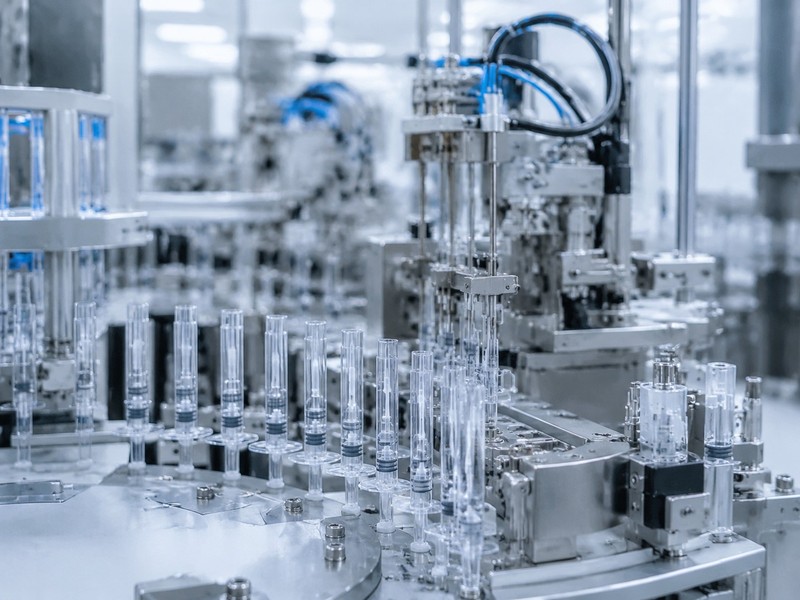
United States Guide to Disposable Syringe Machines
For manufacturers in the United States, a disposable syringe making machine is not just a production asset; it is a strategic investment tied to quality assurance, FDA readiness, automation, and long-term supply security. Large pharmaceutical and medical device companies evaluate these systems when expanding domestic capacity, replacing aging lines, or building integrated facilities for sterile and non-sterile medical consumables. In practical terms, the right syringe production line can improve output consistency, lower labor dependence, support traceability, and help producers meet demanding regulatory and customer requirements across markets such as New Jersey, California, Texas, Illinois, and North Carolina.
A disposable syringe making machine is a specialized manufacturing system used to produce single-use syringes at industrial scale. Depending on plant design, the complete line may cover barrel and plunger production, injection molding support, printing, assembly, lubrication, needle integration, inspection, packaging, and downstream handling. In the United States, these systems matter because hospital networks, contract manufacturers, vaccine supply chains, and medical consumables producers all require reliable volume, stable quality, and documentation that stands up to FDA cGMP expectations.
For many buyers, the real question is not whether a syringe manufacturing line is needed, but which level of automation, cleanroom integration, and validation support makes sense. A greenfield project near Boston, Houston, or Indianapolis will not have the same priorities as a modernization project at an existing medical device plant in New Jersey or a high-volume export-oriented site shipping through Los Angeles, Savannah, or the Port of New York and New Jersey.
Companies evaluating suppliers often compare total line architecture, molding compatibility, output range, utility consumption, changeover flexibility, automation software, and after-sales support. They also look for partners capable of engineering broader factory systems rather than only selling isolated equipment. That is especially relevant for firms planning integrated water systems, smart logistics, clean utilities, packaging, and validation in one project.
At-a-glance evaluation criteria for U.S. buyers Factor Why It Matters Typical Buyer Focus FDA-aligned design Reduces compliance risk and speeds qualification Documentation, traceability, alarms, audit trails Production capacity Must match forecast demand and OEE targets Syringes per hour, uptime, reject rate Automation level Affects labor cost and consistency Robotics, online inspection, auto packing Material compatibility Supports product mix and customer specifications PP, PE, elastomer, needle variants Service capability Critical for commissioning and maintenance Training, spare parts, remote support Total project integration Prevents layout and schedule issues Utilities, cleanroom, packaging, validationThe table above shows that machine selection is broader than unit price. U.S. buyers typically weigh lifecycle performance, quality risk, and project execution capability more heavily than initial quotation alone.
A disposable syringe making machine is an industrial production platform designed for manufacturing single-use syringes for medical, pharmaceutical, laboratory, and clinical applications. It is used to create components and assemble them into finished products that can be sterilized, packaged, and released for market. In pharmaceutical and medical device production, disposable syringes are essential for vaccine delivery, injectable drugs, insulin administration, irrigation, blood collection support procedures, and a wide range of diagnostic or therapeutic uses.
In a typical production environment, the process starts with medical-grade raw materials such as polypropylene and elastomeric parts. Syringe components are formed through injection molding or supplied from upstream molding systems, then transferred to printing, assembly, plunger insertion, gasket fitting, lubrication, graduation marking, leak testing, vision inspection, and packaging stages. More advanced lines integrate needle mounting, shield assembly, nest or blister packing, labeling, and serialization.
Within pharmaceutical manufacturing, syringe lines can support several production models:
For U.S. operations, machine use is strongly shaped by regulatory expectations. Equipment must support clean manufacturing, process validation, lot traceability, line clearance, contamination control, and stable repeatability. Plants near biotech clusters such as San Diego, Raleigh-Durham, and Philadelphia often emphasize data integrity, validation packages, and compatibility with digital manufacturing systems.
Main process stages in disposable syringe production Stage Function Key Quality Concern Raw material feeding Supplies medical-grade resin and parts Material identification and contamination control Component molding or input Forms barrel, plunger, and accessories Dimensional precision Printing and marking Adds volume graduation and branding Legibility and adhesion Automatic assembly Combines multiple parts into final syringe body Fit consistency and alignment Inspection and testing Checks leaks, defects, particles, and dimensions False accepts and false rejects Packaging and transfer Prepares finished goods for sterilization or shipment Package integrity and traceabilityThis process table helps buyers understand where machine architecture directly affects yield, compliance, and downstream efficiency.
Modern syringe production machinery supports a broad range of healthcare applications. In the United States, demand is driven by hospitals, outpatient care, vaccination campaigns, diagnostics, contract packaging, and rising domestic interest in resilient medical supply chains. Public and private buyers increasingly want dependable local or near-market production to reduce exposure to overseas disruptions.
Primary applications include standard hypodermic syringes, insulin syringes, irrigation syringes, safety syringes, and components for advanced injection systems. Some lines are also designed with future conversion in mind, allowing manufacturers to expand from standard disposable syringes into more sophisticated formats such as prefilled systems or specialized medical consumables.
The benefits of modern equipment are significant:
For example, a medical consumables manufacturer in the Midwest may prioritize output and labor reduction, while a pharmaceutical group in New Jersey may place greater emphasis on batch record support, packaging traceability, and compatibility with sterile supply chain requirements.
var ctxBar = document.getElementById(‘barDemandChart’).getContext(‘2d’);var chartBar = new Chart(ctxBar, { type: ‘bar’, data: { labels: [‘Hospitals’, ‘Pharma’, ‘Medical Device OEM’, ‘Contract Manufacturing’, ‘Diagnostics’, ‘Public Health’], datasets: [{ label: ‘Estimated U.S. demand index’, data: [92, 78, 85, 74, 63, 69], backgroundColor: [‘#4e79a7′,’#f28e2b’,’#e15759′,’#76b7b2′,’#59a14f’,’#edc948′] }] }, options: { responsive: true, maintainAspectRatio: false }});The demand chart illustrates how syringe manufacturing is supported by several end-user groups rather than a single industry segment. That diversity is one reason many investors see the category as strategically important.
Key benefits of advanced syringe production lines Benefit Operational Impact Typical U.S. Buyer Value Automated assembly Reduces manual errors Lower labor exposure Vision inspection Improves defect detection Higher outgoing quality Modular design Supports line upgrades Future scalability Data collection Enables performance analysis Better OEE management Integrated packaging Shortens transfer steps Space and labor savings Compliance-ready documentation Facilitates qualification Faster project launchThis table shows that the business case often extends beyond unit output. Quality and compliance improvements can be just as valuable as capacity increases.
Not all syringe production systems are built for the same market need. Buyers in the United States should first distinguish between a complete production line and a partial assembly line. A complete line may include material handling, molding interfaces, assembly, inspection, packaging, and utility integration. A partial line may focus only on downstream assembly or final packaging.
Common line types include:
Important technical options often include servo-driven motion control, cleanroom-compatible enclosures, machine vision systems, leak testing, online printing verification, robotic collection, automatic bagging or blistering, and MES or SCADA connectivity. For manufacturers shipping across the U.S. and internationally, serialization-ready downstream packaging may also be worth considering.
When evaluating models, buyers should ask how the machine handles changeover among 1 mL, 3 mL, 5 mL, 10 mL, and larger sizes. Flexibility matters for contract manufacturers and diversified medical consumables suppliers that need to respond to changing customer demand.
Common machine types and suitable use cases Machine Type Best For Typical Output Profile High-speed standard line Large-volume hospitals and distributor supply Very high output, stable SKU mix Multi-size flexible line Contract manufacturers Medium to high output, frequent changeover Insulin syringe line Precision diabetic care products High accuracy, smaller format Safety syringe line Occupational safety-focused buyers Complex assembly requirements Semi-automatic line Pilot plants and regional startups Lower output, lower upfront cost Integrated turnkey line Greenfield U.S. factories End-to-end production ecosystemThe comparison above helps buyers align machine architecture with product strategy rather than buying capacity they cannot fully utilize.
Some investors compare disposable syringe making machines with outsourcing, manual or semi-manual assembly, imported finished syringes, or alternative delivery-device production. The right choice depends on strategic goals, cost structure, and risk tolerance.
Outsourcing can reduce capital expenditure, but it may expose the buyer to supply disruption, longer lead times, and lower control over quality and schedules. Imported finished syringes may appear economical in the short term, especially through major trade channels like Long Beach, Newark, or Houston, but tariff changes, freight volatility, and geopolitical risk can alter economics quickly. Semi-automatic systems may fit smaller regional manufacturers, yet they often struggle when labor costs rise or customers require tighter documentation and consistency.
By contrast, a dedicated automated disposable syringe production line offers stronger control over process capability, batch traceability, customization, and domestic responsiveness. It is often the preferred route for established U.S. manufacturers that expect stable long-term demand.
var ctxComp = document.getElementById(‘comparisonChart’).getContext(‘2d’);var chartComp = new Chart(ctxComp, { type: ‘bar’, data: { labels: [‘Quality Control’, ‘Scalability’, ‘Labor Efficiency’, ‘Supply Security’, ‘Capex Efficiency’, ‘Compliance Support’], datasets: [ { label: ‘Automated syringe line’, data: [93, 91, 88, 90, 62, 89], backgroundColor: ‘#6f42c1’ }, { label: ‘Semi-automatic / outsourced mix’, data: [68, 59, 47, 52, 81, 57], backgroundColor: ‘#adb5bd’ } ] }, options: { responsive: true, maintainAspectRatio: false }});The comparison chart highlights a common tradeoff: lower upfront spend may come with weaker control and scalability. For regulated production, that tradeoff needs careful review.
Solution comparison for U.S. manufacturers Option Main Advantage Main Limitation Automated disposable syringe line High control and scale Higher capex Semi-automatic line Lower initial investment Higher labor dependence Outsourced manufacturing Fast market entry Lower direct quality control Imported finished syringes No production setup needed Supply chain and tariff risk Regional contract assembly Shared operational burden Limited customization Turnkey domestic plant Long-term resilience Project complexityFor many medium and large U.S. organizations, the best-fit solution is often an automated line supported by strong engineering and validation services.
The United States remains one of the most attractive markets for syringe production equipment because of its large healthcare system, strong medical device sector, domestic manufacturing incentives, and continuing focus on critical supply resilience. Investment is especially active in regions with established life sciences infrastructure such as New Jersey, Massachusetts, Pennsylvania, North Carolina, California, and Texas.
Three market drivers stand out. First, healthcare utilization remains high, with continuing demand from vaccination, injectable therapies, and chronic disease care. Second, buyers want more secure domestic or regional production after years of supply chain disruption. Third, manufacturers are under pressure to automate because labor, quality, and compliance costs continue to increase.
Looking toward 2026, future trends are likely to include smarter machine vision, wider use of robotics, predictive maintenance, digital batch traceability, and stronger integration between production lines and intelligent warehouse systems. Sustainability will also matter more. Buyers are asking about energy efficiency, compressed air optimization, lower scrap generation, recyclable packaging formats, and cleaner utility design. Policy trends may favor domestic investment, closer supplier qualification, and more visible quality-system accountability.
var ctxLine = document.getElementById(‘lineGrowthChart’).getContext(‘2d’);var chartLine = new Chart(ctxLine, { type: ‘line’, data: { labels: [‘2021’, ‘2022’, ‘2023’, ‘2024’, ‘2025’, ‘2026’], datasets: [{ label: ‘U.S. market growth index for syringe production equipment’, data: [100, 108, 117, 126, 138, 151], borderColor: ‘rgb(75, 192, 192)’, backgroundColor: ‘rgba(75, 192, 192, 0.15)’, fill: false, tension: 0.3 }] }, options: { responsive: true, maintainAspectRatio: false }});var ctxArea = document.getElementById(‘areaTrendChart’).getContext(‘2d’);var chartArea = new Chart(ctxArea, { type: ‘line’, data: { labels: [‘2021’, ‘2022’, ‘2023’, ‘2024’, ‘2025’, ‘2026’], datasets: [ { label: ‘Manual or semi-automatic share’, data: [42, 39, 35, 31, 27, 24], fill: true, backgroundColor: ‘rgba(220, 53, 69, 0.20)’, borderColor: ‘rgba(220, 53, 69, 0.9)’, tension: 0.3 }, { label: ‘Automated and smart line share’, data: [58, 61, 65, 69, 73, 76], fill: true, backgroundColor: ‘rgba(40, 167, 69, 0.20)’, borderColor: ‘rgba(40, 167, 69, 0.9)’, tension: 0.3 } ] }, options: { responsive: true, maintainAspectRatio: false }});The line chart shows a steady growth outlook for equipment demand, while the area chart reflects the ongoing shift from labor-intensive operations to automated, data-enabled production systems.
Another trend is supplier consolidation around full-solution providers. U.S. investors increasingly prefer partners that can support not only the syringe line itself but also utilities, layout planning, packaging, conveying, warehouse automation, and validation. This reduces coordination risk during multi-million-dollar projects.
Selecting a supplier is often more important than choosing a machine model. A reliable manufacturer should demonstrate regulatory understanding, engineering depth, stable manufacturing quality, and long-term service capability. The best suppliers are those that can show not only brochures but also real line performance, documented references, and successful project execution.
U.S. buyers should evaluate the following areas carefully:
Buyers should also ask whether the supplier can support broader facility needs. For example, some projects require not only syringe assembly equipment but also purified water systems, material conveying, smart warehousing, and packaging lines. Working with a partner that understands integrated pharmaceutical engineering can help avoid layout conflicts, schedule delays, and interface problems.
One example in the market is IVEN Pharmatech Engineering, which is known internationally for pharmaceutical and medical device engineering as well as integrated equipment solutions. Its technological capability is notable in areas such as automated production systems, intelligent logistics, pharmaceutical water treatment, and specialized medical consumables machinery. For buyers who need more than a single standalone machine, this kind of engineering background can be valuable.
Supplier selection checklist Evaluation Point What to Verify Why It Matters Regulatory knowledge FDA, cGMP, EU GMP familiarity Supports compliant design Technical patents or innovation Proprietary design strength Shows engineering maturity Factory capability Production plants, QC systems, machining quality Indicates build reliability Reference projects Installed lines and customer outcomes Reduces execution uncertainty Validation support Document package and testing protocol Essential for qualification After-sales response Training, spares, troubleshooting Protects uptimeThe best supplier choice usually comes from a structured scorecard rather than a simple price comparison. A lower-priced line without project support can become the more expensive option over time.
Investment cost varies widely based on output, automation, product type, packaging scope, cleanroom needs, and validation requirements. A semi-automatic or lower-output assembly system may suit a smaller startup budget, while a high-speed turnkey line for a U.S. medical device plant can involve a far larger capital program once utilities, facilities, inspection, sterilization interfaces, and warehouse handling are included.
Budget planning should separate direct equipment cost from total installed cost. Too many buyers underestimate costs for cleanroom adaptation, utility hookups, software integration, FAT and SAT travel, spare parts, validation, operator training, packaging equipment, and local compliance work. Freight to U.S. ports such as Los Angeles, Oakland, Houston, Charleston, or Newark also needs realistic planning, especially for large modular equipment.
ROI analysis usually depends on six levers: annual volume, labor reduction, scrap reduction, imported product substitution, selling price stability, and uptime. If a line replaces outsourced supply or high-cost imports, payback can be faster than expected. If utilization remains low, even an excellent line may struggle to meet target ROI.
Illustrative budget structure for a syringe production project Cost Category Typical Share of Budget Notes Core production equipment 35% to 45% Main assembly, inspection, and control systems Packaging and downstream handling 10% to 18% Bagging, blistering, cartoning, transfer Utilities and cleanroom interfaces 12% to 20% Air, power, HVAC, clean piping, water support Validation and documentation 5% to 10% IQ, OQ, PQ and quality files Installation and commissioning 8% to 15% Mechanical, electrical, software startup Training and spare parts 3% to 7% Early lifecycle supportThis budget table is useful because it highlights how machine purchase price alone can represent less than half of the full project investment.
For companies seeking broader project support, turnkey pharmaceutical engineering solutions may reduce hidden costs by coordinating layout, utilities, equipment interfaces, and documentation from the start. This is particularly helpful for greenfield projects in the United States where delays can be extremely expensive.
Every capital project has risks, and syringe production is no exception. The most common issues include poor product-market fit, underestimated validation time, weak utility planning, supplier communication gaps, and limited spare-parts readiness. In the U.S. market, regulatory documentation gaps can become especially costly if they slow qualification or force design changes after installation.
Another risk is choosing a line optimized for one syringe format when the business model really requires flexibility. If the factory needs to supply multiple customer types, rigid line architecture can reduce long-term value. Likewise, selecting equipment solely on the basis of speed may overlook maintenance complexity, software integration, and operator training needs.
Manufacturing capability should also be reviewed carefully. Some equipment suppliers have strong sales presentations but limited fabrication depth. In contrast, suppliers with multiple specialized production bases and established component manufacturing control generally offer more confidence for large projects. IVEN Pharmatech Engineering, for instance, is recognized for manufacturing across specialized facilities focused on pharmaceutical filling and packaging, water treatment, intelligent conveying, and vacuum blood collection tube equipment. For buyers, this suggests wider industrial capability rather than single-workshop assembly alone.
Service risk is equally important. A production line without reliable technical support can quickly become a bottleneck. Buyers should understand response times, multilingual communication, spare-parts stock policy, remote diagnostics, and on-site commissioning support. Strong lifecycle service, including feasibility consulting, installation, validation assistance, training, and production optimization, can materially reduce startup risk. Companies wanting tailored consultation can also contact an equipment engineering team early in the planning stage.
Major investment risks and mitigation steps Risk Possible Impact Mitigation Insufficient compliance documentation Qualification delays Review document list before PO Wrong capacity selection Low utilization or bottlenecks Base design on realistic demand forecast Poor layout integration Rework and schedule slip Use 3D engineering review early Weak service support Long downtime Confirm SLA, spare parts, training plan Limited flexibility Hard to add new SKUs Specify changeover scope in URS Underestimated total cost Budget overrun Include installation and validation in capex modelThe risk table demonstrates why a detailed URS, supplier audit, and phased project review are essential before contract signing.
What production capacity should a U.S. buyer target?That depends on annual forecast, SKU mix, and customer concentration. A hospital supply producer with stable standard syringes may choose a high-speed dedicated line, while a contract manufacturer may prefer a flexible line with moderate output and faster changeovers.
Does the machine need to comply with FDA requirements?The machine itself is not approved like a drug product, but its design, documentation, traceability features, and validation support should align with FDA cGMP expectations and the quality system used by the manufacturer.
Can one line produce multiple syringe sizes?Many lines can, but actual flexibility varies by model. Buyers should verify tooling change parts, changeover time, speed loss at each size, and whether packaging formats can also switch efficiently.
Is a turnkey project better than buying standalone equipment?For greenfield or major expansion projects, turnkey execution often reduces integration risk. It can also improve schedule control when utilities, packaging, logistics, and validation are handled in a coordinated way.
How long does a project usually take?Lead time depends on customization and scope. A full project may include engineering, fabrication, FAT, shipping, installation, SAT, and qualification. U.S. buyers should build in time for facility readiness and internal quality review.
What should be included in the supplier’s document package?Typical expectations include equipment drawings, manuals, component lists, certificates, FAT records, calibration details, software descriptions, and IQ/OQ support documents. Document completeness should be defined before contract award.
How important is automation for U.S. plants?Very important. Higher labor cost in the United States makes automation a strong economic driver. Automated inspection, assembly, and handling also help improve consistency and traceability.
What industries commonly buy disposable syringe making machines?Medical consumables manufacturers, pharmaceutical companies, OEM device makers, public health suppliers, contract manufacturers, and export-focused healthcare product firms are all active buyers.
Where can buyers review broader equipment options?Companies planning a wider production upgrade often review complete equipment portfolios through supplier product pages such as pharmaceutical and medical production equipment solutions to compare line compatibility and expansion paths.
What should buyers know about supplier service capability?The strongest partners support the full lifecycle: early consulting, design coordination, equipment customization, installation, commissioning, validation, staff training, and long-term optimization. This service depth is especially valuable when launching new production in complex U.S. regulatory environments.
In summary, the best disposable syringe making machine for the United States market is the one that matches product strategy, compliance expectations, labor economics, and long-term growth plans. Buyers should assess not only machine speed, but also supplier engineering strength, manufacturing depth, and lifecycle service support. When these factors are aligned, the investment can strengthen domestic production capability, improve quality consistency, and create a more resilient medical supply chain.