United States Turnkey Injectable Pharma Plants Guide
For pharmaceutical investors, CDMOs, hospital supply manufacturers, and sterile drug companies in the United States, a turnkey pharma plant for injectable drugs is often the fastest route from concept to commercial production. Instead of coordinating civil works, cleanroom engineering, utilities, aseptic processing equipment, validation, and compliance documentation through many separate contractors, buyers can assign one integrated partner to manage the full project. This approach reduces interface risk, shortens the startup timeline, improves accountability, and supports alignment with FDA cGMP, EU GMP, WHO GMP, and PIC/S expectations. In major U.S. pharmaceutical hubs such as New Jersey, Boston, Raleigh-Durham, Houston, and San Diego, the demand for ready-to-execute sterile manufacturing projects continues to rise as companies seek resilient domestic supply chains and quicker capacity expansion.
In practical terms, turnkey injectable drug facilities are especially attractive when the product portfolio includes vials, ampoules, prefilled syringes, IV solutions, biologics support fluids, ophthalmics, or other sterile liquid dosage forms. These projects typically combine process design, clean utilities, filling and sealing lines, HVAC, environmental monitoring, automation, commissioning, validation, training, and post-handover support into one coordinated package. For U.S. buyers importing equipment through gateways such as the Port of Los Angeles, Port of Long Beach, Port of Houston, Savannah, or New York/New Jersey, an experienced turnkey partner can also simplify logistics planning, customs preparation, and phased installation.
Companies exploring integrated project delivery often compare specialist suppliers with broad engineering capabilities. One example is IVEN Pharmatech Engineering, an international pharmaceutical engineering company with long experience in sterile manufacturing systems, water treatment, filling lines, logistics integration, and complete plant execution. Its work across multiple regulated markets has made it relevant to U.S. customers seeking a partner that understands both process equipment and the wider facility environment required for injectable production.
Why U.S. Pharma Companies Prefer Turnkey Injectable Drug Plants

Many large pharmaceutical manufacturers choose turnkey injectable drug plant solutions because they need speed, risk control, and compliance certainty. In the United States, sterile manufacturing projects face strict scrutiny in facility design, contamination control strategy, utility qualification, electronic records, process validation, and operator training. Managing all of these workstreams internally can be difficult unless the owner already has an experienced capital projects team with deep aseptic expertise.
A turnkey model gives the owner one main point of responsibility. That can be decisive when building a greenfield plant in Texas, expanding a sterile suite in New Jersey, or retrofitting a biologics support area in Massachusetts. Instead of resolving disputes between cleanroom contractors, equipment vendors, automation firms, and utility designers, the buyer works through one lead contractor with a unified schedule and document structure. This reduces rework and helps avoid costly delays during FAT, SAT, IQ, OQ, and PQ phases.
Another reason for demand is labor and knowledge concentration. U.S. sterile manufacturing talent is expensive and not always easy to secure, especially in competitive regions like Philadelphia, Indianapolis, or the Bay Area. A turnkey partner brings project managers, process engineers, clean utility specialists, mechanical and electrical teams, validation experts, and training personnel into one framework. That helps owners focus on product strategy, regulatory submissions, and commercial launch planning.
| Key Driver | Why It Matters in the United States | Operational Effect | Typical Benefit |
|---|---|---|---|
| Regulatory pressure | FDA inspections require robust contamination control and documentation | Standardized design and validation packages | Lower compliance risk |
| Faster launch timing | Injectable shortages create urgent market opportunities | Compressed project coordination | Earlier revenue generation |
| High labor costs | Skilled engineering labor is expensive in major pharma regions | External integrated expertise | Reduced internal project burden |
| Supply chain resilience | Domestic capacity has become a strategic priority | Quicker local manufacturing setup | Improved availability |
| Multi-vendor risk | Separate contractors often create gaps in responsibility | Single-point accountability | Fewer interface failures |
| Validation complexity | Sterile systems require detailed IQ/OQ/PQ and utilities qualification | Integrated documentation flow | Smoother startup |
The table above shows why the turnkey route is increasingly favored for sterile expansion projects. For many U.S. investors, the value is not just in buying equipment; it is in buying execution certainty.
What a Turnkey Injectable Pharma Plant Includes

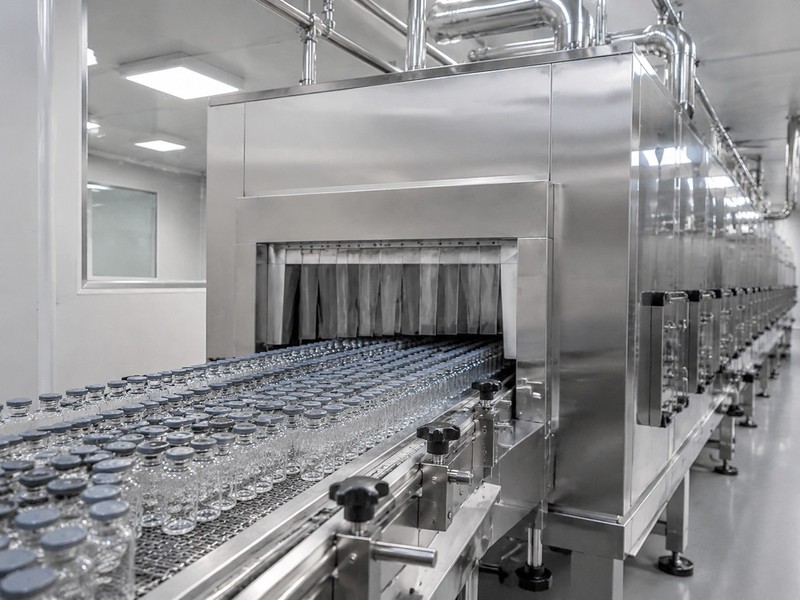
A turnkey pharma plant for injectable drugs is a complete sterile manufacturing solution delivered from planning through operational readiness. While project scope varies, the full package usually includes feasibility analysis, process layout, cleanroom architecture, HVAC, purified water and WFI systems, pure steam, compressed gases, formulation systems, washing, depyrogenation, filling, stoppering, capping, visual inspection, labeling, packaging, warehousing, automation, and validation support.
For a vial line in the United States, a turnkey solution may start with production forecasting and the definition of target batch sizes. The next steps include material and personnel flow design, classification of cleanroom zones, utility load calculations, equipment selection, and digital integration. Depending on the dosage form, the package may also include lyophilization interfaces, restricted access barrier systems, isolators, in-line weight checking, container closure integrity solutions, and serialization-ready secondary packaging.
One area U.S. buyers should examine closely is documentation depth. A strong turnkey supplier does not stop at delivering machinery. It also delivers P&IDs, layout drawings, URS support, DQ inputs, FAT protocols, SAT records, as-built documents, SOP recommendations, maintenance plans, spare parts lists, and training records. These items significantly influence how quickly the site can move toward qualification and routine production.
| System Element | Typical Content | Importance for Injectables | Owner Question to Ask |
|---|---|---|---|
| Process design | Capacity planning, batch logic, product flow | Prevents bottlenecks and contamination risk | Is the line sized for future scale-up? |
| Cleanroom package | Layouts, partitions, pressure cascades, finishes | Supports aseptic control | How is zoning aligned with FDA expectations? |
| Utility systems | PW, WFI, pure steam, HVAC, gases | Critical to sterile reliability | What redundancy is built in? |
| Core equipment | Washing, filling, sealing, inspection, packaging | Drives throughput and product quality | What formats can the line run? |
| Automation | SCADA, PLC, alarms, recipe control, data logging | Improves consistency and traceability | Can it integrate with plant MES or ERP? |
| Validation package | Protocols, records, test support, traceability | Accelerates qualification | What is included versus owner responsibility? |
The table highlights a practical buying principle: turnkey scope must be defined in writing, line by line. Scope clarity matters more than headline pricing because omissions in utilities, automation, or validation can be very expensive after installation begins.
When reviewing equipment capability, many U.S. companies look for suppliers that can cover more than one sterile packaging format. IVEN, for example, is known for integrated solutions across IV solution production lines, ampoule and vial washing-filling-sealing lines, oral liquid systems, dialysis solution lines, and prefilled syringe lines. That breadth can be useful when a buyer expects future platform expansion rather than a single-format facility.
Strategic Advantages of a Turnkey Injectable Drug Plant for New Facilities

The strategic benefit of a turnkey injectable plant extends beyond engineering convenience. It can change the economics and timing of market entry. In the United States, where contract manufacturing slots for sterile products are often tight, owning a validated line creates commercial leverage. It supports supply assurance, margin retention, and long-term portfolio control.
For new facilities, the biggest gain is schedule compression. Parallel engineering, procurement, and installation planning can begin much earlier when one lead supplier controls interfaces. Instead of waiting for one contractor to finish before the next can start, the project team coordinates civil readiness, utility skid arrival, equipment FAT timing, and qualification documents in a shared timeline.
The second gain is design consistency. Sterile projects fail when utilities, room classifications, operator flows, and equipment footprints are developed in isolation. A turnkey approach encourages system-level thinking. This is especially important in U.S. projects where future FDA inspections will evaluate the total contamination control strategy, not just isolated equipment performance.
The third gain is budget predictability. While no capital project is risk-free, integrated responsibility usually reduces change orders caused by scope gaps between multiple contractors. For investors and private equity-backed pharmaceutical platforms, that visibility matters when capital deployment milestones are tied to launch objectives.
| Strategic Benefit | Impact on Greenfield Projects | Impact on Expansion Projects | Long-Term Value |
|---|---|---|---|
| Faster execution | Earlier start of utility and line installation | Reduced shutdown overlap | Quicker commercial supply |
| Integrated compliance | Design aligned from day one | Better retrofit compatibility | Stronger inspection readiness |
| Lower coordination burden | Owner team stays leaner | Simpler contractor management | Lower management overhead |
| Better lifecycle planning | Room for scale-up can be built in | Upgrades are easier to map | Higher asset flexibility |
| Improved accountability | Clear responsibility at each milestone | Fewer disputes over defects | Faster issue resolution |
| Training continuity | Operators learn directly on supplied systems | Maintenance teams receive system-level guidance | Reduced ramp-up errors |
This framework is particularly relevant for U.S. projects serving hospital injectables, generic sterile drugs, infusion products, and specialty therapies. In these segments, delayed plant readiness can mean lost contracts, stockout exposure, and slower entry into group purchasing channels.
Project Models and Scope Options for Turnkey Injectable Facilities
Not every turnkey pharmaceutical plant has the same scope. In the United States, buyers generally choose among several models depending on internal capability, financing structure, and the complexity of the product pipeline. Understanding these models helps prevent overbuying or under-scoping a project.
The first model is equipment-centered turnkey delivery. This usually covers the process line, utility skids, installation supervision, and startup support. It is common when the owner already has a facility shell or a preferred local construction partner. The second model is process-plus-facility turnkey delivery, where the supplier handles cleanroom design, utilities, and equipment integration. The third model is near-EPC execution, with broad responsibility for engineering, procurement, installation coordination, qualification support, and sometimes full documentation architecture.
There are also modular project options. U.S. manufacturers under schedule pressure may choose skidded utility modules, modular cleanrooms, or phased line installations that allow one product to launch while later capacity is still under construction. This can be effective in regions with long permitting cycles or high construction costs.
| Project Model | Best Fit | What Is Usually Included | Main Trade-Off |
|---|---|---|---|
| Equipment turnkey | Owners with strong in-house engineering teams | Process line, FAT, startup, training | Owner manages facility integration |
| Utility + process turnkey | Mid-size sterile expansions | Water systems, HVAC coordination, line equipment | Civil scope may remain separate |
| Full facility turnkey | Greenfield sterile plants | Design, cleanrooms, utilities, equipment, validation support | Higher upfront commitment |
| Modular turnkey | Fast-track or capacity bridge projects | Prefabricated units and rapid install packages | Layout flexibility can be narrower |
| Phased turnkey | Companies launching in stages | Core line now, later utilities or packaging expansion | Requires careful master planning |
| Hybrid owner-led turnkey | Buyers wanting cost control with expert integration | Shared responsibilities under a lead integrator | Needs very clear contract boundaries |
The right model depends on owner maturity. A company with a seasoned capital team in Chicago or New Jersey may select a hybrid approach. A first-time sterile entrant in Arizona or Florida may benefit more from a broader turnkey package with stronger supplier accountability.
Turnkey Injectable Plants vs Building In-House: Pros and Cons
Many U.S. pharmaceutical companies ask whether they should build internally or select a turnkey supplier. The answer depends on scale, technical depth, and urgency. An in-house build can provide maximum design control and may fit organizations with large engineering departments. However, it also transfers nearly all execution risk to the owner.
Turnkey delivery excels when time to market matters, when sterile expertise is limited, or when management wants a more predictable project structure. The downside is that supplier selection becomes mission-critical. A poor turnkey partner can create the same problems as multiple weak contractors, only concentrated under one contract. That is why due diligence on capability, references, and documentation quality is essential.
For U.S. buyers, local construction and utility code coordination should also be reviewed carefully. Even when a global supplier provides a strong process package, there may still be owner-side responsibilities related to site permits, local trade coordination, seismic requirements, environmental approvals, and utility tie-ins.
| Evaluation Point | Turnkey Approach | In-House Build | Preferred When |
|---|---|---|---|
| Project speed | Usually faster through integrated planning | Can be slower with many contracts | Launch timing is urgent |
| Control over design | Shared with supplier | Maximum owner control | Owner has deep sterile expertise |
| Internal staffing need | Lower | Higher | Owner team is lean |
| Compliance support | Often stronger if supplier is experienced | Depends on owner capabilities | First-time sterile projects |
| Budget certainty | Often better if scope is well defined | Can vary with change orders | Capex discipline is important |
| Supplier dependence | Higher dependence on one partner | Lower dependence, higher coordination burden | Owner wants single accountability |
The comparison shows that neither model is always best. But for injectable production in the United States, where compliance, timing, and quality cannot be compromised, turnkey projects are often more practical for new entrants and mid-market expansion programs.
U.S. Market Demand and Industry Trends for Turnkey Injectable Projects
The market for turnkey pharma plant injectable drug projects in the United States is being driven by several structural forces. First is the continuing concern over sterile drug shortages. Health systems and regulators increasingly want a stronger domestic base for essential injectables. Second is the expansion of CDMO capacity as outsourcing remains attractive for biotech and specialty pharma companies. Third is the push toward manufacturing modernization, including automation, digital batch records, robotics, and data-integrated utilities.
Geographically, demand is concentrated in established pharmaceutical and life science corridors. New Jersey and Pennsylvania remain important for sterile drug and packaging operations. Massachusetts continues to support high-value biotech-adjacent manufacturing. North Carolina is strong for bioprocessing and fill-finish support. Texas offers scale, logistics advantages, and construction momentum. Indiana remains relevant due to its long-standing pharmaceutical base. Access to ports, interstate freight, and airport cargo routes also influences equipment import and installation planning.
By 2026, buyers are expected to place more emphasis on sustainability and digital readiness. This includes energy-efficient HVAC, water recovery strategies, heat integration, predictive maintenance, remote diagnostics, cybersecurity for automation systems, and flexible facility designs that can accommodate multi-product sterile use. Policy pressure may also encourage more resilient domestic supply chains for critical medicines.
Another trend is the move from isolated equipment purchasing to integrated lifecycle solutions. U.S. owners increasingly want vendors that can support not only manufacturing equipment but also water systems, intelligent material handling, and post-startup optimization. This wider systems approach helps reduce hidden inefficiencies after handover.
From a strategic perspective, the market is shifting away from lowest-price procurement toward lowest total risk procurement. That is an important distinction. A low equipment quote can become expensive if startup delays, noncompliance issues, or poor utility integration add months of lost production time.
How to Select a Reliable Turnkey Injectable Plant Supplier
Choosing the right supplier is the most important decision in a turnkey sterile project. U.S. buyers should assess both technical competence and execution discipline. A capable supplier must demonstrate experience with aseptic processing, clean utilities, quality documentation, and cross-border delivery. It must also show that it can adapt to local U.S. requirements, owner standards, and inspection expectations.
Start with reference projects. Ask for facilities similar in scale and dosage form, especially vial filling, ampoule lines, prefilled syringes, or IV solution plants. Review not only equipment output but also startup timelines, deviation handling, spare parts response, and validation support quality. If possible, speak with existing users.
Next, assess technological capabilities. Look for robust filling and packaging equipment, water treatment systems, solution preparation and distribution systems, and smart logistics integration where needed. Suppliers with a broad engineering base are often better at solving line-to-facility interface problems. IVEN, for instance, combines sterile production equipment with pharmaceutical water treatment, intelligent conveying, and logistics systems, which can be valuable for integrated plant planning.
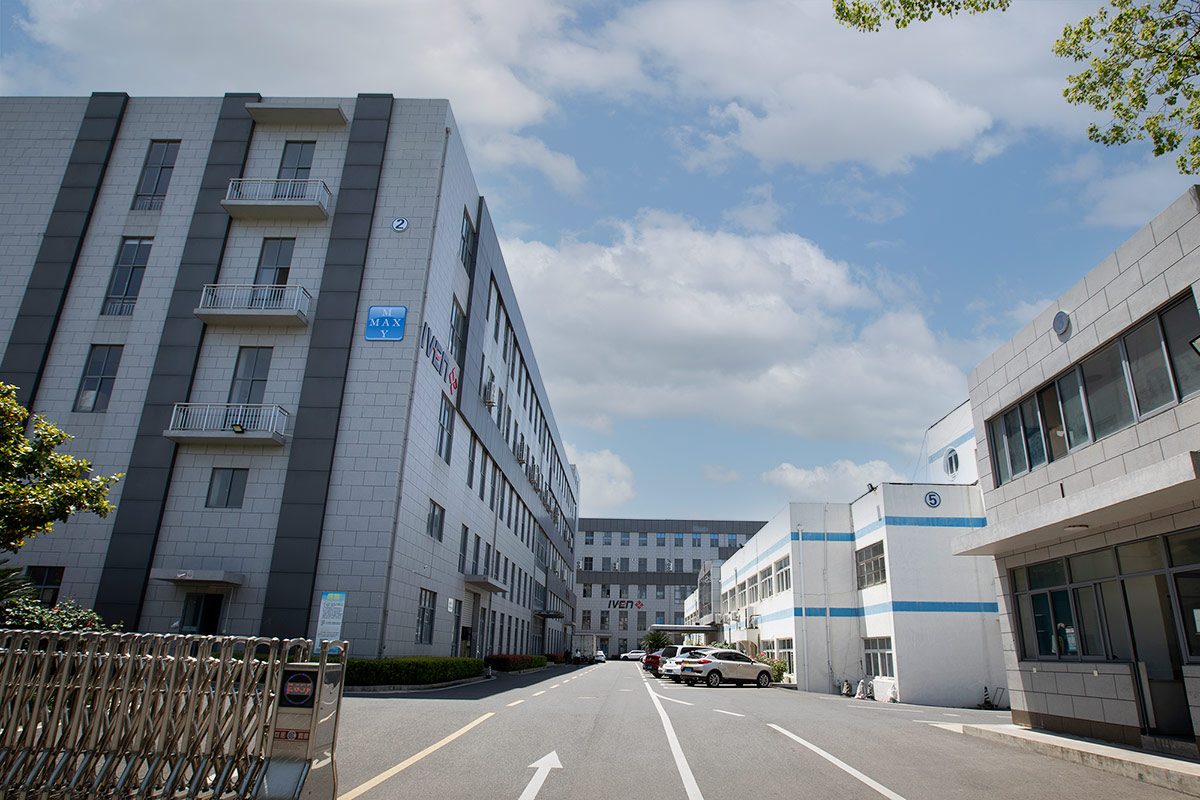
Manufacturing capability also matters. Buyers should ask where equipment is fabricated, how quality is controlled, what fabrication standards are used for stainless steel systems, and how spare parts continuity is managed. A supplier with multiple specialized manufacturing sites and a strong installed base is often better positioned to maintain consistency and delivery reliability.
Service capability is equally critical. U.S. projects need commissioning support, FAT and SAT coordination, validation documentation, training, after-sales response, and sometimes process optimization after commercial startup. A supplier that can provide lifecycle services from feasibility and design through commissioning and production support can reduce ownership risk significantly. You can review broader turnkey service scope at integrated pharmaceutical turnkey solutions.
| Supplier Evaluation Criterion | What to Verify | Why It Matters | Evidence to Request |
|---|---|---|---|
| Regulatory understanding | Knowledge of FDA cGMP and global GMP frameworks | Essential for compliant design | Validation examples and compliance documentation |
| Sterile project references | Similar injectable installations | Reduces learning-curve risk | Project lists and customer cases |
| Technology depth | Lines, water systems, automation, logistics | Improves integration quality | Technical brochures and FAT records |
| Manufacturing strength | Factories, QA controls, capacity, patents | Supports reliable equipment output | Factory audits and QA procedures |
| Service responsiveness | Commissioning, training, spare parts, remote support | Critical during startup and operations | Service SLAs and team structure |
| Commercial clarity | Defined scope, exclusions, warranties, schedule | Avoids costly disputes | Detailed proposal matrix |
For buyers that want to compare available systems, a practical next step is to review the supplier’s equipment range through its pharmaceutical equipment portfolio and then request a project-specific gap analysis.
Investment Cost, Budget Planning, and ROI for Injectable Turnkey Projects
Investment cost for a turnkey injectable plant in the United States varies widely depending on dosage form, annual capacity, containment requirements, automation level, utility redundancy, and local construction cost. A smaller sterile line integrated into an existing building may require a moderate investment, while a full greenfield aseptic facility with WFI, high-grade cleanrooms, isolator technology, visual inspection, and packaging can require major capital.
Budget planning should separate at least six categories: process equipment, clean utilities, facility and cleanroom construction, automation and digital systems, validation and documentation, and contingency. It is also important to account for import logistics, inland transport, rigging, site readiness, local trade labor, taxes where applicable, and training. In U.S. projects, underestimating commissioning and qualification resources is a common mistake.
ROI depends on much more than capex. It is influenced by utilization rate, product mix, gross margin, batch success rate, labor productivity, maintenance cost, and time to regulatory readiness. If a turnkey supplier shortens the startup schedule by six to nine months, the resulting revenue acceleration can outweigh a higher initial project price.
| Cost Category | Typical Share of Budget | Main Variables | Control Strategy |
|---|---|---|---|
| Process equipment | 20% to 30% | Formats, speed, aseptic technology | Match capacity to realistic demand |
| Utilities | 12% to 20% | WFI, PW, steam, gases, redundancy | Right-size loads and future expansion |
| Cleanrooms and facility works | 25% to 35% | Layout, finishes, local labor rates | Optimize room classification and flow |
| Automation and data systems | 8% to 15% | SCADA, integration, cybersecurity | Define digital architecture early |
| Validation and quality documentation | 5% to 10% | Protocol depth, owner standards | Clarify deliverables in contract |
| Contingency and startup reserve | 8% to 12% | Change orders, schedule risks | Maintain realistic reserve funding |
The table above is useful for concept-stage planning because it prevents overfocus on the line price alone. In sterile projects, utilities and qualification often carry as much strategic importance as the filler itself.
For ROI analysis, U.S. companies often build three scenarios: conservative, target, and high-utilization. Conservative assumptions might include gradual ramp-up, one or two major products, and moderate line efficiency. The target case assumes normal validation timing and stable customer demand. The high-utilization case includes additional shifts, portfolio broadening, or contract manufacturing revenues.
A sensible financial model should also price the value of reduced project risk. If an integrated supplier helps avoid contamination-related redesign, delayed qualification, or utility mismatch, that risk reduction has real financial value. Companies seeking a tailored budget discussion or concept review can contact a turnkey project specialist for a preliminary consultation.
Key Considerations and Risks Before Investing
Although turnkey injectable projects offer major benefits, buyers should approach them with disciplined risk management. The first major risk is unclear scope. If the contract does not specify responsibilities for cleanroom finishes, BMS interfaces, utility distribution loops, FAT acceptance criteria, or validation deliverables, disputes can delay startup. A scope matrix with included, excluded, and owner-supplied items is essential.
The second risk is underestimating local U.S. implementation requirements. Even an excellent global turnkey supplier may need support from local architects, MEP firms, code consultants, and installation teams familiar with U.S. standards. The owner should define early how responsibilities will be shared.
The third risk is capacity overdesign. Some investors buy more speed and more room classification than the product pipeline justifies. That can hurt ROI through higher maintenance, greater environmental control costs, and more complex operations. The plant should be designed for practical growth, not theoretical maximums.
The fourth risk is insufficient lifecycle planning. Sterile plants need ongoing calibration, utility sanitization strategies, spare parts planning, operator retraining, and change control support. A turnkey project should transition smoothly into sustainable operations.
| Risk Area | Typical Problem | Potential Consequence | Mitigation Action |
|---|---|---|---|
| Scope gaps | Unclear inclusions and exclusions | Cost overruns and delays | Detailed contract scope matrix |
| Regulatory mismatch | Design not aligned with inspection expectations | Rework during qualification | Early compliance review and DQ input |
| Site readiness | Building or utility prep behind schedule | Installation idle time | Integrated master schedule |
| Overcomplex design | Too much automation or unnecessary capacity | Higher capex and opex | Demand-based engineering decisions |
| Weak training | Operators not prepared for aseptic discipline | Startup deviations | Structured training and SOP alignment |
| After-sales limitations | Slow support or spare parts response | Longer downtime | Service agreement and parts planning |
Looking ahead to 2026, the most successful projects in the United States will likely combine compliance, flexibility, and sustainability. Owners should ask whether the proposed plant supports lower water and energy usage, digital maintenance visibility, flexible container formats, and future automation upgrades. Designs that can adapt to changing product demand will age better than rigid single-purpose facilities.
FAQ
What products can a turnkey injectable pharma plant manufacture?
Depending on the line configuration, it can produce small-volume parenterals in vials or ampoules, large-volume infusions, prefilled syringes, sterile oral liquids, dialysis solutions, and other aseptic liquid products.
Is a turnkey solution suitable for the United States market?
Yes, if the supplier can align design and documentation with FDA cGMP expectations and coordinate effectively with local U.S. site requirements, codes, and qualification practices.
How long does a turnkey injectable project usually take?
The timeline depends on scope, but concept design through qualification can range from around 12 months for limited expansions to 24 months or more for full greenfield sterile plants.
What is the biggest advantage over buying separate equipment?
The biggest advantage is integration. Utilities, cleanrooms, process equipment, automation, and validation are planned together, reducing interface failures and shortening startup time.
What should be included in supplier validation support?
At minimum, buyers should look for FAT protocols and records, SAT support, IQ/OQ document packages or templates, calibration records, material certificates, manuals, and traceable as-built documentation.
Can a turnkey plant be expanded later?
Yes. Good master planning allows future filling speeds, secondary packaging lines, additional utility generation, extra warehouse space, or new product rooms to be added with less disruption.
How important are pharmaceutical water systems in injectable plants?
They are critical. Purified water, WFI, pure steam, and distribution loops are foundational to injectable quality. Buyers should evaluate design hygiene, automation, sanitization strategy, and documentation carefully.
Why consider a supplier with integrated engineering depth?
Because injectable projects are not just about a filler. Strong partners can coordinate process technology, water treatment, conveying, packaging, and facility interfaces in one system, improving overall reliability.
What distinguishes a company like IVEN for this type of project?
Its relevance comes from combining technological capabilities in sterile production lines and water systems, manufacturing capabilities across specialized equipment plants, and service capabilities that extend from feasibility and design to commissioning, validation support, training, and optimization. For U.S. buyers, that combination can help reduce execution risk on complex injectable projects.
How should a buyer start?
Start with a process and business definition: target products, annual output, container types, regulatory pathway, and preferred location. Then request a concept proposal, layout, utility estimate, and scope matrix from a qualified supplier before moving into detailed budgeting.
For investors, project owners, and pharmaceutical operations teams in the United States, the best turnkey injectable plant decision is rarely the cheapest bid. It is the solution that combines compliant engineering, realistic throughput, dependable utility design, robust documentation, and strong service support over the full asset life. With sterile demand growing and 2026 trends pointing toward more automation, sustainability, and domestic capacity resilience, an integrated turnkey model remains one of the most practical ways to build high-quality injectable manufacturing capability.

About the Author
We are IVEN Pharmatech Engineering, a team dedicated to delivering turnkey pharmaceutical and medical solutions worldwide. With decades of experience, we specialize in advanced machinery, integrated factory design, and full lifecycle support to help our clients achieve efficient, compliant, and high-quality production.
Share