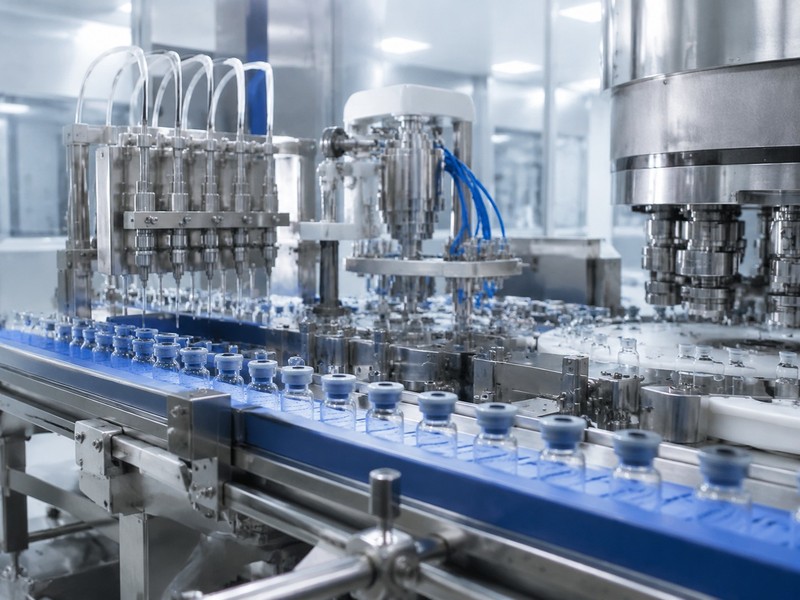
United States Guide to Particle-Safe Vial Filling Lines
For pharmaceutical manufacturers in the United States, particle contamination prevention in vial filling lines is not a single machine but a coordinated contamination-control strategy built into equipment, facility design, automation, airflow, cleaning, and inspection. It is used to protect sterile injectable products from visible and subvisible particles during washing, depyrogenation, filling, stoppering, capping, and downstream handling. Companies expanding capacity in Boston, New Jersey, North Carolina, Texas, and California increasingly evaluate these systems when building new sterile plants or upgrading legacy aseptic lines to meet current FDA expectations, reduce batch risk, and improve operational efficiency.
In practice, particle control for vial filling depends on several linked technologies: vial washers, depyrogenation tunnels, isolators or RABS, low-particle filling pumps, robotic or synchronized container transport, HEPA-filtered unidirectional airflow, automated cleaning systems, in-line particle monitoring, and visual inspection platforms. The right configuration depends on product sensitivity, batch size, fill volume, lyophilization needs, and the regulatory path of the manufacturer. For buyers comparing suppliers, the real issue is not only contamination reduction but also line integration, qualification support, and lifecycle performance.
Immediate Takeaway: Why Particle Control in Vial Filling Matters

Particle contamination prevention for vial filling lines is a core investment area for large pharmaceutical and medical device companies because sterile injectable products have very low tolerance for process variation. A single contamination event can trigger batch rejection, deviation investigations, product shortages, warning letters, and expensive remediation. In the United States, where cGMP expectations are strict and product liability risk is high, prevention is almost always more economical than corrective action.
The strongest contamination-control programs combine equipment design, process discipline, and operator minimization. This means using closed or highly protected filling zones, selecting non-shedding materials, reducing glass-to-metal friction, optimizing starwheel and transport geometry, validating airflow behavior, and automating interventions wherever practical. For facilities shipping through trade hubs such as the Port of New York and New Jersey, Los Angeles/Long Beach, Houston, and Savannah, consistency across large-scale production and distribution networks is essential, especially for high-value biologics and hospital injectables.
| Contamination Source | Where It Appears | Typical Risk | Prevention Method | Operational Impact | Priority Level |
|---|---|---|---|---|---|
| Glass abrasion | Vial infeed, turning, transport | Visible particles, cosmetic damage | Gentle handling, optimized starwheels, servo transport | Lower breakage and rejects | High |
| Rubber stopper fragments | Stoppering station | Subvisible particles in product | Controlled insertion force, high-quality closures | Improved closure integrity | High |
| Operator interventions | Filling zone | Aseptic disruption | Isolator or RABS, glove ports, automation | Lower human contamination load | Very High |
| Equipment wear | Pumps, guides, conveyors | Metal or polymer particles | Preventive maintenance, low-shedding materials | Stable uptime | Medium |
| Inadequate vial washing | Before depyrogenation | Residual particulate matter | Validated washing cycles, water and air quality control | Cleaner container preparation | High |
| Environmental fallout | Open transfer areas | Container exposure contamination | Unidirectional airflow, enclosure design, line zoning | Reduced environmental variability | High |
The table above shows that particle prevention begins long before the actual filling needle dispenses product. The most successful projects look at the entire path of the vial, from bulk container preparation to final inspection and packaging.
What Particle Contamination Prevention for Vial Filling Lines Is and How It Is Used in Pharmaceutical Production

Particle contamination prevention for vial filling lines refers to the design features, process controls, and monitoring systems that keep foreign matter out of sterile vials during production. In pharmaceutical production, it is primarily used for injectable drugs such as antibiotics, oncology products, vaccines, biologics, peptides, diluents, and specialty hospital formulations. It is also relevant to certain medical device consumables filled in vials or related primary containers.
A typical sterile vial process includes vial loading, washing, depyrogenation, sterile transfer, filling, stoppering, capping, and inspection. At each step, particles can be introduced by equipment friction, packaging materials, human activity, poor airflow, or incomplete cleaning. Prevention technology addresses these risks by controlling the container environment, minimizing intervention, and ensuring line components are compatible with aseptic and low-particulate operation.
In United States facilities, this technology is commonly used when:
- Launching a new injectable product requiring commercial-scale sterile filling.
- Retrofitting an older open line to meet updated contamination-control expectations.
- Adding lyophilization capability with strict container transfer requirements.
- Improving batch yield for high-value biologics where every vial matters.
- Reducing deviation rates before FDA inspections or product registration expansion.
Manufacturers also apply particle-control design during facility master planning. For example, a plant in New Jersey serving East Coast hospitals may prioritize flexible multi-product filling with rapid changeovers, while a California biologics site may focus on closed processing and data-rich monitoring. Facilities near major distribution corridors such as Chicago, Memphis, or Dallas often need both compliance and throughput, making automation especially valuable.
Main Uses and Benefits in Modern Pharmaceutical Manufacturing

The main application of particle contamination prevention in vial filling is sterile injectable manufacturing, but the business benefits extend far beyond compliance. The technology supports product quality, line efficiency, faster release, and stronger market reputation. It is particularly important in high-growth segments such as contract development and manufacturing, generic injectables, cell and gene therapy support products, and fill-finish for biologics.
Key benefits include lower rejection rates, better visual inspection performance, fewer investigations, reduced operator dependency, and easier qualification of aseptic processes. It also helps support stable output during scale-up, which is critical when a manufacturer moves from pilot batches to commercial supply.
| Product Segment | Typical Fill Range | Main Particle Risk | Preferred Prevention Focus | Benefit to Manufacturer | Benefit to End User |
|---|---|---|---|---|---|
| Generic injectables | 2–20 mL | High-volume handling wear | Stable transport and automated inspection | Higher throughput | Reliable hospital supply |
| Biologics | 1–10 mL | Sensitive product and visible particulates | Closed environment and gentle filling | Lower product loss | Improved patient safety |
| Vaccines | 0.5–10 mL | Large batch exposure risk | High aseptic assurance and monitoring | Batch consistency | Stable immunization supply |
| Oncology drugs | 2–50 mL | Cost of reject is very high | Precision fill and low intervention | Better yield economics | Access to critical therapy |
| Lyophilized products | 2–30 mL | Transfer contamination before freeze-drying | Integrated loading and protected transfer | Reduced transfer deviations | More consistent potency |
| Clinical and small batch products | 1–100 mL | Frequent changeovers | Flexible format parts and rapid cleaning | Fast turnaround | Quicker development timelines |
The benefits shown above are most visible when contamination control is treated as an integrated engineering objective rather than a stand-alone machine feature. That is why many buyers in the United States now prefer suppliers that can connect process equipment, utilities, logistics, packaging, and validation into one coordinated project structure.
Key Types, Models, and Technical Options Available
There are several technical approaches to particle contamination prevention in vial filling lines. The most appropriate choice depends on product category, sterility risk, capacity target, and plant layout. Broadly, buyers compare open restricted lines, RABS-based systems, isolator-based filling lines, robotic transport concepts, and highly integrated turnkey lines with environmental monitoring and inspection built in.
Open filling lines have become less attractive for new high-value aseptic projects, although some legacy facilities still operate them successfully with strong controls. RABS offers a practical middle ground for many companies, while isolator systems deliver the highest level of separation and intervention control. In parallel, manufacturers are increasingly interested in no-glass-contact transfer, nest or tub-based formats for specialized products, and digital monitoring tied to electronic batch records.
| Technology Type | Protection Level | Typical Capacity | Best Use Case | Main Advantage | Potential Limitation |
|---|---|---|---|---|---|
| Open line with laminar flow | Basic to moderate | Medium to high | Legacy products, cost-sensitive upgrades | Lower initial investment | Higher operator dependence |
| cRABS or oRABS | High | Medium to high | Commercial aseptic filling | Balanced compliance and accessibility | Requires strict intervention control |
| Isolator filling line | Very high | Low to high | Biologics, potent drugs, high-value products | Excellent separation from operators | Higher engineering complexity |
| Robotic vial handling line | High | Low to medium | Small batch and flexible production | Reduced glass abrasion and intervention | May limit very high-speed output |
| Integrated line with lyophilizer interface | High to very high | Medium | Freeze-dried injectables | Controlled transfer path | More interfaces to validate |
| Ready-to-use container platform | High | Low to medium | Clinical, biologics, niche launches | Less in-house container preparation | Higher consumable costs |
Important technical options buyers often request include:
- Servo-driven synchronized transport to reduce particle generation from mechanical shock.
- CIP/SIP-capable product pathways for repeatable cleaning and sterilization.
- Peristaltic or rotary piston filling depending on product viscosity and accuracy needs.
- Automatic no-vial-no-fill, no-stopper-no-run, and reject verification logic.
- Integrated viable and nonviable environmental monitoring points.
- Vision inspection for stopper placement, cap integrity, and cosmetic defects.
- MES, SCADA, and data historian connectivity for electronic records and trending.
For buyers reviewing line suppliers, equipment configuration options matter less than the supplier’s ability to validate the total process under commercial conditions.
Vial Filling Line Particle Control Versus Alternative Solutions
Many pharmaceutical teams ask whether they should upgrade an existing line, replace it with a new RABS platform, or move directly to an isolator-based solution. The answer depends on contamination history, planned products, and long-term business goals. If a plant fills only stable, low-risk products in large batches, a well-upgraded protected line may still be defensible. But if the facility is moving toward biologics, multi-product campaigns, or tighter inspection standards, a more advanced containment concept is often the better strategic choice.
| Solution | CAPEX Level | Contamination Control Strength | Flexibility | Validation Burden | Best Fit |
|---|---|---|---|---|---|
| Upgrade existing open line | Low to medium | Moderate | Medium | Medium | Short-term capacity improvement |
| Install RABS line | Medium to high | High | High | Medium to high | Mainstream commercial sterile products |
| Install isolator line | High | Very high | Medium to high | High | Biologics and sensitive aseptic filling |
| Use ready-to-use nested containers | Medium | High | High | Medium | Clinical and specialized production |
| Outsource to CDMO | Low initial | Depends on partner | High early, lower long term | Supplier oversight required | Low-volume launch or market test |
| Hybrid phased investment | Medium | High if planned well | High | Staged | Growing companies managing cash flow |
For a United States manufacturer, the decision should not be based on sticker price alone. It should include labor availability, utility infrastructure, format change frequency, local engineering support, qualification schedule, and the opportunity cost of delayed product launch. A plant near Raleigh-Durham or Indianapolis, for example, may benefit from nearby biotech talent and validation resources, while a site in the Midwest may focus more on robust maintainability and logistics efficiency.
The comparison chart highlights a market reality: advanced protected systems typically offer the strongest contamination performance, but the most suitable choice still depends on production strategy and product mix.
United States Market Outlook and Future Trends Through 2026 and Beyond
The United States market for particle-safe vial filling technology is supported by sustained investment in sterile manufacturing, domestic supply resilience, biologics growth, and modernization of aging injectable facilities. Demand is especially strong among CDMOs, hospital injectable producers, biotech firms scaling beyond clinical batches, and manufacturers reshoring or diversifying supply chains.
Several drivers are shaping purchasing decisions:
- Continuing focus on drug shortage prevention and domestic fill-finish capacity.
- FDA scrutiny of aseptic processing controls and data integrity.
- Growth in biologics, specialty injectables, and personalized therapies.
- Need for flexible lines that can run multiple vial sizes and product families.
- Pressure to reduce utility consumption, footprint, and total cost of ownership.
From a regional perspective, clusters around Boston, New Jersey, Philadelphia, Research Triangle Park, Houston, and the San Francisco Bay Area remain active. Ports and transport hubs also matter. Equipment imported through Long Beach or the Port of New York and New Jersey may face different lead-time and installation planning considerations than machinery moved inland via rail to Chicago or truck routes through Atlanta and Dallas.
Looking toward 2026, future trends include more robotics, richer process analytics, stronger integration between line controls and quality systems, and sustainability-focused design. Buyers increasingly want lower compressed air consumption, more efficient depyrogenation heat recovery, reduced cleanroom footprint, and smarter preventive maintenance. Policy trends may also favor resilient domestic production of critical injectables, encouraging greenfield and brownfield investment.
The area chart shows the direction of travel: the market is steadily moving toward more enclosed, automated, and data-driven filling environments.
How to Select a Reliable Manufacturer or Supplier
Choosing a supplier for vial filling line particle contamination prevention in the United States requires more than comparing brochures. Buyers should assess regulatory understanding, mechanical design, integration capability, FAT/SAT discipline, spare parts planning, and after-sales response. This is especially important for projects involving new sterile suites, line relocation, or technology transfer between sites.
A reliable supplier should be able to explain not only machine functions but also why each design decision reduces particulate risk. That includes contact materials, transfer geometry, enclosure layout, intervention management, cleanability, and alarm philosophy. Strong suppliers also provide documented support for IQ, OQ, and PQ planning.
| Evaluation Area | What to Ask | Why It Matters | Good Sign | Warning Sign | Decision Weight |
|---|---|---|---|---|---|
| Regulatory experience | Have you supported FDA-focused projects? | Reduces compliance gaps | Documented cGMP project references | Generic answers only | Very High |
| Contamination-control design | How do you minimize particle generation? | Core product quality issue | Specific engineering details | Only marketing claims | Very High |
| Integration capability | Can you link utilities, logistics, and packaging? | Avoids interface failure | Turnkey coordination capability | Many unmanaged subcontractors | High |
| Validation support | What IQ/OQ/PQ documents are included? | Speeds startup | Structured documentation package | Minimal qualification content | High |
| Manufacturing quality | Where are core machines built? | Affects consistency and lead time | Specialized manufacturing plants | Opaque sourcing chain | High |
| Service response | How do you support U.S. customers after startup? | Reduces downtime risk | Remote and on-site support plan | No defined service pathway | Very High |
For buyers seeking an engineering-led partner rather than a single machine vendor, it is useful to review companies with integrated project capability. IVEN Pharmatech Engineering, for example, positions itself around pharmaceutical innovation and turnkey execution, and its company background shows experience across filling, packaging, water systems, logistics, and medical consumable production lines. This broader scope can be valuable when contamination control depends on more than the filler itself.
From a technological capability standpoint, suppliers should demonstrate experience with aseptic filling lines, purified water and WFI-related systems, solution preparation, intelligent conveying, and inspection-oriented integration. A supplier with a strong technology base can help reduce hidden particulate risks caused by poorly coordinated upstream and downstream interfaces.
From a manufacturing capability standpoint, buyers should favor companies that build core equipment in dedicated production facilities rather than relying entirely on external assembly. Specialized manufacturing plants for filling and packaging machinery, water treatment systems, and automation modules generally support better consistency, documentation discipline, and spare-parts traceability.
From a service capability standpoint, the best partners offer lifecycle support from feasibility and design through installation, commissioning, validation, training, and optimization. When evaluating project support for the United States market, ask about response times, documentation standards, remote diagnostics, and bilingual communication. If you are planning a large expansion, it is sensible to discuss turnkey project options early rather than adding integration later.
The bar chart illustrates where demand is strongest today: biologics, CDMOs, and oncology-oriented aseptic filling continue to drive premium contamination-control investment.
Investment Cost, Budget Planning, and ROI Analysis
Capital budgets for vial filling line particle contamination prevention vary widely. A targeted upgrade to an existing line may cost far less than a new isolator-based commercial line with integrated vial washing, depyrogenation, filling, capping, inspection, and data systems. However, budget planning should include more than equipment purchase price. Cleanroom modifications, utilities, FAT and SAT, shipping, customs, site acceptance, qualification, training, spare parts, and line balancing all affect the real project cost.
For United States projects, additional cost drivers can include local construction labor, HVAC modifications, seismic requirements in certain states, automation integration, and compressed project schedules. Sites in high-cost regions such as Boston or the Bay Area may see different installation economics than projects in the Southeast.
| Cost Element | Typical Share of Budget | What It Covers | ROI Impact | Common Oversight | Control Strategy |
|---|---|---|---|---|---|
| Core equipment | 35%–50% | Washer, tunnel, filler, stopper, capper | Direct performance driver | Under-specification | URS tied to product plan |
| Barrier system | 10%–20% | RABS or isolator | High contamination reduction value | Late design changes | Finalize contamination strategy early |
| Facility modification | 10%–25% | HVAC, utilities, room layout | Enables line performance | Insufficient utility mapping | Front-end engineering review |
| Validation and documentation | 5%–10% | IQ/OQ/PQ support, protocols | Speeds release to production | Budgeted too low | Include full lifecycle documents |
| Training and startup support | 3%–8% | Operator and maintenance readiness | Reduces early deviation rates | Treated as optional | Mandatory competency plan |
| Spare parts and service | 3%–7% | Critical components, remote support | Protects uptime | No first-year package | Define service SLA before PO |
ROI usually comes from a combination of reduced reject rates, improved batch release confidence, lower labor burden, fewer investigations, and the ability to run higher-value products. For example, even a modest drop in particle-related rejects can produce a significant payback when filling expensive biologics or oncology products. In many projects, the stronger economic case is not just cost savings but risk avoidance: one prevented contamination event can justify a large portion of the investment.
If you are building a new line or comparing line expansion alternatives, it is useful to engage suppliers early through a formal concept review and budgetary scope discussion. Manufacturers can also contact an engineering team to align equipment selection, utilities, and validation planning before final procurement.
Key Considerations and Potential Risks Before Investing
The most common mistake in aseptic line investment is assuming contamination prevention can be purchased as a machine feature rather than engineered as a system. Even high-end equipment can underperform if container specifications are inconsistent, air patterns are not validated, change parts are poorly managed, or operators are not trained on intervention discipline.
Key investment considerations include:
- Whether the chosen barrier concept fits current and future product portfolios.
- How vial, stopper, and cap quality affect particulate risk.
- Whether the line is easy to clean, maintain, and inspect.
- How format changes influence setup time and contamination exposure.
- Whether data collection supports root-cause investigation and continuous improvement.
- How supplier lead times align with market launch plans.
| Risk | Likely Cause | Business Effect | Technical Effect | Mitigation | Owner |
|---|---|---|---|---|---|
| High particle reject rate after startup | Poor handling design or packaging inconsistency | Delayed commercial release | Deviation surge | Prototype trials and media-fill-aligned commissioning | Engineering and QA |
| Schedule overrun | Late URS changes | Lost market opportunity | Rework and retesting | Freeze scope early and control changes | Project management |
| Validation gaps | Weak documentation package | Longer approval cycle | Re-execution of protocols | Review deliverables before contract award | Validation lead |
| Utility mismatch | Incomplete site survey | Unexpected CAPEX | Performance compromise | Front-end facility audit | Facility engineering |
| Operator errors | Insufficient training | Downtime and rejects | Intervention variability | Role-based qualification and simulation | Operations |
| Weak service support | No lifecycle plan | Extended downtime | Slow fault recovery | Spare parts package and service agreement | Procurement |
Another important risk is buying a line that works in isolation but not as part of the full plant. Aseptic filling depends on water quality, clean steam, solution preparation, material flow, and packaging handoff. This is why some manufacturers prefer integrated project partners that can connect upstream and downstream systems instead of leaving gaps between vendors.
As an example of this integrated approach, IVEN has built capabilities across pharmaceutical filling and packaging machinery, pharmaceutical water treatment, intelligent logistics, and related production equipment. Its project work in multiple countries, including a modern pharmaceutical plant in the United States, is relevant to buyers who want an engineering partner familiar with international GMP expectations and complete factory coordination rather than stand-alone machine delivery.
FAQ
What is the main goal of particle contamination prevention in vial filling lines?
The main goal is to prevent foreign particles from entering sterile injectable products during container preparation, filling, stoppering, capping, and transfer. This protects patient safety, supports compliance, and reduces batch loss.
Is particle prevention only about cleanrooms and HEPA filters?
No. Cleanrooms and HEPA filtration are essential, but particle control also depends on equipment design, container handling, closure quality, operator behavior, maintenance, and automated inspection.
Which is better for the United States market: RABS or isolator?
Neither is universally better. RABS often suits mainstream commercial aseptic filling, while isolators are preferred for highly sensitive or high-value products, strong intervention reduction, and advanced contamination-control strategies.
Can an existing vial filling line be upgraded instead of replaced?
Yes, in many cases. Upgrades can include improved transport, barrier protection, vision systems, environmental monitoring, and revised change parts. However, if the legacy platform has structural contamination risks, replacement may provide better long-term value.
How do buyers estimate ROI?
ROI is usually calculated from reduced reject rates, fewer investigations, lower labor needs, improved uptime, stronger batch release confidence, and the ability to manufacture higher-margin products.
What documents should a supplier provide?
Buyers should expect design documents, FAT protocols, material certificates where relevant, manuals, as-built drawings, software documentation, and qualification support for IQ, OQ, and sometimes PQ activities.
Why do turnkey capabilities matter?
Turnkey capabilities reduce coordination risk across utilities, line integration, layout, documentation, and startup. This is especially valuable when contamination control depends on the full process environment, not just one machine.
What should United States buyers ask first?
Start with three questions: How does the design reduce particle generation, how is the system qualified for cGMP use, and what service model supports the line after startup?
For manufacturers planning expansion, retrofit, or a new sterile facility in the United States, the best results come from aligning contamination-control strategy, line selection, qualification planning, and supplier capability from the beginning of the project. That approach reduces technical risk and improves both compliance confidence and long-term return on investment.

About the Author
We are IVEN Pharmatech Engineering, a team dedicated to delivering turnkey pharmaceutical and medical solutions worldwide. With decades of experience, we specialize in advanced machinery, integrated factory design, and full lifecycle support to help our clients achieve efficient, compliant, and high-quality production.
Share
Related Insights
-
Insulin Syringe Production Systems in the United States
For pharmaceutical and medical device companies in the United States, syringe production for insulin delivery refers to the specialized manufacturing systems used to form, assemble, inspect, package, and validate insulin injection devices under tightly controlled GMP conditions. These systems are used for disposable insulin syringes, safety syringes, prefilled formats, and components integrated into broader diabetes care manufacturing programs. In practice, U.S. buyers evaluate this equipment not only on output speed, precision, and automation, but also on FDA compliance, cleanroom compatibility, validation readiness, supply chain resilience, and long-term operating cost.
Demand is being driven by the rising prevalence of diabetes, the expansion of biologics and self-injection therapies, and pressure on manufacturers to improve throughput while maintaining exact dose accuracy. Companies operating in pharmaceutical clusters such as New Jersey, Boston, Indianapolis, Raleigh-Durham, Houston, and San Diego increasingly compare insulin syringe manufacturing lines against alternative delivery-device platforms as they modernize facilities or build new production capacity. A well-designed line can reduce particulate risk, improve traceability, support electronic batch records, and help standardize production across multi-site operations in the United States.
Syringe production for insulin delivery is a strategic investment for U.S. pharmaceutical and medical device manufacturers because it directly affects patient safety, production efficiency, regulatory compliance, and speed to market. Whether the goal is to build a new insulin syringe plant, expand a contract manufacturing operation, or add an automated assembly cell inside an existing device factory, the equipment must deliver consistent dimensional control, stable assembly quality, validated sterilization compatibility, and reliable downstream packaging performance.
In the United States, buyers also care about practical issues beyond the machine specification sheet. These include how quickly spare parts can reach sites through hubs such as Chicago O’Hare or Memphis, whether a supplier can support FAT and SAT documentation to FDA expectations, and how the line integrates with MES, SCADA, and serialization platforms already used in U.S. plants. A modern insulin syringe production line is therefore not just a machine purchase; it is part of a broader manufacturing, quality, and digital operations strategy.
Decision FactorWhy It MattersTypical U.S. Buyer FocusDose accuracy supportImproves consistency for insulin delivery devicesTight dimensional and assembly tolerancesFDA cGMP readinessReduces validation and inspection riskComplete documents, traceability, IQ/OQ/PQ supportAutomation levelControls labor cost and contamination riskHigh-speed assembly, inspection, and packagingCleanroom compatibilityProtects product quality in critical environmentsISO-classified room integration and particle controlSupply chain stabilityLimits downtime and launch delaysU.S. spare parts plan and responsive serviceScalabilitySupports future capacity expansionModular line architecture for phased investmentThe table above shows why procurement teams in the United States typically evaluate insulin syringe production equipment as a long-term manufacturing platform rather than a single capital item.
In pharmaceutical production, syringe manufacturing for insulin delivery includes a sequence of controlled processes used to convert raw materials and precision components into finished devices ready for filling, packaging, distribution, or integration with broader diabetes therapy products. Depending on the manufacturing model, the line may produce standard insulin syringes, assemble pre-sterilized components, or operate as part of a prefilled syringe workflow.
A typical production sequence includes component feeding, barrel handling, needle insertion or bonding, plunger and gasket assembly, scale or marking verification, camera inspection, leak and force testing, nesting or tray loading, labeling, and final packaging. Some plants also connect upstream molding and downstream sterilization and cartoning units. For pharmaceutical companies, this process supports large-volume supply of insulin delivery devices for hospitals, clinics, retail pharmacies, and home-care channels.
In the U.S. market, the production line often sits within a larger quality ecosystem. That ecosystem can include environmental monitoring, ERP-linked material control, barcode traceability, vision systems for defect rejection, and audit-friendly data collection. If the equipment is intended for injectable drug-device combinations, integration with filling, stoppering, and packaging operations becomes even more important.
Production StageMain FunctionControl PointRaw material preparationReceives polymer, glass, elastomer, and needle componentsIncoming quality inspectionComponent feedingOrients parts for automated handlingJam detection and orientation accuracyBarrel and needle assemblyForms the core injection unitNeedle alignment, bonding, and pull strengthPlunger and stopper insertionCompletes functional movement systemInsertion force and seal integrityVision inspectionChecks dimensions, markings, burrs, and cosmetic defectsCamera calibration and rejection logicLeak and functional testingValidates performance before releasePressure, glide force, and seal test resultsPackaging and labelingPrepares product for shipment and traceabilityLabel verification and serialization optionsThis workflow explains why insulin syringe manufacturing equipment is relevant not only to medical consumables producers, but also to pharmaceutical companies involved in combination products, diabetes care portfolios, and high-volume injection device supply.
The main application of these systems is high-volume production of devices used for insulin administration. However, the practical value goes further. Manufacturers use the same production logic and quality controls to support private-label programs, OEM production, hospital supply contracts, and regional distribution requirements. In the United States, where healthcare systems require reliable inventory and consistent product quality, this production capability supports both domestic supply continuity and export competitiveness.
Benefits include better throughput, lower manual handling, more consistent assembly, stronger process validation, and lower defect rates. Automated camera inspection helps remove units with tip deformation, marking errors, contamination, or assembly mismatch. Servo-driven stations improve repeatability. Digital recipe management helps switch between product variants. Cleanroom-compatible line design supports regulatory expectations for critical manufacturing environments.
There are also strategic benefits. A company that controls its insulin syringe manufacturing line can respond faster to market demand, qualify new device formats, and reduce dependence on third-party suppliers. In times of logistics disruption affecting gateways such as the Port of Los Angeles, Port of Savannah, or Newark, in-house or regionally supported production can materially reduce risk.
Application AreaTypical U.S. Use CasePrimary BenefitDisposable insulin syringesRetail pharmacy and home-care distributionLarge-scale, consistent supplySafety insulin syringesHospital and institutional procurementNeedlestick injury reductionPrefilled formatsAdvanced diabetes and biologics programsConvenience and dosing precisionContract manufacturingMulti-brand or private-label device productionFlexible capacity utilizationExport-oriented manufacturingU.S. production for North America and beyondRegulatory credibility and logistics controlIntegrated turnkey factoriesNew greenfield sites in major pharma statesFaster scale-up and coordinated engineeringThe benefits listed above are especially important for companies balancing cost pressure with strict patient-safety expectations. A lower reject rate alone can significantly improve total equipment effectiveness over time.
var ctxBar = document.getElementById(‘barChartDemand’).getContext(‘2d’);var chartBar = new Chart(ctxBar, {type: ‘bar’,data: {labels: [‘Retail Pharmacy’, ‘Hospitals’, ‘Contract Manufacturing’, ‘Home Care’, ‘Export Supply’, ‘Combination Products’],datasets: [{label: ‘Estimated U.S. Demand Index’,data: [92, 78, 64, 88, 57, 71],backgroundColor: [‘#4e79a7′,’#f28e2b’,’#e15759′,’#76b7b2′,’#59a14f’,’#edc948′]}]},options: {responsive: true,maintainAspectRatio: false,plugins: {legend: {display: true}},scales: {y: {beginAtZero: true, max: 100}}}});There is no single ideal insulin syringe production line for every buyer. U.S. manufacturers typically compare systems by output range, device format, automation level, inspection depth, material compatibility, and facility integration requirements. Some lines are designed for standard disposable syringes with high-speed output. Others focus on safety mechanisms, specialized needle attachment processes, or prefilled syringe compatibility.
Technical options can include servo indexing, robotic pick-and-place, inline vision inspection, automated rejection systems, nest or tub handling, laminar airflow integration, leak test modules, force-displacement testing, and electronic batch data capture. For companies planning future product diversification, modular layouts are often preferred because they allow later upgrades without replacing the entire line.
Another major distinction is between standalone machinery and integrated engineering systems. A standalone machine may suit an established U.S. plant with strong in-house engineering support. By contrast, a turnkey approach may be more effective for a greenfield facility requiring layout design, utilities planning, cleanroom coordination, validation, and operator training.
Line TypeBest ForKey Technical OptionSemi-automatic assembly linePilot production or lower-volume specialty productsManual-assisted loading with controlled assembly stationsFully automatic high-speed lineLarge-scale commercial insulin syringe outputServo motion, vision inspection, automatic rejectSafety syringe production lineInstitutional and hospital-focused productsShield or safety mechanism assembly modulesPrefilled syringe support lineDrug-device combination manufacturingNest handling, sterile transfer compatibilityModular expandable linePhased investment strategiesAdd-on stations for testing and packagingTurnkey integrated systemNew factory projects in the United StatesEngineering, utilities, validation, and training packageFrom a technology perspective, companies looking for long-term flexibility often place extra value on machine platforms that can adapt to multiple syringe volumes or packaging formats with relatively fast changeover.
Not every diabetes device manufacturer should invest in the same production route. In some cases, a dedicated insulin syringe production line is the best fit. In others, pen needle assembly, autoinjector device assembly, outsourcing to a contract manufacturer, or prefilled cartridge systems may be more suitable. The right choice depends on product strategy, forecast volume, reimbursement landscape, customer channel, and internal quality capabilities.
Traditional insulin syringes remain important because they are familiar, cost-effective, and widely used across many patient populations. However, alternative technologies can offer convenience, patient adherence, or premium market positioning. Pen systems and autoinjectors may appeal to branded therapy companies, while contract manufacturing may reduce initial capital burden. The tradeoff is lower control over production scheduling, quality systems, and supply resilience.
For U.S. buyers, the comparison should include total lifecycle cost, regulatory pathway, packaging requirements, training burden, and downstream service complexity. The best solution is often the one that aligns product economics with manufacturing reality rather than the most advanced-looking option.
TechnologyMain StrengthMain LimitationDedicated insulin syringe production lineHigh control, scalable output, strong traceabilityHigher initial capital investmentOutsourced contract manufacturingLower upfront capexReduced scheduling and process controlInsulin pen device assemblyUser convenience and brand differentiationMore complex device ecosystemAutoinjector platformPremium delivery experienceHigher device cost and validation complexityPrefilled cartridge routeSuitable for certain integrated systemsRequires compatible delivery platformManual or low-automation productionLower equipment cost at entry levelHigher labor dependence and greater variabilityFor many United States manufacturers serving both value-sensitive and institutional channels, dedicated syringe production remains a practical and economically defensible choice.
var ctxComp = document.getElementById(‘comparisonChartFit’).getContext(‘2d’);var chartComp = new Chart(ctxComp, {type: ‘bar’,data: {labels: [‘Capex Efficiency’, ‘Scalability’, ‘Quality Control’, ‘Regulatory Transparency’, ‘Changeover Flexibility’, ‘Supply Security’],datasets: [{label: ‘Dedicated Syringe Line’,data: [72, 91, 94, 90, 79, 88],backgroundColor: ‘#6f42c1’},{label: ‘Outsourced Production’,data: [89, 68, 63, 61, 58, 52],backgroundColor: ‘#17a2b8’},{label: ‘Pen/Alternative Device Route’,data: [54, 76, 84, 80, 69, 70],backgroundColor: ‘#fd7e14’}]},options: {responsive: true,maintainAspectRatio: false,plugins: {legend: {display: true}},scales: {y: {beginAtZero: true, max: 100}}}});The United States remains one of the most important markets for insulin delivery devices because of its large diabetes patient base, advanced healthcare distribution network, and concentration of pharmaceutical and medical device manufacturing. Procurement activity is strongest in areas with dense life sciences investment, including New Jersey, Massachusetts, North Carolina, Indiana, California, and Texas. There is also rising interest in reshoring or nearshoring critical device and consumables production to reduce exposure to freight disruptions and geopolitical uncertainty.
By 2026 and beyond, several trends are shaping the market. First is higher automation, especially robotic feeding, vision-guided assembly, and digital quality monitoring. Second is data integration, with manufacturers increasingly requiring machine connectivity to MES and plant analytics platforms. Third is sustainability: lower energy consumption, reduced compressed air demand, lighter packaging, and smarter waste segregation are becoming purchasing criteria. Fourth is regulatory readiness, with stronger emphasis on data integrity, traceability, and lifecycle validation support. Fifth is flexibility, as buyers want lines that can handle multiple device variants without excessive downtime.
Policy and supply chain factors also matter. Domestic manufacturing incentives, stricter quality scrutiny, and the desire for stable device supply are driving investment in modernized production assets. At the same time, manufacturers using ports such as Long Beach, Savannah, and Houston are revisiting safety-stock strategies and supplier location risk.
var ctxLine = document.getElementById(‘lineChartMarket’).getContext(‘2d’);var chartLine = new Chart(ctxLine, {type: ‘line’,data: {labels: [‘2021’, ‘2022’, ‘2023’, ‘2024’, ‘2025’, ‘2026’, ‘2027’, ‘2028’],datasets: [{label: ‘U.S. Market Demand Index for Insulin Syringe Production Equipment’,data: [58, 63, 69, 74, 81, 87, 93, 99],borderColor: ‘#28a745’,backgroundColor: ‘rgba(40,167,69,0.12)’,fill: false,tension: 0.3}]},options: {responsive: true,maintainAspectRatio: false,plugins: {legend: {display: true}},scales: {y: {beginAtZero: true, max: 110}}}});var ctxArea = document.getElementById(‘areaChartTrend’).getContext(‘2d’);var chartArea = new Chart(ctxArea, {type: ‘line’,data: {labels: [‘2021’, ‘2022’, ‘2023’, ‘2024’, ‘2025’, ‘2026’, ‘2027’, ‘2028’],datasets: [{label: ‘Manual / Low Automation Share’,data: [40, 36, 32, 28, 24, 20, 17, 14],borderColor: ‘#dc3545’,backgroundColor: ‘rgba(220,53,69,0.20)’,fill: true,tension: 0.3},{label: ‘High Automation / Smart Line Share’,data: [32, 37, 42, 48, 55, 61, 67, 73],borderColor: ‘#007bff’,backgroundColor: ‘rgba(0,123,255,0.18)’,fill: true,tension: 0.3}]},options: {responsive: true,maintainAspectRatio: false,plugins: {legend: {display: true}},scales: {y: {beginAtZero: true, max: 80}}}});The charts above illustrate two realities of the United States market: total demand is rising, and buyer preference is shifting rapidly toward highly automated, digitally connected production lines. This supports the business case for equipment suppliers that can combine robust mechanics with software, validation, and service depth.
Choosing a reliable supplier requires more than checking output speed or asking for a low price. U.S. pharmaceutical manufacturers should review technical capability, regulatory understanding, project management discipline, after-sales support, and proven installation history. A supplier that can explain how its design supports FDA cGMP expectations is usually more valuable than one that only offers a competitive machine quote.
Buyers should ask for detailed URS alignment, FAT protocols, material certificates, software architecture notes, spare parts strategy, and examples of previous projects in regulated industries. Site acceptance planning is equally important. If a line will be installed in a plant near Boston, Indianapolis, or San Diego, the supplier should have a credible commissioning schedule, training plan, and post-startup support model.
Technological capability is another key dimension. Some suppliers focus only on machine fabrication. Others can also support integrated engineering and complex layouts. As an example, IVEN Pharmatech Engineering positions itself as a partner for pharmaceutical innovation and brings experience across filling, packaging, water treatment, intelligent logistics, and medical consumables equipment. For U.S. buyers, that broader systems understanding can be useful when syringe manufacturing must connect with purified water, clean utilities, packaging, or warehouse automation.
Manufacturing capability also matters. Suppliers with multiple specialized plants and experience delivering thousands of production lines generally have stronger control over machining, assembly consistency, and project coordination. A buyer comparing overseas and domestic options should review not only where the supplier is headquartered, but also how it manages component quality, documentation, testing, and long-life equipment construction.
Finally, service capability often determines whether a project succeeds. A supplier that provides feasibility input, engineering design, installation, commissioning, validation assistance, training, and lifecycle support can reduce risk for U.S. companies expanding quickly or building their first line. Buyers interested in integrated projects can review turnkey pharmaceutical engineering solutions to understand whether the partner can support more than equipment supply alone.
Evaluation CriterionWhat to VerifyWhy It Matters in the United StatesRegulatory expertiseExperience with FDA-oriented documentation and validationSupports smoother qualification and audit readinessTechnical scopeAbility to supply assembly, inspection, packaging, and integrationReduces interface risk across the lineManufacturing depthSpecialized plants, quality controls, durable materialsImproves machine reliability and consistencyProject delivery recordInstalled base and regulated-industry referencesBuilds confidence in schedule and performanceService responsivenessTraining, remote support, spares, field engineersLimits costly downtime after startupCustomization abilityLine tailoring to product, room, and workflow needsFits existing U.S. facility constraints and goalsA reliable supplier is one that can demonstrate performance before the PO, support execution during installation, and stay engaged after commercial production begins.
Investment cost varies widely depending on output speed, product complexity, inspection level, packaging scope, and facility requirements. A semi-automatic or pilot line can involve a relatively moderate capital outlay, while a fully automated high-speed line with robotics, advanced vision systems, and full validation support will cost substantially more. For U.S. projects, companies must also budget for cleanroom adaptation, utility connections, software interfaces, SAT, validation, training, and spare parts.
Budget planning should divide costs into equipment, engineering, facility adaptation, qualification, staffing, inventory, and contingency. Buyers often underestimate soft costs such as protocol development, operator training time, preventive maintenance setup, and delayed productivity during ramp-up. A realistic model should also compare in-house production economics against outsourcing and factor in freight, tariffs, safety stock, defect cost, and lost-sales risk.
ROI generally comes from five levers: higher output, lower labor intensity, fewer defects, better schedule control, and reduced dependence on outside suppliers. For manufacturers with stable insulin syringe demand, the payback period can be attractive when the line is well utilized and designed for efficient changeover.
Budget ItemTypical Cost ImpactPlanning NoteCore production equipmentHighest capex componentSpecify speed, format, and inspection needs clearlyCleanroom and utilitiesModerate to highInclude HVAC, compressed air, power, and layout changesValidation and documentationModeratePlan IQ/OQ/PQ and protocol approval timeTraining and startup supportModerateCritical for ramp-up efficiency and error reductionSpare parts and maintenance toolsModerateBuild a first-year uptime protection packageContingency reserveEssential bufferCover design changes, delays, and integration surprisesFor companies reviewing multiple equipment paths, it can be useful to compare sample configurations and commercial assumptions through a supplier portfolio review. A broad product overview can be explored through a pharmaceutical equipment catalog when building an initial shortlist.
As a simplified example, a U.S. manufacturer running a high-utilization insulin syringe line may recover investment through lower unit cost, reduced outsourced margin, fewer rejects, and better on-time delivery. The exact ROI depends on annual volume, labor rates, scrap reduction, and the supplier’s support quality during the first 12 to 24 months.
Even a technically strong line can underperform if planning is weak. One of the biggest risks is buying capacity that does not match the real demand profile. Overbuying leads to poor asset utilization; underbuying creates bottlenecks and urgent expansion costs. Another common risk is inadequate user requirement specification. If the URS fails to define changeover expectations, data integration, reject handling, cleanroom constraints, or validation deliverables, expensive redesigns can follow.
Supplier selection risk is also significant. A low-priced bid may hide limited documentation, weak project management, or poor after-sales responsiveness. For U.S. operations, delayed support can be especially costly when launch deadlines are tied to clinical supply, hospital contracts, or retail commitments. Logistics risk should also be assessed. If critical spare parts must cross long distances without an inventory strategy, downtime may increase.
Quality and regulatory risks are equally important. Poorly controlled assembly force, inadequate camera inspection, or insufficient traceability can generate deviations, complaint exposure, or inspection findings. Companies should also consider cybersecurity for smart lines, operator retention, preventive maintenance capability, and sustainability targets.
Risk AreaPotential ProblemMitigation StrategyCapacity mismatchOverinvestment or bottlenecksBase design on validated demand scenariosWeak URS definitionScope gaps and change ordersUse cross-functional specification reviewSupplier support gapsSlow recovery during downtimeNegotiate service SLAs and spares packageValidation delaysCommercial launch slippageAlign documents and protocols earlyQuality defectsRejects, complaints, or recallsStrengthen inline inspection and process controlSupply chain disruptionParts shortages or late installationDiversify sources and hold critical inventoryA practical lesson from U.S. projects is that risk reduction is most effective when engineering, quality, procurement, operations, and maintenance are aligned before the purchase order is issued. This is especially true for sites near major distribution corridors such as Atlanta, Dallas, Columbus, and the Northeast logistics belt.
What production speed should a U.S. insulin syringe manufacturer target?It depends on annual demand, product complexity, and labor strategy. High-volume commercial plants usually favor fully automated lines, while pilot or niche operations may start with lower-speed systems and expand later.
Can one line handle multiple syringe formats?Yes, many modern systems can support multiple variants, but change parts, recipe controls, and validation scope should be reviewed carefully before purchase.
Is a turnkey approach better than buying standalone machinery?For greenfield projects or complex regulated installations, turnkey execution can reduce coordination risk. For established U.S. factories with strong in-house engineering, standalone machinery may be enough.
What regulatory points matter most in the United States?FDA cGMP alignment, data integrity, traceability, material documentation, calibration strategy, and complete IQ/OQ/PQ support are among the most important areas.
How long does implementation usually take?Timing varies by customization level, factory readiness, and qualification scope. Procurement, FAT, shipment, installation, SAT, validation, and training all affect the schedule.
What should be included in after-sales service?Remote troubleshooting, spare parts planning, preventive maintenance guidance, operator training, upgrade support, and rapid communication channels are essential.
How can buyers compare suppliers objectively?Use a weighted scorecard covering technology, regulatory support, manufacturing quality, service, total cost of ownership, and reference projects in comparable regulated environments.
Why do some U.S. companies choose integrated partners?Because integrated partners can connect equipment selection with layout, utilities, validation, logistics, and startup support. This can be valuable when expansion plans are aggressive or internal resources are stretched.
For companies evaluating their next step, the most effective approach is usually to define the product roadmap first, then match it to a production platform that supports quality, capacity, and compliance goals in the United States. If you need to discuss a new line, a factory upgrade, or a broader device manufacturing project, you can contact a pharmaceutical engineering specialist for project-specific guidance.
In summary, syringe production for insulin delivery remains a highly relevant manufacturing capability in the United States. It serves core diabetes care demand, supports modern regulated production strategies, and offers a strong path to quality control, supply resilience, and scalable growth when the right technology and supplier model are selected.
-
U.S. Guide to Non-PVC PN IV Bag Production Systems
Non-PVC IV bag for parenteral nutrition production enables drug manufacturers to package complex nutrition formulations in safer, more stable containers that can separate incompatible ingredients until administration. In the United States, this is especially important for hospitals, compounding centers, and pharmaceutical plants that need higher product stability, reduced leachables risk, better compatibility with sensitive lipids and amino acids, and packaging that aligns with modern regulatory and sustainability expectations.
Demand is rising across major U.S. healthcare and pharma hubs such as New Jersey, Chicago, Boston, Houston, and Southern California. Buyers are no longer evaluating IV bag lines only on output speed; they are also assessing chamber design, film structure, sterilization performance, automation level, validation support, and long-term compliance with U.S. FDA cGMP expectations. For investors and procurement teams, choosing the right non-PVC parenteral nutrition IV bag solution means balancing clinical value, production capacity, line flexibility, utility consumption, and total cost of ownership.
A non-PVC IV bag for parenteral nutrition is a soft infusion container made from films other than polyvinyl chloride, typically designed for total parenteral nutrition and related sterile nutrition products. Its biggest advantage is the ability to preserve sensitive formulations more effectively while lowering concerns associated with plasticizer migration. In multi-chamber formats, dextrose, amino acids, lipids, electrolytes, and trace components can be kept apart until use, which helps maintain potency and extends shelf life.
In U.S. hospital settings, this translates into simpler preparation workflows, fewer compounding steps, and lower contamination risk. In pharmaceutical manufacturing, it supports differentiated products with higher added value. It also enables suppliers to develop advanced ready-to-use nutrition products for large health systems, home infusion providers, and emergency stockpiles.
For companies evaluating turnkey projects, the technical design of the production line matters as much as the bag itself. Integrated turnkey engineering solutions are often preferred because sterile preparation, film handling, filling accuracy, sealing integrity, sterilization, inspection, and secondary packaging must work together as a validated system.
A non-PVC IV bag for parenteral nutrition is a sterile flexible packaging system intended for intravenous nutrition products. Unlike traditional PVC bags, non-PVC containers are usually manufactured from multilayer co-extruded films such as polypropylene-based, polyolefin-based, or other specialty medical film structures. These materials are selected to reduce extractables, improve drug compatibility, and support sterilization while maintaining flexibility and mechanical strength.
Main advantages include:
In the United States, these advantages are relevant to large buyers such as group purchasing organizations, hospital networks, VA facilities, pediatric centers, neonatal intensive care units, and home care infusion providers. Ready-to-use PN packaging also helps reduce labor pressure in facilities facing pharmacy staffing shortages.
FeatureTraditional PVC BagNon-PVC PN BagWhy It MattersMaterial basePVC with additivesPolyolefin or multilayer non-PVC filmInfluences compatibility and extractables profilePlasticizer concernHigherLowerImportant for sensitive formulations and procurement reviewsMulti-chamber designLimitedCommonSupports separation of unstable ingredientsDrug compatibilityModerateHigherUseful for complex nutrition formulationsPositioning in marketLegacy formatAdvanced sterile packagingHelps manufacturers launch premium productsRegulatory and buyer perceptionMore conventionalMore aligned with modern quality expectationsCan strengthen competitive bids in U.S. marketThe comparison above shows why non-PVC packaging has become increasingly attractive for PN applications. The decision is rarely about material alone; it is about stability, workflow simplification, patient safety, and long-term product strategy.
Clinical adoption is driven by practicality. U.S. hospitals want products that reduce bedside complexity and pharmacy compounding burdens without compromising sterility or nutritional integrity. Multi-chamber non-PVC parenteral nutrition bags help accomplish that by separating unstable ingredients until activation, then allowing nurses or pharmacists to mix before infusion.
Typical hospital and clinical applications include adult total parenteral nutrition, pediatric nutrition, neonatal nutrition, perioperative nutrition support, ICU use, oncology support, and long-term home infusion therapy. Health systems in cities such as New York, Philadelphia, Atlanta, Dallas, and Los Angeles often prioritize supply resilience, product consistency, and documentation support when selecting suppliers or manufacturing partners.
From a manufacturing perspective, production quality affects clinical outcomes. Uniform seal strength, accurate fill volume, particulate control, reliable overpouch performance, and sterilization consistency all influence whether a product succeeds in the U.S. clinical market.
Clinical SettingTypical UseWhy Non-PVC HelpsOperational BenefitICUAcute nutrition supportStable multi-component formulationsFaster product readinessNICUNeonatal nutritionBetter compatibility with sensitive formulationsSupports strict quality requirementsOncology wardSupplemental nutritionReduced packaging interaction concernsMore confidence in product handlingHome infusionLonger-term therapyReady-to-use formats simplify trainingImproves patient convenienceSurgery recoveryShort-term nutritionEasy activation and administrationReduces compounding loadRural hospitalsLimited pharmacy staffingLess on-site preparation dependencySupports care continuityThe table makes clear that the value is both clinical and operational. For U.S. buyers, packaging innovation increasingly serves as a labor-saving and risk-reduction tool, not only as a container choice.
Not all non-PVC bags are the same. The best choice depends on formulation complexity, sterilization requirements, oxygen and moisture barrier needs, line speed, and end-user expectations. Manufacturers generally assess three major elements: bag structure, port configuration, and film composition.
Common bag types include single-chamber nutrition bags, dual-chamber systems, triple-chamber systems, and specialty customized bags for institution-specific use. Film material options may include polypropylene blends, polyethylene/polypropylene co-extrusions, EVA-related structures in selected applications, and high-barrier multilayer films developed for improved shelf stability.
For the U.S. market, film qualification is crucial. Buyers typically want support for compatibility studies, accelerated and real-time stability work, seal validation, shipping simulation, and sterilization evidence.
Bag TypeTypical ChambersBest ForMaterial PrioritiesSingle-chamber bag1Simple nutrient solutionsFlexibility and seal consistencyDual-chamber bag2Separate dextrose and amino acidsBurst seal reliabilityTriple-chamber bag3Full PN systems with lipid separationBarrier performance and mixing safetyCustomized compounding bag1 to 3Institution-specific requirementsPort compatibility and dimensional accuracyLight-protective bag1 to 3Sensitive nutrient componentsOptical shieldingHigh-capacity hospital bag1 or 2Bulk institutional useMechanical strength and transport durabilityFilm selection also affects line design. A manufacturer planning high-volume output for East Coast distribution through New Jersey or Mid-Atlantic logistics corridors may focus on robust shipping durability, while a specialty producer serving West Coast clinical networks may prioritize high-mix, low-volume flexibility.
Single-chamber IV bags remain useful where the formulation is stable as a finished mixture and the supply chain is simple. However, multi-chamber non-PVC parenteral nutrition bags increasingly attract investment because they support more advanced products and longer commercial reach. Keeping components separate until use can improve stability and preserve ingredients that are more likely to degrade or interact during storage.
Multi-chamber systems also support centralized manufacturing. Instead of relying heavily on hospital pharmacy compounding, manufacturers can produce standardized products in a cGMP environment and distribute them nationally. This is valuable in the United States, where shortages, variable pharmacy staffing, and compounding risk remain ongoing concerns.
CriterionSingle-Chamber BagMulti-Chamber BagCommercial ImpactFormulation complexityLow to mediumMedium to highDetermines product differentiationIngredient separationNoYesImproves stability of incompatible componentsManufacturing complexityLowerHigherAffects equipment investmentShelf-life strategyMore limitedOften strongerSupports broader distributionHospital workflow benefitModerateHighCan reduce compounding burdenMarket positioningBasic or standardAdvanced and premiumSupports higher-value portfolioThe table highlights the strategic tradeoff: multi-chamber production requires a higher initial technical threshold, but it can unlock stronger margins and broader market adoption. For many U.S. investors, that is the core reason to choose advanced non-PVC technology.
var ctxComparison = document.getElementById(‘comparisonChart’).getContext(‘2d’);var comparisonChart = new Chart(ctxComparison, {type: ‘bar’,data: {labels: [‘Stability’, ‘Workflow Efficiency’, ‘CapEx Need’, ‘Product Differentiation’, ‘Shelf-Life Potential’, ‘Hospital Appeal’],datasets: [{label: ‘Single-Chamber’,data: [62, 65, 45, 50, 58, 60],backgroundColor: ‘rgba(54, 162, 235, 0.7)’},{label: ‘Multi-Chamber’,data: [89, 86, 78, 92, 88, 91],backgroundColor: ‘rgba(153, 102, 255, 0.7)’}]},options: {responsive: true,maintainAspectRatio: false,scales: { y: { beginAtZero: true, max: 100 } }}});The U.S. market for sterile infusion packaging is being shaped by several forces: healthcare system consolidation, preference for ready-to-use therapies, domestic supply chain resilience initiatives, shortage mitigation planning, stricter quality expectations, and growing sustainability scrutiny. Non-PVC IV bag for parenteral nutrition production sits at the intersection of all these trends.
Demand is particularly visible in regions with strong pharmaceutical and medical manufacturing infrastructure, including New Jersey, North Carolina, Massachusetts, Indiana, Texas, and California. Ports and logistics gateways such as the Port of Los Angeles, Port of Long Beach, Port of New York and New Jersey, Savannah, and Houston influence equipment import timelines, spare parts planning, and national distribution strategy.
Contract manufacturers, hospital suppliers, and branded pharmaceutical firms are all evaluating whether to expand domestic sterile nutrition capacity. The market is also influenced by emergency preparedness and a broader U.S. policy focus on critical medical supply availability.
var ctxLine = document.getElementById(‘lineChart’).getContext(‘2d’);var lineChart = new Chart(ctxLine, {type: ‘line’,data: {labels: [‘2021’, ‘2022’, ‘2023’, ‘2024’, ‘2025’, ‘2026’],datasets: [{label: ‘Estimated U.S. Demand Index for PN Bag Production Capacity’,data: [100, 108, 119, 131, 145, 162],borderColor: ‘rgb(75, 192, 192)’,backgroundColor: ‘rgba(75, 192, 192, 0.15)’,fill: false,tension: 0.25}]},options: {responsive: true,maintainAspectRatio: false,scales: { y: { beginAtZero: false } }}});var ctxBar = document.getElementById(‘barChart’).getContext(‘2d’);var barChart = new Chart(ctxBar, {type: ‘bar’,data: {labels: [‘Hospital Networks’, ‘Home Infusion’, ‘CDMOs’, ‘Branded Pharma’, ‘Government Supply’, ‘Pediatric Centers’],datasets: [{label: ‘Estimated Demand Share by Segment (%)’,data: [28, 16, 19, 21, 7, 9],backgroundColor: [‘rgba(255, 99, 132, 0.75)’,’rgba(54, 162, 235, 0.75)’,’rgba(255, 206, 86, 0.75)’,’rgba(75, 192, 192, 0.75)’,’rgba(153, 102, 255, 0.75)’,’rgba(255, 159, 64, 0.75)’]}]},options: {responsive: true,maintainAspectRatio: false,scales: { y: { beginAtZero: true, max: 35 } }}});These demand patterns show that growth is not limited to one customer type. The strongest opportunities often come from suppliers that can serve multiple channels, including acute care hospitals, alternate care, and strategic stock programs.
Choosing a supplier in the United States should begin with regulatory fitness, then expand to technical depth, capacity, service, and lifecycle support. A low-price line can become expensive if it fails factory acceptance tests, cannot meet validation timelines, or lacks spare parts support. Buyers should evaluate not just equipment brochures, but actual engineering capability and installed project history.
Important criteria include:
One practical approach is to shortlist partners with complete engineering strength rather than isolated machine supply. For example, IVEN Pharmatech Engineering is known internationally for pharmaceutical engineering integration, with long-standing experience in IV solution systems, water treatment, sterile process support, and factory-wide planning. For U.S. buyers, that matters because a non-PVC PN bag project often involves utilities, cleanroom layout, preparation systems, filling lines, inspection, and packaging coordination.
From a technological capability standpoint, a qualified partner should offer advanced filling and sealing know-how, process design for non-PVC soft bags, automation architecture, and compliance-oriented engineering. From a manufacturing capability standpoint, it should have specialized production resources for core equipment, robust quality control, and proven line durability. From a service capability standpoint, it should provide feasibility support, installation, commissioning, validation assistance, training, and long-term operational optimization.
Supplier Evaluation FactorWhat to CheckWhy It Matters in the U.S.Risk if WeakRegulatory understandingFDA cGMP familiarity, validation packagesSupports faster project approvalDocumentation gaps and delaysTechnical designBag forming, filling, sealing, sterilization integrationEssential for stable commercial outputHigh reject rateMaterial expertiseFilm matching, compatibility knowledgeImproves product performanceSeal failure or poor stabilityFactory capacityProduction lead times, quality control systemsProtects project scheduleLate deliveryService networkRemote and on-site supportReduces downtimeExtended production stoppageReference projectsInstalled lines, similar applicationsConfirms practical execution abilityUnexpected start-up issuesIf you are comparing vendors, it is also useful to request a phased support plan. A reliable supplier should explain what is included before purchase, during installation, during validation, and after commercial launch. Buyers can also review suitable systems through the company’s product portfolio and then move into tailored discussions based on target bag size, chamber count, capacity, and plant layout.
Investment cost varies significantly based on production scale, chamber design, cleanroom scope, sterilization strategy, automation level, and localization requirements. In the United States, budget planning must include not only machinery but also HVAC adaptation, purified water and WFI interfaces, compressed gases, clean utilities, validation, spare parts, operator training, and often a quality documentation package suitable for inspection readiness.
A simplified investment framework includes four buckets: core line equipment, cleanroom and utilities, validation and engineering, and operating ramp-up. A smaller single-chamber line may serve pilot or regional supply goals, while a high-output multi-chamber line can support nationwide distribution and premium-margin products.
Budget ItemTypical Share of Project CostMain VariablesROI RelevanceBag production and filling line30% to 40%Speed, chamber count, automationCore output driverSterilization and inspection10% to 18%Validation, throughput, redundancyCritical for release qualityUtilities and cleanroom adaptation18% to 28%Existing plant readinessCan strongly impact payback timelineEngineering and validation8% to 15%URS, FAT, SAT, IQ/OQ/PQSupports faster commercial approvalTraining and service package3% to 7%Operator skill level and support scopeReduces start-up inefficiencyWorking capital and launch inventory10% to 20%Film stock, ports, raw materialsAffects first-year cash flowROI usually improves when the project is aligned with a clear product strategy, such as replacing outsourced supply, entering multi-chamber PN, securing institutional contracts, or serving a shortage-prone therapeutic category. Many U.S. plants also justify investment through reduced dependence on high-cost compounding workflows and stronger domestic manufacturing positioning.
For example, a facility near Indianapolis or Raleigh may benefit from easier labor access and established pharma infrastructure, while a site near Houston or Savannah may prioritize freight and inbound equipment logistics. Local tax incentives, energy costs, and workforce availability can materially affect the payback period.
The biggest mistake in this sector is underestimating complexity. Investors sometimes focus on nominal machine speed without accounting for film behavior, seal consistency, burst performance, sterilization effects, and validation requirements. A non-PVC PN bag project is not simply a packaging investment; it is a sterile manufacturing system requiring integrated design.
Key considerations include material qualification, process robustness, supply chain resilience, quality staffing, and product registration strategy. Risks often arise in transition points: technology transfer, scale-up, utility integration, and operator training.
Major risks include:
var ctxArea = document.getElementById(‘areaChart’).getContext(‘2d’);var areaChart = new Chart(ctxArea, {type: ‘line’,data: {labels: [‘2021’, ‘2022’, ‘2023’, ‘2024’, ‘2025’, ‘2026’],datasets: [{label: ‘Legacy PVC Packaging Preference’,data: [68, 61, 54, 47, 41, 35],fill: true,backgroundColor: ‘rgba(255, 99, 132, 0.2)’,borderColor: ‘rgba(255, 99, 132, 0.9)’,tension: 0.25},{label: ‘Advanced Non-PVC PN Packaging Preference’,data: [32, 39, 46, 53, 59, 65],fill: true,backgroundColor: ‘rgba(75, 192, 192, 0.2)’,borderColor: ‘rgba(75, 192, 192, 0.9)’,tension: 0.25}]},options: {responsive: true,maintainAspectRatio: false,scales: { y: { beginAtZero: true, max: 80 } }}});The area trend above reflects a broader market shift expected through 2026: buyers are steadily favoring advanced non-PVC solutions because of quality, workflow, and sustainability considerations. Policy trends may strengthen this movement, especially where domestic resilience, reduced hazardous materials concerns, and environmentally informed procurement are emphasized.
Future trends to watch in 2026 include increased automation with machine vision, electronic batch record integration, predictive maintenance, more recyclable secondary packaging, lower-energy sterilization support systems, and stronger data connectivity across MES and warehouse systems. Sustainability will matter more, but in sterile manufacturing it will be judged through practical metrics such as scrap reduction, utility efficiency, transport optimization, and longer equipment life.
For U.S. pharmaceutical investors and manufacturers looking for a capable project partner, IVEN Pharmatech Engineering brings three strengths that matter in this segment.
Technological capabilities: the company has built a deep foundation in IV solution processing, non-PVC soft bag systems, pharmaceutical water treatment, and integrated sterile manufacturing design. This matters in PN projects because line performance depends on how solution preparation, filling, sealing, sterilization, inspection, and packaging interact. Engineering teams with cross-process knowledge can reduce design gaps and support smoother qualification.
Manufacturing capabilities: IVEN operates specialized manufacturing resources focused on pharmaceutical filling and packaging machinery, water treatment systems, logistics systems, and related medical production equipment. That manufacturing depth supports better control over key equipment quality, long service life, and the ability to configure lines for different capacities and plant models. For U.S. buyers comparing imported systems, this can help reduce coordination risk across multiple equipment categories.
Service capabilities: strong after-sales and project execution support are often the difference between an on-time launch and a delayed facility. IVEN supports customers from early feasibility and engineering design through installation, commissioning, validation support, documentation, training, and production optimization. For projects serving the United States, especially those with strict schedule and compliance demands, this lifecycle approach can be more valuable than a machine-only offer.
Companies planning a new line, capacity expansion, or feasibility study can contact the engineering team to discuss target output, chamber configuration, regulatory expectations, and utility integration requirements. In many cases, a front-end technical review saves significant cost later by aligning product strategy with equipment architecture from the start.
Consider three practical U.S. scenarios. First, a Northeast pharmaceutical manufacturer in New Jersey may pursue a multi-chamber PN line to serve large hospital networks from Boston to Washington, D.C. Here, line reliability, validation speed, and distribution shelf-life are likely top priorities. Second, a Midwest CDMO near Chicago may seek flexible production for both standard and customized sterile nutrition bags, requiring faster changeovers and strong documentation control. Third, a Texas-based supplier serving hospital groups and emergency reserves may prioritize robust capacity, utility efficiency, and strong freight access through Houston.
In each case, supplier selection criteria change slightly, but the same core logic applies: proven engineering, compliant documentation, sound material handling, and service responsiveness are critical. U.S. buyers should also think about customs timing, spare parts warehousing, and local field support planning well before factory acceptance testing.
When comparing local suppliers versus international engineering partners, decision makers should look at total delivered capability. A domestic integrator may offer proximity, while an international specialist may provide broader application depth in IV solution and non-PVC bag technology. The best answer depends on whether your priority is proximity alone or complete process know-how with scalable manufacturing support.
What is the main reason U.S. manufacturers choose non-PVC IV bag for parenteral nutrition production?The main reason is better formulation compatibility and the ability to create multi-chamber products that preserve unstable ingredients until use. This supports product quality, safety, and commercial differentiation.
Are multi-chamber PN bags always better than single-chamber bags?Not always. Multi-chamber bags are generally better for complex formulations and wider distribution, but they require more advanced equipment and process control. Single-chamber bags can still be appropriate for stable, simpler products.
Which U.S. sectors drive demand most strongly?Large hospital systems, home infusion providers, CDMOs, branded sterile pharma manufacturers, and pediatric or critical care centers are among the strongest demand drivers.
What materials are commonly used in non-PVC PN bags?Common options include polyolefin-based and polypropylene-based multilayer films, selected according to barrier needs, sterilization performance, seal properties, and compatibility with the intended formulation.
How long does a typical project take?Timing depends on scope, but a full project including design, manufacturing, FAT, delivery, installation, and qualification can easily extend over many months. Projects requiring plant modifications and complete validation packages take longer.
What is the most overlooked cost in budgeting?Utilities integration, validation work, and launch-phase working capital are often underestimated. Buyers who focus only on machine price usually misjudge total investment.
How important is supplier service after installation?It is extremely important. Sterile production lines require training, tuning, spare parts planning, and technical support during ramp-up. Service quality has a direct effect on uptime and product release stability.
What should U.S. buyers request during supplier evaluation?They should request reference projects, compliance documentation examples, film compatibility discussion, capacity calculation, validation scope, service response plan, and a clear list of exclusions and responsibilities.
Will sustainability matter more in 2026?Yes. Sustainability will increasingly influence procurement and project design, especially in relation to energy efficiency, material use, waste reduction, and long-life equipment strategy, though patient safety and compliance will remain the top priorities.
Where should a new U.S. plant ideally be located?That depends on labor, customer proximity, utility cost, and logistics. Strong candidates often include established pharma regions in New Jersey, Indiana, North Carolina, Texas, and California, depending on the target market and supply chain model.
-
U.S. GMP Standards for Syringe Production Lines
Disposable syringe manufacturing in the United States is governed by a strict combination of GMP, FDA cGMP, ISO 13485, cleanroom control, process validation, traceability, and product safety requirements. In practical terms, syringe production line GMP standards refer to the design, operation, documentation, validation, and environmental control rules that ensure syringes are manufactured consistently, safely, and in compliance with medical device and pharmaceutical expectations. For large pharmaceutical companies, contract manufacturers, and medical consumables producers, these standards are not optional. They shape factory layout, equipment selection, automation strategy, data integrity, quality assurance, and long-term return on investment.
Companies expanding in major U.S. manufacturing hubs such as New Jersey, Boston, Houston, Chicago, and Raleigh-Durham increasingly evaluate integrated syringe production systems that can support higher output while meeting regulatory expectations. This is especially important for facilities serving injectable drugs, vaccines, biologics, flush syringes, diagnostic applications, and prefilled device formats. Manufacturers looking for scalable, compliant engineering support often begin by reviewing experienced partners with turnkey capabilities, such as pharmaceutical engineering specialists that understand both equipment and regulated facility implementation.
Syringe production line GMP standards are the operating and engineering benchmarks used to make sure disposable or prefilled syringe systems are produced under controlled conditions, with repeatable quality, documented validation, contamination prevention, and regulatory compliance. In pharmaceutical production, these standards support sterile assurance, particulate control, dimensional consistency, packaging integrity, labeling accuracy, and lot traceability. In the United States, they are particularly important because buyers and regulators expect alignment with FDA expectations, risk-based validation, audit-ready records, and robust quality systems.
At a strategic level, GMP-compliant syringe production lines help manufacturers achieve four major goals: reduce compliance risk, improve product consistency, support market access, and lower total lifecycle cost through automation and defect control. A modern line may include injection molding interfaces, barrel and plunger component handling, washing, siliconization where applicable, assembly, needle mounting, printing, leak testing, packaging, visual inspection, and serialization-ready downstream systems. When properly engineered, the line supports both operational efficiency and regulatory confidence.
GMP Standard AreaWhat It CoversWhy It MattersTypical U.S. Buyer ConcernCleanroom controlAir classification, pressure cascade, personnel flowReduces contamination riskFDA inspection readinessProcess validationIQ, OQ, PQ, line qualificationProves repeatable performanceReliable lot releaseDocumentationSOPs, batch records, manuals, protocolsSupports traceabilityAudit preparationMaterial compatibilityMedical-grade polymers, stainless contact partsProtects product qualitySupplier qualificationAutomation controlsPLC, HMI, alarms, data recordingLimits human errorData integrityInspection systemsVision, leak test, dimensional checksImproves defect detectionYield and complaint reductionThe table above shows that GMP compliance is broader than simple machine hygiene. U.S. buyers usually evaluate the whole manufacturing ecosystem, from utilities and environment to validation packages and service support.
Syringe production line GMP standards describe the required quality and compliance framework for producing disposable syringes and related syringe components in regulated manufacturing environments. The term applies not only to the machine itself, but also to the complete production system: clean utilities, material transfer, production workflow, in-process controls, packaging, personnel procedures, and maintenance programs.
In pharmaceutical production, these standards are used to support several product categories. These include sterile disposable syringes for drug administration, irrigation or flush syringes, safety syringes, vaccine delivery syringes, and prefilled syringe formats used by biologics and injectable drug manufacturers. Although product configurations differ, the core regulatory principle remains the same: every syringe must be produced in a controlled, documented, and validated environment.
For example, a U.S. plant shipping finished products through Newark, Los Angeles, Savannah, or Houston must maintain reliable batch records and stable quality, regardless of whether it serves domestic hospital networks or export markets. GMP-compliant syringe production lines are therefore used to:
Manufacturers planning a new plant or expansion often review turnkey pharmaceutical project solutions because syringe production performance depends heavily on line integration, room classification, utility design, and production logistics, not just the speed of individual machines.
Modern syringe production line GMP standards are applied across both pharmaceutical and medical device operations. In the U.S. market, demand is strong among hospital supply manufacturers, contract development and manufacturing organizations, vaccine suppliers, biotech companies, and medical consumables producers. Facilities in California, Texas, Massachusetts, Pennsylvania, and North Carolina increasingly require flexible production lines that can handle higher volumes while preserving quality.
The main applications include disposable syringe assembly, luer-lock and luer-slip syringe production, sterile medical consumables manufacturing, flush syringe production, and prefilled syringe filling support. In more advanced operations, GMP-compliant production lines also connect with automated conveying, visual inspection, labeling, robotic packing, and warehousing systems.
Key benefits include:
ApplicationTypical ProductPrimary GMP FocusOperational BenefitStandard disposable syringe line1 ml to 20 ml syringesAssembly controlHigh-volume outputFlush syringe productionSaline flush devicesSterility assuranceHospital supply readinessSafety syringe lineNeedle protection modelsComponent accuracyLower complaint riskPrefilled syringe supportBiologic injectablesClean filling integrationHigher product valueDiagnostic consumablesLab-use delivery devicesTraceabilityQuality consistencyExport-focused productionMulti-market syringe productsDocumentation complianceBroader market accessThis table highlights how GMP emphasis changes by product type. For some lines, output is the top priority. For others, sterility, device safety, or regulatory documentation becomes the main buying factor.
var ctx1 = document.getElementById(‘lineChartMarket’).getContext(‘2d’);var chart1 = new Chart(ctx1, {type: ‘line’,data: {labels: [‘2021’, ‘2022’, ‘2023’, ‘2024’, ‘2025’, ‘2026’],datasets: [{label: ‘U.S. demand index for GMP syringe production lines’,data: [68, 74, 82, 91, 101, 114],borderColor: ‘rgb(75, 192, 192)’,backgroundColor: ‘rgba(75, 192, 192, 0.15)’,fill: false,tension: 0.3}]},options: {responsive: true,maintainAspectRatio: false}});The chart above reflects a realistic growth pattern in U.S. investment interest driven by hospital demand, biologics expansion, domestic manufacturing policy, and supply chain resilience planning.
Syringe production lines are not a single universal machine. U.S. buyers usually compare complete line architectures based on syringe size range, output target, cleanliness level, automation level, packaging format, and integration requirements. The most common production approaches include semi-automatic systems, fully automatic assembly lines, cleanroom-integrated lines, and specialized lines for prefilled or safety syringe products.
Key technical options may include automatic barrel feeding, plunger insertion, gasket assembly, needle attachment, luer cap installation, online camera inspection, leak testing, siliconization modules, printing systems, blister packaging, pouch packaging, cartoning, and serialized case packing. Some manufacturers also require integration with purified water systems, compressed air, HVAC, and warehouse automation.
Suppliers with broad product portfolios can support more flexible line design. Buyers reviewing available equipment categories often look through production equipment options to compare automation level, line compatibility, and future expansion potential.
Line TypeBest ForTypical OutputGMP ComplexityInvestment LevelSemi-automatic lineSmaller entry projectsLow to mediumModerateLowerFully automatic lineLarge-scale medical consumablesHighHighMedium to highCleanroom integrated lineSterile-oriented operationsMedium to highVery highHighSafety syringe lineProtected needle productsMediumHighHighPrefilled syringe support lineInjectable drug manufacturersMediumVery highVery highMulti-format flexible lineCMOs and diverse SKU portfoliosMedium to highHighHighFor U.S. projects, a common mistake is choosing the highest speed line without checking changeover time, utility load, qualification burden, or local labor skill level. The best line is the one that matches your commercial plan and validation capacity.
Not every producer needs the same compliance architecture. Some manufacturers only assemble disposable syringes. Others need integrated sterile filling, packaging, and palletizing. Comparing syringe production line GMP standards against alternative technologies helps determine the right level of investment.
Alternatives may include lower-cost manual or semi-automatic systems, outsourced contract manufacturing, modular equipment clusters from several vendors, or highly integrated turnkey lines. While less automated systems can reduce upfront cost, they often increase labor demand, variability, documentation complexity, and contamination risk. Contract manufacturing can shorten market entry, but it reduces process control and may create capacity dependency.
SolutionUpfront CostCompliance ControlScalabilityLabor DemandManual or labor-heavy assemblyLowLowLowVery highSemi-automatic standalone machinesMediumModerateModerateHighMulti-vendor modular setupMedium to highModerateHighModerateTurnkey GMP production lineHighVery highHighLow to moderateContract manufacturingLow initialIndirectVendor-dependentLow internalAdvanced integrated digital lineVery highVery highVery highLowThe comparison shows why many large U.S. manufacturers choose integrated GMP lines for long-term production. They cost more at the beginning but often provide stronger compliance control, more consistent quality, and lower unit cost at scale.
var ctx2 = document.getElementById(‘barChartDemand’).getContext(‘2d’);var chart2 = new Chart(ctx2, {type: ‘bar’,data: {labels: [‘Hospitals’, ‘Biotech’, ‘CMOs’, ‘Medical Devices’, ‘Diagnostics’, ‘Export OEMs’],datasets: [{label: ‘Estimated U.S. demand by buyer segment’,data: [88, 79, 84, 92, 63, 58],backgroundColor: ‘rgb(255, 99, 132)’}]},options: {responsive: true,maintainAspectRatio: false}});This demand chart illustrates that hospital supply and medical device manufacturers are among the strongest buyers, with CMOs and biotech firms also increasing capital expenditure for compliant syringe production.
The U.S. market for syringe manufacturing equipment is shaped by public health preparedness, reshoring of healthcare supply chains, growth in injectable therapies, and stronger expectations around traceability and quality assurance. Manufacturers near pharmaceutical corridors such as New Jersey, Philadelphia, Indianapolis, and the San Francisco Bay Area are increasingly investing in equipment that supports higher audit readiness and faster product release.
Several trends are influencing 2026 planning:
From a technology perspective, future GMP syringe lines are moving toward integrated vision inspection, predictive maintenance, recipe management, electronic audit trails, and cleaner material flow design. From a policy perspective, U.S. buyers are watching domestic sourcing risk, tariff exposure, and import logistics through gateways such as Long Beach, Seattle, and New York/New Jersey. From a sustainability perspective, energy-efficient drives, optimized compressed air consumption, and recyclable secondary packaging are becoming more important in procurement scoring.
var ctx3 = document.getElementById(‘areaChartTrends’).getContext(‘2d’);var chart3 = new Chart(ctx3, {type: ‘line’,data: {labels: [‘2021’, ‘2022’, ‘2023’, ‘2024’, ‘2025’, ‘2026’],datasets: [{label: ‘Shift toward high-automation GMP lines’,data: [34, 41, 49, 58, 67, 77],fill: true,backgroundColor: ‘rgba(75, 192, 192, 0.2)’,borderColor: ‘rgb(75, 192, 192)’,tension: 0.3}]},options: {responsive: true,maintainAspectRatio: false}});The area chart shows how buyer preference is shifting steadily from basic assembly solutions to fully integrated, audit-ready lines with digital controls and lower contamination risk.
Choosing the right supplier is one of the most important decisions in a syringe line investment. In the U.S., buyers usually assess not only machine performance but also documentation quality, FAT and SAT execution, service responsiveness, spare parts strategy, and practical understanding of FDA-oriented validation culture.
A reliable supplier should demonstrate three kinds of capability. First is technological capability: experience with regulated line design, automation, inspection, utility integration, and compliance documentation. Second is manufacturing capability: stable machining, quality control, component sourcing, and proven delivery history. Third is service capability: project management, installation, validation support, training, and after-sales response.
Some international suppliers bring value by combining engineering and manufacturing under one organization. Shanghai IVEN Pharmatech Engineering, for example, is known in the industry for integrated pharmaceutical and medical device engineering, multiple specialized manufacturing plants, and broad experience in regulated projects. Its technological capabilities include filling, packaging, water treatment, intelligent conveying, and syringe-related production solutions. Its manufacturing capabilities are supported by specialized production facilities and large global project experience. Its service capabilities extend from feasibility and design to installation, validation, training, and lifecycle support, which is especially relevant for U.S. buyers seeking reduced project risk.
When comparing vendors, request evidence in the following areas:
For buyers beginning a supplier discussion or requesting tailored proposals, it is useful to contact a project engineering team early so line scope, compliance goals, and budget assumptions are aligned before procurement starts.
Supplier Evaluation FactorWhat to CheckRisk if WeakPriority LevelRegulatory understandingFDA cGMP, ISO, validation packageAudit issuesVery highEngineering integrationLine layout, utilities, workflowRework and delaysHighManufacturing consistencyQC, machining, assembly standardsPerformance variationHighAfter-sales serviceRemote support, parts, field helpLong downtimeVery highProject referencesGlobal projects, regulated usersUnproven claimsHighDocumentation qualityManuals, protocols, drawingsValidation delaysVery highThis table is important because many U.S. projects fail not from equipment speed issues, but from poor documentation, weak integration, or limited post-installation support.
The investment cost of a GMP-compliant syringe production line varies widely depending on capacity, product type, cleanroom integration, packaging automation, and validation scope. In the U.S., buyers should calculate total project cost rather than machine price alone. Total cost includes equipment, tooling, utilities, installation, commissioning, validation, facility modification, training, spare parts, and sometimes import logistics and duties.
Smaller semi-automatic projects may fit limited capital budgets, but large-scale fully automatic lines with cleanroom interfaces and end-of-line automation require significantly more investment. Still, the return on investment can be attractive when demand is stable and labor costs are high. U.S. plants often realize ROI through labor reduction, lower reject rates, faster throughput, improved audit readiness, and reduced dependence on external suppliers.
Cost CategoryTypical Share of BudgetNotesROI ImpactMain production line35% to 50%Core assembly and inspection equipmentDirect throughput driverCleanroom and HVAC10% to 20%Depends on process classificationCompliance criticalUtilities and support systems8% to 15%Air, water, power, controlsStability and uptimePackaging and logistics10% to 18%Cartoning, conveying, warehousingLabor savingsValidation and documentation5% to 10%IQ, OQ, PQ and recordsFaster release and auditsTraining and spare parts3% to 7%Start-up resilienceLower downtimeAs a budgeting rule, U.S. buyers should also include contingency for layout adjustment, software customization, and site acceptance timing. ROI in many high-volume applications may fall within a reasonable medium-term range if utilization is strong and scrap reduction is measurable.
var ctx4 = document.getElementById(‘comparisonChartSuppliers’).getContext(‘2d’);var chart4 = new Chart(ctx4, {type: ‘bar’,data: {labels: [‘Documentation’, ‘Automation’, ‘Validation Support’, ‘Customization’, ‘Service Response’, ‘Lifecycle Value’],datasets: [{label: ‘Importance score in U.S. procurement’,data: [95, 87, 93, 82, 90, 88],backgroundColor: ‘rgb(153, 102, 255)’}]},options: {responsive: true,maintainAspectRatio: false}});This comparison chart reflects what procurement and quality teams typically value most when scoring equipment partners. Documentation and validation support often rank as high as machine speed.
Investing in a syringe production line without full GMP planning can create expensive delays. The most common risks in U.S. projects include underestimating validation time, buying equipment without enough flexibility, selecting suppliers with weak documentation, and failing to align plant layout with cleanroom and material flow requirements.
Other major risks include:
To reduce risk, buyers should develop a clear URS, define acceptance criteria early, involve quality and engineering teams together, and require detailed FAT planning. It is also wise to evaluate supplier lifecycle support, especially when shipping to inland U.S. manufacturing locations away from coastal logistics hubs.
A strong engineering partner can reduce these risks by providing coordinated design, utility planning, compliance documentation, and installation support. This is where experienced integrated providers stand out: they do not just sell hardware, they help manufacturers avoid layout errors, schedule slippage, and qualification gaps.
What regulations are most relevant in the United States?FDA cGMP expectations, quality system requirements for medical devices, ISO 13485 practices, cleanroom controls, and validation standards are typically central.
Does GMP apply only to sterile syringe production?No. Even non-filled disposable syringes require controlled manufacturing, traceability, and documented quality systems. The exact compliance depth depends on the product and process.
What is the difference between a syringe assembly line and a prefilled syringe line?A syringe assembly line focuses on producing the device itself. A prefilled syringe line adds drug filling, stoppering, containment, and much stricter aseptic process control.
How important is validation documentation when buying equipment?It is critical. Without strong documentation, U.S. projects can face delayed commissioning, difficult audits, and longer time to commercial production.
Can one line handle multiple syringe sizes?Yes, many modern lines can be designed for multiple formats, but buyers should verify changeover time, tooling cost, and performance consistency for each size.
How long does a typical project take?It depends on customization, cleanroom scope, and validation requirements. Full GMP projects usually take much longer than simple machine purchases because engineering and qualification are significant parts of the timeline.
Why do turnkey solutions appeal to large U.S. buyers?Because they can reduce coordination risk, improve schedule control, simplify accountability, and align equipment with utilities, layout, and validation requirements from the start.
What should be included in a supplier RFQ?Product specifications, output target, compliance requirements, room conditions, utility details, expected documentation, automation preferences, packaging scope, and acceptance criteria.
For U.S. pharmaceutical and medical device manufacturers, syringe production line GMP standards are ultimately about building a dependable system that can withstand audits, scale with demand, and protect patient safety. The best investment decisions come from balancing compliance, productivity, service support, and long-term operational fit.