IV Bag Sterilization Production Guide in United States
Setting up an IV bag sterilization production line in the United States requires more than selecting a sterilizer. Manufacturers must align packaging material, filling technology, clean utility design, terminal sterilization strategy, regulatory compliance, and long-term production economics. For U.S. pharmaceutical companies, the best production approach is one that protects drug stability, supports sterility assurance, meets FDA cGMP expectations, and fits hospital demand for safer ready-to-use infusion products.
In practice, IV bag production may involve single-chamber or multi-chamber formats, different film structures, and several sterilization pathways such as moist heat terminal sterilization, aseptic filling with sterile filtration, or specialized low-temperature approaches for heat-sensitive compounds. The right choice depends on formulation behavior, product shelf life, scale targets, and distribution across major healthcare markets such as New York, Chicago, Houston, Los Angeles, and Atlanta. U.S. manufacturers also consider logistics access through trade and port hubs including the Port of Los Angeles, Port of Long Beach, Savannah, Newark, and Houston for imported equipment and component supply.
Companies planning a new plant or line expansion often seek integrated partners that can support engineering, equipment supply, validation, and startup. Shanghai IVEN Pharmatech Engineering Co Ltd, known as IVEN Pharmatech Engineering, is one such international provider with experience in pharmaceutical turnkey solutions, IV solution lines, water systems, and production support for global GMP environments. You can learn more about the company on its company overview page and broader integrated project capabilities on its turnkey solutions page.
Quick Answer: How IV Bag Sterilization Production Improves Stability and Safety

IV bag sterilization production enables pharmaceutical manufacturers to produce sterile infusion products that remain stable through transport, storage, and clinical use. In advanced formats, especially multi-chamber bags, active ingredients can be kept separate until administration. This helps reduce degradation, extend shelf life, and improve patient safety for formulations that are unstable after mixing.
For the United States market, the main production value lies in four areas:
- Reliable sterility assurance through validated sterilization or aseptic processing.
- Better compatibility between solution, container, and film material.
- Support for ready-to-use hospital workflows and pharmacy compounding efficiency.
- Ability to manufacture high-volume standard fluids and more complex specialty admixtures.
In most U.S. facilities, the sterilization decision is made early in process development because it affects equipment selection, building layout, utility capacity, quality control, and batch release timing. Terminal sterilization is generally preferred whenever the formulation and container can tolerate heat, because it provides a strong sterility assurance approach. However, aseptic filling becomes critical for heat-sensitive biologics, certain vitamins, amino acid combinations, or specialty nutrition products.
| Production Goal | Preferred Method | Main Benefit | Main Limitation | Typical U.S. Use | Risk Level if Poorly Matched |
|---|---|---|---|---|---|
| High-volume standard saline | Terminal moist heat sterilization | Strong sterility assurance | Heat exposure | Hospitals and emergency stock | Low |
| Dextrose infusion | Terminal sterilization | Efficient large-batch output | Color shift if overprocessed | General infusion therapy | Low |
| Heat-sensitive formulation | Aseptic filling | Protects active ingredient | Higher contamination control burden | Specialty pharma | Medium |
| Dual-component therapy | Multi-chamber bag with controlled sterilization | Separate storage until use | More complex tooling | ICU and oncology support | Medium |
| Nutrition solution | Aseptic or carefully validated terminal process | Supports complex admixtures | Stability challenges | Parenteral nutrition | High |
| Contract manufacturing launch | Flexible hybrid line | Wider product portfolio | Higher capital cost | CMOs and CDMOs | Medium |
The table above shows why sterilization should not be chosen in isolation. It must be matched to the product profile, hospital application, and expected validation pathway.
What Is an IV Bag Sterilization Production System and Its Main Advantages?

An IV bag sterilization production system is the combination of process equipment, cleanroom environment, utilities, controls, and validation protocols used to manufacture sterile IV bag products. It usually includes solution preparation, filtration, bag forming or bag feeding, filling, sealing, leak inspection, sterilization or aseptic containment, visual inspection, overwrapping, cartoning, and final release testing.
In the U.S., these systems are used for normal saline, dextrose, balanced electrolyte solutions, dialysis fluids, irrigation solutions, amino acid products, nutrition admixtures, and selected specialty drug combinations. The exact line design depends on whether the container is a non-PVC soft bag, polypropylene bottle, or another flexible infusion pack.
Main advantages include:
- Scalable sterile manufacturing for institutional healthcare demand.
- Improved drug stability when process conditions are optimized.
- Lower handling and contamination risk compared with manual compounding.
- Compatibility with automation, serialization, and digital batch records.
- Better consistency across high-volume production campaigns.
- Regulatory readiness when built to FDA cGMP and international GMP expectations.
From a technology standpoint, IVEN Pharmatech Engineering is known for integrated pharmaceutical engineering, IV solution equipment, purified water and water for injection systems, and process distribution systems that support modern sterile manufacturing. This technological strength matters for U.S. investors because sterilization performance depends on the entire ecosystem, not just the autoclave or filling machine.
| System Component | Function | Why It Matters | Validation Focus | Common U.S. Concern | Upgrade Opportunity |
|---|---|---|---|---|---|
| Solution preparation tank | Mixes bulk formulation | Uniformity and batch accuracy | Mixing reproducibility | Cross-contamination | Automated recipe control |
| Filtration unit | Removes particles and microbes | Product quality | Filter integrity | Adsorption losses | Online monitoring |
| Bag forming/filling machine | Creates and fills container | Seal integrity and throughput | Fill volume accuracy | Downtime | Servo automation |
| Sealing section | Closes sterile package | Container closure integrity | Seal strength | Microleaks | Vision inspection |
| Sterilization unit | Achieves sterility assurance | Patient safety | Thermal mapping/F0 studies | Product degradation | Recipe optimization |
| Inspection and packaging | Rejects defects and prepares shipment | Release quality | Defect detection | Human error | AI-assisted inspection |
This system-level view is important because many failed projects come from underestimating utility integration, sterilization load development, and validation planning.
Clinical Benefits and Hospital Applications of IV Bag Sterilization Production

In hospitals across the United States, sterile IV bags are central to daily patient care. Major users include emergency departments, surgical centers, oncology units, ICUs, outpatient infusion clinics, renal care facilities, and hospital pharmacies. Sterile production reduces contamination risk, shortens bedside preparation time, and supports more standardized therapy.
Clinical benefits include better dosing consistency, reduced medication preparation error, stronger infection control, and improved workflow for nursing and pharmacy teams. Ready-to-use sterile bags are especially valuable during drug shortages, surge demand, and disaster response situations in large urban care systems such as those in Boston, Philadelphia, Dallas, Miami, and San Francisco.
Common hospital applications include:
- Hydration and electrolyte replacement.
- Maintenance fluids for surgery and post-acute care.
- Parenteral nutrition support.
- Dialysis and renal therapy.
- Premixed drugs for faster administration.
- Pediatric and critical care formulations requiring dependable sterility.
For U.S. buyers, the strongest advantage of high-quality production is consistency. Hospitals want products that arrive intact, with low particulate risk, dependable seals, clear labeling, and validated shelf life under real distribution conditions.
The chart highlights how demand is broad-based rather than limited to a single clinical segment. General hospitals and critical care settings remain the largest demand centers, but specialty segments continue to expand.
Common Production Methods and Film Material Options for IV Bag Sterilization
Production method and film selection are tightly linked. Soft IV bags must survive filling, sterilization, transport, storage, and administration without delamination, leachables concerns, or seal failure. In the U.S. market, non-PVC soft bags are increasingly preferred in many applications because they align with sustainability goals and product compatibility expectations.
Common sterilization methods used in production include:
- Moist heat terminal sterilization in autoclaves.
- Aseptic filling after sterile filtration.
- Low-temperature sterilization for select specialized components.
- Hybrid processes where components are sterilized separately before final protected assembly.
Common film and container material options include multilayer non-PVC films, polypropylene-based structures, and specialized co-extruded films designed for flexibility, transparency, and thermal resistance. Material selection should consider oxygen permeability, water vapor transmission, extractables, compatibility with active ingredients, and sterilization resistance.
| Material Type | Typical Structure | Sterilization Compatibility | Advantages | Limitations | Typical Use Case |
|---|---|---|---|---|---|
| Non-PVC multilayer film | Co-extruded flexible film | Good for moist heat in many cases | Soft, lightweight, lower plasticizer concern | Needs strong seal control | General infusion bags |
| Polypropylene | Single or multilayer PP-based | High thermal resistance | Strong heat tolerance | Can be less flexible | Specialized infusion packs |
| PVC-based film | Plasticized PVC | Widely known legacy option | Established process knowledge | Plasticizer and environmental concerns | Legacy product lines |
| EVA-based film | Ethylene vinyl acetate blend | Depends on formulation and cycle | Good flexibility | Compatibility must be checked | Nutrition and specialty products |
| Multichamber laminate | Advanced multilayer barrier structure | Validated by product type | Ingredient separation | Complex manufacturing | Dual or triple chamber bags |
| PP bottle alternative | Rigid polypropylene container | Excellent heat resistance | Robust transport performance | Higher material weight | Certain IV solutions and export products |
The table shows that no material is universally best. The right film depends on the formula, sterilization cycle, and supply chain environment. For facilities sourcing integrated equipment and utility systems, browsing a supplier’s product portfolio can help compare line formats and packaging configurations before engineering begins.
Multi-Chamber IV Bag Production vs Single-Chamber IV Bags: A Detailed Comparison
Single-chamber IV bags dominate large-volume commodity infusion products. They are simpler to produce, easier to validate, and usually more cost-effective per unit. Multi-chamber bags, by contrast, are designed to keep ingredients separate until activation, making them highly useful when actives have limited stability after mixing.
In the U.S., multi-chamber demand is growing in hospital pharmacy, nutrition support, and selected specialty therapies. However, these formats require more advanced film design, seal geometry, activation testing, and often more involved stability studies.
| Criteria | Single-Chamber Bag | Multi-Chamber Bag | Operational Impact | Cost Impact | Best Fit |
|---|---|---|---|---|---|
| Structure | One compartment | Two or more compartments | Lower complexity vs higher complexity | Lower vs higher | Standard fluids vs unstable combinations |
| Manufacturing speed | Higher | Moderate | More output per shift | Better unit economics | High-volume production |
| Stability support | Limited to mixed formula | Strong for separated ingredients | Longer feasible shelf life | Higher development cost | Specialty products |
| Validation burden | Lower | Higher | Faster launch possible | More studies required | Established products |
| Clinical convenience | Simple use | Activation step before use | Training may be needed | Neutral to moderate | Hospital pharmacy |
| Risk profile | Seal/fill focused | Seal, barrier, activation focused | More QA checkpoints | Higher control cost | Advanced therapeutic lines |
For many U.S. plants, the strategic decision is not either-or. It is often smart to begin with single-chamber high-volume products for cash flow and later add multi-chamber capability as the product portfolio matures.
This comparison illustrates the commercial tradeoff: single-chamber lines deliver efficiency, while multi-chamber lines support higher-value differentiated products.
Current Market Trends and Demand for IV Bag Sterilization Production Capacity
The U.S. market continues to push for domestic sterile manufacturing resilience. Supply interruptions, raw material volatility, and public health preparedness have encouraged investment in local or regional production capacity. Buyers increasingly favor suppliers that can demonstrate line reliability, regulatory readiness, and stable spare parts support.
Several trends are shaping demand:
- Growth in ready-to-use sterile products for hospitals and outpatient care.
- Rising interest in domestic fill-finish and infusion product security.
- Expansion of non-PVC and sustainability-focused packaging.
- Higher automation to reduce labor dependency and batch deviation risk.
- More digital validation, electronic batch recording, and data integrity controls.
Manufacturing capability is especially important when evaluating suppliers. IVEN Pharmatech Engineering operates specialized manufacturing plants focused on pharmaceutical filling and packaging machinery, water treatment systems, intelligent conveying and logistics, and blood collection tube equipment. That broader manufacturing base can be valuable for buyers who want an integrated line rather than disconnected standalone machines.
The line chart reflects a realistic upward trend as U.S. healthcare systems seek more reliable supply. Growth is not limited to new facilities; it also includes brownfield expansions in established pharmaceutical corridors such as New Jersey, North Carolina, Indiana, Texas, and California.
The area chart shows a gradual shift toward higher-value aseptic and specialty production, even while terminal sterilization remains the backbone of standard infusion manufacturing.
How to Choose a Reliable IV Bag Sterilization Production Manufacturer or Supplier
Choosing the right supplier is often the most important project decision after product selection. A reliable supplier should offer more than machinery. It should provide engineering logic, regulatory understanding, utility integration, FAT and SAT discipline, spare parts planning, and documentation that fits U.S. compliance expectations.
Key supplier selection criteria include:
- Experience with sterile pharmaceutical production lines.
- Ability to support FDA cGMP-oriented design and documentation.
- Proven references in soft bag IV solutions or related fill-finish systems.
- In-house capability for water systems, sterilization, filling, inspection, and automation.
- Support for IQ, OQ, PQ, training, and after-sales service.
- Strong communication in English and clear project management milestones.
Service capability is just as important as equipment capability. IVEN Pharmatech Engineering emphasizes lifecycle support that can include feasibility consulting, engineering design, equipment customization, installation, commissioning, validation support, training, and post-startup optimization. For U.S. projects, this service depth reduces the risk of fragmented responsibility between different vendors.
| Supplier Criterion | Why It Matters | What to Ask | Red Flag | Preferred Evidence | Buyer Priority |
|---|---|---|---|---|---|
| Sterile line experience | Reduces design errors | How many similar lines delivered? | No comparable references | Installed base list | Very high |
| Regulatory understanding | Supports compliance | Can you provide GMP documentation? | Generic paperwork only | DQ/IQ/OQ templates | Very high |
| Engineering integration | Prevents interface issues | Do you cover utilities and layout? | Multiple unmanaged subcontractors | P&IDs and layout cases | High |
| Manufacturing strength | Affects lead time and quality | What is made in-house? | Unclear sourcing chain | Factory audit results | High |
| Service response | Reduces downtime | How are spare parts and support handled? | Slow or vague answers | SLA or service plan | High |
| U.S. project fit | Improves implementation | Any experience with U.S. standards? | No localization approach | U.S.-oriented references | Very high |
Before ordering, buyers should request a process flow, utility consumption data, line speed assumptions, validation scope, and a boundary list showing exactly who is responsible for what. If you are comparing suppliers or planning a new project, a direct discussion through the contact page can help clarify line configuration, compliance documentation, and project scope.
Investment Cost, Budget Planning, and ROI Analysis for IV Bag Sterilization Production
Investment cost varies widely depending on product complexity, automation level, sterilization choice, cleanroom scope, and annual output. A compact single-product line for standard fluids may be substantially less expensive than a high-speed multi-format facility with advanced automation, dual sterilization pathways, and warehouse integration.
For U.S. investors, budgeting should include:
- Core process equipment.
- Water systems and clean utilities.
- Building and cleanroom construction.
- HVAC and environmental monitoring.
- Validation, commissioning, and documentation.
- Training, spare parts, and startup inventory.
- Regulatory consulting and quality system setup.
| Budget Item | Low-Complexity Line | Medium-Complexity Line | High-Complexity Line | Cost Driver | ROI Influence |
|---|---|---|---|---|---|
| Filling and sealing equipment | Moderate | High | Very high | Speed and format flexibility | Direct |
| Sterilization system | Moderate | High | High | Chamber size and automation | Direct |
| Water and steam utilities | Moderate | Moderate | High | Capacity and redundancy | Indirect |
| Cleanroom and HVAC | High | High | Very high | Classification and airflow design | Indirect |
| Validation and QA setup | Moderate | High | Very high | Documentation scope | Indirect but critical |
| Automation and digitalization | Optional | Moderate | High | Data integrity and labor savings | Long-term |
ROI usually depends on capacity utilization, product mix, waste reduction, labor efficiency, and market positioning. A standard fluid line may rely on scale and efficiency, while a specialty multi-chamber line may earn better margins at lower volume. In the United States, domestic supply reliability can also create strategic value beyond simple unit economics, especially for health systems and government-linked procurement.
A practical ROI model should include realistic ramp-up assumptions, maintenance downtime, validation lead time, and utility costs. It should also account for local labor conditions in pharmaceutical manufacturing regions such as New Jersey, Massachusetts, North Carolina, and Texas.
Key Considerations and Potential Risks When Investing in IV Bag Sterilization Production
IV bag production is attractive, but it carries technical and commercial risks. Investors should evaluate not only machine price but also product-market fit, validation burden, and operational readiness.
Key considerations include:
- Will the formulation tolerate terminal sterilization, or is aseptic filling required?
- Are film materials available from qualified suppliers with long-term continuity?
- Can the facility maintain clean utility reliability and environmental control?
- How much working capital will be tied up in validation, inventory, and release cycles?
- What is the plan for preventive maintenance and spare parts?
- How resilient is the supply chain for ports, inland freight, and critical components?
| Risk Area | Description | Likely Impact | Early Warning Sign | Mitigation Strategy | Priority Level |
|---|---|---|---|---|---|
| Formulation instability | Drug degrades during sterilization | Batch failure | Color, potency, pH drift | Early stability and cycle studies | Very high |
| Seal integrity failure | Microleaks in bags | Sterility loss | Rising reject rate | Seal validation and vision inspection | Very high |
| Utility underdesign | Insufficient WFI, steam, HVAC | Production downtime | Capacity bottlenecks | Integrated utility sizing | High |
| Regulatory gaps | Weak GMP documentation | Approval delay | Missing protocols | Compliance-led project planning | Very high |
| Supplier fragmentation | Too many disconnected vendors | Interface failures | Unclear responsibility | Single-point project management | High |
| Market mismatch | Wrong format or capacity chosen | Poor ROI | Low offtake commitments | Phased investment strategy | High |
For U.S. projects, an additional concern is resilience. Weather events, freight disruption, component shortages, and changing hospital demand can quickly affect operations. Facilities near major logistics corridors such as Atlanta, Dallas-Fort Worth, Chicago, Memphis, and the New Jersey-New York corridor often benefit from stronger distribution access.
Looking toward 2026, future trends are clear. More plants will adopt advanced automation, real-time monitoring, AI-supported inspection, and data-driven preventive maintenance. Policy trends will continue to favor domestic pharmaceutical resilience, while sustainability pressure will accelerate interest in energy-efficient sterilization cycles, recyclable secondary packaging, reduced water consumption, and non-PVC material development. Companies that invest with these trends in mind are more likely to remain competitive.
FAQ
What is the most common sterilization method for IV bags?
Moist heat terminal sterilization is the most common method for standard IV solutions because it provides strong sterility assurance when the formulation and container can tolerate heat.
When is aseptic filling preferred?
Aseptic filling is preferred when the product is heat-sensitive or when terminal sterilization would damage potency, appearance, or container performance.
Are multi-chamber IV bags growing in the United States?
Yes. They are gaining interest in hospital pharmacy, nutrition therapy, and specialty infusion products because they improve stability by separating ingredients until use.
What materials are most common for soft IV bags?
Non-PVC multilayer films and polypropylene-related structures are common choices, depending on sterilization needs, formulation compatibility, and market goals.
How long does it take to set up a new IV bag production line?
Project schedules vary, but a full greenfield line with utilities, validation, and training commonly takes well over a year. Brownfield expansion may be faster if utilities and cleanrooms already exist.
What should U.S. buyers request from suppliers before purchase?
They should request layout drawings, utility requirements, throughput assumptions, FAT scope, validation documentation lists, spare parts plans, and evidence of sterile manufacturing references.
Why do integrated engineering suppliers matter?
Because sterile production lines depend on correct interaction between process equipment, water systems, clean steam, HVAC, automation, and validation. Integrated suppliers reduce interface risk and project delays.
Can an overseas supplier support a U.S. project effectively?
Yes, if the supplier has strong regulatory understanding, English-language project management, detailed documentation, and experience with international GMP projects. This is where firms with global project execution and turnkey capability can offer value.
What role does after-sales support play?
It is critical. Spare parts availability, remote troubleshooting, preventive maintenance planning, and validation updates directly affect uptime and long-term ROI.
How can investors start evaluating suppliers and line options?
A good first step is to compare solution portfolios, project references, and service models, then open a technical discussion on capacity targets, product type, and regulatory needs with a qualified engineering partner.
For manufacturers entering or expanding in the United States, IV bag sterilization production is no longer just a packaging question. It is a strategic decision involving product stability, hospital demand, compliance, engineering integration, and long-term supply security. A successful project combines the right sterilization method, the right bag format, the right material system, and the right implementation partner. Whether the goal is a high-throughput commodity saline line or a differentiated multi-chamber specialty product, careful planning at the process and facility level is what turns investment into sustained market performance.

About the Author
We are IVEN Pharmatech Engineering, a team dedicated to delivering turnkey pharmaceutical and medical solutions worldwide. With decades of experience, we specialize in advanced machinery, integrated factory design, and full lifecycle support to help our clients achieve efficient, compliant, and high-quality production.
Share

Related Insights
-

Selecting PP Bottle IV Lines for the United States
Choosing a PP bottle IV production line is a strategic decision for pharmaceutical manufacturers in the United States that need reliable, compliant, and scalable sterile infusion packaging. The right line should match product volumes, bottle sizes, cleanroom standards, automation goals, validation requirements, and long-term operating cost targets. For U.S. buyers, success usually depends on selecting a supplier that can support FDA-oriented documentation, robust installation and qualification, and consistent output quality over many years of operation.
PP bottle IV production systems are widely used for large-volume parenteral products such as sodium chloride, glucose, metronidazole, and other infusion solutions packed in polypropylene containers. In the U.S. market, buyers in states with strong life sciences clusters such as New Jersey, North Carolina, California, Massachusetts, Texas, and Indiana often evaluate these lines as part of plant expansion, reshoring, or modernization initiatives. Facilities operating near major logistics gateways such as the Port of Los Angeles, Port of Long Beach, Port of New York and New Jersey, Savannah, Houston, and Chicago’s inland freight network also place strong emphasis on supply continuity, spare parts access, and line uptime.
When evaluating suppliers, manufacturers often look beyond machine price alone. They compare engineering depth, sterile processing knowledge, molding and filling integration, utility consumption, digital controls, validation readiness, and lifecycle service quality. Companies searching for a complete partner rather than only a machine builder often review pharmaceutical engineering capabilities, turnkey experience, and after-sales support history before making a final decision.
A PP bottle IV production line is a core sterile manufacturing asset used to produce, fill, seal, and package infusion solutions in polypropylene bottles. In the United States, it is especially relevant for large pharmaceutical companies, contract manufacturers, and hospital solution suppliers that must expand capacity while meeting strict cGMP expectations. The best line is the one that balances regulatory compliance, production efficiency, product compatibility, automation, and total cost of ownership.
For most buyers, the practical selection checklist includes six questions:
In many cases, PP bottle technology is chosen because it offers a practical combination of mechanical strength, transport safety, and suitability for high-volume infusion products. Buyers expanding greenfield or brownfield sites often compare stand-alone equipment with integrated project support, especially if utilities, cleanroom layout, water systems, or automated logistics must be upgraded at the same time. That is why many U.S. firms exploring line procurement also review turnkey pharmaceutical project options during the early planning stage.
Selection FactorWhy It MattersTypical U.S. Buyer PriorityRisk If IgnoredRegulatory compatibilitySupports cGMP operation and documentationVery highDelayed approval or remediation costsOutput capacityDetermines future expansion roomVery highBottleneck within 2 to 3 yearsFilling accuracyProtects dose consistency and yieldHighRejects and compliance deviationsContainer integrityReduces leak and contamination riskVery highRecall exposureAutomation levelLowers labor dependency and variabilityHighHigher operating costSupplier service capabilityShortens recovery time and validation delaysVery highProlonged downtimeThe table above shows why the buying decision is multidisciplinary. Engineering, QA, production, procurement, validation, and finance all need to be aligned before a purchase order is placed.
A PP bottle IV production line is an integrated manufacturing system for large-volume infusion packaging. Depending on the design, it may include bottle forming or bottle feeding, bottle handling, air cleaning, filling, cap placement or sealing, leak testing, visual inspection, labeling, overwrapping, cartoning, and downstream logistics. Some systems are highly integrated to reduce operator intervention and contamination risk.
In pharmaceutical production, these lines are used for sterile infusion solutions delivered in hospitals, clinics, emergency care centers, dialysis units, and surgical settings. The products often include saline, dextrose, balanced electrolyte solutions, nutrition support formulations, and selected specialty infusions. In the United States, this category is strategically important because supply interruptions in IV fluids can quickly affect healthcare operations nationwide.
Typical process flow begins with raw resin or preformed containers, followed by bottle preparation, filling under controlled sterile conditions, container closure, terminal sterilization when applicable, and final packaging. Manufacturers choose PP bottles because they offer a good balance of toughness, weight reduction versus glass, and handling convenience in transport-heavy distribution systems.
Process StageMain FunctionKey Control PointCommon KPIBottle formation or feedingProvides stable containersDimensional consistencyBottle defect rateContainer cleaningRemoves particles and contamination riskAir quality and particle controlParticle count trendSolution fillingDelivers precise fill volumeFilling pump accuracyFill weight variationSealing or cappingProtects sterility and integritySeal strengthLeak test pass rateSterilizationEnsures microbial safety where requiredCycle validationF0 consistencyInspection and packagingPrepares product for release and distributionVision system performanceFinal reject percentageThis process structure helps buyers identify where the line’s design directly affects quality. A strong supplier will explain how each module contributes to sterility assurance, throughput, and maintenance efficiency rather than only discussing headline speed.
PP bottle IV lines are mainly used in large-volume parenteral production, but their value goes beyond packaging. They can improve supply resilience, reduce breakage versus glass, simplify high-volume logistics, and support standardized hospital distribution. For U.S. manufacturers, they are often part of broader efforts to increase domestic supply security for essential medicines.
Common applications include routine hospital infusions, emergency stockpiles, government-supported supply programs, export manufacturing, and contract production for healthcare networks. Some companies also use PP bottle lines for regional distribution across North America, shipping from plants near Atlanta, Chicago, Dallas, Philadelphia, or Southern California to major healthcare systems and wholesalers.
The main benefits include:
Application AreaTypical ProductOperational BenefitStrategic BenefitHospital IV fluids0.9% Sodium chlorideHigh-volume stable productionSupports core healthcare demandNutrition supportDextrose solutionsConsistent fill accuracyImproves patient supply continuityCritical careElectrolyte solutionsFast changeover optionsSupports emergency readinessDialysis supportRelated sterile solutionsReliable packaging integrityEnables specialized supply programsContract manufacturingPrivate-label infusionsFlexible batch schedulingExpands revenue channelsExport productionMulti-market formulationsIntegrated documentation flowImproves global competitivenessThe table illustrates that the purchase decision is not only about machinery. It is also about where the line fits in the business model, from domestic healthcare demand to multi-country distribution strategies.
var ctx1 = document.getElementById(‘lineChartGrowth’).getContext(‘2d’);var chart1 = new Chart(ctx1, { type: ‘line’, data: { labels: [‘2021’, ‘2022’, ‘2023’, ‘2024’, ‘2025’, ‘2026’], datasets: [{ label: ‘U.S. PP Bottle IV Line Demand Index’, data: [72, 78, 83, 91, 98, 108], borderColor: ‘rgb(54, 162, 235)’, backgroundColor: ‘rgba(54, 162, 235, 0.15)’, fill: false, tension: 0.3 }] }, options: { responsive: true, maintainAspectRatio: false }});The line chart reflects a realistic upward demand trend driven by capacity upgrades, supply security concerns, and continued modernization of sterile filling operations in the U.S. market.
Not all PP bottle IV production lines are built the same. Buyers should compare systems by output class, level of integration, bottle size range, sterilization concept, filling technology, and automation architecture. A plant making a single high-volume saline product may prefer a line optimized for speed and repeatability, while a contract manufacturer may prefer flexibility for multiple SKUs.
Broadly, U.S. buyers usually review the following technical options:
Line TypeTypical CapacityBest Use CaseMain AdvantageEntry industrial line3,000 to 6,000 bottles/hourRegional productionLower initial investmentMid-speed automated line6,000 to 12,000 bottles/hourGrowing pharma plantBalanced cost and outputHigh-speed line12,000 to 18,000 bottles/hourNational supply programsMaximum throughputMulti-format flexible lineVariable by formatCDMO and multi-SKU operationsFaster product changeoversIntegrated smart lineHigh, digitally managedData-driven facilitiesReal-time performance visibilityTurnkey complete lineProject-specificNew factory buildoutBetter cross-system coordinationBesides capacity, technical buyers should compare nozzle design, filling pump type, sterilization compatibility, bottle neck design, mold precision, cleanroom interface, and reject handling. These details often determine whether the line performs well over ten to twenty years or becomes a chronic maintenance burden.
For buyers seeking a wider range of sterile processing and packaging systems, it can help to review a supplier’s broader pharmaceutical equipment portfolio. This gives insight into whether the vendor truly understands integrated factory design or only supplies isolated machinery.
U.S. manufacturers commonly compare PP bottles with non-PVC soft bags, glass bottles, and other infusion packaging formats. Each technology has trade-offs in logistics, market preference, formulation compatibility, capital cost, and line complexity. There is no universal winner; the best choice depends on product strategy and operational priorities.
PP bottle lines are usually attractive where robust container handling, stackability, and large-volume routine production are important. Soft bags may offer packaging and storage advantages for certain applications, while glass may still be preferred for specific product characteristics or legacy market expectations.
TechnologyStrengthsLimitationsBest FitPP bottleDurable, automated handling friendlyRequires optimized molding and sealingHigh-volume hospital infusionNon-PVC soft bagLightweight, efficient storageDifferent line architectureFlexible infusion portfoliosGlass bottleStrong barrier and established useHeavier, higher breakage riskSpecific formulations and legacy formatsBFS container systemsIntegrated sterile processingHigher technical specializationHighly controlled aseptic operationsOutsourced fill-finishLower upfront capitalLess direct control, margin trade-offEarly-stage or intermittent demandHybrid production strategyRisk diversificationHigher management complexityLarge multi-site manufacturersThe comparison shows why line selection should be linked to market demand, container strategy, and supply chain goals. If the business requires secure domestic production with high shipping durability, PP bottles often remain a highly practical option.
var ctx2 = document.getElementById(‘barChartDemand’).getContext(‘2d’);var chart2 = new Chart(ctx2, { type: ‘bar’, data: { labels: [‘Hospital Fluids’, ‘CDMO’, ‘Government Supply’, ‘Export Production’, ‘Dialysis Support’, ‘Emergency Stock’], datasets: [{ label: ‘Estimated U.S. Demand Priority Score’, data: [95, 71, 82, 68, 63, 88], backgroundColor: [ ‘rgb(255, 99, 132)’, ‘rgb(255, 159, 64)’, ‘rgb(255, 205, 86)’, ‘rgb(75, 192, 192)’, ‘rgb(54, 162, 235)’, ‘rgb(153, 102, 255)’ ] }] }, options: { responsive: true, maintainAspectRatio: false }});This bar chart highlights the strongest demand drivers in the U.S., with hospital fluids and emergency readiness continuing to support investment in reliable infusion manufacturing lines.
The United States market for sterile infusion production equipment is shaped by several major forces: supply chain resilience, drug shortage prevention, compliance expectations, labor constraints, energy efficiency, and digital transformation. After years of pressure on healthcare supply chains, more manufacturers are rethinking where and how they build IV capacity.
Regional growth is especially visible in established life sciences corridors such as New Jersey and Pennsylvania, biotech-heavy clusters around Boston and Cambridge, sterile manufacturing centers in North Carolina, and expanding pharmaceutical operations in Texas and the Midwest. Ports and freight hubs matter because they influence machinery import lead times, spare parts stocking, and outbound product distribution.
Looking toward 2026, the strongest trends include:
var ctx3 = document.getElementById(‘areaChartTrend’).getContext(‘2d’);var chart3 = new Chart(ctx3, { type: ‘line’, data: { labels: [‘2021’, ‘2022’, ‘2023’, ‘2024’, ‘2025’, ‘2026’], datasets: [{ label: ‘Shift Toward Smart and Sustainable IV Lines’, data: [28, 34, 41, 51, 63, 76], borderColor: ‘rgb(75, 192, 192)’, backgroundColor: ‘rgba(75, 192, 192, 0.25)’, fill: true, tension: 0.25 }] }, options: { responsive: true, maintainAspectRatio: false }});The area chart illustrates a realistic technology shift from conventional line buying toward digitally connected, sustainability-oriented sterile manufacturing platforms.
Policy and regulatory trends also matter. U.S. buyers increasingly prefer suppliers that can demonstrate alignment with FDA expectations, data integrity practices, and formal validation documentation. Sustainability considerations are no longer optional in many boardrooms. Capital projects are now reviewed not just for capacity, but also for energy intensity, water system efficiency, and long-term environmental reporting impact.
Choosing a reliable PP bottle IV production line supplier requires deeper due diligence than reviewing brochures or speed claims. U.S. buyers should assess regulatory fluency, engineering depth, manufacturing consistency, customization capability, and service performance after installation. Site visits, reference checks, FAT reviews, and technical audits are strongly recommended.
Reliable suppliers typically demonstrate three core strengths:
Technological capabilities: They understand sterile process design, precision filling, bottle handling, automation, and validation logic. They can customize line architecture based on formulation needs, output targets, and room constraints. Suppliers with broad engineering expertise can also align the IV line with water systems, preparation systems, and downstream packaging.
Manufacturing capabilities: They operate specialized production facilities, apply quality control to fabrication and assembly, and maintain repeatable standards across critical components. A strong manufacturer can provide durable stainless-steel systems, stable machining quality, and long equipment life. Buyers often favor companies that have delivered many production lines globally rather than those with only a few prototypes.
Service capabilities: They support feasibility, design review, installation, commissioning, qualification, documentation, operator training, and after-sales service. This is especially important in the United States, where startup delays can be extremely expensive. Responsive lifecycle support can make the difference between a smooth launch and a drawn-out remediation program.
Shanghai IVEN Pharmatech Engineering, established in 2005 in Shanghai, is known in the market for customized integrated engineering and sterile manufacturing solutions across pharmaceutical and medical device sectors. For U.S. buyers, its relevance lies in combining equipment supply with broader project execution, including design coordination, qualification support, and compliance-aware implementation for facilities built to internationally recognized GMP expectations. Companies evaluating global suppliers often consider such experience valuable when launching complex IV solution projects.
Supplier Evaluation PointWhat to AskStrong SignalWarning SignReference projectsHow many comparable lines are running?Multiple validated installationsNo U.S.-style referencesDocumentationCan they support IQ/OQ/PQ packages?Structured validation deliverablesGeneric documents onlyCustomizationCan the line fit your layout and SKUs?Engineering-led adaptationOne-size-fits-all approachFactory qualityHow are key parts manufactured and tested?Traceable QC processLimited inspection recordsService responseHow fast is technical support provided?Remote and field service planUnclear support commitmentLifecycle supportDo they assist after startup?Training, spare parts, optimizationSupport ends at shipmentThe table above provides a practical supplier scorecard. It is particularly useful during RFQ comparison, technical clarification meetings, and final vendor selection.
var ctx4 = document.getElementById(‘comparisonChartSupplier’).getContext(‘2d’);var chart4 = new Chart(ctx4, { type: ‘bar’, data: { labels: [‘Compliance Support’, ‘Customization’, ‘Manufacturing Depth’, ‘After-Sales Service’, ‘Global References’, ‘Turnkey Ability’], datasets: [{ label: ‘Preferred Supplier Benchmark Score’, data: [92, 88, 90, 87, 85, 91], backgroundColor: ‘rgb(153, 102, 255)’ }] }, options: { responsive: true, maintainAspectRatio: false }});This comparison chart shows the mix of capabilities that U.S. buyers typically value most in a strategic supplier, especially for high-consequence sterile production assets.
PP bottle IV production line investment can vary significantly depending on speed, automation, cleanroom integration, inspection systems, utility scope, and validation requirements. In the United States, buyers should budget not only for the machinery itself, but also for importation, facility modification, utilities, FAT travel, SAT, qualification, training, spare parts, and contingency.
A practical budgeting model divides project cost into four layers: core equipment, engineering and facility adaptation, qualification and startup, and lifecycle operating expense. Too many projects underestimate the second and third categories, which is why some capital plans look attractive on paper but run over budget in execution.
Budget ElementTypical Cost WeightWhy It Is NeededPlanning NoteMain production line35% to 50%Primary capital assetSpecify scope carefullyUtilities and cleanroom modifications15% to 25%Supports compliant operationOften underestimatedInspection and packaging systems8% to 15%Improves release readinessReview integration pointsValidation and documentation5% to 10%Required for compliant startupDo not defer too lateTraining and service3% to 8%Reduces startup riskInclude refresher planSpare parts and contingency5% to 10%Supports continuityCritical for first yearROI depends on plant utilization, labor savings, reject reduction, yield improvement, and avoided outsourcing cost. A high-speed line may justify itself quickly if the business is replacing expensive third-party manufacturing or meeting sustained domestic demand. On the other hand, overbuying capacity can damage returns if product forecasts are uncertain.
A simple ROI framework should measure:
Many U.S. projects target payback in roughly 3 to 7 years, depending on utilization. The most successful projects usually treat the PP bottle IV line as part of a wider manufacturing strategy rather than a standalone purchase.
The biggest risk in buying a PP bottle IV production line is selecting equipment that looks technically impressive but does not fit the actual plant, regulatory pathway, or business demand. In the United States, capital projects can fail because of layout mismatch, utility underdesign, poor documentation, weak FAT planning, or limited service coverage after installation.
Major risk areas include:
One of the best ways to reduce project risk is to work with a supplier that can support the full project lifecycle. IVEN, for example, is recognized by many buyers not only for equipment manufacturing but also for engineering support, installation, qualification assistance, production transfer, and optimization services. That broader approach helps address common pain points such as unclear layouts, uncertain equipment coordination, schedule slippage, and startup inefficiency.
Another practical protection step is to involve QA, production, maintenance, and validation teams early. Procurement-led decisions without cross-functional review can create expensive gaps later. Buyers should also request a detailed URS response matrix, utility requirement list, spare parts plan, and support escalation process before final contract award.
If you are comparing options and need a tailored discussion of layout, capacity, qualification, or supplier support for the U.S. market, a direct conversation through the project contact page is often the fastest way to move from general research to technical evaluation.
1. What is the most important factor when choosing a PP bottle IV production line?The most important factor is fit between the line and your actual production strategy. That includes compliance, bottle formats, output needs, facility layout, and service support.
2. Are PP bottle IV lines suitable for the United States market?Yes. They are suitable when designed and documented to support U.S. cGMP expectations and when the supplier can provide strong validation and after-sales support.
3. How do PP bottle lines compare with soft bag lines?PP bottle lines typically offer strong handling durability and good suitability for high-volume infusion logistics, while soft bags may provide other packaging advantages depending on product and distribution requirements.
4. What production capacity should I choose?Choose capacity based on realistic 3- to 5-year demand forecasts, not only current output. A line that is too small creates early bottlenecks, while a line that is too large can weaken ROI.
5. What documents should a supplier provide?Typical expectations include design documents, material certificates, FAT records, calibration records, manuals, spare parts lists, and qualification support documents for IQ, OQ, and PQ.
6. How long does a PP bottle IV line project usually take?The timeline depends on customization level and site readiness. For many projects, equipment manufacture, FAT, shipment, installation, SAT, and qualification can span many months, so early planning is essential.
7. Why is service support so important?Because sterile production downtime is costly. Fast troubleshooting, parts support, training, and optimization services directly affect uptime and compliance.
8. What future trends should U.S. buyers watch through 2026?Smart automation, data integration, predictive maintenance, energy-efficient utilities, stronger domestic supply resilience, and sustainability-led equipment selection will continue shaping investments.
9. Is a turnkey project approach better than buying stand-alone machinery?For many new or highly regulated facilities, yes. A turnkey approach can reduce interface risk between utilities, equipment, cleanrooms, and documentation, especially during complex implementation.
10. How can I shortlist suppliers effectively?Use a scoring model covering compliance support, technical capability, references, project execution, service responsiveness, and total lifecycle value rather than comparing purchase price alone.
In summary, the right PP bottle IV production line for the United States market is one that delivers consistent sterile performance, supports long-term capacity goals, integrates smoothly into the plant, and comes from a supplier capable of backing the project from design to validated operation. Buyers that combine technical diligence with lifecycle planning generally achieve the strongest results.
-

Glass Bottle IV Saline Lines in the United States
For pharmaceutical manufacturers in the United States, glass bottle IV production for saline is a highly specialized aseptic manufacturing solution used to wash, depyrogenate, fill, seal, inspect, and package sterile saline infusions in glass containers under strict GMP controls. It is commonly evaluated by large pharmaceutical companies, hospital supply manufacturers, CDMOs, and investors building or upgrading infusion plants in markets such as New Jersey, Illinois, Texas, California, and North Carolina. The reason is simple: saline remains a foundational hospital product, and glass bottle lines are still relevant where chemical stability, compatibility, premium packaging, and long-established institutional preferences matter.
In practical terms, a glass bottle IV saline production line typically integrates bottle infeed, internal and external washing, tunnel sterilization, aseptic filling, stopper or cap placement, sealing, leak testing, visual inspection, labeling, and end-of-line packaging. Depending on project scope, the system may also connect with purified water generation, water for injection, solution preparation tanks, clean utilities, HVAC, and automated logistics. Companies planning FDA-aligned projects often prefer suppliers with proven cGMP documentation, FAT support, validation experience, and the ability to coordinate full engineering rather than just supplying a single filler.
For organizations assessing expansion opportunities, it helps to look at the full production ecosystem rather than only machine speed. Line reliability, saline formulation compatibility, particulate control, 100% inspection, recipe management, SCADA integration, CIP/SIP capabilities, and long-term spare parts support are often more important than headline output numbers. If you are reviewing suppliers, you can learn more about integrated pharmaceutical engineering approaches on the company overview page and broader plant execution options on the turnkey pharmaceutical project page.
Glass bottle IV production for saline refers to the complete set of pharmaceutical equipment and process controls used to manufacture sterile sodium chloride infusion, and in some cases related large-volume parenteral solutions, in glass bottles. In pharmaceutical production, this system is used to create IV fluids that meet sterility, fill-volume accuracy, container closure integrity, visual quality, and regulatory documentation standards required for hospital and clinical use.
Saline in glass bottles is typically used for fluid replacement, dilution of injectable medicines, irrigation, and certain specialty infusion applications. While non-PVC bags and polypropylene bottles have gained market share, glass remains important in specific institutional settings and for products where a highly inert container is preferred. Many U.S. buyers consider glass bottle systems for dedicated saline output, mixed IV solution portfolios, or modernization of legacy plants that already operate glass container formats.
A standard line may include the following process stages:
Process StageMain FunctionWhy It MattersTypical Control PointsBottle unscrambling/infeedFeeds empty bottles to the lineMaintains stable throughputOrientation, rejection of damaged bottlesWashingCleans internal and external bottle surfacesReduces particulate and contamination risksWater quality, pressure, cycle validationDepyrogenation sterilizationUses heat tunnel to remove endotoxins and sterilizeCritical for sterile infusion safetyTemperature mapping, belt speed, airflowAseptic fillingFills saline into bottles accuratelyEnsures dosage and sterilityFill volume, environment classification, interventionsStoppering/capping/sealingCloses the container securelyProtects product integrityTorque, closure integrity, cap qualityInspection and packagingChecks visible defects and prepares shipmentImproves release quality and distribution readinessParticles, fill level, label verificationThe table above shows that the line is not one machine but an interdependent sterile production system. This is why pharmaceutical investors in places such as Boston, Indianapolis, and Philadelphia often evaluate the engineering depth of a supplier as carefully as the machine itself.
The main application of these lines is high-volume manufacturing of saline infusion products, but the benefits extend beyond capacity. In modern pharmaceutical manufacturing, a well-designed glass bottle saline line supports product consistency, process traceability, and compliance readiness. It can also be adapted for dextrose, compound electrolyte solutions, and selected irrigation products, depending on the validated process design.
Key application areas include hospital supply manufacturing, government and emergency stockpile production, contract manufacturing, regional sterile solution supply, and export-oriented infusion production. In the U.S., resilience of medical supply chains has become a stronger topic after years of shortages and logistics disruptions through ports such as Los Angeles, Long Beach, Savannah, Houston, and New York/New Jersey.
Application AreaTypical ProductWhy Glass Bottle Is ConsideredMain BenefitHospital IV saline0.9% sodium chloride infusionEstablished container acceptanceReliable clinical supplyIrrigation solutionsSterile irrigation salineContainer robustness and clarityEase of visual verificationSpecial electrolyte solutionsBuffered or mixed infusion solutionsCompatibility in selected formulationsFormulation flexibilityGovernment reserve productionEmergency medical inventoriesLong-term institutional procurement logicSupply continuityCDMO sterile fillingThird-party infusion manufacturingMulti-client product optionsAsset utilizationExport programsGMP-compliant infusion productsAcceptance in certain international marketsBroader commercial reachBenefits include high chemical resistance, premium product presentation, strong heat tolerance in sterilization-related handling, and clear visual inspection of contents. For some operators, another benefit is long familiarity among technical staff and procurement teams. A plant that already handles glass logistics, breakage control, and tunnel sterilization may find it efficient to expand within that same format rather than fully changing to another container platform.
From an operational perspective, modern lines can reduce manual intervention through automated transport, in-process monitoring, and electronic batch records. Suppliers with broader engineering capabilities can also integrate water systems, solution compounding, and material flow automation. IVEN Pharmatech Engineering, for example, is known in the industry for combining pharmaceutical filling equipment with water treatment, intelligent conveying, and plant-wide engineering support, which is valuable for buyers seeking a coordinated project rather than fragmented procurement.
var ctxBar = document.getElementById(‘barChartDemand’).getContext(‘2d’);var barChartDemand = new Chart(ctxBar, {type: ‘bar’,data: {labels: [‘Hospitals’, ‘CDMOs’, ‘Government Supply’, ‘Export Plants’, ‘Regional Pharma’, ‘Specialty Infusions’],datasets: [{label: ‘Estimated U.S. Demand Interest Score’,data: [92, 74, 81, 63, 69, 58],backgroundColor: [‘#4e79a7′,’#f28e2b’,’#e15759′,’#76b7b2′,’#59a14f’,’#edc948′]}]},options: {responsive: true,maintainAspectRatio: false,plugins: { legend: { display: true } },scales: { y: { beginAtZero: true, max: 100 } }}});The chart highlights where buyer demand is strongest. Hospitals and institutional supply channels remain the main demand centers, while CDMOs and government-oriented manufacturers represent important secondary growth segments.
Not every saline line is configured the same way. Key variations include bottle size range, output speed, washing technology, filling architecture, closure type, automation level, and validation package depth. Buyers in the United States often classify options according to project scale: pilot-to-commercial specialty lines, mid-speed regional production, or high-speed national supply lines.
Configuration TypeTypical Output RangeBest FitImportant Technical OptionsCompact line3,000–6,000 bottles/hourSpecialty products or smaller plantsManual/semiautomated loading, compact tunnelMid-speed line6,000–12,000 bottles/hourRegional commercial supplyAutomatic washing, integrated inspectionHigh-speed line12,000–24,000 bottles/hourLarge institutional manufacturingAdvanced isolator or RABS options, roboticsMulti-format lineVariable by bottle sizeMixed product portfolioFast changeover, recipe controlTurnkey line with utilitiesProject-dependentNew plant constructionWFI, PW, clean steam, HVAC integrationRetrofit modernization lineBased on existing layoutLegacy facility upgradesData integrity upgrades, OEE monitoringTechnical options commonly requested by U.S. buyers include:
On the manufacturing capability side, buyers often favor suppliers that control more than one core subsystem. IVEN Pharmatech Engineering has built its reputation by operating specialized manufacturing bases for filling and packaging machinery, pharmaceutical water treatment systems, intelligent conveying, and blood collection equipment. That broader manufacturing base can matter when a saline line must interface smoothly with compounding, utilities, and packaging modules.
Glass bottle saline production is not always the default choice. Alternative technologies include non-PVC soft bag lines, polypropylene bottle lines, and in some specialized cases blow-fill-seal systems. The best solution depends on product strategy, end-market requirements, logistics, environmental preferences, and capital budget.
TechnologyStrengthsLimitationsBest Use CaseGlass bottle lineStrong chemical resistance, premium clarity, established formatHeavier, breakage risk, higher transport costInstitutional supply and specific compatibility needsNon-PVC soft bag lineLightweight, lower shipping cost, popular in many hospitalsDifferent material validation needsHigh-volume modern infusion productionPP bottle lineDurable, lighter than glass, good automation compatibilityContainer perception varies by marketBroad commercial infusion portfoliosBFS systemIntegrated forming, filling, sealingDifferent container format and process complexityCertain sterile liquid applicationsOutsourced contract fillingLower initial capital investmentLess control over supply chain and schedulingMarket testing or low-volume entryHybrid portfolio strategyRisk diversification across formatsHigher project complexityLarge manufacturers serving multiple channelsFor decision-makers, the comparison is often strategic rather than purely technical. If your customers are concentrated in major hospital systems from Chicago to Atlanta and they already accept multiple formats, flexible packaging may improve logistics economics. If your portfolio includes products that benefit from glass, or your existing plant and procurement structure are optimized for glass, keeping or expanding that technology can be the wiser move.
var ctxComp = document.getElementById(‘comparisonChartTech’).getContext(‘2d’);var comparisonChartTech = new Chart(ctxComp, {type: ‘bar’,data: {labels: [‘Container Compatibility’, ‘Shipping Efficiency’, ‘Aseptic Familiarity’, ‘Breakage Resistance’, ‘Visual Clarity’, ‘Capital Flexibility’],datasets: [{label: ‘Glass Bottle Line’,data: [95, 45, 88, 40, 96, 62],backgroundColor: ‘#6f4e7c’},{label: ‘Soft Bag Line’,data: [82, 92, 85, 90, 72, 71],backgroundColor: ‘#f2b134’},{label: ‘PP Bottle Line’,data: [84, 81, 83, 88, 79, 76],backgroundColor: ‘#2a9d8f’}]},options: {responsive: true,maintainAspectRatio: false,plugins: { legend: { display: true } },scales: { y: { beginAtZero: true, max: 100 } }}});This comparison chart is a simplified decision aid. It shows why there is no universal winner; the right platform depends on your product mix, shipping model, and customer expectations.
The market for glass bottle IV saline equipment in pharmaceutical manufacturing is mature but still active, especially in replacement projects, modernization programs, and integrated turnkey facilities. In the United States, drivers include healthcare infrastructure resilience, domestic production incentives, supply security concerns, modernization of aging sterile plants, and stricter digital compliance expectations.
U.S. market demand tends to cluster around established pharma and medical manufacturing corridors such as New Jersey, Pennsylvania, Indiana, California, North Carolina, and Texas. Trade and import logistics also matter because major equipment shipments often move through ports like Houston, Los Angeles/Long Beach, Savannah, and New York/New Jersey before inland delivery to project sites.
var ctxLine = document.getElementById(‘lineChartGrowth’).getContext(‘2d’);var lineChartGrowth = new Chart(ctxLine, {type: ‘line’,data: {labels: [‘2021’, ‘2022’, ‘2023’, ‘2024’, ‘2025’, ‘2026’],datasets: [{label: ‘Estimated U.S. Market Growth Index for New/Upgraded IV Saline Lines’,data: [100, 106, 111, 119, 127, 136],borderColor: ‘rgb(75, 192, 192)’,backgroundColor: ‘rgba(75, 192, 192, 0.15)’,fill: false,tension: 0.3}]},options: {responsive: true,maintainAspectRatio: false,plugins: { legend: { display: true } },scales: { y: { beginAtZero: false } }}});The line chart reflects moderate but steady growth in project activity, especially for facilities emphasizing domestic supply reliability and automation upgrades.
var ctxArea = document.getElementById(‘areaChartTrends’).getContext(‘2d’);var areaChartTrends = new Chart(ctxArea, {type: ‘line’,data: {labels: [‘2021’, ‘2022’, ‘2023’, ‘2024’, ‘2025’, ‘2026’],datasets: [{label: ‘Share of Projects Prioritizing Automation, Data Integrity, and Sustainability’,data: [38, 46, 55, 63, 71, 79],fill: true,backgroundColor: ‘rgba(54, 162, 235, 0.25)’,borderColor: ‘rgb(54, 162, 235)’,tension: 0.3}]},options: {responsive: true,maintainAspectRatio: false,plugins: { legend: { display: true } },scales: { y: { beginAtZero: true, max: 100 } }}});The area chart shows the growing share of projects focused not only on capacity but also on digital records, lower utility consumption, and sustainability goals.
Looking toward 2026, several trends are shaping investment decisions:
Policy and compliance trends also matter. U.S. buyers are increasingly attentive to FDA expectations around data integrity, contamination control strategy, process validation, and supplier documentation readiness. As a result, equipment vendors that can support IQ/OQ/PQ packages, FAT/SAT planning, and cross-functional project management often stand out more than vendors that compete on price alone.
Choosing a reliable manufacturer or supplier requires balancing technical depth, regulatory readiness, manufacturing quality, project management ability, and after-sales responsiveness. For U.S. projects, buyers should verify whether the supplier understands cGMP documentation expectations, validation structure, and long-term maintenance support.
Evaluation FactorWhat to CheckWhy It Is ImportantBuyer TipRegulatory capabilityGMP, FDA-oriented documentation, FAT/SAT supportReduces qualification riskRequest sample protocols and manualsRelevant project referencesInstalled IV solution lines and sterile projectsShows practical experienceAsk for similar saline or LVP projectsManufacturing depthIn-house machining, assembly, testing, utilities integrationImproves coordination and quality controlReview factory capability in detailCustomization abilityLayout adaptation, bottle formats, automation scopeHelps fit real plant constraintsProvide URS earlyService networkInstallation, commissioning, training, remote supportSupports startup and uptimeClarify response times in contractTotal lifecycle supportSpare parts, upgrades, optimization servicesProtects long-term ROINegotiate spare parts list upfrontA strong supplier should be able to discuss not just machine specs but plant flow, cleanroom interfaces, utility load, preventive maintenance, and operator training. IVEN Pharmatech Engineering is often evaluated in this context because it positions itself as an engineering partner rather than only an equipment exporter. Its technological capabilities include integrated IV solution production systems, pharmaceutical water systems, automated logistics interfaces, and regulatory-aware engineering. For buyers seeking product portfolios, available solutions can be reviewed through the pharmaceutical equipment catalog.
Service capabilities are especially important for cross-border projects. A capable supplier should support feasibility review, process design, layout coordination, installation, commissioning, validation documentation, technology transfer, staff training, and after-sales troubleshooting. This broader service model often lowers project risk more effectively than choosing the lowest purchase price.
It is also wise to ask how the supplier handles U.S. project communication across time zones, spare parts warehousing, and virtual diagnostics. For direct discussions about lead times, technical proposals, or project planning, buyers can use the contact page for project inquiries.
Investment cost varies significantly according to speed, automation level, utility scope, cleanroom classification, and whether the project is equipment-only or turnkey. A glass bottle IV saline line may represent a moderate to major capital project in the United States once facility adaptation, validation, warehousing, and labor training are included.
Cost ComponentLow Complexity ProjectMedium Complexity ProjectHigh Complexity Turnkey ProjectCore production lineModerateHighVery highWater and clean utilitiesLow to moderateHighVery highCleanroom/HVAC adaptationModerateHighVery highInspection and packagingModerateModerate to highHighValidation and documentationModerateModerate to highHighTraining and startup supportLow to moderateModerateModerate to highThe table does not assign a single dollar figure because actual budgets depend on plant scale, local construction cost, utility availability, and packaging complexity. In U.S. markets such as California or New Jersey, installation and compliance costs can be materially higher than in lower-cost regions.
When planning budget and ROI, companies should account for:
ROI analysis is strongest when based on three scenarios: conservative, expected, and high-utilization. A conservative scenario might assume slower ramp-up and higher reject rates in the first year. An expected scenario assumes standard qualification and stable demand. A high-utilization scenario assumes strong institutional contracts or government procurement support.
For larger manufacturers, the return is not always measured only by direct profit per bottle. Strategic ROI can include domestic supply resilience, lower dependence on outside fillers, improved tender competitiveness, and stronger positioning for future sterile product launches.
Investing in a glass bottle saline line can be strategically sound, but it comes with risks that should be managed early. The biggest issues are usually not the machine itself but project definition gaps, regulatory underestimation, weak utility design, and mismatch between capacity and market demand.
Risk AreaDescriptionPotential ImpactMitigation StrategyDemand forecastingOverestimating saline volume needsLow utilization and poor ROIValidate contracts and market demand firstRegulatory readinessInsufficient documentation or qualification planningDelayed approval and startupBuild validation scope into procurementUtility mismatchWFI, HVAC, or clean steam undersizedBottlenecks and reworkPerform integrated engineering reviewContainer handlingGlass breakage in transport and operationLosses, downtime, safety issuesOptimize layout and material handling designSupplier supportWeak after-sales responseLong downtime and training gapsSet service KPIs contractuallySchedule slippagePoor coordination among equipment and construction teamsRevenue delay and cost overrunsUse experienced turnkey managementAnother key consideration is layout. In many retrofit projects across older U.S. industrial sites, existing building geometry constrains aseptic flow. Bottle entry, personnel flow, waste exit, component preparation, and finished goods movement must all be coordinated carefully. This is where full-project engineering competence becomes critical. Suppliers with practical experience in integrated plant design can help prevent common issues such as unreasonable layouts, nonstandard equipment interfaces, and prolonged commissioning cycles.
From a service capability perspective, some buyers choose suppliers able to remain involved after startup through optimization, troubleshooting, production support, and documentation updates. This can be particularly valuable in the first commercial year when OEE, line balance, and operator routines are still stabilizing.
A final risk is focusing only on CAPEX instead of total cost of ownership. A cheaper line can become more expensive if it consumes more utilities, has poor spare part interchangeability, requires frequent manual intervention, or lacks robust documentation for future audits. In sterile pharmaceutical manufacturing, reliability and compliance continuity are often worth more than a lower initial quote.
1. Is glass bottle IV production for saline still relevant in the United States?Yes. Although soft bags and PP bottles are common, glass bottle lines remain relevant for certain institutional users, legacy portfolios, export projects, and products where glass compatibility or customer preference is important.
2. What products can be made on a glass bottle saline line besides 0.9% sodium chloride?Depending on the validated design, the line may handle dextrose infusions, selected electrolyte solutions, irrigation fluids, and other large-volume parenteral products compatible with the process and container system.
3. What are the main regulatory expectations for U.S. buyers?U.S. buyers generally focus on FDA-aligned cGMP compliance, contamination control, data integrity, qualification documentation, traceability, and robust validation support including IQ/OQ/PQ planning.
4. How long does a typical project take?Timing varies widely. Equipment-only projects may move faster, while turnkey projects involving building adaptation, utilities, and validation can take significantly longer. Clear URS definition and strong project management reduce schedule risk.
5. How do I compare suppliers effectively?Compare them on relevant references, engineering depth, factory capability, documentation quality, service response, customization flexibility, and long-term support rather than only on output speed or price.
6. What is the biggest hidden cost in these projects?For many buyers, the hidden costs are utility integration, cleanroom adaptation, validation delays, and underestimating training and spare parts planning.
7. Should I buy equipment only or a full turnkey solution?If your internal engineering team is strong and the facility is ready, equipment-only may work. If you need integrated layout, utilities, documentation, validation support, and schedule coordination, a turnkey approach usually reduces risk.
8. Why consider an engineering-focused supplier for this type of line?Because saline production in glass bottles involves more than filling equipment. It requires coordinated aseptic process design, utilities, material flow, inspection, packaging, compliance documentation, and startup support.
9. What strengths should an international supplier demonstrate?Strong regulatory understanding, specialized manufacturing resources, proven installation references, multilingual communication, long equipment life, and the ability to support training, qualification, and lifecycle service.
10. Where can buyers start if they are still defining the project scope?Start with a feasibility discussion covering target capacity, bottle sizes, product portfolio, site constraints, compliance goals, and budget range. That step usually determines whether a standard line, customized system, or full turnkey model is best.
For U.S. pharmaceutical manufacturers, glass bottle IV production for saline remains a practical and strategically important technology when product stability, institutional demand, and compliance-driven manufacturing are top priorities. The most successful projects are typically those that treat the line as part of a full sterile manufacturing ecosystem, with careful attention to layout, utilities, validation, digital control, and service support throughout the asset lifecycle.
-
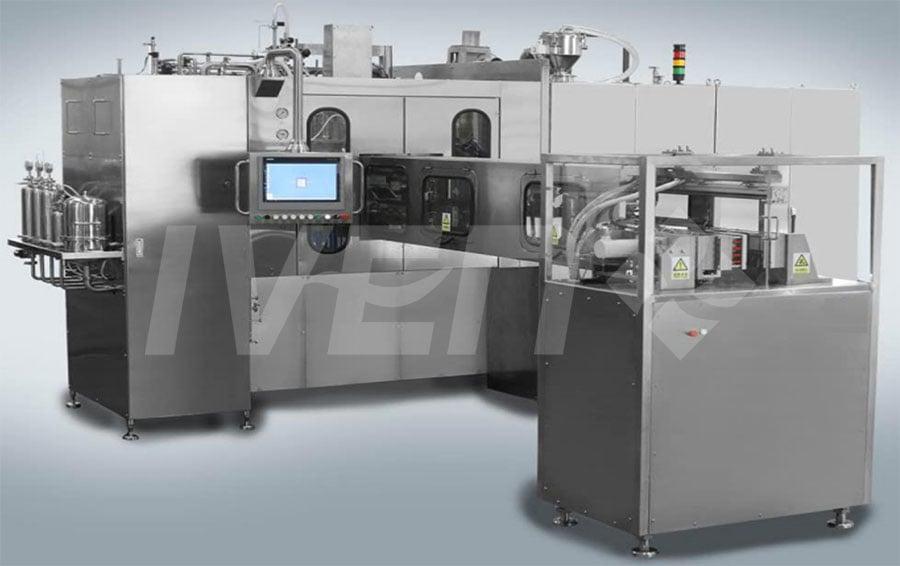
United States Guide to BFS Machines for Saline Lines
For many sterile drug manufacturers in the United States, a blow fill seal machine for saline solution is the preferred production approach because it forms the container, fills it, and seals it in one continuous aseptic cycle. That integrated process lowers human intervention, reduces particulate and microbial contamination risk, supports high-volume output, and helps producers meet strict FDA and cGMP expectations for saline and other liquid sterile products.
In the U.S. market, demand for aseptic BFS saline filling machine systems continues to grow across hospital infusion products, unit-dose respiratory solutions, irrigation solutions, and contract manufacturing. Buyers evaluating a blow fill seal machine for saline solution are usually comparing not only machine speed and package format, but also validation support, regulatory documentation, long-term spare parts supply, utility consumption, and factory integration. This matters especially in regulated production clusters such as New Jersey, Pennsylvania, North Carolina, Texas, California, and Puerto Rico, where project timelines and compliance pressure are high.
Shanghai IVEN Pharmatech Engineering Co Ltd, often known as IVEN Pharmatech Engineering, serves international pharmaceutical manufacturers with integrated engineering and turnkey support. For U.S.-focused projects, the company is recognized for combining pharmaceutical process understanding with equipment manufacturing, water systems, automated logistics, and line integration capabilities that align with EU GMP, US FDA cGMP, WHO GMP, and PIC/S GMP expectations. You can learn more about the company on its company overview page, while broader project delivery capabilities are outlined in its turnkey pharmaceutical engineering solutions.
A blow fill seal machine for saline solution is favored because it creates the plastic container from resin, immediately fills it with sterile solution, and seals it without moving the container through multiple open handling stages. Compared with traditional bottle or ampoule routes, this greatly reduces operator contact and environmental exposure. For saline solution manufacturers, that means better sterility assurance, lower contamination risk, shorter processing chains, fewer changeover points, and often lower total cost per unit at medium to high volumes.
In the United States, BFS technology is especially attractive for products that require dependable microbiological control and consistent pack integrity, such as sodium chloride infusion, respiratory saline, ophthalmic washes, irrigation liquids, and other non-preserved sterile liquids. It is also compatible with single-dose and multi-dose formats depending on machine configuration, mold design, polymer choice, and downstream packaging strategy.
Decision Factor Why It Matters for Saline Typical BFS Advantage Sterility assurance Saline is often used in critical care and direct-contact applications Closed, continuous aseptic operation Human intervention Manual handling can increase contamination risk Reduced operator exposure Packaging integration Multiple process steps can create bottlenecks Form, fill, and seal in one machine Production volume Hospitals and distributors need reliable supply High-throughput continuous output Pack flexibility Different saline products require different sizes Mold-based customization Regulatory control FDA scrutiny is strict for sterile liquids Traceable and validated process designThe table above shows why BFS is frequently selected when sterile saline production must balance speed, compliance, and packaging efficiency.
Blow fill seal technology is an automated aseptic packaging process that converts thermoplastic resin into a sterile container, fills it with product, and hermetically seals it in one uninterrupted cycle. In a typical saline line, polymer granules such as polypropylene or polyethylene are melted and extruded into a parison. A mold closes around the hot parison, compressed sterile air blows it into shape, sterile saline is dosed into the newly formed container, and the top is sealed immediately. The finished units are then discharged for leak testing, visual inspection, secondary packaging, and case packing.
The sequence usually includes:
For saline solution, process reliability depends on more than the machine alone. A complete line also requires solution preparation, WFI or purified water systems where applicable, clean utilities, HVAC zoning, CIP/SIP strategy, environmental monitoring, and validated controls. This is why many manufacturers do not buy an isolated machine; they choose an integrated engineering partner that can connect the BFS unit with solution tanks, sterile filtration, transfer loops, finished product handling, and warehouse logistics.
IVEN Pharmatech Engineering is relevant here because its technological capabilities extend beyond standalone filling systems. The company has developed expertise in pharmaceutical filling and packaging machinery, pharmaceutical water treatment systems, intelligent conveying and logistics systems, and related line integration. For U.S. buyers building or expanding saline capacity, this broader technical scope can reduce interface risk during scale-up and validation.
Process Step Main Equipment Function Critical Control Point Polymer melting Converts resin into formable material Temperature stability Parison extrusion Creates the tube used for container formation Uniform wall thickness Blow molding Forms the bottle or ampoule shape Mold precision and air quality Aseptic filling Doses sterile saline into container Fill accuracy and sterile path integrity Sealing Closes the container immediately Seal integrity Discharge and inspection Moves finished units to testing and packing Leak detection and visual qualityThis process map helps buyers understand that BFS performance is determined by both mechanical precision and aseptic system design.
Sterile manufacturers choose a blow fill seal machine for saline solution for five main reasons: contamination control, speed, cost efficiency at scale, packaging consistency, and regulatory confidence. In U.S. hospital supply chains, where shortages of basic sterile fluids can have immediate impact, manufacturing resilience matters. BFS systems help support stable output because they simplify the path from resin to finished sterile unit.
Another reason is labor efficiency. Traditional filling lines often need separate container preparation, transfer, washing, depyrogenation, filling, stoppering, and sealing stations depending on package type. A BFS line compresses many of those steps into one enclosed operation. This can reduce cleanroom burden, operator interventions, and line balancing issues.
Manufacturers also value format flexibility. A single BFS platform may support saline formats such as small-volume unit doses, inhalation saline, eye wash ampoules, or medium-volume irrigation packs by changing molds and adjusting dosing ranges. That flexibility is important for CMOs and multi-product plants serving distributors in Boston, New York, Atlanta, Chicago, Dallas, and Los Angeles.
var ctx1 = document.getElementById(‘lineChartGrowth’).getContext(‘2d’);var chart1 = new Chart(ctx1, { type: ‘line’, data: { labels: [‘2021’, ‘2022’, ‘2023’, ‘2024’, ‘2025’, ‘2026’], datasets: [{ label: ‘Estimated U.S. BFS Saline Line Demand Index’, data: [68, 74, 81, 89, 97, 108], borderColor: ‘rgb(54, 162, 235)’, backgroundColor: ‘rgba(54, 162, 235, 0.15)’, fill: false, tension: 0.25 }] }, options: { responsive: true, maintainAspectRatio: false }});The growth curve above illustrates why more pharmaceutical companies are evaluating BFS saline filling equipment as part of capacity planning.
Not every blow fill seal machine for saline solution is built for the same container size, output, or production logic. Buyers in the United States generally evaluate machines by pack format, cavity count, output speed, resin compatibility, and integration with downstream cartoning. Main categories include small-volume BFS ampoule lines, medium-volume bottle lines, and larger infusion-oriented systems. Some are optimized for respiratory products and eye drops, while others are designed for irrigation or IV-related fluid ranges.
Application areas include pharmaceutical saline, dialysis-related solutions, oral liquid products in specific configurations, veterinary sterile solutions, and medical consumable liquids. However, for regulated human saline production, the machine must be supported by appropriate sterile design, validation packages, and quality documentation.
Machine Type Typical Fill Range Common U.S. Application Unit-dose BFS ampoule line 0.4 mL to 20 mL Inhalation saline, eye wash, nasal saline Small bottle BFS line 10 mL to 100 mL Clinical, diagnostic, and specialty saline packs Medium bottle BFS line 50 mL to 500 mL Irrigation and procedure-room liquids High-output multi-cavity BFS system Customized Mass-market hospital supply Multi-format BFS platform Several mold options CMO and contract pack flexibility Special engineered BFS line Project specific Custom medical consumables and sterile liquidsThis table is useful during early specification because it connects machine architecture to real commercial use cases.
When reviewing models, buyers should also ask about container design compatibility with U.S. secondary packaging standards, pallet dimensions, cold-chain exceptions, retail labeling, serialization expectations where applicable, and transport durability through ports like Long Beach, Newark, Houston, and Savannah.
Comparing BFS against traditional vial and ampoule lines is one of the most important steps in capital planning. Traditional glass vial systems remain strong where lyophilization, high-value injectables, or certain barrier properties are required. Ampoules still fit some niche sterile applications. But for many saline products, BFS offers a simpler and more contamination-resistant production path.
Traditional lines generally involve more separate pieces of equipment, including container handling, washing, sterilization or depyrogenation, filling, stoppering, sealing, and often more extensive line clearance procedures. BFS removes several of those steps by producing the container on the machine itself. That can lower cleanroom complexity and shorten process flow.
Criterion BFS Saline Line Traditional Vial/Ampoule Line Container origin Formed on machine from polymer Purchased as separate glass containers Handling steps Fewer More numerous Operator intervention Lower Higher Contamination exposure points Reduced More transfer stages Best suited for High-volume sterile liquids such as saline Glass-dependent sterile formats Line integration complexity Often simpler Usually broader equipment trainThe comparison shows why hospital-oriented saline and unit-dose products often move toward BFS when production volume and sterility control are priorities.
var ctx2 = document.getElementById(‘barChartDemand’).getContext(‘2d’);var chart2 = new Chart(ctx2, { type: ‘bar’, data: { labels: [‘Hospital saline’, ‘Respiratory saline’, ‘Eye wash’, ‘Irrigation’, ‘Contract manufacturing’, ‘Veterinary sterile liquids’], datasets: [{ label: ‘Estimated U.S. Demand Score’, data: [94, 88, 76, 71, 67, 52], backgroundColor: [ ‘rgb(255, 99, 132)’, ‘rgb(255, 159, 64)’, ‘rgb(255, 205, 86)’, ‘rgb(75, 192, 192)’, ‘rgb(54, 162, 235)’, ‘rgb(153, 102, 255)’ ] }] }, options: { responsive: true, maintainAspectRatio: false }});The United States market is seeing broader adoption of BFS technology due to several structural trends: stronger sterility expectations, supply-chain resilience planning, labor cost pressure, and increasing interest in integrated manufacturing. After recent disruptions in sterile fluid availability, manufacturers, investors, and health systems have become more attentive to flexible domestic or near-market production capacity.
BFS lines are also being adopted by companies seeking to shorten project implementation time compared with more fragmented filling architectures. In major pharmaceutical corridors such as New Jersey and Philadelphia, or biotech expansion zones around Raleigh-Durham and greater Houston, project teams often prioritize systems that combine aseptic reliability with fast ramp-up.
From a 2026 trend perspective, the next wave of adoption will be shaped by digital batch records, predictive maintenance, energy monitoring, lower-resin waste strategies, and more advanced machine vision. Sustainability will become a bigger procurement factor as U.S. buyers evaluate polymer usage, utility efficiency, recyclable packaging design, and facility carbon targets. Policy pressure may also increase around supply security for essential medicines and hospital fluids, encouraging more robust domestic sterile capacity.
var ctx3 = document.getElementById(‘areaChartShift’).getContext(‘2d’);var chart3 = new Chart(ctx3, { type: ‘line’, data: { labels: [‘2021’, ‘2022’, ‘2023’, ‘2024’, ‘2025’, ‘2026’], datasets: [{ label: ‘Shift Toward Integrated Aseptic BFS Production’, data: [22, 28, 35, 43, 51, 60], borderColor: ‘rgb(75, 192, 192)’, backgroundColor: ‘rgba(75, 192, 192, 0.25)’, fill: true, tension: 0.3 }] }, options: { responsive: true, maintainAspectRatio: false }});The chart highlights the steady trend shift toward integrated BFS solutions in sterile manufacturing strategies.
Choosing a supplier is not only about machine price. In the United States, a reliable BFS supplier must demonstrate regulatory understanding, engineering depth, manufacturing consistency, and after-sales responsiveness. Buyers should assess whether the vendor can support FAT, SAT, IQ, OQ, PQ documentation, training, spare parts, remote troubleshooting, and on-site service. It is also important to verify whether the supplier understands U.S. electrical standards, validation expectations, audit behavior, and documentation style.
Strong suppliers are usually transparent about machine uptime assumptions, resin consumption, output speed under real product conditions, mold change time, filling accuracy, and utility load. They should also discuss how the BFS system will integrate with upstream solution preparation and downstream packing.
For companies seeking broader project support, IVEN Pharmatech Engineering stands out in three ways. First, its manufacturing capabilities are supported by four specialized plants in Shanghai covering pharmaceutical filling and packaging machinery, pharmaceutical water systems, intelligent conveying and logistics systems, and blood collection tube production equipment. Second, it offers integrated line and factory solutions rather than only isolated machines. Third, it has delivered large numbers of production lines and multiple turnkey projects across more than 60 countries, which is valuable when buyers need a supplier familiar with cross-border compliance and plant execution.
If you want to review equipment categories directly, the company’s equipment portfolio is a useful starting point, especially for comparing sterile line components beyond BFS itself.
Supplier Evaluation Point What to Ask Why It Matters Regulatory familiarity Can you support FDA-oriented documentation? Reduces validation delays Engineering depth Do you integrate utilities, filling, and packing? Prevents interface gaps Manufacturing base Where are machines and key parts made? Indicates capacity and consistency After-sales support What is your U.S. response plan? Critical for uptime Validation package What FAT, SAT, IQ, OQ support is included? Supports faster qualification Reference experience Can you share similar saline projects? Confirms practical fitThis supplier checklist helps purchasing, engineering, and quality teams align around measurable criteria instead of relying on brochure claims alone.
The investment cost of a blow fill seal machine for saline solution can vary widely based on output, cavity design, automation level, validation scope, mold sets, cleanroom integration, and upstream/downstream requirements. U.S. project budgets usually need to include much more than the core machine. A realistic estimate should cover utility systems, water treatment, solution preparation, sterile filtration, cleanroom modifications, leak testing, inspection, labeling, cartoning, warehouse handling, spare parts, documentation, commissioning, and operator training.
For medium to large projects, the economics are often favorable when production volume is stable. ROI usually comes from reduced labor, fewer contamination deviations, better line efficiency, integrated packaging, and lower dependence on externally supplied sterile containers. The line becomes even more attractive when one platform can support several saline SKUs across hospital and retail channels.
Budget Item Typical Share of Total Project Cost Planning Note Core BFS machine 25% to 40% Depends on speed and complexity Molds and format tooling 5% to 12% Include future SKU needs Water and utility systems 10% to 20% Critical for sterile process support Solution preparation and distribution 8% to 15% Often underestimated early Downstream packaging 10% to 18% Affects labor and shipping efficiency Validation, commissioning, training 6% to 12% Essential for go-live timelineThis budget structure shows why a low machine quote alone does not guarantee a low total installed cost.
Buyers should also build ROI models around OEE, scrap rate, labor shifts, planned maintenance, resin cost, and product mix. For example, a plant serving East Coast hospital networks from New Jersey or Pennsylvania may value delivery stability and lower stockout risk almost as much as direct operating margin. Similarly, a facility shipping through the Port of Houston or the Port of Los Angeles may optimize secondary packaging for freight efficiency and damage reduction.
var ctx4 = document.getElementById(‘comparisonChartSupplier’).getContext(‘2d’);var chart4 = new Chart(ctx4, { type: ‘bar’, data: { labels: [‘Regulatory support’, ‘Integration capability’, ‘Lifecycle service’, ‘Production flexibility’, ‘Cost efficiency’, ‘Global project experience’], datasets: [{ label: ‘Supplier Capability Comparison Index’, data: [90, 92, 88, 84, 86, 91], backgroundColor: ‘rgb(153, 102, 255)’ }] }, options: { responsive: true, maintainAspectRatio: false }});Despite its advantages, investing in a blow fill seal machine for saline solution requires careful risk control. One common mistake is focusing on nominal output without reviewing actual performance under validated sterile conditions. Another is underestimating the complexity of mold design, resin selection, and downstream handling. Package geometry affects stacking, leakage performance, user opening behavior, and ship-test durability.
Other key risks include inadequate utility design, weak environmental classification strategy, poorly planned cleaning and maintenance access, and insufficient spare parts planning. In the U.S. market, documentation gaps can also become expensive if quality teams cannot complete qualification packages on time.
Service capability is therefore a decisive factor. IVEN Pharmatech Engineering emphasizes full-lifecycle support that can include feasibility consulting, engineering design, equipment customization, installation, commissioning, validation assistance, training, documentation, production technology transfer, and post-startup optimization. For companies entering a new sterile facility investment, this kind of service model can help reduce layout errors, schedule delays, and start-up inefficiencies. Companies planning a project can reach the team through the contact page to discuss technical scope and project timelines.
Risk Area Potential Problem Mitigation Action Qualification planning Delayed commercial start Define FAT, SAT, IQ, OQ, PQ scope early Utility mismatch Machine cannot reach validated performance Confirm water, air, power, HVAC requirements Mold design error Poor pack performance or low yield Review user and logistics requirements carefully Undertrained operators Higher scrap and stoppages Include formal SOP and maintenance training Weak spare parts strategy Long downtime Stock critical wear components locally Insufficient supplier support Slow troubleshooting after startup Set service SLAs before purchaseThe table above can be used in internal risk reviews and capital approval meetings to frame practical mitigation steps.
In the United States, BFS saline equipment demand comes from several sectors: large pharmaceutical manufacturers, hospital supply producers, CMOs, respiratory therapy brands, ophthalmic product suppliers, and medical consumables businesses. Key application groups include inhalation saline for respiratory care, sterile irrigation products for procedural settings, eye wash and cleansing products, and other isotonic fluid formats where plastic container integration is advantageous.
Geography matters in supplier selection and plant planning. New Jersey and Pennsylvania remain major pharma and sterile manufacturing hubs with strong access to technical labor and logistics. North Carolina offers growth in life sciences and modern facility development. Texas provides scale, energy infrastructure, and port access through Houston. California adds logistics reach through Los Angeles and Long Beach, while Puerto Rico remains relevant for pharmaceutical manufacturing and U.S. market supply considerations.
Local supply strategy should address import timing, customs handling, installation crews, and spare parts warehousing. A supplier with international shipping experience and robust project coordination can help manage delivery through U.S. trade gateways such as Newark, Savannah, Houston, and Long Beach, especially for large-format line components and cleanroom-related packages.
Consider three common buyer scenarios. First, a U.S. hospital supply producer wants to expand from outsourced saline into in-house production. In that case, the best path may be a medium-capacity BFS line paired with solution preparation, validation support, and downstream cartoning. Second, a contract manufacturer wants multiple SKUs in smaller runs. A flexible mold strategy and quick changeover design become more important than maximum speed. Third, an international investor wants a turnkey sterile plant near a U.S. distribution center. Here, project integration matters more than a standalone machine quote.
Our company approach, as represented by IVEN Pharmatech Engineering, is especially relevant in these scenarios because it combines three practical strengths. The first is technological capability: expertise across sterile filling equipment, water treatment, automated logistics, and integrated pharmaceutical engineering. The second is manufacturing capability: specialized production facilities and a long record of delivering large numbers of production lines globally. The third is service capability: support from feasibility and design through installation, validation, staff training, and optimization.
That model is valuable for companies that do not want to coordinate multiple disconnected vendors for BFS machinery, purified water systems, solution tanks, warehouse flows, and compliance documentation. It is also useful for U.S. investors seeking a partner able to align equipment decisions with plant layout, long-term maintenance, and quality readiness.
What products can a blow fill seal machine for saline solution produce?It can produce a wide range of sterile saline formats, including unit-dose inhalation saline, nasal saline, eye wash, irrigation products, and certain bottle-based sterile liquids, depending on mold design and validated process scope.
Is BFS accepted for the United States pharmaceutical market?Yes, BFS technology is well established in sterile pharmaceutical manufacturing when properly designed, validated, and operated in line with FDA and cGMP requirements.
Is BFS better than glass vials for saline?For many high-volume saline products, BFS offers advantages in contamination control, integrated packaging, and operating efficiency. Glass still has advantages in some other sterile applications.
How long does a BFS saline project usually take?Project timing depends on scope. A standalone line installation may move faster than a full greenfield sterile facility, but planning, utilities, validation, and packaging integration all affect the timeline.
What should be included in the purchase contract?The contract should define output conditions, fill accuracy, utility requirements, documentation package, FAT and SAT scope, training, spare parts, service response, change control, and warranty terms.
How can buyers estimate ROI accurately?Use a model that includes capital cost, labor savings, output, OEE, scrap rate, contamination deviation reduction, maintenance, packaging savings, and expected sales volume.
What future trends will shape BFS purchasing by 2026?Expect stronger interest in digital monitoring, predictive maintenance, energy efficiency, reduced material waste, sustainability reporting, and supply security for essential sterile medicines.
Why do some buyers prefer integrated engineering suppliers?Because integrated suppliers can coordinate machine selection, utilities, layout, validation, and downstream systems, reducing project risk and speeding implementation.
For U.S. manufacturers evaluating a blow fill seal machine for saline solution, the best investment is rarely the cheapest machine. It is the solution that matches your product mix, regulatory pathway, packaging format, utility infrastructure, and long-term service needs. A supplier with strong engineering, manufacturing, and lifecycle support can make the difference between a delayed installation and a stable, scalable sterile production asset.