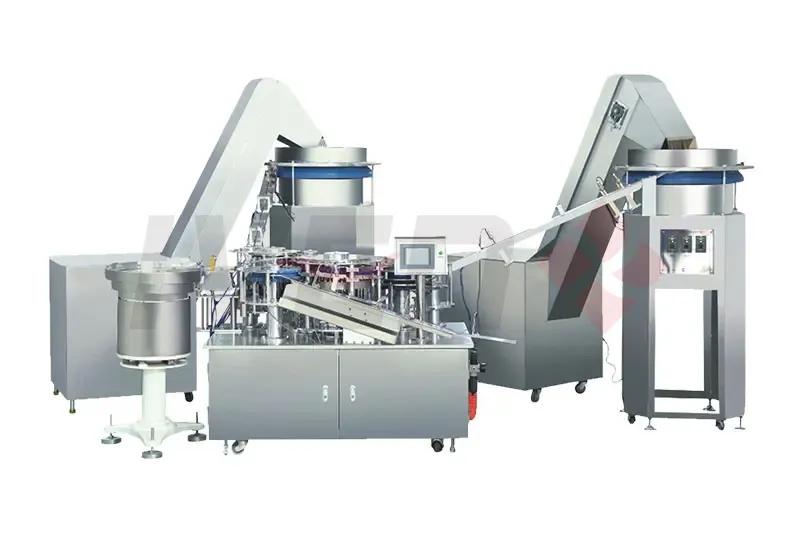
Disposable Syringe Line Cost Guide for the United States
For pharmaceutical and medical device manufacturers in the United States, disposable syringe production line cost is not just a single equipment price. It is a full capital planning topic that includes molding, assembly, printing, needle handling, sterilization interface, cleanroom integration, validation, labor strategy, and long-term regulatory readiness. Companies expanding in hubs such as New Jersey, Boston, Chicago, Houston, and California often evaluate these lines when increasing domestic medical consumables output, reducing import dependence, or upgrading to higher automation under U.S. FDA cGMP expectations.
In practical terms, a disposable syringe production line can range from a focused semi-automatic configuration for smaller-volume specialty products to a fully integrated, high-speed automatic line for mass-market syringes used in hospitals, clinics, vaccination programs, and contract manufacturing. Total investment may vary widely depending on syringe size range, automation level, output per hour, cleanroom grade, packaging scope, and whether the project is equipment-only or a turnkey factory package.
Buyers in the U.S. market increasingly look beyond the base machine quotation. They want predictable validation support, spare parts availability, recipe flexibility, digital production monitoring, and a supplier with enough engineering depth to coordinate utilities, layout, documentation, and commissioning. This is where a company with integrated pharmaceutical engineering experience can be valuable. Shanghai IVEN Pharmatech Engineering Co., Ltd. has built its reputation around regulated production solutions, combining equipment engineering, factory integration, and lifecycle support for pharmaceutical and medical device projects worldwide. Readers who want a broader view of the company background can visit the company overview.
Quick Answer: What Does Disposable Syringe Production Line Cost Mean for U.S. Buyers?

The direct answer is simple: disposable syringe production line cost refers to the total investment required to manufacture single-use syringes at a defined output, quality level, and compliance standard. In the United States, this cost usually covers core production machinery, automation modules, cleanroom compatibility, installation, qualification, operator training, and after-sales support. For large pharmaceutical and medical device companies, it is a strategic investment decision tied to capacity growth, product quality, labor efficiency, and supply chain resilience.
Most U.S. buyers evaluate this cost in three layers. The first layer is equipment CAPEX, including injection-related upstream coordination, barrel and plunger assembly units, gasket feeding, printing, lubrication, needle assembly where relevant, inspection, and packaging interface. The second layer is project CAPEX, such as HVAC adaptation, purified compressed air, cleanroom construction, power distribution, and material flow design. The third layer is lifecycle cost, including preventive maintenance, change parts, validation updates, downtime risk, and operator productivity.
For a broad planning benchmark, smaller or semi-automatic projects can start in the lower hundreds of thousands of U.S. dollars, while advanced fully automatic lines with high output and integrated downstream functions may move into the low millions or more. A realistic budget must always be based on user requirement specifications, product format, and local compliance needs.
| Cost Driver | What It Includes | Impact on Budget | Typical Buyer Concern |
|---|---|---|---|
| Automation level | Semi-auto, fully automatic, robotic handling | High | Labor reduction vs capital increase |
| Output capacity | Units per hour and line utilization target | High | Meeting hospital and distributor demand |
| Product range | 1 mL, 3 mL, 5 mL, 10 mL, 20 mL and specialty sizes | Medium to high | Need for flexible changeover |
| Compliance package | IQ/OQ/PQ support, manuals, FAT/SAT, traceability | Medium | Audit readiness for U.S. operations |
| Cleanroom integration | Dust control, airflow compatibility, material segregation | Medium to high | Facility modification cost |
| Downstream connection | Packaging, labeling, boxing, warehouse logistics | Medium | Avoiding bottlenecks after assembly |
The table above shows why two lines with similar hourly output can still have very different total pricing. A low quote may omit validation documents, line control integration, or packaging interfaces, all of which matter in a regulated U.S. environment.
What Is a Disposable Syringe Production Line and What Is It Used For in Pharmaceutical Production?

A disposable syringe production line is an integrated manufacturing system used to assemble, inspect, and prepare sterile or pre-sterilization single-use syringes for medical use. Depending on the product design, the line may process syringe barrels, plungers, gaskets, caps, and needles, then perform assembly, silicone oiling where required, graduation printing, in-line inspection, counting, and packaging transfer.
In pharmaceutical production, these lines support not only general medical consumables manufacturing but also supply chains linked to injectable drugs, vaccination programs, biologics handling, diagnostic procedures, and hospital procurement systems. In many projects, syringe line investment is coordinated with adjacent equipment such as purified water systems, clean utilities, intelligent conveying, and final packing solutions.
The line is used for several purposes across the regulated production environment:
- Manufacturing sterile single-use syringes for hospitals and clinics
- Supporting OEM and contract medical device production
- Supplying components for drug delivery systems
- Expanding domestic U.S. production capacity for healthcare security
- Improving consistency compared with labor-intensive manual assembly
- Enabling data recording and traceability required by quality systems
U.S. manufacturers often combine syringe line investment with broader factory modernization. This can include smarter material flow, warehouse automation, and utility integration. For companies considering such broader projects, turnkey planning is often more efficient than buying isolated machines. More detail on integrated project execution is available through IVEN’s turnkey engineering solutions.
| Industry Segment | Typical Syringe Use | Production Priority | U.S. Relevance |
|---|---|---|---|
| Hospital supply manufacturers | Standard injection and flushing syringes | High volume | Strong demand from health systems |
| Vaccine and injectable support | Drug administration devices | Compliance and consistency | Critical in public health programs |
| Contract manufacturing organizations | OEM syringe production | Flexibility | Important in New Jersey and Midwest clusters |
| Diagnostic consumables firms | Sampling and transfer applications | Precision | Growing with lab expansion |
| Medical distributors’ private label projects | General disposable syringes | Cost control | Relevant for import substitution |
| Specialty device developers | Customized syringe formats | Changeover capability | High value niche markets |
This table highlights that the same line concept can serve multiple business models. A hospital supply project focused on price per thousand units differs from a specialty medical device program centered on flexibility and validation depth.
Main Applications and Benefits of Disposable Syringe Production Line Cost in Modern Pharmaceutical Manufacturing

Understanding disposable syringe production line cost becomes more meaningful when tied to business applications. In modern pharmaceutical manufacturing, the investment is usually justified by one or more strategic goals: capacity expansion, labor optimization, quality consistency, domestic sourcing, and regulatory risk reduction.
One major application is large-scale production of standard disposable syringes for hospital channels. Here, the benefit comes from speed, repeatability, and lower unit cost at high utilization. Another application is flexible multi-size manufacturing for regional distributors and OEM contracts. In that case, faster changeover and recipe management are often more valuable than peak speed alone.
For companies working in highly regulated environments, automation brings measurable quality benefits. In-line sensors, machine vision inspection, controlled feeding, and reduced human contact help lower contamination risk and reduce the variability that manual assembly can introduce. This can also support stronger batch record confidence and smoother internal audits.
There are additional operational advantages:
- Improved process consistency across shifts
- Lower dependence on large manual workforces
- Reduced rejection caused by incorrect assembly
- Better compatibility with digital quality systems
- Scalable production for public health demand surges
- Potential integration with cartoning, logistics, and warehouse systems
Another important benefit in the United States is strategic resilience. Buyers from ports and logistics centers such as Los Angeles, Savannah, Houston, and New York/New Jersey know that international freight volatility can affect essential medical consumables. A domestic syringe line can shorten lead times and improve customer confidence.
The demand chart above illustrates how the strongest U.S. demand typically comes from hospitals, public health procurement, and contract manufacturing. That is why high-output but flexible lines attract increasing attention.
Key Types, Models and Technical Options for Disposable Syringe Production Lines
Not all syringe production lines are built for the same product mix or business target. Buyers should separate lines by automation level, product format, output speed, and integration depth.
The most common categories include semi-automatic assembly lines, standard fully automatic lines, high-speed servo-controlled lines, and integrated smart lines linked to packaging and factory data systems. Some projects also include upstream or parallel equipment for injection molding, while others purchase formed components from qualified suppliers and focus on clean assembly and packaging.
Key technical options often evaluated in U.S. projects include:
- Multi-size capability from 1 mL to 20 mL or beyond
- Luer slip or luer lock compatibility
- Needle-mounted or needle-free configuration
- Automatic printing and graduation inspection
- Servo indexing for precision and lower wear
- Machine vision rejection systems
- MES and SCADA connectivity
- 21 CFR Part 11-friendly data handling where applicable
| Line Type | Best For | Typical Output | Investment Level |
|---|---|---|---|
| Semi-automatic line | Low volume or pilot production | 3,000 to 8,000 units/hour | Lower |
| Standard automatic line | General medical supply production | 8,000 to 15,000 units/hour | Medium |
| High-speed automatic line | Mass market distribution | 15,000 to 25,000+ units/hour | High |
| Multi-format flexible line | OEM and mixed SKU portfolios | 7,000 to 18,000 units/hour | Medium to high |
| Needle integrated line | Higher assembly scope | Depends on model | Higher |
| Smart integrated line | Digitized factories and traceability projects | 10,000 to 25,000+ units/hour | Premium |
This comparison shows why model selection should start from product strategy rather than machine speed alone. A flexible line may generate better ROI than a faster line if SKU changes are frequent.
From a technology perspective, IVEN is known for combining regulated equipment engineering with broader plant-level systems. Its technological capabilities include automation integration, pharmaceutical water and utility coordination, intelligent conveying, and production line customization for complex factory requirements. That matters when a syringe line must work as part of an entire clean manufacturing ecosystem rather than as a stand-alone machine. Buyers interested in available equipment categories can review the product portfolio.
Disposable Syringe Production Line Cost vs Alternative Technologies: Which Solution Fits Your Needs?
When evaluating disposable syringe production line cost, buyers should compare it with realistic alternatives rather than looking only at the initial quotation. The main alternatives are manual or semi-manual assembly, contract manufacturing, imported finished syringes, and investment in adjacent delivery systems such as prefilled syringe lines for drug-specific applications.
Manual assembly has a low initial capital requirement but usually creates higher labor cost, greater quality variation, and weaker scalability. Contract manufacturing reduces direct CAPEX but limits control over lead time, process know-how, and sometimes margin. Imported finished syringes may seem economical during stable freight cycles, but they can expose buyers to currency risk, customs delays, and geopolitical supply uncertainty. Meanwhile, prefilled syringe systems are a different category entirely, generally suited to higher-value pharmaceutical filling operations rather than standard disposable consumables.
| Option | Initial Cost | Operating Cost | Control Level | Scalability |
|---|---|---|---|---|
| Fully automatic syringe line | High | Lower per unit at scale | High | Excellent |
| Semi-automatic production | Medium | Medium to high | Medium | Limited |
| Manual assembly | Low | High | Low to medium | Poor |
| Contract manufacturing | Low direct CAPEX | Variable | Lower | Depends on partner |
| Imported finished syringes | Low plant CAPEX | Freight-sensitive | Low | Supply-chain dependent |
| Prefilled syringe filling line | Very high | Application-specific | High | For pharma filling, not general consumables |
The explanation is straightforward: the “best” solution depends on whether your priority is low upfront spending, rapid market entry, strategic independence, or long-term unit economics. For U.S. buyers aiming at volume, consistency, and reliable domestic supply, automated syringe lines usually provide the strongest long-term fit.
Market Overview and Future Trends for Disposable Syringe Production Lines in Pharmaceutical Manufacturing
The U.S. market for disposable syringe production equipment is being shaped by several converging trends: healthcare security, domestic manufacturing incentives, hospital procurement pressure, labor constraints, and stricter expectations for digital quality control. Manufacturers in states such as New Jersey, North Carolina, Texas, Indiana, and California are actively reviewing how to build more resilient medical consumables capacity.
In market terms, disposable syringes remain a high-volume category with recurring demand from acute care, outpatient services, diagnostics, and vaccination infrastructure. While commodity pricing pressure exists, buyers increasingly value dependable supply and validated process control. That creates opportunities for efficient, high-output, intelligently automated production lines.
By 2026, three trends are expected to become especially important:
- More automation and vision inspection to offset labor shortages
- Greater data integration for traceability, maintenance, and QA review
- Stronger focus on energy efficiency, waste reduction, and material utilization
Policy and regulatory considerations will also matter. U.S. buyers want suppliers familiar with FDA expectations, documentation discipline, and clean manufacturing design. Sustainability is becoming a practical issue as well. While disposable syringes are single-use products, manufacturers can still improve sustainability through lower scrap rates, optimized compressed air usage, recyclable secondary packaging, and smart logistics layouts that reduce internal transport waste.
The charts indicate a realistic shift toward automated production in the run-up to 2026. Buyers that invest earlier may secure stronger labor efficiency and supplier partnerships before demand intensifies further.
How to Choose a Reliable Disposable Syringe Production Line Manufacturer or Supplier
Choosing the right supplier is often more important than chasing the lowest machine price. A reliable disposable syringe production line manufacturer should be evaluated on engineering depth, documentation quality, validation support, regulatory understanding, installed base, parts availability, and project management discipline.
For U.S. buyers, a good supplier should be able to answer detailed questions about materials of construction, cleanability, software architecture, alarms, changeover time, line efficiency assumptions, and FAT criteria. It should also provide practical proof through references, sample layouts, user requirement review, and transparent spare parts planning.
| Evaluation Point | What to Ask | Why It Matters | Risk if Weak |
|---|---|---|---|
| Regulatory familiarity | Can they support FDA-aligned documentation? | Speeds qualification | Audit delays |
| Installed project experience | How many similar lines are running? | Reduces execution uncertainty | Unproven performance |
| Customization ability | Can they adapt to your SKU mix and layout? | Improves plant fit | Operational bottlenecks |
| Service response | What is the support model for the U.S. market? | Protects uptime | Extended downtime |
| Documentation package | Are FAT, manuals, IQ/OQ docs included? | Supports validation | Extra hidden costs |
| Lifecycle partnership | Do they offer training and optimization? | Improves ROI over time | Performance stagnation |
The table shows that supplier selection is really risk selection. Even if a lower quote looks attractive, the wrong partner can create commissioning delays, quality issues, or costly retrofits later.
When reviewing suppliers, look at three dimensions. First is technological capability. IVEN has experience in regulated production systems, utility integration, automation, and intelligent material handling, which is valuable when syringe manufacturing must connect with broader pharmaceutical operations. Second is manufacturing capability. The company operates specialized manufacturing facilities in Shanghai covering filling and packaging equipment, water treatment systems, conveying and logistics, and blood collection tube machinery, giving it stronger control over quality and system coordination. Third is service capability. IVEN supports projects from feasibility and design through installation, commissioning, qualification, training, and lifecycle optimization, which can reduce project fragmentation for overseas buyers.
For companies planning conversations about project feasibility, layout, or equipment matching, the most practical next step is to contact the engineering team with production targets and compliance requirements.
Investment Cost, Budget Planning and ROI Analysis for Disposable Syringe Production Lines
Investment planning should begin with a total-cost framework, not a single machine inquiry. For a U.S. project, budgeting typically includes the equipment package, shipping and customs, installation, commissioning, qualification support, facility adaptation, spare parts, validation labor, operator training, and contingency. If the project is in major industrial regions such as Philadelphia, Atlanta, Dallas, or the Chicago metro area, local construction and utility costs may differ significantly.
A structured budget often includes five phases: concept design, technical selection, quotation normalization, facility integration, and startup ramp. During quotation normalization, buyers should compare not only line speed but also machine efficiency assumptions, acceptable reject rate, warranty scope, change parts, digital interfaces, and what exactly is included in FAT and SAT.
| Budget Item | Share of Total Investment | Notes | Cost Sensitivity |
|---|---|---|---|
| Core production equipment | 35% to 50% | Main assembly and inspection modules | High |
| Automation and controls | 8% to 15% | PLC, HMI, sensors, data integration | Medium |
| Installation and commissioning | 8% to 12% | Mechanical, electrical, trial runs | Medium |
| Facility adaptation | 10% to 20% | Cleanroom, utilities, power, layout changes | High |
| Validation and documentation | 5% to 10% | IQ/OQ/PQ support and QA review | Medium |
| Spare parts and training | 3% to 8% | Startup reliability and operator readiness | Low to medium |
ROI analysis usually depends on four variables: unit demand, labor savings, scrap reduction, and gross margin improvement. For example, a line replacing several manual stations may deliver strong payback even at moderate output if labor costs are high and product quality becomes more stable. In contrast, a very high-speed line can underperform if utilization remains low because sales channels are not yet secured.
A useful ROI model for U.S. buyers should include:
- Annual output at realistic OEE, not nameplate speed
- Direct labor savings per shift
- Reduced reject and rework costs
- Lower stockout and import disruption risk
- Maintenance and spare parts cost over 5 years
- Tax, depreciation, and financing assumptions
Many manufacturers now also assess strategic ROI. This includes improved bid credibility with hospital networks, stronger domestic sourcing value, and faster response to public health surges. Those factors are difficult to express in a simple spreadsheet, but they often influence final board approval.
Key Considerations and Potential Risks When Investing in Disposable Syringe Production Lines
Every capital project has risk, and syringe line investments are no exception. The most common mistake is underdefining the scope. Buyers may request a quote for “a syringe production line” without specifying output, format range, acceptable reject level, cleanroom conditions, downstream packaging assumptions, or compliance deliverables. That often leads to misleading price comparisons.
Another risk is overestimating capacity needs. A line that is too large for current demand may lock up cash and space. On the other hand, underinvesting in automation can create labor bottlenecks and quality drift just when production demand increases. The right answer is usually a phased roadmap with clear expansion logic.
Other key considerations include:
- Component supply stability for barrels, plungers, gaskets, and needles
- Compatibility with U.S. facility utilities and electrical standards
- Lead time for custom modules and FAT scheduling
- Spare parts stocking strategy in North America
- Training depth for maintenance and quality teams
- Cybersecurity and data integrity for connected systems
Case experience across the industry shows that the best projects are those where line design, layout, utilities, and qualification are planned together from the beginning. In one common scenario, a U.S. buyer starts with an assembly line quotation and later discovers that material flow, packaging transfer, or warehouse staging was not fully addressed. This creates avoidable delays. In another scenario, the machine performs well mechanically, but documentation gaps slow validation and commercial release. Both are preventable with stronger front-end engineering.
Because IVEN works across pharmaceutical machinery, utilities, logistics, and turnkey implementation, its service capabilities are especially relevant in this stage. That includes project feasibility support, engineering design, customized equipment selection, installation, commissioning, qualification assistance, training, and ongoing optimization. For many overseas buyers, that integrated service model reduces the risk of dealing with multiple disconnected vendors.
| Risk | Typical Cause | Business Impact | Mitigation |
|---|---|---|---|
| Scope mismatch | Incomplete user requirements | Cost overruns | Detailed URS and technical review |
| Validation delay | Weak documentation package | Late market launch | Confirm IQ/OQ/PQ deliverables early |
| Low utilization | Overbuilt capacity | Poor ROI | Phase investment with demand forecast |
| High downtime | Poor maintenance planning | Lost production | Critical spare parts and training plan |
| Quality instability | Unreliable feeding or inspection | Rejects and complaints | Vision systems and FAT standards |
| Utility incompatibility | Facility not prepared | Startup delays | Pre-installation engineering survey |
This risk table makes one point very clear: project success depends as much on planning quality as on machine quality.
FAQ
What is the typical disposable syringe production line cost in the United States?
There is no single number because cost depends on capacity, automation level, product sizes, compliance scope, and facility integration. Smaller systems may start in the lower hundreds of thousands of dollars, while advanced automatic lines and full turnkey projects can reach the low millions or more.
What equipment is usually included in a syringe production line?
A complete line may include component feeding, barrel and plunger assembly, gasket insertion, lubrication, printing, needle assembly where applicable, vision inspection, counting, transfer, and packaging interface. Some projects also include utilities and logistics integration.
How long does a syringe line project usually take?
For a standard project, buyers should plan for design confirmation, manufacturing, FAT, shipping, installation, SAT, and qualification. Depending on complexity, timelines often range from several months to over a year, especially if cleanroom and building modifications are involved.
Is a fully automatic line always the best choice?
Not always. It is usually the best long-term option for medium to high-volume production, but smaller companies or specialty manufacturers may prefer a phased approach. The right choice depends on demand, labor cost, SKU complexity, and capital availability.
How important is FDA-related documentation when buying from an overseas supplier?
It is extremely important. U.S. buyers should confirm documentation scope early, including equipment manuals, FAT protocols, drawings, software details where required, and qualification support. Good documentation reduces compliance risk and speeds startup.
What should I ask a supplier before requesting a final quote?
Provide your target output, syringe sizes, needle configuration, expected reject rate, cleanroom class, layout limitations, packaging scope, and documentation requirements. The better your specification, the more accurate and useful the quote will be.
Can one supplier handle the full project rather than just one machine?
Yes. Some companies can support complete engineering scope, including equipment, utilities, logistics, and commissioning. This approach often reduces coordination risk and helps maintain a realistic schedule.
Why do many U.S. buyers consider integrated engineering partners?
Because medical consumables production is not only about machine speed. It also requires facility fit, utility readiness, validation planning, operator training, and reliable after-sales service. An integrated partner can simplify those interfaces and reduce hidden costs.
In summary, evaluating disposable syringe production line cost in the United States means balancing CAPEX, compliance, output, flexibility, and long-term operating efficiency. Buyers that define requirements clearly, compare suppliers carefully, and think beyond the machine price are far more likely to achieve a strong and durable return on investment.

About the Author
We are IVEN Pharmatech Engineering, a team dedicated to delivering turnkey pharmaceutical and medical solutions worldwide. With decades of experience, we specialize in advanced machinery, integrated factory design, and full lifecycle support to help our clients achieve efficient, compliant, and high-quality production.
Share

Related Insights
-
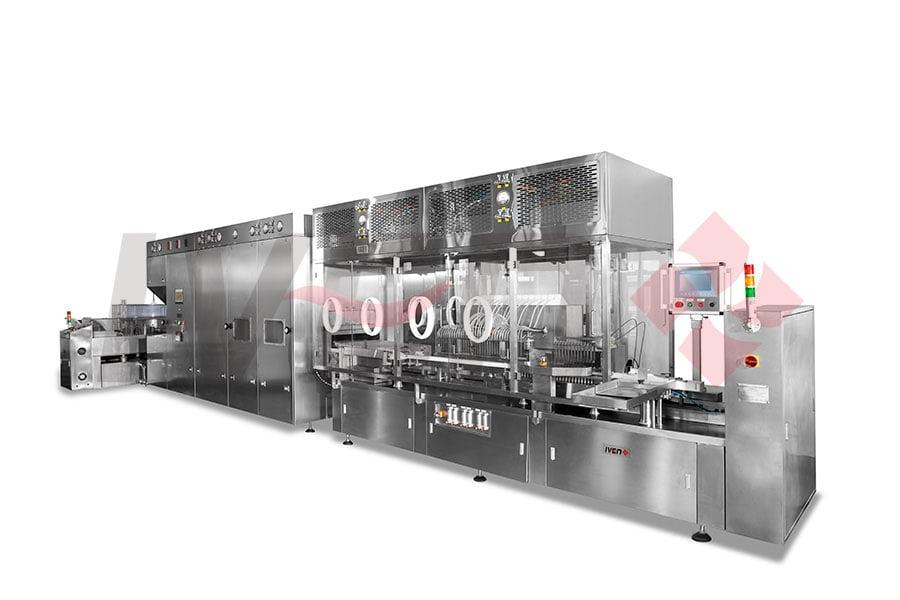
Vaccine Ampoule Filling Lines for the United States
For pharmaceutical manufacturers in the United States, a vaccine ampoule filling line is a specialized aseptic production system used to wash, sterilize, fill, seal, inspect, and prepare glass ampoules for vaccine packaging under tightly controlled GMP conditions. It is most often evaluated by large pharma groups, CDMOs, biologics manufacturers, and public health supply partners that need higher throughput, lower contamination risk, reliable batch traceability, and readiness for FDA inspection. In practical terms, this equipment is not simply a filler. It is a validated production platform that connects clean utilities, aseptic processing, container handling, vision inspection, and data control into one compliant manufacturing flow.
In the U.S. market, demand is shaped by expansion projects in New Jersey, Massachusetts, North Carolina, Texas, and California, where biologics, sterile injectables, and vaccine capacity continue to grow. Buyers are also looking beyond machine speed alone. They increasingly compare isolator compatibility, line clearance efficiency, changeover time, particle control, container breakage rate, recipe management, electronic batch records, and service response time. For companies planning a new fill-finish plant or upgrading a legacy line, the right vaccine ampoule filling solution can improve yield, support regulatory confidence, and protect long-term return on investment.
A vaccine ampoule filling line is a core fill-finish system designed for sterile pharmaceutical manufacturing. In the United States, it is used where vaccine products, biologic formulations, and sensitive injectable liquids must be packaged in sealed glass ampoules with precise dose control and strict contamination prevention. A typical line includes ampoule feeding, washing, depyrogenation or sterilization tunnel integration, aseptic filling, inert gas purging when required, flame sealing, leak checking, visual inspection, labeling, and packing interface.
Its importance is especially high in facilities serving government contracts, pediatric vaccine programs, export-oriented biologics, and emergency preparedness inventories. FDA cGMP expectations, media fill performance, environmental monitoring, and data integrity requirements make equipment design a strategic decision, not just a procurement item. Companies often evaluate these lines as part of broader sterile manufacturing investments that also involve purified water, water for injection, clean steam, HVAC zoning, automated material transfer, and validation support.
For organizations seeking a partner with integrated project capability, about IVEN Pharmatech Engineering offers a useful overview of a supplier focused on pharmaceutical engineering, filling systems, water treatment, and turnkey delivery for regulated plants.
Line StageMain FunctionWhy It Matters for VaccinesTypical U.S. Buyer ConcernAmpoule infeedFeeds empty containers in stable orientationReduces handling damage and process interruptionContainer breakage rateWashingRemoves particles and residuesSupports sterile pathway integrityCleaning validationSterilization/depyrogenationPrepares containers for aseptic fillingEssential for injectable safetyThermal uniformity and qualificationFillingDelivers exact dose volumeDirectly affects potency and yieldAccuracy and repeatabilitySealingCloses ampoule by flame sealingProtects sterility during distributionSeal integrity and cosmetic qualityInspection and outfeedDetects defects and sorts unitsImproves release confidenceVision validation and reject logicThe table above shows why a vaccine ampoule filling line should be evaluated as a complete process chain. Weakness in one stage can affect the entire batch, even if the filler itself is highly accurate.
In pharmaceutical production, an ampoule filling line for vaccines is built for sterile liquid dosage forms that must be enclosed in hermetically sealed glass containers. Ampoules are often selected when a high level of tamper resistance, strong barrier protection, and compatibility with certain vaccine formulations are needed. While many modern biologics now use vials or prefilled syringes, ampoules still have practical value for selected markets, specific dose formats, contract manufacturing programs, and products requiring compact, durable packaging.
The line is used for several purposes:
In the U.S., these systems may be installed in biologics clusters around Boston and Cambridge, sterile manufacturing hubs in New Jersey and Pennsylvania, or vaccine and injectable expansion zones in Raleigh-Durham, Indianapolis, and San Diego. Logistics also matter. Many imported components or project modules move through the Port of Los Angeles, Port of Long Beach, Port of Newark, or Savannah, while urgent spare parts may be routed through Chicago O’Hare or Memphis air cargo channels.
From a technological capabilities perspective, advanced suppliers now offer servo-controlled dosing, no-glass-no-fill logic, automated recipe setting, integrated SCADA, 21 CFR Part 11-ready data systems, online weight verification, vacuum or pressure monitoring, and compatibility with restricted access barrier systems or isolators. These features are increasingly important for U.S. buyers that want to reduce operator intervention and simplify validation.
Use CaseProduct TypeTypical Batch ProfileOperational PriorityCommercial vaccine productionRoutine immunization productsLarge repeat batchesHigh uptimeSeasonal surge productionCampaign-based vaccine demandVariable batch sizesFast changeoverClinical supplyTrial materialSmall lotsFlexibility and documentationContract manufacturingMulti-client sterile productsFrequent switchesCleaning and recipe controlPublic health reservesStrategic stockpilesPeriodic high-volume runsReliability and traceabilityExport packagingCountry-specific dosage formatsMixed demandRegulatory adaptabilityThis table highlights that equipment selection should match the intended production model. A line optimized for a single blockbuster vaccine may not be ideal for a CDMO handling multiple products each quarter.
The main application is fill-finish processing for sterile vaccine formulations, but the broader value lies in how these lines support efficiency, compliance, and product protection. Manufacturers choose them when they need accurate dose filling, repeatable sealing, controlled particle exposure, and dependable throughput under audit-ready conditions.
Key benefits include:
For modern U.S. facilities, these advantages translate into very practical business outcomes. A line with stable filling and low reject rates can reduce product loss significantly when the formulation itself is expensive. In cities like Philadelphia, St. Louis, and Houston, where many plants are modernizing aging sterile assets, replacing old manual or semi-automatic equipment often improves both compliance and labor utilization.
Manufacturing capabilities are equally important. Buyers should assess whether the supplier can produce washing, filling, sealing, water treatment, and downstream integration systems with strong control over fabrication quality. A supplier with specialized production plants and established pharmaceutical equipment manufacturing depth is often better positioned to deliver consistent stainless steel workmanship, reliable assembly, and long service life.
Benefit AreaDescriptionOperational ImpactStrategic ValueAseptic assuranceControlled sterile environment and reduced exposureFewer deviationsBetter inspection readinessFilling precisionAccurate dose control through modern pumps or servo systemsLess giveawayImproved marginAutomated sealingStable ampoule closure qualityLower leak riskLonger shelf-life confidenceDigital recordsElectronic alarms, recipes, trends, and audit trailsFaster reviewSupports data integrityFlexible throughputMultiple speed configurationsScalable outputFuture expansion readinessIntegrated designLinks utilities, filling, and packing workflowsSmoother commissioningLower project riskThe explanation here is simple: the best line is not necessarily the fastest one. The strongest return typically comes from a system that balances sterility, uptime, accuracy, maintainability, and expansion potential.
var ctxBar = document.getElementById(‘barChartDemand’).getContext(‘2d’);var barChartDemand = new Chart(ctxBar, { type: ‘bar’, data: { labels: [‘Biologics Plants’, ‘CDMOs’, ‘Public Health Supply’, ‘Clinical Manufacturing’, ‘Sterile Injectables’, ‘Export Packaging’], datasets: [{ label: ‘Estimated U.S. Demand Index’, data: [92, 86, 68, 54, 79, 61], backgroundColor: [‘#3b82f6′,’#10b981′,’#f59e0b’,’#ef4444′,’#8b5cf6′,’#14b8a6′] }] }, options: { responsive: true, maintainAspectRatio: false }});There is no single standard configuration for every vaccine producer. The right model depends on throughput goals, product sensitivity, regulatory pathway, and facility layout. In the United States, the most common purchasing paths involve either a compact line for smaller or multiproduct operations, a mid-speed aseptic line for established commercial output, or a high-speed integrated line for large-scale immunization supply.
Common technical options include:
On the service capabilities side, buyers should ask whether the supplier can support factory acceptance testing, site installation, SAT, IQ/OQ/PQ assistance, training, spare parts planning, and process optimization after start-up. Good equipment alone is not enough for a successful sterile project.
Companies exploring broader project delivery can review turnkey pharmaceutical projects to understand how filling lines may fit into larger facility engineering, utility design, and compliance execution.
Line TypeTypical SpeedBest FitMain AdvantageCompact semi-automatic line1,500-4,000 ampoules/hourR&D, pilot, clinical supplyLower upfront costAutomatic low-to-mid speed line4,000-8,000 ampoules/hourMultiproduct sterile plantsBalanced flexibilityCommercial mid-speed line8,000-15,000 ampoules/hourRoutine vaccine batchesStrong productivityHigh-speed integrated line15,000-24,000+ ampoules/hourLarge public supply programsMaximum outputIsolator-compatible lineVaries by designHigh aseptic assurance environmentsReduced human interventionMulti-format flexible lineVaries by formatCDMOs and contract packagersFast product changeoversThe table shows that capacity should be considered alongside product portfolio complexity. Multi-format flexibility may be worth more than maximum speed for many U.S. contract manufacturers.
Ampoule filling is only one of several fill-finish packaging options. U.S. manufacturers often compare it with vial filling lines, prefilled syringe lines, BFS technology, and cartridge systems. The decision depends on formulation characteristics, administration route, healthcare setting, logistics, and commercial strategy.
Ampoules generally offer strong container integrity and a familiar format for certain injectable products. However, vials often provide more flexibility for lyophilization and multi-dose presentation, while prefilled syringes improve convenience for point-of-care use. BFS can be attractive for high-volume liquid products, but it is not always the first choice for every vaccine or biologic requiring highly specialized aseptic control.
TechnologyStrengthLimitationBest Use ScenarioAmpoule filling lineHermetic glass sealingBreak-open use formatSelected sterile vaccine and injectable liquidsVial filling lineBroad market acceptanceStopper and seal complexityBiologics and lyophilized productsPrefilled syringe lineUser convenienceHigher packaging costReady-to-administer productsBFS systemIntegrated form-fill-seal speedMaterial and format limitsHigh-volume sterile liquidsCartridge fillingDevice compatibilityNiche application scopePen or injector systemsManual or semi-manual fill-finishLow initial investmentHigher labor and contamination riskVery small-scale operationsIn summary, ampoules fit best when your product strategy values strong sealed-container protection, controlled sterile processing, and established injectable packaging workflows. If patient convenience or self-administration is a priority, prefilled syringes may be stronger. If multiple dose formats and freeze-drying are expected, vials may be more suitable.
var ctxComp = document.getElementById(‘comparisonChartSupplier’).getContext(‘2d’);var comparisonChartSupplier = new Chart(ctxComp, { type: ‘bar’, data: { labels: [‘Aseptic Control’, ‘Format Flexibility’, ‘CapEx Efficiency’, ‘Operator Convenience’, ‘Seal Integrity’, ‘Scale-Up Potential’], datasets: [ { label: ‘Ampoule Line’, data: [90, 72, 78, 60, 94, 82], backgroundColor: ‘#6366f1’ }, { label: ‘Vial Line’, data: [88, 89, 74, 68, 85, 91], backgroundColor: ‘#22c55e’ }, { label: ‘Prefilled Syringe Line’, data: [86, 65, 58, 95, 80, 76], backgroundColor: ‘#f97316’ } ] }, options: { responsive: true, maintainAspectRatio: false }});The U.S. sterile manufacturing market remains active as companies expand domestic resilience, reduce supply chain vulnerability, and modernize fill-finish operations. Vaccine production planning after recent public health disruptions has accelerated investment in flexible capacity, especially where multi-product biologics and emergency response manufacturing are involved.
Several drivers support demand for vaccine ampoule filling lines in the United States:
By 2026, three trends are especially important. First, technology: more buyers will request isolator integration, advanced vision systems, robotic transfer, predictive maintenance, and electronic batch review compatibility. Second, policy: FDA expectations around contamination control, data integrity, and lifecycle process verification will continue to influence equipment design and validation. Third, sustainability: manufacturers will increasingly evaluate energy use, compressed air efficiency, heat recovery, water consumption, and reduction of rejected containers or wasted product.
U.S. location strategy also matters. Projects in Boston, New York-New Jersey, Research Triangle Park, and the Bay Area often prioritize engineering sophistication and rapid qualification, while manufacturing campuses near Dallas, Columbus, or Phoenix may focus more on scalable utilities, labor availability, and land cost. Distribution planning influences packaging choices too, especially when final product moves through large freight corridors tied to Newark, Atlanta, Houston, and Los Angeles.
var ctxLine = document.getElementById(‘lineChartUS’).getContext(‘2d’);var lineChartUS = new Chart(ctxLine, { type: ‘line’, data: { labels: [‘2021’, ‘2022’, ‘2023’, ‘2024’, ‘2025’, ‘2026’], datasets: [{ label: ‘U.S. Market Growth Index’, data: [100, 109, 117, 126, 138, 151], borderColor: ‘#0ea5e9’, backgroundColor: ‘rgba(14,165,233,0.12)’, fill: false, tension: 0.25 }] }, options: { responsive: true, maintainAspectRatio: false }});var ctxArea = document.getElementById(‘areaChartTrend’).getContext(‘2d’);var areaChartTrend = new Chart(ctxArea, { type: ‘line’, data: { labels: [‘2021’, ‘2022’, ‘2023’, ‘2024’, ‘2025’, ‘2026’], datasets: [{ label: ‘Shift Toward Automated and Isolator-Ready Lines (%)’, data: [28, 34, 41, 49, 57, 66], borderColor: ‘#14b8a6’, backgroundColor: ‘rgba(20,184,166,0.25)’, fill: true, tension: 0.25 }] }, options: { responsive: true, maintainAspectRatio: false }});The line chart reflects realistic growth momentum in demand for upgraded sterile fill-finish assets, while the area chart shows how quickly the market is moving toward higher automation and better contamination control design.
Selecting a supplier is one of the most important decisions in a sterile production project. The U.S. market requires more than competitive pricing. Buyers should verify regulatory understanding, fabrication quality, documentation depth, automation capability, and long-term service support. A line that arrives on time but fails FAT expectations or creates prolonged qualification delays can cost far more than its initial purchase price suggests.
When screening manufacturers, focus on these questions:
For buyers comparing multiple vendors, reviewing a broader equipment portfolio can reveal whether a supplier understands upstream and downstream integration rather than only a stand-alone machine sale.
As one example of a company profile relevant to international buyers, IVEN Pharmatech Engineering has built its reputation around pharmaceutical and medical device engineering, customized production lines, water systems, logistics integration, and turnkey support for regulated factories. Its value proposition is strongest where customers want coordinated engineering rather than fragmented sourcing. This is particularly relevant for U.S. investors that want one partner to support filling equipment, utility systems, layout optimization, documentation, and commissioning strategy.
Evaluation FactorWhat to CheckWarning SignWhy It MattersRegulatory expertiseGMP design knowledge and validation supportGeneric promises without evidenceReduces compliance riskEngineering depthCustom layout and utility integration abilityOnly standard catalog modelsImproves fit for your plantManufacturing qualityMaterial finish, weld quality, traceable componentsPoor build detailsAffects durability and cleanabilityAutomation systemAudit trails, alarms, recipes, secure accessWeak software documentationSupports data integrityService responsivenessTraining, commissioning, remote diagnostics, partsSlow post-sale supportProtects uptimeReference projectsDelivered lines or turnkey sterile plantsNo verifiable casesConfirms execution abilityThe explanation behind this table is that supplier quality affects the entire lifecycle of the project. A slightly higher-priced vendor with stronger validation documents and faster service may create a much lower total cost over ten years.
Budgeting for a vaccine ampoule filling line in the United States requires a full project view. Buyers often underestimate cleanroom modifications, utility upgrades, qualification costs, and operator training. The equipment purchase is only one part of the capital picture.
Typical budget components include:
In the U.S. market, a basic line for limited output may start in the lower seven-figure range once qualification and integration are included, while a sophisticated high-speed aseptic line with isolator, inspection, and digital integration can rise significantly higher. Shipping route, customs timing, site readiness, and local labor rates also influence project cost. For example, projects in the Northeast corridor may face higher commissioning labor expenses than some Southern states, while West Coast imports may benefit from specific freight routing but still require careful scheduling due to port congestion risks.
Cost CategoryTypical Share of BudgetCommon Hidden CostCost Control TipMain process equipment35%-45%Unplanned customizationFreeze URS earlyAseptic barrier system10%-20%Late design changesConfirm intervention strategy upfrontAutomation and software8%-15%Extra interface programmingDefine data requirements clearlyInstallation and SAT8%-12%Site readiness delaysCoordinate utilities before deliveryValidation package5%-10%Additional protocol revisionsStandardize documentation templatesTraining and spare parts3%-8%Under-ordering critical partsBuild a first-year maintenance kitROI depends on batch volume, product value, reject reduction, labor savings, and production uptime. A faster line is not automatically better if your campaign schedule is limited. Better ROI often comes from:
A useful case-based way to think about ROI is this: a mid-sized U.S. vaccine plant producing several million ampoules annually can recover investment faster if the new line cuts rejects by even 1% to 2% on high-value biologic product, while also reducing overtime and accelerating lot release. That is why lifecycle cost modeling is more informative than headline purchase price.
Even well-funded projects face risks if requirements are vague or implementation is rushed. The main risk categories are technical mismatch, qualification delays, weak documentation, utility incompatibility, inadequate training, and poor service response after start-up.
Important considerations include:
Service capabilities should be reviewed very carefully at this stage. The most successful projects usually include detailed FAT planning, SAT criteria, commissioning milestones, operator training, and post-start-up support. If you are evaluating a project and want direct discussion on specifications, delivery, or U.S. implementation planning, you can contact the team for project-specific support.
RiskTypical CausePotential ImpactMitigationQualification delayIncomplete documentation or late changesLaunch postponementLock URS and review FAT package earlyLow yieldPoor fill accuracy or container breakageProduct lossRequest proven performance dataRegulatory findingsWeak data integrity or aseptic design gapsRemediation costAudit controls and documentation thoroughlyUtility mismatchSite conditions not aligned with machine requirementsRework and delayPerform pre-installation engineering reviewSlow maintenance responseLimited spare parts or service accessDowntimeSet service SLAs and stock critical partsOverinvestmentBuying speed beyond real demandPoor ROIModel capacity against forecast realisticallyThis final table is important because it connects procurement decisions with operational outcomes. Many project failures are not caused by defective equipment alone, but by weak planning around utilities, validation, and service.
From a practical case-study perspective, U.S. buyers often see the best results when a line is selected as part of an integrated program. For example, a sterile injectable project in the Northeast may combine purified water, WFI, filling, inspection, packing, and documentation under one execution plan. A biologics expansion in Texas may focus on modular utility skids and rapid installation to minimize construction time. A CDMO in California may prioritize flexible recipes and fast changeovers over peak output. In each scenario, supplier coordination is a major determinant of success.
That is where an engineering-focused company can add value. IVEN Pharmatech Engineering is relevant to such projects because it combines pharmaceutical filling and packaging know-how with water treatment, intelligent conveying, logistics integration, and customized project delivery. Rather than presenting only stand-alone machinery, it is positioned to support complete production thinking from feasibility and design through commissioning, validation support, and training. For U.S. customers facing schedule pressure, compliance demands, and cross-system coordination challenges, that integrated approach can reduce project risk.
1. Is an ampoule filling line still relevant for vaccines in the United States?Yes. Although vials and prefilled syringes are common, ampoules remain relevant for selected vaccine and sterile injectable applications where sealed glass packaging and certain dosage strategies are preferred.
2. What throughput should a buyer target?It depends on batch size, annual demand, shift pattern, and number of product changeovers. Many U.S. buyers choose a line based on validated net output rather than advertised mechanical speed.
3. What regulatory standards matter most?FDA cGMP is primary in the United States, but buyers also value alignment with EU GMP, WHO GMP, and PIC/S principles when exporting or benchmarking global compliance practice.
4. How long does a typical project take?A full project can take many months from URS to PQ, depending on customization, factory acceptance testing, shipping, installation readiness, utility completion, and validation requirements.
5. Should buyers choose isolator-ready designs?For many aseptic applications, yes. Isolator-ready or advanced barrier designs can reduce contamination risk and align with the growing U.S. preference for higher sterility assurance and lower operator intervention.
6. What is the biggest hidden cost?Usually not the machine itself, but integration. Facility modifications, software interfaces, validation effort, and production delays from poor planning often have the largest financial impact.
7. How should buyers compare suppliers?Look at technical capability, documentation, reference projects, customization depth, post-sale service, spare parts support, and lifecycle cost instead of price alone.
8. Can one supplier support a broader sterile manufacturing project?Yes, some companies can. This is especially useful if you want filling equipment coordinated with water systems, logistics, packing, engineering design, training, and qualification support.
9. What U.S. regions are most active for this kind of investment?New Jersey, Massachusetts, North Carolina, Pennsylvania, California, Indiana, and Texas remain key regions due to strong biologics, sterile manufacturing, and pharmaceutical infrastructure.
10. What should be in the first discussion with a manufacturer?Share your product type, target ampoule sizes, batch volume, cleanroom concept, utility conditions, compliance expectations, automation preferences, and project schedule. That will make quotations more accurate and comparable.
For U.S. pharmaceutical manufacturers, the right vaccine ampoule filling line is not only a packaging asset. It is a compliance platform, a yield-protection tool, and a strategic piece of sterile production infrastructure. When selected with clear technical requirements, strong supplier evaluation, and realistic ROI analysis, it can support reliable expansion in a market where quality, speed, and audit readiness all matter.
-
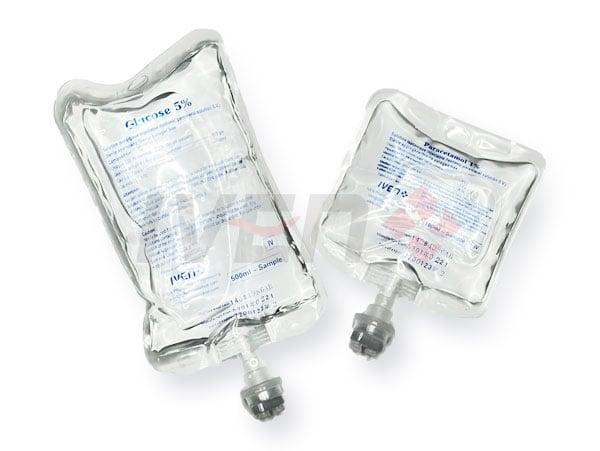
Non-PVC and PVC IV Bag Options in the United States
Choosing between non-PVC and PVC IV bags is no longer just a packaging decision. In the United States, it affects drug compatibility, regulatory positioning, sustainability goals, hospital purchasing, and long-term manufacturing economics. For pharmaceutical companies, contract manufacturers, and hospital suppliers, the right IV bag format can improve product stability, reduce leachables concerns, support multi-drug or nutrition applications, and strengthen patient safety across the full supply chain.
Across major healthcare hubs such as New Jersey, Illinois, Texas, California, and North Carolina, buyers are increasingly evaluating not only the bag material itself but also the production technology behind it. Ports and logistics gateways such as Los Angeles, Long Beach, Savannah, Houston, and Newark matter too, because imported film, ports, sterilization logistics, and cold-chain distribution all influence project feasibility. In this market, the best solution depends on the intended formulation, target output, sterilization method, compliance plan, and total cost of ownership.
Non-PVC and PVC IV bags give pharmaceutical companies different ways to package infusion products safely and efficiently. PVC bags remain common because they are widely available, cost-effective, and familiar to many hospitals. Non-PVC IV bags, however, are increasingly preferred for advanced formulations because they can reduce concerns related to plasticizers, support better compatibility with sensitive drugs, and align with environmental goals and modern hospital procurement standards.
When the discussion moves beyond simple saline and dextrose products, non-PVC bag technology becomes especially valuable. It is often selected for amino acid solutions, pediatric formulations, certain biologics, chemotherapy admixtures, parenteral nutrition components, and multi-chamber systems that keep ingredients separated until activation. That separation can improve shelf life, lower degradation risk, and preserve efficacy up to the point of use.
In practical terms, the answer for most United States buyers is this: choose PVC when cost pressure is dominant and the formulation is proven compatible; choose non-PVC when drug stability, plasticizer avoidance, sustainability, or premium hospital positioning matters more. The real decision should be based on formulation science, sterilization validation, extractables and leachables assessment, and the ability of the supplier to support scale-up and regulatory documentation.
Decision FactorPVC IV BagsNon-PVC IV BagsWhy It MattersInitial bag costUsually lowerUsually higherImportant for high-volume commodity fluidsPlasticizer concernPossible, depending on formulationLower concernRelevant for sensitive drugs and neonatal careDrug compatibilityGood for many standard fluidsOften better for advanced formulationsReduces adsorption or migration riskSustainability profileOften viewed less favorablyUsually stronger market perceptionSupports ESG and procurement goalsHospital acceptanceEstablished and familiarGrowing rapidlyAffects sales positioningUse in multi-chamber formatsPossible but less common in premium use casesFrequently preferredUseful for separated ingredientsSupply chain flexibilityBroad legacy availabilityExpanding with specialty suppliersImpacts sourcing resiliencePremium product potentialModerateHighSupports differentiated IV solutionsThe comparison above shows why the market is not moving in only one direction. Both technologies still have a place, but the value proposition changes by product category and customer segment.
PVC IV bags are infusion containers made with polyvinyl chloride film. For decades, they have been used in hospitals throughout the United States for standard large-volume parenterals such as normal saline, dextrose, irrigation fluids, and some ready-to-use solutions. Their main advantages are mature processing know-how, dependable sealing performance, relatively low material cost, and broad market acceptance.
Non-PVC IV bags are made from alternative multilayer films or polyolefin-based materials designed to avoid the limitations associated with traditional PVC systems. Depending on the resin structure, these bags may offer lower extractables, better heat resistance, stronger transparency, or enhanced compatibility with oxygen-sensitive and plasticizer-sensitive formulations. They are increasingly used where performance, sustainability, or clinical perception carry more weight than basic packaging cost.
The main advantages of PVC bags include scalability, line familiarity, and lower entry pricing for commodity infusions. The main advantages of non-PVC bags include cleaner material perception, stronger support for high-value therapies, reduced concern about DEHP-related migration in certain contexts, and better alignment with modern purchasing strategies in advanced hospital systems.
For drug developers in Boston, Philadelphia, San Diego, and the Research Triangle, the choice often begins during formulation and container-closure development. For established infusion manufacturers in the Midwest or Gulf Coast region, the choice may be driven more by installed equipment base, plant retrofit cost, and hospital tender requirements. Either way, the decision should always be tied to the intended clinical product rather than general packaging preference.
Buyers exploring engineering partners often look for a company that understands both material performance and production execution. A useful starting point is to review the background of firms with deep infusion-system experience, such as pharmaceutical engineering specialists with international IV solution expertise, especially when a project includes new container platforms, line customization, or compliance support for the United States market.
Hospitals do not evaluate IV bags only by cost per unit. They also consider nursing workflow, compatibility with pumps, storage efficiency, disposal practices, and the clinical profile of the drug being infused. In the United States, integrated delivery networks and large academic medical centers increasingly assess how bag material choices affect neonatal safety, oncology handling, sterile compounding efficiency, and shortage resilience.
PVC bags continue to serve many routine applications well. For standard hydration, electrolyte replacement, and common diluents, they remain practical and economical. Their long clinical history supports familiarity among pharmacists, purchasing departments, and bedside staff.
Non-PVC bags show clear benefits in several higher-sensitivity applications. These include total parenteral nutrition components, pediatric and neonatal infusions, certain antibiotics, amino acid formulations, compounded admixtures, and drug categories where material compatibility must be tightly controlled. In some hospital systems, non-PVC bags are also favored for environmental policy reasons or for alignment with systemwide materials reduction targets.
From a production standpoint, manufacturers that supply hospitals in cities such as New York, Chicago, Atlanta, Dallas, and Los Angeles often choose flexible bag platforms that can support multiple SKUs, cleanroom efficiency, and reliable sterilization performance. Multi-chamber formats are especially relevant when one component should remain isolated from another until immediately before administration.
Hospital ApplicationTypical Bag PreferenceClinical ReasonOperational BenefitNormal saline and dextrosePVC or non-PVCBroad compatibilityHigh-volume, efficient distributionPediatric infusionOften non-PVCLower concern about certain additivesSupports safety-focused procurementOncology admixturesOften non-PVCBetter fit for sensitive compoundsImproves premium product positioningParenteral nutrition componentsNon-PVC or multi-chamberIngredient separation and stabilityLonger shelf management flexibilityEmergency room fluidsPVC or non-PVCFast access to standard therapySimple inventory controlDialysis-related solutionsDepends on formulationMaterial and sterilization suitabilityConsistent batch outputAntibiotic premixesIncreasingly non-PVCCompatibility and stability goalsReady-to-use convenienceThe table highlights a simple truth: no single bag material wins every application. The more clinically complex the infusion becomes, the more likely non-PVC options enter the discussion.
Film structure is one of the most important yet misunderstood parts of IV bag selection. A bag may appear similar from the outside, but its inner contact layer, middle barrier layer, and outer strength layer can dramatically change performance. Manufacturers serving the United States typically evaluate film options based on sterilization resistance, seal integrity, transparency, mechanical strength, oxygen transmission, water vapor transmission, and compatibility with ports and tubing sets.
PVC bags usually rely on flexible PVC film and are valued for established conversion methods. Non-PVC alternatives may use polypropylene-based films, multilayer polyolefin films, EVA blends, or specialty coextrusions. The right choice depends on the pharmaceutical formulation and the required shelf life.
Film TypePVC or Non-PVCMain StrengthMain LimitationTypical UseFlexible PVC filmPVCLow cost and mature processingPlasticizer-related concerns in some usesStandard IV fluidsPP-based filmNon-PVCStrong heat resistanceMay require optimized sealing conditionsAdvanced infusionsMultilayer polyolefin filmNon-PVCBalanced barrier and flexibilityHigher material costPremium hospital productsEVA-based filmNon-PVCGood flexibility and clarityPerformance varies by formulationSpecialty solutionsCoextruded multi-layer filmNon-PVCCustomizable structureComplex supply qualificationMulti-chamber systemsBarrier-enhanced specialty filmNon-PVCImproved protection for sensitive productsPremium pricingHigh-value drugsHybrid custom film platformEither, depending on designTailored product fitLonger development timeNew product launchesThis material selection stage is where technical capability matters. A supplier should be able to explain not only what film is offered, but why that film is appropriate for the product, sterilization cycle, and transport conditions across humid coastal routes or long inland shipments to states such as Colorado, Arizona, and Ohio.
For companies planning greenfield or retrofit projects, complete line planning is often as important as the bag itself. Buyers comparing equipment and integrated systems can review IV solution production technologies and related pharmaceutical equipment to understand how film choice connects with forming, filling, sealing, sterilization, visual inspection, and secondary packaging.
Single-chamber IV bags contain one ready-to-use solution. They are simpler to manufacture, easier to validate, and often sufficient for standard fluids. Multi-chamber IV bags contain two or more separated components that are mixed before administration. These are particularly useful when ingredients are unstable together during storage.
In the United States, multi-chamber designs are gaining attention because they support ready-to-activate clinical workflows, reduce pharmacy compounding time, and improve shelf-life management for combination products. They are especially relevant in parenteral nutrition, certain antibiotics, buffering systems, and therapies where an active ingredient or diluent must remain separate.
FeatureSingle-Chamber IV BagMulti-Chamber IV BagPractical ImpactStructureOne compartmentTwo or more compartmentsDetermines complexity and use caseManufacturing difficultyLowerHigherAffects capital and validationShelf-life supportLimited if ingredients react togetherBetter when ingredients are separatedUseful for unstable productsHospital workflowSimple for ready solutionsReduces mixing at pharmacy if activation is built inCan save preparation timeRegulatory documentationMore straightforwardMore detailedRequires stronger technical fileUnit costLowerHigherImportant for pricing strategyMarket differentiationModerateHighSupports premium offeringsBest-fit productsCommodity fluidsAdvanced and specialty infusionsAligns packaging with product valueFor a manufacturer, the move from single-chamber to multi-chamber production affects machine design, sealing accuracy, leak testing, process controls, and validation workload. Yet the reward can be significant: stronger product differentiation, better hospital convenience, and reduced risk of active degradation before use.
One area where engineering depth matters is technological capability. Companies with long experience in infusion equipment can provide not only bag-forming and filling systems but also formulation handling, water systems, sterilization integration, and intelligent logistics. IVEN Pharmatech Engineering, for example, is known in the industry for customized IV solution technologies, strong know-how in soft bag applications, and equipment design aligned with EU GMP, US FDA cGMP, WHO GMP, and PIC/S GMP expectations. This type of technical base can be valuable when a United States project involves non-PVC soft bags, specialized filling requirements, or multi-chamber development.
var ctx1 = document.getElementById(‘lineChartMarket’).getContext(‘2d’);var chart1 = new Chart(ctx1, {type: ‘line’,data: {labels: [‘2021’, ‘2022’, ‘2023’, ‘2024’, ‘2025’, ‘2026’],datasets: [{label: ‘U.S. demand growth for advanced IV bag formats (%)’,data: [4.2, 5.1, 6.4, 7.2, 8.1, 9.0],borderColor: ‘rgb(75, 192, 192)’,backgroundColor: ‘rgba(75, 192, 192, 0.15)’,fill: false,tension: 0.3}]},options: {responsive: true,maintainAspectRatio: false}});The line chart reflects a realistic market trend: demand for advanced IV bag formats in the United States is rising steadily, especially in hospital systems looking for higher-value, ready-to-use, and more sustainable packaging.
The United States market remains one of the most important destinations for IV bag technologies because of its large hospital network, sophisticated pharma sector, and ongoing focus on supply chain resilience. After years of disruption in sterile injectables and infusion products, buyers are placing greater value on domestic or near-market reliability, dual sourcing, and production systems that can be expanded quickly.
Several trends are shaping capacity decisions. First, there is continued demand for standard large-volume parenterals, which keeps PVC and traditional formats relevant. Second, there is accelerating interest in non-PVC bags for higher-value formulations and environmentally conscious procurement. Third, there is rising attention to manufacturing localization, whether through direct United States production, contract manufacturing, or turnkey plant development with validated international technology.
Regional demand patterns vary. The Northeast supports many formulation developers and major hospital systems. The Southeast benefits from expanding life science investment and strong port infrastructure such as Savannah and Charleston. Texas and the Gulf region connect manufacturing, petrochemical feedstock access, and logistics through Houston. The West Coast remains important for biotech and Pacific trade flows through Los Angeles and Long Beach. These logistics realities can affect both material sourcing and finished product distribution.
var ctx2 = document.getElementById(‘barChartDemand’).getContext(‘2d’);var chart2 = new Chart(ctx2, {type: ‘bar’,data: {labels: [‘Standard IV Fluids’, ‘Antibiotic Premix’, ‘Nutrition’, ‘Oncology’, ‘Pediatric Use’, ‘Dialysis Solutions’],datasets: [{label: ‘Relative U.S. demand index 2025’,data: [92, 68, 61, 56, 49, 58],backgroundColor: [‘rgb(54, 162, 235)’,’rgb(255, 159, 64)’,’rgb(75, 192, 192)’,’rgb(255, 99, 132)’,’rgb(153, 102, 255)’,’rgb(201, 203, 207)’]}]},options: {responsive: true,maintainAspectRatio: false}});The bar chart shows why suppliers should not think of the market as a single category. Standard IV fluids still dominate volume, but specialized sectors such as antibiotic premix, nutrition, oncology, and pediatrics are driving strategic interest in non-PVC and multi-chamber formats.
Manufacturing capability is another deciding factor in this market. Buyers prefer partners that can support scalable production rather than standalone equipment only. IVEN Pharmatech Engineering has built its reputation around multiple specialized manufacturing bases, integrated IV solution line development, and a strong installed base in soft bag and glass bottle applications. For companies considering a new United States facility or a phased expansion, this type of manufacturing depth can reduce the risk of fragmented sourcing and mismatched process design. More about large-scale integrated delivery can be explored through turnkey pharmaceutical factory solutions.
Selecting a supplier in the United States market should go far beyond comparing bag price or machine speed. The buyer should assess material science capability, validation support, production references, service response, regulatory understanding, and long-term spare parts availability. This is especially important when the project includes aseptic processing interfaces, terminal sterilization systems, or a transition from commodity fluids to specialized hospital products.
A reliable supplier should be able to answer detailed questions about film composition, port welding, seal integrity testing, extractables strategy, sterilization compatibility, transport simulation, and change control. The supplier should also understand how United States buyers document quality, especially for cGMP operations and hospital-facing products.
Supplier Evaluation PointWhat to AskWhy It MattersRisk if WeakMaterial expertiseCan they justify film choice by formulation?Ensures product compatibilityStability or interaction problemsRegulatory familiarityDo they support FDA-oriented documentation?Speeds qualificationApproval delaysProject referencesHave they delivered IV lines at scale?Shows proven executionUncertain performanceValidation supportDo they assist IQ, OQ, PQ?Critical for startupLonger commissioningAfter-sales serviceWhat is the response time and spare parts plan?Protects uptimeCostly downtimeCustomization abilityCan they adapt line layout and bag format?Improves plant fitOperational inefficiencyLifecycle partnershipDo they support training and optimization?Improves long-term yieldRecurring performance issuesUnited States buyers also benefit from asking for a site-specific concept. A plant in New Jersey serving East Coast hospitals may need a different logistics design than a facility near Dallas supplying the South and Midwest. Cleanroom layout, warehouse automation, sterilizer placement, and utilities integration should all fit local labor and land economics.
Service capability often becomes the tiebreaker after technical review. A supplier that offers feasibility support, engineering design, equipment customization, installation, commissioning, validation assistance, training, and post-startup optimization provides far more value than one that ships machines only. For buyers seeking that kind of support pathway, it is practical to contact an experienced IV solution engineering team early in the planning process rather than waiting until procurement is already fixed.
var ctx3 = document.getElementById(‘areaChartShift’).getContext(‘2d’);var chart3 = new Chart(ctx3, {type: ‘line’,data: {labels: [‘2021’, ‘2022’, ‘2023’, ‘2024’, ‘2025’, ‘2026’],datasets: [{label: ‘Share of new projects favoring non-PVC formats (%)’,data: [28, 32, 37, 43, 48, 54],borderColor: ‘rgb(153, 102, 255)’,backgroundColor: ‘rgba(153, 102, 255, 0.25)’,fill: true,tension: 0.3}]},options: {responsive: true,maintainAspectRatio: false}});The area chart illustrates the shift in new project preference. It does not mean PVC is disappearing; rather, it shows that more new investments are choosing non-PVC formats for differentiated or future-facing products.
Investment decisions should be based on total project economics, not bag material alone. A standard PVC line for basic fluids may have a lower entry cost, faster installation in some cases, and easier staffing. A non-PVC or multi-chamber project may require higher upfront capital but can generate stronger margins through premium formulations, hospital differentiation, and better clinical positioning.
In the United States, the cost structure for an IV bag project typically includes plant layout adaptation, utilities, cleanroom systems, water treatment, solution preparation, bag-forming and filling lines, sterilization, inspection, packaging, warehouse systems, validation, and operator training. If a company plans to serve national hospital contracts, secondary packaging and pallet automation should also be included in the model.
Budget ItemPVC Project WeightNon-PVC Project WeightCommentFilm and consumablesLowerHigherNon-PVC materials often carry a premiumBag-forming and sealing systemModerateModerate to highDepends on bag complexityMulti-chamber toolingUsually low or noneHigh if requiredMajor cost driver for advanced productsValidation and testingModerateHighMore demanding for novel formatsUtilities and cleanroomHighHighCommon across both project typesTraining and startupModerateModerate to highDepends on operator familiarityMargin potentialLower to moderateModerate to highLinked to product mixPayback periodOften shorter for commodity volumeCan be strong for premium portfoliosDepends on sales strategyA realistic ROI model should test at least three scenarios: commodity fluid volume, mixed portfolio, and specialty infusion strategy. Commodity-focused lines may rely on scale and operational efficiency. Specialty-focused lines depend more on product registration, hospital adoption, and differentiated value. The best projects often combine a stable base of standard SKUs with selected premium non-PVC products.
For example, a manufacturer near Memphis or Indianapolis with strong national freight access may invest in a broad-output line that supports both standard fluids and value-added hospital products. A biotech-oriented project near San Francisco or Cambridge may prioritize smaller, high-value non-PVC production with enhanced material compatibility and documentation support. There is no universal model, but there should always be a structured budget logic tied to market demand.
The first major risk is choosing a material before confirming formulation compatibility. This can lead to adsorption, leachables issues, haze, seal weakness, or stability failure. The second risk is underestimating validation complexity, especially for non-PVC multi-layer films and multi-chamber systems. The third is assuming hospital demand without a clear commercialization path.
Other common risks include weak utility design, poor sterilization integration, insufficient warehouse flow, and a supplier that lacks genuine after-sales depth. In United States projects, local compliance expectations, user requirements specification discipline, and detailed commissioning plans are especially important. Buyers should also consider freight exposure, resin market volatility, and policy-driven sustainability expectations.
Risk AreaDescriptionPotential EffectMitigationFormulation mismatchBag material does not fit the drug profileProduct failure or shelf-life lossRun compatibility and stability studies earlySeal integrity issuesImproper process window or toolingLeakage and batch rejectionOptimize sealing and perform validationRegulatory gapsWeak technical documentationDelays in approval or qualificationUse a supplier with cGMP documentation experienceCost overrunScope expands after procurement startsBudget pressureDefine URS and phased capex planDemand overestimationPremium product uptake is slower than expectedLonger ROIModel conservative and aggressive sales casesSupply chain disruptionFilm or port component shortagesProduction interruptionQualify multiple sourcesService limitationsSlow maintenance or spare parts responseExtended downtimeLock in service terms before purchaseA practical case study pattern in the United States involves a manufacturer starting with single-chamber standard fluids, then expanding into non-PVC specialty products after qualification. This phased approach reduces risk, builds internal know-how, and lets the company test market response before investing in the most complex chamber formats.
Future trends through 2026 will continue to shape investment logic. Three are especially important. First, sustainability: hospitals and health systems are increasingly measuring packaging impact and waste policy. Second, digital manufacturing: more projects are integrating data collection, vision inspection, and intelligent logistics to improve traceability. Third, policy and resilience: domestic supply continuity and diversified sourcing will remain central after recent healthcare disruptions. Suppliers that can support automation, validation, and sustainable material strategies will be in a stronger position.
var ctx4 = document.getElementById(‘comparisonChartSupplier’).getContext(‘2d’);var chart4 = new Chart(ctx4, {type: ‘bar’,data: {labels: [‘Regulatory Support’, ‘Customization’, ‘IV Expertise’, ‘Turnkey Ability’, ‘Lifecycle Service’, ‘Scalability’],datasets: [{label: ‘Importance score for supplier selection’,data: [95, 88, 93, 85, 90, 87],backgroundColor: ‘rgb(153, 102, 255)’}]},options: {responsive: true,maintainAspectRatio: false}});The comparison chart underlines what experienced buyers already know: regulatory support, IV-specific expertise, customization, and lifecycle service often matter as much as the equipment itself.
For many buyers, the ideal partner is one that combines technology, manufacturing capacity, and service depth. IVEN Pharmatech Engineering fits this profile by offering integrated pharmaceutical engineering for IV solutions, specialized manufacturing resources, and full-lifecycle support from design to training and optimization. The company’s experience in international compliance and turnkey execution can be particularly useful for United States investors seeking structured project control instead of fragmented procurement.
Are non-PVC IV bags replacing PVC IV bags in the United States?No. PVC bags remain important for many standard high-volume fluids. However, non-PVC bags are gaining share in new projects, specialty products, and hospital systems focused on advanced compatibility or sustainability goals.
Which is better for sensitive drug formulations?In many cases, non-PVC bags are preferred for sensitive or premium formulations because they may reduce concerns about plasticizer interaction and can support improved compatibility. The final decision should come from formulation-specific testing.
Are multi-chamber IV bags worth the extra investment?They can be, especially when ingredients need to stay separate until use. Multi-chamber systems can improve stability, reduce pharmacy preparation steps, and create higher-value product offerings, though they require more complex manufacturing and validation.
What industries use these bags besides hospitals?The main users include pharmaceutical manufacturers, contract manufacturing organizations, dialysis solution producers, compounding service providers, biotech companies, and medical supply distributors.
How should a United States buyer compare suppliers?Focus on material knowledge, regulatory support, validation capability, after-sales service, references, and the ability to customize around your formulation, plant layout, and production goals.
Is a turnkey project better than buying separate equipment?For many investors, yes. Turnkey execution can reduce coordination gaps across utilities, layout, filling lines, sterilization, inspection, packaging, and documentation. It is particularly useful when schedule control and compliance readiness are priorities.
What are the biggest hidden costs in an IV bag project?Common hidden costs include validation delays, utility redesign, packaging changes, operator retraining, film qualification, warehouse inefficiency, and underplanned spare parts support.
What should buyers expect by 2026?Expect more non-PVC adoption in new product development, greater automation, stronger sustainability requirements, increased attention to domestic supply resilience, and more demand for flexible lines that can handle both commodity and premium infusion products.
Can one production line handle both PVC and non-PVC bag programs?Sometimes, but not always efficiently. The answer depends on film behavior, sealing requirements, product portfolio, and the flexibility of the installed equipment. Many manufacturers evaluate this during concept design.
Where can buyers begin if they are still in the planning stage?Start with a technical and commercial feasibility review covering formulation type, target output, compliance needs, hospital market, and capex range. Early consultation with an experienced IV solution engineering partner usually shortens the path to a workable project plan.
In summary, the United States market supports both PVC and non-PVC IV bag technologies, but the strategic direction is increasingly clear: standard fluids still reward efficient scale, while advanced therapies and hospital differentiation are pushing more projects toward non-PVC and multi-chamber solutions. The right choice comes from matching material science, clinical need, manufacturing design, and long-term business goals.
-
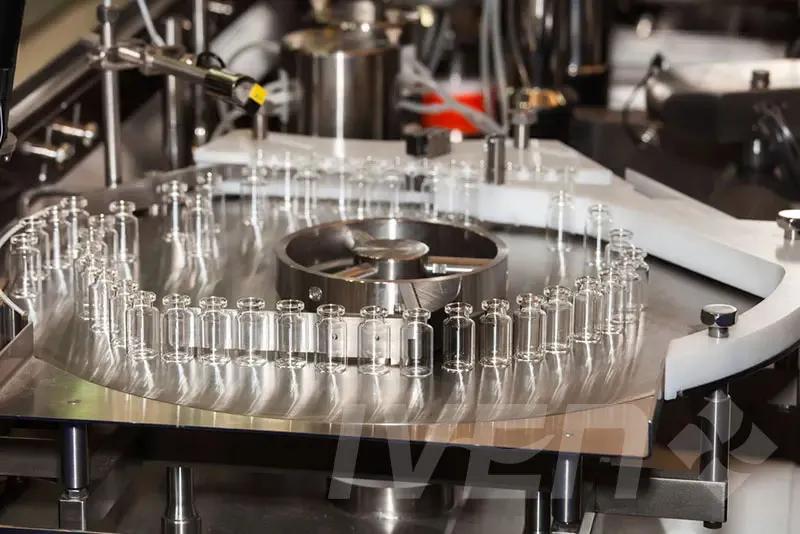
Choosing Vial vs Ampoule Filling Lines in the United States
For pharmaceutical manufacturers in the United States, the choice between a vial filling line and an ampoule filling line is not a minor equipment decision. It affects sterility strategy, product compatibility, regulatory validation, plant layout, staffing, throughput, packaging flexibility, and total cost of ownership. Large injectable drug producers, CDMOs, biologics companies, and medical device manufacturers often evaluate both options when building new facilities or upgrading existing aseptic operations under FDA cGMP requirements. In practical terms, vial filling lines usually provide greater flexibility for modern injectable products, especially biologics and lyophilized drugs, while ampoule filling lines remain highly effective for certain liquid formulations that benefit from hermetic glass sealing, compact unit doses, and lower container component complexity.
Across major U.S. pharmaceutical hubs such as New Jersey, Boston, Philadelphia, Raleigh-Durham, Indianapolis, Houston, and the San Francisco Bay Area, manufacturers are investing in high-precision aseptic lines that support stronger contamination control, digital batch records, and scalable production. Buyers comparing line formats should assess the fill medium, oxygen sensitivity, closure system, breakage risk, visual inspection needs, format range, and long-term expansion goals. For companies planning integrated projects, it is also valuable to work with a supplier that can support equipment, utility systems, facility engineering, validation, and after-sales service through one coordinated model. A company such as IVEN Pharmatech Engineering is often evaluated in this context because it combines pharmaceutical machinery knowledge with turnkey engineering capabilities for regulated production environments.
The quick answer is simple: a vial vs ampoule filling line is a strategic production choice that directly influences product quality, compliance performance, and manufacturing economics. In the United States, where FDA scrutiny, audit readiness, data integrity, and contamination control are central to pharmaceutical operations, the selected filling format must fit both the product and the plant’s long-term operating model.
Vial filling lines are typically preferred when manufacturers need flexibility. They are widely used for liquid injectables, sterile powders, freeze-dried products, and high-value biologics. Vials can be stoppered and capped, integrated with isolators or RABS, and paired with lyophilizers. They are also common in multi-product facilities where changeovers and varying batch sizes are expected.
Ampoule filling lines, by contrast, are often chosen for sealed glass presentations where the product is stable in that format and the manufacturer values a flame-sealed, tamper-evident primary package. Ampoules have long been used for injectable liquids in hospitals and emergency care, but they are less flexible than vials for some modern therapies.
Decision FactorVial Filling LineAmpoule Filling LineWhy It Matters in the United StatesProduct flexibilityHighModerateUseful for multi-product plants and contract manufacturingBiologics compatibilityExcellentLimitedImportant for growth in U.S. biotech marketsLyophilization supportYesNoCritical for many sterile injectable pipelinesContainer sealing methodStopper and capFlame sealAffects closure integrity and process designBreakage sensitivityLowerHigherRelevant for line efficiency and rejectsUse in legacy hospital injectablesCommonStill relevantDepends on product history and market formatModern expansion suitabilityVery strongSelectiveSupports advanced aseptic manufacturing strategiesThis comparison shows why the choice is often driven less by machine preference and more by dosage form strategy, container closure requirements, and future commercial plans.
A vial filling line is an automated aseptic or non-aseptic production system used to wash, depyrogenate, fill, stopper, and cap glass or polymer vials with sterile or non-sterile pharmaceutical products. It may also integrate nitrogen purging, in-process check weighing, stoppering under laminar airflow, and transfer to lyophilization. Vial lines are common for vaccines, biologics, oncology drugs, antibiotics, peptides, and injectable solutions.
An ampoule filling line is an automated system used to process glass ampoules through washing, sterilization tunnel transfer, precision filling, and flame sealing. Ampoules are typically used for single-dose sterile liquids and are fully sealed after filling. The sealed container protects the formulation but also requires careful handling, neck control, and visual inspection for cosmetic and particulate defects.
In both cases, the line is only one part of a broader regulated production system. The line must fit the cleanroom classification, HVAC strategy, purified water and water-for-injection infrastructure, environmental monitoring program, and qualification framework. Companies evaluating line investments often review full project scope, including utility generation, material flow, and documentation support. For those exploring larger factory upgrades, a turnkey pharmaceutical engineering approach can reduce interface risk between equipment packages and facility systems.
Typical process steps include:
Process StageVial Line FunctionAmpoule Line FunctionMain Quality FocusContainer preparationWashing and depyrogenationWashing and sterilization transferParticle and endotoxin controlFillingLiquid or powder dosingPrimarily liquid dosingFill accuracy and sterilityGas managementNitrogen purging possibleCan be used depending on formulationOxidation reductionPrimary closureRubber stopperGlass flame sealContainer closure integrityFinal closureAluminum cap or crimpNot required after sealingTamper evidenceDownstream integrationLyophilizer, inspection, labelingInspection, labeling, tray packingLine balance and traceabilityValidation emphasisAseptic simulation and closure integrityFilling and sealing consistencyRegulatory acceptanceThis table clarifies that both systems support sterile production, but their container mechanics and product fit are different from the start.
In modern pharmaceutical manufacturing, vial lines dominate high-value sterile products because they support diverse fill volumes, closure systems, and product presentations. U.S. biologics expansion in Massachusetts and California has made flexible vial filling especially attractive. CDMOs in the Midwest and Southeast also favor vials because they can serve multiple customers on one platform.
Ampoule lines remain valuable where the formulation is stable in glass, the commercial market still prefers single-dose sealed units, and product economics support this format. They can be efficient for analgesics, anesthetics, vitamins, emergency injectables, and certain hospital-use medications.
Benefits of vial filling lines include:
Benefits of ampoule filling lines include:
var ctxBar = document.getElementById(‘barDemandChart’).getContext(‘2d’);var barDemandChart = new Chart(ctxBar, {type: ‘bar’,data: {labels: [‘Biologics’, ‘Generic Injectables’, ‘Vaccines’, ‘Hospital Emergency Drugs’, ‘Contract Manufacturing’, ‘Diagnostics’],datasets: [{label: ‘Estimated U.S. demand for sterile filling format projects’,data: [92, 78, 64, 51, 88, 43],backgroundColor: [‘#4e79a7′,’#f28e2b’,’#e15759′,’#76b7b2′,’#59a14f’,’#edc948′]}]},options: {responsive: true,maintainAspectRatio: false,plugins: {legend: {display: true}},scales: {y: {beginAtZero: true, max: 100}}}});The bar chart reflects where new equipment demand is strongest in the U.S. market. Biologics and CDMO production heavily favor vial technology, while emergency and legacy injectable categories may still sustain ampoule demand.
Not all filling lines are built for the same production model. In the United States, buyers typically compare line configurations by speed, sterility concept, filling accuracy, changeover design, and integration capability. A small clinical batch line in San Diego has very different needs from a high-speed commercial facility near Newark or Chicago.
Common vial line options include monoblock compact systems, linear intermittent-motion lines, rotary high-speed lines, and integrated aseptic systems connected to isolators and lyophilizers. Ampoule lines may be semi-automatic, medium-speed linear systems, or high-output commercial lines with multi-head filling and sealing stations.
Line TypeTypical SpeedBest ForAdvantagesLimitationsCompact vial monoblock30 to 80 containers/minR&D and small commercial batchesSmall footprint, flexibleLower outputMedium-speed vial line80 to 200 containers/minSpecialty injectablesBalanced cost and capacityMore changeover steps than premium linesHigh-speed vial line200 to 600+ containers/minLarge-scale commercial plantsHigh throughput, automationHigher capital costLyophilization-ready vial line50 to 300 containers/minFreeze-dried drugsSupports stoppering and transferComplex integrationMedium-speed ampoule line60 to 180 ampoules/minGeneral sterile liquidsGood efficiency for standard productsLess flexible than vialsHigh-speed ampoule line180 to 400+ ampoules/minHigh-volume commercial productsEfficient unit-dose outputBreakage management is criticalIsolator-based aseptic lineVaries by formatHigh-containment sterile operationsExcellent contamination controlHigher project complexityTechnical options that U.S. buyers frequently request include 21 CFR Part 11-ready software logic, electronic batch record integration, recipe management, servo-driven pumps, no-container-no-fill systems, in-line IPC, CIP/SIP support for product paths, and rejection classification with audit trails. Advanced suppliers may also provide robotic tub handling, environmental monitoring interfaces, and remote diagnostics.
When looking at specific equipment categories and configurable platforms, buyers often review available systems through a supplier’s pharmaceutical equipment portfolio to compare speed classes, filling technologies, and utility requirements before final URS development.
The central comparison is not only vial versus ampoule. U.S. pharmaceutical manufacturers also compare these lines against prefilled syringes, cartridges, BFS technology, and ready-to-use nested formats. The right choice depends on product value, administration route, target market, and packaging strategy.
Choose a vial filling line when you need broad product flexibility, support for biologics, lyophilization, or multi-dose and single-dose options. Choose an ampoule filling line when the product is a stable liquid, the market accepts ampoules, and a sealed glass presentation offers commercial or technical benefits. Consider prefilled syringes when convenience and user safety drive premium value. Consider BFS when very high-volume aseptic packaging and integrated container formation are appropriate.
TechnologyBest Product FitCapital IntensityOperational FlexibilityU.S. Market RelevanceVial filling lineBiologics, injectables, powdersMedium to highHighVery strongAmpoule filling lineStable sterile liquidsMediumModerateSelective but viablePrefilled syringe lineReady-to-administer drugsHighModerateGrowing rapidlyCartridge filling linePen delivery systemsHighModerateStrong in specialty therapiesBFS lineHigh-volume sterile liquidsHighLower for format changesImportant in select segmentsManual or semi-auto systemSmall batchesLowModerateLimited for commercial scaleRTU nested container lineHigh-sterility small batch productionHighHigh for certain formatsGrowing in advanced facilitiesThis comparison helps narrow the decision around product lifecycle and plant strategy rather than equipment price alone.
The U.S. market for aseptic filling lines is driven by biologics growth, domestic manufacturing incentives, reshoring concerns, hospital injectable shortages, and the need to modernize older sterile plants. Regions with strong activity include New Jersey and Pennsylvania for established pharma production, Boston and Cambridge for biotech, North Carolina for life sciences expansion, and Texas for large-scale industrial development. Ports and logistics hubs such as Los Angeles, Savannah, Houston, and New York/New Jersey matter because imported equipment, spare parts, and validation resources must move efficiently into project schedules.
From 2024 to 2026, several trends are shaping buying decisions:
var ctxLine = document.getElementById(‘lineGrowthChart’).getContext(‘2d’);var lineGrowthChart = new Chart(ctxLine, {type: ‘line’,data: {labels: [‘2021’, ‘2022’, ‘2023’, ‘2024’, ‘2025’, ‘2026’],datasets: [{label: ‘Estimated U.S. aseptic filling line market growth index’,data: [100, 108, 119, 131, 145, 161],borderColor: ‘#2a9d8f’,backgroundColor: ‘rgba(42,157,143,0.15)’,fill: false,tension: 0.25}]},options: {responsive: true,maintainAspectRatio: false,plugins: {legend: {display: true}},scales: {y: {beginAtZero: false}}}});var ctxArea = document.getElementById(‘areaShiftChart’).getContext(‘2d’);var areaShiftChart = new Chart(ctxArea, {type: ‘line’,data: {labels: [‘2021’, ‘2022’, ‘2023’, ‘2024’, ‘2025’, ‘2026’],datasets: [{label: ‘Conventional open filling share’,data: [54, 49, 44, 38, 33, 28],fill: true,backgroundColor: ‘rgba(231,111,81,0.25)’,borderColor: ‘#e76f51’,tension: 0.25},{label: ‘Barrier and isolator-based filling share’,data: [46, 51, 56, 62, 67, 72],fill: true,backgroundColor: ‘rgba(38,70,83,0.18)’,borderColor: ‘#264653’,tension: 0.25}]},options: {responsive: true,maintainAspectRatio: false,plugins: {legend: {display: true}},scales: {y: {beginAtZero: true, max: 100}}}});The line chart illustrates the expansion of the aseptic filling equipment market, while the area chart highlights a structural shift toward higher-containment and lower-intervention production methods. By 2026, sustainability and policy factors are also expected to influence procurement. Manufacturers increasingly ask for reduced compressed air consumption, efficient thermal processes, smarter reject reduction, and stronger local support planning to minimize downtime and travel emissions.
Choosing the right supplier is as important as selecting the right line format. In the United States, procurement teams increasingly assess not just machine specifications but supplier maturity across engineering, documentation, FAT/SAT execution, validation support, and lifecycle service. A line that runs well at FAT but lacks reliable commissioning support can create major cost overruns.
Key evaluation criteria include:
Supplier CheckpointWhat to AskWhy It MattersWarning SignRegulatory know-howCan they support FDA-oriented documentation?Reduces validation gapsGeneric paperwork onlyEngineering depthDo they understand utilities and cleanroom interfaces?Prevents installation conflictsMachine-only mindsetManufacturing qualityWhere are key components made and tested?Determines reliabilityInconsistent component sourcingFAT capabilityCan they simulate your recipes and alarms?Builds confidence before shipmentBasic demonstration onlyService supportHow fast can they respond in the U.S.?Protects uptimeNo service structureSpare parts planningIs a critical spare list included?Improves startup readinessReactive spare planningTraining and transferDo they train operators and maintenance teams?Improves sustained performanceMinimal handover supportFrom a technology perspective, IVEN is often considered by buyers needing integrated project capability. Its technological strengths include filling and packaging machinery, pharmaceutical water systems, intelligent logistics systems, and specialized production equipment for medical consumables. Its engineering approach is designed for compliance with international GMP frameworks relevant to U.S. manufacturers seeking high documentation discipline and scalable process design.
From a manufacturing perspective, the company operates multiple specialized production bases in Shanghai focused on different equipment categories rather than a one-size-fits-all workshop model. That matters for buyers who want clearer specialization in sterile filling, water treatment, conveying, and related factory systems.
From a service perspective, the value is not limited to machine delivery. Many U.S. project owners prefer suppliers that can assist with feasibility review, layout planning, customization, installation, commissioning, qualification documentation, training, and longer-term optimization. For direct consultation on line selection, project timing, or support availability, buyers can contact the engineering team during early planning rather than waiting until final RFQ release.
Budgeting for a filling line requires more than quoting the machine itself. U.S. buyers should account for the complete installed cost: line equipment, isolator or RABS, clean utilities, HVAC modifications, serialization interfaces, inspection systems, qualification, training, spare parts, and project management. Freight, customs coordination through entry points such as Long Beach, Houston, or the Port of New York and New Jersey, and on-site installation labor can materially affect the total budget.
As a broad market guide, compact vial lines may start at a much lower level than fully integrated high-speed aseptic lines with barrier technology, while commercial vial systems with lyophilization interfaces can become major capital projects. Ampoule lines can be less expensive in some basic configurations, but the total cost advantage depends on the product, rejection rate, and commercial format requirements.
Cost ElementVial Line Typical WeightAmpoule Line Typical WeightBudget NoteCore filling equipmentHighMedium to highMain capital componentBarrier system or isolatorOften highModerate to highDepends on sterility strategyContainer prep and sterilizationHighHighTunnel and washing systems matterUtilities integrationMedium to highMediumOften underestimatedValidation and documentationMediumMediumMandatory for commercial useTraining and startup supportMediumMediumImproves ramp-up speedSpare parts and service reserveMediumMediumEssential for uptime planningROI is shaped by more than output speed. A lower-cost line with frequent stoppages, glass breakage, poor batch data, or long format changeover may underperform versus a higher-capital line with stronger OEE and lower contamination risk. U.S. buyers usually model payback using labor savings, capacity increase, reject reduction, new product revenue, and avoidance of contract manufacturing fees.
A realistic ROI framework should include:
var ctxComp = document.getElementById(‘comparisonSupplierChart’).getContext(‘2d’);var comparisonSupplierChart = new Chart(ctxComp, {type: ‘bar’,data: {labels: [‘Flexibility’, ‘Regulatory Support’, ‘Turnkey Capability’, ‘Lifecycle Service’, ‘Format Range’, ‘Cost Efficiency’],datasets: [{label: ‘Typical basic equipment vendor’,data: [62, 55, 38, 49, 58, 70],backgroundColor: ‘#a0aec0’},{label: ‘Integrated engineering-oriented supplier’,data: [86, 82, 91, 88, 84, 79],backgroundColor: ‘#6c5ce7’}]},options: {responsive: true,maintainAspectRatio: false,plugins: {legend: {display: true}},scales: {y: {beginAtZero: true, max: 100}}}});The comparison chart shows why many larger U.S. projects now favor suppliers that combine equipment with engineering and lifecycle support. The up-front price may not be the only or best measure of value.
Every sterile filling investment carries risk, but most problems can be reduced through better planning. The most common risks in U.S. projects include incomplete URS definitions, mismatch between product and container format, underdesigned utility capacity, insufficient operator training, software integration delays, and weak FAT acceptance criteria.
For vial lines, one recurring issue is underestimating the complexity of stoppering, capping, and lyophilizer integration. For ampoule lines, buyers sometimes underestimate glass handling sensitivity, cosmetic reject rates, and the effect of sealing variability on final quality.
Important risk controls include:
Another major consideration is supply chain resilience. For projects serving the U.S. market, the timing of imported components, customs release, port congestion, inland freight, and installer scheduling should be reviewed well before shipment. Strong project governance can prevent a technically good line from becoming a delayed commercial asset.
Which is better for biologics in the United States, vials or ampoules?Vials are usually better for biologics because they offer stronger flexibility, stopper-based closure systems, and compatibility with lyophilization and advanced aseptic handling.
Are ampoule filling lines still relevant in the U.S. market?Yes. They remain relevant for selected sterile liquid products, especially where a sealed glass unit dose is commercially accepted and technically appropriate.
What matters more: line speed or compliance support?Both matter, but compliance support is often more important. A fast line with weak validation documentation or poor aseptic design can become a costly problem.
How long does a typical project take?Depending on complexity, engineering scope, and facility readiness, a project may take from several months for a smaller installation to well over a year for a full aseptic commercial line with barrier systems and qualification.
Should U.S. buyers choose a standalone equipment vendor or an integrated supplier?If the project includes utilities, cleanroom modifications, process water, logistics, or validation support, an integrated supplier can reduce coordination risk and simplify accountability.
What should be included in the budget beyond machine price?Include utilities, barrier systems, freight, customs, installation, validation, training, spare parts, and production ramp-up costs.
Can one supplier support both equipment and factory engineering?Yes. Some suppliers provide integrated services covering design, equipment customization, installation, commissioning, and qualification support, which can be valuable for U.S. expansion projects.
What is the best first step before requesting quotes?Prepare a clear URS with product characteristics, batch sizes, target output, sterility strategy, utility availability, and future expansion plans.
In summary, the right answer to the vial vs ampoule filling line question depends on your product, market, compliance goals, and future manufacturing roadmap. For most modern U.S. sterile manufacturing expansions, vial lines offer broader strategic flexibility, while ampoule lines remain a strong specialized solution for the right liquid products. The best procurement decisions come from matching container format, engineering readiness, supplier capability, and lifecycle economics rather than focusing only on initial purchase price.