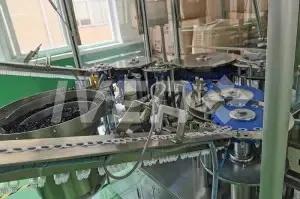
Retractable Syringe Lines for United States Pharma
For pharmaceutical and medical device manufacturers in the United States, a retractable syringe production line is a specialized manufacturing system used to produce safety syringes designed to reduce needlestick injuries and improve sharps disposal. These lines are increasingly evaluated by companies expanding injectable capacity, entering hospital and public health supply chains, or upgrading operations to align with FDA cGMP, ISO quality systems, and workplace safety expectations. In practical terms, the equipment combines molding, assembly, needle integration, safety mechanism insertion, testing, packaging, and traceability into a controlled production environment suitable for high-volume, regulated manufacturing.
In the U.S. market, interest in retractable and auto-disable syringe technology is driven by hospital demand, vaccination programs, OEM outsourcing, and rising emphasis on worker protection. Buyers in Boston, New Jersey, Chicago, Houston, Los Angeles, and the Research Triangle typically focus on validation readiness, output stability, cleanroom compatibility, and total lifecycle support rather than machine price alone. A modern line must also integrate digital monitoring, serialization support where required, and robust documentation for qualification and audit purposes.
Quick Answer: Why retractable syringe production lines matter in U.S. regulated manufacturing

A retractable syringe production line matters because it helps manufacturers produce a safer medical consumable at scale while meeting stringent regulatory, quality, and occupational safety expectations. Compared with simpler disposable syringe assembly, retractable systems involve additional mechanisms such as spring-loaded retraction, manual or automatic needle withdrawal, locking structures, tamper-evident design features, and tighter verification steps. For that reason, the line itself is not just a machine; it is a complete process platform covering component feeding, precision assembly, leak testing, functional testing, visual inspection, labeling, and final pack-out.
For U.S. manufacturers selling into hospitals, government procurement channels, group purchasing organizations, and export markets, this type of line can be strategically important. It supports product differentiation, reduces dependence on conventional syringe formats, and positions the factory for long-term demand related to vaccination, biologics administration, emergency care, and workplace injury prevention.
| Decision Factor | Why It Matters | U.S. Buyer Priority |
|---|---|---|
| FDA-aligned design documentation | Supports qualification and inspection readiness | Very high |
| Safety mechanism assembly accuracy | Directly affects product performance and user safety | Very high |
| High-speed automated output | Improves cost per unit for large contracts | High |
| Cleanroom compatibility | Critical for medical consumables manufacturing control | High |
| Traceability and data collection | Supports batch release, investigations, and audits | High |
| After-sales validation support | Reduces startup risk and downtime | Very high |
The table above shows why U.S. buyers often judge production lines on compliance, repeatability, and service depth rather than headline capacity alone.
What Is a retractable syringe production line and What Is It Used For in Pharmaceutical Production?

A retractable syringe production line is an integrated set of machines and control systems used to manufacture syringes with built-in needle safety features. Depending on product design, the needle retracts into the barrel after use, retracts into a plunger chamber, or is disabled through a locking safety structure. The line may be used by medical device companies, pharmaceutical packaging operations, and contract manufacturers serving injectable drug delivery markets.
In pharmaceutical production, these lines are typically linked to one or more of the following use cases: production of empty sterile or non-sterile safety syringes, manufacturing of components for later sterilization and packaging, assembly of prefilled safety syringe platforms, or supply of OEM devices for vaccine and injectable therapy applications. In the United States, many buyers evaluate whether the line can support migration from standard disposable syringes to higher-value safety products without sacrificing throughput.
The process often starts with molded plastic parts such as barrels, plungers, safety clips, seals, and caps. It then proceeds through automated feeding bowls, orientation units, precision insertion stations, UV or vision marking checks, mechanical function testing, in-line rejection, and packaging. Depending on the factory model, sterilization may be in-house or outsourced to a partner near logistics hubs such as Newark, Savannah, Long Beach, or Houston.
| Production Stage | Main Function | Typical Equipment Module |
|---|---|---|
| Component feeding | Sorts and orients molded parts | Vibratory bowl feeder and conveyor |
| Barrel and plunger assembly | Joins core syringe components | Servo assembly station |
| Needle and hub integration | Installs the injection path | Precision insertion module |
| Retractable mechanism insertion | Adds spring or safety mechanism | Dedicated safety assembly cell |
| Functional and leak testing | Checks sealing and retraction action | Automated test station |
| Final packaging | Prepares product for shipment or sterilization | Blister, pouch, or cartoning system |
This table helps clarify that a retractable syringe line is not a single machine but a connected manufacturing system designed for repeatability and product safety.
Main Applications and Benefits of retractable syringe production line in Modern Pharmaceutical Manufacturing

The main application of a retractable syringe production line is the mass production of safety syringes for clinical, hospital, vaccination, and emergency care use. However, the strategic value extends beyond simple device assembly. In modern manufacturing, these lines help producers address procurement trends that favor safer disposable products, especially in institutional settings where needlestick prevention is a measurable operating concern.
Benefits usually include lower manual handling, more consistent assembly quality, reduced contamination risk, stronger process traceability, and better support for large-volume procurement contracts. In the United States, health systems and distributors often prefer suppliers that can demonstrate process control, robust lot traceability, and stable output over extended production campaigns.
Another major benefit is commercialization flexibility. A manufacturer can produce multiple syringe sizes or product families from the same platform with tooling changes and recipe adjustments. This is particularly useful for companies supplying diversified channels from East Coast distribution centers in New Jersey and Pennsylvania to West Coast healthcare networks around California.
| Application Area | Typical Product | Operational Benefit |
|---|---|---|
| Hospital supply | Safety injection syringes | Reduces sharps injury risk |
| Vaccination programs | Auto-disable or retractable syringes | Supports high-volume safe administration |
| OEM device manufacturing | Private-label safety syringes | Enables contract production scale |
| Emergency medicine | Rapid-use sterile syringes | Improves clinician handling safety |
| Pharma combination products | Safety-enabled injection platforms | Adds product value |
| Export supply | Regulated market safety devices | Broadens geographic reach |
The applications above show why this equipment category attracts interest from both established device manufacturers and pharmaceutical groups entering adjacent delivery-system markets.
The line chart illustrates a realistic upward demand pattern as more U.S. manufacturers and contract producers shift toward safety-focused syringe platforms.
Key Types, Models and Technical Options for retractable syringe production line
There is no single best retractable syringe production line for every factory. The right configuration depends on output targets, product complexity, sterility strategy, labor costs, available cleanroom space, and quality documentation requirements. In the U.S., buyers often compare semi-automatic lines for pilot operations against fully automatic systems for enterprise-scale output.
Key types include semi-automatic assembly lines, fully automatic high-speed lines, modular lines for multiple syringe sizes, integrated assembly-and-packaging lines, and specialized lines for prefilled safety syringe formats. Technical options may include vision inspection, servo-driven placement, robotic handling, automatic rejection tracking, MES connectivity, environmental monitoring interfaces, and remote diagnostics.
When evaluating line architecture, manufacturers should also consider material compatibility, especially if the syringe design includes customized polymers, elastomeric seals, or specialty needle protection structures. Tooling flexibility matters if the product roadmap includes 1 mL, 3 mL, 5 mL, or customized format transitions.
| Line Type | Output Range | Best Fit |
|---|---|---|
| Semi-automatic pilot line | Low to medium | R&D, validation batches, market entry |
| Fully automatic standard line | Medium to high | General commercial production |
| High-speed servo line | High to very high | Large institutional contracts |
| Modular multi-size line | Medium to high | Flexible product portfolios |
| Integrated assembly-packaging line | Medium to high | Space-conscious plants |
| Prefilled safety syringe platform | Specialized | Combination product strategies |
This comparison is helpful because many buyers initially focus only on speed, while actual project success often depends on flexibility, validation package quality, and maintainability.
retractable syringe production line vs Alternative Technologies: Which Solution Fits Your Needs?
A retractable syringe line should be compared against alternative technologies such as standard disposable syringe assembly lines, auto-disable syringe lines, passive needle shield systems, and outsourced OEM sourcing. Each option has different capital intensity, complexity, and market positioning implications.
Standard syringe lines are simpler and usually cheaper, but they may not meet customer expectations for advanced sharps protection. Auto-disable lines are useful for single-use public health applications, though they may not deliver the same user experience as fully retractable designs. Passive safety shield systems can simplify the core barrel structure but may shift complexity to external components. Outsourcing can reduce upfront investment, yet it may weaken control over quality, lead times, and intellectual property.
For U.S. manufacturers selling into premium hospital and institutional markets, retractable designs often offer stronger differentiation. For firms focused on low-cost commodity supply, standard or auto-disable options may still be attractive.
The comparison chart makes it easier to see why retractable lines are often selected when strategic differentiation and safety performance are more important than the lowest initial capital cost.
Market Overview and Future Trends for retractable syringe production line in Pharmaceutical Manufacturing
The U.S. market for retractable syringe production equipment is tied to several wider trends: continued investment in domestic medical supply resilience, demand for safer disposable devices, growth in injectable biologics, and stricter expectations around traceability and quality system maturity. Buyers are not limited to multinational corporations. Mid-sized device firms, contract development and manufacturing organizations, and regional manufacturers are also evaluating these lines as part of reshoring or capacity diversification strategies.
From a logistics perspective, projects often cluster around established pharmaceutical and medical corridors such as New Jersey, Massachusetts, North Carolina, Indiana, Texas, and California. These areas provide access to engineering talent, cleanroom contractors, component suppliers, ports, and distribution networks. Newark and New York support East Coast imports and device distribution; Long Beach and Los Angeles provide Pacific access; Houston offers Gulf trade connectivity; Chicago serves inland distribution efficiently.
Looking toward 2026, future trends are likely to include more digital line monitoring, broader use of machine vision and AI-supported defect detection, stronger energy-efficiency requirements, increased use of recyclable secondary packaging, and closer scrutiny of supplier documentation quality. Sustainability is becoming more visible, even in disposable medical products, particularly around material waste, compressed air efficiency, and packaging reduction. Policy trends may also encourage local manufacturing readiness and stronger supply chain resilience for essential healthcare products.
The area chart reflects the expected shift from conventional assembly systems toward more connected, automated, and data-rich production platforms.
How to Choose a Reliable retractable syringe production line Manufacturer or Supplier
Choosing a supplier requires more than reviewing brochures. U.S. buyers should assess whether the manufacturer can support the full compliance and execution pathway: user requirement discussion, engineering design, FAT and SAT, qualification documentation, spare parts strategy, training, and ongoing technical response. A supplier that only ships machines but cannot support validation, process optimization, and documentation often creates hidden project risk.
Strong technological capability means the supplier understands precision assembly, safety mechanism integration, servo control, vision inspection, and production data architecture. Strong manufacturing capability means the supplier can consistently produce durable equipment, maintain part quality, and manage delivery timelines. Strong service capability means the supplier can support installation, commissioning, IQ/OQ/PQ activities, staff training, and post-startup troubleshooting.
For example, IVEN Pharmatech Engineering is known in the broader pharmaceutical and medical device engineering field for integrating equipment expertise with regulatory-minded project delivery. Rather than supplying isolated machines only, the company positions itself around engineered systems, customized manufacturing solutions, and lifecycle support. Its experience across filling, packaging, water systems, logistics automation, and medical consumables manufacturing can be relevant for U.S. buyers looking at wider factory planning instead of one stand-alone asset.
On the manufacturing side, companies with multiple specialized production bases and long experience in stainless steel process equipment generally offer better control over fabrication quality, module integration, and long-term equipment durability. On the service side, the best suppliers support not just shipment but design review, installation, documentation, training, and optimization. Buyers considering complete site expansion can review turnkey pharmaceutical engineering capabilities to understand whether a partner can align line supply with clean utilities, layout planning, and validation schedules.
| Supplier Checkpoint | Questions to Ask | Risk if Weak |
|---|---|---|
| Regulatory familiarity | Can they support FDA-oriented documentation and qualification? | Audit gaps and delayed startup |
| Design customization | Can the line match your syringe design and format range? | Poor fit and expensive rework |
| Factory acceptance testing | Is FAT detailed and data-driven? | Undetected performance issues |
| After-sales response | What is the service model for U.S. customers? | Long downtime |
| Spare parts strategy | Are critical parts stocked or fast-tracked? | Maintenance delays |
| Reference projects | Do they have relevant medical device or pharma line experience? | Execution uncertainty |
The table above provides a practical procurement framework. It is especially useful when comparing global suppliers that may differ significantly in engineering depth and after-sales maturity.
Investment Cost, Budget Planning and ROI Analysis for retractable syringe production line
Budget planning for a retractable syringe production line should include much more than base machine price. U.S. buyers need to account for molds or tooling, cleanroom modifications, utilities, validation, packaging equipment, operator training, spare parts, digital integration, inspection systems, and possible sterilization interfaces. Depending on scope, a project may range from a moderate pilot investment to a multi-million-dollar commercial platform.
ROI depends on utilization rate, unit margin, labor reduction, scrap reduction, and contract security. A line with higher upfront cost may still deliver better economics if it provides stronger yield, lower downtime, lower headcount per million units, and better positioning for long-term hospital or government supply agreements. Manufacturers should run multiple scenarios: conservative ramp-up, expected demand, and high-utilization contract award cases.
| Cost Element | Typical Budget Impact | Planning Note |
|---|---|---|
| Core production line | Largest capital item | Compare by delivered capability, not price only |
| Tooling and format parts | Moderate | Critical for multi-size strategy |
| Vision inspection and testing | Moderate to high | Often worth the investment for yield control |
| Cleanroom and utilities | Moderate to high | Can exceed expectations in retrofit projects |
| Validation and documentation | Moderate | Essential for regulated launch |
| Training and spare parts | Moderate | Reduces early operational disruption |
In ROI terms, a well-selected line can pay back through premium product pricing, access to new channels, and lower manual assembly dependence. Buyers should also estimate the value of improved safety reputation and customer retention, even though those benefits are harder to model directly.
The bar chart highlights which end-use segments are currently most relevant when building a business case for new capacity in the United States.
Key Considerations and Potential Risks When Investing in retractable syringe production line
The biggest mistake in this category is underestimating product-device complexity. Retractable syringes contain more moving parts and more critical functionality than standard disposable syringes. That means tolerance control, mechanism reliability, and test coverage must be stronger from day one. A second common mistake is selecting a line before the product design is stable, which can lead to tooling changes, repeated debugging, and qualification delays.
Other risks include weak cleanroom planning, underdeveloped operator training, limited spare parts access, and insufficient testing of the retraction mechanism under real-world conditions. U.S. manufacturers should also review packaging compatibility, shipping durability, and sterilization impacts early in the project. A line that runs well during FAT but performs inconsistently after sterilization or transport is not commercially ready.
From a supply chain perspective, buyers should review domestic warehousing options, import timing, and service coverage. This matters if equipment modules arrive through ports such as Long Beach, Savannah, or Newark and must be synchronized with facility construction and utility readiness. Delays in one area can create costly idle capital in another.
For companies exploring broader equipment sourcing, it can be useful to review an integrated product range through a catalog resource such as pharmaceutical and medical production equipment options and then align the syringe line decision with utility systems, packaging systems, and future expansion plans.
| Risk Area | Description | Mitigation |
|---|---|---|
| Unstable product design | Frequent engineering changes disrupt line setup | Freeze design before final tooling release |
| Insufficient functional testing | Retraction failures escape into production | Add in-line and batch verification protocols |
| Documentation gaps | Qualification slows or fails | Define document package in contract |
| Service delays | Downtime increases during startup | Secure response terms and spare parts list |
| Utility mismatch | Air, power, or HVAC limitations reduce performance | Perform detailed pre-installation review |
| Demand overestimation | Capacity underused, ROI delayed | Model phased expansion scenarios |
The table shows that the most serious risks are usually execution and planning issues rather than machine mechanics alone.
Case examples, U.S. sourcing context, and where integrated partners add value
Consider a mid-sized U.S. medical device manufacturer in Indiana that currently outsources safety syringe assembly. By bringing a retractable syringe line in-house, it could gain better control over lead times, reduce minimum order dependence, and improve customer responsiveness for hospital tenders. A modular line would likely be more suitable than a maximum-speed platform if the company plans to launch in phases.
A second example is a pharmaceutical packaging business in New Jersey that wants to diversify from conventional consumables into safety-enabled injection devices. For this buyer, the right partner is not just a machine builder but an engineering supplier capable of integrating assembly, clean utilities, layout support, packaging, and qualification planning. This is where a company with cross-functional expertise in pharma and medical device factories can add real value.
IVEN Pharmatech Engineering, for instance, is often more relevant to buyers seeking a systems approach than to those buying a simple standalone unit. Its technological capabilities are associated with integrated automation, process equipment coordination, and experience working within international GMP-oriented project frameworks. Its manufacturing capabilities include specialized production resources across several equipment categories, which can be useful for customers needing aligned utility and packaging infrastructure. Its service capabilities extend from feasibility and design support to commissioning, validation assistance, training, and optimization, which can reduce project risk during U.S. facility rollout. Companies interested in discussing fit, scope, or timelines can contact the engineering team for project-level evaluation.
For American buyers, the key question is whether the supplier can support the actual industrial reality of the project: qualification, local installation management, spare parts planning, line balancing, and future capacity upgrades. In many cases, that matters more than whether the initial quote is the lowest.
FAQ:
1. Is a retractable syringe production line considered pharmaceutical equipment or medical device equipment?
It is primarily medical device manufacturing equipment, but it is often evaluated within pharmaceutical operations because syringes are closely tied to injectable drug delivery, sterile packaging strategy, and GMP-managed manufacturing environments.
2. Can one line produce different syringe sizes?
Yes, many systems can handle multiple formats through tooling changes, recipe management, and modular station adjustments. Buyers should confirm validated changeover procedures and output impact.
3. What compliance standards matter most in the United States?
FDA cGMP expectations, ISO-based quality management requirements, product-specific testing standards, cleanroom controls, and complete qualification documentation are all important. The exact framework depends on the product and intended market.
4. How long does a typical project take?
A full project can take many months from design confirmation to qualification. Lead time depends on product complexity, customization level, cleanroom readiness, documentation scope, and shipping logistics.
5. Is a fully automatic line always the best choice?
Not always. If demand is uncertain, a semi-automatic or modular platform may provide a better entry point with lower risk and easier scale-up.
6. What are the main cost drivers?
The biggest drivers are speed, level of automation, complexity of the retractable mechanism, vision inspection depth, tooling flexibility, packaging integration, and qualification support.
7. Can a line support prefilled syringe programs?
Some can, but prefilled safety syringe platforms involve additional complexity related to sterility, filling integration, container closure integrity, and combination product requirements.
8. What should be included in a supplier proposal?
A serious proposal should cover scope of supply, output assumptions, utility requirements, format range, FAT protocol, documentation package, spare parts list, training plan, service terms, and qualification support details.
9. Why do U.S. buyers often prefer integrated engineering partners?
Because equipment alone does not ensure startup success. Integrated partners can align the line with utilities, room layout, packaging, validation, and future plant expansion, reducing schedule and compliance risk.
10. What is the outlook for 2026?
The outlook is favorable for automated, data-connected, safety-focused syringe manufacturing. The strongest trends are digital inspection, smarter line control, domestic resilience planning, and efficiency improvements in materials and energy use.

About the Author
We are IVEN Pharmatech Engineering, a team dedicated to delivering turnkey pharmaceutical and medical solutions worldwide. With decades of experience, we specialize in advanced machinery, integrated factory design, and full lifecycle support to help our clients achieve efficient, compliant, and high-quality production.
Share
Related Insights
-
BFS or Ampoule Filling Machines in the United States
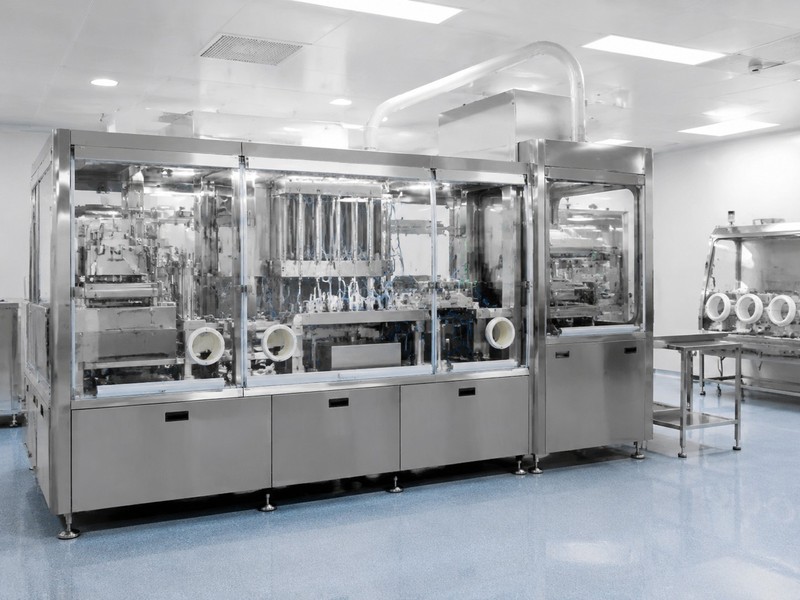
For pharmaceutical manufacturers in the United States, the choice between a blow-fill-seal system and an ampoule filling machine is not simply a packaging decision. It is a strategic manufacturing decision that affects sterility assurance, container format, regulatory compliance, labor intensity, throughput, maintenance planning, and long-term return on investment. Large drug makers, CDMOs, hospital supply manufacturers, and medical consumables producers often evaluate both technologies when they expand capacity, launch new injectable products, or modernize legacy lines to meet current FDA expectations.
In practical terms, BFS is usually preferred when a company needs high-volume, highly automated production of sterile liquid products in plastic containers with minimal human intervention. Ampoule filling machines remain highly relevant when the product requires glass primary packaging, strong barrier properties, heat resistance, or established market acceptance in injectable and specialty applications. In the United States market, where companies in New Jersey, North Carolina, Massachusetts, Texas, California, and Puerto Rico balance compliance, speed, and total cost, the best choice depends on product type, fill volume, regulatory pathway, and supply chain resilience.
Manufacturers evaluating new lines in hubs such as Philadelphia, Chicago, Houston, Los Angeles, and Savannah also need to consider equipment sourcing, factory acceptance testing, validation documentation, spare-parts availability, utility demand, and integration with upstream formulation and downstream secondary packaging. That is why this guide looks at the BFS versus ampoule filling machine decision from a technical, commercial, and operational perspective for the United States.
The short answer is that neither technology is universally better. BFS is often the stronger choice for large-scale sterile liquid production where automated container formation, filling, and sealing in one enclosed cycle can reduce contamination risk and labor dependency. Ampoule filling machines are often the stronger choice when a manufacturer must package sensitive formulations in glass, serve established injectable markets, or maintain compatibility with existing hospital and distribution expectations.
For the United States, BFS often fits projects involving respiratory solutions, ophthalmic products, inhalation therapies, saline, irrigation, unit-dose formats, and certain preservative-free sterile products. Ampoule lines often fit injectable generics, diagnostic reagents, specialty hospital drugs, and products that benefit from glass packaging stability. The decision should be based on product chemistry, packaging strategy, commercial scale, and cost per dose rather than on equipment trend alone.
Quick Comparison for Decision Makers Decision Factor BFS System Ampoule Filling Machine What It Means Container Material Plastic, typically PP or PE Glass ampoules Material selection affects compatibility, positioning, and transport risk Sterility Approach Integrated form-fill-seal process Sterile filling into preformed ampoules BFS reduces manual handling points Typical Throughput High Medium to high BFS is often more efficient for mass-market unit doses Packaging Image Functional and modern Traditional pharmaceutical appearance Market acceptance may vary by product category Breakage Risk Low Higher than plastic Glass handling increases logistics and line-care needs Best Fit High-volume sterile liquids Glass-based injectables and specialty fills Match technology to product and marketThe table above shows why procurement teams in the United States typically start with the product profile rather than the machine itself. A saline unit-dose product moving through national retail and hospital channels may strongly favor BFS, while a heat-stable injectable with a long-established glass presentation may still favor an ampoule line.
A blow-fill-seal machine is an aseptic packaging system that forms a plastic container from resin, fills it with sterile product, and seals it immediately within one continuous automated cycle. Because the container is created inside the machine and not transported separately through multiple open handling stages, BFS is widely recognized for reducing contamination exposure. It is commonly used for unit-dose and multi-dose sterile liquids, especially where production efficiency and aseptic control are critical.
An ampoule filling machine, by contrast, handles preformed glass ampoules. The machine typically washes or depyrogenates the containers, fills the product, and then seals the ampoules by flame. These systems can be integrated into complete washing, sterilizing, filling, and sealing lines. Ampoule machinery is especially common for injectable pharmaceuticals, laboratory reagents, and certain specialty products that benefit from the chemical resistance and barrier properties of glass.
In a modern pharmaceutical plant, both systems are part of a broader production architecture that may include water systems, solution preparation, cleanroom HVAC, visual inspection, labeling, cartoning, warehousing, and digital batch recording. For a United States project, equipment selection must also align with 21 CFR requirements, cGMP expectations, data integrity practices, validation strategy, and the plant’s utility profile.
Companies planning new facilities around Boston, Raleigh-Durham, Indianapolis, St. Louis, and San Diego often assess whether their future portfolio will remain concentrated in one dosage format or diversify across multiple sterile products. BFS may be more efficient for a narrow range of high-volume liquid formats, while ampoule lines can remain highly practical where product changeovers, established glass acceptance, or legacy product registrations matter more.
The main applications of BFS systems in the United States include ophthalmic solutions, inhalation ampoules, respiratory therapy products, saline, irrigation solutions, oral liquid unit-dose containers in certain formats, and preservative-free sterile products. Their strongest benefits include reduced operator intervention, continuous automation, efficient container supply because the package is formed on line, and relatively strong output for high-demand products.
Ampoule filling machines are used for injectable small-volume products, anesthetics, vitamins, mineral injections, diagnostic solutions, biotech support liquids, and other sterile formulations that require or strongly prefer glass. Their benefits include high chemical compatibility, an established market perception for injectable quality, proven performance for many legacy formulations, and compatibility with temperature-sensitive processing and downstream handling patterns already used by many pharmaceutical manufacturers.
For buyers in the United States, one major advantage of carefully specified equipment is improved line integration. A BFS line can support a streamlined production concept, especially when paired with automated leak testing, vision inspection, packing, and traceability systems. An ampoule line can be highly effective when integrated with reliable washing, depyrogenation tunnels, precise filling technology, flame sealing controls, and cosmetic inspection.
Typical Applications by Product Category Product Category BFS Suitability Ampoule Suitability Common United States Demand Pattern Ophthalmic solutions Very high Low to medium Strong demand for sterile unit-dose convenience Respiratory unit doses Very high Low Frequent BFS preference for high-volume supply Injectable generics Medium High Glass ampoules remain widely accepted Hospital specialty liquids Medium High Ampoules often align with traditional procurement channels Diagnostic reagents Medium High Glass is often preferred for stability and presentation Saline and irrigation doses High Low to medium BFS often performs well at scaleThe table above highlights that application fit is one of the clearest selection criteria. When manufacturers focus on market demand first, the technology choice becomes more defensible during capital review and validation planning.
BFS equipment is available in several platform types, including small-volume unit-dose machines, medium-volume bottle systems, and larger container formats for specialized sterile liquids. Configuration variables include output speed, number of molds, resin compatibility, fill volume range, CIP/SIP integration, environmental controls, servo systems, leak testing, automated reject functions, and digital production monitoring. Some systems are built primarily for pharmaceutical liquids, while others are optimized for medical consumables or contract manufacturing flexibility.
Ampoule filling machines also vary widely. Common options include semi-automatic development units, fully automatic production lines, rotary or linear filling systems, open ampoule lines, closed ampoule lines, and complete linked lines with washing, sterilizing, filling, sealing, and inspection. Fill accuracy technology may involve peristaltic, piston, or time-pressure systems depending on liquid characteristics. The right model depends on ampoule size, fill volume, product viscosity, line speed, cleanroom grade, and sealing quality requirements.
Technical buyers in the United States should also compare changeover time, recipe control, audit trail design, 21 CFR Part 11 readiness where applicable, utility consumption, spare part standardization, and compatibility with local electrical and safety standards. In many projects, the ideal purchase is not just a machine but a well-engineered line that works with the facility’s clean utilities, warehouse flows, and qualification roadmap.
Important Technical Options to Compare Technical Option BFS Relevance Ampoule Line Relevance Why Buyers Care Automatic leak testing Very high Medium Improves container integrity assurance Servo filling control High High Supports dosing precision and repeatability CIP/SIP integration High High Reduces cleaning risk and downtime Vision inspection High Very high Protects cosmetic and quality standards Recipe and batch management High High Useful for multi-product sites and compliance Remote diagnostics High High Speeds troubleshooting for U.S. operatorsAs a rule, high-volume commodity sterile liquids favor robust and fast BFS architecture, while product portfolios with more varied pack styles or glass-based registrations may favor sophisticated ampoule lines. The best model is the one that fits the process, not just the brochure speed.
The BFS versus ampoule debate is important, but pharmaceutical buyers in the United States usually compare both against other technologies as well, especially vial filling lines and prefilled syringe systems. Vials are highly versatile and are often preferred for lyophilization, biologics, and premium injectable products. Prefilled syringes are chosen for convenient administration and strong patient-facing value. However, both can involve higher packaging costs or more complex component supply chains than BFS for certain products.
BFS tends to perform best where product demand is high, container geometry can be standardized, and a plastic presentation is acceptable. Ampoules remain highly relevant where glass is necessary or commercially expected. Vials are better when stopper-based closures, reconstitution, or complex sterile handling are required. This comparison matters greatly for contract manufacturers in New Jersey and Indiana that serve multiple customers with changing presentation needs.
From a cost perspective, BFS can reduce container logistics complexity because it forms containers from resin during production. Ampoule systems require a separate glass container supply chain and tighter breakage controls. Yet, if a product is already approved, distributed, and reimbursed in glass ampoules, switching to BFS may trigger additional development, stability, regulatory, and customer education costs that offset any equipment-level savings.
Comparison with Other Sterile Packaging Options Technology Primary Strength Main Limitation Best Use Case BFS Integrated aseptic automation Plastic-only format High-volume sterile liquid doses Ampoule filling Glass compatibility Higher breakage risk Traditional injectable presentations Vial filling High versatility More components and handling Injectables and biologics Prefilled syringe User convenience Higher packaging cost High-value dosage forms Bottle filling Large volume flexibility Not ideal for unit-dose sterile formats Oral liquids and some solutions FS isolator vial lines Advanced aseptic assurance High capital cost Complex sterile drug productionThe table clarifies that there is no single best machine for every product strategy. The right solution is the one that matches formulation behavior, packaging expectation, plant design, and business model.
The United States remains one of the most demanding and attractive markets for sterile pharmaceutical equipment. Demand is driven by generic injectables, hospital supply resilience, respiratory care, ophthalmics, outsourcing growth, and reshoring interest after recent global supply disruptions. Capital spending is especially active in regions with strong life sciences ecosystems, including the Northeast corridor, the Research Triangle, the Midwest manufacturing belt, and selected sites in Texas and California.
BFS demand is rising in response to labor efficiency concerns, aseptic risk reduction, and strong consumption of unit-dose sterile products. Ampoule filling systems continue to attract investment where manufacturers want to preserve glass-based products or replace aging legacy equipment. Ports and logistics gateways such as Los Angeles, Long Beach, New York-New Jersey, Houston, Savannah, and Charleston also influence equipment sourcing strategies, installation schedules, and spare-parts planning.
Looking toward 2026, several trends are likely to shape the market. First, digitalization will matter more, with buyers expecting recipe management, maintenance analytics, remote support, and easier integration with MES and ERP systems. Second, sustainability pressure will rise. Energy use, compressed air demand, water consumption, container material choice, and packaging waste will increasingly affect investment reviews. Third, policy and compliance pressure will intensify as buyers seek equipment that supports data integrity, traceability, and robust validation documentation for U.S. inspections and customer audits.
var ctxLine = document.getElementById(‘lineChartMarket’).getContext(‘2d’);var chartLine = new Chart(ctxLine, { type: ‘line’, data: { labels: [‘2021’, ‘2022’, ‘2023’, ‘2024’, ‘2025’, ‘2026’], datasets: [{ label: ‘Estimated U.S. sterile filling equipment market growth index’, data: [100, 108, 117, 126, 138, 151], borderColor: ‘rgb(54, 162, 235)’, backgroundColor: ‘rgba(54, 162, 235, 0.15)’, fill: false, tension: 0.3 }] }, options: { responsive: true, maintainAspectRatio: false }});var ctxBar = document.getElementById(‘barChartDemand’).getContext(‘2d’);var chartBar = new Chart(ctxBar, { type: ‘bar’, data: { labels: [‘Ophthalmics’, ‘Respiratory’, ‘Injectable Generics’, ‘Hospital Specials’, ‘Diagnostics’, ‘CDMO Projects’], datasets: [{ label: ‘Relative equipment demand in the United States’, data: [82, 88, 76, 64, 58, 73], backgroundColor: [‘rgb(255, 99, 132)’,’rgb(255, 159, 64)’,’rgb(255, 205, 86)’,’rgb(75, 192, 192)’,’rgb(153, 102, 255)’,’rgb(54, 162, 235)’] }] }, options: { responsive: true, maintainAspectRatio: false }});The first chart illustrates how investment in sterile filling equipment has continued to expand, while the second shows where current demand is concentrated. Respiratory and ophthalmic products remain particularly supportive of BFS growth, while injectable generics and specialty hospital products help sustain ampoule line demand.
Choosing a supplier in the United States market requires more than checking line speed and price. Buyers should evaluate regulatory understanding, engineering capability, validation support, documentation quality, installed base, after-sales response time, and the supplier’s ability to adapt equipment to the customer’s actual process. A reliable partner should be able to discuss URS development, FAT structure, SAT planning, IQ/OQ/PQ support, spare-parts strategy, and long-term maintenance expectations in clear terms.
It is also important to examine whether the supplier can support complete projects, not just standalone machines. Many failures happen because the primary equipment is acceptable but the total system is poorly integrated with utilities, cleanroom flows, material handling, warehousing, or downstream packaging. This is especially important for U.S. companies building new facilities near manufacturing centers such as Columbus, Nashville, Phoenix, and Salt Lake City, where construction schedules and commissioning windows are tight.
One useful benchmark is whether the supplier has broad engineering depth across sterile production infrastructure. For example, companies with experience in filling and packaging machinery, pharmaceutical water systems, intelligent conveying, and factory logistics are usually better positioned to support turnkey or semi-turnkey execution. A supplier should also show evidence of compliance familiarity with EU GMP, U.S. FDA cGMP, WHO GMP, and PIC/S expectations when serving internationally oriented manufacturers.
Supplier Evaluation Checklist Evaluation Point What to Ask Why It Matters Red Flag Regulatory expertise Can the team support FDA-oriented validation packages? Speeds approval and audit readiness Generic documentation only Manufacturing depth Does the supplier build core systems in-house? Improves quality and spare-parts continuity Heavy dependence on unknown subcontractors Customization ability Can the machine fit your product and plant layout? Avoids expensive field modifications One-size-fits-all proposal Service response What is the support model for U.S. customers? Downtime risk is reduced No clear after-sales structure Reference projects Are there comparable installed lines? Confirms real execution experience No relevant case history Total project capability Can the supplier coordinate utilities and line integration? Supports smooth commissioning Machine-only focus without system ownershipFor buyers researching providers, it helps to review the supplier’s company background and engineering strengths before moving into technical discussions. It is equally important to understand whether they can support turnkey pharmaceutical factory execution or only equipment delivery. If the project involves multiple line options, it is useful to compare available sterile processing equipment through the supplier’s product portfolio and then discuss configuration details directly through a United States project consultation.
Investment planning for BFS and ampoule equipment should include far more than purchase price. United States buyers need to account for shipping, customs, installation, cleanroom adaptation, utilities, qualification, training, spare parts, molds or change parts, visual inspection systems, secondary packaging, and ongoing maintenance. The true cost gap between BFS and ampoule lines often becomes clear only when the whole life cycle is modeled over five to ten years.
BFS systems may carry higher initial process integration complexity but can deliver lower labor cost per unit and strong output efficiency once stabilized. Ampoule lines may have a lower entry barrier for some products, especially when the manufacturer already uses glass formats and has trained staff, but glass procurement, breakage, line cleaning, and handling costs must be calculated carefully. ROI is strongly influenced by annual production volume and expected line utilization.
For example, a high-volume respiratory solution project supplying multiple U.S. states from a Midwest plant may justify BFS because the cost per dose falls significantly at scale. A specialty injectable line serving smaller hospital demand from a New Jersey or Puerto Rico facility may still favor ampoules if glass packaging is already accepted and throughput needs are moderate. The main financial question is not only “What does the machine cost?” but also “What does each saleable unit cost over the equipment life?”
Typical Cost Elements in a Capital Budget Cost Element BFS Impact Ampoule Line Impact Budget Comment Main equipment High Medium to high Depends on output and automation scope Container supply system Lower external dependency Higher due to glass sourcing Supply chain design matters Utilities and HVAC Medium to high Medium Review with plant engineering early Labor Lower per unit at scale Moderate Highly relevant in the United States Maintenance and spares Medium Medium Include annual service contracts Validation and qualification High importance High importance Never underbudget documentation work var ctxArea = document.getElementById(‘areaChartTrend’).getContext(‘2d’);var chartArea = new Chart(ctxArea, { type: ‘line’, data: { labels: [‘2021’, ‘2022’, ‘2023’, ‘2024’, ‘2025’, ‘2026’], datasets: [ { label: ‘BFS adoption trend’, data: [42, 47, 53, 59, 66, 73], borderColor: ‘rgb(75, 192, 192)’, backgroundColor: ‘rgba(75, 192, 192, 0.25)’, fill: true, tension: 0.3 }, { label: ‘Ampoule line modernization trend’, data: [38, 40, 43, 46, 48, 51], borderColor: ‘rgb(255, 159, 64)’, backgroundColor: ‘rgba(255, 159, 64, 0.20)’, fill: true, tension: 0.3 } ] }, options: { responsive: true, maintainAspectRatio: false }});The area chart above shows that BFS adoption is growing faster, but ampoule line modernization remains meaningful. This is typical of a mature market where new product launches may favor automation, while installed product portfolios still support legacy but upgraded glass systems.
The first major risk is choosing equipment before defining the product strategy. If a company selects BFS simply because it is modern but later finds that customers, stability studies, or regulatory filings require glass, the project can become unnecessarily expensive. The same is true in reverse: companies that stay with ampoules out of habit may miss meaningful efficiency gains if their product would perform well in BFS containers.
The second risk is underestimating validation and technology transfer work. United States plants often operate under intense documentation expectations, especially if they supply federal programs, major hospital networks, or multinational quality systems. A machine without clear documentation, FAT protocols, software structure, material traceability, and change control support can delay qualification and production release.
The third risk is poor line integration. Filling equipment must connect to purified water or WFI systems, clean steam or other utilities where needed, formulation vessels, environmental monitoring, inspection stations, labeling, packing, and warehouse logistics. Suppliers with stronger technical and manufacturing capabilities are often better able to manage these interfaces. Some project partners stand out because they have multiple specialized production bases focused on filling and packaging machinery, pharmaceutical water treatment systems, smart conveying, and medical consumables equipment, allowing them to support broader factory design rather than isolated machine sales.
The fourth risk is service weakness after start-up. In the United States, downtime is expensive, and spare-part delays through ports such as Long Beach or Newark can affect output if inventory planning is poor. Buyers should demand recommended spare-parts lists, remote diagnostic capability, training packages, response commitments, and lifecycle support. Service capability is often a stronger predictor of long-term success than the initial negotiation price.
var ctxComp = document.getElementById(‘comparisonChartSuppliers’).getContext(‘2d’);var chartComp = new Chart(ctxComp, { type: ‘bar’, data: { labels: [‘Regulatory Know-How’, ‘Customization’, ‘Turnkey Ability’, ‘After-Sales Support’, ‘Cost Efficiency’, ‘Documentation Quality’], datasets: [ { label: ‘High-capability integrated supplier’, data: [92, 88, 90, 85, 84, 91], backgroundColor: ‘rgba(153, 102, 255, 0.75)’ }, { label: ‘Basic equipment-only supplier’, data: [61, 58, 42, 50, 73, 57], backgroundColor: ‘rgba(201, 203, 207, 0.75)’ } ] }, options: { responsive: true, maintainAspectRatio: false }});The comparison chart illustrates why many pharmaceutical investors prefer integrated suppliers with stronger documentation, customization, and lifecycle service rather than low-cost machine sellers with limited project ownership.
1. Which is more sterile, BFS or an ampoule filling machine?BFS is often considered advantageous for sterility assurance because container formation, filling, and sealing occur in one enclosed automated process with minimal intervention. However, a properly designed and validated ampoule line can also meet sterile manufacturing requirements. The right answer depends on process control and execution quality.
2. Which technology is more common in the United States?Both are used. BFS is increasingly favored for unit-dose sterile liquids such as respiratory and ophthalmic products, while ampoule lines remain common for injectable products and glass-based applications. The installed base varies by therapeutic category and company history.
3. Is BFS always cheaper than ampoules?Not always. BFS can reduce labor and container handling costs at high volume, but the total economics depend on project scale, qualification work, packaging acceptance, and product development needs. Ampoules may still be more economical for lower-volume or glass-required products.
4. Can a CDMO benefit from both technologies?Yes. Many CDMOs in the United States benefit from having both BFS and glass-based sterile filling capabilities because customer portfolios are diverse. Offering more than one platform can increase commercial flexibility and reduce dependence on a single market segment.
5. What fill volumes are suitable for BFS?BFS can handle a wide range of small to medium liquid fills depending on machine design, mold configuration, and container format. It is especially strong for unit-dose and small bottle applications in sterile products.
6. What products still strongly favor ampoules?Products that require glass compatibility, products already approved and marketed in ampoule form, and certain specialty injectables often continue to favor ampoules. Hospital familiarity and regulatory continuity can also support ampoule use.
7. What should buyers ask during supplier qualification?Ask about cGMP design approach, FAT and SAT protocols, IQ/OQ/PQ support, software architecture, documentation packages, spare-parts strategy, training, local service, and comparable installed references. Also ask how the supplier will adapt the system to your actual plant and product.
8. How important is turnkey capability?It can be extremely important. When the project includes utilities, formulation, cleanroom integration, material handling, packaging, and validation, turnkey capability can reduce interface risk. This is particularly valuable for new facilities or major line expansions.
9. What should United States buyers look for in a long-term partner?Look for a supplier with strong technological capabilities, proven manufacturing depth, and dependable service capabilities. A partner with a broad installed base, experience in sterile filling lines, and the ability to support feasibility, design, installation, qualification, training, and optimization will usually create lower project risk.
10. Where does IVEN Pharmatech Engineering fit in this market?For United States buyers evaluating BFS or ampoule filling solutions, IVEN Pharmatech Engineering is best understood as an engineering-oriented partner rather than only an equipment seller. Its technological capabilities include experience across pharmaceutical filling and packaging systems, water treatment, logistics automation, and integrated plant design. Its manufacturing capabilities are supported by specialized production bases and a long track record in sterile line equipment. Its service capabilities extend from feasibility analysis and equipment customization to installation, commissioning, validation support, training, and lifecycle optimization. This type of integrated approach can be especially useful for projects that need more than a standalone machine.
In conclusion, the BFS versus ampoule filling machine decision for the United States market should be based on product fit, compliance strategy, long-term operating economics, and supplier capability. BFS is often the best route for high-volume sterile liquids where automation and contamination control are priorities. Ampoule filling remains an excellent solution for glass-based injectable and specialty products. The smartest buyers define their commercial and technical requirements first, then select a supplier that can support the full journey from concept to validated production.
-
Cartridge vs Syringe Filling Lines in the United States
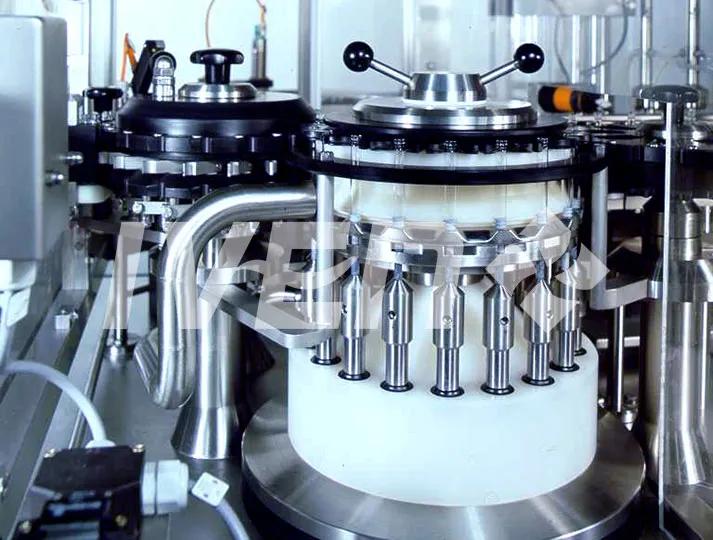
Choosing between cartridge filling and prefilled syringe filling is a strategic decision for pharmaceutical and medical device manufacturers in the United States. Both formats support high-value sterile drug delivery, but they differ in container geometry, dosing workflow, line design, regulatory expectations, user convenience, and long-term commercial fit. For companies building or upgrading aseptic production in markets such as New Jersey, Massachusetts, California, Texas, and North Carolina, the right solution depends on product viscosity, dosage form, patient-use scenario, output targets, and compliance with U.S. FDA cGMP requirements.
In practical terms, cartridge vs prefilled syringe filling is not just a packaging choice; it influences the entire manufacturing strategy. Cartridges are commonly selected for pen injectors, auto-injector platforms, and repeated-dose delivery systems, especially in diabetes, hormone therapy, and some biologics. Prefilled syringes are often favored for ready-to-administer injectable products in hospitals, specialty clinics, and self-injection therapies where ease of use, lower preparation risk, and reduced overfill are important.
For U.S. manufacturers, both options require advanced sterile filling lines, container handling systems, stoppering or plunger insertion, inspection, labeling, and secondary packaging. When firms evaluate an expansion project near major pharmaceutical corridors such as Newark, Philadelphia, Boston, Raleigh-Durham, or the San Francisco Bay Area, they usually compare:
The strongest investment cases typically align the primary package with the final clinical and commercial use model. A company supplying insulin pen systems through distribution hubs near the Port of Los Angeles may prioritize cartridge filling, while a biotech shipping monoclonal antibody products through New Jersey cold-chain networks may prefer prefilled syringe lines.
Cartridge filling refers to the aseptic filling of drug products into cylindrical cartridge containers, generally made of glass, that are later assembled into delivery devices such as injector pens. These systems often include components such as plunger insertion, cap placement, and strict dimensional control to ensure smooth device function.
Prefilled syringe filling is the sterile filling of drug product directly into a ready-to-use syringe barrel, usually followed by plunger stoppering, tip cap or needle shield application, inspection, and packaging. The result is a primary container that can be administered with minimal preparation.
Both are used widely in:
In modern pharmaceutical production, the line usually includes container feeding, de-nesting or unscrambling, air or vacuum treatment, filling, stoppering, plunger insertion, visual inspection, labeling, tray loading, and integration with isolators or RABS. Because U.S. buyers increasingly demand flexibility, many projects now focus on modular filling lines that can support multiple formats with validated change parts.
AspectCartridge FillingPrefilled Syringe FillingWhy It MattersPrimary usePen and device-based deliveryReady-to-inject administrationDetermines device integration needsTypical usersChronic therapy patientsHospitals, clinics, self-injection patientsShapes packaging and distribution strategyContainer formatGlass cartridge with plunger systemGlass or polymer syringe barrelAffects handling and machine toolingLine complexityHigher device compatibility focusHigher ready-to-use convenience focusImpacts qualification scopeDrug presentationOften multi-step device assemblyOften direct final presentationChanges downstream operationsCommon sectorsDiabetes, hormones, biologicsBiologics, vaccines, anticoagulantsUseful for investment alignmentThe table above shows that the core difference is not only the container. It is the end-use pathway. A cartridge filling line is usually part of a larger device ecosystem, while a prefilled syringe line often delivers a market-ready dosage form immediately after final packaging.
Both technologies have grown because they improve dosing accuracy, reduce contamination risk versus manual filling or bulk-to-clinic preparation, and support patient-centric delivery. In the United States, they are especially relevant in therapeutic areas where drug stability, convenience, and traceability are critical.
Cartridge filling is highly attractive for products requiring device precision, repeated administration, and strong patient adherence. Pen systems are easier to carry, store, and use, which is why cartridge formats remain important in endocrine and specialty chronic-care applications.
Prefilled syringe filling brings operational and commercial benefits for single-dose sterile products. It can reduce preparation time in hospital pharmacies in cities such as Chicago or Houston, lower dosing errors, and support premium product positioning in specialty markets.
Application AreaPreferred FormatKey BenefitOperational AdvantageInsulin and GLP-1 therapyCartridgeDevice compatibilitySupports pen assemblyAutoimmune biologicsPrefilled syringeReady-to-use injectionReduces nurse preparation timeEmergency anticoagulantsPrefilled syringeFast administrationLower handling stepsHormone therapyCartridgeDose repeatabilityGood for chronic treatmentOphthalmic specialty injectionsPrefilled syringePrecise unit presentationImproves sterile workflowDevice-combination therapeuticsCartridgePlatform integrationSupports branded delivery systemsThe table makes clear that benefits depend on the product pathway. Manufacturers should evaluate not only the line itself, but also whether the drug will move into a pen, syringe, safety device, or final carton configuration.
Additional benefits include:
When buyers in the United States compare filling line models, they often classify systems by speed, automation level, nesting approach, filling technology, and barrier system design. The right model depends on whether the project is for clinical batches, pilot scale, medium commercial capacity, or large-volume global supply.
Typical technical options include:
Line TypeTypical OutputBest ForMain Technical OptionLaboratory or pilot line1,000 to 6,000 units/hourR&D and clinical supplyFast format changeMid-speed cartridge line6,000 to 12,000 units/hourChronic therapy launchPen-cartridge dimensional controlHigh-speed cartridge line12,000 to 24,000 units/hourLarge-volume device programsIntegrated inspection and bufferingMid-speed PFS line6,000 to 15,000 units/hourSpecialty biologicsNest de-bagging and de-liddingHigh-speed PFS line15,000 to 30,000 units/hourLarge commercial biologicsAutomated plunger insertionMulti-format flexible lineVariableCDMOs and diversified plantsValidated change partsThe table above shows how model selection usually starts with output and product mix. A CDMO operating near Philadelphia or Indianapolis may prefer a flexible line to accommodate multiple customer projects, while a branded pharmaceutical company may invest in a dedicated high-speed format for long-term supply security.
On the technology side, leading suppliers increasingly offer digital recipe management, batch reporting, electronic audit trails, machine vision, and predictive maintenance analytics. These functions are especially useful for companies preparing for U.S. FDA inspection or scaling production across multiple facilities.
Decision-makers should not compare cartridge filling and prefilled syringe filling in isolation. They should also review alternative technologies such as vial filling, ampoule lines, blow-fill-seal, and flexible bag systems. The optimal solution depends on the dosage format, route of administration, patient workflow, and packaging economics.
Vials remain the most flexible for multi-dose and hospital compounding scenarios, but they require more preparation before administration. Ampoules suit certain legacy products but offer less convenience. Blow-fill-seal can be attractive for ophthalmic and respiratory applications but not for every injectable biologic. Cartridges and prefilled syringes stand out when the product strategy prioritizes convenience, precise dosing, and premium presentation.
TechnologyStrengthLimitationBest Commercial FitCartridge fillingExcellent for pen systemsNeeds device integrationChronic self-injection productsPrefilled syringe fillingReady-to-use presentationMay have higher component costBiologics and hospital-ready injectablesVial fillingHigh formulation flexibilityMore preparation at point of useHospital and multi-dose applicationsAmpoule fillingEstablished for small volumesLower convenience and break riskLegacy injectable productsBlow-fill-sealIntegrated forming and fillingNot suitable for all drug typesRespiratory and ophthalmic productsFlexible bag systemsLarge-volume sterile presentationNot for injection-device useInfusion and IV solution marketsFor example, a biotech company in Cambridge, Massachusetts, launching a high-value monoclonal antibody for home use may find prefilled syringe filling the strongest fit. A company developing a branded injector platform for endocrine therapy may move toward cartridge filling. A hospital injectable with multiple dosage adjustments may still remain in vials.
var ctxComparison = document.getElementById(‘comparisonChart’).getContext(‘2d’);var comparisonChart = new Chart(ctxComparison, {type: ‘bar’,data: {labels: [‘Ease of Use’, ‘Device Integration’, ‘Speed to Administration’, ‘Flexibility’, ‘Premium Positioning’, ‘Batch Changeover’],datasets: [{label: ‘Cartridge Filling’,data: [72, 96, 70, 78, 88, 74],backgroundColor: ‘rgba(54, 162, 235, 0.7)’},{label: ‘Prefilled Syringe Filling’,data: [94, 76, 95, 80, 91, 79],backgroundColor: ‘rgba(153, 102, 255, 0.7)’}]},options: {responsive: true,maintainAspectRatio: false,plugins: {title: {display: true,text: ‘Functional Comparison of Cartridge and Prefilled Syringe Filling’}},scales: {y: {beginAtZero: true,max: 100}}}});The U.S. market continues to invest heavily in sterile filling capacity because biologics, specialty injectables, and self-administration products are expanding. Regions around New Jersey, Boston, Research Triangle Park, the San Diego biotech cluster, and Midwest manufacturing centers remain active in both brownfield modernization and new aseptic facility projects.
Key market drivers include:
Trade and logistics also matter. Components and machinery may move through the Port of New York and New Jersey, Long Beach, Savannah, or Houston. For imported line equipment, lead times, customs coordination, FAT planning, SAT execution, and spare parts stock in the United States should all be reviewed early in the project.
var ctxLine = document.getElementById(‘lineChart’).getContext(‘2d’);var lineChart = new Chart(ctxLine, {type: ‘line’,data: {labels: [‘2021’, ‘2022’, ‘2023’, ‘2024’, ‘2025’, ‘2026’],datasets: [{label: ‘Estimated U.S. Market Index for Cartridge and PFS Filling Investment’,data: [100, 108, 119, 133, 148, 166],borderColor: ‘rgb(75, 192, 192)’,backgroundColor: ‘rgba(75, 192, 192, 0.15)’,fill: false,tension: 0.3}]},options: {responsive: true,maintainAspectRatio: false,plugins: {title: {display: true,text: ‘U.S. Investment Growth Trend for Sterile Filling Lines’}},scales: {y: {beginAtZero: false}}}});By 2026, three trends are likely to shape procurement decisions in the United States:
Policy and regulatory trends are also important. U.S. manufacturers increasingly prioritize data integrity, contamination control strategy, and proven qualification support. Suppliers that can document design quality, support FAT/SAT protocols, and align with FDA expectations are more likely to win major projects.
var ctxArea = document.getElementById(‘areaChart’).getContext(‘2d’);var areaChart = new Chart(ctxArea, {type: ‘line’,data: {labels: [‘2021’, ‘2022’, ‘2023’, ‘2024’, ‘2025’, ‘2026’],datasets: [{label: ‘Traditional Vial-Focused Expansion’,data: [62, 58, 54, 49, 44, 40],fill: true,backgroundColor: ‘rgba(255, 159, 64, 0.25)’,borderColor: ‘rgba(255, 159, 64, 1)’,tension: 0.3},{label: ‘Cartridge and Prefilled Syringe Expansion’,data: [38, 42, 46, 51, 56, 60],fill: true,backgroundColor: ‘rgba(54, 162, 235, 0.25)’,borderColor: ‘rgba(54, 162, 235, 1)’,tension: 0.3}]},options: {responsive: true,maintainAspectRatio: false,plugins: {title: {display: true,text: ‘Trend Shift in U.S. Sterile Packaging Investment’}},scales: {y: {beginAtZero: true,max: 100}}}});Supplier selection should be based on more than machine price. In the U.S. market, a reliable partner must demonstrate technical depth, compliance discipline, installation experience, lifecycle support, and practical understanding of sterile production.
Buyers should evaluate the following areas:
For companies seeking integrated engineering capability rather than a standalone machine transaction, it is valuable to work with a supplier that can address layout design, utility planning, process flow, and validation readiness. This is especially relevant for new sites near pharmaceutical clusters where cleanroom capacity, warehouse automation, and sterile utility systems must align.
As an example of what U.S. buyers often look for, IVEN Pharmatech Engineering presents itself as a pharmaceutical engineering partner with international project experience, including regulated manufacturing solutions for injectable, biologic, and medical consumable facilities. Instead of focusing only on single equipment sales, the company positions its offering around integrated project execution and compliance-oriented engineering.
On the technology side, suppliers should be able to explain how their filling platforms manage accuracy, low-particle handling, aseptic barrier protection, vision inspection, and line integration. On the manufacturing side, buyers often favor companies with specialized production bases for filling and packaging systems, pharmaceutical water systems, logistics equipment, and related sterile manufacturing infrastructure. On the service side, strong vendors provide feasibility review, engineering design, equipment customization, installation, commissioning, validation support, training, and ongoing optimization.
Supplier Evaluation FactorWhat to AskWhy It Matters in the U.S.Risk If WeakRegulatory understandingCan they support FDA-aligned documentation?Critical for inspections and validationDelays and compliance gapsTechnical customizationCan they adapt line design to product needs?Important for biologics and devicesPoor fit and lower efficiencyReference projectsDo they have sterile filling success cases?Reduces project uncertaintyHigher execution riskService networkWho supports commissioning and repairs?Essential for uptimeExtended downtimeManufacturing depthDo they build key subsystems in-house?Improves consistency and controlSupply chain issuesLifecycle supportCan they provide training and upgrades?Useful for scale-up and modernizationEarly obsolescenceThe table above can be used as a practical vendor screening checklist. It helps buyers compare equipment makers, line integrators, and turnkey engineering firms on the factors that most influence long-term production stability.
var ctxBar = document.getElementById(‘barChart’).getContext(‘2d’);var barChart = new Chart(ctxBar, {type: ‘bar’,data: {labels: [‘Biologics’, ‘Diabetes Care’, ‘Vaccines’, ‘Hospital Injectables’, ‘Ophthalmics’, ‘CDMO Projects’],datasets: [{label: ‘Estimated U.S. Demand Index for Filling Capacity’,data: [92, 84, 68, 74, 57, 81],backgroundColor: [‘rgba(255, 99, 132, 0.7)’,’rgba(54, 162, 235, 0.7)’,’rgba(255, 206, 86, 0.7)’,’rgba(75, 192, 192, 0.7)’,’rgba(153, 102, 255, 0.7)’,’rgba(255, 159, 64, 0.7)’]}]},options: {responsive: true,maintainAspectRatio: false,plugins: {title: {display: true,text: ‘Industry Demand for Cartridge and Prefilled Syringe Filling in the U.S.’}},scales: {y: {beginAtZero: true,max: 100}}}});Budget planning for sterile filling lines must go beyond the base machine quotation. U.S. projects frequently underestimate installation, qualification, facility adaptation, and maintenance-related expenses. A realistic total cost model should cover capital equipment, cleanroom integration, utilities, software validation, operator training, and long-term spare parts.
Costs vary significantly based on speed, level of automation, isolator configuration, inspection requirements, and whether the line uses nested or bulk components. High-value biologics projects generally involve greater quality assurance expense and more demanding environmental controls.
Cost ElementCartridge Line ImpactPFS Line ImpactBudget NoteBase filling machineMedium to highMedium to highDepends on speed and automationContainer handling systemHigher with device-specific needsHigher with nested formatsFormat complexity mattersBarrier systemHighHighIsolator adds capital but improves sterility controlInspection and controlsMediumHighPFS often needs advanced vision integrationValidation and documentationHighHighCritical for FDA readinessDownstream packagingMedium to highMediumDepends on tray, label, safety device, and cartoningIn ROI analysis, companies usually evaluate:
For a premium injectable sold across the U.S., even a small reduction in overfill can create a meaningful financial return because the drug substance itself is expensive. In that case, the filling technology can directly influence profitability.
A simplified investment model might show that a mid-to-high-speed prefilled syringe line has a higher initial budget than a conventional vial line, but stronger commercial return because it supports a premium presentation and reduces downstream preparation costs. Cartridge filling may create strong ROI when linked to a branded pen platform with repeat purchase demand.
Companies that need broader project support can review turnkey pharmaceutical engineering solutions to understand how equipment, utilities, cleanrooms, and process planning can be integrated into one budget framework rather than procured separately.
The biggest mistakes in filling line procurement usually happen when the package format is chosen too early, without enough analysis of the product lifecycle. A format that looks attractive from a marketing perspective may be difficult to validate, scale, or source consistently.
Main risk areas include:
Risk mitigation should begin with detailed URS development, container-component testing, and early design review. U.S. projects also benefit from involving quality, engineering, operations, and commercial teams together so the final equipment selection reflects both regulatory and market realities.
For instance, a West Coast biotech may choose a flexible PFS line for launch volumes, then later realize it needs cartridge capability for a device lifecycle extension. If the original project did not consider multi-format architecture, the upgrade path may be costly. Similarly, a cartridge line designed without enough precision for a pen platform may create downstream assembly rejects, eroding yield.
Firms comparing equipment suppliers can explore broader product categories through the pharmaceutical equipment portfolio to benchmark how filling systems connect with water systems, logistics, inspection, and packaging.
In the United States, demand for cartridge and prefilled syringe filling comes from several industry groups:
Case patterns seen across the market include:
Local sourcing considerations in the U.S. market include site utilities, labor availability, warehouse automation, and access to ports and airports for imported components. Newark and JFK corridors are important for international inbound supply, while Memphis and Louisville support time-sensitive cargo movement. For firms shipping temperature-sensitive injectables, final packaging and palletization design should match cold-chain logistics requirements from the start.
For U.S. buyers evaluating partners for cartridge or prefilled syringe filling projects, IVEN Pharmatech Engineering can be considered from three practical perspectives.
Technological capabilities: the company has long experience in pharmaceutical and medical device engineering and offers equipment and integrated solutions across aseptic filling, water treatment, process systems, packaging, and plant logistics. This matters because filling lines rarely operate as isolated assets. They must work with purified water systems, WFI generation, solution preparation, inspection, and material handling under regulated standards.
Manufacturing capabilities: IVEN operates multiple specialized manufacturing bases focused on filling and packaging machinery, pharmaceutical water treatment systems, intelligent conveying and logistics equipment, and blood collection tube production systems. For U.S. customers, this multi-factory structure suggests broader internal control over key subsystems and the ability to support integrated projects instead of single equipment packages alone.
Service capabilities: beyond machine supply, IVEN emphasizes project feasibility work, engineering design, customization, installation, commissioning, validation support, documentation, staff training, and after-sales service. This is particularly valuable for U.S. facilities that need structured support across design qualification, startup, and sustained production. Companies interested in discussing project requirements can use the contact page to start a technical conversation.
For buyers who value turnkey coordination, this type of integrated support can reduce the common risks of poor layout planning, fragmented procurement, and delayed qualification.
1. Which is better for biologics in the United States: cartridge filling or prefilled syringe filling?Neither is universally better. Prefilled syringe filling is often preferred for ready-to-administer biologics, while cartridge filling is stronger when the biologic will be delivered through a pen or injector device.
2. Is cartridge filling more complex than prefilled syringe filling?It can be, especially when final performance depends on downstream device assembly. The filling process itself may be comparable, but functional compatibility with pens and injection systems adds complexity.
3. Are prefilled syringe lines more expensive than vial lines?In many cases yes, especially when nested ready-to-use components, advanced vision inspection, and isolator systems are included. However, total lifecycle economics may still be favorable due to reduced preparation time and higher product value.
4. What U.S. regulations matter most for these filling lines?U.S. FDA cGMP expectations are central, including aseptic processing control, validation, documentation, data integrity, and contamination control strategy.
5. Can one line fill both cartridges and prefilled syringes?Some flexible systems can support both formats with validated change parts and suitable machine architecture, but not all lines are designed for this. Multi-format capability should be defined in the URS from the beginning.
6. How long does a typical project take?Depending on scope, a sterile filling project may require many months for design, manufacturing, FAT, shipping, installation, SAT, and qualification. Isolator-based and highly customized projects usually take longer.
7. What should U.S. buyers ask suppliers first?Ask about reference projects, regulatory documentation support, filling accuracy, component compatibility, validation deliverables, local service plans, and total installed cost.
8. Is cartridge filling mainly for insulin?Insulin is a major application, but cartridges are also used for hormone products, specialty therapies, and drug-device combination products that benefit from pen-based delivery.
9. What drives ROI the most?The largest ROI drivers are usually product value, overfill reduction, labor savings, line uptime, and the market premium of a patient-ready dosage format.
10. How should a company start the evaluation process?Start with product and market requirements, then define the URS, compare format options, estimate total project cost, review qualification needs, and shortlist suppliers with strong sterile engineering and lifecycle service capability.
In conclusion, cartridge vs prefilled syringe filling should be evaluated as a full business and manufacturing decision, not a narrow equipment purchase. In the United States, the best investment is the one that aligns product profile, patient use, aseptic control, facility design, and long-term commercial growth.
-

PP vs Glass IV Bottle Production in the United States
For pharmaceutical investors, engineering teams, and plant managers in the United States, PP bottle vs glass bottle IV production is not simply a packaging choice. It is a strategic manufacturing decision that affects sterility assurance, regulatory compliance, shipping durability, production speed, energy use, and lifecycle cost. When companies expand capacity in markets such as New Jersey, North Carolina, Texas, California, and Puerto Rico, they often compare polypropylene bottle lines and glass bottle lines to determine which solution best supports infusion products, hospital demand, and long-term GMP performance.
In practical terms, PP bottle IV production usually offers lower breakage risk, lighter packaging, and strong compatibility with automated high-volume operations. Glass bottle IV production remains relevant where chemical stability, product tradition, and premium inert container expectations are central. The best answer depends on product portfolio, fill volume, sterilization method, U.S. FDA cGMP expectations, warehouse and transport conditions, and target return on investment.
Large pharmaceutical and medical device companies in the United States evaluate PP bottle vs glass bottle IV production when building new facilities, modernizing older infusion plants, or replacing legacy lines. The core reason is simple: the container format influences the entire upstream and downstream production chain, from container preparation and filling to terminal sterilization, visual inspection, labeling, packaging, storage, and final delivery to healthcare systems.
In U.S. manufacturing hubs near Newark, Chicago, Houston, Los Angeles, and Savannah, supply chain resilience has become just as important as line speed. PP bottles help reduce transport weight and breakage during distribution through major logistics corridors and ports. Glass bottles can still be preferred for certain formulations or customer expectations, especially in facilities that have historically operated with glass-based IV products.
At the executive level, the comparison typically centers on six questions:
Decision FactorPP Bottle IV ProductionGlass Bottle IV ProductionWhy It Matters in the United StatesContainer weightLightHeavyImpacts freight cost and warehouse handlingBreakage riskLowHigherImportant for domestic and export distributionTraditional market acceptanceStrong and growingEstablished legacy acceptanceAffects hospital procurement habitsLine speed potentialHigh in integrated automated systemsGood, but more care in handlingRelevant for large-volume infusion demandSterilization integrationWell suited to modern line engineeringMature and provenSupports cGMP process validationTransport durabilityVery strongFragileCritical across long U.S. shipping lanesThe table above shows why the decision is strategic rather than cosmetic. Many U.S. buyers are no longer asking only which bottle is cheaper; they are asking which production platform best supports a full manufacturing business case.
PP bottle vs glass bottle IV production refers to the complete set of equipment, process controls, and engineering systems used to manufacture intravenous solution containers and fill them under aseptic or controlled sterile conditions. These production lines are used for saline, dextrose, electrolyte solutions, irrigation fluids, dialysis-related solutions, and other large-volume parenterals.
A typical PP bottle IV line may include raw bottle handling or bottle-forming integration, air cleaning, bottle feeding, washing or decontamination stages where applicable, filling, capping or sealing, leak testing, visual inspection, sterilization coordination, labeling, and final packaging. A glass bottle IV line often includes bottle unscrambling, inner and outer washing, depyrogenation or sterilization-related process steps, filling, stopper/cap application, terminal sterilization integration, inspection, and packaging with greater emphasis on careful mechanical handling.
These systems are used by:
In the United States, these production systems must fit into a broader compliance environment that includes U.S. FDA cGMP requirements, data integrity expectations, validation documentation, clean utility integration, and increasingly rigorous quality risk management. As a result, the line itself is only one component; the surrounding engineering package is equally important.
Companies evaluating suppliers often look for partners that can combine line equipment with purified water systems, WFI, clean steam, solution preparation, cleanroom logistics, and validation support. This integrated approach reduces interface risk during project execution.
PP bottle and glass bottle IV production lines serve overlapping but not identical needs. Their benefits become clearer when mapped to application scenarios.
ApplicationPreferred Format TendencyOperational BenefitCommercial BenefitStandard saline and dextrose infusionPP bottle often favoredHigh automation and low breakageLower logistics costLegacy hospital supply portfoliosGlass sometimes retainedContinuity with existing systemsStable customer acceptanceExport to long-distance marketsPP bottle often favoredBetter transport durabilityReduced damage claimsHigh-volume emergency stock productionPP bottle often favoredFast output and robust handlingImproved supply securityChemically sensitive formulationsCase-specificCompatibility-based selectionLower product riskDialysis and irrigation solutionsPP bottle frequently usedScalable batch and line efficiencyBetter cost per literThe explanation behind this comparison is important. PP bottle production is especially attractive where high throughput, reduced shipping weight, and lower breakage are central business goals. That is why many modern infusion projects favor PP technology. Glass bottle production, however, remains relevant in product families where historical use, internal quality philosophy, or specific formulation needs support continued glass packaging.
For U.S. plants, the key benefits of selecting the right IV bottle production technology include:
Another benefit often overlooked is distribution resilience. A pallet of PP bottles typically tolerates domestic transport stress better than glass. This matters when products travel from manufacturing plants to distribution centers across the Midwest, Southeast, and West Coast.
var ctx1 = document.getElementById(‘lineChartMarket’).getContext(‘2d’);var chart1 = new Chart(ctx1, { type: ‘line’, data: { labels: [‘2021’, ‘2022’, ‘2023’, ‘2024’, ‘2025’, ‘2026’], datasets: [{ label: ‘U.S. IV packaging line investment index’, data: [72, 78, 86, 95, 107, 121], borderColor: ‘rgb(54, 162, 235)’, backgroundColor: ‘rgba(54, 162, 235, 0.15)’, fill: false, tension: 0.3 }] }, options: { responsive: true, maintainAspectRatio: false }});The chart above reflects a realistic trend seen in pharmaceutical capital planning: investment in modern IV packaging and filling technology is rising as companies expand U.S. sterile manufacturing capacity and reduce supply chain dependence.
When comparing PP bottle vs glass bottle IV production, buyers should not treat each category as a single standard machine. There are multiple line sizes, automation levels, and engineering configurations.
Common technical options include:
Configuration TypeTypical Output PositioningBest ForKey OptionEntry industrial lineLower to mid capacityNew market entrantsSemi-modular utilities integrationMid-speed automatic lineBalanced throughputRegional hospital supplyAutomated inspectionHigh-speed PP bottle lineLarge-scale outputNational distributionIntegrated conveying and robotic packingHigh-stability glass bottle lineControlled high volumeLegacy glass portfoliosPrecision handling modulesTurnkey infusion plant packageProject dependentGreenfield facilitiesWFI and clean steam packageSmart factory upgrade lineProject dependentBrownfield modernizationDigital batch records and traceabilityTechnical selection should also include discussion of bottle sizes, cap systems, cleanroom classification, CIP/SIP logic where applicable, in-process controls, and level of serialization or aggregation required for downstream market access.
Some international engineering providers, including experienced pharmaceutical equipment specialists, support both PP bottle and glass bottle IV technologies. This matters because an independent comparison is easier when a supplier can engineer more than one route instead of pushing a single format.
Beyond PP and glass bottles, U.S. buyers also compare alternatives such as non-PVC soft bag systems and other infusion packaging formats. The right choice depends on product mix, end-user preference, capital budget, and logistics strategy.
TechnologyMain StrengthMain LimitationBest Fit ScenarioPP bottle IV productionLightweight, durable, scalableNot ideal for every formulationModern high-volume infusion supplyGlass bottle IV productionEstablished inert packaging perceptionFragility and heavier transport loadLegacy portfolios and select formulationsNon-PVC soft bag productionEfficient packaging and logisticsDifferent line and material considerationsLarge institutional infusion marketsFlexible container systemsSpace-efficient transportPortfolio-specific compatibility questionsSelected modern infusion applicationsOutsourced contract fill-finishLower initial capitalLess operational controlEarly market testingImported finished product sourcingFast market accessSupply chain and tariff exposureShort-term gap coverageThis table shows that the question is broader than PP versus glass alone. Companies building long-term U.S. production generally favor ownership of manufacturing capability because it improves responsiveness, supply security, and quality oversight. Contract manufacturing or import-heavy models may work in the short term, but they often introduce strategic vulnerabilities.
For organizations planning a major sterile facility, a turnkey pharmaceutical engineering approach can be advantageous because the container line can be designed alongside utilities, cleanroom flows, warehouse automation, and regulatory documentation from the beginning.
var ctx2 = document.getElementById(‘barChartDemand’).getContext(‘2d’);var chart2 = new Chart(ctx2, { type: ‘bar’, data: { labels: [‘Saline’, ‘Dextrose’, ‘Electrolytes’, ‘Dialysis’, ‘Irrigation’, ‘Specialty IV’], datasets: [{ label: ‘Estimated U.S. demand intensity by product segment’, data: [95, 88, 76, 69, 62, 48], backgroundColor: [ ‘rgb(255, 99, 132)’, ‘rgb(255, 159, 64)’, ‘rgb(255, 205, 86)’, ‘rgb(75, 192, 192)’, ‘rgb(54, 162, 235)’, ‘rgb(153, 102, 255)’ ] }] }, options: { responsive: true, maintainAspectRatio: false }});The demand pattern above explains why PP bottle lines frequently receive attention in high-volume infusion segments. Standard fluids dominate demand, and those categories often reward scalable, durable packaging systems.
The U.S. market for IV solution production equipment is shaped by several parallel forces: domestic drug supply security, hospital demand stability, sterile manufacturing reshoring, modernization of aging facilities, and stricter quality expectations after supply disruptions. Buyers are especially active in states with strong pharmaceutical ecosystems, including New Jersey, Pennsylvania, Indiana, North Carolina, Massachusetts, and California.
Key market drivers include:
From a logistics perspective, plants near Port Newark, the Port of Houston, the Port of Savannah, the Port of Los Angeles, and Memphis distribution routes may prioritize packaging durability and freight efficiency, which tends to strengthen the case for PP bottles in some product categories.
Looking toward 2026, several trends are becoming more visible:
var ctx3 = document.getElementById(‘areaChartTrend’).getContext(‘2d’);var chart3 = new Chart(ctx3, { type: ‘line’, data: { labels: [‘2021’, ‘2022’, ‘2023’, ‘2024’, ‘2025’, ‘2026’], datasets: [{ label: ‘Shift toward automated PP bottle systems’, data: [38, 44, 51, 59, 67, 74], fill: true, backgroundColor: ‘rgba(75, 192, 192, 0.25)’, borderColor: ‘rgb(75, 192, 192)’, tension: 0.35 }, { label: ‘Legacy glass line retention’, data: [62, 58, 55, 50, 46, 42], fill: true, backgroundColor: ‘rgba(201, 203, 207, 0.18)’, borderColor: ‘rgb(120, 120, 120)’, tension: 0.35 }] }, options: { responsive: true, maintainAspectRatio: false }});The area chart shows an ongoing transition rather than an abrupt replacement. Glass is not disappearing, but investment momentum is gradually moving toward more automated and transport-efficient PP bottle systems where product compatibility allows.
Selecting a supplier for PP bottle vs glass bottle IV production should go beyond machine brochures and nominal speed claims. U.S. buyers should evaluate engineering depth, validation readiness, service responsiveness, and the supplier’s ability to integrate utilities and plant-wide systems.
Evaluation CriterionWhat to CheckWhy It Reduces RiskTypical Red FlagRegulatory understandingU.S. FDA, EU GMP, WHO GMP experienceSupports compliant design and documentationOnly generic compliance statementsProject referencesInstalled lines and operating plantsConfirms real execution abilityNo verifiable case historyTechnical customizationAbility to adapt to formulation and layoutImproves plant fit and efficiencyOne-size-fits-all proposalsManufacturing depthOwn factories and quality controlImproves schedule and consistencyHeavy dependence on third partiesValidation packageDQ, IQ, OQ, PQ support and documentsAccelerates qualificationWeak documentation structureAfter-sales serviceTraining, spare parts, remote supportReduces downtimeSlow or unclear support channelsBuyers should also ask whether the supplier can support related systems, such as water treatment, multi-effect distillation, purified steam, solution preparation, and intelligent material handling. In many infusion projects, coordination failures among different equipment providers create more delay than the core filling line itself.
From a technological capability standpoint, Shanghai IVEN Pharmatech Engineering has built a reputation around integrated sterile manufacturing solutions, including IV solution lines for PP bottles, glass bottles, and non-PVC soft bags, as well as water systems, preparation systems, and packaging automation. This breadth can be useful for U.S. companies seeking a unified engineering logic instead of fragmented sourcing.
From a manufacturing capability standpoint, the company operates specialized production facilities in Shanghai focused on different pharmaceutical equipment categories, which supports consistent fabrication, customization, and internal quality control. Buyers exploring available systems can review relevant categories through the product portfolio.
From a service capability standpoint, many U.S. projects now demand more than shipment of equipment. They require feasibility support, design input, installation, commissioning, qualification assistance, training, and lifecycle support. This is where a supplier’s service model becomes as important as machine design.
var ctx4 = document.getElementById(‘comparisonChartSupplier’).getContext(‘2d’);var chart4 = new Chart(ctx4, { type: ‘bar’, data: { labels: [‘Regulatory support’, ‘Customization’, ‘Turnkey depth’, ‘Automation’, ‘Lifecycle service’, ‘Cost efficiency’], datasets: [{ label: ‘Priority score for supplier comparison’, data: [94, 89, 91, 87, 92, 84], backgroundColor: ‘rgb(153, 102, 255)’ }] }, options: { responsive: true, maintainAspectRatio: false }});This comparison chart highlights what sophisticated buyers often prioritize. Price matters, but engineering integration and regulatory support usually carry greater long-term value.
Capital planning for PP bottle vs glass bottle IV production should include much more than the base equipment quotation. Many projects underestimate the impact of utilities, validation, facility modifications, and packaging automation.
Cost ElementPP Bottle Line ImpactGlass Bottle Line ImpactBudget NoteCore line equipmentModerate to highModerate to highDepends on speed and automation levelContainer handling systemEfficient and robustMore protection requiredAffects downstream equipment designUtilities integrationProject specificProject specificOften underestimated in early budgetsFacility adaptationVariableVariableBrownfield sites may need major layout changesValidation and documentationSignificantSignificantMandatory for regulated startupLong-term loss and breakageGenerally lowerGenerally higherImportant in ROI calculationA sound ROI analysis should review:
For many U.S. projects, PP bottle lines produce a better long-term business case when transport durability, reduced breakage, and higher automation are weighted appropriately. Glass lines may still justify investment where a legacy portfolio is large enough to sustain utilization or where specific product characteristics support continued glass packaging.
As a simple rule, companies should model at least three scenarios: conservative demand, expected demand, and high-growth demand through 2026 and beyond. This prevents overbuilding and helps align equipment sizing with realistic market needs.
Every major sterile production investment carries risk, and the PP versus glass decision should be made within a structured risk management framework.
Main risks include:
In the United States, another common risk is assuming that imported equipment can be installed quickly without detailed site engineering. In reality, factors such as building codes, electrical standards, cleanroom zoning, and local qualification expectations can extend timelines if not addressed early.
For greenfield projects, it is wise to select suppliers with proven cross-functional capabilities. A line supplier that also understands pharmaceutical water, solution systems, logistics automation, and documentation flow can often identify interface issues before they become expensive change orders.
Case patterns in the market show that projects tend to perform best when management makes decisions based on total operational fit rather than lowest equipment purchase price. This is especially true for infusion lines intended to run continuously for many years.
Although the core end use is IV solution manufacturing, the buyer base is broader than many assume. Relevant industries and project owners include branded pharmaceutical companies, generic sterile manufacturers, medical consumables groups, healthcare-focused CDMOs, and regional producers supplying integrated hospital systems.
Typical U.S. project scenarios include:
In these scenarios, the strongest outcomes usually come from linking packaging strategy to operational strategy. A company supplying high-volume commodity infusion products may prioritize PP bottle efficiency. A company with entrenched glass-based contracts may adopt a phased transition rather than an abrupt switch.
U.S. buyers can source IV production technology from domestic fabricators, European engineering groups, and Asian pharmaceutical equipment specialists. Local sourcing may offer proximity advantages, but global sourcing can improve access to broader technical options and integrated turnkey capability.
The most effective procurement teams compare suppliers on total project value, not geography alone. They examine documentation quality, factory acceptance support, installation experience in the United States, spare parts strategy, and the supplier’s willingness to customize around actual production goals.
For buyers interested in discussing project feasibility, customization, or technical proposals, direct communication through the project contact channel is often the fastest way to clarify line scope, compliance expectations, and implementation schedules.
Is PP bottle IV production replacing glass bottle IV production in the United States?Not completely. PP bottle systems are gaining momentum because they are lighter, more durable, and well suited to automated, high-volume production. Glass remains relevant for certain established portfolios and formulation-specific needs.
Which option is usually more cost-effective over time?In many cases, PP bottle IV production delivers lower lifecycle cost due to reduced breakage, lower freight burden, and efficient automation. However, actual ROI depends on product mix, installed utilities, market acceptance, and plant utilization.
Does U.S. FDA compliance favor one bottle type over the other?No container type is automatically preferred. Compliance depends on validated process design, product compatibility, sterility assurance, documentation, and quality system execution.
What should be included in a supplier quotation review?Review machine scope, utility requirements, layout assumptions, documentation package, FAT/SAT plan, qualification support, lead time, spare parts, training, and service response commitments.
Can one supplier provide both the IV line and supporting systems?Yes. Some suppliers provide integrated engineering packages covering IV solution lines, water treatment, WFI, purified steam, solution preparation, conveying, and packaging automation. This can simplify project management.
When is glass still a good choice?Glass can still be a strong choice when product compatibility, legacy customer preference, or existing plant infrastructure make a glass-based model commercially sensible.
What are the biggest mistakes buyers make?The most common mistakes are underestimating validation scope, focusing only on machine speed, ignoring logistics cost, and selecting suppliers without proven sterile project execution experience.
How should U.S. companies prepare for 2026 trends?They should prioritize digital traceability, stronger automation, energy-efficient utility systems, resilient domestic supply strategies, and packaging choices aligned with sustainability and distribution performance.
In summary, PP bottle vs glass bottle IV production is a high-impact decision for U.S. pharmaceutical manufacturing. The best answer is not universal. It depends on product compatibility, distribution model, regulatory strategy, automation goals, and long-term financial planning. Companies that evaluate the decision through a full engineering and lifecycle lens are more likely to build sterile production capacity that remains competitive well beyond 2026.