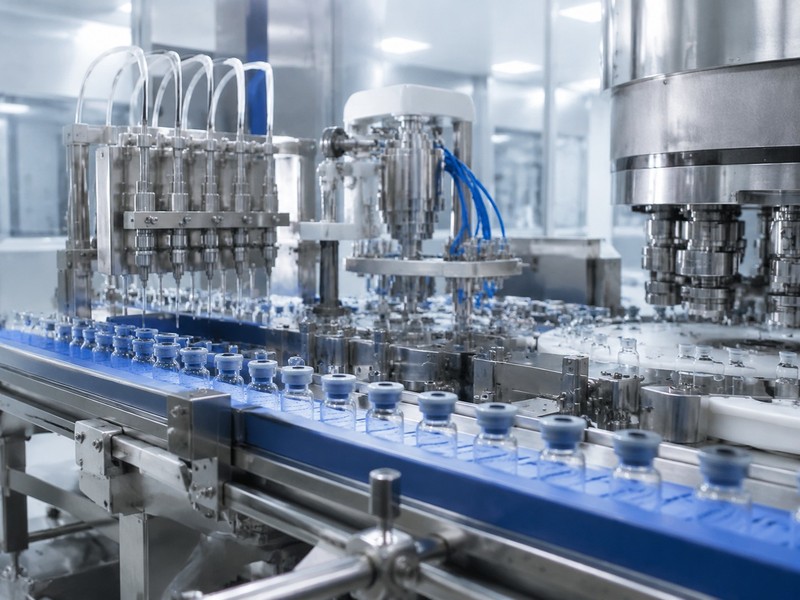
United States Guide to Vial and Syringe Filling Lines
For pharmaceutical manufacturers in the United States, the choice between vial filling and prefilled syringe filling affects product strategy, regulatory compliance, capital investment, production flexibility, and long-term profitability. Vial lines remain highly versatile for injectables, biologics, lyophilized products, and multi-dose presentations. Prefilled syringe lines are increasingly favored for ready-to-administer therapies, reduced dosing error, improved user convenience, and stronger differentiation in hospital and self-injection markets. In practice, large pharmaceutical and medical device companies evaluate both formats based on sterility assurance, fill accuracy, throughput, container-closure integrity, market demand, and compatibility with U.S. FDA cGMP expectations.
Across manufacturing hubs such as New Jersey, Boston, Raleigh-Durham, Chicago, Houston, San Diego, and the San Francisco Bay Area, project teams are comparing line modernization options with a sharper focus on isolators, robotics, digital batch records, automated format changeovers, and higher-value injectable portfolios. Whether a company is planning a greenfield project near the Port of Los Angeles, expanding a sterile site in Pennsylvania, or upgrading a contract manufacturing facility in Indiana, understanding the real differences between vial filling and prefilled syringe filling is essential.
Quick Answer: Why U.S. Manufacturers Compare Vial Filling and Prefilled Syringe Filling

The quick answer is simple: vial filling and prefilled syringe filling serve different commercial and technical purposes, and neither is universally better. Vial filling lines are usually selected when manufacturers need broad product flexibility, support for liquid and lyophilized injectables, multiple fill volumes, and easier handling for hospital and institutional distribution. Prefilled syringe filling lines are often chosen when the goal is ready-to-use convenience, premium product positioning, reduced overfill, and improved ease of administration for healthcare professionals or patients.
In the United States market, the decision is often driven by six factors: product type, target patient population, regulatory pathway, production volume, cost per unit, and lifecycle strategy. A biologic intended for self-administration may strongly favor a prefilled syringe format. A generic injectable sold mainly to hospitals may still perform best in vials. For CDMOs and multi-product sites, the answer may be a hybrid approach with modular sterile filling capacity.
| Decision Factor | Vial Filling | Prefilled Syringe Filling | Why It Matters |
|---|---|---|---|
| Product flexibility | High | Moderate | Vials support more product types and fill ranges |
| Patient convenience | Lower | High | Prefilled syringes reduce preparation steps |
| Lyophilization compatibility | Excellent | Limited | Critical for unstable injectables |
| Unit packaging value | Moderate | High | Syringes often support premium pricing |
| Line investment | Moderate to high | High | Syringe lines typically require more specialized components |
| Hospital use | Very common | Growing | Both are used, but workflows differ |
| Self-administration potential | Low | Strong | Important for specialty pharma and biologics |
This comparison shows why many U.S. manufacturers do not treat the decision as only an equipment purchase. It is a packaging platform strategy tied to product development, market access, nursing efficiency, and long-term line utilization.
What Vial Filling vs Prefilled Syringe Filling Means in Pharmaceutical Production

Vial filling refers to the aseptic processing of liquid or powder drug products into glass or polymer vials, followed by stoppering, capping, and sometimes lyophilization. A vial filling line typically includes vial washing, depyrogenation, sterile transfer, filling, stoppering, capping, inspection, labeling, and secondary packaging. This format is common for vaccines, oncology drugs, antibiotics, anesthetics, freeze-dried products, and multi-dose formulations.
Prefilled syringe filling refers to the aseptic filling of sterile syringes that are supplied as nested tubs or bulk containers, followed by plunger insertion, tip cap or needle shield placement, inspection, labeling, and packaging. This format is widely used for biologics, anticoagulants, emergency medications, ophthalmic injections, and specialty products requiring precise, ready-to-inject dosing.
The key difference is not only the primary container. It also involves workflow, human factors, container preparation, sterility management, fill-volume economics, and end-user handling. In U.S. pharmaceutical operations, both formats must comply with current good manufacturing practice, data integrity requirements, environmental monitoring standards, and robust validation expectations.
When companies evaluate complete sterile manufacturing projects, they also consider whether the packaging line can be integrated into broader facility systems such as purified water, water for injection, clean utilities, and material logistics. For businesses seeking turnkey execution, integrated pharmaceutical engineering solutions can help align filling equipment with cleanroom design, utility routing, and validation planning.
| Feature | Typical Vial Line | Typical Prefilled Syringe Line | Operational Impact |
|---|---|---|---|
| Container format | Glass or polymer vial | Glass or polymer syringe | Determines line handling and closure methods |
| Container preparation | Wash and depyrogenate | Often RTU nested tubs | RTU can reduce preparation burden |
| Filling mode | Peristaltic, piston, time-pressure, mass flow | Peristaltic or advanced low-shear systems | Affects biologic integrity and dose accuracy |
| Closure | Rubber stopper and aluminum cap | Plunger, tip cap, needle shield | Changes container-closure validation strategy |
| Lyophilization support | Yes | Rare | Major advantage for vials |
| User preparation | More steps | Fewer steps | Impacts nursing workflow and home use |
| Common end market | Hospitals, clinics, bulk distribution | Specialty, biologics, home care | Supports product positioning decisions |
The practical use of each system depends on product sensitivity, target volume, and the desired balance between production efficiency and patient-centric delivery.
Main Applications and Benefits in Modern Pharmaceutical Manufacturing

Vial filling remains central to sterile manufacturing because it supports a broad range of injectable products. It is especially valuable for contract manufacturing organizations, generic injectable producers, and facilities handling multiple SKUs. It also remains the dominant choice when lyophilization is required, when fill sizes vary, or when the product is supplied to institutional buyers in larger quantities.
Prefilled syringe filling has gained momentum because it aligns with the trend toward convenience, dose precision, reduced medication preparation steps, and lower contamination risk at the point of use. In the United States, hospitals, ambulatory care centers, and home-use channels increasingly value presentation formats that reduce handling complexity.
The benefits of vial filling include:
- High format flexibility for diverse injectable portfolios
- Compatibility with freeze-dried products
- Strong suitability for batch manufacturing and hospital distribution
- Potentially lower packaging cost for some high-volume products
- Established regulatory and operational familiarity
The benefits of prefilled syringe filling include:
- Reduced dosing error and lower overfill requirements
- Improved user convenience and readiness for administration
- Better differentiation for specialty therapies
- Support for self-injection and combination-device strategies
- Potential reduction in preparation time in clinical settings
Demand across sectors varies by therapy area. Oncology centers around Boston and Houston may continue to rely heavily on vials for complex aseptic compounding, while autoimmune and biologic products distributed through specialty channels increasingly favor prefilled syringes. Vaccine and emergency-use products may use either format depending on storage, campaign logistics, and administration models.
The chart above illustrates how demand tends to be strongest for prefilled syringe solutions in biologics and home injection, while vials remain highly relevant in vaccines, generics, and oncology.
Key Types, Models, and Technical Options for Vial and Prefilled Syringe Filling
Not all filling lines are built the same. Technical selection should be based on product rheology, sterility strategy, automation level, expected output, and future format expansion. For U.S. buyers, major technical distinctions include line speed, filling technology, isolator or RABS configuration, in-process control design, changeover time, and compatibility with ready-to-use components.
For vial lines, common options include monoblock systems, integrated washing-filling-capping lines, stand-alone modules, and high-speed aseptic lines linked with lyophilizers. For prefilled syringes, buyers may choose between nested syringe processing lines, bulk syringe lines, fully robotic filling cells, and flexible small-batch systems for high-value biologics.
| Line Type | Best For | Typical Speed | Main Strength |
|---|---|---|---|
| Compact vial monoblock | Small to mid-scale sterile production | 40 to 120 containers/min | Space efficiency and simpler layout |
| High-speed vial line | Large commercial injectable output | 200 to 600 containers/min | High throughput and scalability |
| Vial line with lyophilizer integration | Freeze-dried products | Varies by cycle | Supports unstable formulations |
| Nested syringe line | Biologics and specialty products | 50 to 300 syringes/min | Reduced container preparation complexity |
| Robotic syringe filling cell | Small batch or potent products | Low to mid output | High containment and flexibility |
| Dual-format modular line | Multi-product sites | Depends on configuration | Supports strategic flexibility |
| Isolator-based aseptic system | High sterility assurance needs | Across multiple outputs | Lower intervention risk |
Important technical options include no-glass-to-glass transfer, 100% IPC weight checks, automatic reject systems, vision inspection, recipe control, e-batch records, and integration with serialization or aggregation modules where applicable. Modern projects increasingly request PAT-friendly design, digital maintenance tools, and remote diagnostic support.
Companies that want to compare line configurations can review broader equipment portfolios through the pharmaceutical equipment catalog, where filling, packaging, water systems, and utility-related technologies are part of the wider manufacturing ecosystem.
Vial Filling vs Alternative Technologies: Which Solution Fits Your Needs?
The real comparison is not only vial versus prefilled syringe. U.S. manufacturers may also assess cartridges, blow-fill-seal, ampoules, dual-chamber systems, and auto-injector-compatible platforms. The right answer depends on the product lifecycle and the administration setting.
Choose vial filling when:
- You need maximum formulation and fill-volume flexibility
- Your product may require lyophilization
- You supply hospitals, compounding centers, or institutional channels
- You run multiple products across one sterile line
- You want lower risk during early market entry before upscale presentation changes
Choose prefilled syringe filling when:
- You target self-administration or ready-to-inject use
- Your product is high value and sensitive to overfill loss
- You want premium differentiation in specialty markets
- You may later migrate to safety devices or auto-injectors
- You aim to reduce handling steps in clinics and hospitals
| Selection Scenario | Better Fit | Reason | Business Effect |
|---|---|---|---|
| Generic injectable for hospitals | Vial filling | Cost-effective and familiar format | Supports broad tender participation |
| Monoclonal antibody for home use | Prefilled syringe | Patient convenience and dosing precision | Improves market acceptance |
| Freeze-dried antibiotic | Vial filling | Requires lyophilization | Preserves product stability |
| Emergency room ready-dose product | Prefilled syringe | Fast administration | Shortens preparation time |
| Multi-SKU sterile contract manufacturing | Vial filling | Broader compatibility | Higher line utilization |
| Combination device lifecycle plan | Prefilled syringe | Device integration potential | Extends product value |
| Early-stage commercial launch with uncertain demand | Depends on strategy | Flexibility versus premium delivery | Affects CAPEX risk profile |
In many cases, a phased strategy is best: start with vials for launch speed and flexibility, then expand into prefilled syringes once demand, reimbursement, and patient-use data support a stronger delivery investment.
Market Overview and Future Trends in U.S. Pharmaceutical Manufacturing
The United States remains one of the most advanced sterile manufacturing markets in the world, supported by strong demand for biologics, oncology therapies, injectables, vaccines, and specialty drug-device combinations. Recent capacity expansions near Philadelphia, Indianapolis, North Carolina’s Research Triangle, and greater Boston show continued investment in aseptic processing technology.
Several market trends are shaping filling line decisions:
- Rapid growth of biologics and biosimilars
- Higher use of ready-to-use containers and components
- Increased adoption of isolator-based aseptic lines
- Shift toward smaller, high-value batches with strict traceability
- Growth of patient-centric formats and home administration
- Pressure to reduce labor dependence and intervention risk
- Greater sustainability focus in energy, water, and material use
By 2026 and beyond, the market is likely to see stronger demand for robotic aseptic filling, AI-supported visual inspection, digital twins for line optimization, predictive maintenance, and integrated electronic quality systems. Policy pressure around domestic supply resilience may also influence sourcing decisions, spare-parts strategy, and local technical support expectations.
The line chart reflects a realistic upward investment trend as U.S. manufacturers modernize lines to meet demand for injectables and more complex therapies.
The area chart shows the gradual shift toward prefilled formats, especially in biologics, emergency care, and home-injection therapy classes. Even with this movement, vials remain indispensable due to process flexibility and compatibility with lyophilized products.
Sustainability is another growing factor. Newer lines are expected to reduce compressed air consumption, improve clean-in-place and sterilize-in-place efficiency where relevant, lower reject rates, and support leaner cleanroom operation. U.S. facilities are also asking suppliers for lifecycle cost transparency, spare-parts planning, and carbon-conscious engineering.
How to Choose a Reliable Manufacturer or Supplier
Selecting a filling line supplier is not just a technical purchase decision. It involves regulatory confidence, project management capability, documentation quality, global support, and alignment with your validation and production teams. U.S. buyers should assess whether a supplier can support URS development, FAT and SAT execution, qualification documentation, operator training, and post-installation service.
Key evaluation criteria include:
- Experience with FDA-oriented documentation and cGMP expectations
- References in sterile injectables and device-related packaging
- Capability to customize equipment for product-specific requirements
- In-house manufacturing depth versus outsourced assembly
- Ability to integrate utilities, logistics, and packaging systems
- Availability of spare parts, remote service, and field engineers
- Strength in validation documentation and change-control support
For example, Shanghai IVEN Pharmatech Engineering Co Ltd has developed its reputation around integrated pharmaceutical engineering rather than simple machine supply. Its technological capabilities include sterile filling and packaging machinery, pharmaceutical water treatment systems, intelligent logistics, and specialized production equipment for medical consumables. Its manufacturing capabilities are supported by specialized plants in Shanghai focused on core equipment categories, helping customers coordinate multi-system projects more efficiently. Its service capabilities cover feasibility support, engineering design, customization, installation, commissioning, IQ/OQ/PQ support, training, and long-term optimization, which is especially important for U.S. buyers seeking reduced execution risk.
For companies wanting to review background and engineering focus in more detail, the company overview page provides a broader picture of experience in pharmaceutical and medical device projects worldwide.
| Supplier Checkpoint | What to Ask | Why It Matters in the United States | Warning Sign |
|---|---|---|---|
| Regulatory understanding | Can you support FDA-style documentation and traceability? | Essential for validation and inspections | Generic or incomplete qualification package |
| Sterile process experience | How many aseptic projects have you delivered? | Reduces startup risk | Little real sterile reference experience |
| Customization ability | Can the line match our container, product, and facility needs? | Many projects require tailored engineering | Only standard catalog answers |
| Manufacturing depth | Which modules are built in-house? | Influences consistency and lead time | Heavy dependence on fragmented subcontracting |
| Service network | How fast can you support U.S. commissioning and troubleshooting? | Downtime costs are high | Weak local response plan |
| Lifecycle support | Do you offer training, upgrades, and spare-parts planning? | Critical for long-term OEE | Support ends after shipment |
| Integration capability | Can you connect water systems, logistics, and packaging? | Important for turnkey or expansion projects | Supplier handles only isolated equipment |
Reliable suppliers should also be comfortable discussing line data collection, 21 CFR Part 11-relevant considerations, audit trails, recipe security, and long-term parts availability.
Investment Cost, Budget Planning, and ROI Analysis
CAPEX can vary widely depending on line speed, sterility strategy, degree of automation, and utility scope. In the United States, a vial filling project may range from a mid-level investment for a compact aseptic line to a very large spend for a high-speed line integrated with advanced containment and lyophilization. Prefilled syringe lines often carry higher initial equipment and format costs but may deliver stronger product economics for premium therapies.
Typical budget categories include equipment, isolators or RABS, cleanroom adaptation, HVAC impact, utilities, installation, FAT/SAT, qualification, training, spare parts, and early-stage process development support. Hidden costs often emerge in format parts, environmental monitoring, component sourcing, validation resource demand, and slower-than-expected ramp-up.
| Cost Element | Vial Filling Line | Prefilled Syringe Line | Planning Note |
|---|---|---|---|
| Main equipment | Moderate to very high | High to very high | Depends on speed and automation |
| Container preparation | Washer and depyrogenation tunnel often required | May be reduced with RTU tubs | RTU can simplify upstream handling |
| Closure system | Stopper and cap modules | Plunger and shield modules | Affects maintenance and qualification |
| Lyophilization integration | Possible major added cost | Usually not included | Key differentiator |
| Change parts | Moderate | Potentially high | Depends on format variety |
| Validation effort | High | High | Both require robust qualification |
| Operating cost per unit | Can be lower in high-volume standard products | Can improve with high-value drugs | Economics depend on product price and overfill |
ROI should be modeled around more than throughput. Strong analyses include labor savings, yield improvement, reduced overfill, fewer intervention-related deviations, lower contamination risk, faster line clearance, and commercial uplift from a more convenient presentation. In a specialty biologic, even a small reduction in overfill can have a major annual financial impact. In a hospital generic, line utilization and changeover flexibility may be more important than premium packaging value.
This comparison chart highlights the different value drivers. Vials score strongly on flexibility and lyophilization compatibility, while prefilled syringes excel in home-use potential, premium positioning, and overfill savings.
For investment planning, U.S. buyers should create base-case, expected-case, and stretch-case ROI models over five to ten years, including service contracts, consumables, preventive maintenance, and probable future SKU additions.
Key Considerations and Potential Risks When Investing
The biggest mistake in sterile filling investments is choosing equipment before finalizing the product and business strategy. The second biggest mistake is underestimating qualification, ramp-up, and operator readiness. Whether you select vials or prefilled syringes, the project must account for technical, commercial, and compliance risks from day one.
Major risks include:
- Mismatch between product characteristics and filling technology
- Insufficient sterility assurance design for intervention-heavy processes
- Unexpected container or component supply constraints
- Longer-than-planned validation and release timeline
- Poor format changeover design reducing OEE
- Weak supplier documentation for U.S. compliance expectations
- Inadequate service support after startup
Risk management should include design reviews, mock interventions, media fill strategy alignment, spare-parts criticality mapping, and clear user requirement specifications. Facilities near logistics hubs such as Savannah, Newark, Long Beach, and Houston should also plan around import timing, customs handling, installation windows, and technician availability.
In practice, stronger projects usually come from suppliers that can support the full lifecycle, from concept and plant layout through startup and optimization. IVEN’s service capabilities are especially relevant here because many pharmaceutical projects fail not from poor core machinery but from layout conflicts, utility coordination issues, incomplete documentation, or weak commissioning planning. A supplier with integrated engineering, manufacturing, and service depth can materially reduce those risks.
If your team is actively planning a sterile line project, expansion, or supplier qualification exercise, you can contact the engineering team to discuss project scope, format selection, and implementation requirements for the U.S. market.
FAQ
1. Is vial filling cheaper than prefilled syringe filling?
Often, yes on initial line cost for standard applications, but not always on total product economics. Prefilled syringes may offset higher CAPEX through lower overfill, better convenience, and stronger product value.
2. Which format is better for biologics?
Prefilled syringes are often preferred for biologics intended for direct administration or self-injection, but vials remain important for sensitive products, hospital use, and lyophilized presentations.
3. Can one facility run both vial and prefilled syringe filling?
Yes. Many modern sterile facilities in the United States use modular layouts or separate suites to support both formats, especially when serving diverse product portfolios.
4. Are prefilled syringe lines always more automated?
Not always, but they often involve higher specialization, especially with nested tubs, robotic handling, and integrated plunger systems. Automation level depends on project scope and throughput.
5. When should a company keep vials instead of switching?
Keep vials when flexibility, lower packaging complexity, lyophilization compatibility, or institutional distribution are more important than convenience-based differentiation.
6. What should U.S. buyers ask during supplier qualification?
Ask about FDA-oriented documentation, validation support, sterile references, parts availability, remote troubleshooting, FAT/SAT methods, and the supplier’s ability to adapt to your facility and product.
7. How important is ready-to-use component compatibility?
Very important. RTU systems can reduce washing and depyrogenation needs, shorten setup complexity, and support cleaner aseptic workflows, especially for prefilled syringe operations.
8. What 2026 trends matter most?
Expect greater use of isolators, robotics, digital quality systems, predictive maintenance, sustainable utility design, domestic supply resilience planning, and more patient-centric injectable presentations.
9. What kind of partner is best for large expansion projects?
A supplier or engineering company that combines technological capability, manufacturing depth, and lifecycle service support is usually best. This is especially useful when your project includes filling lines, water systems, packaging, logistics, and compliance documentation in one coordinated program.
10. How can companies reduce project risk?
Define the product strategy first, develop a strong URS, qualify suppliers carefully, align validation planning early, include realistic startup timelines, and work with experienced engineering teams that understand sterile manufacturing execution.
In conclusion, the best decision between vial filling and prefilled syringe filling depends on the product, the patient, the market, and the manufacturing strategy. U.S. pharmaceutical producers that evaluate both formats through the lens of compliance, lifecycle economics, and operational flexibility are more likely to build assets that remain competitive well beyond 2026.

About the Author
We are IVEN Pharmatech Engineering, a team dedicated to delivering turnkey pharmaceutical and medical solutions worldwide. With decades of experience, we specialize in advanced machinery, integrated factory design, and full lifecycle support to help our clients achieve efficient, compliant, and high-quality production.
Share

Related Insights
-
Blow Fill Seal Machine Specifications in the United States
For sterile pharmaceutical manufacturers in the United States, blow fill seal machine specifications matter because the technology forms the container, fills the product, and seals the package in one enclosed aseptic cycle. That integrated process reduces operator intervention, lowers the chance of microbial contamination, and supports high-volume production of respiratory solutions, ophthalmics, injectables, and unit-dose liquids. As U.S. facilities in New Jersey, Indiana, Texas, California, and North Carolina continue upgrading sterile capacity, blow fill seal systems are increasingly evaluated not only for throughput, but also for container flexibility, validation readiness, utility efficiency, and long-term cost of ownership.
In practical terms, buyers usually compare blow fill seal machine specifications across five core areas: output speed, fill volume range, polymer compatibility, sterility assurance features, and compliance with U.S. FDA cGMP expectations. A well-selected line can help a manufacturer shorten material flow, reduce cleanroom burden, improve batch consistency, and support faster commercialization. This is especially relevant for companies shipping through major pharmaceutical logistics corridors such as Newark, Philadelphia, Chicago, Houston, and the ports of Los Angeles and Long Beach.
The short answer is that blow fill seal machine specifications are preferred by many sterile product manufacturers because the process combines container molding, product dosing, and sealing into a single continuous aseptic operation. Compared with conventional vial, bottle, or ampoule filling setups that require multiple pieces of equipment and more open handling stages, BFS technology simplifies contamination control and can improve reproducibility.
In the United States market, this preference is growing for several reasons. First, labor costs and cleanroom operating costs are high, so automated enclosed processes have a strong economic advantage. Second, contract development and manufacturing organizations are under pressure to add flexible sterile capacity for ophthalmic, inhalation, and biologic support products. Third, healthcare buyers increasingly want reliable unit-dose packaging with good transport stability and easy patient use. These commercial needs directly influence what buyers look for in blow fill seal machine specifications.
The most commonly requested specifications include:
For U.S. buyers, the value of BFS is not just technical. It also supports easier scale-up from pilot to commercial volumes when the right mold design and machine architecture are selected at the start.
Blow fill seal technology is an advanced aseptic packaging process used widely in pharmaceuticals and healthcare liquids. The machine extrudes molten polymer into a parison, forms the container inside a mold, fills it with sterile product while the container is still inside the machine, and then seals it immediately. The entire sequence happens in seconds and inside a controlled zone.
A typical U.S. production workflow looks like this:
The exact blow fill seal machine specifications depend on whether the application is ophthalmic, irrigation, inhalation, oral liquid, or injectable support solution. For example, unit-dose eye drops may demand small cavity molds with very high output and precise low-volume dosing, while large-volume irrigation bottles need stronger container geometry and larger resin consumption.
The table below summarizes the specification categories that U.S. engineering teams most often review before procurement.
Specification ItemTypical RangeWhy It MattersCommon U.S. ApplicationFill volume0.2 mL to 1,000 mLDetermines product family compatibilityEye drops, saline, irrigation fluidsOutput capacity2,000 to 30,000 units/hourAffects commercial viability and labor efficiencyHigh-volume OTC and Rx linesContainer materialLDPE, HDPE, PPInfluences barrier, flexibility, and sterilization behaviorRespiratory and injectable support productsNumber of cavities1 to 20+ cavitiesDrives productivity and mold strategySingle-dose and multi-dose packsDosing accuracyTypically ±1% or betterCritical for compliance and product consistencySterile pharmaceutical liquidsSterile air filtrationHEPA or equivalent controlled systemProtects the aseptic zoneFDA-inspected sterile facilitiesAutomation levelStandalone to full integrated lineImpacts staffing and traceabilityTurnkey plant projectsWhen buyers compare these parameters, they should also ask how the machine performs under real production conditions rather than only nominal test speeds. Stable output over a full shift in a U.S. cGMP environment is more important than headline speed.
Sterile drug manufacturers choose BFS because it addresses a core risk in aseptic production: contamination introduced by handling and transfers. Traditional systems often involve separate container supply, washing, depyrogenation, transfer, filling, stoppering, and sealing stages. Each stage adds complexity. BFS compresses those steps into one protected operation.
In the United States, this is especially attractive for manufacturers making preservative-free ophthalmics, inhalation solutions, sodium chloride products, and unit-dose therapies. Facilities in regions such as New Jersey, Boston, and the Research Triangle need equipment that supports strict quality standards while remaining economically scalable. Blow fill seal machine specifications that align with those goals typically include advanced recipe control, servo precision, clean utility integration, and automated reject management.
Other reasons manufacturers choose BFS include:
Demand also reflects market realities. U.S. hospitals, retail pharmacies, and home-care channels continue to favor user-friendly sterile packaging. In addition, resilience planning after supply disruptions has encouraged domestic and near-market capacity investment.
var ctxLine = document.getElementById(‘lineChartGrowth’).getContext(‘2d’);var lineChartGrowth = new Chart(ctxLine, {type: ‘line’,data: {labels: [‘2021′,’2022′,’2023′,’2024′,’2025′,’2026’],datasets: [{label: ‘Estimated U.S. BFS Market Growth Index’,data: [100,112,126,141,159,178],borderColor: ‘rgb(54, 162, 235)’,backgroundColor: ‘rgba(54, 162, 235, 0.15)’,fill: false,tension: 0.3}]},options: {responsive: true,maintainAspectRatio: false}});The line chart above illustrates a realistic growth pattern for U.S. BFS adoption. While exact figures vary by source and segment, the broader trend is clear: more sterile drug makers are assessing blow fill seal machine specifications as part of capacity expansion and modernization plans through 2026.
BFS machines are not all the same. Model choice depends on container size, resin type, product sensitivity, annual volume, and downstream packaging format. In the U.S. market, buyers usually group systems into small-dose pharmaceutical units, medium-format bottle systems, and large-format fluid container lines.
Machine Model TypeTypical Volume RangeMain Product UseProduction ProfileUnit-dose mini BFS system0.2 mL to 10 mLOphthalmic drops, inhalation nebulesVery high cavity count, high speedSmall bottle BFS system5 mL to 30 mLTopicals, diagnostic liquidsFlexible multi-format productionMedium bottle BFS system30 mL to 250 mLOral liquids, sterile wash productsBalanced speed and bottle strengthLarge bottle BFS system250 mL to 1,000 mLIrrigation, dialysis support liquidsHigher resin load, lower cavity countMulti-lane custom BFS lineCustom formatContract manufacturing portfoliosFast changeover emphasisIntegrated turnkey BFS lineMultiple sizesNew sterile plantsIncludes utilities and packaging integrationThese model differences affect not only machine dimensions and speed, but also utilities, mold strategy, and validation workload. A unit-dose line for preservative-free eye drops in New Jersey may prioritize small fill precision and tip design. A larger line for irrigation solutions serving hospital systems in Texas or Illinois may prioritize bottle strength, cap geometry, and pallet efficiency.
The U.S. sectors most often purchasing BFS equipment include:
var ctxBar = document.getElementById(‘barChartDemand’).getContext(‘2d’);var barChartDemand = new Chart(ctxBar, {type: ‘bar’,data: {labels: [‘Ophthalmics’,’Respiratory’,’Irrigation’,’Oral Liquids’,’Diagnostics’,’CDMO Projects’],datasets: [{label: ‘Relative Demand for BFS Equipment in the U.S.’,data: [88,81,74,56,49,77],backgroundColor: [‘rgb(255, 99, 132)’,’rgb(255, 159, 64)’,’rgb(255, 205, 86)’,’rgb(75, 192, 192)’,’rgb(54, 162, 235)’,’rgb(153, 102, 255)’]}]},options: {responsive: true,maintainAspectRatio: false}});This demand comparison shows why small sterile liquid formats dominate many U.S. purchase conversations. Ophthalmic and respiratory products are particularly strong drivers for BFS expansion.
When engineering teams compare BFS against traditional vial and ampoule lines, the question is not which system is universally better. The right choice depends on formulation characteristics, packaging presentation, market expectations, and regulatory strategy. However, for many aqueous sterile liquids, BFS provides a simpler and more contamination-resistant route.
Comparison AreaBFS TechnologyTraditional Vial or Ampoule LineBuyer ConsiderationContainer creationMade in-line from polymerContainers supplied separatelyBFS reduces container handling stepsAseptic exposure pointsFewer open transfersMore handling and transfer stagesBFS often lowers contamination riskMaterial typePlastic containersGlass or sometimes plasticGlass may still be preferred for some drugsLine complexityIntegrated processMultiple linked machinesTraditional systems may need larger footprintsBest product fitHigh-volume sterile liquidsBroad injectable categoriesProduct chemistry remains decisiveBreakage riskLowHigher with glassImportant for shipping and hospital handlingChangeover profileDepends on mold and format designDepends on component setBoth require planning for multi-product plantsIn U.S. manufacturing hubs such as Indianapolis, Philadelphia, and San Diego, the decision often comes down to portfolio fit. If a plant handles biologics in vials, BFS may not replace those lines. But if the target products are sterile saline, ophthalmics, inhalation solutions, or wash fluids, blow fill seal machine specifications can offer a stronger long-term business case.
Another factor is distribution. Plastic BFS packs can be easier to transport across long domestic routes from East Coast plants to Western states without the breakage concerns associated with glass. That matters when serving nationwide wholesalers and hospital networks.
The adoption of BFS in sterile pharmaceutical production continues to expand in the United States due to reshoring, healthcare supply resilience, and efficiency pressure. Manufacturers are reevaluating legacy layouts and asking whether new sterile capacity should be designed around more integrated systems.
Three growth drivers stand out. First, domestic production incentives and procurement concerns have increased interest in local sterile manufacturing. Second, staffing challenges make highly automated processes more attractive. Third, sustainability programs are encouraging more efficient cleanroom utilization and lower process waste where feasible.
From a market perspective, facilities near Newark, Baltimore, Memphis, Chicago, and Houston benefit from strong logistics connections for resin supply, spare parts, and outbound finished goods. Buyers also pay attention to local validation support, FAT/SAT coordination, and technical service availability inside North America.
var ctxArea = document.getElementById(‘areaChartTrend’).getContext(‘2d’);var areaChartTrend = new Chart(ctxArea, {type: ‘line’,data: {labels: [‘2021′,’2022′,’2023′,’2024′,’2025′,’2026’],datasets: [{label: ‘Shift from Traditional Fill Lines to BFS for Suitable Products’,data: [22,27,33,40,48,57],borderColor: ‘rgb(75, 192, 192)’,backgroundColor: ‘rgba(75, 192, 192, 0.25)’,fill: true,tension: 0.25}]},options: {responsive: true,maintainAspectRatio: false}});The area chart reflects a gradual trend shift rather than a sudden replacement of conventional technology. BFS is expanding in the product categories where it delivers the clearest technical and economic advantages.
Looking ahead to 2026, several future trends are shaping buyer expectations:
Choosing a BFS supplier is a high-impact decision because the machine is only one part of the investment. A successful project requires engineering support, mold design expertise, FAT/SAT discipline, validation documentation, installation management, training, spare parts planning, and lifecycle service. U.S. buyers should therefore evaluate suppliers on more than price.
A reliable manufacturer should show proven competence in three areas: technological capabilities, manufacturing capabilities, and service capabilities. For example, IVEN Pharmatech Engineering is known in the pharmaceutical engineering field for integrated project experience, regulatory-oriented design, and broad sterile production know-how. Rather than selling isolated equipment only, the company supports pharmaceutical and medical device factory planning with a systems view that many U.S. investors appreciate during expansion projects.
From a technological standpoint, buyers should ask whether the supplier can integrate filling accuracy controls, sterile airflow management, recipe automation, and downstream connectivity. From a manufacturing standpoint, they should verify factory scale, machining quality, material standards, and consistency across delivered lines. From a service standpoint, they should assess whether the supplier can support qualification, training, spare parts, troubleshooting, and future upgrades.
Evaluation FactorWhat to CheckWhy It Matters in the U.S.Risk if WeakRegulatory understandingEU GMP, U.S. FDA cGMP, validation supportSpeeds project acceptance and audit readinessCostly remediationReference projectsSterile lines already deliveredShows real operating capabilityUnproven equipment performanceCustomization depthMolds, formats, utilities, layout adaptationImportant for U.S. site constraintsPoor process fitDocumentation packageDQ, FAT, SAT, IQ/OQ support, manualsEssential for validation timelinesDelayed startupParts and service responseLead times, remote support, local coordinationReduces downtime riskLong production interruptionsTurnkey capabilityUtilities, logistics, packaging integrationUseful for greenfield U.S. projectsInterface failures between vendorsTotal lifecycle valueDurability, maintenance, training, upgrade pathMore important than lowest bidHigh hidden ownership costsCompanies planning full plant builds or major line additions can also review turnkey pharmaceutical engineering solutions when deciding whether to manage many vendors or work with a partner able to coordinate utilities, process equipment, logistics, and validation.
For product and system exploration, buyers may also examine available sterile processing equipment through the company’s equipment portfolio and then discuss application-specific details with engineering teams before drafting URS documents.
BFS investments vary widely. A simple line for a narrow product family costs far less than a fully integrated, multi-format sterile system with utilities, molds, vision inspection, packaging, and validation support. U.S. buyers should build budgets around the whole project, not just the machine frame.
Capital planning usually includes equipment purchase, mold sets, clean utilities, installation, commissioning, qualification, operator training, spare parts, building modifications, and initial resin validation. If the site is in a major metro manufacturing area such as New Jersey, Boston, or the Bay Area, construction and compliance support can significantly affect the total project value.
Cost ElementTypical Share of BudgetCommentsROI ImpactMain BFS machine30% to 40%Core capital itemDefines baseline productivityMolds and format parts8% to 15%Needed for each container familyAffects flexibility and expansionUtilities and piping10% to 18%Air, water, HVAC, electrical integrationDrives stable operationInstallation and commissioning8% to 12%Site conditions matter greatlyCan delay launch if underbudgetedValidation and documentation5% to 10%IQ/OQ/PQ, protocols, training filesCritical for commercial releaseDownstream packaging integration10% to 20%Inspection, labeling, cartoningImproves labor efficiencySpare parts and training3% to 6%Often overlooked in CAPEX planningProtects uptime in year oneROI for blow fill seal machine specifications is usually strongest when the line runs medium to high annual volume, uses a stable product family, and replaces a more labor-intensive or contamination-prone process. Savings may come from lower operator dependency, fewer process steps, reduced breakage, less incoming container handling, and faster release through stronger process consistency.
However, ROI should not be calculated only on labor savings. A better model includes avoided contamination events, reduced warehouse need for empty containers, lower scrap from glass damage, and improved speed to market for launch products.
var ctxComp = document.getElementById(‘comparisonChartSupplier’).getContext(‘2d’);var comparisonChartSupplier = new Chart(ctxComp, {type: ‘bar’,data: {labels: [‘Compliance Support’,’Customization’,’Lifecycle Service’,’Output Stability’,’Turnkey Integration’,’Cost Efficiency’],datasets: [{label: ‘Key Supplier Capability Comparison Score’,data: [92,88,85,90,87,83],backgroundColor: ‘rgb(153, 102, 255)’}]},options: {responsive: true,maintainAspectRatio: false}});The comparison chart highlights the supplier dimensions that usually matter most for U.S. buyers. Low acquisition price alone rarely predicts project success.
Despite its advantages, BFS is not risk-free. The biggest mistake is buying a machine before fully defining the product strategy. U.S. investors should confirm formulation compatibility, packaging expectations, annual demand, utility readiness, and validation timelines before ordering equipment.
Important technical considerations include resin selection, container extractables profile, fill accuracy at the target viscosity range, mold cooling behavior, and downstream handling characteristics. A bottle or unit-dose pack that performs well on the machine must also survive storage, transportation, labeling, and end-user opening.
Risk AreaDescriptionPotential ConsequenceMitigation StrategyProduct-package mismatchFormulation not ideal for BFS container materialStability or compatibility issuesRun early studies and pilot trialsUnderestimated validation effortInsufficient documentation planningCommercial startup delaysDefine qualification scope at URS stageInsufficient utility designAir, HVAC, or purified systems undersizedUnstable operation or low outputIntegrate utilities into project designPoor format planningToo many container designs at launchComplex changeovers and cost inflationStandardize initial mold strategyWeak service supportLong spare part or response timesExtended downtimeSecure parts stock and service agreementHidden site modification costBuilding changes not included in CAPEXBudget overrunConduct early site assessmentOperator training gapTeam unfamiliar with BFS process controlStartup inefficiency and rejectsPlan comprehensive training and SOPsOne reason many buyers work with experienced engineering partners is that BFS success depends on interfaces. Layout, utilities, quality systems, and secondary packaging must align. IVEN’s service model is often relevant here because it extends beyond supply into feasibility support, engineering coordination, installation, commissioning, documentation, and training. This type of lifecycle support can be especially valuable for U.S. companies building their first BFS line or expanding into a new sterile category.
From a manufacturing capability perspective, buyers should also consider whether the supplier has robust fabrication resources, controlled quality processes, and the scale to deliver repeatable equipment. For large projects, this can matter as much as machine design itself. For questions about project scope, layout, or commercial discussion, buyers can contact the engineering team for a more specific technical exchange.
1. What are the most important blow fill seal machine specifications to compare first?Start with fill volume range, output speed, container material compatibility, dosing accuracy, mold flexibility, clean utility requirements, and documentation support. These factors determine whether the system fits your product and facility.
2. Is BFS accepted for pharmaceutical production in the United States?Yes. BFS is a recognized aseptic packaging technology when properly designed, validated, and operated in compliance with U.S. FDA cGMP requirements.
3. Which products are best suited to BFS?Common examples include ophthalmic solutions, saline, inhalation solutions, irrigation fluids, wash products, and some oral or topical liquids. Final suitability depends on formulation and packaging requirements.
4. Can BFS replace all vial or ampoule filling lines?No. BFS is highly effective for many sterile liquids, but not every product is a good match. Some drugs still require glass containers or different closure systems.
5. How long does a typical BFS project take in the United States?Project duration varies by scope, customization, site readiness, and validation requirements. A greenfield or heavily customized project often takes substantially longer than a standard equipment upgrade.
6. What utility systems should be reviewed before purchase?Compressed air, HVAC, purified water interfaces where needed, electrical supply, chilled water or cooling systems, resin handling, and environmental monitoring connections all deserve early review.
7. How many molds should a buyer plan for?That depends on the number of SKUs, fill volumes, and launch sequence. Many buyers begin with one or two strategically selected formats instead of overcomplicating the startup phase.
8. Are turnkey BFS projects better than buying a standalone machine?For some U.S. investors, yes. If the site needs utility integration, logistics planning, packaging connection, and validation support, a turnkey approach can reduce interface risk and schedule disruption.
9. What service capabilities should a supplier provide after installation?At minimum, look for commissioning assistance, operator and maintenance training, spare parts support, troubleshooting, documentation updates, and upgrade planning.
10. What should U.S. buyers expect from a strong BFS partner?A strong partner should combine technical depth, reliable manufacturing, and long-term service. That includes good compliance understanding, proven project delivery, customization ability, and practical lifecycle support for real production environments.
In summary, blow fill seal machine specifications should be evaluated as part of a larger sterile manufacturing strategy, not as an isolated equipment purchase. For United States pharmaceutical companies, the best decision comes from balancing aseptic performance, product fit, regulatory readiness, service strength, and total lifecycle economics. With domestic demand for sterile liquids continuing to grow through 2026, BFS remains one of the most practical technologies for manufacturers seeking safer, more automated, and commercially scalable production.
-
Glass Bottle IV Production Lines in the United States
For pharmaceutical manufacturers in the United States, a glass bottle IV solution line is a complete sterile production system used to wash bottles, prepare solutions, fill precise volumes, apply closures, sterilize when required, inspect containers, and package finished intravenous infusion products under tightly controlled GMP conditions. It is most often selected by large-volume parenteral manufacturers, hospital solution suppliers, and companies upgrading older aseptic facilities in markets such as New Jersey, Boston, North Carolina, Texas, and California. Because U.S. projects must align with FDA expectations, data integrity requirements, clean utility standards, and validation protocols, this type of line is not just packaging equipment; it is a core manufacturing platform that affects product quality, batch release speed, labor efficiency, and long-term compliance risk.
A glass bottle IV solution production line is a high-value pharmaceutical manufacturing system designed for sterile infusion products such as sodium chloride injection, dextrose injection, compound electrolyte solutions, and selected specialty hospital preparations. In the United States, it is commonly evaluated when a company is building a new parenteral plant, replacing legacy equipment, or expanding capacity to serve regional hospital networks and contract manufacturing demand.
Unlike a single filling machine, a full line typically integrates bottle infeed, internal and external washing, depyrogenation or sterilization steps based on process design, solution preparation and transfer, aseptic or controlled-environment filling, capping or sealing, leak detection, visual inspection, labeling, and secondary packaging. The line may also connect with purified water systems, water for injection systems, clean steam, solution distribution skids, and automated material handling.
For U.S. buyers, the strategic value comes from three areas: compliance, throughput, and consistency. A properly designed line can support documented process control, improve batch reproducibility, reduce operator intervention, and simplify validation planning. These benefits are especially important in manufacturing hubs near Philadelphia, Indianapolis, Raleigh-Durham, and Chicago, where pharmaceutical producers face high regulatory expectations and competitive pressure to scale quickly.
A glass bottle IV line is a coordinated production system used to manufacture sterile intravenous infusion drugs in rigid glass containers. These products are intended for direct administration into the bloodstream, so every process stage must be engineered for sterility assurance, particulate control, accurate fill volume, and closure integrity.
In practical terms, the line is used for large-volume parenteral products supplied to hospitals, clinics, emergency care providers, and specialized treatment centers. Typical products include saline, glucose solutions, balanced electrolyte infusions, nutritional support solutions, dialysis-related formulations, and some compounded hospital-use preparations. Glass remains important where chemical compatibility, barrier performance, heat resistance, and premium product positioning are critical.
The line usually operates as part of a wider sterile manufacturing ecosystem. That means buyers in the United States should assess not only the core filling line, but also upstream utility systems, cleanroom layout, formulation tanks, CIP/SIP capability, environmental monitoring integration, and downstream serialization or case packing requirements.
When reviewing line architecture, decision-makers should examine whether the supplier understands U.S. cGMP manufacturing logic. A line that performs well mechanically but lacks proper documentation, electronic records support, validation structure, and traceable material control can create expensive delays during qualification and pre-approval inspection.
Line StageMain FunctionWhy It MattersTypical U.S. Validation FocusBottle loading and unscramblingFeeds empty glass bottles into the line in a controlled orientationPrevents damage, stoppages, and contamination from poor handlingMaterial traceability and line clearanceBottle washingRemoves particulates and residues using purified water or WFI-based sequencesEssential for particulate and bioburden controlCleaning performance and rinse verificationDrying or depyrogenation supportPrepares containers for filling according to process needsSupports sterility assurance and stable filling conditionsTemperature mapping and cycle reproducibilitySolution fillingDispenses precise infusion volume into each bottleDirectly affects dosage, yield, and complianceFill accuracy and in-process controlSealing or cappingApplies closure to maintain container integrityCritical for sterility maintenance and transport stabilityContainer closure integrity testingInspection and packagingDetects defects and prepares products for distributionReduces recalls and supports release qualityVisual inspection challenge studies and reconciliationThe table above shows that a glass bottle IV line should be evaluated as a process chain rather than as standalone equipment. Weakness in one stage often undermines the entire sterile manufacturing strategy.
Glass bottle lines continue to serve an important role in modern pharmaceutical production, especially where long shelf life, strong barrier properties, and thermal resistance are priorities. In the United States, they are often used by established infusion manufacturers, specialized hospital supply producers, and facilities with product portfolios that already depend on rigid containers.
Major applications include standard infusion drugs for inpatient care, emergency fluid replacement, perioperative use, renal support settings, and selected nutrition or electrolyte management therapies. Some companies also use glass bottle systems for export-oriented production, especially when serving markets where glass packaging remains preferred or specified by procurement systems.
The benefits are not only technical. From an operations standpoint, a well-designed line can reduce manual intervention, improve changeover repeatability, and support better OEE. From a commercial standpoint, it can give a manufacturer greater confidence when bidding for long-term supply contracts with group purchasing organizations and hospital distributors across the United States.
In cities with strong healthcare procurement networks such as New York, Atlanta, Houston, and Los Angeles, reliable sterile fluid supply remains strategically important. Manufacturers that can document line robustness, batch consistency, and secure packaging performance often gain an advantage in both domestic and cross-border distribution.
Application AreaTypical ProductWhy Glass Is ChosenOperational BenefitGeneral hospital infusion0.9% sodium chloride injectionExcellent chemical stability and broad acceptanceReliable large-batch productionEnergy support therapy5% dextrose injectionGood compatibility and visual clarityConsistent fill and appearance controlElectrolyte balance therapyCompound electrolyte solutionsStrong barrier against gas and vapor exchangeLonger shelf-life confidenceCritical care supportBalanced infusion formulationsPremium presentation and heat resistanceStable sterilization compatibilityExport supply programsStandard IV fluids for overseas tendersRecognized package format in many marketsPortfolio flexibility for global salesSpecialty institutional productsSelected compounded infusion solutionsCompatibility with sensitive formulationsSupports niche, higher-value manufacturingThese applications illustrate why glass bottle lines remain relevant even as packaging formats diversify. In many cases, the best container decision depends on formulation, sterilization strategy, target channel, and total supply chain economics.
var ctxBar = document.getElementById(‘barDemandChart’).getContext(‘2d’);var barDemandChart = new Chart(ctxBar, { type: ‘bar’, data: { labels: [‘Hospital IV Fluids’, ‘CMO Sterile Filling’, ‘Dialysis Solutions’, ‘Specialty Electrolytes’, ‘Export Products’, ‘Emergency Stockpile’], datasets: [{ label: ‘Estimated 2026 U.S. Project Demand Index’, data: [92, 74, 58, 66, 49, 71], backgroundColor: [‘#4e79a7′,’#59a14f’,’#f28e2b’,’#e15759′,’#76b7b2′,’#af7aa1′] }] }, options: { responsive: true, maintainAspectRatio: false }});Glass bottle IV lines are not one-size-fits-all. Their final configuration depends on bottle size range, annual output, product portfolio, sterilization philosophy, closure style, automation target, and the documentation depth required by the end user. A small specialty facility in the Research Triangle may need a flexible medium-speed line, while a high-output plant near New Jersey’s pharma corridor may prioritize fully integrated automation and reduced labor touchpoints.
Common model differentiation includes container volume range, filling head count, sterilization mode, inspection level, and packaging automation. Some lines are designed for conventional infusion products, while others are optimized for multi-product operation with recipe management and rapid changeover features.
From a technology perspective, advanced suppliers may offer servo-controlled filling, automated CIP/SIP interfaces, particle-minimizing conveyance, digital batch data collection, reject tracking, and linkage with warehouse or intelligent logistics systems. These features matter more as U.S. facilities push toward operational excellence, electronic records, and more transparent quality oversight.
In this area, IVEN Pharmatech Engineering is often relevant for buyers comparing integrated engineering partners. The company has built a broad portfolio around IV solution manufacturing and related utility systems, and its technology base includes numerous patents in IV production equipment. For U.S. investors, the practical takeaway is not just the machine count, but the ability to combine filling, water systems, solution preparation, and automation logic into a coordinated pharmaceutical project.
Line TypeTypical Output ProfileBest FitTechnical NotesCompact semi-automatic lineLow to moderate volumePilot plants and specialty productsMore operator involvement, lower capital entryAutomatic standard lineMid-volume commercial productionRegional hospital supply manufacturersBalanced cost, throughput, and compliance capabilityHigh-speed automatic lineLarge-volume outputMajor infusion manufacturersHigher OEE targets and stronger packaging integrationMulti-size flexible lineMixed portfolio operationCMOs and product-diverse plantsFaster changeover and recipe managementTurnkey integrated linePlant-wide solutionNew factories or full modernization projectsIncludes utilities, cleanroom, and validation supportSmart digital lineData-driven manufacturingAdvanced GMP facilitiesSupports MES, SCADA, and traceability expansionTechnically, buyers should ask whether the line can handle bottle format changes, stopper and cap variations, upstream tank integration, automatic rejection logic, and future data system upgrades. Those details affect the real cost of ownership far more than the base equipment price alone.
Choosing between glass bottle lines and alternatives such as PP bottle lines or non-PVC soft bag lines depends on product strategy, clinical channel, sustainability targets, logistics, and market expectations. In the United States, this is often a board-level decision because it influences plant layout, warehouse footprint, freight efficiency, and long-term product positioning.
Glass bottles offer high chemical resistance, excellent transparency, and robust heat performance. However, they are heavier than polymer containers and may increase freight, breakage management, and storage considerations. PP bottles provide rigid-container convenience with reduced weight, while non-PVC soft bags can improve logistics efficiency and often support high-volume hospital distribution models.
A manufacturer serving academic medical centers in Boston or major hospital systems in Dallas may compare packaging not just on material science, but on line speed, case pack density, and downstream handling costs. Similarly, a company shipping through the Port of Savannah, the Port of Houston, or Los Angeles/Long Beach may care deeply about container utilization and export shipping economics.
CriteriaGlass Bottle LinePP Bottle LineNon-PVC Soft Bag LineBarrier performanceExcellentVery goodGood to very goodContainer weightHighMediumLowBreakage riskHigherLowVery lowHeat resistanceExcellentGoodDepends on film systemLogistics efficiencyLowerModerateHighPremium / traditional acceptanceStrongModerateStrong in many modern hospital channelsBest use caseCompatibility-focused or legacy-format productsRigid lightweight portfoliosHigh-volume hospital distributionThe table shows there is no universal winner. A glass bottle line is often the right answer when product compatibility, thermal processing confidence, and established market acceptance are more important than shipping weight. For companies still comparing formats, reviewing an integrated supplier’s broader portfolio can help. For example, IVEN’s sterile manufacturing range includes glass bottle, PP bottle, and non-PVC soft bag IV solution systems, which can be useful when a U.S. investor wants one engineering partner to compare multiple paths objectively within a larger plant design.
var ctxComp = document.getElementById(‘comparisonChart’).getContext(‘2d’);var comparisonChart = new Chart(ctxComp, { type: ‘bar’, data: { labels: [‘Barrier’, ‘Freight Efficiency’, ‘Heat Tolerance’, ‘Breakage Control’, ‘Format Familiarity’, ‘Warehouse Density’], datasets: [ { label: ‘Glass Bottle’, data: [95, 45, 94, 52, 88, 50], backgroundColor: ‘#4e79a7’ }, { label: ‘PP Bottle’, data: [82, 71, 78, 87, 72, 68], backgroundColor: ‘#59a14f’ }, { label: ‘Non-PVC Soft Bag’, data: [80, 92, 70, 95, 84, 90], backgroundColor: ‘#f28e2b’ } ] }, options: { responsive: true, maintainAspectRatio: false }});The United States market for sterile manufacturing investment remains active due to supply chain resilience concerns, domestic production initiatives, hospital purchasing needs, and modernization of aging pharmaceutical infrastructure. While some new projects favor lightweight packaging, glass bottle IV systems continue to attract attention in specialized infusion segments, replacement projects, and facilities with export or legacy product portfolios.
Several forces shape the market. First, healthcare providers want more secure supply after past shortages in injectable and infusion products. Second, manufacturers are reassessing whether older lines can meet current efficiency and data expectations. Third, regulators continue to focus on contamination control, process understanding, and lifecycle validation. These factors create demand not only for machines, but for complete engineering solutions.
Looking toward 2026 and beyond, key trends include stronger digitalization, wider adoption of intelligent material handling, more integrated utility skids, lower-energy equipment design, and better project documentation packages to accelerate qualification. Sustainability is also becoming a board-level topic. Buyers now examine water use, clean steam efficiency, bottle handling losses, packaging waste, and energy consumption during procurement. Policy shifts around domestic manufacturing and resilient pharmaceutical supply chains may further support U.S. capital spending.
Another major trend is turnkey preference. Many companies now prefer suppliers that can coordinate engineering, utilities, core process equipment, cleanroom interfaces, and validation support instead of managing many disconnected vendors. This reduces schedule risk, which is especially valuable in expensive labor markets such as the Northeast corridor and Southern biotech clusters.
var ctxLine = document.getElementById(‘lineGrowthChart’).getContext(‘2d’);var lineGrowthChart = new Chart(ctxLine, { type: ‘line’, data: { labels: [‘2022’, ‘2023’, ‘2024’, ‘2025’, ‘2026’, ‘2027’, ‘2028’], datasets: [{ label: ‘Estimated U.S. Investment Index for Glass Bottle IV Lines’, data: [58, 62, 68, 73, 79, 84, 89], borderColor: ‘#e15759’, backgroundColor: ‘rgba(225,87,89,0.15)’, fill: false, tension: 0.3 }] }, options: { responsive: true, maintainAspectRatio: false }});var ctxArea = document.getElementById(‘areaTrendChart’).getContext(‘2d’);var areaTrendChart = new Chart(ctxArea, { type: ‘line’, data: { labels: [‘2022’, ‘2023’, ‘2024’, ‘2025’, ‘2026’, ‘2027’], datasets: [ { label: ‘Conventional Standalone Equipment Projects’, data: [52, 49, 45, 40, 36, 32], borderColor: ‘#4e79a7’, backgroundColor: ‘rgba(78,121,167,0.25)’, fill: true, tension: 0.3 }, { label: ‘Integrated Turnkey and Smart Factory Projects’, data: [28, 33, 39, 46, 54, 61], borderColor: ‘#59a14f’, backgroundColor: ‘rgba(89,161,79,0.25)’, fill: true, tension: 0.3 } ] }, options: { responsive: true, maintainAspectRatio: false }});The charts above reflect a realistic market direction: steady growth in investment, stronger demand from hospital supply and contract manufacturing, and a clear shift from isolated equipment purchases toward integrated projects with digital and compliance support built in from the start.
Selecting a supplier for the United States market requires more than checking machine speed. Buyers should evaluate regulatory understanding, project execution history, documentation quality, utility integration capability, after-sales support, spare parts security, and willingness to customize for local code and validation expectations.
A reliable supplier should be able to explain how the line fits FDA-oriented cGMP operations, what FAT and SAT documentation will be supplied, how IQ/OQ/PQ support is structured, and how data integrity or audit trail functions are addressed if digital controls are included. It should also discuss line layout in relation to cleanroom zoning, personnel flow, material flow, and maintenance access.
Manufacturing capability is equally important. Buyers should confirm where the line is built, how many dedicated production plants support the equipment family, whether core components are standardized, and how quality is controlled across fabrication, assembly, testing, and shipment. IVEN Pharmatech Engineering is notable here because it operates multiple specialized manufacturing plants in Shanghai covering filling and packaging machinery, pharmaceutical water treatment systems, intelligent logistics systems, and blood collection tube equipment. For a U.S. buyer, that kind of specialization can reduce coordination risk on larger sterile projects.
Service capability often becomes the deciding factor after installation. Engineering support for feasibility review, layout design, commissioning, training, validation documents, and lifecycle maintenance can significantly affect startup time. U.S. pharmaceutical owners usually benefit from suppliers that can stay engaged from design through commercial production rather than exiting after delivery. IVEN’s positioning as an engineering partner, rather than only a machine seller, aligns with this expectation, especially for companies evaluating turnkey pharmaceutical project support alongside core process equipment.
Supplier Evaluation PointWhat to AskWhy It MattersWarning SignRegulatory familiarityCan you support EU GMP, FDA cGMP, WHO GMP, and PIC/S-aligned documentation?Reduces approval and audit riskVague answers or generic templatesProject referencesHave you supplied sterile lines to regulated markets?Shows practical execution abilityNo verifiable sterile project historyUtility integrationCan the line connect with WFI, purified steam, and solution prep systems?Avoids interface failuresSupplier only handles filling machine scopeDocumentation packageWhat FAT, manuals, drawings, and qualification documents are included?Supports faster validationIncomplete turnover packageAfter-sales supportHow are training, spare parts, and remote troubleshooting handled?Improves uptime after startupNo lifecycle service structureCustomization abilityCan you adapt to local codes and product-specific process needs?Supports long-term plant fitOnly standard catalog proposalsIn the supplier search stage, buyers often begin with a broad review of sterile manufacturing equipment options and then narrow down to partners with stronger engineering depth. It is also wise to schedule cross-functional reviews involving quality, production, engineering, validation, procurement, and finance, since each team will identify different risks.
The cost of a glass bottle IV solution line in the United States can vary widely depending on output speed, automation level, utility scope, cleanroom interfaces, and validation package depth. A simple line upgrade may involve a moderate equipment budget, while a full turnkey project with solution preparation, WFI generation, clean utilities, intelligent logistics, and qualification support can reach a much larger capital range.
Buyers should separate budget planning into five layers: core process equipment, upstream utility systems, facility and cleanroom modifications, validation and compliance documentation, and operating ramp-up costs. Focusing only on the quoted machine price often leads to overruns later, particularly when the line must be integrated into existing buildings with space or airflow constraints.
Return on investment is usually driven by higher throughput, labor reduction, lower defect rates, faster release readiness, better line uptime, and stronger ability to win supply contracts. In areas where contract manufacturing is growing, such as the Mid-Atlantic and Southeast U.S., improved flexibility can also create incremental revenue through multi-client production opportunities.
Budget ItemTypical Share of Total Project CostWhat It IncludesROI ImpactCore line equipment25%–40%Washer, filler, capper, inspection, packagingMain driver of throughput and qualityUtility systems15%–25%WFI, purified water, steam, tanks, distributionCritical for reliable sterile operationFacility adaptation10%–20%Cleanroom updates, HVAC, floor layout, drainsDetermines install feasibility and complianceAutomation and digital controls5%–15%SCADA, data collection, recipe systems, interfacesImproves traceability and labor efficiencyValidation and documentation5%–10%FAT, SAT, IQ/OQ/PQ support, protocolsReduces startup delay riskTraining and ramp-up3%–8%Operator training, spare parts, trial batchesShortens time to stable productionAs a practical example, if a manufacturer can reduce rejection rates, improve line utilization, and secure one or two new regional supply contracts, the payback period may become much shorter than expected. However, that only happens when the system is correctly specified from the beginning and supported by strong commissioning and training.
The biggest investment risk is assuming that sterile filling success depends only on equipment quality. In reality, project outcomes are shaped by facility layout, utility quality, formulation process control, operator training, environmental monitoring, preventive maintenance, and document discipline.
Common risks include underestimating changeover complexity, selecting a line that does not match future bottle sizes, insufficiently defining user requirement specifications, weak integration between filling and utility packages, and inadequate allowance for validation timelines. U.S. projects also face schedule risk when imported equipment is not planned around customs timing, port handling, and inland delivery. Companies bringing lines through Long Beach, Newark, Savannah, or Houston should coordinate logistics early to avoid installation delays.
Another concern is lifecycle support. Even robust stainless-steel pharmaceutical equipment can become a burden if spare parts, software updates, or troubleshooting support are slow. This is why many buyers prioritize suppliers with full-service capability. A partner able to assist with feasibility, engineering design, equipment selection, installation, commissioning, validation, training, and optimization typically reduces long-run operational risk.
This service model is a major reason some global investors look at IVEN. Beyond machine manufacturing, the company supports pharmaceutical project planning, installation, qualification assistance, technology transfer, staff training, and post-startup optimization. For U.S. firms wanting to speak with a project team rather than only a sales desk, that broader model can be useful, especially when timelines are tight. Companies exploring project fit can review the firm’s background at its company overview page or request a discussion through the contact page.
Risk AreaHow It AppearsLikely ConsequenceMitigation StrategyWrong capacity sizingLine too slow or too large for real demandPoor ROI or expansion bottlenecksUse realistic forecast scenariosWeak URS definitionCritical features omitted during procurementChange orders and delaysCreate cross-functional URS earlyPoor utility integrationWFI, steam, or air systems not matched to line needsUnstable startup performanceReview full process and utility mapInsufficient validation planningDocumentation gaps discovered lateDelayed qualification and launchAlign FAT/SAT/IQ/OQ/PQ responsibilities upfrontOperator skill gapHigh intervention or repeated alarmsLower OEE and quality deviationsInvest in thorough training and SOPsAfter-sales weaknessSlow spare parts or technical responseLong downtime during issuesSelect suppliers with lifecycle supportOne useful approach is to run a formal risk review before purchase, including quality, engineering, EH&S, operations, and finance. That review should cover not just the equipment itself, but also utilities, room classification, maintenance access, software change control, and long-term product strategy.
What products can be made on a glass bottle IV solution line?Typical products include saline, dextrose, compound electrolyte solutions, and other sterile infusion fluids used in hospitals and clinical care settings.
Why would a U.S. manufacturer choose glass over soft bags?Glass may be preferred for compatibility, heat tolerance, traditional market acceptance, or specific institutional requirements, even though soft bags often offer logistics advantages.
Is a glass bottle IV line only for very large pharmaceutical companies?No. Large companies are major users, but regional manufacturers, CMOs, and specialized sterile facilities may also invest in these lines depending on product mix and capacity goals.
What should be included in the supplier’s documentation package?At minimum, buyers should expect drawings, manuals, FAT records, material certificates where applicable, software information, calibration details, and qualification support documents.
How important is turnkey capability?It is highly important when the project includes utilities, cleanroom adaptation, solution preparation, logistics automation, or complex validation requirements. A turnkey-capable supplier can reduce interface risk.
How long can pharmaceutical-grade equipment last?Well-built stainless-steel systems can operate for many years with proper maintenance. Buyers often focus on long service life, upgrade options, and spare parts availability when assessing total value.
Does the line need to comply with FDA requirements?Yes. For the United States market, the equipment and the manufacturing process must support cGMP expectations, validation requirements, and reliable quality documentation.
What future trends should buyers watch in 2026?Key trends include digital batch records, smarter inspection systems, energy-efficient utilities, increased automation, sustainability tracking, and stronger demand for domestic or resilient sterile supply capacity.
In summary, a glass bottle IV solution line remains a strategically important investment for U.S. pharmaceutical production when product compatibility, sterile process control, and long-term compliance are central priorities. The strongest purchasing outcomes usually come from selecting not only a capable machine builder, but also an engineering partner with proven technology, organized manufacturing capability, and lifecycle service support.
-
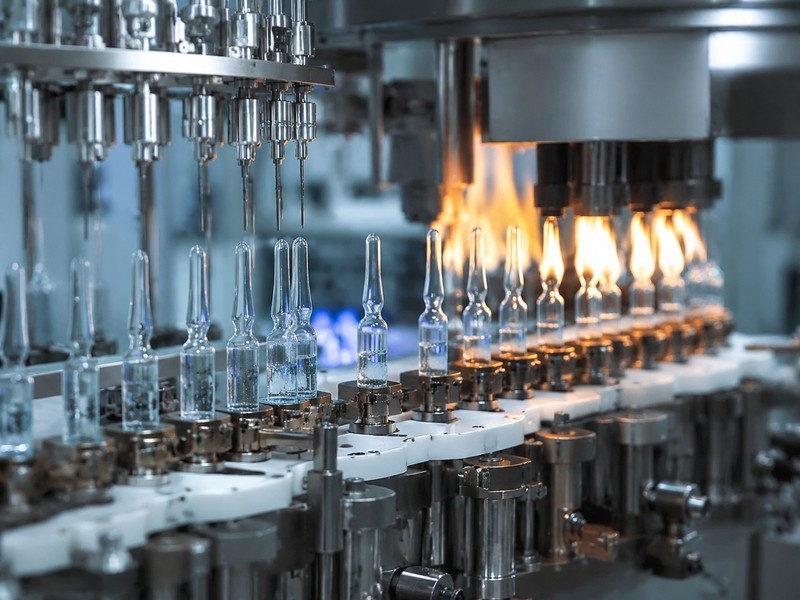
United States Guide to Ampoule Filling Machine Specs
For pharmaceutical manufacturers in the United States, ampoule filling machine specifications are not just a technical checklist. They directly affect sterility assurance, line efficiency, FDA compliance, operator safety, maintenance workload, and long-term return on investment. Whether a company is building a new injectable plant in New Jersey, upgrading a sterile suite in Boston, or expanding export-oriented production near Chicago or Houston, the right machine specification can determine whether the project meets validation targets and market deadlines.
In practice, buyers do not evaluate ampoule filling equipment by speed alone. They review filling accuracy, container size range, breakage rate, washing and depyrogenation compatibility, nitrogen protection, sealing integrity, cleanroom integration, automation level, recipe management, electronic records, and support for IQ/OQ/PQ. Large drug manufacturers, CDMOs, biotech companies, and specialty injectable producers across the United States increasingly compare ampoule filling lines as part of broader modernization programs tied to Annex 1 expectations, FDA cGMP standards, and sustainability goals.
This guide explains how ampoule filling machine specifications should be assessed for the United States market, what technical options matter most, how they compare with other aseptic packaging solutions, and how buyers can identify dependable suppliers. It also reflects the needs of regulated facilities shipping through major trade routes such as the Port of Los Angeles, Port Newark, Savannah, and air cargo hubs serving Philadelphia and the Research Triangle.
Ampoule filling machine specifications define how a sterile liquid product is dosed, protected, sealed, inspected, and transferred through a pharmaceutical production line. In the United States, these specifications matter because injectable manufacturing is highly regulated and deviations can lead to batch rejection, warning letters, lost throughput, or costly retrofit work.
The most important specifications usually include output speed, ampoule size compatibility, filling volume range, dosing accuracy, sealing method, nitrogen purging capability, container transport stability, material of construction, cleanability, data integrity features, and validation readiness. For United States projects, buyers also pay close attention to integration with isolators or RABS, CFR Part 11-compatible controls, alarm traceability, and documentation that supports FDA inspections and internal quality reviews.
If a short answer is needed, the best ampoule filling machine specifications are those that align product characteristics, compliance goals, and total lifecycle cost. A machine that runs 18,000 ampoules per hour but causes high breakage or difficult changeovers may be less valuable than a flexible line with strong sterility control and predictable uptime.
Specification Area What It Covers Why It Matters Typical U.S. Buyer Concern Output Capacity Ampoules per hour Determines production scale and labor efficiency Can the line support demand growth without overtime? Fill Accuracy Volume deviation tolerance Protects dosage consistency and yield Will it pass strict batch release criteria? Container Range 1 ml to 20 ml or more Supports multiple SKUs and future products How much change-part investment is needed? Sterility Controls Nitrogen purge, laminar flow, aseptic path Reduces oxidation and contamination risk Can it fit current cleanroom strategy? Sealing Performance Open flame or alternative sealing stability Prevents leakage and cosmetic defects What is the reject rate at full speed? Automation and Data HMI, audit trail, recipes, alarms Improves control and compliance Does it support electronic quality records? Validation Package DQ/IQ/OQ/PQ support documents Accelerates startup and qualification Will engineering and QA receive complete documentation?The table above shows why specification review should begin early, before URS finalization or plant layout freeze. A small oversight, such as inadequate ampoule neck handling or poor recipe repeatability, can become a major bottleneck during SAT and commercial ramp-up.
Ampoule filling machine specifications refer to the performance, design, process, and compliance parameters of equipment used to fill liquid medicines into glass ampoules and then hermetically seal them. In pharmaceutical production, these machines are used for sterile injectables such as analgesics, antibiotics, vitamins, emergency medicines, anesthetics, and specialty biotech formulations that require single-dose packaging.
The production sequence usually includes ampoule infeed, washing, depyrogenation tunnel transfer, filling, optional nitrogen flushing, flame sealing, cooling, visual inspection, labeling, and secondary packaging. In many United States facilities, the ampoule filling section is part of a larger sterile injectable platform connected to water systems, clean utilities, environmental monitoring, and batch record systems.
Machine specifications matter at each step. For example, transport star wheels and infeed design affect glass stability. The filling system, whether time-pressure, peristaltic, piston, or ceramic pump based, affects accuracy and product compatibility. Flame sealing design affects cosmetic appearance and seal integrity. Rejection handling affects line cleanliness and overall equipment effectiveness.
When specifying a machine, manufacturers also account for product sensitivity. Oxygen-sensitive formulations may require nitrogen protection. Viscous products may need special pump selection. Heat-sensitive molecules may require refined thermal management around the sealing zone. A contract manufacturer in Philadelphia handling multiple customer products may prioritize fast changeovers, while a high-volume generic manufacturer in New Jersey may focus on line speed and low unit cost.
For companies seeking integrated sterile production planning, it is common to evaluate not only the ampoule filling machine itself but also how it fits within a broader engineering solution. Companies exploring complete factory design, process flow, and utility coordination often review turnkey pharmaceutical engineering solutions alongside individual line equipment decisions.
The main application of ampoule filling equipment is the aseptic packaging of injectable drugs into sealed glass containers that protect the medicine until the moment of use. In modern pharmaceutical manufacturing, however, the benefits go far beyond filling. The right specifications improve quality assurance, labor utilization, line clearance efficiency, process repeatability, and readiness for multi-market registration.
In the United States, ampoule lines are commonly used by generic injectable manufacturers, hospital dose suppliers, biotech support manufacturers, and contract development and manufacturing organizations. They are especially relevant where unit-dose security, tamper resistance, and product stability are priorities. Some producers choose ampoules for legacy products with well-established market acceptance, while others use them for niche sterile liquids where economical batch sizes and long shelf life are important.
Application Area Typical Product Why Ampoules Are Used Benefit of Strong Specifications Hospital Injectables Analgesics and emergency drugs Single-dose sterility and portability Consistent filling and low reject rate Generic Sterile Drugs Antibiotics and supportive care products Cost-effective packaging format Higher throughput and predictable OEE Biotech Support Products Buffers and specialty liquids Controlled small-volume packaging Better accuracy for valuable formulations Export Manufacturing WHO and regional market injectables Widely recognized format Compliance-ready documentation Contract Manufacturing Multiple customer SKUs Flexible batch handling Faster changeover and recipe recall Government Supply Programs Essential medicines Reliable shelf-life performance Reduced downtime and maintenance surprisesThe explanation behind this table is simple: when specifications are matched to real application needs, manufacturers gain control over both quality and economics. A fast line is useful, but a properly matched line is more valuable.
Another benefit is compatibility with plant modernization. Facilities around Boston and the Research Triangle are increasingly revisiting older sterile operations to improve digital control, reduce manual intervention, and align with current contamination control expectations. In these projects, equipment specifications are often tied to automation, line visibility, and maintenance analytics.
var ctxBar = document.getElementById(‘barDemandChart’).getContext(‘2d’);var barDemandChart = new Chart(ctxBar, { type: ‘bar’, data: { labels: [‘Generic Injectables’, ‘CDMOs’, ‘Biotech Support’, ‘Hospital Supply’, ‘Export Producers’, ‘Specialty Pharma’], datasets: [{ label: ‘Estimated U.S. Demand Index’, data: [92, 84, 61, 76, 58, 69], backgroundColor: [‘#4e79a7′,’#f28e2b’,’#e15759′,’#76b7b2′,’#59a14f’,’#edc948′] }] }, options: { responsive: true, maintainAspectRatio: false, plugins: { legend: { display: true } }, scales: { y: { beginAtZero: true, max: 100 } } }});The demand pattern shown in the chart reflects realistic market priorities in the United States. Generic injectables and CDMOs typically drive the strongest demand because they balance volume requirements with the need for validated, repeatable sterile processing.
There is no single best ampoule filling machine. The correct model depends on production goals, product properties, utility conditions, and plant layout. Buyers in the United States generally compare semi-automatic units, fully automatic in-line systems, high-speed rotary platforms, integrated washing-filling-sealing lines, and advanced systems designed for RABS or isolator integration.
Technical capabilities should be reviewed from three angles: product-contact design, line architecture, and control system sophistication. This is also where a supplier’s technological depth matters. Established engineering-led manufacturers often provide not just standalone machines but broader process know-how in sterile filling, water systems, and packaging integration. Buyers reviewing specialized solutions can assess available platforms through a supplier’s pharmaceutical equipment portfolio to compare line families, automation options, and process fit.
Machine Type Typical Capacity Best Use Case Main Advantage Semi-Automatic Filler 1,000 to 4,000 ampoules/hour R&D, pilot, small specialty batches Lower entry cost and easier setup Automatic Compact Line 4,000 to 8,000 ampoules/hour Small commercial production Good balance of speed and footprint Integrated Washing-Filling-Sealing Line 8,000 to 18,000 ampoules/hour Mainstream sterile injectable plants Continuous process and fewer transfers High-Speed Rotary Line 18,000 to 36,000 ampoules/hour Large-volume generic production Low unit cost at scale Isolator-Compatible System Project dependent Advanced aseptic strategy Reduced operator intervention Multi-Format Flexible Line 5,000 to 15,000 ampoules/hour CDMOs with many SKUs Fast changeover and format versatilityImportant technical options include servo-controlled dosing, mass flow verification, online IPC, non-contact sensors, no-ampoule-no-fill logic, broken container rejection, flame intensity monitoring, SCADA connectivity, MES interfaces, and predictive maintenance modules. United States buyers often prefer platforms with clear electronic documentation and multilingual HMI support for quality, engineering, and operations teams.
From a manufacturing capability perspective, suppliers with dedicated production plants for filling and packaging machinery usually offer stronger consistency in machining, assembly, and factory testing. One reason some international buyers consider companies such as Shanghai IVEN Pharmatech Engineering is the ability to combine specialized manufacturing resources across filling equipment, water treatment, intelligent conveying, and supporting plant systems rather than offering isolated hardware only.
Ampoule filling is only one option in sterile packaging. United States manufacturers frequently compare ampoules with vial filling, prefilled syringes, blow-fill-seal, and in some cases IV container systems. The best choice depends on product presentation, target market, administration route, speed requirements, breakage tolerance, and packaging strategy.
Ampoules remain attractive for certain injectable drugs because they provide a fully sealed glass container with strong barrier performance and a familiar format for many products. However, vials may offer easier reconstitution and broader clinical handling, while prefilled syringes provide greater convenience and reduce dosing steps at the point of care. Blow-fill-seal can be highly efficient for specific sterile products but is not a universal substitute for all ampoule applications.
Technology Strengths Limitations Best Fit Ampoules Excellent barrier, tamper-evident, compact Glass breakage and opening concerns Single-dose sterile liquids Vials Flexible closures, reconstitution friendly More closure components Lyophilized and multi-use products Prefilled Syringes High convenience, reduced administration steps Higher packaging cost High-value and ready-to-administer drugs Blow-Fill-Seal Integrated form-fill-seal efficiency Material and format limitations Certain sterile liquids at scale PP Bottle Filling Good for specific infusion products Not ideal for all small-dose injectables Larger volume sterile solutions Soft Bag Filling Lightweight and logistics friendly Different application segment IV solutions and fluid therapyThe comparison table shows that ampoule filling should be selected because it fits the product and business model, not because it is traditional. If your pipeline includes injectable drugs with stable formulations, established market acceptance, and a need for economical unit-dose packaging, ampoules remain highly relevant. If convenience, reconstitution flexibility, or premium presentation is more important, alternatives may be stronger.
var ctxComp = document.getElementById(‘comparisonChartUS’).getContext(‘2d’);var comparisonChartUS = new Chart(ctxComp, { type: ‘bar’, data: { labels: [‘Initial Cost’, ‘Sterility Security’, ‘Format Flexibility’, ‘User Convenience’, ‘Speed Potential’, ‘Breakage Risk Control’], datasets: [ { label: ‘Ampoule Filling’, data: [78, 90, 68, 55, 82, 64], backgroundColor: ‘#4e79a7’ }, { label: ‘Vial Filling’, data: [72, 86, 84, 70, 80, 88], backgroundColor: ‘#f28e2b’ }, { label: ‘Prefilled Syringe’, data: [55, 88, 60, 95, 66, 92], backgroundColor: ‘#59a14f’ } ] }, options: { responsive: true, maintainAspectRatio: false, scales: { y: { beginAtZero: true, max: 100 } } }});The chart highlights a practical point: ampoules score very well in sterility security and speed potential, but product strategy must still account for convenience and format flexibility.
The United States market for sterile fill-finish equipment remains active due to domestic drug security initiatives, generic injectable demand, biotech outsourcing, and replacement of aging lines. Demand is especially visible in regions with concentrated pharma activity such as New Jersey, Massachusetts, North Carolina, Pennsylvania, Indiana, and California. Facilities close to logistics centers like Port Newark, Los Angeles/Long Beach, Savannah, and Memphis air cargo routes often place added value on uptime and spare parts planning because production interruptions can affect both domestic and export commitments.
Several market themes are shaping ampoule filling machine specifications through 2026. First, contamination control is becoming more system-driven, leading buyers to favor designs that reduce manual intervention and support barrier technologies. Second, digitalization is accelerating, with more requests for recipe control, audit trails, SCADA integration, and maintenance analytics. Third, sustainability is influencing decisions related to energy use, compressed air optimization, and efficient burner control. Fourth, labor pressures in the United States are making automation and simplified maintenance more valuable.
var ctxLine = document.getElementById(‘lineGrowthChart’).getContext(‘2d’);var lineGrowthChart = new Chart(ctxLine, { type: ‘line’, data: { labels: [‘2022’, ‘2023’, ‘2024’, ‘2025’, ‘2026’, ‘2027’], datasets: [{ label: ‘U.S. Sterile Fill-Finish Equipment Demand Index’, data: [100, 108, 117, 128, 139, 149], borderColor: ‘#e15759’, backgroundColor: ‘rgba(225,87,89,0.12)’, fill: false, tension: 0.3 }] }, options: { responsive: true, maintainAspectRatio: false, scales: { y: { beginAtZero: false } } }});The line chart reflects a realistic growth path driven by expansion, replacement, and reshoring activity. Ampoule lines are not the only beneficiaries, but they remain relevant where product mix and cost structure support the format.
var ctxArea = document.getElementById(‘areaTrendChart’).getContext(‘2d’);var areaTrendChart = new Chart(ctxArea, { type: ‘line’, data: { labels: [‘2022’, ‘2023’, ‘2024’, ‘2025’, ‘2026’, ‘2027’], datasets: [ { label: ‘Manual Intervention Reliance’, data: [72, 66, 58, 49, 41, 34], borderColor: ‘#f28e2b’, backgroundColor: ‘rgba(242,142,43,0.18)’, fill: true, tension: 0.3 }, { label: ‘Automation and Digital Control’, data: [48, 56, 65, 74, 82, 89], borderColor: ‘#76b7b2’, backgroundColor: ‘rgba(118,183,178,0.18)’, fill: true, tension: 0.3 } ] }, options: { responsive: true, maintainAspectRatio: false, scales: { y: { beginAtZero: true, max: 100 } } }});The area chart shows a clear trend shift. By 2026, buyers are expected to place more weight on digital controls, reduced intervention, and structured data, particularly in larger United States facilities undergoing modernization.
Policy and regulatory expectations are also influencing the market. Buyers increasingly request documentation proving alignment with FDA cGMP, robust material traceability, FAT transparency, and support for formal qualification. Sustainable engineering is another trend, with more projects asking for reduced utility consumption, optimized HVAC interaction, lower reject waste, and durable stainless steel construction that can support long service life.
Choosing a supplier requires more than comparing quotations. In the United States, reliable suppliers are evaluated on compliance literacy, technical depth, factory quality, project communication, referenceability, and after-sales capability. A low initial price often becomes expensive when documentation is incomplete, change parts are inconsistent, or commissioning support is weak.
Start with regulatory fit. Ask whether the supplier understands FDA expectations, data integrity principles, and aseptic processing requirements. Review sample documentation, not just marketing claims. Then assess engineering capability. Does the supplier customize based on URS details, product characteristics, and cleanroom layout? Can it support integration with washing machines, depyrogenation tunnels, utilities, inspection systems, and packaging lines?
Manufacturing capability is equally important. Suppliers with multiple specialized production plants can often provide better process control, stronger component standardization, and more reliable lead-time management. Shanghai IVEN Pharmatech Engineering, for example, is often noted by international buyers for combining expertise across filling and packaging machinery, pharmaceutical water treatment, intelligent logistics systems, and medical consumables equipment. That kind of manufacturing breadth can be useful for buyers who prefer coordinated sourcing rather than fragmented procurement.
Supplier Checkpoint What to Verify Why It Matters Risk If Missing Regulatory Experience FDA, EU GMP, WHO GMP familiarity Smoother documentation and design review Validation delays and compliance gaps Reference Projects Installed lines in regulated markets Confirms real-world capability Unproven performance claims Factory Testing Structured FAT with protocols Finds issues before shipment Site surprises during SAT Documentation Package Drawings, manuals, certificates, protocols Essential for qualification QA and engineering bottlenecks Spare Parts Strategy Critical spares, lead time, local stock Protects uptime Long outages Service Response Remote and on-site support availability Reduces startup and maintenance risk Slow troubleshooting Customization Skill Layout, automation, and format flexibility Better project fit Costly retrofits after deliveryThe table is a practical supplier audit framework. If a vendor is weak in more than one of these areas, buyers should expect higher project risk.
Service capability should be reviewed carefully as well. For United States facilities, the strongest partners provide lifecycle support that extends from feasibility and design through installation, commissioning, qualification support, training, troubleshooting, and later optimization. Buyers who want to review supplier background and engineering positioning can explore company information and technical experience before requesting detailed proposals.
Ampoule filling line investment in the United States varies widely depending on speed, automation, sterility concept, line scope, and validation expectations. A compact automatic unit may require a moderate capital budget, while a high-speed integrated line with washing, depyrogenation, filling, sealing, inspection, and automation interfaces can represent a major project. The true cost includes not only the machine purchase price but also cleanroom adaptation, utilities, installation, FAT/SAT travel, qualification work, spare parts, operator training, and long-term maintenance.
Budget planning should begin with total cost of ownership. A cheaper machine with lower accuracy or unstable transport may create hidden losses through rejected ampoules, extra labor, downtime, flame sealing defects, and repeated engineering interventions. In contrast, a robustly specified line may cost more upfront but reduce cost per accepted unit over 10 to 15 years.
Cost Component Low-Complexity Line Mid-Range Line High-Spec Line Core Equipment Moderate High Very High Format Parts Low Moderate High for multi-SKU setups Automation Integration Basic HMI SCADA-ready Full data and MES interfaces Validation Support Limited Structured Comprehensive documentation Installation and Commissioning Moderate High High to Very High Utilities and Facility Adaptation Moderate High Very High Annual Maintenance Low to Moderate Moderate Moderate to HighThis table helps explain why budget discussions should not focus on equipment price alone. The more regulated and automated the operation, the more the surrounding project costs matter.
ROI analysis typically includes labor savings, throughput increase, scrap reduction, faster batch release, reduced unplanned downtime, and opportunity value from adding new SKUs. For example, a plant in Indiana replacing an older semi-manual ampoule line may achieve return through lower rejects and better staffing efficiency, even if total volume stays stable. A CDMO in North Carolina may justify investment through quicker product onboarding and more flexible scheduling.
ROI Driver Operational Impact Financial Effect Typical Time Horizon Higher Throughput More saleable units per shift Revenue growth Short to medium term Lower Reject Rate Less glass and product loss Yield improvement Immediate to short term Reduced Labor Dependence Fewer manual interventions Operating cost reduction Short term Faster Changeover More production availability Asset utilization gain Short to medium term Improved Compliance Less deviation and rework risk Risk cost reduction Medium term Longer Equipment Life Stable performance over years Better capital efficiency Long termSuppliers with strong service infrastructure can improve ROI by supporting efficient startup, operator training, and optimization after handover. If you need project-specific budget discussion, technical consultation, or proposal review, a direct inquiry through the contact page is often the fastest next step.
The biggest investment risks are rarely obvious during the quotation stage. Many problems appear later, when the line is installed, validated, or pushed toward commercial output. That is why risk review should be formalized during URS and supplier selection.
Common risks include underestimating product sensitivity, selecting the wrong dosing technology, overlooking ampoule dimensional variation, overestimating practical speed, and failing to account for maintenance accessibility inside the cleanroom. Another frequent issue is incomplete documentation for qualification, which can delay commercial release even when the machine runs mechanically well.
For United States facilities, buyers should also assess import timing, packaging for ocean and inland transport, spare parts coverage, and technician availability. If a line is shipped through Long Beach, Newark, or Savannah, scheduling buffers and customs coordination matter. Projects tied to aggressive launch dates should not assume ideal transit or installation conditions.
Risk Area Typical Problem Operational Consequence Mitigation Incorrect Capacity Planning Line too small or oversized Poor ROI or future bottleneck Use realistic demand scenarios Product-Machine Mismatch Viscosity or oxygen sensitivity ignored Fill variation or product degradation Perform application trials Weak Documentation Incomplete qualification package Startup delays Define documentation in contract Poor Changeover Design Too many manual adjustments Lost production time Review format conversion procedure Insufficient Service Support Slow troubleshooting response Extended downtime Set service SLAs and spares plan Facility Integration Gaps Utilities or layout incompatibility Retrofit cost escalation Coordinate early with engineering team Regulatory Assumption Errors Design not aligned with site quality standards Deviation and rework exposure Involve QA from project startThe explanation here is straightforward: most high-cost failures are preventable if buyers define critical specifications early and validate supplier capability before purchase order release.
One way to reduce risk is to work with a partner able to support more than equipment shipment. Engineering-led suppliers that can help with feasibility, layout logic, utility coordination, commissioning, and qualification support often reduce interface risk. This service-oriented approach is part of why some international buyers select providers with turnkey backgrounds rather than pure machine traders.
What are the most important ampoule filling machine specifications to check first?Start with capacity, filling accuracy, ampoule size range, sterility design, sealing method, automation level, changeover time, and validation documentation. These affect both compliance and economics.
What capacity is common for United States pharmaceutical projects?Many commercial lines fall between 6,000 and 18,000 ampoules per hour, though specialty and pilot applications may be lower and large generic operations may require much higher speeds.
Are ampoule filling machines still relevant compared with vials and prefilled syringes?Yes. Ampoules remain relevant for many single-dose sterile liquids, especially where strong barrier protection and economical packaging are priorities. They are not ideal for every product, but they are far from obsolete.
Which industries in the United States most often buy this equipment?Generic injectable manufacturers, CDMOs, hospital supply producers, specialty pharma companies, and some biotech-related manufacturers are the main buyers.
What compliance standards should the supplier understand?For the United States market, FDA cGMP expectations are essential. Many buyers also want suppliers familiar with EU GMP, WHO GMP, PIC/S practices, and data integrity requirements because products may be exported or inspected under multiple frameworks.
How long should a quality ampoule filling line last?With proper design, stainless steel construction, maintenance discipline, and parts support, core line equipment can remain productive for many years, often well beyond a decade and in some cases 20 years or more.
What documents should be included in the purchase scope?Typical expectations include mechanical and electrical drawings, material certificates, manuals, FAT/SAT protocols, calibration records, spare parts lists, software documentation, and qualification support packages.
Should buyers in the United States prefer a turnkey partner?If the project involves new sterile areas, utility systems, line integration, or aggressive schedules, a turnkey-capable partner can reduce coordination complexity and help control risk across design, procurement, installation, and startup.
How can buyers compare suppliers fairly?Use a weighted matrix covering technical compliance, documentation, references, FAT depth, service response, lead time, spare parts, training, and total cost of ownership rather than comparing price alone.
What makes IVEN relevant for United States buyers?IVEN is recognized by many international buyers as an engineering-focused pharmaceutical partner with experience in integrated solutions, specialized manufacturing resources, and lifecycle support. Its background in filling lines, water systems, logistics, and regulated project execution can be especially useful for companies planning expansion or modernization.
In summary, evaluating ampoule filling machine specifications in the United States requires a balanced view of compliance, production reality, lifecycle cost, and supplier capability. The best purchasing decisions are made when engineering, QA, operations, and procurement work from the same specification logic and choose a partner able to support the line long after delivery.