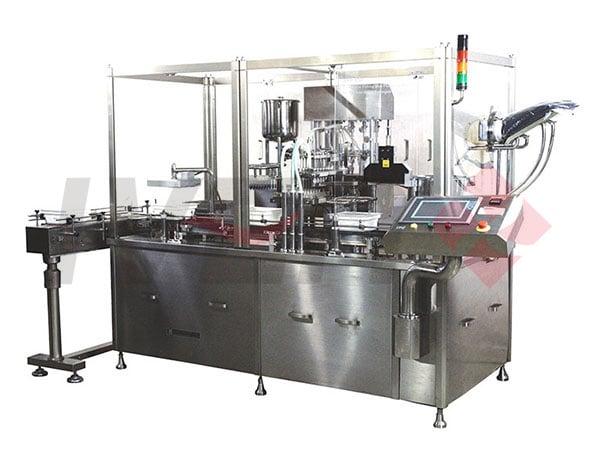
Prefilled Syringe vs Vial Filling in the United States
In the United States, the choice between prefilled syringe filling and vial filling is not just a packaging decision. It affects aseptic processing design, labor efficiency, regulatory strategy, patient safety, product loss, cold-chain handling, and long-term plant economics. Large pharmaceutical and medical device manufacturers evaluating new capacity in Boston, Raleigh-Durham, New Jersey, Chicago, Houston, and San Diego often compare these two formats during facility expansion or modernization because each one aligns differently with biologics, vaccines, hospital injectables, specialty drugs, and combination products.
For many drug developers, prefilled syringes offer strong advantages in dose accuracy, convenience, and reduced preparation steps at the point of care. Vials remain highly flexible, especially for multi-dose products, lyophilized formulations, early-stage commercial launches, and therapies requiring broader fill-volume options. In practice, the best choice depends on product viscosity, container-closure integrity, fill-finish speed targets, market positioning, and compliance with U.S. FDA cGMP expectations for sterile manufacturing.
Companies that want to reduce project risk usually assess the topic through engineering, quality, supply chain, and total lifecycle support. This is where an integrated partner can matter. IVEN Pharmatech Engineering is known in the industry for combining pharmaceutical engineering know-how with filling, packaging, water systems, logistics, and turnkey delivery experience for regulated factories worldwide. For U.S.-focused investment planning, that broader integration is often more valuable than buying a standalone machine without upstream and downstream coordination.
Quick Answer: Why U.S. Pharma Companies Compare Prefilled Syringes and Vials

The short answer is simple: prefilled syringes generally improve user convenience, reduce dosing errors, and support premium injectable products, while vials provide greater manufacturing flexibility, broader product compatibility, and often lower initial packaging cost. U.S. manufacturers compare them because both formats remain essential under strict regulatory standards, but each drives a different operating model.
If the product is a ready-to-administer biologic for hospitals, specialty pharmacies, self-injection, or emergency care, prefilled syringe filling may create stronger commercial value. If the product requires lyophilization, multiple dose configurations, lower packaging complexity, or staged market introduction, vial filling may be the more practical path. For sterile injectable producers in the United States, the decision usually comes down to six core variables: formulation stability, annual volume, automation level, line changeover frequency, downstream device assembly requirements, and return on investment.
| Decision Factor | Prefilled Syringe | Vial | U.S. Market Impact |
|---|---|---|---|
| Point-of-care convenience | Very high | Moderate | Important for hospitals, clinics, and home use |
| Dose accuracy | High, fixed presentation | Depends on withdrawal step | Relevant for safety and training reduction |
| Packaging flexibility | Lower | High | Useful for diversified portfolios |
| Support for lyophilization | Limited in standard formats | Excellent | Critical for many biologics and vaccines |
| Initial line investment | Usually higher | Usually lower to moderate | Key for greenfield budgeting |
| Commercial differentiation | Strong | Moderate | Higher value in specialty therapeutics |
| Operator interventions | Potentially lower on integrated lines | Can be higher depending on process | Impacts contamination control strategy |
The table above shows why the debate is common in U.S. sterile projects. Prefilled syringes support premium delivery and workflow simplification, while vials preserve manufacturing range and process resilience.
What Is the Prefilled Syringe vs Vial Decision and How Is It Used in Pharmaceutical Production?

The phrase “prefilled syringe vs vial” refers to a container and fill-finish strategy comparison within sterile pharmaceutical production. It is used during product development, process design, equipment procurement, facility planning, and technology transfer. The decision influences isolator design, washing and depyrogenation needs, stoppering systems, inspection systems, packaging architecture, cleanroom classification, and validation scope.
In a prefilled syringe process, the drug product is filled directly into a sterile syringe barrel, then closed with a plunger stopper and often integrated later with a needle safety device or final assembly platform. The result is a unit-dose presentation that minimizes handling before administration. In a vial process, the product is filled into glass or polymer vials, then stoppered and capped. Healthcare personnel or end users later withdraw the solution with a syringe, or the product may be reconstituted before use.
In pharmaceutical production, this comparison is used for:
- Commercial launch planning for injectables and biologics
- Capacity expansion in existing sterile plants
- Selection of aseptic filling lines and barrier systems
- Evaluation of packaging compatibility and extractables/leachables risk
- Preparation for FDA inspections and media fill strategy
- Assessment of long-term labor, yield, and maintenance costs
U.S. manufacturers near major logistics corridors such as the Port of New York and New Jersey, the Port of Los Angeles, Houston, and Memphis air cargo hubs also factor in shipping resilience. Syringe components, elastomers, tubs, nests, vial glass, and caps all have different sourcing profiles and lead-time risks.
Main Applications and Benefits of Prefilled Syringe vs Vial in Modern Pharmaceutical Manufacturing

Both formats are deeply established in modern sterile manufacturing, but they serve different product and market needs. Prefilled syringes are increasingly favored for ready-to-use therapies, especially in therapeutic areas where reducing bedside preparation time matters. Vials still dominate in many hospital injectables, oncology products, generic injectables, and formulations requiring freeze-drying.
| Application Area | Best-Fit Format | Reason | Operational Benefit |
|---|---|---|---|
| Biologic self-injection | Prefilled syringe | Convenience and fixed dose | Supports patient adherence |
| Emergency care drugs | Prefilled syringe | Rapid administration | Lower preparation time |
| Lyophilized oncology products | Vial | Better freeze-dry compatibility | Improved stability |
| Multi-dose hospital products | Vial | Allows repeated access | Inventory flexibility |
| High-value specialty injectables | Prefilled syringe | Premium presentation | Brand differentiation |
| Early-stage commercial launch | Vial | Simpler scale-up path | Lower initial complexity |
| Anticoagulants and vaccines | Prefilled syringe or vial | Depends on dose and cold chain | Customized market strategy |
The table above highlights application fit rather than absolute superiority. A format that is ideal for one injectable may be inefficient for another.
Benefits of prefilled syringes include:
- Reduced risk of dosing variation from manual withdrawal
- Improved user convenience in clinics and home settings
- Lower medication preparation steps
- Potential reduction in overfill compared with vials
- Strong alignment with combination product strategies
Benefits of vials include:
- Broad compatibility with liquid and lyophilized products
- More flexible fill-volume range
- Easier management of portfolio variation on some lines
- Established global supply chain and strong market familiarity
- Lower barrier to entry for many sterile injectable manufacturers
From an engineering perspective, the selection also affects utility loads, line clearance procedures, machine footprint, reject handling, and visual inspection criteria. This is especially important for U.S. facilities trying to optimize expensive cleanroom space in major pharmaceutical regions such as Massachusetts and New Jersey.
Key Types, Models, and Technical Options for Prefilled Syringe and Vial Filling
In the U.S. market, companies do not choose only between container formats. They also choose among machine architectures, automation levels, sterility barriers, component feeding methods, inspection technologies, and integration with packaging and warehouse systems.
Typical prefilled syringe line options include nested syringe processing, bulk syringe processing, servo-driven filling stations, in-process checkweighing, vacuum or peristaltic filling, plunger insertion modules, and automated tray or tub handling. Typical vial line options include rotary or linear washing machines, depyrogenation tunnels, aseptic fillers, stoppering units, capping systems, and optional lyophilizer loading solutions.
| Technical Option | Used for Prefilled Syringes | Used for Vials | Typical U.S. Buying Consideration |
|---|---|---|---|
| Nested container format | Common | Rare | Lower manual handling, useful for premium products |
| Bulk container format | Possible | Common | May lower packaging cost at scale |
| Isolator integration | Very common | Very common | Supports contamination control expectations |
| RABS configuration | Common | Common | Balance between access and protection |
| Lyophilizer interface | Limited | Common | Critical for freeze-dried products |
| Inline vision inspection | High importance | High importance | Supports cosmetic and particulate control |
| Robotic handling | Increasing | Increasing | Reduces interventions and improves consistency |
| Recipe-driven changeover | High value | High value | Important for multi-SKU plants |
The table shows that the technical decision is really a system decision. Companies expanding capacity often evaluate whether the new line should connect to purified water, WFI generation, solution preparation, inspection, carton packing, and intelligent logistics systems from a coordinated engineering source rather than separate vendors.
That is one area where IVEN’s technological capabilities stand out. The company is recognized for integrated sterile manufacturing platforms covering filling and packaging machinery, pharmaceutical water treatment systems, solution preparation, and intelligent conveying. For manufacturers seeking a broader project view instead of a single machine purchase, this integrated approach can simplify line harmonization and documentation alignment.
Prefilled Syringe vs Alternative Technologies: Which Solution Fits Your Needs?
Comparing prefilled syringes with vials should also involve alternative formats such as cartridges, ampoules, blow-fill-seal containers, and auto-injector assemblies. Each serves different clinical and commercial objectives.
| Format | Best Use Case | Main Strength | Main Limitation |
|---|---|---|---|
| Prefilled syringe | Ready-to-administer and self-injection drugs | User convenience and dosing control | Higher packaging complexity |
| Vial | Hospital use, lyophilized products, flexible dosing | Versatility | Requires preparation before use |
| Cartridge | Pen injectors and device-based delivery | Device compatibility | Needs dedicated delivery platform |
| Ampoule | Some legacy injectables and niche products | Simple sealed glass format | Break risk and handling limitations |
| BFS container | High-volume sterile liquids | Integrated forming and filling | Not ideal for all high-value biologics |
| Auto-injector assembly | Premium combination products | Patient-friendly administration | Higher total project cost |
| Dual-chamber systems | Reconstitution-required products | Improved end-user preparation | Complex engineering and sourcing |
The best solution depends on commercial route:
- If the drug is administered in hospitals and may require dose customization, vials are often optimal.
- If the product is targeting specialty pharmacy distribution and home use, prefilled syringes usually deserve strong consideration.
- If the product roadmap includes a future auto-injector, a prefilled syringe platform may help create continuity.
- If the drug is unstable in liquid form, a vial with lyophilization may remain the safest path.
For U.S. buyers, it is also wise to evaluate the downstream ecosystem. Can the format move efficiently through labeling, aggregation, case packing, serialization, and warehouse automation? If not, a lower-cost container choice may create a higher total system cost.
Market Overview and Future Trends for Prefilled Syringe and Vial Filling in Pharmaceutical Manufacturing
The U.S. market remains one of the world’s most influential sterile fill-finish regions. Demand is supported by biologics growth, specialty drug launches, vaccine preparedness, domestic manufacturing policy discussions, hospital injectable resilience, and sustained investment in advanced aseptic processing. Prefilled syringes are seeing faster growth in many premium therapeutic segments, while vial filling continues to hold a large base due to its versatility and installed capacity.
Between 2024 and 2026, several forces are shaping the market:
- Expansion of high-value biologic production in the Northeast and Southeast U.S.
- Continued investment in isolators, robotics, and intervention reduction
- More scrutiny on supply chain security for glass, elastomers, and ready-to-use components
- Greater focus on sustainability, including material efficiency and energy use
- Stronger demand for digitally enabled validation, traceability, and maintenance
The line chart above illustrates realistic market direction rather than a fixed forecast. Prefilled syringe demand is rising faster, but vials remain fundamental to U.S. pharmaceutical infrastructure.
By 2026, expected trends include more robotic handling, stronger use of ready-to-use sterile components, and closer integration between filling lines and digital manufacturing systems. Policy and sustainability trends will also matter. U.S. buyers increasingly ask about energy-efficient tunnel designs, reduced compressed air consumption, recipe-controlled cleaning, and lower reject rates. They also examine whether an equipment supplier can support qualification under U.S. FDA cGMP, EU GMP, WHO GMP, and PIC/S expectations to preserve export flexibility.
How to Choose a Reliable Prefilled Syringe or Vial Filling Manufacturer or Supplier
Choosing a supplier is often more important than choosing the format itself. A technically strong line can still fail as an investment if the supplier cannot support FAT, SAT, validation, spare parts, recipe optimization, operator training, and after-sales responsiveness in the United States.
| Supplier Evaluation Point | Why It Matters | What U.S. Buyers Should Verify | Risk if Ignored |
|---|---|---|---|
| Regulatory understanding | Supports inspection readiness | Experience with FDA-oriented documentation and cGMP design | Delays in validation and approval |
| Integrated engineering scope | Reduces interface gaps | Ability to connect utilities, filling, packaging, and logistics | Costly project fragmentation |
| Reference projects | Proves practical delivery capability | Installed lines or turnkey projects in regulated markets | Execution uncertainty |
| Customization ability | Fits product-specific needs | Container range, format change parts, automation options | Operational mismatch |
| Validation support | Speeds startup | IQ, OQ, PQ documentation and test support | Longer commissioning period |
| After-sales service | Protects uptime | Training, remote support, spare parts planning | Extended downtime |
| Manufacturing strength | Reflects reliability and consistency | Own plants, quality controls, supply chain stability | Inconsistent delivery quality |
The table above can be used as a practical qualification checklist during vendor comparison. It helps procurement, engineering, and QA teams score suppliers on execution strength rather than brochure claims.
On manufacturing capability, IVEN brings a multi-plant production base focused on pharmaceutical filling and packaging machinery, water systems, intelligent logistics, and blood collection tube equipment. That breadth matters when projects require line integration instead of isolated equipment islands. On service capability, the company supports feasibility review, engineering design, equipment customization, installation, commissioning, validation, training, and lifecycle optimization. For U.S. buyers managing tight schedules and capital exposure, those services can reduce interface risk across the project timeline.
When evaluating alternatives, it is useful to review a supplier’s broader project portfolio through its turnkey pharmaceutical engineering solutions and compare whether the vendor can support a full facility roadmap rather than only a single filling module.
Investment Cost, Budget Planning, and ROI Analysis for Prefilled Syringe vs Vial Filling
In the United States, capital budgeting for sterile fill-finish projects should include much more than the core machine price. The total cost model should cover cleanroom adaptation, barrier systems, HVAC implications, component preparation, utilities, validation, training, line integration, spare parts, and ramp-up losses.
| Cost Element | Prefilled Syringe Line | Vial Line | Budget Note |
|---|---|---|---|
| Core filling equipment | High | Moderate to high | Depends on speed and automation |
| Container/component handling | High | Moderate | Nested or RTU formats can add cost |
| Lyophilization interface | Usually low or none | Potentially high | Major factor for vial projects |
| Inspection and assembly | High | Moderate | Syringes may need more downstream steps |
| Change parts and format kits | Moderate | Moderate | Portfolio breadth drives cost |
| Validation and startup | High | High | Critical regardless of format |
| Labor per finished dose | Often lower long term | Can be higher | Depends on automation and output |
| Overfill and yield loss | Often lower | Can be higher | Important for expensive biologics |
The table demonstrates why a higher initial cost for prefilled syringes may still generate better lifetime returns, especially for high-value formulations. On the other hand, vial lines can produce strong ROI when product flexibility, lyophilization, and lower entry cost are the main priorities.
A simple ROI framework should consider:
- Annual production volume
- Gross margin per dose
- Container and component cost
- Expected overfill percentage
- Labor savings from automation
- Reduction in preparation errors or complaints
- Projected downtime and maintenance profile
- Time to market and launch premium
For a premium biologic with high drug substance cost, lower overfill and easier administration may justify a prefilled syringe investment relatively quickly. For a diversified injectable portfolio in a contract manufacturing environment, a vial line may produce better asset utilization because of broader product compatibility.
If your organization is comparing budgets across equipment categories, reviewing available sterile processing and packaging options in a structured equipment portfolio can help narrow specifications before tendering. A good starting point is the supplier’s pharmaceutical equipment range for line architecture and supporting systems.
Key Considerations and Potential Risks When Investing in Prefilled Syringe or Vial Filling
The main investment risks are rarely limited to the machine itself. In the U.S. market, sterile projects can fail due to underestimated validation effort, weak supplier coordination, component shortages, improper line sizing, or poor compatibility between formulation and primary packaging.
| Risk Area | How It Affects Syringes | How It Affects Vials | Mitigation Strategy |
|---|---|---|---|
| Container compatibility | Plunger movement, siliconization, extractables | Glass interaction, stopper compatibility | Early material studies and stability testing |
| Supply chain disruption | RTU tubs, syringe components, safety devices | Glass vials, stoppers, caps | Dual sourcing and inventory planning |
| Validation burden | Device-related complexity | Lyophilization and stopper behavior | Structured IQ/OQ/PQ and media fill plans |
| Incorrect line sizing | Underused premium asset | Bottlenecks in washing or capping | Demand modeling and OEE analysis |
| Changeover inefficiency | Complex format parts | Multi-size component variation | Recipe-driven automation and SMED planning |
| Operator intervention risk | Component handling sensitivity | Manual transfers around lyophilization | Robotics and barrier design |
| Long-term service gaps | Downtime on specialized assemblies | Downtime across utility-linked systems | Preventive maintenance and supplier support contracts |
Among U.S. operators, another major consideration is project location. A plant near Philadelphia, Newark, Baltimore, Savannah, or Long Beach may have better import and logistics flexibility for certain components and replacement parts. Likewise, a site in Indianapolis or Memphis may benefit from stronger inland distribution and air cargo access. These factors matter when lead times tighten.
Case studies in the industry repeatedly show that the best outcomes come from front-loaded engineering: selecting the right format early, verifying market demand, confirming packaging compatibility, and aligning utilities, cleanroom flow, serialization, warehouse design, and training before procurement. This is especially important for companies trying to avoid schedule drift or cost overruns on U.S. greenfield projects.
As a practical example, a specialty injectable producer launching a high-margin anticoagulant in the United States may choose prefilled syringes to gain nursing efficiency and commercial differentiation. A generic sterile manufacturer supplying hospital tenders may select vials because they support more SKU flexibility and lower launch complexity. Neither choice is universally better; the right answer depends on business model and product science.
For companies that want a deeper technical discussion, qualification planning, or a plant-level investment review, the most efficient next step is to contact a pharmaceutical engineering specialist with your expected product profile, annual volumes, and regulatory target.
FAQ
1. Are prefilled syringes always better than vials?
No. Prefilled syringes are often better for convenience, fixed dosing, and premium injectable positioning, but vials are usually better for flexible dosing, lyophilization, and some lower-cost or broader portfolio strategies.
2. Which format is more common in the United States?
Both are common. Vials still hold a major position in hospital injectables and lyophilized drugs, while prefilled syringes are expanding rapidly in biologics, specialty therapies, and ready-to-administer applications.
3. Is prefilled syringe filling more expensive?
Usually yes at the initial investment stage. However, the lifetime economics can be favorable when drug value is high, overfill reduction matters, and point-of-care convenience creates commercial advantages.
4. Can vial lines support more product types?
In many cases, yes. Vial lines are generally more flexible for fill volumes, freeze-drying, and a broader range of sterile injectable products.
5. What regulatory issues matter most for U.S. buyers?
FDA cGMP compliance, aseptic process control, container-closure integrity, validation documentation, media fills, data integrity, and robust change control are all critical.
6. What technical option is becoming more important by 2026?
Robotic handling, isolator-based filling, digital batch data integration, and reduced-intervention line design are becoming increasingly important in both syringe and vial projects.
7. How do I compare suppliers effectively?
Review regulatory experience, installed references, engineering integration capability, validation support, after-sales responsiveness, and the ability to customize around your product and facility constraints.
8. Can one supplier provide both line equipment and broader plant systems?
Yes. Some engineering-focused suppliers provide not only filling lines but also water systems, solution preparation, packaging, logistics, validation support, and turnkey coordination, which can reduce project interface risk.
9. When should a company choose a turnkey approach?
A turnkey approach is often valuable for greenfield factories, major expansions, or projects where schedule control, utility integration, and documentation consistency are as important as the filling machine itself.
10. What is the biggest mistake in this investment decision?
The biggest mistake is choosing based only on machine price. The better approach is to evaluate total lifecycle cost, formulation fit, commercial strategy, regulatory burden, and long-term operational flexibility.
For U.S. pharmaceutical manufacturers, the decision between prefilled syringe and vial filling should be made at the intersection of science, engineering, market demand, and lifecycle economics. A premium biologic portfolio may justify syringe-focused investment, while a flexible sterile injectable operation may achieve better asset performance with vial technology. The strongest projects are built on integrated planning, clear validation strategy, and a supplier with proven technical, manufacturing, and service capabilities.

About the Author
We are IVEN Pharmatech Engineering, a team dedicated to delivering turnkey pharmaceutical and medical solutions worldwide. With decades of experience, we specialize in advanced machinery, integrated factory design, and full lifecycle support to help our clients achieve efficient, compliant, and high-quality production.
Share

Related Insights
-
United States Guide to Non-PVC IV Bag Production Lines
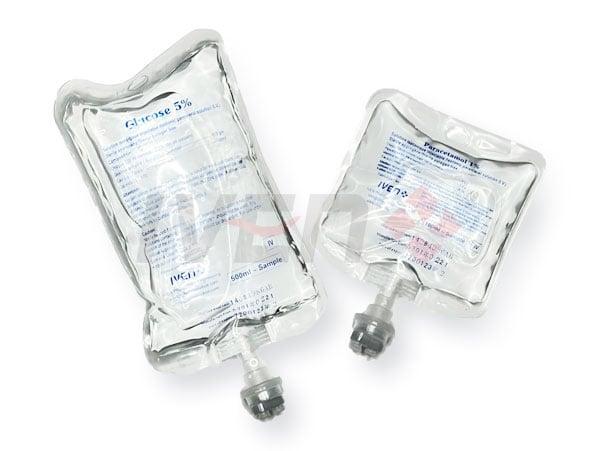
For pharmaceutical manufacturers in the United States, a non-PVC IV bag production line is more than a packaging investment. It is a strategic manufacturing platform for producing safer, more stable, and more differentiated infusion products. By using multilayer non-PVC films and precise forming, filling, sealing, and sterilization systems, these lines help manufacturers create advanced IV solutions that may keep incompatible ingredients separated until use, reduce leachables concerns associated with traditional PVC, and support broader hospital demand for modern infusion packaging. In practical terms, this means better product stability, expanded formulation flexibility, and stronger positioning in a U.S. market shaped by FDA compliance, hospital purchasing standards, sustainability pressure, and ongoing drug shortage preparedness.
Across the United States, from New Jersey and Boston to Houston, Indianapolis, and the Research Triangle in North Carolina, interest in non-PVC IV bag production line capacity is rising. Buyers are evaluating not only machine speed, but also cleanroom integration, film compatibility, chamber design, validation support, and lifecycle service. For companies planning new sterile manufacturing projects or upgrading existing IV solution facilities near major logistics gateways such as the Port of Los Angeles, Port of Long Beach, Port of Savannah, and Port Newark, the right production line can improve both technical performance and supply chain resilience.
A non-PVC IV bag production line is a complete pharmaceutical manufacturing system used to produce soft infusion bags made from non-PVC medical films. Depending on the product design, the line may include film feeding, bag forming, port welding, filling, chamber separation, sealing, leak detection, visual inspection, overwrapping, sterilization compatibility, and final packing. Multi-chamber versions are especially valuable because they can keep active ingredients separate until mixing at the point of use. This supports better shelf stability for formulations that would otherwise degrade, precipitate, or react when stored together.
In the U.S. healthcare environment, this matters for several reasons. Hospitals are under pressure to reduce medication preparation steps, lower contamination risk, and standardize ready-to-use infusion products. Meanwhile, manufacturers need packaging formats that align with FDA expectations for quality systems, extractables and leachables assessment, container closure integrity, and robust process validation. A modern non-PVC IV bag production line helps address all of these concerns while also enabling premium formulations such as dual-chamber nutrition bags, unstable antibiotic combinations, and specialty critical care solutions.
Core BenefitWhy It MattersImpact on U.S. ManufacturersImproved chemical compatibilityNon-PVC films can reduce interaction with sensitive formulationsSupports broader product portfolios and regulatory confidenceMulti-chamber capabilityKeeps ingredients separate until activationEnables higher-value ready-to-mix productsBetter patient safety profileReduces handling steps in pharmacies and wardsHelps hospitals lower medication error riskModern hospital acceptanceMany buyers prefer lightweight, flexible, transport-efficient packsImproves commercial competitiveness in tendersHigh automationLess manual intervention in sterile productionImproves consistency and lowers contamination riskScalable productionCan be configured for regional or national supply needsUseful for U.S. network expansion and contract manufacturingThe table above shows why this technology is increasingly discussed in U.S. infusion manufacturing projects. The main value is not just replacing one bag material with another. It is enabling higher quality, better usability, and more advanced dosage forms.
A non-PVC IV bag production line typically combines several modules into one validated production workflow. At the front end, film is unwound, aligned, and thermoformed or heat formed into the required bag geometry. Ports are inserted and welded. Bags are then filled under controlled aseptic or clean conditions, sealed, checked for integrity, and transferred for downstream packaging. Depending on the manufacturer’s process design, the line may also integrate solution preparation, CIP/SIP interfaces, automatic loading, robotics, and serialization-ready secondary packing.
Compared with older infusion packaging methods, the main advantages are flexibility, process control, and product differentiation. Single-chamber bags remain important for standard saline, dextrose, and electrolyte solutions. However, multi-chamber systems add a strong commercial and clinical advantage by allowing unstable ingredients to remain isolated. This feature is especially relevant for parenteral nutrition, specialty anti-infective products, and formulations intended for emergency or critical care settings.
For U.S. buyers, there are also plant design considerations. A line selected for a facility in New Jersey or California may need different utility planning, labor assumptions, and automation priorities than a lower-cost greenfield site in the Midwest or Puerto Rico. Integration with FDA-compliant documentation, electronic batch recording, and validation packages can be just as important as output speed.
Production Line FunctionTypical Equipment RoleBusiness AdvantageFilm formingCreates precise bag shape and chamber layoutSupports consistent dimensions and packaging strengthPort insertion and weldingAttaches administration and additive portsImproves usability and leak resistanceLiquid fillingMeters sterile solution accuratelyReduces overfill loss and batch variationHeat sealingCloses bag perimeter and internal chambersEnsures container closure integrityInspection systemsDetect leaks, particles, and seal defectsSupports product release qualityAutomation and data loggingTracks process parameters and alarmsFacilitates validation and audit readinessIf your project requires a broader facility perspective, it is often useful to review a supplier’s experience in turnkey pharmaceutical engineering solutions rather than evaluating a stand-alone machine in isolation. In sterile manufacturing, utility systems, layout, material flow, and validation all influence the final return on investment.
From the hospital point of view, non-PVC IV bag formats support workflow simplification and help reduce bedside preparation. In large health systems across Chicago, Dallas, Philadelphia, and Atlanta, pharmacy teams increasingly value ready-to-use or ready-to-activate formats because labor shortages and medication safety initiatives continue to shape purchasing preferences. Multi-chamber bags can be activated close to administration time, reducing the need for compounding steps in some use cases.
Clinical benefits vary by product category. For example, nutrition formulations may require separation of amino acids, lipids, or electrolytes until just before infusion. Certain antibiotics or adjunctive agents benefit from delayed mixing to preserve potency. Emergency departments and military or disaster response stockpiles may also favor compact, easy-to-deploy infusion packs with reduced preparation time.
Application AreaHow Non-PVC Bags HelpCommon U.S. End UsersParenteral nutritionSupports multi-chamber storage of sensitive componentsAcute care hospitals and nutrition providersAntibiotic infusionImproves stability by separating diluent and drugHospital pharmacies and outpatient infusion centersEmergency careSpeeds activation and reduces prep burdenER departments and trauma centersOncology support solutionsEnables standardized supportive care infusion formatsCancer centers and specialty hospitalsRenal and metabolic careAllows specialized formulation packagingDialysis networks and tertiary hospitalsRoutine hydration and electrolytesProvides lightweight and efficient transport packagingCommunity hospitals and long-term care facilitiesThe value of this technology in U.S. clinical settings comes down to one principle: products that arrive closer to administration-ready status usually create better consistency and lower operational friction. Manufacturers capable of supplying such products gain a stronger position in hospital contracting.
var ctxBar = document.getElementById(‘barChartDemand’).getContext(‘2d’);var chartBar = new Chart(ctxBar, { type: ‘bar’, data: { labels: [‘Parenteral Nutrition’, ‘Antibiotic Infusion’, ‘Critical Care’, ‘General Hydration’, ‘Dialysis Support’, ‘Outpatient Infusion’], datasets: [{ label: ‘Estimated U.S. demand index for non-PVC IV bag products’, data: [92, 84, 79, 88, 61, 73], backgroundColor: [‘#4e79a7′,’#f28e2b’,’#e15759′,’#76b7b2′,’#59a14f’,’#edc948′] }] }, options: { responsive: true, maintainAspectRatio: false, scales: { y: { beginAtZero: true, max: 100 } } }});The bar chart highlights where demand is strongest. General hydration remains large because of volume, while nutrition and antibiotic applications stand out because they carry higher complexity and value per unit.
Not every non-PVC IV bag production line is configured the same way. The most common categories include single-chamber standard infusion lines, dual-chamber mixing lines, three-chamber nutrition bag lines, and specialized formats for dialysis or custom hospital products. Selection depends on the intended formulation, sterilization method, fill volume range, target speed, and film structure.
Film selection is critical. In U.S. projects, buyers usually evaluate transparency, flexibility, weldability, sterilization tolerance, extractables profile, oxygen and moisture barrier performance, and compatibility with the planned drug formulation. Non-PVC films may include polypropylene-based blends, multilayer polyolefin structures, EVA-based systems, or custom coextruded materials engineered for infusion use.
Film Material OptionTypical StrengthPossible LimitationBest-Fit ApplicationMultilayer polyolefin filmGood chemical compatibility and flexibilityMay require precise sealing parameter controlGeneral infusion and premium sterile solutionsPP-based filmStrong heat resistance and clarityCan be stiffer than softer blendsHigh-temperature process compatibilityEVA-based filmSoft feel and good low-temperature flexibilityApplication suitability depends on formulationSelected specialty infusion productsCoextruded multi-layer filmBalanced barrier and mechanical propertiesHigher material qualification effortAdvanced multi-chamber bagsHigh-barrier custom filmImproved protection for sensitive ingredientsHigher material costStability-critical formulationsEco-optimized non-PVC structureSupports sustainability positioningMust still meet full performance validationFuture-oriented hospital and export programsThe table above shows that film choice should be led by formulation science and regulatory strategy, not only packaging cost. In many U.S. procurement reviews, the hidden cost of a poor material match appears later as seal issues, stability failures, or prolonged validation work.
When reviewing available equipment configurations, buyers often look at a supplier’s wider sterile processing portfolio. A company with experience in integrated systems listed through its pharmaceutical equipment portfolio can usually provide more practical guidance on material handling, utilities, and downstream packaging compatibility.
Single-chamber bags remain efficient and essential for commodity IV solutions. They are simpler, easier to validate, and usually lower in capital cost. Multi-chamber bags, however, are designed for products where timing of mixing changes product value. In the U.S. market, this difference is commercially important because hospitals increasingly prefer products that reduce compounding workload and preserve stability.
A decision between the two formats should include product portfolio planning. If a manufacturer intends to serve only standard saline or dextrose at very high volume, a single-chamber line may be enough. If the strategy includes nutrition, specialty anti-infectives, or differentiated ready-to-activate hospital products, a multi-chamber non-PVC IV bag production line becomes more attractive.
Comparison FactorSingle-Chamber BagsMulti-Chamber BagsProduct complexityLow to moderateModerate to highCapital investmentLowerHigherStability advantageLimited for incompatible ingredientsHigh for separated formulationsCommercial differentiationMore commodity-orientedHigher value and stronger product positioningChangeover complexityUsually easierRequires more process precisionHospital workflow benefitUseful for routine infusionStrong for ready-to-mix and ready-to-use workflowsRegulatory documentation burdenLower relative complexityGreater because of chamber function and activation designFor U.S. investors, the best choice is often not either-or. A phased capacity plan may begin with high-volume single-chamber products and expand into dual- or triple-chamber systems once market access is secured. This is particularly relevant in regions with strong hospital buying groups and compounding service demand, such as the Northeast corridor and large metropolitan health systems in Texas and California.
var ctxComp = document.getElementById(‘comparisonChartSupplier’).getContext(‘2d’);var chartComp = new Chart(ctxComp, { type: ‘bar’, data: { labels: [‘Flexibility’, ‘Stability Support’, ‘CapEx Efficiency’, ‘Hospital Value’, ‘Validation Complexity’, ‘Portfolio Differentiation’], datasets: [ { label: ‘Single-Chamber Line’, data: [72, 58, 88, 67, 82, 54], backgroundColor: ‘#4e79a7’ }, { label: ‘Multi-Chamber Line’, data: [89, 94, 63, 91, 61, 96], backgroundColor: ‘#f28e2b’ } ] }, options: { responsive: true, maintainAspectRatio: false, scales: { y: { beginAtZero: true, max: 100 } } }});This comparison chart summarizes the trade-off clearly. Single-chamber lines win on simplicity and initial cost. Multi-chamber lines win on stability support and premium product strategy.
The U.S. infusion market is influenced by several simultaneous trends: hospital preference for ready-to-administer products, regulatory focus on supply continuity, expansion of specialty infusion, and the need to modernize aging domestic sterile manufacturing infrastructure. Drug shortage concerns have also strengthened interest in resilient local or regional production capacity. Buyers near major distribution centers such as Memphis, Louisville, and Columbus are increasingly designing facilities for fast national shipment rather than only local coverage.
Demand for non-PVC IV bag production line capacity is not limited to large multinational firms. Contract development and manufacturing organizations, regional sterile injectables companies, and health-system-affiliated production ventures are also evaluating non-PVC soft bag lines. The appeal is strongest where product differentiation and reliability matter more than commodity price alone.
var ctxLine = document.getElementById(‘lineChartGrowth’).getContext(‘2d’);var chartLine = new Chart(ctxLine, { type: ‘line’, data: { labels: [‘2021’, ‘2022’, ‘2023’, ‘2024’, ‘2025’, ‘2026’, ‘2027’, ‘2028’], datasets: [{ label: ‘Estimated U.S. demand index for non-PVC IV bag production lines’, data: [46, 51, 58, 66, 74, 82, 89, 97], borderColor: ‘rgb(75, 192, 192)’, backgroundColor: ‘rgba(75, 192, 192, 0.15)’, fill: false, tension: 0.25 }] }, options: { responsive: true, maintainAspectRatio: false, scales: { y: { beginAtZero: true, max: 100 } } }});The line chart reflects a realistic growth scenario rather than an extreme projection. Demand is being pulled by a mix of replacement investment, hospital preference shifts, and portfolio upgrades.
var ctxArea = document.getElementById(‘areaChartShift’).getContext(‘2d’);var chartArea = new Chart(ctxArea, { type: ‘line’, data: { labels: [‘2021’, ‘2022’, ‘2023’, ‘2024’, ‘2025’, ‘2026’, ‘2027’, ‘2028’], datasets: [{ label: ‘Share of new infusion packaging projects favoring non-PVC systems’, data: [39, 43, 48, 54, 61, 68, 73, 79], fill: true, backgroundColor: ‘rgba(153, 102, 255, 0.25)’, borderColor: ‘rgb(153, 102, 255)’, tension: 0.25 }] }, options: { responsive: true, maintainAspectRatio: false, scales: { y: { beginAtZero: true, max: 100 } } }});The area chart shows the strategic shift underway. Even where current output is still dominated by traditional products, new capital projects are increasingly built around non-PVC concepts. Looking toward 2026 and beyond, three trends stand out. First, automation will deepen, including robotics, recipe management, machine vision, and predictive maintenance. Second, U.S. policy attention on domestic drug security will continue to favor dependable local supply. Third, sustainability will become more visible in purchasing decisions, including material efficiency, transport optimization, and packaging lifecycle analysis.
Choosing a supplier for the U.S. market requires more than comparing brochures. A serious buyer should assess regulatory understanding, sterile engineering depth, equipment durability, film and formulation experience, reference installations, documentation quality, and after-sales responsiveness. If a line is expected to support FDA-regulated commercial production, the supplier must be able to support design qualification, FAT/SAT planning, IQ/OQ/PQ structure, and change control discipline.
Technological capability matters. A supplier should demonstrate expertise in precision filling, stable thermal sealing, leak-proof chamber design, process monitoring, and compatibility with validation-oriented control systems. Manufacturing capability matters as well. It is important to confirm whether the supplier operates specialized plants, uses long-life stainless steel construction, and can scale output for large projects. Service capability matters just as much, especially for U.S. customers managing time zones, installation schedules, and audit pressure.
Shanghai IVEN Pharmatech Engineering Co Ltd, known in the market as IVEN Pharmatech Engineering, is often evaluated by buyers that want a combination of engineering depth and integrated project support. Its technical profile is built around pharmaceutical and medical device machinery development, with extensive know-how in IV solution systems, water treatment, intelligent logistics, and validation-oriented plant planning. On the manufacturing side, the company operates multiple specialized plants in Shanghai focused on different product categories, which helps maintain quality consistency across sterile production equipment. On the service side, it offers lifecycle support that can include engineering design, customization, commissioning, qualification support, training, and optimization. U.S. buyers interested in its background can review the company overview on the official company page.
Supplier Selection CriterionWhy It Is ImportantWhat to VerifyRegulatory knowledgeEssential for FDA-facing projectsExperience with cGMP documentation and validation packagesFilm and bag engineeringDrives product quality and yieldPast performance with non-PVC materials and chamber designsAutomation levelAffects labor, data integrity, and consistencyPLC architecture, alarms, recipe control, and traceabilityFactory manufacturing depthImpacts delivery and spare parts reliabilityDedicated plants, machining standards, QA processReference projectsReduces purchasing riskInstalled lines, product types, and country relevanceAfter-sales serviceCritical for startup and lifecycle uptimeRemote support, on-site support, training, and spare parts lead timeTurnkey capabilityUseful for greenfield sterile projectsUtility integration, layout design, and qualification supportThe table above shows a practical due-diligence checklist. In many cases, the best supplier is not the one with the lowest quoted price, but the one that can reliably bring a regulated sterile line into routine production without prolonged delays.
Capital planning for a non-PVC IV bag production line in the United States should include more than the machine price. Buyers must budget for cleanroom adaptation, utilities, WFI or purified water interfaces, solution preparation, sterilization compatibility, HVAC balancing, qualification, spare parts, operator training, and sometimes warehousing automation. Projects near high-cost labor markets such as Boston, San Diego, or the New York metro area may place a premium on automation and reduced manual intervention. Projects in lower-cost regions may choose a different balance.
ROI depends on product mix. Commodity infusion products generally require scale and operational efficiency to generate strong returns. Advanced multi-chamber products can deliver higher margins but require more sophisticated commercialization and regulatory planning. Capacity utilization is also crucial. A well-designed line that runs only sporadically rarely achieves an attractive payback.
Budget ItemTypical ImportanceROI ImpactMain production line equipmentVery highDetermines core throughput and product capabilityFilm qualification and trialsHighPrevents costly startup instabilityClean utilities integrationHighSupports compliance and uptimeValidation and documentationVery highDirectly affects launch timingTraining and SOP developmentMedium to highReduces operator errors and scrapSpare parts and maintenance strategyMediumImproves long-term availabilitySecondary packaging and logisticsMediumAffects distribution efficiency and labor costA realistic ROI model for U.S. investors should use at least three scenarios: a base case with moderate utilization, an upside case tied to premium hospital contracts, and a downside case that assumes slower validation or lower launch volume. Lead times for imported equipment, port handling at Long Beach or Savannah, inland transport, and commissioning schedules should all be built into the cash flow model. For project-specific budgeting or technical discussion, buyers can start through the contact channel for engineering consultation.
The biggest risk is underestimating complexity. A non-PVC IV bag production line is a pharmaceutical production system, not just a packaging machine. Problems can arise from film mismatch, seal weakness, chamber break-force inconsistency, filling accuracy drift, sterilization incompatibility, or weak validation planning. U.S. investors should also think about customs timing, site readiness, utility qualification, operator competency, cybersecurity for control systems, and spare parts stocking.
Another common risk is choosing equipment that matches today’s product but not tomorrow’s strategy. If your business plan includes only basic saline in year one but anticipates dual-chamber antibiotics in year three, the line architecture should be reviewed now. Retrofitting later can be expensive and disruptive.
Risk AreaTypical ProblemMitigation ApproachMaterial compatibilityFilm interacts poorly with formulation or processRun early compatibility and stability studiesSeal integrityLeaks or weak chamber separationOptimize sealing parameters and perform integrity validationProject timelineSite not ready when equipment arrivesUse integrated schedule management and FAT planningRegulatory readinessIncomplete qualification package delays launchDefine documentation scope before procurementOperational skill gapOperators struggle with advanced line controlsInvest in training, SOPs, and supervised startupSupply chain disruptionFilm or spare parts shortagesDual-source critical items and hold safety stockFuture product limitsLine cannot support planned premium formatsChoose scalable design with expansion optionsThe explanation behind this table is straightforward: most failures are avoidable when engineering, quality, procurement, and commercial teams plan together. In the U.S. market, where launch delays and supply gaps can be expensive, that cross-functional discipline is a major advantage.
A useful case pattern can be seen in greenfield or expansion projects that combine line procurement with full sterile plant planning. Suppliers with broad engineering capability can reduce the disconnect between machine delivery and plant readiness. IVEN Pharmatech Engineering is often considered in this category because it combines equipment design with integrated factory support, including utilities, layout planning, installation coordination, and qualification assistance rather than stopping at shipment alone.
What products can be made on a non-PVC IV bag production line?Common outputs include saline, dextrose, electrolyte solutions, specialty infusion products, parenteral nutrition bags, selected antibiotic systems, and some ready-to-mix hospital formulations depending on line design and regulatory approval strategy.
Is a multi-chamber line always better than a single-chamber line?No. Multi-chamber systems are better when formulation stability and point-of-use activation create real clinical or commercial value. For high-volume standard fluids, a single-chamber line may be more economical.
Why is non-PVC packaging attractive in the United States?U.S. buyers often value chemical compatibility, modern hospital usability, lower prep burden, and strategic alignment with updated infusion product expectations. Non-PVC also supports premium product development.
What should FDA-focused manufacturers prioritize when choosing a line?Prioritize documentation quality, process control, validation support, material compatibility, audit-ready data handling, and a supplier that understands sterile manufacturing and cGMP expectations.
How long does implementation usually take?Timing depends on project scope, customization, facility readiness, FAT/SAT scheduling, shipping, installation, validation, and staffing. A greenfield sterile project usually requires much more time than a line replacement in an existing qualified facility.
Where should U.S. companies locate new capacity?There is no single answer. Sites near established pharma hubs such as New Jersey, North Carolina, Massachusetts, Indiana, and Puerto Rico may offer talent and supply chain benefits. Sites near logistics corridors such as Houston, Savannah, Memphis, or Southern California may improve distribution efficiency.
What makes a supplier credible for this type of project?Credibility comes from installed references, engineering depth, specialized manufacturing capability, durable equipment design, strong service support, and the ability to help with validation and project execution, not just equipment shipment.
Can a supplier support both equipment and full plant development?Yes. Some suppliers provide both stand-alone machinery and broader factory solutions. For example, companies active in sterile engineering may support feasibility, design, equipment customization, commissioning, qualification, and training in one program.
In summary, the right non-PVC IV bag production line for the United States market should match your product strategy, regulatory pathway, hospital customer expectations, and long-term capacity plan. The strongest projects combine sound film selection, validation-ready engineering, scalable automation, and a supplier capable of supporting the full manufacturing lifecycle.
-
Pharma Cartridge Filling Line Guide for the United States
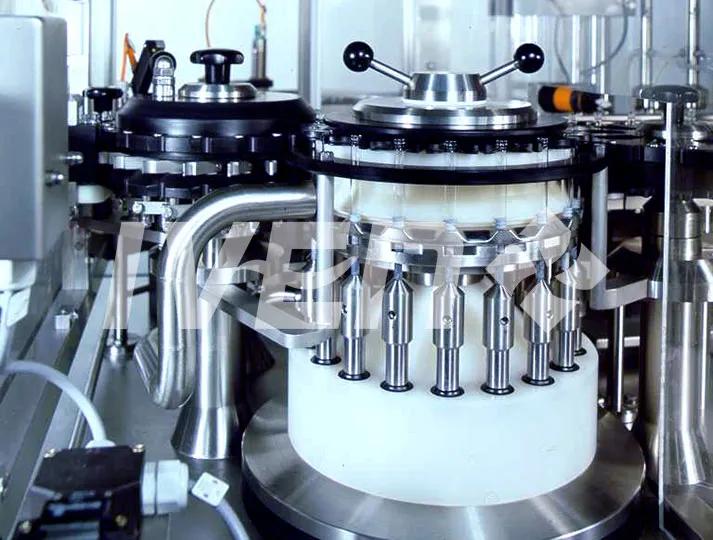
For pharmaceutical manufacturers in the United States, a pharma cartridge filling line is a specialized aseptic production system used to fill medicinal formulations into cartridges for delivery devices such as pen injectors and related combination products. It is commonly evaluated by large drug makers, CDMOs, and medical device companies when they expand sterile manufacturing, modernize legacy filling operations, or prepare for higher-value injectable products under FDA cGMP requirements. In practice, the line can include cartridge handling, washing or depyrogenation interfaces, siliconization where required, precision filling, stopper insertion, capping, in-process inspection, labeling, and downstream packaging integration.
Because the U.S. market continues to grow in biologics, GLP-1 therapies, long-acting injectables, and self-administration formats, cartridge filling technology has become increasingly relevant in hubs such as Boston, Raleigh-Durham, Indianapolis, San Diego, and New Jersey. Buyers are no longer looking only at speed; they are also comparing sterility assurance, changeover flexibility, data integrity, low product loss, automation, and support for future regulatory audits. That is why selecting the right line requires a balanced review of technical design, manufacturing quality, and long-term service capability.
A pharma cartridge filling line is an integrated production solution designed for the aseptic filling and closing of pharmaceutical cartridges. In the United States, it is widely used for injectable drugs intended for pen systems, auto-injector platforms, and certain specialty delivery formats. Companies choose these systems when they need highly accurate dosing, container closure integrity, scalable throughput, and a validated production environment that aligns with U.S. FDA expectations, global GMP standards, and the commercial demands of advanced injectable therapies.
For most buyers, the strategic value lies in three areas. First, it enables entry into premium drug-device markets where product presentation and dose consistency directly affect commercial competitiveness. Second, it supports modernization of legacy aseptic lines that may struggle with robotics, electronic batch records, or small-batch biologic filling. Third, it provides a pathway for multi-product manufacturing where manufacturers must switch between viscosities, batch sizes, and cartridge formats while keeping contamination risk under control.
Decision FactorWhy It Matters in the United StatesTypical Buyer ConcernFDA cGMP alignmentSupports inspections, validation, and commercial release readinessWill the design simplify compliance documentation?Aseptic performanceCritical for injectable drugs and biologicsCan the line reduce operator intervention?Dosing accuracyProtects potency, yield, and patient safetyHow well does it handle high-value formulations?Format flexibilityUseful for CDMOs and multi-product sitesCan it change over quickly between SKUs?Data integrityImportant for Part 11 style digital records and audit trailsIs the control architecture modern enough?Lifecycle supportReduces downtime and ownership riskIs there dependable U.S.-oriented service coverage?The table above shows that equipment selection in the U.S. is rarely a simple price comparison. Buyers often build cross-functional teams that include engineering, quality assurance, production, validation, procurement, and regulatory staff. A supplier that understands this buying process usually performs better during specification alignment and factory acceptance testing.
A pharma cartridge filling line is used to process sterile formulations into ready-to-use cartridges that can later be integrated into injector systems or packaged as finished dosage presentations. Depending on the process design, the line may be connected to upstream solution preparation systems, sterile filtration skids, isolators or RABS, and downstream visual inspection and packaging stations. The goal is to maintain sterility while delivering repeatable fill volumes, proper stopper placement, and reliable sealing performance.
In pharmaceutical production, these lines are used for products such as insulin formulations, GLP-1 therapies, hormonal products, local anesthetics, biologics, and other injectable therapies where cartridge presentation offers dosing convenience and compatibility with patient-friendly delivery devices. In the U.S. market, demand is especially strong among manufacturers pursuing home-use therapies, specialty chronic care products, and combination-product programs that need high presentation quality.
The equipment can be configured for small development batches, clinical production, or full commercial operation. Small-batch platforms are often valuable in innovation clusters like Cambridge, Massachusetts and South San Francisco, where process development and scale-up must move quickly. High-capacity commercial lines are more common in large manufacturing zones around Chicago, Philadelphia, and the broader Mid-Atlantic corridor.
Core ModuleMain FunctionTypical BenefitContainer feed and infeedTransfers empty cartridges into the lineStable, consistent handling with lower breakage riskWashing or decontamination interfaceEnsures incoming containers meet process cleanliness needsImproved sterility controlFilling stationDispenses exact product volumeHigher yield and dose consistencyStoppering unitPlaces stoppers or plungers with precisionProtects product and supports closure integrityCapping or sealing sectionSecures final closure configurationReliable downstream handlingInspection and reject systemIdentifies defects and separates nonconforming unitsBetter quality assurance and reduced complaint riskThis table clarifies why cartridge lines should be viewed as systems rather than single machines. Performance depends on the integration between modules, especially when the line must run multiple container formats or sensitive biologic formulations.
The main applications of a pharma cartridge filling line include sterile filling of drug cartridges for pen injectors, specialized chronic disease therapies, clinical trial supply, and high-value biologic products. The system is also relevant for CDMOs that need to serve brand owners looking for flexible filling capacities without building dedicated facilities. In the United States, this is increasingly tied to outsourced injectable manufacturing in states such as North Carolina, Texas, and California.
One of the biggest benefits is product differentiation. Cartridge-based presentation allows drug manufacturers to participate in delivery-device ecosystems that improve patient adherence and ease of use. Another benefit is higher operational control: advanced lines can be configured with isolators, robotic handling, recipe-driven controls, check weighing, vision inspection, and comprehensive batch reporting. This helps reduce manual intervention and supports stronger process consistency.
From a business perspective, a cartridge filling line can also improve plant economics. Lower overfill, reduced rejects, faster changeovers, and stronger line efficiency all contribute to better cost-per-unit performance. For companies commercializing expensive biologics, even a small gain in fill precision can create a significant impact on annual yield.
var ctxBar = document.getElementById(‘barDemandChart’).getContext(‘2d’);var barDemandChart = new Chart(ctxBar, { type: ‘bar’, data: { labels: [‘GLP-1 Therapies’, ‘Insulin Products’, ‘Biologics’, ‘Hormonal Injectables’, ‘Clinical Supply’, ‘CDMO Multi-Client Programs’], datasets: [{ label: ‘Estimated U.S. Demand Index’, data: [94, 82, 88, 61, 55, 76], backgroundColor: [‘#4e79a7′,’#f28e2b’,’#e15759′,’#76b7b2′,’#59a14f’,’#edc948′] }] }, options: { responsive: true, maintainAspectRatio: false }});The chart above illustrates a realistic demand pattern in the U.S. market, with the strongest pull coming from GLP-1, biologics, and insulin-related formats. While exact demand differs by state and product segment, the broad pattern helps explain why many manufacturers are upgrading sterile filling capabilities now rather than waiting.
Application AreaTypical Product TypeOperational BenefitDiabetes careInsulin and related injectablesSupports high-volume pen-compatible fillingObesity and metabolic careGLP-1 productsMatches demand for self-administration formatsSpecialty biologicsSensitive protein formulationsImproves sterility control and product protectionHormonal therapiesDose-critical injectablesEnhances fill consistencyClinical manufacturingSmall batches for trialsAllows flexible setup and recipe managementContract manufacturingMultiple customer productsSupports changeover efficiency and format rangeAs shown in the table, cartridge technology serves both high-volume commercial manufacturing and specialized development work. This dual value is one reason it is attractive to U.S. buyers seeking both present capacity and future strategic optionality.
There is no single best pharma cartridge filling line for every plant. The right model depends on product viscosity, batch size, sterility strategy, available cleanroom classification, automation requirements, and planned packaging format. In the United States, buyers often begin by separating equipment into development-scale, mid-speed commercial, and high-speed commercial categories. They then compare whether the line is based on conventional filling architecture, advanced robotics, or isolator-contained operation.
Key technical options include peristaltic or rotary piston filling, mass-flow integration, vacuum-assisted stoppering, nitrogen purging, no-glass-no-fill logic, in-line weight control, vision inspection, robotic tub or nest handling where applicable, and compatibility with electronic manufacturing systems. The control platform should be designed for secure recipe management, audit trails, alarm history, and ease of integration with plantwide MES or SCADA environments.
Another major decision is whether the facility wants a standalone machine or a more integrated engineering package that includes water systems, clean utilities, solution preparation, and logistics interfaces. For projects in places such as Houston, Newark, and Los Angeles, this often has practical implications for installation schedules, import coordination through major ports, and utility tie-in planning.
Line TypeBest ForSpeed RangeMain AdvantageR&D or pilot lineClinical and process developmentLowFast setup and flexible experimentationMid-speed aseptic lineSmall-to-medium commercial batchesModerateBalanced capacity and costHigh-speed commercial lineLarge-volume launch productsHighStrong throughput and automationIsolator-based lineHigh sterility assurance applicationsLow to highReduced operator interventionRABS-integrated lineFacilities with existing aseptic roomsModerate to highGood compliance with practical accessibilityMulti-format flexible lineCDMOs and multi-SKU plantsModerateShorter changeover and broader container rangeThe table above helps clarify model selection. A biotechnology startup in Maryland may prioritize flexibility and a lower validation burden, while a mature injectable manufacturer in Indiana may place greater weight on sustained throughput and automation depth.
Cartridge filling lines compete with or complement other aseptic packaging technologies, including vial filling lines, prefilled syringe lines, and blow-fill-seal solutions for selected applications. The right choice depends on market strategy, administration route, device compatibility, patient use case, and production economics. Cartridges are especially attractive when the final product is intended for pen injectors or repeated-dose use formats.
Compared with vial filling, cartridge presentation may offer stronger patient convenience and a more premium device pathway, but it can involve more specialized closure handling and device-related qualification work. Compared with prefilled syringes, cartridges can be ideal for reusable or disposable pens, though they may not suit every therapeutic profile. Buyers in the U.S. often conduct a total cost and commercialization review before selecting one route over another.
var ctxComp = document.getElementById(‘comparisonTechChart’).getContext(‘2d’);var comparisonTechChart = new Chart(ctxComp, { type: ‘bar’, data: { labels: [‘Patient Convenience’, ‘Device Compatibility’, ‘Fill Precision’, ‘Format Flexibility’, ‘Commercial Scalability’, ‘Capital Complexity’], datasets: [ { label: ‘Cartridge Line’, data: [90, 95, 88, 78, 86, 72], backgroundColor: ‘#7b61ff’ }, { label: ‘Vial Line’, data: [55, 40, 86, 91, 89, 64], backgroundColor: ‘#2ca02c’ }, { label: ‘Prefilled Syringe Line’, data: [92, 80, 90, 68, 82, 79], backgroundColor: ‘#ff9da7’ } ] }, options: { responsive: true, maintainAspectRatio: false }});The comparison chart highlights a practical point: cartridges are not universally superior, but they are often the strongest fit when device integration and self-administration are central to the product strategy.
TechnologyBest Use CaseStrengthLimitationCartridge filling linePen-compatible injectable productsExcellent device ecosystem alignmentRequires specialized closure and device planningVial filling lineHospital and general injectable formatsVery flexible for many productsLess convenient for self-administrationPrefilled syringe lineReady-to-inject presentationsStrong patient convenienceDifferent device and safety feature considerationsAmpoule lineSpecific liquid injectablesEstablished format in some marketsLower compatibility with pen platformsBFS systemSelected high-volume sterile liquidsIntegrated forming and filling efficiencyNot suited to all formulations or presentationsManual or semi-automatic setupEarly development or low-volume productionLower entry costLimited scale and higher operator dependencyFor U.S. manufacturers, the right answer often comes from portfolio planning rather than machine preference. A company launching both hospital injectables and home-use pens may need more than one technology platform over time.
The U.S. market for pharma cartridge filling lines is supported by several trends: continued expansion in biologics, rapid growth in self-injection therapies, pressure to localize or strengthen domestic manufacturing resilience, and higher regulatory expectations for aseptic control. Buyers are also responding to labor constraints by increasing automation and reducing dependence on manual intervention in Grade A environments.
From a regional perspective, demand is concentrated in biopharma clusters and established pharmaceutical corridors. Boston-Cambridge, New Jersey, North Carolina Research Triangle, the San Francisco Bay Area, and the Midwest manufacturing belt remain particularly important. Logistics also matter. Imports entering through ports such as Los Angeles, Long Beach, Savannah, Houston, and New York/New Jersey can influence lead times, installation planning, and spare parts strategy for international equipment projects.
Looking toward 2026, several trends are expected to shape procurement decisions. Technologically, more buyers will prioritize robotics, in-line analytics, digital batch records, and predictive maintenance. On the policy side, U.S. emphasis on quality systems, supply chain resilience, and domestic readiness will continue to favor robust validation and service support models. On sustainability, energy-efficient drives, reduced cleanroom burden through isolator design, optimized compressed air use, and lower product waste will become more visible selection criteria.
var ctxLine = document.getElementById(‘lineGrowthChart’).getContext(‘2d’);var lineGrowthChart = new Chart(ctxLine, { type: ‘line’, data: { labels: [‘2021’, ‘2022’, ‘2023’, ‘2024’, ‘2025’, ‘2026’], datasets: [{ label: ‘Estimated U.S. Market Demand Index’, data: [100, 109, 121, 136, 149, 165], borderColor: ‘rgb(75, 192, 192)’, backgroundColor: ‘rgba(75, 192, 192, 0.15)’, fill: false, tension: 0.3 }] }, options: { responsive: true, maintainAspectRatio: false }});var ctxArea = document.getElementById(‘areaTrendChart’).getContext(‘2d’);var areaTrendChart = new Chart(ctxArea, { type: ‘line’, data: { labels: [‘2021’, ‘2022’, ‘2023’, ‘2024’, ‘2025’, ‘2026’], datasets: [{ label: ‘Shift Toward Automated and Isolator-Based Lines (%)’, data: [34, 40, 47, 55, 63, 71], borderColor: ‘rgba(242, 142, 43, 1)’, backgroundColor: ‘rgba(242, 142, 43, 0.25)’, fill: true, tension: 0.25 }] }, options: { responsive: true, maintainAspectRatio: false }});The line chart suggests steady growth in U.S. market demand, while the area chart shows how buyer preference is moving toward more automated, lower-intervention filling environments. This is consistent with broader aseptic manufacturing modernization across the sector.
Choosing a reliable manufacturer or supplier involves more than checking equipment brochures. In the United States, buyers should evaluate regulatory understanding, engineering depth, customization ability, documentation quality, FAT/SAT discipline, spare parts planning, software architecture, and responsiveness during qualification. A strong supplier should be able to discuss not only machine output, but also aseptic strategy, qualification pathway, clean utility interfaces, and long-term maintainability.
It is useful to divide supplier assessment into three categories: technological capabilities, manufacturing capabilities, and service capabilities. Technological capabilities include filling accuracy, automation design, electronic controls, container handling sophistication, and knowledge of compliance frameworks such as EU GMP, U.S. FDA cGMP, WHO GMP, and PIC/S-aligned expectations. Manufacturing capabilities include fabrication quality, component sourcing discipline, testing infrastructure, and the ability to build integrated systems rather than isolated equipment. Service capabilities include project management, validation support, installation guidance, training, after-sales support, and troubleshooting speed.
For example, IVEN Pharmatech Engineering positions itself as a pharmaceutical engineering partner rather than only an equipment seller. Its technology profile is relevant for U.S. buyers because it combines filling and packaging machinery with water treatment systems, intelligent conveying, and production support engineering. That broader systems view can matter when cartridge filling projects are part of larger sterile facility upgrades.
Supplier Evaluation ItemWhat to VerifyWhy It Reduces RiskRegulatory knowledgeExperience with U.S. FDA and global GMP standardsSupports smoother validation and audit readinessEngineering integrationAbility to connect utilities, controls, and downstream systemsPrevents interface failures during startupManufacturing qualityMaterial finish, component reliability, test proceduresImproves durability and line stabilityCustomization capabilityAdaptation to product, format, and plant layoutEnsures the line fits real production needsValidation supportIQ/OQ/PQ and documentation readinessShortens qualification cyclesAfter-sales serviceTraining, remote support, parts strategyMinimizes long-term downtimeThe table above can be used as a procurement checklist. It is particularly helpful when comparing multiple suppliers from North America, Europe, and Asia, because the differences often emerge in project execution discipline rather than headline machine specifications.
On manufacturing capability, suppliers with multiple specialized plants and broad product lines may offer a better-integrated approach for pharmaceutical factories. For U.S. buyers reviewing larger factory investment plans, a supplier with experience in turnkey work can also support more coherent design decisions. Companies evaluating complete project pathways can review turnkey pharmaceutical engineering options when they need line equipment plus utility, process, and facility coordination.
Investment cost varies widely depending on speed, sterility architecture, automation level, filling technology, and project scope. In the U.S. market, a basic or development-focused line may represent a much smaller investment than a full commercial isolator-based line with integrated inspection and secondary packaging. Buyers should also separate machine price from total project cost. Real budgets usually include factory modifications, HVAC adaptation, utilities, cleanroom work, FAT/SAT travel, validation, training, spare parts, and contingency.
Budget planning should start with the intended business model. A branded manufacturer may calculate return through gross margin improvement and device-market access. A CDMO may focus on client acquisition, line utilization, and ability to win higher-value contracts. In both cases, hidden costs often arise from delayed commissioning, extended qualification, or inadequate format flexibility that forces future reinvestment.
Cost ElementTypical Share of Project BudgetPlanning NoteCore filling line equipment35% to 50%Main capital item, but not the full project costIsolator or RABS system10% to 18%Varies by sterility strategy and containment needsFacility modification8% to 15%Includes layout changes and utility tie-insValidation and documentation6% to 12%Often underestimated in early budgetingTraining and commissioning4% to 8%Important for reliable startup performanceSpare parts and contingency5% to 10%Reduces post-installation disruptionThis cost table is useful because it helps U.S. buyers avoid under-budgeting for qualification and facility integration. A line that appears inexpensive on paper can become costly if it requires significant retrofits or prolonged site acceptance work.
ROI analysis should include at least six variables: expected annual output, gross margin per cartridge, yield loss reduction, labor savings, maintenance cost, and changeover impact on uptime. If a line improves overfill control or lowers reject rates for an expensive biologic, the payback period can be much shorter than expected. Likewise, if a supplier provides integrated project support and prevents a six-month launch delay, that can be financially more valuable than a small capital discount.
Manufacturers that want to compare available configurations can also review a broader portfolio of pharmaceutical equipment solutions to determine whether cartridge filling should be purchased as a standalone investment or as part of a wider sterile manufacturing roadmap.
The biggest investment risks usually fall into five categories: compliance risk, technical mismatch, startup delay, weak supplier support, and future capacity constraints. Compliance risk appears when documentation, software controls, or aseptic design do not align with validation expectations. Technical mismatch occurs when the selected line cannot reliably handle the actual product viscosity, fill volume, or cartridge tolerance range. Startup delay is common when facility preparation, FAT closure, and SAT planning are poorly synchronized.
Another risk is underestimating the complexity of combination-product strategy. If the cartridge is intended for a pen device, compatibility and downstream assembly considerations can affect line specification from the beginning. Companies should also evaluate supply chain resilience for contact parts, servo components, sensors, and consumables, especially when international shipping through major ports becomes unpredictable.
A practical mitigation approach is to require a clear URS, documented FAT protocol, validation package expectations, spare parts list, training plan, and escalation path before purchase order finalization. For overseas suppliers, U.S. buyers should confirm communication workflow, time-zone support, and on-site service readiness.
Risk AreaCommon CauseRecommended MitigationCompliance gapWeak documentation or software traceabilityDefine URS and validation deliverables earlyPerformance mismatchInsufficient product trialsRun representative FAT with actual parametersSchedule slippagePoor coordination of facility and equipment readinessUse detailed integrated project timelineService difficultyLimited support response after installationConfirm support model and spare parts planBudget overrunUnplanned utility or cleanroom upgradesConduct full site assessment before purchaseFuture inflexibilityLine optimized for only one SKUPlan for change parts and recipe scalabilityThe explanation behind this table is simple: most major project failures are avoidable if procurement teams treat the line as a strategic manufacturing system rather than a piece of isolated hardware.
What production volumes can a pharma cartridge filling line support?The range can vary from pilot batches to high-speed commercial output. The right volume depends on machine architecture, number of filling heads, product characteristics, and accepted line speed under validated conditions.
Is an isolator always necessary for U.S. projects?Not always, but many buyers prefer isolator-based or highly contained systems because they reduce operator intervention and strengthen aseptic assurance. The final decision depends on product risk, facility design, and validation strategy.
Can a cartridge line handle biologics?Yes, many modern lines are designed for sensitive biologics, provided that the filling technology, flow path design, hold times, and environmental controls are suitable for the formulation.
How long does a typical project take?Timelines vary, but a commercial project can take many months from URS to qualification. Lead time depends on customization, FAT scheduling, import logistics, site readiness, and validation scope.
What documentation should buyers request?At minimum, request detailed technical documentation, material and component records, software descriptions, FAT/SAT protocols, calibration details, manuals, and qualification support packages appropriate to the project.
How important is local support in the United States?It is very important. Even when the supplier is international, U.S.-focused project management, remote diagnostics, spare parts planning, and practical service response are essential for stable operation.
What should be included in a supplier audit?Review engineering capability, manufacturing process control, quality systems, reference projects, testing methods, and after-sales structure. It is also wise to assess how well the supplier handles communication and deviation management.
Does IVEN Pharmatech Engineering fit large integrated projects?For buyers looking beyond a single machine, IVEN is relevant because it combines equipment engineering with broader pharmaceutical project capabilities. Its experience in filling machinery, water systems, logistics systems, and turnkey execution can be useful where cartridge filling is part of a larger sterile manufacturing plan. Companies needing project consultation or direct discussion can use the contact channel for pharmaceutical engineering inquiries.
In service capability terms, lifecycle support often determines whether a cartridge filling line remains an asset or becomes a bottleneck. Buyers should favor suppliers that can provide feasibility input, layout coordination, installation assistance, commissioning, IQ/OQ/PQ support, staff training, and post-startup optimization. This is especially important in the United States, where downtime costs and compliance exposure are high. A supplier with structured project delivery and long-equipment-life design can create meaningful value over ten to twenty years of operation.
In summary, the best pharma cartridge filling line for the United States market is the one that matches product strategy, regulatory expectations, throughput needs, and long-term service realities. Companies that evaluate technical capability, manufacturing quality, and service depth together are more likely to achieve reliable startup, stronger ROI, and future-ready sterile production capacity.
-
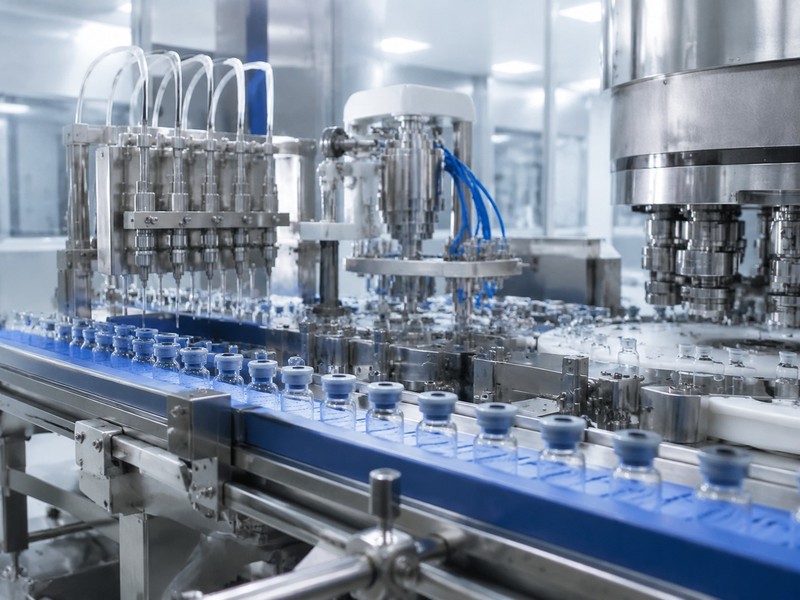
Ampoule and Vial Filling Systems in the United States
Pharmaceutical manufacturers in the United States increasingly compare ampoule filling and vial filling when planning sterile production expansions, replacing legacy equipment, or building new injectable facilities. The right choice affects container closure integrity, line speed, regulatory strategy, product stability, and long-term operating cost. For companies producing injectables under U.S. FDA cGMP requirements, the decision is rarely about packaging alone; it is about matching the filling platform to the product, the market, and the risk profile of the site.
In major U.S. pharmaceutical hubs such as New Jersey, Boston, Raleigh-Durham, Houston, Chicago, and San Diego, engineering teams evaluate filling lines based on cleanroom fit, aseptic assurance, automation level, validation burden, and supply chain resilience. Whether a facility is handling small-volume injectables, lyophilized drugs, biologics, diagnostics, or hospital generics, ampoules and vials each offer distinct operational and commercial advantages. For groups considering integrated line planning, turnkey pharmaceutical engineering solutions can simplify the transition from concept to qualification.
The short answer is that ampoule filling and vial filling are both core sterile packaging technologies, but they serve different manufacturing priorities. Ampoules are typically used for single-dose liquid products where hermetic glass sealing and strong tamper evidence are important. Vials are more versatile and dominate modern injectable production because they support liquid products, freeze-dried drugs, multi-dose presentations, and a wider range of rubber stopper and aluminum cap configurations.
For U.S. manufacturers, vial filling is usually the preferred option for biologics, oncology drugs, vaccine components, and high-value sterile injectables because it offers better compatibility with isolators, restricted access barrier systems, automated inspection, and cold chain distribution. Ampoule filling remains relevant for selected generic injectables, emergency drugs, and certain export-oriented formulations where low unit cost and compact format are beneficial.
At a strategic level, choosing between ampoules and vials influences facility layout, utility requirements, operator intervention rates, media fill design, container supply agreements, and secondary packaging formats. That is why large pharmaceutical and medical device companies treat the decision as an investment in platform capability rather than as a simple equipment purchase.
FactorAmpoule FillingVial FillingWhy It MattersPrimary formatSealed glass ampouleStoppered and capped vialDefines closure system and downstream handlingBest forSingle-dose liquidsLiquids and lyophilized productsSupports product strategyClosure integrityFlame-sealed glassRubber stopper plus capAffects sterility assurance and transportFormat flexibilityLowerHigherImportant for multiproduct plantsBreakage riskHigher during handlingLower in many logistics flowsInfluences yield and safetyBiologics suitabilityLimitedStrongCritical for high-value pipelinesU.S. expansion trendSelective useBroad adoptionReflects market demand and modernizationThe table above shows why many U.S. projects favor vial systems, especially when future line flexibility is a priority. Ampoules still retain a valid position, but vials better align with many current development pipelines.
Ampoule filling machines wash, sterilize, fill, and flame-seal glass ampoules for sterile liquids. They are widely used for analgesics, anesthetics, emergency medicines, vitamins, anti-infectives, and selected generic injectables. Because the container is sealed immediately after filling, ampoules can provide strong protection against contamination when properly processed. However, they are less convenient for reconstitution and generally unsuitable for multi-dose use.
Vial filling lines perform washing, depyrogenation, filling, stopper insertion, capping, and often inspection and labeling for glass or polymer vials. These systems support ready-to-use sterile injectables, lyophilized products, powders for reconstitution, biologics, cell and gene therapy support materials, diagnostic reagents, and clinical trial batches. In the United States, the ability to configure a vial line for nested containers, ready-to-use components, and advanced barrier technology is a major advantage.
Manufacturers in ports and logistics corridors such as Newark, Los Angeles, Savannah, and Houston also consider how the package will perform in warehousing and domestic transport. Vials often fit better into automated packaging and distribution systems, while ampoules may offer compact presentation for some legacy or cost-sensitive formulations.
Product CategoryTypical Ampoule UseTypical Vial UseCommon U.S. Demand PatternHospital genericsHighHighMixed, depending on dosage formBiologicsLowVery highStrong vial preferenceLyophilized drugsRareVery highVials dominateEmergency injectablesHighModerateAmpoules remain relevantClinical trial batchesModerateHighFlexible vial systems favoredDiagnostic reagentsLowHighVials preferred for handling easeExport formulationsModerateHighDepends on target region and standard packThis application view helps clarify that the right technology is closely tied to product characteristics, dosage presentation, and commercial channel requirements rather than a one-size-fits-all equipment choice.
The main benefit of ampoule filling is its straightforward single-use sterile presentation. Once the neck is flame-sealed, the product is enclosed in glass without elastomer contact. This can be useful for formulations that require minimized interaction with stopper materials or where tamper evidence is especially important. Ampoule lines can also be efficient for established high-volume generic products with stable demand.
Vial filling offers broader application benefits. It supports a range of fill volumes, stoppering systems, lyophilization workflows, nitrogen purging, and visual inspection compatibility. For U.S. manufacturers supplying hospitals, specialty pharmacies, compounding networks, and contract development and manufacturing organizations, these advantages improve commercial adaptability.
Other important benefits include easier integration with isolators, robotic loading, in-line weight control, and container closure integrity testing. In multiproduct facilities near major biotech corridors like Cambridge, South San Francisco, and Research Triangle Park, the ability to change formats with less disruption is a major reason vial systems outperform fixed legacy equipment.
From a technology perspective, engineering depth matters. Companies evaluating long-term line performance often look for partners that combine filling equipment with water systems, solution preparation, packaging automation, and validation-oriented design. IVEN Pharmatech Engineering is known in this area for integrating pharmaceutical filling and packaging machinery with purified water, WFI generation, logistics, and production engineering into coordinated factory solutions. More background on the company’s industry positioning can be found at the company overview page.
var ctxBar = document.getElementById(‘barIndustryDemand’).getContext(‘2d’);var barIndustryDemand = new Chart(ctxBar, {type: ‘bar’,data: {labels: [‘Hospital Generics’, ‘Biologics’, ‘Vaccines’, ‘CDMO Services’, ‘Diagnostics’, ‘Lyophilized Drugs’],datasets: [{label: ‘Estimated U.S. demand index’,data: [72, 95, 81, 88, 64, 90],backgroundColor: [‘#4e79a7′,’#59a14f’,’#f28e2b’,’#e15759′,’#76b7b2′,’#af7aa1′]}]},options: {responsive: true,maintainAspectRatio: false,scales: { y: { beginAtZero: true, max: 100 } }}});The chart above reflects a realistic U.S. demand pattern: vial-oriented sectors such as biologics, CDMO services, and lyophilized products generally show the strongest equipment demand.
When selecting equipment, buyers should evaluate not just the container type but also machine architecture, batch size, sterility concept, and automation level. Ampoule lines range from compact monoblock systems for smaller volumes to high-speed rotary lines for large generic output. Vial lines range from semi-automatic systems for clinical production to fully integrated high-speed lines with isolators, ready-to-use component handling, and lyophilizer interfaces.
Technical options often include servo-driven filling pumps, peristaltic or time-pressure filling, ceramic piston pumps, no-glass-no-fill detection, stopper presence control, vacuum stoppering, in-process check weighing, automated rejection, 21 CFR Part 11-compatible software features, and electronic batch record integration. For U.S. projects, data integrity and audit-ready control architecture are now baseline expectations, not premium extras.
In terms of manufacturing capability, IVEN has built specialized production resources around pharmaceutical filling and packaging systems, water treatment units, intelligent conveying, and blood collection tube equipment. This matters to buyers because supply continuity, spare parts support, and equipment standardization often depend on the depth of a manufacturer’s own production footprint rather than on outsourced assembly alone.
Line TypeTypical SpeedBest Batch SizeTypical OptionsOperational NoteCompact ampoule line3,000–6,000 units/hourSmall to mediumBasic inspection, flame sealingGood for focused product portfoliosHigh-speed ampoule line12,000–24,000 units/hourLargeAdvanced washing and sealing controlsBest for stable generic demandSemi-automatic vial filler500–2,000 units/hourR&D or clinicalManual loading, flexible recipesUseful for development labsAutomatic vial line6,000–18,000 units/hourCommercial scaleStoppering, capping, IPCCommon U.S. commercial choiceIsolator-based vial line3,000–12,000 units/hourMedium to high valueVHP decontamination, gloves, roboticsStrong aseptic assurance profileLyophilization vial system2,000–10,000 units/hourSpecializedPartial stoppering, tray loadingEssential for freeze-dried productsRTU nested vial platform1,000–8,000 units/hourFlexible, smaller lotsTub handling, low interventionSupports modern biologic workflowsThe table shows that “vial filling” is not a single machine category. It is a family of technical solutions, each suited to different sterility, throughput, and product handling needs.
Besides ampoules and vials, some U.S. projects compare prefilled syringes, blow-fill-seal, cartridges, and IV bags. These alternatives may offer better convenience, lower contamination risk, or faster bedside preparation, but they also bring different material compatibility and investment requirements.
Ampoules fit best when the product is a simple sterile liquid, single-dose presentation is preferred, and the business case depends on economical high-volume output. Vials fit best when flexibility, biologic compatibility, reconstitution, freeze-drying, or premium injectable positioning is required. Prefilled syringes suit ready-to-administer products, while blow-fill-seal is attractive for some respiratory, ophthalmic, and low-complexity sterile liquids.
For U.S. buyers, the practical question is not “which is superior in general” but “which matches our product roadmap, facility design, operator model, and validation strategy.” A line intended for New Jersey contract manufacturing may need frequent changeovers and broad dosage support, while a plant serving a stable hospital generic portfolio in the Midwest may prioritize unit cost and uptime instead.
TechnologyStrengthLimitationTypical Capital LevelBest Use CaseAmpoule fillingHermetic glass sealingLower format flexibilityModerateHigh-volume single-dose liquidsVial fillingBroadest sterile versatilityMore closure componentsModerate to highCommercial sterile injectablesPrefilled syringeReady-to-use convenienceHigher component sensitivityHighPremium injectable deliveryBlow-fill-sealIntegrated forming and fillingLimited product fitHighOphthalmic and respiratory liquidsCartridge fillingDevice compatibilityNarrower presentation scopeHighPen systems and specialty injectablesIV bag fillingLarge-volume sterile solutionsNot for small-dose injectablesHighInfusion productsBFS plus secondary packagingReduced interventionDifferent regulatory expectationsHighHigh-output selected sterile productsThis comparison makes clear that vial filling is often the most adaptable middle ground for U.S. sterile manufacturing, while ampoules remain highly effective in narrower but important applications.
var ctxComp = document.getElementById(‘comparisonChart’).getContext(‘2d’);var comparisonChart = new Chart(ctxComp, {type: ‘bar’,data: {labels: [‘Format Flexibility’, ‘Aseptic Compatibility’, ‘High-Speed Output’, ‘Biologics Fit’, ‘Cost Efficiency’, ‘Logistics Robustness’],datasets: [{label: ‘Ampoule Filling’,data: [55, 68, 84, 32, 82, 58],backgroundColor: ‘#f28e2b’},{label: ‘Vial Filling’,data: [92, 90, 80, 95, 76, 88],backgroundColor: ‘#4e79a7’}]},options: {responsive: true,maintainAspectRatio: false,scales: { y: { beginAtZero: true, max: 100 } }}});The United States remains one of the world’s most important markets for sterile filling equipment due to strong demand from branded pharma, generics, biotech, contract manufacturing, and hospital supply channels. Current expansion activity is supported by domestic capacity investment, supply chain localization, biologics growth, and modernization of older aseptic facilities.
From 2024 to 2026, the trend line points toward more isolator adoption, increased use of ready-to-use sterile components, digital batch monitoring, robotic loading, and sustainability-driven utility optimization. Water, clean steam, compressed gases, and cleanroom energy consumption are becoming larger factors in total cost evaluations. Environmental, health, and safety reviews also influence whether companies keep traditional ampoule operations or shift to formats with lower breakage and waste handling burdens.
Policy and regulatory trends are equally important. U.S. buyers are paying closer attention to data integrity, contamination control strategy, Annex 1 alignment for global exports, and supply resilience for glass, stoppers, and aluminum seals. By 2026, vendors that can demonstrate integrated automation, qualification support, and lifecycle service are likely to gain share over suppliers that only sell standalone machines.
var ctxLine = document.getElementById(‘lineMarketGrowth’).getContext(‘2d’);var lineMarketGrowth = new Chart(ctxLine, {type: ‘line’,data: {labels: [‘2022’, ‘2023’, ‘2024’, ‘2025’, ‘2026’],datasets: [{label: ‘U.S. sterile filling investment index’,data: [100, 108, 119, 131, 145],borderColor: ‘#59a14f’,backgroundColor: ‘rgba(89,161,79,0.15)’,fill: false,tension: 0.3}]},options: {responsive: true,maintainAspectRatio: false,scales: { y: { beginAtZero: false } }}});var ctxArea = document.getElementById(‘areaTrendShift’).getContext(‘2d’);var areaTrendShift = new Chart(ctxArea, {type: ‘line’,data: {labels: [‘2022’, ‘2023’, ‘2024’, ‘2025’, ‘2026’],datasets: [{label: ‘Traditional open filling share’,data: [48, 42, 36, 31, 26],borderColor: ‘#e15759’,backgroundColor: ‘rgba(225,87,89,0.25)’,fill: true,tension: 0.3},{label: ‘Barrier and isolator filling share’,data: [52, 58, 64, 69, 74],borderColor: ‘#76b7b2’,backgroundColor: ‘rgba(118,183,178,0.25)’,fill: true,tension: 0.3}]},options: {responsive: true,maintainAspectRatio: false,scales: { y: { beginAtZero: true, max: 100 } }}});These charts illustrate a realistic market shift: overall investment is rising, and newer aseptic containment technologies are gaining a larger share of project budgets.
In the United States, supplier selection should start with regulatory and engineering capability, not headline price. Buyers should confirm whether the vendor can provide URS support, 3D layout review, FAT protocols, SAT planning, IQ/OQ documentation, spare parts strategy, software validation support, and operator training. A good supplier understands that a filling line must fit into a qualified production ecosystem, not just arrive as a machine on a pallet.
Technological capability is a strong differentiator. Buyers should ask whether the supplier can integrate water systems, preparation systems, conveying, packaging, and digital monitoring. IVEN, for example, has developed its reputation by combining equipment engineering with compliance-oriented pharmaceutical infrastructure, helping customers plan not only the filling line but the broader production environment needed for sustained operation.
Service capability is equally critical. U.S. plants often need remote troubleshooting, multilingual technical support, validation documents, installation coordination, and long-term maintenance planning. Suppliers with lifecycle services reduce project risk, especially when deadlines are tight and regulatory milestones cannot slip. If your team is comparing specifications or would like direct project discussion, you can contact the engineering team for tailored input.
Selection CriterionWhat to VerifyWhy It Is ImportantBuyer TipRegulatory fitFDA cGMP, EU GMP, WHO, PIC/S experienceReduces compliance gapsAsk for past documentation examplesEngineering depthLayout, utilities, automation, validation supportImproves project executionReview actual project scope, not brochuresManufacturing strengthIn-house production and quality controlSupports consistency and deliveryCheck factory capability and lead timesAfter-sales serviceTraining, spare parts, remote supportProtects uptimeDefine response times contractuallyCustomization abilityFormat range, software, cleanroom fitAvoids expensive retrofit changesMap the line to your real SKU planProven referencesSimilar sterile product installationsBuilds confidence in performanceAsk for use cases in comparable marketsTotal project approachTurnkey or integrated project supportReduces coordination burdenUseful for new plants and major expansionsThe best supplier is usually the one that lowers total project uncertainty. That includes technical clarity, realistic timelines, and robust post-installation support.
Capital cost varies widely based on speed, sterility concept, automation level, and whether the project includes upstream and downstream systems. A basic ampoule line can be substantially less expensive than a high-spec isolator-based vial line, but a lower purchase price does not always mean better long-term economics. U.S. buyers should calculate total cost of ownership across labor, yield, maintenance, utilities, rejects, validation, and future upgrade paths.
Budget planning should also include container procurement, depyrogenation tunnels, visual inspection, labeling, serialization where relevant, HVAC adaptation, compressed gases, purified water, clean steam, and qualification costs. Facilities in high-cost labor markets such as the Boston area or Northern California often find that higher automation pays back faster than expected.
Service scope changes ROI significantly. A supplier that provides feasibility support, equipment customization, installation, commissioning, documentation, staff training, and optimization can shorten the path to commercial output. For companies reviewing equipment categories and broader sterile production systems, relevant offerings can be explored through the pharmaceutical equipment catalog.
Cost ElementAmpoule Line ImpactVial Line ImpactBudget NoteBase equipmentModerateModerate to highDepends on speed and containment levelBarrier technologyOptional in some casesOften expected for modern aseptic linesCan materially raise capexChange partsLower for narrow format useHigher for flexible multiproduct useImportant for SKU-heavy portfoliosLabor costModerateLower with advanced automationCritical in U.S. plantsReject and breakage costHigher riskOften lowerAffects real yieldValidation and documentationModerateModerate to highMore complex systems need broader supportExpansion flexibilityLowerHigherKey factor in multi-year ROIAs a practical rule, ampoules may offer attractive economics for stable, single-purpose production, while vials often deliver better ROI when future pipeline changes and higher-value products are expected.
The biggest investment risk is selecting technology that fits today’s product but not tomorrow’s portfolio. A line with limited format flexibility can become a bottleneck if the company adds new vial sizes, lyophilized products, or CDMO contracts. Another common risk is underestimating facility modifications. Filling equipment may require larger changes to airflow, utilities, material flow, and operator segregation than originally planned.
Supply chain risk is also significant. U.S. projects should review access to Type I glass, elastomer stoppers, aluminum seals, replacement pumps, servo components, and qualified service support. Delays at ports such as Long Beach, Newark, or Savannah can affect project schedules if spare parts and line modules are not planned properly.
From a service standpoint, strong lifecycle support reduces these exposures. IVEN’s broader service model includes feasibility consulting, engineering design, installation, commissioning, qualification support, training, and optimization assistance. That type of end-to-end involvement can be valuable for companies seeking faster startup and reduced coordination risk across multiple vendors.
Risk AreaDescriptionPotential EffectMitigation ActionWrong format selectionMismatch between package and pipelineEarly obsolescenceMap equipment to 3-5 year product planUtility underestimationInsufficient clean steam, HVAC, gasesStartup delayComplete utility study before purchaseValidation gapWeak IQ/OQ/PQ documentationRegulatory riskDefine documentation deliverables upfrontOperator interventionToo many manual stepsHigher contamination riskPrefer automation and barrier systemsComponent supply disruptionGlass or stopper shortageProduction interruptionDual-source critical materialsInsufficient service supportSlow response to issuesExtended downtimeSecure service SLA and parts stockFuture scale limitsLine cannot expand with demandHigher reinvestment costChoose modular architectureThe explanation behind this table is simple: most costly problems are preventable if the project team aligns equipment choice with product strategy, qualification needs, and long-term site capability.
Is vial filling generally better than ampoule filling in the United States?Not always, but vial filling is usually the more flexible choice for modern U.S. sterile manufacturing, especially for biologics, high-value injectables, and lines that may expand into lyophilization or multiple container formats.
When should a company still choose ampoule filling?Ampoule filling can be the right solution for stable, high-volume single-dose liquid products where low unit cost, compact packaging, and glass-sealed integrity are priorities.
Are ampoules more difficult to handle than vials?They can be. Ampoules are more vulnerable to breakage and often require more caution in downstream handling, shipping, and end-user opening.
Which format is better for biologics?Vials are generally better because they are compatible with stoppers, freeze-drying, low-intervention aseptic systems, and a wider range of storage and handling workflows.
What should U.S. buyers request from suppliers before placing an order?A detailed URS response, layout proposal, utility list, FAT scope, documentation package outline, spare parts plan, training plan, and project timeline. It is also wise to review similar reference projects and support capability.
Can one supplier support both equipment and broader plant engineering?Yes. This is often advantageous for new facilities or major modernization projects because utilities, process flow, packaging, and qualification are closely linked. Integrated support can reduce schedule risk and rework.
How important is turnkey capability?Very important when the project includes clean utilities, solution preparation, automation, logistics, and validation. Integrated execution is especially helpful when the plant is aiming for faster readiness under strict regulatory expectations.
What makes IVEN relevant to U.S. buyers?The company combines pharmaceutical engineering experience with filling and packaging systems, water treatment, intelligent logistics, and project delivery capabilities. It has experience serving international regulated markets and can support projects that require coordinated equipment and factory planning rather than isolated machine supply.
What trend should buyers watch through 2026?More isolator use, more ready-to-use components, stronger contamination control expectations, wider adoption of digital production records, and higher attention to sustainability, energy use, and supply chain resilience.
Where can buyers start if they are still comparing options?A good starting point is a structured discussion about product type, target throughput, sterility strategy, and facility constraints. Companies seeking that type of planning can review integrated project capabilities or reach out for a technical consultation.
Choosing between ampoule and vial filling is ultimately a strategic manufacturing decision. For the United States market, vial systems often provide the best balance of compliance readiness, product flexibility, and future scalability, while ampoule systems continue to offer value in focused sterile liquid applications. The strongest outcomes come from matching the equipment platform to the real business case, supported by a manufacturer with proven engineering, manufacturing depth, and lifecycle service.