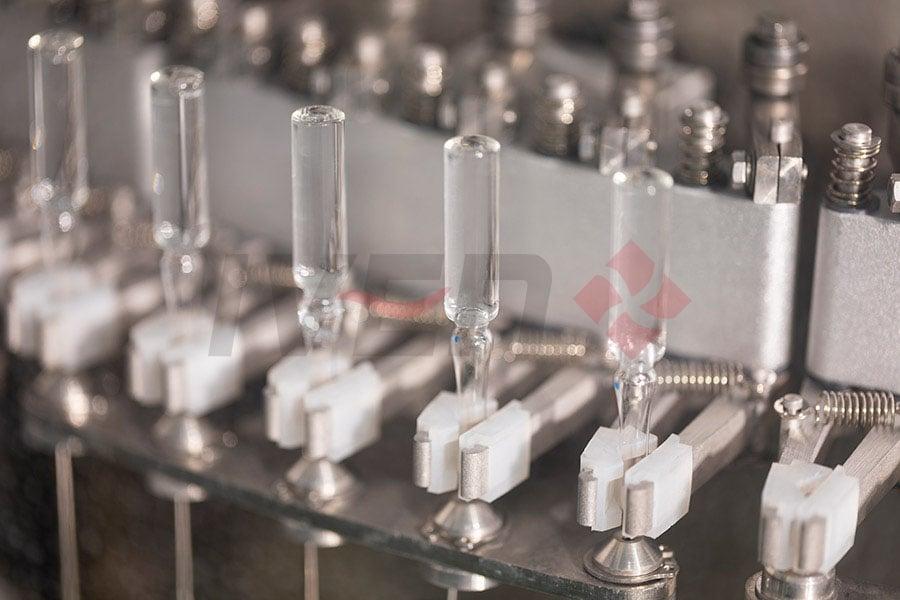
Automatic Ampoule Filling Lines in the United States
For pharmaceutical manufacturers in the United States, an automatic ampoule filling line is a critical production asset for sterile liquid products that require accurate dosing, reliable sealing, high throughput, and compliance with FDA cGMP expectations. Large drug makers, contract manufacturers, and medical technology companies typically evaluate this equipment when they expand injectable capacity, modernize legacy facilities, improve contamination control, or prepare for new product launches. In practical terms, the system integrates ampoule feeding, washing, sterilization, filling, sealing, and inspection into a validated process designed for consistent quality and efficient commercial output.
Demand in the U.S. market is being shaped by rising injectable drug volumes, reshoring initiatives, stricter data integrity expectations, labor cost pressures, and the need for flexible production lines that can serve both commercial and small-batch products. Facilities around New Jersey, Boston, Chicago, Houston, San Diego, and North Carolina increasingly compare advanced ampoule lines against vial, BFS, and prefilled syringe platforms when planning new sterile manufacturing capacity.
Quick Answer: Why an automatic ampoule filling line matters in the United States

An automatic ampoule filling line matters because it combines sterile process control, repeatable output, and lower manual intervention for liquid injectable products packaged in glass ampoules. In the United States, buyers usually focus on four decision criteria: regulatory fit, production efficiency, fill accuracy, and long-term serviceability. If a company needs to manufacture injectable solutions for hospital use, emergency medicines, vitamins, anesthetics, diagnostic agents, or specialty pharmaceuticals, an automated ampoule line can be a highly effective solution.
Compared with semi-automatic production, a modern automatic line offers synchronized material flow, programmable recipe management, integrated alarms, batch traceability, online particle control options, and compatibility with upstream water systems and downstream packing equipment. For larger operations, this helps reduce operator dependence and improve line clearance discipline. For smaller companies or CDMOs, it enables faster changeovers and scalable growth.
| Evaluation Factor | Why It Matters | Typical U.S. Buyer Priority |
|---|---|---|
| FDA cGMP alignment | Supports inspection readiness and validation | Very high |
| Fill accuracy | Controls dose consistency and waste | Very high |
| Sterility assurance | Reduces contamination risk | Very high |
| Throughput | Supports commercial demand and labor efficiency | High |
| Changeover flexibility | Useful for multi-product or CDMO operations | High |
| Service support | Minimizes downtime and spare part delays | Very high |
The table above shows why U.S. pharmaceutical engineering teams do not evaluate ampoule machinery on speed alone. Validation capability, aseptic process reliability, and support responsiveness often outweigh a marginal difference in headline output.
What Is an automatic ampoule filling line and what is it used for in pharmaceutical production?

An automatic ampoule filling line is an integrated system used to process sterile glass ampoules from container preparation through liquid filling and flame sealing. Depending on the line design, the process may include ampoule unscrambling, internal and external washing, tunnel sterilization and depyrogenation, aseptic filling, nitrogen flushing, preheating, tip sealing, coding, visual inspection, leak testing, labeling, and final cartoning.
In pharmaceutical production, ampoules are commonly selected for single-dose sterile liquids where strong container integrity and tamper evidence are needed. They are often used for injectable drugs distributed to hospitals, emergency departments, ambulatory surgery centers, and government health programs. Glass ampoules also remain relevant in export markets where specific dosage forms are standardized around this packaging format.
Applications in the United States include:
- Analgesics and anesthetic injectables
- Antibiotics and anti-infectives
- Sterile vitamins and nutrient solutions
- Cardiovascular emergency medications
- Diagnostic and imaging support liquids
- Specialty generics for hospital channels
The line is usually part of a broader sterile manufacturing ecosystem that includes purified water, water for injection, solution preparation vessels, cleanroom HVAC, environmental monitoring, packaging, and electronic batch documentation. Companies planning a new plant or expansion often review complete project integration rather than buying isolated machines. For that reason, many manufacturers explore turnkey pharmaceutical engineering solutions alongside individual filling equipment.
Main applications and benefits of automatic ampoule filling line in modern pharmaceutical manufacturing

The main application of an automatic ampoule filling line is the high-volume or medium-volume production of sterile liquid pharmaceuticals. However, the broader value lies in process consistency, product protection, and operational efficiency. In U.S. facilities where labor costs are high and deviation management is intensive, automation can significantly improve batch economics.
Key benefits include reduced manual handling, more stable dosing, improved process synchronization, stronger in-process controls, and easier integration with electronic records. A well-designed line also supports recipe-based operation, helping plants in cities such as Philadelphia and Indianapolis run multiple SKUs with less setup risk.
| Application Area | Common Product Type | Operational Benefit |
|---|---|---|
| Hospital injectables | Sterile single-dose liquids | Reliable high-volume output |
| Emergency medicine | Fast-response drug formats | Secure sealing and traceability |
| Nutraceutical injectables | Vitamin and mineral solutions | Accurate filling and neat presentation |
| Export manufacturing | Regional ampoule formats | Supports global packaging standards |
| CDMO manufacturing | Multi-client sterile products | Flexible changeover management |
| Government supply | Stockpile or public health products | Scalable and consistent production |
The table highlights where the technology delivers measurable value. For example, a contract manufacturer serving clients across the East Coast may prioritize multi-size compatibility, while a large generic producer shipping through the Port of New York and New Jersey may emphasize maximum speed and serialized packaging integration.
Another major advantage is line integration. When solution preparation, sterile transfer, filling, sealing, and final packaging are engineered as one validated process, troubleshooting becomes easier and quality risk is more manageable. This is especially important for manufacturers undergoing site modernization or FDA pre-approval inspection preparation.
The line chart illustrates a realistic upward demand trend as U.S. manufacturers invest in sterile capacity, modernization, and supply-chain resilience.
Key types, models and technical options for automatic ampoule filling line
Not all automatic ampoule filling lines are the same. Selection depends on container size, target output, product characteristics, cleanroom layout, and validation strategy. Some systems are optimized for small-volume ampoules at very high speed, while others focus on flexibility for multiple formats or frequent recipe changeovers.
Core technical options usually include inline or rotary design, servo dosing, peristaltic or piston filling technology, nitrogen flushing, open or RABS-compatible layouts, camera inspection, weight checking, and digital batch data capture. Tunnel sterilization specifications, machine guarding, and software architecture also affect suitability for the U.S. market.
| Line Type | Best For | Typical Speed Range |
|---|---|---|
| Compact automatic line | Small batches and development-scale production | 3,000-6,000 ampoules/hour |
| Mid-speed integrated line | General commercial production | 6,000-12,000 ampoules/hour |
| High-speed line | Large generic or hospital supply demand | 12,000-24,000 ampoules/hour |
| Multi-format flexible line | CDMO and mixed product portfolios | 4,000-10,000 ampoules/hour |
| RABS-compatible line | Enhanced contamination control | Project-specific |
| Turnkey integrated line | New facility construction or major expansion | Project-specific |
This comparison helps clarify that the “best” model depends on business goals. A greenfield site near Raleigh may prefer a turnkey integrated line linked to water systems and logistics automation, while an existing Chicago plant may only need a mid-speed retrofit for one therapeutic segment.
Technical buyers should also review format range, liquid viscosity tolerance, acceptable ampoule breakage rate, online rejection logic, CIP/SIP compatibility where relevant, and data connectivity with site MES or SCADA systems. For teams comparing available equipment configurations, a broader look at pharmaceutical production equipment options can help align the ampoule line with the rest of the facility.
automatic ampoule filling line vs alternative technologies: which solution fits your needs?
In many projects, the question is not whether to automate, but which packaging technology is the right strategic fit. Ampoules compete with vials, blow-fill-seal systems, and prefilled syringes depending on the product, administration route, and market channel.
Ampoules provide strong hermetic sealing and are often cost-effective for specific sterile liquids. Vials offer easier reconstitution and broader use for biologics. BFS can be efficient for certain high-volume sterile liquids, while prefilled syringes support convenience and premium presentation.
| Technology | Main Strength | Main Limitation |
|---|---|---|
| Ampoule filling line | Strong seal, proven format, efficient for many sterile liquids | Glass opening step at point of use |
| Vial filling line | Very versatile and widely accepted | More components such as stoppers and caps |
| Blow-fill-seal | Integrated container formation and filling | Not ideal for every product or market expectation |
| Prefilled syringe line | User convenience and premium delivery | Higher packaging complexity and cost |
| Semi-automatic ampoule setup | Lower entry cost | Lower throughput and more manual handling |
| Outsourced contract fill-finish | Reduces upfront capital need | Less direct control over scheduling and capacity |
The best solution depends on formulation sensitivity, target customer, shelf-life strategy, and forecast volume. For example, a U.S. hospital generic product moving in large lots through distribution hubs in Memphis or Dallas may fit ampoules well. A specialty injectable for self-administration may not.
The bar chart shows where buyer interest is strongest across practical application categories in the current U.S. market.
Market overview and future trends for automatic ampoule filling line in pharmaceutical manufacturing
The U.S. market for automatic ampoule filling line technology is influenced by sterile injectable shortages, domestic production incentives, quality remediation projects, and the expansion of flexible manufacturing capacity. Buyers are no longer evaluating machinery only by mechanical reliability; they also want digital traceability, reduced energy consumption, and layouts that fit upgraded cleanroom concepts.
By 2026, three trends are expected to shape purchase decisions. First, automation will continue to deepen through servo motion control, electronic batch records, predictive maintenance, and machine vision. Second, policy and procurement pressures will favor resilient domestic or near-shore supply chains, with more interest in validated equipment that can be commissioned faster in U.S. projects. Third, sustainability will gain visibility through lower utility consumption, heat recovery, cleaner combustion control for sealing systems, and more efficient cleanroom integration.
Local market activity is especially visible in pharmaceutical corridors such as New Jersey, Massachusetts, California, North Carolina, and Indiana. Ports including Los Angeles, Long Beach, Savannah, and Houston also matter because imported machinery, stainless components, and spare parts often move through these gateways.
The area chart reflects the growing share of projects driven by smart manufacturing, modernization, and compliance upgrades rather than simple replacement purchases.
How to choose a reliable automatic ampoule filling line manufacturer or supplier
Choosing a supplier requires more than requesting quotations. A reliable manufacturer should demonstrate regulatory understanding, engineering depth, installed references, stable quality systems, and after-sales responsiveness. U.S. buyers often ask whether the supplier can support FAT, SAT, documentation review, IQ/OQ/PQ readiness, and spare parts availability without long delays.
One effective method is to score suppliers on technical, commercial, and service criteria rather than focusing solely on initial purchase price. This is particularly important for companies building strategic sterile lines in states with high compliance scrutiny and costly downtime.
| Supplier Selection Criterion | What to Verify | Why It Reduces Risk |
|---|---|---|
| Regulatory competence | Experience with FDA, EU GMP, WHO GMP, PIC/S concepts | Improves documentation and validation quality |
| Engineering capability | Customization, layout design, utility matching | Avoids integration problems |
| Manufacturing quality | Material control, machining precision, FAT standards | Supports long equipment life |
| Service network | Remote support, site visits, training, spare parts | Shortens downtime |
| Project management | Schedule control and documentation discipline | Prevents delays and scope confusion |
| Reference projects | Comparable sterile filling installations | Confirms real-world performance |
At the technology level, some international suppliers stand out because they combine filling machinery with water treatment, solution preparation, packaging, and plant engineering. Shanghai IVEN Pharmatech Engineering, for example, is known in the industry for integrating pharmaceutical filling and packaging machinery with water systems, intelligent conveying, and other plant-wide solutions. More about the company’s background can be reviewed on its company profile page.
From a manufacturing capability perspective, buyers often prefer suppliers with specialized production plants rather than trading-only operations. This matters for consistency in stainless fabrication, machine assembly, software standardization, and factory acceptance testing. In projects serving the United States, durable construction, clear documentation, and repeatable manufacturing processes are critical because the cost of nonconformance after installation is far higher than the cost of careful supplier qualification up front.
Service capability is equally important. A supplier should support feasibility discussions, engineering design input, commissioning, staff training, qualification documentation, troubleshooting, and long-term optimization. When comparing candidates, ask who will answer when the line stops on a Friday night in New Jersey or when a validation question appears before a customer audit in California.
This comparison chart shows the relative importance of supplier capabilities in real purchasing decisions, with compliance and service usually carrying the most weight.
Investment cost, budget planning and ROI analysis for automatic ampoule filling line
The investment cost of an automatic ampoule filling line in the United States varies widely based on speed, sterility architecture, automation level, utility scope, and project complexity. A compact line for limited production may cost far less than a high-speed integrated system with washing, sterilization tunnel, filling, sealing, inspection, and downstream packaging. In addition, buyers must budget for cleanroom modifications, utilities, validation, shipping, customs handling, installation, and training.
Budget planning should distinguish between capital expense and total cost of ownership. A lower initial quote may result in higher lifetime cost if spare parts are slow, changeovers are inefficient, utility consumption is high, or validation support is weak.
| Cost Component | Budget Impact | Common U.S. Planning Note |
|---|---|---|
| Main line equipment | Highest direct capital item | Compare like-for-like scope carefully |
| Utilities and cleanroom integration | Often underestimated | HVAC, gases, power, exhaust, WFI links matter |
| Shipping and import handling | Moderate | Port routing and inland freight affect timing |
| Installation and commissioning | Significant | Plan around site readiness and labor access |
| Validation and documentation | Essential project cost | Needed for IQ/OQ/PQ and internal QA approval |
| Spare parts and training | Small upfront, big long-term value | Important for uptime and maintenance independence |
ROI usually comes from higher output, lower labor cost per unit, reduced deviation risk, less product loss, and stronger batch consistency. For a manufacturer replacing a labor-heavy line, payback can be attractive even when the capital investment is substantial. The strongest ROI cases are often found in plants with stable demand, recurring hospital contracts, and high operator cost bases.
To estimate return properly, include:
- Annual ampoule volume forecast
- Expected OEE after ramp-up
- Labor savings from automation
- Reduction in rejects and overfill
- Maintenance and spare part assumptions
- Validation and downtime cost avoidance
Companies that want project-specific planning often engage suppliers early for feasibility, line balancing, and engineering review instead of treating equipment selection as a simple procurement exercise.
Key considerations and potential risks when investing in automatic ampoule filling line
The biggest mistake in ampoule line investment is thinking only about the machine, not the process ecosystem. Sterile filling performance depends on room classification, personnel flow, utility stability, formulation behavior, operator training, and qualification discipline. A technically excellent line can still underperform if the site design is weak or the project scope is incomplete.
Important risks include poor URS definition, underestimating FDA documentation expectations, selecting the wrong speed for actual demand, weak spare parts planning, and choosing a supplier that lacks real sterile project experience. Import timing, customs clearance, and site readiness also create practical risks for U.S. projects.
| Risk Area | Typical Problem | Mitigation Action |
|---|---|---|
| URS and scope definition | Equipment does not match process needs | Create detailed user requirements early |
| Validation readiness | Missing protocols or incomplete documentation | Confirm documentation package before PO |
| Site integration | Utility mismatch or layout conflicts | Run engineering review with utilities and flow |
| Operator training | Errors during startup and changeover | Plan formal training and SOP development |
| Supply chain delays | Late delivery of parts or modules | Use milestone tracking and buffer planning |
| Service response | Long downtime after faults | Secure support terms and spare kit upfront |
This risk table shows that successful investment is a project management issue as much as a machinery issue. Buyers in the United States should involve engineering, QA, validation, operations, procurement, and maintenance from the beginning.
For companies seeking a partner approach instead of a standalone sale, strong service capability can make a major difference. IVEN is known for supporting project stages from feasibility and engineering design through installation, commissioning, qualification support, training, and production optimization. That broader support model helps reduce common problems such as poor layouts, schedule delays, uncertain equipment quality, and cost overruns. Companies evaluating project fit can contact the team for project discussion based on their production goals.
FAQ
What products are best suited for an automatic ampoule filling line?
Sterile liquid pharmaceuticals such as injectable solutions, vitamins, emergency medicines, and some diagnostic support products are common candidates. Suitability depends on formulation, volume, and market requirements.
How fast can an automatic ampoule filling line run?
Commercial lines may range from roughly 3,000 to 24,000 ampoules per hour, depending on machine configuration, ampoule size, product behavior, and inspection requirements.
Is ampoule packaging still relevant in the United States?
Yes. While vials and syringes are widely used, ampoules remain relevant for specific sterile liquid applications, hospital products, export-oriented manufacturing, and cost-sensitive dosage forms.
What compliance standards should U.S. buyers prioritize?
FDA cGMP alignment is the first priority, along with robust documentation, data integrity support, and qualification readiness. Many buyers also value suppliers familiar with EU GMP and PIC/S expectations for global operations.
What is included in a typical ampoule line?
A complete line may include ampoule feeding, washing, sterilization tunnel, filling, nitrogen flushing, sealing, inspection, coding, labeling, and cartoning, depending on the project scope.
How much does an automatic ampoule filling line cost?
There is no single number. Cost depends on speed, automation, contamination control design, utility interfaces, and validation scope. Total project budgeting should include installation, shipping, qualification, and training.
How long does implementation usually take?
Lead time varies by customization and project complexity. Buyers should consider manufacturing time, FAT, shipping, customs clearance, installation, SAT, and IQ/OQ/PQ activities when planning launch dates.
What should I ask a supplier before buying?
Ask about similar installations, FAT protocols, software architecture, spare parts strategy, documentation package, U.S. support capability, line flexibility, and expected OEE after commissioning.
Why do some companies prefer integrated suppliers?
Because sterile production projects often require more than one machine. Integrated suppliers can align water systems, preparation systems, filling lines, packaging, logistics, and engineering design under one project structure.
What should buyers in the United States watch for in 2026?
Expect stronger demand for digital traceability, predictive maintenance, energy-efficient designs, resilient supply chains, and flexible lines that support both commercial and smaller specialized batches.
In summary, an automatic ampoule filling line is not simply a speed upgrade. It is a strategic investment in sterile manufacturing performance, regulatory confidence, and long-term operational efficiency. For U.S. pharmaceutical companies, CDMOs, and medical product manufacturers, the right line should fit the formulation, capacity plan, validation strategy, and service model of the business. The best results come from combining equipment selection with strong engineering review, realistic ROI analysis, and dependable lifecycle support.

About the Author
We are IVEN Pharmatech Engineering, a team dedicated to delivering turnkey pharmaceutical and medical solutions worldwide. With decades of experience, we specialize in advanced machinery, integrated factory design, and full lifecycle support to help our clients achieve efficient, compliant, and high-quality production.
Share
Related Insights
-
United States Guide to Vial Filling Stoppering Machines
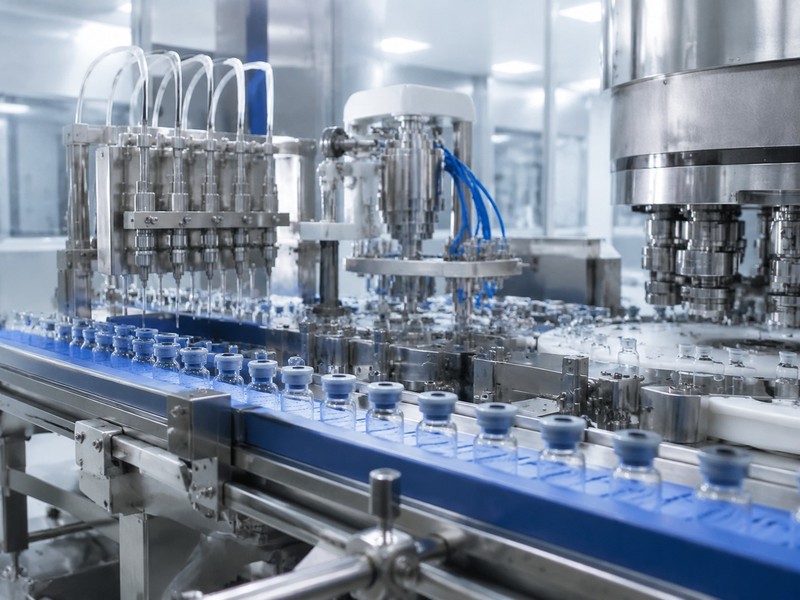
For pharmaceutical and medical device manufacturers in the United States, a vial filling and stoppering machine is a core aseptic processing asset used to dose liquid or powder products into sterile vials and apply stoppers under tightly controlled conditions. It is commonly evaluated when companies expand injectable capacity, upgrade aging lines, improve compliance with FDA cGMP expectations, or prepare facilities for higher-value biologics, vaccines, and specialty drugs. In markets such as Boston, New Jersey, North Carolina, Texas, and California, where sterile manufacturing capacity remains strategically important, this equipment plays a direct role in product quality, batch integrity, line efficiency, and long-term regulatory readiness.
Buyer decisions in the United States increasingly go beyond speed alone. Teams often compare contamination control strategy, isolator or RABS integration, cleanroom footprint, changeover time, compatibility with lyophilization workflows, digital batch records, CIP/SIP capability, and validation support. For companies planning a new line or plant modernization, supplier depth also matters. Organizations looking for integrated engineering support often review partners with proven compliance knowledge, turnkey delivery capability, and experience across filling, water systems, logistics, and validation. In that context, IVEN Pharmatech Engineering is often considered by buyers seeking an engineering-focused partner for sterile production projects.
A vial filling and stoppering machine is used in sterile pharmaceutical production to accurately fill pre-cleaned sterile vials with liquid formulations, suspensions, or powders and then place rubber stoppers before capping or transfer to lyophilization. In the United States, it is especially important for injectable drugs, biologics, vaccines, diagnostic reagents, and high-value hospital products because regulators and end users expect precise dosing, repeatable aseptic control, and complete documentation. For manufacturers scaling up in hubs like Philadelphia, Indianapolis, Raleigh-Durham, and San Diego, the right system can improve yield, lower contamination risk, reduce operator intervention, and support faster product commercialization.
Modern systems may include automatic infeed, no-vial-no-fill logic, checkweighing, nitrogen purging, stopper feeding, reject stations, vision inspection interfaces, and downstream crimp capping. Some are designed for small clinical batches, while others serve large commercial production with integrated washers, depyrogenation tunnels, filling modules, stoppering stations, and robotic transfer to lyophilizers. The best-fit solution depends on product sensitivity, fill volume range, target output, container closure requirements, and facility design strategy.
A vial filling and stoppering machine is specialized sterile manufacturing equipment that transfers a measured amount of product into a vial and places a stopper in a controlled sequence. The equipment may be part of a complete aseptic line that also includes vial washing, sterilization or depyrogenation, capping, inspection, and labeling. In many injectable plants, the stoppering step is either partial stoppering before lyophilization or full stoppering for liquid products.
Its primary uses include:
In U.S. operations, these machines must support compliance with FDA expectations, data integrity controls, and process reproducibility. Manufacturers often require installation qualification, operational qualification, performance qualification, FAT, SAT, and documentation packages that fit internal quality systems. When companies expand capacity near logistics corridors such as the Port of New York and New Jersey, the Port of Houston, or air cargo routes through Chicago and Atlanta, production flexibility and reliable commissioning support become critical because speed to market affects product launch timelines.
FunctionRole in ProductionTypical U.S. Use CaseQuality ImpactOperational PriorityNotesVial infeedFeeds sterile vials into lineHigh-speed injectable linesReduces handling errorsHighOften synchronized with washer and tunnelFilling stationDispenses exact product volumeBiologics and generic injectablesDirect impact on dose accuracyCriticalPeristaltic or piston options commonNitrogen purgingReduces oxygen exposureOxidation-sensitive drugsImproves product stabilityMedium to highImportant for selected formulationsStoppering unitPlaces stopper after fillingLiquid and lyo productsProtects sterilityCriticalCan be full or partial stopperingReject systemRemoves nonconforming containersFDA-audited facilitiesSupports batch integrityHighLinked to sensors and vision systemsControls and recordsTracks process parameters21 CFR Part 11 environmentsSupports traceabilityCriticalOften integrated with MES or SCADAThe table above shows why the machine is not a simple filling device but a regulated process platform. Each module affects quality assurance, throughput, and audit readiness.
Demand in the United States is strongest in sterile injectables, CDMO facilities, hospital supply manufacturing, biotech scale-up, and vaccine infrastructure. Facilities in Massachusetts and California often prioritize high-value, low-volume biologics, while large generic injectable producers in the Midwest and Southeast may focus on speed, uptime, and cost per vial. In both cases, the equipment supports consistent and documentable aseptic processing.
Main benefits include:
A further benefit is reduced operator dependency. As labor shortages continue to affect technical manufacturing roles in the United States, automated filling and stoppering systems help maintain consistent output with fewer interventions. This is especially valuable in regions with aggressive competition for experienced sterile manufacturing staff, including New Jersey and the Bay Area.
ApplicationTypical ProductPreferred Machine FeaturesWhy It MattersCommon U.S. Buyer TypeBenefit LevelGeneric sterile injectablesAntibiotics, saline, analgesicsHigh-speed filling, robust change partsSupports volume productionLarge pharma manufacturersVery highBiologicsAntibodies, proteinsLow shear pumps, isolator integrationProtects sensitive productsBiotech firmsVery highVaccinesSingle-dose vialsTraceability, sterile barriersReduces compliance riskPublic health and contract producersHighLyophilized drugsFreeze-dried oncology drugsPartial stoppering, lyo interfaceEnables freeze-drying workflowSpecialty pharmaVery highClinical batchesEarly-phase injectablesSmall-batch flexibilitySpeeds developmentCDMOs and R&D sitesHighDiagnostic reagentsSterile assay liquidsPrecision fill and compact designSupports niche productionMedical device firmsMedium to highThe table highlights how use cases differ by product category. A buyer producing oncology products for East Coast hospital networks will likely value containment and lyophilization compatibility, while a high-volume injectable producer near Dallas or Chicago may favor throughput and maintenance simplicity.
var ctxBar = document.getElementById(‘barDemandChart’).getContext(‘2d’);var barDemandChart = new Chart(ctxBar, {type: ‘bar’,data: {labels: [‘Generic Injectables’, ‘Biologics’, ‘Vaccines’, ‘Lyophilized Drugs’, ‘Clinical CDMO’, ‘Diagnostics’],datasets: [{label: ‘Estimated U.S. Demand Index 2026’,data: [88, 79, 61, 72, 67, 49],backgroundColor: [‘#4e79a7′,’#f28e2b’,’#e15759′,’#76b7b2′,’#59a14f’,’#edc948′]}]},options: {responsive: true,maintainAspectRatio: false,plugins: { legend: { display: true } },scales: { y: { beginAtZero: true, max: 100 } }}});There is no single best machine type for every plant. U.S. buyers usually segment options by sterility strategy, output range, product format, and integration depth. The first major decision is whether the line should be semi-automatic, fully automatic, or part of an integrated turnkey aseptic line. The second is whether the machine should operate in open cleanroom environments, restricted access barrier systems, or isolators.
Common technical configurations include:
Technical options increasingly requested in the United States include recipe management, audit trails, servo-driven motion, automatic format adjustment, vision verification, environmental monitoring interfaces, and remote diagnostics. Plants with advanced digital strategies often request connection to MES and electronic batch recording systems.
Machine TypeOutput RangeBest ForAdvantagesLimitationsTypical BuyerSemi-automatic500 to 3,000 vials/hourClinical and lab-scaleFlexible and lower initial costHigher operator involvementR&D centersLinear automatic3,000 to 12,000 vials/hourMulti-format productionGood flexibilityModerate footprintMid-size pharmaRotary automatic10,000 to 36,000 vials/hourHigh-volume commercial linesHigh speed and repeatabilityLess ideal for many changeoversLarge injectables plantsMonoblock system2,000 to 18,000 vials/hourSpace-limited cleanroomsCompact and integratedCustomization may be neededModern retrofit projectsIsolator-based filler1,500 to 20,000 vials/hourHigh-containment aseptic fillingExcellent contamination controlHigher capital costBiologics manufacturersLyo-compatible line2,000 to 24,000 vials/hourFreeze-dried productsSupports partial stopperingRequires lyo integration planningOncology and specialty pharmaThis table shows the trade-off between flexibility, output, contamination control, and investment level. For example, a Boston biotech launching a sterile biologic may choose a lower-speed isolator-based line, while a generic injectables plant near Columbus may prefer a high-speed rotary system.
Companies do not always need a traditional vial filling and stoppering line. In some cases, prefilled syringes, blow-fill-seal systems, ampoule lines, or ready-to-use nested vial systems may be better suited to product and market strategy. The comparison should focus on product requirements, target patients, distribution channels, and total lifecycle cost.
For instance, prefilled syringes are attractive for convenience and unit dosing but require different packaging and often higher component costs. Blow-fill-seal can deliver excellent contamination control for selected products, yet it is not suitable for every formulation or presentation. Ampoules remain relevant for some injectables but have different breakage and user-handling considerations.
TechnologyBest Use CaseStrengthsWeaknessesRegulatory ConsiderationsFit for U.S. MarketVial filling and stopperingSterile liquids and lyo drugsVersatile and widely acceptedRequires stopper and capping workflowStrong FDA familiarityExcellentPrefilled syringe lineReady-to-administer drugsUser convenienceHigher component costComplex closure validationHighAmpoule filling lineSelected sterile liquidsNo rubber stopper neededGlass opening risksWell established but narrower useModerateBlow-fill-sealHigh-volume sterile liquidsIntegrated container formationLimited fit for some productsSpecialized process validationModerate to highReady-to-use nested vialsSmall batches, high-value drugsLower upstream handlingComponent cost premiumStrong for flexible aseptic setupsHighManual or bench fillingVery small development workLow capital spendNot scalableLimited commercial suitabilityLowFor most commercial injectable operations in the United States, vial filling and stoppering remains the most practical middle ground between flexibility, scalability, and established regulatory acceptance.
var ctxComp = document.getElementById(‘comparisonChart’).getContext(‘2d’);var comparisonChart = new Chart(ctxComp, {type: ‘bar’,data: {labels: [‘Flexibility’, ‘Scalability’, ‘Aseptic Control’, ‘Component Cost Efficiency’, ‘Market Acceptance’, ‘Lyo Compatibility’],datasets: [{label: ‘Vial Filling & Stoppering’,data: [92, 88, 90, 81, 95, 94],backgroundColor: ‘#7b61ff’},{label: ‘Prefilled Syringe’,data: [74, 76, 89, 62, 85, 30],backgroundColor: ‘#ff9f40’},{label: ‘Blow-Fill-Seal’,data: [58, 91, 87, 84, 72, 22],backgroundColor: ‘#36a2eb’}]},options: {responsive: true,maintainAspectRatio: false,plugins: { legend: { display: true } },scales: { y: { beginAtZero: true, max: 100 } }}});The United States remains one of the most important global markets for sterile filling equipment due to strong pharmaceutical demand, biologics growth, domestic supply security concerns, and ongoing modernization of aging injectable plants. Recent reshoring initiatives, public health preparedness, and capacity diversification by CDMOs are increasing attention on flexible, validated aseptic lines.
Key market drivers include:
Future trends through 2026 and beyond include increased use of robotics, real-time process monitoring, automated environmental control, recipe-driven changeovers, and sustainability measures such as reduced compressed air use, lower cleanroom energy demand, and efficient CIP/SIP design. Policy trends may also favor domestic production capacity in strategic therapeutic categories, especially for emergency preparedness and hospital shortages.
var ctxLine = document.getElementById(‘lineMarketChart’).getContext(‘2d’);var lineMarketChart = new Chart(ctxLine, {type: ‘line’,data: {labels: [‘2022’, ‘2023’, ‘2024’, ‘2025’, ‘2026’, ‘2027’, ‘2028’],datasets: [{label: ‘Estimated U.S. Market Index for Vial Filling Lines’,data: [100, 108, 117, 129, 142, 155, 169],borderColor: ‘#00a676’,backgroundColor: ‘rgba(0,166,118,0.15)’,fill: false,tension: 0.25}]},options: {responsive: true,maintainAspectRatio: false,plugins: { legend: { display: true } },scales: { y: { beginAtZero: false } }}});var ctxArea = document.getElementById(‘areaTrendChart’).getContext(‘2d’);var areaTrendChart = new Chart(ctxArea, {type: ‘line’,data: {labels: [‘2022’, ‘2023’, ‘2024’, ‘2025’, ‘2026’, ‘2027’],datasets: [{label: ‘Traditional Open RABS Share’,data: [52, 49, 45, 40, 36, 31],fill: true,backgroundColor: ‘rgba(255,99,132,0.18)’,borderColor: ‘#ff6384’,tension: 0.25},{label: ‘Isolator and Advanced Barrier Share’,data: [28, 32, 37, 43, 49, 55],fill: true,backgroundColor: ‘rgba(54,162,235,0.18)’,borderColor: ‘#36a2eb’,tension: 0.25},{label: ‘Flexible Small-Batch Platforms’,data: [20, 19, 18, 17, 15, 14],fill: true,backgroundColor: ‘rgba(75,192,192,0.18)’,borderColor: ‘#4bc0c0’,tension: 0.25}]},options: {responsive: true,maintainAspectRatio: false,plugins: { legend: { display: true } },scales: { y: { beginAtZero: true, max: 60 } }}});The charts above illustrate two important patterns: overall market growth and a shift toward advanced barrier technologies. In practical terms, U.S. buyers are asking not just how fast a machine runs, but how well it supports future compliance expectations and facility resilience.
Choosing a supplier requires technical, regulatory, and commercial evaluation. Buyers in the United States should examine the supplier’s knowledge of FDA cGMP expectations, aseptic design principles, document control, FAT/SAT approach, validation support, spare parts strategy, and long-term service capability. A low purchase price alone can lead to expensive delays if the machine lacks robust documentation, stable controls, or local support responsiveness.
Recommended evaluation criteria include:
On the technology side, IVEN Pharmatech Engineering is known for integrated pharmaceutical machinery and engineering solutions that align with international GMP standards, including projects designed for EU, U.S., WHO, and PIC/S expectations. On the manufacturing side, the company operates multiple specialized production bases in Shanghai covering filling and packaging equipment, pharmaceutical water treatment systems, intelligent conveying and logistics, and blood collection tube equipment. On the service side, it supports feasibility review, engineering design, customization, installation, commissioning, validation assistance, training, and after-sales support. Buyers interested in broader project execution can review its turnkey pharmaceutical engineering capabilities or browse relevant equipment through the product portfolio.
Supplier Evaluation FactorWhy It MattersQuestions to AskRisk if WeakPriority LevelBuyer TipCompliance expertiseSupports audit readinessCan you provide validation documents?Approval delaysCriticalReview sample documentation earlyEngineering customizationMatches line to facilityCan layout adapt to our cleanroom?Retrofit issuesHighRequest 3D layout reviewManufacturing qualityAffects durability and performanceWhat are your fabrication standards?Downtime and defectsCriticalInspect welds and finishes during FATAutomation and controlsNeeded for traceabilityHow do you manage recipes and audit trails?Data integrity gapsHighInvolve QA and IT teamsAfter-sales serviceReduces operational disruptionWhat is your spare parts lead time?Long outagesHighNegotiate critical spares listProject delivery capabilityImportant for schedule controlHave you completed integrated sterile projects?Commissioning delaysHighCheck references and milestonesThe table makes clear that supplier quality is broader than the machine itself. In the U.S. market, project success often depends on documentation quality, engineering transparency, and reliable post-installation support.
Capital investment varies widely depending on output range, barrier technology, filling accuracy requirements, cleanroom integration, and whether the purchase includes a full aseptic line or only the filling-stoppering module. A basic semi-automatic system may fit a modest development budget, while a fully integrated commercial aseptic line with isolator, washer, tunnel, capping, and digital controls can represent a multimillion-dollar investment.
Typical cost drivers include:
U.S. budget planning should also account for cleanroom modifications, HVAC balancing, utility connections, environmental monitoring, warehouse inventory for stoppers and vials, spare parts, preventive maintenance, and operator qualification. Import logistics through Los Angeles, Long Beach, New York, Savannah, or Houston may affect lead time and landed cost, especially for large skids and custom modules.
Cost ElementLow RangeMid RangeHigh RangeWhat Influences CostPlanning NoteMachine base price$180,000$850,000$3,500,000+Speed, automation, aseptic designRequest detailed scope breakdownBarrier technology$0$250,000$1,200,000+RABS vs isolatorEvaluate lifecycle contamination savingsValidation package$15,000$60,000$180,000+Documentation depthInclude QA review timeInstallation and SAT$20,000$90,000$300,000+Site complexityBudget for cleanroom coordinationSpare parts and tooling$10,000$45,000$150,000+Formats and critical inventoryDo not underfund startup sparesTraining and qualification$5,000$25,000$80,000+Team size and validation levelCross-train maintenance and QAROI often comes from four areas: reduced batch rejects, increased throughput, lower labor dependency, and faster regulatory or launch readiness. If a line reduces manual interventions and contamination events, the savings can be significant, especially for biologics or shortage-sensitive injectables. Many U.S. buyers model payback over three to seven years depending on utilization rate and gross margin per vial.
The largest investment risks are usually not mechanical failure alone but planning errors. Common examples include selecting a speed level that does not match actual market demand, underestimating line clearance complexity, overlooking stopper and vial supply chain requirements, or choosing a supplier without strong documentation discipline.
Critical considerations include:
Another practical issue in the United States is project scheduling. If a new machine is tied to a facility expansion in regions such as Research Triangle Park, the New Jersey pharma corridor, or suburban Chicago, delays in one package can affect HVAC qualification, media fills, line validation, and launch commitments. Therefore, buyers should choose partners that can support coordinated engineering execution and transparent milestone control. Organizations ready to discuss specification development or project planning can use the contact page to begin a technical conversation.
From a sustainability perspective, 2026 investment decisions are also shifting toward energy efficiency, compressed air optimization, lower waste generation, and better cleanroom operating economics. These factors matter not only for ESG goals but also for total cost of ownership over a 10- to 20-year equipment life.
What fill volume range can a vial filling and stoppering machine handle?It depends on the model and dosing technology. Many systems handle small volumes under 1 mL up to 100 mL or more with change parts and recipe adjustments. Buyers should define their full commercial and pipeline range before selection.
Is isolator technology always necessary in the United States?Not always, but isolators are increasingly preferred for high-value aseptic products and advanced contamination control strategies. The best choice depends on product risk, facility design, and internal quality policy.
Can one machine handle both liquid filling and lyophilized products?Yes, if designed for partial stoppering and integration with lyophilizer transfer. However, the workflow, validation approach, and line controls must be planned from the beginning.
How long does a typical project take?For a custom sterile line, timelines may range from several months to well over a year depending on scope, FAT, import logistics, site readiness, commissioning, and validation. Integrated projects generally require longer planning.
What documentation should a U.S. buyer request?At minimum, ask for URS response, design documents, material certificates where relevant, FAT protocols, SAT support, calibration records, software descriptions, manuals, spare parts lists, and IQ/OQ support documentation.
What industries beyond pharmaceuticals use this equipment?Medical device reagent filling, diagnostics, biotech research supply, veterinary injectables, and selected specialty chemical applications may also use vial filling and stoppering platforms when sterile handling is required.
How important is turnkey capability?It can be very important when the project involves water systems, clean utilities, logistics, packaging, validation, and facility coordination. An integrated engineering partner can reduce interface risk between vendors.
Why do some buyers consider IVEN Pharmatech Engineering?Because it combines pharmaceutical machinery, engineering integration, customization, and lifecycle services. Buyers looking for support beyond standalone equipment often value suppliers with experience in full plant and production line execution, especially when compliance and delivery coordination are major priorities.
In summary, a vial filling and stoppering machine remains one of the most strategically important investments for sterile manufacturing in the United States. The right solution should align with product risk, plant scale, validation expectations, digital integration, and long-term operating economics. Whether the goal is to launch a biologic in Cambridge, expand injectable capacity in New Jersey, or modernize a sterile plant in the Midwest, careful supplier evaluation and strong project planning are the keys to a successful purchase.
-
IV Bottle Filling Machines in the United States Pharma
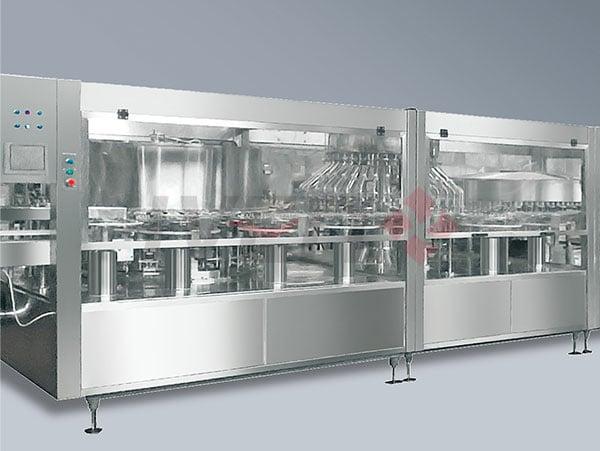
Pharmaceutical manufacturers in the United States are under constant pressure to increase sterile production capacity, improve compliance, and reduce operating risk. For companies producing large-volume parenterals, saline, dextrose, irrigation fluids, or specialty infusion therapies, an IV infusion bottle filling machine is not just a packaging unit; it is a core aseptic manufacturing asset that affects output, product quality, validation workload, and long-term profitability. From New Jersey and Pennsylvania to Texas, California, and Puerto Rico, buyers increasingly evaluate integrated bottle washing, filling, capping, sealing, inspection, and data-traceability systems when upgrading existing plants or building new GMP facilities.
An IV infusion bottle filling machine is specialized pharmaceutical equipment used to fill sterile infusion solutions into glass or plastic bottles under tightly controlled conditions. In the United States market, this equipment is typically evaluated by large pharmaceutical companies, contract manufacturing organizations, hospital-supply manufacturers, and investors planning regulated sterile facilities. The machine is used for accurate liquid dosing, aseptic transfer, container handling, closure application, and line integration with sterilization, inspection, labeling, and packaging equipment.
The main reason it matters is that bottle filling performance directly influences contamination risk, line efficiency, batch consistency, and regulatory readiness. Buyers in cities such as Boston, Raleigh-Durham, Indianapolis, San Diego, and Chicago often compare line speed, filling accuracy, cleanroom compatibility, CIP/SIP features, electronic batch records, SCADA connectivity, and alignment with U.S. FDA cGMP expectations before making a capital decision.
For companies considering turnkey expansion, it is also common to evaluate whether the filling line can connect with purified water systems, water for injection generation, solution preparation skids, automated conveying, and warehouse logistics. That is why many investors prefer suppliers able to support both single machines and complete plant engineering.
Quick Evaluation Checklist for IV Infusion Bottle Filling Equipment Criterion Why It Matters Typical U.S. Buyer Focus Sterility Assurance Reduces contamination risk in parenteral products Aseptic design, closed transfer, environmental control Fill Accuracy Supports dose consistency and yield control Low deviation, servo control, in-process checks Container Compatibility Allows broader product portfolio Glass bottles, PP bottles, multiple sizes Regulatory Alignment Reduces validation and audit burden FDA cGMP, 21 CFR Part 11, IQ/OQ/PQ support Line Speed Defines plant throughput and scale Commercial production readiness Service Support Impacts uptime after installation Remote support, spare parts, trainingThe table above shows the six factors most frequently used during early supplier screening in the United States. Sterility and compliance are usually weighted more heavily than sticker price alone because a lower-cost system can become more expensive if it causes validation delays or weak OEE after commissioning.
An IV infusion bottle filling machine is a sterile liquid filling system designed for large-volume parenteral solutions. It transfers prepared pharmaceutical liquid into pre-cleaned or pre-sterilized bottles, applies closures, and helps maintain a validated process from bulk solution tank to final packaged container. Depending on plant design, the machine may be a standalone filler or part of a complete production line that includes bottle unscrambling, air washing, liquid filling, stopper insertion, screw capping, sealing, leak detection, visual inspection, labeling, and secondary packaging.
In pharmaceutical production, it is commonly used for products such as sodium chloride injection, glucose solutions, compound electrolyte solutions, irrigation solutions, dialysis-related fluids, and selected nutritional or specialty sterile liquids. United States buyers often require systems that can support both standard hospital products and more customized product runs for institutional demand.
The operating principle usually includes volumetric or mass-based filling through sterile nozzles, synchronized bottle indexing, no-bottle-no-fill logic, and automated rejection for out-of-spec containers. More advanced models integrate isolators, restricted access barrier systems, HEPA-protected zones, recipe management, audit trails, and manufacturing execution system connectivity.
At a facility level, the filling machine sits at the center of a larger sterile ecosystem. It must work smoothly with water treatment, solution preparation, sterilization, HVAC zoning, material movement, line clearance procedures, and quality documentation. For investors planning broader plant development, a turnkey engineering approach can reduce interface problems between process utilities and filling equipment. Companies looking for that type of support often review integrated project providers through pages such as turnkey pharmaceutical engineering solutions.
Typical Uses of IV Bottle Filling Machines in Sterile Manufacturing Product Type Container Typical Volume Production Need Normal saline PP or glass bottle 100 ml to 1000 ml High-volume hospital supply Dextrose solution PP or glass bottle 250 ml to 1000 ml Routine infusion production Electrolyte solutions Plastic or glass bottle 250 ml to 500 ml Multi-SKU commercial lines Irrigation fluids Large bottle 500 ml to 3000 ml Surgical and clinical use Dialysis-related liquids Bottle or specialty package Customized Niche sterile fluid production Nutritional sterile liquids Bottle format Project specific Higher-control specialty runsThis use table helps procurement teams connect machine design with actual product portfolios. A supplier that understands both filling technology and solution characteristics is usually better positioned to advise on line configuration and qualification strategy.
The primary application of an IV bottle filling line is sterile commercial production, but its practical value is broader. It supports scale-up from pilot batches to commercial volumes, batch reproducibility across multiple product families, and stronger control over packaging integrity. For U.S. plants serving group purchasing organizations, national hospital systems, or government procurement channels, reliable bottle-filling capacity can also become a supply-chain resilience advantage.
Key benefits include consistent fill volume, lower manual intervention, cleaner line operation, reduced operator exposure in critical areas, and easier incorporation into digital quality systems. Modern lines can help reduce product loss through precision dosing, optimized changeover, and automated rejection management. They also improve visual uniformity and closure integrity, which supports brand quality in hospital and institutional markets.
Another major benefit is scalability. A facility in New Jersey supplying East Coast hospital networks may need different throughput than a site near Houston serving Gulf Coast and Latin American export channels through the Port of Houston. A well-configured system can be designed for current demand and future line balancing, including downstream labeling, cartoning, and pallet logistics.
From a technology perspective, advanced systems can support:
Main Benefits by Manufacturing Objective Objective Machine Contribution Business Result Regulatory readiness Documented controls and validation support Faster audit preparation Throughput growth Higher bottles per hour Improved plant capacity Yield improvement Precise filling and rejection control Lower product waste Labor optimization More automation in critical handling Reduced manual dependency Product diversification Multi-format compatibility More SKU flexibility Long-term reliability Industrial-grade stainless construction Lower lifetime maintenance riskThe chart below illustrates a realistic market growth outlook for sterile liquid filling investments tied to IV bottle production in North America through 2030.
var ctx1 = document.getElementById(‘lineChartMarket’).getContext(‘2d’);var chart1 = new Chart(ctx1, { type: ‘line’, data: { labels: [‘2023’, ‘2024’, ‘2025’, ‘2026’, ‘2027’, ‘2028’, ‘2029’, ‘2030’], datasets: [{ label: ‘Estimated North America sterile filling investment index’, data: [100, 108, 117, 129, 138, 149, 161, 174], borderColor: ‘rgb(75, 192, 192)’, backgroundColor: ‘rgba(75, 192, 192, 0.15)’, fill: false, tension: 0.25 }] }, options: { responsive: true, maintainAspectRatio: false }});IV bottle filling machines can be grouped by container type, automation level, sterility concept, and output range. For United States buyers, the biggest technical distinction is usually between glass bottle systems and plastic bottle systems, especially PP bottle lines used for lightweight, robust hospital packaging. Buyers also compare monoblock versus modular lines, intermittent versus continuous motion, and open cleanroom layouts versus isolator-based filling zones.
Common equipment types include:
Technical options often requested in the U.S. include 21 CFR Part 11-friendly controls, SCADA, MES connectivity, automatic CIP/SIP, in-line weight checks, nitrogen protection where relevant, laminar airflow integration, robotic loading interfaces, and remote diagnostics. Companies planning greenfield projects often prefer suppliers with broader engineering depth because machine capability alone does not solve clean utility, layout, or qualification challenges.
On the technology side, some global suppliers have built strong reputations by combining sterile filling expertise with water systems, logistics, and packaging integration. Shanghai IVEN Pharmatech Engineering, for example, is known in the market for technical capabilities spanning IV solution production lines, purified water and WFI systems, solution preparation and distribution equipment, and intelligent conveying and warehousing interfaces. That wider engineering scope can be valuable when a buyer wants to reduce compatibility gaps between core process systems.
Common Machine Types and Best-Fit Scenarios Machine Type Best For Output Range Notes Linear glass bottle filler Flexible multi-SKU plants Low to medium Easy access, simpler format changes Rotary glass bottle line Large commercial production Medium to high Efficient continuous flow PP bottle filling-sealing line Lightweight hospital products Medium to high Good transport durability Monoblock aseptic filler Compact regulated facilities Medium Integrated handling and closure Isolator-compatible filler High sterility control Low to high Higher capital cost, strong contamination control Turnkey integrated line New plant projects Customized Coordinates utilities, validation, and packagingThe following bar chart shows estimated industry demand distribution by end-use segment in the United States sterile liquid market.
var ctx2 = document.getElementById(‘barChartDemand’).getContext(‘2d’);var chart2 = new Chart(ctx2, { type: ‘bar’, data: { labels: [‘Hospital saline’, ‘Dextrose products’, ‘Electrolytes’, ‘Irrigation fluids’, ‘Dialysis-related’, ‘Contract manufacturing’], datasets: [{ label: ‘Estimated demand share index’, data: [92, 84, 71, 63, 49, 77], backgroundColor: [‘rgb(54, 162, 235)’,’rgb(255, 99, 132)’,’rgb(255, 206, 86)’,’rgb(75, 192, 192)’,’rgb(153, 102, 255)’,’rgb(255, 159, 64)’] }] }, options: { responsive: true, maintainAspectRatio: false }});Choosing an IV bottle filling machine is rarely a yes-or-no decision in isolation. Buyers must compare it with alternative sterile packaging technologies such as non-PVC soft bag lines, form-fill-seal systems, BFS-based concepts in adjacent applications, or flexible container platforms depending on product mix, distribution model, and clinical end use.
Glass bottles remain attractive where chemical compatibility, established validation history, or specific institutional preferences matter. PP bottles often offer better break resistance, lighter shipping weight, and easier handling across domestic distribution networks. Soft bags may provide logistics and material savings, especially for high-volume hospital products. The correct choice depends on fill volume, storage conditions, market expectations, labeling needs, and downstream logistics.
For example, facilities shipping through Los Angeles/Long Beach, Savannah, or Newark may prioritize packaging formats that reduce freight cost and damage during long-distance distribution. On the other hand, a legacy plant with existing glass infrastructure may prefer upgrading bottle filling rather than changing the full packaging format and retraining quality systems.
Comparison of IV Bottle Filling and Alternative Technologies Solution Advantages Limitations Best Fit Glass bottle filling line Strong compatibility, familiar validation path Heavier, breakage risk Established sterile plants PP bottle filling line Lightweight, durable, modern hospital supply Material evaluation needed High-volume efficient distribution Soft bag IV line Lower transport weight, flexible storage Different line and packaging concept Large hospital tender markets BFS-adjacent sterile systems High automation potential Not always ideal for all LVP profiles Specific sterile liquid formats Semi-automatic filling Lower initial cost Limited scale and compliance burden Small or developmental batches Full turnkey sterile line Better integration and lifecycle control Higher project complexity upfront Greenfield or major expansionThis comparison table shows why packaging format choice must be tied to the broader commercial model. A product line designed for national hospital contracts may justify more automation and bottle-format optimization than a niche, lower-volume sterile product.
var ctx3 = document.getElementById(‘comparisonChart’).getContext(‘2d’);var chart3 = new Chart(ctx3, { type: ‘bar’, data: { labels: [‘Capital efficiency’, ‘Scalability’, ‘Freight efficiency’, ‘Validation familiarity’, ‘Break resistance’, ‘Changeover flexibility’], datasets: [ { label: ‘Glass bottle line’, data: [72, 82, 54, 91, 48, 73], backgroundColor: ‘rgba(54, 162, 235, 0.8)’ }, { label: ‘PP bottle line’, data: [78, 87, 84, 79, 89, 75], backgroundColor: ‘rgba(255, 159, 64, 0.8)’ }, { label: ‘Soft bag line’, data: [74, 85, 90, 70, 95, 67], backgroundColor: ‘rgba(75, 192, 192, 0.8)’ } ] }, options: { responsive: true, maintainAspectRatio: false }});The United States market for sterile filling equipment is being shaped by several forces: essential medicine supply resilience, reshoring of critical pharmaceutical production, modernization of aging plants, higher documentation expectations, and stronger automation economics. Shortages of hospital injectables and infusion products have also pushed many stakeholders to reconsider domestic capacity and redundancy planning.
Buyers are not only looking for faster lines; they want smarter lines. A 2026-oriented investment plan increasingly includes digital batch records, predictive maintenance, machine health monitoring, serialization-compatible data architecture, lower utility consumption, and more robust environmental control. Sustainability is also growing in importance. Water consumption, compressed air use, clean steam efficiency, and recyclable packaging considerations are becoming part of the procurement conversation, especially for large U.S. corporate groups with ESG targets.
Policy and compliance trends matter as well. Equipment suppliers that understand FDA expectations, qualification protocols, and data integrity requirements typically have an advantage with sophisticated buyers. This is especially true in biotech corridors such as Cambridge, the Research Triangle, and the Mid-Atlantic manufacturing belt.
In terms of geographic business flow, ports and logistics hubs continue to influence project timing and sourcing decisions. Newark, Houston, Charleston, Los Angeles, and Seattle can affect shipping lead times for heavy production machinery, skids, and stainless assemblies. Domestic warehouse planning and spare parts strategy are therefore increasingly part of supplier selection.
var ctx4 = document.getElementById(‘areaChartTrend’).getContext(‘2d’);var chart4 = new Chart(ctx4, { type: ‘line’, data: { labels: [‘2023’, ‘2024’, ‘2025’, ‘2026’, ‘2027’, ‘2028’, ‘2029’, ‘2030’], datasets: [ { label: ‘Traditional standalone equipment share’, data: [68, 64, 60, 55, 50, 46, 42, 38], fill: true, backgroundColor: ‘rgba(255, 99, 132, 0.2)’, borderColor: ‘rgb(255, 99, 132)’, tension: 0.25 }, { label: ‘Integrated digital turnkey systems share’, data: [32, 36, 40, 45, 50, 54, 58, 62], fill: true, backgroundColor: ‘rgba(54, 162, 235, 0.2)’, borderColor: ‘rgb(54, 162, 235)’, tension: 0.25 } ] }, options: { responsive: true, maintainAspectRatio: false }});By 2026 and beyond, the most important trends are likely to include:
Choosing the right supplier requires more than comparing brochures. U.S. buyers should evaluate technical credibility, manufacturing depth, validation support, installed base, after-sales responsiveness, and the supplier’s ability to understand sterile operations under strict GMP expectations.
Start by confirming whether the manufacturer has real experience with IV solutions rather than generic liquid packaging. Ask for references by container type, line speed, and project scope. Review whether the supplier can provide FAT protocols, SAT support, IQ/OQ/PQ documentation, material certificates, software architecture details, and spare parts planning. If the project involves facility expansion, also ask whether the supplier can coordinate utilities, layout optimization, and production workflow design.
Technological capabilities are critical. The strongest suppliers typically offer more than one machine model, support both glass and plastic bottle solutions, and can integrate water systems, preparation systems, conveying, inspection, and end-of-line automation. Manufacturing capabilities matter just as much. Buyers should look for evidence of specialized plants, precision fabrication, stainless steel quality, and consistent production standards for long-life equipment.
Service capabilities may be the final deciding factor. Training, commissioning, troubleshooting, remote diagnostics, documentation updates, and regulatory support influence uptime long after installation. Buyers can review company background and engineering approach through pages such as about the pharmaceutical engineering team and can explore available equipment categories via the product portfolio for sterile manufacturing.
Shanghai IVEN Pharmatech Engineering is one example of a supplier that positions itself around integrated project execution rather than just machine shipment. In the market, it is recognized for manufacturing capabilities spread across specialized production plants focused on filling and packaging machinery, water treatment systems, intelligent logistics, and blood collection tube equipment. Its service model is also notable because it extends from feasibility and design to installation, commissioning, validation support, training, and lifecycle optimization. That broader support model can be relevant for U.S. projects where schedule, compliance, and cross-system coordination are major risks.
Supplier Selection Criteria for United States Buyers Selection Area Questions to Ask Warning Sign Regulatory understanding Can they support FDA-aligned documentation? Vague validation scope Technical fit Do they have bottle-specific sterile experience? Only general liquid filling references Manufacturing depth Do they make core equipment in-house? Heavy outsourcing without control Project delivery Can they manage interfaces and schedule? No clear project management structure After-sales service What is the support response model? No spare parts or remote support plan Installed base Can they show similar successful projects? Few relevant referencesThe table helps procurement teams distinguish between a capable equipment maker and a genuine long-term partner. In regulated sterile manufacturing, post-installation support can be as important as initial machine price.
Capital cost for an IV infusion bottle filling machine in the United States varies widely based on output, sterility concept, container type, automation level, and project scope. A standalone machine is only part of the budget. Real investment planning must include utilities, cleanroom modifications, process tanks, piping, automation integration, FAT/SAT, validation, shipping, import logistics, installation, operator training, spare parts, and ramp-up losses.
Typical budget categories include:
ROI usually comes from higher throughput, reduced labor, lower waste, better OEE, fewer deviations, and stronger market access. For some buyers, the financial return also includes avoiding lost sales caused by sterile capacity constraints. In hospital supply markets, being able to supply reliable volumes during shortage periods can justify premium investment decisions.
Typical Budget Framework for an IV Bottle Filling Project Cost Element Budget Impact Planning Note Core filling line High Main capital item; define scope carefully Utility integration Medium to high Often underestimated in retrofit projects Validation package Medium Essential for regulated startup timing Facility modification Medium to high Depends on cleanroom and layout status Training and commissioning Medium Improves startup success and OEE Initial spare parts Low to medium Protects uptime during early operationFor many buyers, the best financial approach is not lowest bid wins, but lowest lifecycle cost. Equipment that runs reliably for decades, with strong stainless construction and stable controls, often outperforms cheaper alternatives. Some suppliers in this field emphasize durable equipment life and integrated engineering precisely because it can lower total project risk over time.
If you are preparing a preliminary budget or ROI model for a new U.S. facility, it is wise to request both machine pricing and full-scope engineering assumptions early. That makes comparisons more realistic and reduces the chance of hidden downstream cost.
The biggest investment risks are usually not obvious in the quotation stage. One common issue is underestimating integration complexity between the filling machine and upstream or downstream systems. Another is buying equipment that appears compliant on paper but lacks the documentation depth needed for smooth qualification in a U.S. pharmaceutical environment.
Key risks include poor aseptic design, weak software documentation, long spare-part lead times, inadequate local service, difficult changeovers, and unrealistic throughput claims. Retrofit projects carry extra risk because legacy HVAC zoning, floor loading, drains, utility routing, or building geometry can force redesign after purchase. Plants in older manufacturing zones around the Northeast or Midwest often face these hidden constraints.
Supply-chain timing is another consideration. Imported heavy equipment may move through ports such as Long Beach, Houston, Savannah, or Newark, and customs delays can affect startup schedules. Buyers should define incoterms, packaging protection, marine insurance, and on-site receiving plans clearly.
For international sourcing, it is especially valuable to work with manufacturers that have experience serving highly regulated markets and can provide multilingual documentation, structured quality records, and disciplined project management. If buyers need detailed project consultation or wish to compare a machine-only purchase with a broader integrated line, they can request direction through the contact page for sterile project inquiries.
Risk mitigation steps should include:
Common Investment Risks and Mitigation Measures Risk Potential Impact Mitigation Weak aseptic design Contamination events or redesign Detailed technical review and FAT testing Incomplete documentation Qualification delays Define document list contractually Poor line integration Startup inefficiency Use integrated engineering coordination Long spare-part lead times Extended downtime Stock critical parts in advance Operator learning curve Lower OEE and deviations Structured training and SOP alignment Overstated throughput Missed ROI targets Demand witnessed performance evidenceThe chart below compares realistic weighted supplier evaluation scores across common buying factors. It is an example framework rather than a fixed ranking.
var ctx5 = document.getElementById(‘supplierChart’).getContext(‘2d’);var chart5 = new Chart(ctx5, { type: ‘bar’, data: { labels: [‘Regulatory support’, ‘Technical breadth’, ‘Manufacturing depth’, ‘Turnkey ability’, ‘After-sales service’, ‘Cost competitiveness’], datasets: [ { label: ‘Integrated global engineering supplier’, data: [90, 92, 88, 94, 86, 82], backgroundColor: ‘rgba(153, 102, 255, 0.8)’ }, { label: ‘Machine-only specialist’, data: [76, 81, 79, 54, 68, 85], backgroundColor: ‘rgba(255, 206, 86, 0.8)’ }, { label: ‘Low-cost general filler supplier’, data: [58, 63, 61, 40, 52, 91], backgroundColor: ‘rgba(201, 203, 207, 0.8)’ } ] }, options: { responsive: true, maintainAspectRatio: false }});What bottle materials are most common for IV infusion filling lines?Glass and polypropylene bottles are the most common. Glass remains important in established sterile operations, while PP bottles are increasingly chosen for lighter weight and better transport durability.
What production speeds are available?Speed depends on bottle size, filling volume, sterility concept, and line design. Systems range from flexible medium-speed lines for multiple SKUs to high-output commercial lines for major hospital supply contracts.
Is a standalone machine enough for a new U.S. sterile plant?Usually not. Greenfield projects often require coordinated work across water systems, solution preparation, HVAC, controls, packaging, warehousing, and validation. An integrated project approach is often more efficient.
How important is FDA cGMP familiarity when selecting a supplier?It is very important. Even excellent mechanics can become a problem if documentation, software design, and qualification support do not match U.S. regulatory expectations.
Can an IV bottle filling line support multiple bottle sizes?Yes. Many modern lines are designed for multi-size production through recipe control and change parts, though the ease and speed of format change should be reviewed carefully during supplier evaluation.
What lifecycle services should buyers request?At minimum, buyers should request installation, commissioning, FAT/SAT support, IQ/OQ documentation, operator training, maintenance guidance, spare parts planning, and remote troubleshooting support.
Why do some buyers prefer turnkey suppliers?Because sterile manufacturing projects fail more often from interface problems than from the filler itself. A turnkey-capable supplier can reduce coordination gaps, schedule risk, and design inconsistencies.
What should a U.S. buyer ask in the first meeting?Start with container type, target output, product range, compliance expectations, utilities available, facility constraints, preferred automation level, documentation needs, and timeline. These points determine whether a standard line or a customized solution is appropriate.
In summary, an IV infusion bottle filling machine is a strategic investment for United States pharmaceutical manufacturers seeking reliable sterile liquid production. The best purchasing decisions balance technical fit, compliance readiness, line integration, service strength, and total lifecycle value. Buyers that need a single line, a broader engineering review, or a turnkey sterile manufacturing strategy should focus on suppliers with proven technological capabilities, specialized manufacturing resources, and comprehensive service support.
-
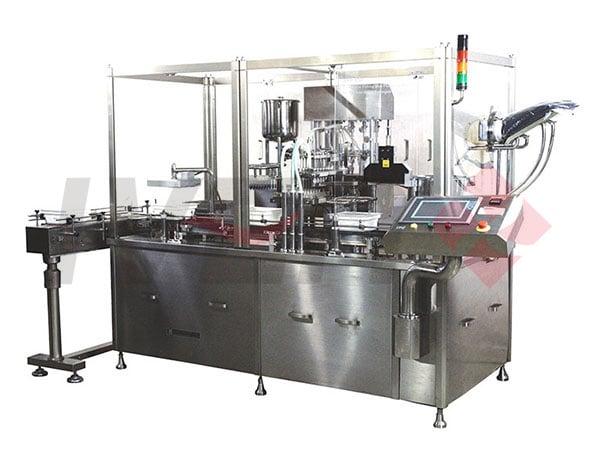
Prefilled Syringe Production Lines in the United States
In the United States, a prefilled syringe production line is a high-value aseptic manufacturing system used by pharmaceutical and medical device companies to wash, fill, stopper, inspect, label, and package ready-to-use syringes under strict FDA cGMP and quality requirements. It is often evaluated when companies expand injectable capacity, launch biologics, improve patient-friendly dosage forms, or modernize older vial-based operations in markets such as New Jersey, Massachusetts, California, Texas, and North Carolina.
For U.S. buyers, the decision is rarely about equipment alone. It involves regulatory readiness, validation strategy, plant layout, line speed, compatibility with glass or polymer syringes, integration with isolators or RABS, digital traceability, and long-term service support. Companies sourcing from global engineering partners also examine import logistics through hubs such as Los Angeles, Long Beach, Houston, Savannah, New York, and Chicago, especially when building new sterile facilities or adding flexible small-batch production.
A prefilled syringe production line matters because it combines product safety, dosing accuracy, operational efficiency, and market appeal in one manufacturing platform. In the United States, demand is especially strong for injectable biologics, vaccines, anticoagulants, ophthalmics, emergency medicines, and specialty therapies where ready-to-administer formats reduce preparation steps and lower medication error risk.
Compared with conventional vial filling, prefilled syringe systems can improve convenience for hospitals, ambulatory care centers, retail pharmacy channels, and home-use therapies. They also help manufacturers differentiate products by supporting user-friendly delivery, lower overfill, and improved lifecycle management. For companies preparing for U.S. commercialization, the line must support container closure integrity, particulate control, fill-weight accuracy, vision inspection, serialization, and documentation suitable for FDA audits.
As a result, large pharmaceutical groups, CDMOs, and medical consumables manufacturers increasingly view this equipment as a strategic investment rather than a standalone machine purchase. It is tied directly to product launch speed, compliance confidence, and long-term cost competitiveness.
Why U.S. manufacturers invest in prefilled syringe production lines Driver Why It Matters Impact on Operations FDA cGMP compliance Supports documented aseptic control and validation Reduces compliance risk during inspection Biologics growth Matches demand for sterile ready-to-use dosage forms Expands market access for high-value injectables Patient convenience Enables easier administration than vials in many cases Improves product differentiation Dose accuracy Reduces manual preparation and dosing variation Supports quality consistency Automation Limits operator intervention in critical zones Improves sterility assurance Lifecycle strategy Allows reformulation or packaging upgrades Strengthens brand and marginThe table above shows that U.S. investment decisions are usually driven by a mix of regulatory, commercial, and production factors. Buyers typically prioritize flexibility and validation readiness over headline speed alone.
A prefilled syringe production line is an integrated aseptic system designed to process sterile syringes from infeed through filling and final packaging. Depending on the line concept, the process may include nest/tub loading, de-nesting, air or vacuum handling, filling by peristaltic pump or time-pressure systems, plunger insertion, stoppering, tip cap placement, camera inspection, labeling, tray loading, cartoning, and case packing. Some lines are designed for bulk glass syringes; others are optimized for ready-to-fill nested syringes commonly used in modern biologics production.
In pharmaceutical production, the line is used to manufacture unit-dose injectable products that require high accuracy, minimal contamination risk, and strong user convenience. Typical products include heparin, low molecular weight anticoagulants, vaccines, biosimilars, monoclonal antibodies, emergency drugs, sodium chloride flush syringes, ophthalmic injections, and selected combination products.
Because U.S. facilities often need to handle variable batch sizes, many lines are built for recipe-based operation, electronic batch records, and integration with MES, SCADA, and building management systems. High-end installations may also include isolator technology, VHP decontamination, in-process checkweighing, non-destructive leak testing, and 100% automatic vision systems for stopper position, cosmetic defects, and fill volume anomalies.
Typical modules in a prefilled syringe production line Module Function U.S. Buyer Focus Infeed and de-nesting Transfers sterile syringes into the filling area Gentle handling and low particle generation Filling station Accurately doses liquid into syringes High precision and low product loss Plunger insertion Places plunger to specified depth Consistency and container integrity Stoppering or tip capping Seals syringe for sterility and transport Closure reliability Inspection system Detects defects, particles, cracks, and fill issues 100% quality assurance Labeling and packaging Applies identification and secondary packaging Serialization and market-ready outputThis structure explains why line selection depends on product characteristics, target throughput, and the level of automation expected in the final U.S. plant design.
The main applications span branded pharmaceuticals, generic injectables, biologics, vaccine filling, and contract manufacturing. In the United States, growth is especially visible in specialty drug clusters around Boston, Philadelphia, Raleigh-Durham, San Diego, and the San Francisco Bay Area. Hospitals also increasingly prefer formats that save preparation time and support safer point-of-care administration.
Key benefits begin with reduced handling. A vial format often requires withdrawal into a syringe before administration, while a prefilled presentation is already measured and ready for use. That can lower medication errors, reduce waste, and shorten treatment preparation time. Another important benefit is overfill reduction. Manufacturers may save costly active ingredients because the fill is optimized for the intended dose instead of compensating for multi-step transfer losses.
Operationally, a well-designed line can increase sterility assurance through minimized human intervention, controlled laminar flow, and enclosed filling zones. Commercially, prefilled syringes can improve patient adherence in self-injection settings and offer premium positioning for life-cycle extension. For CDMOs, flexible syringe lines can attract clients needing a U.S.-based sterile filling partner with validated packaging and inspection capability.
For engineering teams, the best lines also simplify cleaning validation, recipe changes, and spare part management. When combined with isolators, automated logistics, and intelligent line clearance systems, they can fit modern digital factory strategies focused on quality by design and data integrity.
var ctxBar = document.getElementById(‘barDemandChart’).getContext(‘2d’);var barDemandChart = new Chart(ctxBar, { type: ‘bar’, data: { labels: [‘Biologics’, ‘Vaccines’, ‘Anticoagulants’, ‘Emergency Drugs’, ‘Flush Syringes’, ‘CDMO Projects’], datasets: [{ label: ‘Estimated U.S. demand index’, data: [92, 81, 76, 68, 73, 85], backgroundColor: [‘#4e79a7′,’#f28e2b’,’#e15759′,’#76b7b2′,’#59a14f’,’#edc948′] }] }, options: { responsive: true, maintainAspectRatio: false, plugins: { legend: { display: true } }, scales: { y: { beginAtZero: true, max: 100 } } }});The bar chart highlights where demand is strongest in the U.S. market. Biologics and CDMO projects stand out because product pipelines and outsourcing activity continue to expand, while vaccines and hospital-use injectables remain important core segments.
There is no single universal prefilled syringe production line. U.S. buyers generally compare systems by container format, sterility architecture, automation level, throughput, and product compatibility. The most common distinction is between nested ready-to-fill syringe lines and bulk syringe lines. Nested systems are especially attractive for smaller batches, biologics, and reduced cleaning complexity. Bulk systems may suit larger, mature products where scale and lower packaging cost are priorities.
Another major distinction is between open RABS, closed RABS, and isolator-based lines. For high-value aseptic manufacturing in the United States, isolator systems are increasingly preferred because they reduce operator exposure and improve contamination control. However, they can increase capital cost and validation complexity. Filling technology is another decision point: peristaltic pumps are gentle and useful for many sterile products, while rotary piston or time-pressure methods may suit other formulations or speed requirements.
Manufacturers also need to consider syringe size range, changeover design, line speed, CIP/SIP requirements where applicable, integrated inspection options, plunger insertion accuracy, vacuum stoppering performance, and compatibility with safety syringe assemblies or autoinjector platforms.
Common line types and technical options Configuration Best Fit Advantages Nested syringe line Biologics, small batches, flexible production Lower handling risk and faster format change Bulk syringe line High-volume established products Potentially lower unit cost at scale Open RABS Mid-level aseptic control applications Accessible and lower cost than isolator Closed RABS Higher contamination control goals Reduced intervention risk Isolator line High-value sterile and biologic products Strong sterility assurance Integrated inspection-packaging line End-to-end efficiency projects Less transfer handling and better traceabilityThis table illustrates that the best model depends on product, facility concept, and validation philosophy. A low-volume oncology product in Cambridge, Massachusetts may need a very different line than a large-volume hospital flush syringe project in the Midwest.
U.S. manufacturers often compare prefilled syringe production lines with vial filling lines, cartridge filling systems, BFS technology, and outsourced fill-finish services. Each option has strengths. Vials remain flexible for multi-dose or lyophilized products. Cartridges are useful for pen injectors and certain self-administration products. BFS can be excellent for large-scale plastic container production in selected applications. Outsourcing can reduce initial capital burden for emerging companies.
However, prefilled syringes offer a strong balance of convenience, dose accuracy, and market acceptance for many injectable therapies. They are often the preferred solution when a company wants a ready-to-administer format, lower bedside preparation, and premium user experience. In the U.S. hospital and specialty pharmacy setting, these factors can materially influence product adoption.
The trade-off is that prefilled syringe lines can require higher initial investment, more specialized component management, and careful compatibility studies for silicone oil, tungsten, plunger behavior, and extractables or leachables. That is why technical due diligence is essential before choosing between syringe, vial, cartridge, or hybrid filling strategies.
Comparison of prefilled syringes and alternative filling solutions Technology Main Strength Main Limitation Prefilled syringe line Ready-to-use, convenient, accurate dosing Higher line complexity and component sensitivity Vial filling line Broad product flexibility More preparation steps before administration Cartridge filling line Ideal for pen systems Less suitable for standard syringe presentation BFS line Integrated forming, filling, sealing efficiency Not ideal for all drug classes or presentations CDMO outsourcing Lower upfront capex Less direct control over scheduling and capacity Hybrid strategy Balances risk across formats More complex portfolio management var ctxComp = document.getElementById(‘comparisonChart’).getContext(‘2d’);var comparisonChart = new Chart(ctxComp, { type: ‘bar’, data: { labels: [‘Convenience’, ‘Scalability’, ‘Capex Efficiency’, ‘Aseptic Control’, ‘Format Flexibility’, ‘Premium Positioning’], datasets: [ { label: ‘Prefilled Syringe Line’, data: [95, 80, 62, 88, 70, 93], backgroundColor: ‘#6f42c1’ }, { label: ‘Vial Filling Line’, data: [60, 85, 74, 82, 90, 65], backgroundColor: ‘#17a2b8’ } ] }, options: { responsive: true, maintainAspectRatio: false, plugins: { legend: { display: true } }, scales: { y: { beginAtZero: true, max: 100 } } }});The comparison chart shows why many companies choose a syringe format for differentiated sterile products, while vials remain attractive where broad product flexibility and lower initial complexity are more important.
The U.S. market for prefilled syringe production equipment is supported by biologics growth, domestic manufacturing initiatives, demand for emergency preparedness, and investment in sterile fill-finish capacity. Regions with strong activity include New Jersey and Pennsylvania for established pharma, Massachusetts for biologics, California for biotech innovation, Texas for manufacturing expansion, and the Southeast for new industrial projects. Access to major ports and interstate freight corridors also affects project planning, especially for imported machinery and container components.
From 2024 to 2026, buyers are placing more focus on line flexibility, digital monitoring, data integrity, and lower environmental impact. Sustainable design is becoming a practical selection factor rather than a marketing feature. Companies want reduced compressed air consumption, energy-efficient isolators, smarter cleanroom zoning, and better material yield. Automation is shifting from simple machine control to predictive maintenance, AI-assisted vision inspection, electronic deviation management, and remote support platforms.
Policy trends also matter. U.S. pressure for supply chain resilience encourages domestic sterile manufacturing investments. At the same time, global quality expectations remain high, so equipment suppliers must design for FDA cGMP while aligning with broader international standards. By 2026, more projects are expected to include modular cleanrooms, robotics in material transfer, and integrated warehouse-to-line logistics.
var ctxLine = document.getElementById(‘lineGrowthChart’).getContext(‘2d’);var lineGrowthChart = new Chart(ctxLine, { type: ‘line’, data: { labels: [‘2022’, ‘2023’, ‘2024’, ‘2025’, ‘2026’, ‘2027’], datasets: [{ label: ‘Estimated U.S. market index’, data: [100, 108, 119, 131, 146, 160], borderColor: ‘#28a745’, backgroundColor: ‘rgba(40,167,69,0.15)’, fill: false, tension: 0.25 }] }, options: { responsive: true, maintainAspectRatio: false, plugins: { legend: { display: true } }, scales: { y: { beginAtZero: false } } }}); var ctxArea = document.getElementById(‘areaTrendChart’).getContext(‘2d’);var areaTrendChart = new Chart(ctxArea, { type: ‘line’, data: { labels: [‘2022’, ‘2023’, ‘2024’, ‘2025’, ‘2026’, ‘2027’], datasets: [{ label: ‘Share of projects prioritizing isolators and digital traceability’, data: [34, 41, 49, 58, 66, 73], borderColor: ‘#ff7f0e’, backgroundColor: ‘rgba(255,127,14,0.25)’, fill: true, tension: 0.3 }] }, options: { responsive: true, maintainAspectRatio: false, plugins: { legend: { display: true } }, scales: { y: { beginAtZero: true, max: 100 } } }});The line chart indicates steady market expansion, while the area chart reflects a clear shift toward high-containment, data-rich, and future-ready aseptic systems. This is particularly relevant for companies planning greenfield projects near major U.S. biotech corridors or retrofits in legacy East Coast sterile plants.
Choosing a reliable supplier starts with compliance and engineering depth, not just price. U.S. buyers should review documented experience with aseptic projects, validation packages, FAT/SAT protocols, IQ/OQ/PQ support, software architecture, spare parts availability, and response time for service. A supplier should be able to explain how its line handles intervention minimization, changeover control, container compatibility, line balance, and critical alarm management.
It is also wise to evaluate whether the vendor can support full project execution rather than machine delivery alone. For example, some buyers need upstream water systems, clean utilities, solution preparation, conveying, warehousing, and end-of-line packaging integrated into one coordinated design. That reduces interface risk between separate vendors.
From a technological capabilities perspective, buyers should favor companies with proven know-how in filling accuracy, intelligent conveying, inspection integration, and regulatory-oriented documentation. From a manufacturing capabilities perspective, strong fabrication quality, stainless steel durability, repeatable assembly, and multi-plant specialization can indicate stable output and long service life. From a service capabilities perspective, training, commissioning, troubleshooting, validation support, and lifecycle optimization are just as important as initial installation.
One example of a supplier active in this broader engineering model is IVEN Pharmatech Engineering, which presents itself as an international pharmaceutical engineering partner with experience across sterile filling, pharmaceutical water treatment, intelligent logistics, and turnkey project delivery. For U.S. companies comparing options, the value is not simply equipment supply but the ability to align line design with compliance goals, utility systems, and plant execution schedules.
Supplier evaluation checklist for U.S. buyers Evaluation Point What to Ask Why It Matters Regulatory expertise Can the supplier support FDA cGMP documentation and validation? Reduces approval and inspection risk Project references Are there sterile line installations in regulated markets? Confirms real-world execution ability Technical flexibility Can the line run multiple syringe sizes and products? Protects future capacity planning Factory quality How are components fabricated, tested, and documented? Improves reliability and longevity After-sales service Is U.S.-friendly remote and on-site support available? Limits downtime after startup Integration scope Can the supplier manage utilities, packaging, and logistics links? Reduces multi-vendor coordination riskThe checklist above helps buyers separate low-cost offers from truly bankable solutions. For projects involving multiple systems, it is often worth reviewing a supplier’s turnkey engineering capabilities in parallel with line-specific performance claims.
Investment cost depends on line speed, sterility concept, degree of integration, packaging scope, digital controls, and local site conditions. In the United States, total project cost may include not only the line itself but also cleanroom construction, HVAC upgrades, utilities, water for injection systems, compressed gases, warehouse handling, serialization, validation, installation labor, customs, inland transport, and spare parts inventory.
As a practical rule, buyers should distinguish between machine capex and total installed project cost. A standalone filling line may represent only part of the final budget. Isolator systems, inspection units, robotic tray handling, and secondary packaging can significantly increase the number. A retrofit at an existing plant in New Jersey or Illinois may require expensive shutdown planning and utility modifications, while a greenfield project in Texas or North Carolina may offer better layout efficiency but higher initial infrastructure scope.
ROI usually comes from a combination of premium product pricing, reduced overfill, higher output, fewer rejects, lower labor intensity, and improved market access. The more expensive the drug product, the more attractive prefilled syringe economics often become.
Illustrative cost structure for a U.S. project Cost Element Typical Share Budget Note Core filling line 25% to 35% Depends on speed and automation level Isolator or RABS 10% to 18% Major impact on sterility architecture Inspection and packaging 12% to 20% Often underestimated during early budgeting Utilities and cleanroom work 15% to 25% Highly site-specific in U.S. retrofits Validation and documentation 5% to 10% Critical for regulated startup Installation, training, spare parts 8% to 15% Important for stable ramp-upThe table shows why total project planning must go beyond a supplier quote. A cheaper machine can become the more expensive choice if integration, validation, and service are weak.
For capital planning, many companies create three scenarios: pilot or small commercial scale, mid-volume flexible production, and high-volume dedicated output. Comparing these scenarios makes it easier to evaluate whether a modular expansion plan is better than a single large investment.
The biggest risks are often hidden in interface points. Product viscosity, foaming, siliconization, plunger movement, syringe breakage, and particulate sensitivity can all affect line design. A machine that looks ideal on paper may struggle if the actual formulation behaves differently during filling or stoppering. Component supply is another risk. U.S. buyers should verify availability of syringes, plungers, nests, tubs, and sterile barriers from qualified suppliers, especially for long-term commercial programs.
Validation risk is equally important. Software design, recipe management, audit trails, environmental monitoring integration, and line clearance must all support data integrity. Poor FAT preparation can cause expensive delays after shipment. Shipping and import planning also matter, especially for large projects arriving through ports such as Long Beach, Houston, Savannah, or Newark. Delays in customs clearance or site readiness can disrupt commissioning schedules.
Another risk is underestimating lifecycle support. Even a high-quality line will need preventive maintenance, consumables planning, and trained operators. U.S. facilities should secure a support framework before startup. Companies that want to compare available systems and accessories can review broader equipment categories through a supplier product portfolio while also confirming what is standard versus optional in the final proposal.
For technically complex projects, it is often beneficial to work with partners that can combine technological, manufacturing, and service capabilities. This includes process engineering, customized line configuration, durable fabrication, documentation, validation assistance, and staff training. Suppliers with long experience in sterile projects and integrated factory systems are often better positioned to reduce layout errors, scheduling gaps, and quality uncertainty.
As one case indicator of international execution capability, some engineering companies in this field have completed regulated-market projects in the United States itself, which can be meaningful when evaluating communication, compliance understanding, and cross-border project coordination.
1. What products are best suited for a prefilled syringe production line?Biologics, vaccines, anticoagulants, emergency medications, flush syringes, and other sterile liquid injectables that benefit from ready-to-use dosing are common applications.
2. Are nested syringe lines better than bulk syringe lines?Not always. Nested lines are often preferred for biologics and flexible batches, while bulk lines can be more economical for large-volume established products. The right choice depends on product mix and plant strategy.
3. What U.S. regulations are most relevant?FDA cGMP requirements, data integrity expectations, validation standards, and aseptic processing guidance are central. Buyers should also consider internal quality systems and any customer audit requirements.
4. How long does a project usually take?Depending on scope, a full project can take from about 12 to 24 months or more, including design, manufacturing, FAT, shipping, installation, SAT, validation, and commercial readiness.
5. What is the main difference between buying equipment and buying a turnkey solution?Equipment-only supply focuses on the machine itself. A turnkey approach can include design, utilities, layout coordination, packaging integration, validation, training, and startup support, reducing interface risks.
6. How should a buyer compare suppliers?Look at regulatory experience, technical fit, installed references, line flexibility, validation documentation, spare parts planning, and post-installation support, not just purchase price.
7. Can a global supplier support a U.S. project effectively?Yes, if the supplier has strong documentation, multilingual engineering coordination, FDA-oriented quality understanding, and clear plans for installation, remote support, and on-site commissioning.
8. What role does automation play by 2026?Automation is moving toward predictive maintenance, robotic handling, integrated vision inspection, MES connectivity, and reduced operator intervention for stronger compliance and productivity.
9. How important is sustainability?Increasingly important. U.S. buyers are evaluating energy use, material efficiency, low-waste operations, and smart cleanroom design as part of total lifecycle economics.
10. Where can I discuss a project in more detail?If you are evaluating a prefilled syringe production line for the United States and want to discuss compliance, customization, or turnkey scope, you can contact the engineering team here for project-specific consultation.
In summary, the best prefilled syringe production line is the one that matches your product, regulatory pathway, facility design, and commercial strategy in the United States. Buyers who combine careful technical due diligence with realistic capex planning and strong supplier evaluation are in the best position to build a reliable, scalable, and audit-ready sterile manufacturing platform.