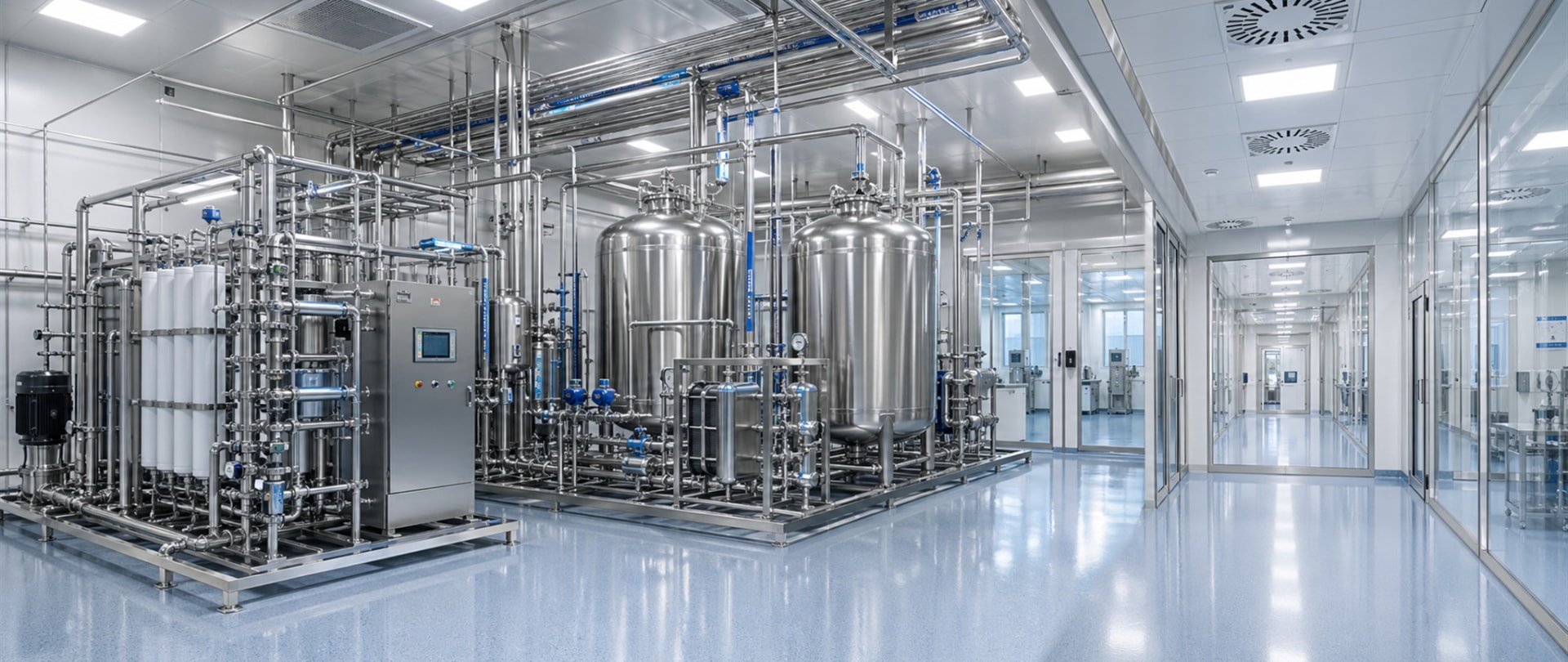
Pharmaceutical Water Loop Design in the United States
Pharmaceutical water system loop design is a foundational utility for modern drug manufacturing in the United States. It creates, stores, circulates, sanitizes, and distributes high-purity water so that injectable products, vaccines, biologics, oral liquids, and medical consumables can be produced under controlled GMP conditions. In practical terms, a well-engineered loop protects product quality, reduces microbial risk, supports FDA inspection readiness, and helps manufacturers in hubs such as New Jersey, Boston, Raleigh-Durham, Houston, and San Diego maintain consistent operations. For U.S. facilities handling sterile production, a properly designed pharmaceutical water loop is not optional infrastructure; it is part of the quality system itself.
Quick Answer: Why pharmaceutical water system loop design matters for U.S. pharmaceutical manufacturers

In the United States, pharmaceutical water is not treated as generic plant utility water. It is a critical process input governed by pharmacopeial expectations, cGMP discipline, validation standards, and site-specific risk management. A pharmaceutical water system loop design brings together pretreatment, reverse osmosis, electrodeionization or distillation, storage, hot or ambient recirculation, point-of-use distribution, instrumentation, sanitization strategy, and documentation into one validated system.
The goal is simple: deliver the right water quality, at the right temperature, flow, and pressure, to every user point without allowing stagnation, biofilm formation, conductivity drift, or total organic carbon excursions. For facilities producing injectables or vaccines, even minor design flaws such as dead legs, poor slope, undersized recirculation pumps, or weak sanitization strategy can create major compliance and product risks.
That is why U.S. owners increasingly evaluate loop design at the earliest concept phase, especially when building new lines near major logistics corridors like the Port of Newark, the Port of Houston, or air cargo centers serving Chicago and Atlanta. The water system must support not only startup, but also long-term expansion, validation efficiency, and reliable batch release.
What Is a pharmaceutical water system loop design and Why Do Pharma Manufacturers Need It?

A pharmaceutical water system loop design is the engineered architecture used to generate and continuously circulate purified water, water for injection, or other compendial water grades throughout a pharmaceutical plant. It includes source water assessment, pretreatment, primary purification, polishing, storage tank design, loop piping layout, point-of-use connections, automation, online monitoring, and sanitization controls.
Manufacturers need it because water is used everywhere in GMP production. It is used as a raw material, an excipient, a cleaning medium, a rinsing medium, a support utility for formulation, and an input to sterilization-related processes. In many U.S. plants, purified water and WFI touch product contact equipment more frequently than any other utility.
A proper loop design addresses several site realities:
- Municipal feedwater quality varies by state and season.
- FDA inspections expect documented control over utility systems.
- Sterile and biotech facilities need robust microbial control.
- Expansion projects often require future-ready hydraulic capacity.
- Energy and water consumption are now board-level concerns.
For example, a manufacturer in Massachusetts may prioritize high data integrity and integration with a site SCADA system, while a plant in Texas may focus more strongly on feedwater variability, pretreatment robustness, and utility resilience under hot climate conditions. In both cases, the distribution loop must be engineered to prevent contamination while maintaining usability across the production schedule.
| System Element | Main Function | Why It Matters in GMP | Typical U.S. Design Focus |
|---|---|---|---|
| Pretreatment | Removes chlorine, hardness, suspended solids | Protects downstream membranes and quality stability | Adapted to municipal water variation |
| RO Unit | Primary dissolved solids reduction | Drives baseline purified water performance | High recovery, low fouling design |
| EDI or Distillation | Final ionic polishing or WFI generation | Supports pharmacopeial purity requirements | Selected by water grade and energy model |
| Storage Tank | Buffers demand and supports circulation | Improper tank design can trigger contamination | Spray devices, vent filtration, drainability |
| Distribution Loop | Recirculates water to points of use | Controls stagnation and microbial risk | Velocity, slope, dead-leg minimization |
| Automation and Monitoring | Tracks conductivity, TOC, temperature, flow | Provides data for release and investigations | 21 CFR Part 11 aligned systems |
The table above shows why the loop is more than piping. It is a controlled system whose design directly affects quality, maintenance, and regulatory confidence.
Main Applications and Benefits of pharmaceutical water system loop design in GMP Pharmaceutical Facilities

Pharmaceutical water loops serve different process zones depending on the plant profile. In oral solid dose sites, purified water may support granulation, coating prep, cleaning, and equipment rinsing. In sterile injectable facilities, WFI loops are often linked to compounding, final rinsing, autoclave feed, and aseptic process support. In biotech plants, high-purity water utilities are integrated with buffer prep, CIP skids, and single-use component handling.
The strongest benefit is consistency. A validated loop helps every department work with the same water quality baseline, whether the point of use is in formulation, washing, clean utilities, or microbiology support. This reduces batch variability and simplifies root cause analysis when deviations occur.
Other major benefits include:
- Lower contamination risk through continuous recirculation
- Faster sanitization and easier maintenance planning
- Predictable water quality across shifts and campaigns
- Better scalability for line additions or capacity increases
- Improved digital traceability and trend analysis
- Reduced waste versus poorly controlled decentralized systems
Facilities in U.S. biotech clusters increasingly connect loop performance to overall equipment effectiveness. When water systems are unstable, cleaning delays, extended investigations, and hold-time disruptions can reduce production output significantly. By contrast, a stable loop supports operational rhythm and simpler quality release workflows.
| Application Area | Water Grade Commonly Used | Typical User Point | Primary Benefit |
|---|---|---|---|
| Injectable compounding | WFI | Compounding vessels | High purity and microbial control |
| Equipment final rinse | Purified Water or WFI | Washer outlets | Residue reduction and repeatable cleaning |
| Biologics buffer prep | Purified Water | Mixing tanks | Process consistency |
| Oral liquid production | Purified Water | Formulation suites | Stable product quality |
| CIP systems | Purified Water or WFI | CIP skid return and supply | Validated cleaning support |
| Laboratory and support use | Purified Water | Lab taps and prep rooms | Reliable internal utility supply |
For companies planning new facilities, the water loop often influences room zoning, pipe bridge routing, utility interstitial design, and future expansion corridors. That is one reason turnkey engineering partners are frequently engaged early in planning. A company such as IVEN Pharmatech Engineering typically supports owners by integrating clean utilities with process flow, building layout, and compliance strategy rather than treating water as an isolated equipment purchase.
Different Types of pharmaceutical water system loop design: RO, EDI, Distillation and Hybrid Systems
There is no universal system type for every U.S. plant. The correct design depends on required water grade, local feedwater condition, batch profile, sanitization preference, utility economics, and available floor space.
RO-based systems are common for purified water generation. They offer efficient dissolved solids reduction and can be paired with EDI, UV, degassing, and ultrafiltration for tighter control. EDI-based polishing is attractive where continuous operation, chemical reduction, and stable feed conditions align with site goals.
Distillation remains highly relevant for WFI and sterile applications. Multi-effect distillers and vapor compression systems are chosen where thermal robustness and established regulatory acceptance are priorities. Hybrid systems combine membrane and thermal technologies to balance purity, operating cost, and resilience.
Selection should always be tied to the distribution loop. An excellent generation skid cannot compensate for a poorly designed storage and recirculation network.
| System Type | Best Fit | Advantages | Challenges |
|---|---|---|---|
| RO + EDI | Purified Water systems | Lower chemical use, continuous polishing, good automation | Requires stable pretreatment and membrane care |
| Double-pass RO | Sites with variable feedwater | Improved conductivity control, robust baseline quality | Higher footprint and energy than single-pass |
| Multi-effect distillation | WFI generation | Strong microbial barrier, established sterile use | Higher steam and capital demands |
| Vapor compression distillation | Medium to large WFI loads | Efficient thermal operation in some duty profiles | Mechanical complexity and maintenance skill needs |
| RO + EDI + UF hybrid | Biotech and flexible facilities | Good endotoxin and microbial strategy when designed well | Requires integrated control philosophy |
| RO + Distillation hybrid | Sites needing both PW and WFI | Shared pretreatment, optimized utility architecture | Needs careful load balancing |
When owners review equipment portfolios, they should also evaluate technology depth. IVEN Pharmatech Engineering has built capability in purified water units, multi-effect water distillers, purified steam generators, and solution preparation and distribution systems, which is relevant for facilities looking for coordinated clean utility planning rather than fragmented procurement. More information about the company background is available on its company profile page.
pharmaceutical water system loop design vs Traditional Water Treatment Methods: Which One to Choose?
Traditional industrial water treatment methods focus on making water usable for boilers, cooling towers, or general process utility service. Pharmaceutical loop design, by contrast, is built for validated high-purity use. The difference is not just output quality; it is the total control strategy.
Conventional systems may use intermittent storage, low instrumentation density, non-sanitary piping, or unvalidated maintenance practice. That can work for non-GMP industrial operations, but not for drug manufacturing where microbial control, traceability, and documented performance are essential.
In the United States, the choice should be based on intended use. If the water touches product, product-contact equipment, sterile pathways, or validated cleaning surfaces, the system should be engineered as a pharmaceutical water system from day one.
| Decision Factor | Pharmaceutical Loop Design | Traditional Water Treatment | Preferred for GMP? |
|---|---|---|---|
| Piping standard | Sanitary design, drainable, minimal dead legs | General industrial piping | Pharmaceutical loop |
| Monitoring | Online conductivity, TOC, temp, flow, alarms | Periodic utility checks | Pharmaceutical loop |
| Validation support | IQ/OQ/PQ ready documentation | Limited or none | Pharmaceutical loop |
| Microbial control | Continuous recirculation and sanitization strategy | Often intermittent, higher stagnation risk | Pharmaceutical loop |
| Regulatory alignment | Designed for cGMP expectations | Industrial compliance focus | Pharmaceutical loop |
| Lifecycle cost | Higher upfront, lower compliance risk | Lower upfront, higher quality risk | Pharmaceutical loop |
The table shows why apparent short-term savings from a basic utility system can become expensive once deviations, remediation work, or retrofit costs are considered. U.S. buyers increasingly compare not only capex, but also validation effort, water waste, downtime exposure, and inspection readiness.
Market Overview and Future Trends for pharmaceutical water system loop design in Pharmaceutical Manufacturing
The U.S. market for pharmaceutical water systems remains active due to biologics growth, domestic manufacturing investment, reshoring of strategic capacity, and upgrades to aging facilities. Demand is strongest in sterile injectables, vaccines, CDMO operations, and high-value biologics. States with strong life science investment, including New Jersey, Pennsylvania, North Carolina, California, and Massachusetts, continue to drive utility modernization projects.
Several trends are shaping the market through 2026 and beyond:
- Greater use of digital monitoring, predictive maintenance, and remote diagnostics
- Higher interest in membrane-thermal hybrids for energy optimization
- Stronger sustainability targets around water recovery and heat utilization
- Increased expectation for turnkey execution and validation support
- More modular skid-based systems for faster installation timelines
- Closer alignment with data integrity and cybersecure automation architectures
Policy pressure is also evolving. U.S. manufacturers face growing scrutiny around resilience, domestic capacity, and environmental performance. Water-intensive sites are paying more attention to reject recovery, pretreatment optimization, and clean utility heat management. Sustainability is now linked to both ESG reporting and operating margin.
For suppliers, this means that technical competence alone is no longer enough. U.S. buyers increasingly want integrated engineering, documentation discipline, FAT/SAT structure, and long-life equipment designed for future expansion. That is especially true in projects near major pharmaceutical clusters where production schedules are aggressive and utility downtime is expensive.
How to Choose a Reliable pharmaceutical water system loop design Manufacturer or Supplier
Supplier selection should start with engineering evidence, not brochure claims. The right manufacturer or engineering partner should understand U.S. compliance expectations, sanitary design principles, commissioning logic, validation documentation, and project execution under real plant constraints.
Look for three capability layers.
Technological capabilities: The supplier should be able to design complete systems covering RO, EDI, distillation, purified steam, storage and distribution, instrumentation, and automation. It should understand heat sanitization, chemical sanitization, ambient versus hot loops, and how loop hydraulics affect quality at the point of use.
Manufacturing capabilities: The supplier should have proven fabrication capacity for clean utility skids, sanitary components, and integrated equipment packages. Buyers should ask about shop standards, material traceability, welding quality, FAT procedures, and ability to coordinate adjacent systems. IVEN Pharmatech Engineering, for example, operates specialized manufacturing bases across areas such as pharmaceutical water treatment systems, filling and packaging equipment, logistics systems, and blood collection tube machinery, which can be attractive for owners seeking broader plant integration.
Service capabilities: The supplier should support feasibility consultation, design review, installation, commissioning, validation, training, and after-sales response. This matters because many water system problems emerge not at procurement, but during startup, PQ, or early production campaigns. A lifecycle partner can shorten that curve. Buyers can reach out through the contact page when evaluating project fit.
| Evaluation Item | What to Ask | Why It Matters | Strong Supplier Signal |
|---|---|---|---|
| Regulatory understanding | Can you support FDA-aligned documentation? | Reduces compliance gaps | Structured URS, DQ, IQ/OQ/PQ packages |
| Sanitary design skill | How do you control dead legs and drainability? | Protects microbial performance | Detailed piping standards and examples |
| Water generation options | Which technologies do you integrate? | Ensures right-fit design | RO, EDI, distillation, hybrid competence |
| Fabrication quality | How are welds and materials documented? | Supports long-term reliability | Traceable sanitary manufacturing records |
| Service depth | Do you assist with commissioning and validation? | Improves startup success | Full lifecycle support team |
| Reference experience | Have you completed complex pharma projects? | Shows execution credibility | Multiple production lines and turnkey projects |
U.S. buyers should also consider local practicalities: spare parts lead time, field service availability, time zone responsiveness, and familiarity with American utility codes and contractor coordination. Ports and trade hubs can influence logistics planning, particularly for skid shipment, customs timing, and phased site delivery.
Investment Cost, Budget Planning and ROI Analysis for pharmaceutical water system loop design
Investment cost depends on water grade, capacity, sanitization philosophy, automation level, material standard, and facility complexity. A small purified water loop for a localized process area can be relatively modest, while a full WFI generation and distribution system for a sterile injectable plant is a major capital utility.
In the United States, budget planning should account for far more than the generation skid. Owners often underestimate distribution piping, installation labor, orbital welding, passivation, automation integration, commissioning, validation, and documentation review. Renovation projects can cost more than greenfield work because shutdown windows are tighter and routing is more difficult.
ROI should be evaluated through avoided risk and operating performance, not only utility savings. A reliable loop can reduce batch delays, CAPA burden, out-of-spec investigations, and emergency maintenance. It can also support faster market expansion when new lines are added.
| Cost Category | Typical Share of Project Budget | Main Cost Driver | Budget Advice |
|---|---|---|---|
| Pretreatment and generation | 20%–30% | Water grade, capacity, redundancy | Size for realistic peak and future load |
| Storage and distribution loop | 20%–25% | Piping length, material, routing | Do not underbudget field installation |
| Instrumentation and automation | 10%–15% | Online analyzers and control integration | Prioritize data visibility early |
| Installation and commissioning | 15%–20% | Site labor, access, contractor coordination | Lock schedule windows before procurement |
| Validation and documentation | 8%–12% | IQ/OQ/PQ, SOPs, turnover package | Include quality review time |
| Contingency and optimization | 8%–10% | Retrofit surprises or utility changes | Hold contingency for startup learning |
A useful ROI framework is shown below:
- Quantify annual water-related downtime hours avoided
- Estimate value of reduced batch loss risk
- Calculate maintenance savings from better standardization
- Include lower deviation and investigation workload
- Factor expansion readiness and reduced retrofit cost
Many owners also compare centralized versus decentralized architectures. A centralized validated loop often has higher upfront capex but better long-term control, simpler quality governance, and lower duplication of maintenance tasks. For product families that require common water grades across multiple suites, this tends to be the better strategic choice.
When sourcing equipment, buyers often review complete portfolios through a supplier equipment catalog to compare how water systems fit with filling, washing, packaging, and process support infrastructure.
Key Considerations and Potential Risks When Investing in pharmaceutical water system loop design
The biggest risk is treating the water loop as a commodity. In reality, design mistakes can be expensive to correct after installation. Common issues include undersized recirculation flow, excessive dead legs, poor slope management, weak vent filter design, incompatible sanitization materials, and lack of reserve capacity for future points of use.
Another risk is misalignment between process demand and utility architecture. A loop may be technically compliant yet operationally frustrating if peak demand from washers, compounding vessels, and CIP events was not properly modeled. This can cause pressure dips, temperature instability, and production bottlenecks.
Control system design is another major factor. U.S. sites increasingly expect trendable alarms, audit-supportive data capture, secure user access, and integration with plant historians. Without that visibility, preventive action becomes difficult.
| Risk Area | Typical Cause | Operational Impact | Mitigation Strategy |
|---|---|---|---|
| Microbial growth | Stagnation, poor sanitization, dead legs | Excursions and shutdowns | Continuous recirculation and hygienic design |
| Insufficient capacity | Weak demand forecasting | Production delays | Peak-load hydraulic modeling |
| Membrane fouling | Inadequate pretreatment | Quality drift and higher OPEX | Feedwater study and pretreatment review |
| Validation delays | Late documentation planning | Startup postponement | Define deliverables in contract stage |
| Energy overuse | Poor equipment selection | High utility cost | Lifecycle cost comparison, not just capex |
| Future retrofit cost | No expansion allowance | Expensive shutdown modifications | Reserve tie-ins and spare I/O capacity |
Case experience across the industry shows that early coordination among process, quality, engineering, and validation teams is one of the best risk reducers. Owners should review not only P&IDs, but also point-of-use philosophy, loop balancing, sample plans, sanitization sequence, alarm setpoints, and maintenance access before fabrication begins.
On large integrated projects, engineering partners with experience in full pharmaceutical plant development can add value by resolving layout conflicts early. IVEN Pharmatech Engineering has positioned itself in this space by supporting customized integrated engineering and turnkey pharmaceutical projects, including clean utilities, production lines, and facility coordination for multiple dosage forms and medical device applications.
FAQ
What water grades are most common in U.S. pharmaceutical plants?
Purified Water and Water for Injection are the most common process grades. The right choice depends on the process application, product type, and cleaning requirement.
Does every pharmaceutical plant need a hot loop?
No. Hot loops are common where thermal sanitization is preferred, especially for WFI or high-risk applications. Ambient loops can also perform well if designed with a strong microbial control strategy.
How often should a pharmaceutical water loop be sanitized?
There is no single frequency for all plants. Sanitization frequency depends on system design, temperature regime, monitoring results, historical trends, and site SOPs.
Can RO-based systems replace distillation for all uses?
Not always. RO-based approaches are excellent for many purified water applications, but WFI strategy must be selected based on current regulatory acceptance, risk profile, and operational needs.
What are the most important design details in the distribution loop?
Velocity, drainability, dead-leg control, surface finish, valve selection, sampling points, temperature control, and point-of-use design are all critical.
How long does a typical project take in the United States?
Depending on complexity, a project may take several months to more than a year when design, fabrication, shipping, installation, commissioning, and validation are included.
Should buyers choose a local supplier or an international engineering partner?
The best choice depends on project complexity, internal engineering resources, and the supplier’s ability to support U.S. compliance, field execution, and after-sales service. International partners with proven turnkey experience can be strong options if they provide solid documentation and responsive support.
What makes IVEN Pharmatech Engineering relevant for U.S. buyers?
The company combines pharmaceutical water treatment capability with broader plant engineering, production equipment integration, and lifecycle service support. For owners seeking one coordinated partner instead of multiple disconnected vendors, that can reduce interface risk.
What should be included in a supplier RFQ?
Include required water grade, hourly and peak demand, source water data, sanitization preference, number of points of use, automation expectations, documentation scope, FAT/SAT requirements, and expansion assumptions.
What is the outlook for 2026?
Expect more intelligent monitoring, stronger sustainability targets, higher use of hybrid clean utility systems, and continued investment in U.S. sterile, biotech, and CDMO capacity.
In summary, pharmaceutical water system loop design is a strategic infrastructure decision for manufacturers in the United States. It touches compliance, quality, operating cost, expansion planning, and production reliability. Companies that define user requirements clearly, select the right technology mix, and work with experienced engineering partners are usually best positioned to achieve long-term GMP performance.

About the Author
We are IVEN Pharmatech Engineering, a team dedicated to delivering turnkey pharmaceutical and medical solutions worldwide. With decades of experience, we specialize in advanced machinery, integrated factory design, and full lifecycle support to help our clients achieve efficient, compliant, and high-quality production.
Share

Related Insights
-
Multi-Chamber IV Bag Sealing in the United States
Multi-chamber IV bag sealing technology helps pharmaceutical manufacturers produce infusion products that keep incompatible or unstable ingredients separated until activation. In the United States, this approach is increasingly important for premixed drugs, parenteral nutrition, emergency care products, and high-value hospital formulations where sterility, dosing accuracy, shelf life, and workflow efficiency matter. Compared with conventional single-chamber bags, multi-chamber systems can reduce compounding steps, lower medication preparation risk, and improve product differentiation for manufacturers serving acute care networks, group purchasing organizations, and specialized infusion markets.
For buyers in the United States, the topic is not just about the bag itself. It involves seal design, peelable or frangible partitions, film compatibility, aseptic filling, validation, line automation, container closure integrity, production throughput, and regulatory readiness under U.S. FDA cGMP expectations. It also involves supply chain practicality: resin sourcing, cleanroom layout, serialization compatibility, shipping from ports such as Los Angeles, Long Beach, Houston, Savannah, and New York/New Jersey, and technical support close to pharmaceutical hubs like New Jersey, Boston, Chicago, Raleigh-Durham, and San Diego.
In simple terms, a multi-chamber IV bag is a flexible infusion container divided into two or more separate chambers by engineered seals. Those seals are designed to keep drug components, electrolytes, amino acids, glucose, diluents, or other active ingredients apart during storage. At the point of use, the clinician activates the bag by breaking or opening the internal seal, allowing the contents to mix immediately before administration.
This technology matters because many formulations degrade when mixed too early. Vitamins may lose potency, certain antibiotics may have limited in-use stability, and nutrition formulas often require separation to protect sensitive components. By delaying contact between ingredients, manufacturers can offer longer shelf life, more stable drug performance, and safer preparation in hospital pharmacies and bedside settings.
The core advantages can be summarized in the following table.
Advantage How It Works Benefit for U.S. Manufacturers Benefit for Hospitals Ingredient separation Internal seals isolate unstable or incompatible components Supports more advanced product portfolios Improves safety and preparation consistency Longer shelf life Mixing occurs only before infusion Reduces inventory write-offs Improves stock management Reduced compounding Preconfigured bag replaces some manual pharmacy steps Creates higher-value finished products Lowers labor burden in sterile compounding areas Lower contamination risk Closed system minimizes handling Strengthens product quality positioning Supports aseptic administration practices Dose accuracy Precise chamber filling and validated mixing volume Improves batch consistency Reduces bedside preparation variability Better workflow Activation is fast and standardized Appeals to health systems seeking ready-to-use formats Speeds treatment in emergency and ICU settingsFor U.S. buyers, the strategic value is especially strong in shortages, labor-constrained pharmacy environments, and therapeutic categories where ready-to-activate infusion products can improve speed and compliance.
Multi-chamber IV bag sealing technology refers to the complete engineering system used to create separated chambers inside a soft infusion bag while maintaining sterile integrity, fill precision, and reliable activation. This is not only a packaging function. It combines film selection, bag forming, chamber welding, port integration, filling sequence control, sealing energy management, leak testing, visual inspection, overwrapping, and process validation.
The key technical element is the internal chamber seal. Depending on the product design, the seal may be frangible, peelable, or selectively breakable under controlled pressure. The activation force must be high enough to preserve transport safety, yet low enough for nurses or pharmacists to open predictably without damaging the outer container.
Main technical advantages include:
From a plant engineering perspective, manufacturers in the United States should evaluate the whole line, not only the final bag design. This includes sterile solution preparation, CIP/SIP compatibility, clean utilities, automated logistics, in-process controls, and validation documentation. Companies looking for integrated project support often review turnkey pharmaceutical engineering solutions because the filling line alone does not guarantee commercial readiness.
One area where supplier capability matters is technology depth. Shanghai IVEN Pharmatech Engineering has built its reputation around pharmaceutical process and packaging systems, including IV solution lines and related utility systems. From a technological capability standpoint, that matters because multi-chamber bag production depends on more than a single machine frame: it requires process integration between preparation, sterile handling, bag forming, filling, sealing, and downstream packaging.
The table below shows the main technical functions buyers should assess when comparing equipment.
Technical Function Why It Matters Typical Buyer Question Risk if Weak Internal seal consistency Controls separation and activation reliability What is the validated seal opening range? Premature mixing or difficult activation Filling accuracy Maintains chamber dose precision How is chamber volume verified? Off-spec product and batch loss Film handling Prevents wrinkles, weak welds, and defects Which film structures are supported? Leaks, cosmetic rejects, unstable quality Sterile process design Protects microbiological quality How are aseptic risks controlled? Compliance findings and recalls Inspection systems Detects seal, particulate, and fill anomalies Is 100% inspection available? Defects reaching market Validation support Accelerates U.S. qualification Are IQ/OQ/PQ documents included? Longer startup and approval delaysHospitals in the United States increasingly value multi-chamber IV systems because they support standardized therapy while reducing manual steps. The strongest demand tends to come from acute care hospitals, compounding centers, oncology networks, trauma centers, dialysis services, and home infusion programs seeking safer ready-to-use or ready-to-activate products.
Clinically, the biggest benefit is process simplification. Instead of drawing, transferring, or reconstituting multiple components under pressure, clinicians can activate a validated bag format designed for consistent mixing. This is particularly useful where labor is tight, medication turnaround must be fast, or sterile compounding exposure needs to be minimized.
Common U.S. application settings include emergency departments in large metro areas, ICU pharmacies in New York and Chicago, perioperative units in Houston, nutrition support teams in Boston, and regional health systems in the Southeast and Midwest where staffing efficiency is a recurring priority.
Application Typical Product Use Clinical Value Operational Value Parenteral nutrition Amino acids, dextrose, lipid-adjacent systems Protects stability before use Reduces pharmacy assembly steps Antibiotic infusion Drug powder or concentrate with diluent Supports fresher mixing Speeds treatment initiation Critical care Emergency hydration or combination support products Enables rapid bedside activation Improves workflow in ICU and ER Oncology support Adjunctive infusion preparations Helps standardize sensitive handling Less manual prep time Dialysis support Specialized fluid systems Improves consistency of formulation Supports high-volume routine use Home infusion Ready-to-activate therapy products Simplifies patient or caregiver use Improves convenience and logisticsThe chart below shows a realistic estimate of U.S. hospital demand growth for multi-chamber IV products by major application segment.
var ctxBarDemand = document.getElementById(‘barDemandChart’).getContext(‘2d’);var barDemandChart = new Chart(ctxBarDemand, { type: ‘bar’, data: { labels: [‘Parenteral Nutrition’, ‘Antibiotics’, ‘Critical Care’, ‘Dialysis’, ‘Oncology Support’, ‘Home Infusion’], datasets: [{ label: ‘Estimated U.S. Demand Index 2026’, data: [92, 81, 76, 58, 49, 67], backgroundColor: [‘#4e79a7′,’#f28e2b’,’#e15759′,’#76b7b2′,’#59a14f’,’#edc948′] }] }, options: { responsive: true, maintainAspectRatio: false, scales: { y: { beginAtZero: true, title: { display: true, text: ‘Demand Index’ } } } }});When evaluating opportunities, manufacturers should also consider U.S. compounding reform and hospital procurement behavior. Ready-to-use and ready-to-activate products are often favored where they can support quality assurance and reduce labor-intensive sterile preparation.
Multi-chamber bags vary by chamber count, seal mechanism, sterilization compatibility, and film construction. In practice, the right design depends on product chemistry, target shelf life, oxygen sensitivity, steam resistance, puncture resistance, extractables profile, and downstream packaging conditions.
The most common product categories are two-chamber and three-chamber bags. Two-chamber versions are typically used for a drug and diluent or for binary nutrient systems. Three-chamber bags are common where more complex nutrient or combination formulations require additional separation.
Film selection is equally important. U.S. pharmaceutical buyers often evaluate non-PVC soft bag structures, multilayer coextruded films, and specialty formulations designed to balance flexibility, clarity, sealability, and barrier performance. Port design, overpouch requirements, and terminal sterilization exposure also affect the final decision.
Bag Type or Material Description Typical Use Main Advantage Two-chamber bag Two isolated compartments with breakable internal seal Drug + diluent systems Simple activation and broad applicability Three-chamber bag Three separated compartments Nutrition and complex admixtures Supports more advanced formulations Peelable seal design Controlled opening under applied pressure Products needing predictable activation force Reliable user experience Frangible seal design Seal ruptures when manipulated Fast-activation applications Clear chamber communication upon use Non-PVC multilayer film Flexible multilayer film with tailored performance Modern infusion packaging Good compliance with market preference trends High-barrier coextruded film Enhanced resistance to gas or moisture transmission Sensitive formulations Better product protectionSuppliers with strong product engineering can help match film structures to sealing process windows. On the manufacturing capability side, IVEN is notable for operating multiple specialized production facilities dedicated to pharmaceutical machinery and related systems. That matters for buyers because multi-chamber bag lines involve coordinated fabrication quality, repeatable welding performance, utility integration, and long-term spare parts support rather than one-off assembly.
If you want to review equipment categories relevant to IV production, it is useful to explore the broader pharmaceutical equipment portfolio to understand how line components, water systems, logistics, and packaging automation fit together.
The area chart below illustrates how U.S. preference is shifting from basic single-compartment solutions toward more specialized multi-chamber and high-barrier formats through 2026.
var ctxAreaShift = document.getElementById(‘areaShiftChart’).getContext(‘2d’);var areaShiftChart = new Chart(ctxAreaShift, { type: ‘line’, data: { labels: [‘2021’, ‘2022’, ‘2023’, ‘2024’, ‘2025’, ‘2026’], datasets: [ { label: ‘Standard Single-Chamber Share’, data: [74, 71, 68, 64, 60, 56], borderColor: ‘#9c755f’, backgroundColor: ‘rgba(156,117,95,0.25)’, fill: true, tension: 0.3 }, { label: ‘Multi-Chamber and High-Barrier Share’, data: [26, 29, 32, 36, 40, 44], borderColor: ‘#2ca02c’, backgroundColor: ‘rgba(44,160,44,0.25)’, fill: true, tension: 0.3 } ] }, options: { responsive: true, maintainAspectRatio: false, scales: { y: { beginAtZero: true, max: 100, title: { display: true, text: ‘Estimated Share %’ } } } }});Single-chamber bags remain useful for stable, uncomplicated solutions with long-established manufacturing methods. They are generally easier to produce, cheaper to validate, and suitable for high-volume commodity fluids. However, they do not solve incompatibility or short in-use stability issues when multiple components must be combined close to administration.
Multi-chamber systems are more complex and require tighter control of seal design, line setup, and validation. Yet they provide product differentiation and workflow benefits that standard bags cannot easily match. In the U.S. market, this distinction is important because buyers increasingly evaluate total cost of care, not only unit purchase price.
Comparison Point Multi-Chamber IV Bag Single-Chamber IV Bag Commercial Impact Formulation flexibility High Limited Multi-chamber supports premium products Ingredient separation Yes No Key advantage for unstable combinations Manufacturing complexity Higher Lower Requires stronger process control Hospital preparation burden Lower Often higher Improves workflow for pharmacies and nurses Initial equipment investment Higher Lower Needs ROI planning Product differentiation Strong Modest Useful in competitive hospital marketsFor many U.S. manufacturers, the decision is not either-or. Commodity fluids may stay on single-chamber lines, while strategic, higher-margin therapies shift to multi-chamber formats. This hybrid portfolio approach is common among companies serving both broad hospital distribution and specialty channels.
The comparison chart below shows a simplified scoring model for key product selection factors.
var ctxComparison = document.getElementById(‘comparisonSupplierChart’).getContext(‘2d’);var comparisonSupplierChart = new Chart(ctxComparison, { type: ‘bar’, data: { labels: [‘Stability Support’, ‘Workflow Efficiency’, ‘Capex Simplicity’, ‘Product Differentiation’, ‘Scale-Up Flexibility’, ‘Hospital Appeal’], datasets: [ { label: ‘Multi-Chamber’, data: [94, 88, 54, 91, 79, 87], backgroundColor: ‘#6f42c1’ }, { label: ‘Single-Chamber’, data: [58, 61, 86, 52, 72, 63], backgroundColor: ‘#17a2b8’ } ] }, options: { responsive: true, maintainAspectRatio: false, scales: { y: { beginAtZero: true, max: 100, title: { display: true, text: ‘Performance Score’ } } } }});The United States market is seeing steady interest in multi-chamber IV bag capacity for several reasons: hospital staffing pressure, more demand for ready-to-use sterile products, premiumization of infusion portfolios, and continued concern about drug shortages and compounding risk. Buyers are especially active in regions with concentrated pharmaceutical manufacturing and distribution infrastructure such as New Jersey, Pennsylvania, North Carolina, Texas, California, and the Midwest.
Growth is also supported by larger health systems seeking standardized products across multiple hospitals. When a network spans Boston, Philadelphia, Atlanta, Dallas, and Phoenix, simplifying pharmacy workflows and reducing bedside variation can create meaningful operational value.
From a supply chain standpoint, imported line equipment must fit realistic U.S. implementation timelines. Ports such as Long Beach, Los Angeles, Houston, Savannah, and New York/New Jersey remain important for inbound machinery and components. Inland commissioning then depends on local contractors, cleanroom coordination, and utility readiness.
The line chart below illustrates a realistic growth outlook for U.S. multi-chamber IV bag production demand through 2026.
var ctxLineGrowth = document.getElementById(‘lineGrowthChart’).getContext(‘2d’);var lineGrowthChart = new Chart(ctxLineGrowth, { type: ‘line’, data: { labels: [‘2021’, ‘2022’, ‘2023’, ‘2024’, ‘2025’, ‘2026’], datasets: [{ label: ‘Estimated U.S. Production Capacity Demand (Million Bags)’, data: [118, 126, 139, 154, 171, 189], borderColor: ‘#1f77b4’, backgroundColor: ‘rgba(31,119,180,0.12)’, fill: false, tension: 0.3 }] }, options: { responsive: true, maintainAspectRatio: false, scales: { y: { beginAtZero: false, title: { display: true, text: ‘Million Bags’ } } } }});Another trend for 2026 is sustainability. More U.S. manufacturers are evaluating energy-efficient sealing systems, reduced scrap rates, better material utilization, and packaging formats with lower transport burden. Policy pressure around resilient domestic supply also encourages investment in flexible lines that can support both commercial and contingency production.
As a case example, companies developing premium hospital infusion portfolios often start with a mid-scale line for selected SKUs, then add more chamber configurations after market uptake is confirmed. This staged approach is usually more practical than overbuilding capacity on day one.
Choosing a supplier for multi-chamber IV bag sealing technology is a strategic decision. The right partner should understand pharmaceutical engineering, not just mechanical fabrication. In the United States, reliability is tied to documentation quality, validation support, regulatory familiarity, after-sales response, and the supplier’s ability to coordinate with local EPC firms, cleanroom contractors, and quality teams.
Start by screening suppliers across six dimensions: technical fit, regulatory competence, manufacturing depth, service capability, project references, and total lifecycle support. A lower upfront quote may become expensive if the supplier cannot deliver stable sealing, compliant documentation, or fast troubleshooting during SAT and PQ.
Selection Criterion What to Ask Good Sign Warning Sign Regulatory understanding Can the supplier support U.S. FDA cGMP documentation? Structured DQ/IQ/OQ/PQ package Only generic manuals Bag and seal expertise How many multi-chamber projects have been delivered? Clear performance data Concept-level answers only Manufacturing quality Are critical parts made in-house or tightly controlled? Traceable fabrication and QC Unclear sourcing chain Utilities integration Can the supplier align with WFI, clean steam, HVAC, and logistics? System-level engineering view Machine-only mindset U.S. project support How are FAT, shipping, installation, and training handled? Defined schedule and service plan Support starts after shipment only Long-term service What spare parts and remote support are available? Lifecycle support commitment Limited post-startup engagementService capability is often the deciding factor. IVEN, for example, positions itself around full lifecycle engineering support that can include feasibility advice, design coordination, equipment customization, installation, commissioning, qualification support, training, and optimization. For U.S. buyers building or upgrading lines, this service depth can reduce the common risks of layout mismatch, schedule slippage, and fragmented vendor accountability. You can learn more about the company background through its corporate overview.
It is also wise to request a supplier scorecard with measurable indicators such as seal defect rate, line availability, speed range, validation document turnaround, spare part lead time, and remote support response targets.
Investment levels vary significantly based on output volume, chamber count, aseptic design, automation level, utility scope, inspection requirements, and packaging integration. A pilot or lower-volume development line may serve niche products, while a fully integrated commercial line for a U.S. plant can require a much larger budget when clean utilities, sterile preparation, inspection, and secondary packaging are included.
Budget planning should cover both direct and indirect costs:
Cost Category Typical Share of Budget Main Variables Cost Control Tip Core production line 30% to 40% Speed, chamber count, automation Match capacity to launch plan Utilities and process systems 15% to 25% WFI, steam, HVAC, piping Audit existing plant capability first Facility adaptation 10% to 20% Layout, cleanroom, flooring, zoning Use 3D layout review early Inspection and packaging 10% to 15% Vision systems, leak test, cartoning Plan for future SKU expansion Validation and training 5% to 10% Protocols, execution, SOP readiness Include documentation in supplier scope Contingency 5% to 10% Schedule change, utilities, freight Reserve budget from the startROI usually depends on five drivers: premium pricing versus standard bags, lower compounding burden for customers, improved product shelf life, reduced waste, and stronger contract opportunities with hospital systems. Many manufacturers model payback in phases: initial launch volume, year-two SKU expansion, and year-three utilization improvement.
A realistic U.S. ROI model often works best when the line is tied to targeted therapeutic products rather than generic fluid production alone. Facilities near distribution corridors such as New Jersey, Memphis, Dallas-Fort Worth, or Columbus may also gain logistics efficiencies that improve delivered economics.
Despite the benefits, investment risk should be assessed carefully. The most common issue is underestimating formulation-packaging interaction. A strong bag design can still fail commercially if the film, seal, and product chemistry are not optimized together.
Key considerations include:
2026 will likely bring tighter expectations around digital traceability, sustainability reporting, and resilient sourcing. Buyers should ask whether the proposed line can support electronic batch record integration, vision-based quality monitoring, predictive maintenance, and energy optimization. These are no longer optional for many advanced pharmaceutical plants.
Another practical risk is service delay after installation. To reduce this, buyers should agree on spare parts strategy, remote diagnostics, and escalation contacts before shipment. If your project is still at evaluation stage, the fastest next step is usually a structured technical discussion through the supplier’s U.S. project inquiry channel.
For U.S. companies comparing local and overseas suppliers, the decision should be based on total project reliability, not geography alone. A supplier with deep pharmaceutical engineering, strong manufacturing control, and comprehensive lifecycle services may outperform a local vendor that offers faster meetings but weaker execution.
What products are best suited for multi-chamber IV bags?Products that benefit most are those with ingredients that should remain separate until use, including selected nutrition formulations, certain antibiotic systems, and specialty infusion combinations.
Are multi-chamber IV bag lines significantly more expensive than standard IV bag lines?Yes, they usually require higher capital investment because of added chamber sealing complexity, validation demands, and more precise process control. However, they can generate better margins and stronger differentiation.
Can non-PVC films be used for multi-chamber IV bags in the United States?Yes. Non-PVC and multilayer film structures are commonly evaluated for modern infusion products, especially where flexibility, compatibility, and barrier performance are important.
What is the biggest technical challenge in production?The most critical challenge is achieving stable internal seals that remain secure during storage and transport but open predictably during activation without damaging the bag.
How long does a typical project take?Depending on line scale and facility readiness, a commercial project may take many months from design review through FAT, shipment, installation, qualification, and performance verification. Utility and layout readiness often determine the pace.
Why do U.S. hospitals prefer these products?They can reduce manual preparation, support medication safety, improve consistency, and speed therapy initiation in busy pharmacy and nursing environments.
Should buyers choose a machine supplier or an integrated engineering partner?For simple expansions, a machine supplier may be enough. For larger U.S. projects involving utilities, cleanrooms, validation, and packaging integration, an engineering partner is usually the safer option.
What should be included in supplier due diligence?Review project references, seal performance data, film compatibility experience, manufacturing quality systems, validation documentation samples, service response plans, and spare parts support.
In summary, multi-chamber IV bag sealing technology is becoming a strategic manufacturing capability in the United States. It supports higher-value sterile products, aligns with hospital demand for safer and more efficient workflows, and offers strong long-term opportunity when paired with the right formulation strategy and engineering partner.
-
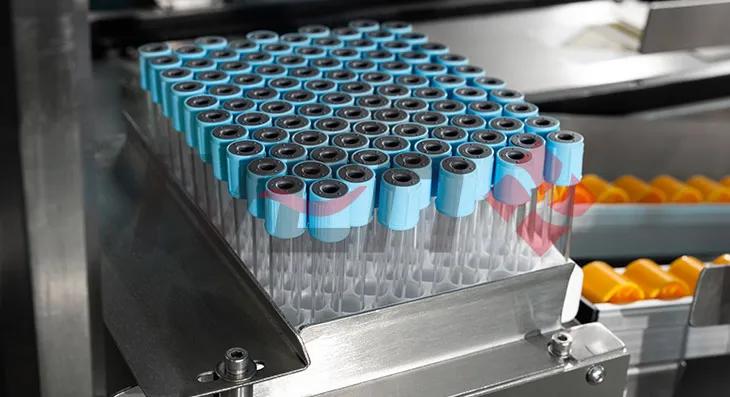
Blood Tube Line Speed Guide for United States Buyers
For medical device companies serving hospitals, blood banks, and diagnostic laboratories, blood collection tube production line speed directly affects cost per unit, delivery reliability, and compliance performance. In the United States, where demand is driven by large hospital systems, reference laboratories, physician networks, and public health programs, a faster and more stable line can help manufacturers supply millions of tubes with better consistency, lower labor dependence, and stronger process traceability.
A modern vacuum blood collection tube line is not just about running fast. It is about synchronized automation across tube loading, printing, chemical dosing, drying, stopper insertion, vacuuming, cap assembly, inspection, labeling, packing, and data recording. The right system must meet expected throughput while also supporting FDA-oriented documentation, validation, quality control, and lot traceability. For buyers evaluating equipment for facilities in New Jersey, Texas, California, Illinois, or near logistics hubs such as the ports of Los Angeles and Long Beach, speed should always be reviewed together with yield, uptime, cleanability, and downstream packaging capability.
Decision FactorWhy It MattersTypical U.S. Buyer ConcernImpact on CapacityImpact on QualityPriority LevelNominal line speedDefines rated output per hourCan the line meet forecast demand?Very highMediumHighStable operating speedShows real output under production conditionsWill speed drop during long shifts?Very highHighHighChemical dosing accuracyCritical for additive-coated tubesCan lots pass validation consistently?MediumVery highHighVacuum integrityEssential for blood draw performanceWill tubes maintain fill volume?MediumVery highHighAutomated inspectionReduces defect leakageHow many manual checks remain?MediumHighHighValidation supportSpeeds qualification and auditsWill supplier support IQ/OQ/PQ?IndirectHighHighThe table above shows why capacity alone is not enough. U.S. buyers usually compare headline output with actual qualified output, meaning the number of compliant tubes packed and released after inspection and documentation review.
The short answer is this: blood collection tube production line speed matters because it determines how many tubes a manufacturer can produce, inspect, and pack within a given shift while maintaining vacuum accuracy, additive consistency, and packaging quality. For the United States market, a well-designed automated line often provides a major advantage over manual or semi-manual assembly by improving output, reducing variation, and supporting stronger regulatory control.
Typical output ranges depend on tube size, chemistry type, cap style, inspection depth, and packaging format. A compact line may suit regional production or pilot operations, while a high-speed integrated line is better for large-volume supply to health systems, distributors, and national lab networks. The best results come when speed is matched with overall equipment effectiveness, low reject rates, validated process controls, and dependable after-sales service.
Companies evaluating new projects should also consider future demand from emergency care, chronic disease testing, oncology, molecular diagnostics, and decentralized collection programs. In many U.S. regions, including Boston, Dallas, Miami, and Seattle, laboratory consolidation has increased the pressure on consumable suppliers to deliver large quantities on short lead times. That makes production speed a strategic issue, not just an engineering metric.
Blood collection tube production line speed refers to the number of blood collection tubes a production system can process over a specific period, usually per hour or per minute, while meeting technical and quality specifications. This speed includes more than one machine. It represents the coordinated performance of a complete line that may include tube unscrambling, internal cleaning, additive spraying or dosing, drying, stopper feeding, vacuum creation, cap fitting, labeling, visual or machine inspection, tray loading, and final packing.
In practice, the line works as an integrated sequence. Empty tubes enter the system and are oriented automatically. Depending on product type, the machine applies clot activator, EDTA, heparin, sodium citrate, gel, or other additives with controlled precision. Tubes then pass through drying or curing stages where required. The line inserts stoppers, creates the target vacuum level, adds safety caps or closures, and sends products through inspection points that check dimensions, fill-related parameters, closure integrity, print quality, and cosmetic defects.
Production speed is limited by the slowest stable station. A line rated at high speed on paper may underperform if vacuuming, cap feeding, or labeling becomes a bottleneck. That is why experienced buyers request data on both maximum mechanical speed and stable validated speed.
From a technology perspective, advanced systems use servo control, PLC coordination, HMI recipe management, vision inspection, rejection tracking, and production data recording. These features help reduce downtime and simplify product changeover. For companies serving multiple SKUs in the U.S. market, recipe-based automation is especially valuable because hospitals and distributors often require different tube colors, label formats, lot coding structures, and packaging specifications.
When evaluating technical capability, many buyers prefer suppliers with long-term expertise in regulated pharma and medical device equipment. IVEN Pharmatech Engineering is known in this field for combining pharmaceutical engineering experience with specialized vacuum blood collection tube machinery development, which is important when buyers need speed together with GMP-oriented equipment design.
Line StageMain FunctionKey Speed ConstraintQuality RiskAutomation OpportunityBuyer CheckpointTube feedingOrient and transfer empty tubesJams and misfeedsScratches, stoppagesAutomatic unscramblingFeed stability testAdditive dosingApply reagent accuratelyNozzle cycle timeIncorrect chemistry amountServo meteringDosing repeatability reportDrying or curingSet coating performanceResidence timeUneven coatingControlled thermal zonesUniformity validationStopper insertionSeal tube mouthMechanical placement ratePoor sealingAuto feeding and force controlSeal integrity dataVacuum generationCreate required draw volumePump and chamber cycleWrong fill volumeClosed-loop pressure controlVacuum retention testInspection and packingDetect defects and finish productCamera and handling speedDefect escapeVision system and auto rejectFalse reject and yield reviewThe table makes clear that speed is a system property. Every stage must be balanced for stable throughput.
High line speed creates direct value in several market segments. The largest application is routine venous blood collection for hospitals, independent labs, and clinic networks. These buyers need steady supply of serum tubes, plasma tubes, coagulation tubes, and specialty collection products. Rapid and consistent manufacturing supports large blanket orders, emergency replenishment, and private-label programs.
Another major application is OEM and contract manufacturing. U.S. distributors often source tubes under their own branding and require multi-SKU flexibility. In this setting, speed helps producers absorb order peaks without compromising lead times. It also enables better economics when shipping across major inland and coastal corridors such as Chicago, Atlanta, Houston, and the Northeast distribution belt.
Production benefits include lower labor cost per thousand tubes, better lot uniformity, less process variation, improved traceability, and reduced dependence on hard-to-staff manual operations. Automated inspection also supports stronger defect containment, which is especially important for products used in patient-facing collection environments.
For companies building broader medical consumables operations, a faster tube line can integrate well with wider factory planning. Firms looking at complete plant development often seek engineering support beyond a single machine. Through its turnkey pharmaceutical and medical device project capabilities, IVEN is relevant to buyers who want production equipment tied to layout design, utilities, validation planning, and expansion strategy.
var ctxBar = document.getElementById(‘barDemandChart’).getContext(‘2d’);var barDemandChart = new Chart(ctxBar, { type: ‘bar’, data: { labels: [‘Hospital Systems’, ‘Independent Labs’, ‘OEM Brands’, ‘Public Health’, ‘Specialty Clinics’, ‘Export Programs’], datasets: [{ label: ‘Estimated U.S. Demand Index’, data: [92, 88, 74, 57, 61, 49], backgroundColor: [‘#4e79a7′,’#f28e2b’,’#e15759′,’#76b7b2′,’#59a14f’,’#edc948′] }] }, options: { responsive: true, maintainAspectRatio: false, scales: { y: { beginAtZero: true, title: { display: true, text: ‘Demand Index’ } } } }});The demand chart above reflects how hospital systems and independent laboratories continue to represent the strongest pull for high-volume production in the U.S. market.
Application AreaMain Tube TypesWhy Speed MattersQuality PriorityTypical Order PatternCommercial BenefitHospital networksSerum, plasma, EDTALarge recurring volumesVery highScheduled contractsStable revenueReference labsRoutine chemistry and hematologyFast replenishmentVery highBulk monthly ordersScale efficiencyOEM private labelMixed portfolioMany SKUsHighVariable batchesMargin growthPublic health programsScreening and collection tubesSurge readinessHighTender basedVolume expansionSpecialty clinicsCoagulation and niche productsShort lead timesHighSmaller frequent ordersCustomer retentionExport to North AmericaCustomized packsLogistics efficiencyHighDistributor ordersRegional reachThis table shows that speed delivers value differently across customer groups. The strongest business case comes when automation is aligned with the specific order pattern.
Today’s market includes several broad configurations. Entry-level semi-automatic lines are usually chosen by smaller manufacturers, R&D centers, or plants launching a limited product range. These lines reduce capital cost but still require more labor, more intervention, and more process supervision.
Mid-speed automatic lines are common for regional suppliers and growing OEM manufacturers. They can provide a practical balance between output and investment, especially when floor space is limited or product variety is moderate. High-speed integrated lines are designed for large-scale manufacturers serving multiple states, national hospital groups, or overseas export customers. These systems usually feature higher servo control density, more robust inspection, stronger data management, and faster changeovers.
Configurations also vary by product scope. Some lines are optimized for plain or additive-coated tubes, while others are configured for gel tubes, ESR tubes, or customized vacuum products. Cap handling, drying architecture, vacuum station design, label handling, and secondary packaging can differ significantly between suppliers.
Manufacturing capability matters here. Buyers often prefer partners with dedicated production facilities rather than pure traders. IVEN operates specialized manufacturing plants focused on pharmaceutical and medical device equipment categories, including vacuum blood collection tube production machinery, which gives buyers more confidence in fabrication control, parts consistency, and long-term product evolution.
Configuration TypeTypical Output LevelBest ForLabor NeedChangeover FlexibilityInvestment LevelSemi-automatic lineLow to moderateStartups and pilot plantsHighMediumLowerCompact automatic lineModerateRegional suppliersMediumMediumModerateMid-speed integrated lineModerate to highGrowing OEM manufacturersLow to mediumHighModerate to highHigh-speed full automatic lineHighNational volume producersLowHighHighMulti-SKU flexible lineModerate to highPrivate label portfoliosLowVery highHighTurnkey integrated factory lineHigh and scalableNew U.S. plant projectsLowHighVery highThe explanation behind this table is simple: there is no single best line for all buyers. The right configuration depends on annual volume, product mix, staffing model, and regulatory readiness.
Manual and semi-manual assembly lines may appear cheaper at first, but they often create hidden costs in labor, training, defect variation, and lower usable output. Manual handling can increase contamination risk, inconsistent dosing, closure variation, labeling errors, and downtime related to operator fatigue or staffing turnover.
By contrast, automated lines are designed to produce repeatable results across long production runs. They improve throughput per operator, maintain process settings more consistently, and support data capture for quality review. This is particularly relevant in the United States, where labor cost pressure and documentation expectations are both high.
Another key difference is scalability. Manual lines may support short-term volume, but when demand jumps due to distributor wins or public health surges, they can struggle to keep up. Automated systems can often run more shifts with more stable output and fewer incremental staffing needs.
var ctxComp = document.getElementById(‘comparisonChart’).getContext(‘2d’);var comparisonChart = new Chart(ctxComp, { type: ‘bar’, data: { labels: [‘Output Stability’, ‘Labor Efficiency’, ‘Traceability’, ‘Defect Control’, ‘Scalability’, ‘Changeover Accuracy’], datasets: [ { label: ‘Automated Line’, data: [90, 88, 94, 91, 93, 86], backgroundColor: ‘#59a14f’ }, { label: ‘Manual Assembly’, data: [48, 35, 42, 51, 39, 57], backgroundColor: ‘#e15759’ } ] }, options: { responsive: true, maintainAspectRatio: false, scales: { y: { beginAtZero: true, max: 100, title: { display: true, text: ‘Performance Score’ } } } }});CriterionAutomated LineManual or Semi-ManualMain Advantage of AutomationBuyer ImpactLong-Term ResultOutput per shiftHighLow to moderateMore units releasedMeets contracts betterRevenue growthLabor dependencyLowHighLess staffing pressureLower operating riskCost stabilityConsistencyHighVariableBetter repeatabilityFewer complaintsBrand trustTraceabilityStrongLimitedElectronic records supportAudit readinessCompliance resilienceDefect detectionVision-capableManual inspectionLower defect escapeBetter release qualityLower recall riskScale-up potentialHighLowSupports growthFaster expansionCompetitive advantageThe comparison table shows why many U.S. buyers now view automation as a strategic necessity rather than a premium option.
The U.S. market continues to offer opportunities for equipment suppliers and tube manufacturers because blood testing demand remains structurally strong. Aging demographics, chronic disease management, oncology monitoring, preventive screening, and laboratory network expansion all sustain baseline consumption. At the same time, resilience planning after recent global supply disruptions has pushed more organizations to diversify sourcing and consider domestic or near-market production strategies.
Opportunities are especially visible among OEM producers, private-label distributors, and companies looking to establish regional manufacturing in the United States. States with strong life science clusters and logistics infrastructure, such as Massachusetts, North Carolina, Texas, and California, remain attractive due to access to talent, transport links, and customer concentration.
Suppliers that can combine machinery with engineering, compliance support, and integrated utilities are often more competitive in this market. That is one reason buyers review full project capability rather than machine price alone.
var ctxLine = document.getElementById(‘lineGrowthChart’).getContext(‘2d’);var lineGrowthChart = new Chart(ctxLine, { type: ‘line’, data: { labels: [‘2022’, ‘2023’, ‘2024’, ‘2025’, ‘2026’, ‘2027’], datasets: [{ label: ‘Estimated U.S. Market Demand Index for Tube Line Capacity’, data: [100, 108, 117, 126, 138, 149], borderColor: ‘#4e79a7’, backgroundColor: ‘rgba(78,121,167,0.15)’, fill: false, tension: 0.3 }] }, options: { responsive: true, maintainAspectRatio: false, scales: { y: { beginAtZero: false, title: { display: true, text: ‘Demand Index’ } } } }});The line chart illustrates a realistic upward trend in demand for efficient blood collection tube production capacity as healthcare testing volumes and supply chain localization continue to develop.
Looking toward 2026 and beyond, three trends stand out. First, digital manufacturing will become more important, including remote diagnostics, predictive maintenance, and batch-level analytics. Second, policy and purchasing trends will continue to favor traceability, quality documentation, and more resilient supply chains. Third, sustainability will play a larger role, with buyers asking about energy efficiency, material waste reduction, compressed air usage, and packaging optimization.
Choosing the right supplier requires a structured review. Start with technical fit: required output, tube sizes, additive systems, cap formats, validation expectations, and plant layout constraints. Then evaluate supplier depth. Does the company only assemble machines, or does it have real design, manufacturing, and regulatory experience? Can it provide FAT support, SAT support, qualification documents, and training for operators and maintenance teams?
U.S. buyers should also assess responsiveness, spare parts planning, English documentation quality, and the ability to support commissioning in compliance-oriented environments. If a plant is being established near Philadelphia, Minneapolis, or Phoenix, logistics support and local service response time can influence startup success just as much as the equipment itself.
Service capability is often the deciding factor. IVEN has built a reputation around full lifecycle support, including project consulting, engineering design, equipment customization, installation, commissioning, validation assistance, training, documentation, and after-sales optimization. For buyers that want to review equipment options directly, the company’s product portfolio can be part of a broader supplier evaluation process.
Supplier Review ItemWhat to AskWhy It MattersStrong Supplier SignWarning SignEvaluation WeightIndustry experienceHow long in medical device or pharma equipment?Reduces technical riskDocumented installationsLimited case historyHighManufacturing capabilityDo they build core systems in-house?Better consistency and serviceDedicated factoriesMostly outsourced assemblyHighRegulatory understandingCan they support cGMP-oriented projects?Helps qualificationValidation-ready documentsGeneric paperwork onlyHighTechnology depthWhat controls and inspection systems are used?Affects speed and qualityServo, vision, recipe managementMinimal automationHighService supportWhat is the commissioning and spare parts plan?Protects uptimeTraining and remote supportSlow response modelHighReference projectsCan they show similar installations?Verifies claimsComparable line examplesNo relevant referencesMediumThis checklist is useful because it helps buyers compare suppliers on operational reliability, not just quotation value.
Capital cost varies widely depending on speed class, automation level, inspection depth, cleanroom integration, utility requirements, and packaging scope. A realistic budget must include not only the line itself but also installation, commissioning, qualification, spare parts, consumables, training, facility adaptation, compressed air, vacuum systems, HVAC implications, and downstream packing needs.
For ROI analysis, buyers should calculate total cost per thousand tubes before and after automation. Important variables include labor reduction, scrap reduction, higher output, improved order fulfillment, lower complaint cost, reduced downtime, and lower dependence on temporary staffing. In high-cost labor markets within the United States, the payback from automation can be stronger than many first-time buyers expect.
Case-based thinking helps. A regional manufacturer serving the Midwest may justify a mid-speed line by replacing labor-intensive operations and improving contract reliability. A larger company supplying coast-to-coast may justify a high-speed line by consolidating multiple manual cells into one integrated platform with better traceability.
var ctxArea = document.getElementById(‘areaTrendChart’).getContext(‘2d’);var areaTrendChart = new Chart(ctxArea, { type: ‘line’, data: { labels: [‘2022’, ‘2023’, ‘2024’, ‘2025’, ‘2026’, ‘2027’], datasets: [{ label: ‘Shift from Manual to Automated Production (%)’, data: [38, 44, 51, 58, 66, 73], borderColor: ‘#76b7b2’, backgroundColor: ‘rgba(118,183,178,0.35)’, fill: true, tension: 0.3 }] }, options: { responsive: true, maintainAspectRatio: false, scales: { y: { beginAtZero: true, max: 100, title: { display: true, text: ‘Automation Share %’ } } } }});Budget ItemIncluded ScopeCommonly Missed CostROI EffectPlanning AdvicePriorityMain production lineCore automated machineryFormat partsDirectMatch line to volume planHighInspection systemsVision and reject stationsSoftware validation workHighDo not under-specifyHighUtilities integrationAir, power, vacuum, HVAC linksFacility upgradesIndirect but importantReview early with engineeringHighInstallation and commissioningOn-site startup supportTravel and schedule bufferHighBuild realistic timelineHighValidation and trainingIQ/OQ/PQ support and SOP trainingInternal resource timeHighInclude document review phaseHighSpare parts and maintenanceStartup parts kitConsumable replacementsProtects uptimePlan first 12 months aheadMediumThe explanation behind this table is that budget overruns usually come from project interfaces, not just the machine invoice. Early planning improves ROI accuracy significantly.
The main risk is buying speed that cannot be sustained in real production. A quoted maximum output may look attractive, but if dosing precision, vacuum integrity, or cap feeding declines at that rate, the practical output will be much lower. Buyers should request live demonstration data, acceptance criteria, and clarity on test conditions.
Another risk is underestimating product complexity. Tubes with different additives and closure systems may require more changeover time than expected. If the business model depends on many small-batch SKUs, flexibility may be more valuable than the highest top speed.
There is also supply chain risk. Spare parts availability, software support, and response time matter, especially for U.S. plants running multiple shifts. Equipment imported through major gateways such as Long Beach, Newark, Savannah, or Houston should be supported by a clear parts and service plan.
Environmental and policy trends should also be reviewed. By 2026, more buyers are expected to prioritize energy-efficient drives, reduced waste generation, and better digital records. Projects that ignore sustainability and data readiness may face future cost disadvantages.
For companies wanting a structured review of project feasibility, technical fit, and long-term support, it is wise to contact a specialized engineering team early rather than waiting until purchasing is already underway.
Risk AreaDescriptionTypical ConsequenceHow to Reduce RiskBest Time to ReviewSeverityOverstated speedQuoted rate not sustainableMissed output targetDemand FAT data at target SKUBefore contractHighWeak validation supportPoor documentation packageDelayed startupReview document list earlyQuotation stageHighLimited flexibilitySlow SKU changeoversLow schedule efficiencyTest changeover scenariosDesign reviewMediumService gapsSlow spare parts or remote supportLong downtimeNegotiate service termsContract stageHighFacility mismatchUtilities or space not adequateExtra installation costDo layout and utility auditPre-orderHighSustainability blind spotsHigh waste or energy usageHigher operating costCompare lifecycle efficiencySpecification phaseMediumThese risks are manageable when buyers combine technical due diligence, validation planning, and realistic operating assumptions.
What production speed is considered good for a blood collection tube line?It depends on the product mix and target market. A good line is one that delivers stable qualified output, not just high theoretical speed. U.S. buyers should compare validated throughput, reject rate, and uptime together.
Is a high-speed line always the best choice?No. If you have many SKUs and frequent changeovers, a flexible mid-speed line may provide better overall economics than the fastest machine available.
How important is automated inspection?Very important. Vision systems and automated reject stations improve consistency, reduce manual burden, and support stronger quality control for regulated medical consumables.
What should be included in a supplier quotation review?Review line scope, rated and stable speed, product range, utility requirements, FAT/SAT plan, documentation package, spare parts list, training scope, service response, and warranty details.
Can one line run multiple tube chemistries?Yes, many modern lines can be configured for multiple additive types, but recipe management, material compatibility, and cleaning or changeover procedures must be verified carefully.
How long does ROI usually take?It varies by labor cost, annual output, defect reduction, and sales growth. In the United States, automation often shows attractive payback when replacing manual processes or supporting larger contracts.
What future trends should buyers monitor through 2026?Look for digital maintenance tools, better lot traceability, energy-efficient systems, sustainability reporting, and project designs aligned with FDA-focused quality documentation and resilient supply chain planning.
Why do some buyers choose integrated engineering partners instead of equipment-only vendors?Because factory success depends on layout, utilities, validation, training, and commissioning as much as on machine speed. A partner with broader engineering capability can reduce project risk and startup delays.
In conclusion, blood collection tube production line speed is a key investment metric for medical device companies supplying the United States market, but it should never be judged in isolation. The strongest projects combine appropriate speed with stable quality, validation support, flexible configuration, and dependable service. For buyers seeking a scalable and compliance-oriented solution, the most practical approach is to compare suppliers on technical capability, manufacturing depth, and lifecycle support rather than price alone.
-

Micro Blood Tube Systems in the United States Market
For medical device companies serving the United States, micro blood tube home healthcare production systems are becoming increasingly important as care shifts from centralized hospitals to decentralized testing, remote patient monitoring, and at-home sample collection. In practical terms, these automated manufacturing lines help producers make high volumes of consistent, sterile, and accurately assembled micro blood collection tubes for hospitals, diagnostic laboratories, retail clinics, and home healthcare programs. The value lies in repeatable quality control, reduced manual error, scalable output, and the ability to support demanding U.S. regulatory and distribution expectations across markets such as New York, Boston, Chicago, Houston, San Diego, Atlanta, and Los Angeles.
Unlike a simple manual bench process, a modern micro blood tube home healthcare production line may combine tube feeding, cap assembly, additive dosing, vacuum or non-vacuum handling where required, labeling, vision inspection, leak testing, lot traceability, packing, and digital production reporting. For companies supplying U.S. hospital systems, physician office labs, home specimen collection kits, and regional diagnostic networks, this level of automation helps protect product consistency while lowering labor dependency. It also supports stronger documentation for quality audits and customer qualification.
As procurement teams in the United States evaluate equipment suppliers, they often look beyond machine speed alone. They want to know whether the line can handle small-format blood collection tubes intended for capillary sampling, whether it can adapt to different closures and additives, whether it aligns with FDA-oriented quality expectations, and whether spare parts and validation support will be available quickly. That is why many buyers compare not only machine price, but total lifecycle value, service depth, engineering credibility, and supply chain resilience through major trade gateways such as the ports of Long Beach, Los Angeles, New York/New Jersey, Savannah, and Houston.
The short answer is that micro blood tube home healthcare equipment enables medical device companies to manufacture large volumes of high-quality micro blood collection tubes with stable automation, documented quality control, and lower production variability. This is especially relevant in the United States, where demand is rising for pediatric sampling, geriatric care, chronic disease monitoring, decentralized diagnostics, and home healthcare specimen collection. A reliable automated line helps manufacturers meet market needs for cleanliness, dimensional consistency, closure integrity, accurate additive filling, traceability, and efficient packaging.
For U.S. buyers, the best systems do more than automate assembly. They support changeover between product formats, integrate visual inspection, reduce contamination risk, and generate data that quality and operations teams can use for process verification. When properly selected, a micro blood tube home healthcare line can support sales into hospitals, diagnostic labs, outpatient networks, telehealth-linked testing services, and contract manufacturing channels.
Business Need Why It Matters in the United States How Automation Helps Typical KPI Impact Consistent tube quality Hospitals and labs demand low defect rates Standardized feeding, capping, and inspection Fewer rejects and complaints Higher throughput Demand can spike during seasonal testing cycles Continuous production with reduced stoppage More units per shift Traceability Required for audits and customer qualification Batch coding and digital production records Faster investigations Labor efficiency U.S. labor costs remain significant Reduced manual assembly steps Lower cost per tube Regulatory readiness Customers expect quality documentation Validated process controls and alarms Stronger compliance posture Product flexibility Different channels need different formats Quick change parts and modular stations Broader product portfolioThe table above shows why investment decisions are often linked to both production efficiency and commercial access. In the U.S. market, quality consistency and traceability can be as important as nominal output speed because supplier approval programs in healthcare are rigorous.
A micro blood tube home healthcare system is an automated or semi-automated manufacturing line designed to produce small blood collection tubes typically used for capillary blood sampling, pediatric collection, fingerstick programs, and home specimen collection kits. Depending on product design, these tubes may include caps, seals, labels, additives, and protective packaging optimized for transport from a patient’s home to a clinic or laboratory.
The operating sequence usually begins with tube unscrambling or feeding. Empty plastic tubes are oriented and moved into process stations. Separate components such as caps, stoppers, or inserts are then fed automatically. If the product requires anticoagulants or clot activators, dosing modules dispense controlled amounts into the tube body. Drying or stabilization steps may follow, depending on formulation. The line then performs cap assembly, seating verification, vision inspection, and coding or labeling. Completed tubes are counted, packed, and transferred to secondary packaging.
In advanced lines, machine sensors monitor presence, positioning, closure force, additive fill accuracy, and output count. Vision systems can reject malformed parts, misapplied labels, or missing caps before final packing. This minimizes downstream quality escapes. For companies supplying U.S. healthcare channels, such systems are also useful because they can produce records that support internal QA review and customer audits.
From a technical capabilities standpoint, IVEN Pharmatech Engineering is known in the industry for integrating automation, intelligent control architecture, and blood collection tube equipment know-how developed over multiple generations of line design. For buyers evaluating production reliability rather than just catalog specifications, this kind of engineering depth can matter significantly when throughput, repeatability, and validation expectations are high.
Production Step Main Function Typical Control Point Quality Risk if Manual Tube feeding Orient tubes for entry to line Jam detection Misalignment and stoppage Component feeding Deliver caps or stoppers Presence sensor Missing parts Additive dosing Dispense anticoagulant or reagent Volume verification Inaccurate chemistry Drying or curing Stabilize additive if needed Time and temperature Performance instability Cap assembly Seal the tube Insertion depth or torque Leakage risk Inspection and rejection Remove defective units Vision and sensor logic Escaped defects Labeling and coding Apply identity and lot traceability Print verification Traceability failure Packing Prepare for shipment Count accuracy Carton inconsistenciesThis process table illustrates why automation supports not just capacity, but process discipline. Each stage has a specific risk point that becomes easier to manage when sensors, standardized motion, and rejection logic are built into the equipment.
The strongest applications for micro blood tube home healthcare products in the United States include pediatric blood collection, remote chronic disease monitoring, wellness screening kits, home phlebotomy services, physician office testing, urgent care sampling, and public health outreach programs. The trend is especially visible in urban health systems across Boston, Philadelphia, and Seattle, where outpatient care and digital health platforms are connecting patients to laboratories without requiring full inpatient visits.
For medical device manufacturers, the production benefits are equally compelling. Automated micro blood tube lines allow tighter dimensional control, lower particulate exposure, better cap fit consistency, and repeatable additive processing. They also make it easier to scale output for private-label programs, large distributor contracts, or OEM partnerships. Manufacturers serving the United States often face uneven order patterns from integrated delivery networks, national laboratories, and online home test kit providers. A line with stable automation helps respond to those changes without proportional labor expansion.
In addition, the home healthcare angle changes packaging requirements. Products must survive parcel shipping, regional warehouse handling, and last-mile delivery. This means the tube itself, the closure, and the kit configuration all need to be reliable. Manufacturers who automate assembly and inspection are generally better positioned to supply channels moving through fulfillment hubs in Memphis, Louisville, Dallas, and New Jersey.
var ctxBar = document.getElementById(‘barDemandChart’).getContext(‘2d’);var barDemandChart = new Chart(ctxBar, { type: ‘bar’, data: { labels: [‘Hospitals’, ‘Diagnostic Labs’, ‘Home Test Kits’, ‘Pediatric Clinics’, ‘Urgent Care’, ‘Research Centers’], datasets: [{ label: ‘Estimated U.S. Demand Index 2025’, data: [88, 95, 79, 72, 67, 54], backgroundColor: [‘#4e79a7′,’#59a14f’,’#f28e2b’,’#e15759′,’#76b7b2′,’#edc948′] }] }, options: { responsive: true, maintainAspectRatio: false }}); Application Segment Typical End User Tube Requirement Production Benefit Pediatric diagnostics Children’s hospitals Small-volume collection precision Repeatable dimensions and closure fit Home wellness kits Direct-to-consumer brands Reliable transport packaging Consistent assembly and labeling Chronic disease monitoring Telehealth networks Batch traceability Digital production records Physician office labs Clinic groups Stable additive performance Controlled dosing processes Urgent care testing Regional care chains Fast replenishment Higher output capacity Contract manufacturing OEM brand owners Flexible SKUs Modular line configurationThe chart and table together show the core commercial logic. U.S. demand is broadening beyond traditional hospitals, so manufacturers benefit when equipment can handle both volume and product variation.
Not all micro blood tube home healthcare systems are the same. The best choice depends on target output, product complexity, additive requirements, and the intended market channel. Some lines are designed for basic tube and cap assembly with straightforward counting and packing. Others include high-precision liquid dosing, drying modules, integrated vision systems, robotic handling, and connectivity to MES or plant-wide data systems.
Common configurations include semi-automatic lines for smaller-volume production, fully automatic high-speed lines for large OEM supply, modular lines that allow future expansion, and turnkey factory solutions for companies building new medical consumables operations. U.S. buyers in states like California, Texas, and North Carolina often prefer scalable architectures because product demand can shift as contracts evolve.
On the manufacturing side, IVEN has built a reputation around specialized production capability across multiple equipment categories, including blood collection tube machinery, filling and packaging systems, water treatment, and intelligent logistics. That broader factory engineering background can benefit buyers who need not just a standalone machine, but a well-integrated production environment or future expansion path. More details on integrated project scope can be explored through its turnkey engineering solutions.
System Type Best For Automation Level Main Advantage Semi-automatic assembly line Pilot production or smaller brands Medium Lower initial investment Fully automatic standard line Regional medical consumable suppliers High Balanced cost and output High-speed integrated line Large OEM and national supply programs Very high Maximum throughput Modular additive-processing line Multiple reagent configurations High SKU flexibility Vision-inspection intensive line Strict quality-driven suppliers Very high Lower defect escape rate Turnkey production plant package New factory projects Custom End-to-end implementationThese configurations matter because a mismatch between equipment design and business model can hurt ROI. A startup contract manufacturer may not need the same line architecture as a national supplier serving major U.S. laboratory chains.
Manual or heavily labor-dependent assembly remains possible for very small output, but it becomes difficult to maintain consistency, documentation, and cost competitiveness as demand grows. In the United States, labor costs, operator turnover, training requirements, and quality accountability all put pressure on manual processes. That pressure is even stronger for products going into healthcare applications, where complaints related to leakage, labeling, or additive inconsistency can damage both margins and reputation.
Automated micro blood tube home healthcare lines reduce these risks by creating repeatable process windows. The machine feeds parts the same way every cycle, uses the same capping force, applies the same inspection criteria, and records production results more systematically. This improves line balance and often reduces scrap. It also makes output more predictable for supply planning.
Another difference is scalability. When a manual line needs to double output, labor typically needs to increase. When an automated line needs higher output, optimization may come from speed tuning, additional shifts, format planning, or parallel machine deployment. That distinction is important for U.S. firms competing for multi-state supply contracts or trying to support both institutional and retail healthcare channels.
var ctxComp = document.getElementById(‘comparisonChart’).getContext(‘2d’);var comparisonChart = new Chart(ctxComp, { type: ‘bar’, data: { labels: [‘Output Stability’, ‘Labor Efficiency’, ‘Traceability’, ‘Defect Control’, ‘Scalability’, ‘Unit Cost’], datasets: [{ label: ‘Automated Line Score’, data: [92, 89, 95, 91, 93, 86], backgroundColor: ‘#7b61ff’ },{ label: ‘Manual Line Score’, data: [54, 42, 38, 51, 45, 58], backgroundColor: ‘#c9b6ff’ }] }, options: { responsive: true, maintainAspectRatio: false }}); Factor Automated Line Manual Assembly Operational Impact Throughput High and predictable Limited by labor pace Faster order fulfillment Quality consistency Sensor-driven and repeatable Operator-dependent Lower variation Labor intensity Lower per unit Higher per unit Better cost control Traceability Digital and structured Often partial or paper-based Improved audit readiness Expansion capacity Modular and scalable Difficult to scale efficiently Supports growth Training burden Technical but standardized Continuous manual training More stable staffing modelThe comparison makes clear that automation is not only about speed. It changes the entire risk profile of production, which is why many U.S. manufacturers now view micro blood tube home healthcare equipment as strategic infrastructure rather than optional machinery.
The United States remains one of the most attractive markets for micro blood collection products because it combines a large healthcare system, strong laboratory infrastructure, expanding home-based care, and active innovation in remote diagnostics. Demand is influenced by pediatric care, aging demographics, chronic disease management, employer health screening, telemedicine, and decentralized clinical trial models. Regional growth is particularly visible around biotech and medical hubs such as Boston, the San Francisco Bay Area, San Diego, the Research Triangle, Minneapolis, and Houston.
Home healthcare growth is reshaping the product mix. As specimen collection moves closer to the patient, demand rises for user-friendly kits and tube formats designed for smaller sample volumes. That creates opportunities for manufacturers that can deliver precision, attractive packaging, private labeling, and stable supply. It also benefits equipment builders able to support OEM customers with flexible line design.
var ctxLine = document.getElementById(‘lineGrowthChart’).getContext(‘2d’);var lineGrowthChart = new Chart(ctxLine, { type: ‘line’, data: { labels: [‘2021’, ‘2022’, ‘2023’, ‘2024’, ‘2025’, ‘2026’], datasets: [{ label: ‘U.S. Market Index for Micro Blood Tube Home Healthcare’, data: [100, 109, 121, 136, 149, 165], borderColor: ‘#2a9d8f’, fill: false, tension: 0.25 }] }, options: { responsive: true, maintainAspectRatio: false }});var ctxArea = document.getElementById(‘areaTrendChart’).getContext(‘2d’);var areaTrendChart = new Chart(ctxArea, { type: ‘line’, data: { labels: [‘2021’, ‘2022’, ‘2023’, ‘2024’, ‘2025’, ‘2026’], datasets: [{ label: ‘Share of Decentralized and Home Collection Trend’, data: [22, 27, 33, 41, 48, 56], borderColor: ‘#e76f51’, backgroundColor: ‘rgba(231,111,81,0.25)’, fill: true, tension: 0.25 }] }, options: { responsive: true, maintainAspectRatio: false }});By 2026, future trends are likely to include more compact sample formats, stronger sustainability expectations, recyclable packaging improvements, higher use of machine vision and AI-assisted rejection analytics, and more supplier scrutiny related to documentation and quality consistency. Policy and reimbursement changes favoring outpatient and home-based monitoring could further support this market. At the same time, procurement teams may increasingly prioritize resilient supply chains, domestic finishing options, and partner networks that can respond quickly to East Coast and West Coast demand swings.
For companies entering this segment, opportunities exist in private-label production, regional distribution support, pediatric and specialty care formats, and strategic partnerships with diagnostic platforms. A good starting point for comparing available equipment categories is to review current machine options through a specialized medical and pharmaceutical equipment portfolio.
Choosing a supplier should begin with application fit, not brochure speed. U.S. buyers should define product dimensions, cap types, additives, target output, packaging style, validation needs, and expected plant environment before shortlisting vendors. It is also wise to identify whether the equipment will be used for in-house branded production, contract manufacturing, or a phased capacity expansion.
Next comes supplier qualification. Look for engineering experience with blood collection or adjacent medical consumables, documented quality systems, installed references, FAT and SAT capability, validation support, spare parts planning, and after-sales responsiveness. If your operations are near Newark, Chicago, Miami, Houston, or Los Angeles, ask how the supplier supports U.S. logistics, customs timing, installation planning, and field service access.
Service capability is often the differentiator after commissioning. IVEN’s value proposition in this area is built around lifecycle support, including project consulting, equipment customization, installation, commissioning, qualification assistance, training, documentation, and production optimization. For U.S. customers, that matters because the line must continue performing after startup, not just pass a factory demonstration. Buyers looking to discuss configuration, support expectations, or project timelines can do so through direct project consultation.
Supplier Evaluation Point What to Ask Why It Matters Red Flag Application experience Have you built blood tube lines before? Reduces technical trial and error No relevant case history Quality controls What inspections are integrated? Prevents defect escape Inspection left fully manual Validation support Can you support IQ/OQ/PQ documentation? Important for regulated production Minimal documentation Customization ability Can the line fit our tube and cap design? Improves product fit Only fixed standard machine Service response How do you handle training and troubleshooting? Protects uptime No structured support plan Spare parts and lead time Which items should be stocked in the U.S.? Reduces downtime risk Unclear parts strategy Total cost model What is included in the quoted scope? Avoids budget surprises Important items excludedThis checklist is useful because many buying mistakes come from treating the machine as a commodity. In healthcare-related production, supplier depth and post-sale support influence long-term output more than initial price alone.
Capital investment varies widely based on automation level, line speed, additive handling complexity, inspection features, cleanroom integration, and packaging scope. A basic semi-automatic setup may fit a lower budget, while a fully automatic high-throughput line with advanced inspection and data collection represents a larger strategic investment. U.S. buyers should calculate not only purchase price, but also shipping, import duties, installation, utilities, commissioning, validation, operator training, spare parts, preventive maintenance, and working capital tied to raw materials.
ROI is usually driven by labor savings, lower rejection rates, higher usable output, improved order fulfillment, and the ability to win larger accounts. In the United States, contract value can increase significantly when a manufacturer proves stable production and traceability to healthcare customers. That commercial upside often makes the difference between a slow and a strong payback period.
Cost Element Low Complexity Line Mid-Level Automatic Line Advanced Integrated Line Core equipment Lower Medium Higher Inspection systems Basic sensors Vision on key points Multi-point vision and data capture Installation and setup Moderate Moderate to high High Validation effort Limited Structured Extensive Labor requirement Higher ongoing Balanced Lower ongoing Unit cost potential Moderate Good Best at scale Expansion readiness Limited Good ExcellentIn budget planning, a common approach is to build three scenarios: conservative, expected, and aggressive. Conservative assumes slower market penetration and moderate machine utilization. Expected assumes steady orders from established channels. Aggressive assumes multi-shift operation or contract manufacturing growth. This framework helps procurement teams align capital approval with realistic market outcomes.
The biggest risk is buying a line that does not match the actual product specification or commercial plan. If your tube dimensions, cap tolerances, additive formula, or packaging concept are still evolving, insist on engineering review and sample testing before finalizing the order. Another common risk is underestimating qualification time. For U.S. healthcare supply, documentation, process challenge testing, and customer onboarding can take longer than equipment installation itself.
Supply chain risk also deserves attention. Imported machines and components may be affected by transit time, customs processing, and parts lead times. Companies should plan around major shipping routes and inbound logistics through ports such as Los Angeles/Long Beach, Houston, Savannah, and New York/New Jersey, while also evaluating domestic warehousing options. Energy consumption, compressed air quality, cleanroom conditions, and operator skill level should be reviewed early because each can affect final performance.
Sustainability will become more relevant by 2026. Buyers will increasingly compare power efficiency, material waste rates, packaging reduction options, and recyclability considerations. Policy trends and hospital procurement preferences may gradually reward manufacturers that can document cleaner, more efficient production practices. AI-supported maintenance, remote diagnostics, and predictive spare parts planning are also likely to become standard differentiators.
Risk Area Description Potential Impact Mitigation Specification mismatch Machine not suited to actual product design Delays and rework Detailed URS and sample trials Underestimated validation Insufficient qualification planning Late commercial launch Agree documentation scope early Spare parts delay Critical items not stocked Unexpected downtime Create startup spare kit plan Operator skill gap Team not prepared for automated line Lower OEE Structured training program Packaging weakness Product not optimized for parcel shipment Damage and complaints Transit validation and pack testing Demand overestimation Line too large for early market stage Slow ROI Phase capacity or modular expansion Compliance misalignment Records and controls insufficient Customer approval issues Use audit-ready process designThe practical lesson is simple: a successful investment depends on matching technology, validation, supply chain planning, and commercial strategy. Companies that handle all four dimensions usually realize stronger ROI and lower disruption.
What does “micro blood tube home healthcare” usually refer to?It generally refers to small blood collection tubes and the automated systems used to manufacture them for home testing, outpatient sampling, pediatric care, and decentralized diagnostics.
Is this equipment only for home healthcare products?No. The same production platform may also support hospital, laboratory, clinic, and contract manufacturing channels, depending on tube size, additive needs, and packaging design.
Why is automation important for U.S. buyers?Automation improves repeatability, traceability, and labor efficiency, all of which are especially important in the United States where quality expectations and labor costs are high.
Can a line be customized for different tube sizes and cap styles?Yes, many suppliers offer change parts, modular stations, and custom engineering to fit product variations. Buyers should define SKU plans before ordering.
What should be included in a quotation review?Review machine scope, output assumptions, utilities, validation documentation, spare parts, installation support, training, FAT/SAT terms, and service response commitments.
How long does ROI usually take?That depends on line size, utilization, labor savings, scrap reduction, and commercial demand. For many projects, ROI improves significantly when the line supports multiple SKUs or OEM programs.
What future trends should buyers watch through 2026?Key trends include AI-enabled inspection, predictive maintenance, stronger sustainability requirements, more home collection demand, and tighter digital traceability expectations.
Why consider an engineering-focused supplier?Because product performance depends not only on machine speed, but also on process integration, quality controls, lifecycle support, and the ability to adapt to changing U.S. market requirements.
In summary, micro blood tube home healthcare production equipment is becoming a strategic investment category in the United States. The strongest business cases combine automation, flexible configuration, reliable supplier support, and readiness for market shifts in decentralized care. Companies that choose equipment with the right technical depth, manufacturing scalability, and service backing will be better positioned to support hospitals, diagnostic laboratories, and home healthcare networks across the country.