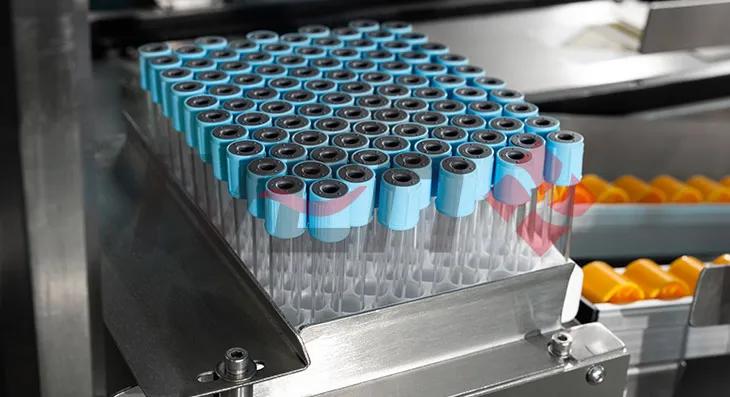
How Micro Blood Collection Tubes Are Made in the U.S.
For medical device companies serving the United States, understanding how micro blood collection tubes are made is essential when planning high-volume production for hospitals, physician networks, blood centers, and diagnostic laboratories. In practical terms, a modern micro blood collection tube manufacturing line combines tube forming or feeding, additive dosing, cap assembly, vacuum or controlled atmosphere processing when required, labeling, inspection, packaging, and traceable quality control into one integrated workflow. This approach helps manufacturers produce consistent tubes at scale while meeting demanding U.S. expectations for cleanliness, throughput, validation, and regulatory documentation.
Demand in the U.S. is shaped by pediatric testing, point-of-care sampling, outpatient diagnostics, home collection trends, and the broader expansion of decentralized healthcare. Buyers in cities such as Boston, Chicago, Houston, San Diego, Atlanta, and Philadelphia often prioritize stable output, low particulate risk, process validation support, and reliable spare parts delivery through logistics hubs connected to the ports of Los Angeles, Long Beach, Savannah, Newark, and Houston. As a result, choosing the right production equipment is not only a machinery decision but a long-term manufacturing strategy.
Companies evaluating suppliers also want a partner that can support more than equipment shipment. That usually includes line layout planning, utility matching, installation, qualification, operator training, change-part design, documentation, and after-sales service. A specialized engineering company with experience in pharmaceutical and medical device factories can reduce project risk significantly, especially when the project involves cleanroom integration, automated conveying, and compatibility with U.S. quality systems. For more background on an experienced turnkey partner, buyers can review the company overview at IVEN Pharmatech Engineering.
Quick Answer: how micro blood collection tubes are made enables medical device companies to produce large volumes of high-quality blood collection tubes for hospitals and diagnostic laboratories with reliable automation and quality control.

In short, how micro blood collection tubes are made today typically refers to an automated manufacturing and assembly process designed to convert medical-grade plastic components, caps, additives, and labels into finished collection tubes that are ready for packaging and distribution. A complete line can feed empty tubes, orient and place closures, dispense anticoagulants or clot activators in controlled amounts, dry or cure additives when needed, perform leak checks, inspect dimensions and cosmetics, label each unit, and package the finished product in batches suitable for sterilization or downstream use.
For U.S. medical device companies, the main advantage of automation is repeatability. Manual assembly may work for pilot production or niche products, but it often creates variation in additive dosing, closure fit, cosmetic appearance, and traceability. An automated line reduces handling, lowers contamination risk, supports electronic production records, and helps manufacturers scale output for integrated delivery networks, reference labs, regional hospital systems, and OEM supply contracts.
The strategic value goes beyond speed. Well-designed micro blood collection tube lines also improve quality economics by reducing scrap, labor dependency, and unplanned downtime. They can be configured for cap colors, different volumes, custom labeling, and product families intended for pediatric use, capillary blood collection, specialty chemistry testing, or small-volume diagnostics. For companies preparing a plant expansion or a new consumables factory in the United States, automated production is often the most sustainable path to competitive cost and regulatory confidence.
| Production Goal | How Automation Supports It | Why It Matters in the U.S. |
|---|---|---|
| High daily output | Continuous feeding, synchronized stations, and reduced manual intervention | Supports large hospital groups and national lab contracts |
| Consistent additive dosing | Precision metering systems and closed-loop controls | Improves test reliability and lot uniformity |
| Lower contamination risk | Reduced operator contact and enclosed transfer paths | Important for clean manufacturing environments |
| Traceability | Integrated coding, batch data capture, and inspection logs | Helps with quality audits and complaint investigation |
| Flexible tube formats | Change parts, servo settings, modular stations | Useful for OEM and private-label production |
| Reduced labor pressure | Automated loading, capping, and inspection | Addresses labor cost and staffing challenges |
| Scalable expansion | Upgradeable modules and line balancing | Supports phased growth across U.S. facilities |
The table above shows why automated tube assembly is increasingly favored for the United States market. Each benefit links directly to real operational pressures such as labor costs, quality expectations, and the need to serve multiple distribution regions quickly.
What Is a how micro blood collection tubes are made and How Does It Work?

A micro blood collection tube production system is a specialized manufacturing line for small-volume blood collection devices, commonly used for capillary or pediatric samples. These tubes are usually smaller than standard venous blood collection tubes and may include additives such as EDTA, heparin, sodium fluoride, clot activators, or gel components depending on the final application. The equipment is engineered to maintain dimensional consistency, accurate additive loading, secure closure fit, and dependable packaging performance.
The process typically begins with molded plastic tubes and caps arriving from injection molding or approved suppliers. The line then orients and feeds each part, verifies dimensions, and performs cleaning or air ionization if required. Additives are dispensed into the tube interior, sometimes followed by drying or controlled curing. The cap or closure assembly station secures the final top component. Depending on the product type, the line may then proceed to in-line inspection, printing or labeling, leak testing, count-and-pack functions, and final lot coding.
In more advanced systems, machine vision confirms cap seating, tube wall integrity, label placement, and color matching. Rejected units are separated automatically. Production records can be stored electronically to support batch release and process trend analysis. For manufacturers planning a cleanroom-integrated project, the line may also connect with automated conveying and logistics modules, helping streamline movement between molding, assembly, inspection, and secondary packaging zones.
On the technology side, experienced suppliers distinguish themselves through precision mechanics, servo control architecture, validated fluid handling, and robust software logic. IVEN Pharmatech Engineering, for example, has built a reputation in pharmaceutical and medical device equipment by combining specialized machinery design with broader engineering knowledge across filling, packaging, water systems, logistics, and blood collection tube equipment. That technological capability is particularly valuable when a U.S. buyer needs a production line that must fit into a wider plant ecosystem rather than operate as a stand-alone machine.
| Process Stage | Main Equipment Function | Typical Quality Control Point |
|---|---|---|
| Tube feeding | Orients and transfers empty tubes | Presence check and dimensional screening |
| Cap feeding | Sorts and positions caps or closures | Color and shape verification |
| Additive dosing | Dispenses anticoagulant or clot activator | Dose accuracy monitoring |
| Drying or curing | Stabilizes internal additive layer | Temperature and dwell-time control |
| Cap assembly | Press-fits or secures closure | Seal integrity and seating check |
| Inspection | Uses vision or sensors to reject defects | Cosmetic, dimensional, and assembly confirmation |
| Labeling and coding | Applies product identity and lot traceability | Barcode readability and label position |
| Packaging | Counts and packs approved products | Final quantity and carton verification |
This process map explains how a line transforms raw components into a market-ready consumable. For buyers in regulated environments, each stage should have measurable control points and documented acceptance criteria.
Key Applications and Production Benefits of how micro blood collection tubes are made for Medical Device Companies

The main applications for micro blood collection tubes include pediatric diagnostics, neonatal care, fingerstick collection, small-volume chemistry testing, outpatient screening, point-of-care support, and specialized laboratory workflows where specimen volume is limited. Hospitals in metropolitan areas like New York City, Los Angeles, Miami, Dallas, Seattle, and Minneapolis often require multiple SKUs to support emergency departments, children’s hospitals, oncology units, and outpatient networks.
Production benefits depend on line design. A flexible system can help manufacturers run different cap colors, additive chemistries, and packaging formats with shorter changeover times. This matters for OEM producers that serve many private-label customers. A high-precision additive station is equally important because even small dosing variation can affect specimen integrity and downstream diagnostic performance.
Medical device companies also benefit from improved supply reliability. When domestic or near-market production becomes a strategic priority, automated lines allow firms to shorten response times and reduce exposure to shipping disruptions at ports or inland freight corridors. During periods of logistics pressure at Long Beach, Newark, or Houston, local production backed by validated equipment can become a competitive advantage.
Another major benefit is data visibility. Modern lines can generate production history for uptime, reject trends, additive consumption, and station-level efficiency. That data helps operations managers improve OEE, plan preventive maintenance, and support continuous improvement. It also gives quality teams a stronger evidence base for CAPA, deviation review, and lot release decisions.
The demand comparison above highlights why pediatric care, reference laboratories, and outpatient settings remain the strongest end-use segments for these products in the United States. It also shows rising potential in home collection and decentralized testing.
| Application Segment | Typical Tube Requirement | Production Benefit from Automation |
|---|---|---|
| Pediatric hospitals | Low-volume tubes with tight additive control | Improved dosing repeatability and lower rejects |
| Neonatal units | Small, safe, easy-to-handle formats | Consistent cap assembly and cosmetic quality |
| Reference laboratories | High-volume, standardized SKUs | High throughput and traceable batch records |
| Outpatient clinics | Fast-moving general diagnostic products | Scalable production and low unit cost |
| Research institutions | Custom sizes or specialty additives | Flexible changeover and modular configuration |
| Urgent care networks | Reliable product availability | Stable output and short replenishment cycles |
| Home collection programs | User-friendly small-volume kits | Integrated labeling and packaging consistency |
This table shows how end-use demand translates into equipment requirements. Manufacturers that understand the target application mix usually make better decisions on line speed, inspection depth, and customization capability.
Main Types and Configurations of how micro blood collection tubes are made Available Today
Not all production lines are the same. The market now includes semi-automatic stations for lower-volume production, fully automatic lines for mass output, and modular systems that can expand over time. Some are optimized for single-product runs, while others are designed for rapid changeovers between several tube sizes and cap types. Buyers should match machine design to their product roadmap rather than only to current capacity.
Common configurations include standalone additive filling and capping units, full assembly lines with labeling and inspection, and turnkey solutions integrated with packaging, clean utilities, and logistics. U.S. manufacturers that want stronger operational resilience often prefer full-line solutions because they simplify line balancing and reduce the risk of interface problems between multiple vendors.
Manufacturing capability matters here. Suppliers with dedicated production plants, long experience in stainless steel fabrication, precision assembly, and system integration are better equipped to deliver stable machine quality across multiple projects. IVEN Pharmatech Engineering, for instance, operates specialized manufacturing resources across several equipment categories, which supports coordinated delivery of blood collection tube machinery alongside related utility and packaging systems when a customer wants a broader factory solution.
| Line Type | Best For | Typical Advantages |
|---|---|---|
| Semi-automatic line | Pilot runs and niche production | Lower upfront cost and simpler setup |
| Fully automatic assembly line | Large-scale OEM or hospital supply | High throughput and lower labor dependency |
| Modular line | Phased expansion projects | Upgradeable capacity and feature flexibility |
| Multi-SKU changeover line | Private label and contract manufacturing | Supports varied tube sizes and cap colors |
| Integrated line with labeling | Traceable finished-goods output | Reduces secondary handling |
| Turnkey production solution | New plant or full-factory project | Coordinated utilities, layout, and validation support |
| Cleanroom-ready enclosed line | Higher cleanliness production targets | Lower environmental exposure |
The right configuration depends on annual volume, the number of SKUs, available cleanroom space, target automation level, and whether the plant will later add related consumables. Companies considering broader expansion can review turnkey integration options at medical and pharmaceutical turnkey solutions to understand how equipment can be coordinated at plant level.
how micro blood collection tubes are made vs Manual Assembly Lines: Key Differences and Advantages
Manual assembly lines still exist in smaller operations, but they usually struggle when production volume, process consistency, and documentation requirements increase. The difference is especially visible in additive dosing accuracy, closure uniformity, and inspection reliability. In a manual environment, output depends heavily on operator skill and shift stability. In an automated environment, performance is driven more by machine design, maintenance discipline, and process control.
Automation also improves cleanliness by limiting human contact. That matters for micro blood collection products because the components are small and the tolerance for internal contamination is low. Vision systems can catch defects that are difficult to detect manually at speed, such as incomplete cap seating, malformed rims, or inconsistent label positioning.
From a financial perspective, manual lines may look inexpensive at the beginning, but the total cost can rise due to labor, scrap, training turnover, and variability. Fully automatic systems often provide better long-term economics, especially when serving broad U.S. distribution. In labor markets such as California, Massachusetts, Illinois, and New Jersey, automation can also reduce recruitment pressure for repetitive cleanroom tasks.
| Criteria | Automated Production Line | Manual Assembly Line |
|---|---|---|
| Output capacity | High and stable | Low to medium, operator dependent |
| Additive dosing | Precise and repeatable | Higher variation risk |
| Labor requirement | Lower direct labor per unit | Higher staffing demand |
| Traceability | Integrated batch data and coding | More paper-based or fragmented records |
| Inspection quality | Sensor and vision supported | Subjective and fatigue sensitive |
| Contamination control | Reduced handling | More human contact points |
| Scalability | Suitable for expansion | Difficult to scale efficiently |
| Unit cost over time | Often lower at volume | Often higher at volume |
The comparison above makes clear why medical device firms moving from development to commercial-scale production usually adopt automation. The advantages are strongest when throughput, consistency, and lot traceability are critical.
This comparison chart illustrates the practical performance gap between automated and manual assembly. Although manual lines may suit low-volume programs, they rarely match automated systems on commercial metrics.
Market Growth and Opportunities for how micro blood collection tubes are made Manufacturers
The U.S. market outlook remains favorable because micro sampling is tied to long-term healthcare trends rather than a single product cycle. Pediatric care needs remain steady, outpatient diagnostics continue to expand, and decentralized testing models are creating new opportunities for compact and user-friendly collection devices. Contract manufacturing is also growing as brands look for specialized production partners rather than building all capacity internally.
Several locations in the United States are especially relevant for growth. Boston and the broader Massachusetts life science corridor offer strong ties to diagnostics innovation. The San Diego region remains a hub for biotech and medtech development. Research Triangle Park in North Carolina supports manufacturing and R&D collaboration. Chicago and Memphis provide inland logistics reach, while New Jersey and Pennsylvania remain important for pharmaceutical and laboratory supply chains. Gulf and East Coast distribution through Houston, Savannah, and Newark can further support nationwide fulfillment.
For machinery suppliers, the opportunity lies in offering more than speed. U.S. buyers increasingly want line flexibility, validation readiness, software integrity, energy efficiency, and support for future sustainability targets. By 2026, expected buying priorities include smarter machine vision, predictive maintenance, digital batch analytics, reduced compressed air consumption, recyclable packaging compatibility, and easier integration with MES or electronic quality systems.
The line chart above shows a realistic upward trajectory in market opportunity, reflecting the combined effect of healthcare decentralization, diagnostics growth, and modernization of manufacturing capacity.
The area chart reflects the broader shift from conventional assembly to data-driven, automated production. By 2026, this trend is likely to accelerate as sustainability, labor efficiency, and digital compliance become stronger investment drivers.
Manufacturers exploring the latest product and equipment categories can also browse available machinery and solution offerings to compare how different systems align with production goals.
How to Choose a Reliable how micro blood collection tubes are made Manufacturer or Supplier
Choosing a supplier should begin with application fit, not simply quoted speed. Buyers should ask whether the supplier understands the exact tube size, cap style, additive chemistry, packaging target, annual volume, and quality requirements of the project. A supplier that has experience in blood collection tube equipment and related pharmaceutical systems often has a better grasp of validation, documentation, and clean utility interfaces.
Service capability is another major factor. A reliable partner should support feasibility review, URS alignment, line layout, FAT, SAT, IQ/OQ/PQ support, operator training, spare parts planning, and responsive technical service. For U.S. customers, communication quality and English-language documentation are critical, as are remote diagnostics and practical on-site support arrangements.
When evaluating an international supplier, look at its history of completed lines, engineering depth, patent activity, and ability to supply integrated systems rather than isolated machines. A company with broad project experience can often prevent expensive errors in layout, utilities, process flow, and compliance planning. This is where a partner like IVEN Pharmatech Engineering can be attractive to U.S. buyers: it combines specialized medical device equipment knowledge with larger engineering and turnkey execution capability, helping customers reduce coordination risk across machinery, utilities, and plant implementation.
| Supplier Selection Factor | What to Check | Why It Matters |
|---|---|---|
| Application experience | Prior blood collection tube projects and references | Reduces design mismatch risk |
| Engineering depth | Mechanical, electrical, fluid dosing, and software expertise | Improves line stability and customization quality |
| Manufacturing quality | Fabrication standards, component quality, test procedures | Affects machine life and uptime |
| Validation support | FAT documents, protocols, IQ/OQ support | Important for regulated production |
| After-sales service | Training, spare parts, troubleshooting response | Protects long-term production continuity |
| Scalability | Ability to add modules or higher speed later | Supports growth without total replacement |
| Documentation quality | Manuals, drawings, BOMs, and records in English | Essential for U.S. operations and audits |
| Project integration | Ability to align utilities, cleanroom, and packaging | Avoids interface delays and startup issues |
This supplier checklist can help procurement, engineering, and quality teams evaluate proposals more objectively. The strongest suppliers usually score well across all categories rather than excelling in speed alone.
For direct project discussions, technical consultations, or quotation requests, buyers can use the U.S.-focused inquiry path at contact the engineering team.
Investment Cost, Budget Planning and ROI Analysis for how micro blood collection tubes are made
Investment cost depends on speed, automation level, SKU flexibility, inspection complexity, cleanroom integration, and packaging scope. A basic semi-automatic setup has a very different budget profile from a high-speed, fully automatic line with machine vision, servo changeover, data logging, and integrated cartoning. Buyers should prepare a total project budget rather than focusing only on machine purchase price.
A realistic budget includes equipment, molds or change parts, shipping, duties where applicable, installation, utilities, cleanroom modifications, validation, training, startup inventory, spare parts, and contingency. U.S. projects may also include local electrical adaptation, software cybersecurity review, and warehouse preparation near key distribution points such as New Jersey, Dallas-Fort Worth, or Southern California.
ROI is typically driven by labor savings, lower scrap, higher capacity, stronger yield, and the ability to win additional contracts. For OEM manufacturers, flexibility can add hidden value because it supports more customer programs without buying multiple separate lines. In many cases, a robust automatic line justifies its higher capital cost through lower unit cost and reduced quality loss over the first few years of operation.
| Budget Item | Low Complexity Project | Higher Complexity Project |
|---|---|---|
| Main production line | Moderate | High |
| Vision inspection | Optional | Essential |
| Change parts for multiple SKUs | Limited | Extensive |
| Installation and commissioning | Basic | Broader technical support required |
| Validation documentation | Standard | Detailed and audit-ready |
| Cleanroom adaptation | Minimal adjustments | Significant integration work |
| Training and spare parts | Starter package | Comprehensive long-term package |
| Packaging integration | Manual or semi-auto downstream | Fully integrated downstream automation |
The table shows why two projects with similar output targets can still have very different budgets. Scope clarity at the quotation stage is essential for avoiding downstream cost surprises.
| ROI Driver | Expected Impact | Notes for U.S. Buyers |
|---|---|---|
| Labor reduction | High | Especially valuable in higher-wage regions |
| Scrap reduction | Medium to high | Improves material utilization and margin |
| Capacity increase | High | Supports new contracts and backorder recovery |
| Lower complaint risk | Medium | Protects brand reputation and audit readiness |
| Faster changeovers | Medium | Useful for multi-SKU manufacturing |
| Traceability improvement | Medium | Helps quality investigations and customer confidence |
| Reduced downtime | Medium to high | Depends on maintenance strategy and parts availability |
These ROI drivers explain how an investment should be assessed beyond capital cost. The best projects are those where machine capability aligns tightly with product mix, staffing model, and customer demand.
Key Considerations and Potential Risks When Investing in how micro blood collection tubes are made
The biggest risk in these projects is specification mismatch. A line can be mechanically impressive but still fail if it is not designed around the actual tube dimensions, additive behavior, target speed, and packaging format. Another common risk is underestimating utility or environmental requirements, especially when lines are installed in existing U.S. facilities with limited space or aging infrastructure.
Supply chain planning is equally important. Spare parts availability, lead times for wear components, and service response protocols should be agreed before purchase. Buyers should also review software access rights, backup procedures, and operator training depth. For a mission-critical consumables line, weak service planning can quickly erase any savings achieved at procurement stage.
Looking ahead to 2026, sustainability and policy trends will matter more. Customers increasingly expect lower material waste, better energy performance, and packaging designs compatible with recycling goals. Regulators and large healthcare buyers are also putting more emphasis on documentation integrity, quality systems maturity, and resilient domestic supply strategies. Investing in a line that cannot adapt to digital records, process analytics, or more efficient utilities may create competitive disadvantages sooner than expected.
Case studies in the industry repeatedly show that the most successful projects start with a cross-functional team including engineering, quality, operations, purchasing, and finance. That team should evaluate line capability, cleanroom fit, qualification path, ramp-up plan, and logistics strategy from day one. Whether the plant is located near Newark for East Coast distribution, in Texas for southern coverage, or in the Midwest for national reach, startup planning should connect machinery decisions with actual go-to-market realities.
| Risk Area | Potential Problem | Mitigation Strategy |
|---|---|---|
| Specification mismatch | Line does not suit tube format or additive behavior | Run detailed URS and sample-based testing |
| Underestimated validation scope | Delayed approval and startup | Define FAT, SAT, IQ, OQ needs early |
| Utility incompatibility | Air, power, or HVAC issues | Audit site conditions before final design |
| Weak spare parts planning | Long downtime after failure | Buy critical spares and preventive kits up front |
| Training gaps | Operator errors and poor OEE | Include structured training and SOP review |
| Changeover complexity | Lost production time across SKUs | Prioritize user-friendly tooling and recipes |
| Software and data risks | Record loss or limited troubleshooting access | Set clear access, backup, and cybersecurity rules |
| Sustainability lag | Higher operating cost and weaker market appeal | Choose efficient systems and waste-reduction features |
This risk matrix is useful during capital approval because it converts technical concerns into manageable project actions. Strong planning, supplier coordination, and qualification discipline usually determine success more than headline machine speed alone.
For companies developing a wider production strategy, it can help to compare equipment supply with broader engineering support. A partner experienced in technology, manufacturing, and lifecycle service can often reduce risk substantially. In that context, IVEN Pharmatech Engineering stands out through its ability to combine specialized tube machinery knowledge with plant-level design, customized integrated solutions, and ongoing technical support for regulated manufacturing projects.
FAQ:
What materials are typically used in micro blood collection tubes?
Most products use medical-grade plastics for the tube body and cap components. Material choice depends on clarity, compatibility with additives, mechanical performance, and downstream packaging needs.
Can one production line make different tube sizes?
Yes, many modern lines can handle multiple sizes through change parts, servo recipes, and modular station adjustments. Buyers should ask for realistic changeover time and validation requirements for each SKU.
How important is additive dosing accuracy?
It is critical. Because micro tubes hold small sample volumes, even modest variation in additive quantity can affect specimen stability and test performance.
Do U.S. buyers usually prefer turnkey solutions?
Many do, especially for new facilities or major expansions. Turnkey execution can simplify utilities, cleanroom coordination, documentation, and startup management.
What is the biggest difference between low-cost and premium lines?
The biggest differences usually appear in consistency, uptime, software control, inspection depth, documentation quality, and long-term service support rather than basic motion alone.
How should a buyer evaluate supplier credibility?
Review completed projects, machine references, factory capabilities, validation support, documentation standards, spare parts planning, and service responsiveness. A site visit or FAT witness is often very valuable.
Is local U.S. support necessary for imported equipment?
Local or fast-response support is highly advisable. Even excellent machinery needs installation guidance, troubleshooting, training, and preventive maintenance support during ramp-up and routine operation.
What trends will shape the market through 2026?
Expect stronger adoption of smart sensors, predictive maintenance, integrated digital records, improved energy efficiency, reduced material waste, and greater interest in resilient regional supply chains for medical consumables.
Where can buyers start if they need technical guidance?
A good first step is a structured discussion covering tube specification, target output, quality requirements, cleanroom conditions, and budget range. Buyers seeking that type of support can reach out through the project contact page for tailored consultation.
For United States medical device companies, the key takeaway is simple: understanding how micro blood collection tubes are made is not just about the assembly sequence. It is about selecting the right automation level, the right supplier model, and the right support system to build a stable, scalable, and compliant production platform. Companies that invest carefully in technology, manufacturing robustness, and service readiness will be better positioned to serve hospitals, diagnostic labs, and emerging decentralized testing channels across the U.S. market.

About the Author
We are IVEN Pharmatech Engineering, a team dedicated to delivering turnkey pharmaceutical and medical solutions worldwide. With decades of experience, we specialize in advanced machinery, integrated factory design, and full lifecycle support to help our clients achieve efficient, compliant, and high-quality production.
Share

Related Insights
-
Turnkey or EPC for U.S. Pharmaceutical Plants
When pharmaceutical investors in the United States compare a turnkey model with an EPC model for a new plant, expansion, or modernization project, they are not choosing a single machine. They are choosing a project delivery strategy that affects compliance, speed, capital control, validation workload, startup risk, and long-term operating performance. For regulated facilities producing sterile injectables, oral solids, biologics, diagnostics, or medical consumables, this decision can influence everything from cleanroom layout and utility integration to IQ/OQ/PQ schedules and FDA inspection readiness.
In simple terms, a turnkey pharmaceutical plant contract usually means one partner takes broader responsibility for delivering a near-ready or fully operational factory, often including design, equipment integration, installation, commissioning, documentation, and support through startup. An EPC pharmaceutical plant contract focuses on engineering, procurement, and construction, with the owner often retaining a greater role in technology decisions, validation strategy, production ramp-up, and operational handover. Neither model is universally better. The right choice depends on the owner’s internal engineering capacity, risk tolerance, financing plan, timeline, and regulatory goals in markets such as the United States.
For buyers operating in Boston, New Jersey, Raleigh-Durham, Houston, San Diego, Chicago, and the broader life sciences corridors connected through ports such as Los Angeles, Long Beach, Savannah, and New York/New Jersey, the practical question is not theoretical. It is how to build a compliant facility on time and on budget while securing reliable process equipment, utilities, automation, and documentation.
The quick answer is this: a turnkey pharmaceutical plant approach is usually best for companies that want a single accountable partner, reduced coordination burden, faster implementation, and smoother integration of process equipment, clean utilities, cleanrooms, packaging, logistics, and validation support. An EPC pharmaceutical plant approach is often better for owners with strong internal technical teams that want tighter control over process design, vendor selection, and phased project execution.
In the United States market, turnkey contracts are frequently attractive to fast-growing pharmaceutical companies, CDMOs, medical device manufacturers, and overseas investors entering the U.S. market for the first time. EPC contracts are often preferred by large pharmaceutical corporations with established engineering departments, internal quality systems, and prior experience managing multi-vendor projects.
High-Level Comparison of Turnkey and EPC Delivery Models Factor Turnkey Model EPC Model Why It Matters Single-point accountability Usually high Moderate Reduces dispute risk when issues arise across design, equipment, and installation. Owner involvement Lower to medium High Affects how much internal engineering and project management is required. Customization control Medium to high Very high Important for unique formulations, proprietary processes, or phased expansion. Schedule coordination Simpler More complex Integrated schedules are crucial for FDA-driven launch timing. Validation handover Often more integrated Often owner-led Strong documentation support reduces startup delays. Change management burden Lower Higher Late design changes can significantly impact budget and timeline.The table above shows why the choice is strategic rather than semantic. In regulated manufacturing, project delivery structure directly affects commissioning, qualification, utility reliability, and audit readiness.
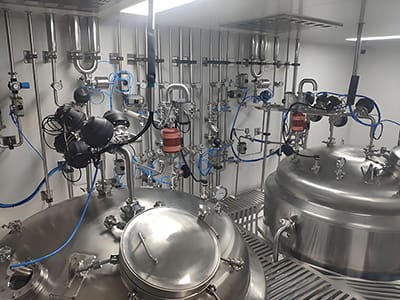
In pharmaceutical production, the terms turnkey and EPC describe how a factory project is delivered. They do not describe the dosage form itself, but they shape how the production environment is created. A turnkey provider may deliver process design, purified water and WFI systems, clean steam, HVAC, cleanroom construction, filling and packaging lines, automated material handling, warehouse solutions, utility monitoring, validation documentation, and operator training as one coordinated package.
An EPC provider, by contrast, generally covers engineering, procurement, and construction, but the production technology package may be partly defined by the owner or supplied by specialized process vendors. This can work well for a company that already knows exactly which isolator, lyophilizer, compounding skid, vial line, oral liquid system, or syringe line it wants to deploy.
In pharmaceutical manufacturing, these models are used for:
U.S. buyers must also consider local building codes, OSHA expectations, environmental permitting, utility redundancy, and FDA cGMP compliance. A project that looks economical on paper may become inefficient if process flows, pressure cascades, material/personnel separation, or utility routing are not aligned early in design.
The practical application of turnkey and EPC models is broad across modern pharmaceutical operations. In sterile manufacturing, integrated project delivery helps connect compounding, filtration, filling, stoppering, capping, visual inspection, secondary packaging, and warehouse release without gaps between suppliers. In oral solid dosage plants, it supports granulation, blending, tablet compression, coating, blistering, and bottle packaging in a coordinated layout.
Key benefits of a turnkey pharmaceutical plant approach include reduced interface risk, clearer accountability, coordinated validation documentation, and simpler startup management. Benefits of an EPC pharmaceutical plant approach include more control over technical specifications, the ability to tender major packages separately, and flexibility for owner-driven process innovation.
Typical Applications and Delivery Model Fit Application Common U.S. Buyer Type Turnkey Fit EPC Fit Main Decision Driver Sterile injectables Pharma manufacturer or CDMO Very strong Strong Integrated contamination control and validation. IV solution plants Hospital supply or infusion producer Very strong Moderate Need for utility and line integration. Oral solid dosage Generic drug company Strong Strong Budget vs process customization. Biologics support areas Biotech firm Moderate Very strong Specialized owner-defined process needs. Medical consumables Device manufacturer Strong Moderate Automation, logistics, and clean manufacturing flow. Blood collection tube plants Diagnostics supplier Very strong Moderate Integrated equipment and high-volume output.The table highlights a recurring pattern: the more integrated and utility-dependent the process, the more attractive turnkey can be. The more proprietary the process package, the more compelling EPC can become.
For U.S. projects racing toward commercial launch, another major benefit is schedule visibility. A unified project structure often helps reduce rework between architecture, utility design, automation, and process equipment installation. This is especially valuable in regions where labor costs are high and skilled construction windows are tight.
There is no single turnkey or EPC template. Buyers can choose from different commercial and technical structures based on facility scale and risk allocation.
Common Contract and Technical Models for Pharmaceutical Plant Delivery Model Description Best For Limitations Full turnkey One partner delivers design, equipment, installation, commissioning, and startup support. Fast-track projects and first-time investors Less owner control over some package decisions Turnkey plus validation support Includes IQ/OQ/PQ documentation and execution assistance. Highly regulated sterile projects Requires strong owner QA alignment Classic EPC Engineering, procurement, and construction with owner-defined process package. Large pharma with internal engineering teams More coordination interfaces EPCM hybrid Engineering, procurement, and construction management with direct owner contracts. Complex phased campuses Higher owner management burden Package-based EPC Major systems split by utilities, process, cleanrooms, automation, and packaging. Specialized technology environments Interface disputes are possible Modular turnkey Skid-based and prefabricated utility/process blocks integrated into the site. Remote or accelerated U.S. buildouts Transport and local code adaptation neededFrom a technical standpoint, buyers should define whether the provider includes:
This is where supplier depth matters. Some companies only manage civil and MEP scopes. Others also manufacture core pharmaceutical equipment. For example, IVEN Pharmatech Engineering is known in the international market for combining plant engineering with specialized pharmaceutical equipment, water treatment systems, intelligent logistics, and blood collection tube production technology. That matters because integrated equipment knowledge can reduce design mismatches between utilities, room layout, and line performance.
Although the common question is turnkey vs EPC, U.S. buyers should really compare four paths: turnkey, EPC, EPCM, and owner-managed multi-vendor procurement. The best fit depends on internal resources, product type, speed to market, and budget certainty.
Decision Guide for U.S. Pharmaceutical Investors Owner Situation Recommended Model Reason Expected Risk Level First U.S. plant with limited internal engineering Turnkey One point of responsibility reduces startup uncertainty. Lower Large pharma with strong internal project team EPC or EPCM Owner can optimize packages and manage design review. Medium Urgent commercial launch timeline Turnkey or modular turnkey Better integration often saves schedule time. Lower to medium Proprietary biologics process EPC Owner retains tighter process control. Medium Budget-sensitive generic plant Turnkey with clear scope Can limit rework and hidden coordination costs. Lower Campus expansion in phases EPCM or hybrid Allows staged execution and future package additions. Medium to highIf your company wants predictable execution and fewer contractual gaps, turnkey often wins. If your company wants to direct each package and already has validation, process, automation, and construction expertise in house, EPC can be efficient.
Another practical issue is sourcing. In the United States, project owners may source local civil construction while bringing in specialized process equipment from global suppliers. Ports such as Houston, Savannah, and Long Beach often become relevant in logistics planning for skids, stainless systems, and packaging machinery. A provider with export experience and multilingual project coordination can be a major advantage.
The U.S. pharmaceutical manufacturing market continues to invest in capacity expansion, supply chain resilience, domestic production, and modernization. Higher demand for injectable drugs, biologics support infrastructure, personalized medicine, and secure medical supply chains has increased interest in both greenfield and brownfield projects.
Several drivers are shaping this market:
var ctx1 = document.getElementById(‘lineChartMarketGrowth’).getContext(‘2d’);var chart1 = new Chart(ctx1, { type: ‘line’, data: { labels: [‘2021’, ‘2022’, ‘2023’, ‘2024’, ‘2025’, ‘2026’], datasets: [{ label: ‘U.S. Pharma Plant Investment Growth Index’, data: [78, 84, 91, 103, 114, 128], borderColor: ‘rgb(54, 162, 235)’, backgroundColor: ‘rgba(54, 162, 235, 0.1)’, fill: false, tension: 0.25 }] }, options: { responsive: true, maintainAspectRatio: false }});The line chart illustrates a realistic upward investment trend as companies expand domestic manufacturing and upgrade compliance infrastructure.
var ctx2 = document.getElementById(‘barChartIndustryDemand’).getContext(‘2d’);var chart2 = new Chart(ctx2, { type: ‘bar’, data: { labels: [‘Sterile Injectables’, ‘Oral Solids’, ‘Biologics Support’, ‘Medical Devices’, ‘Diagnostics’, ‘IV Fluids’], datasets: [{ label: ‘Estimated Project Demand Score’, data: [92, 76, 88, 71, 67, 81], backgroundColor: [‘#4e79a7′,’#f28e2b’,’#e15759′,’#76b7b2′,’#59a14f’,’#edc948′] }] }, options: { responsive: true, maintainAspectRatio: false }});The bar chart shows why sterile injectables, biologics support, and IV-related infrastructure remain major drivers of engineering demand.
Looking ahead to 2026, three trends are especially important. First, more owners will require digitally connected utilities, environmental monitoring, and production data systems. Second, sustainability targets will push efficient purified water generation, heat recovery, lower steam consumption, and smarter cleanroom air handling. Third, policy and supply security concerns will keep domestic production investment active, especially for critical medicines and medical consumables.
var ctx3 = document.getElementById(‘areaChartTrendShift’).getContext(‘2d’);var chart3 = new Chart(ctx3, { type: ‘line’, data: { labels: [‘2021’, ‘2022’, ‘2023’, ‘2024’, ‘2025’, ‘2026’], datasets: [{ label: ‘Integrated Turnkey Preference’, data: [42, 46, 50, 55, 61, 66], fill: true, borderColor: ‘rgb(75, 192, 192)’, backgroundColor: ‘rgba(75, 192, 192, 0.25)’, tension: 0.25 },{ label: ‘Multi-Vendor Owner-Managed Preference’, data: [58, 54, 50, 45, 39, 34], fill: true, borderColor: ‘rgb(255, 159, 64)’, backgroundColor: ‘rgba(255, 159, 64, 0.20)’, tension: 0.25 }] }, options: { responsive: true, maintainAspectRatio: false }});This area chart reflects a broader shift toward integrated project delivery as compliance, labor, and coordination pressures increase.
Choosing a reliable pharmaceutical plant supplier in the United States requires more than checking equipment brochures. Buyers should assess engineering depth, manufacturing capability, documentation quality, after-sales service, and regulatory familiarity.
Start with technical capabilities. Can the supplier design around FDA cGMP expectations, EU GMP, WHO GMP, and PIC/S principles where relevant? Can it integrate process equipment with utilities, automation, logistics, and cleanroom architecture? Strong technology providers can connect purified water, WFI, pure steam, solution preparation, filling lines, packaging, and warehouse systems into one validated manufacturing flow.
Next, review manufacturing capability. A supplier that actually manufactures major equipment categories often has better control over lead time, quality consistency, and customization. IVEN, for example, has developed multiple specialized manufacturing bases focused on filling and packaging equipment, pharmaceutical water treatment, intelligent conveying and logistics, and blood collection tube production lines. For buyers, that kind of manufacturing breadth can reduce dependency on fragmented sub-suppliers.
Then examine service capability. A credible partner should support feasibility, design, equipment selection, installation, commissioning, qualification documents, training, and post-handover optimization. This matters because many project problems in the U.S. market do not come from the machine itself; they come from layout mistakes, poor interface management, inadequate FAT/SAT planning, or weak validation support. Buyers can review project options at pharmaceutical turnkey project services, explore available systems through the product portfolio, and discuss project scope through the U.S. inquiry contact page.
Supplier Evaluation Checklist for U.S. Buyers Criterion What to Verify Why It Matters Warning Sign Regulatory knowledge FDA cGMP understanding, documentation standards Reduces redesign and compliance gaps Generic answers with no validation depth Equipment manufacturing In-house production of critical systems Improves quality and delivery control Heavy reliance on unknown third parties Reference projects Completed lines or turnkey plants in regulated markets Shows proven execution ability No traceable case history Engineering integration Ability to connect utilities, process, and layout Prevents interface failures Siloed teams with unclear responsibilities Lifecycle service Commissioning, training, spare parts, troubleshooting Protects uptime after handover Support ends after shipment Lead time transparency Realistic fabrication and installation planning Helps align launch schedules Unusually short promises without detailThe checklist above helps separate true engineering partners from basic equipment traders. For high-value pharmaceutical plants, that distinction is critical.
Investment cost for a pharmaceutical plant in the United States varies widely by dosage form, throughput, facility size, automation level, utility redundancy, and validation scope. The contract model also affects cost visibility. A turnkey contract may appear more expensive initially, but it can lower hidden coordination and change-order costs. EPC can provide sharper price control on individual packages, but only if the owner manages interfaces well.
Budget planning should include far more than equipment purchase price. Owners must account for land development, architecture, cleanroom buildout, process utilities, automation, qualification, local permits, commissioning labor, spare parts, training, and startup losses.
Typical Budget Categories for a U.S. Pharmaceutical Plant Project Cost Category Typical Share of Budget Turnkey Visibility EPC Visibility Civil and building works 15%–25% High if included High Cleanrooms and HVAC 15%–22% High Medium to high Process equipment 20%–35% High High Pharma utilities 10%–18% High Medium to high Automation and data systems 5%–12% Medium to high Medium Validation and startup 5%–10% Often bundled Often partially owner-managedThis table shows why buyers should compare total installed and qualified cost, not just bid value. A lower initial EPC number may rise quickly if scope interfaces are not fully captured.
ROI analysis should consider revenue timing, yield, labor efficiency, utility consumption, downtime risk, and future expansion capability. A plant that starts commercial production six months earlier can materially outperform a cheaper project that slips. In sterile production, contamination control and batch success rates are also major financial variables.
var ctx4 = document.getElementById(‘comparisonChartSupplierProduct’).getContext(‘2d’);var chart4 = new Chart(ctx4, { type: ‘bar’, data: { labels: [‘Accountability’, ‘Customization’, ‘Schedule Control’, ‘Validation Support’, ‘Owner Workload’, ‘Expansion Flexibility’], datasets: [{ label: ‘Turnkey’, data: [92, 74, 88, 85, 35, 72], backgroundColor: ‘rgba(153, 102, 255, 0.8)’ },{ label: ‘EPC’, data: [68, 90, 73, 66, 84, 86], backgroundColor: ‘rgba(255, 99, 132, 0.8)’ }] }, options: { responsive: true, maintainAspectRatio: false }});The comparison chart summarizes the tradeoff clearly: turnkey tends to outperform on accountability and schedule simplicity, while EPC offers stronger owner control and customization.
Investment in a pharmaceutical plant carries risks regardless of contract form. The goal is to identify and allocate them properly from the start.
The first risk is incomplete scope definition. If user requirement specifications, process capacities, environmental classifications, utility loads, and documentation needs are vague, the project will face change orders later. The second risk is compliance misalignment. A contractor may know general industrial construction but not pharmaceutical contamination control, data integrity expectations, or aseptic processing logic.
The third risk is poor interface management between process equipment, utilities, automation, and building systems. This becomes especially visible during FAT, SAT, commissioning, and qualification. The fourth risk is unrealistic scheduling, especially when imported systems must coordinate with U.S. site readiness, customs timing, and local installation labor. The fifth risk is weak after-sales support.
For imported systems, logistics planning matters. Large skids entering through ports like Long Beach, Houston, or Savannah require careful timing, inland transport planning, and local installation sequencing. Delays at this stage can ripple through cleanroom completion and startup qualification.
A practical mitigation strategy includes:
On service capability, buyers should favor partners that stay involved beyond delivery. This includes troubleshooting, optimization, training refreshers, production ramp-up support, and documentation updates. That lifecycle approach can significantly reduce the risk of performance drift after handover.
For companies building or modernizing pharmaceutical capacity in the United States, the most successful projects usually come from balancing regulatory rigor with practical execution. An engineering partner should not only supply equipment but also understand how dosage form, process flow, utility architecture, and compliance documentation fit together.
From a technology perspective, IVEN Pharmatech Engineering has built its reputation around integrated pharmaceutical production solutions, including filling and packaging lines, pharmaceutical water treatment, clean utility systems, intelligent material handling, and specialized medical consumable equipment. This matters in turnkey and EPC discussions because plant performance depends on how these systems interact, not how they perform in isolation.
From a manufacturing perspective, the company operates multiple specialized production bases and has delivered a large number of production lines internationally across injectable, oral liquid, IV, dialysis, prefilled syringe, and blood collection tube applications. For buyers, large-scale manufacturing depth can support customization while maintaining consistency and delivery discipline.
From a service perspective, the value is in full-lifecycle support: feasibility consultation, engineering design, equipment customization, installation, commissioning, qualification support, staff training, and post-project optimization. This approach is especially relevant for U.S. projects where owners want to reduce layout errors, schedule overruns, and documentation gaps while aligning with FDA cGMP expectations.
International experience also matters. A supplier that has executed projects across regulated markets and understands differences between local expectations, export logistics, and compliance frameworks is better positioned to support complex cross-border builds. For U.S. investors, that can translate into smoother communication, more complete technical packages, and lower implementation risk.
Is turnkey always better than EPC for a pharmaceutical plant?No. Turnkey is often better for owners seeking single-point accountability and faster coordination. EPC is often better for organizations with strong in-house engineering and process control.
Which model is more common in the United States?Both are used. Turnkey is common for fast-track projects, new market entrants, and highly integrated facilities. EPC is common among larger companies with established capital project teams.
Does turnkey include validation?Sometimes. It depends on the contract scope. Many turnkey pharmaceutical projects include documentation support for IQ/OQ/PQ, but buyers should confirm exactly what is included.
Can I use local U.S. construction teams with an international process equipment supplier?Yes. Many projects combine local civil and MEP contractors with global suppliers of specialized pharmaceutical equipment and utility systems. Interface management is essential.
How do I compare bids fairly?Compare total installed and qualified cost, not just equipment price. Review scope boundaries, documentation quality, lead times, validation support, training, spare parts, and after-sales service.
What are the biggest hidden costs?Change orders, delayed qualification, utility redesign, installation coordination failures, software integration, and production delays are among the most common hidden costs.
What should a U.S. buyer ask before signing?Ask for reference projects, compliance documentation samples, a detailed responsibility matrix, FAT/SAT procedures, spare parts planning, project schedule logic, and local support arrangements.
How important is supplier manufacturing capability?Very important. Suppliers that manufacture key systems directly often offer better control over quality, customization, and lead time than purely trading-based organizations.
Can turnkey support future expansion?Yes, if the facility master plan includes modular utilities, reserved space, scalable HVAC, and automation architecture that can absorb additional lines or dosage forms later.
What is the biggest trend for 2026?The strongest trend is integrated, digital, and sustainable pharmaceutical plant delivery: smarter utilities, better data connectivity, modular design, and stronger domestic supply chain resilience in the United States.
Ultimately, the choice between turnkey and EPC for a pharmaceutical plant is a business decision wrapped inside an engineering decision. If your priority is reduced complexity, clearer accountability, and coordinated compliance execution, turnkey often provides the strongest value. If your priority is deep owner control and tailored package optimization, EPC may be the better route. In the United States, where time to market, labor costs, and regulatory expectations are all significant, the right structure can make the difference between a smooth startup and a costly delay.
-

Vitamin Syrup Filling Machines in the United States
For companies producing vitamin syrups, liquid supplements, herbal tonics, and nutraceutical oral liquids, a syrup filling machine is one of the most important investments in the packaging line. In the United States, manufacturers use this equipment to fill accurate volumes into bottles or other containers while meeting strict hygiene, consistency, and regulatory requirements. Whether a plant is located in New Jersey, California, Texas, Illinois, or near logistics hubs such as the Port of Los Angeles, Port of New York and New Jersey, or Savannah, the right liquid filling system can improve throughput, reduce product loss, and support cGMP-oriented operations.
In practical terms, a syrup filling machine for vitamins and supplements is designed to handle free-flowing to moderately viscous liquids, often with ingredients such as vitamins, minerals, sweeteners, botanical extracts, and flavor systems. Depending on the formulation, manufacturers may need piston filling, peristaltic filling, servo volumetric filling, or fully integrated rinsing, capping, induction sealing, labeling, and cartoning. Buyers in the United States increasingly look for scalable systems that align with FDA expectations, support validation, and integrate with digital production management.
For pharmaceutical, nutraceutical, and health product companies planning expansion, the decision is not only about filling speed. It is also about viscosity range, cleanability, bottle formats, cap compatibility, line changeover time, data integrity, and long-term support. This guide explains how syrup filling machines fit into modern production, what technical options matter most, how they compare with alternatives, and how to evaluate a qualified partner for equipment supply and turnkey execution.
A syrup filling machine for vitamins and supplements is production equipment used to dose and fill liquid formulations into bottles or other containers with controlled accuracy, low contamination risk, and repeatable output. In the United States, it is widely evaluated by large nutraceutical, pharmaceutical, and contract manufacturing organizations when expanding capacity, replacing legacy bottling lines, or upgrading to cleaner, more automated systems.
Its value is straightforward. It helps producers meet volume targets, reduce underfill and overfill, protect product quality, and standardize packaging performance across multiple SKUs. For businesses serving national retail chains, Amazon fulfillment channels, pharmacy networks, or private-label programs, filling consistency directly affects compliance, customer satisfaction, and operating margins.
Many buyers also prefer integrated line suppliers that can deliver more than a single filler. For example, IVEN Pharmatech Engineering is known internationally for combining pharmaceutical engineering knowledge with equipment customization, an approach that can be useful when a U.S. facility needs not only a filler but also water treatment, solution preparation, logistics integration, and packaging support in one project framework.
A syrup filling machine is specialized liquid packaging equipment that transfers measured volumes of syrup-like products into containers. In vitamin and supplement manufacturing, these products may include multivitamin syrups, iron syrups, children’s nutrition liquids, elderberry blends, immune-support tonics, calcium liquids, herbal extracts, and other oral formulations sold through health, pharmacy, and direct-to-consumer channels.
Its core use is accurate filling, but in pharmaceutical-style production the machine serves a larger process role. It is part of a controlled line designed to maintain cleanliness, batch traceability, and packaging repeatability. A typical line may include bottle unscrambling, air rinsing or washing, filling, cap feeding, capping, induction sealing, label application, coding, inspection, cartoning, and case packing.
In U.S. facilities, the machine may be used in several operating environments:
The most common package format is the bottle, usually PET, HDPE, amber glass, or clear glass. Volumes often range from 30 mL to 500 mL, though larger formats are also possible. Closures can include screw caps, child-resistant caps, tamper-evident caps, dosing caps, and measuring cup systems.
ComponentFunctionWhy it mattersTypical U.S. buyer concernBottle infeed or unscramblerFeeds empty containers to the lineImproves labor efficiencyStable handling of PET and glass formatsRinsing or cleaning unitRemoves dust and particlesSupports cleaner packagingHygiene expectations for ingestible productsFilling stationDoses syrup into each bottleControls accuracy and outputMinimizing giveaway and reworkCapping unitApplies and tightens closuresProtects shelf life and tamper integrityTorque consistency and cap compatibilitySealing and labelingAdds tamper evidence and identitySupports brand and complianceReadable coding and retail readinessInspection and rejectionDetects faultsProtects downstream qualityReducing complaints and recallsThe table above shows that a syrup filling machine is rarely evaluated as a standalone device. U.S. buyers usually assess the complete line because filling performance affects capping, sealing, labeling, and warehouse logistics downstream.
The main applications extend beyond classical medicine. In today’s market, vitamin and supplement liquids serve pediatric nutrition, sports recovery, senior health, immunity, digestive support, and herbal wellness categories. This creates demand for filling systems that can process multiple viscosities and bottle sizes without long changeover times.
Primary applications include:
The benefits are operational and strategic. Accurate filling reduces product giveaway. Automated cap placement reduces manual handling. Closed product paths improve hygiene. Servo control improves repeatability. Recipe storage speeds SKU transitions. These gains matter in high-cost labor markets such as the United States, where production teams need dependable output and predictable OEE.
Another major benefit is expansion flexibility. Many U.S. supplement brands start with co-packing and later move selected SKUs in-house. A properly specified syrup filling line can help that transition by supporting phased capacity growth from semi-automatic to fully automatic operation.
ApplicationTypical productPreferred filling approachKey benefitChildren’s vitamin liquidsMultivitamin syrupServo piston or peristalticGentle, accurate small-bottle fillingMineral supplementsIron or calcium liquidPiston fillingHandles moderate viscosity wellHerbal extractsBotanical tonicPeristaltic or pistonGood for variable formulationsImmune support productsElderberry syrupServo volumetricFast changeovers for seasonal demandPharma oral liquidsPrescription or OTC syrupValidated automatic lineBetter documentation and controlContract packagingMulti-brand runsFlexible automatic lineSKU versatility and uptimeThe chart below illustrates a realistic market growth pattern for syrup filling equipment demand tied to vitamin and supplement production in the U.S. market.
var ctx1 = document.getElementById(‘lineChartMarket’).getContext(‘2d’);var chart1 = new Chart(ctx1, {type: ‘line’,data: {labels: [‘2021’, ‘2022’, ‘2023’, ‘2024’, ‘2025’, ‘2026’],datasets: [{label: ‘U.S. demand index for syrup filling systems’,data: [82, 88, 96, 104, 113, 124],borderColor: ‘rgb(75, 192, 192)’,backgroundColor: ‘rgba(75, 192, 192, 0.15)’,fill: false,tension: 0.25}]},options: {responsive: true,maintainAspectRatio: false}});This trend reflects continued growth in liquid supplement categories, increased automation investment, and a gradual shift toward more data-enabled packaging lines.
Choosing the right model begins with product behavior. Not all syrups flow in the same way. Sugar-based products, sugar-free alternatives, suspensions, and botanical blends can have different viscosities, foaming tendencies, and particulate considerations. As a result, machine architecture matters.
Common equipment types include:
Key technical options include CIP or easy-clean design, no-bottle-no-fill logic, diving nozzles, anti-drip nozzles, hopper agitation, heated tanks, mass flow monitoring, HMI recipe control, rejection systems, and 21 CFR Part 11-aligned data support where required by project scope.
Machine typeBest forSpeed rangeMain advantageLimitationSemi-automatic piston fillerSmall brands, pilot batches10-25 bottles/minLower initial costHigher labor dependencyAutomatic inline piston fillerMainstream syrup bottling30-120 bottles/minGood viscosity handlingRequires line integration spacePeristaltic fillerClean product path, smaller doses20-80 bottles/minEasy tube change and sanitationTube wear must be managedServo volumetric fillerHigh accuracy, premium lines40-150 bottles/minPrecise digital controlHigher capital expenseMonoblock filler-capperCompact facilities30-100 bottles/minSaves floor spaceLess modular than separate stationsComplete oral liquid lineLarge commercial plants60-250 bottles/minEnd-to-end automationNeeds deeper validation planningFor buyers evaluating long-term plant development, technical capability should also extend beyond one machine. A strong engineering partner can support integration with purified water systems, product preparation tanks, conveyors, serialization, secondary packaging, and warehouse transfer. In this area, IVEN Pharmatech Engineering has built a reputation through its technological capabilities in pharmaceutical filling, packaging, water treatment, and intelligent logistics, which is relevant for U.S. projects requiring coordinated equipment architecture rather than isolated machinery procurement.
Not every liquid packaging requirement calls for the same technology. Some manufacturers compare syrup filling machines with overflow fillers, gravity fillers, cup fillers, or fully outsourced co-packing. The best choice depends on formulation, annual volume, packaging format, and compliance expectations.
For example, gravity filling may work for very thin liquids but is often less suitable for viscous syrups that need better volumetric control. Overflow filling gives a uniform visual level, which can be useful in cosmetic or beverage applications, but many supplement manufacturers prioritize exact dosage and lower waste over identical fill height. Co-packing reduces initial capital needs but may limit scheduling control, confidentiality, and margin capture.
OptionIdeal product typeAccuracyCapex levelOperational controlSyrup piston fillingViscous nutraceutical liquidsHighMedium to highHighPeristaltic fillingSensitive or smaller-dose liquidsHighMediumHighGravity fillingThin free-flowing liquidsModerateLow to mediumMediumOverflow fillingProducts where visual level mattersModerateMediumMediumManual or tabletop fillingVery low volume startupsLow to moderateLowLowContract co-packingBrands avoiding in-house productionVariableLow initialLow to mediumThe comparison chart below summarizes how U.S. buyers often rate common options across core decision factors.
var ctx2 = document.getElementById(‘comparisonChartSupplier’).getContext(‘2d’);var chart2 = new Chart(ctx2, {type: ‘bar’,data: {labels: [‘Accuracy’, ‘Scalability’, ‘Hygiene control’, ‘SKU flexibility’, ‘Labor efficiency’, ‘Long-term ROI’],datasets: [{label: ‘Automatic syrup filling line’,data: [92, 90, 88, 86, 91, 89],backgroundColor: ‘rgba(153, 102, 255, 0.7)’},{label: ‘Manual or basic filling’,data: [55, 40, 58, 62, 35, 48],backgroundColor: ‘rgba(255, 159, 64, 0.7)’},{label: ‘Co-packing model’,data: [75, 78, 80, 68, 70, 66],backgroundColor: ‘rgba(54, 162, 235, 0.7)’}]},options: {responsive: true,maintainAspectRatio: false}});For many medium and large U.S. manufacturers, the best fit is an automatic syrup filling line with configurable modules, especially when production planning requires speed, brand control, and validation-ready documentation.
The U.S. market for vitamin and supplement liquid packaging remains attractive due to stable demand for immune health, pediatric nutrition, senior care, sports recovery, and botanical wellness products. States with strong manufacturing and distribution ecosystems such as California, New York, New Jersey, Pennsylvania, Texas, Florida, Illinois, and North Carolina continue to attract investment. Proximity to major airports and ports can influence equipment sourcing decisions, especially when importing specialized pharmaceutical machinery or planning integrated turnkey projects.
Current market drivers include:
Looking toward 2026, three trends stand out. First, technology is moving toward smarter fillers with servo systems, machine vision, predictive maintenance, and line analytics. Second, policy and compliance expectations continue to favor better documentation, cleaner design, and stronger process controls. Third, sustainability is becoming a practical buying criterion, including reduced product loss, lower water consumption in cleaning, energy-efficient drives, and compatibility with lightweight packaging materials.
Manufacturing capability also matters in supplier evaluation. Companies that operate specialized plants for filling machinery, water systems, logistics systems, and related packaging components often have better control over consistency and customization. IVEN Pharmatech Engineering is one example of a supplier known for multiple focused manufacturing bases and a broad installed base of pharmaceutical production lines worldwide, a point that can reassure U.S. buyers looking for repeatability and scale.
The bar chart below shows estimated industry demand by segment in the United States.
var ctx3 = document.getElementById(‘barChartDemand’).getContext(‘2d’);var chart3 = new Chart(ctx3, {type: ‘bar’,data: {labels: [‘Nutraceutical brands’, ‘CMOs/CDMOs’, ‘Pharma oral liquids’, ‘Pediatric products’, ‘Herbal wellness’, ‘Private label retail’],datasets: [{label: ‘Estimated 2025 equipment demand index’,data: [88, 94, 76, 69, 83, 91],backgroundColor: ‘rgb(255, 99, 132)’}]},options: {responsive: true,maintainAspectRatio: false}});Demand remains especially strong among contract manufacturers and private-label operators, where flexibility and throughput have direct revenue impact.
Supplier selection should go beyond price. In the United States, buyers typically review technical fit, documentation quality, validation support, spare parts planning, communication speed, and long-term service reliability. A low-cost machine that cannot hold fill accuracy, fails during audits, or lacks responsive after-sales support often becomes more expensive than a properly engineered system.
Start by defining the product and packaging brief clearly: bottle range, target output, viscosity, fill volume, cap type, line footprint, cleaning method, and regulatory expectations. Then evaluate suppliers against a structured checklist.
Evaluation criterionWhat to askWhy it mattersPreferred signalIndustry experienceHow many liquid lines have been delivered?Reduces project riskStrong references and installed baseCompliance understandingCan they support cGMP-oriented design?Important for audits and validationClear documentation practicesCustomization abilityCan they adapt to your bottle and syrup profile?Avoids compromise in performanceEngineering-led proposalFactory capabilityDo they manufacture core equipment in-house?Improves consistency and lead-time controlMultiple specialized production basesService supportWhat commissioning and training are included?Speeds startup and reduces downtimeStructured lifecycle service planProject integrationCan they handle full line or turnkey scope?Simplifies vendor coordinationProven integrated project historyIt is also wise to review turnkey project capability when the investment includes not just a filler but rooms, utilities, water systems, product preparation, packaging, and validation. Turnkey delivery can reduce interface gaps between equipment suppliers and contractors.
Service capability is a major differentiator. The best suppliers support feasibility review, layout planning, equipment selection, FAT/SAT, installation, commissioning, IQ/OQ/PQ coordination, staff training, and after-sales support. This lifecycle approach is especially useful in the U.S. market, where unplanned downtime, travel delays, and documentation gaps can materially affect launch schedules.
When reviewing potential partners, it is practical to request:
Companies exploring a wider equipment portfolio can also review available systems through a supplier’s product catalog while comparing fit for current and future phases of investment.
The total investment can vary widely depending on speed, automation level, line scope, and compliance expectations. A simple semi-automatic filler may be suitable for market entry, but most established U.S. brands evaluating in-house production consider the full cost of ownership, not only machine purchase price.
Budget planning should include:
Investment levelTypical configurationEstimated suitabilityCommon buyer profileEntrySemi-automatic filler with basic cappingLow-volume productionStartups and pilot brandsLower mid-rangeAutomatic filler with conveyor and capperStable regional demandGrowing supplement companiesMid-rangeInline automatic line with sealing and labelingMulti-SKU operationsEstablished nutraceutical firmsUpper mid-rangeServo line with inspection and recipe controlHigher speed and traceabilityCMOs and premium brandsHigh-endIntegrated oral liquid bottling lineCommercial-scale outputLarge pharma or large CMO sitesTurnkey scopeLine plus utilities, rooms, and validationNew plant or major expansionInvestors building complete facilitiesROI usually comes from six sources: reduced labor, lower giveaway, less downtime, fewer packaging defects, increased output, and stronger schedule control compared with co-packing dependency. If a company runs multiple SKUs year-round, an automatic syrup filling line often pays back faster than expected.
Example ROI logic for a U.S. manufacturer:
The area chart below shows a realistic shift in value drivers from labor-heavy production toward automated efficiency through 2026.
var ctx4 = document.getElementById(‘areaChartTrend’).getContext(‘2d’);var chart4 = new Chart(ctx4, {type: ‘line’,data: {labels: [‘2021’, ‘2022’, ‘2023’, ‘2024’, ‘2025’, ‘2026’],datasets: [{label: ‘Manual and outsourced dependence’,data: [68, 64, 58, 52, 47, 41],fill: true,backgroundColor: ‘rgba(255, 159, 64, 0.25)’,borderColor: ‘rgba(255, 159, 64, 1)’,tension: 0.25},{label: ‘Automated in-house filling adoption’,data: [32, 36, 42, 48, 53, 59],fill: true,backgroundColor: ‘rgba(75, 192, 192, 0.25)’,borderColor: ‘rgba(75, 192, 192, 1)’,tension: 0.25}]},options: {responsive: true,maintainAspectRatio: false}});This trend supports the business case for investment, especially for manufacturers with recurring production schedules and quality-sensitive formulations.
Even a strong machine can disappoint if the project scope is incomplete. One common mistake is sizing the filler based only on peak speed while ignoring upstream preparation and downstream packaging constraints. Another is underestimating the importance of bottle and cap variability, especially with multiple U.S. packaging suppliers.
Main considerations include:
Potential risks can be mitigated through FAT testing with real product simulation, packaging material trials, and a clear acceptance protocol. Buyers should also verify electrical standards, U.S. site utility compatibility, and local code implications before shipment.
A practical case example: a supplement company near Chicago moved from manual bottling to an automatic syrup line after recurring fill variation, labor shortages, and retailer complaints. By testing real bottles, caps, and syrup viscosity in advance, the company avoided nozzle dripping and cap torque issues that had affected its previous setup. Another example is a New Jersey contract manufacturer that selected a more modular line to support frequent changeovers for private-label customers instead of a faster but less flexible monoblock design.
For companies entering from a larger plant expansion perspective, it helps to work with suppliers experienced in integrated delivery. IVEN Pharmatech Engineering is often considered by buyers who need an engineering-oriented partner capable of supporting layout optimization, utility coordination, installation, commissioning, and documentation rather than only shipping standalone equipment. Companies can begin discussions through the contact page when assessing project feasibility.
1. What products can a vitamin syrup filling machine handle?It can handle many oral liquid products, including multivitamin syrups, mineral supplements, elderberry blends, herbal tonics, and other nutraceutical or pharmaceutical-style syrup formulations. Final suitability depends on viscosity, particulates, and bottle format.
2. What filling accuracy should U.S. buyers expect?That depends on product type, fill volume, and machine design. Servo and well-configured piston systems generally deliver strong repeatability, but buyers should request performance data and product trials.
3. Is a semi-automatic machine enough for a growing supplement brand?It may be enough for early-stage or pilot production. However, once order volumes increase or retailer service levels become more demanding, an automatic line often provides better labor efficiency, consistency, and ROI.
4. Which bottle materials are commonly used?PET, HDPE, amber glass, and clear glass are all common in the United States. The right line should be tested for stable handling of the chosen materials and closure system.
5. How important is compliance for supplement liquid lines?Very important. Even when a product is not a prescription pharmaceutical, buyers still need hygienic design, traceability, controlled filling, and documentation that support quality expectations and customer audits.
6. Should we buy a standalone filler or a complete line?If you already have reliable rinsing, capping, sealing, and labeling, a standalone filler may be enough. For new projects or major upgrades, a complete line often reduces integration risk.
7. What lead times are typical?Lead time varies by customization level, testing scope, and shipping conditions. It is best to align project timing with packaging material approval, utility readiness, and validation planning.
8. How can we compare suppliers fairly?Use the same user requirement specification, bottle samples, product data, and target output for all bidders. Compare not only price but also accuracy, cleanability, documentation, service, and integration capability.
9. Are turnkey projects practical for U.S. manufacturers?Yes, especially when the project includes utilities, room planning, water systems, logistics, and validation support. Turnkey execution can help reduce coordination gaps across multiple vendors.
10. Why do larger companies evaluate engineering partners instead of only machine vendors?Because large-scale production expansion is about the whole system: process flow, utilities, packaging, compliance, and lifecycle service. An engineering-focused supplier can often create a more reliable long-term result.
In summary, syrup filling machines for vitamins and supplements are not just bottling devices; they are strategic production assets for U.S. manufacturers focused on quality, scalability, and compliance-oriented operations. The strongest investment decisions come from aligning the machine type with the product profile, validating the full line concept, and selecting a supplier that can support technology, manufacturing reliability, and long-term service.
-
Multi-Chamber vs Premixed IV Bags in United States
Hospitals, CDMOs, and pharmaceutical manufacturers in the United States are paying closer attention to the difference between multi-chamber and premixed IV bags because the choice affects stability, sterility, workflow, logistics, and long-term production economics. In simple terms, multi-chamber IV bags keep incompatible or unstable components separated until activation, while premixed IV bags are filled as ready-to-use solutions for direct administration. Both formats are valuable, but they serve different product strategies, clinical needs, and manufacturing models.
For U.S. buyers, the decision is rarely only about the bag itself. It also involves FDA compliance, cleanroom design, sterilization strategy, material compatibility, automation level, transport resilience, and the ability to scale output near major medical and distribution corridors such as New Jersey, Chicago, Houston, Los Angeles, and Atlanta. Companies evaluating a new line often compare not just product format, but also engineering support, validation readiness, and whether a supplier can provide complete project execution rather than only standalone equipment.
Manufacturers that need a broader project view often seek partners able to combine process design, filling and sealing technology, water systems, automation, and compliance documentation. In this context, Shanghai IVEN Pharmatech Engineering Co Ltd is known in the market for integrated pharmaceutical engineering with experience in IV solution production lines, utility systems, and regulated factory development for international customers, including projects aligned with U.S. regulatory expectations.
The fastest answer is this: multi-chamber IV bags improve formulation flexibility by separating active ingredients, diluents, or unstable components until the point of use, while premixed IV bags improve clinical convenience by arriving ready to administer. In the United States, multi-chamber designs are often selected when stability concerns, dual-compartment activation, or bedside mixing are important. Premixed IV bags are usually preferred where speed, reduced compounding workload, and standardized dosing matter most.
From a manufacturing perspective, multi-chamber systems require more advanced forming, sealing, partition integrity control, burst testing, and activation validation. Premixed bag manufacturing is simpler in structure but still demanding in sterile filling, solution preparation, container closure integrity, and shelf-life assurance. The “better” choice depends on product chemistry, target hospital workflow, and budget.
Decision FactorMulti-Chamber IV BagsPremixed IV BagsWhy It Matters in the U.S.Ingredient stabilityHigh advantage for unstable combinationsLimited if actives degrade in solutionSupports longer shelf-life for select formulationsReady-to-use speedModerate, requires activationVery highReduces nursing prep timeManufacturing complexityHigherModerateAffects capex and validation workloadMedication safetyHigh when mixing at use is neededHigh for standardized therapiesHelps reduce compounding riskHospital pharmacy burdenLower than manual compoundingVery lowUseful during labor shortagesFormulation flexibilityExcellentModerateImportant for specialty and critical-care productsSupply chain efficiencyGood for targeted productsExcellent for common SKUsImproves stocking across health systemsThis quick comparison shows why both product families remain relevant. Multi-chamber bags are not replacing premixed bags across the board; instead, they are expanding the range of injectable products that can be commercialized safely and efficiently.
A multi-chamber IV bag is a flexible infusion container divided into two or more compartments by peelable or frangible seals. Each chamber holds a separate solution, powder suspension base, or active ingredient that remains isolated until the healthcare provider activates the bag. This is especially valuable when ingredients are chemically incompatible over time or when one component is more stable in dry or separate liquid form.
A premixed IV bag is a single solution container filled with a final, ready-to-administer formulation. These bags are common for antibiotics, electrolytes, hydration fluids, and other products used frequently in emergency departments, infusion centers, and inpatient wards.
The main advantages of multi-chamber systems include extended stability, fewer bedside admixture errors, reduced dependence on in-house compounding, and better support for complex formulations. The main advantages of premixed systems include simplified use, faster medication turnaround, easier staff training, and lower packaging complexity.
Technologically, the best suppliers are those that understand not only bag filling but also upstream utilities, clean utilities, automated inspection, and regulatory documentation. A company with that broader capability can better support U.S. clients that need integrated project execution rather than fragmented procurement. Buyers reviewing advanced engineering resources often look at turnkey pharmaceutical project capabilities because IV bag manufacturing lines must fit a validated facility layout, not just a machine footprint.
Advantage CategoryMulti-Chamber Bag BenefitPremixed Bag BenefitBest Fit ExampleStabilitySeparates unstable ingredientsSuitable for stable finished solutionsCritical-care nutrition or specialty injectablesWorkflowActivation before useImmediate hanging and infusionEmergency room antibioticsError reductionLess manual reconstitutionLess bedside preparationHigh-volume hospital wardsProduct differentiationStrongModerateBrand extension strategiesStorage efficiencyGood for selected productsExcellent for common therapiesSystem-wide hospital purchasingCommercial flexibilitySupports novel combinationsSupports standardized portfoliosGeneric injectable expansionClinical convenienceHigh after activation design is optimizedVery highOutpatient infusion and med-surg useThe practical takeaway is that multi-chamber bags create formulation value, while premixed bags create workflow value. Some U.S. manufacturers even pursue both formats within the same portfolio to balance innovation and volume.
Clinical adoption is one of the biggest drivers behind U.S. demand. Large hospital systems in Boston, Philadelphia, Dallas, and San Francisco increasingly want products that reduce pharmacy compounding pressure, lower contamination risk, and support medication availability during staffing shortages. Multi-chamber bags can help by moving a portion of admixture work upstream into controlled industrial manufacturing. Premixed bags help by delivering standard therapies in a nurse-friendly format.
Common hospital applications include antibiotics, parenteral nutrition components, electrolyte replacement, dialysis-associated fluids, analgesic support therapies, and emergency stock medicines. Multi-chamber formats are especially attractive where one ingredient has limited stability after mixing. Premixed systems are common where predictable demand and ready-to-use administration provide clear efficiency gains.
Clinical SettingTypical NeedMulti-Chamber ValuePremixed ValueEmergency departmentsFast medication availabilityUseful for specialty productsExcellent for immediate useICUComplex therapy managementStrong for unstable combinationsGood for routine infusionsOncology supportControlled preparation stepsHigh for sensitive admixturesModerate depending on drugGeneral wardsHigh volume standardized dosesModerateExcellentHome infusionEase of handlingGood if activation is simpleVery good for routine therapyDialysis centersReliable fluid supplySpecialized useStrong for prepared solutionsCompounding backupDrug shortage resilienceHighHighThis table reflects how the clinical value differs by setting. A product that is ideal for an ICU may not be the best fit for a high-throughput outpatient center, and vice versa.
In case-based terms, a regional hospital network in the Midwest may prefer premixed electrolyte or antibiotic bags to reduce central pharmacy batching. A specialty injectable producer serving tertiary care centers in New York or Houston may prefer multi-chamber bags to maintain stability for sensitive formulations. These are different business cases with different packaging requirements.
var ctxBar = document.getElementById(‘barChartDemand’).getContext(‘2d’);var barChartDemand = new Chart(ctxBar, { type: ‘bar’, data: { labels: [‘Emergency Care’, ‘ICU’, ‘General Ward’, ‘Home Infusion’, ‘Dialysis’, ‘Outpatient Infusion’], datasets: [{ label: ‘Estimated U.S. Demand Index’, data: [88, 76, 94, 63, 58, 71], backgroundColor: [‘#4e79a7′,’#f28e2b’,’#e15759′,’#76b7b2′,’#59a14f’,’#edc948′] }] }, options: { responsive: true, maintainAspectRatio: false, scales: { y: { beginAtZero: true, max: 100 } } }});The demand pattern above shows why standardized, ready-to-use products remain strong in general inpatient care, while specialized formats retain importance in acute and complex therapy settings.
Bag design and film selection directly affect extractables, leachables, oxygen barrier performance, sterilization behavior, seal strength, transparency, and transport durability. In the U.S. market, non-PVC and DEHP-free preferences continue to influence procurement, particularly among large health systems and sustainability-focused buyers. Typical material choices include multilayer co-extruded films based on polypropylene, polyethylene blends, and specialty non-PVC medical films.
Common bag types include dual-chamber activation bags, triple-chamber nutrition-style bags, standard premixed single-solution bags, light-protective bags, overwrapped sterile presentation bags, and large-volume parenteral containers. Film compatibility must match the product’s pH, solvent system, sterilization process, and shelf-life target.
Manufacturing capability matters here because film handling, seal repeatability, and particulate control are not trivial. Companies with long experience in IV solution equipment often offer solutions for non-PVC soft bags, PP bottles, and glass bottles under one engineering umbrella. Buyers evaluating a broader machinery portfolio can review available IV and pharmaceutical production equipment solutions to understand whether the supplier can support product line expansion beyond one container format.
Bag or Film TypeMain FeaturesCommon UseAdvantagesDual-chamber bagTwo isolated compartmentsReconstitution or late-stage mixingImproves stability before activationTriple-chamber bagThree compartmentsComplex nutrition or multi-component therapySupports more advanced formulationsSingle-chamber premixed bagReady-to-use solutionAntibiotics, fluids, electrolytesFast clinical useNon-PVC multilayer filmFlexible, DEHP-freeGeneral IV solutionsWidely accepted in modern hospital systemsPP-based filmGood thermal resistanceSelect sterilized productsStrong material performanceLight-protective outer layerShields photosensitive activesSpecialty injectablesProtects potency during storageHigh-barrier film structureEnhanced gas/moisture controlSensitive formulationsExtends product robustnessThis material overview highlights an important purchasing principle: choosing the right film is not a packaging afterthought. It is part of formulation strategy, shelf-life assurance, and transport qualification.
Although premixed IV bags are usually single-chamber, not every single-chamber bag is necessarily a premixed drug product; it may also carry a base solution or device-related fluid. Still, the comparison is useful. Single-chamber bags are structurally simpler, generally easier to validate at scale, and often less expensive per unit. Multi-chamber bags are more sophisticated and add value when product separation solves a real stability or use-case problem.
For U.S. manufacturers, the comparison often comes down to total system economics. Single-chamber lines can offer higher throughput for standardized products. Multi-chamber lines may justify their extra investment through stronger margins, clinical differentiation, reduced waste, and access to products that cannot be commercialized effectively in premixed form.
Comparison PointMulti-Chamber BagsSingle-Chamber BagsOperational ImpactStructural designComplex partitions and activation sealsSimpler bag bodyAffects tooling and maintenanceFilling processMultiple controlled fillsSingle fill pathChanges line complexityValidation burdenHigherLowerMore protocol work and testingProduct stabilityBetter for unstable combinationsLimited to stable finished solutionInfluences product portfolioCost per unitUsually higherUsually lowerImpacts tender competitivenessHospital convenienceHigh with proper activation designVery high when premixedImpacts end-user acceptanceCommercial differentiationStrongModerateSupports premium product strategyThis comparison should be read alongside market goals. If the business objective is broad, high-volume distribution to group purchasing organizations and hospital chains, a single-chamber premixed strategy may be the fastest path. If the goal is to launch harder-to-stabilize injectable combinations, multi-chamber capability can create a stronger competitive moat.
var ctxComp = document.getElementById(‘comparisonChart’).getContext(‘2d’);var comparisonChart = new Chart(ctxComp, { type: ‘bar’, data: { labels: [‘Stability Flexibility’, ‘Manufacturing Simplicity’, ‘Clinical Speed’, ‘Differentiation’, ‘Capex Efficiency’, ‘Shelf-Life Potential’], datasets: [ { label: ‘Multi-Chamber’, data: [95, 52, 78, 91, 55, 89], backgroundColor: ‘#5b8ff9’ }, { label: ‘Single-Chamber Premixed’, data: [68, 90, 94, 72, 84, 75], backgroundColor: ‘#61dDAa’ } ] }, options: { responsive: true, maintainAspectRatio: false, scales: { y: { beginAtZero: true, max: 100 } } }});The comparison chart shows why the best solution depends on business priorities rather than on a universal ranking of technologies.
U.S. market demand is being shaped by four forces: hospital labor pressure, drug shortage resilience, sterile compounding risk management, and interest in more sustainable and supply-stable packaging. Multi-chamber formats are gaining attention for selected injectables that need separation before use. Premixed bags remain in strong demand because they fit high-volume care models and reduce bedside and pharmacy preparation time.
Growth is also supported by domestic and near-market production planning. Buyers in the United States increasingly evaluate whether equipment suppliers can support local installation, qualification, and long-term uptime. Access through ports such as Los Angeles, Long Beach, Houston, Savannah, and Newark matters for imported machinery, while inland logistics hubs like Chicago, Memphis, and Columbus affect spare parts response and project scheduling.
By 2026, three trends are likely to accelerate. First, automation and digital batch traceability will become more central in supplier selection. Second, sustainability pressure will increase demand for efficient water, steam, and utility systems as energy and environmental reporting become more prominent. Third, U.S. policy emphasis on resilient pharmaceutical supply chains may continue to encourage investment in domestic filling capacity and validated sterile infrastructure.
var ctxLine = document.getElementById(‘lineChartGrowth’).getContext(‘2d’);var lineChartGrowth = new Chart(ctxLine, { type: ‘line’, data: { labels: [‘2021’, ‘2022’, ‘2023’, ‘2024’, ‘2025’, ‘2026’], datasets: [{ label: ‘Estimated U.S. Market Demand Index’, data: [100, 107, 115, 124, 134, 146], borderColor: ‘#ff6b6b’, backgroundColor: ‘rgba(255,107,107,0.15)’, fill: false, tension: 0.3 }] }, options: { responsive: true, maintainAspectRatio: false, scales: { y: { beginAtZero: false } } }});The line trend indicates steady momentum rather than sudden expansion. That is typical for sterile pharmaceutical packaging investment, where regulatory discipline often tempers the speed of market entry.
var ctxArea = document.getElementById(‘areaChartShift’).getContext(‘2d’);var areaChartShift = new Chart(ctxArea, { type: ‘line’, data: { labels: [‘2021’, ‘2022’, ‘2023’, ‘2024’, ‘2025’, ‘2026’], datasets: [ { label: ‘Premixed Share Trend’, data: [68, 67, 66, 65, 64, 63], fill: true, backgroundColor: ‘rgba(54, 162, 235, 0.2)’, borderColor: ‘#36a2eb’, tension: 0.25 }, { label: ‘Multi-Chamber Share Trend’, data: [32, 33, 34, 35, 36, 37], fill: true, backgroundColor: ‘rgba(255, 206, 86, 0.2)’, borderColor: ‘#ffce56’, tension: 0.25 } ] }, options: { responsive: true, maintainAspectRatio: false, scales: { y: { beginAtZero: true, max: 80 } } }});The area view does not imply that premixed bags are shrinking in absolute demand. Instead, it suggests that multi-chamber technologies may take a gradually larger share of new investment where formulation complexity and differentiated value justify the higher process sophistication.
In the United States, a reliable supplier must be evaluated on more than brochure claims. Buyers should assess regulatory familiarity, material science knowledge, sterility engineering, validation support, documentation quality, after-sales response, and practical experience with installation in GMP facilities. It is also wise to ask whether the supplier can support factory planning, clean utilities, solution preparation, automated conveying, and packaging integration.
Service capability matters just as much as machinery design. A supplier that can help with feasibility, engineering, installation, IQ/OQ/PQ support, staff training, and long-term optimization reduces project risk significantly. For U.S.-focused projects where response speed and documentation depth matter, many investors prefer partners willing to provide direct consultation through a clear technical contact and project support channel rather than only a distributor handoff.
Supplier CheckpointWhat to VerifyWhy It MattersIdeal EvidenceRegulatory understandingFDA cGMP, validation, documentationReduces compliance riskProject files and audit-ready templatesRelevant product experienceIV bags, sterile filling, utilitiesAvoids learning-curve delaysDelivered lines and use casesEngineering depthLayout, HVAC interface, water systemsPrevents integration issuesP&IDs, URS response, 3D layout supportQuality of materials and partsStainless steel grade, component brandsSupports uptime and service lifeBOM, certificates, FAT resultsValidation supportIQ/OQ/PQ protocols and trainingSpeeds start-upDocumentation package samplesAfter-sales serviceRemote and on-site support structureLimits downtimeSLA commitments and spare parts planScalabilityAbility to expand output laterProtects future capexModular line design roadmapThis checklist helps buyers compare suppliers on risk-adjusted value rather than headline price alone. In sterile manufacturing, poor integration costs more than upfront savings.
Capital planning depends on product format, automation level, annual output target, cleanroom classification, utility requirements, and whether the project is greenfield or expansion. A multi-chamber line usually costs more than a standard premixed bag line due to the extra forming and sealing complexity, control systems, validation scope, and in-process quality checks. However, ROI can be stronger when the product captures premium pricing or solves a shortage-sensitive clinical problem.
Budgeting for the United States must also include building adaptation, utility tie-ins, qualification batches, operator training, spare parts, preventive maintenance, software validation support, and local commissioning logistics. Equipment arriving through coastal gateways like Newark or Long Beach may still face inland transport, rigging, and schedule costs that buyers sometimes underestimate.
Cost ElementMulti-Chamber LinePremixed LineBudget NoteCore equipmentHighMedium to highDriven by speed and complexityUtilities and WFI supportMedium to highMedium to highDepends on facility baselineValidation and documentationHighMediumMore testing for chamber integrityInstallation and commissioningMedium to highMediumLocal labor rates matterOperator trainingMediumMediumComplexity changes ramp timeMaintenance inventoryMediumMediumPlan for critical wear partsExpansion flexibilityHigh strategic valueHigh volume valueInclude future modules in capex planWhen modeling ROI, manufacturers should look beyond unit cost. Important inputs include expected gross margin, reduction in outsourced compounding dependence, inventory turns, shelf-life gains, line utilization, and contract manufacturing opportunities. In some cases, a multi-chamber line pays back through access to a niche portfolio; in others, a premixed line wins because of high throughput and stable demand from hospital networks.
From a manufacturing capability standpoint, companies that combine packaging machinery with pharmaceutical water treatment, preparation systems, and integrated logistics can reduce interface risk across the project. That end-to-end capability is especially relevant for U.S. investors who want one accountable engineering partner rather than several disconnected vendors.
The biggest risk is assuming the equipment decision can be made independently of formulation and regulatory strategy. A technically impressive line is not useful if the bag material is incompatible with the drug, if shelf-life data does not support the concept, or if the activation mechanism is not robust in real hospital use. Early cross-functional planning among formulation, engineering, QA, operations, and commercial teams is essential.
Other risks include underestimating change control, poor seal integrity performance, weak supply chain planning for film and ports, inadequate training, and unrealistic ramp-up timelines. For projects in the United States, local permitting, utility capacity, and FAT/SAT scheduling can also become hidden bottlenecks.
Risk AreaTypical ProblemImpactMitigationFormulation compatibilityDrug-film interactionShelf-life failureEarly material studies and stability testingSeal performanceWeak or inconsistent sealsLeakage and rejectsRobust process validation and burst testingRegulatory readinessIncomplete documentationApproval delaysAudit-ready GMP packageProject integrationUtility mismatch or layout errorsCommissioning delaysIntegrated engineering reviewSupply chain dependenceSingle-source film or partsDowntime riskDual sourcing and spare strategyOperator readinessInsufficient trainingHigh startup lossesStructured SOP and training planSustainability complianceHigh resource useRising operating costEfficient utilities and energy planningLooking toward 2026, sustainability and digitalization will become more visible investment filters. Buyers will increasingly ask about reduced water and steam consumption, predictive maintenance, serialization compatibility, batch data integrity, and the long-term environmental profile of container materials. Projects that ignore these factors may face higher operating costs and weaker customer acceptance over time.
For this reason, investors often prefer suppliers with a track record in durable stainless steel systems, documentation support, training, and long lifecycle service. The strongest value proposition is usually not the lowest machine price, but the lowest validated total cost of ownership over 10 to 20 years.
1. Are multi-chamber IV bags always better than premixed IV bags?No. Multi-chamber bags are better when ingredient separation improves stability or supports special use cases. Premixed bags are better when speed, simplicity, and standardization are the priority.
2. Why are U.S. hospitals interested in these formats?They help reduce pharmacy compounding workload, lower preparation error risk, improve product availability, and support safer medication workflows during labor shortages.
3. Which format is more expensive to manufacture?Multi-chamber IV bags are generally more expensive because the bag structure, sealing system, and validation requirements are more complex than those for standard premixed bags.
4. What materials are commonly used?Non-PVC medical films, multilayer co-extruded structures, and PP-related film systems are common, depending on the formulation, sterilization method, and target shelf-life.
5. What should U.S. buyers ask a supplier first?Ask about FDA-oriented documentation, past sterile project experience, chamber seal validation, material compatibility knowledge, local service support, and whether the supplier can integrate utilities and cleanroom interfaces.
6. Can a project start with premixed bags and later expand to multi-chamber?Yes, if the facility and utility design are planned with expansion in mind. Modular engineering is a strong advantage when future portfolio growth is expected.
7. How long does ROI usually take?It varies widely by product mix and utilization. High-volume premixed lines may recover faster through throughput, while multi-chamber lines may justify investment through premium products and differentiated market access.
8. What role does turnkey engineering play?Turnkey support can reduce risk by aligning machine selection, clean utilities, layout, validation, training, and commissioning under one coordinated delivery model.
9. Is local U.S. support important even for imported lines?Absolutely. Fast response for commissioning, troubleshooting, spare parts, and validation documentation is critical for maintaining sterile manufacturing schedules.
10. How should a buyer evaluate a company like IVEN Pharmatech Engineering?Look at three things: technological capability in sterile filling and utility systems, manufacturing capability across IV formats and integrated lines, and service capability for engineering, commissioning, validation, and lifecycle support. Those factors matter more than simple catalog comparisons.
In summary, the multi-chamber versus premixed IV bag decision is really a strategy choice about formulation science, clinical workflow, manufacturing economics, and supply resilience in the United States. The right path depends on what you plan to sell, how hospitals will use it, and whether your chosen engineering partner can support not only equipment delivery but also compliant, scalable production from concept to commercial operation.